
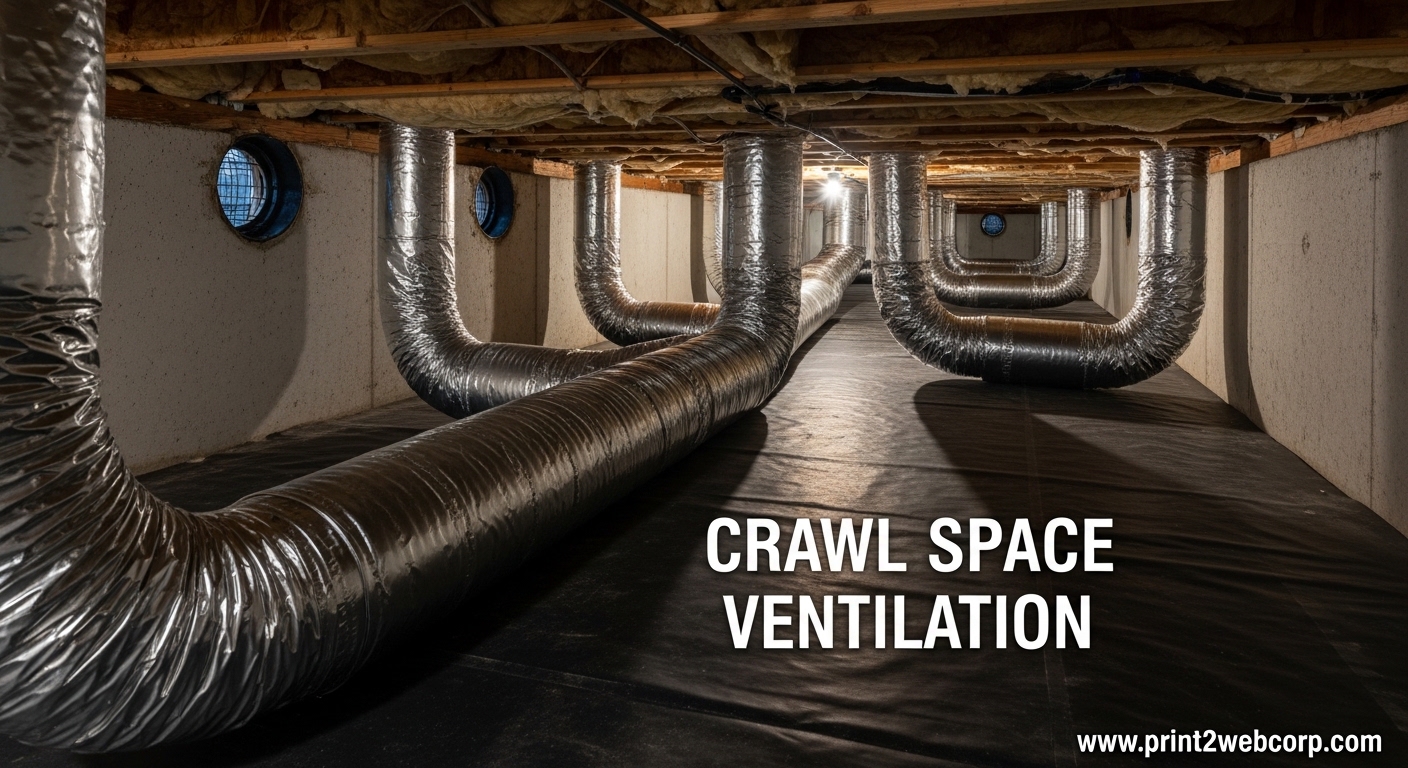
Crawl space ventilation is the process of regulating air flow beneath your home to control moisture levels, prevent mold growth, and protect the structural integrity of your foundation. Proper crawl space ventilation can mean the difference between a healthy home and one plagued by moisture problems, wood rot, and poor indoor air quality.
In this guide, I’ll walk you through everything you need to know about crawl space ventilation, including how it works, why it matters, the different approaches available, and how to choose the right solution for your home and climate.
What is Crawl Space Ventilation?
Crawl space ventilation refers to the systems and methods used to move air through the crawl space area beneath your home. This ventilation can happen passively through foundation vents installed in the exterior walls, or mechanically through fans and exhaust systems that actively circulate air.
The primary goal of crawl space ventilation is moisture control. By allowing air to circulate, you help prevent the buildup of humidity that can lead to mold growth, wood rot, and structural damage. Without proper ventilation, your crawl space becomes a breeding ground for problems that can affect your entire home.
Why Crawl Space Ventilation Matters
Proper crawl space ventilation is essential for maintaining a healthy home environment. When moisture accumulates in your crawl space, it doesn’t stay down there. Through a process called the stack effect, air from your crawl space rises into your living areas, carrying with it mold spores, musty odors, and excess humidity.
This can lead to poor indoor air quality, aggravated allergies, and increased energy costs as your HVAC system works harder to control humidity. Over time, excess moisture can cause serious structural damage, including rotting floor joists, compromised foundation integrity, and pest infestations that thrive in damp environments.
I’ve seen homes where neglecting crawl space ventilation led to thousands of dollars in repairs that could have been prevented with proper airflow management. The cost of prevention is always lower than the cost of remediation.
Signs of Poor Crawl Space Ventilation
Recognizing the warning signs of inadequate crawl space ventilation early can save you from extensive damage. Here are the most common indicators that your crawl space needs attention:
1. Musty odors coming from floors or vents
2. Visible mold growth on floor joists or subflooring
3. Condensation on ductwork, pipes, or foundation walls
4. Buckled or cupped hardwood floors above the crawl space
5. Increased humidity levels throughout your home
6. Pest infestations, including termites, rodents, and insects
7. Higher than normal energy bills
8. Wet or damp insulation in the crawl space
If you notice any of these signs, it’s important to address the ventilation issue promptly. The longer moisture problems persist, the more extensive the damage becomes.
How Crawl Space Ventilation Works
Crawl space ventilation works by creating airflow that removes moisture-laden air and replaces it with drier air from outside. This process can happen naturally through passive vents or mechanically through powered systems.
Passive ventilation relies on wind and thermal buoyancy. As air heats up, it rises and escapes through vents, drawing in cooler, fresher air from outside. This natural convection helps maintain a balance of temperature and humidity in your crawl space.
Mechanical ventilation uses exhaust fans to actively pull air out of the crawl space, creating negative pressure that draws in fresh air through intake vents. These systems can be controlled by humidistats that activate the fans when humidity levels rise above a set point.
The Stack Effect Explained
The stack effect is a crucial concept in understanding why crawl space ventilation matters. As warm air rises through your home, it escapes through upper levels and the roof. This creates a pressure difference that pulls air from your crawl space up through your living areas.
Without proper ventilation, the air pulled from your crawl space carries moisture, mold spores, and contaminants directly into your home. This is why crawl space health directly impacts your indoor air quality, and why ventilation is about more than just protecting the structure beneath your home.
Vented vs Unvented Crawl Spaces Explained
There’s an ongoing debate in the building science community about whether crawl spaces should be vented or sealed (unvented). The right answer depends on your climate, home construction, and specific circumstances.
Vented crawl spaces use foundation vents to allow outside air to circulate through the space. This traditional approach works well in dry climates where outside air is drier than crawl space air. The International Residential Code (IRC) has historically required vented crawl spaces, with specific requirements for vent area.
Sealed or unvented crawl spaces are completely enclosed with no vents to the outside. Instead, they use a vapor barrier on the ground and walls, along with conditioning air from the living space or a dehumidifier. This approach is increasingly recommended for humid climates where venting can actually introduce more moisture.
The decision between vented and sealed isn’t always straightforward. Homes in mixed-humid climates may benefit from a hybrid approach, while older homes with existing vented crawl spaces may need different solutions than new construction.
Building Code Requirements for Crawl Space Ventilation
Understanding building code requirements is essential when planning your crawl space ventilation strategy. The International Residential Code (IRC) provides specific guidelines that many local jurisdictions adopt.
For vented crawl spaces, the IRC requires a minimum of 1 square foot of vent area for every 150 square feet of crawl space area. This ventilation area must be distributed evenly around the perimeter to promote cross-ventilation. Vents must be screened to prevent pest entry but shouldn’t be blocked by insulation or other materials.
However, the IRC also allows for unvented crawl spaces when specific conditions are met. These include covering the ground with a continuous vapor barrier, providing conditioned air to the space, and insulating the crawl space walls rather than the floor above.
Always check your local building codes before making changes, as some jurisdictions have additional requirements or restrictions based on regional climate conditions.
Types of Crawl Space Ventilation Solutions
When it comes to improving crawl space ventilation, you have several options ranging from simple passive vents to sophisticated mechanical systems. The right solution depends on your specific situation.
1. Foundation Vents: These are passive openings installed in the foundation walls. They’re the most basic and traditional solution, relying on natural airflow. Automatic vents that open and close based on temperature are also available.
2. Exhaust Fans: Mechanical fans installed in the crawl space that actively pull air out. These are typically controlled by humidistats and can be highly effective in problematic areas. They work best when paired with adequate intake vents.
3. Crawl Space Dehumidifiers: These units actively remove moisture from the air without relying on outside ventilation. They’re ideal for sealed crawl spaces or humid climates where vented air might be too moist.
4. Vapor Barriers: While not a ventilation method per se, a properly installed vapor barrier on the crawl space floor and up the foundation walls is essential for any effective moisture control strategy. It prevents ground moisture from entering the space.
5. Encapsulation Systems: A comprehensive approach that combines vapor barriers, sealed vents, and often dehumidification. This transforms the crawl space into a conditioned space similar to a basement.
Each solution has its pros and cons, and the best approach often combines multiple methods tailored to your home’s specific needs.
Cost Considerations
The cost of crawl space ventilation solutions varies widely depending on the approach you choose and the size of your crawl space. Understanding these costs can help you budget appropriately and make informed decisions.
Basic foundation vents typically cost between $15 and $50 each, with most homes needing 8-12 vents for proper coverage. Installation is relatively straightforward and can often be a DIY project for handy homeowners.
Exhaust fan systems range from $200 to $800 depending on capacity and features like humidistat controls. Professional installation adds $300-$600, but the long-term benefits in moisture control often justify the investment.
Crawl space dehumidifiers cost between $800 and $2,500 depending on capacity. While more expensive upfront, they can be more cost-effective in humid climates where vented air introduces moisture rather than removing it.
Full encapsulation systems represent the largest investment, typically costing $3,000 to $15,000 depending on crawl space size and condition. However, this comprehensive solution can dramatically improve home comfort, energy efficiency, and air quality.
Climate-Specific Recommendations
Your local climate should be the primary factor in determining your crawl space ventilation strategy. What works well in one region can create problems in another.
In dry climates like the Southwest United States, traditional vented crawl spaces often work well. The outside air is typically drier than crawl space air, so ventilation helps remove moisture. Automatic vents that close during extreme weather can provide additional protection.
Humid climates like the Southeast present challenges for vented crawl spaces. During summer months, outside air can be more humid than crawl space air, making ventilation counterproductive. In these regions, sealed crawl spaces with dehumidification often perform better.
Mixed-humid climates require careful consideration. The Pacific Northwest, for example, has wet winters and dry summers. Many building scientists recommend sealed crawl spaces in these regions, but vented systems can work if properly maintained with seasonal vent adjustments.
Cold climates present different challenges. While winter air is dry, vented crawl spaces can lead to frozen pipes and increased energy costs. In these regions, conditioned crawl spaces with proper insulation often provide the best performance.
When to Call a Professional
While some crawl space ventilation improvements can be DIY projects, certain situations warrant professional expertise. Recognizing when to call a pro can save you time, money, and potential problems down the road.
You should consult a professional if you notice significant structural damage, extensive mold growth, or persistent moisture problems despite your efforts to improve ventilation. These symptoms may indicate deeper issues that require specialized knowledge and equipment.
Professional crawl space contractors can conduct thorough assessments, including moisture readings, airflow measurements, and structural evaluations. They have access to commercial-grade solutions and can design systems tailored to your specific situation.
If you’re considering encapsulation or major structural changes, professional installation is highly recommended. These projects require specialized knowledge of building science, local codes, and proper material installation techniques.
Additionally, if you’re unsure about which approach is best for your climate and home, a professional assessment can provide clarity and prevent costly mistakes.
Frequently Asked Questions
What is the best ventilation for a crawl space?
The best crawl space ventilation depends on your climate. In dry regions, passive foundation vents work well. In humid climates, sealed crawl spaces with dehumidification perform better. Mechanical exhaust fans can be effective in mixed climates when paired with proper intake vents and humidistat controls.
Are crawl spaces supposed to be vented?
Traditional building codes required vented crawl spaces, but modern building science recognizes that sealed crawl spaces often perform better, especially in humid climates. The IRC now allows both approaches when specific requirements are met. The right choice depends on your climate, home construction, and moisture conditions.
How much does it cost to encapsulate a 1000 sq ft crawl space?
Encapsulating a 1000 sq ft crawl space typically costs between $5,000 and $12,000. This includes vapor barrier installation, vent sealing, and often a dehumidifier. Costs vary based on accessibility, current condition, and local labor rates. While expensive, encapsulation can significantly improve home comfort and air quality.
What are the signs of poor crawl space ventilation?
Common signs include musty odors, visible mold growth, condensation on ductwork or pipes, buckled hardwood floors, increased indoor humidity, pest infestations, higher energy bills, and wet insulation. If you notice these symptoms, inspect your crawl space promptly to assess ventilation and moisture control needs.
Conclusion
Crawl space ventilation is a critical component of home maintenance that affects everything from structural integrity to indoor air quality. Whether you choose traditional vented approaches or modern sealed systems, the key is matching your solution to your climate and home’s specific needs.
Start by assessing your current situation. Look for signs of moisture problems, consider your local climate, and understand your building code requirements. From there, you can make informed decisions about whether simple vent improvements, mechanical systems, or full encapsulation makes the most sense for your home.
Remember that crawl space ventilation isn’t a one-size-fits-all solution. What works for your neighbor may not work for you. When in doubt, consult a professional who can assess your specific situation and recommend the most effective approach for your home and budget.
By taking crawl space ventilation seriously, you’re protecting your home’s structure, improving your indoor air quality, and potentially avoiding costly repairs down the road. The investment in proper ventilation today can pay dividends for years to come.
Leave a Reply