
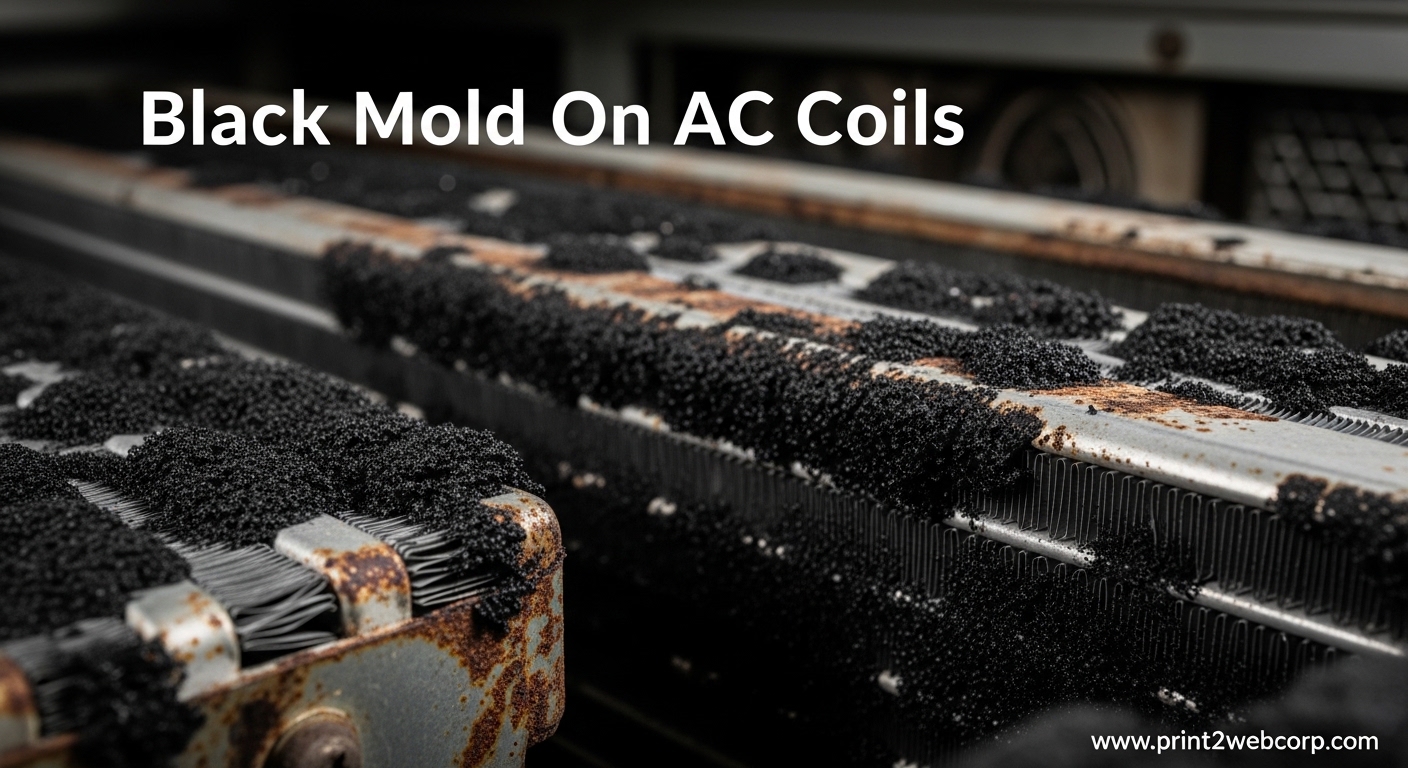
That musty smell hitting you when your AC kicks on isn’t something to ignore. I’ve seen too many homeowners wait until their family starts coughing before investigating what’s growing inside their air conditioning system. Black mold on AC coils is a serious issue that affects your indoor air quality and your health.
When I first discovered black mold growing on my evaporator coils, I had no idea how common this problem actually is. The dark, damp environment inside your air handler creates the perfect breeding ground for mold spores to multiply and spread throughout your home every time your system runs.
This guide covers everything you need to know about identifying, cleaning, and preventing black mold on AC coils based on real HVAC industry experience and the latest indoor air quality research. Your lungs will thank you for taking action.
What Is Black Mold On AC Coils
Black mold on AC coils is typically Stachybotrys chartarum, a toxic fungus that thrives in the moist, dark environment inside your air conditioning system. The evaporator coils inside your air handler are particularly vulnerable because they’re constantly wet from condensation as they cool your home’s air.
Do AC coils usually have mold on them? Not necessarily. A properly maintained AC system with good airflow and regular cleaning should not develop mold problems. However, when conditions are right, mold spores that naturally exist in your air can land on the coils and begin growing within 24-48 hours.
The coils provide everything mold needs to survive: moisture from condensation, warmth from the operating system, and a food source from dust, pollen, and other organic matter that accumulates on the coil surfaces. Once established, the mold colony continues to grow and release spores into your home’s air supply.
Stachybotrys chartarum produces mycotoxins that can cause serious health issues when inhaled. This is why addressing black mold on AC coils promptly is critical for maintaining a healthy indoor environment.
Signs Of Black Mold On AC Coils
Identifying black mold early can prevent extensive contamination and expensive remediation costs. Here are the telltale signs that mold may be growing on your AC coils.
Visual Signs Of Mold Growth
The most obvious sign is visible black or dark green patches on your evaporator coils or in the drain pan. However, accessing these components often requires removing access panels, so you may not see the mold directly.
Black spots around your air vents are a red flag that mold is growing somewhere in your system. You might also notice a slimy or fuzzy texture on visible coil surfaces if you can safely inspect them. Dust that appears unusually dark or clumpy may also indicate mold growth.
Odor Indicators
A persistent musty odor when your AC runs is one of the first warning signs homeowners notice. This earthy, damp smell typically intensifies when the system first turns on and may diminish slightly as it runs, only to return stronger the next cycle.
The smell comes from microbial volatile organic compounds (MVOCs) released by active mold growth. If you notice this smell specifically when your air conditioning is running but not when it’s off, the source is likely inside your HVAC system.
Health Symptoms
Your body may alert you to mold problems before you see or smell anything. Symptoms that worsen when your AC is running include sneezing, runny nose, itchy eyes, throat irritation, and coughing.
Family members with asthma or allergies often experience increased symptoms. If you notice these patterns developing or worsening, it’s worth investigating your AC system for mold growth, even if you haven’t noticed visible signs yet.
What Causes Black Mold On AC Coils
Understanding why mold grows on your AC coils is key to preventing recurrence. Based on HVAC industry research and field experience, here are the nine primary causes.
1. High Humidity Levels
Excess humidity in your home creates moisture that condenses on your evaporator coils. When indoor humidity consistently exceeds 60%, your coils stay wetter longer, giving mold spores the ideal environment to germinate and grow.
Homes in humid climates or during rainy seasons are particularly susceptible. Without proper humidity control, your AC system works harder and creates more condensation, compounding the problem.
2. Clogged Or Dirty Air Filters
A dirty air filter restricts airflow across your evaporator coils. This reduced airflow causes the coil temperature to drop below freezing, creating excessive condensation and ice buildup that melts and feeds mold growth.
Clogged filters also allow more dust and organic particles to reach the coils, providing a food source for mold. When filters aren’t changed regularly, they become saturated with moisture and can harbor mold themselves.
3. Clogged Condensate Drain Line
Your condensate drain line removes the water that drips off your evaporator coils. When this line becomes clogged with algae, dirt, or debris, water backs up into the drain pan and can overflow onto surrounding surfaces.
Standing water in the drain pan creates a perfect mold breeding ground. The constant moisture combined with organic material in the water allows mold to flourish and spread to the coils themselves.
4. Poor Airflow
Insufficient airflow through your system prevents proper evaporation of condensation from the coils. Blocked vents, closed doors in rooms with returns, or an improperly sized duct system all contribute to this problem.
When air doesn’t move across the coils efficiently, they remain wet instead of drying between cycles. This persistent moisture allows mold colonies to establish and grow rapidly.
5. Dirty Evaporator Coils
Dust and debris that accumulate on coil surfaces trap moisture and provide nutrients for mold growth. Dirty coils also transfer heat less efficiently, causing them to operate at lower temperatures and produce more condensation.
The combination of trapped moisture and organic matter creates an ideal environment for mold. Without regular coil cleaning, this buildup accelerates mold growth and reduces system efficiency.
6. Infrequent Maintenance
Skipping regular AC maintenance allows small problems to escalate into mold-friendly conditions. Professional inspections catch issues like drain line clogs, coil dirt buildup, and airflow problems before they lead to mold growth.
Most homeowners should have their systems professionally serviced annually. Without this maintenance, minor issues compound over time, creating the perfect storm for mold development.
7. Leaky Ductwork
Duct leaks can pull in humid air from unconditioned spaces like attics, crawlspaces, or garages. This moisture-laden air condenses on your coils, adding to the normal condensation from cooling your home’s air.
Leaky return ducts are particularly problematic because they pull in unfiltered air containing dust and mold spores. These contaminants deposit on your coils, providing both moisture and food for mold growth.
8. Improperly Sized Or Installed Units
An air conditioner that’s too large for your home will short-cycle, turning on and off frequently without running long enough to dehumidify the air properly. This leaves excess humidity in your home and on your coils.
Conversely, an undersized unit runs continuously and may freeze up from overwork, creating ice that melts and feeds mold. Proper sizing and installation are critical for preventing moisture problems.
9. Standing Water In The Drain Pan
Water that remains in your drain pan between cooling cycles provides a continuous habitat for mold growth. Even a small amount of standing water allows mold spores to multiply and spread to adjacent components.
Drain pans should slope properly toward the drain outlet to ensure complete drainage. Any leveling issues or obstructions that prevent complete water removal create standing water and mold risk.
Is Black Mold From AC Toxic? Health Risks Explained
Yes, black mold from your AC can be toxic, particularly if it’s Stachybotrys chartarum. This species produces mycotoxins that can cause serious health effects when inaled, especially with prolonged exposure.
Short-Term Health Effects
Immediate symptoms of black mold exposure include nasal stuffiness, throat irritation, coughing or wheezing, eye irritation, and skin irritation in some individuals. These symptoms often worsen when the AC is running and mold spores are actively circulating.
People with mold allergies may experience more severe reactions, including fever and shortness of breath. Those with asthma or compromised immune systems are particularly vulnerable to acute symptoms.
Long-Term Health Risks
Prolonged exposure to black mold mycotoxins can lead to chronic respiratory issues, persistent fatigue, frequent headaches, and in severe cases, neurological symptoms. Children, the elderly, and immunocompromised individuals face the highest risks.
The Centers for Disease Control and Prevention warns that although conclusive evidence linking specific mold species to rare health conditions is limited, the association between damp indoor environments and respiratory problems is well-established.
Vulnerable Populations
Infants and young children, elderly adults, pregnant women, people with asthma or allergies, and anyone with a weakened immune system should take special precautions to avoid mold exposure. These groups may experience more severe symptoms at lower exposure levels.
If anyone in your household belongs to these vulnerable groups and you suspect mold in your AC system, consider staying elsewhere until the problem is professionally resolved.
How To Clean Black Mold From AC Coils
Removing black mold from your AC coils requires proper safety precautions and effective cleaning methods. Here’s what you need to know, whether you tackle this yourself or hire a professional.
Safety First: Protective Gear
Before attempting any mold cleaning, protect yourself with an N-95 respirator mask, rubber gloves, and safety goggles. Mold spores become airborne during cleaning, and inhaling them can cause health issues.
Wear clothing that covers your skin and can be washed immediately after cleaning. Consider setting up a containment area with plastic sheeting if the mold growth is extensive to prevent spores from spreading to other parts of your home.
DIY Cleaning Methods
For minor mold contamination, a solution of equal parts white vinegar and water can be effective. Apply with a spray bottle, let sit for 15 minutes, then gently scrub with a soft brush and rinse with clean water. Vinegar kills approximately 82% of mold species.
Commercial coil cleaners specifically formulated for HVAC use are another option. These products often come in foaming formulations that cling to vertical surfaces and break down mold and debris. Follow the manufacturer’s instructions carefully and ensure thorough rinsing.
Step-By-Step Cleaning Process
Start by turning off your AC at the thermostat and the circuit breaker. Remove the access panel to expose the evaporator coils. Apply your chosen cleaning solution and allow it to penetrate for the recommended time.
Gently scrub the coils with a soft brush, working in the direction of the fins to avoid bending them. Rinse thoroughly with clean water, being careful not to oversaturate electrical components. Allow everything to dry completely before restoring power and running the system.
When To Call A Professional
If the mold covers more than 10 square feet, if you have health issues that could be worsened by exposure, or if you’re unsure about safely accessing your coils, call a professional HVAC technician with mold remediation experience.
Professional cleaning typically costs between $300 and $600 depending on system size and contamination level. This includes thorough cleaning, sanitization with EPA-registered products, and often a warranty against recurrence for a specified period.
Professional Remediation Process
Professional mold remediation begins with containment to prevent spore spread. Technicians use HEPA filtration, specialized cleaning agents, and sometimes antimicrobial treatments that prevent regrowth.
The process may include duct cleaning if contamination has spread, coil coating treatments, and installation of preventive measures like UV lights. A thorough professional cleaning typically takes 4-6 hours and includes post-cleaning testing to verify effectiveness.
How To Prevent Black Mold On AC Coils
Preventing mold recurrence is more cost-effective than repeated cleanings. Implement these preventive measures to keep your AC system mold-free long-term.
Regular Maintenance Schedule
Schedule professional AC maintenance annually, ideally in spring before cooling season begins. A technician will clean coils, check drain lines, inspect ductwork, and identify potential issues before they lead to mold growth.
Between professional visits, inspect your air handler monthly if accessible. Look for signs of moisture, mold growth, or drainage problems. Early detection makes problems much easier to resolve.
Humidity Control
Maintain indoor humidity between 30% and 50% using your AC system, a dehumidifier, or both. A simple hygrometer can help you monitor humidity levels. In particularly humid climates or seasons, you may need supplemental dehumidification.
Ensure your home is properly ventilated, especially in moisture-prone areas like bathrooms and kitchens. Exhaust fans that vent to the exterior help remove excess humidity before it can affect your AC system.
Filter Replacement Guidelines
Change your air filters every 1-3 months depending on filter type, household size, and presence of pets. Set reminders on your phone or calendar to stay on schedule. A clean filter promotes proper airflow and reduces contaminants reaching your coils.
Consider upgrading to higher-quality pleated filters with a MERV rating of 8-11 for better filtration without restricting airflow. These capture more mold spores and particles before they can reach your coils.
UV Light Installation
UV-C lights installed near your evaporator coils can significantly reduce mold and bacterial growth. These lights destroy mold DNA, preventing reproduction. Installation costs between $500 and $1,200 but can provide long-term protection.
UV lights are particularly beneficial in humid climates or for systems with a history of mold problems. When combined with proper maintenance, they can virtually eliminate mold growth on coils and in the drain pan.
Seasonal Preparation Checklist
Before cooling season begins, clear debris from your outdoor unit, check that condensate drains flow freely, replace filters, and schedule professional maintenance. These simple steps prevent many mold issues before they start.
Before heating season, ensure your humidifier (if you have one) is properly adjusted and not adding excess moisture to your system. Check that your outdoor unit is clear and that airflow isn’t obstructed.
Frequently Asked Questions
Is black mold from the AC toxic?
Yes, black mold from AC can be toxic, particularly if it’s Stachybotrys chartarum. This species produces mycotoxins that can cause respiratory issues, allergic reactions, and other health problems when inhaled. While not all black mold is toxic, any mold growth in your AC system should be addressed promptly to protect your indoor air quality.
Do AC coils usually have mold on them?
No, AC coils should not normally have mold on them. A properly maintained system with good airflow, regular filter changes, and professional servicing should remain mold-free. Mold growth indicates a moisture problem, maintenance issue, or environmental condition that needs to be addressed.
How to tell if it’s black mold or just mold?
Visual identification alone isn’t reliable. True black mold (Stachybotrys) typically appears black or dark green and may have a slimy texture when wet. However, other molds can look similar. Professional testing is the only way to definitively identify mold species. Regardless of type, any mold in your AC system should be removed.
How do you get mold out of AC coils?
Small areas can be cleaned with a vinegar-water solution or commercial coil cleaner. Turn off power, apply cleaner, let penetrate, scrub gently with a soft brush, and rinse thoroughly. For extensive growth, hire a professional with mold remediation experience who can safely clean and sanitize the system.
What kills 100% of black mold?
No product kills 100% of black mold in all situations. EPA-registered fungicides labeled for HVAC use are most effective. Professional remediation combines proper cleaning agents with mechanical removal and moisture control. The key is addressing the underlying moisture problem to prevent regrowth.
Can I run the AC with mold in it?
You shouldn’t run AC with mold contamination. Running the system circulates mold spores throughout your home, potentially causing health issues. The moisture from operation can also feed mold growth. Turn off your system until the mold is properly cleaned and the moisture problem is resolved.
How to test for black mold in your AC?
Professional testing includes air sampling and surface sampling analyzed in a lab. DIY mold test kits are available but less reliable. Visual inspection combined with musty odors and health symptoms often indicates a problem even without professional testing. When in doubt, assume it’s mold and address it.
Conclusion
Black mold on AC coils is a serious problem that affects your health and your home’s air quality. By recognizing the signs early, understanding the causes, and taking prompt action, you can protect your family from the harmful effects of mold exposure.
For small mold problems, DIY cleaning with proper safety precautions can be effective. For extensive growth or if anyone in your household has health vulnerabilities, professional remediation is the safer choice. Either way, addressing the underlying moisture issue is critical to preventing recurrence.
Regular maintenance, humidity control, and prompt attention to warning signs will keep your AC system running cleanly and your home’s air safe to breathe. Don’t ignore that musty smell or worsening allergies, your health is worth the investment in a mold-free home.
Leave a Reply