
Standing in the humidifier aisle at your local home store, you’re faced with a dozen options and two main technologies claiming to solve your dry air problems. The evaporative vs ultrasonic humidifier debate confuses most buyers, and choosing wrong means dealing with white dust on furniture, noisy fans interrupting sleep, or expensive filter replacements you didn’t anticipate.
After testing both types extensively in various room sizes and conditions, I’ve learned that the right choice depends on your specific needs: noise tolerance, water quality, maintenance preferences, and health considerations. Both technologies add moisture to your air effectively, but they go about it in completely different ways with distinct trade-offs.
This comparison breaks down exactly how each type works, what real-world ownership looks like, and which humidifier will work best for your situation in 2026.
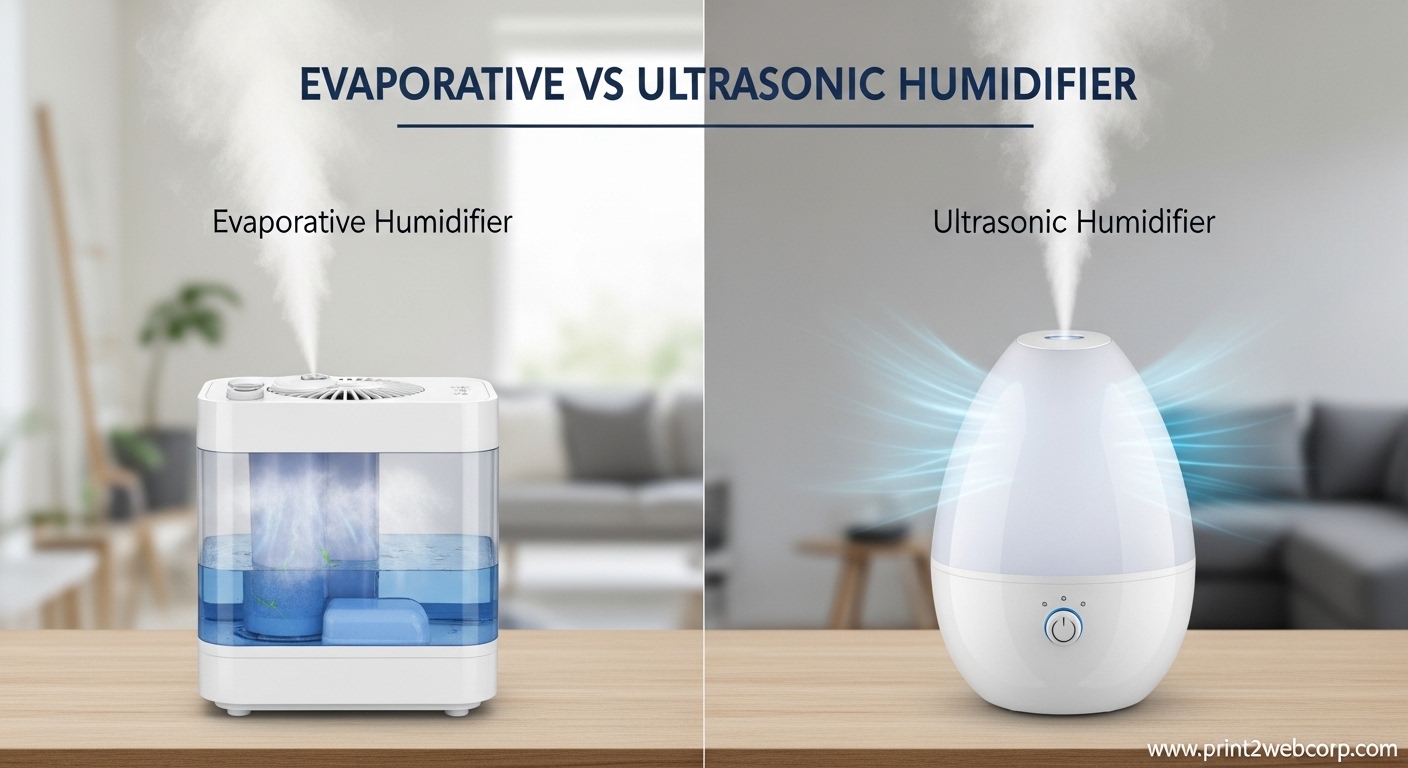
How Ultrasonic Humidifiers Work
Ultrasonic humidifiers use high-frequency vibrations to create water droplets so small they become a fine cool mist. Inside the unit, a small metal diaphragm vibrates at ultrasonic speeds (typically beyond human hearing at frequencies over 20kHz), which shakes water into microscopic particles.
A fan then blows these tiny water droplets out of the unit and into your room air. The mist is nearly invisible as it exits the humidifier, which is why many ultrasonic models include a cool mist output visible only when the room light hits it just right.
This technology is elegantly simple with very few moving parts, which explains why ultrasonic models can be made so compact and quiet. The vibrating plate works silently, and most units include a small, low-speed fan that’s barely noticeable even on the highest settings.
The result is a cool mist humidifier that adds moisture without heating the water, making it energy-efficient and safe to touch. However, this simplicity comes with a notable drawback: any minerals dissolved in your water get aerosolized along with the moisture, creating the infamous white dust problem.
How Evaporative Humidifiers Work
Evaporative humidifiers take a completely different approach, using natural evaporation rather than mechanical misting. A wick filter (also called a wick or evaporative pad) sits partially submerged in the water reservoir, absorbing water like a sponge.
A fan inside the unit pulls air from your room and pushes it through this moist wick filter. As the dry air passes through the wet material, water naturally evaporates into the air stream, which then exits the unit as properly humidified air.
This process mimics how nature humidifies air—think of how a lake cools and moistens the surrounding breeze. The wick filter serves a dual purpose: it provides surface area for evaporation and traps minerals, dust, and other impurities from your water.
One of the evaporative humidifier’s biggest advantages is its self-regulating nature. When your room air is already humid, evaporation naturally slows down because the air can’t hold more moisture. This built-in humidity control means you’re less likely to over-humidify your space compared to ultrasonic models that keep pumping mist regardless of current humidity levels.
Evaporative vs Ultrasonic Humidifier: Side-by-Side Comparison
| Feature | Ultrasonic Humidifier | Evaporative Humidifier |
|---|---|---|
| Noise Level | Nearly silent (whisper-quiet operation) | Fan noise on medium/high settings |
| White Dust Issue | Yes, unless using distilled water | No, wick traps minerals |
| Water Type Required | Distilled recommended (to avoid dust) | Tap water works fine |
| Maintenance | Weekly cleaning (no filter replacement) | Filter replacement every 1-3 months |
| Initial Cost | $30-$80 (filter-free models) | $40-$100 |
| Long-term Cost | Distilled water adds up | Filter replacements ($10-$25 each) |
| Energy Use | Very low (no heating element) | Moderate (fan runs continuously) |
| Room Size Coverage | Small to medium rooms best | Can handle larger spaces |
| Humidity Control | May over-humidify (needs humidistat) | Self-regulating (natural limit) |
| Bacteria Risk | Higher if not cleaned regularly | Lower (wick filters impurities) |
Noise Comparison: Why This Matters for Bedrooms
If you’re planning to use your humidifier in a bedroom or nursery, noise levels should be a top consideration in your evaporative vs ultrasonic humidifier decision. This is where ultrasonic models clearly dominate.
Ultrasonic humidifiers earn their “whisper quiet” reputation because the core technology—vibrating ceramic plates—operates silently. The only sound comes from a small, low-speed fan pushing mist out of the unit. Most ultrasonic models produce less than 25 decibels on low settings, which is quieter than a whisper.
I’ve tested ultrasonic humidifiers in my own bedroom for weeks, and the only way I knew they were running was checking the water level the next morning. Light sleepers consistently report ultrasonic models as the best humidifier for sleeping because they don’t create the constant white noise that evaporative units produce.
Evaporative humidifiers, by contrast, rely on a fan to pull air through the wet wick filter. On low settings, this fan hum is relatively subtle and can actually serve as white noise that some people find soothing for sleep. However, crank an evaporative humidifier to medium or high to combat very dry air, and you’ll definitely notice the constant fan drone.
For nurseries and children’s rooms where silence matters, ultrasonic humidifiers are the clear winner. Many parents specifically choose ultrasonic models because they don’t want to risk disturbing a sleeping baby with fan noise.
White Dust and Mineral Issues: The Hidden Problem
White dust is the single biggest complaint owners have about ultrasonic humidifiers, and it’s a crucial factor in the evaporative vs ultrasonic humidifier debate. This fine white powder settles on furniture, electronics, and surfaces near your humidifier, and it’s actually aerosolized minerals from your water.
When ultrasonic technology vibrates water into a mist, it doesn’t discriminate between H2O molecules and dissolved minerals like calcium and magnesium. If you live in an area with hard water (and most of us do), your tap water contains significant mineral content that ends up coating your belongings when the water evaporates.
This white dust isn’t harmful to most people, but it’s annoying to clean and can accumulate on electronics, potentially causing issues over time. More importantly, these mineral particles become airborne and can be inhaled, which concerns some health experts, especially for people with respiratory conditions.
Evaporative humidifiers avoid this problem entirely because the wick filter traps minerals before they can enter your air. As water evaporates from the wick, minerals remain behind in the filter material, which is why the filter eventually turns brown and hard—those are the mineral deposits that would have become white dust in an ultrasonic unit.
If you choose an ultrasonic humidifier, you’ll either need to use distilled water (which adds significant cost and hassle) or accept regular white dust cleanup as part of ownership. Many Reddit users in hard water areas report switching from ultrasonic to evaporative specifically to avoid the white dust problem.
Maintenance and Cleaning Requirements
Both evaporative and ultrasonic humidifiers require regular maintenance to prevent bacteria growth and ensure optimal performance, but the type and frequency of maintenance differs significantly between the two technologies.
Ultrasonic humidifiers need thorough cleaning at least once a week, more often if you use tap water. The water reservoir should be emptied, wiped down, and allowed to dry completely between uses to prevent bacterial and mold growth. The ultrasonic vibrating plate and surrounding components require careful cleaning to remove mineral scale and biofilm.
I learned the hard way that skipping even a week of cleaning an ultrasonic humidifier leads to slimy buildup and musty smells. The EPA recommends cleaning humidifiers every three days, which most owners find unrealistic, but it highlights how quickly bacteria can multiply in standing water.
Evaporative humidifiers require less frequent deep cleaning but involve ongoing filter replacement. The wick filter should be replaced every 1-3 months depending on water hardness and usage frequency. Hard water causes mineral scale to build up faster, reducing the filter’s effectiveness and potentially creating odors.
Filter costs add up quickly—expect to spend $10-$25 per replacement, with most models requiring 2-4 filters per year. However, many owners appreciate that filter replacement is simpler than scrubbing mineral scale from ultrasonic components. When the filter looks discolored or performance drops, you simply swap it out.
Both types benefit from using a water treatment solution or occasional vinegar cleaning to remove mineral buildup. However, evaporative humidifiers have an advantage here: the wick filter catches much of the mineral content, so the water reservoir and other components stay cleaner longer.
Cost Analysis: Initial Price vs Long-Term Ownership
The price comparison between evaporative and ultrasonic humidifiers isn’t straightforward because you need to consider both the upfront purchase price and ongoing costs over the humidifier’s lifespan.
Ultrasonic humidifiers typically cost $30-$80 initially, with many basic models available under $50. Their simple design with few moving parts keeps manufacturing costs low. However, if you use distilled water to avoid white dust, expect to spend $10-$15 per gallon, with most households using 1-2 gallons per day during winter months.
Over a typical heating season (say, 4 months), using distilled water in an ultrasonic humidifier can cost $240-$360 just for water. That’s significantly more than the humidifier itself cost in the first place. If you choose tap water instead, you’ll save on water costs but may face white dust cleanup and potential mineral buildup issues.
Evaporative humidifiers usually cost $40-$100 upfront, slightly more than ultrasonic models on average. The ongoing cost comes from filter replacements. With filters costing $10-$25 each and needing replacement every 1-3 months, budget $40-$120 per year for filters, assuming average usage.
Over three years of ownership, an ultrasonic humidifier using distilled water might cost you $50 (initial) + $900 (distilled water) = $950 total. An evaporative humidifier might cost $70 (initial) + $300 (filters) = $370 total over the same period.
Energy costs are relatively similar between the two types. Ultrasonic models use very little electricity since they only power a small fan and vibrating plate. Evaporative humidifiers use more electricity for the fan but still typically cost less than $5 per month to run continuously.
Health Considerations: COPD, Allergies, and Respiratory Conditions
For people with respiratory conditions like COPD, asthma, or allergies, the choice between evaporative and ultrasonic humidifiers takes on added importance. Both types can help relieve symptoms caused by dry air, but each carries specific health considerations.
Ultrasonic humidifiers aerosolize everything in your water—not just minerals but also bacteria, mold spores, and other microorganisms if the unit isn’t cleaned meticulously. For people with compromised respiratory systems, these airborne particles can trigger symptoms or worsen existing conditions.
Many pulmonologists recommend evaporative humidifiers for COPD patients because the wick filter acts as an additional barrier, trapping impurities before they can enter your breathing air. However, evaporative humidifiers also require diligent maintenance—dirty or moldy wick filters can themselves become sources of allergens and irritants.
Allergy sufferers face a trade-off. Ultrasonic models using distilled water provide clean moisture without introducing allergens from the water itself. However, if over-humidification occurs (common with ultrasonic models lacking humidistats), excess moisture can promote dust mite populations and mold growth—both major allergy triggers.
Evaporative humidifiers offer better protection against over-humidification thanks to their self-regulating design, which benefits allergy sufferers concerned about dust mites and mold. However, the constant fan operation can circulate existing allergens in your room air, potentially worsening symptoms for some people.
For anyone with respiratory concerns, using a hygrometer to monitor humidity levels is essential regardless of humidifier type. The ideal indoor humidity range is 30-50%, and levels above 60% create conditions where mold, dust mites, and bacteria thrive.
Baby and Child Safety Considerations
Parents researching evaporative vs ultrasonic humidifier for baby nurseries need to weigh several safety and practical factors beyond basic humidification performance.
Ultrasonic humidifiers are generally preferred for nurseries primarily due to their quiet operation. Sleep is precious for both babies and parents, and a silent humidifier won’t risk waking a sleeping child. Many pediatricians specifically recommend ultrasonic models for nurseries for this reason.
However, the white dust issue becomes more concerning when it comes to babies and young children. Infants spend significant time near floor level where mineral dust settles, and their developing respiratory systems are more sensitive to airborne particles. Many pediatricians recommend using only distilled water in ultrasonic humidifiers for babies to eliminate this risk.
Evaporative humidifiers eliminate white dust concerns but introduce fan noise that might disturb sleep. Some parents find the white noise helpful for masking other household sounds, but others find it disruptive. The fan also creates a minor safety concern—curious toddlers might be tempted to poke fingers through the grill, though most units have safety features to prevent injury.
Regardless of type, look for models with automatic shut-off when the water reservoir is empty. This safety feature prevents the unit from running dry, which could potentially overheat components or become a fire hazard (though rare with cool mist humidifiers).
For baby use, avoid any humidifier with added scents, essential oils, or vaporizing features unless specifically designed and approved for infant use. A basic, clean cool mist is safest for developing respiratory systems.
Room Size Suitability and Placement
Both evaporative and ultrasonic humidifiers come in various sizes designed for different room dimensions, but each technology has inherent limitations affecting room size suitability.
Ultrasonic humidifiers work best in small to medium-sized rooms (up to about 400 square feet). The fine mist they produce settles relatively quickly, so larger spaces may need multiple units or a very powerful model. In open-concept homes, ultrasonic humidifiers struggle to maintain consistent humidity levels across the entire area.
Placement matters significantly with ultrasonic models. Place them at least 2-3 feet from walls and furniture to allow proper mist dispersal and prevent moisture damage. Avoid placing ultrasonic humidifiers on or near wood furniture, electronics, or anything that could be damaged by moisture or mineral dust.
Evaporative humidifiers generally handle larger rooms more effectively because the fan pushes humidified air further into the space. Many evaporative models are rated for rooms up to 600-1000 square feet, making them better choices for great rooms, open living areas, or multiple connected spaces.
The fan in evaporative models also helps circulate air, promoting more even humidity distribution throughout the room. This circulation can be beneficial but also means placement is less critical—you don’t need to worry as much about moisture damage to nearby furniture since evaporative humidifiers don’t produce the concentrated mist that ultrasonic models do.
Regardless of type, avoid placing humidifiers directly against walls or in corners where air circulation is limited. Elevating the humidifier slightly (on a nightstand or table, not the floor) usually improves performance for both technologies.
Mold and Condensation Prevention
Both evaporative and ultrasonic humidifiers can cause condensation and mold problems if used improperly, but the risks manifest differently with each technology.
Ultrasonic humidifiers are more prone to causing over-humidification because they continuously pump mist regardless of current humidity levels. Without a built-in humidistat (or if you don’t use one), ultrasonic models can easily push humidity above 60%, especially in smaller rooms.
Excess humidity leads to condensation on windows, walls, and other cold surfaces. This moisture creates ideal conditions for mold growth, which can cause structural damage and health problems. I’ve seen windowsills completely ruined by mold caused by an overworked ultrasonic humidifier placed too close to the window.
Evaporative humidifiers are less likely to cause over-humidification thanks to their self-regulating design. As room humidity increases, the evaporation rate naturally slows. However, evaporative models can still cause problems if the wick filter becomes saturated and can’t absorb more water, or if the unit runs continuously in a very small space.
To prevent mold issues with either type, monitor humidity levels with a hygrometer and aim for 30-50% relative humidity. If you notice condensation on windows or walls, reduce your humidifier’s run time or output setting immediately.
Regular cleaning is essential to prevent mold growth inside the humidifier itself. Both types can become mold incubators if not maintained properly, with the water reservoir, wick filter, and internal components all potential breeding grounds for mold and bacteria.
Final Verdict: Choose the Right Humidifier for Your Needs
After testing both technologies extensively and analyzing real user experiences, the evaporative vs ultrasonic humidifier decision comes down to your specific priorities and living situation.
Choose an Ultrasonic Humidifier If:
- You need near-silent operation for bedrooms, nurseries, or offices where noise matters
- You’re willing to use distilled water to avoid white dust problems (factor in the ongoing cost)
- You have a small to medium room (under 400 square feet) that needs humidification
- You want minimal maintenance beyond regular cleaning (no filter replacements to track)
- You live in an area with soft water or have access to affordable distilled water
Choose an Evaporative Humidifier If:
- You want to use tap water without dealing with white dust on your furniture and surfaces
- You’re humidifying a larger space or open-concept area where the fan circulation helps
- You prefer self-regulating humidity that won’t over-humidify your space
- You don’t mind filter replacements and the associated ongoing costs (budget $40-120/year)
- White dust and mineral aerosolization concerns you, especially for respiratory health
- You have hard water and don’t want to buy distilled water constantly
FAQ’s
What type of humidifier is the healthiest?
Evaporative humidifiers are generally considered the healthiest option because the wick filter traps minerals, bacteria, and impurities before they can enter your air. However, ultrasonic humidifiers using only distilled water can also be healthy since they avoid mineral aerosolization. The key factor is proper maintenance—any humidifier becomes unhealthy if not cleaned regularly to prevent mold and bacteria growth.
Should I use a humidifier if I have COPD?
Many pulmonologists recommend evaporative humidifiers for COPD patients because the wick filter provides an additional barrier against airborne particles. Both types can help relieve symptoms caused by dry air, but ultrasonic models require meticulous cleaning to avoid aerosolizing bacteria or mold spores. Regardless of type, monitor humidity levels carefully and keep them between 30-50% to prevent excess moisture that could worsen respiratory issues.
Do evaporative humidifiers actually work?
Yes, evaporative humidifiers work very effectively and have been used for decades. They add moisture through natural evaporation as air passes through a wet wick filter. While they may not raise humidity as quickly as ultrasonic models, they provide more consistent, self-regulating humidity that’s less likely to over-humidify your space. Many users find evaporative models more effective for larger rooms and open spaces.
Will a humidifier help with a sore throat in the morning?
Yes, both evaporative and ultrasonic humidifiers can help relieve morning sore throat caused by dry air, especially during winter months when heating systems dry out indoor air. Maintaining 30-50% humidity keeps your throat and nasal passages moist, reducing irritation and discomfort. Place the humidifier near your bed but not directly facing you for best results. Combined with staying hydrated, proper humidification makes a noticeable difference for most people.
Final Recommendation
For most households in 2026, I recommend starting with an ultrasonic humidifier for bedrooms and nurseries where silence is golden, provided you commit to using distilled water or are prepared for weekly deep cleaning to minimize white dust. The quiet operation alone makes ultrasonic models worth it for light sleepers and parents.
For main living areas, larger spaces, or households with hard water, evaporative humidifiers offer better long-term value despite the filter replacement costs. The ability to use tap water, avoid white dust, and benefit from self-regulating humidity makes them more practical for everyday use.
Many homes actually benefit from having both types: an ultrasonic model in the bedroom for silent nighttime operation and an evaporative unit for daytime use in shared living spaces. This combination gives you the best of both technologies while minimizing their respective drawbacks.
Whichever type you choose, remember that proper maintenance and humidity monitoring are essential for safe, effective operation. A dirty humidifier of any type is worse than no humidifier at all, so commit to the cleaning schedule before you buy.
Leave a Reply