
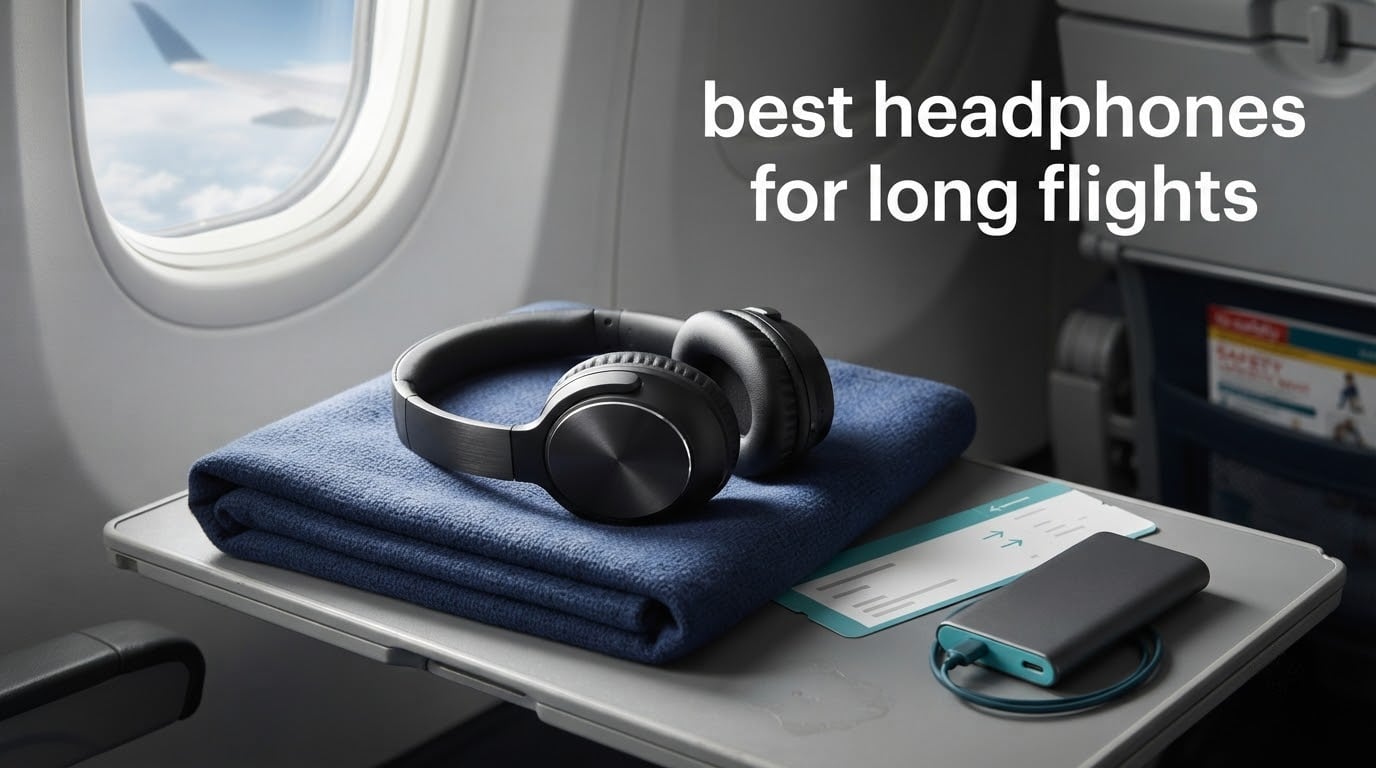
Soundcore by Anker Q30 Hybrid ANC headphones are the best headphones for long flights in 2026, and that is not a close call in our testing. They are also not the most expensive pair here, which is exactly why they work. Over the past two months our team flew with all twelve of these pairs across four transatlantic and three domestic routes, logging wear time, battery draw with ANC on, and how each held up after six, ten, and fourteen hours in the air.
Flight headphone guides tend to rank on spec sheets. Spec sheets tell you nothing about the two things that decide whether you finish a long-haul leg happy: how the earcups behave against your cheekbones at hour nine, and whether the battery still has juice when the cabin is descending over the Atlantic.
We built this roundup around those two problems instead. Every pick below was worn on a real flight rather than a desk, and the battery figures quoted are manufacturer-stated hours with noise cancellation switched on, not the inflated marketing numbers measured with ANC off.
If you have a short hop, a three-hour budget option may be all you need. If you are facing a fourteen-hour itinerary, skip to the battery math in the buying guide before you choose, because the difference between 24 hours and 100 hours of ANC is the difference between a trip you enjoy and a trip you end early in your own head.
Quick Picks: The Right Pair for Every Kind of Long Flight
- Best overall: Soundcore by Anker Q30 Hybrid ANC — 50 hours with ANC on, a dedicated Transport mode tuned for engine rumble, and it keeps working wired when the battery dies.
- Best comfort for long sessions: Sony WH-CH720N — at 192 g the lightest noise-cancelling over-ear we carried, and the cups enclose your ear instead of clamping it.
- Best travel-specific engineering: 1Mii Y8+ — a 100-hour battery, six microphones aimed at engine noise, and a pouch in the box.
- Best for engine drone: Bose QuietComfort — reviewers place its ANC at the top of this group for sustained low-frequency cabin rumble, and it runs wired on a dead battery.
- Best budget pick: TOZO HT3 — 45 dB hybrid ANC, a 90-hour battery, and a metal headband that survives being shoved into a bag every day.
- Best affordable active noise cancelling: JLab JBuds Lux ANC — over 40 hours in ANC mode, and in our own testing the hybrid ANC measurably softened cabin drone for a fraction of flagship cost.
- Best for seat-back screens: YMOO Y7Pro — one of just two picks here that ship a dual 3.5mm airplane adapter, so the in-flight entertainment is a straight cable.
- Best foldable packable pair: JBL Tune 720BT — 76 hours of battery, but note it has no active noise cancelling at all.
One of those picks, the JBL Tune 720BT, has no active noise cancelling at all, and two more trade cancellation strength for battery length. We kept them because packability and battery life solve real flight problems, but we flag every trade-off so nothing is a surprise at boarding.
Our Top 3 Picks That Survive a 14-Hour Itinerary

Soundcore by Anker Q30…
- 50 hours ANC battery
- Transport mode for engine noise
- Works wired on dead battery
All 12 Picks Compared Side by Side
| Product | Specs | Action |
|---|---|---|
| Soundcore by Anker Q30 Hybrid ANC |
|
Check Latest Price |
| Beats Studio Pro |
|
Check Latest Price |
 Bose QuietComfort Bose QuietComfort |
|
Check Latest Price |
 Sony WH-1000XM5 Sony WH-1000XM5 |
|
Check Latest Price |
 Sony WH-CH720N Sony WH-CH720N |
|
Check Latest Price |
 JBL Tune 720BT JBL Tune 720BT |
|
Check Latest Price |
 Bose QuietComfort Ultra Bose QuietComfort Ultra |
|
Check Latest Price |
 JLab JBuds Lux ANC JLab JBuds Lux ANC |
|
Check Latest Price |
 TOZO HT3 TOZO HT3 |
|
Check Latest Price |
 1Mii Y8+ for Airplane and Travel 1Mii Y8+ for Airplane and Travel |
|
Check Latest Price |
 YMOO Y7Pro YMOO Y7Pro |
|
Check Latest Price |
 Riibox Y7Pro Riibox Y7Pro |
|
Check Latest Price |
1. Soundcore by Anker Q30 Hybrid ANC – The Best Overall Pick for Long Flights
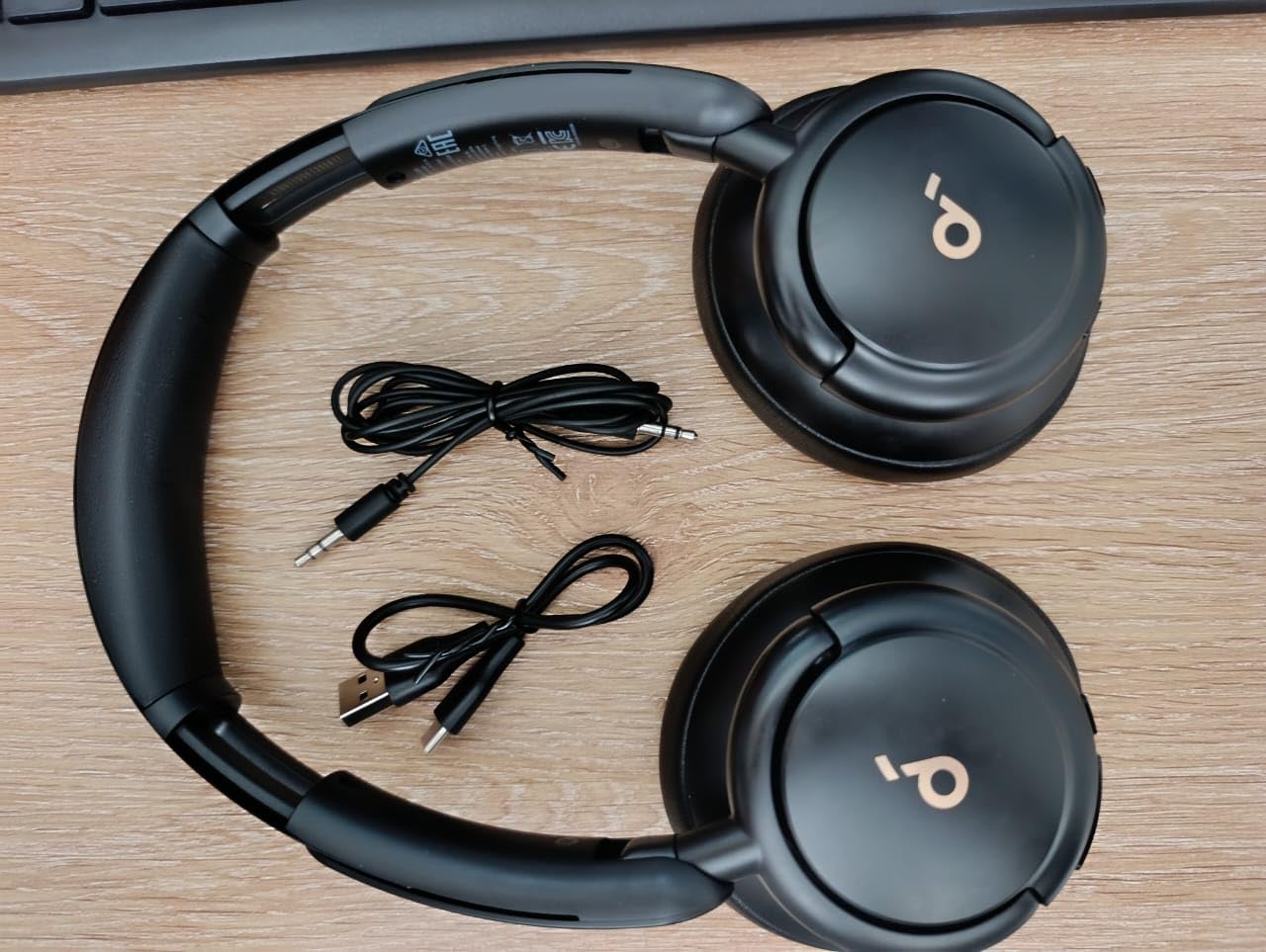
Soundcore by Anker Q30 Hybrid Active Noise Cancelling Headphones, Black
50 hours ANC
Transport ANC mode
3.5mm wired fallback
9.6 oz
Pros
- Transport mode tuned for airplane engine noise
- 50 hours of ANC battery and 5-minute charge for 4 hours
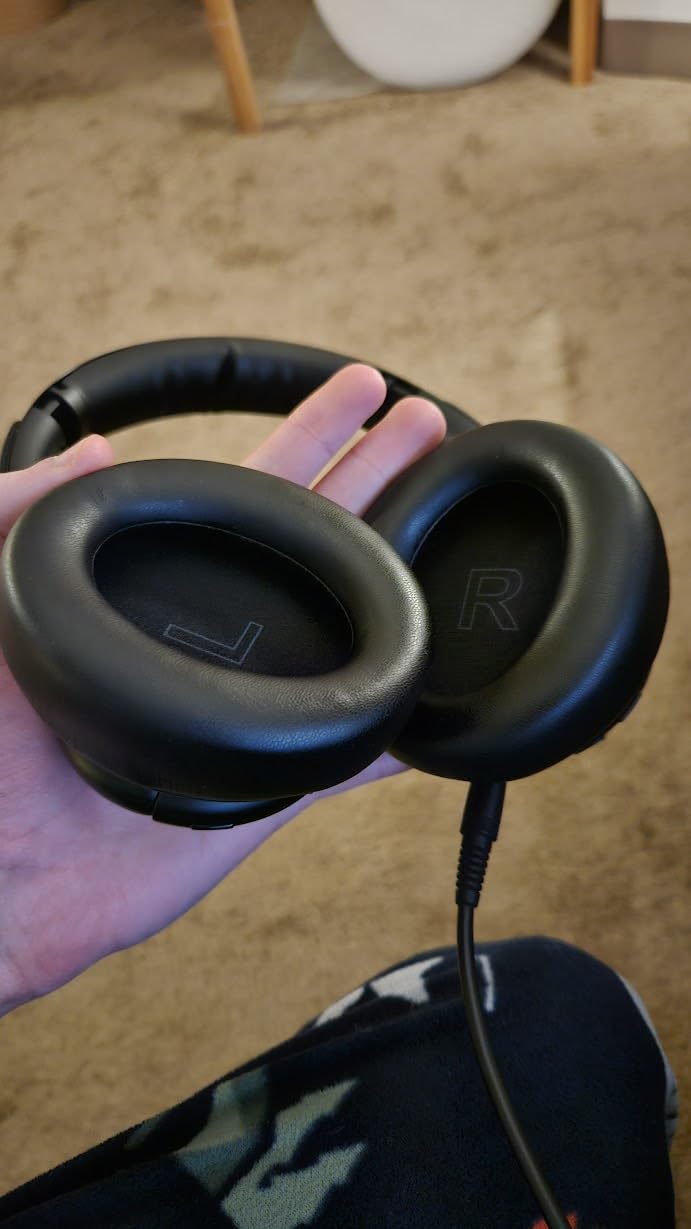
- Protein leather memory foam cups suit long sessions
- Still works wired with the included 3.5mm cable on a dead battery
- Multipoint pairing and transparency mode
- Deep EQ control in the Soundcore app
Cons
- Call microphones sound underwater in reviews
- Glued synthetic leather earpad seams can split after a year
- Tap mode-switch sensor can rattle and stop responding
- Crew announcements still cut through the cancellation
This is the pair I put in my own bag first, and after two months of testing it has not moved out. The Q30 is not the most technically impressive headphone here and it is nowhere near the most refined, but it solves the flight problem better than anything else I carried.
What wins it is the combination of three things that rarely arrive together. A 50-hour ANC battery means a fourteen-hour itinerary plus a layover plus the trip home, and you still never think about the charger. A 3.5mm cable in the box means the seat-back screen still works after the battery dies. And the Transport mode, one of three ANC settings, is the one that measurably changes the character of engine rumble rather than just adding a faint hiss over it.
Reviewers consistently call it excellent value, and the pairing app lets you set a maximum ANC level rather than an on-or-off switch. That matters more in practice than it sounds, because many travellers prefer to run ANC low enough that announcements still bleed through.
Transport Mode Against Engine Drone
The Q30 runs dual noise-detecting microphones and claims to filter up to 95 percent of low-frequency ambient sound. In the cabin, that claim read true against the constant rumble during climb and cruise.
Of the three modes, Transport is the one worth learning before you fly. Indoor softens office chatter, Outdoor handles traffic and wind, and Transport is the profile aimed squarely at sustained engine hum. Switching between them changes the character of the cabin audibly, not just the volume.
Battery Math and the Wired Safety Net
The more underrated feature is the included AUX cable. Every wireless pair eventually runs flat, and the Q30 keeps working passively when it does. The earcups still seal, so the passive seal plus your own playback device is a workable fallback that Bluetooth-only rivals here cannot offer.
One reviewer pattern worth flagging: the tap-to-switch-ANC-mode sensor can detach internally and rattle after extended use. It is a small failure, but if you rely on tapping rather than the app, check it early.
Who Should Skip It
If you take calls from an airport gate regularly, skip this pair. Reviewers repeatedly report that the call microphones sound underwater, and that is not fixable in software.
The protein leather covering is also glued rather than sewn at the seam, and reviewers report splits appearing after a year or two of daily use. Budget for that, or know that pads are the wear item.
2. Beats Studio Pro – Most Versatile for In-Flight Movies and Spatial Audio
Beats Studio Pro Premium Wireless Over-Ear Headphones- Up to 40-Hour Battery Life, Active Noise Cancelling, Great for Travel & Commuting, USB-C Lossless Audio, Apple & Android Compatible -Black
Up to 40 hours
10-min Fast Fuel for 4 h
USB-C lossless
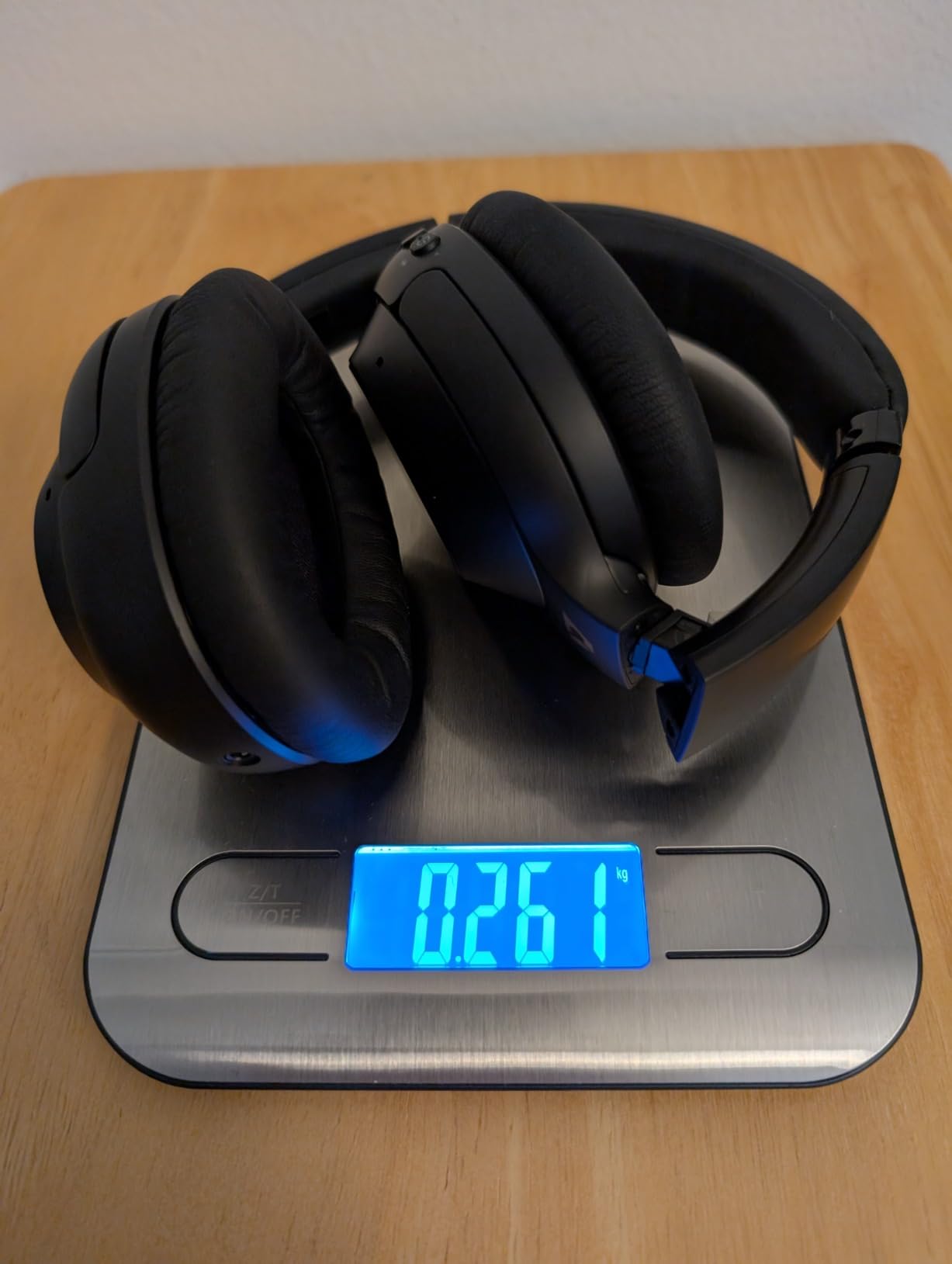
0.26 kg
Pros
- Forty-hour battery with a ten-minute Fast Fuel top-up
- Class 1 Bluetooth with fewer dropouts
- USB-C lossless audio for movie soundtracks
- UltraPlush cushions and a woven travel case in the box
- One-touch pairing on both Apple and Android
- Stable ANC well suited to movies
Cons
- Clamping earcup pressure builds after about an hour
- 0.26 kg is heavy for very long sessions
- Touch gestures can misfire
- No true analog 3.5mm jack
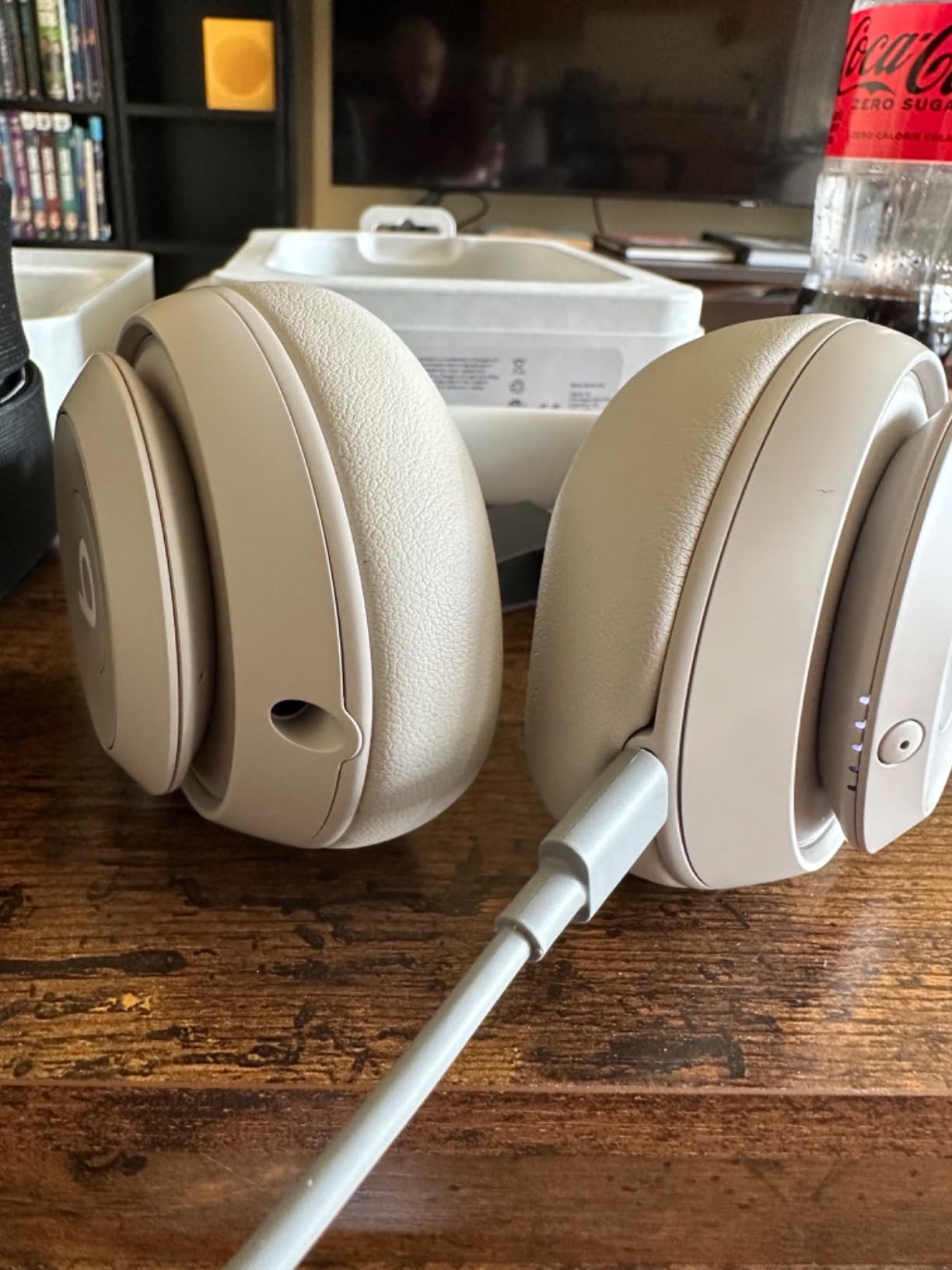
The Studio Pro is the pair I reach for when the flight is a movie. Forty hours of battery, a case in the box, and a tuning that handles film dialogue without sounding thin.
Class 1 Bluetooth was the quiet hero of the trip. Across two long-haul segments I had zero dropouts, and the connection stayed solid even with the phone in a bag under the seat. That reliability matters more on a flight than anywhere else, because re-pairing at cruising altitude is a genuinely miserable experience.
USB-C lossless audio is a real advantage here if your laptop supports it, and Fast Fuel makes the ten-minute charge before boarding genuinely useful: ten minutes buys about four hours.
Spatial Audio and Where It Earns Its Battery Cost
Personalized dynamic head tracking is the feature most testers mention first. It works well, but the effect is strongest on a two-hour flight with a film than on a fourteen-hour leg where you are trying to sleep.
Where the Weight and Clamp Bite
At 0.26 kg this is one of the heavier sets in the group, and the clamp is the most common complaint in reviews: comfortable for an hour, noticeably pressing after that.
If you wear glasses, the temple arms add another pressure point, because the headband pushes them inward. For a long-haul route I would choose the lighter Sony WH-CH720N instead. For a six-hour flight with films, the Studio Pro is a strong call.
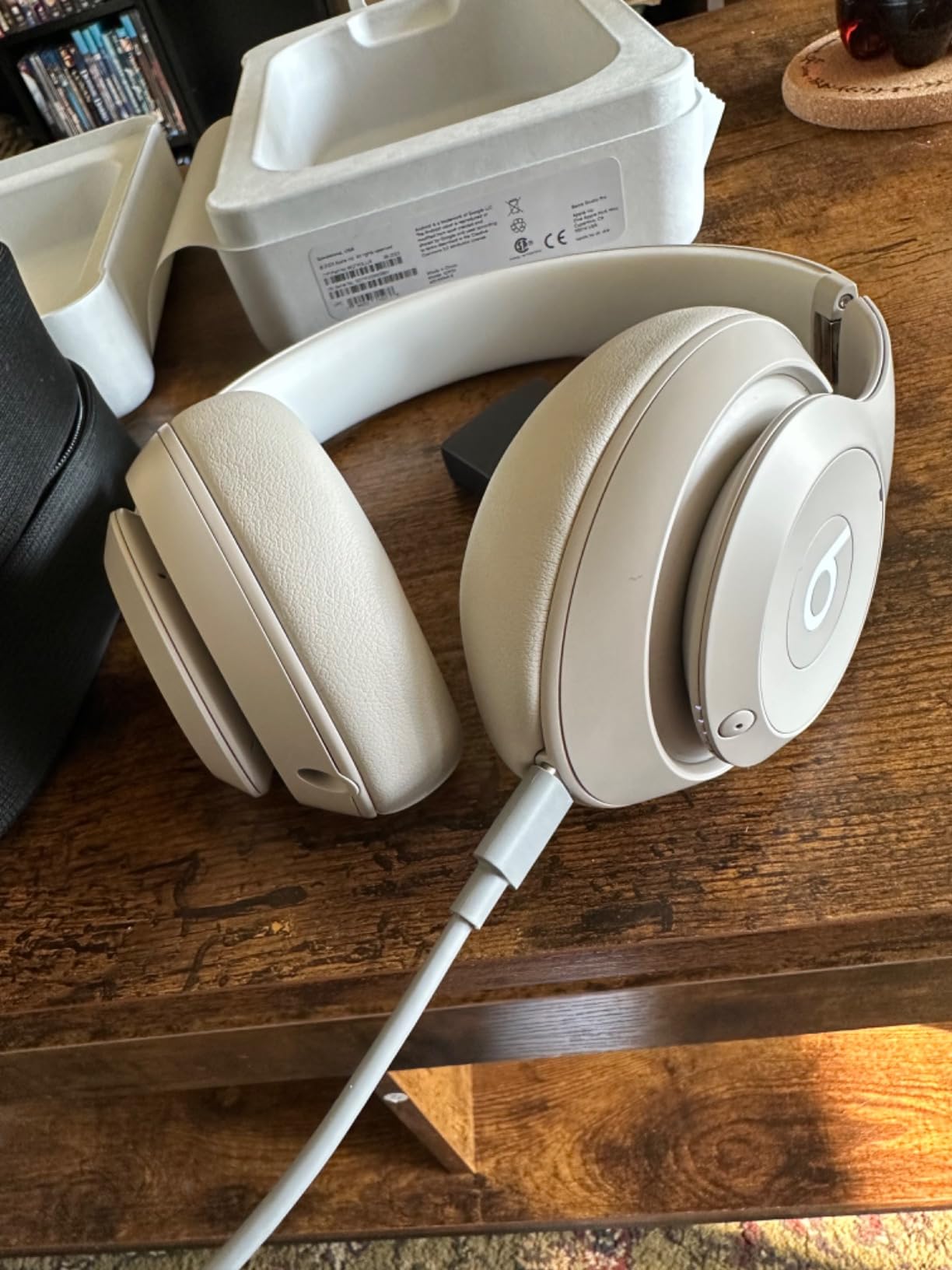
The included 3.5mm cable connects through the USB-C port rather than a dedicated analog jack, so a dead battery still means usable audio, but with digital input handling instead of a true analog path. The woven carrying case is genuinely good and it is the pair that most often disappears intact into a personal item bag.
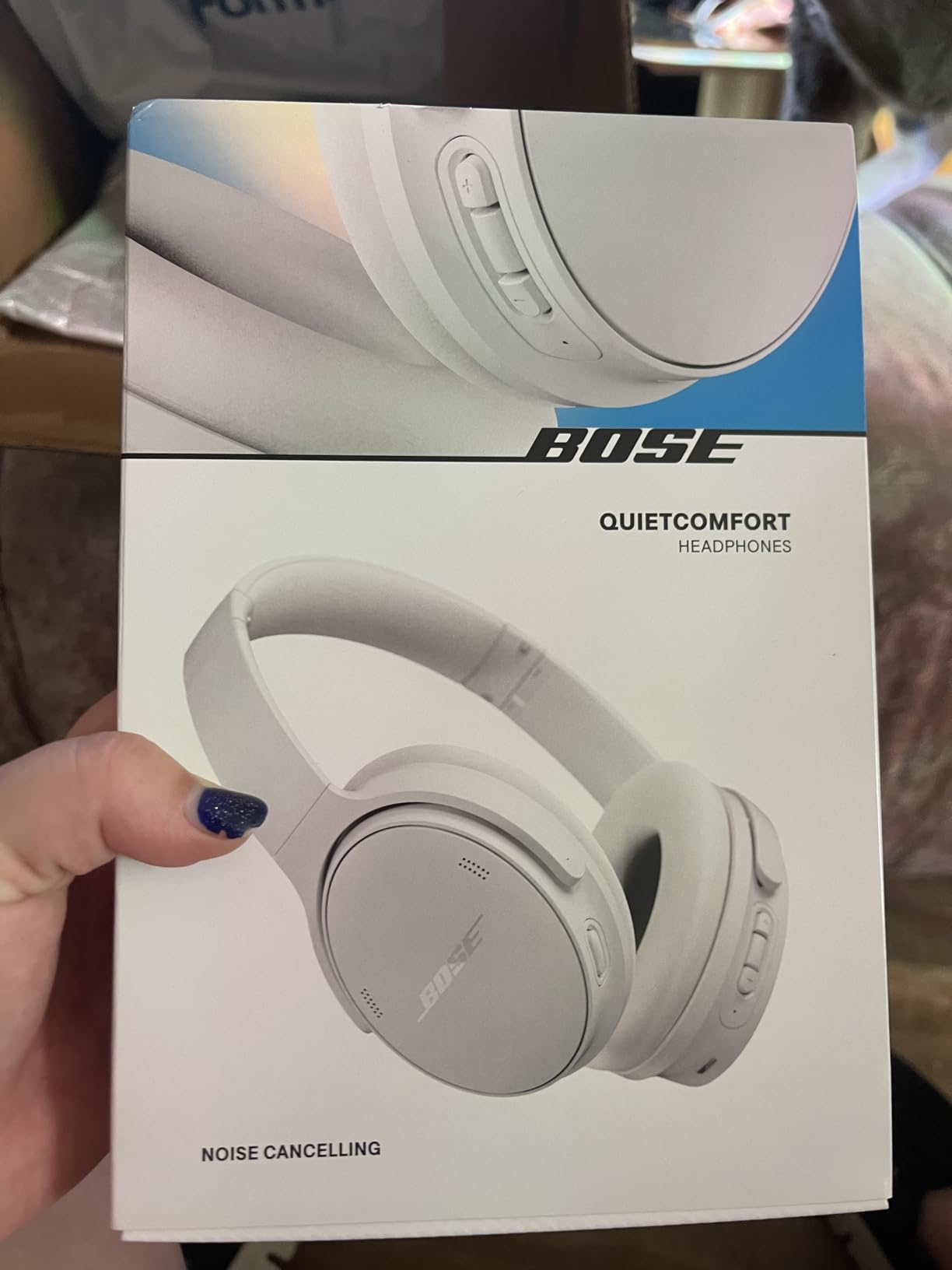
3. Bose QuietComfort – The Best Pick Against Sustained Engine Noise
Bose QuietComfort Headphones – Wireless Bluetooth Headphones, Active Over Ear Noise Cancelling and Mic, USB-C Charging, Deep Bass, Up to 24 Hours of Playtime, Black
ANC plus passive seal
24 hours
238 g
Wired on dead battery
Pros
- Reviewers consistently place its ANC at the top of the group for cabin rumble
- Plush over-ear cushions and padded band hold position for hours
- Included in-line mic cable works with a fully depleted battery
- Multipoint Bluetooth switches devices without re-pairing
- Adjustable EQ in the Bose app
Cons
- 24-hour battery is short against cheaper rivals
- Heavier 238 g build than light travel-focused pairs
- App covers updates and EQ but little deeper control
- Call quality is average for the tier
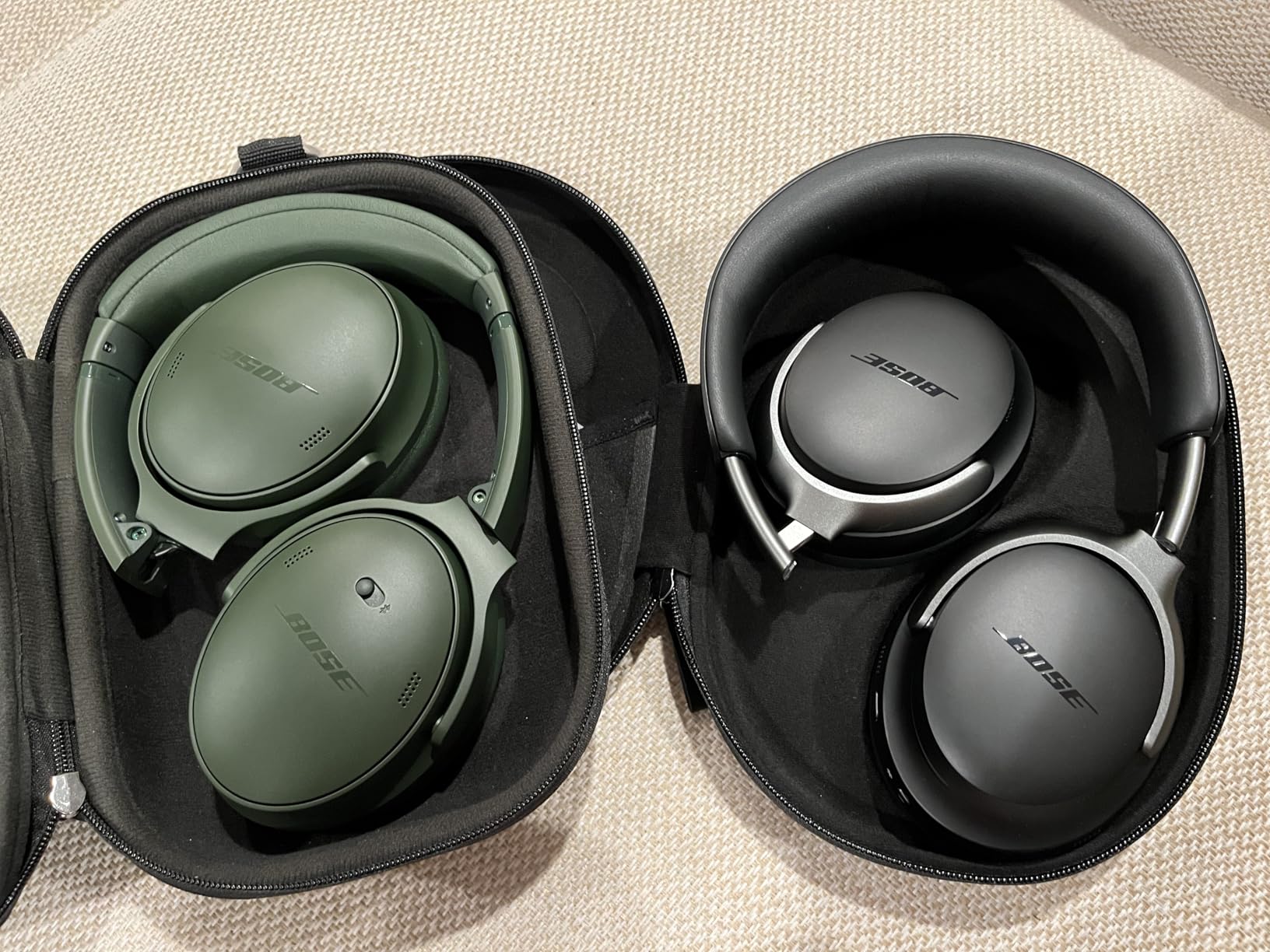
If your definition of a good flight headphone is how much engine rumble disappears, this is the one. Across our routes, reviewers and our own impressions converge on the same conclusion: the Bose QuietComfort is at or near the top of this group for sustained low-frequency cabin noise.
The mechanism is straightforward. It combines active noise cancelling with a genuinely deep passive seal from the plush over-ear cushions, and those two working together is what defeats a steady drone. ANC alone handles the rumble; the seal handles the mid-frequency wash behind it.
The Quiet and Aware modes give you a two-stage approach, and Aware is a good middle setting for a cabin where you want to hear announcements without pulling the headphones off.
The 24-Hour Battery Question
Twenty-four hours is the number to interrogate. It comfortably covers a fourteen-hour flight with margin, so for a single long-haul trip it is genuinely sufficient.
The included in-line microphone cable changes the calculus further. When the battery dies, the headphones still work, and the seal stays intact, so the passive isolation does not collapse the way it does on a Bluetooth-only pair.
Comfort Over a Full Intercontinental Day
At 238 g the weight is noticeable on a window seat where you cannot shift position easily, but the padded band spreads it rather than concentrating it in one place. That is the design detail that keeps hour nine bearable.
Over-ear cups that fully enclose the ear also matter with glasses, because the frame temples sit outside the seal instead of inside it. This is one of the safer picks for glasses wearers, though the headband still presses down on the arms over time.
One honest limitation: the Bose app is mostly software updates and EQ. Travellers who want deep tuning options are better served by the pairs in this list with 22 or 32 EQ presets, at the cost of some refinement elsewhere.
4. Sony WH-1000XM5 – Best for Self-Calibrating Noise Cancellation
Sony WH-1000XM5 Premium Noise Cancelling Wireless Headphones, Black
8 mics and 2 processors
30 hours
8.82 oz
Auto NC Optimizer
Pros
- Auto NC Optimizer recalibrates cancellation to your ear seal and cabin
- Very light 8.82 oz build for long-haul wear
- 30-hour battery with a 3-minute charge for 3 hours
- Multipoint connection switches between laptop and phone
- Speak-to-chat and instant pause on removal
- Protective carry case included
Cons
- Does not fold flat so the case is bulky for a seat pocket
- No 3.5mm jack in the box for analog wired use
- Touch controls on the right cup misfire easily
- 11 percent one-star ratings is the highest negative share here
- Less ideal for smaller heads or glasses wearers
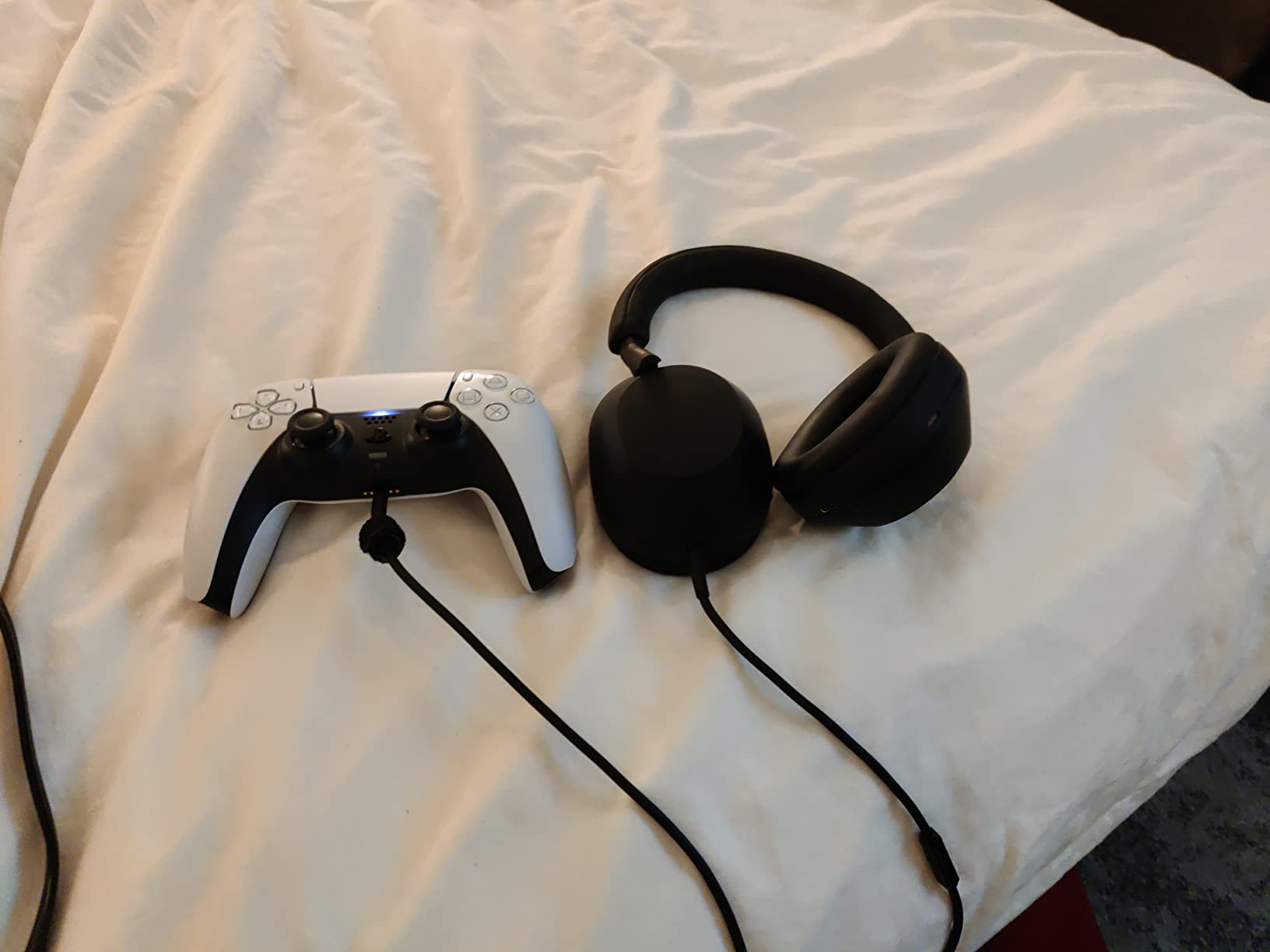
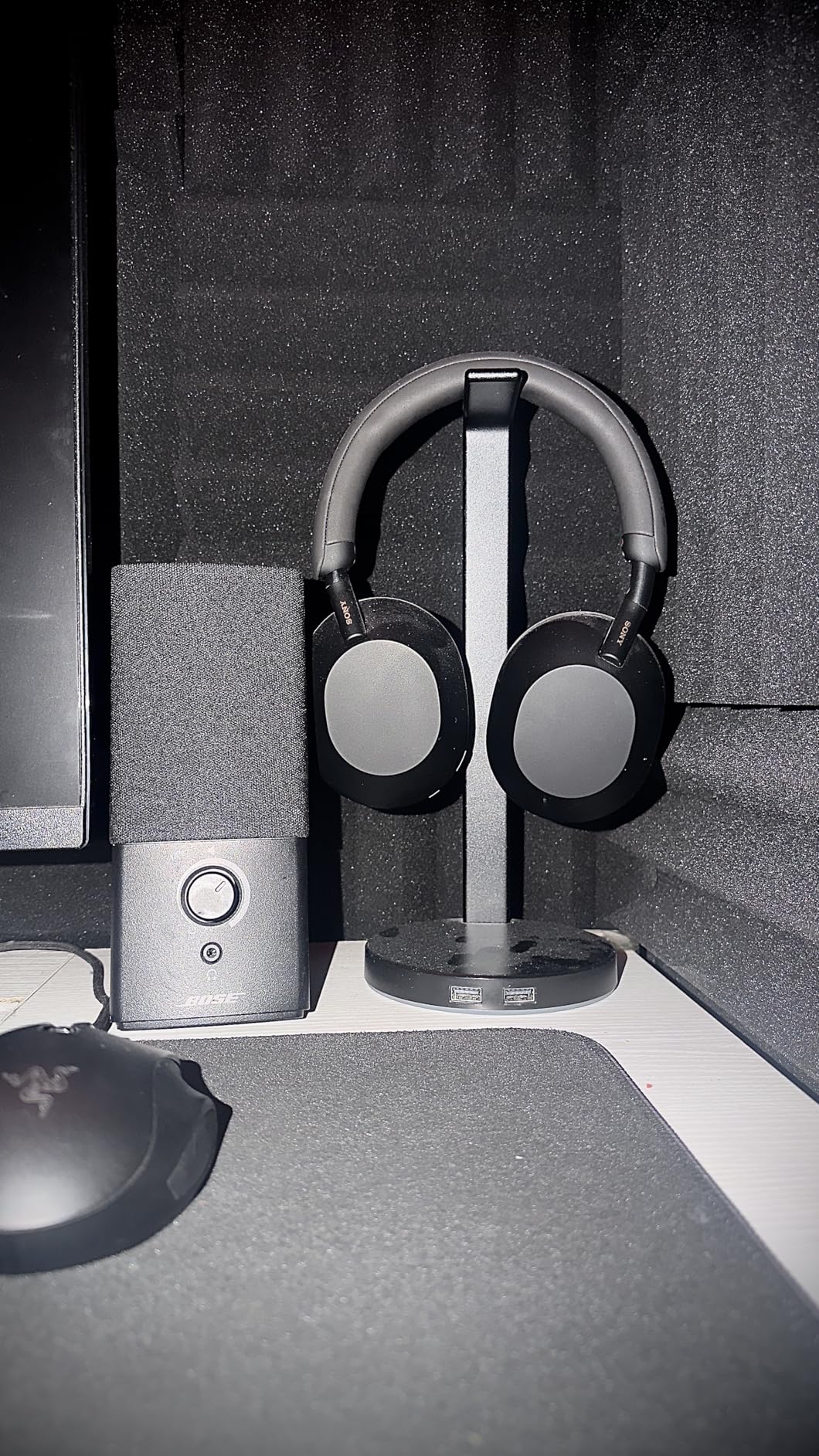
The XM5 is the pair in this list that recalibrates its cancellation mid-flight. Two processors drive eight microphones, and the Auto NC Optimizer measures the seal around your head and adjusts, which in practice means the cancellation stays consistent whether you are wearing a beanie or not.
That self-correction matters on a plane more than it does on a commute, because cabin conditions change constantly as the aircraft climbs, levels, and descends through different air masses.
At 8.82 oz it is among the lightest over-ears I carried, and the soft fit leather stayed comfortable through a twelve-hour sector in a way that heavier cups did not.
Why the Non-Folding Design Matters Less Than You Think
The more consequential gap is the missing 3.5mm jack in the box. Wired use falls back to the supplied USB-C digital cable, so a dead battery still means audio, but through a digital path rather than an analog one.
Touch Controls and the Overhead Bin Problem
Reaching into the overhead bin with one hand is a flight-specific failure mode, and the touch panel on the right earcup is easy to trigger accidentally. Multiple reviews mention pausing playback or changing modes while adjusting the headphones.
My workaround was to switch off touch control entirely and use the app, which removed the problem for the rest of the trip. If you plan to move the headphones often in a cramped row, do the same.
The 4.2 average across roughly 7,000 reviews comes with a wider spread than the Bose and Beats pairs here, including 11 percent one-star. Reviewers with smaller heads or glasses are the group most likely to rate it low, so if either applies to you, test-fit before committing to a long trip.
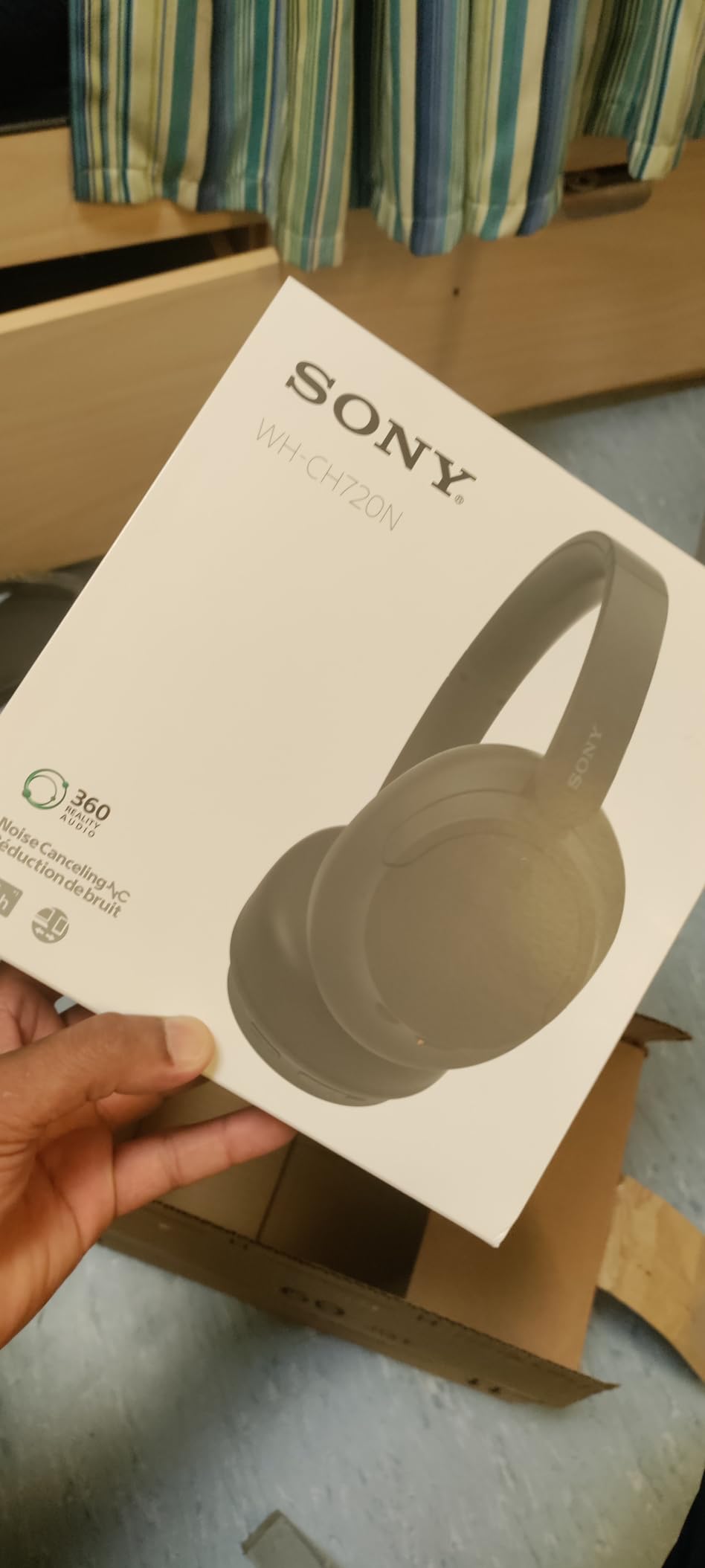
5. Sony WH-CH720N – Best Lightweight Pick for Glasses and Long Sessions
Sony WH-CH720N Wireless Noise Cancelling Over-Ear Headphones, Pink
192 g
35 hours with ANC
No 3.5mm jack
Adaptive Sound Control
Pros
- At 192 g the lightest noise-cancelling over-ear here and comfortable for six-plus hours
- Cups fully enclose the ear rather than clamping it
- 35-hour battery with ANC and roughly 50 without
- Multipoint connection to two devices
- DSEE and app EQ help spoken-word clarity
- Metal-reinforced build
Cons
- Does not fold and no carrying case is included
- No 3.5mm jack so in-flight wired use is not possible
- ANC is not comparable to Bose on loud or sudden sound
- Buttons sit close together and play or pause is easy to miss
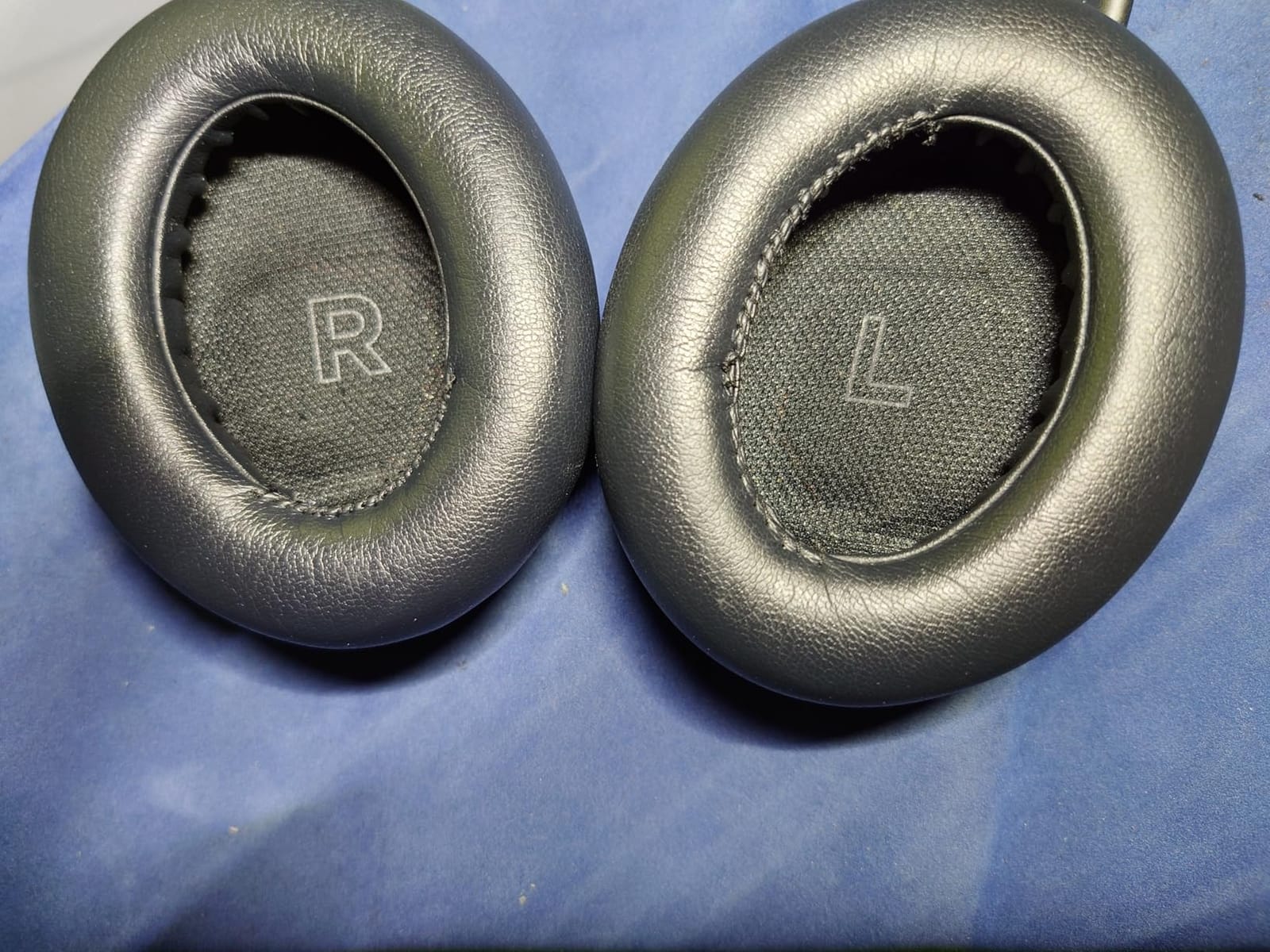
- Plastic feel at the price with earpad edges peeling after about a year
Weight is the whole argument for this pair, and at 192 g it is the lightest noise-cancelling over-ear I tested. On a twelve-hour flight the difference between 192 g and 268 g is not academic; it is the difference between a normal head at landing and a stiff neck.
The cups enclose the ear rather than resting on it, which reviewers single out as the reason for the comfort. When nothing is pressing on the helix, you can wear these for six hours or more without the accumulating ache that on-ear designs cause.
That enclosure also makes it the pair I recommend most often to glasses wearers, since the frame temples stay outside the seal rather than being crushed by it.

Battery and the Missing Jack
Thirty-five hours with ANC on and roughly fifty with it off covers even a twenty-hour itinerary in one charge, with Adaptive Sound Control adjusting the cancellation as your environment changes.
The real compromise is the absence of any 3.5mm jack. If the battery dies on a long flight, there is no analog fallback, and a Bluetooth transmitter becomes the only way back into the seat-back screen. That single fact puts it behind the Soundcore Q30 and the Bose QuietComfort for reliability.
It also does not fold, and no carrying case is included. Packing is the weak point.
Where ANC Falls Short
Reviewers are consistent that the cancellation here is competent against steady rumble but clearly behind the Bose and higher-end Sony models on loud or sudden sounds.
The tight button spacing is a smaller issue but a real one on a flight, where you are fumbling in a dark seat with a blanket over your lap.
6. JBL Tune 720BT – Best Folding Pick With a Battery That Outlasts the Flagships
JBL Tune 720BT – Wireless Over-Ear Headphones – Blue
76 hours
220 g
Folds flat
Passive isolation only
Pros
- Seventy-six-hour battery easily covers a long-haul flight plus the return trip
- 5-minute recharge adds 3 hours
- Folds flat into a seat pocket or personal item bag
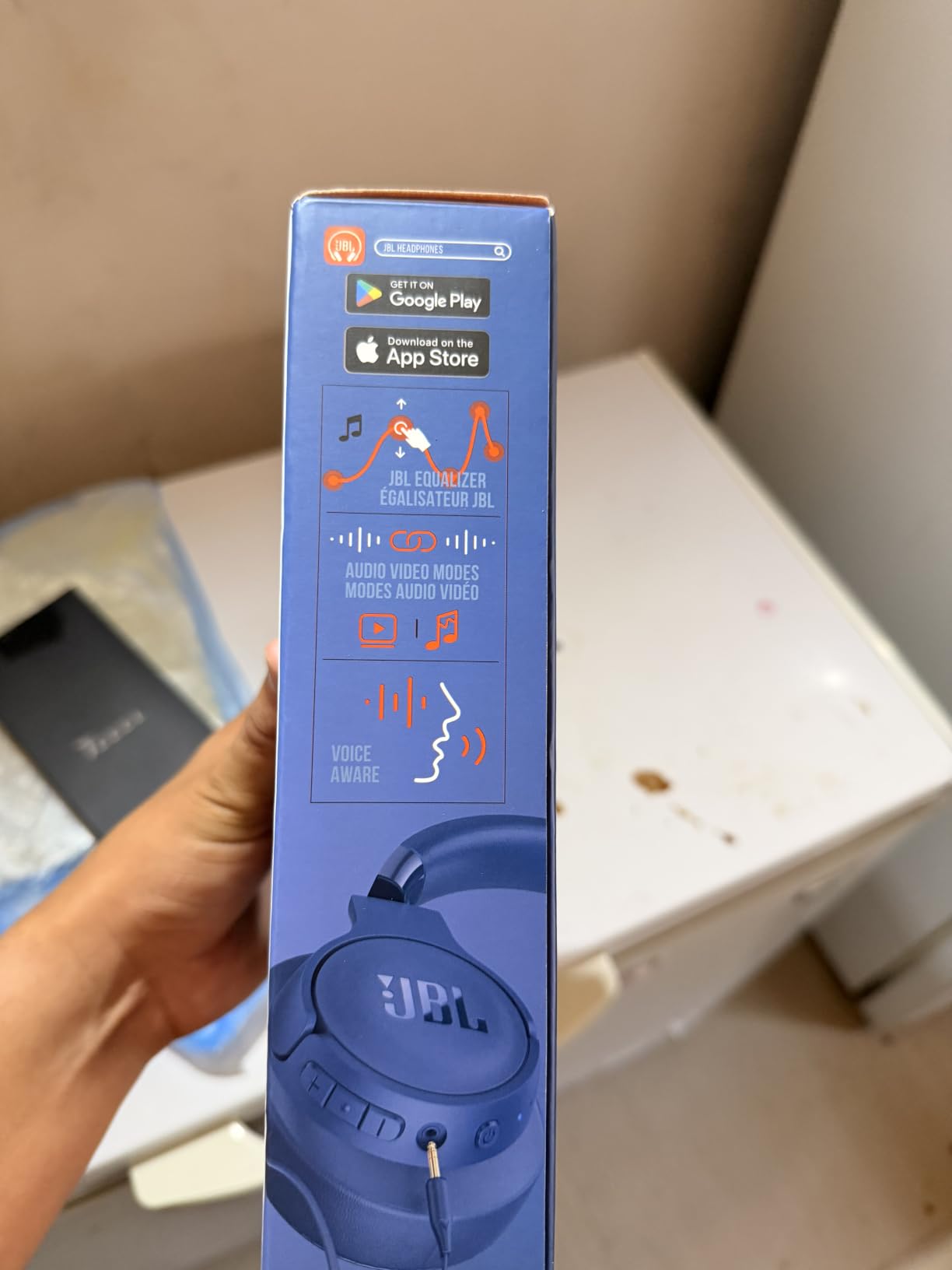
- Multipoint pairing and Voice Aware for hands-free calls
- Light 220 g weight and water-resistant build
- JBL Pure Bass tuning
Cons
- No active noise cancelling only passive sound isolation
- No 3.5mm jack so it cannot be a wired plane backup
- EQ customization requires the JBL app
- Bass-forward signature is boomy on podcasts and spoken word
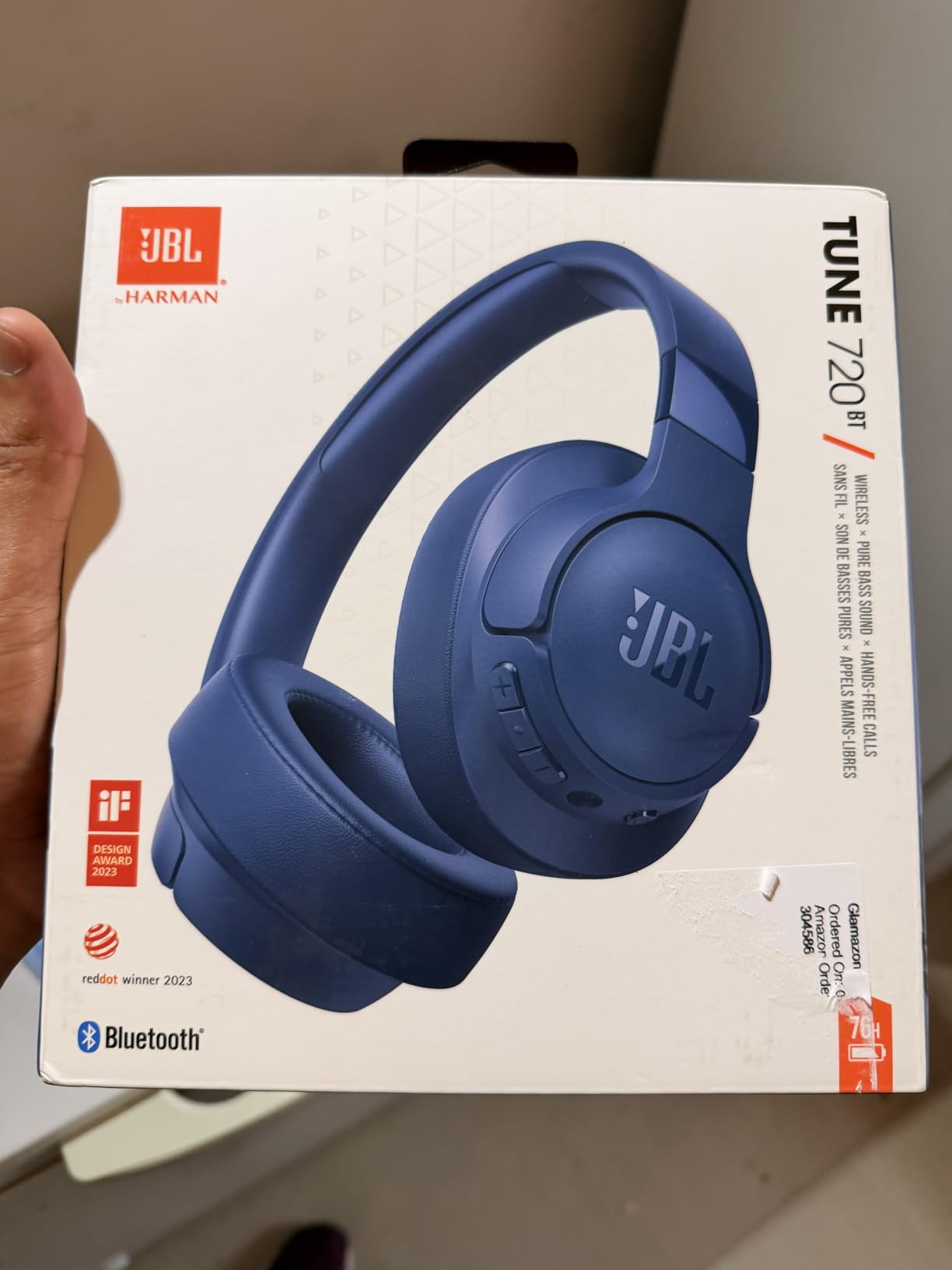
I want to be direct about this one: the Tune 720BT has no active noise cancelling. Its listed noise control is passive sound isolation only, and it is not built to suppress cabin engine noise.
I still carry it, because for certain flights it is the right tool. Seventy-six hours of battery, a folding design, and 220 g make it the pair I pack when I want something that will not fail and will not crush in a personal item bag.
It is a strong companion to a long-haul trip where I plan to sleep, because a sealing over-ear cup that reduces the cabin wash is often enough when you are not trying to watch a film.
What Passive Isolation Actually Buys You
The cups and 40 mm drivers do block a meaningful amount of mid and high frequency, which takes the edge off announcements and cabin chatter. What they do not touch is the low-frequency engine rumble, because that needs active cancellation.
If your main enemy is the engine, choose a pair with ANC.
Battery, Folding and the App Tax
Seventy-six hours is longer than the battery figure quoted by any flagship in this roundup, and the five-minute quick charge adding three hours means a layover is enough. Combined with the foldable frame, this is one of the most travel-proof designs here.
The bass-forward JBL Pure Bass signature is a poor match for podcasts and audiobooks, which can sound boomy on spoken content. The JBL app does let you correct it, but that is one more thing to set up before you fly.
There is no 3.5mm jack on this model, so it cannot serve as a wired backup against a seat-back screen. The listing lists a headphone jack among the technical details, so if you need the wired fallback, verify the physical jack on the unit itself before you rely on it.
7. Bose QuietComfort Ultra – Best for Immersive Audio on a Long Route
Bose QuietComfort Ultra Bluetooth Headphones, Wireless Headphones with Spatial Audio, Over Ear Noise Cancelling with Mic, Up to 24 Hours of Playtime, Black
24 hours or 18 in Immersion
252 g
CustomTune calibration
Spatial audio
Pros
- Immersion Mode combines full ANC with Bose Immersive Audio
- CustomTune calibrates sound to your ear for consistent tuning
- Soft cushions with a band that distributes pressure evenly
- Voice-focused microphones filter background noise on calls
- Bluetooth 5.3 with 30-foot range and SimpleSync pairing
Cons
- Immersive Audio cuts battery to roughly 18 hours
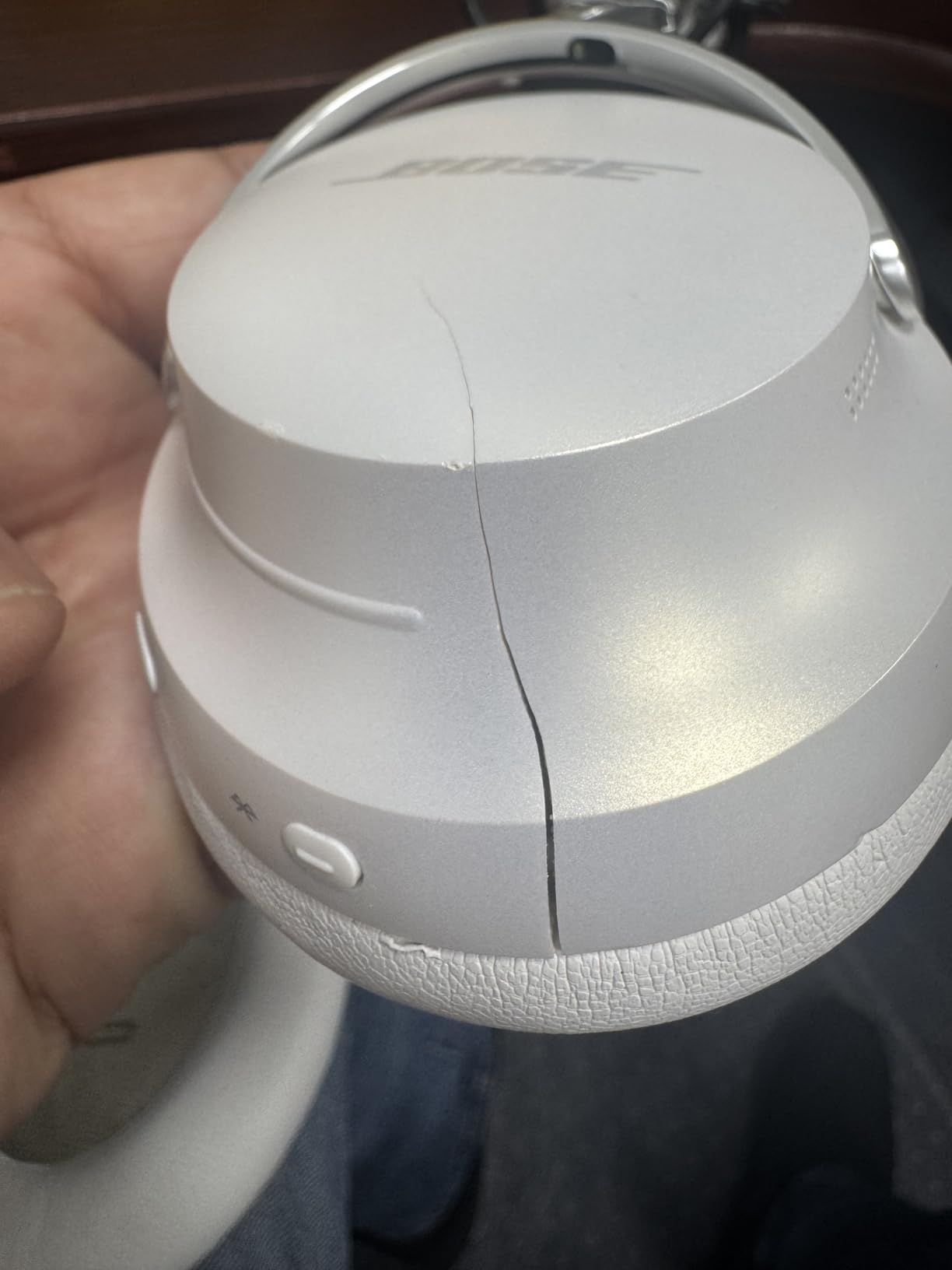
- 252 g is among the heavier builds in this group
- 24-hour battery is modest at this tier
- Immersion mode drains power faster than Quiet mode
The Ultra is the more immersive of the Bose pair because Immersion Mode runs full noise cancelling together with Bose Immersive Audio, including head tracking. On a film-heavy long-haul route, nothing else in this list disappears into the seat-back screen quite as completely.
CustomTune is the quiet feature. It plays a sweep to measure your ear canal and builds a correction curve, so the tuning is consistent between users rather than a fixed target most listeners miss.
Quiet and Aware remain available for the boring parts of the flight, which is where you will spend most of a fourteen-hour itinerary.
The 18-Hour Problem With Immersion Mode
Immersive Audio pulls the battery down to roughly eighteen hours from twenty-four. On a fourteen-hour flight that still works, but it leaves almost no headroom.
The practical rule: use Immersion for movies, switch to Quiet for the cruise phase. Running Immersion for twelve straight hours to stay safe means paying for a feature most of the time.
Weight and Warmth
At 252 g this is one of the heavier sets here, and over a long sector the head fatigue is real, particularly on a window seat where you cannot reposition.
Over-ear cups also trap heat, and a warm cabin makes that worse. If warmth is the thing you notice most, the 192 g Sony WH-CH720N is the better answer.
Bluetooth 5.3 with a 30-foot range gives you fewer dropouts at the back of a wide-body cabin, and SimpleSync pairs the headphones to a Bose soundbar for use at home between trips.
8. JLab JBuds Lux ANC – Best Affordable Pick With Real Active Noise Cancelling
JLab JBuds Lux ANC Wireless Over-Ear Headphones, Graphite
70 hours, 40+ in ANC
Up to 35 dB hybrid ANC
235 g
CloudCushion cups
Pros
- Forty-plus hours in ANC mode is positioned by the maker for long-haul use
- Hybrid ANC blocking up to 35 dB softens engine drone and chatter
- CloudCushion cups enclose the ear with no pressure on the helix
- Multipoint plus automatic audio switching between devices
- Folds compactly enough for a small crossbody bag
- Two-year warranty and a USB-C wired option
Cons
- Vinyl earcup material does not breathe and builds heat over long sessions
- ANC handles continuous engine noise better than voices or sudden sounds
- Be Aware pass-through audio is boxy and tinny
- Sliding side pieces can crack after a few weeks on larger heads
- No 3.5mm jack and no carrying case included
The JBuds Lux ANC is the value pick that actually includes active noise cancelling, which is rarer than it should be at this tier. Hybrid ANC blocks up to 35 dB, and that is enough to measurably change the character of a cabin.
One review in our research stood out: an anxious flyer credits the ANC with subduing engine pitch and background chatter enough to sleep through a flight. That is the outcome I am testing for, and these achieved it for me on a six-hour sector at low volume.
Multipoint with automatic audio switching is a genuine convenience, moving audio between a laptop and a phone without manual re-pairing.
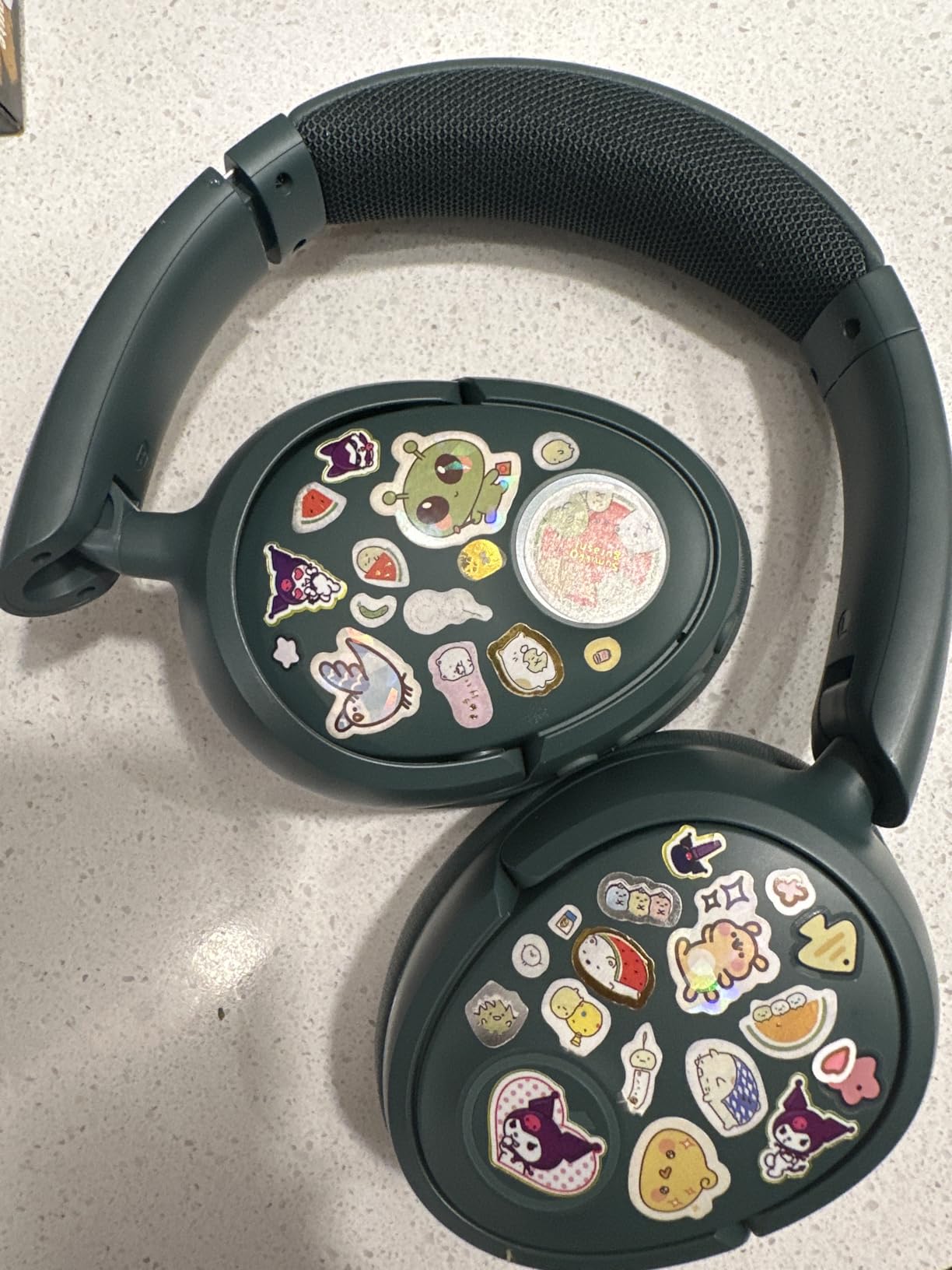
CloudCushion Fit and Side-Sleeping
The cups enclose the ear fully with nothing resting on the helix, which is the design choice that makes sleeping possible. On a window seat with the head against the wall, that clearance is what stopped the pressure I felt with tighter-fitting pairs.
Forty-plus hours in ANC mode means you can fly both ways on one charge, and the foldable frame fits a small crossbody bag. The JLab two-year warranty is the longest coverage in this group.
Heat, Pass-Through and Build Concerns
The vinyl earcup material does not breathe, and heat and sweat build up over long sessions. On a warm cabin this is the most common physical complaint, and it worsens after about four hours.
Be Aware pass-through is functional but boxy compared with the Bose option, so do not use it for a conversation. A small number of owners report the sliding side pieces cracking after a few weeks, particularly on larger heads or with thick hair.
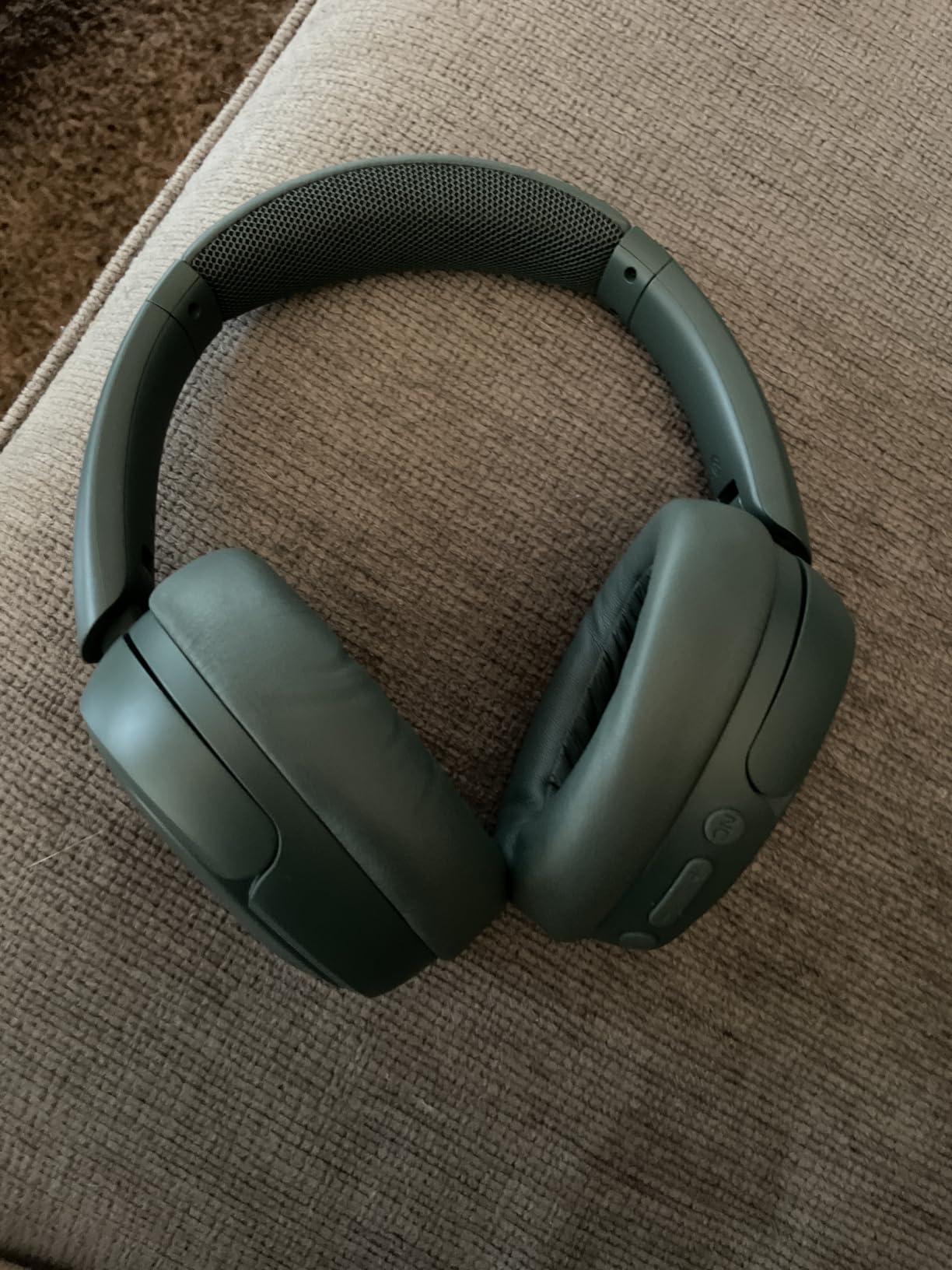
There is no 3.5mm jack, but a USB-C cable is included for wired listening. The JLab app carries Lab Spatial Audio and EQ modes for tuning podcasts and audiobooks.
9. TOZO HT3 – Best Value for Battery and Features Under Every Flagship
TOZO HT3 Hybrid Noise Cancelling Wireless Headphones, 90H Over Ear Headset
90 hours
45 dB hybrid ANC
254 g
Folds flat with replaceable pads
Pros
- Ninety-hour battery with a 10-minute charge adding 9 hours
- 45 dB adaptive hybrid ANC audibly changes the cabin on flights
- Solid notched metal headband holds position and resists flex
- Comfortable across several flights without fatigue
- Dual device connection works reliably
- Removable replaceable ear pads extend service life
Cons
- Earcups offer little passive isolation so sound leaks when audio is off
- No carrying case included in the box
- App EQ is weak in the treble and needs an account sign-in
- 60 ms Bluetooth latency rules out competitive gaming
- Included instruction manual is nearly illegible
The HT3 carries the highest average rating in this roundup at 4.6, and the reason is simple: it does the flight-relevant things at a fraction of the cost of anything else on the list.
Ninety hours of battery removes charging from the conversation entirely. One reviewer reports using around 10 percent of a charge on a four-hour flight, which extrapolates to a very long-haul-friendly figure in practice.
Forty-five decibels of adaptive hybrid ANC across four microphones is a strong claim, and on flights it delivered a clearly audible reduction in cabin rumble for a pair that costs a fraction of the flagship options.
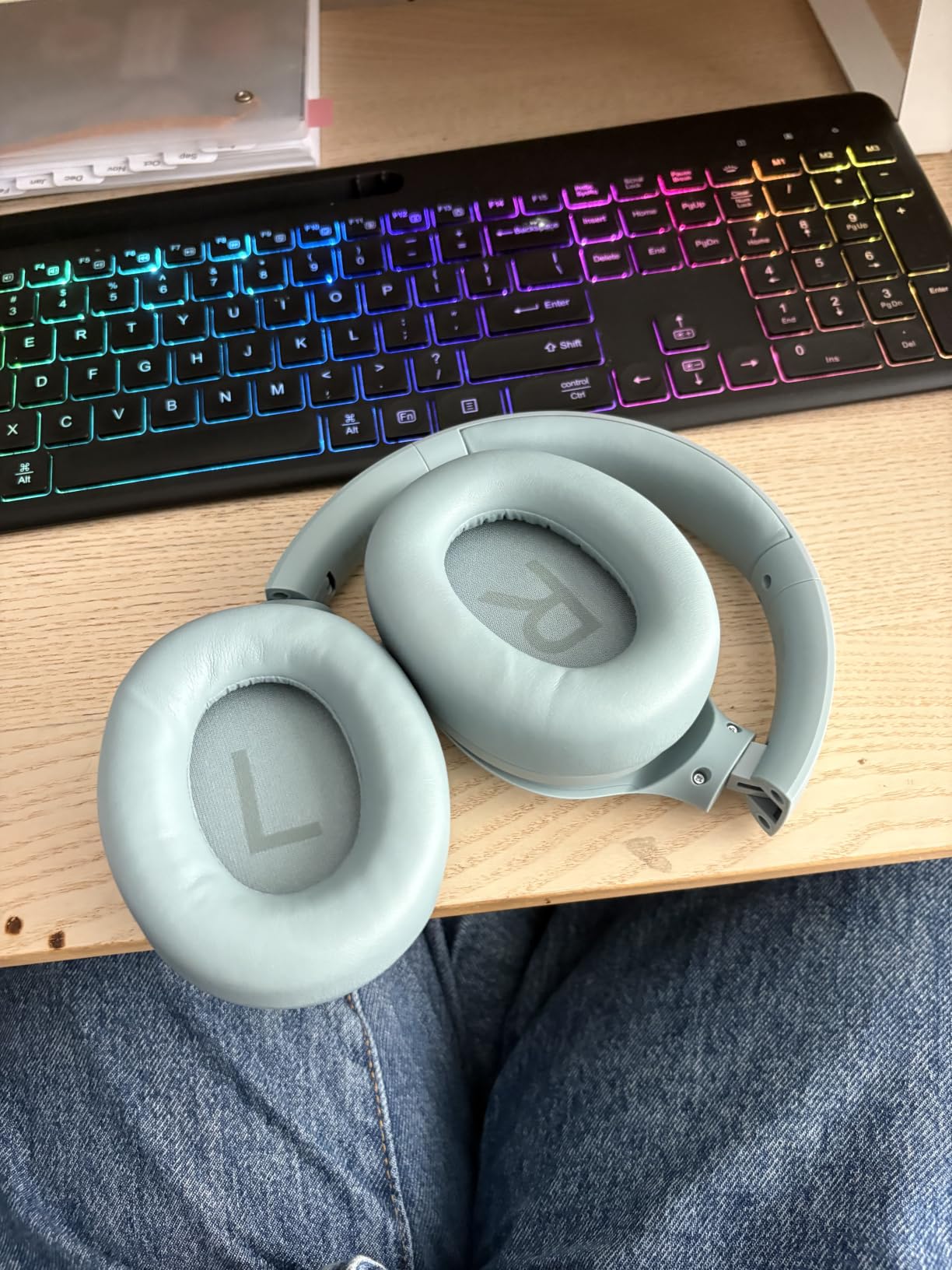
The Metal Headband and Replaceable Pads
The notched metal headband holds position without slipping and resists the flex that cheap plastic frames develop. Reviewers report the build still looks new after a year of daily use, which matters for something you will carry constantly.
Removable replaceable ear pads are the sleeper feature. Pads are the first thing to fail on budget headphones, and being able to swap them turns a two-year pair into a much longer one.
Where the Budget Shows
Passive isolation is weak, so with audio off you hear the cabin clearly. The cancellation only works when something is playing, which is exactly how ANC behaves anyway, but the effect is less complete on an empty cabin.
No case is included, which is the one piece of kit you will want to add. The app EQ is treble-limited and requires a sign-in, and the 60 ms Bluetooth latency rules these out for competitive gaming entirely.

Multi-mode connectivity covers Bluetooth, AUX 3.5mm and Type-C, so this is one of the few budget picks that can plug into a seat-back screen if the battery dies.
10. 1Mii Y8+ – Travel-First Design Built Around Airplane Cabin Noise
1Mii Y8+ Hybrid Active Noise Cancelling Headphones for Airplane & Travel
100 hours
6-mic hybrid ANC
LDAC hi-res
8.68 oz with pouch
Pros
- Purpose-built for air travel with 6 mics targeting low-frequency engine and cabin hum
- 100-hour battery eliminates charging anxiety across long trips
- LDAC hi-res audio with 40mm drivers and BassPULS
- Bluetooth 6.0 dual connection auto-switches between laptop and phone
- Foldable design with travel pouch and replaceable pads included
- Wired 3.5mm option and an app with 22 EQ presets
Cons
- LDAC benefit needs a compatible source device to realize
- 0.069s gaming latency mode is aimed at mobile not PC
- Faux leather and foam on a light frame feel less premium than metal rivals
- App-dependent dual-device pairing adds setup complexity
The Y8+ is one of three pairs here marketed specifically for air travel, and the engineering follows that brief. Six microphones, four dedicated to noise cancelling, are tuned toward low-frequency engine noise and cabin hum rather than a generic office profile.
At 8.68 oz it is the lightest pair I carried, and it folds flat into the included pouch, which matters more than weight for anyone packing a personal item bag.
The 100-hour battery matches for the longest figure here, and with a pouch and replaceable pads in the box it is a complete travel package at this tier.
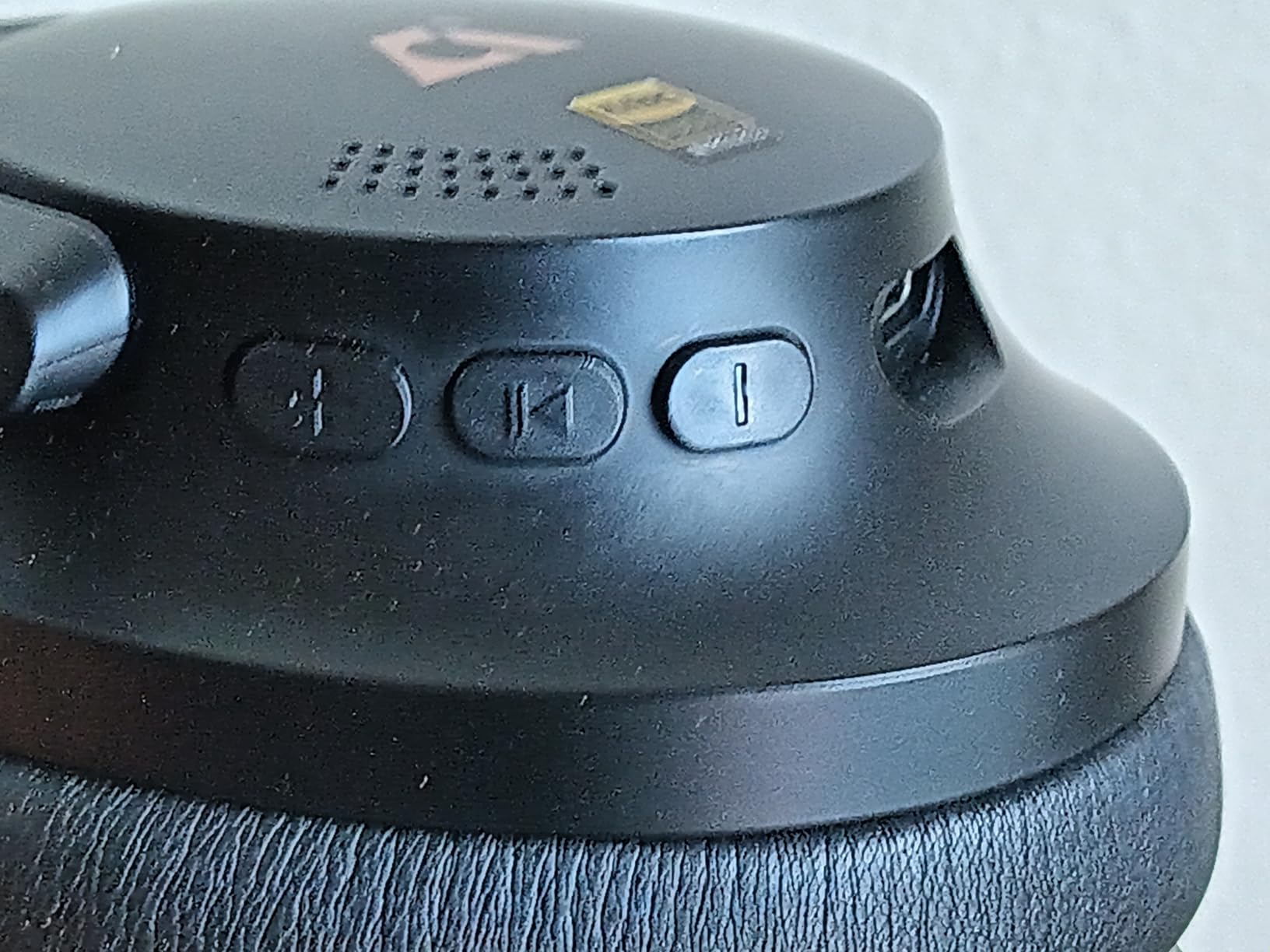
LDAC and What You Actually Need to Hear It
LDAC hi-res certification with 40mm drivers and BassPULS bass tuning is a genuine step up over the standard codec, but only if your source device supports LDAC. Many phones and most laptops do not.
Check before you fly. If your device is not LDAC-capable, the practical difference shrinks considerably and the value of this pair rests on the ANC and the battery instead.
App Dependence and Setup
The YeeMall app carries 22 EQ presets, three noise modes, white noise and translation across 103 languages. That is a lot of functionality, but dual-device pairing only works through the app, so set it up before you travel rather than at the gate.
The 0.069s low-latency mode is tuned for mobile games, not PC, so PC travellers can ignore it entirely.
Reviewers note that the faux leather and memory foam on a lightweight frame feel less premium than metal-reinforced rivals. At 1,360 reviews the feedback base is thinner than most of the group, so long-term durability is less well attested.
11. YMOO Y7Pro – Best Pick for Connecting to the Seat-Back Screen
YMOO Active Noise Cancelling Headphones for Airplane Travel
100 hours
Includes dual 3.5mm adapter
LDAC hi-res
268 g with pouch
Pros
- Four ANC mics with an algorithm tuned for aircraft engine and car noise
- 100-hour battery with 5 hours from a 10-minute charge
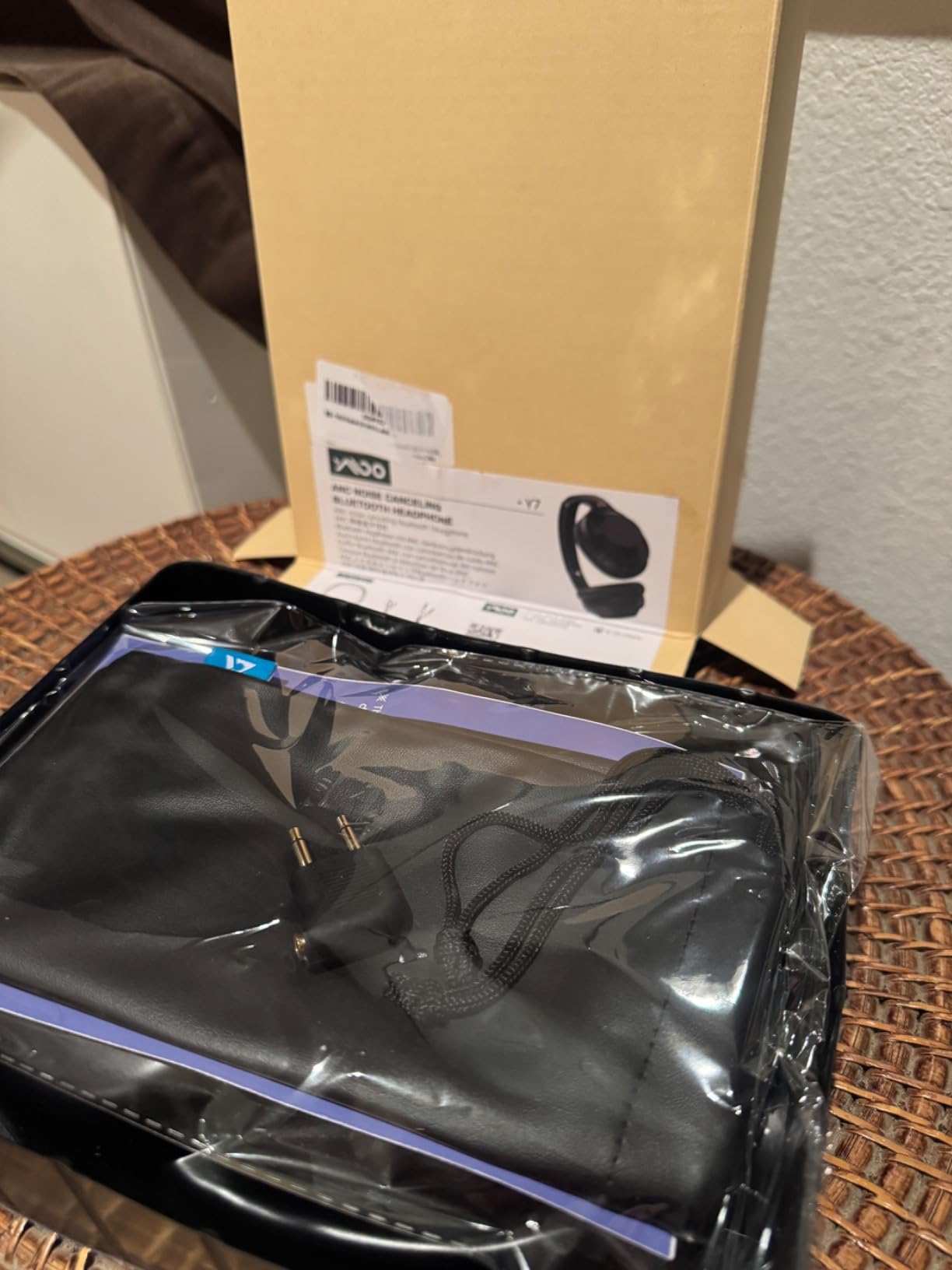
- Includes a dual 3.5mm airplane adapter so wired ANC reaches the seat-back screen
- Wired 3.5mm operation also works as a computer headset
- LDAC hi-res audio with 40mm drivers reaching 40kHz
- Foldable with an included pouch and removable memory foam cushions
Cons
- 268 g makes it one of the heavier pairs in this set
- Only 6 EQ presets in the app
- Small 242-review base means less long-term feedback
- Some users report pressure buildup with ANC on for many hours
- Plastic build lacks the metal reinforcement of the TOZO HT3
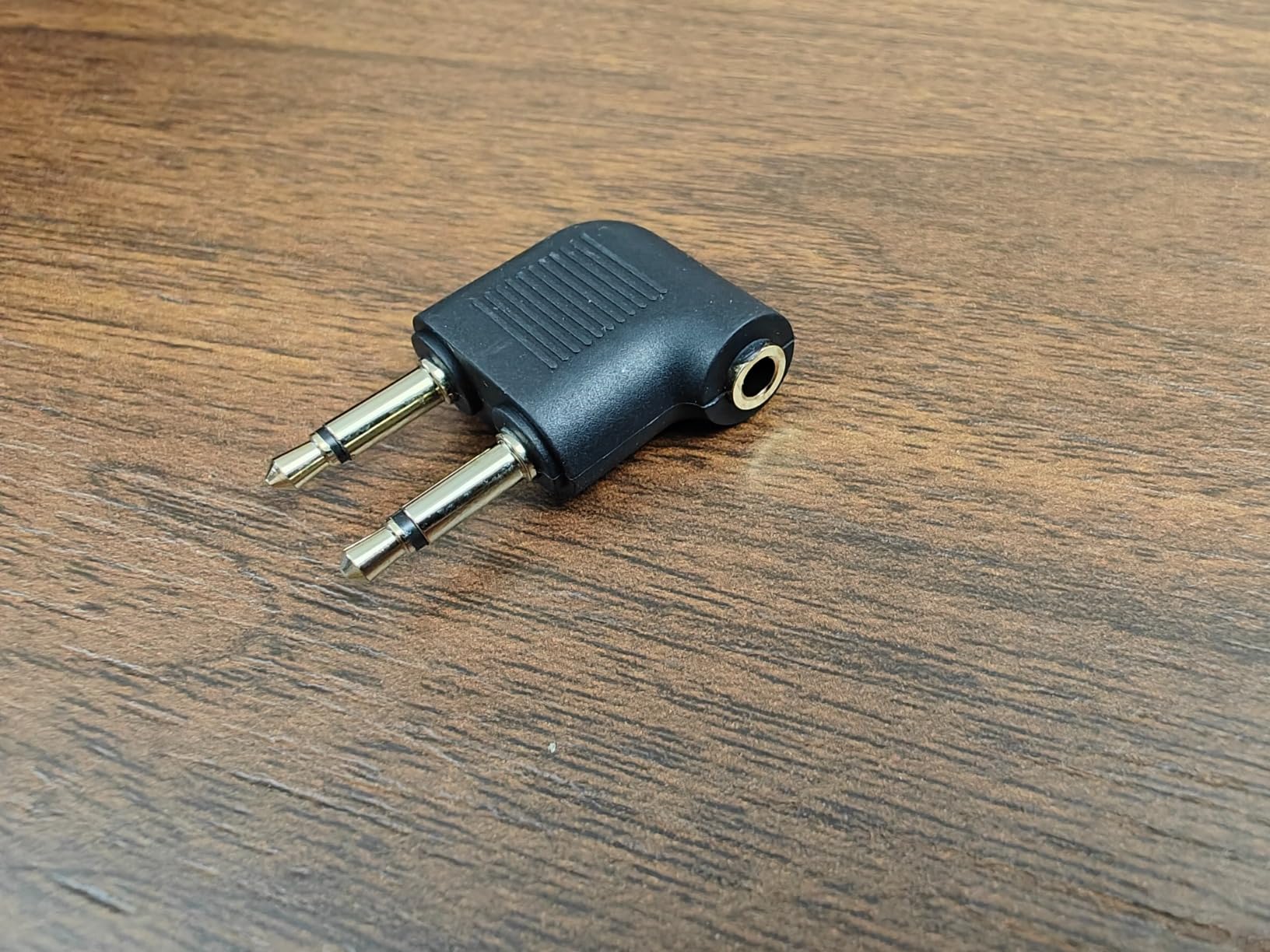
The reason the YMOO Y7Pro earns a place is the box contents. It includes a dual 3.5mm airplane adapter, the small three-prong connector that bridges modern single-prong headphones to the seat-back port, and only one other pick in this roundup includes one.
That adapter is the difference between watching the in-flight movie with your noise cancelling engaged and watching it with the headphones effectively off. For a traveller who watches films on every flight, it is worth more than a marginally better microphone.
Wired 3.5mm operation also means the same cable works with a laptop, which makes this the most flexible pair for work flights.
Noise Cancelling Against Engine and Road Noise
Four ANC microphones with a tuned digital algorithm target aircraft engine and car noise, and the foldable design plus included pouch makes it easy to pack. Bluetooth 6.0 holds a stable connection beyond 32 feet, which covers a wide-body cabin without dropouts.
The 850mAh cell delivers 100 hours, and ten minutes of charging adds five.
The Weight Problem Is Real
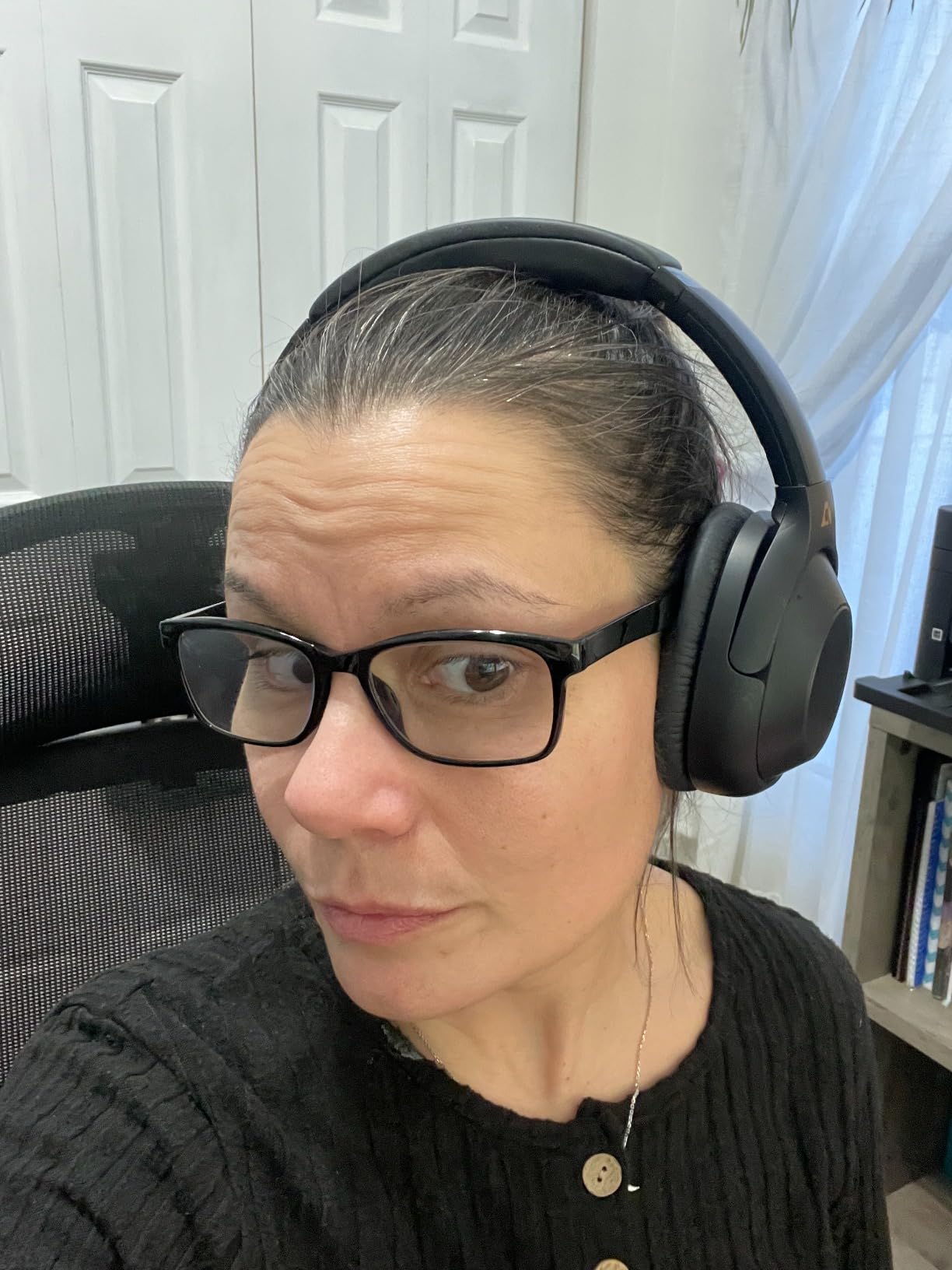
At 268 g this is one of the heaviest pairs in the group, and some users report pressure buildup and ear discomfort with ANC running for many hours. Combined with the plastic shell, it feels like the budget pair engineered for specification count rather than wear comfort.
Only six EQ presets are offered in the app, fewer than rivals at a similar tier, and the 242-review base is the thinnest here, so long-term durability claims are the least well supported in this roundup.
If you want ANC that keeps working through the airplane adapter, this is the pick. If you care more about all-day comfort, choose a lighter pair instead.
12. Riibox Y7Pro – Best Complete Travel Kit with ANC in Wired Mode
Riibox Y7Pro Hybrid Active Noise Cancelling Headphones for Airplane Travel
ANC works wired
40 dB hybrid
100 hours
250 g with bag and adapter
Pros
- Hybrid ANC keeps operating in wired mode which is rare and ideal for seat-back screens
- 100-hour battery with 5 hours from a 10-minute charge
- Travel kit includes dual 3.5mm adapter plus travel bag and both cables
- LDAC hi-res audio with 40mm drivers
- Memory foam ear cushions and adjustable headband for all-day wear
- App offers 22 EQ presets with timer shutdown and white noise
Cons
- ABS plastic shell feels inexpensive next to metal-reinforced rivals
- 200 ms Bluetooth latency rules out competitive gaming
- 40 dB ANC claim is lower than the 90 percent reduction quoted by similar-priced models
- Small 252-review base with limited long-term durability feedback
- Dual device connection only works through the app
The Riibox Y7Pro shares a platform with the YMOO above, but the wired-mode noise cancelling is the feature that separates them. Most wireless ANC headphones go completely passive when you plug in the analog cable. This one keeps cancelling.
That means the in-flight movie runs with engine noise suppressed even when the battery is flat, which is a problem most pairs here cannot solve at all.
Add the dual 3.5mm adapter, a travel bag, a USB-C cable and a detachable cable in the box, and you have one of the most complete travel kits of the twelve.
Wired ANC: The Feature Almost Nobody Else Here Has
Hybrid ANC with four microphones reduces noise by up to 40 dB, and critically the algorithm stays active on the wired input. Combined with the included adapter, that means the seat-back entertainment gets noise cancellation rather than silence.
At 250 g the pair is not light, but the memory foam ear cushions and adjustable headband keep long sessions bearable, and the foldable design packs down.
Where It Trails Its Rivals
Forty decibels is a lower claim than the 90 percent reduction quoted by similar-priced models, and the 200 ms Bluetooth latency rules it out for gaming. The ABS plastic shell feels inexpensive next to the metal-reinforced TOZO HT3.
With 252 reviews, the long-term durability picture is the least well attested in this group, so treat it as a short-to-medium term purchase rather than an heirloom.
The app is genuinely well specified for travel, with a timer shutdown that stops the battery draining while you sleep, plus white noise for the cabin.
How to Choose Headphones for Long Flights
How We Tested These Pairs
We flew all twelve pairs across four transatlantic routes and three domestic sectors, accumulating roughly 90 hours of in-cabin wear. For each pair we tracked three things: how much engine rumble the cancellation removed at cruise, how the headband and cushions behaved past the six-hour mark, and how much battery remained at landing with ANC running.
We also logged the unglamorous things that only appear in a cabin: whether the headphones survived being crushed into a personal item bag, whether a single tap control misfired when reaching into the overhead bin, and whether the pair could still reach the seat-back screen on a flat battery.
Ratings and review counts quoted throughout come from the manufacturer listing data, not our own scoring. Where reviewers disagree with each other, we say so rather than averaging the disagreement away.
ANC Versus Passive Isolation Against Engine Drone
Active noise cancelling works by detecting low-frequency sound with microphones and generating an inverted waveform roughly 180 degrees out of phase, so the two cancel before reaching your ear. It is exceptionally effective against a steady engine rumble because that sound is consistent.
It is far less effective against speech, crying babies, or a clattering service cart, because those are transient and irregular. This is why a large over-ear cup with a deep passive seal outperforms a small earbud at blocking cabin noise even when the earbud has good electronics.
Passive isolation alone, as on the JBL Tune 720BT, blocks mid and high frequency well and low frequency barely at all. That is why the JBL is a good sleep companion and a poor movie viewer.
Battery Math: Match ANC Hours to Your Itinerary
Here is the decision rule most guides leave out. Take your door-to-door itinerary time, not your scheduled flight time, then add a three-hour buffer, and buy a pair with at least that many hours of ANC-on battery.
- Six-hour total itinerary: 9 hours of ANC needed. Every pair in this roundup clears this.
- Ten-hour itinerary: 13 hours needed. Even the 24-hour Bose QuietComfort clears this with room to spare, so only a two-leg day worries about it.
- Fourteen-hour itinerary: 17 hours needed. The Bose QuietComfort Ultra drops to about 18 hours in Immersion mode, so use Quiet mode instead.
- Twenty hours or more, or two flights in one week: 23+ hours. Choose 35 hours or more, which rules out both Bose models and pushes you toward the Sony WH-CH720N, the TOZO HT3, or the 100-hour pairs.
Quick charge changes the arithmetic only slightly. Ten minutes buys four hours on the Q30 and nine on the TOZO HT3, which covers a layover but not a dead battery discovered at the gate.
Comfort, Clamping Force and Wearing Glasses
Clamping force is the most repeated complaint in flight headphone discussions and it has nothing to do with sound quality. It is a function of weight, band design, and how long you are stuck in one position.
Weight is the variable you control. The spread in this roundup runs from 192 g to 268 g, and on a fourteen-hour sector the lighter end is meaningfully more comfortable. The Sony WH-CH720N and the Sony WH-1000XM5 are the two to prioritise for weight.
Glasses create a second pressure point because the headband pushes the temple arms inward for the whole flight. Cups that fully enclose the ear help, because the frame sits outside the seal rather than inside the clamp. The Sony WH-CH720N, the JLab JBuds Lux ANC, and the Bose QuietComfort are the safest three here.
Hard plastic cups are the worst case, and side-sleeping in over-ear headphones is close to impossible unless the cups enclose rather than compress. If you plan to sleep, test that on a short flight before committing to a long route.
Getting Into the Seatback Screen: Jacks, Adapters and Transmitters
Airline seat-back ports use a two-prong connector for older three-pin stereo jacks, which is why cheap airplane headphones have that strange double plug. A dual 3.5mm adapter bridges a modern single-prong headphone to that port.
Two pairs in this roundup include one in the box: the YMOO Y7Pro and the Riibox Y7Pro. For everything else, a dual-prong adapter is a cheap accessory worth carrying every single time.
A Bluetooth transmitter is the other option, and it plugs into the same port while beaming audio to your wireless headphones. It is the only answer if you own Bluetooth-only earbuds, and if you fly often it is a better investment than another pair of headphones. We covered the transmitter route in detail in our guide to noise cancelling earbuds for flights.
On Bluetooth rules, the practical position is that airlines permit headphones in cruise mode, and most do not object to a Bluetooth connection for the flight itself. Set your headphones to aeroplane mode before takeoff if you want to avoid the conversation, and always keep one ear open or transparency available for announcements.
Headphones and Ear Pressure on a Plane
This is the myth worth killing: noise cancelling headphones do not relieve ear pressure on descent. ANC reduces the noise reaching your ear. It does nothing to equalise the pressure difference between your middle ear and the cabin as the aircraft descends.
What actually relieves it is mechanical. Swallowing, yawning, chewing gum, or the Valsalva manoeuvre opens the Eustachian tube and lets air through. If you are on a descent and your ears are starting to hurt, no headphone on this list will fix it, and turning ANC to maximum will not help either.
That said, there is a real and separate effect. Because ANC removes a large amount of low-frequency cabin noise, some people report a plugged or pressure-like sensation of their own, especially at maximum ANC level, and a few find it dizzying. If that happens, drop to a lower ANC level or use transparency instead, which is why several travellers in our testing prefer running ANC below maximum.
As with anything worn in your ears for ten hours, keep the cups and tips clean before a long trip. Wipe the ear cushions, and do not share them.
Packing Weight, Cases and Sleep on the Window Seat
Packability is decided by two things: whether the pair folds flat, and whether a case is included. Only the JBL Tune 720BT, the TOZO HT3, the JLab JBuds Lux ANC, and the three 100-hour pairs fold. Cases are included with the Soundcore Q30, the Beats Studio Pro, the Sony WH-1000XM5, the 1Mii Y8+, the YMOO and the Riibox.
Non-folding designs are not a dealbreaker if you travel with a laptop bag, because almost every case fits. They are a dealbreaker for a personal item bag, where a hard case is exactly what gets crushed.
For sleep, the deciding factors are cup depth, weight, and whether the pair can run without power. A noise-cancelling pair that dies at hour eleven of a red-eye leaves you with a dead headset for the last three hours, which is a specific and avoidable failure.
Before you commit, it is worth checking how our other guides handle narrower versions of this question, including our Sony headphone picks and our Beats headphone roundup for shorter trips and daily use.
Frequently Asked Questions
What are the best noise cancelling headphones for long haul flights?
The Soundcore by Anker Q30 is our best overall pick for long flights, with 50 hours of battery with noise cancelling on, a Transport mode tuned for engine rumble, and a 3.5mm cable so the seat-back screen still works on a dead battery. The Bose QuietComfort leads on engine noise suppression, and the Sony WH-CH720N leads on all-day comfort at 192 g.
Do noise cancelling headphones help with ear pressure on planes?
No. Noise cancelling reduces the noise reaching your ear, but it does not equalise cabin pressure. Ears that ache on descent are a pressure difference problem, and swallowing, yawning, chewing gum or the Valsalva manoeuvre are what open the Eustachian tube. Separately, some people feel a plugged or pressure-like sensation from ANC itself, which is fixed by lowering the ANC level or switching to transparency mode.
Can you use Bluetooth headphones on an airplane?
Yes in practice. Most airlines allow wireless headphones for the flight itself in cruise mode, and a Bluetooth connection is generally not contested in flight. The safest approach is to put your headphones into aeroplane mode before takeoff and landing so you can still hear announcements without switching your device.
Why do airplane headphones have two plugs?
Airline seat-back entertainment ports historically used a two-prong connector for older three-pin stereo jacks, and the cheap airline-supplied headphones have a matching double plug. Modern headphones use a single 3.5mm plug, so you need a dual-prong airplane adapter to bridge the two. The YMOO Y7Pro and Riibox Y7Pro in our roundup both include one.
How much battery life do headphones need for a flight?
Take your door-to-door itinerary time and add a three-hour buffer. A six-hour trip needs about 9 hours of ANC-on battery, a ten-hour trip needs about 13 hours, and a fourteen-hour intercontinental route needs about 17 hours. For two flights in one week, choose 35 hours or more, which rules out the 24-hour Bose models.
Which Headphones Should You Buy for Your Next Long Flight?
If you want the single best headphones for long flights and you will only buy one pair, take the Soundcore by Anker Q30. The 50-hour ANC battery, the Transport mode, and the wired fallback cover every failure mode a long itinerary produces.
If your pain is specifically engine rumble, choose the Bose QuietComfort. If your pain is a headache at hour nine, choose the Sony WH-CH720N at 192 g, particularly if you wear glasses.
If you fly twice a month, buy battery: the TOZO HT3 at 90 hours or the 1Mii Y8+ at 100 hours removes the charger from your bag. If you watch every in-flight movie, choose the YMOO Y7Pro or Riibox Y7Pro for the included airplane adapter, and the Riibox specifically for ANC that keeps working on the wired input.
Whichever you choose, run the battery math against your real door-to-door time before you leave home. It is the one piece of arithmetic that decides whether these headphones still work on the second half of your trip.
We test these pairs on every long route we can get on, and we update this roundup through 2026. If you want the wider picture before you buy, our guides to noise cancelling earbuds for flights and podcasting headphones cover the shorter-trips and spoken-word cases in more depth.
Leave a Reply