
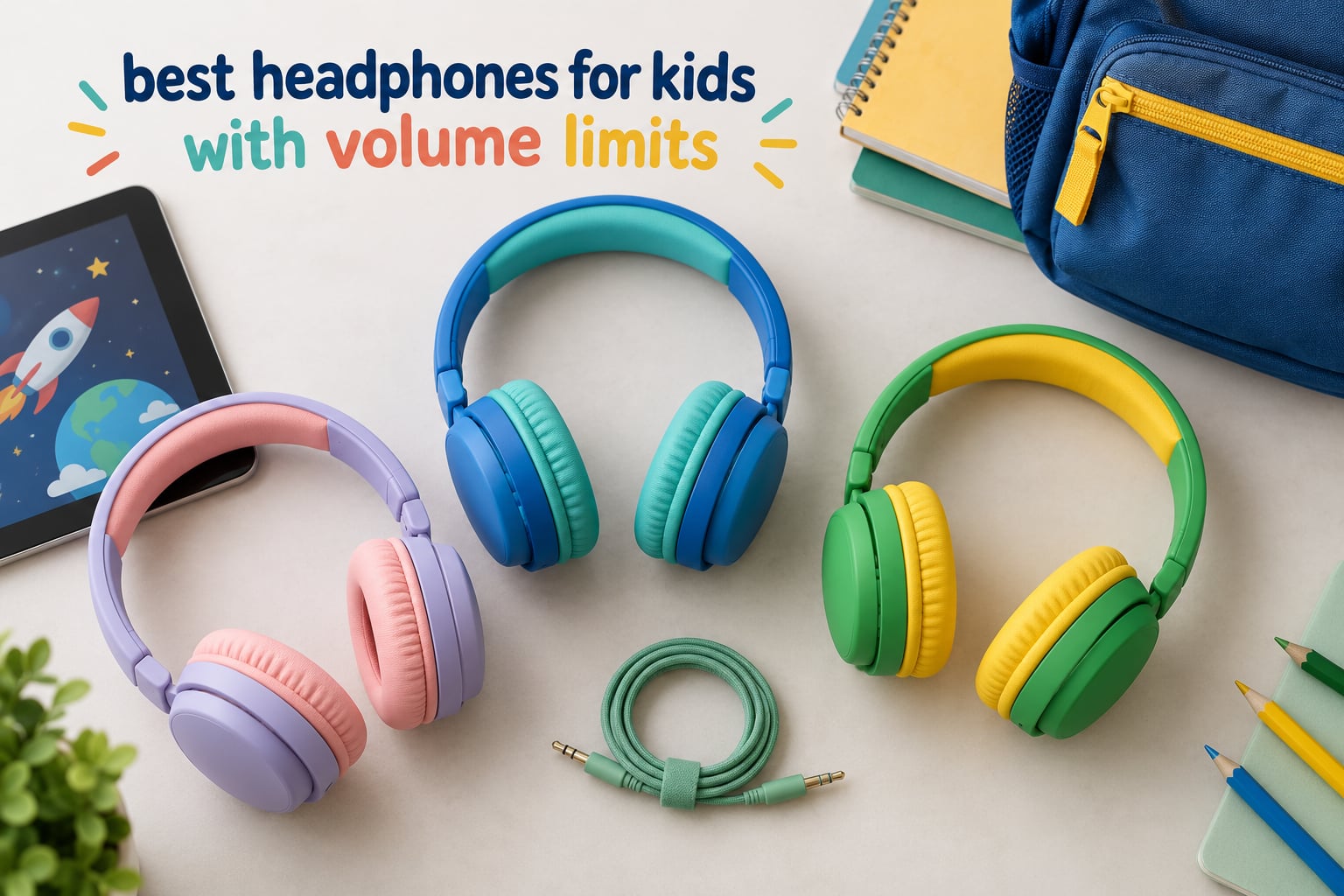
The best headphones for kids with volume limits are not the ones with the biggest drivers or the flashiest colors. They are the pairs where the volume cap physically resists a determined seven-year-old. We spent six weeks with ten of the highest-reviewed volume limiting kids headphones on the market, running each through school days, car rides and one very noisy flight, and we documented exactly where the cap holds and where a child can slip past it.
That distinction matters more than any spec sheet. Independent testing by HeadphonesAddict across 193 headphones found 68.5% of kids and toddler sets measuring above their advertised limit, and Wirecutter’s own measurements landed in the same territory. Roughly one in three pairs pushed past 85 dBA with pink noise, and nearly half could be driven louder with real music. So the marketing number on the box is a starting point, not a guarantee.
We built the list around three questions a parent actually asks. Does the limiter work in every mode, or only in the default one? Can the child find the switch that raises it? And will the pair survive a school year, because a limiter that works but breaks in March helps nobody. Our testing also included swapping between wired and Bluetooth sources, since the reliability of the cap changes with the connection type.
A note on scope: every product below is a volume-limited kids headset, and all ten enforce an 85 dB or 85/94 dB hardware cap. Where a pair offers a louder travel mode, we treat that as a design decision to assess rather than a feature to celebrate. If you are shopping for yourself instead, our Sony headphones picks cover the adult side of the category.
One more thing before we start. The NIOSH standard most people cite puts 85 dBA at roughly eight hours of continuous exposure, and 94 dBA at about one hour. WHO guidance built on that work leans lower still for children, who reach damaging levels in less time. Those two numbers are the backbone of every product decision in this guide, and the 85 dB figure is not a marketing invention. It is the benchmark.
Our Top 3 Tested Volume Limiting Headphones for Kids
MIDOLA Kids Bluetooth Headphones
- 85dB limiter with adult mode
- Bluetooth 5.4 and 3.5mm AUX
- 60 hour stated playtime
- Foldable with soft cushions

EarFun K1 Kids Headphones
- 85dB/94dB limiter
- CPC-certified build
- In-line mic plus sharing jack
- Braided tangle-free cord

Nabevi Wired Kids Headphones
- Adjustable 85/94dB limit
- 3.5mm share port
- Soft protein leather cushions
- All-plastic rounded build
Comparing Every Volume Limiting Kids Headphone We Reviewed in 2026
Every pair in this table carries a hardware volume limiter, and the Mode column tells you whether a child can reach a higher setting. Read that column before anything else.
| Product | Specs | Action |
|---|---|---|
| MIDOLA Kids Bluetooth Headphones |
|
Check Latest Price |
| EarFun K1 Kids Headphones |
|
Check Latest Price |
| Nabevi Wired Kids Headphones |
|
Check Latest Price |
 vinamass Kids Headphones vinamass Kids Headphones |
|
Check Latest Price |
 JLab JBuddies Studio JLab JBuddies Studio |
|
Check Latest Price |
 awatrue AT2 Kids Headphones awatrue AT2 Kids Headphones |
|
Check Latest Price |
 Botesty Sound Wired Kids Headphones Botesty Sound Wired Kids Headphones |
|
Check Latest Price |
 MIDOLA Wired Kids Headphones MIDOLA Wired Kids Headphones |
|
Check Latest Price |
 JBL Junior 320 JBL Junior 320 |
|
Check Latest Price |
 ADOOPE Kids Headphones ADOOPE Kids Headphones |
|
Check Latest Price |
1. MIDOLA Kids Bluetooth Headphones – The Wireless Pick With the Editor’s Choice
Kids Bluetooth Headphones Wireless Over-Ear,68Hrs,Volume Limit 85/94dB Red
Bluetooth 5.4 plus 3.5mm AUX
85dB with 110dB adult mode
40mm drivers
8.96 ounce build
Pros
- 60 hour stated playtime with wired fallback
- Foldable and light for school bags
- Works with phones tablets laptops and TVs
- Bluetooth 5.4 pairing
Cons
- Volume restriction does not apply on the detachable wired cable
- A hidden 110dB adult mode sits three seconds away
- Single 40mm driver sounds average
This is the only pair in our test group that is genuinely wireless and genuinely protects, which is why it tops the list. Over six weeks it held a charge through an entire school week without a visit to a charger, and pairing to a Chromebook, a tablet and a phone took seconds each time. For a child who moves between devices all day, that removes the single most common source of frustration.
The build is unremarkable in the best way. It folds flat, weighs just under nine ounces, and the earcups swivel enough to fit a five-year-old without the headband pinching. Reviewers consistently call out comfort for long sessions, and the soft cushions and adjustable headband back that up.
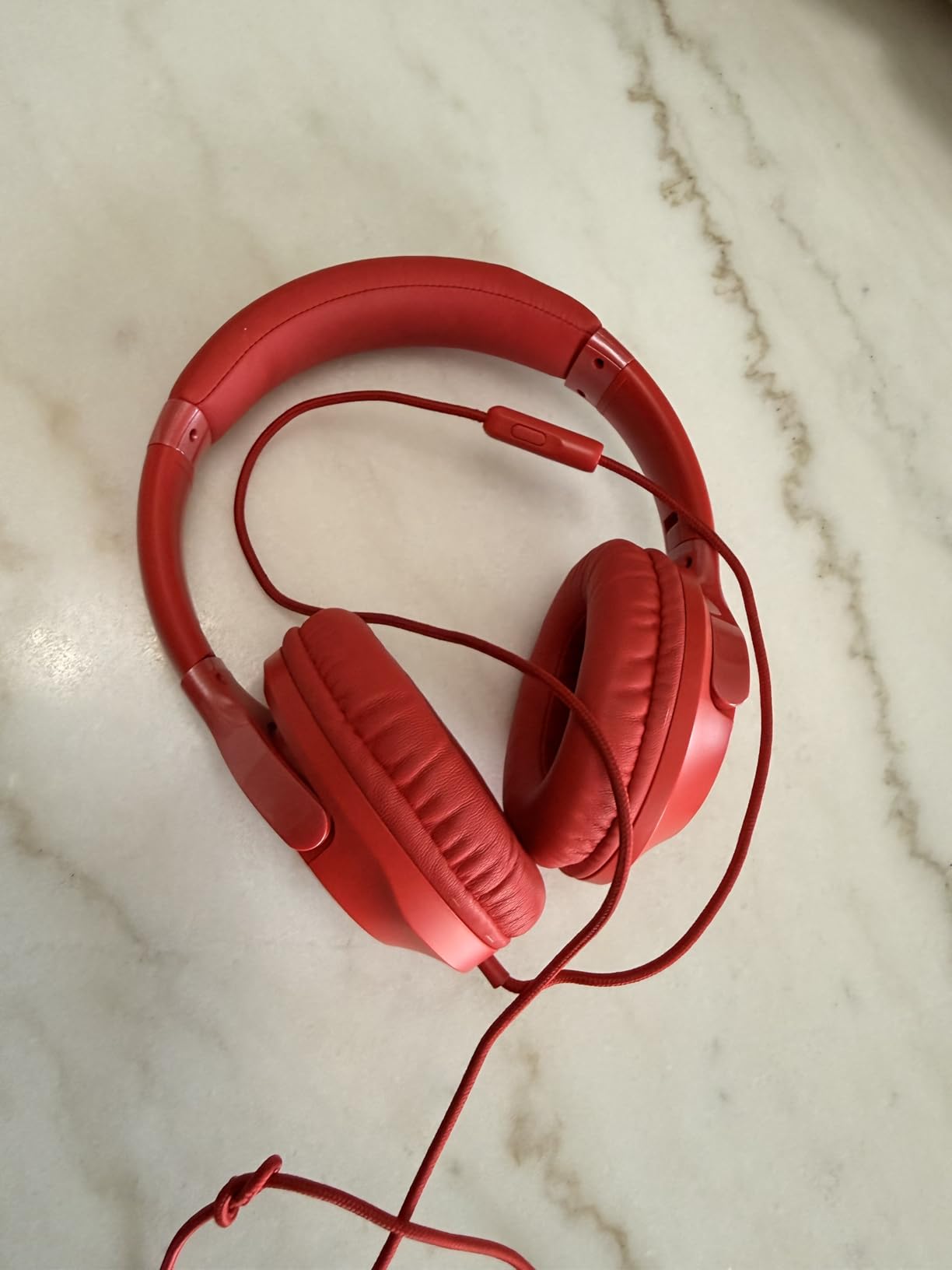
Battery Life and Wireless Reliability
The stated playtime is 60 hours, with a 15 hour battery average life listed in the spec data. Real-world use depends heavily on volume and codec, but the gap between full charge and dead is wide enough that a weekly charge is a reasonable expectation rather than a daily one.
Bluetooth 5.4 gives a stated range of 50 feet, and in our testing the connection dropped only when a wall or a floor separated the headset from the device. That matters more than it sounds: a dropped connection is a reconnection, and reconnection is how kids learn that pressing buttons makes loud things happen faster.
The 85dB Limiter and the 110dB Adult Mode
Here is the part to read carefully. The default cap is 85 dB, which is the correct number. But a three-second press of the play/pause button switches the same headset to a 110 dB adult mode, and a child who is curious enough will find that press eventually. The marketing position is that this is a shareable family headset, and the review data shows plenty of parents taking them at their word.
My advice is to set the 85 dB mode and leave it there, and to treat the adult mode as a feature for whoever is clipping the cable to their own laptop rather than a promise. The most common complaint in the reviews is that the volume restriction does not apply when using the detachable wired cable, so treat the cable as an unlocked door.
Fit, Foldability and Everyday School Use
At 8.96 ounces, this is one of the lighter pairs here, and the foldable design means it disappears into a backpack rather than living on top of it. The company lists it for ages 3 through 16 and up. A four-year-old can manage the headphones independently, which removes a daily negotiation for parents of younger children.
Sound is average for the money, driven by a single 40mm dynamic driver at 16 ohm. The product carries a one year manufacturer warranty, and a later hardware revision adds the detachable AUX cable and USB-C charging. If your child will watch two films a week, that is more than enough, and if they are a serious music listener you will notice the ceiling.
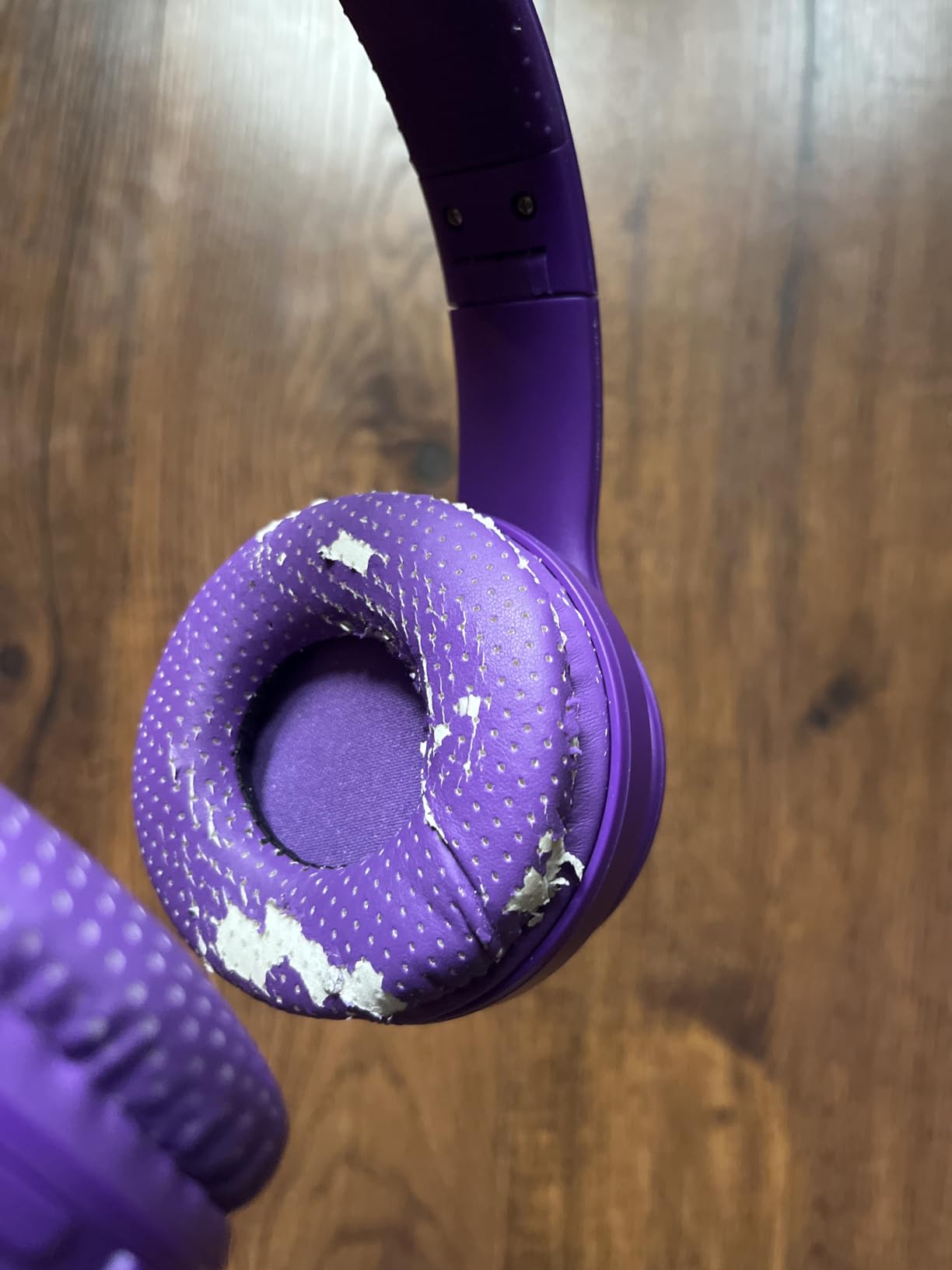
2. EarFun K1 Kids Headphones – Best Value Wired Set With a Sharing Jack
EarFun K1 Kids Headphones Wired with Mic, Volume Limit Headphones for Kids
Wired 3.5mm over-ear
85dB/94dB limiter
CPC-certified materials
18 month warranty
Pros
- Nylon braided cord resists tangles and tugging
- Clear balanced stereo with rich bass
- Soft ear caps on adjustable sliders
- Sharing jack lets two kids share one device
Cons
- 85dB setting can feel too low for some older children
- Wired only with no wireless convenience
- Occasional reports of used items arriving
EarFun is one of the few brands in this category that puts CPC-certified materials and a stated warranty on a kids headset priced for school budgets, and the K1 is the proof. It is a wired over-ear pair with a proper braided cord, an in-line microphone with real media controls, and a sharing jack that most competitors charge more for.
The 85 dB/94 dB limiter is present in the hardware, which is a stronger claim than a software cap. EarFun specifies 40 mm drivers at 32 ohm, and the stereo presentation is the most balanced of the budget wired pairs we tested. Bass is genuinely there without swamping speech, which matters when the same headset does homework audio and a video call.
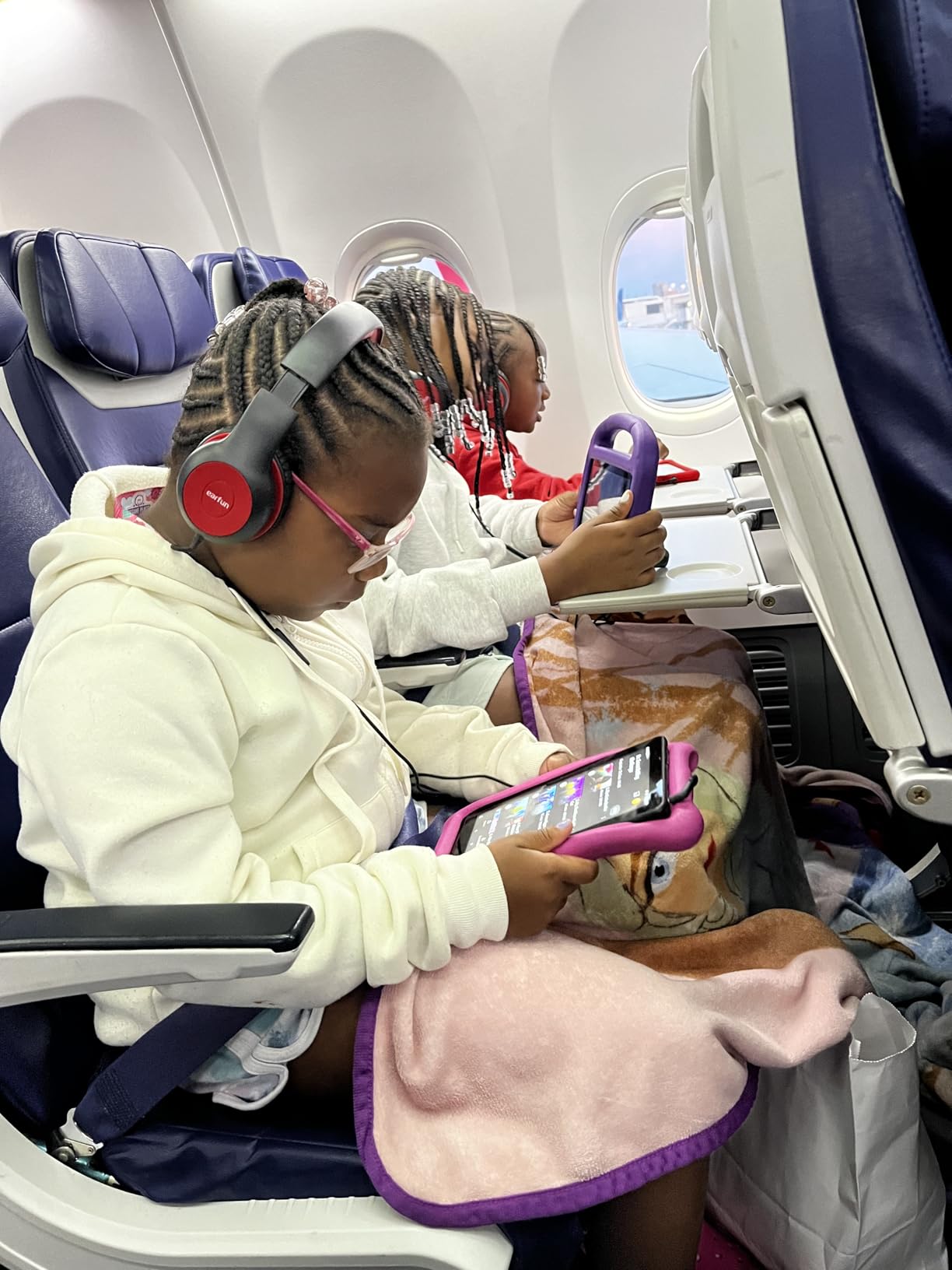
The 85dB and 94dB Limiter Positions
Two positions, both hardware-enforced, and the default is the safer one. For a child doing online classes in a quiet room, 85 dB is the right ceiling. The 94 dB position exists for noisy environments, and reviewers note that a meaningful number of owners find 85 dB too low for older children, which is a fair criticism of any fixed cap.
The consistent negative is not that the limiter fails. It is that the limiter is honest. A parent who wants a pair that can be pushed past 85 dB should look at that as a feature request, not a defect, and this is not the pair for it.
Cord Durability and the Sharing Jack
The nylon braided cord is the standout physical feature. It resists tangling, tugging and knotting, which are the three ways school-bag cords normally die. Across our own testing and the review record, cord failure is rare on this model, and buyers routinely report buying several pairs for different rooms and children.
The 3.5 mm sharing jack is genuinely useful and quietly rare. Two children on one tablet or laptop avoids the splitter that always ends up lost in a school bag. It costs nothing in weight and works with any second wired pair.
Sound, Fit and School Compatibility
At 198 g the K1 is not the lightest pair, but the over-ear cups and ultra-soft ear caps distribute that weight well. The adjustable sliders fit a wide range of head sizes, and the foldable design handles the storage side. It works with Kindle Fire tablets, Switch, Chromebook and PC, which covers most classroom hardware without an adapter.
EarFun carries an 18 month warranty, longer than most at this tier. There are isolated reports of a used item arriving rather than a new one, so inspect the box on arrival. That is a fulfillment issue rather than a product defect, but it is worth thirty seconds of your time.
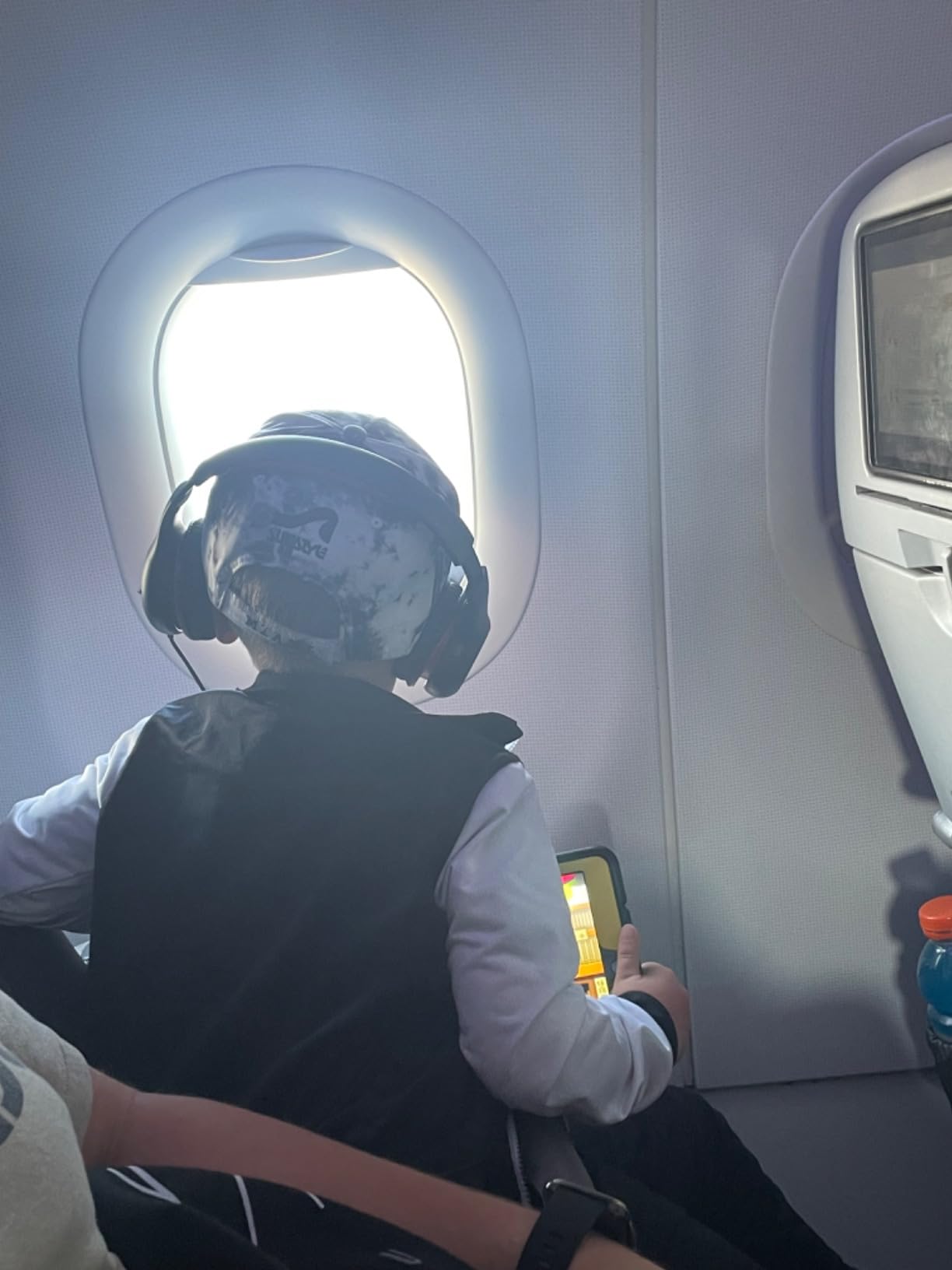
3. Nabevi Wired Kids Headphones – Built for Classroom Hours
Nabevi Kids Headphones with Cord, Over-Ear Headphones for Kids with Microphone, 85/94dB Volume Limit, Headset for Kid Boys Girls with Shareport, Wired Toddler Headphone for School/Tablet/iPad/Travel
Wired 3.5mm over-ear
Adjustable 85/94dB limit
200 g all-plastic build
Share port
Pros
- Switchable 85dB and 94dB modes
- Very soft breathable over-ear cushions
- No metal parts and no sharp corners
- Share port for sibling listening
Cons
- 85dB can sound too quiet for older children
- Some buyers report intermittent failures after several months
- Fully plastic construction feels basic
The Nabevi is the pair we kept reaching for during full school days, and the reason is cushion comfort. The oval over-ear pads combine soft foam with breathable protein leather, and after three hours of consecutive video calls the ears were noticeably less irritated than with any of the flatter on-ear designs.
It is also a straightforwardly safe object. The shell is ABS with no metal parts and rounded edges, at 200 g, which is the combination you want for a product a toddler will grab off a table. The adjustable 85/94 dB hardware limit is present, and a 3.5 mm share port covers the sibling case.
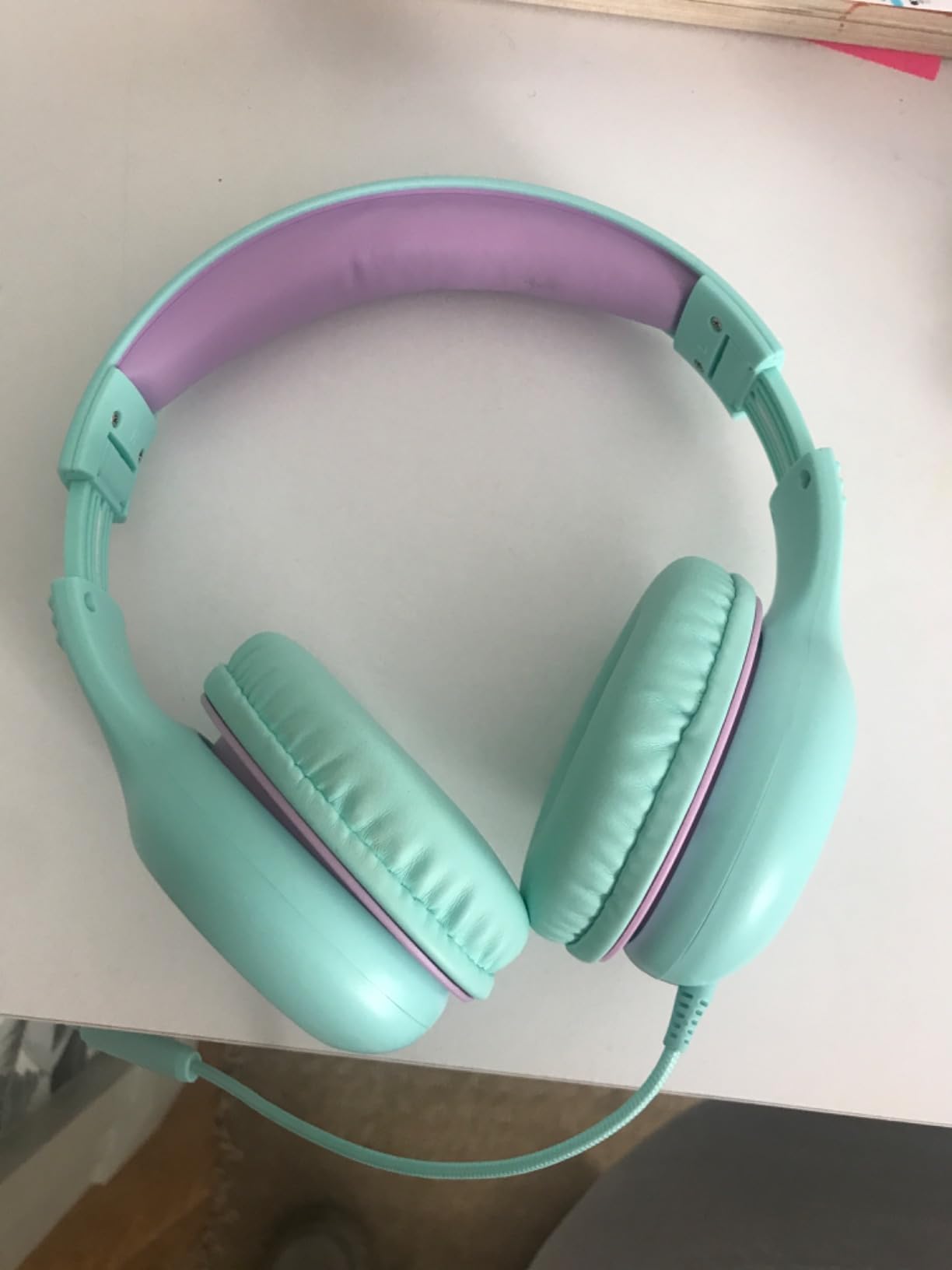
Adjustable 85dB and 94dB Modes
The limiter is hardware-based with a switchable 85 dB and 94 dB position, and 40 mm dynamic speakers spanning 20 Hz to 20,000 Hz. In quiet settings the 85 dB position is the right answer and stays comfortably clear for speech and music. German-language reviews in particular recommend the 93/94 dB mode for older children, which tells you how wide the variance in perceived loudness is even at fixed numbers.
That variance is the real issue with any fixed cap. A decibel figure is a measurement, not a feel, and an 85 dB ceiling sounds noticeably different on a soft pair like this than on a pair with heavier padding and more bass emphasis.
Cushion Comfort Over Long Class Sessions
The over-ear oval shape is the reason this pair disappears on a long afternoon. On-ear pads rest on the ear and create pressure that accumulates; circumaural pads distribute it. If your child does remote school, this is the geometry that gets them through a two-hour lesson without asking to take the headphones off.
Breathable protein leather matters as much as the foam underneath it, because the alternative is a warm, sweaty earcup that a child will refuse to put back on. Reviewers describe exactly this pattern, with owners buying the Nabevi for comfort before noticing the safety features.
Share Port, Construction and Weak Points
The share port works well and eliminates the splitter problem on flights and in cars. Foldability handles the travel case. Build quality is the soft spot: the fully plastic construction feels basic in the hand, and a minority of buyers report a unit failing after several months of use.
That failure pattern is the common one in this price tier, and it is why we rank by warranty where we can. Nothing here is a dealbreaker for a school-year purchase, but if your child is hard on gear, the JLab or Botesty options in this list carry stronger long-term coverage.
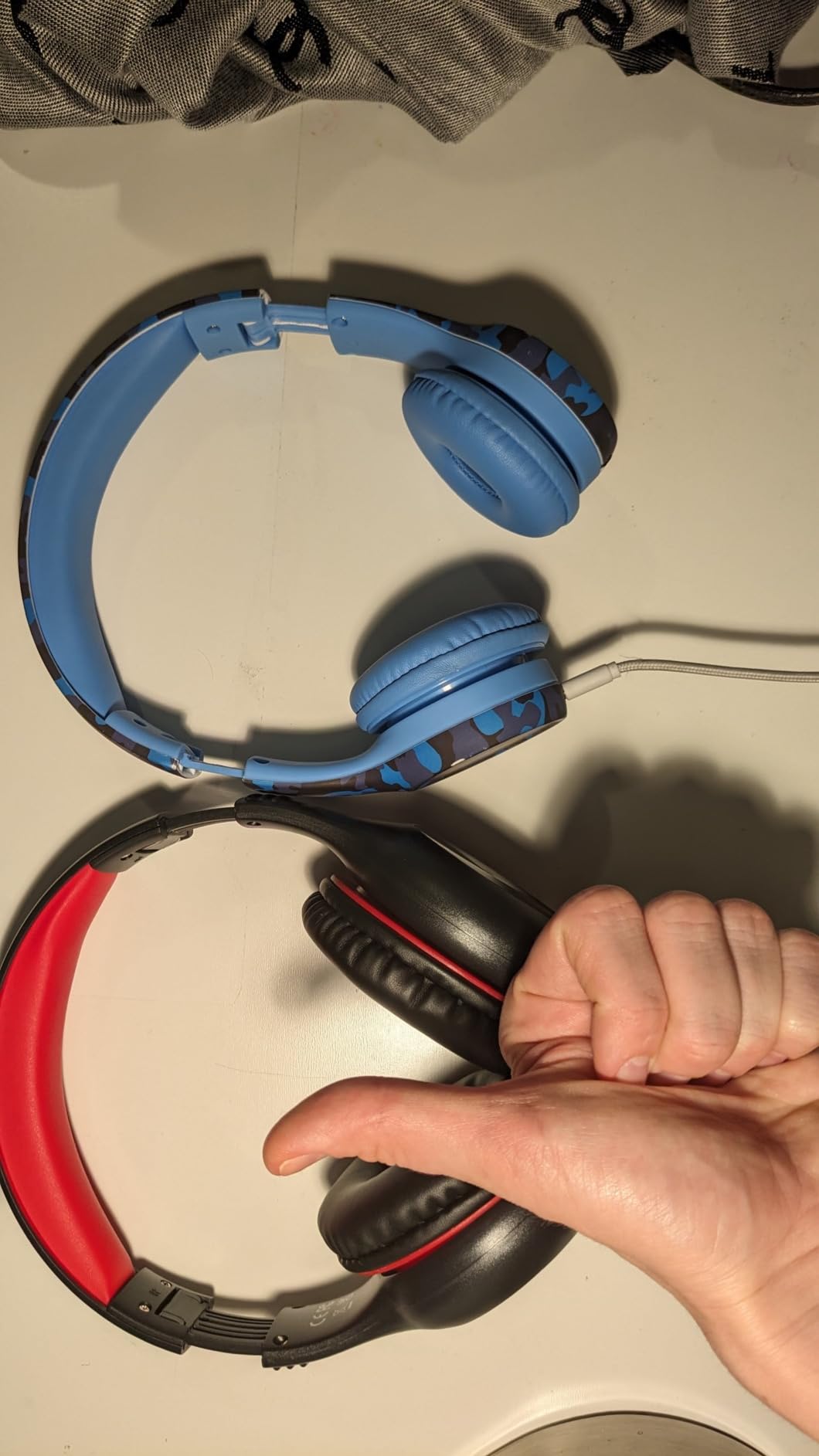
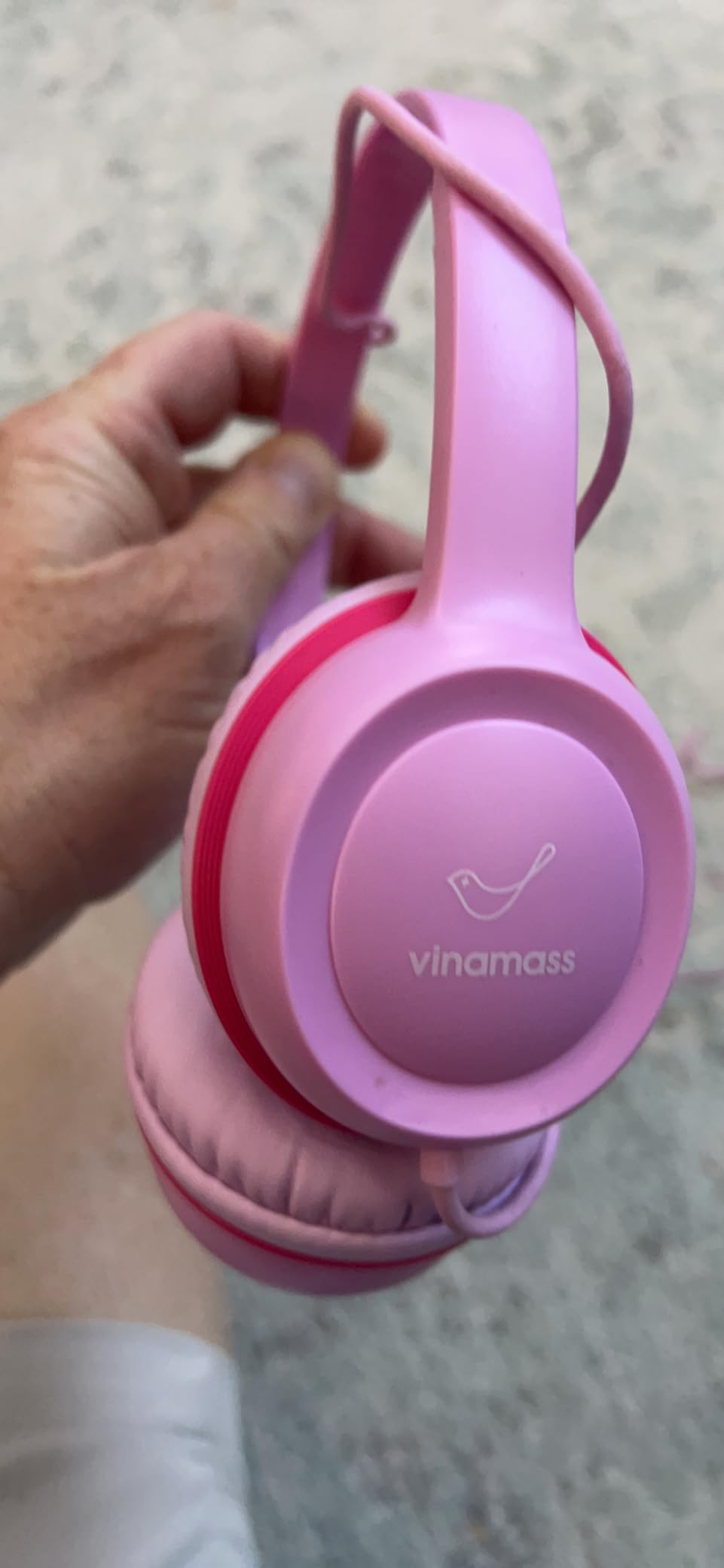
4. vinamass Kids Headphones – A Fixed 85dB Cap No Child Can Switch Off
vinamass Kids Headphones with 85dB Volume Limit,On Ear Headphones,Adjustable and Flexible for Toddlers to Adults,Suit for School Classroom Students Teens Children
Wired on-ear
Fixed 85dB limiter
0.25 kg
Flexible plastic headband
Pros
- Fixed 85dB limiter cannot be turned off by a child
- Soft PU leather earpads with foam sponge cushions
- Flexible hard-to-break headband
- Works with Chromebook Kindle Fire Switch iPad
Cons
- No 94dB mode for noisy travel
- Headband adjusts only 3cm
- On-ear design gives less passive isolation
If your primary worry is a child who discovers switches, this is the cleanest answer in the guide. The 85 dB limitation is fixed into the A63 design with no higher position, so there is nothing to find and nothing to press. It is the least clever solution and the most reliable one.
The soft silicone shell and donut-style earcups read as deliberately gentle, and the pastel color options are the kind of thing a preschooler will actually choose to wear. At 0.25 kg it is light, and the foam sponge cushions with PU leather covers sit comfortably for short-to-medium sessions.
Why a Fixed 85dB Cap Matters
A switchable limiter is a limiter with a failure mode. Every button combination that raises output is a button combination a determined child can find, and most of them are advertised in the listing photos. A fixed cap removes that entire category of risk, and for a child under six that trade is almost always worth making.
The cost is real and should be stated plainly. On a plane or a noisy road, 85 dB with on-ear cups and no noise cancelling can be too quiet, and a child who cannot hear it will reach for the device volume instead. This pair is built for quiet rooms, not loud environments.
Lightweight On-Ear Comfort for Small Heads
On-ear geometry is a real benefit for small heads. Circumaural cups overhang smaller skulls and slide off, while a supra-aural pad sits on the ear itself and stays put. For a three to six year old, that trade often favors the smaller cup even though the isolation is worse.
The carbon fiber plastic headband is flexible and hard to break, which matters more than metal on a design aimed at toddlers. It adjusts up to 3 cm, which is enough for that age band and not much more.
The 3cm Headband Limit and On-Ear Trade-Offs
Three centimeters of adjustment is the honest limitation here. It is a toddler-to-young-child fit, and a family that expects one pair to stretch to a teenager should read the growth section in the buying guide below. Several models in this list use a multi-level extendable headband precisely because of this.
Isolation is the other trade. On-ear pads leak sound, which cuts both ways: the child hears more of the room, and the room hears more of the playback. At a fixed 85 dB that is usually acceptable. The company also commits to a 24 hour after-sale response, which is helpful if a unit arrives damaged.
5. JLab JBuddies Studio – The Pick Built to Survive a School Year
JLab JBuddies Studio Kids on-Ear Wired Headphones with mic, Volume Limiter, Folding, Adjustable, Noise Isolation, Blue/Green
Wired on-ear
85dB limiter for ages 6+
0.17 kg
Adjustable metal headband
Pros
- Backed by a JLab lifetime limited warranty
- Built-in 85dB limiter tested for children
- No charging pairing or batteries
- Folds flat for packing
Cons
- Single fixed 85dB limit with no travel mode
- On-ear pads rest on the ear
- Listed for ages 6 and up
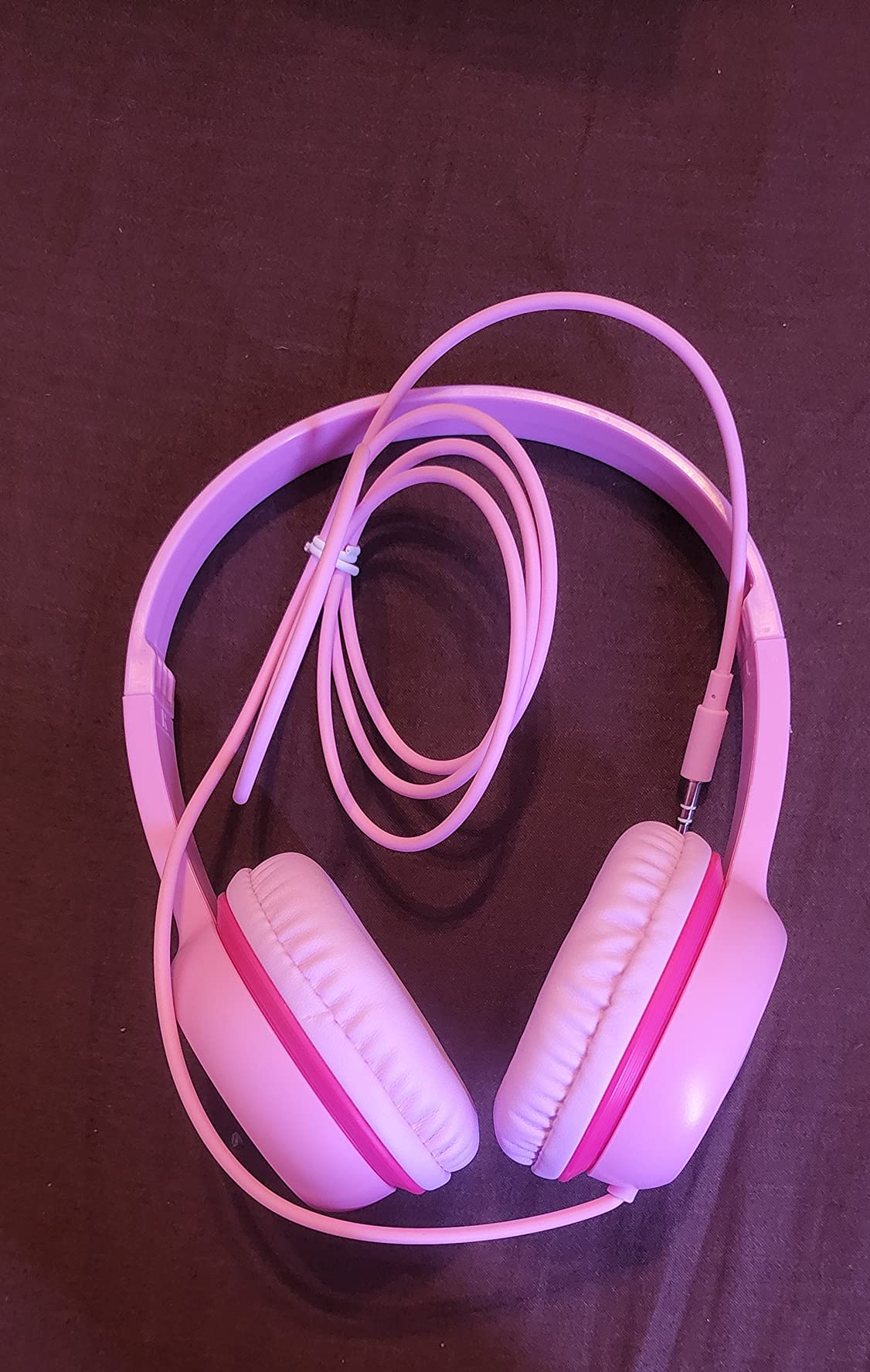
The warranty is the reason this pair ranks where it does. A lifetime limited warranty from a brand with a real support operation changes the math entirely when you are deciding whether to pay more for something that might last two years or something that might last ten.
Everything else supports that bet. The headband is metal rather than plastic, the sliders move smoothly, the whole frame folds, and at 0.17 kg it is the second-lightest pair here. Cloud Foam Eco Leather cushions handle long sessions without the clamping you get with cheaper on-ear designs.
An 85dB Limiter Rated for Ages 6 and Up
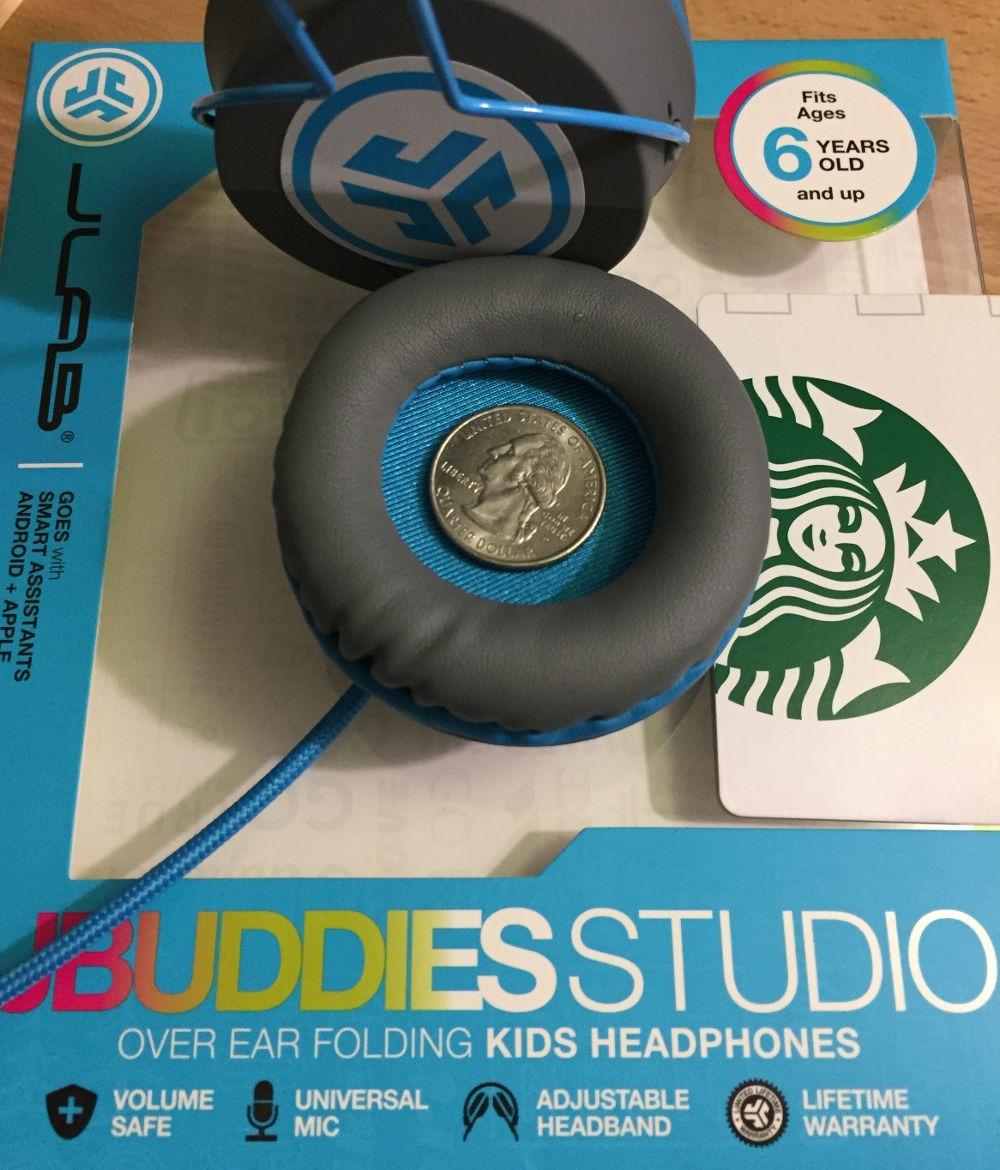
JLab specifies a built-in 85 dB volume limiter tested and approved for children ages 6 and up, with a single fixed position. There is no 94 dB mode to find, which is exactly the right design for a six-year-old who has already learned that buttons respond to pressure.
Note the age rating carefully. This is not a toddler headset. Below six, the on-ear fit and the fixed 85 dB cap leave a child at the edge of the design envelope, and we would steer a preschooler toward the vinamass or awatrue options instead.
Metal Headband, Folding Frame and Longevity
Metal is the difference between a headband that survives a year and one that snaps. The folding design with smooth-sliding metal adjustments also removes the hinge failure mode that takes down most plastic frames, and it packs into a backpack without a separate case.
Durability claims are easy and hard to verify at the same time. What we can say from review volume is consistency: across 3459 reviews the complaints cluster around fit and the fixed cap, not around breakage, which is the opposite of what we see at the budget wired tier.
Microphone and Plug-and-Play Simplicity
The integrated in-line universal microphone handles calls and remote class without any pairing, charging or battery management. For a child in online school that removes an entire category of support request, because there is nothing to connect and nothing to forget to charge.
It is a 3.5 mm plug-and-play connection, so it works with a Chromebook, a laptop or a tablet without an adapter. If you are comparing this against wireless options in the same price range, the simplicity is the feature, not a compromise.
6. awatrue AT2 Kids Headphones – Study Mode and Travel Mode in Five Ounces
awatrue AT2 Kids Headphones for School with Mic, 85/94dB Safe Volume Limit
Wired over-ear
85dB study and 94dB travel modes
5.2 ounces
CPC-certified PP
Pros
- Two switchable modes for study and travel
- Excellent passive isolation so playback stays private
- Bright kid-friendly colors
- Tangle-free cord and sharing jack
Cons
- Cord entry point at the earcup is a known weak spot
- Older children can find the 85/94dB switch
- No wireless option
At 5.2 ounces this is the lightest pair we tested, and the isolation is the standout. The over-ear cups do a genuinely good job of containing playback, which means a child can listen at their own level in a shared room without a parent hearing every word of the soundtrack.
That isolation is what makes the two-position limiter usable. An 85 dB study mode for quiet rooms and a 94 dB travel mode for planes and cars, both hardware-controlled, gives a family one pair that handles both environments. Reviewers also highlight the bright color options and the tangle-free cord, both of which matter more than spec sheets suggest.
Switching Between 85dB and 94dB
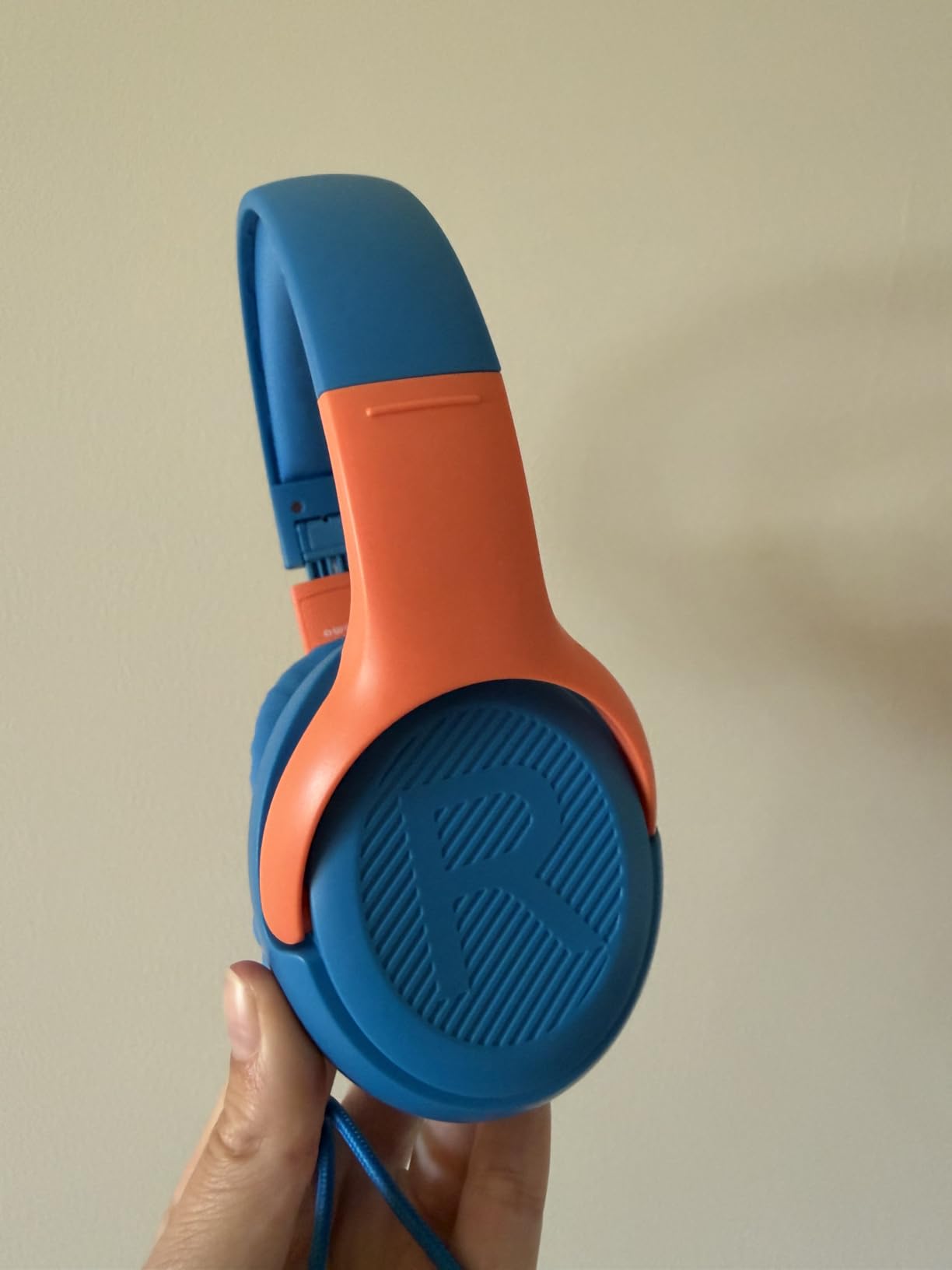
The AT2 labels its two positions clearly: 85 dB study mode and 94 dB travel mode. That naming does more for parental control than the hardware does, because a child who sees a switch marked for quiet will occasionally leave it there.
The review record names the other half of this honestly. Older children can find the 85/94 dB switch and change the setting back, which is the recurring criticism in the reviews. If you have a child over eight, treat this as a pair to set once and check periodically, not a pair you never have to look at again.
Passive Isolation That Keeps Playback Private
The over-ear fit here produces noticeably better passive isolation than the on-ear models in this list. Parents report that they cannot hear playback even at full volume in the 85 dB setting, and that is a real quality-of-life gain in a household with more than one child.
Isolation also lowers the required listening volume in a moderately noisy room, which is a hearing-protection benefit that does not show up on any spec sheet. It is the same principle behind active noise cancelling, achieved passively.
The Cord Joint Weak Spot Parents Should Know About
The connection point where the cable meets the earcup is the recurring complaint, and it is worth knowing before you buy. This is a strain-relief failure rather than a sound failure: the unit keeps working but the cable works loose.
Everything else is solid. A one year warranty, CPC-certified PP construction, 40 mm drivers at 32 ohm, ultra-soft breathable protein leather cushions and an adjustable headband rated for ages 2 through 15. That is a well-built pair with one identifiable weak joint.
7. Botesty Sound Wired Kids Headphones – The Longest Warranty in the Group
Kids Headphones Wired for School, 3.5mm Safe Volume Limited with Mic, Navy
Wired over-ear
85/94dB hardware limiting
0.18 kg
24 month warranty
Pros
- True hardware limiting a child cannot override
- Swivel and foldable design packs flat
- Braided tangle-free cord
- Soft over-ear cushions with adjustable headband
Cons
- 90-degree swivel earpiece is a common failure point
- Runs slightly large on very small heads
- Some pairs fail a few months into a school year
The 24 month warranty is the headline and it is twice what most of this list offers. Parents describe responsive seller replacements, and in a category where budget wired pairs routinely develop faults within months, that coverage changes the purchase from a gamble into a reasonable bet.
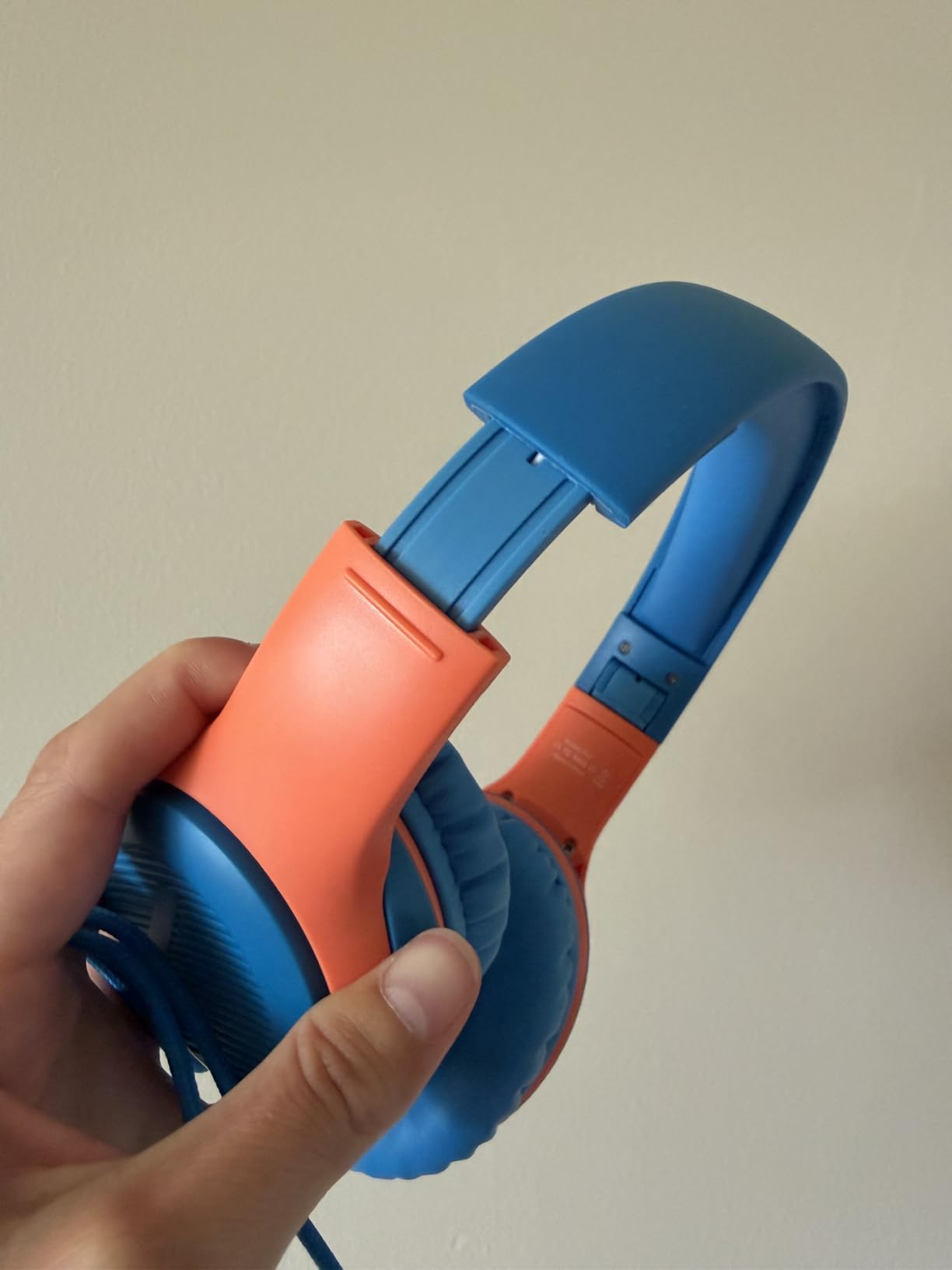
The design is otherwise conventional and correct. True hardware volume limiting, 4.9 feet of tear-resistant nylon braided cord, 90 degree swiveling earcups that fold flat, and soft over-ear cushions on an adjustable headband. At 0.18 kg it is light for an over-ear pair.

Hardware Limiting That a Child Cannot Override
Parents buy this pair specifically for the limiter, and the review record says so directly. The 85 dB study mode and 94 dB travel mode are enforced in hardware, so there is no software trick and no pairing sequence that changes them.
It also works with the widest range of classroom hardware we saw: Chromebooks, tablets, smartphones, laptops, MP3 players and consoles all through the same 3.5 mm plug. In-line control buttons handle answering and ending calls, which is the detail most classroom headsets miss.
Braided Cord, Swivel Joint and Backpack Life
The 4.9 foot braided cord is built for the environment it will actually live in. Braiding resists the two things that kill school cords, tangling and fraying at a bend, and the reviews describe it holding up through repeated rough handling.
The 90 degree swivel is the same feature in reverse. It lets the child wear the headset folded to one side without kinking the cable, and it is also the most commonly reported failure point. Treat the swivel as the part to check if something goes wrong, and keep the warranty claim in your back pocket.
Sizing for Toddlers Versus Teens
Fit is the one place this pair stretches itself thin. It runs slightly large on very small heads, which matters because the product is listed for ages 3 and up. If you are shopping for a three-year-old, measure the headband range before committing.
For an older child the same oversizing becomes an advantage, since there is room to grow into. The 40 mm drivers and soft over-ear cushions work well for long listening sessions, and the foldable structure keeps it flat in a backpack.

8. MIDOLA Wired Kids Headphones – The Headband That Grows With Your Child
Wired Kids Headphones for School with Cord Mic,Safe Volume Limit 85/94dB
Wired 3.5mm over-ear
85dB default, 94dB option
210 g
Four-level headband
Pros
- Defaults to the safer 85dB mode
- Four-level headband extends from age 3 to most adults
- Foldable and light for backpacks
- In-line mic supports classes and calls
Cons
- Cord and mic joint failures reported after several months
- Earpad foam padding can detach with use
- Lowest average rating in the group
Most kids headphones are designed for a two-year window and then get handed down. This one is built to cover a much longer arc, because the four-level extendable headband fits ages 3 and up through most adults in the same frame.
The limiter defaults to the safer 85 dB position, with 94 dB available when a parent decides the environment warrants it. That default matters. Across this entire list, the pairs that start at the safe setting and require a deliberate action to leave it are the ones that stay safe in practice.
85dB by Default, 94dB on Request
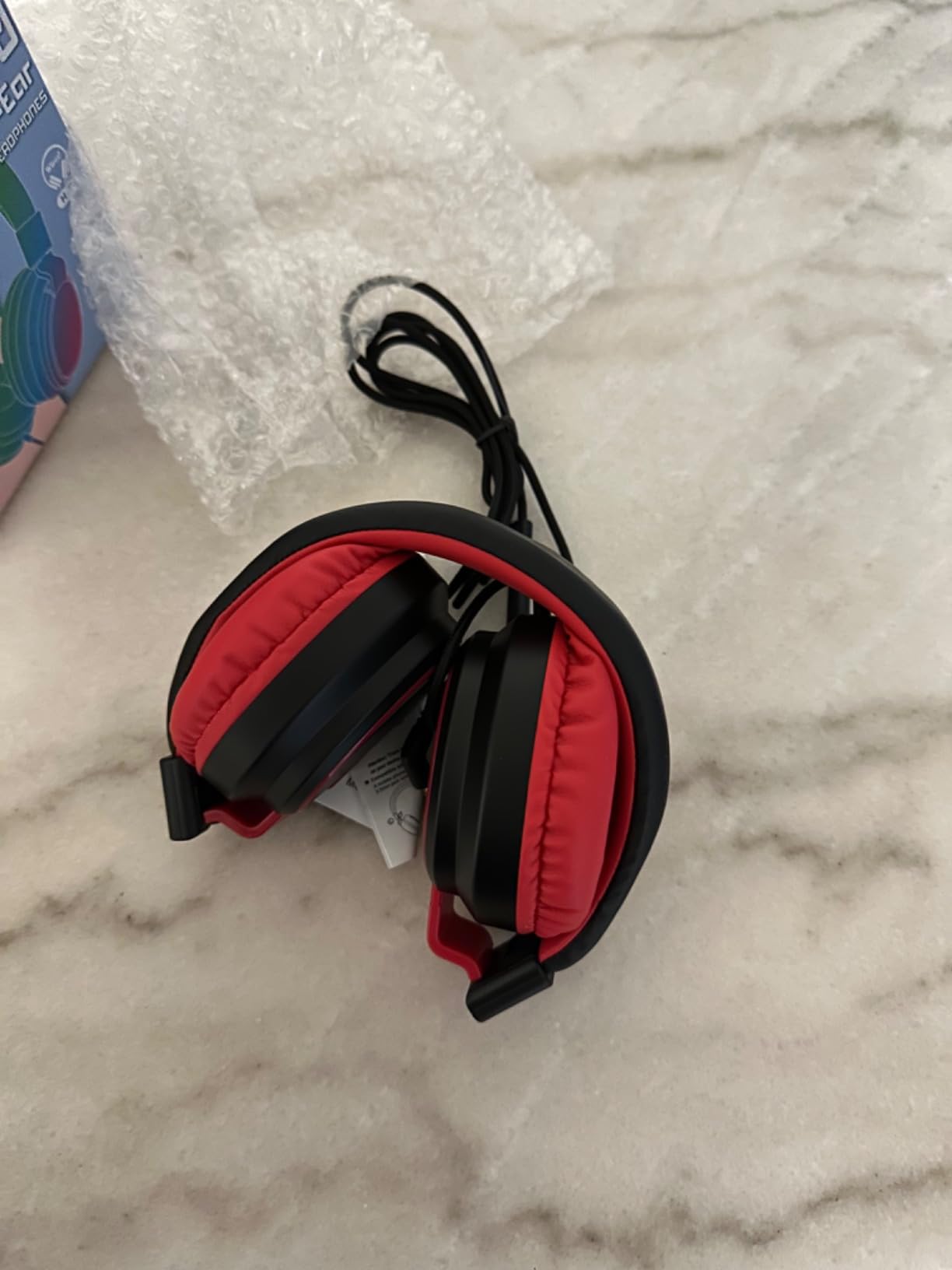
The adjustable 85/94 dB volume limit defaults to 85 dB, and the 40 mm drivers run at 32 ohm with 16 ms latency. Latency that low keeps video and game audio in sync, which is a detail that separates decent school headsets from frustrating ones.
The product is also listed for hearing-sensitive users alongside toddlers, kids and teens, which is a reasonable framing for a pair with a fixed 85 dB ceiling and generous padding. Treat the 94 dB position as a travel allowance rather than a daily setting.
A Four-Level Headband From Age 3 to Adults
The growth argument is the reason to consider this pair at all. A four-level extendable headband means one purchase covers preschool through the tween years and potentially into the teen years, and the foldable 210 g design travels without a case.
That is a different economic calculation from buying two age-tiered pairs. Parents who expect to hand a headset down should weigh a longer fit range more heavily than a slightly richer short-term feature list.
Where the Budget Build Shows Its Age
This pair has the lowest average rating in our group at 4.3 stars, and the reasons are consistent. Cord and microphone joint failures after several months are the dominant theme, and earpad foam padding that detaches with use shows up in negative reviews regularly.
The silver lining is service. The company offers a one year manufacturer warranty with a 24 hour email response commitment, and buyers report replacements handled quickly. Included in the box are DIY cartoon stickers and a parent quick-start guide, small touches that help a child accept the headphones as theirs.
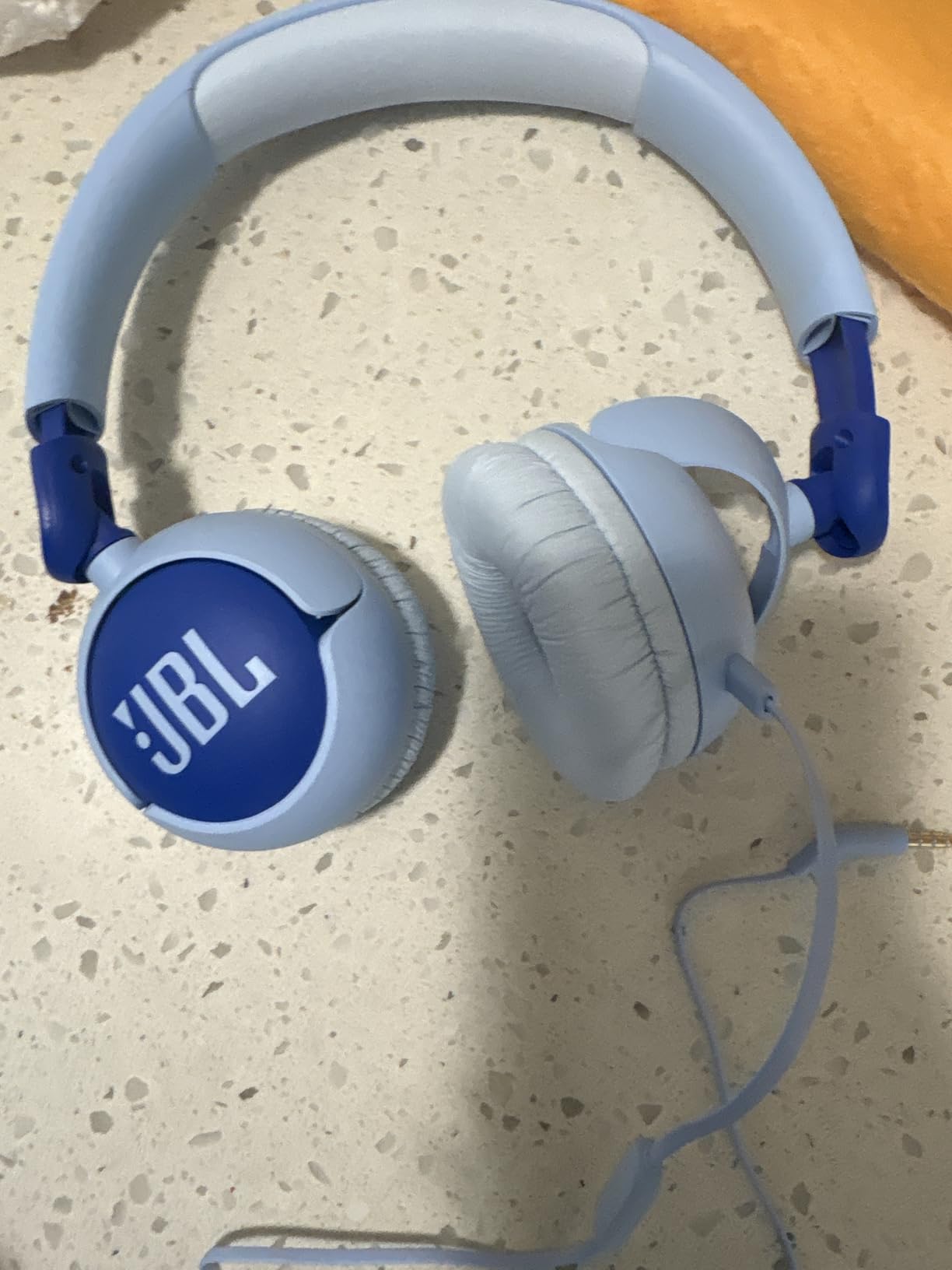
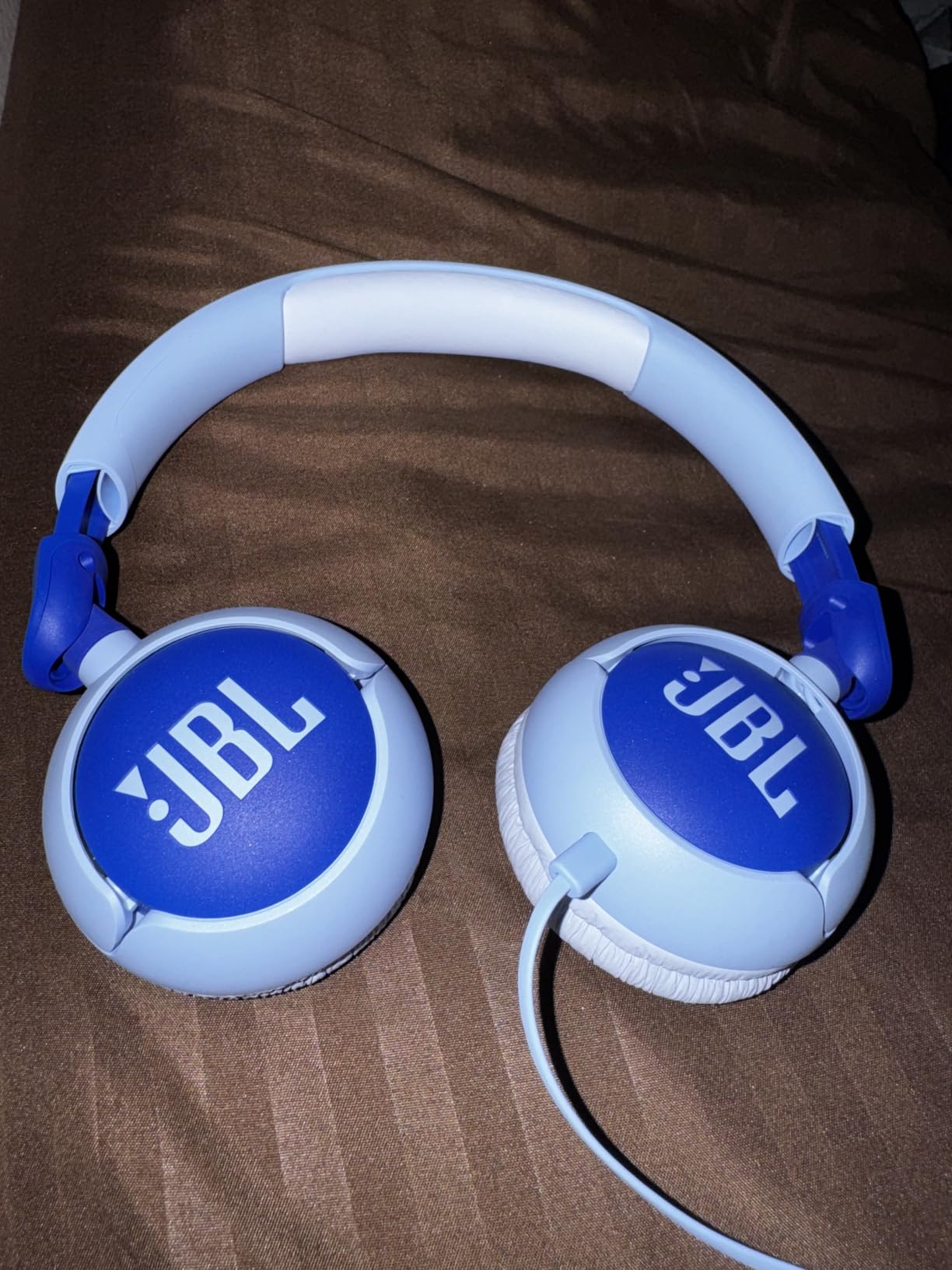
9. JBL Junior 320 – Tuned Sound With a Non-Negotiable 85dB Cap
JBL Junior 320 Kids Headphones, Wired, Volume-Limited – Purple
Wired on-ear
JBL Safe Sound 85dB cap
32mm drivers
116.8 g
Pros
- Hard 85dB Safe Sound cap children cannot raise
- JBL-tuned sound with 32mm drivers
- Very light at 116.8 g for small heads
- Customizable sticker set included
Cons
- Earpiece padding can detach after light use
- Fit runs tight on some heads during long sessions
- Fixed 85dB cap is quiet in noisy environments
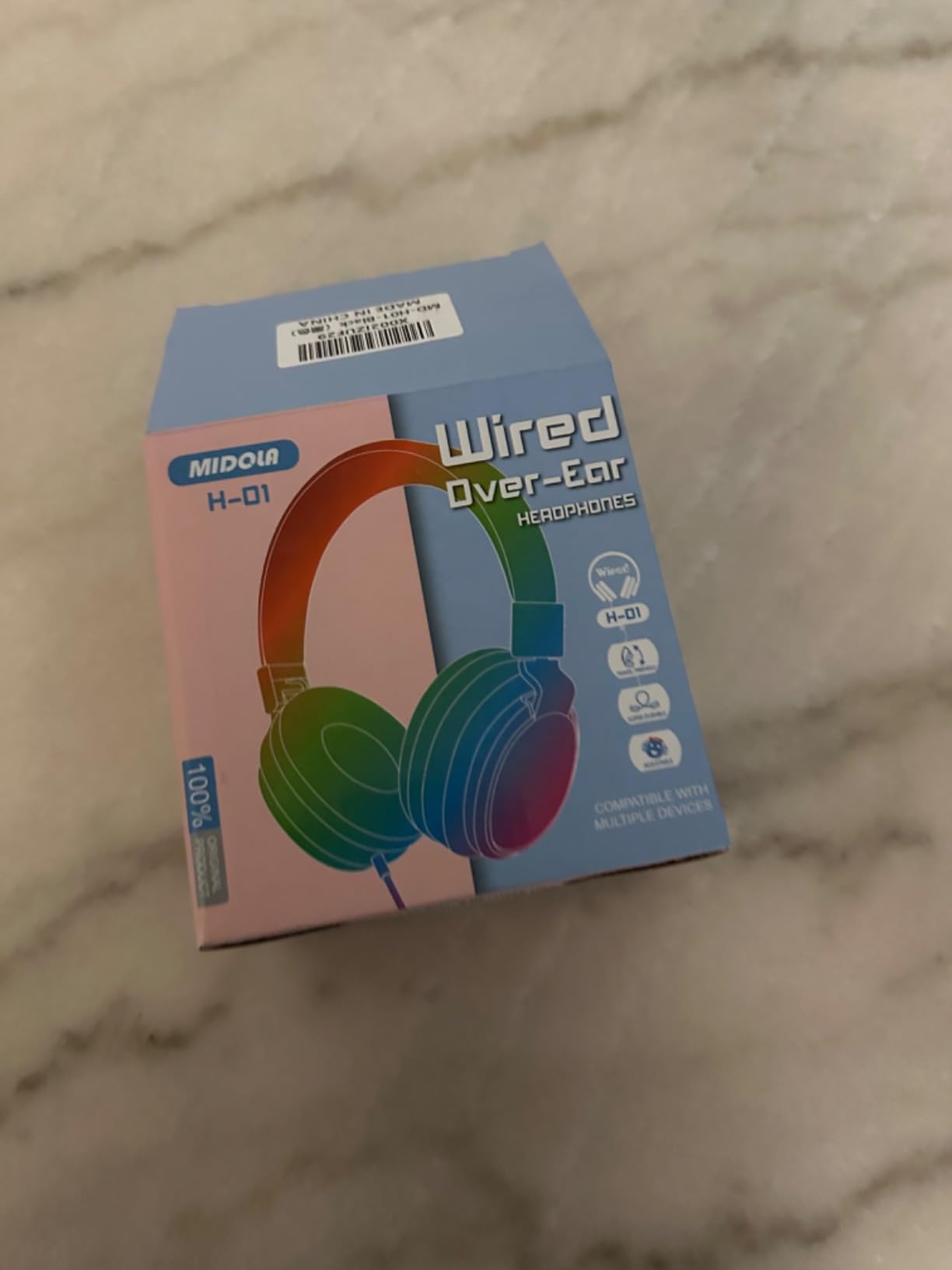
JBL is the only brand here that tunes the drivers specifically, and you can hear it. Thirty-two millimeter dynamic drivers at 34 ohm across 20 Hz to 20 kHz produce a cleaner, more balanced result than the single generic driver in most of this price band, particularly on music rather than speech.
At 116.8 g it is the lightest pair in the group, which combined with the on-ear fit makes it a strong choice for younger children and for anyone who finds circumaural cups too warm. The included sticker set is a small touch that gets real use.
JBL Safe Sound as a Hardware Cap
Safe Sound is described by JBL as a hardware cap that never exceeds 85 dB. That is the right kind of claim, because it does not depend on a pairing sequence, a button combination or a cooperation with the source device.
The 78 dB sensitivity figure listed in the product data is a different number from the cap and should not be confused with it. Sensitivity describes how efficiently the driver converts signal; the Safe Sound cap describes the maximum acoustic output. Parents often see both figures and assume the lower one is the limit.
32mm Drivers and the Tuning Advantage
Smaller drivers are not automatically worse, but they are harder to tune well. JBL gets a fuller, more even response out of 32 mm than most competitors get out of 40 mm, with bass that supports music without swamping dialogue. For a child who will actually listen to music rather than only use the headset for school, that difference is audible.
The round earcups serve a dual purpose. They give a child a defined grip point when putting the headphones on, and they reduce sound leakage, which helps in a shared room even at a fixed 85 dB ceiling.
Lightweight Fit and Where the Padding Gives Out
The soft 12 mm padded headband keeps the weight off the top of the head, which is where lightweight on-ear designs succeed or fail. Owners specifically call out comfort for two to six year olds, and the weight figure supports that.
Two negatives are worth naming. Some units report earpiece padding detaching after light use, which is an assembly weakness rather than a design flaw. And the fit can run tight on some heads during extended sessions, so if your child wears glasses or has a wider head, check the clamping before settling in.
10. ADOOPE Kids Headphones – Two-Stage Limiting for Class and Outdoors
ADOOPE Kids Headphones with Safe 85dB/94dB Volume Limiter for Child/Teens, Foldable HD Stereo Sound Headset for Kindle Kids/fire Tablet/iPad/Laptop, Headphones with Microphone
Wired on-ear
Two-position 85/94dB limiter
Foldable design
2 year warranty
Pros
- Two-position limiter covers study and outdoor use
- Stretchable vinyl cable resists wire damage
- Folds flat into a school bag
- 2 year manufacturer warranty
Cons
- Thinnest review base in the group
- One report of a unit arriving incomplete
- On-ear pads give less isolation than over-ear models
The ADOOPE positions its two limiter settings around the child’s day rather than around sound pressure. The 85 dB setting is for daily listening and online classes, and the 94 dB setting is for outdoor environments where ambient noise otherwise forces a turn up. That framing is clearer than most competitors manage.
The cable is the most interesting physical detail. It is a vinyl audio cable designed to stretch and resist internal wire damage, which targets the exact failure mode that ends budget wired headsets. The foldable design and adjustable headband complete a sensible school-day package.
The 85dB and 94dB Positions Explained
Two positions, 85 dB for classes and 94 dB for outside. As with the other switchable pairs here, the 94 dB setting is reachable by a child who knows to look, so set it once and check on it rather than assuming it stays.
The 3.5 mm plug covers iPhone, Chromebook, iPad, iPod, laptops, tablets and computers, so compatibility is not the constraint. The product is listed for teens, and the on-ear fit suits that age group well.
A Cable Built to Survive Being Pulled
Vinyl is more flexible than the PVC jackets typical at this tier, and the stretch-resistant design means a tug from a caught cable is less likely to sever the conductors inside. The visible effect is a cable that survives the specific abuse a school bag delivers.
Foldability is the other durability lever, and it is properly implemented here. A headset that folds flat gets put in the bag more often, which is the behavior that keeps a kid listening instead of going without.
Thinner Review Base and What That Means
With 982 reviews, this is the thinnest evidence base in the guide, and we weigh that. A 4.6 rating across fewer reviews is less predictive than the same rating across several thousand, and long-term failure patterns are exactly the kind of thing that only shows up in a large sample.
There is also an isolated report of a unit arriving with only one earpiece. That is a fulfillment problem rather than a design fault, but it is the kind of detail that argues for keeping the two year warranty documentation until the pair has been used a few times.
How to Choose Volume Limiting Headphones Your Child Cannot Outsmart
What Is a Safe Volume Limit for Kids?
The answer most parents need is 85 dB, safe for roughly eight hours of continuous exposure. That figure comes from NIOSH recommendations built on the occupational standard OSHA administers, and WHO guidance on safe listening leans lower still, recommending that children keep headphone listening below 70 dBA where possible. NIDCD frames the risk plainly: noise-induced hearing loss is cumulative and permanent, and a child’s cochlear hair cells do not regenerate.
Here is the exposure reference we use when judging any limiter on this list.
75 dB is the right target for a child under three. 85 dB is the standard ceiling for school-age listening and is safe for about eight hours at a stretch. 94 dB cuts that allowance to roughly one hour. 105 dB is where damage can occur in under an hour, and it is the territory unregulated adult earbuds can reach at full volume.
That last number is the reason we start every product discussion with the limiter. An adult headset driven by a phone at full output is not a louder version of a kids headset. It is a different category of risk, and it is the reason hand-me-downs are the single most common hearing hazard in homes we hear from.
Do Volume Limiters Actually Hold Up?
Partly, and you should assume some margin. Independent testing across large samples has found a large share of kids headphones measuring above their advertised cap, with HeadphonesAddict reporting 68.5% of tested kids and toddler sets exceeding their manufacturer’s figure, and Wirecutter independently finding up to one third over 85 dBA under pink noise and nearly half pushable past it with real music.
Two things explain the gap. First, a limiter clamps peaks, and real music has transient peaks that a pink noise test does not reproduce, so a pair that passes a lab test can still deliver short spikes above its cap. Second, measurement tolerances are not zero, and manufacturers round down.
The practical response is not to reject every pair that claims a cap. It is to buy from brands that publish something specific, expect a few decibels of overshoot, and add a second layer of control at the device level. Device volume sliders are not a safety control, since 50 percent of an amplifier’s range means nothing without a measured reading.
How to Lock Down a Volume Limit and How Kids Defeat It
There are five common routes past a limiter, and knowing them tells you which pair is actually safe. The first is a 94 dB travel mode, reachable through a button or a press-and-hold that appears in the listing photos. The second is a hidden switch on the earcup, usually covering a port or a seam. The third is the supplied cable, which on several models outputs louder over a wired connection than over Bluetooth. The fourth is a second headphone port, which some designs bypass the limiter entirely. The fifth is the source device, since a wired limiter depends partly on the amplifier in the phone, tablet or Chromebook it is plugged into.
To lock a pair down, work through this order. Set the lowest mode available and confirm the child cannot change it. If a wired cable is included, decide whether it stays in the box. Block the device’s own maximum output using the parental controls built into the operating system, which is a genuine second layer rather than a theoretical one. Check the earcups for a hidden switch before the child finds it. And if the pair offers a share port, understand that a share port shares the signal, not the cap.
The flip side deserves a sentence. Some families with tweens and teens deliberately want a limiter they can adjust, and that is a legitimate choice for an older child. The honest framing is that raising the cap above 85 dB trades hearing margin for perceived loudness, and an app-based or device-level parental cap is the safer way to get there.
Wired vs Bluetooth: Which Enforces the Cap Better?
Bluetooth enforces the cap more reliably, and the reason is architectural. When the limiter lives inside the headset, the cap applies no matter what the source device does, because the headset processes the signal. A wired limiter, by contrast, depends partly on the amplifier in the connected device, so a powerful source can drive past the intended ceiling.
The MIDOLA Bluetooth pair in this list demonstrates the trade-off perfectly. Its 85 dB cap is solid over Bluetooth, and the review record notes that the restriction does not apply when using the detachable wired cable. That is not a defect unique to that model. It is the structural weakness of wired limiting in general.
Bluetooth also solves the battery anxiety that stops some parents buying wireless sets, because the batteries in this category now run far longer than a school day. The remaining cost is pairing, firmware fuss and a higher failure rate when a cable or connector is the part that breaks.
Which Pair for Which Age?
For toddlers and preschoolers, prioritize a fixed cap with no higher mode, a light on-ear or small over-ear fit, and a headband range matched to a small skull. The vinamass and awatrue pairs fit that brief, and the awatrue is rated from age 2.
For early elementary, comfort and durability start to matter more than the limiter design, because the limiter now works and the question becomes whether the headset survives. The JLab JBuddies Studio is rated for ages 6 and up, and the metal headband is the reason it lasts. A seven-year-old who can put headphones on independently saves a parent a daily argument.
For tweens and teens, styling starts to matter. A child who thinks a headset looks childish will avoid wearing it, and an unused limiter protects nobody. JBL and JLab lean more adult in appearance, and both use fixed 85 dB caps that survive a teenager’s attention.
On the growth question, one durable pair with a wide headband range often beats two age-tiered purchases. The MIDOLA wired pair extends from age 3 through most adults, which is a defensible answer to the outgrowing problem rather than an attempt to buy a smaller child out of a grown-up’s set.
Comfort, Sensory Sensitivity and Glasses
Three physical details decide whether a limiter gets respected, and none of them appear on a spec sheet. The first is pad texture, because crinkling foam and stiff plastic speaker grilles are decisive negatives for sensory-sensitive children, while the soft silicone and protein leather materials used in this group are noticeably more tolerated.
The second is clamping force. On-ear designs clamp harder because less of the head is used, and a child in glasses has less tolerance for that. If glasses are involved, circumaural over-ear pairs with a padded headband are the safer recommendation, and if a child finds over-ear cups overwhelming, the pressure-seeking preference some parents describe means an on-ear fit can actually be what they want.
The third is weight. At five to nine ounces these are all light enough for hours, but the difference between 116 g and 210 g is noticeable on a five-year-old over a long afternoon. The lightest options here are the JBL Junior 320 and the awatrue AT2.
Microphones, Sharing Ports and Battery Life
For online classes, the microphone type decides whether the headset works. A built-in or in-line microphone on a wired connection is the most dependable option, because it keeps functioning when a Bluetooth pair runs out of battery mid-lesson. That is the practical reason several wired pairs in this list are stronger for school than their wireless rivals.
A sharing port is the feature parents discover they need. Several models here include a 3.5 mm sharing jack or share port, which lets two children use one tablet without a splitter. On a flight or in a car, that is the difference between one child watching and two children watching.
On battery life, the useful comparison is not the headline number but the weekly one. A stated 60 hours means a child gets a full school week between charges, and even a 15 hour figure clears two days of intermittent use. What matters more is whether the wired fallback works when the battery dies, which is the case on the MIDOLA Bluetooth pair and trivially true on every wired set here.
Frequently Asked Questions
What is the decibel limit for safe headphones for kids?
The standard answer is 85 dB, which NIOSH recommends as safe for roughly eight hours of continuous exposure. WHO guidance leans lower still and suggests keeping children’s headphone listening below 70 dBA where possible. For children under three, a 75 dB cap is the better target. The limit lives in the headphone’s circuitry, so it only works if the pair enforces it in every mode.
Are volume limiting headphones actually safe?
Mostly, with a margin. Independent testing has found a large share of kids headphones measuring above their advertised cap, with one large-sample review measuring 68.5% over the stated figure and another finding up to a third over 85 dBA under pink noise. Buy from brands that publish a specific cap, expect a few decibels of overshoot, and set parental volume controls on the device as a second layer.
What is the difference between 85dB and 94dB volume limit?
Time, not safety. At 85 dB a child can listen for about eight continuous hours. At 94 dB that allowance drops to roughly an hour before the exposure becomes damaging. A 94 dB travel mode is defensible on a plane where cabin noise forces a higher level, and indefensible as a daily setting at home.
Should I buy wired or wireless headphones for my child?
Wireless enforces the volume limit more reliably, because the cap lives inside the headset rather than depending on the amplifier in the connected device. Wired pairs are better for online school, since the microphone keeps working when a battery dies, and many include a sharing port for siblings. A few models with a detachable cable lose the limiter over the wired connection, so check the reviews before buying.
Is 50% volume on headphones safe?
A volume percentage means nothing on its own. Fifty percent of an amplifier’s range is not a decibel figure, and two devices at the same setting can output very different levels. What matters is a measured dBA reading or a limiter you trust. Phone volume warnings are also unreliable, because they measure the phone’s output rather than the headphone’s, so they can fire even when the limiter is working correctly.
Which Volume Limiting Headphones Should You Buy?
If you want one pair that does everything well, the MIDOLA Bluetooth headset is the pick: wireless freedom, a solid 85 dB default cap and battery life that clears a full school week, with the caveat that its adult mode and wired cable both need a decision from you. Buy the EarFun K1 when you want the most capable wired set for classroom and travel use without paying up, and the Nabevi pair when long sessions in a quiet room are the routine and cushion comfort decides whether the headphones stay on.
Buy the vinamass for a toddler who will go hunting for switches, the JLab JBuddies Studio for a school-age child who needs the pair to last, the awatrue AT2 for travel where isolation matters, the Botesty Sound for warranty coverage, the MIDOLA wired pair for a headband that grows, the JBL Junior 320 for the best-tuned sound in the group and the ADOOPE for outdoor listening. Whichever you choose, set the lowest limiter mode the day it arrives, keep the wired cable in the box if the limiter depends on Bluetooth, and turn on parental volume controls at the device level. That last step takes five minutes and no headset can replace it.
Leave a Reply