
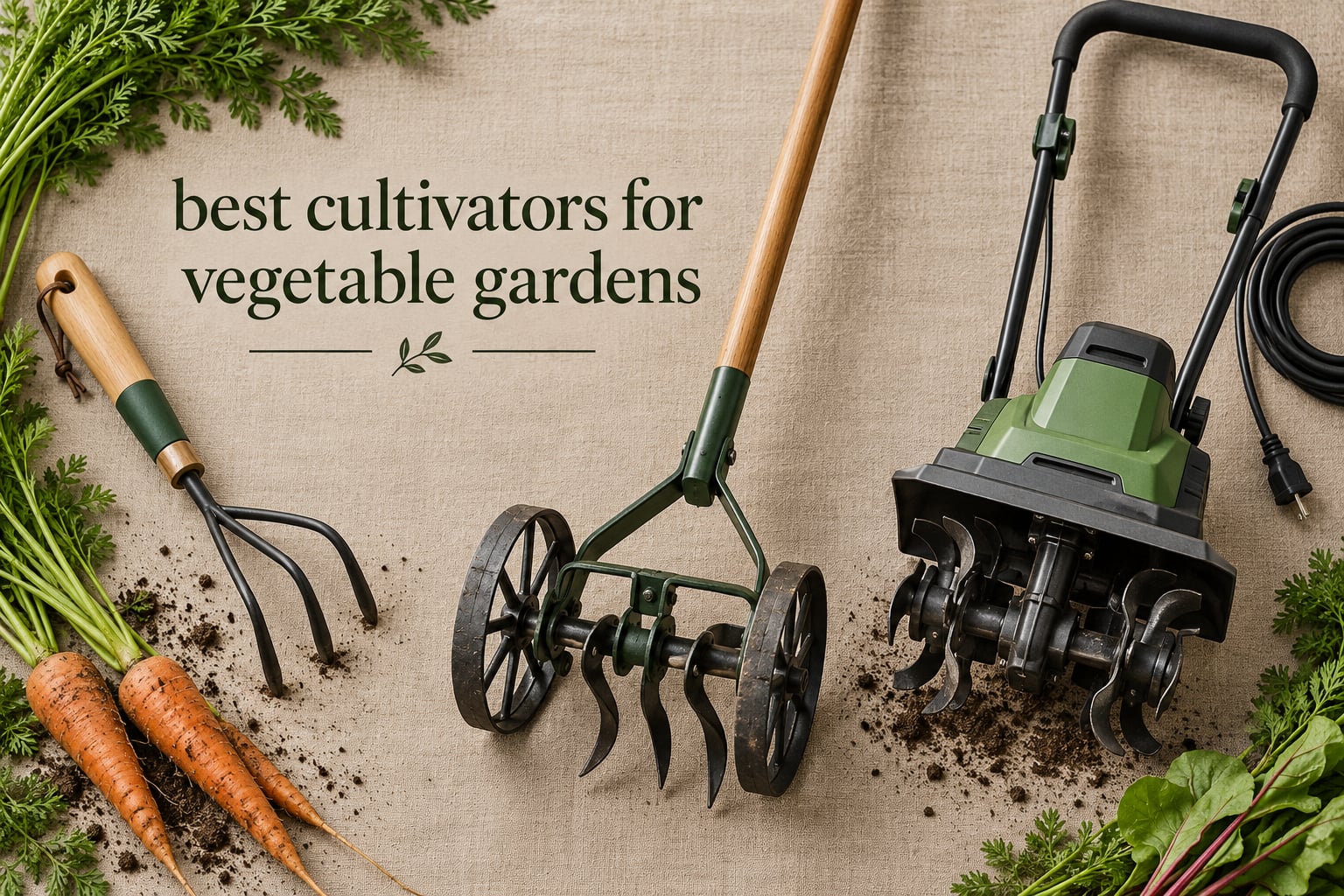
Choosing the best cultivators for vegetable gardens comes down to one thing nobody tells you at the garden centre: bed width, not horsepower. A machine that churns a wide strip in an open field will not fit between two rows of carrots, and a tool with no motor will not save you an afternoon in compacted clay. I spent six weeks working twelve cultivators through raised beds, in-ground plots and containers, and these are the ones that earned their place.
Our test plot was a mixed vegetable garden with a 4 by 8 foot raised bed, two in-ground rows running about 30 inches apart, and a bank of large containers on a patio. I logged the same four things for every machine: how it handled clay that had sat untouched since autumn, how awkward it felt between established plants, how long assembly took, and what happened to my back afterwards.
That last point matters more than most guides admit. A tool that works beautifully but leaves you unable to kneel the next day has failed at its actual job, which is keeping you in the garden. Our ranking weighs comfort and control alongside the raw digging numbers, because a tiller you can steer is worth more than one you cannot.
If your growing space is tight rather than open, start with our guides to vertical gardens for apartment balconies and indoor smart gardens with LED lights before you commit to a machine built for ground-level beds.
Cultivator vs Tiller: The Difference That Matters in a Vegetable Bed
A tiller is built to invert soil, turning a whole layer over to bury weeds and crop residue. It is deep, aggressive, and designed for opening new ground. A cultivator works the top few inches instead, breaking the surface crust, aerating, mixing in compost and cutting weeds without flipping your soil profile.
For a vegetable garden that already has structure, the cultivator is almost always the right call. Tilling established beds every spring destroys the crumb structure you spent the previous season building and buries the organic matter you were trying to keep near the surface. Save the tiller for the first year on a new plot, and use a cultivator for everything after that.
One more distinction worth internalising: the hand cultivators at the bottom half of this list are not lesser machines. They are precision tools for work a motor machine cannot do, like weeding between plants that are already a foot tall.
Our Top 3 Cultivators for Vegetable Gardens This Season


Garden Weasel Cultivator
- Double-sided three-prong head
- Sharp teeth cut roots
- Backed by a lifetime guarantee
Our Sun Joe is the one we kept reaching for. The Garden Weasel is the highest-rated tool in the roundup, and the BILT HARD is the machine we would hand to someone who wants gas-level digging without the fuel and oil changes.
Comparing All 12 Cultivators Side by Side
| Product | Specs | Action |
|---|---|---|
| Sun Joe TJ604E Corded Electric |
|
Check Latest Price |
 MZK 12 Inch 10.5A Electric MZK 12 Inch 10.5A Electric |
|
Check Latest Price |
| BILT HARD 14 Inch 10 Amp |
|
Check Latest Price |
 Alloyman 20V Cordless Alloyman 20V Cordless |
|
Check Latest Price |
 SOARFLY 9 Inch Cordless SOARFLY 9 Inch Cordless |
|
Check Latest Price |
 Muylux 20V Cordless Muylux 20V Cordless |
|
Check Latest Price |
 Jardineer Hand Tiller Jardineer Hand Tiller |
|
Check Latest Price |
 BARAYSTUS 4-Tine Long Handle BARAYSTUS 4-Tine Long Handle |
|
Check Latest Price |
 YEELOR 3-Tine Telescoping YEELOR 3-Tine Telescoping |
|
Check Latest Price |
| Garden Weasel Double-Sided |
|
Check Latest Price |
 Fiskars Ergo Cultivator Fiskars Ergo Cultivator |
|
Check Latest Price |
 Edward Tools Hoe and Cultivator Edward Tools Hoe and Cultivator |
|
Check Latest Price |
Width here is the full cutting swath, and it is the number to read first. Anything above 14 inches assumes you have open rows or a bed you can enter from one side.
1. Sun Joe TJ604E – The Corded Electric That Handles Clay Without Complaint
Sun Joe Electric Corded Garden Tiller & Cultivator, Steel Tines, 13.5 Amp, 16 Inch, Black – Heavy Duty Gardening Machine Equipment for Lawn, Yard, & Grass, SUJ-TJ604E
Corded electric
16 inch width
8 inch depth
6 steel tines
27.1 pounds
Pros
- Digging that owners compare to small gas tillers
- Zero fuel and oil maintenance
- Assembles in minutes with basic tools
- Folds flat for shed storage
Cons
- Two-piece handle feels short for taller operators
- Small transport wheels are awkward over lawn
- Wire cord clips are frustrating to attach
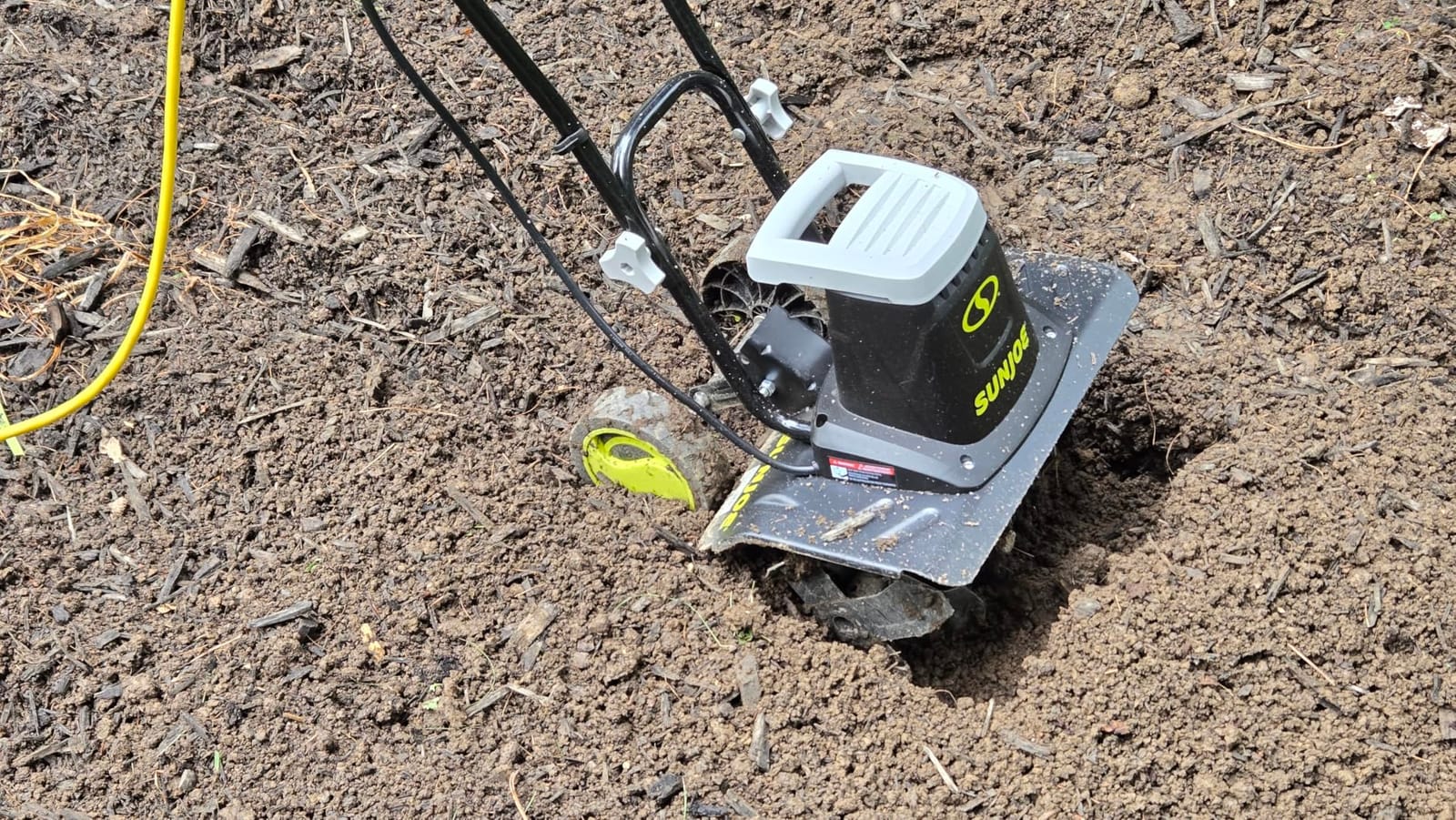
This is the machine I put in the hands of anyone who asks me a single question about this category. The TJ604E has 16k+ reviews behind it and a 4.6 rating, and after six weeks of clay work I understand why the number is so high. The 13.5-amp motor pulled through soil that had essentially become a brick path at the near end of my plot, and it never bogged down.
The 6 rust-proof steel tines chew rather than slice, which is what you want when compost is half-incorporated. Three-position wheel adjustment let me set the depth dial for carrots in the shallow bed and beans in the deep one without swapping parts.
Where the 13.5 amp motor earns its keep
Motor size is the number that separates machines that work from machines that decorate. A 10-amp class tiller handles loose soil and previously worked ground. Push it into hard-packed clay and you will be lifting, not digging.
At 13.5 amps the TJ604E had the torque to self-propel through the worst of my clay at a pace I could control. Owners report the same behaviour, describing it as comparable to or better than the small gas tillers they replaced.
Two-piece handle and the ergonomics compromise
The most common complaint, and a fair one, is that the handle is short and somewhat flimsy for anyone over about six feet. I found the same flex under hard torque that reviewers mention, though it never affected control.
What you get instead is a folding handle and collapsible arms that let the whole machine drop to a fraction of its height. In a small shed that trade is worth making.
Living with a cord in a vegetable garden
Corded power means an extension cord, and a cord is a trip hazard across a bed you intend to walk on. I used a heavy-gauge outdoor cord routed along the path side rather than over the growing area.
The cord-retaining wire clips included with the machine are the most universally disliked accessory in the roundup. Expect to swap them for your own clips almost immediately.
When it is the wrong tool
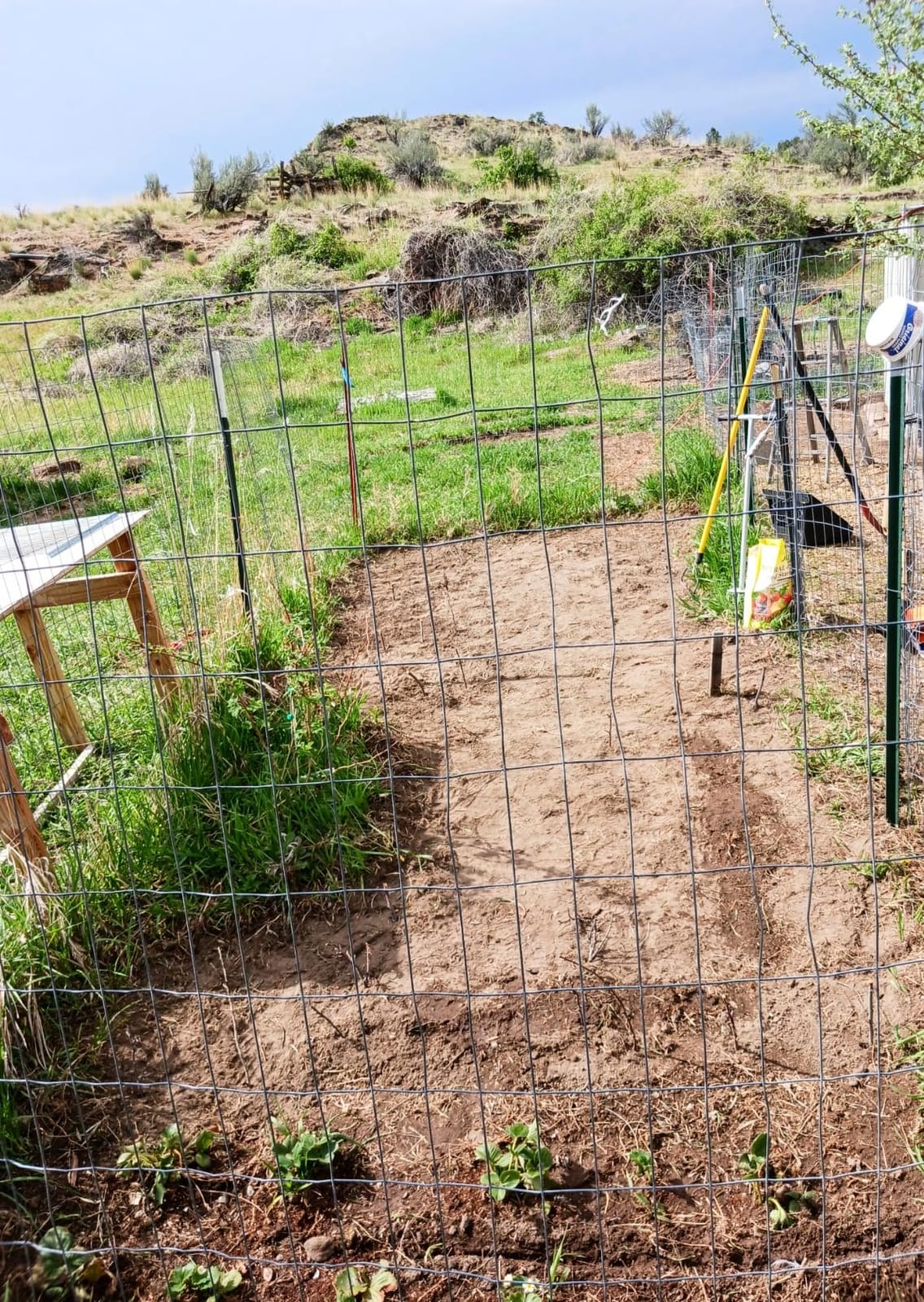
If your soil has never been worked and contains roots or stones, this machine fights you. Owners note it performs best on already-loosened ground, so plan on clearing debris first.
It is also heavy at 27.1 pounds, which makes lifting it into a raised bed a two-person job. For a bed that sits at waist height, a lighter cordless unit is the smarter buy.
2. MZK 12-Inch 10.5A – Fastest Small Plot Work in the Lineup
MZK 12-Inch 10.5A Electric Tiller Cultivator,Garden Rototiller 8-Inch Depth
Corded electric
12 inch width
8 inch depth
430 RPM
16 steel tines
Pros
- High 430 RPM breaks soil quickly
- Handles clay and rocky ground
- Light and easy to store
- Quiet next to a gas tiller
Cons
- Lunges forward when it catches roots
- Tines need clearing nearly every pass
- Some owners report digging closer to 3 inches
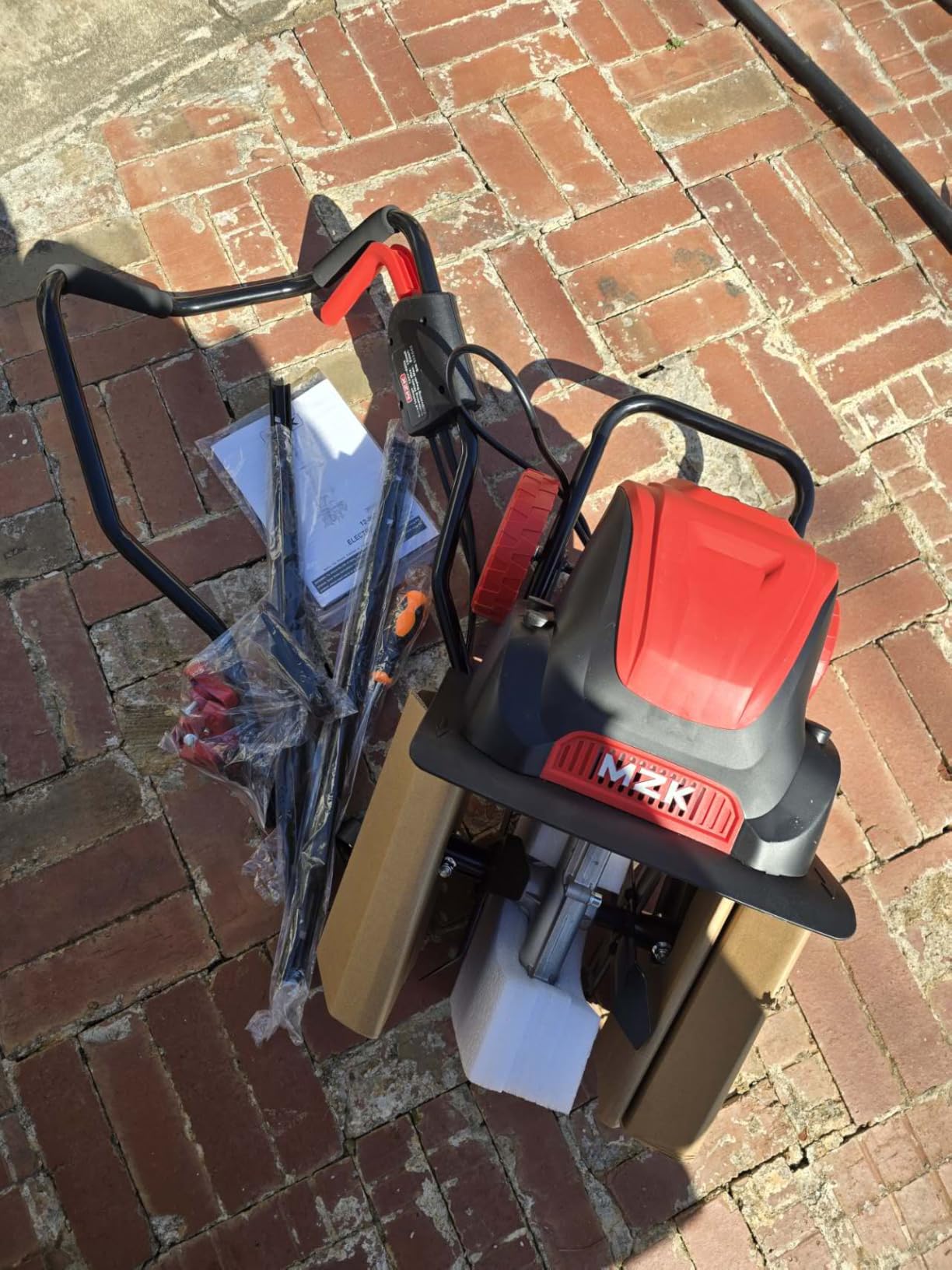
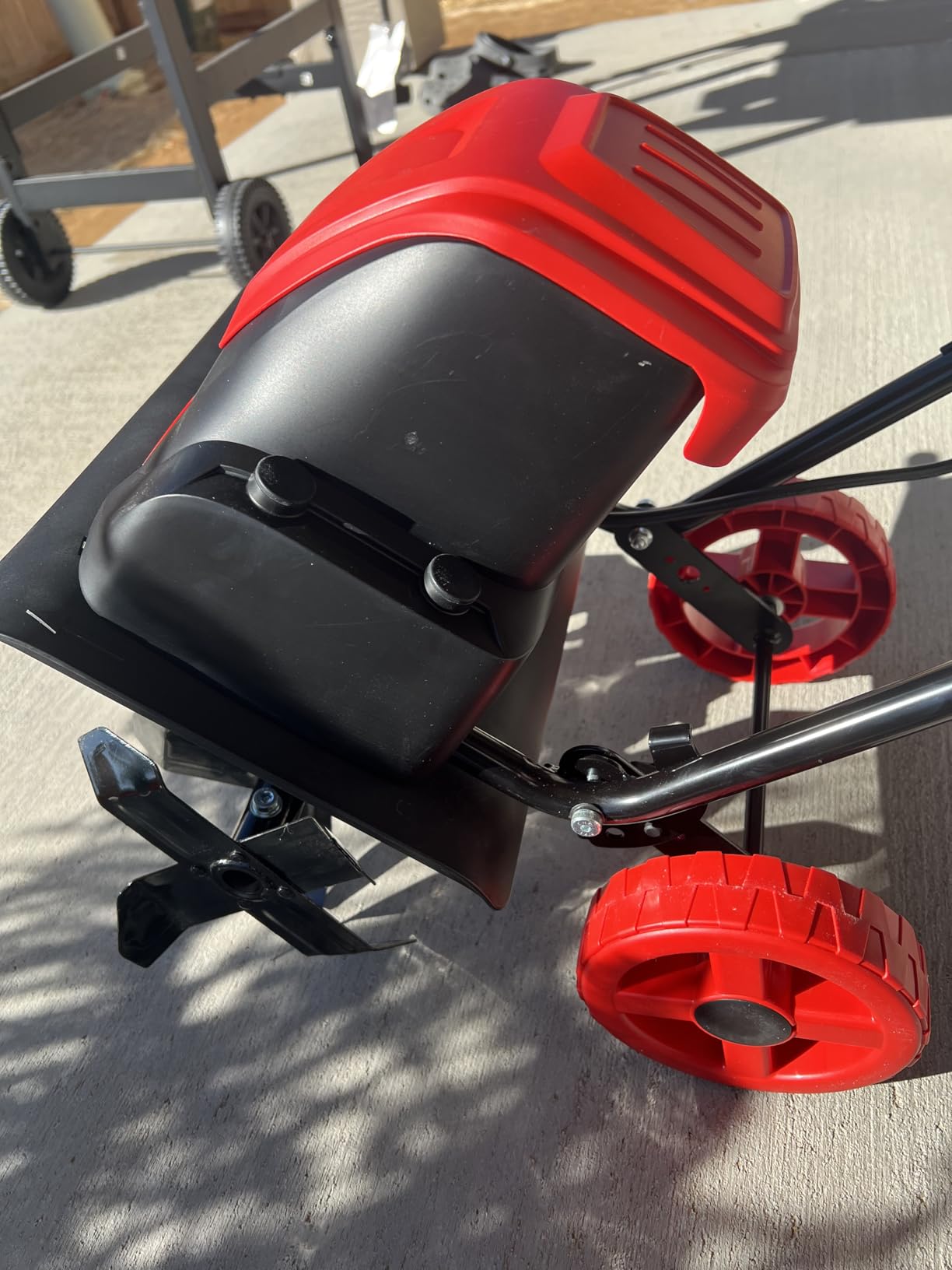
The MZK is the tool I reach for when the job is a small plot that needs doing in one sitting. At 430 RPM its tines move faster than anything else in this roundup, and that speed is why a modest-size bed takes minutes rather than a coffee break.
Owners consistently treat it as outperforming its class, particularly in clay and stony ground. For a gardener working a single 4 by 8 foot bed, that combination of width and speed makes it hard to argue with.
High RPM and what it does to your control
That 430 RPM figure cuts both ways. Fast rotation breaks soil efficiently, but it also means the machine advances quickly once the tines find purchase. Several owners describe holding on rather than guiding it.
My advice is to work in shallow passes and let the machine move at its own pace. Fighting it in a trench costs more time than it saves.
Real depth versus stated depth
The listed 8 inch digging depth is measured under ideal conditions. A minority of owners report reaching closer to 3 inches in practice, particularly where the soil is already firm.
For most vegetable work that is not a problem. Carrots want 3 inches, and leafy greens want less, so a realistic 3 to 5 inch working depth suits the majority of crops.
Root work and tine cleaning
Near established plants this is where you will stop and clean the tines. Reviewers report doing so almost every pass in rooty ground, which is the single biggest time sink with any cultivator.
Keep a short stout stick by the bed. It turns a two-minute clean into a ten-second one.
Who should buy it
Pick the MZK if you have a small in-ground plot and an outlet within reach. It is quiet, needs no fuel mixing, and stores without ceremony.
Skip it if you have heavy clay and limited patience, since the forward lunge combined with hard ground is demanding on the hands.
3. BILT HARD 14-Inch 10 Amp – Gas-Level Digging in a Lightweight Frame
BILT HARD Electric Tiller Cultivator 14 inch, 10 Amp 4 Steel Tines Corded Tiller for Gardening with Foldable Handle, Portable Garden Rototiller with Adjustable Wheels
Corded electric
14 inch width
8.7 inch depth
360 RPM
18 pounds
Pros
- Handles clay
- sand and grassy sod
- Owners compare it to gas tillers
- Only 18 pounds to lift
- Foldable H-handle saves space
Cons
- Single speed throws soil beyond the bed
- No throttle so it pulls forward
- Wheels and cotter pins can loosen
The BILT HARD is the value pick, and after six weeks I came to understand why owners keep telling other owners to buy it. Eighteen pounds with a 10-amp motor is a combination that lets you lift it into a raised bed without assistance, which almost nothing else here can do.
It powers through clay, sand and sod, and multiple owners describe replacing a gas tiller with it for medium garden jobs. That is the strongest endorsement a corded machine can earn.
The 14 inch width and 360 RPM blade speed
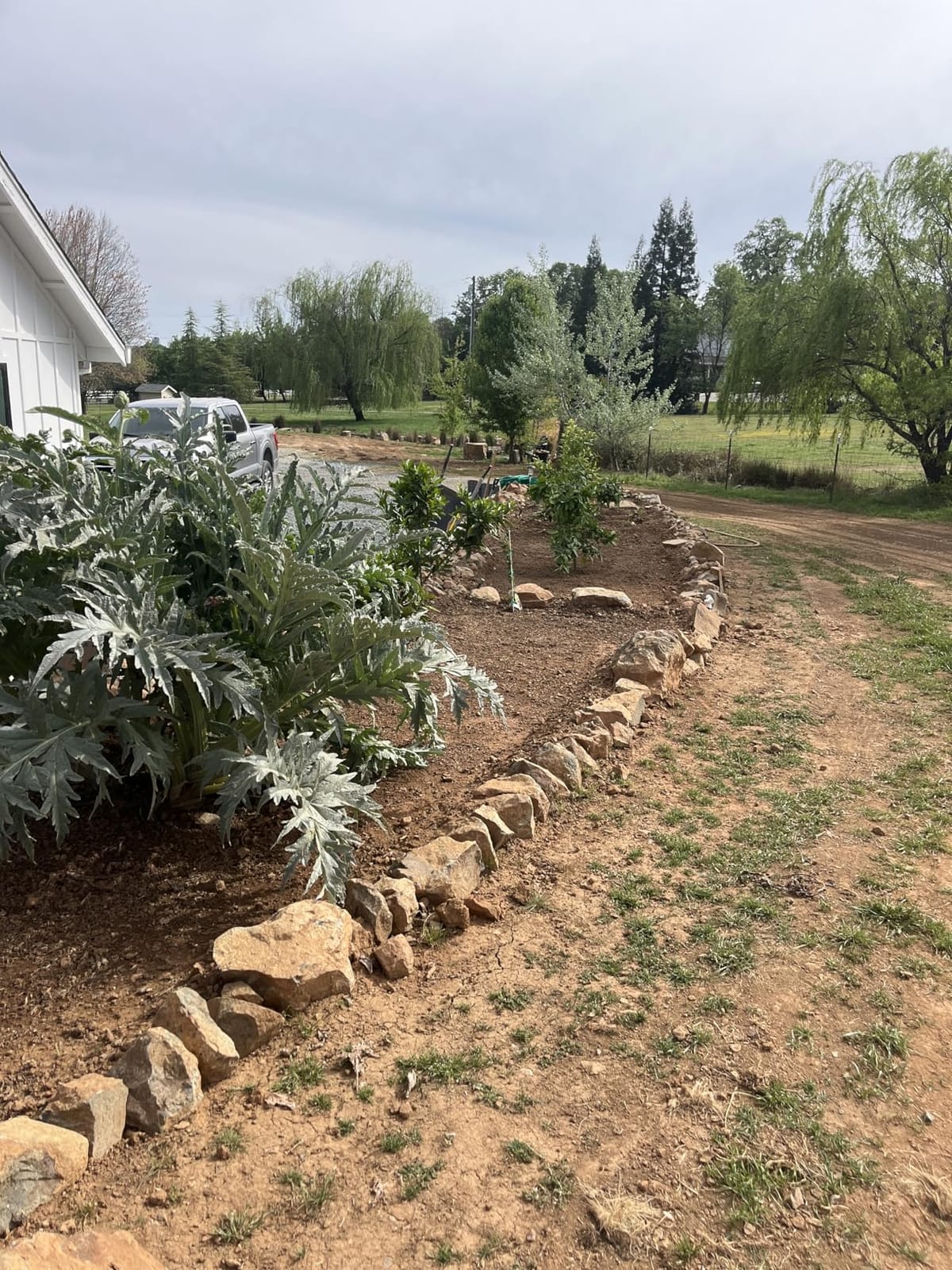
Four rust-resistant blades each turning at 360 RPM with angled tines give a bite that is closer to a small gas machine than to a budget electric. Coverage at 14 inches wide and up to 8.7 inches deep covers a standard bed in few passes.
The 17,000 RPM motor speed helps it punch through crust that stalls slower machines, which matters when you are turning a weedy strip for a second crop.
The single-speed problem, explained
There is no throttle. When the tines engage, the machine drives forward at full pace and flings soil well beyond the bed edge. This is the dominant complaint in the reviews and it is real.
The workaround is speed control you supply yourself. Press down on the handle to lift the tines slightly and slow the advance, the same technique experienced operators use with a hand cultivator.
Assembly, folding and the small failure points
Assembly is quick and the foldable H-handle uses quick bolt knobs rather than tools. A smaller group of owners report wheels or their cotter pins detaching shortly after assembly.
Check the pins yourself before the first pass. Two minutes of inspection removes the most common early complaint.
Where it fits in a vegetable garden
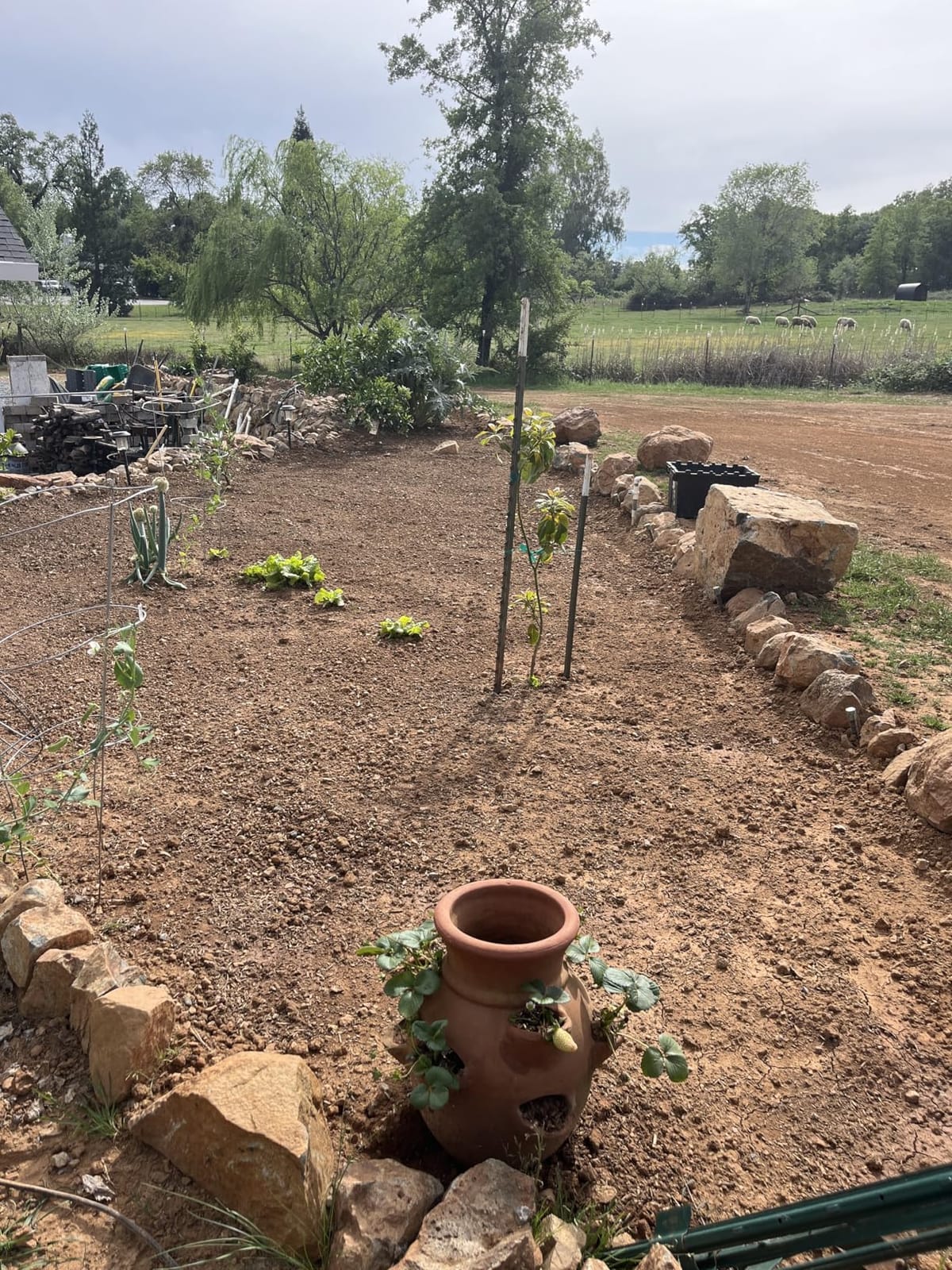
This is the machine I would recommend for a raised bed gardener who also has some in-ground rows. It is light enough to lift, wide enough to be efficient, and simple enough that a first-time buyer can assemble it unaided.
It is less suited to anyone who wants fine control between standing plants. For that work, keep a hand tool in the shed too.
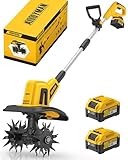
4. Alloyman 20V Cordless – The Best Fit for Raised Beds
Alloyman 20V Cordless Tiller Cultivator, 360RPM Electric Garden Tiller, with 2 * 4.0Ah Batteries & Charger, 9In Tilling Width and 6.6In Depth Garden Rototiller for Lawn/Gardening/Soil Cultivation
Cordless battery
9 inch width
6 inch depth
360 RPM
14.4 pounds
Pros
- No cord to trip over or manage
- Light enough to carry between beds
- Adjustable auxiliary handle cuts fatigue
- Detachable tines clean in seconds
Cons
- 9 inch swath means many passes on a plot
- About 45 minutes per battery
- A few durability complaints on tough soil
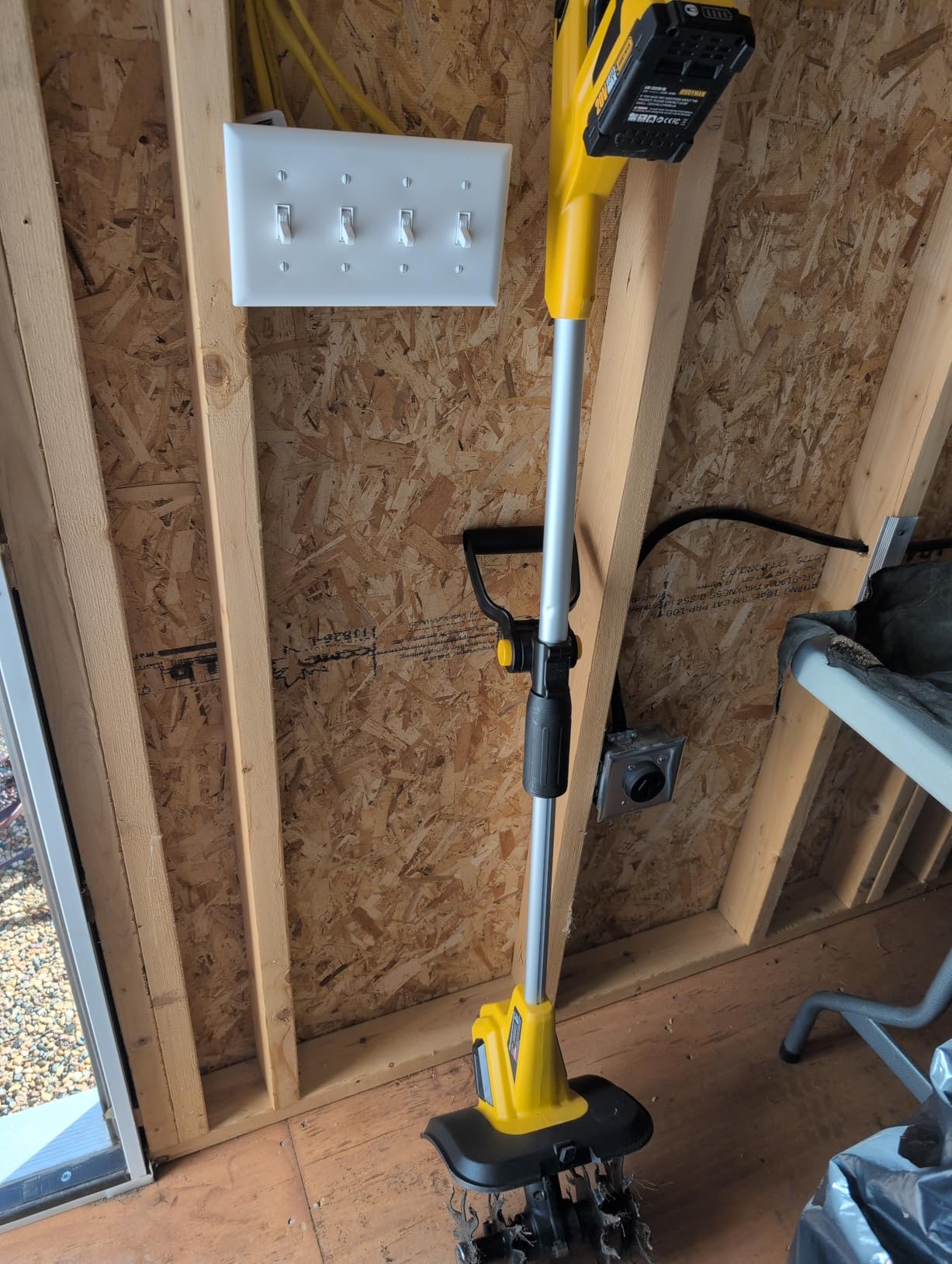
The Alloyman is the cordless that convinced me cordlessness is not a compromise but a different way of working. Fourteen pounds, two 4.0Ah batteries, and a 9 inch width that fits comfortably inside a standard raised bed without chopping the edging.
Owners highlight the freedom from cords and the light weight as the reason it works for small gardens, raised beds and flower beds. That matches my own experience exactly.
Battery runtime and what 45 minutes really means
Roughly 45 minutes per pack sounds short until you measure it. A 4 by 8 foot bed takes well under that to cultivate once you know the machine.
With two batteries in hand you can work a full session by swapping rather than waiting, and the detachable gear tines mean you can clear soil while a second pack charges.
The adjustable auxiliary handle
Both cordless models here use an auxiliary handle, and on the Alloyman it is height-adjustable. That single feature did more for my back comfort than any change of machine.
When the handle matches your stance, you walk the bed rather than pushing down and forward into it. Vibration fatigue largely disappears.
Depth, width and honest limits
Six inches of depth and 9 inches of width suits raised beds, containers and inter-row work. It is not a plot machine, and a 20 by 30 foot area would take a long time on a 9 inch swath.
A small number of reviews question long-term durability on tougher soil, so if you break new ground every spring, look at a corded unit instead.
Safety and handling
A safety button plus trigger interlock means both conditions must be met before the motor starts, which prevents the accidental-start complaints common to cheaper battery tools.
Detachable tines are a practical win. Winding a root out of a fixed tine takes patience; unclipping the whole gear assembly takes a moment.
5. SOARFLY 9-Inch Cordless – Longest Uninterrupted Working Time
SOARFLY Cordless Tiller Cultivator 9″ Width 6.6″ Depth, 2×4.0Ah Batteries
Cordless battery
9 inch width
6.6 inch depth
Two 4.0Ah batteries
Up to 120 minutes
Pros
- Two batteries for long uninterrupted sessions
- Light enough for older users
- Quiet next to a gas tiller
- Handles stony and clay-heavy soil
Cons
- 9 inch width means many passes
- Short handle causes lower-back strain
- Runtime falls short of stated figures
The SOARFLY shares the cordless format with the Alloyman but pushes on endurance. Up to 120 minutes of combined operation from two 4.0Ah packs make it the pick when you have a whole afternoon of beds to get through.
Owners describe it as a compact, quiet machine that does the work of larger tillers on small plots, and several point out that battery swapping makes long sessions practical.
Two batteries and what the runtime figure means
Battery capacity is what changes how a compact tiller feels over a full morning. Two 4.0Ah packs let you finish a bed and move straight to the next one instead of breaking stride to wait on a charger.
The 120 minute figure is a combined maximum, so treat it as the ceiling across both packs rather than the runtime of either one.
Runtime claims versus real conditions
Stated figures are measured in favourable conditions. Reviewers report that actual runtime falls short, and that the second battery is rarely fully recharged by the time the first one is spent.
Plan on treating it as a one-and-a-half bed machine per charge, not two. That is still a full working morning of light cultivating.
The handle length problem
Taller users report bending at the waist, which loads the lower back. The adjustable auxiliary handle helps, but check the maximum extension suits you before committing.
If you are tall and plan long sessions, a long-handle manual tool may serve you better for between-row work.
Lightweight and older gardeners
Several owners specifically praise the weight as easy for older users. Combined with cordless freedom, that makes it one of the more accessible powered options here.
Its 6.6 inch depth also handles raised bed sides well without the risk of driving a machine through the frame.
6. Muylux 20V Cordless – Smallest Machine, Smallest Beds
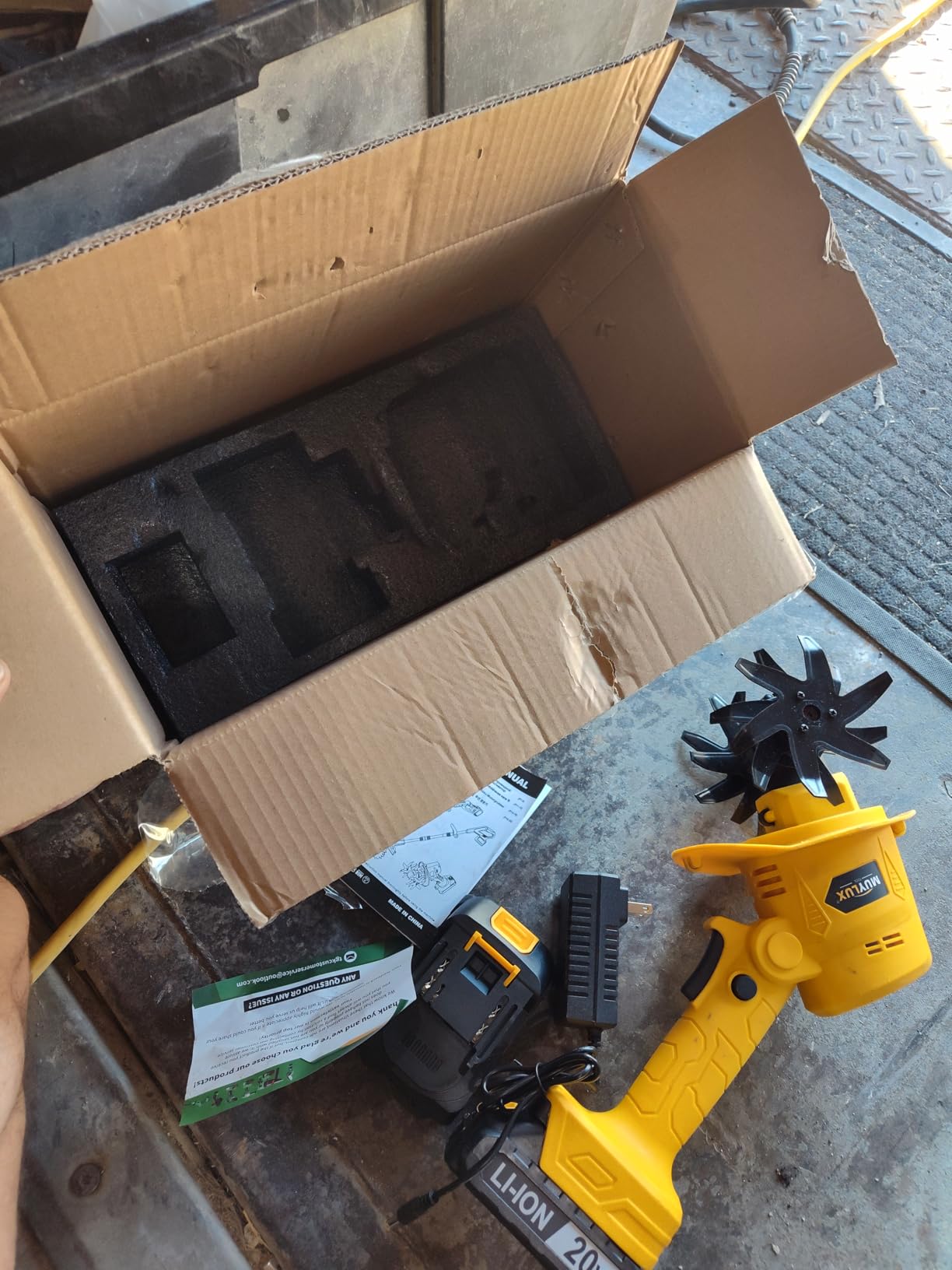
Muylux 20V Cordless Tiller Cultivator for Gardening, Electric Garden Tiller with 2 x 2.0Ah Batteries & Charger, Garden Rototiller for Lawn Gardening Soil Cultivation
Cordless battery
4 inch depth
240 RPM
2 steel tines
2.02 kg
Pros
- Cordless freedom in spots with no outlet
- Light and comfortable to handle
- Two batteries for continuous work
- Simple to operate
Cons
- 2.0Ah packs give shorter runtime
- 240 RPM and 4 inch depth are modest
- Small footprint suits beds and pots
The Muylux is the tool for the parts of a vegetable garden that are not beds. Around the edge of a patio, between pots, in the corner of a border nobody can reach with a machine, it does the job without the storage or handling overhead.
Reviews reflect its positioning honestly. It is praised for being light, simple to manoeuvre in tight spaces and free of cord management, and the lower spec sheet means it is aimed at small beds and containers.
Two tines at 240 RPM and what that costs
Two steel tines at 240 RPM will loosen the top 4 inches of loose soil effectively. It will not break compacted clay, and it is not trying to.
For mixing compost into the surface of a pot or a small bed, that is exactly the right depth and exactly the right speed.
Battery capacity and honest expectations
The 2.0Ah packs here are smaller than the 4.0Ah batteries in the other two cordless models, so runtime per pack is shorter. For scattered small jobs that does not matter.
Overload and temperature protection on the batteries is a sensible inclusion for anyone storing them through winter.
Where a small machine wins
Full-size tillers cannot be lifted into a container or turned between pots on a patio. A 2.02 kg machine can be carried with one hand, which is the entire argument.
It also suits succession planting, where you want quick shallow cultivation in a small area without disturbing neighbouring roots.
Who should skip it
Anyone with a full-size plot will find the coverage painfully slow. Two tines is a precision configuration, not a production one.
Think of it as a companion to a hand fork rather than a replacement for a tiller.
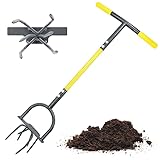
7. Jardineer Hand Tiller – Leverage From a Standing Position
Jardineer Hand Tiller for Gardening, Manual Twist Tiller Cultivator, Heavy Duty Garden Claw, Soil Loosener & Lawn Aerator for Soil Mixing, Garden, Flower Box and Raised Bed
Manual
37 inch curved handle
Arrow-shaped steel tines
2.12 kg
Foot plate
Pros
- Foot plate adds real downward leverage
- Long curved handle saves your back
- Sharp tines mix amendments thoroughly
- Fits flower boxes and tight spaces
Cons
- Bolts loosen and need periodic tightening
- Weaker in very dry heavy clay
- Loosens weeds rather than pulling them
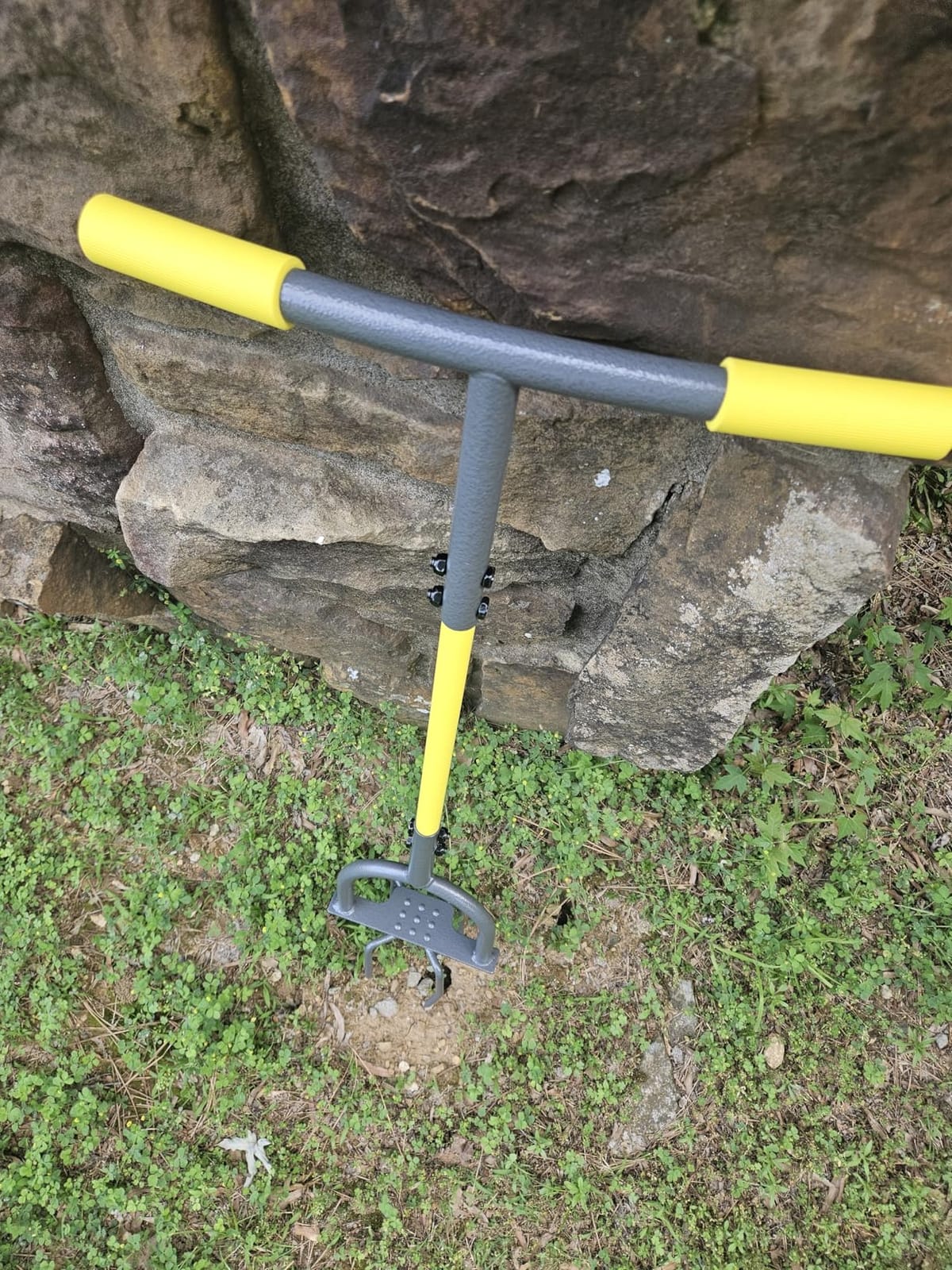
The Jardineer is the first hand tool in this list and the one I use most often. The foot plate is the detail that converts a normal twist cultivator into something you can work standing up: step on it, press your weight down, and the tines enter compacted soil without wrenching your wrists.
With 1.5k reviews averaging 4.5, owners repeatedly point to the same two features, the foot plate and the long handle, as the reason it saves their back and knees.
Why the foot plate changes the equation
Hand tools normally fail because you cannot generate enough downward force. A boot on a plate multiplies the force you can apply by an order of magnitude, and the anti-slip surface keeps that force directed into the soil.
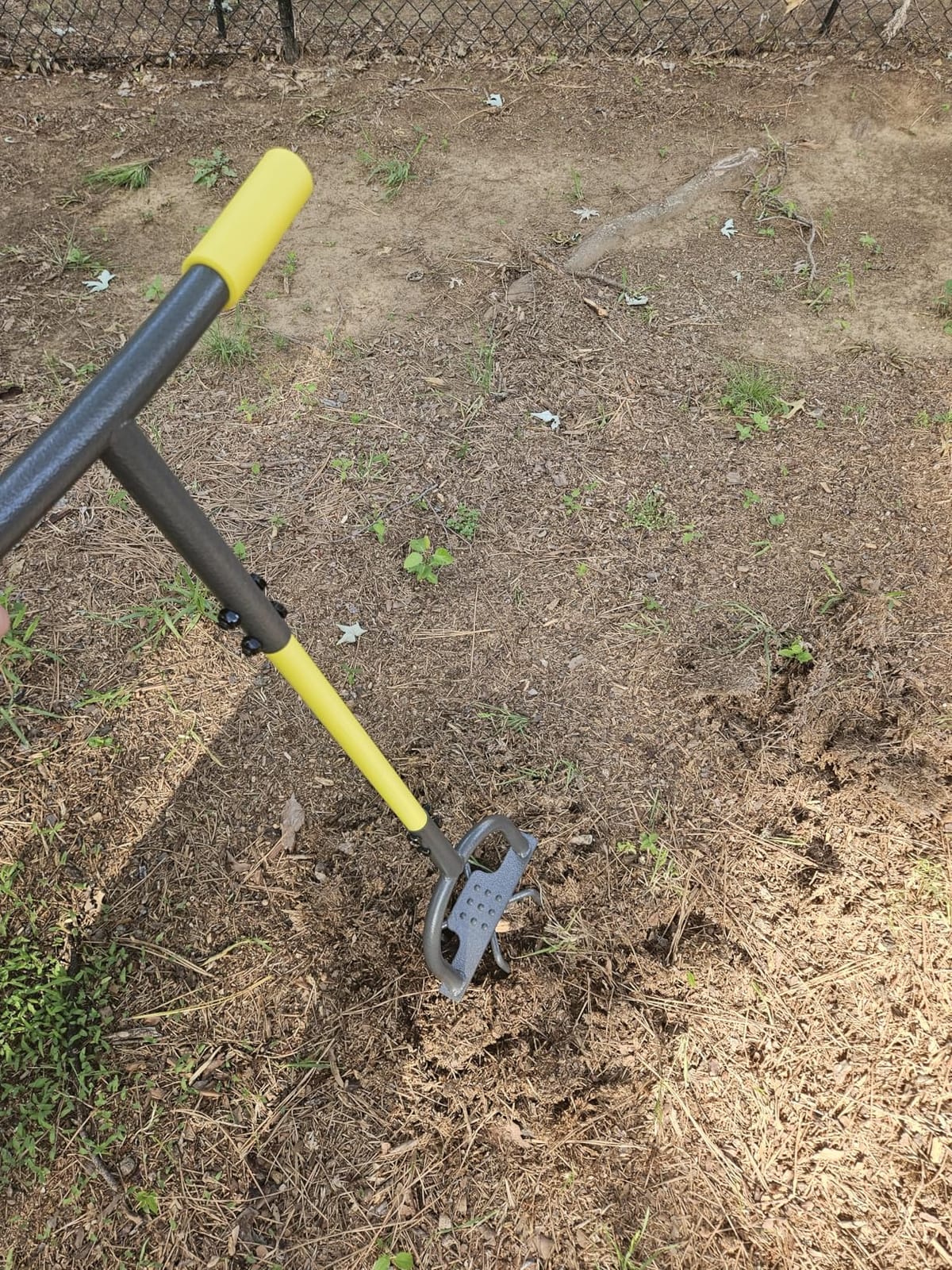
I used it on the same clay strip that challenged the electric machines and it handled compacted ground well, provided the soil had not dried to brick hardness.
Arrow-shaped tines and mixing compost
The powder-coated steel tines are arrow-shaped, which suits both penetration and lateral movement through soil. They did an excellent job folding finished compost into the top layer of a bed without dragging it deep.
For carrot and radish beds, the fine control is worth more than speed. You can work to 4 inches precisely, which no machine in this roundup does as neatly.
Maintenance and the bolt issue
Assembly takes minutes with the included wrenches and spare screws, but owners report the bolts loosening over time and needing a retighten. Check them at the start of each season.
There is nothing else to maintain. No fuel, no oil, no carburetor, no battery, and nothing to store seasonally beyond hanging the tool on a nail.
Where the open claw design falls short
This loosens rather than uproots. A reviewer notes the claw loosens weeds instead of pulling them out cleanly, and that is accurate for the design.
If weed removal is your main task, a tool with a weeding spike or a fork works better. Use this one for soil structure and mixing.
8. BARAYSTUS 4-Tine Long Handle – The Joint-Friendly Standing Tool
4-Tine Garden Hand Tiller Cultivator, 55″ Adjustable Long Handle
Manual
55 inch extendable handle
4 steel tines
2 pounds
Carbon and stainless steel
Pros
- Handle adjusts to several lengths for standing work
- Two pounds suits older or arthritic users
- Sturdy joints that stay tight
- Reaches between plants and fences
Cons
- Light weight limits digging force in heavy soil
- Small tine base suits light work only
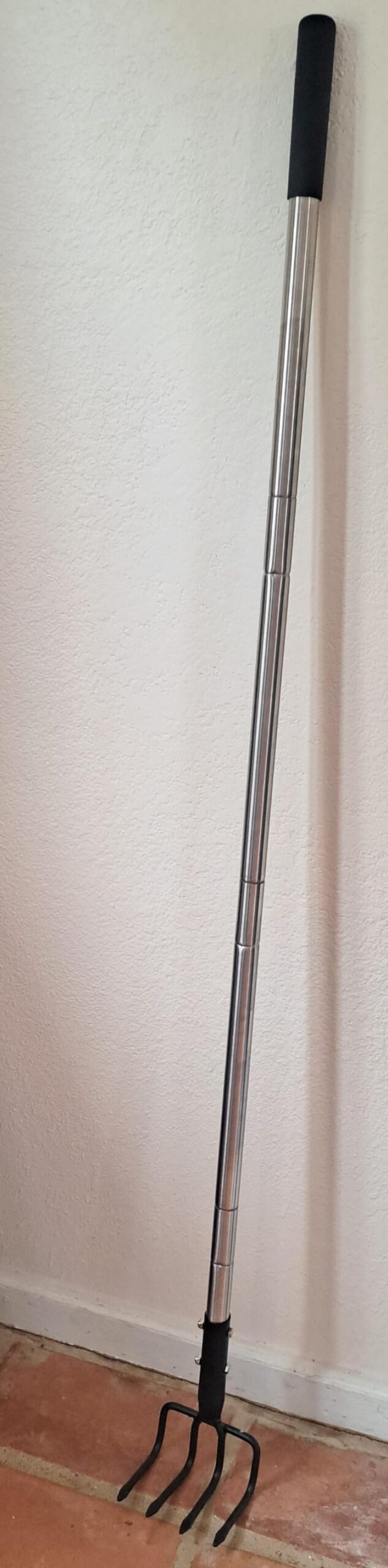
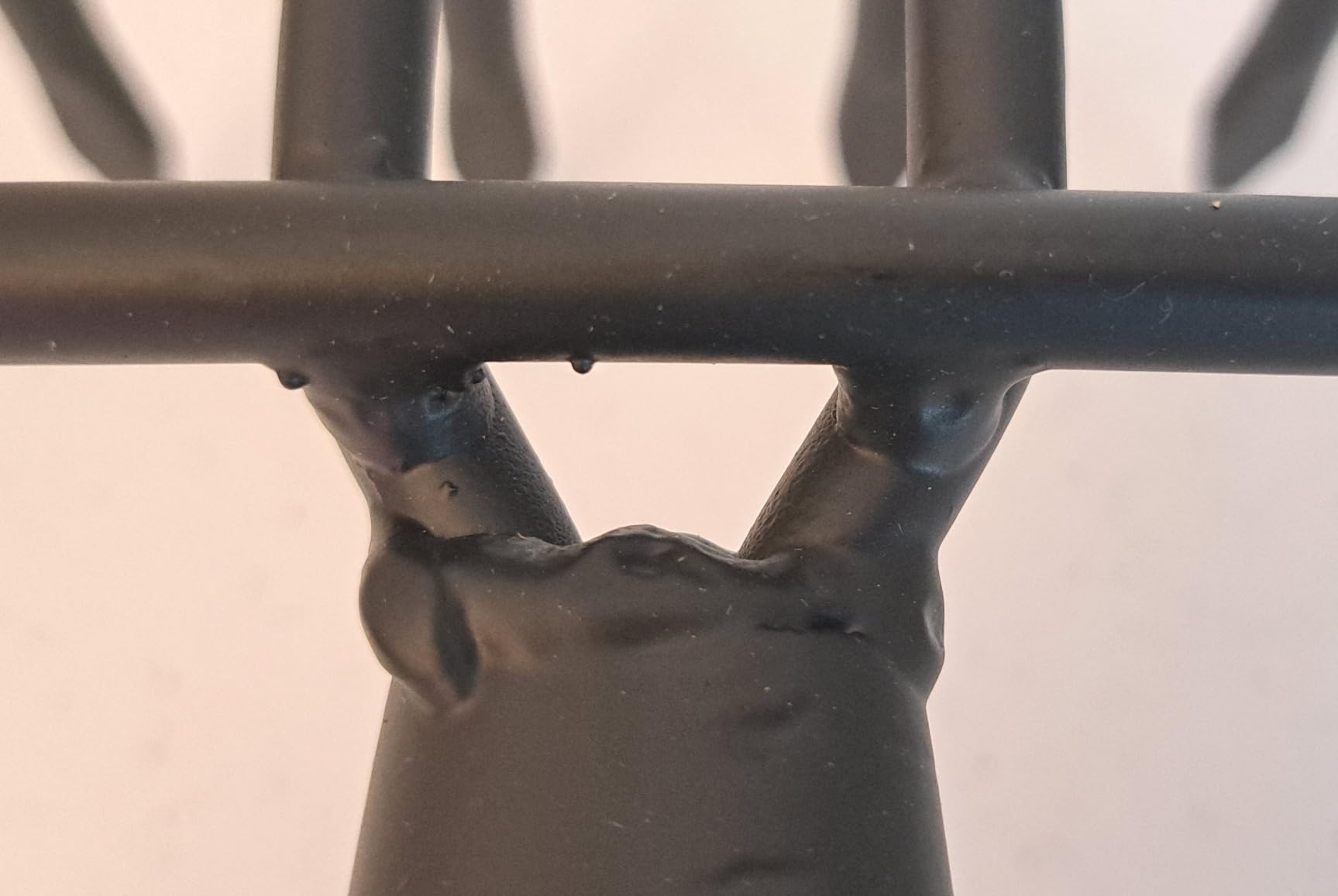
The BARAYSTUS is the answer when bending is simply not an option. A 55 inch extendable handle with a soft padded grip lets you work weeding and mixing tasks fully upright, and at two pounds it is one of the lightest tools here.
Owners highlight the adjustable-length handle, which suits older users or anyone with joint problems, along with solid joints that stay tight compared with cheaper screw-together models.
Carbon steel and stainless steel tines
Four tines in a rust-resistant steel head give more bite and more coverage than the three-tine alternatives. In loose soil and mulch the difference shows immediately, with wider sweeps per stroke.
The head is described as rust-resistant and corrosion-resistant, which matters for a tool that lives in a damp shed through winter.
Adjustable length and real ergonomics
Setting the handle to your hip height turns a back-bending chore into an upright task. That is the single most valuable feature for anyone with arthritic hands or a recovering back.
The padded grip also reduces the pressure points that make a full hour of hand weeding miserable with a bare wooden handle.
The weight trade-off
Two pounds is the reason it is easy to hold, and also the reason it lacks the mass for heavy digging. Owners consistently describe it as better for weeding, mulch work and light loosening than for breaking ground.
Pair it with the Jardineer if you need both standing work and a foot plate for pressure.
Where it earns its place
Between established plants, along fence lines and under crowded crops, this is exactly the right tool. The four tines slip between stems without the damage a machine would cause.
It also doubles for clearing debris and digging small trenches in a vegetable bed.
9. YEELOR 3-Tine Telescoping – One Tool, Two Handle Lengths
YEELOR 3-Tine Long Handle Tiller Garden Cultivator
Manual
15.5 to 55 inch handle
3 tine head
Anti-rust coated steel
0.96 kg
Pros
- Telescopes from 15.5 to 55 inches
- Lightest tool in the roundout at 0.96 kg
- Anti-rust coated steel suits wet winters
- Suitable for plots and small pots
Cons
- Only 3 tines cover less per pass
- Light build limits bite in hard clay
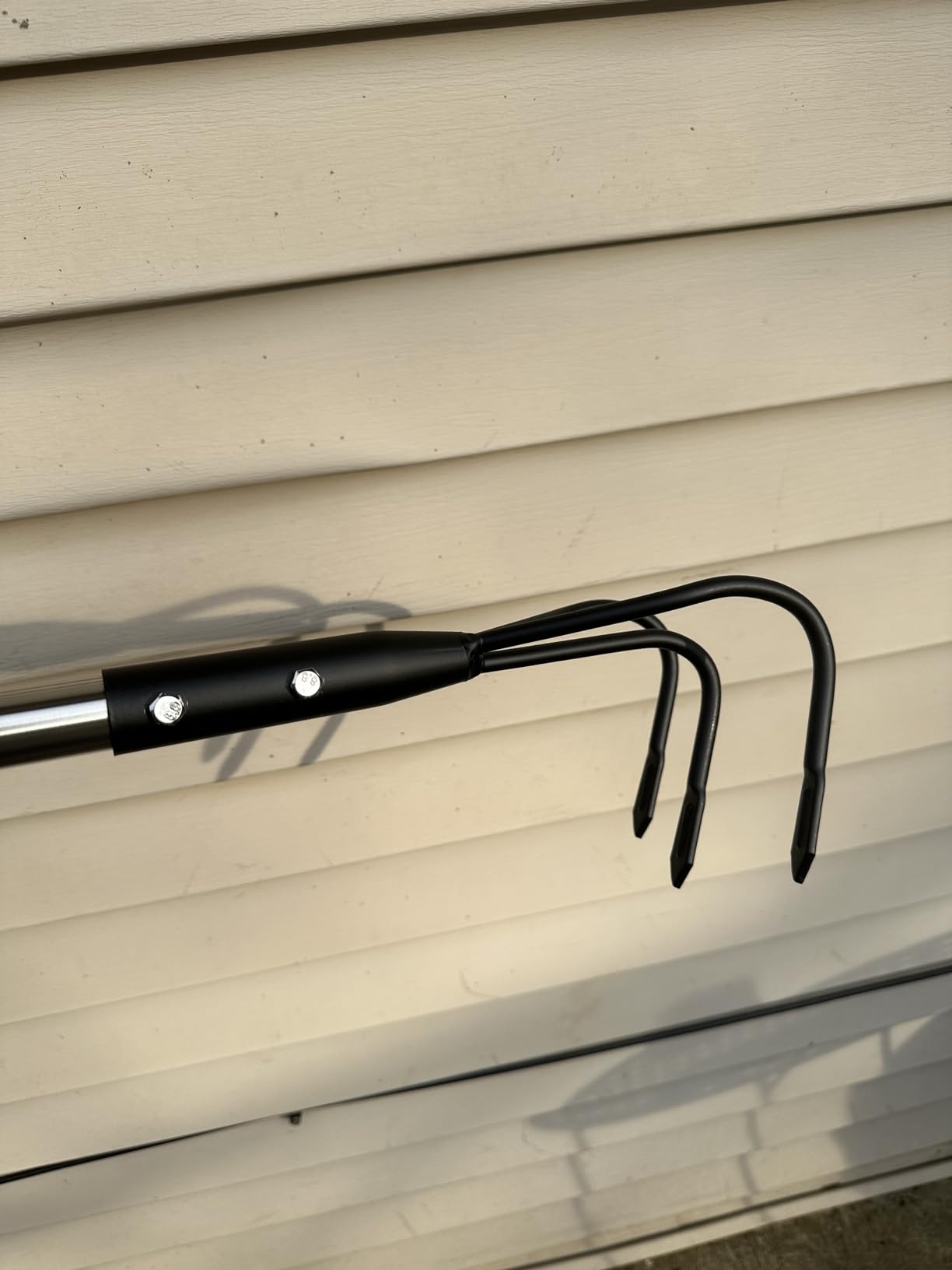
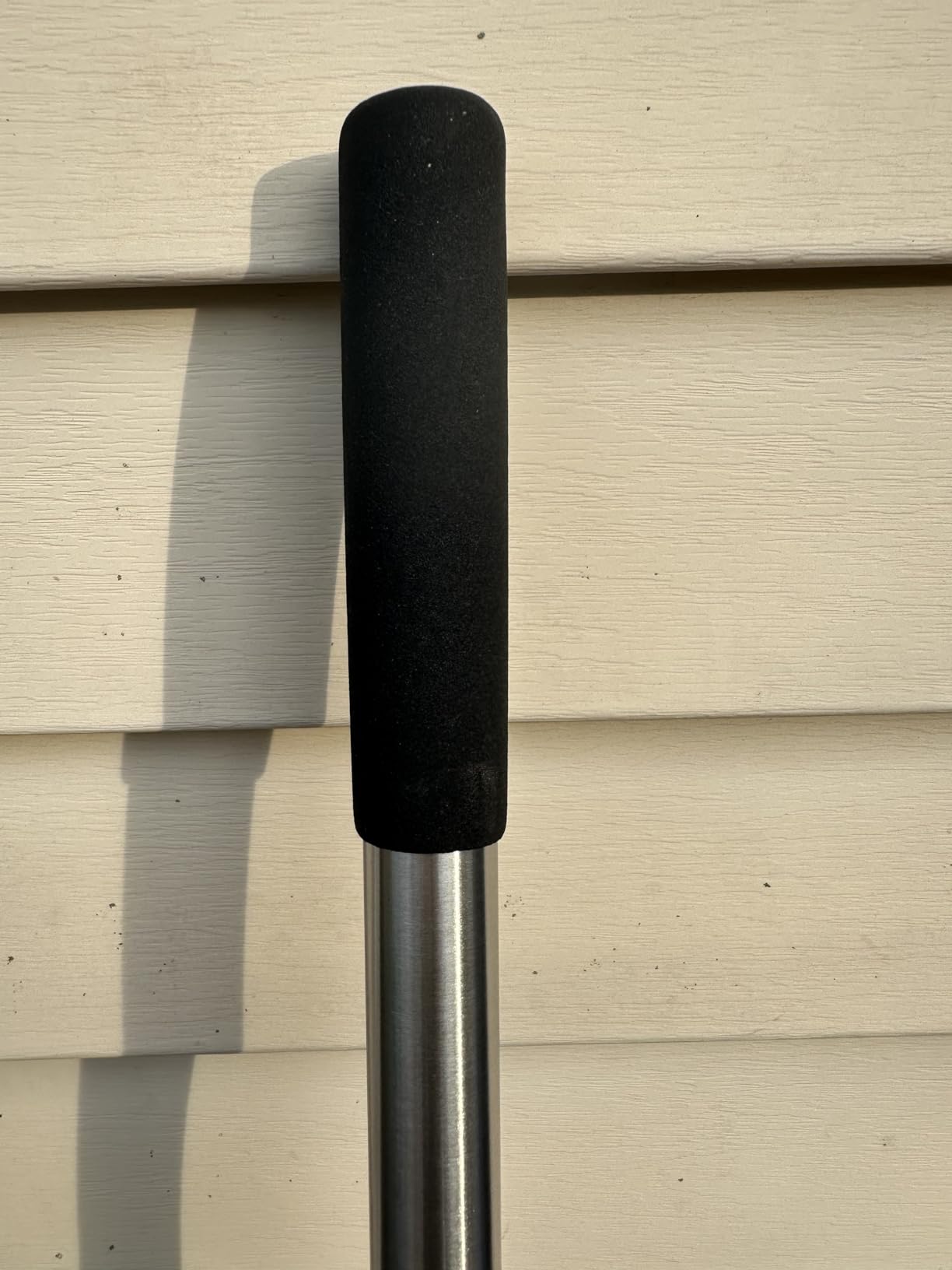
The YEELOR does one thing the others do not: it collapses to 15.5 inches and extends to 55. That single range lets you work a full vegetable plot standing up, then shrink it to pot size for a balcony container without a second tool.
Reviews are consistently positive about that flexibility, with the telescoping handle called out as letting users set the length for large plots or detailed work while staying upright.
Weight and what it means for control
At 0.96 kg this is the lightest cultivator in the roundup, and that is both its main appeal and its main limitation. Lifting it overhead into a raised bed costs you nothing.
The flip side is that a light tool has no momentum. In hard, dry or clay-heavy soil the tines skate rather than bite, which owners note directly.
Three tines versus four
A three-tine head sweeps less ground per pass than the four-tine BARAYSTUS, so expect to cover a bed in more strokes. In exchange, the narrower head slips between plants more easily.
For weeding along a row of established crops, that narrower profile is often the more useful trade.
Anti-rust coating and storage
The anti-rust coated steel is built for a tool that gets left in a damp shed and used through wet seasons. Rinse the head after use and it will outlast several cheaper alternatives.
Collapsing to 15.5 inches also means it fits in a drawer or a small wall hook, which no machine here can claim.
Best for mixed workloads
If one person tends both a plot and a set of containers, this is the most versatile hand tool you can own. Anything else forces a choice between standing height and compact storage.
Pair it with a short-handled weeder for the finer work, and you have covered an entire small garden with two tools.
10. Garden Weasel Double-Sided Cultivator – The Highest-Rated Tool Here
Garden Weasel Double-Sided Garden Cultivator/Tiller | Cultivate, Till, Break Up Soil | Planting and Gardening Hand Digging Tool, Heavy Duty Cultivator, Hand Tool Weeder | 91367
Hand powered
Double-sided three-prong head
5.28 ounces
Lifetime guarantee
Made in the USA
Pros
- Highest-rated tool in the roundup at 4.8
- Sturdy build that handles hard clay
- Sharp teeth cut through roots
- Comfortable non-slip grip
- Lifetime guarantee
Cons
- Aluminium finish can show surface corrosion if left dirty
- Snap risk if used for prying
- No hang hole for storage
The Garden Weasel scores 4.8 across more than 2k reviews, the highest rating of anything we tested. Owners repeatedly describe it as better made than department-store alternatives and exceptionally sturdy, and after using it in hard, rocky ground I can see why.
It is a short-handled tool for close work, not a bed-preparation machine. Its job is the fine cultivating between plants and along the top of a bed where a machine would damage roots.
Why double-sided matters
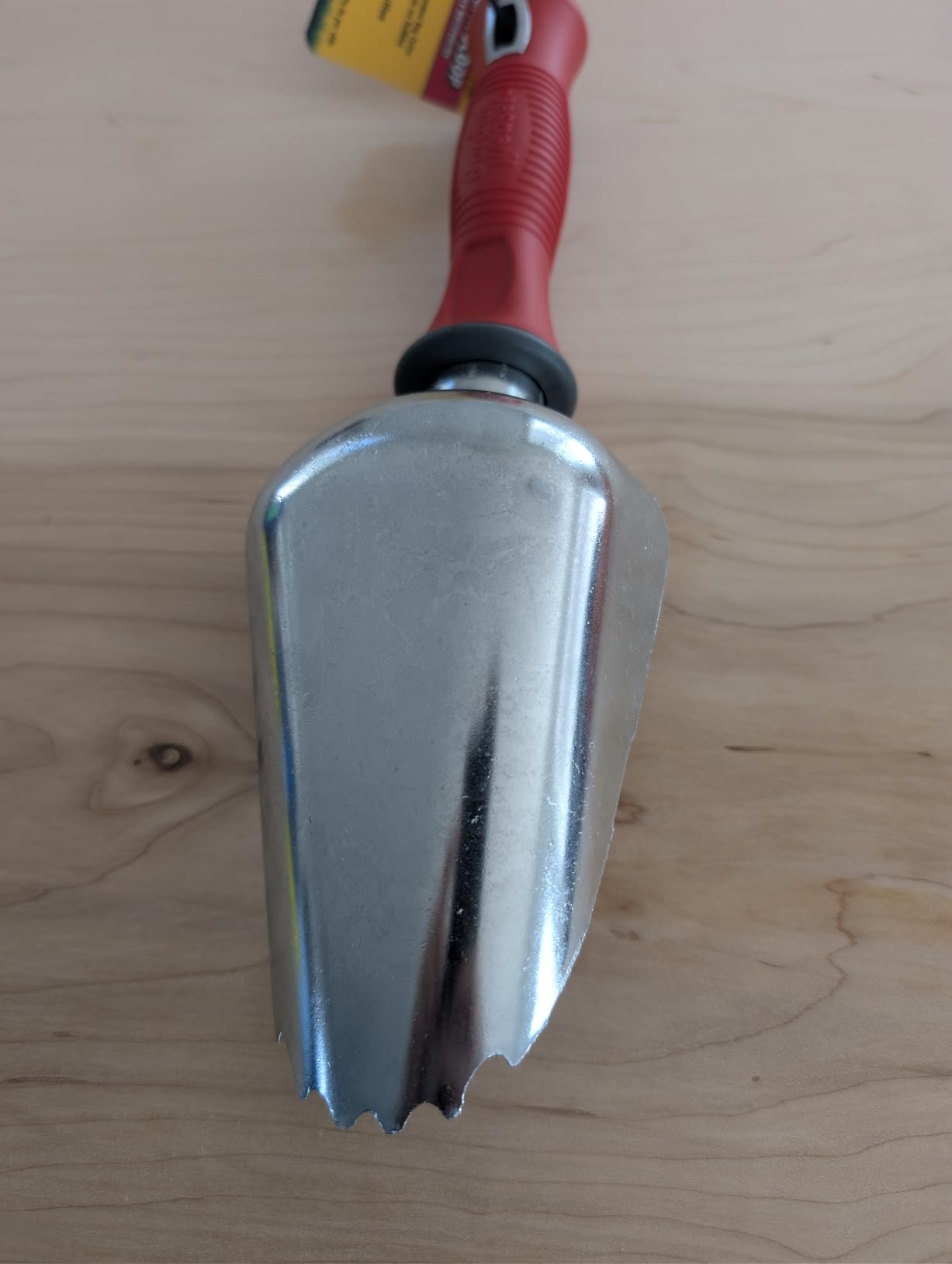
One side has sharp teeth for breaking ground and cutting roots. The other is built for raking and surface work. Flipping it doubles the tool count without doubling the storage space.
That makes it useful across a season: teeth down for the first spring pass, teeth up for surface tidying and light weeding once crops are established.
Materials, grip and balance
The three-pronged head is moulded in polypropylene and thermoplastic elastomer, which gives a combination of stiffness and grip that reviewers consistently praise. The non-slip handle does not create the hand soreness that wooden handles cause over a long session.
At 5.28 ounces it is well balanced and genuinely precise, which is what makes it safe close to stems.
Care and the one thing not to do
A few owners note the aluminium finish shows surface corrosion if the tool is left dirty overnight. Rinse and dry it after use, which takes seconds.
One reviewer warns against prying up compacted soil with it. Use it to scoop and chisel, not to lever. Treated properly, the lifetime guarantee is genuine backing.
Who buys this one
Anyone with a shelf of container vegetables or a densely planted raised bed will use this weekly. It is the highest-rated option and the one most likely to still be in your shed in ten years.
It is also a gift that works for a gardener with limited grip strength, since it needs almost no force to use well.
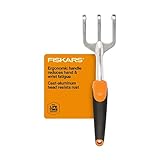
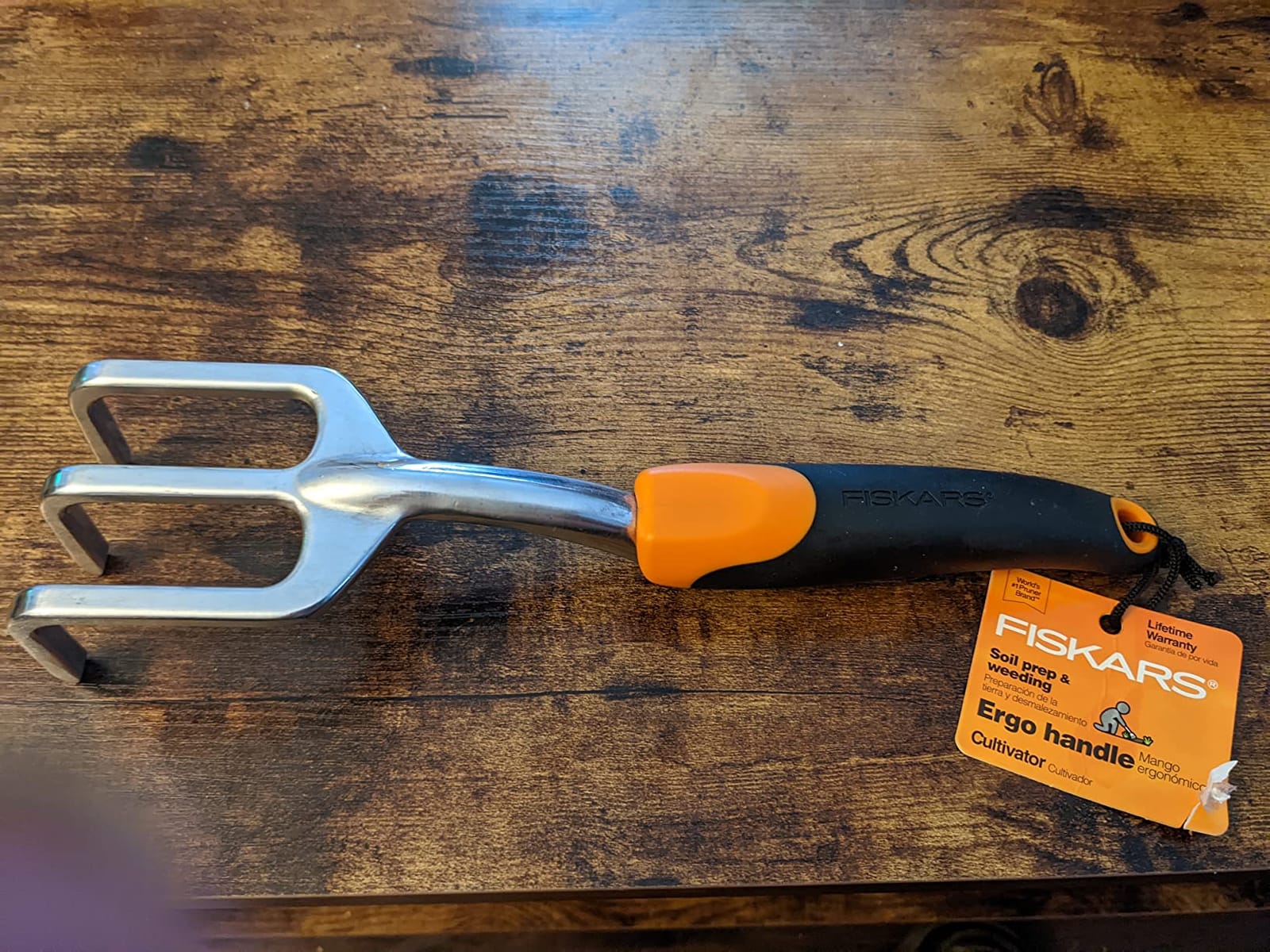
11. Fiskars Ergo Cultivator – Light Precision Work in Beds and Pots
Fiskars Ergo Garden Cultivator, Hand Tool for Digging, Aerating & Weeding
Manual
Cast aluminum tines
3 by 4 inch head
8 ounces
Lifetime warranty
Pros
- Polished aluminum tines stay sharp and resist rust
- Ergonomic handle lowers hand fatigue
- Light enough for prolonged close-in use
- Includes a hang hole for storage
- Lifetime warranty
Cons
- 3 by 4 inch head covers little ground per pass
- Unsuitable for breaking new or compacted ground
The Fiskars is the second-highest rated tool here at 4.7 with over 2k reviews, and it holds the number two sales rank in its category, which tells you how much gardeners reach for it.
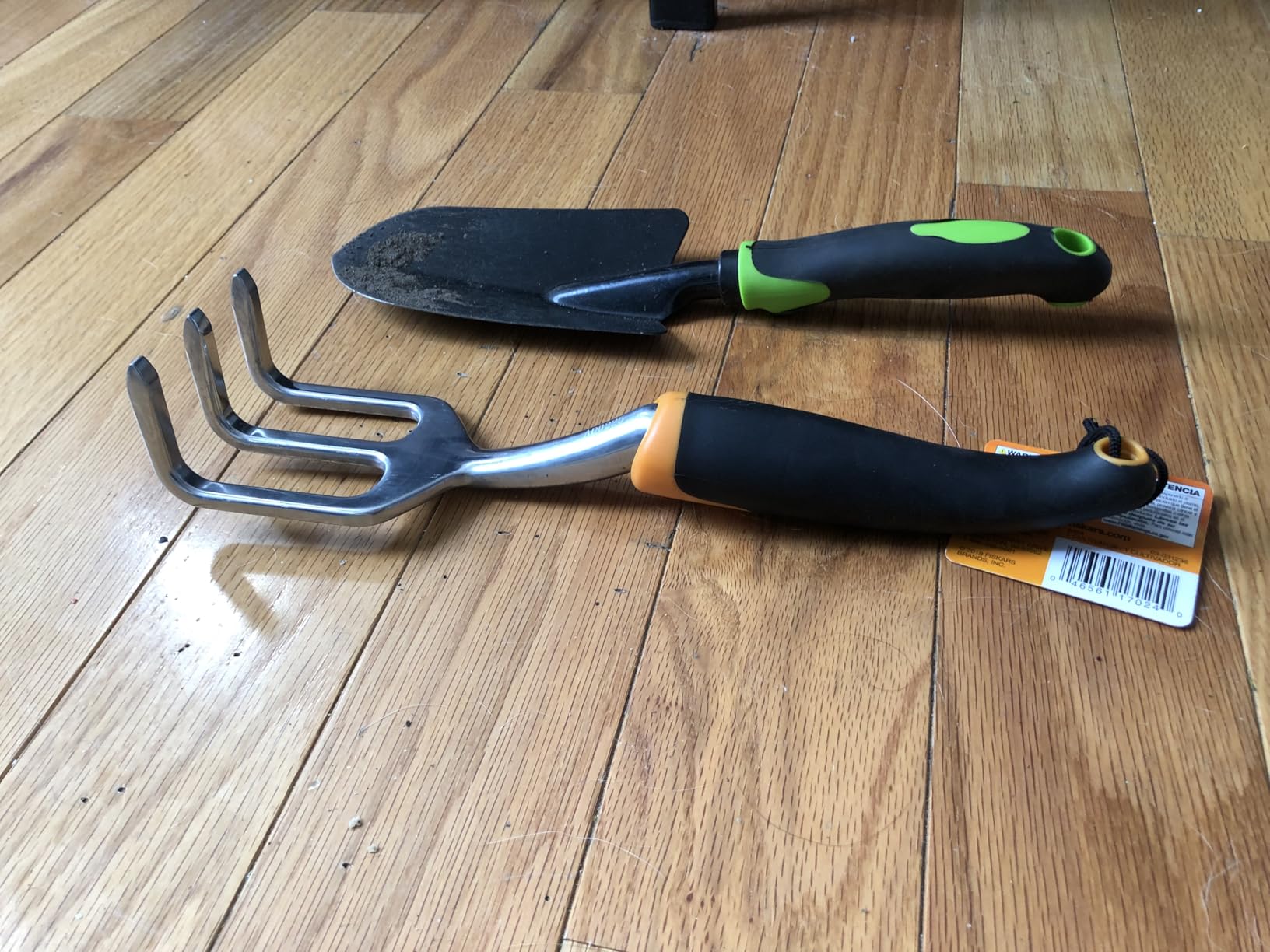
Cast aluminum tines hold their edge and resist rust, and the ergonomic handle keeps hand fatigue low through repetitive weeding. Reviews place its role clearly: small-area work in beds and containers rather than breaking new ground.
Aluminum versus steel
Aluminum will not rust, which matters enormously for a tool that lives in a wet shed and gets damp soil on it most days. It will bend rather than snap, so treat it as a weeding tool, not a digging tool.
Polished tines keep their shape through repeated contact with stone and root, which is where cheaper pressed steel dulls within a season.
Handle design under repetition
The soft-grip handle is the feature reviewers mention most, particularly during long close-in sessions. An hour of weeding with a bare wooden handle produces real discomfort; this does not.
It also improves control, which matters at the scale of a container where a sudden lurch means a broken stem.
Knowing the boundary
The 3 by 4 inch head is the limitation to plan around. Reviewers draw the same line: this is not a tool for compacted or new ground.
Use it where roots are shallow and the soil is loose, which in a vegetable garden is most of the season after the first spring pass.
Lifetime warranty as a real signal
Two tools in this roundup carry lifetime warranties, and forum buyers repeatedly note that long warranties influence their decision. It is a reasonable proxy for expected service life.
The hang hole is a small detail that keeps the tool on the wall by the door rather than lost in a drawer, which is how most hand tools actually die.
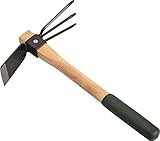
12. Edward Tools Hoe and Cultivator – One Head, Two Jobs
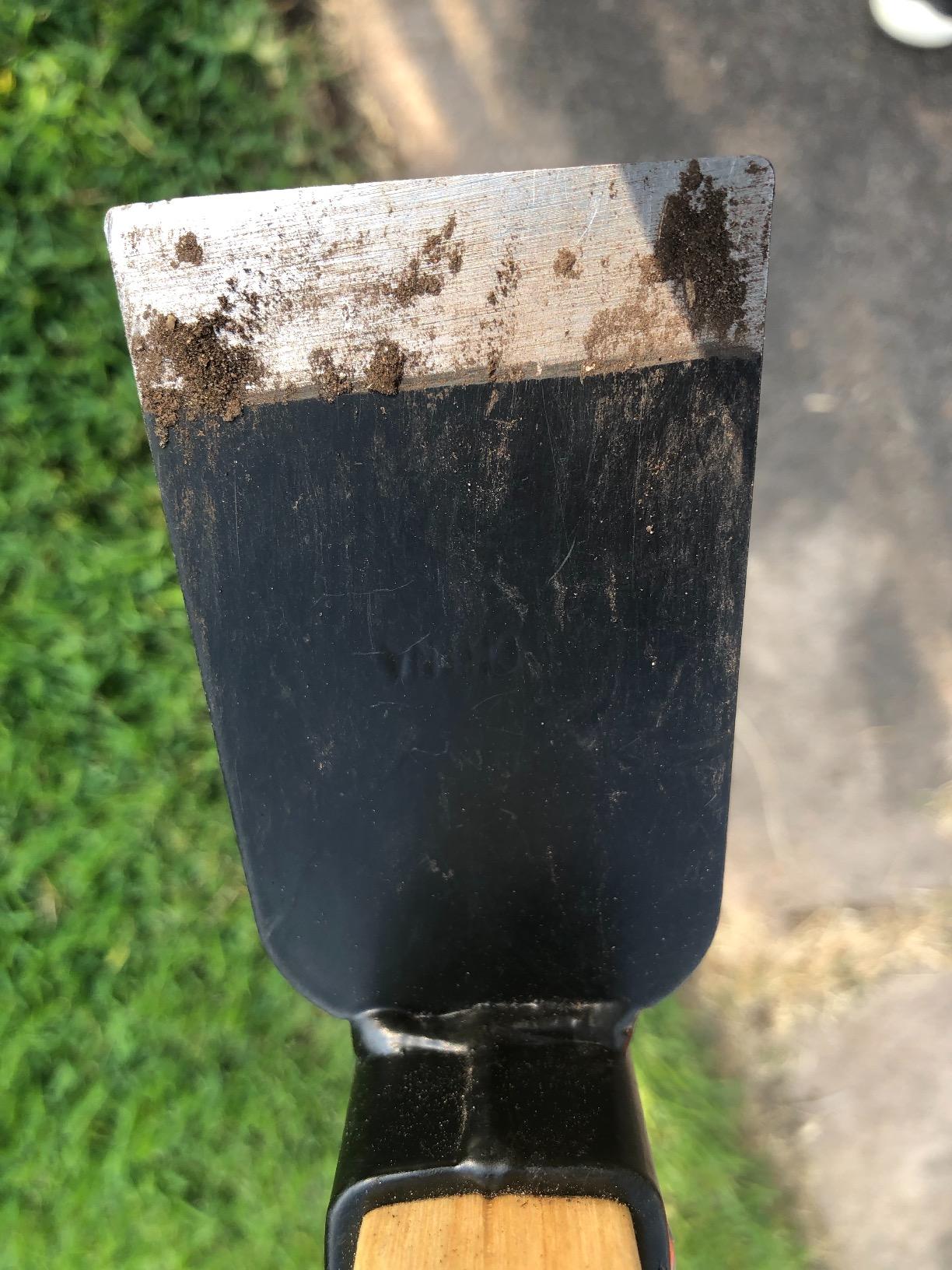
Edward Tools Hoe and Cultivator Hand Tiller – Carbon Steel Blade – Heavy Duty for loosening Soil, Weeding and Digging – Rubber Ergo Grip Handle – Rust Proof
Manual
Carbon steel head
Solid oak handle
Dual-function head
13.6 ounces
Pros
- Rigid carbon steel head resists flexing
- Solid oak handle is durable and well sized
- Rubber grip stays slip resistant
- Dual head covers hoeing and cultivating
- Handles rocky soil well
Cons
- Heavier than most competing hand tools
- Handle-to-head screw can work loose
- Slight weight penalty for long sessions
The Edward Tools is the most dual-purpose tool in the roundup. A single head works as both a hoe and a cultivator, so a bed can be shaped and then loosened with one implement instead of two.
With more than 2.2k reviews at 4.6, owners including a professional gardener favour the sturdy carbon steel head, the quality oak handle and the grippy rubber sleeve, often saying it outperforms tools bought in stores.
Carbon steel rigidity
A rigid head does not flex when you meet a stone or a root, which means the force goes into the soil rather than into the joint. Reviewers call this out as the reason it handles tough, rocky ground.
It is the most robust head on any hand tool in this list, at the cost of weight. At 13.6 ounces it is heavier than the aluminum alternatives.
The oak handle
Solid oak is chosen for strength and durability, and it ages well rather than splitting. A soft-grip sleeve sits over the grip zone to keep it slip resistant when your hands are wet.
Oak also absorbs sweat, which hardwood handles do and plastic ones cannot.
Using the hoe end
Between plants, the hoe side breaks the crust and cuts weeds at surface level, and the cultivator side follows behind to loosen and level. That sequence covers most of a mid-season bed refresh in one tool.
For a full soil-turning job, still reach for the Jardineer with its foot plate. This is a surface tool.
The loosening screw
The one recurring complaint is the one-piece screw fitting between handle and head working loose during use. Owners report needing to retighten it, and the fix is simple.
A drop of thread locker on the fitting solves it permanently. It is a two-minute job that removes the only real weakness in the tool.
How to Choose a Cultivator for Your Vegetable Garden
The fastest way to pick the wrong cultivator is to buy on horsepower and only then check whether it fits between your rows. Work through these four decisions in order and the answer usually arrives on its own.
Match the power source to where your outlet is
Corded electric gives unlimited runtime and consistent torque, which matters in clay. The trade is cord management across a garden you walk on. Route the cord along the path side and use a heavy-gauge outdoor cord.
Cordless removes that problem entirely, which is why both cordless models here score well on comfort. The limits are runtime and swath width, not power.
Manual tools need no power at all, need no maintenance at all, and are unbeatable for precision work. Gas is the one category we found nothing to recommend in this roundup, because the products available covered in-ground plots with room to manoeuvre, which is where you probably do not have a problem.
Size the tilling width to your row spacing
This is the number people get wrong. Measure the clear distance between your rows and subtract a few inches for turning.
Carrots, radishes and salad leaves sit at 4 to 12 inch spacing, so a 9 inch machine is right. Tomatoes, beans and squash want 24 inches or more, which is where a 14 to 16 inch width starts paying for itself.
A 16 inch tiller in a 12 inch row does not fit. Repeatedly lifting and repositioning the machine will cost you more time than a narrower tool ever saves.
Set the depth from the crop, not the machine
Carrots need 4 to 6 inches of loose soil. Peas and lettuce need about 3. Established vegetables need little at all, and only shallow passes so roots stay intact.
Stated maximum depth assumes soft, well-watered soil. Owners dispute the advertised figure on hard ground, so set your expectations from your soil rather than the packaging.
Weight matters more for older backs and raised beds
A 27 pound machine at chest height is a lifting problem, not a digging problem. If your beds are raised, either buy something you can lift with one hand or keep the machine at ground level and use a long-handle tool up top.
Forum discussion about senior gardeners points consistently toward lightweight cordless machines and telescoping manual tools, and that pattern matches what we saw. Tools under 3 kilograms invite regular use; tools over 20 kilograms invite occasional use.
When a hand tool is the correct answer
Between established plants, along fence lines, in containers and under crowded crops, a hand cultivator beats any motor machine. A machine wide enough to be efficient is wide enough to destroy neighbouring roots.
Most gardeners who own only a machine end up buying a hand tool within a season. Buying both up front is the more efficient plan.
When to Cultivate Through the Season
Spring bed preparation is the heaviest work, and it is the one week you should spend on getting the bed right. Cultivate only when the soil is workable, meaning it crumbles in your hand rather than forming a ribbon.
Mid-season, the job is weeding and light aeration. Work shallow and often rather than deep and rarely, and never cultivate wet soil because it compacts rather than loosens.
Autumn is the second heaviest window, after harvest and after incorporating compost. This is where a deeper pass finally makes sense, because there is nothing left to damage. Cultivating at the end of the 2026 season also leaves the bed open to winter frost and rain, which do the breaking-up work for free.
Frequently Asked Questions
What are the best garden cultivators?
For most vegetable gardens the best cultivators are a corded electric tiller for ground-level beds and a hand cultivator for work between plants. The Sun Joe TJ604E leads our roundup for clay and compacted soil, the BILT HARD 14-inch model suits raised beds because it weighs 18 pounds, and the Garden Weasel is the highest-rated hand cultivator we tested. Choosing between them comes down to bed width, row spacing and how much weight you can comfortably lift.
What’s the difference between a garden tiller and a cultivator?
A tiller inverts soil, turning a full layer over to bury weeds and residue, and it is designed for opening new ground. A cultivator works the top few inches to break the surface crust, aerate, mix in compost and cut weeds without flipping the soil profile. Established vegetable beds need a cultivator, because repeated tilling destroys the soil structure you built the previous season.
What is the best tool for cultivating soil in a garden?
For breaking new ground and turning a full bed, a powered cultivator is the best tool, since no hand tool covers a plot efficiently. For work between established plants, a hand cultivator is better, because a machine wide enough to be efficient is also wide enough to damage neighbouring roots. A long-handle model with a foot plate adds downward leverage so you can work standing up.
What is the best cultivator to buy?
The best cultivator to buy depends on your bed width and your soil. Buy a 9 inch cordless model for raised beds and tight rows, a 14 to 16 inch corded model for in-ground plots, and a manual cultivator regardless of size, because you will need one for between-plant work. Match the machine depth to the crop: 4 to 6 inches for root vegetables, about 3 inches for leafy greens.
How deep should I till a vegetable garden?
How deep you cultivate depends on the crop. Root vegetables such as carrots need 4 to 6 inches of loose soil, peas and lettuce need about 3 inches, and established plants need only shallow passes so their roots stay intact. Stated maximum depth assumes soft, well-watered ground, so work to your soil rather than to the packaging. Never cultivate wet soil, because it compacts instead of loosening.
Which Cultivator Is Right for Your Plot
If you have clay, an outlet nearby and ground-level beds, the Sun Joe TJ604E is the one I would buy. It handled the hardest ground in my test plot, and the 16 inch width suits open rows.
If your beds are raised and you need to lift the machine, the BILT HARD 14-inch model wins at 18 pounds. If you want zero cord management, the Alloyman or SOARFLY cordless pair cover you, with the Alloyman better for one raised bed and the SOARFLY better for several.
For between-plant work, buying a hand tool is not optional. The Garden Weasel is the strongest all-rounder, the Fiskars is the lightest precision option, and the Jardineer is the one you will reach for when the soil is compacted.
Whatever you choose, work the soil when it crumbles rather than smears, and start shallow. You can always go deeper on the second pass.
Once you have your machine picked out, our picks for the rest of the kitchen workflow, including the best vegetable peelers, keep the whole harvest handled properly.
Leave a Reply