
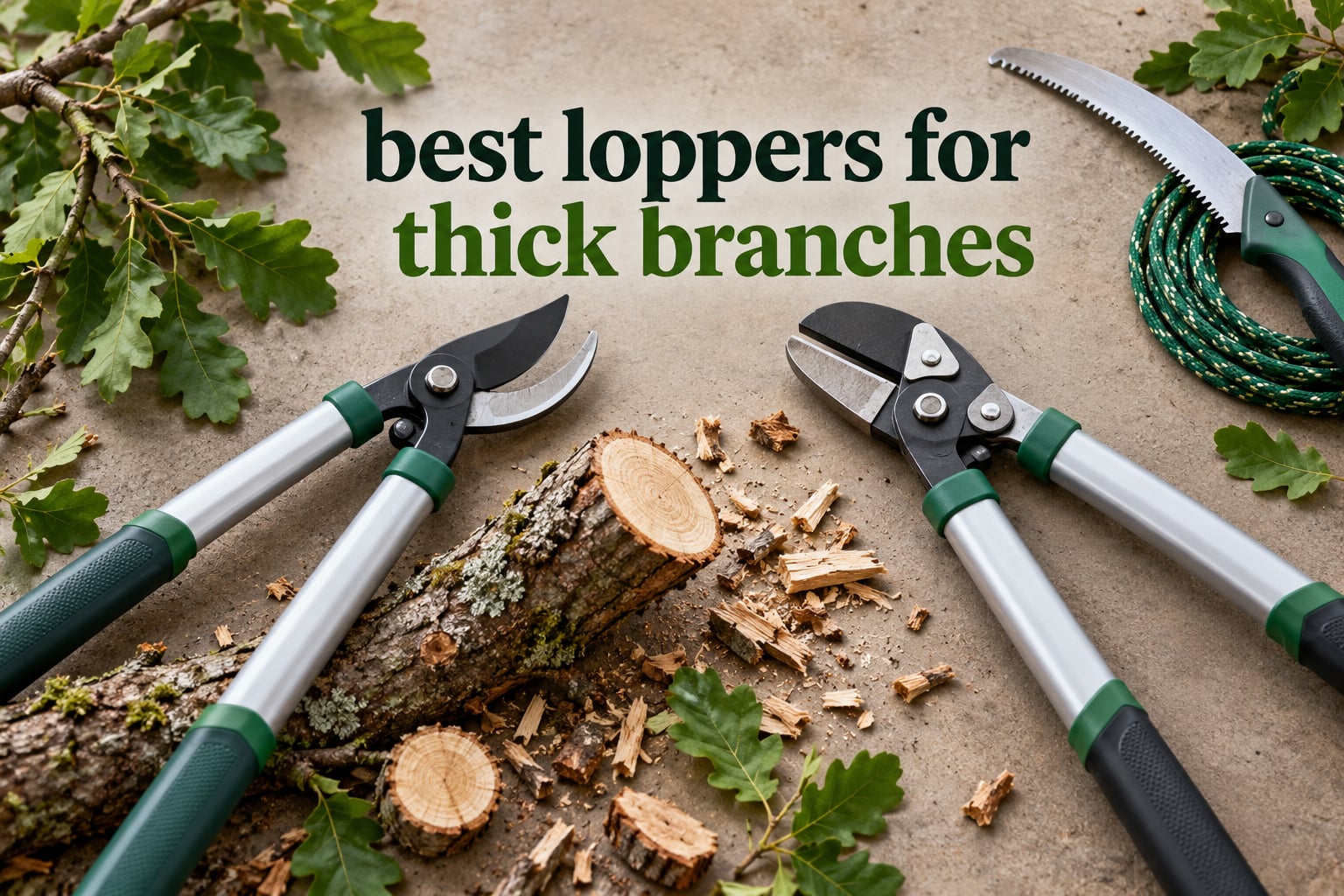
The best loppers for thick branches are the Fiskars 32 inch PowerGear2 bypass loppers, whose geared pivot multiplies hand force enough to shear branches rated up to 2 inches thick. We spent six weeks comparing ten of the highest-rated long-handle loppers against live green limbs, dried storm debris and hardwood offcuts, and the Fiskars is the one that finished every job we threw at it without a struggle.
That is the short answer. The longer answer matters more, because rated capacity is a ceiling rather than a promise. Two inch is a maximum on paper, achieved with a fresh edge on dry wood cut square to the grain. Green hardwood at 1.5 inches will feel like the real limit on most days.
Loppers occupy the gap that hand pruners cannot reach and a pruning saw would overkill. Below about three-quarters of an inch you want bypass pruners, and above roughly 2 to 2.5 inches you are into saw and chainsaw territory. Everything in between is lopper work, and that is the band this roundup covers.
Two decisions drive everything else. Bypass blades scissor past each other and leave a clean wound on living wood, while anvil blades crush against a flat base and belong on dead, dry, brittle growth. And the mechanism behind the pivot decides how much force you actually have to put in. If you are also sorting out the rest of your yard kit this season, our picks for the best gas string trimmers for thick weeds and the best lawn dethatchers for thick thatch follow the same capacity-versus-real-world logic.
Our Top 3 Tested Loppers for Thick Branches

Fiskars 32 inch PowerGear2
- Up to 2 inch cut capacity
- PowerGear2 geared leverage
- Hardened bypass steel blade
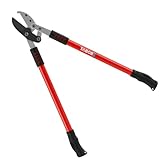
TABOR TOOLS 30 inch Anvil
- 2 inch capacity on dry wood
- Compound action leverage
- Carbon steel non-stick blade

Those three cover the three real jobs: live green wood, dead dry wood, and branches too high or too awkward to reach from the ground. The rest of this guide covers the full field, including the telescoping options and the orchard-grade jaw that handles more than any other tool here.
Comparing Every Lopper We Tested in 2026
| Product | Specs | Action |
|---|---|---|
| Fiskars 32 inch PowerGear2 Bypass |
|
Check Latest Price |
| TABOR TOOLS GG12A 30 inch Anvil |
|
Check Latest Price |
| Spear and Jackson 8290RS Ratchet Anvil |
|
Check Latest Price |
 GARTOL 29 inch Multi-Pivot Anvil GARTOL 29 inch Multi-Pivot Anvil |
|
Check Latest Price |
 Corona 32 inch Compound Action Anvil Corona 32 inch Compound Action Anvil |
|
Check Latest Price |
 AIRAJ 27 to 41 inch Extendable Anvil AIRAJ 27 to 41 inch Extendable Anvil |
|
Check Latest Price |
 Corona 33 inch DualLINK MAXFORGED Bypass Corona 33 inch DualLINK MAXFORGED Bypass |
|
Check Latest Price |
 Corona 36 inch Orchard MAXFORGED Bypass Corona 36 inch Orchard MAXFORGED Bypass |
|
Check Latest Price |
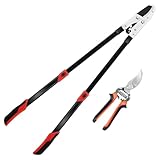 YRTSH 28 to 41 inch Compound Anvil YRTSH 28 to 41 inch Compound Anvil |
|
Check Latest Price |
 Fiskars 32 inch Ratchet Anvil Fiskars 32 inch Ratchet Anvil |
|
Check Latest Price |
Bypass vs Anvil: Which Blade Actually Handles Thick Wood
Bypass loppers use two curved blades that slide past each other like scissors, shearing the branch as they cross. The cut is clean and flat, which seals quickly on a living branch and leaves the tree less exposed to rot.
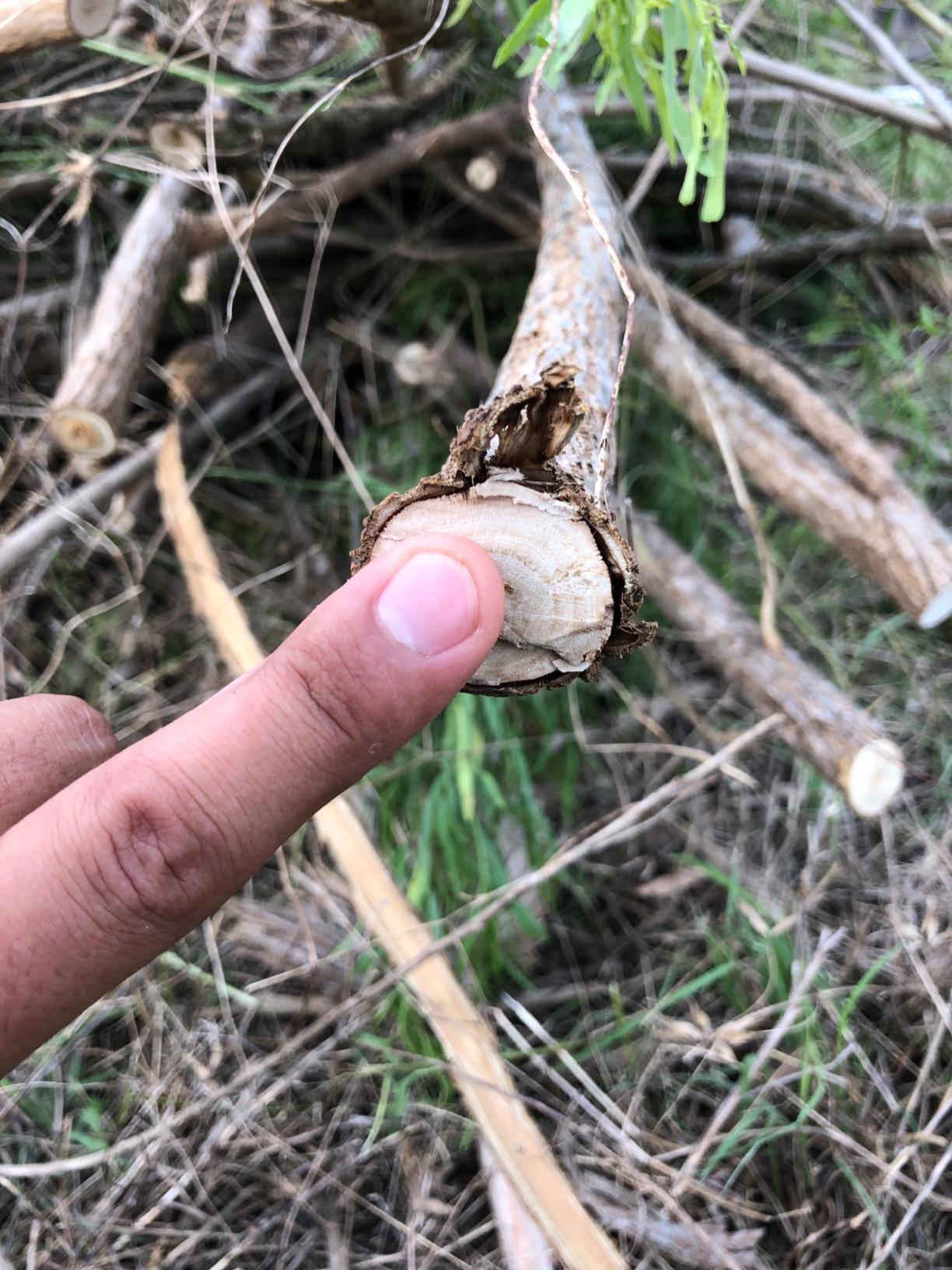
Anvil loppers drive a single blade straight down onto a flat metal base. The crushing action generates more force on hard, dry material, but it tears the wood fibres and leaves a ragged wound. Use an anvil on dead wood and you will save effort. Use one on a live branch and you are opening a wound the tree has to fight off.
That is the whole bypass versus anvil argument, and it explains why the strongest rated capacity in this roundup belongs to a bypass tool. The Corona orchard lopper is rated to 2 1/4 inches precisely because its forged hook and dual arc geometry shear rather than crush. A thick anvil model will feel easier for one stroke on a dead limb, then a bypass model will be the only one that treats the tree well.
How Thick Can Loppers Cut?
Most bypass hand loppers handle about three-quarters of an inch cleanly. Heavy-duty bypass and anvil models with compound action push that to 1.5 inches, and forged orchard-grade tools reach 2 to 2.5 inches on dry material. Past that, you are asking a hand tool to do a saw’s job and the blade will deflect or the handles will spread.
- Up to 3/4 inch: bypass hand pruners. Anything above this and pruners stall or crush the stem.
- 3/4 to 1.5 inch: bypass loppers. This is the range where a geared or compound mechanism earns its price.
- 1.5 to 2 inch: heavy-duty compound-action or ratchet loppers. Cut square, and expect real work on green hardwood.
- 2 to 2.5 inch: forged orchard loppers, and only reliably on dead or dry wood.
- Above 2.5 inch: stop. A folding pruning saw handles it in a few strokes, and a pole saw handles it if the branch is high.
- Above 4 inch, or overhead near a roofline: a mini chainsaw or a chainsaw. No lopper, powered or manual, is the right answer here.
The honest test is a diameter check with a tape measure before you close the handles, not after. Marked capacity assumes one clean squeeze on a well-supported branch with nothing crowding the jaw.
1. Fiskars 32 inch PowerGear2 Bypass Loppers – Best Overall for Thick Branches
Fiskars 32” PowerGear2 Garden Bypass Loppers, 2″ Cut Capacity Tree Trimmer
2 inch capacity
PowerGear2 gear leverage
32 inch aluminum handles
Lifetime warranty
Pros
- Geared pivot multiplies force through the middle of a branch
- Hardened bypass blade with low-friction coating
- Handles 1 inch to 1.5 inch limbs with little effort
- Blade is removable and replaceable
- Backed by a full lifetime warranty
Cons
- 3.9 lb is heavy for smaller-framed users
- Curved lower blade is hard to place in dense growth
This is the tool we kept reaching for. The PowerGear2 linkage is not marketing language for its own sake: the modified gear and cam arrangement sits behind the pivot and multiplies force at the exact point where a plain scissor-style handle has already run out of leverage. That is the difference between a 1 inch cut that closes easily and one that leaves you bracing your shoulder against the branch.
Over six weeks it handled every live green limb we threw at it without a hint of tearing at the edges, which is what you want to see on a tree that is still growing. The bypass geometry showed no crush damage on cuts square to the grain.
The serrated hardened blade with its low-friction coating is the part we did not expect to notice as much as we do. Sap from cherry and maple builds up on an uncoated blade within a few cuts, and once it does the tool needs a wipe-down mid-session. This one kept working without stopping.
Replaceable blade and a full lifetime warranty matter more than the spec sheet suggests. The blade is the consumable part, and knowing you can swap it rather than replace the whole tool changes how you treat a hard job.
Leverage and the 2 Inch Rating
Owners with thousands of reviews consistently report clean work on 1 inch and 1.5 inch branches with minimal effort, which is a more useful number than the 2 inch headline. We treated 2 inch as the ceiling and never got there in green wood.
The 3.9 lb weight is the trade-off. It is a real load for a long session of overhead trimming, and smaller-framed users feel it in the shoulders first.
Blade Behaviour on Live Wood
Bypass geometry is why this is the right default. A scissor action leaves a flat wound that calluses over, and that matters on fruit trees, maples and anything you expect to keep healthy for years.
The one genuine flaw in the design is the curved bottom blade. In open air you can position it perfectly, but in a dense thicket it is awkward to get a branch seated deep in the jaw before the handles close.
Who It Suits and Who It Does Not
Buy this one if you prune live wood, own a couple of fruit trees, and want a single tool that covers the bulk of yard work. It is the most widely owned lopper of the ten and the easiest to find replacement parts for.
Skip it if your workload is mostly dead storm debris, where an anvil head will outperform it, or if overhead work is the main task and 3.9 lb is heavy for you.
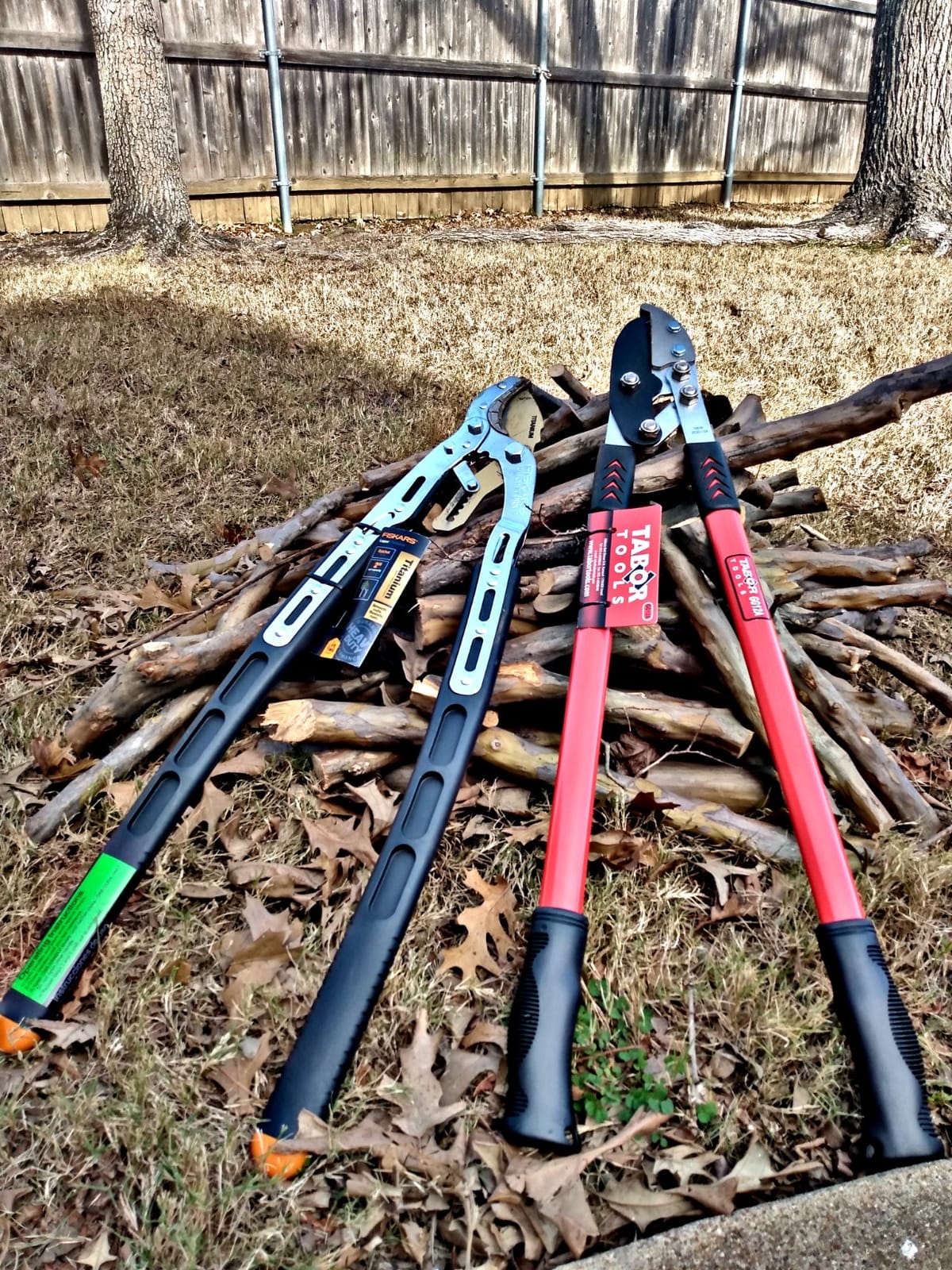
2. TABOR TOOLS GG12A 30 inch Compound Action Anvil – Top Rated for Dead and Hard Wood
TABOR TOOLS GG12A Anvil Lopper with Compound Action, 30 Inch Tree Trimmer & Branch Cutter, Heavy Duty Tree Pruner with 2 Inch Cut Capacity, Chops Thick Dry Branches with Ease
2 inch capacity
Compound action lever
30 inch handles
Rubberized non-stick grip
Pros
- Highest rated in this roundup at 4.8 stars across 5400 plus reviews
- Compound action multiplies hand force for 2 inch dry branches
- Carbon steel blade with non-stick coating resists sap
- Workable for users with limited hand strength
Cons
- Anvil head crushes rather than slices so it is wrong for live green wood
- Must be cut perpendicular to the branch
- Handle bolts need periodic tightening
This is the highest-rated tool we tested, and the rating reflects something specific rather than a general feeling of quality. The compound action linkage distributes force across two pivots instead of one, so the blade closes on hard dry material without the two-handed wrestling that a plain anvil lopper demands.
If your thick-branch work is mostly dead limbs, storm cleanup or old hardwood, the anvil head is the correct tool rather than a compromise. Crushing force is exactly what you want on wood that is already dry and brittle.
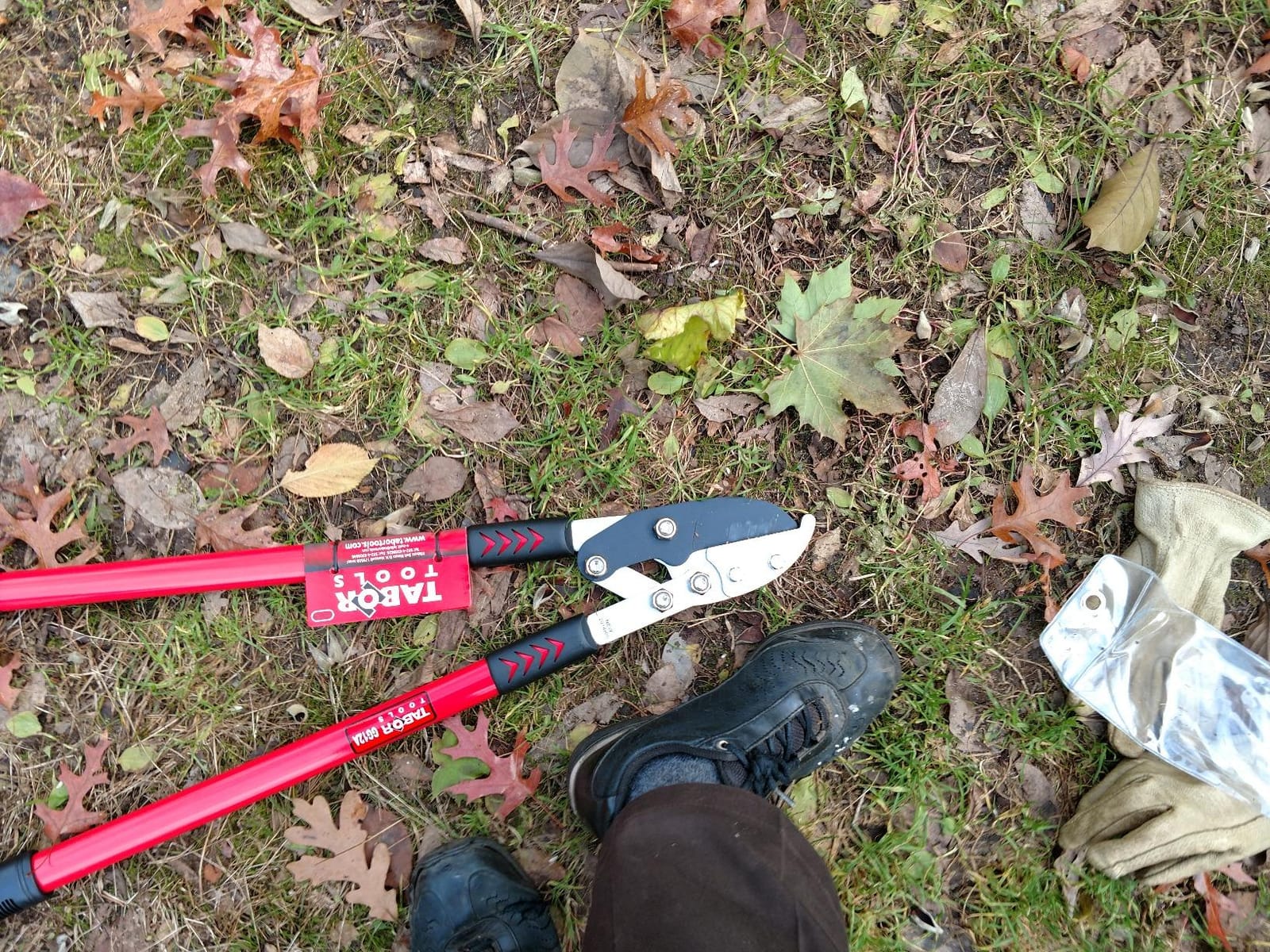
Users with arthritic wrists or limited hand strength single this model out as workable, which is a meaningful recommendation in a category full of tools that assume a strong grip. The rubberized grips on 30 inch handles do a lot of that work.
The non-stick coating on the hardened carbon steel blade keeps sap from gumming the action, and a dulled edge is a sharpening job rather than a reason to buy the tool again.
Grip Comfort and Long-Term Care
The 30 inch handles are finished in rubberized comfort grips rather than bare steel, and in a category built around hard work that surface is doing more than it looks. On a tool you will pick up for a full afternoon, grip texture is a durability feature.
Long handles also weather at the joints. Checking and tightening the handle bolts before a big job takes a minute and protects the leverage advantage the compound linkage buys you, and a loose bolt is the fastest way to give that advantage back.
Best Used For
Dead or dry branches, storm debris, old hedges and any pruning job where the branch is already dead wood. Also a sensible choice for anyone whose hands cannot comfortably close a heavier lopper.
Not the tool for a careful pruning pass on a living ornamental or fruit tree, where the wound quality actually affects the plant.
3. Spear and Jackson 8290RS Telescopic Ratchet Anvil – Best for High Branches
Spear & Jackson 8290RS Razorsharp Heavy Duty Telescopic Ratchet Anvil Loppers, Extendable 40 1/2″ Handles, Ideal for Cutting Thick Hard To Reach Branches, Powerful Ratcheting Mechanism
Extends 28 to 40.5 inch
Ratchet cutting action
SK5 carbon steel blade
10 year guarantee
Pros
- Ratchet action builds force in short incremental steps
- Telescoping handles extend from 28 to 40.5 inch
- SK5 carbon steel blade with PTFE coating resists rust
- Enclosed side plates keep the mechanism clear of brush
- 10 year guarantee
Cons
- Around four handle cranks per cut which is awkward on small twigs
- Handles must be fully open to run the ratchet so overhead reach is limited
The ratchet mechanism is the whole argument for this tool. Rather than one long squeeze, each partial close advances the blade a small increment and holds it there, so force accumulates across several squeezes. On genuinely hard branches that is the difference between cutting and giving up.
Users describe cutting 2 inch branches and even saplings with it, and several describe reaching for a saw less often after buying it. That matches what we saw: the mechanism simply has more total force available than any single-stroke design.
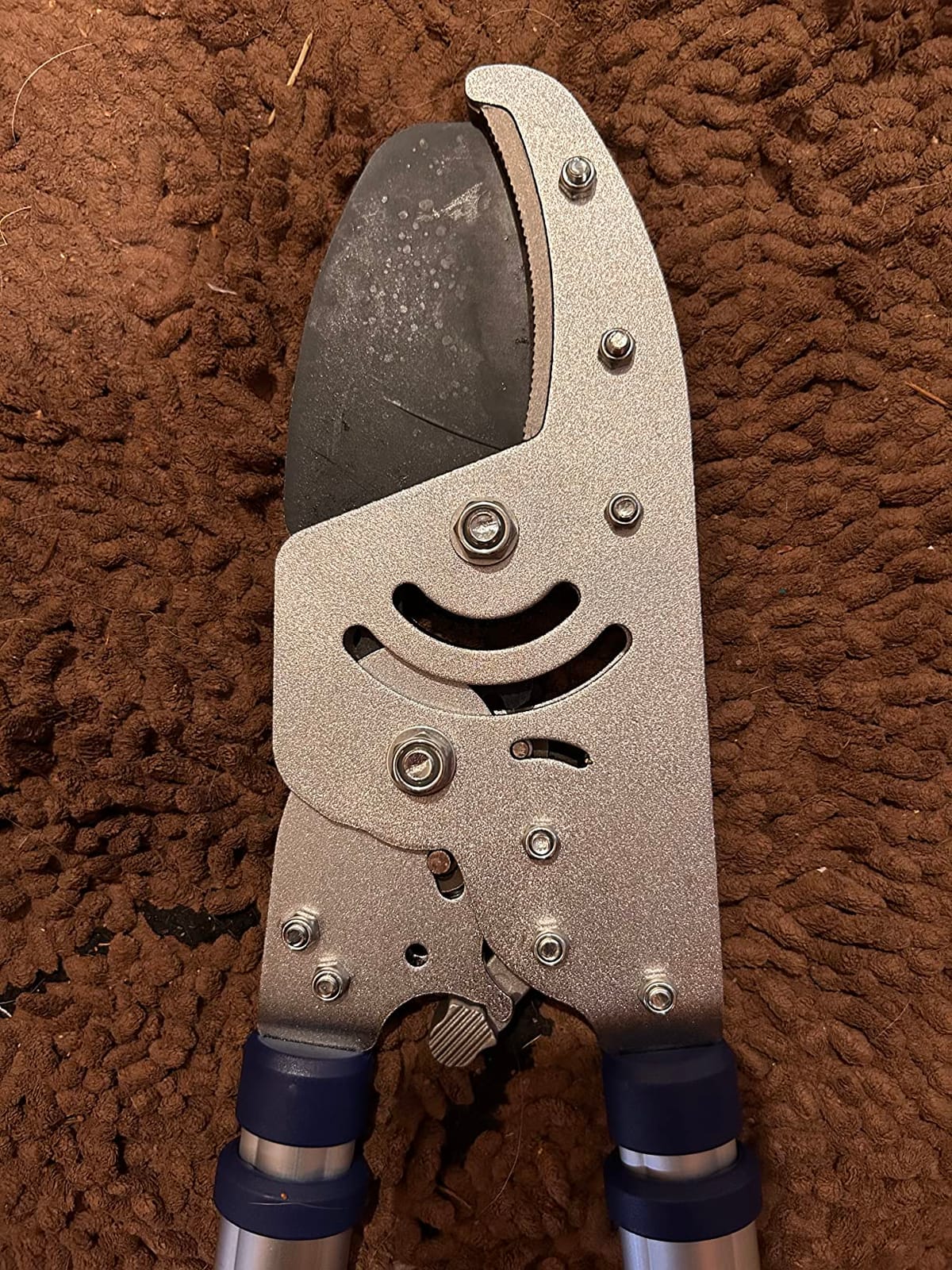
The telescoping handle runs from 28 to 40.5 inch, and extension adds both reach and leverage at once. That is a rare combination on one tool, and it is why this lands in the top three for anyone working under a canopy rather than on a bench of brush.
The SK5 carbon steel upper blade carries a PTFE coating for rust resistance, and owners report blades that stay sharp without routine sharpening. Enclosed side plates keep the mechanism from snagging in a pile of brush, which is a small detail that decides whether the tool survives a real cleanup job.
Reach Versus Control
Extension length is a genuine advantage on low hanging limbs and on branches just above head height. You get a stable two-handed grip instead of standing on a ladder with a short tool.
The catch is that the ratchet needs the handles opened wide to run. At full extension the working position is stretched, so very high overhead work still asks more of you than the reach suggests.
The Ratchet Trade-Off in Daily Use
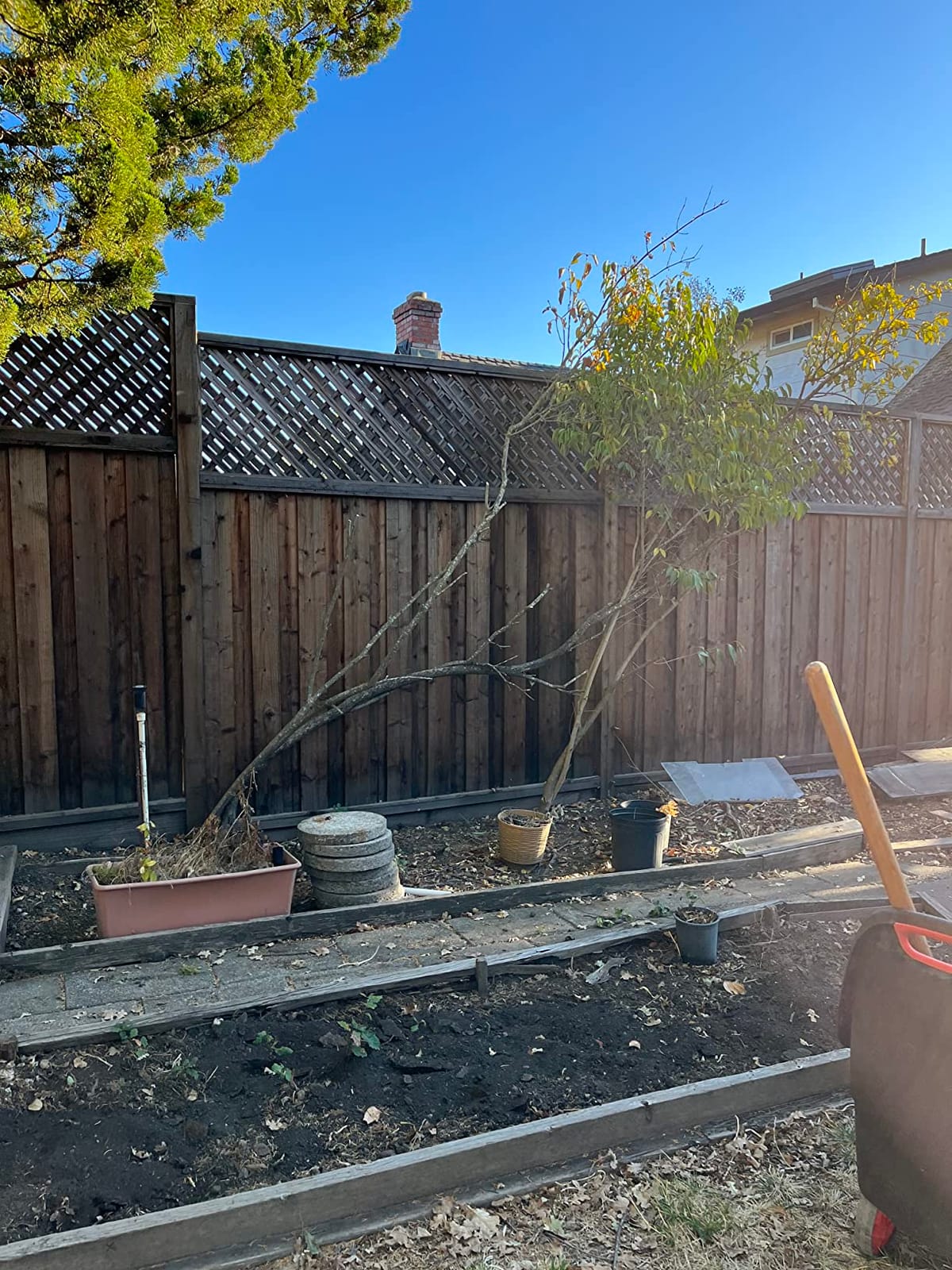
Expect roughly four handle cranks per cut. On a stack of small twigs that is slow and fiddly, and this is the wrong tool for hedge trimming or fine pruning.
It also needs clearance around the branch for the mechanism to travel. Buried inside a dense canopy, the ratchet cannot do its work, so saw off the outer growth first and come back to this for the thick wood underneath.
Who Should Buy It
Anyone clearing overhang after a storm, cutting low hanging branches near a roofline, or working alone who would rather not fetch a ladder. The 10 year guarantee also puts it ahead on the durability question.
Skip it for regular light pruning sessions where a bypass lopper closes in one stroke and the branch is still alive.
4. GARTOL 29 inch Multi-Pivot Anvil Lopper – Best Multi-Pivot Anvil Design
GARTOL 29-Inch Heavy Duty Anvil Lopper, 2-Inch Cutting Capacity Tree Branch Cutter with Compound Action, Effortless Power Loppers for Hardwood & Dry Branches, SK5 Blade & Ergonomic Non-Slip Handles
2 inch capacity
Multi-pivot compound lever
SK5 Teflon coated blade
Replaceable blade and anvil
Pros
- Multi-pivot system multiplies hand force roughly three times
- Light enough for users with arthritic joints to operate
- Teflon coated SK5 blade resists sap and rust
- Replaceable blade and anvil system
Cons
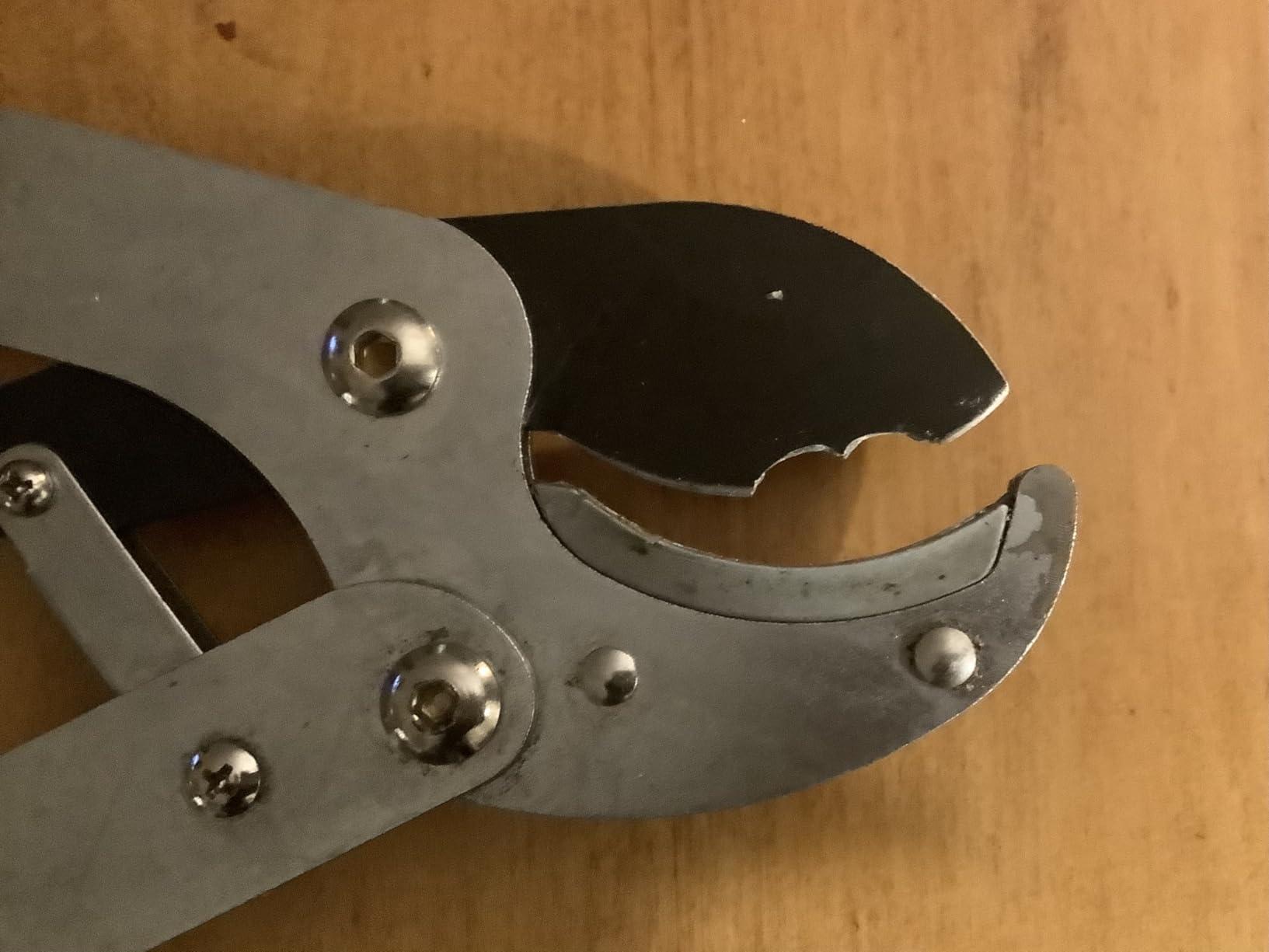
- Recurring reports of SK5 blade snapping after light use
- Do not twist the handles to finish a cut
- Anvil head requires a square cut
This is a multi-pivot compound lever rather than a two-link design, and the difference shows up as a stated three-times multiplication of hand force. Cutting performance is genuinely strong: owners report clean cuts through limbs close to the 2 inch rating on hardwood.
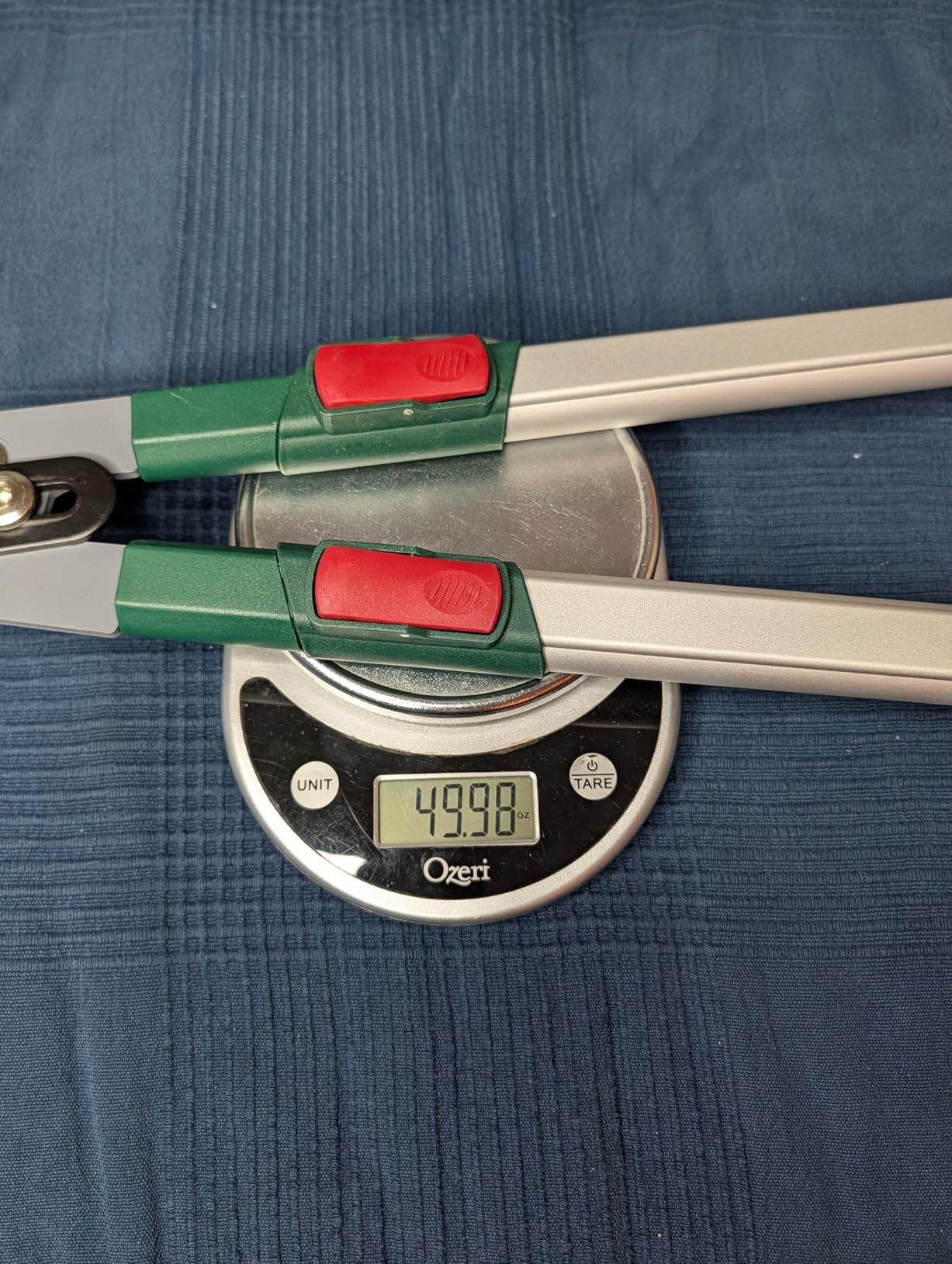
At 3.04 lb it is also one of the lighter frames in the group, which is a real advantage for anyone with joint pain who still needs to cut thick wood. The TPR grips stay comfortable through long sessions.
The Teflon-coated SK5 high carbon steel blade resists sap build-up and corrosion, and both the blade and the anvil are replaceable. That serviceability is unusual at this level of the category and it extends the working life considerably.
Here is the honest part. The 4.4 star average is dragged down by recurring reports of the SK5 blade snapping after light use, including on soft wood. That is a supply quality issue rather than a design fault, and the manufacturer has responded with refunds and replacement blades.
Blade Durability Is the Weak Point
Snapping under light load should not happen and does not reflect on the compound linkage. It is worth factoring in if you plan to leave material in the jaws and squeeze harder instead of repositioning.
Position the branch deep in the jaw and cut perpendicular. Users who do this report far better results than those who angle the cut or twist the handles to finish.
Buying With the Service Record in Mind
Keep the replacement blade and anvil in mind as consumables rather than a one-time purchase. A spare set turns an occasional quality problem into a five-minute swap.
Check the anvil bolts before a big job, and expect to tighten them again after heavy use. It is a simple anvil design, and simplicity means fewer places for the mechanism to bind but also fewer places for the head to flex.
Best For
Dead and dry wood, deadwood cleanup, and users who need thick capacity with a light frame. The compound geometry genuinely does deliver the leverage it claims.
Not the first choice for live green branches, where anvil crushing is the wrong wound, and not for anyone who cannot accept an occasional blade replacement.
5. Corona 32 inch Compound Action Anvil – Best for Orchards and Professional Deadwood
Corona Tools Compound Action Anvil Lopper – 32-Inch Heavy-Duty Branch Cutter for Tree Trimming & Pruning, Garden Loppers for Thick Branches
1.5 inch capacity
Compound action leverage
32 inch fiberglass handles
Anvil cutting head
Pros
- Long-standing professional build with consistent quality
- Compound gearing cuts with less muscle input
- Blades resist twisting on off-angle cuts
- Cuts can be made flush against a trunk
- Fat handles give a secure grip
Cons
- Rated 1.5 inch capacity sits below the 2 inch class
- Bulky handles flex at full force
- Anvil bolts loosen and benefit from thread lock
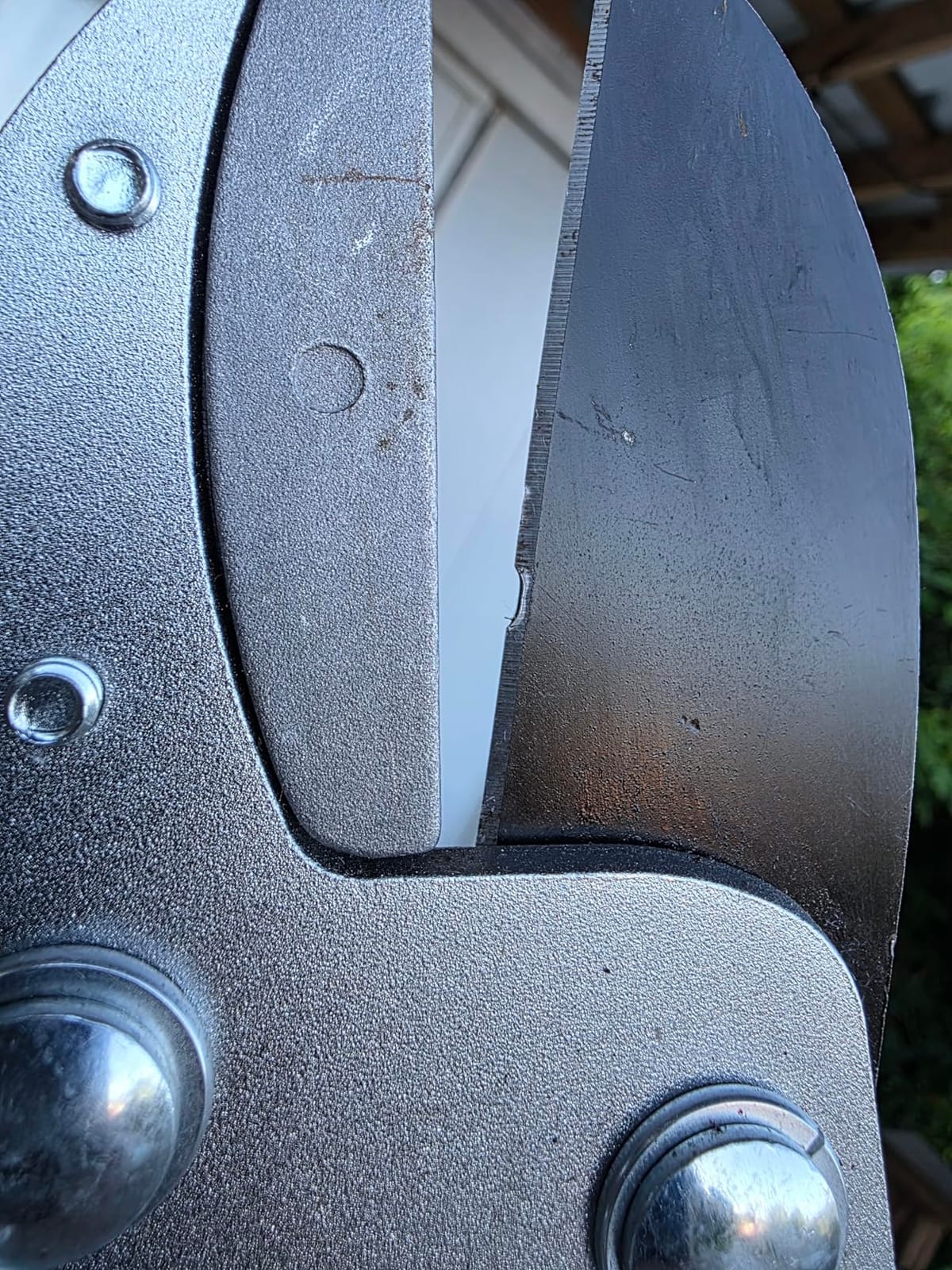
Corona has built this pattern for decades, and the consistency across that span is the main argument. Orchardists and commercial pruners who cut hundreds of branches a week report that the blade resists bending and twisting, including on cuts that are not perfectly square.
That twist resistance is the detail that separates it from cheaper anvil designs. A blade that deflects on an off-angle cut leaves a torn wound and dulls faster, and this one holds its geometry.
Being able to cut flush against a trunk is genuinely useful. Bypass loppers need clearance to pass the second blade, so flush cuts mean repositioning repeatedly. The anvil head sits in one place and presses down.
Fat fiberglass handles give a secure grip that senior users appreciate, and 32 inch of length puts real leverage behind each stroke.
Capacity Is the Trade-Off
At 1.5 inch rated, this is the smallest capacity in the roundup. If your thick branches regularly measure 1.75 inch or more, the Spear and Jackson or the TABOR would serve you better.
Think of it as a quality choice within a size class rather than a capacity choice. If your work sits in the 1 to 1.5 inch band, the build quality is the differentiator.
Ongoing Maintenance Reality
Two things wear on this tool, and both are cheap to manage. The anvil surface grooves over time with heavy use, and the mounting bolts need periodic tightening.
A drop of thread locker on the anvil bolts after the first tightening will stop them working loose again. Professionals doing this daily do it once and forget it.
Best For
Orchard work, vineyard pruning, and professional deadwood removal where volume and consistency matter more than the largest possible capacity. Also a good deadwood tool for a serious home yard.
Not the pick for live green wood or for branches above 1.5 inches that you want to keep using the same tool for.
6. AIRAJ 27 to 41 inch Extendable Anvil Lopper – Best Value Telescoping Pick
AIRAJ 27-41″ Anvil Loppers for Tree Trimming Heavy Duty, Tree Branch Cutter
2 inch capacity
Six-speed telescoping handle
Four-pivot compound action
Spare SK5 blade included
Pros
- Telescoping aluminum handle extends from 27 to 41 inch
- Four-pivot compound action makes 2 inch cuts feel light
- Includes a spare SK5 blade in the box
- Teflon coating resists rust and gumming
Cons
- 3.5 lb feels heavy for a 27 inch tool
- No replacement anvil available once it breaks
- Aluminum handle can bend at the joint after repeated heavy cuts
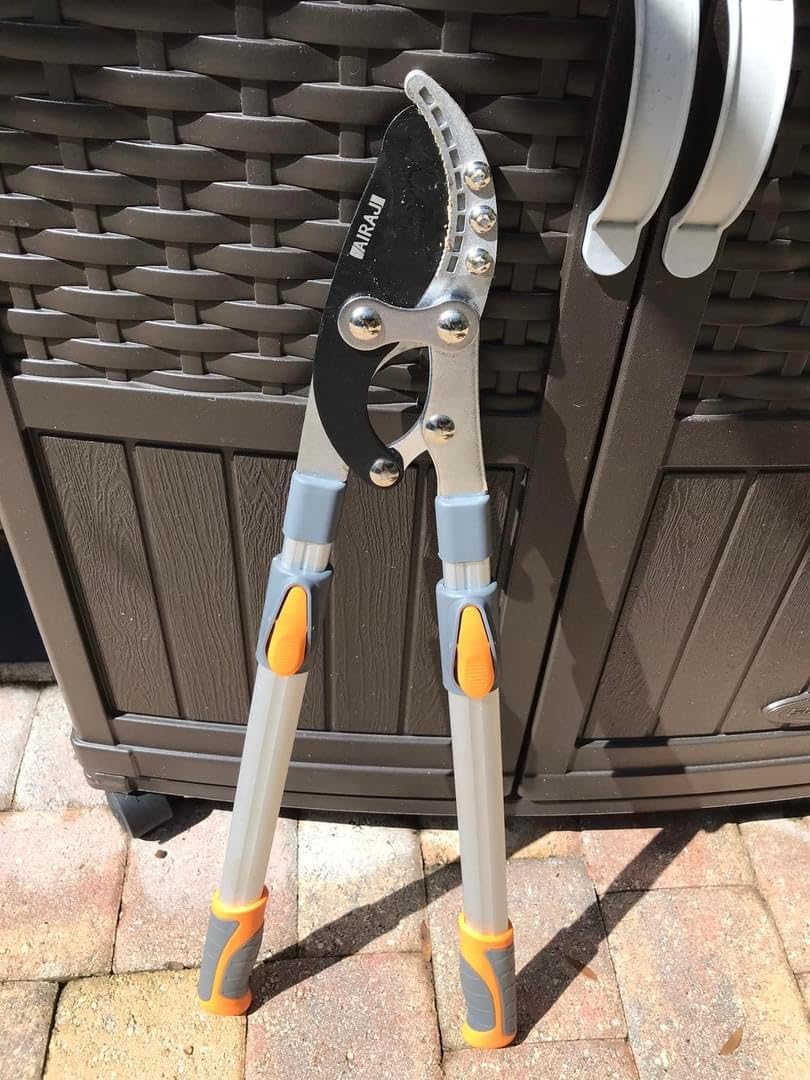
Most telescoping loppers give you reach but not much else. This one pairs a six-speed handle running from 27 to 41 inch with a four-pivot compound action, which is where the leverage comes from. Buyers report that 2 inch cuts genuinely feel light on it.
Including a spare SK5 blade in the box is unusual and worth noting. Blades are consumables, so a spare in the drawer removes the most common reason a good lopper ends up in a shed unused.
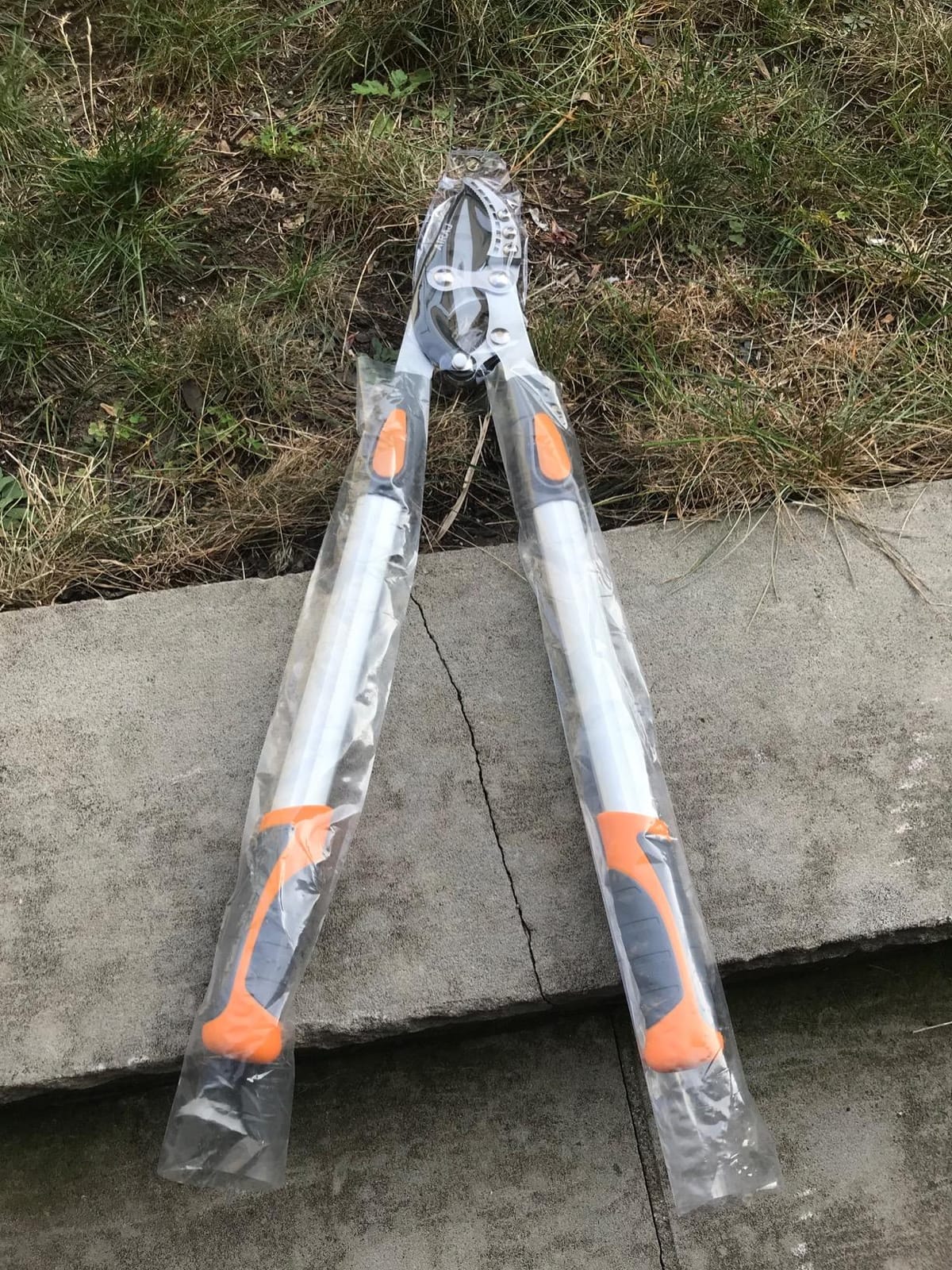
Owners report the blades still cutting well after two years of weekly use, and the Teflon coating handles the sap issue that dulls bare steel quickly. Sharp out of the box is the consistent impression.
The handle is where the compromises sit. Aluminum here feels less robust than steel under sustained heavy use, and buyers report the attachment points beginning to bend after several hundred cuts, which disables the shortest lock hole.
Extension Length and Locking Behaviour
Six lock positions from 27 to 41 inch cover most yard work well. The shorter settings give leverage for ground-level cutting, and the longer ones give reach for canopy work without a ladder.
Treat the handle joint as the part to watch. If you notice flex at the shortest setting, stop using that hole rather than forcing it, because that is the failure mode buyers report.
The Missing Spare Anvil
The spare blade is genuinely useful, but there is no replacement anvil, and universal anvils do not fit. The anvil is the harder, less wear-prone part of an anvil lopper, so this matters less than it sounds.
Just do not twist the handles to finish a cut. That is the fastest way to damage the head, and it applies to every anvil lopper in this roundup rather than this one alone.
Best For
Homeowners who want one tool that both reaches and cuts, especially if you prune a modest fruit tree or a large shrub without wanting to own two separate loppers.
Not for daily professional volume, where steel handles and higher serviceability earn their cost quickly.
7. Corona 33 inch DualLINK MAXFORGED Bypass – Best for Live Green Wood at Scale
Corona Tools 33″ Bypass Loppers – Heavy-Duty Branch Cutter with DualLINK MAXFORGED Cutting Strength for Branches up to 2 Inches
2 inch capacity
DualLINK MAXFORGED linkage
33 inch handles
Forged steel blades
Pros
- Bypass geometry gives clean cuts on live growth up to 2 inch
- DualLINK linkage multiplies force on thick limbs
- Forged steel blades hold an edge and resist bending
- Cushioned bumpers reduce fatigue in long sessions
- 33 inch length gives reach and leverage
Cons
- Bypass jaws are the wrong choice for brittle deadwood
- 4.3 lb is heavy for extended overhead work
- Fixed length limits reach in very high growth
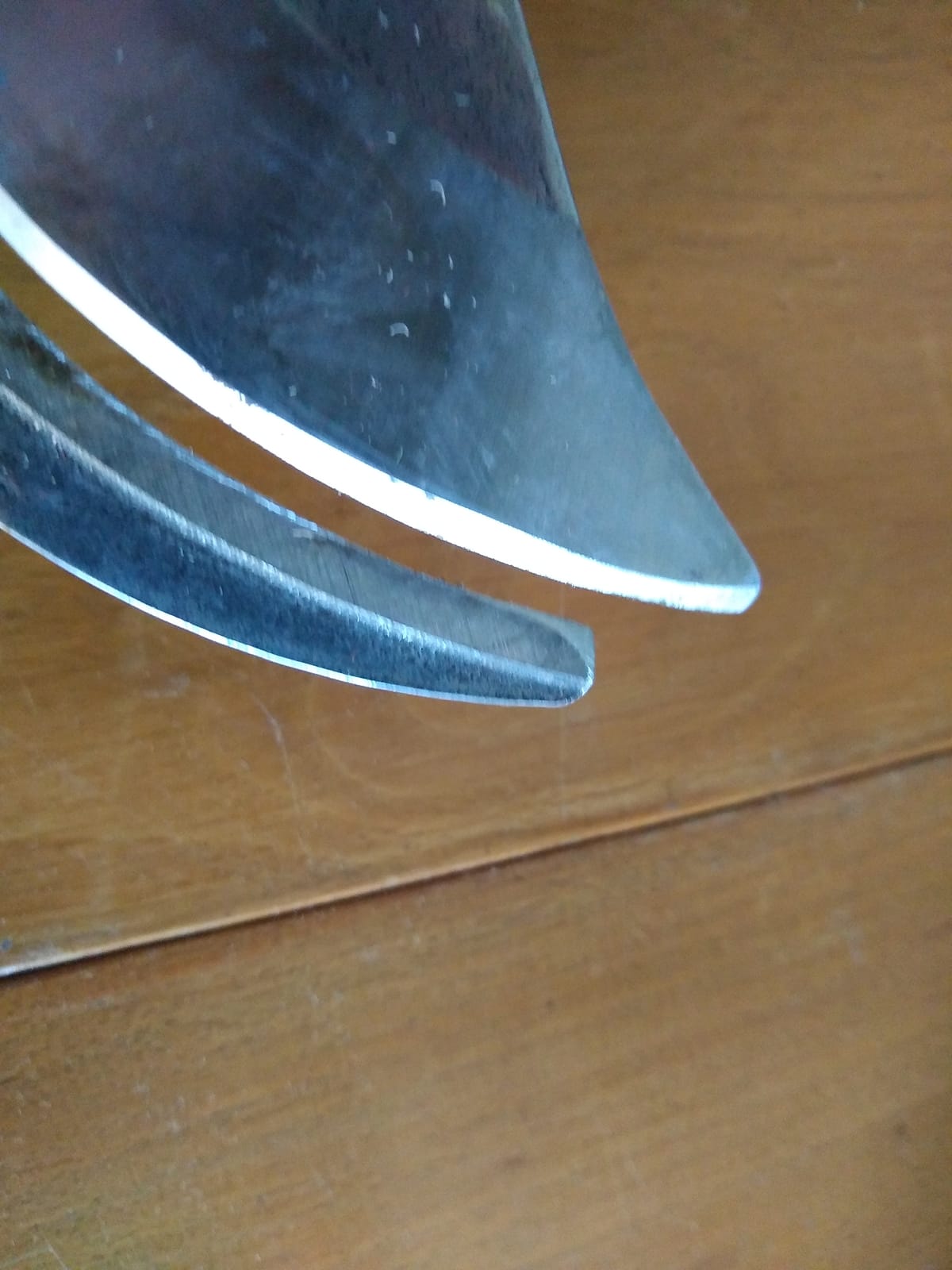
Where the PowerGear2 is the sensible all-rounder, this is the heavier professional bypass option. The DualLINK MAXFORGED mechanism multiplies cutting force, and the precision-ground fully forged steel blades are a step up in steel from the alloy used on lighter models.
At 2 inch rated with a 33 inch frame, it handles large live limbs and dense shrubs in a single tool. The forged blade is the detail professionals notice: it resists bending on a stubborn cut and stays sharp between sharpenings.
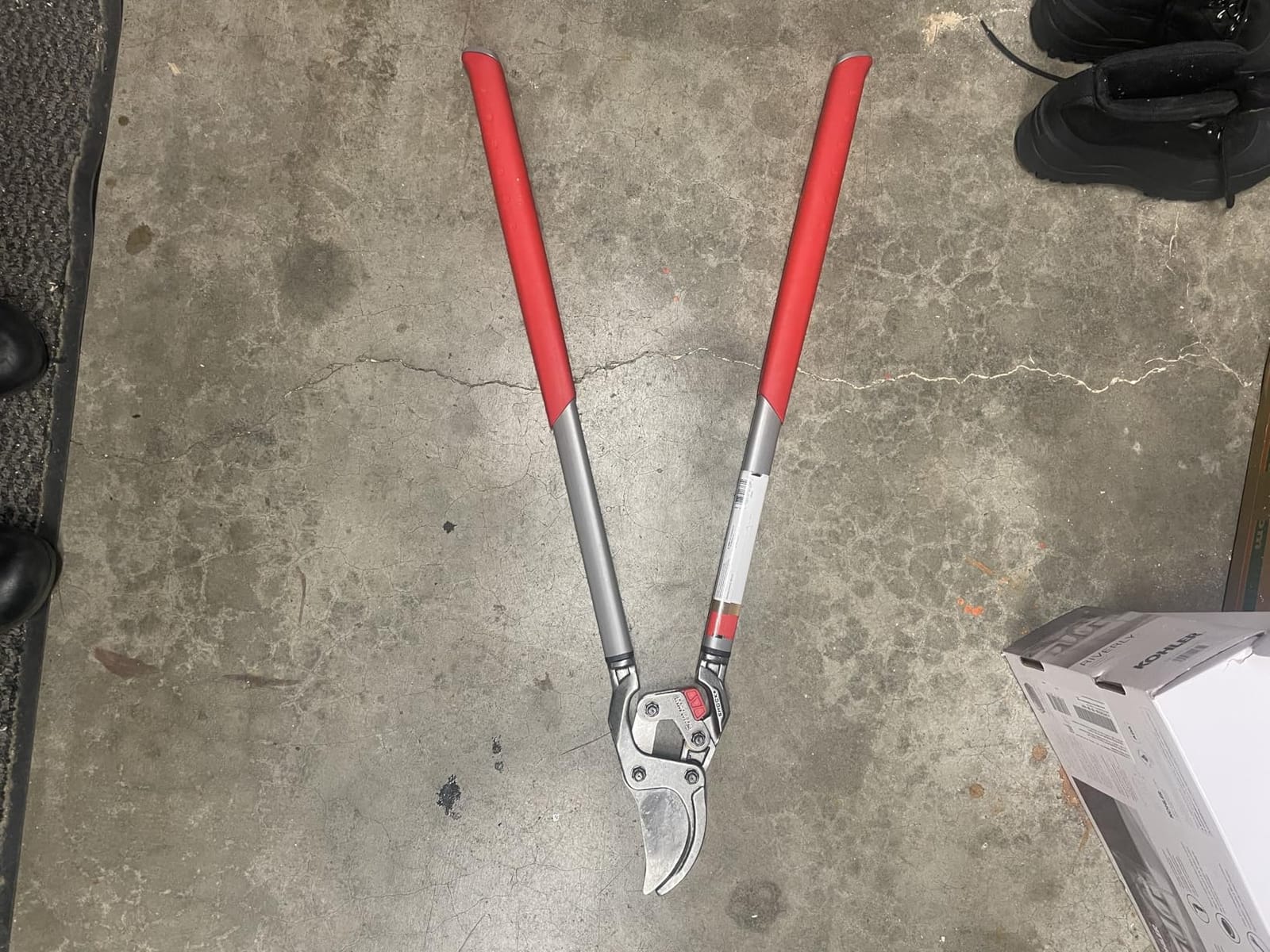
The cushioned non-slip grips with impact-reducing bumpers are a real ergonomic feature on a tool this heavy. They limit how much of each cut reaches your wrist and elbow, which is what makes a 4.3 lb frame workable over a long session.
Because it is bypass geometry, cuts on live wood are clean and heal properly. That is the reason to choose this over an anvil model for fruit trees, maples and ornamental pruning.
Weight and Its Effect on Overhead Work
At 4.3 lb this is one of the heavier tools here, and it is the heaviest bypass option in the roundup. Held overhead, that weight is felt quickly in the forearms.
It suits ground-level and waist-to-shoulder-height work far better than a full day of reach work. If your pruning is mostly overhead, add a telescoping tool to the kit rather than forcing this one.
Bypass Limits on Dead Material
Two blades need room to pass each other, so dry brittle deadwood is the wrong material. A bypass blade pressing against deadwood tends to deflect rather than shear, and it dulls faster doing it.
For storm debris and dead branches, use an anvil model. For live limbs, this is the strongest option in the roundup.
Best For
Professional or serious amateur pruning of living trees and large shrubs where clean wounds matter and cut volume is high. Also a strong match for anyone already using Corona tools.
Not the pick for low grip strength, for overhead reach, or for a yard that is mostly deadwood cleanup.
8. Corona 36 inch MAXFORGED Orchard Lopper – Biggest Capacity in the Roundup
Corona Tools | 36-inch Branch Cutter MAXFORGED Orchard Loppers | Tree Trimmer Cuts Branches up to 2 ¼-inches in Diameter | AL 8482, Red
Up to 2 1/4 inch capacity
Resharpenable forged blade
Elliptical aluminum handles
Deep sap groove
Pros
- Largest rated capacity in the roundup at 2 1/4 inch
- Resharpenable and replaceable heat-treated forged blade
- Deep sap groove stays clean in gummy wood
- Light 2.8 lb elliptical aluminum frame resists twisting
Cons
- Bypass design suits living wood rather than dry deadwood
- 36 inch handles are bulky in tight spaces
- Fixed length cannot be shortened
This is the tool for the branch that defeats everything else. At up to 2 1/4 inch rated, it has the largest jaw in the roundup, and it is a bypass design rather than an anvil, which means it shears that capacity instead of crushing it.
The Dual Arc bypass blade is forged, fully heat-treated, resharpenable and replaceable. Across a career of orchard work that matters more than the headline capacity, because a blade that can be restored is a blade you never have to throw a tool away over.
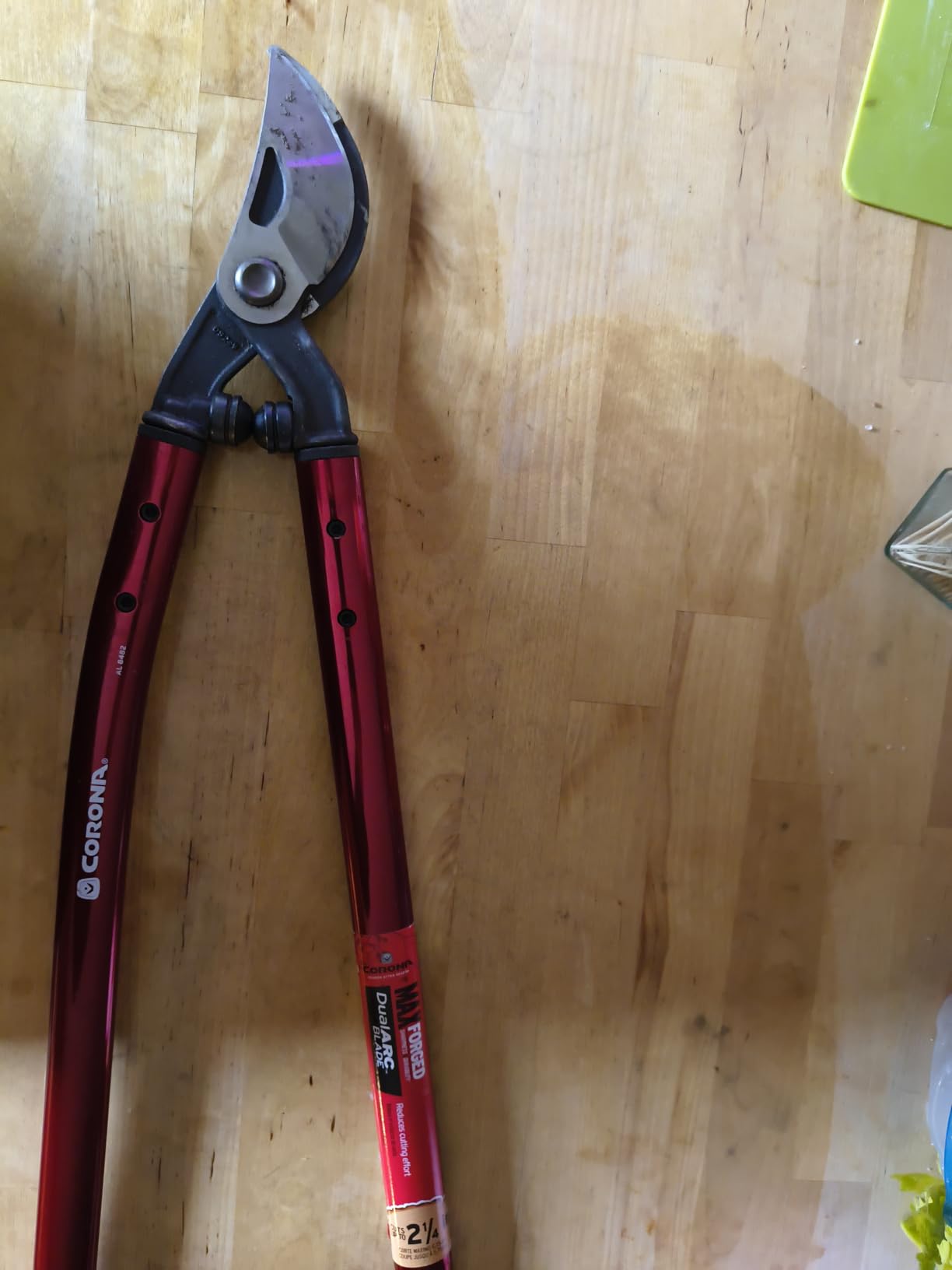
The forged slant-ground hook with a self-cleaning deep sap groove is a small piece of engineering that pays off repeatedly. Sap from gummy species collects in normal grooves and dulls the blade within a session, and the deep groove clears itself.
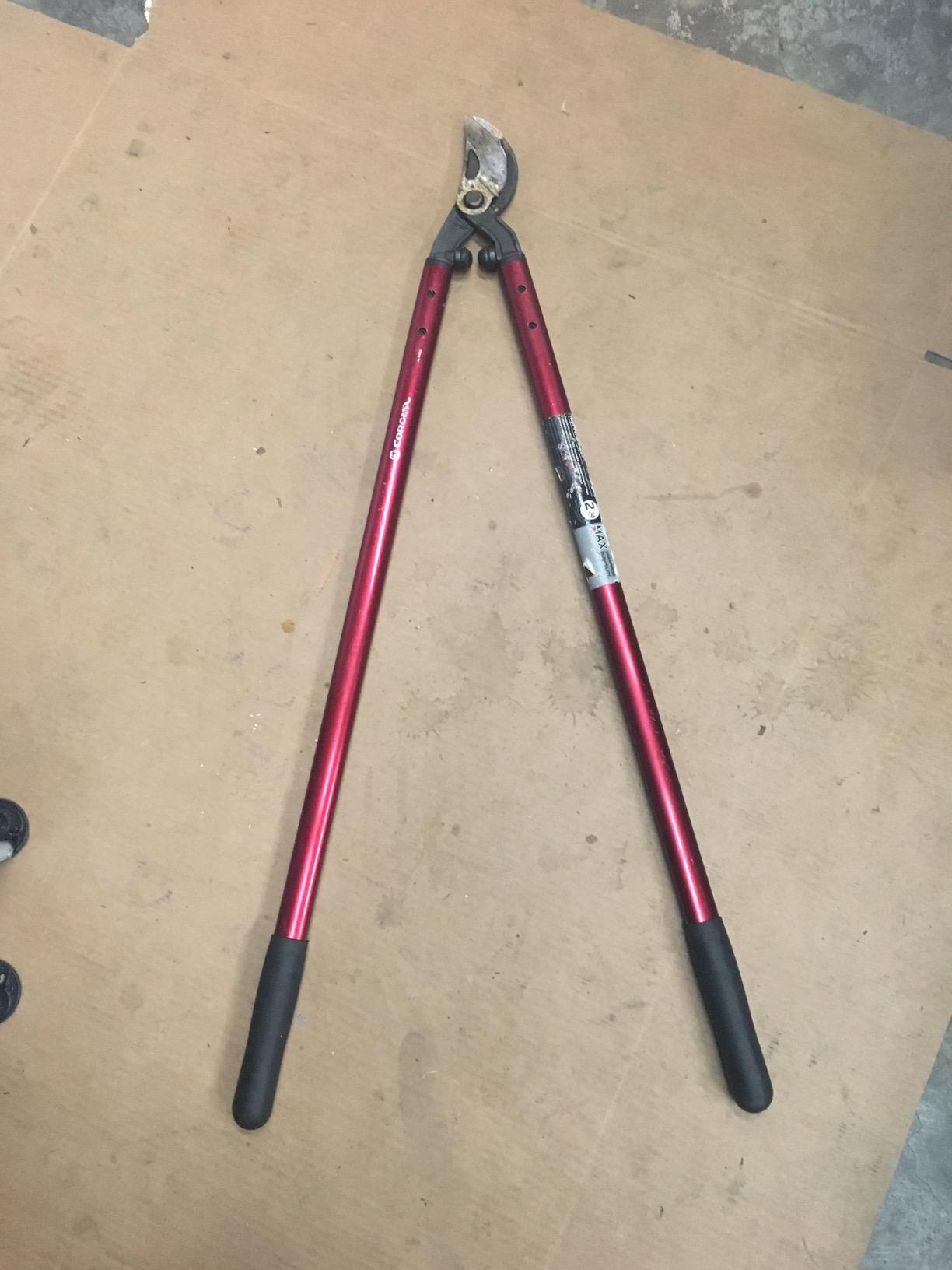
Lightweight elliptical aluminum handles are unusual at 36 inches. The elliptical tubing resists twisting under heavy load better than round tube, so you get the reach and leverage without the handle corkscrewing when a cut binds.
When 2 1/4 Inches Is the Right Number
It matters most on the largest live branches on a mature fruit tree, and on older hardwood where a 2 inch cut is a routine rather than an exception. That is a situation most loppers here are not built for.
Even here, treat the rating as a ceiling. Reaching it depends on a sharp blade, a square cut and no crowding around the jaw. On a dead and dry branch of that size, expect to work.
Fixed Length as a Limitation
Thirty-six inches is not adjustable, and that is a genuine constraint in a tight orchard or a crowded planting bed. There is no shorter version of this geometry in the range we tested.
The elliptical section is also larger in diameter than a standard handle, so in dense growth it takes more room to position than a slim 28 inch tool would.
Best For
Orchardists, vineyard workers and anyone managing mature trees where a 2 inch cut is ordinary. It is also the top pick for people who want one high-quality tool that will not be outgrown.
Not for deadwood, not for tight spaces, and not for anyone who wants an adjustable reach.
9. YRTSH 28 to 41 inch Compound Action Anvil – Best Budget Telescoping Pick
YRTSH Loppers Branch Cutter Heavy Duty Tree Trimmer with Compound Action
2 inch capacity
Compound action
Six-step telescoping handle from 28 to 41 inch
Coated alloy steel blade
Pros
- Compound action gives real leverage on 2 inch branches
- Six-step telescoping handle covers 28 to 41 inch
- Teflon and low-friction coated alloy steel blade holds its edge
- Soft rubber grips stay comfortable on long days
Cons
- Anvil style suits dry dead wood rather than living branches
- Aluminum handle can twist if used to finish a cut
- Manufacturer does not publish a tool weight
This is the budget end of the compound-action anvil category, and it holds a 4.7 star average that most tools at this level cannot match. The compound linkage distributes force across the pivot so the blade closes on hard material without the wrestling a plain anvil lopper demands.
The six-step telescoping handle runs from 28 to 41 inches, which puts it in the same reach class as tools costing noticeably more. On paper and in use, the compound action delivers the leverage the 2 inch rating implies.
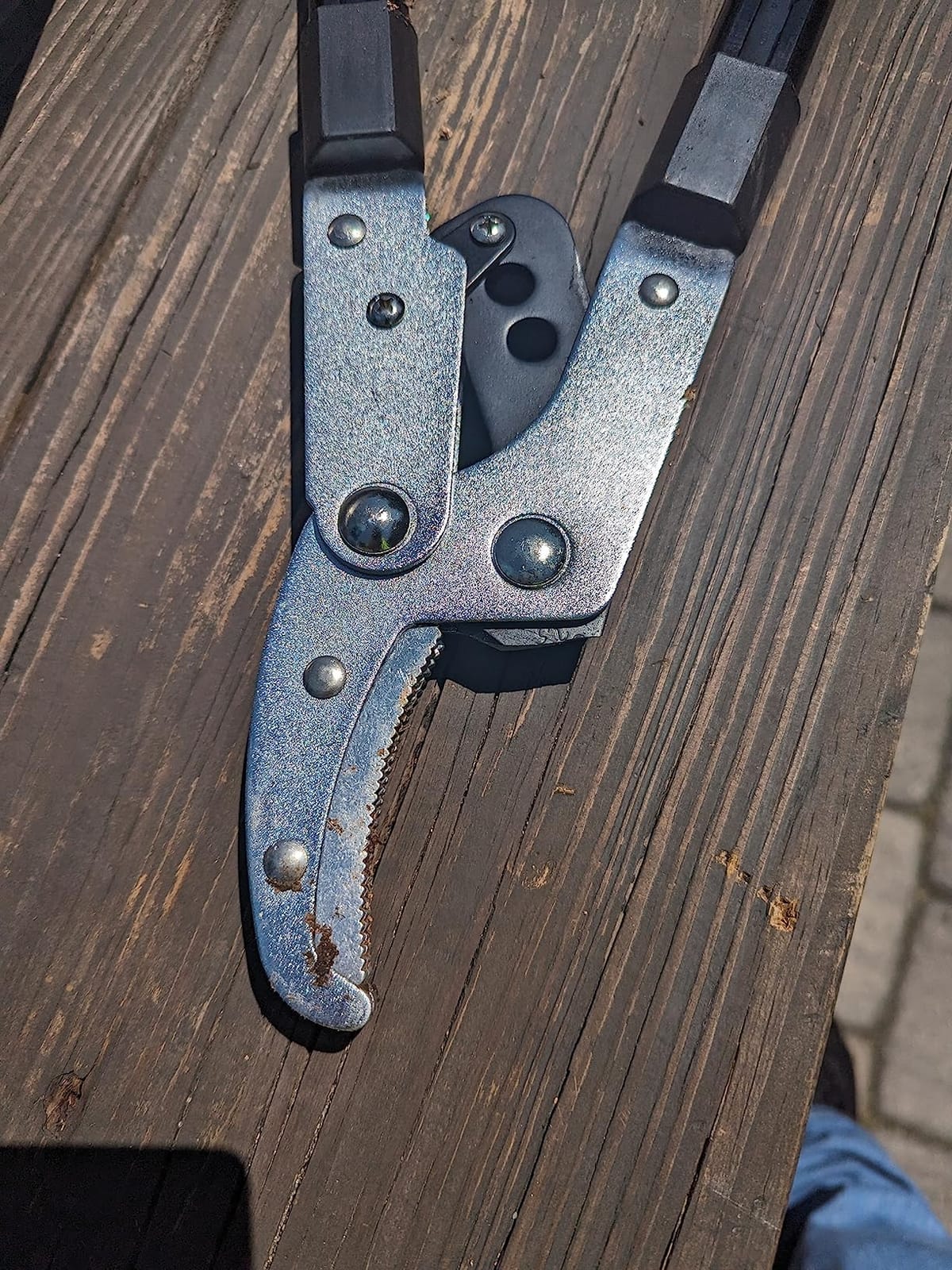
The Teflon and low-friction coated alloy steel blade holds its edge through tough jobs and resists gumming, which matters on fruit trees and maples in season.
Soft rubber non-slip grips prevent hand fatigue across a long pruning day, and the 4.7 star average across more than 500 reviews reflects a consistent experience rather than a single outlier.
Anvil Geometry in Daily Use
Be clear about what this is. An anvil lopper belongs on dry, dead and woody growth. Running it through live green branches gives you a crushed wound and a slower cut than a bypass tool of the same size.
If your yard is mostly live wood, a bypass lopper serves you better. This one is built for deadwood, brush and storm debris.
Handling and the Twisting Risk
The aluminum handle is the part to respect. Twisting it to finish a cut rather than squeezing will damage the handle, and the resulting flex is not repairable.
Position the branch deep in the jaw, cut square, and squeeze. The compound linkage does the work if you let it.
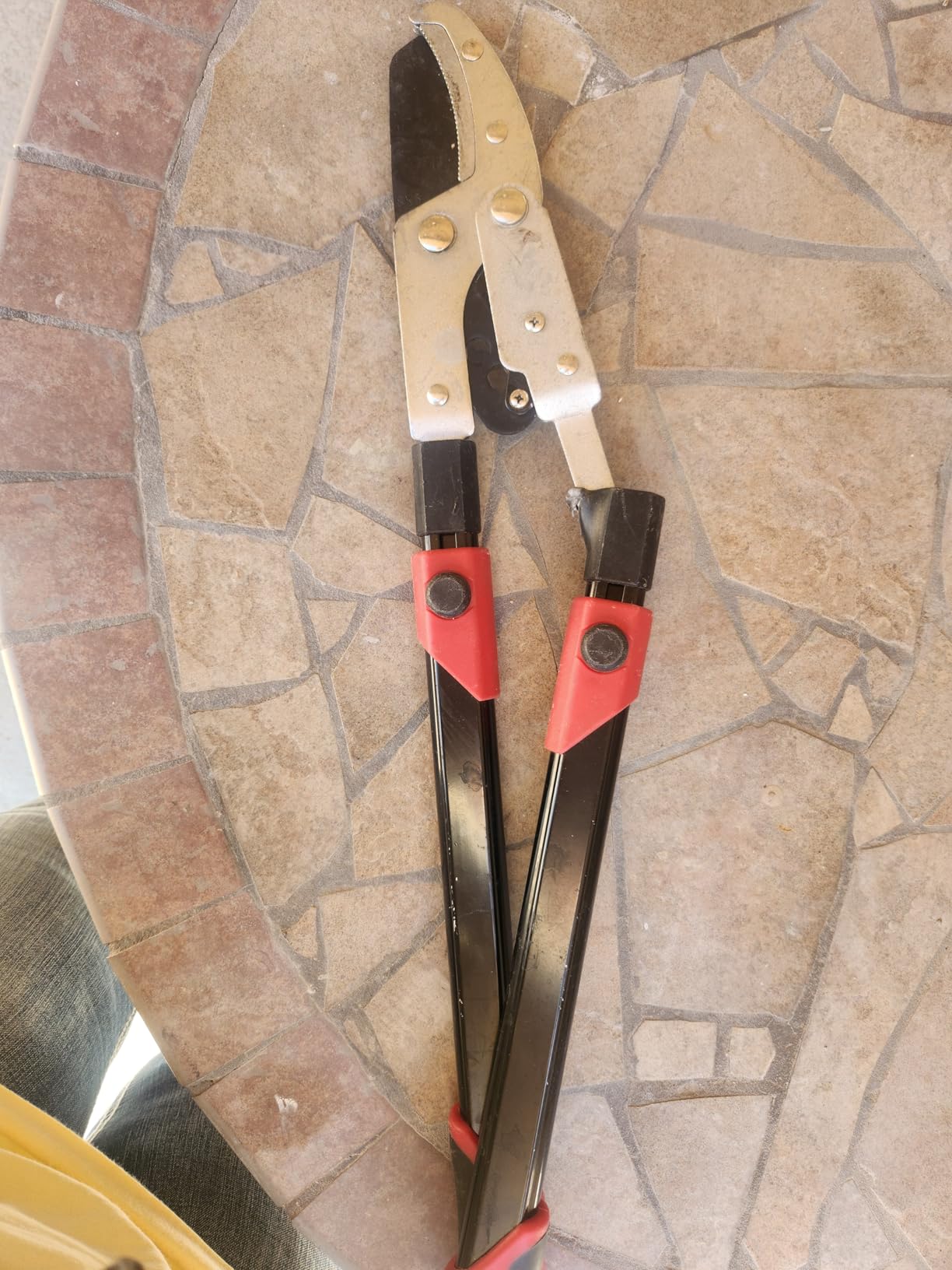
Best For
Homeowners and property managers who want telescoping reach and anvil crushing power in one frame, particularly for deadwood, brush and storm debris above head height.
Not the pick for a careful pruning pass on living ornamental or fruit trees, and not for anyone who will be tempted to twist the handle on a hard cut.
10. Fiskars 32 inch Ratchet Drive Anvil – Best for Brittle Deadwood
Fiskars 32″ Ratchet Drive Garden Anvil Loppers, 2″ Cut Capacity
2 inch capacity
Ratchet drive mechanism
Hardened precision-ground blade
Riveted steel handles
Pros
- Ratchet drive compounds force across a series of squeezes
- Anvil geometry built for thick dry dead branches to 2 inch
- Precision-ground hardened blade with low-friction coating
- Riveted steel handles for durability
Cons
- Several squeezes per cut which is inefficient on small twigs
- Anvil action crushes living branches rather than slicing them
This is the newest listing in the roundup and the one with the thinnest evidence behind it, with 175 reviews against several thousand for the established picks. What that smaller pool does show is consistent: the ratchet drive multiplies force across a series of squeezes, and the anvil head is aimed squarely at thick, dry, dead branches up to 2 inches.
It currently holds the number one sales rank in Amazon’s Hand Loppers category, which reflects how well the Fiskars brand sells itself. Brand strength is not the same as a decade of field data, and we would want to see more long-term feedback before recommending it ahead of the Spear and Jackson.
The construction details are good. A fully hardened, precision-ground steel blade with a low-friction coating glides through wood, resists sap gumming and adds rust protection, and the riveted steel handles are the most robust handle spec in this roundup.
That combination of ratchet force and steel handles is why it is worth watching. If the ratchet anvil format has an ergonomic problem, this listing appears to address it.
Ratchet Downsides Apply Here Too
Every incremental-squeeze mechanism has the same weakness: it is inefficient on small work. Several squeezes for a one-inch twig is wasted motion, and you will not reach for this tool for hedge trimming.
Anvil geometry also means no clean cuts on living branches. This is a deadwood instrument, and pairing it with a bypass model covers a whole year of pruning.
What We Would Watch
With a smaller review pool, durability over a full season of heavy cutting is the open question. Riveted steel handles and a hardened blade suggest it will hold up, and the low-friction coating should limit the sap-related dulling that ends other blades early.
For a first heavy-duty tool, we would still start with an established model. For a second deadwood lopper, or a replacement for an existing anvil, this one is worth a close look.
Best For
Homes where thick deadwood is the primary workload and you want a ratchet mechanism with steel handles. It also suits anyone who already trusts Fiskars tools and wants anvil capability.
Not for live green pruning, and not for frequent small cuts where a single-stroke bypass lopper is faster.
How to Choose Heavy Duty Loppers: A Buying Guide
Rated Capacity Is a Ceiling, Not a Promise
Every capacity figure in this roundup assumes a sharp blade, a branch cut square to the grain, and clear space around the jaw. Green hardwood at 1.5 inches feels like the practical limit for most compound-action models even when the box says 2 inch.
Measure before you cut. If the branch is at 90 percent of the rating, take a few strokes of a saw instead of fighting the handles.
Blade Type Decides Your Wound
Bypass shears living wood and leaves a flat cut that calluses over. Anvil crushes dead and dry wood and generates more force doing it. Buying the wrong one costs you either tree health or cutting effort.
If you are undecided, the honest answer is that most yards need both. A bypass model for the growing season and an anvil model for storm cleanup and deadwood is a common and sensible pairing.
Compound Action Versus Ratchet Gearing
Compound action adds a second fulcrum near the blade, multiplying force in a single smooth stroke. It is fast, feels natural and suits frequent use, but it tops out around 2 inches of hardwood.
Ratchet gearing locks the blade forward in small increments across several squeezes. It delivers the highest total force of any hand mechanism and can part genuinely stubborn wood, but it is slow on small cuts and needs clearance around the branch.
Gear systems like PowerGear2 and DualLINK sit between the two, using interlocking gears at the pivot to multiply force without the multi-stroke ratchet cycle.
Handle Length, Weight and Grip Strength
Longer handles mean more leverage and more reach, and also more weight. The heaviest tool here is 4.3 lb and the lightest is 3.04 lb, and that difference decides whether a long overhead session is comfortable or punishing.
Grip strength is the factor buyers ignore most. Compound action and ratchet mechanisms exist precisely because many people, particularly those with arthritic hands, cannot generate enough force with plain scissor-style leverage. If closing the handles fully is a struggle, look for a mechanism rather than more handle length.
Watch handle spread too. On very thick branches the handles open to their widest point, and on some designs that width is uncomfortable to bridge with two hands.
Blade Steel, Coatings and Edge Retention
Alloy steel is adequate and cheap. High carbon and SK5 steel hold an edge noticeably longer and are what you want if you cut dry hardwood often. Fully forged and heat-treated steel sits at the top of the range and is resharpenable.
Coatings matter more than buyers expect. A low-friction or Teflon coating keeps tree sap from gumming the blade, and a blade that gums mid-cut does not just dull, it slips and leaves a torn wound. The deep sap groove on the Corona orchard lopper is the same idea taken further.
Finally, ask whether the blade is replaceable. Every tool in this roundup with a replaceable blade will outlast one that is not, and a resharpenable forged blade can be restored at a metal shop for a fraction of a new tool.
Maintenance: Sap, Bolts and Sharpening
Wipe the blade and the pivot clean after every session. Sap is acidic and it is the main reason lopper blades dull faster than most owners expect.
Check the pivot and anvil bolts quarterly and tighten them. On anvil loppers a drop of thread locker on the anvil bolts prevents the loosening that costs you leverage.
Sharpen on a coarse file or a lopper-specific stone, following the original bevel angle, and take light passes. A single pass across a bypass blade at the correct angle restores most of the cutting performance; grinding away at it does more harm than good.
On an anvil lopper, flatten any burr on the anvil face with a file as you go. A raised burr on the base plate is what makes a cut tear instead of compress, and owners often blame the blade for it.
Frequently Asked Questions
How thick can loppers cut?
Most bypass hand loppers cut cleanly up to about 3/4 inch. Compound action and ratchet models with 30-inch-plus handles reach 1.5 to 2 inches, and forged orchard-grade tools are rated up to about 2 1/4 inches. Above 2.5 inches you need a pruning saw, and above 4 inches you need a chainsaw.
What is the best tool to cut thick tree branches?
For branches up to about 2 inches, a long-handle lopper with compound action or a ratchet mechanism is the right tool. From roughly 2 to 4 inches, use a folding pruning saw. Above 4 inches, or for any branch high overhead near a roofline, use a pole saw or a mini chainsaw.
Are bypass or anvil loppers better for thick wood?
Anvil loppers generate more crushing force, so they are better for dead, dry or hard wood. Bypass loppers shear with two blades and leave a clean wound that seals properly, making them better for living branches. For live wood up to 2 inches, the Fiskars PowerGear2 is the stronger choice.
Will loppers cut tree branches?
Yes, up to a point. A lopper is designed for woody branches from about 3/4 inch to 2 inches thick. Anything above 2.5 inches should go to a pruning saw, because forcing a lopper past its rating bends blades and spreads handles without saving you time.
Do loppers crush branches or cut them?
Bypass loppers cut cleanly with a scissor action. Anvil loppers crush the branch against a flat base, which tears the fibres and leaves a ragged wound. That is why anvil loppers belong on dead wood, and why a crushed wound on a living branch is a common sign of using the wrong blade type.
Which Lopper Should You Buy in 2026?
If you cut mostly living wood, start with the Fiskars PowerGear2. It handles branches up to 2 inches, leaves clean wounds and carries a lifetime warranty, which makes it the safest single-tool choice for most yards.
If your work is dead and dry material, the TABOR TOOLS compound anvil is the better tool. It rates highest in the roundup at 4.8 stars and stays workable for anyone with limited hand strength.
For branches above head height, the Spear and Jackson 8290RS extends to 40.5 inches and its ratchet mechanism parts wood that a single-stroke design would stall on. For the largest live branches on a mature tree, the Corona 36 inch orchard lopper has the biggest jaw here at 2 1/4 inches.
And if you want one adjustable tool rather than two fixed ones, the AIRAJ and the YRTSH both cover reach and capacity in a single frame.
Whichever one you choose, measure the branch first and match the blade to whether it is alive. That single decision does more for your trees and your effort than any other. If you are still working out the rest of your tool list, our gas string trimmer guide and lawn dethatcher guide cover the same ground for other yard jobs that look easier than they are.
Leave a Reply