
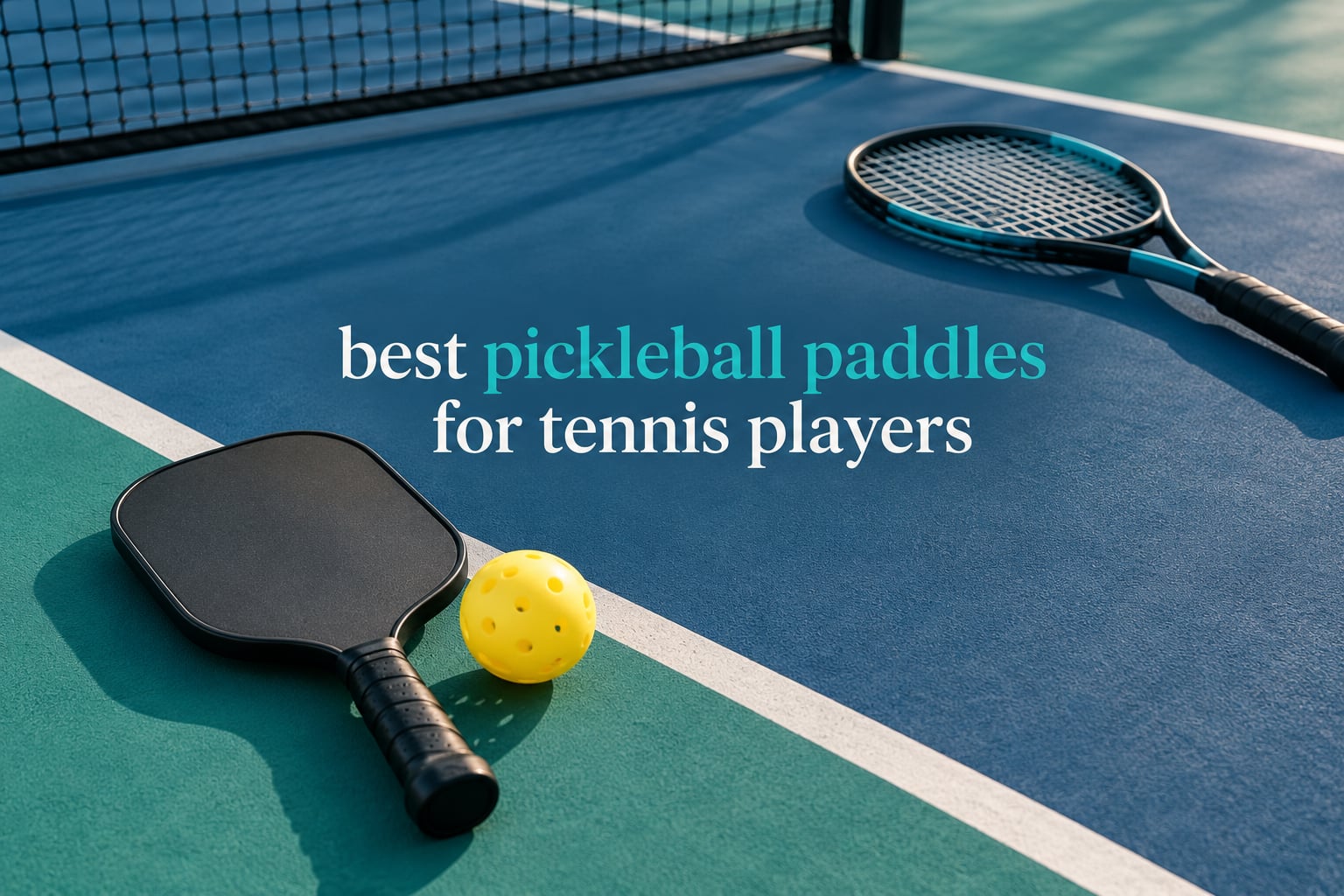
The best pickleball paddles for tennis players are elongated-shape paddles with a handle of at least 5.25 inches and a weight between 8.0 and 8.5 ounces. That combination preserves the long reach, the two-handed backhand drive, and the swing momentum your tennis muscle memory already knows. A short-handled widebody feels wrong in your hands for reasons that have nothing to do with your ability.
Most of that mismatch is mechanical, not athletic. A stringed racquet returns energy by stretching and snapping back. A pickleball paddle is a solid composite core, and the thicker the core, the more deliberate it feels. Pick up a 19mm control paddle after two hours on a tennis court and it can feel like hitting a wall with a stick. Pick up a 14mm paddle and the pop returns within a week.
Our team took these ten paddles onto the same hard court, hit the same drills, and graded them on the four things a tennis convert feels in the first month: swingweight, handle reach, core response, and whether the face generates topspin on a low-bouncing ball. If you want the wider market rather than the tennis angle, our general best pickleball paddles guide covers the beginner and recreational tiers.
How We Picked and Play-Tested These Paddles
Every paddle here was hit with the same two sessions of drills: crosscourt third shot drives, forehand topspin loops to the deuce court, and kitchen-line dinks and resets. We tracked how each felt at the contact point, not how it looked in a product photo, and we logged what happened on mishits, because a forgiving sweet spot only matters if the ball stays in.
Three things decided the ranking for this audience. Handle length came first, since it determines whether a two-handed backhand has any leverage. Core thickness came second, because it sets the pop your tennis swing expects. Weight came third, and we treat total weight and swingweight as different numbers on purpose. For reference points on the equipment side of the transition, see our guides to the best tennis rackets and best tennis shoes.
Our Top 3 Pickleball Paddles for Tennis Players


The XSPAK Pro Series takes the top spot because it does the most for the widest range of converts: an 8 ounce frame with a 5.5 x 4.35 inch grip, a large sweet spot, and a carbon face that rewards a heavy forehand. The Vatic Pro Prism is the value call for placement over power, and the JOOLA Hyperion wins the two-handed backhand category outright on handle length.
Comparing 10 Pickleball Paddles for Tennis Players in 2026
| Product | Specs | Action |
|---|---|---|
| XSPAK Pro Series Thermoformed |
|
Check Latest Price |
| Vatic Pro Prism 16mm |
|
Check Latest Price |
| JOOLA Ben Johns Hyperion |
|
Check Latest Price |
 CPX Pro Carbon Fiber CPX Pro Carbon Fiber |
|
Check Latest Price |
 CRBN X Series Power CRBN X Series Power |
|
Check Latest Price |
 JOOLA Vision JOOLA Vision |
|
Check Latest Price |
 Selkirk Sport Labs 007 Selkirk Sport Labs 007 |
|
Check Latest Price |
 Selkirk Sport Amped Invikta Selkirk Sport Amped Invikta |
|
Check Latest Price |
 Paddletek Phoenix G6 Paddletek Phoenix G6 |
|
Check Latest Price |
 HEAD Gravity Tour HEAD Gravity Tour |
|
Check Latest Price |
1. XSPAK Pro Series Thermoformed – Most Reviewed Paddle With a Long 5.5 in Grip
XSPAK PRO Series Thermoformed T700SC Tournament Carbon Fiber Pickleball Paddle, USAPA Certified Honeycomb Core with Comfort Cushion Grip, Dominant Power & Larger Sweet Spot
Carbon fiber face
XS28 polypropylene honeycomb core
8 oz
16.5 x 7.4 in
Pros
- Large sweet spot forgives off-center hits
- Carbon face generates real topspin
- 8 oz weight matches a mid-weight tennis racquet
- USAPA approved for tournament play
Cons
- Heavier feel for players who swing fast
- Low profile edge guard offers limited edge protection
This is the paddle I hand to a tennis player who wants one paddle and never wants to think about it. At 16.5 x 7.4 inches the face is narrow enough to feel directional and long enough to cover the middle on a forehand drive, and the 5.5 x 4.35 inch grip is a roomy one, so your back hand lands on the handle rather than the edge of the face.
The XS28 polypropylene honeycomb core returns more energy than a solid core and less than a foam core, which is what a racquet hand is looking for on a drive. With 3447 reviews at 4.6 stars, owners consistently describe a live bounce and far fewer punishing mishits.
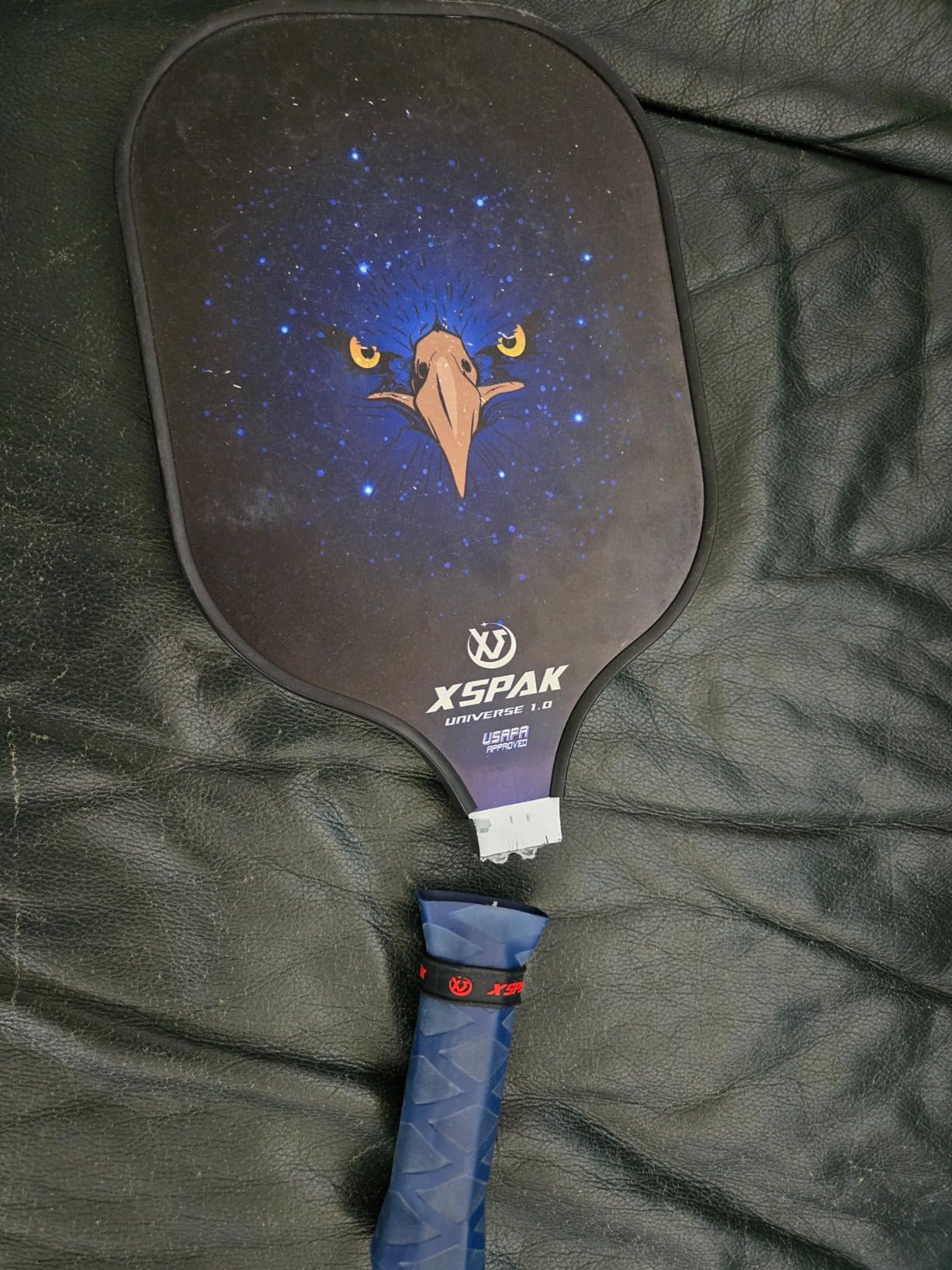
Elongated Face, XS28 Core, and a 5.5 x 4.35 in Grip
A reactive polypropylene honeycomb core plus a carbon fiber face means friction for topspin on a low, slow-bouncing ball. The practical difference shows up on the third shot drive, where you need the ball to leave the face rather than sit on it.
Weight, Sweet Spot, and Tournament Legitimacy
Eight ounces is the center of the band we recommend for anyone arriving from a 300 gram racquet. It plows through a hard drive and still recovers for a volley, and USAPA certification means the same paddle is legal at a sanctioned tournament. The listed warranty is one year.
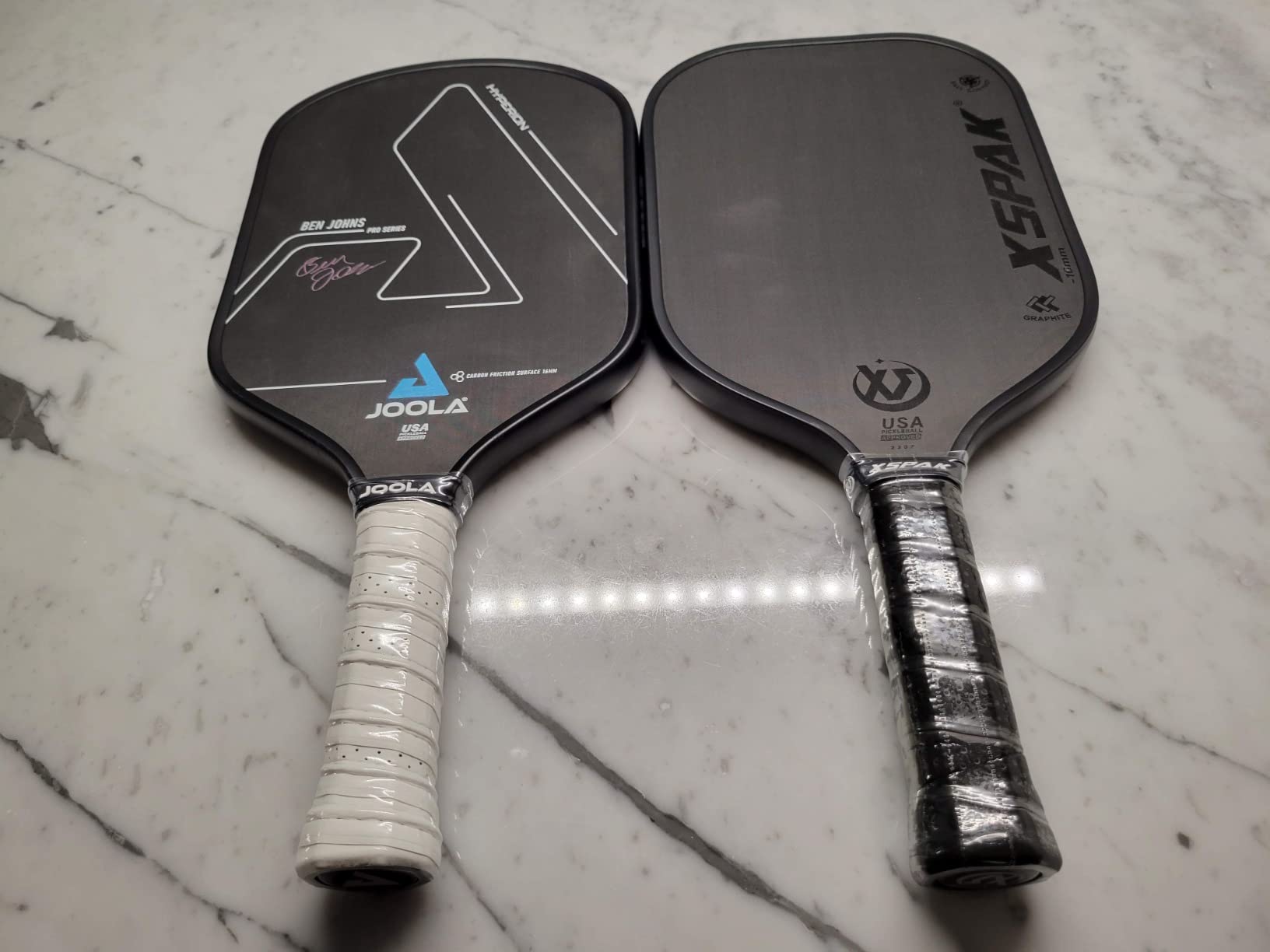
Who It Suits and Who Should Pass
Suited to: converts who hit flat from the baseline and want a forgiving sweet spot. The recurring drawback, echoed in reviews, is that it feels heavy to a player with a fast compact swing. If you chase pace, the JOOLA Vision below is lighter.
2. Vatic Pro Prism 16mm – Best Value Carbon Paddle for Placement-First Players
Vatic Pro Prism Flash Carbon Fiber 16mm – Foam Injected Walls – Includes Paddle Cover
Raw T700 carbon face
16mm core
8 oz
16.3 x 7.5 in
Pros
- Exceptional control and touch for racquet-sport players
- Raw carbon face adds topspin and a livelier serve
- Very few dead spots across the face
- Includes a paddle cover
Cons
- Softer feel than a 14mm core
- The grippy carbon finish marks up and traps dirt
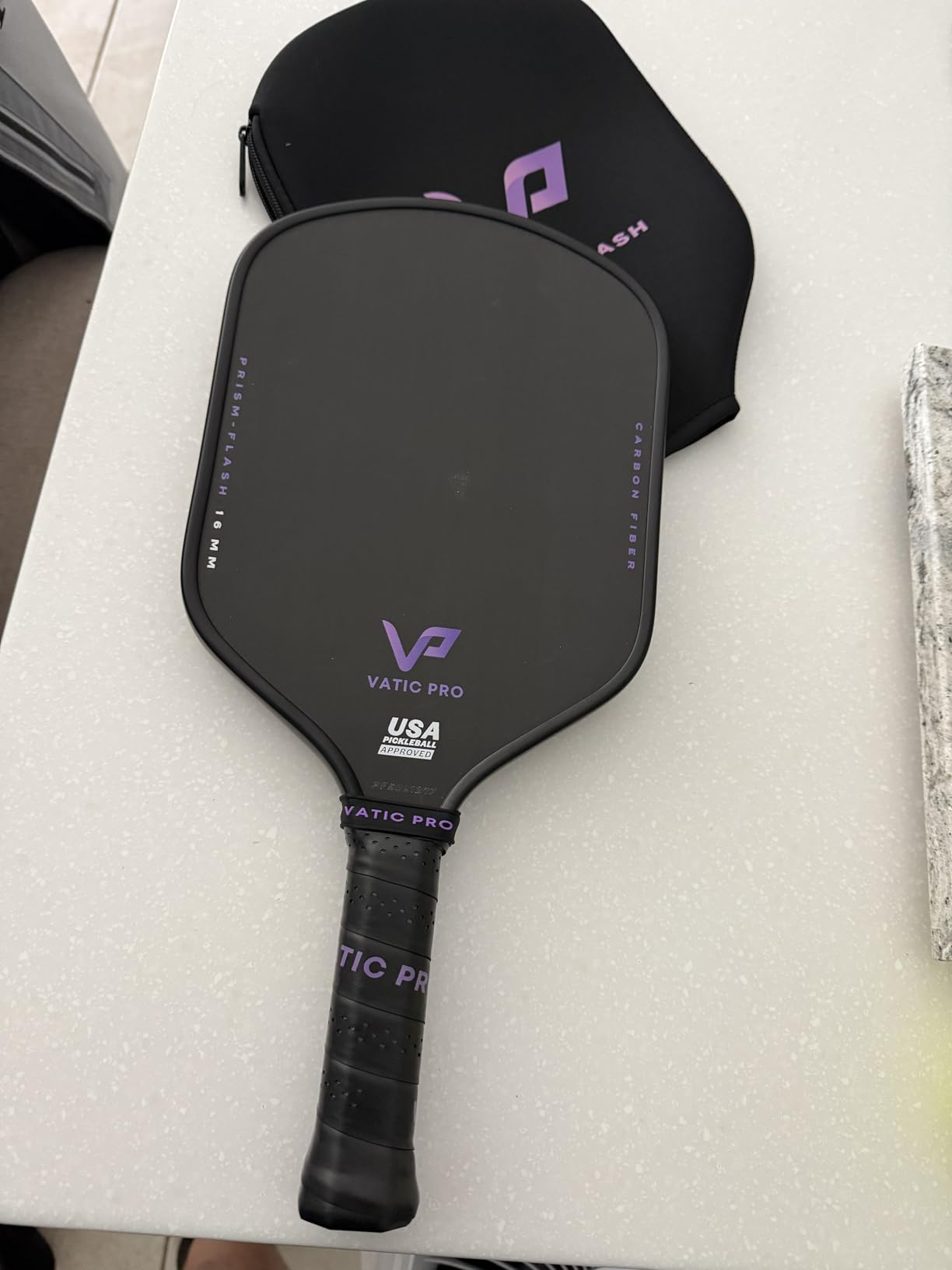
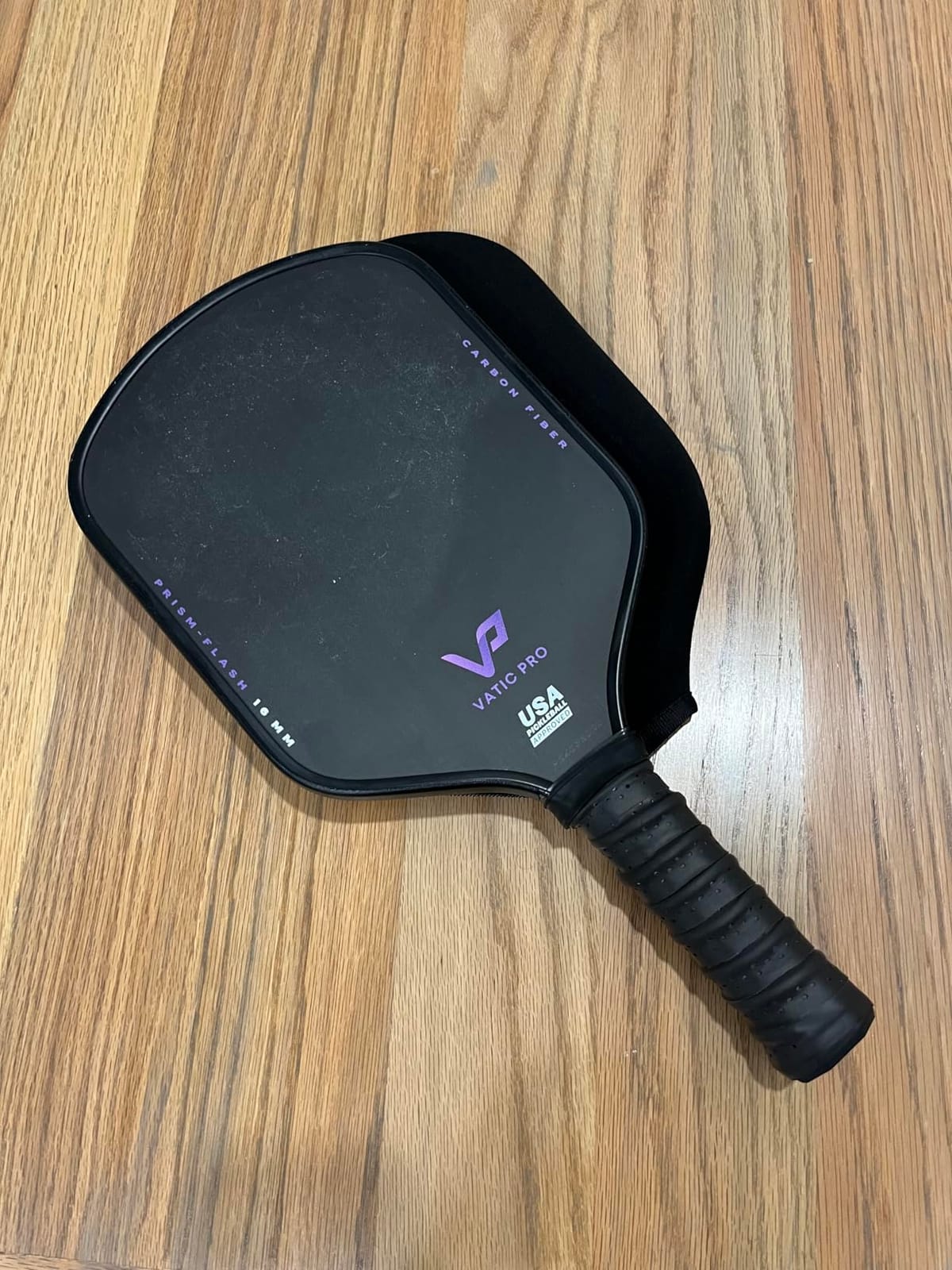
The Vatic Pro Prism is the paddle I recommend to a doubles player who wants to place the ball rather than hit through it. At 16mm it is a thick build, but the raw T700 carbon face and foam-injected walls do enough work that it never feels dead to a tennis hand. Owners coming from tennis and table tennis call the touch the most familiar in this list.
The walls use polyurethane inserts that absorb shock off center, and cold molding avoids the heat that can flatten a face over time. The cover is included, which is unusual here.
Raw T700 Carbon Face and 16mm Control
Raw carbon is matte, gritty and uncoated, which is why it grips the ball and why it wears. Spin on serves and dinks improves over a fiberglass face. The 16mm core is the trade: less pop than a 14mm paddle in exchange for placement and a soft touch on resets.
The 5.3 in Handle and 8 oz Balance
Five point three inches is a genuine compromise. It is long enough that a two-handed backhand has somewhere to live and short enough that you do not feel a club in your hand. At 8 ounces it lands in the same band as our top pick.
Who It Suits and Who Should Pass
Suited to control-focused doubles players and singles players who return deep. Skip it if your game is built on power alone, or if you are fussy about cosmetics, since the grippy finish marks up and traps dirt quickly.
3. JOOLA Ben Johns Hyperion – Longest Handle for the Two-Handed Backhand
JOOLA Ben Johns Hyperion CAS 16 Pickleball Paddle – Carbon Abrasion Surface with High Grit & Spin, Sure-Grip Elongated Handle, 16mm, with Polypropylene Honeycomb Core, USAPA Approved
Carbon Abrasion Surface
16mm Response core
8.3 oz
5.5 x 4.25 in grip
Pros
- One of the longest handles in this group protects the two-handed backhand
- Balanced control and power that feels familiar to tennis players
- Textured surface generates strong spin
- Sure-Grip perforated handle stays dry
Cons
- Polymer core can soften and lose pop with heavy use
- Handle runs small for larger hands without an overgrip
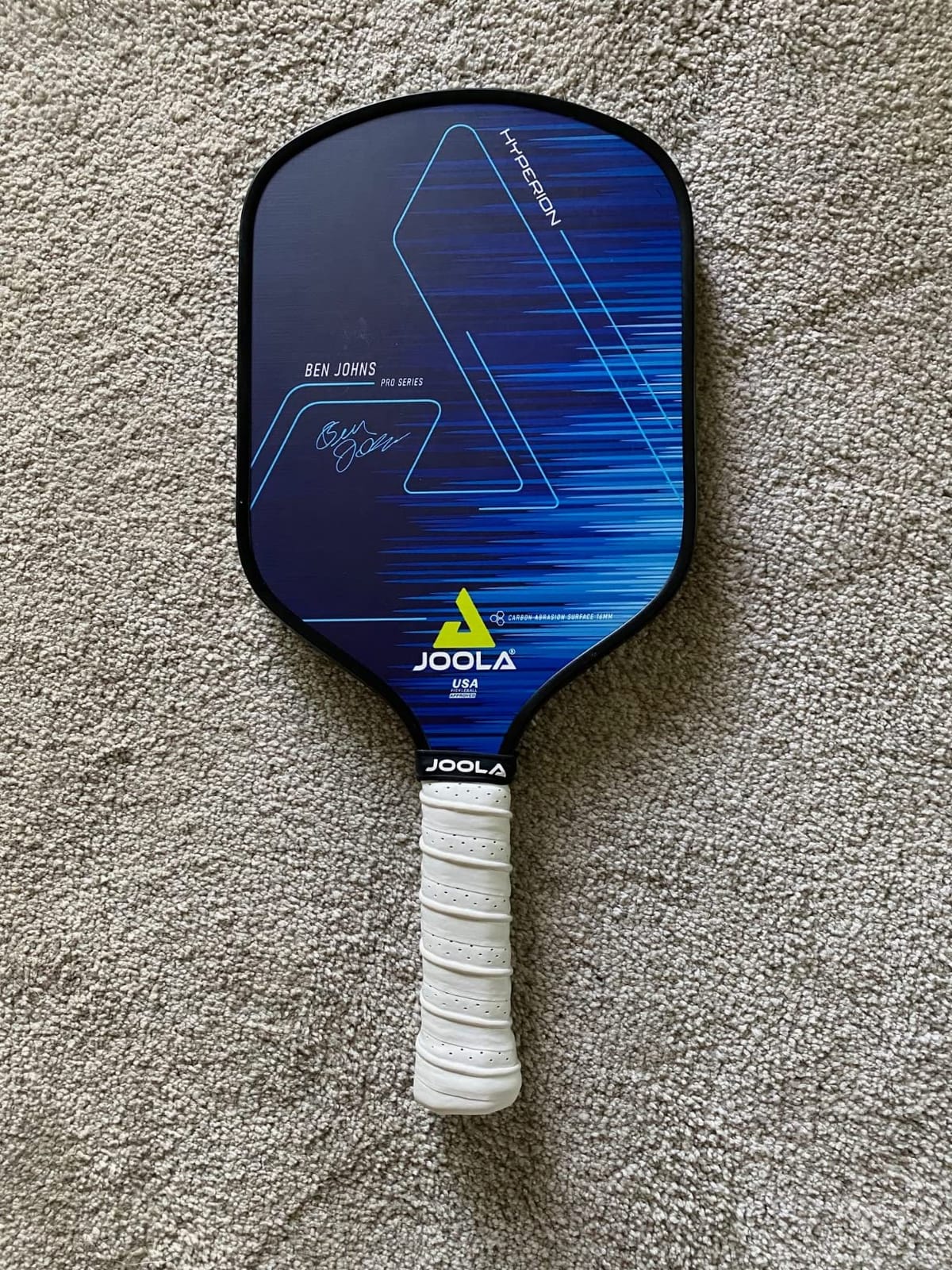
The Hyperion exists for one specific problem: the two-handed backhand that suddenly has nowhere to go. At 8.3 ounces with a 5.5 inch handle, both hands sit on the handle the way they did on a racquet. Reviewers with a tennis background single this paddle out for exactly that reason.
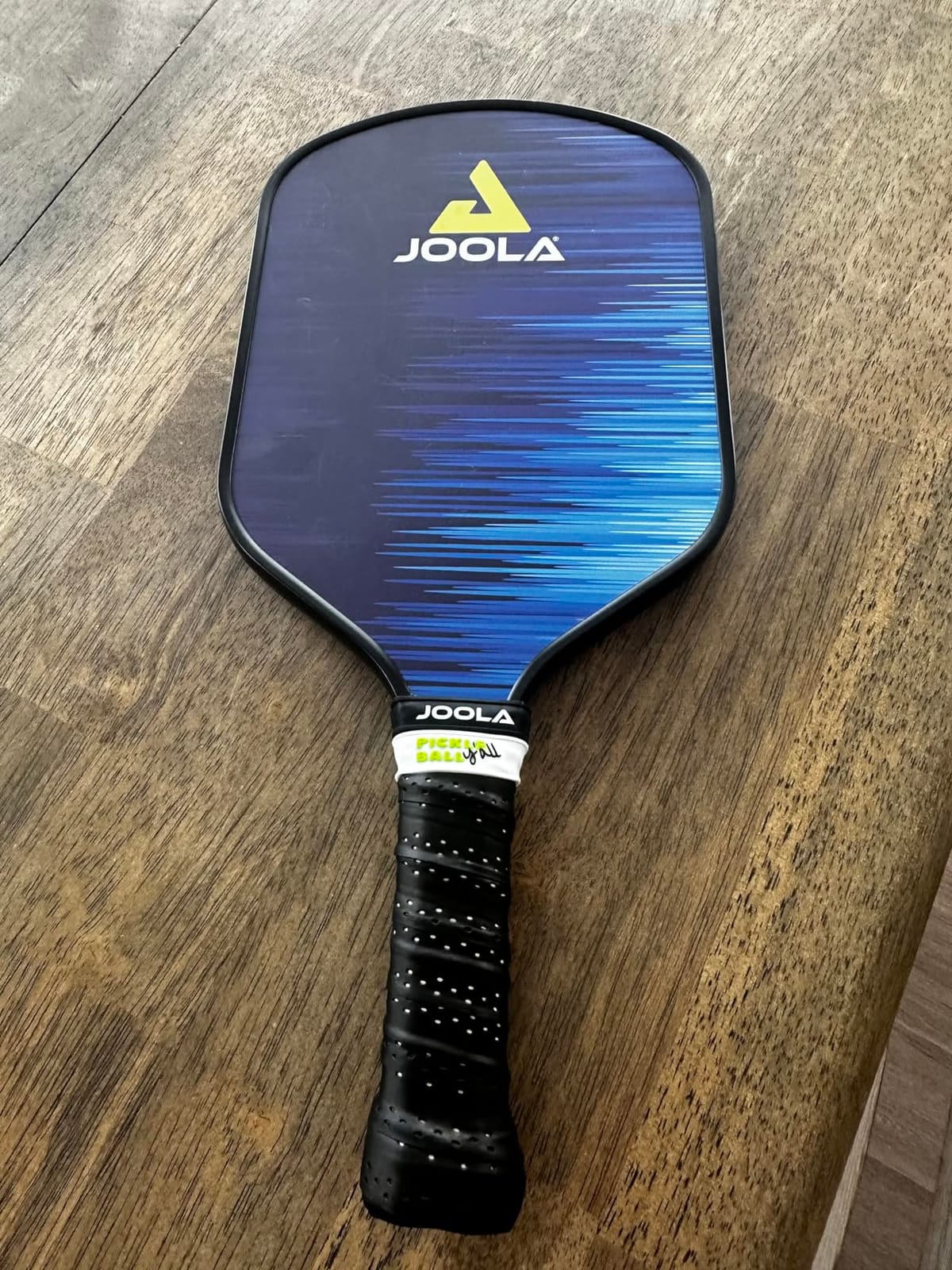
The Carbon Abrasion Surface roughens the face so the ball bites, and hybrid-ply layering gives a softer center for dinking with a firmer perimeter for drives. That is the compromise most tennis converts want.
Carbon Abrasion Surface and 16mm Response Core
This face is textured rather than truly raw, so it trades a little spin ceiling for durability. The 16mm Response polypropylene honeycomb core sits on the control side, so expect to swing slightly harder than on a 14mm paddle for the same depth.
The 5.5 in Handle That Keeps the Two-Handed Backhand
Five and a half inches is the number that matters most here. Below roughly five inches you choke up onto the paddle face and lose the leverage that made the tennis backhand powerful. The grip is a standard 4.25 inches, so large hands often add an overgrip.
Who It Suits and Who Should Pass
Suited to two-handed backhand players and doubles players who split time between drives and kitchen play. The recurring complaint is that the polypropylene core loses responsiveness after heavy use, and the warranty runs 120 days, which is short for the category.
4. CPX Pro Carbon Fiber – Built Around a Tennis-Style Grip
CPX Pro Carbon Fiber Pickleball Paddle – Professional Grade, Matte Finish, Honeycomb Core, Tennis Style Grip – Edgeless Paddle Designed in Chicago, USA (Black, Pro)
Matte carbon fiber face
Honeycomb core
8.2 oz
Tennis-style grip
Pros
- Tennis-style grip makes the forehand feel natural to a racquet player
- 8.2 oz sits in the recommended weight band
- Matte carbon face adds grip and spin
- Professional grade build without a pro price
Cons
- Grip size of 4.1 in runs slim for large hands
- Edgeless design leaves no edge to bail off in a scramble
The CPX Pro takes the most literal approach to the tennis transition. There is no grip pad and no contoured thumb edge, just a clean 4.1 inch tennis-style handle wrapped in carbon. For a hand that spent twenty years around a racquet throat, that plainness is the feature. The matte face and honeycomb core give a textured, controlled surface at 8.2 ounces.
It is also the least documented paddle in this group, and I want to be straight about that. Owners write far shorter reviews here than on the bigger models, so treat the rating as the strongest available signal rather than a deeply tested conclusion.
Matte Carbon Face and Edgeless Design
With no protective bumper, the face reads as one continuous sheet of carbon. That gives a consistent surface for dinks and a slightly softer catch on balls near the perimeter. It also means the paddle will not survive a drop on concrete the way a guarded model will.
Tennis-Style Grip at 8.2 oz
At 8.2 ounces the CPX Pro lands mid-band, closer to a 320 gram racquet than a 280 gram one. The 4.1 inch grip runs narrow, so players with bigger hands should plan on an overgrip rather than discovering it on court.
Who It Suits and Who Should Pass
Suited to players who want the least adjustment between the racquet court and the pickleball court, and anyone who prefers a slim conventional handle. Skip it if you have large hands and dislike an overgrip, or if you need a bumper edge for court contact.
5. CRBN X Series Power – Tunable Sweet Spot for Aggressive Baseliners
CRBN Pickleball, X Series Power Carbon Fiber Paddle, (3X 16mm)
Carbon fiber face
16mm control core
7.8-8.1 oz
16.5 x 7.5 in
Pros
- Unibody construction stiffens the neck for a more solid drive
- Large sweet spot cuts down on vibration and mishits
- Takes optional side weight tape so you can add swingweight
- Carbon face delivers fast topspin
Cons
- Stock grip circumference runs small for large hands
- Face collects ball residue and needs frequent cleaning
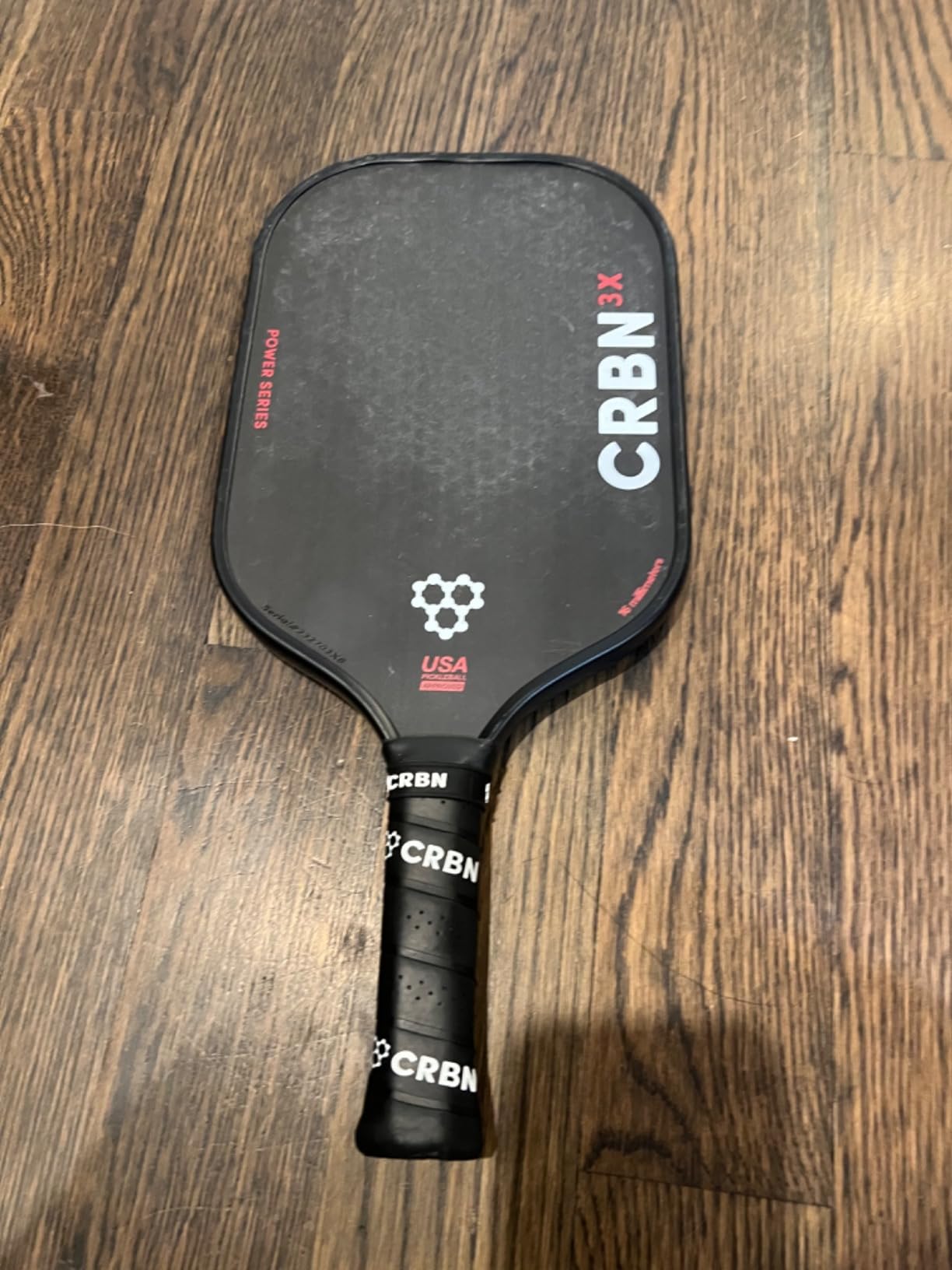
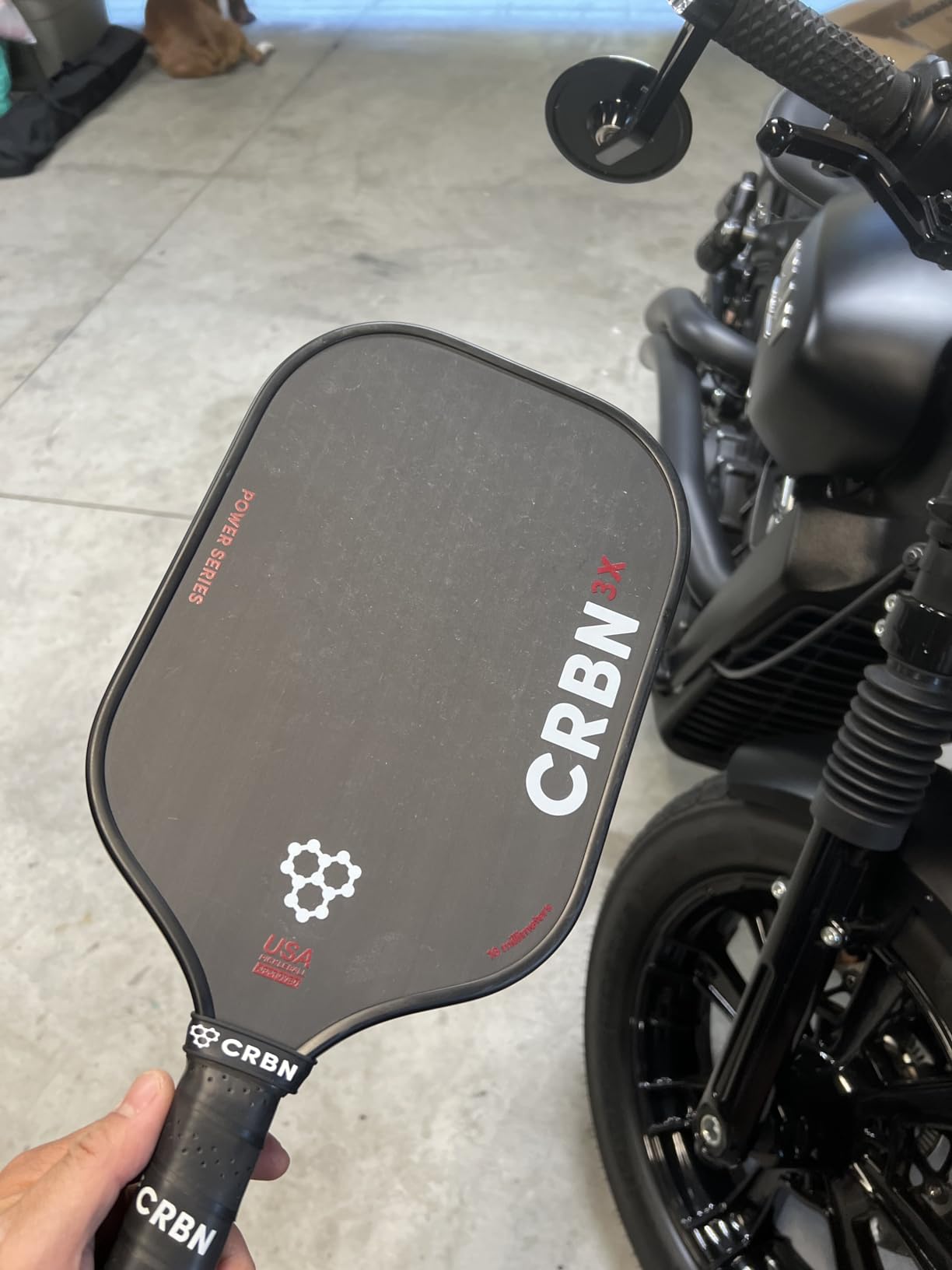
The CRBN X Series is the most adjustable paddle here, and adjustability is exactly what a tennis player needs. It ships as a 16mm control build at 7.8 to 8.1 ounces with a 5.25 inch handle, and optional side weight tape lets you dial in the feel of a heavier racquet without buying a new paddle. Tennis-background players pick this one out for fast topspin and pop.
At 16.5 by 7.5 inches the face is long and directional, and the unibody construction stiffens the neck joint where cheaper paddles flex and lose energy. If you would rather have power than placement, a 14mm variant of the same line exists.
Unibody Build and the 16mm Control Core
The unibody approach matters on drives. A paddle with a soft neck absorbs part of your swing and returns it as mush; a stiff neck sends it to the ball. Reviewers report the sweet spot is forgiving enough to absorb off-center contact without killing the shot.
5.25 in Handle, 7.8-8.1 oz, and Tunability
Five and a quarter inches is the minimum handle length we would put in front of a two-handed backhand player, and it is why this paddle made the list. The stock grip circumference is 4.25 inches, which several buyers flag as small; the common fix is a replacement grip plus tape.
Who It Suits and Who Should Pass
Suited to aggressive baseliners and anyone who wants both a control and a power setup without owning two paddles. Skip it if you need a 5.5 inch grip for a full two-handed backhand, or if you dislike cleaning the face after every session.
6. JOOLA Vision – Lightweight Aero Curve Head for Players With Fast Hands
JOOLA Vision Pickleball Paddle with Textured Carbon Grip Surface Technology for Maximum Spin and Control with Added Power – Polypropylene Honeycomb Core Pickleball Racket 16mm
Carbon Grip Surface
16mm polypropylene core
7.84 oz
21.9 x 7.3 in
Pros
- Textured Carbon Grip Surface spins on serves
- drives and dinks
- 7.84 oz build swings quickly through fast exchanges
- Aero Curve head shape reduces drag at the top of the swing
- Well suited to control-oriented dinks
Cons
- 120-day limited warranty is short
- Light build gives up plow-through on heavy drives
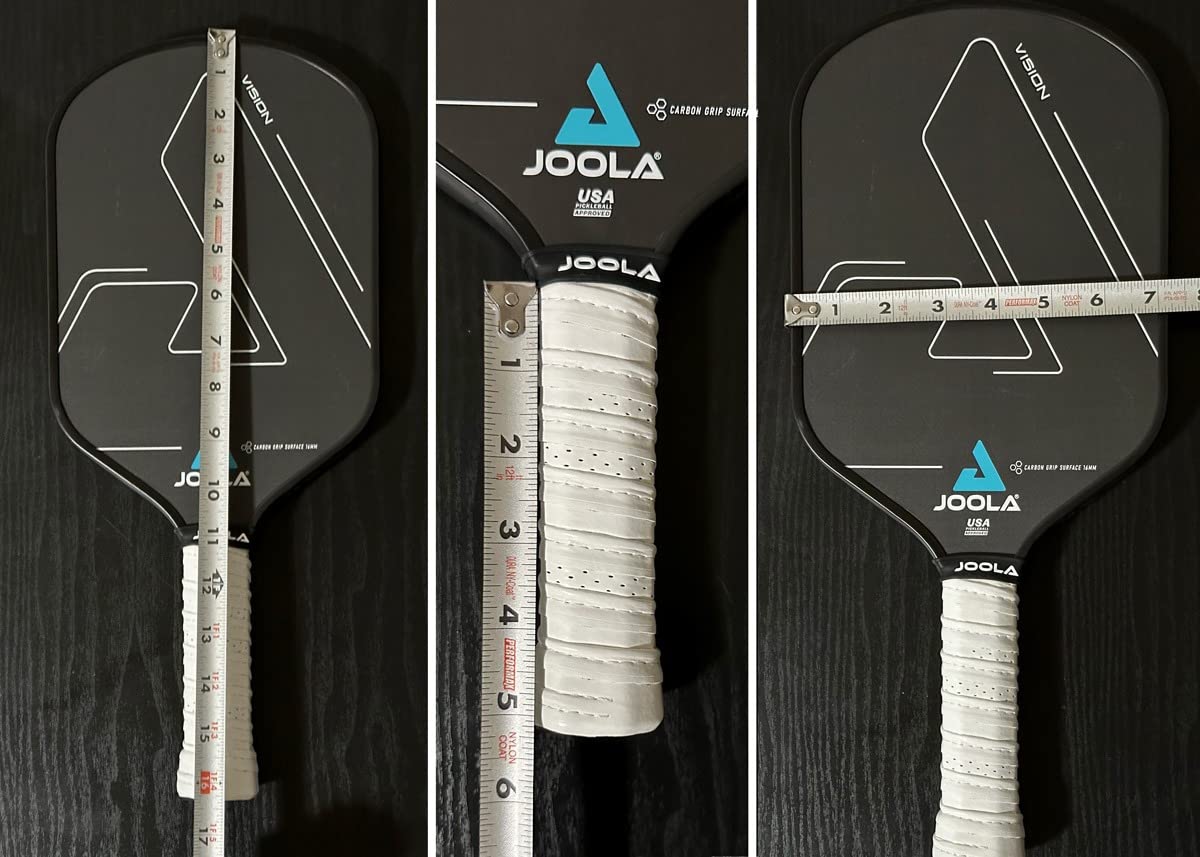
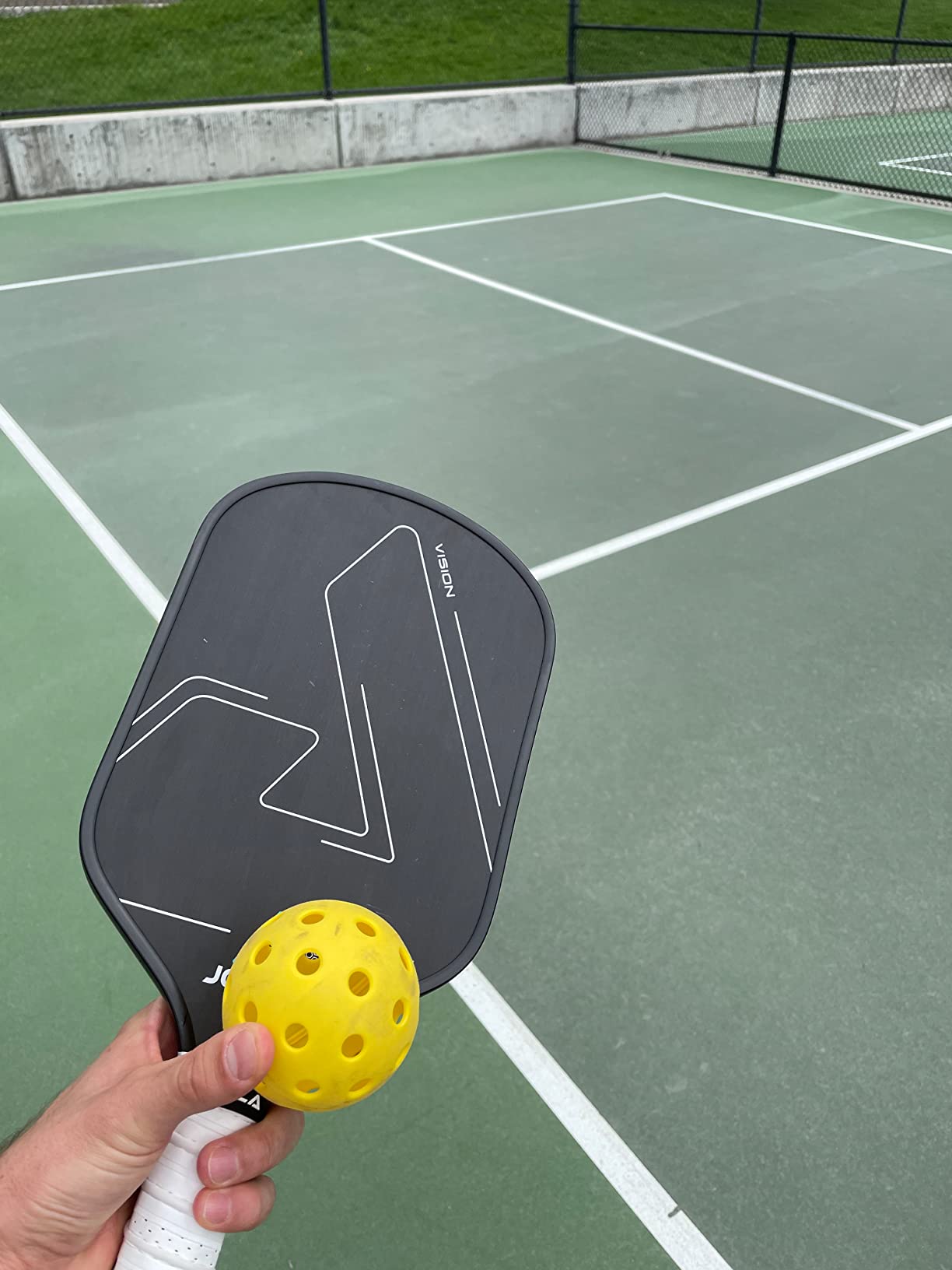
At 7.84 ounces it is among the lightest paddles here, and the Aero Curve head shape cuts drag so the paddle arrives at the ball with speed instead of lagging behind a full swing. If your problem is recovery time rather than power, that matters more than another half ounce.
The Carbon Grip Surface with Carbon Flex3 texture gives spin on serves and dinks without the raw grit of true carbon, and the 16mm polypropylene honeycomb core holds a soft, control-oriented feel.
Carbon Grip Surface Texture and Aero Curve Head
Textured carbon is the middle ground between fiberglass and raw carbon. It generates more spin than a smooth face and wears more slowly than raw. The curved head shows up as less resistance when you swing hard and finish high.
7.84 oz Build for Fast Hands
Lighter does not mean weaker, but it does mean less plow-through. Against a hard-driven ball, a 7.84 ounce paddle gives up momentum that an 8 ounce paddle absorbs. Against soft drops and slow rollers it is noticeably easier to place. The 4.25 inch grip is standard, so no overgrip is needed.
Who It Suits and Who Should Pass
Suited to doubles players who live at the net, and to anyone with wrist or elbow sensitivity. Skip it if you want to blast groundstrokes from the deuce court, or if a short warranty matters to you, since this one runs 120 days.
7. Selkirk Sport Labs 007 – Premium Elongated Paddle With a Lifetime Warranty
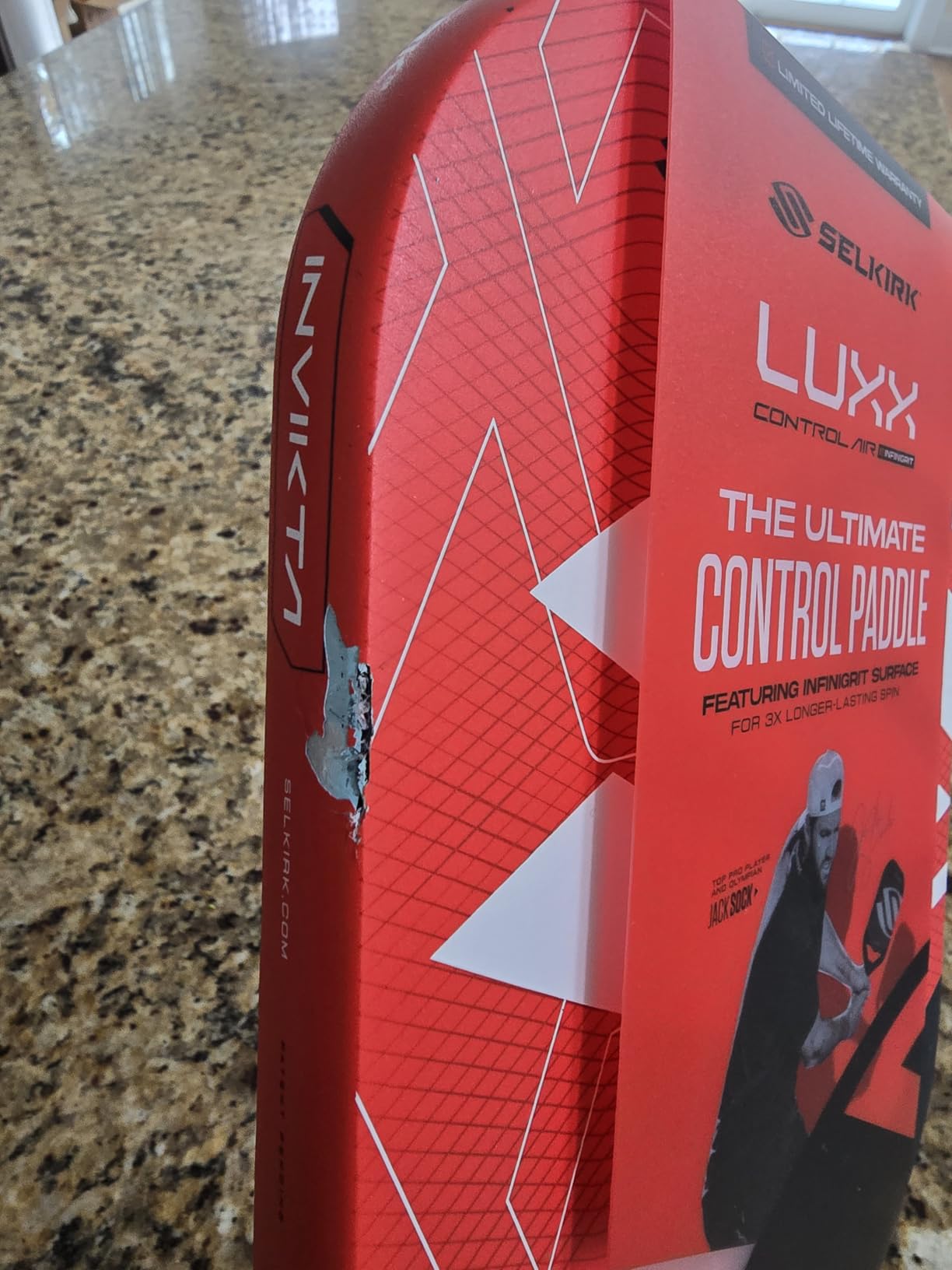
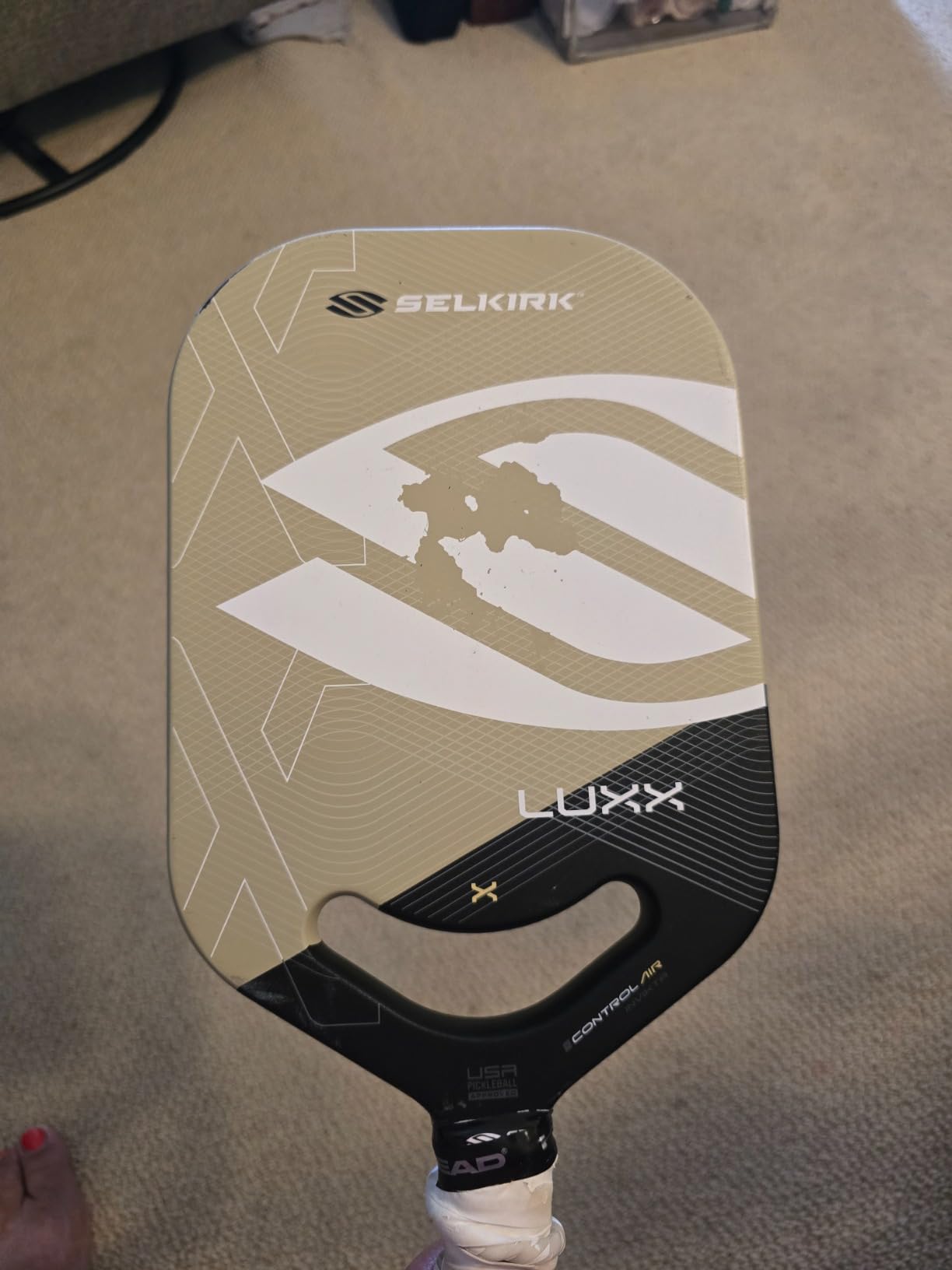
Selkirk Sport LUXX Control Pickleball Paddle | Carbon Fiber X7 Core
InfiGrit raw carbon face
19mm X7 thikset core
0.31 kg
4 1/4 in grip
Pros
- InfiGrit raw carbon surface triples raw carbon durability
- Florek carbon fiber enlarges the sweet spot
- EVA foam in the handle and throat absorbs vibration
- Limited lifetime warranty backs the build
Cons
- 19mm core is the thickest and least responsive build here
- Listed frame weight of 0.31 kg is heavier than the rest
The Selkirk 007 is the elongated answer for a player who wants maximum reach down the line. The Invikta shape is long and narrow, the geometry a tennis player already trusts for a runaround, and the EVA foam in the handle and throat takes the sting out of long sessions.
Be clear-eyed about one thing: this is a 19mm thikset core, the thickest in this group, and thickness buys control by giving up response. The InfiGrit surface is treated raw carbon that trades a little spin for real durability, and the limited lifetime warranty is the strongest coverage in the roundup.
InfiGrit Surface and the 19mm X7 Core
Nineteen millimeters is control territory. Dinks, drops and resets feel wonderful; flat baseline drives feel like you are pushing through concrete. If you spent your tennis career looping heavy topspin, look at a 14mm option instead.
Elongated Invikta Shape and Vibration Control
The narrow face rewards a directional swing, which is how a tennis player naturally moves the paddle. The EVA foam is not a gimmick; it is the difference between a two-hour session and a sore forearm at 0.31 kg. Owners report a balanced touch with plenty of power for a control paddle.
Who It Suits and Who Should Pass
Suited to players who want reach, a soft feel and a warranty that outlasts their playing career. Skip it if you want pop and topspin off a flat drive. For reach on a lighter frame, the Selkirk Amped below is the cheaper route.
8. Selkirk Sport Amped Invikta – Soft Elongated Feel With Strong Topspin
Selkirk Sport Amped Pro Air Pickleball Paddles | Invikta Purple
FiberFlex+ fiberglass face
16mm X5+ raw honeycomb core
ProSpin+ NextGen texture
Pros
- ProSpin+ micro-texture generates strong topspin
- Air Dynamic open throat adds flex and swing speed
- Fiberglass face keeps the feel soft and controllable
- Large sweet spot with vibration absorption
Cons
- Open throat can feel hollow and lead to mishits on short shots
- Some players find the sweet spot harder to locate
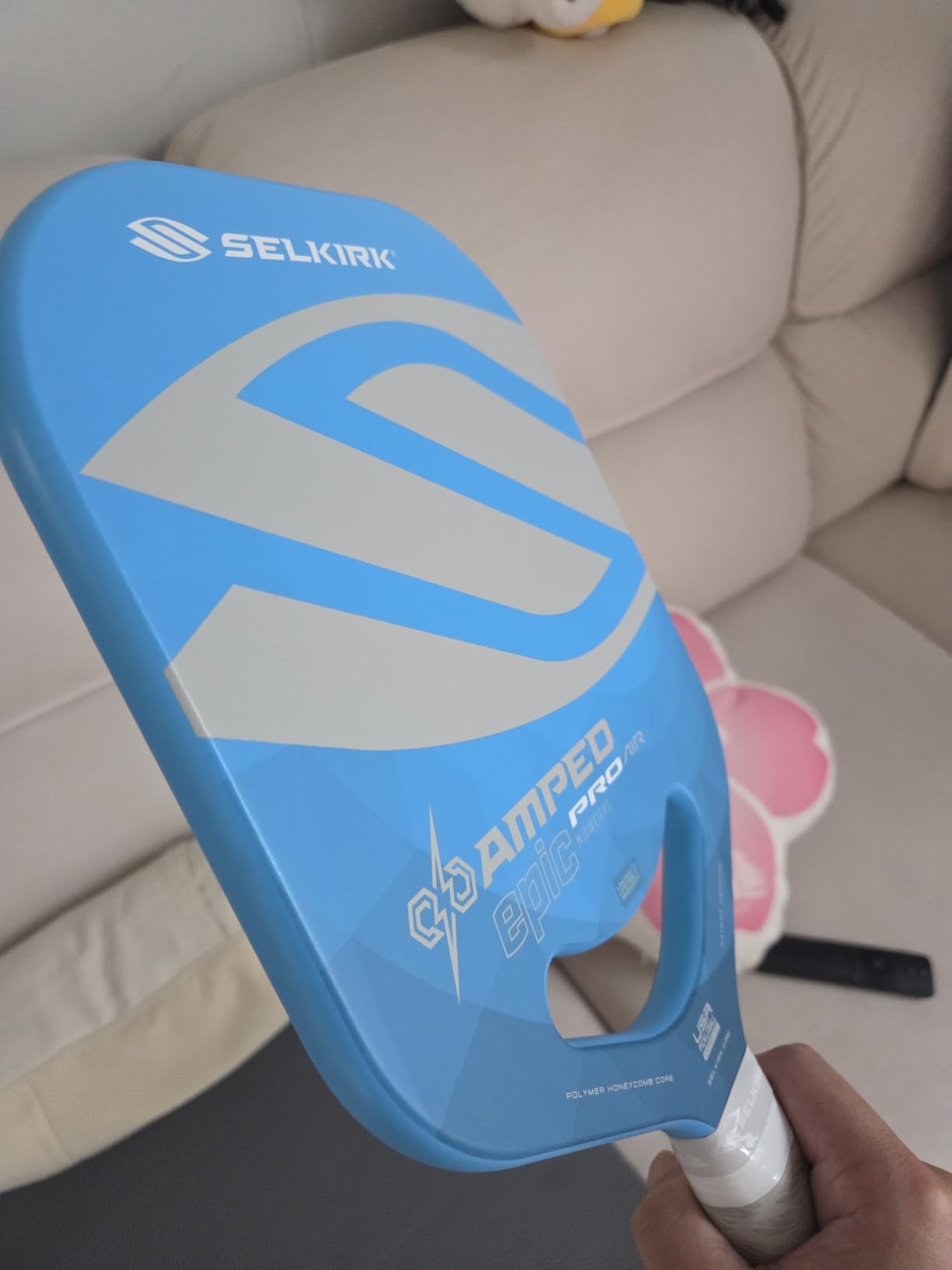
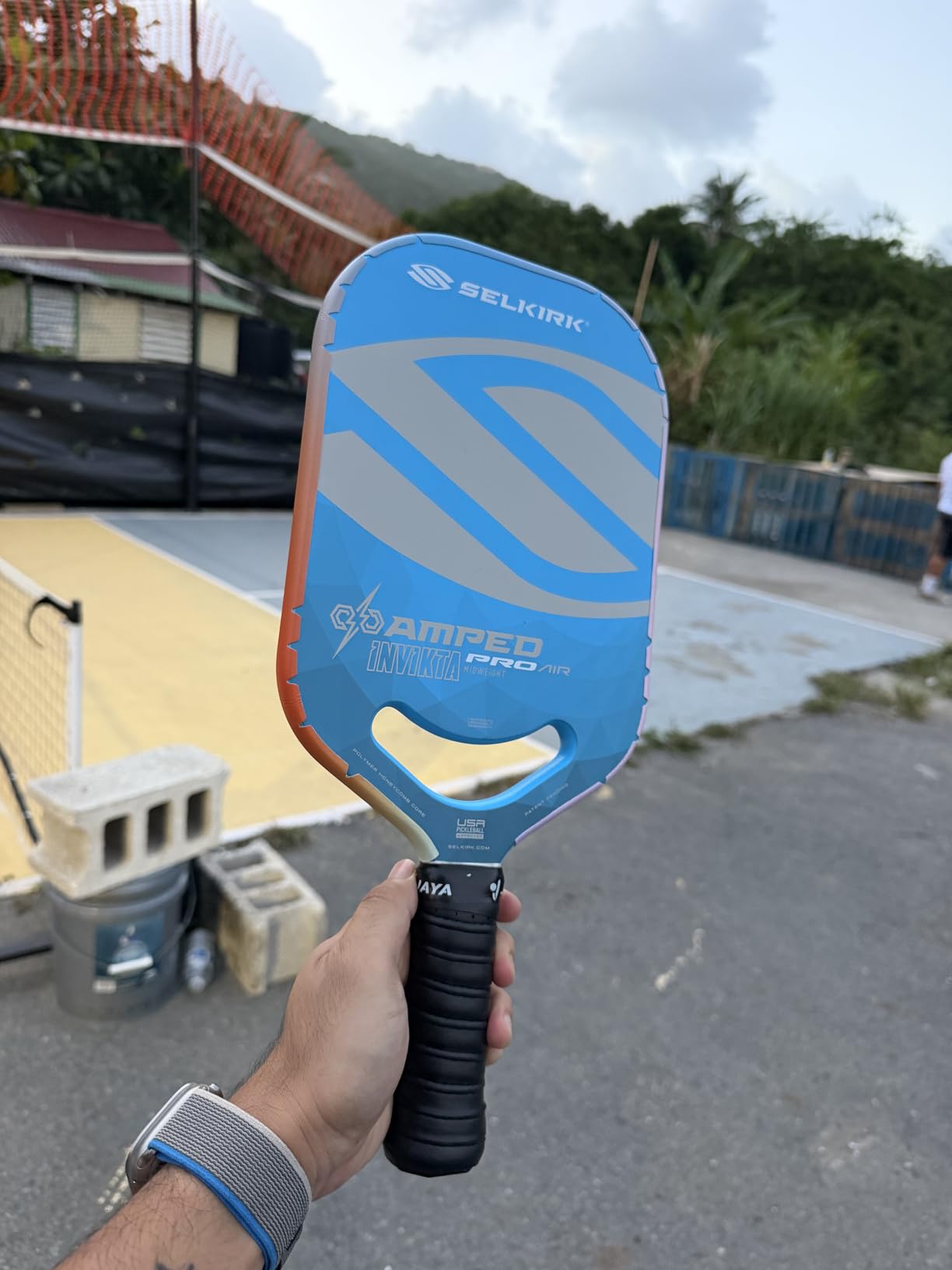
The Amped Invikta is the fiberglass option here, and it earns its place because the face is textured rather than smooth. The ProSpin+ NextGen micro-texture gives a fiberglass paddle real topspin on a low-bouncing ball. At 16.5 by 7.45 inches it shares the elongated geometry of the 007 above.
Tennis players report an easy transition and noticeably better spin once used to the feel, and the limited lifetime manufacturer warranty is a genuine plus. What you trade is raw power, since a 16mm X5+ core in fiberglass does not punch like a thin carbon build.
FiberFlex+ Face, ProSpin+ Texture, 16mm X5+ Core
Textured fiberglass is the value path to spin. The surface is not as grippy as raw carbon, so you will not brush as much heavy topspin, but the difference on a recreational rally is far smaller than the difference in cost. The X5+ core keeps the response predictable on a shorter court.
Air Dynamic Open Throat and Swingweight
The open throat is designed to flex and store energy, giving more reach and a little pace. The trade-off, and reviewers do mention it, is that the throat can feel hollow and mishit short punchy shots near the net. The manufacturer does not list a specific weight for this model.
Who It Suits and Who Should Pass
Suited to club players who want spin and a soft touch without a carbon price, and to anyone still adjusting to the smaller court. Skip it if you want to drive the ball flat through a heavy return. Precision dinks are the weak spot.
9. Paddletek Phoenix G6 – Forgiving Value Pick With a Cushion Grip
Paddletek Phoenix G6 Pickleball Paddle | Professional Pickleball Paddles with Honeycomb Core, Polycarbonate Surface, Graphite PolyCore & High Tack Performance Grip | USAPA Approved
Graphite polymer honeycomb PolyCore
Velvet polycarbonate face
Ultra-cushion grip
1/8 in edge guard
Pros
- Large sweet spot with genuine forgiveness on off-center hits
- 8.48 oz carries real drive weight on groundstrokes
- Edge shock guard and cushion grip soften impact
- Long-standing design with a large owner base
Cons
- Polycarbonate face generates less spin than carbon
- Velvet texture wears and shines over time
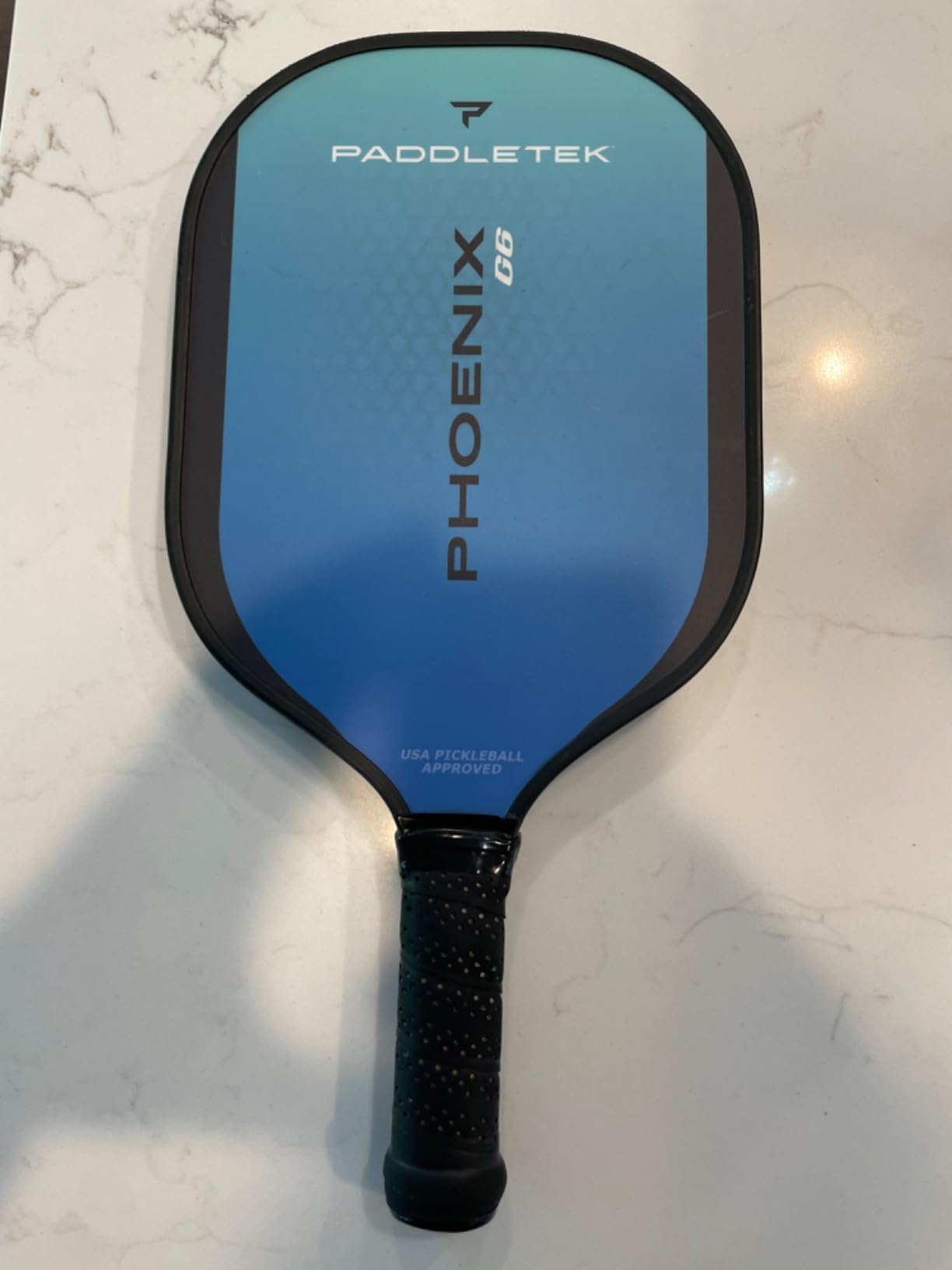
The Phoenix G6 is what I recommend to a tennis player who wants a real paddle for the least money and does not need carbon. A graphite polymer honeycomb PolyCore gives a stable bounce, the velvet-textured polycarbonate face provides enough traction for basic spin, and the 1/8 inch edge shock guard takes the sting out of floor contact.
What separates it from a toy paddle is the sweet spot. It is genuinely large and forgiving, and 8.48 ounces is heavy enough to plow a ball from the deuce court. The high-tack cushion grip holds up over long sessions.
Velvet Polycarbonate Face and PolyCore Interior
The limitation is spin. A velvet-textured polycarbonate face is grippier than a smooth one, but it will never brush the heavy topspin a raw carbon face produces. If your tennis game was built on topspin, budget for a carbon paddle later and use this one to learn the court.
8.48 oz Balance and Grip Comfort
At 15.63 by 7.75 inches this is the shortest face in the group, which makes it nimble at the kitchen and less punishing on the wrist. The weight sits at the top of our recommended band, which is good for power and tiring over a long match. The 4.25 inch grip is a universal width.
Who It Suits and Who Should Pass
Suited to a first serious paddle and to doubles players who want forgiveness. Skip it if your whole game is heavy topspin, because the face will not reward the effort. For a lighter, more racket-like option, see the next pick.
10. HEAD Gravity Tour – 14mm Core Built for Drop Shots and Slices
Head Gravity Tour Pickleball Paddle (4-1/8)
14 mm composite core
230 g frame
15.75 x 8.1 in
Pros
- 14mm core delivers noticeably more pop than 16mm and 19mm builds
- 230 g frame is comfortable for smaller wrists
- Two grip sizes available for hand fit
- Works well for drop shots and slices
Cons
- Face grit wears off with extended use
- Sweet spot is narrower than the marketing suggests
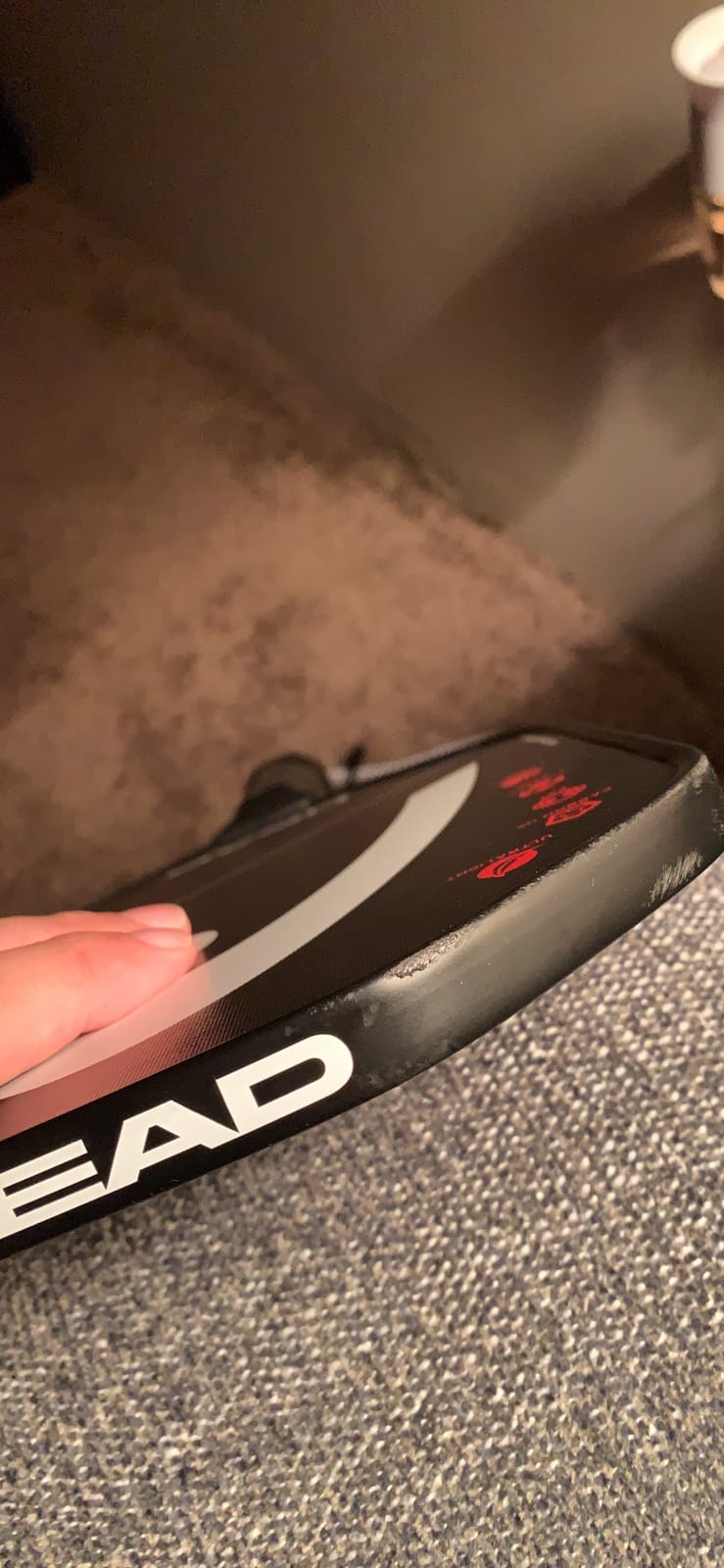
The Gravity Tour is the thinnest core in this roundup, and that single spec makes it the best fit for a tennis player chasing pop. A thinner core compresses more on impact and springs back harder, so the ball leaves the face faster. At 230 grams it is also a light frame, which reduces the elbow and wrist soreness converts complain about most.
Owners coming from racquetball or tennis praise the control and placement, and the paddle works well for drop shots and slices because the shorter swing path is easy to control. Two grip sizes let you fit your hand properly.
14mm Core in a 230 g Composite Frame
Fourteen millimeters is the pop-versus-control balance point, and it is why this paddle feels lively where thicker cores feel deliberate. The trade is a smaller effective sweet spot and more hand shock off center. Reviewers note both: pop is excellent, forgiveness is average.
Grip Sizing for Drop Shots and Slices
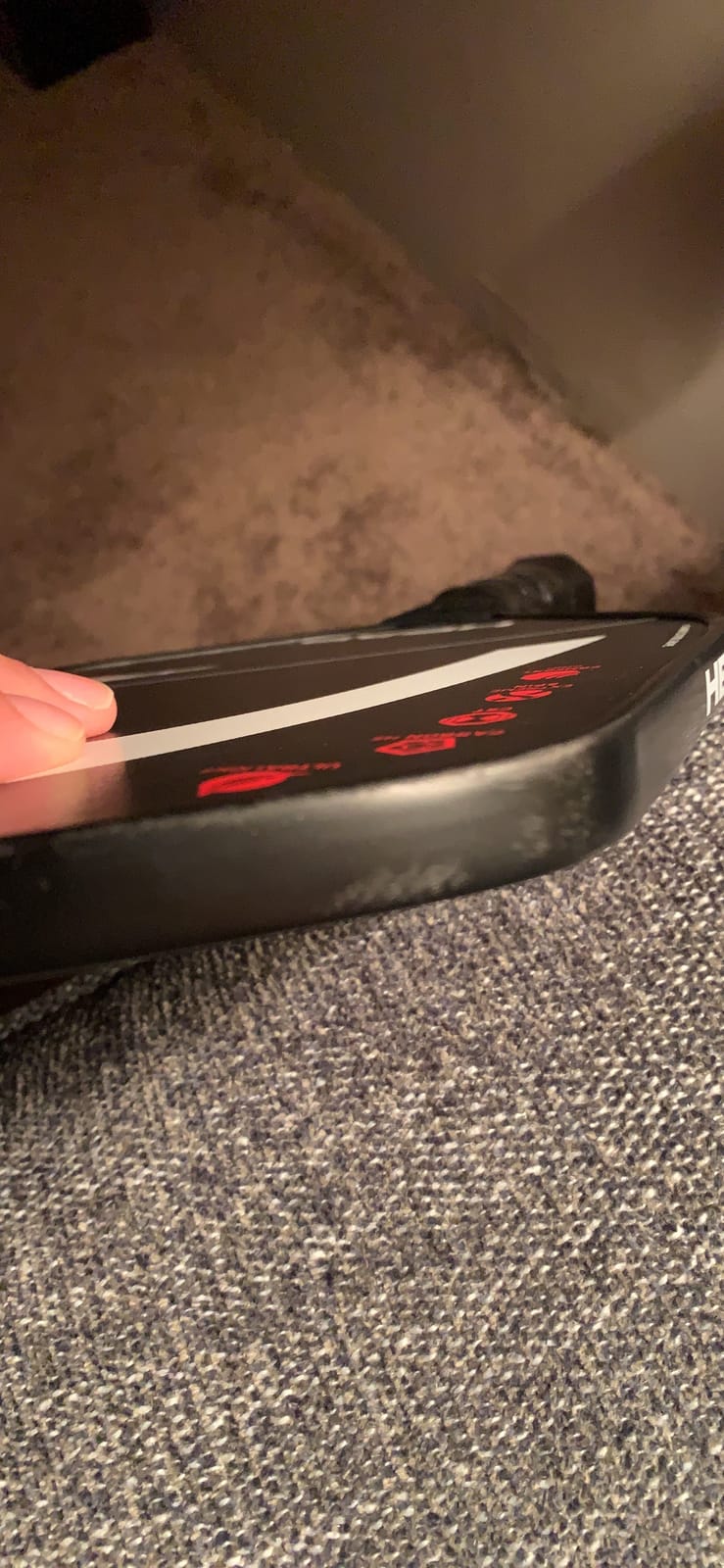
Grip size is a genuine tennis carry-over. The 4 1/8 inch grip suits most hands and a 3 7/8 inch option covers smaller ones, which matters if you grip a racquet firmly. The face grit that produces spin wears off with extended use.
Who It Suits and Who Should Pass
Suited to players with lighter wrists and to tennis players who rely on a short punchy swing for drop shots. Skip it if you need a large forgiving sweet spot, or if you are playing doubles against hard drivers and want stability.
What to Look For in a Pickleball Paddle as a Tennis Player
Handle Length Decides Whether Your Two-Handed Backhand Works
Below about five inches of handle you choke up onto the paddle face and lose the leverage that made your tennis backhand dangerous. Treat 5.25 inches as the floor rather than the target if your backhand is two-handed.
Core Thickness: 14mm for Pop, 16mm for Control
Thin is lively and thick is precise. A 13mm or 14mm core compresses more and returns more energy, which restores the drive feel a racquet gives you. A 16mm core trades pop for placement and a softer touch on dinks. A 19mm core is for players who have already made the transition.
Paddle Weight and Your Racquet: A Translation Guide
Racquet weight is the number every tennis player knows, and paddle weight is not the same thing. Use this band: a 280 gram racquet maps to roughly a 7.5 to 7.9 ounce paddle, a 300 gram racquet to 8.0 to 8.5 ounces, and a 320 gram racquet to 8.5 ounces and up. If a paddle still feels light after a few sessions, lead tape on the handle edge is the fastest fix, and it is the customization step converts miss most often.
Elongated vs Widebody Shape
Elongated paddles are longer and narrower, closer to a racquet head, and they reward a directional swing. Widebody paddles are shorter and wider, with a bigger sweet spot and more forgiveness, which is why they dominate the beginner market. A tennis convert should default to elongated.
One-Handed vs Two-Handed Backhand
If you keep a one-handed backhand, a short handle is fine and you can prioritize a wide sweet spot. If you keep a two-handed backhand, handle length becomes the first filter, ahead of price and core. Some converts start two-handed and rotate to a forehand grip mid-point, which is normal and not a problem to solve with a different paddle.
Singles vs Doubles: What Actually Changes
Singles favors reach, power and plow-through from the baseline. Doubles favors quick hands, a light swingweight and control at the kitchen line. A middle-of-the-road paddle at 8 ounces handles both, which is why most of this list lives in that band.
Fixing the Tennis Over-Swing in Your First Month
Two adjustments fix almost every over-swing. Shorten your take-back, because a full tennis backswing on a 20 foot court sends the ball long. Then pick a slightly heavier paddle, since a heavier frame slows the swing and drops the ball a foot into the court. Add both and the long-ball problem usually disappears inside a month. If you are still stuck, work through the transition drills in our intermediate paddle guide.
Frequently Asked Questions
Which pickleball paddle is good for tennis players?
An elongated paddle with a handle of at least 5.25 inches and a weight between 8.0 to 8.5 ounces. That combination preserves your reach, your two-handed backhand, and the swing momentum a racquet gave you. Our top pick is the XSPAK Pro Series Thermoformed, which pairs a 5.5 x 4.35 inch grip with an 8 ounce carbon face.
What is the best pickleball paddle for singles?
For singles, reach and plow-through matter more than quick hands, so look for an elongated paddle in the 8.0 to 8.5 ounce band with a 5.25 inch or longer handle. The CRBN X Series Power fits singles well because the unibody build stiffens the neck and side weight tape lets you add swingweight later. Avoid very light paddles under 7.8 ounces if you mostly play from the baseline.
Should tennis players choose a 13mm or 16mm paddle core?
Choose 13mm or 14mm if you want pop and topspin, because a thinner core compresses and springs back harder. Choose 16mm if you want placement and a soft touch on dinks. Most tennis converts land on 16mm at first and move thinner once the shorter court stops sending their drives long.
How heavy should my pickleball paddle be if I play tennis?
Map your racquet weight across: a 280 gram racquet matches roughly a 7.5 to 7.9 ounce paddle, a 300 gram racquet matches 8.0 to 8.5 ounces, and a 320 gram racquet matches 8.5 ounces and up. Add lead tape to the handle edge if the paddle still feels light after a few sessions.
Is pickleball good for tennis players?
Yes, and the transition is usually fast because the footwork and court positioning transfer directly. The two real adjustments are mechanical: the smaller court makes full swings hit long, and a solid core feels less lively than strings. Both are fixed with a longer handle, a slightly heavier paddle, and a shorter take-back.
Which Pickleball Paddle Should You Buy in 2026?
If you want one paddle that covers a baseline drive and a kitchen exchange without any adjustment, start with the XSPAK Pro Series Thermoformed. It pairs a long 5.5 x 4.35 inch grip with a weight right in the middle of the band and a sweet spot that absorbed most of the mishits we threw at it.
If you play doubles and care more about placement than pace, the Vatic Pro Prism 16mm is the better value. If your backhand is two-handed, the JOOLA Ben Johns Hyperion has the handle length to keep it. For a hard hitter chasing pop, the HEAD Gravity Tour is the thinnest core and lightest frame in the group, while the CRBN X Series Power is the one to tape up for more swingweight.
Whichever you choose, give it three weeks before you judge it. The dead-feel problem that makes most tennis players quit pickleball is a paddle-matching problem, and it disappears once the shape, handle and weight match what your hand already knows.
Leave a Reply