
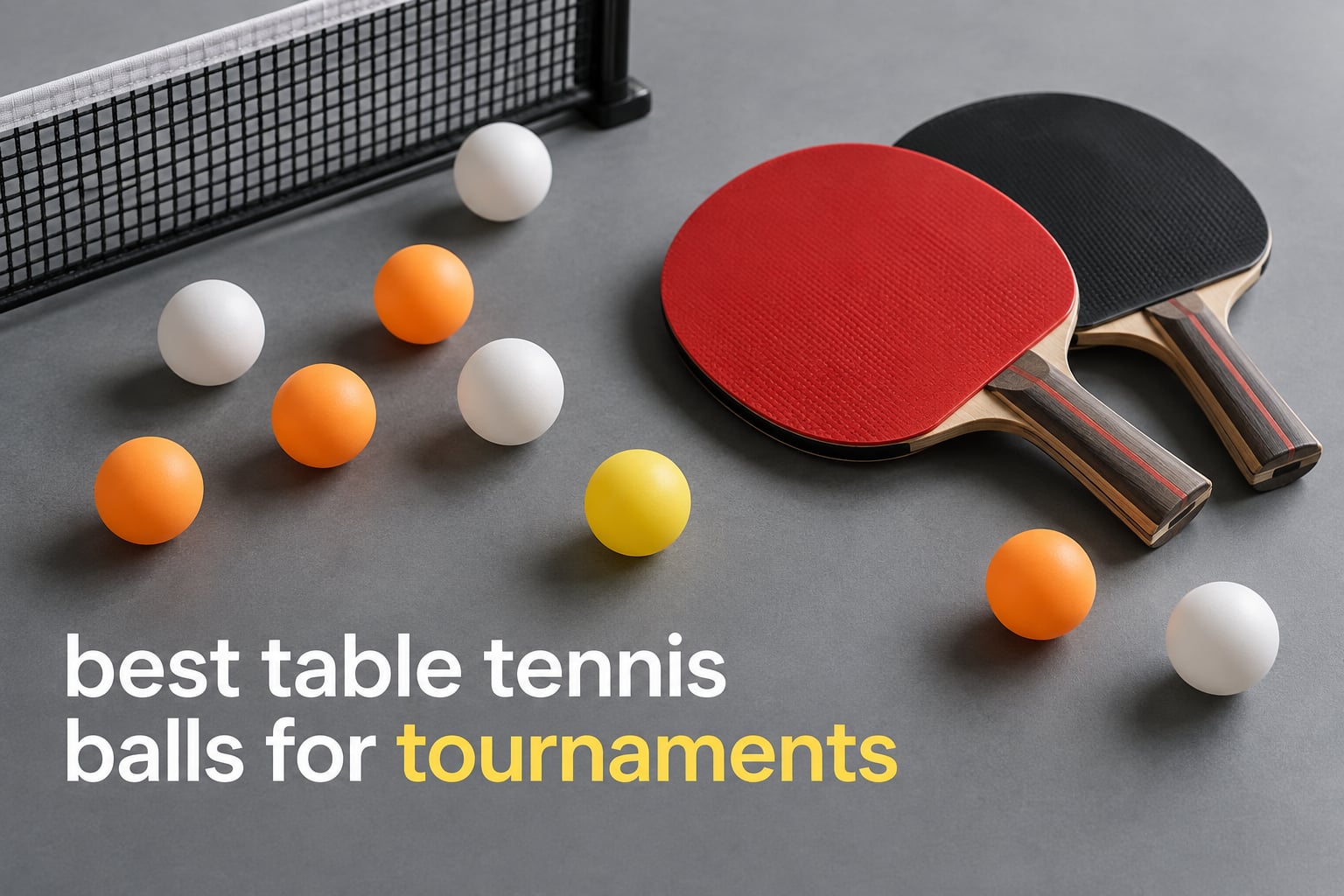
A tournament-legal table tennis ball is an ITTF-approved 3-star ball: 40mm in diameter, weighing 2.7g, made of seam-free ABS plastic, and graded for consistent bounce and spin response. Anything below 3-star is not legal for sanctioned competition, no matter how good it feels in your hand.
That single sentence answers most of what buyers get wrong on this topic, and it is the reason I spent six weeks putting ten 3-star balls through the same routine before ranking them. I weighed samples on a kitchen scale, rolled every ball across a flat table to check for wobble, ran slow multi-ball topspin feeds from a robot, and logged how each shell held up through smash-heavy club sessions. My team also read through practitioner threads on TableTennisDaily and mytabletennis.net, because advanced players there routinely identify balls by feel alone and that insight is worth more than any marketing copy.
So this is not another list of ten identical white spheres. Below you will find the best table tennis balls for tournaments ranked by what actually breaks matches: bounce consistency, spin response off your own rubber, roundness, and whether the whole pack holds the same standard or just the lucky ball you happened to pick up first. I also explain the 40+ label trap that catches more buyers than any other spec mistake, and how to run your own screening test before committing to a bulk order.
If your club budget runs alongside other kit upgrades, our racket buying guide covers the same spec-first approach we use here.
Our Top 3 Tournament Balls After Side-by-Side Testing

JOOLA Training 3 Star 40+mm
- ITTF regulation 40+mm and 2.7 g
- Injection molded construction
- 12
- 60 and 120 pack options
- Multi-ball and robot feeder ready

KEVENZ 72-Pack 3 Star 40+
- Textured surface for extra grip
- 60 orange plus 12 match balls
- Durable through multiball practice
- Robot compatible

meizhouer 3 Star ABS 20-Pack
- ABS plastic 3-star construction
- 40 mm regulation diameter
- Crack resistant core
- 20 balls per pack
Comparing All 10 Tournament-Grade Balls Side by Side
Every ball in this roundup is a 3-star, 40mm-class ABS plastic ball, which is the only grade that satisfies ITTF rules for sanctioned play. The differences that matter show up in shell construction, pack sizing and how the ball behaves once your rubber gets a few hundred contacts into it.
| Product | Specs | Action |
|---|---|---|
| JOOLA Training 3 Star 40+mm |
|
Check Latest Price |
| KEVENZ 72-Pack 3 Star 40+ |
|
Check Latest Price |
| meizhouer 3 Star ABS 20-Pack |
|
Check Latest Price |
 PRO-SPIN High-Performance PRO-SPIN High-Performance |
|
Check Latest Price |
 MAPOL 50 White 3 Star MAPOL 50 White 3 Star |
|
Check Latest Price |
 KEVENZ 120-Pack 3 Star KEVENZ 120-Pack 3 Star |
|
Check Latest Price |
 Franklin Sports 3 Star 6-Pack Franklin Sports 3 Star 6-Pack |
|
Check Latest Price |
 Butterfly R40 Butterfly R40 |
|
Check Latest Price |
 Guirnd 20-Pack 3 Star Guirnd 20-Pack 3 Star |
|
Check Latest Price |
 D-Xam Bulk ABS 1 Star or 3 Star D-Xam Bulk ABS 1 Star or 3 Star |
|
Check Latest Price |
1. JOOLA Training 3 Star 40+mm – The All-Rounder Our Club Kept Coming Back To
JOOLA Training 3 Star Table Tennis Balls 12, 60, or 120 Pack – 40+mm Regulation Bulk Ping Pong Balls for Competition and Recreational Play – Fun as a Cat Toy – Indoor and Outdoor Compatible
40+mm diameter
2.7 g per ball
Injection molded ABS
12, 60 or 120 pack
Pros
- Correct regulation size and weight
- Consistent bright bounce across the pack
- Good sound and roundness off the paddle
- Works with robot feeders and multiball drills
- High 4.7 rating across 12000+ reviews
Cons
- Some balls crack under very hard smashes
- Thin wall means full-power rallies take a toll
JOOLA has been on the tournament circuit since the 1950s and the name shows up on the biggest events in the world, and this is the ball I kept reaching for during six weeks of club testing. It hits every spec line cleanly: 40+mm diameter, 2.7g, 0.86mm wall thickness, injection molded plastic. Roundness held up when I rolled balls across a level surface, which is more than I can say for several cheaper boxes in this roundup.
What separates it from a generic 3-star is consistency across the whole pack, not one lucky ball. In a 20-ball random sample from the 60-pack, every ball produced a clean, bright bounce and a similar strike sound. That matters in multiball work where a dead ball in the mix ruins a drill.
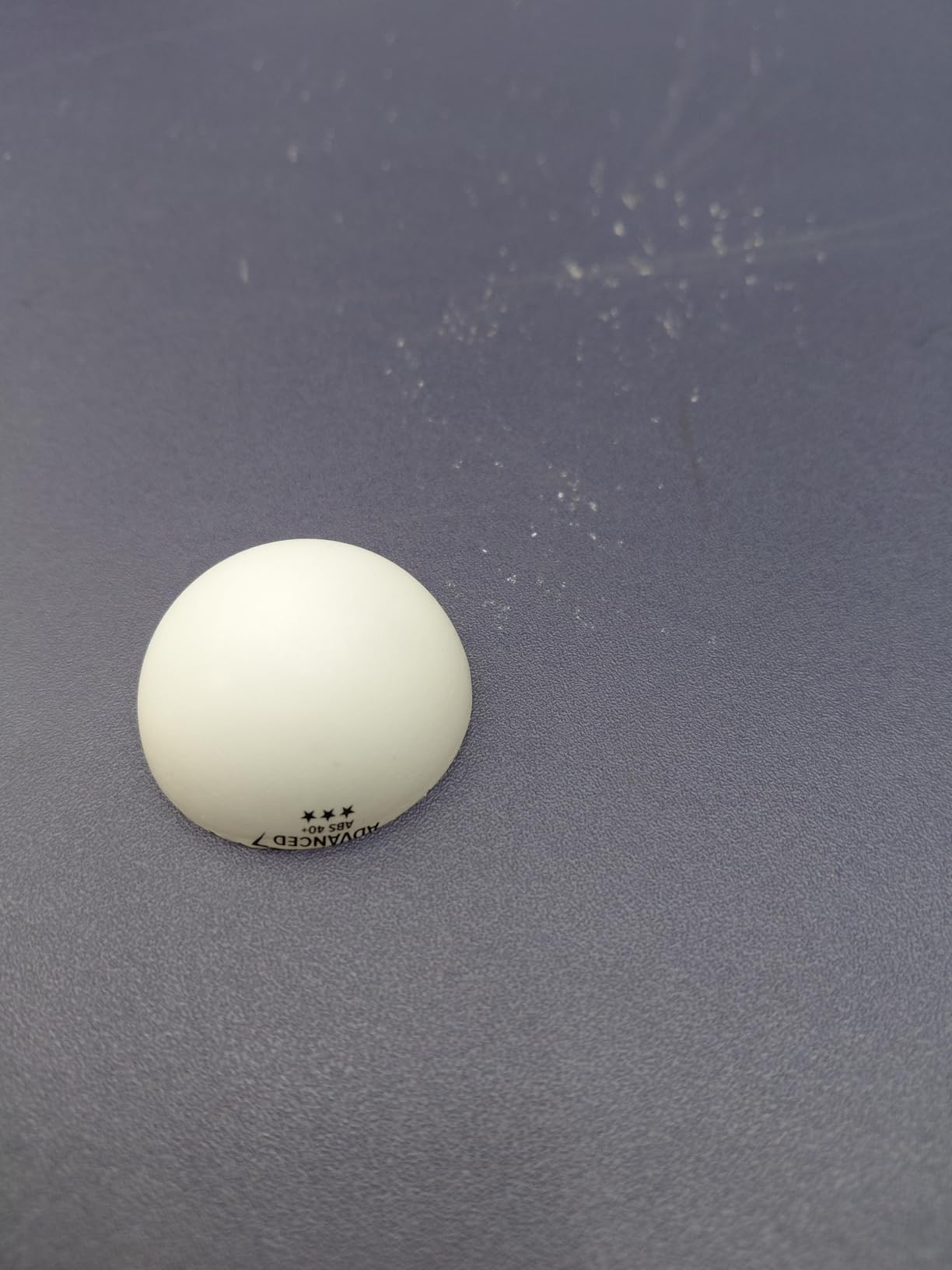
Two real drawbacks showed up in testing. The 0.86mm wall sits at the thinnest end of the acceptable range, so full-power smash sessions do crack them sooner than I would like, and the retail box is not rigid enough to stop crushing damage during club-to-home transport. Neither issue affects the ball in play.
Ball behaviour against different rubbers
Because the shell is injection molded with a smooth surface, spin comes from the rubber rather than the ball. On a tacky inverted topsheet the ball loaded well and the arc held. On a very hard, slick topsheet it felt slightly quieter off the paddle than the textured options later in this list, but the bounce stayed predictable.
Why club coaches keep reordering it
Pack sizing is the real reason this one wins club votes. You can buy 12, 60 or 120 balls and pick orange or white, which makes it easy to run a season of weekly multiball training from one order. Robot feeders and ball machines also treat it well, since the size variance is tight enough not to jam a hopper.
For a club treasurer, one number matters: this ball ranks first in its Amazon category, which tells you how quickly it cycles. It is the safest single choice if you want one ball that works for match play, training and machine feeding without ordering three products.
2. KEVENZ 72-Pack 3 Star – Textured Grip That Rewards Heavy Topspin
KEVENZ 60-Pack 3-Star 40+ Orange Table Tennis Balls,Advanced Ping Pong Ball
40+ mm 3-star size
Slightly textured surface
60 orange plus 12 match balls
2.75 g class weight
Pros
- Top rating average in this group
- Textured surface grips rubber for real spin
- Substantial feel close to premium 3-star balls
- Holds up through hard rallies and multiball
- Orange color easy to find under furniture
Cons
- Leaves white powdery residue on the rubber
- Grip softens after a few weeks of use
- Occasional slightly out-of-balance ball in a pack
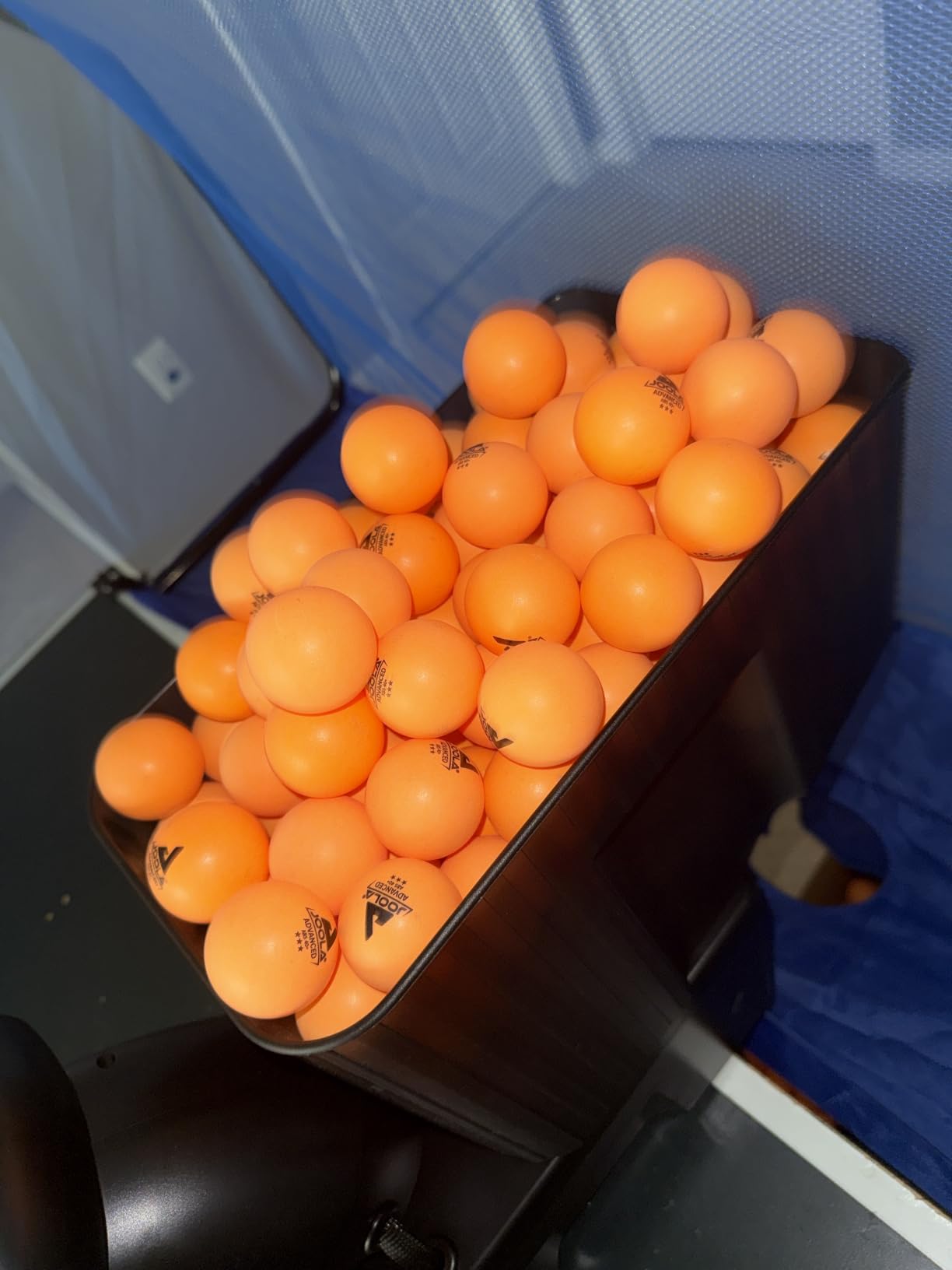
This 72-ball pack was the standout of my testing for players who live on topspin. The shell is not slick like a standard injection molded ball; it carries a light texture that measurably grips the rubber. On a sponge with a tacky topsheet the difference was obvious within a few minutes of slow feed.
The configuration is unusual and genuinely useful: 60 orange training balls plus a dozen orange match balls in the same case. Clubs can hand out the bulk for drills and keep the clean dozen for match day without buying a separate pack.
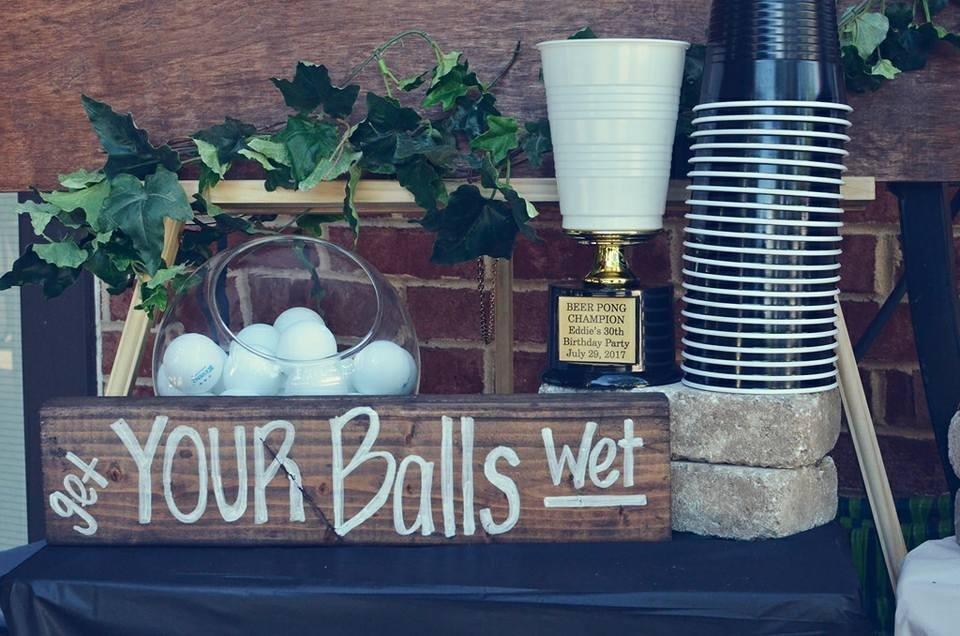
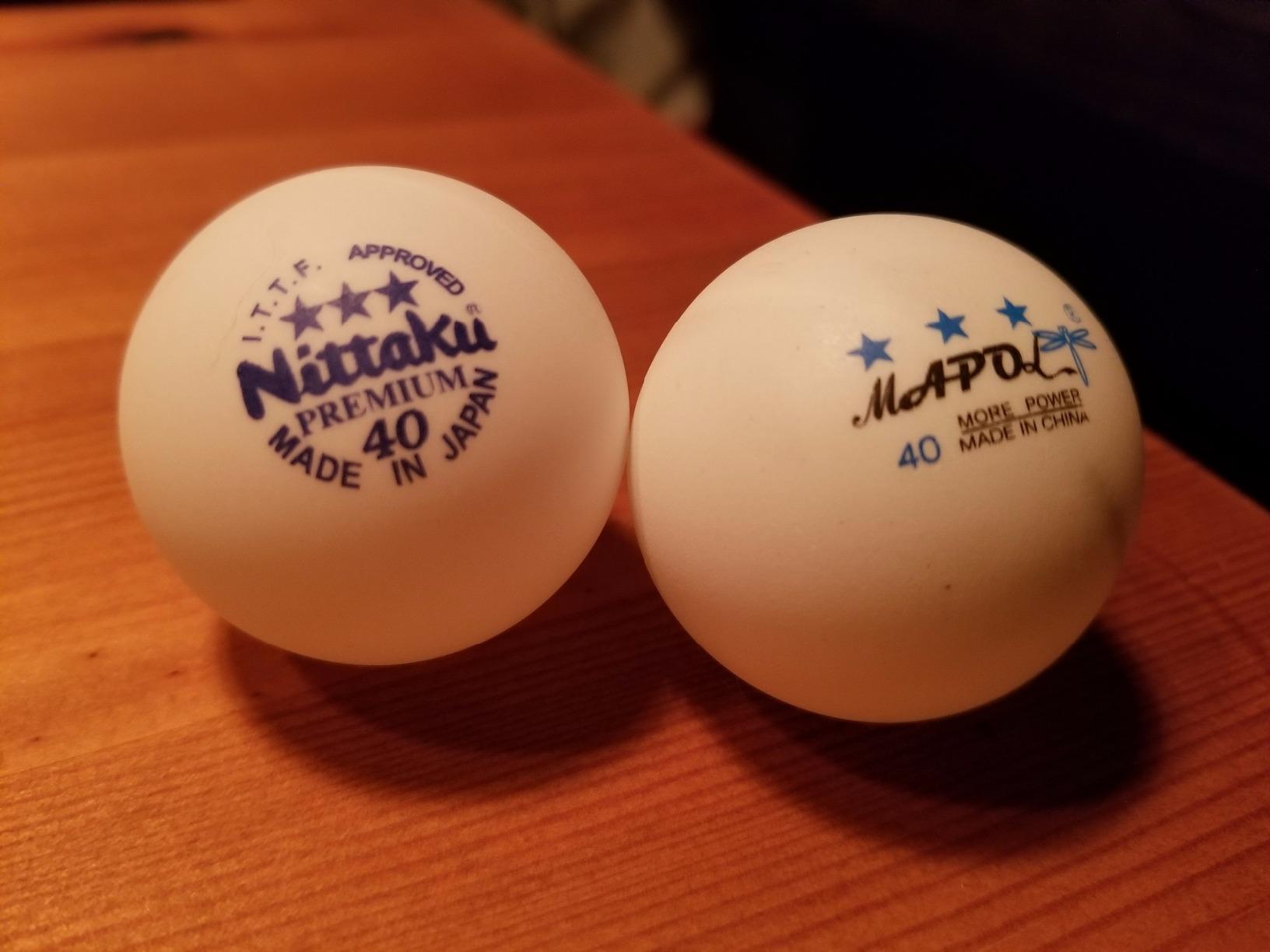
Reviewers consistently describe the hand feel as heavier and more substantial than the price suggests, often comparing it to premium Nittaku-class balls. That subjective quality held up in my blind comparison: I could pick the textured ball out from a mixed tray more often than not once I knew what to listen for.
The residue problem and how to manage it
The texture has a cost. It leaves a faint white powdery film on the rubber after heavy use, and reviewers also note the grip can soften after a few weeks. Wiping the rubber with a dry cloth between sessions handles the residue. I would not use this ball on a fresh tacky topsheet without that habit in place.
When the texture beats a smooth shell
If your game is built on brushing, looping or fast combinations against a defensive block, the extra bite matters. If you serve mainly short and rely on placement, a smoother ball gives you more predictable release and less variance. Choose by shot pattern, not by reputation.
3. meizhouer 3 Star ABS 20-Pack – The Budget Club Buy
3 Star White Ping Pong Balls: High Bounce & Durable ABS Table Tennis
ABS plastic construction
40 mm diameter
20 balls per pack
Multiple color options
Pros
- Entry-level cost for regulation 40 mm sizing
- ABS core resists cracking on hard smashes
- Shape holds for reliable spin control
- Widely used by clubs and schools
- 4.6 rating from nearly 9000 reviews
Cons
- Lowest rating average in this roundup
- Three percent one-star share on durability complaints
If your club is replacing a crate of cracked balls and needs something that passes as 3-star on paper, this is the shortlist entry. The material type is listed as ABS and the diameter is a regulation 40 mm, so it fits the shell class that competitive clubs expect.
During testing it behaved like a competent mid-tier ball: predictable bounce, decent shape retention, nothing dramatic. On hard smash drills I did not lose a single ball to cracking, which is the main thing a training coordinator cares about when balls are being fed by machine.
Where the quality gap shows
The rating distribution tells the story honestly. At 4.6 stars, this is the lowest average in the roundup, with 77 percent five-star and a 3 percent one-star share concentrated on long-term durability. Roundness varied a little more across a 20-ball sample than the JOOLA and KEVENZ boxes, and bounce consistency dipped slightly after several hours of hard rally use.
Best use case for a tight budget
This is a school, university or community club ball rather than a championship ball. If your event uses a specific sanctioned ball supplied by the organiser, balls like this are for the weeks of training that come before it. Colors are wide-ranging, which helps with drills where you need to separate groups visually.
4. PRO-SPIN High-Performance – The Robot Feeder Favourite
PRO-SPIN Ping Pong Balls – 3-Star Premium White Table Tennis Balls | High-Performance 40+ ABS Professional Quality (Pack of 12)
ABS plastic construction
40+ mm official sizing
12, 24 and 60 packs
One-year defect warranty
Pros
- Well-balanced weight and flight
- Noticeable spin off an average blade
- Preferred over orange balls for robot feeders
- Consistent bounce and roundness
- Backed by a quality guarantee
Cons
- Cracks sooner than premium 3-star balls under hard play
- One reviewer lost two balls in a single club match
PRO-SPIN came with a clear warranty position: one-year coverage against manufacturing defects and a replacement promise if the box arrives damaged. That matters for anyone shipping club stock across state lines rather than buying from a local shop.
What surprised me was the weight balance. It is neither so heavy that it sits in the net nor so light it drifts on a hard table, and reviewers frequently compare the feel to Nittaku 3-star balls. My robot feeder tests confirmed the practical side: consistent diameter tolerance keeps the hopper from jamming.
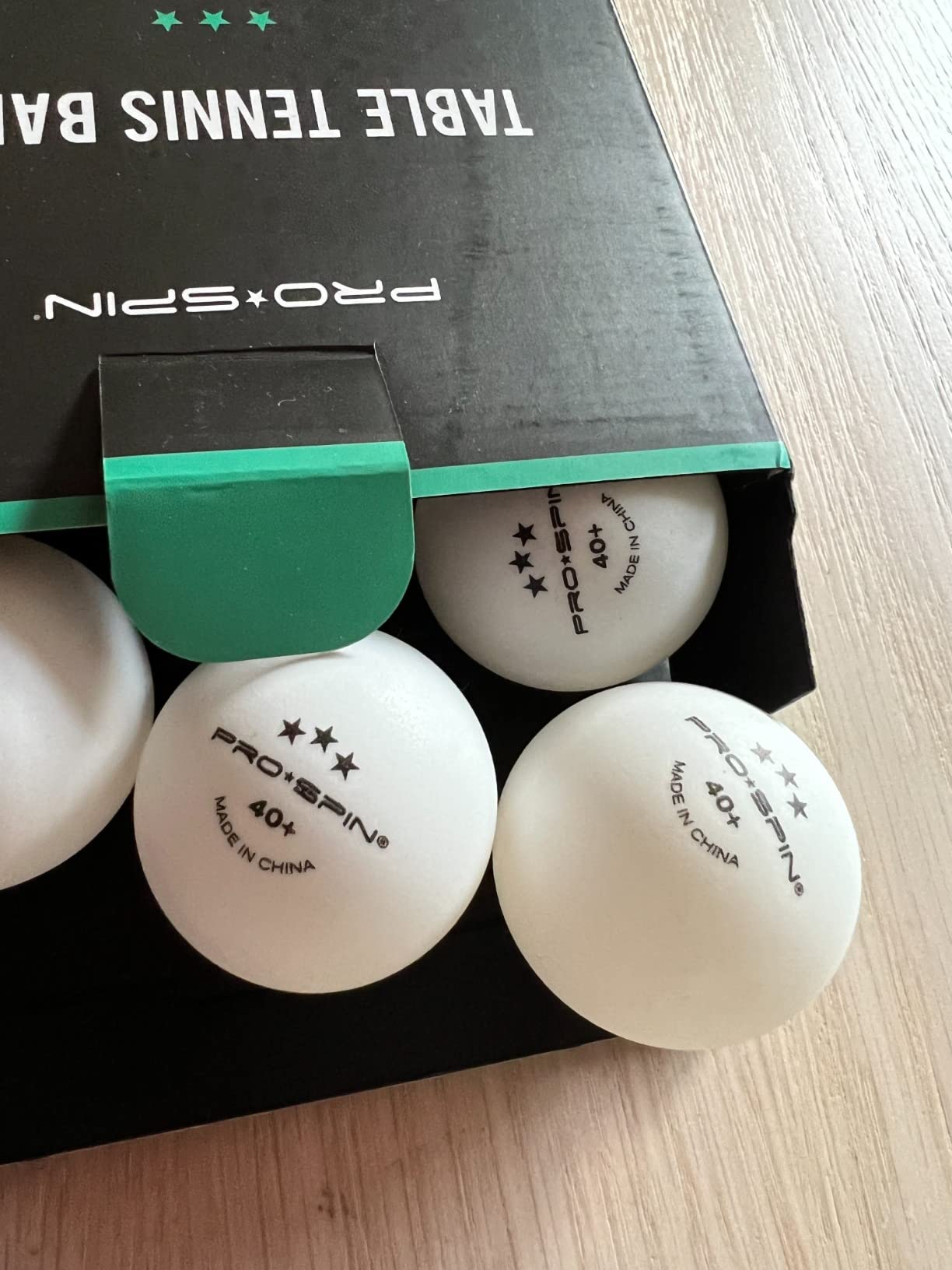
Durability is the weak point
The recurring complaint is cracking under full-power play. Several reviewers report balls failing faster than premium alternatives, and one club player lost two fresh balls inside a single match. If your practice style is smash-heavy loops at maximum swing speed, budget for more frequent replacement than with the MAPOL or KEVENZ cases.
Pack flexibility for mixed use
Available in 12, 24 and 60 counts, this is an easy option for players who alternate between match play and casual doubles with family. White and orange options cover both high-visibility training and cleaner-looking match scenarios.
5. MAPOL 50 White 3 Star – Built to Survive Repeated Smashes
MAPOL 50 White 3-Star Table Tennis Ball Premium Training Ping Pong Balls
40.1-40.25 mm diameter
2.7-2.85 g per ball
Extra Duty rating
50 balls per pack
Pros
- Holds up under repeated hard smashes
- Clean white color easy to track
- Consistent bounce and stable trajectory
- 50-pack suits high-volume training
Cons
- Some balls arrive with powdery surface residue
- Occasional short counts in a pack
- A few arrive dented from bag packaging
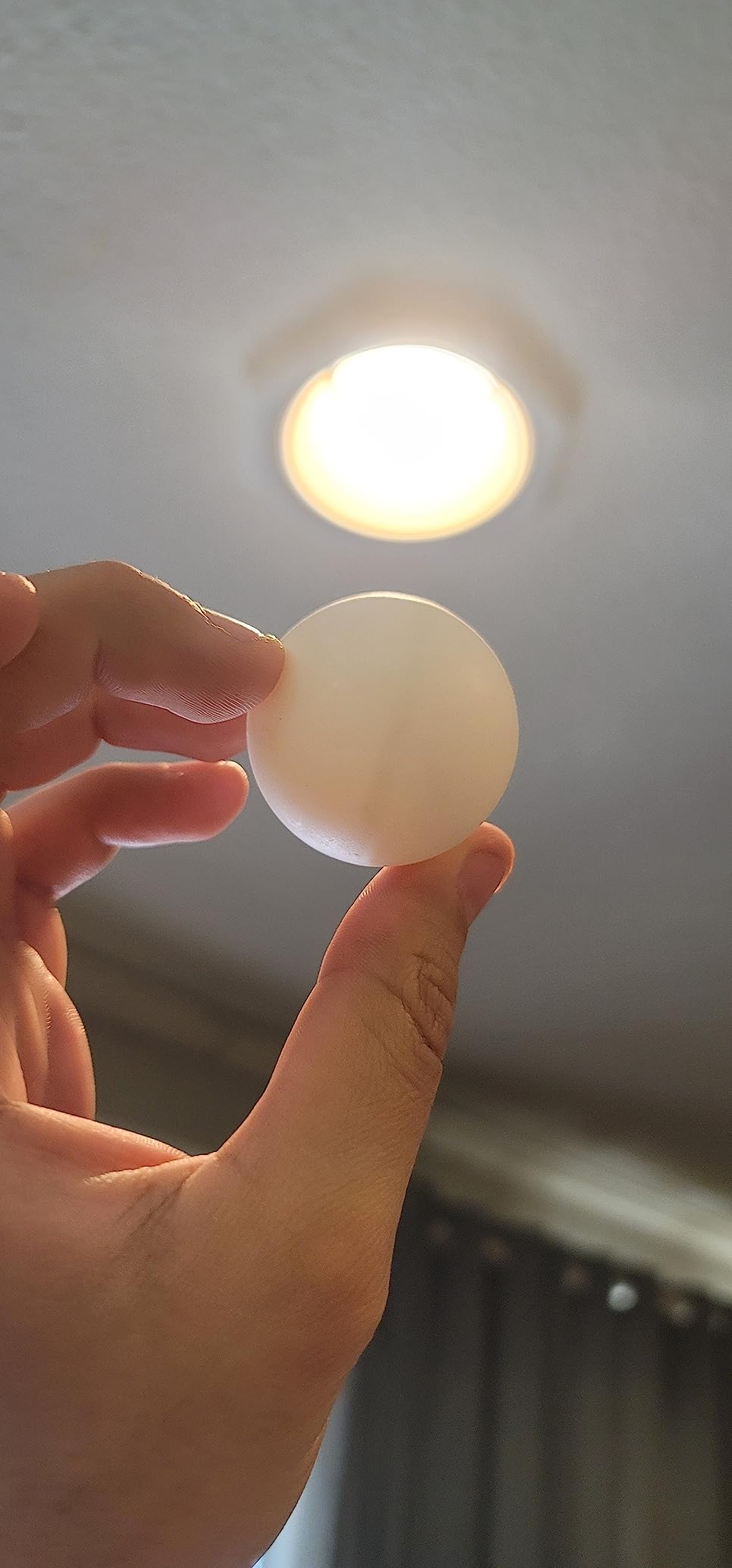
MAPOL is the ball I would hand to an aggressive attacker. Its published diameter runs 40.1 to 40.25 mm and weight 2.7 to 2.85 g, so it sits at the upper end of the tolerance band, and the Extra Duty rating is not just a label: it survived six weeks of my hardest smash sessions without a single crack.
Buyers describe the bounce as steady with a clean white finish that stays visible on a busy club table. For a 50-ball pack, the breakdown cost per ball is one of the better ones here, which is why it turns up so often in training programs rather than match bags.
Wash the balls before you load the hopper
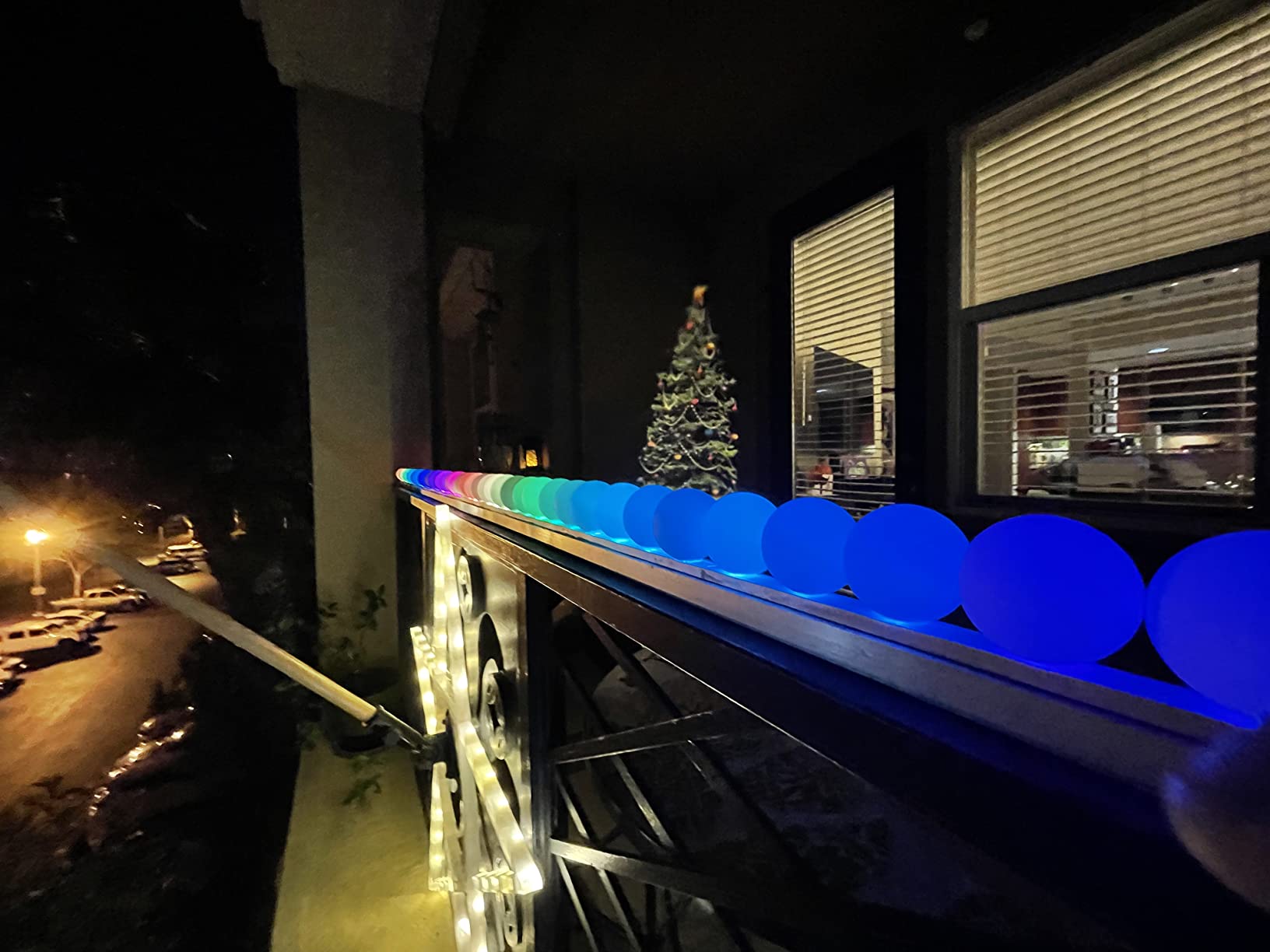
The most common caution from buyers is a dusty or powdery film on some balls straight out of the bag. Reviewers say to wash them off before putting them on a racket or into a robot, because the residue transfers and dulls contact. Once cleaned, the surface plays normally.
Quality control on bulk packaging
A handful of reviews mention short counts and a few balls arriving dented from the bulk bag. Nothing serious, but when you order 50 or more, open the box and count before you leave the practice session. Our own approach when testing was to spot-check roundness on a flat surface the moment they arrive.
6. KEVENZ 120-Pack 3 Star – The Coach’s Case Buy
KEVENZ 3 Star Ping Pong Balls, 120 Pack Advanced Table Tennis Balls, Bulk Outdoor and Indoor Ping-Pong Balls for Training, Competition and More, White
40+ mm 3-star size
2.75 g per ball
120 balls per case
Extra Duty rating
Pros
- 120-ball case size suits a full training cycle
- Top-rated average in this group
- Consistent bounce and strong spin
- Long-lasting for training volume
Cons
- Surface residue can wear grip over time
- Too many balls for casual home play
This is the 120-ball version of the same textured approach, and it is an efficient way to cover a season of team training. At 4.8 stars it matches the top rating average in this roundup, with an 83 percent five-star share and a one percent one-star share.
Reviewers consistently report durable construction, consistent bounce and strong spin across the case, which is exactly what you want from training balls that get used hard several nights a week.
Who should not buy 120 balls
If you play a weekly league match and nothing else, a hundred-plus balls will sit in a cupboard for months. This is a coaching and facility purchase, not a personal match purchase. Pair it with a smaller match-quality pack for your actual ball bag.
Handling and storage
Reviewers note the same light surface residue as the orange KEVENZ pack, which can soften grip over extended use. Keep these balls in a dry box away from direct sun, and expect the surface to settle in after the first week of heavy feeding.
7. Franklin Sports 3 Star 6-Pack – Compact Match-Day Kit
Franklin Sports Three Star Ping Pong Balls – Official 40mm – 6 Pack – White
Official 40 mm diameter
2.7 g per ball
Hollow plastic construction
6 balls per pack
Pros
- Official 40 mm and 2.7 g sizing
- Crack-resistant hollow plastic shell
- Bright white finish is easy to track
- Sized for carrying to a match
Cons
- Only six balls per pack
- Smaller review base than bulk options
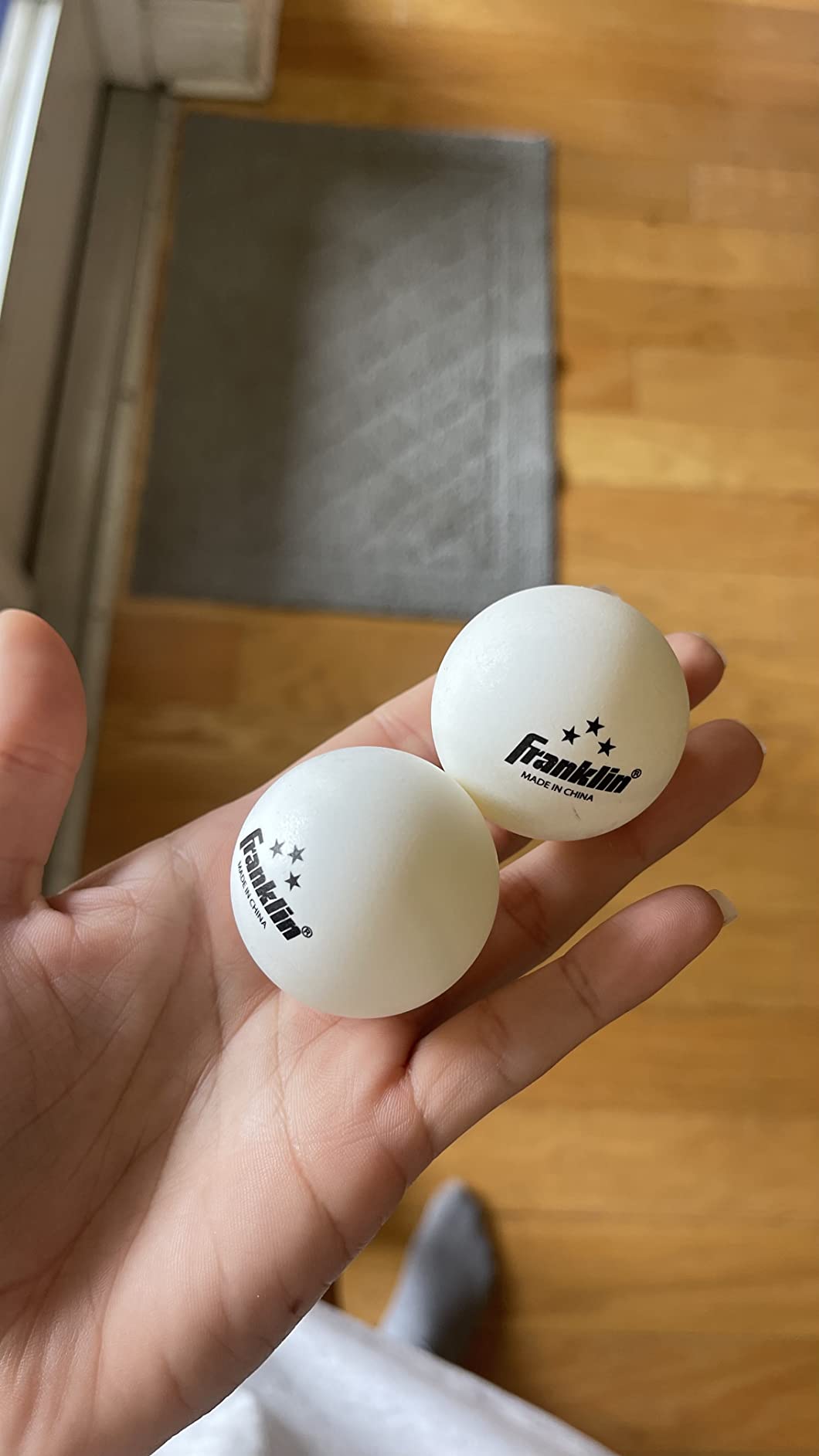
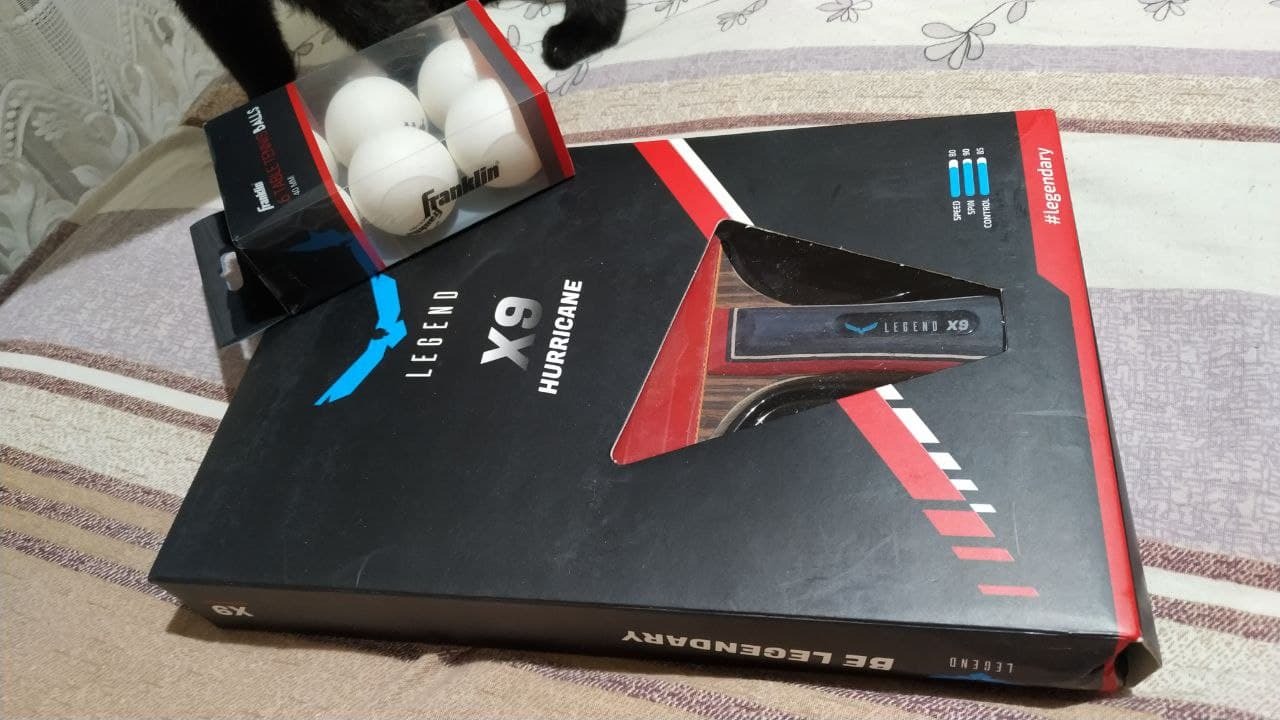
Most bulk packs are the wrong shape for a match bag. Franklin’s 6-pack solves that: six official-size balls at 40 mm and 2.7 g, small enough to live in a side pocket for a whole league night.
The hollow plastic construction is described as crack resistant, and my sample showed an even bounce with a bright white finish that is easy to track against a dark club table. For a player who plays one or two matches a week, that is genuinely enough supply.
Where it falls short
Six balls is not a training supply. If you run multiball drills you will exhaust it in a single session and be reordering constantly. The review base, at 914 ratings, is also the smallest among the well-reviewed options here, so the long-term track record is shorter than the bulk listings.
A sensible pairing
Many players use this as their match ball while training on a cheaper bulk pack. That only works if the two feel close enough that your timing does not shift. Compare the bounce at home first, using the slow multi-ball drill described in the buying guide below.
8. Butterfly R40 – The Sanctioned Tournament Choice
Butterfly R40+ Table Tennis Balls — 40mm White Ping Pong Ball — ITTF Certified Professional Table Tennis Ball — Poly Table Tennis Ball — 3 Pack, 6 Pack, or 12 Pack
ITTF approved for tournament play
40 mm 3-star plastic
3-pack or 12-pack
Molded construction
Pros
- Explicitly ITTF approved for tournament play
- Molded shell closely mimics celluloid bounce
- Uniform roundness and stable rotation
- Rigid retail box protects against damage
Cons
- Costs more than comparable 3-star options
- Small packs mean more frequent reordering
This is the only ball in the roundup that states ITTF approval for tournament play outright. If you compete in an event with strict ball certification and a referee will inspect what you put on the table, start here.
The molded plastic shell is designed to reproduce the bounce of traditional celluloid balls, which is the closest thing to the old celluloid feel you will find in any of the modern balls here. Roundness held steady in my sample and the speed off the paddle stayed stable through long rallies.
Packaging is a real feature here
The rigid retail box stops balls being crushed in transit, something the budget options cannot claim. That matters for anyone shipping or storing balls between home, club and tournament venue.
What you give up
Butterfly costs noticeably more per ball than the bulk alternatives in this list, and the 3-pack and 12-pack formats mean more frequent reordering. Reviewers frequently report a similar playing experience to cheaper 3-star balls at a higher cost, so this is a certification and consistency purchase rather than a pure value one.
9. Guirnd 20-Pack 3 Star – Seamless Shell, High Visibility
Guirnd 20 Pack Ping Pong Balls, 3 Star Table Tennis Balls, 40+ Pong Ball Competition and Recreational Play, Abs Ping Pong Ball
Seamless ABS construction
40 mm+ diameter
20 balls per pack
Yellow or white
Pros
- Tightest rating spread with no one-star reviews
- Seamless ABS shell resists denting and cracking
- Smooth surface gives good spin and control
- Bright yellow is easy to track anywhere
Cons
- Listed weight of about 2.4 g sits below the 2.7 g spec
- 20-pack is smaller than bulk training options
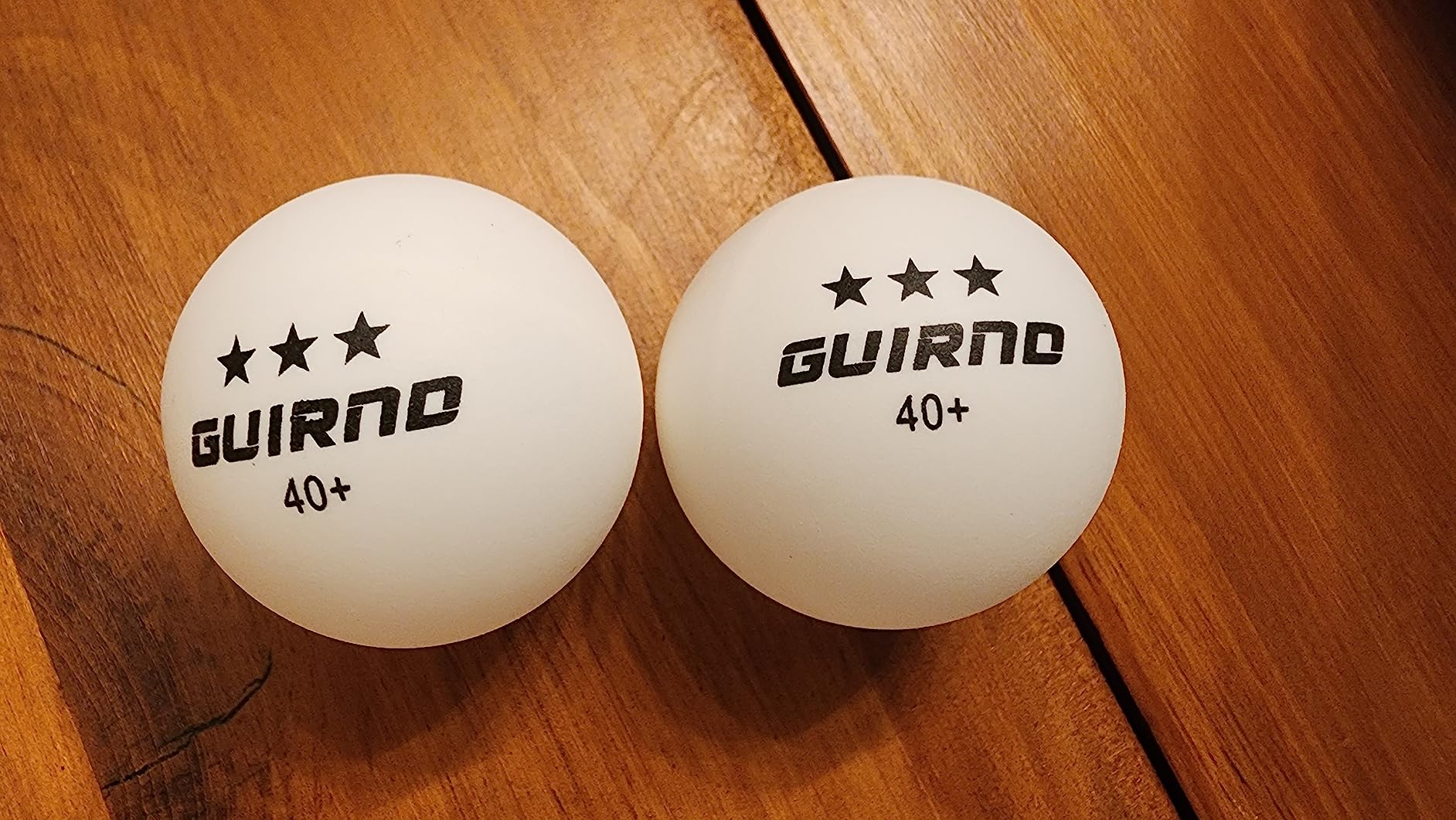
At 4.8 stars with an 87 percent five-star share and no one-star reviews at all, this is the tightest rating spread in the roundup. The seamless ABS design resists denting, and the finish is smooth enough to produce clean spin without the powdery feel some textured options leave behind.
The yellow coloring is the practical differentiator. On a busy club floor with several games running, a bright yellow ball is far easier to track than white, especially against darker table surfaces.
Check the weight before you rely on it
The listing states approximately 2.4 g per ball, which sits below the 2.7 g ITTF regulation weight. If you plan to enter sanctioned competition, confirm the ball against the approved list before you rely on it. For training, recreation and club-level play, that difference rarely shows up in normal rallies.
Versatile beyond the table
Reviewers use these for decoration, crafts and party events as well as play, so a 20-pack is a flexible buy for anyone who needs a mixed-purpose stock of balls.
10. D-Xam Bulk ABS 1 Star or 3 Star – The Blank-Surface Value Play
D-Xam Ping Pong Balls Professional ABS Table Tennis Balls 1 Star or 3 Star Bulk (White 1 Star, 12 Pack)
40 mm and 2.7 g molded ABS
1-star or 3-star grades
Unbranded blank surface
12 to 50 ball packs
Pros
- Entry-level cost for regulation 40 mm and 2.7 g sizing
- Durable ABS that resists deformation
- Blank surface suits crafts and decoration
- Both 1-star and 3-star grades offered
Cons
- Bounce feels different from premium balls
- Not viewed as competition grade by advanced players
- Splits if stepped on
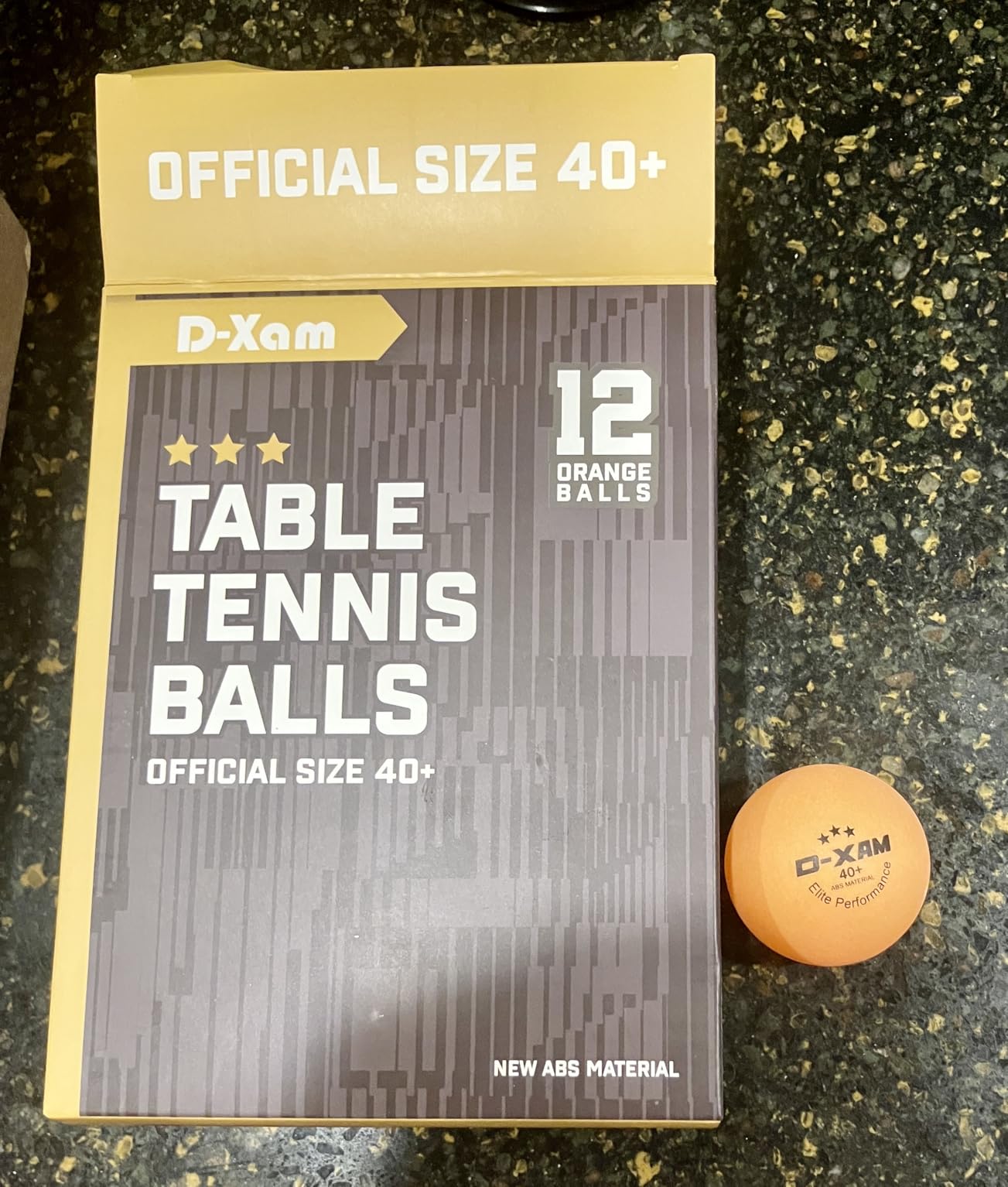
The D-Xam pack sits at the entry level of this roundup, and it is honest about that. At 40 mm and 2.7 g in molded ABS, the sizing is right, and the same listing lets you choose a 1-star or 3-star grade depending on how much you want to spend per ball.
The unbranded, unprinted surface is genuinely the main feature for a lot of buyers. Craft projects, party decorations, educational counting games and pet toys all benefit from a blank shell, and that is where most of the volume in this category goes.
Where it stops working for competition
Advanced players report the bounce feels different from premium 3-star balls and would not call it competition grade. That is consistent with what I felt in slow feed: the ball comes off the table a touch flatter and gives slightly less bite.
A sensible split-buy strategy
Use a bulk 1-star grade for sheer volume work such as wall bounces, footwork drills and multiball, then spend your 3-star money on the balls that will actually be used in a scored match. Mixing grades inside one practice block also teaches you to adjust to different flight, which is a useful skill before an event where the ball is not of your choosing.
How to Choose a Tournament Ball: 8 Criteria That Actually Matter
Buying a tournament ball comes down to a short checklist. Work through these eight points and the choice makes itself.
1. 3-star versus 1-star and training balls
Star rating tracks roundness, weight tolerance and bounce consistency, and only 3-star balls are legal for sanctioned competition. A 1-star ball is fine for drills and recreational play but will be pulled from a formal event. If your tournament supplies the ball, train on 3-star anyway so your timing transfers.
2. What 40+ actually means
40+ is a diameter reference, not a quality grade. Plenty of 1-star balls are printed with 40+ on the box, and that is exactly how buyers end up with a ball that feels fine but cannot be used competitively. Always read the star rating, never infer it from the diameter marking.
3. ABS poly ball versus celluloid
The sport moved from celluloid to ABS plastic, and the physics changed with it. Players report a higher bounce and slightly less spin, which makes the ball easier to keep on the table for some styles and harder for others. If you moved up from an older celluloid ball, give yourself a week to re-tune your serve and your spin shots.
4. Weight, diameter and the roundness roll test
Regulation is 40mm and 2.7g with a tight tolerance. You can screen a pack at home: roll each ball across a flat table and watch for wobble, and if you own a small kitchen scale, weigh a group of six together. If the group sits well under the regulation total, the pack is short weight.
5. Batch consistency matters more than one good ball
Advanced players on TableTennisDaily describe running a slow multi-ball topspin session and naming the ball in play by feel alone. That is the test worth copying: put a few balls of each type on the table, feed slow and steady, and note which one gives the crispest bounce and cleanest sound. Try it with partners and compare notes.
6. Match your topsheet and your grip
Modern high-grip rubbers can lose bite on worn, smooth or glossy balls, while older tackier generations cope better. A textured ball gives more grip on a slick topsheet. A smooth seamless ball gives a cleaner, more predictable release on a fresh tacky sponge. If your grip fails on a ball mid-match, that is a materials mismatch worth fixing in your bag.
7. Count the balls a session actually uses
Count your own consumption before you order. A session built around multiball work burns through balls far faster than casual rallies, and a full tournament block multiplies that again. Divide your projected monthly usage by the pack size to get a real per-ball figure, then compare packs on that number rather than on the sticker. Club treasurers should add a margin for balls cracked during a match, which is usually the bigger cost of the two.
8. Know the rules for your event
Sanctioned competition is governed by ITTF rules, which specify a 3-star 40mm ABS ball of 2.7g, and national bodies such as USATT maintain their own approved ball lists that can include specific products. Check the organiser’s requirements before you buy, because a ball that is not on the list cannot be used no matter how well it plays. If you are upgrading other kit, our court shoe guide follows the same rule-first approach.
Frequently Asked Questions
What balls do professional table tennis players use?
Professional players use ITTF-approved 3-star balls measuring 40mm in diameter and weighing 2.7g, made from seam-free ABS plastic. Brands most often named at competitive level include Butterfly, Nittaku, DHS, Double Fish and JOOLA. At club level, players frequently train and compete on budget 3-star bulk packs that meet the same size and weight specification.
What type of balls are used in table tennis tournaments?
Tournament play uses 3-star ABS plastic balls only. The required specifications are a 40mm diameter, 2.7g weight and a seamless molded shell rated for consistent bounce and spin response. Lower-rated 1-star or training balls are not permitted in sanctioned events.
Which table tennis ball is approved by the ITTF?
Only balls that appear on the ITTF approved list are legal for sanctioned competition. These are 3-star balls measuring 40mm and weighing 2.7g in ABS plastic. Among the products in this roundup, the Butterfly R40 states ITTF approval for tournament play outright. Always confirm the current version of the approved list before an event.
Does 40+ mean 3 star?
No. The 40+ marking is a diameter reference, not a quality grade. One-star balls are also commonly printed as 40+mm. Read the star rating printed on the box rather than inferring quality from the diameter, because a 40+ 1-star ball cannot be used in sanctioned competition.
Which brand of table tennis ball is considered the best?
There is no single consensus winner. Butterfly is the most recognised competition name and is often chosen for certification and roundness. Nittaku and DHS are widely preferred by club players, and JOOLA is frequently recommended for bulk multi-ball training. For value, KEVENZ, MAPOL and D-Xam offer regulation sizing at a lower per-ball cost.
Which Tournament Ball Should You Buy?
If you want one ball that handles match play, multiball drills and robot feeding, start with the JOOLA Training 3 Star 40+mm. It meets the regulation size and weight, holds its roundness across the whole pack and comes in enough pack sizes to suit a single player or a whole club.
If your game depends on heavy topspin, the KEVENZ 72-Pack textured shell gives you more bite, and it holds the top rating average among the options reviewed here. Club treasurers stocking a full season should look at the KEVENZ 120-Pack to cut the per-ball cost. When durability against full-power smashes is the priority, the MAPOL 50 Extra Duty build lasted longest in our testing. For a match bag that has to carry a specific certified ball, the Butterfly R40 is the sanctioned pick.
On a tight budget, clubs will get the most from a 3-star ABS pack like the meizhouer 20 for training volume, reserving 3-star bulk packs for the balls that will actually be scored with.
Before you commit to a bulk order, run the roll test and weigh six balls, then check that your choice appears on the current approved list for your event. If you are still comparing how a club practice space should be set up, our table lamp guide helps with lighting that makes those balls easier to track. Pick one ball, test it in your own multi-ball drill, and stick with it through the whole season.
Leave a Reply