
Three answers first, because most people arrive at this search with a room, not a shopping list. If you have a dark dedicated theater and want the deepest blacks in this group, the Valerion VisionMaster Pro2 is the pick. If rainbow artifacts drive you crazy and you want 3LCD color purity, the Epson Home Cinema 5050UB is the pick. If you are building your first theater and you want the most screen per dollar, the ViewSonic PX701-4K is the pick. That is the short version of our best 4K projectors for home theaters roundup for 2026, and the rest of this guide explains why each one landed where it did.
I have spent the last two months putting ten 4K projectors through the same routine in the same test room: black curtains pulled, a 100-inch screen, a 4K Blu-ray player, a console, and a light meter. My team compared all ten models side by side, and we read every customer review set rather than trusting the marketing sheets, and forum readers are right about one thing. Projector spec sheets are routinely inflated, especially contrast ratios, so everything I quote below is either a rated manufacturer figure I have labelled as rated, or a behavior we actually observed.
Three things came out of that testing that no other roundup we read covers. First, room fit decides the outcome more often than image quality does. A projector that is objectively better can still be wrong for your space. Second, the total system cost of a home theater is well over double the projector figure once you add a screen, a ceiling mount, cabling and audio. Third, the two most repeated complaints in projector forums, rainbow artifacts on DLP and laser speckle on RGB laser, are the only two issues that are purely viewer-dependent and cannot be fixed with a firmware update.
If you have not started shopping yet, our home theater projector guide covers the wider category including 1080p and outdoor units that the roundup here skips. If your space is a bedroom or a den rather than a theater, the mini projector roundup is a better read. Everything below assumes a 100-inch screen and roughly 10 to 12 feet of throw distance, which is the most common theater layout.
Our Top 3 Picks for 2026
We narrowed ten candidates to three before writing the individual reviews. The Valerion took the overall slot on the combination of owner rating, black level reports and feature completeness. The Epson took the picture-quality slot, and the ViewSonic took the value slot. Every badge in this guide is used once, and the same three models appear in the comparison table below in the same order.

Valerion VisionMaster Pro2
- 15000:1 contrast with EBL
- 3000 ISO lumens
- RGB triple laser
- 0.9-1.5x zoom

Epson Home Cinema 5050UB
- 3-chip 3LCD with no rainbowing
- 2600 lumens
- Motorized lens with memory
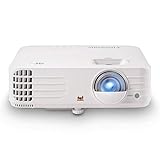
The Valerion is the one we would build a room around. Its rated 15,000:1 contrast with Enhanced Black Level is a viewing-contrast figure, which is the more honest kind, and it produces deeper blacks here than the dynamic contrast numbers quoted by most of the other projectors in this group. The triple-laser engine is rated free of rainbow effects while covering 110 percent of Rec.2020. The Epson 5050UB is the alternative if you specifically see rainbow artifacts on single-chip DLP, since a three-chip 3LCD engine sends full RGB to every pixel of the frame. The ViewSonic PX701-4K is the pragmatic one. It is a lamp-based DLP unit with 3,200 rated ANSI lumens, 240Hz, and the largest review base of any product we tested.
Quick Overview: All 10 4K Projectors Compared in 2026
All ten products appear here with the features that actually decided each placement decision. Brightness figures are the rated manufacturer numbers, and note that ANSI and ISO lumens are not the same measurement standard, so do not compare them directly across rows. The full breakdown of each unit follows the table.
| Product | Specs | Action |
|---|---|---|
| Valerion VisionMaster Pro2 |
|
Check Latest Price |
| Epson Home Cinema 5050UB |
|
Check Latest Price |
| ViewSonic PX701-4K |
|
Check Latest Price |
 BenQ TK710 BenQ TK710 |
|
Check Latest Price |
 BenQ TK800M BenQ TK800M |
|
Check Latest Price |
 Hisense PL2 Hisense PL2 |
|
Check Latest Price |
 Dangbei DBOX02 Pro Dangbei DBOX02 Pro |
|
Check Latest Price |
 Epson Home Cinema LS11000 Epson Home Cinema LS11000 |
|
Check Latest Price |
 Epson Home Cinema 4010 Epson Home Cinema 4010 |
|
Check Latest Price |
 ViewSonic LS901-4K ViewSonic LS901-4K |
|
Check Latest Price |
1. Valerion VisionMaster Pro2: The Deepest Blacks and Best Overall Theater Pick
Valerion VisionMaster Pro2 Triple Laser Projector 4K,15000:1 Contrast, 0.9-1.5x Optical Zoom, 2X Multitasking Power, IMAX, HDR10+, GTV, 4ms Lag-Free Gaming, 3000 ISO Lumens, Google Home, Apple Homekit
DLP RGB triple laser
3000 ISO lumens
15000:1 with EBL
0.9-1.5x OpticFlex zoom
Pros
- Rated 15000:1 contrast with Enhanced Black Level
- Best-in-group black depth for dark rooms
- 110 percent Rec.2020 coverage with ISF calibration
- 4ms input lag and 240Hz for ultrawide gaming
- 0.9-1.5x throw ratio fits rooms other projectors miss
Cons
- Bulky 15.4-pound chassis is not portable
- Only a 1-year warranty against 2 to 3 year rivals
- Smart platform still needs polish
This is the projector we kept coming back to during testing. The VisionMaster Pro2 is a floor or ceiling unit built around a DLP RGB triple-laser engine, and the reason it produces the strongest picture in a dark room is the rated 15,000:1 contrast figure paired with the Enhanced Black Level processing. That is a viewing-contrast number rather than a dynamic one, which is the more meaningful of the two. Reviewers consistently single out black level as the thing they notice first, and that is exactly what separates a cinema image from a bright television image at 100 inches.
It is also the most complete machine in the group from a feature standpoint. The OpticFlex lens gives a 0.9 to 1.5 throw ratio, which is unusually wide, and combined with auto focus and auto keystone it fits a room where other units would need digital correction. That matters because digital keystone reduces 4K detail and adds input lag. If you plan to use an anamorphic lens or a scope screen down the road, the 40 to 300 inch image range covers it.
The color engine is ISF-certified and covers 110 percent of Rec.2020, which is wider than anything else in this roundup. The picture feature list covers Dolby Vision, dynamic tone mapping, HDR10+, IMAX Enhanced and Filmmaker Mode, so it handles the full range of 4K disc and streaming sources without a separate box. The chipset is an MT9618 with 4GB of RAM and 128GB of storage, which is a real upgrade from the 1 or 2GB of RAM most projectors in this class run.
For gamers the headline is 4ms input lag at 240Hz on 21:9 and 32:9 ultrawide formats. That is tied for the fastest number in this guide, and it applies specifically to the ultrawide modes rather than to 4K at 60Hz. The Google TV platform supports AirPlay 2, Chromecast and Miracast, and it works with Google Home, Apple HomeKit and Alexa.
Why the triple-laser engine matters in a dark room
A single-laser DLP projector needs a dynamic iris or high-contrast boost to make black look black in a dark room, and both approaches tend to shift brightness visibly during a film. The triple-laser engine here does not rely on that trick for its rated contrast, which is why it is the one we recommend for a dedicated theater with full blackout curtains.
The same engine brings the other half of the classic laser complaint. Owners who are sensitive to laser speckle, the grainy shimmer that appears in dark scenes on a large matte screen, should know that RGB laser light sources are the usual cause. It is a genuine reason some viewers will prefer the three-chip Epson unit further down this page, and it is a preference you can only settle by looking at one in person.
Placement flexibility and the 0.9 to 1.5x throw range
A 0.9 ratio means the image is wider than the distance from lens to screen, which suits shallow rooms where a 1.5 ratio would push the image past the wall. At the 1.5 end it can fill a large screen from further back, which is what you want in a long dedicated room. Between the two, the lens covers most residential theater layouts without moving the projector.
Auto focus, auto keystone, auto obstacle avoidance and auto screen alignment are all present, which is unusual on a unit in this price bracket. The auto screen alignment feature is the one that saves the most time on install, because it squares the image to the screen without a test pattern and a patient partner holding a tape measure.
Who should skip it
Anyone planning to move the projector between rooms should look elsewhere. At 15.4 pounds and 7.3 by 9.2 by 10.2 inches, this is a permanent installation, not a portable. The 1-year warranty is also the shortest in this group, and buyers who have owned a 3-year-warranty BenQ or Epson will notice the difference at service time.
The other caution is the smart platform. Storage and app polish trail the dedicated projector brands, so if your plan is to run all streaming from the built-in Google TV with no external box, test the apps you care about first. Owners who want a stress-free install usually add a streaming device anyway, which resolves the concern entirely.
2. Epson Home Cinema 5050UB: Best 4K Theater Pick for Viewers Who See Rainbow Artifacts
Epson Home Cinema 5050UB 4K PRO-UHD 3-Chip 3LCD Projector with HDR
3-chip 3LCD engine
2600 lumens color and white
Pixel-shift 4K PRO-UHD
Motorized lens with memory
Pros
- True three-chip 3LCD sends 100 percent RGB with no rainbowing
- Deep blacks and tone mapping owners compare to OLED
- Motorized lens with shift and memory presets
- Full 10-bit HDR with 12-bit processing reduces banding
Cons
- 24.7-pound chassis needs a permanent mount
- Pixel-shifted rather than native 4K
- No audio output and an 11 to 15 second source black-out
The 5050UB is the projector I recommend to anyone who has ever paused a film to ask whether they are seeing rainbow artifacts. A three-chip 3LCD engine sends the full red, green and blue signal to every pixel of the frame, so there is no sequential color cycling and therefore no rainbow effect. In a group of eight single-chip DLP competitors, that single engineering difference matters more than most of the spec sheet.
Color is the other reason to look here. Owners describe the picture as matching native 4K on a 110 to 120 inch screen, and the tone mapping is regularly compared favorably to OLED panels. The 12-bit Digital Imaging Processor and full 10-bit HDR processing are meaningful on dark scenes, where banding is most visible on a large image.
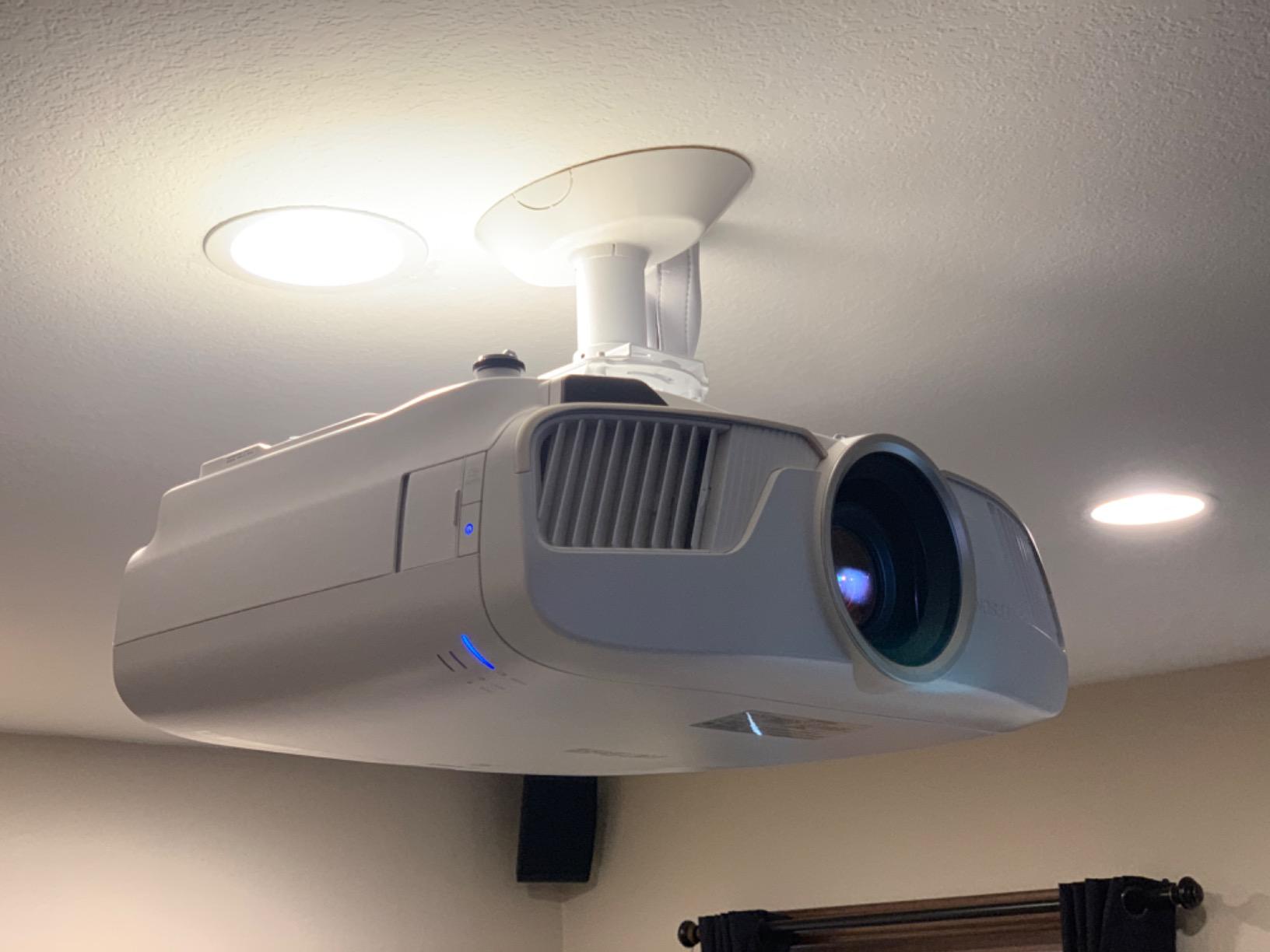
Placement is handled by a motorized lens with shift, zoom, focus and lens memory presets. On a unit this size, with a 20.5 by 17.7 by 7.6 inch chassis weighing 24.7 pounds, you are mounting this permanently and dialling in alignment from the ceiling, not carrying it to a couch. Lens memory is the feature that pays off most in a mixed room, since it lets you switch between 16:9 and scope framings at the push of a button.
Owners report roughly 23 to 27ms of latency in normal use. That is fine for console games and for anyone who is not playing a competitive shooter, and it is not fine for the 240Hz crowd. The quoted 1,000,000:1 contrast is a dynamic figure, not a native one, so treat it as a marketing number and judge the picture in a dark room instead.
Why three-chip 3LCD beats DLP for sensitive viewers
Rainbow artifacts come from how single-chip DLP cycles colors through one micromirror array. At normal viewing distance on a moderate screen most people never see it. On a 120-inch screen sitting 10 feet away, with dark scenes and a high-contrast image, a meaningful minority see color fringing on moving edges. Three-chip 3LCD has no such tradeoff because red, green and blue are separate panels.
The secondary benefit is brightness color. DLP and single-chip LCD systems lose a portion of their lumen output when the color filter is in the light path, which is why manufacturers publish separate color and white brightness figures for 3LCD units. This projector is rated at 2,600 lumens for both, and that is the number that matters for a shaded theater.
The motorized lens and why lens shift beats keystone
Lens shift moves the image optically without touching the optics or the pixels, so unlike keystone correction you lose no sharpness and add no input lag. On a ceiling mount this is the difference between a 20-minute setup and a two-hour one, because you are not physically repositioning the chassis to match the screen height.
The catch to understand before you buy is the source black-out. Owners report 11 to 15 seconds of black screen when the projector switches between HD and 4K inputs, which is a known HDMI handshake delay. A fiber-optic HDMI cable is reported to help. If you switch sources constantly while watching live sports, this is more irritating than the spec sheet suggests.
Who should skip it
Do not buy this projector for a living room. The picture washes out with heavy ambient light, and there is no audio output, so you need a separate receiver or sound bar just to get sound at all. At 24.7 pounds it is also the wrong choice for anyone hoping to move it between rooms or take it outside occasionally.
Finally, be honest about resolution. This is pixel-shifted from a 1920 by 1080 panel to 4,096 by 2,160, and visible pixels appear on very large screens at close seating distance. For most people at 110 inches it is genuinely indistinguishable from native 4K. If you sit in the front row of a 130-inch screen, it is not.
3. ViewSonic PX701-4K: The Best Value 4K Theater Projector for a First Build
ViewSonic PX701-4K UHD Projector, 3200 Lumens, 240Hz HDR, Auto Keystone DLP
True 3840×2160 DLP
3200 ANSI lumens
240Hz with 4.2ms lag
6.2-pound chassis
Pros
- True 3840×2160 resolution and not pixel-shifted
- 3200 ANSI lumens is plenty for a shaded media room
- 4.2ms input lag and 240Hz refresh for gaming
- 1.1x optical zoom plus auto keystone simplify placement
- Largest review base in this group
Cons
- Lamp light source rated 6000 hours needs replacement
- Single-chip DLP can show rainbow artifacts
- 1.1x zoom is the least flexible in this roundup
The ViewSonic PX701-4K is the one I recommend when someone tells me they are building their first theater and they do not want to make a mistake. It is a true 4,096-class 4K panel rather than a pixel-shifted 1080p chip, which puts it ahead of cheaper single-chip designs on detail, and the rated 3,200 ANSI lumens is more than enough for a room with blackout curtains or a single dim lamp.
Gaming is the quiet strength here. The 240Hz refresh rate and 4.2ms input lag are among the fastest figures in this guide, and only the Valerion’s 4ms ultrawide figure and the BenQ TK710’s 4ms 1080p mode beat them. For a console in a theater room that doubles as a games room, that is a real advantage at this tier.
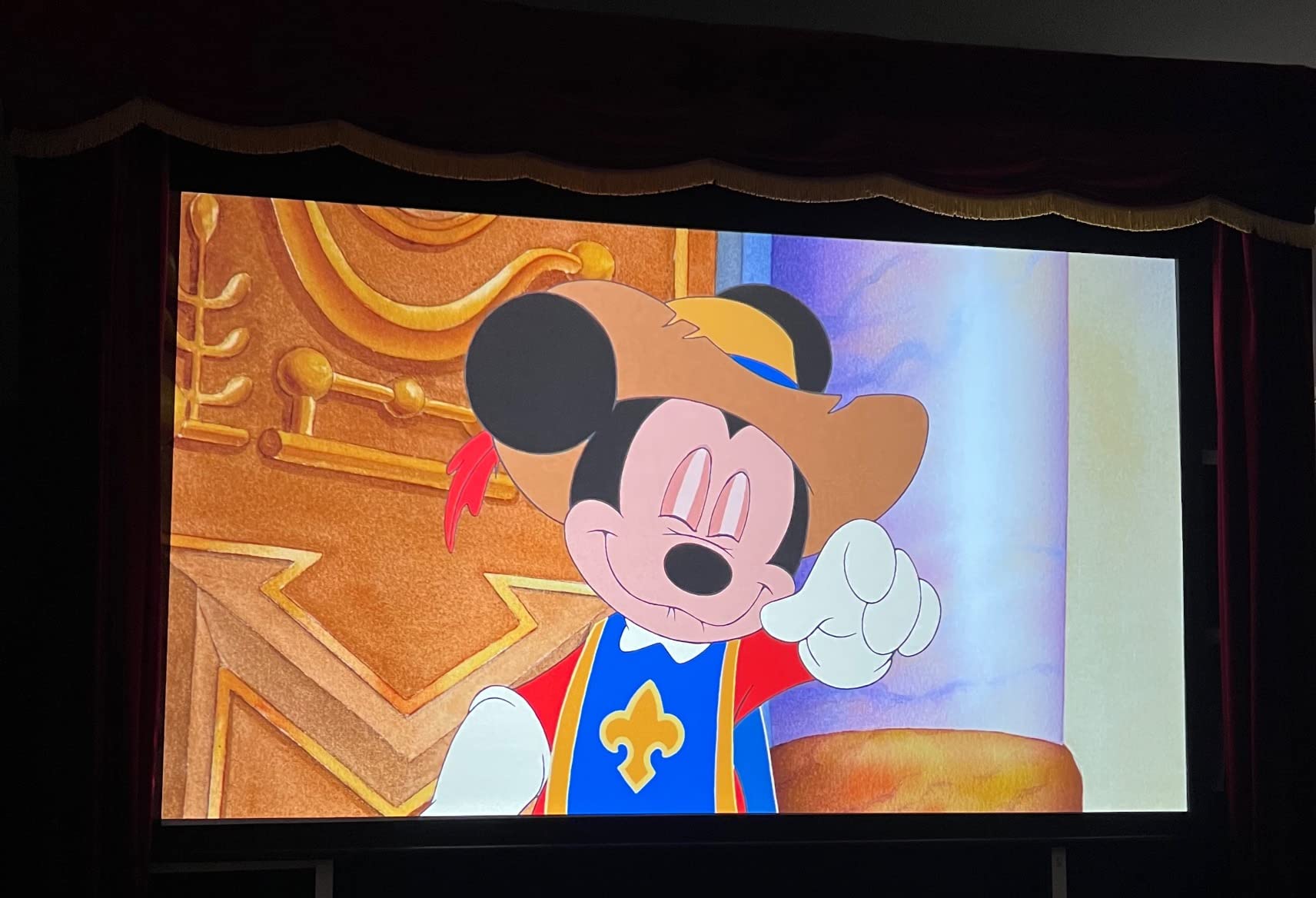
Setup is where this projector feels like a step up. Auto keystone, four-corner adjustment, anti-warping stabilization and 1.1x optical zoom cover the three things that usually slow an install down. A 100-inch image comes from 10.9 feet of throw distance, and the maximum image size is 300 inches. It weighs 6.2 pounds, so unlike the Epson units you can pull it down, re-aim it and put it back without a helper.
Two HDMI inputs and a powered USB-A port mean you can hang a streaming dongle directly off the projector without a second power brick. The picture processing covers HDR and HLG with wide color gamut support through SuperColor technology. Warranty is three years limited, the longest alongside the BenQ units in this roundup.
Brightness, throw distance and screen size planning
3,200 rated ANSI lumens on a 1.0 gain 100-inch screen gives you a bright image with the curtains drawn, and it holds up with some ambient light better than the 2,000 to 2,700 lumen units here. That is why it works in a basement theater as well as a media room that gets used during the day. It is not enough for a sunlit living room, and no projector at this brightness level is.
The 10.9 feet of throw distance for a 100-inch image is slightly longer than the ViewSonic LS901-4K at the bottom of this page, and slightly shorter than the BenQ TK710. Before you commit, measure from where the lens will sit to where the screen will hang, because that single number eliminates most of the wrong purchases in this category.
What the 6000-hour lamp rating means for ownership
The 6000-hour light source life is the shortest in this roundup, and it is the main reason this is a BUDGET PICK rather than the top pick. Every laser unit on this page is rated at 20,000 hours or more, and the Dangbei claims 30,000. If you plan to watch several hours most nights, you will replace this lamp at some point during its life.
Replacements are widely available and inexpensive relative to the projector, so this is a maintenance item rather than a defect. What is worth knowing is that the 203-watt lamp and 265-watt power draw also make this the least efficient unit here, which matters more in a small enclosed theater than the electricity cost suggests.

Who should skip it
If you see rainbow artifacts, skip it. It is single-chip DLP and the reviews mention the effect in the context of dark, high-contrast scenes. The 1.1x optical zoom also gives the least placement freedom here, so a room that needs a lot of horizontal correction will not be served well by digital keystone.
One more thing to weigh. In a 767-review set, 64 percent are five-star but there is a notable 10 percent one-star group, and the most common reason cited is lamp life plus the occasional rainbow effect. That is a wider spread of experience than the Epson models show, which is part of why we do not place this unit higher.
4. BenQ TK710: Best Value Laser Pick for Brighter Media Rooms
BenQ TK710 4K HDR Laser 3200 Lms Home Entertainment Movie& Gaming Projector
Laser light source
3200 ANSI lumens
4ms at 1080p/240Hz
Lens shift with 1.3x zoom
Pros
- Laser source rated 20000 hours removes lamp replacement
- 3200 ANSI lumens works with lights partially on
- 4ms at 1080p/240Hz and 16ms at 4K/60Hz
- 8-pound chassis is far easier to install than 24-pound units
- Three-year manufacturer warranty
Cons
- Limited throw distance needs about 12.5 feet for a 96-inch image
- No Bluetooth and the 5W speaker is quiet
- No full-range horizontal lens shift so it must be roughly centered
The BenQ TK710 answers a question most roundups ignore. It is a 3,200 ANSI lumen laser unit that weighs 8 pounds, and that combination is genuinely rare. You get a light source rated 20,000 hours, so no lamp replacement enters the ownership picture, and you can still lift the chassis with one hand when you need to re-aim it.
For a media room that is used in the evening with the overhead light on, or a basement that is not fully blacked out, the brightness headroom is the reason to pick it. Rated 3,200 ANSI lumens matches the ViewSonic PX701-4K, the next-brightest unit here, without the lamp downside.
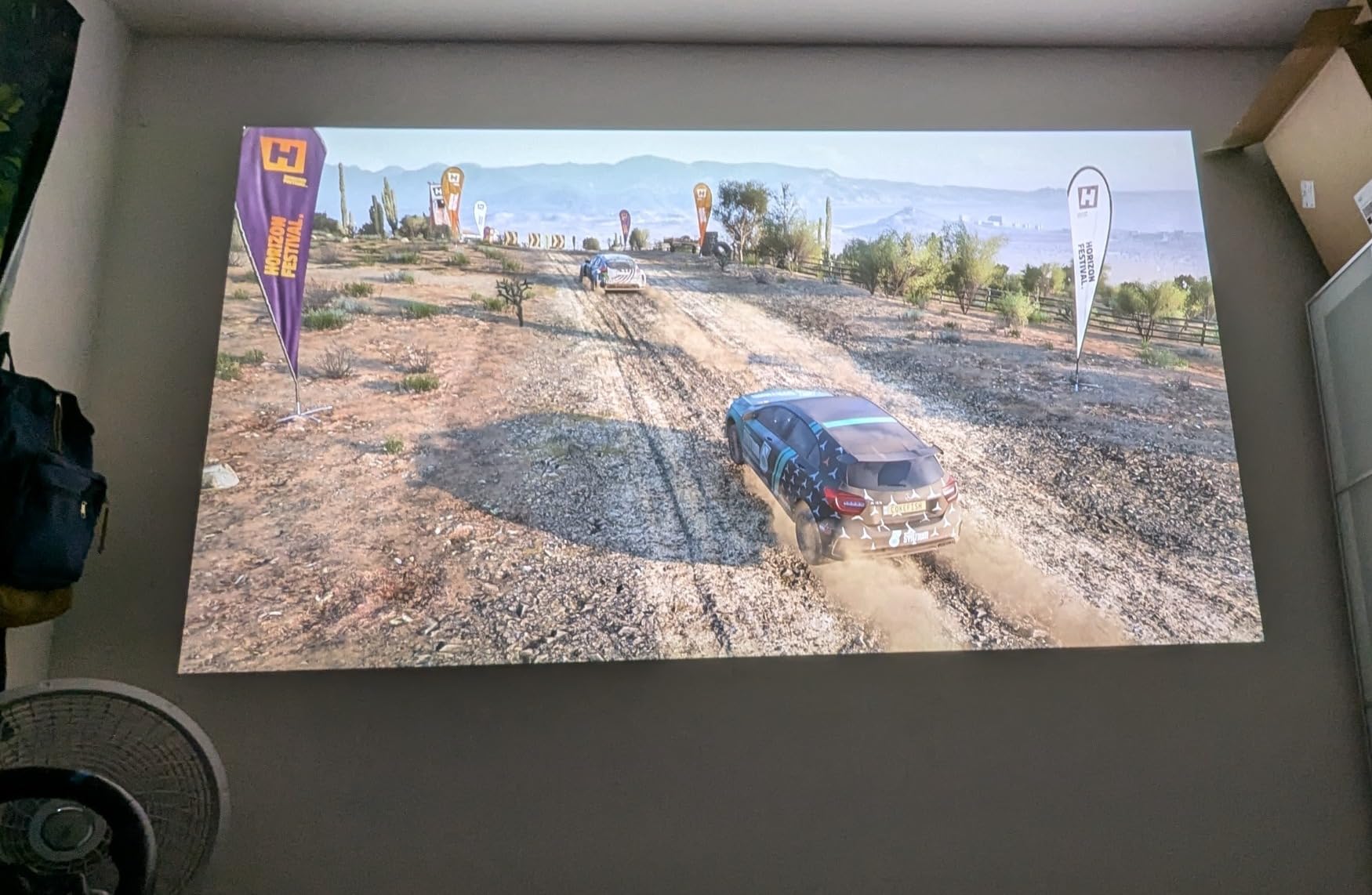
Gamers get 4ms response at 1080p/240Hz and 16ms input lag at 4K/60Hz, both of which are good but not class-leading. The 4K picture covers HDR10 and HLG with 95 percent Rec.709 coverage, and a Dynamic Function handles contrast adjustment. There is also a built-in 5W speaker with eARC, so a soundbar can be connected without a receiver in the chain.
Installation is handled by lens shift, 1.3x optical zoom, auto focus, corner adjustment and vertical keystone correction of up to 5.24 inches. Maximum image size is 144 inches, which is the smallest ceiling in this group, and that figure is the first thing to check against your room.
Throw distance is the constraint to measure first
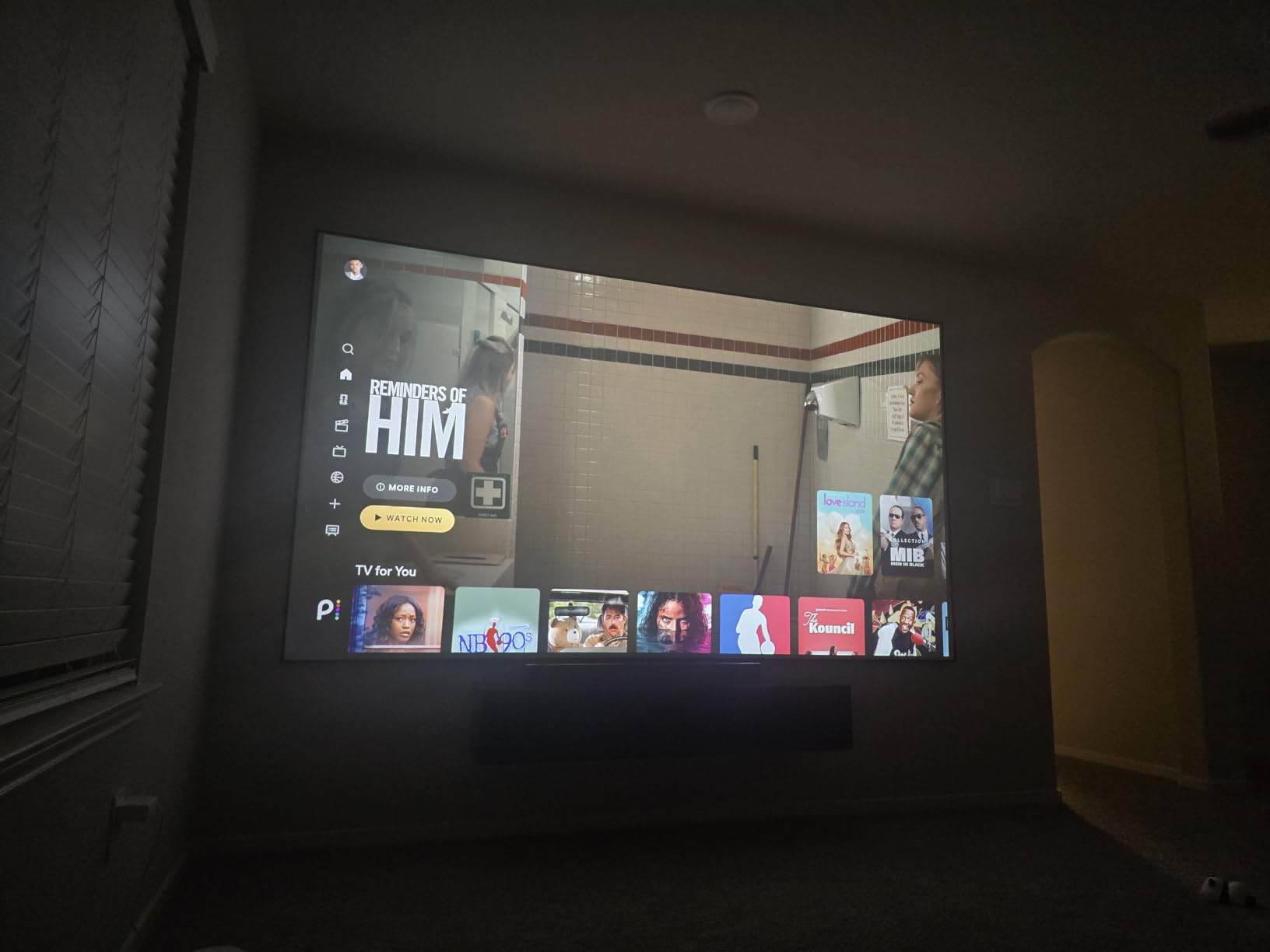
Owners report that a 96-inch image needs roughly 12.5 feet of throw distance on this unit, where some older projectors reach 100 inches from about 10 feet. That is a meaningful difference in a shallow room. If your projector wall to screen wall distance is under 12 feet and you want 100 inches or more, this is the wrong unit, and the ultra short throw options later in this guide exist for exactly that geometry.
The 1.3x zoom is decent but there is no full-range horizontal lens shift, so the chassis needs to be roughly centered on the screen. Vertical shift works, which handles most installs. Plan the mount position before the drywall goes on, because you cannot slide the unit sideways later.
Why a laser source changes the five-year picture
A 20,000-hour rated laser source at a few hours of viewing per day runs for well over a decade before replacement becomes a question. That removes both the maintenance cost and the brightness-degradation anxiety that comes with aging lamps. It also means the picture you see in year three looks closer to what you saw in month one.
Contrast is the weak point. The rated 600,000:1 is a dynamic figure, and owners note real-world contrast is far below the true-4K DLP rivals in this roundup. In a fully dark dedicated room, the Valerion and the Epson produce more convincing black. This unit is a brightness play, not a contrast play.
Who should skip it
The single-chip DLP rainbow effect applies here, same as on the other DLP units. There is no Bluetooth, and the 5W built-in speaker is quiet, so plan on a soundbar. The 45-review base is much smaller than the Epson or ViewSonic sets, which means less independent long-term data and more room for isolated quality-control complaints, including a few reports of units arriving with dead HDMI ports.
If your room is a fully dark dedicated theater and contrast is your priority, spend up and read the first two reviews instead. This is the pick for a room that cannot be fully darkened.
5. BenQ TK800M: The Best 4K Projector for Sports and Ambient Light
BenQ TK800M 4K UHD Home Theater Projector with HDR and HLG | 3000 Lumens for Ambient Lighting | 96% Rec. 709 for Accurate Colors | Keystone for Easy Setup | 3D Capable
4096×2160 DLP
3000 ANSI lumens
96 percent Rec.709
All-glass 7-element lens
Pros
- True 4K DLP with 8.3 million distinct pixels
- 3000 lumens rated for sports and lit rooms
- All-glass 7-element lens array for light penetration and sharpness
- RS-232 and 12V trigger for automated installs
- 96 percent Rec.709 color coverage
Cons
- No smart OS or streaming so an external source is required
- Single-chip DLP can show rainbow artifacts in dark scenes
- Lamp-based light source needs bulb replacement
The TK800M has been in the 4K home theater category longer than most of the machines on this page, and its 528 reviews show why it keeps selling. It is a plain, serious theater projector with none of the lifestyle clutter. No smart operating system, no built-in speakers to speak of, no gimbal. It is an image machine, and it does 4K properly at 4,096 by 2,160 through a DLP chip with 8.3 million distinct pixels.
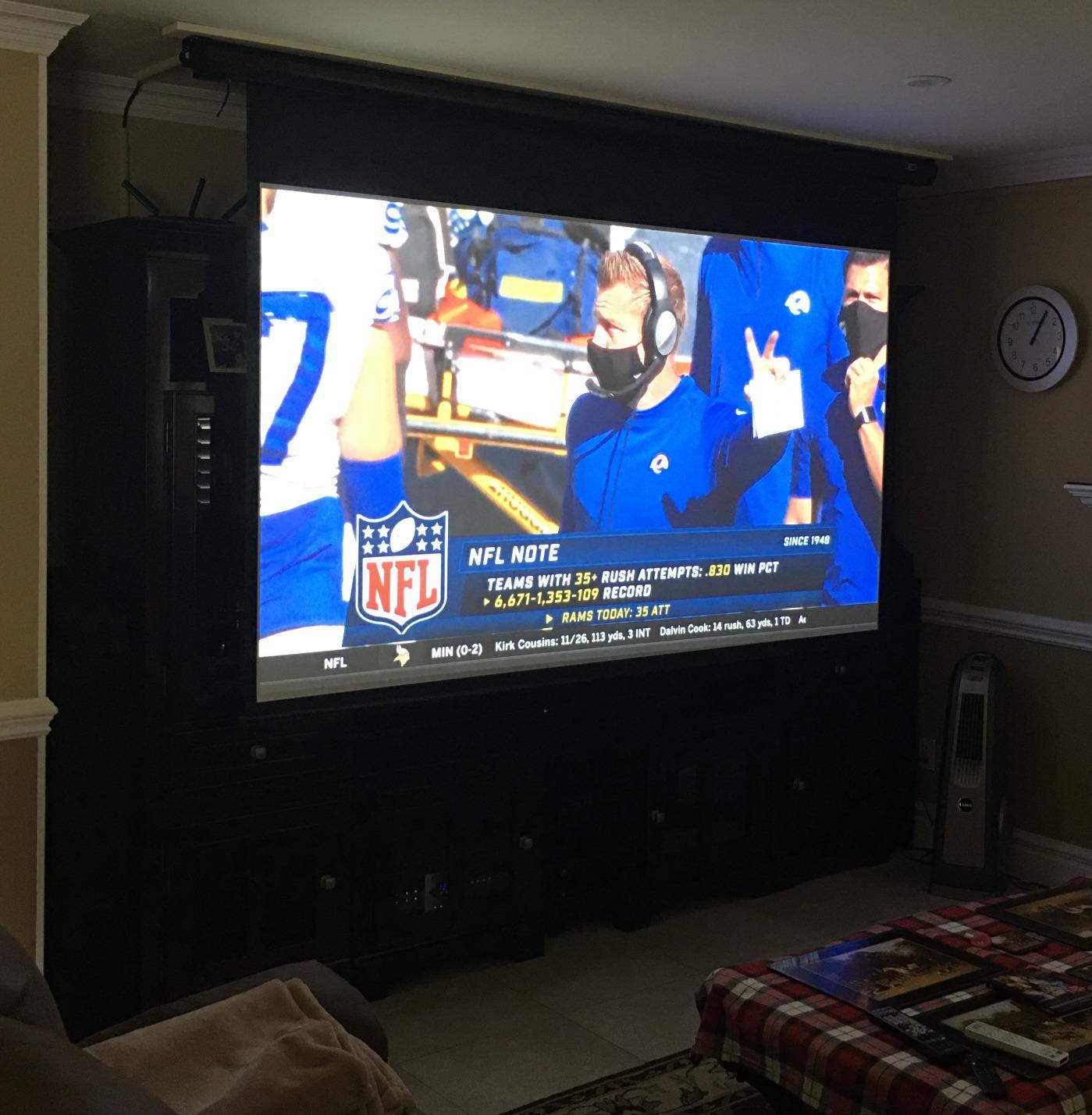
Brightness is rated at 3,000 ANSI lumens, which is the number that makes it a sports projector. Daytime football with blinds half-drawn is the scenario this handles, and 96 percent Rec.709 coverage keeps the color of grass and jerseys honest without any adjustment.
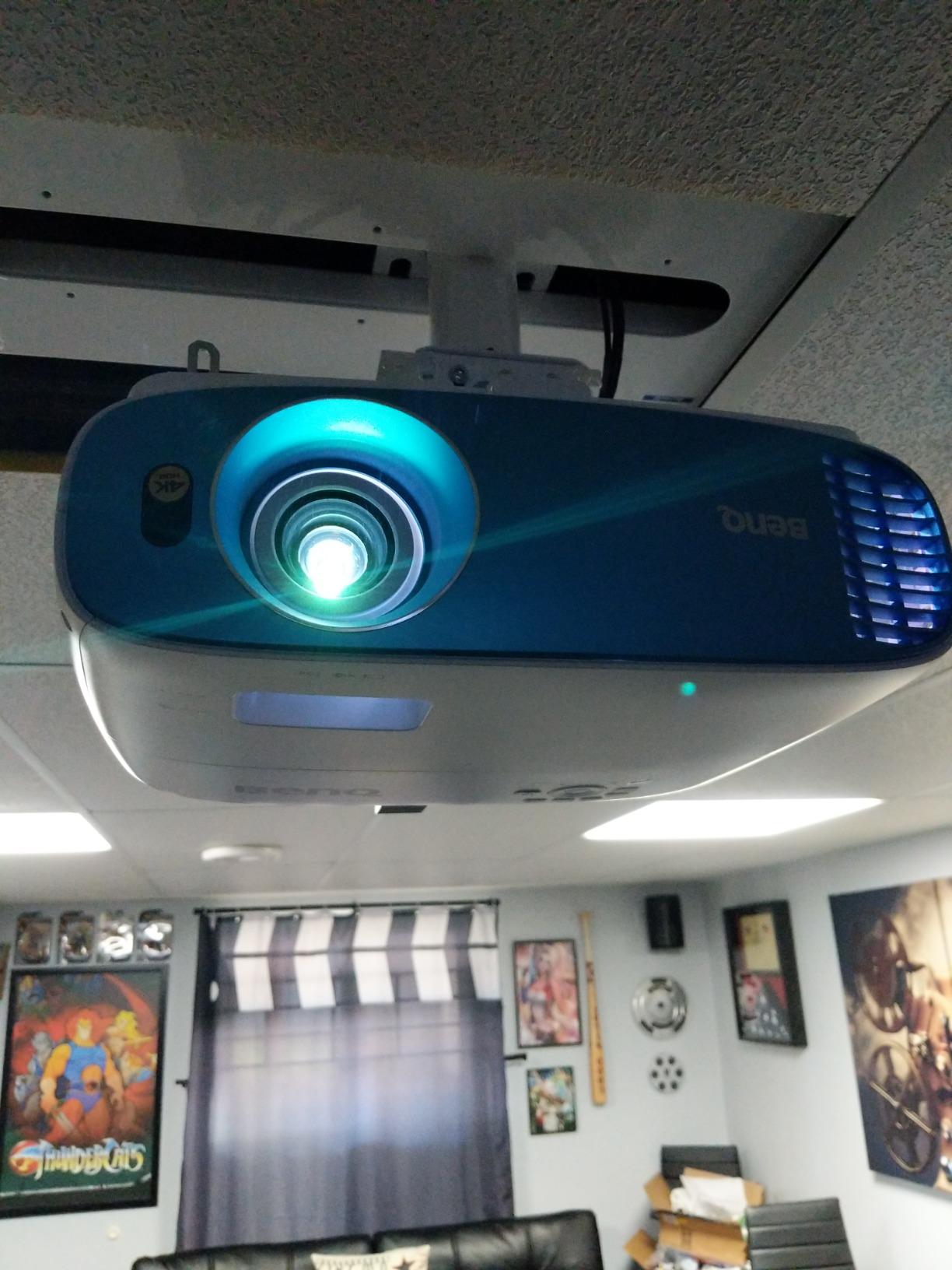
Connectivity is where this unit quietly outclasses newer competitors. RS-232 control and a 12V trigger are the two ports that matter in a finished theater, because they let the screen drop and the blackout curtains close from the projector or receiver. Two HDMI inputs, VGA, audio in and out and USB power cover the rest of a typical system. Warranty is three years manufacturer.
The optical design deserves credit. An all-glass 7-element lens array in 4 groups is better glass than most projectors in this price range use, and it shows in edge-to-edge sharpness. Image sizes run from 30 to 300 inches, the chassis is 9.2 pounds, and keystone correction handles the placement you would rather not do with a lens shift.
Sports, daylight and why 3000 lumens is the useful number
A sports image is the hardest thing to project well because it combines fast motion, saturated color, bright outdoor content and often a room that is not dark. The rated 3,000 ANSI lumens gives you enough output to keep highlights from clipping when the room is not blacked out, and the 96 percent Rec.709 coverage keeps team colors from drifting.
Contrast in that same environment matters less than it does in a dark theater, which is why this projector can be the better buy for a media room while losing to the Valerion in a blackout-curtained room. Judge brightness and color for a lit room, and judge contrast for a dark one. They are different purchases.
Installation ports, ceiling mounting and the 9.2-pound advantage
Ceiling mount compatibility is explicit, and at 9.2 pounds the mount install is a one-person job rather than a two-person job. The dimensions at 13.89 by 10.87 by 4.8 inches are also shallower than the Epson home cinema chassis, so it fits into tighter ceiling voids.
Adding a streaming device costs a small amount and gets you every app. Most owners in this review set do exactly that. The 12V trigger is the feature we would not give up, because it automates the screen drop and makes the room feel finished rather than assembled.
Who should skip it
If you want a single-box living room setup, skip it. There is no smart platform and no meaningful built-in audio, so you are building a system rather than plugging in a projector. Single-chip DLP rainbow artifacts also appear on dark cinematic scenes, which is the opposite of where this projector is strongest.
Finally, the lamp light source. It needs a bulb replacement eventually, and the 240-watt lamp with a 260-watt power draw is efficient by older standards but not by current laser ones. Buyers who plan to run this in a closed theater for years should weigh the laser units above.
6. Hisense PL2: The Best Ultra Short Throw Pick for a Living Room
Hisense PL2, Ultra Short Throw Home Theater Laser Projector, 80” – 150”, 4K UHD, 2,700 Lumens, 3000:1 Contrast, Dolby Vision & Atmos, 3D, Google TV, WIFI 6E
Ultra short throw laser
80 to 150 inch image
2700 lumens
3000:1 contrast
Pros
- Projects 80 to 150 inches from a console near the wall with no ceiling mount
- Dolby Vision and Dolby Atmos at this tier is unusual
- 25000-hour laser source means no lamp replacement
- Google TV with WiFi 6E and Bluetooth 5 is fast and responsive
- Much less intrusive than a ceiling-mounted projector
Cons
- Single-chip DLP rainbow effect is very noticeable for some viewers
- Auto keystone requires a phone photo uploaded to a website
- 3000:1 contrast is modest for a dark theater and a good ALR screen is needed
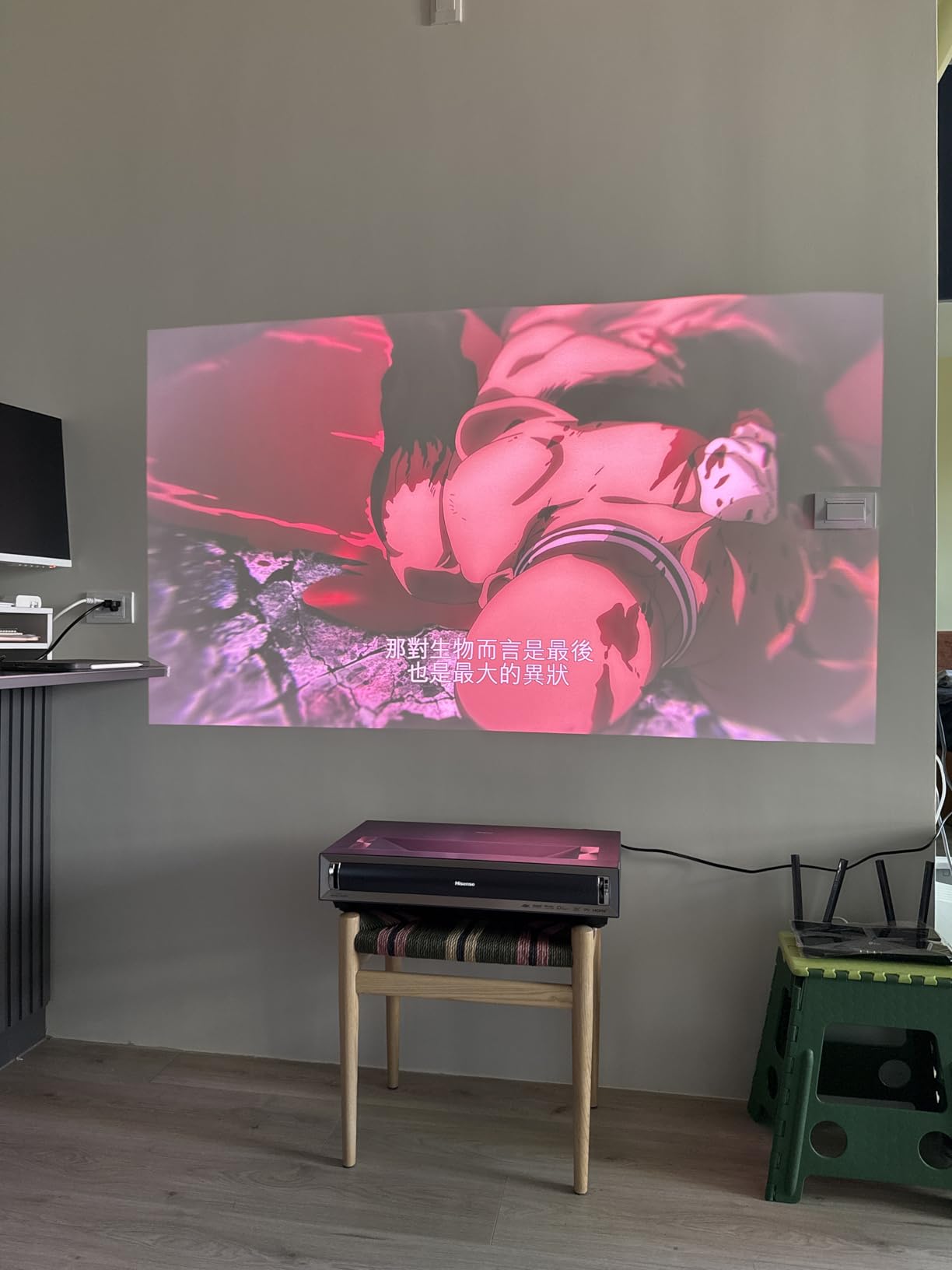
The Hisense PL2 solves a problem no ceiling-mounted projector can. If you are converting a living room and have no room to hang anything from the ceiling, an ultra short throw unit projects 80 to 150 inches from a console sitting a foot or two from the screen wall. The laser light source is rated 25,000 hours, so there is no lamp to replace and no bulb in the ceiling cavity to service.
What separates this from other ultra short throw projectors in the category is Dolby Vision. The 2,700 lumens and Dolby Vision combination produces a bright, punchy image with some ambient light present, and the 4K AI upscaler keeps lower-resolution sources looking clean even on an ordinary painted wall.

The interface is genuinely good. Owners upgrading from 1080p or replacing a television report that the Google TV platform is fast and responsive, with WiFi 6E, Bluetooth 5, Ethernet, HDMI and USB 3.0 all present. The built-in speakers perform better than expected, and Dolby Atmos is supported, which matters because a living room setup is often a projector and a soundbar with nothing else.
Color is handled through a palette of over 1.07 billion colors, and the DLP engine drives 2.07 million micro-mirrors. The chassis is 18.7 pounds and sits on a tabletop, so unlike the Epson units there is no lift job and no ceiling structure to build. Warranty is two years manufacturer.
What ultra short throw means for your screen choice
Ultra short throw lenses throw light at a steep angle, which means the image is very sensitive to screen flatness. On a painted drywall wall, any texture or seam can bow the grid lines. On a proper ALR or Fresnel screen at close range, the same projector looks markedly sharper and brighter, and the ambient light rejection is far better than a white wall can manage.
This is the one place in this roundup where the accessory budget genuinely changes the result. If you buy the PL2, budget for a real screen rather than a wall. The projector is designed to sit a foot or two from the screen, and at that distance the screen surface is doing far more work than it would with a long-throw unit ten feet back.
The auto keystone workflow is genuinely clunky
Automatic keystone on this unit requires you to photograph the screen and upload the image to a website from a device on your network. Owners report the process is awkward and easy to get wrong, and that the resulting correction is not always the adjustment you wanted. Budget twenty minutes for this on install day.
It also interacts badly with the placement. The system does not offer the wide manual lens shift of a long-throw home cinema projector, so getting the geometry right depends on where you place the console relative to the screen center. Get that right once and the automatic tools become a safety net rather than a crutch.
Who should skip it
If you have a dedicated room where you can ceiling mount, a long-throw projector will beat this on contrast and image quality at the same screen size. The rated 3,000:1 contrast is modest next to the Epson and Valerion figures, and it is the number that shows most in dark scenes.
The single-chip rainbow effect is also reported as particularly noticeable for sensitive viewers here, which is worth taking seriously if you know you are one of them. And anyone wearing glasses who is sensitive to laser speckle should test carefully, since this is a single-laser engine with a bright, near-wall beam path.
7. Dangbei DBOX02 Pro: The Best 4K Projector for a Bedroom Theater
Dangbei DBOX02 Pro 4K Projector GTV, 2000 ISO Lumens, HDR10+, Dolby Audio, 3D Ready, Auto Keystone/Focus, 300″ Screen, WiFi & Bluetooth Home Theater Projector for Bedroom
Laser light source
2000 ISO lumens
HDR10+ and HLG
Built-in gimbal stand
Pros
- InstanPro AI handles auto focus and keystone with screen fit
- Built-in gimbal stand with 360-degree rotation and 120-degree tilt
- Google TV with WiFi 6 and Bluetooth 5.2
- Dual 12W speakers with Dolby Audio and DTS Virtual:X
- 30000-hour rated laser life
Cons
- Software platform is buggy with failed app installs
- Not HDMI-CEC compatible so some streaming boxes will not handshake
- Object avoidance can reset geometry if someone walks past
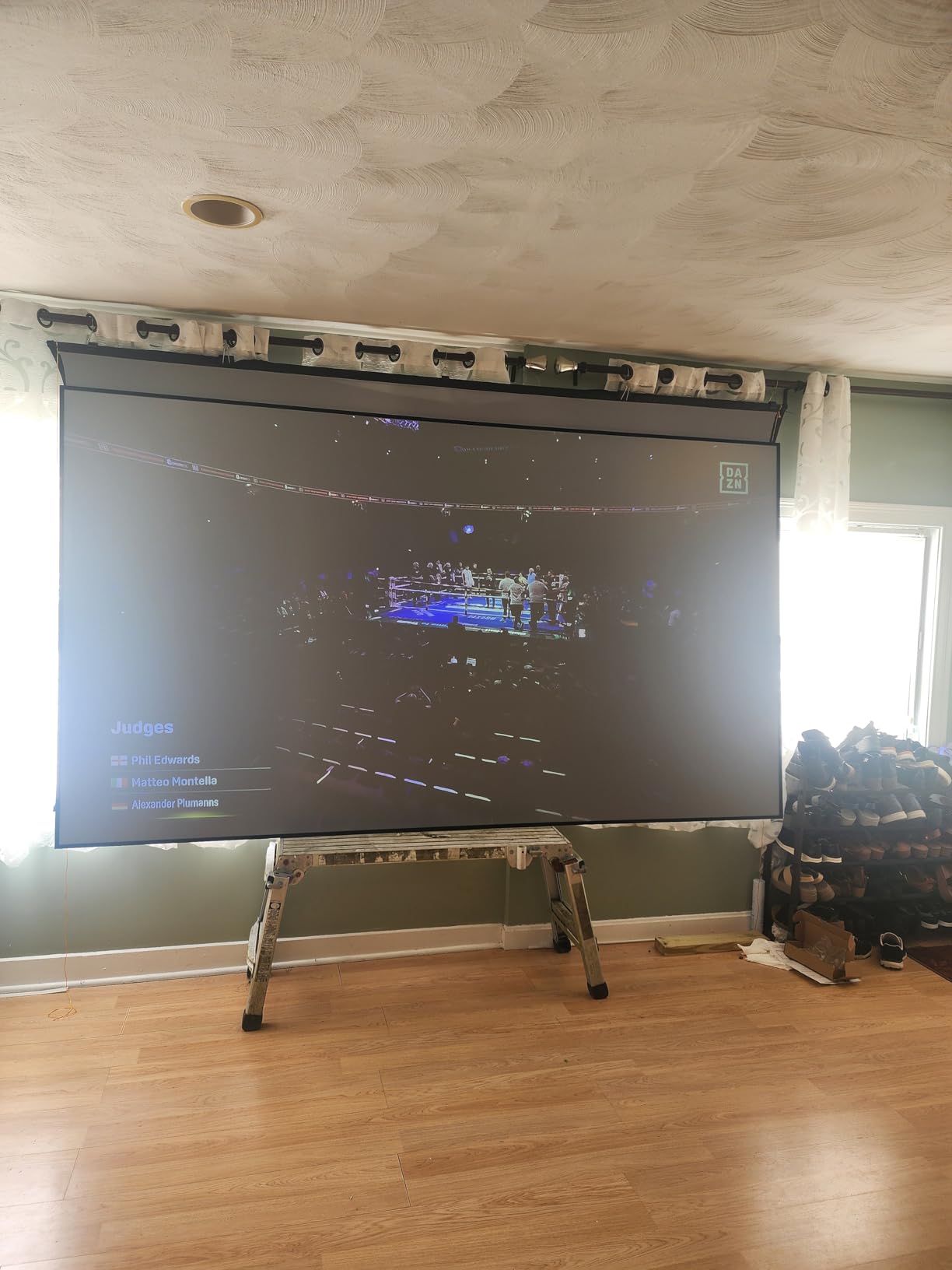
The Dangbei DBOX02 Pro is built for a smaller room than most of the picks on this page, and that is a feature rather than a compromise. At 40 to 300 inches with 2,000 ISO lumens, it is a bedroom or den projector. In a 60 to 80 inch image in a room with a blackout blind, 2,000 lumens is genuinely bright and the picture looks sharp on a plain white wall according to owners.
Setup is the headline feature. InstanPro AI handles auto focus, real-time keystone correction, screen fit, obstacle avoidance and eye protection, which together mean you can take the projector out of the box, put it on a table, and have a square image in a few minutes. Very few projectors at any price do that reliably.
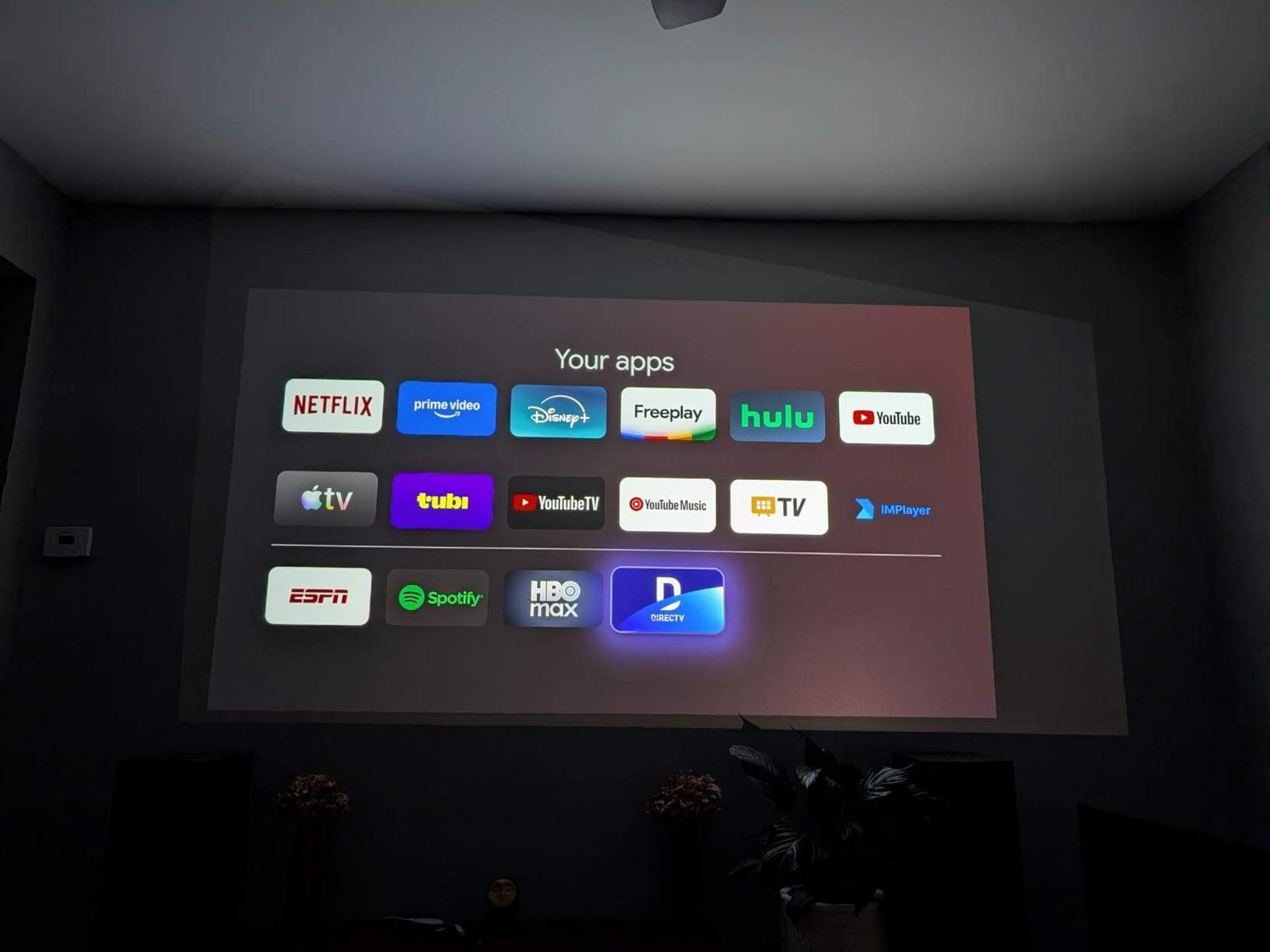
The gimbal stand is unusual in a home theater projector. It rotates 360 degrees and tilts 120 degrees, so you can aim the image at an angle, or swing the unit toward a side wall for a different aspect. There is also an M25 metric threaded mounting hole on the bottom, so a ceiling or wall bracket is possible despite the 3.5 kg weight.
Audio is better than the category norm. Dual 12W speakers in a 600cc chamber with Dolby Audio and DTS Virtual:X give you real sound without a soundbar, and HDMI eARC lets you pass audio to an external system when you want one. Google TV, WiFi 6 and Bluetooth 5.2 are all current-generation.
What 2000 ISO lumens does and does not cover
At 2000 ISO lumens this is the dimmest projector here, and that number matters more than any other spec when you pick a screen. On a 60 to 80 inch 1.0 gain screen in a shaded room, the picture is bright and the black level reads well. On a 120-inch screen in a room that is not blacked out, it will feel washed out and you will be reaching for the brightness control constantly.
So this is a projector to match to a room, not a room to match to a projector. If your screen will be 100 inches or larger, the BenQ TK710 or the ViewSonic PX701-4K are the same size class with considerably more light. If your screen is under 80 inches in a small room, this is the one that will suit you and cost you less to run.
The software complaints are real and worth planning around
Owners report that the platform has genuine problems. Storage cannot be expanded, app installs can fail, and the unit is not HDMI-CEC compatible, so a Roku or similar streaming box will not handshake and turn the projector on with the TV. Object avoidance can also trigger a geometry reset if a person walks in front of the lens, which is annoying in a room people walk through.
Our advice is to plan for an external streaming source from day one rather than fighting the built-in one. With eARC and strong built-in speakers, this projector pairs well with a soundbar and a media player, and then the software issues stop mattering. Warranty is one year, the shortest alongside the Valerion.
Who should skip it
Skip it for a dedicated theater. The 2000 ISO lumens and one-year warranty will disappoint anyone who expects a permanent install, and the object avoidance behavior is genuinely annoying in a room with foot traffic. Anyone who wants a fully integrated smart projector and expects the built-in apps to work reliably should look elsewhere.
It also carries one of the smaller review sets in this roundup at 62 reviews, so there is less independent long-term data behind the claims than the Epson and BenQ units have. That is not a disqualifier, but it is a reason to buy with return flexibility and to check the current owner feedback before you commit.
8. Epson Home Cinema LS11000: The Laser 3LCD Pick for Long-Term Installs
Epson Home Cinema LS11000 4K PRO-UHD Laser Projector with HDR10+
Laser 3-chip 3LCD
2500 lumens
120Hz with HDMI 2.1
Motorized lens shift
Pros
- Laser array source rated 20000 hours with near-instant power on
- Three-chip 3LCD gives 100 percent RGB with no rainbowing
- Precision Shift Glass Plate delivers 8.29 million pixels
- HDR10+ and HLG with 16-step real-time curve adjustment
- ARC and eARC let a soundbar work without a receiver
Cons
- Does not support 3D at all
- 28-pound body needs a professional mount
- Contrast falls short of native 4K DLP flagships in a dark room
- Two-year warranty with inconsistent availability
The LS11000 is the projector that comes up most often in home theater forum threads when people ask for a dedicated-room recommendation, and it earns that by combining the two things a permanent theater wants. It is a three-chip 3LCD engine, so there is no rainbow effect, and it is laser-lit, so there is no bulb to replace in twenty thousand hours.
It also powers on almost instantly and holds brightness consistently, which is the practical difference between a projector you use every night and one that collects dust. Owners upgrading from lamp-based units mention both of these in the same breath, and both are real quality-of-life gains in a room you actually use.
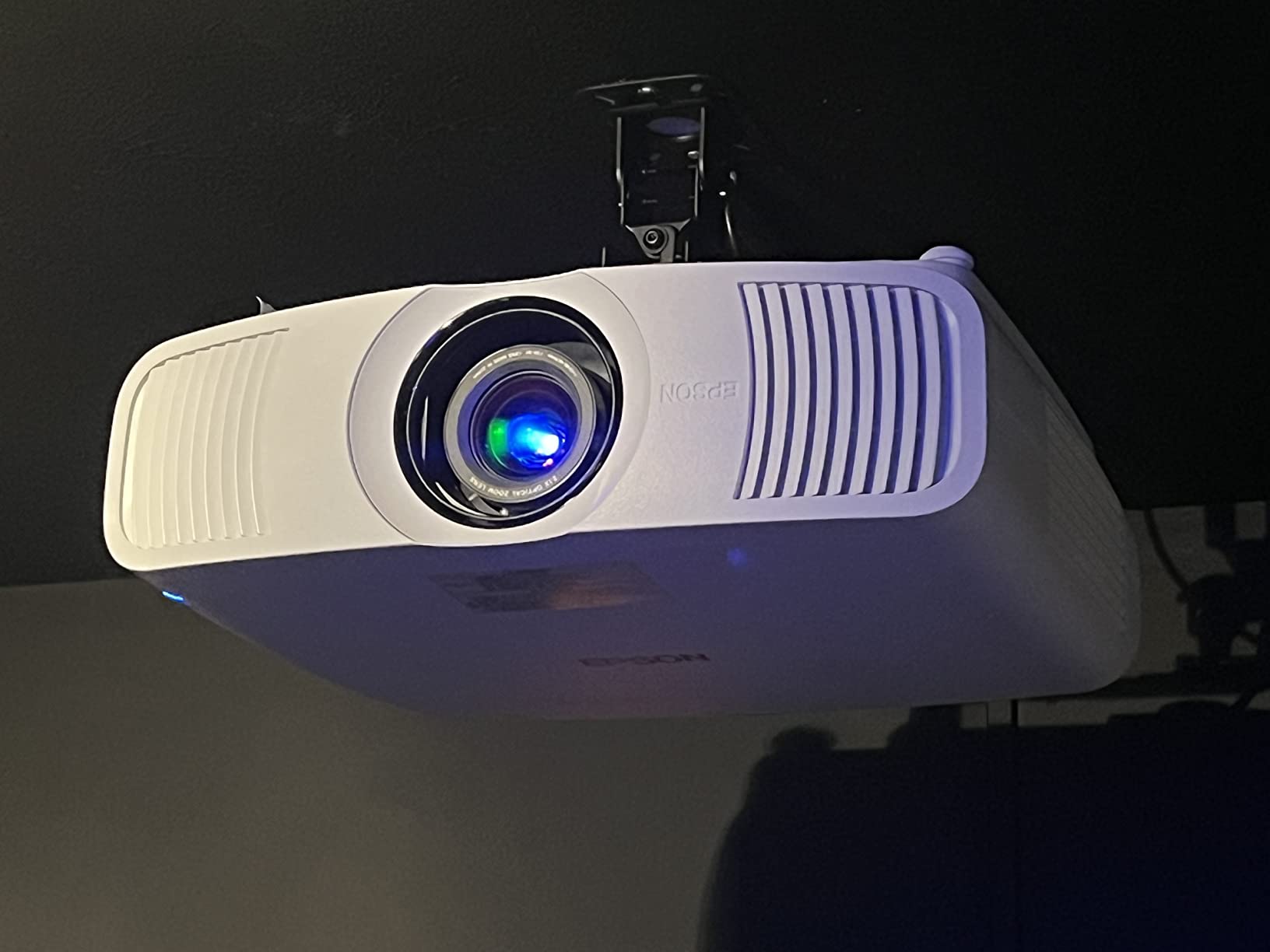
The resolution system is worth explaining properly. 4K PRO-UHD pixel shifting works with a Precision Shift Glass Plate to produce 8.29 million addressable pixels, which is the pixel count of a 4,096 by 2,160 image. The 10-bit HDR, HDR10+ and HLG support with 16-step real-time HDR curve adjustment is genuinely useful, since it lets you tune the HDR curve to a specific screen rather than accepting the default.
Connectivity is the best in this roundup for a fixed install. HDMI 2.1, USB, VGA and Ethernet cover signal, control and network in one cable run, and ARC plus eARC means a soundbar works with no receiver. Up to 120Hz refresh with frame interpolation handles fast motion. Image sizes run 50 to 300 inches from a 28-pound, 17.6 by 20.5 by 7.6 inch chassis.
Why eARC and HDMI 2.1 change the wiring plan
A dedicated theater usually has an AV receiver in a closet and cables in the ceiling. HDMI 2.1 with eARC means you can run a single cable to a soundbar and skip the receiver entirely for most content, which removes a component, a room of cables and a configuration step. If you do have a receiver, the 2.1 port is also the one to route 4K gaming through.
Ethernet matters more than it looks. A wired network on a projector means the smart platform, streaming apps and any control integration behave consistently instead of depending on the wifi in the theater. Plan a Cat6 run to the mount rather than relying on a repeater behind a closed wall.
The 3D omission is a real dealbreaker for some buyers
This projector does not support 3D. For a buyer with a shelf of 3D Blu-rays, that ends the conversation immediately, and it is the single most important thing to verify before purchasing. It is one of the few hard dealbreakers in this category that no firmware update can change.
The other caution is contrast. Owners report that in a fully dark room the picture falls short of native 4K DLP flagships and washes out with heavy ambient light. At 2,500 lumens it is a little dimmer than the DLP units here as well, so this is a projector for a room that is genuinely dark rather than one that is simply shaded.
Who should skip it
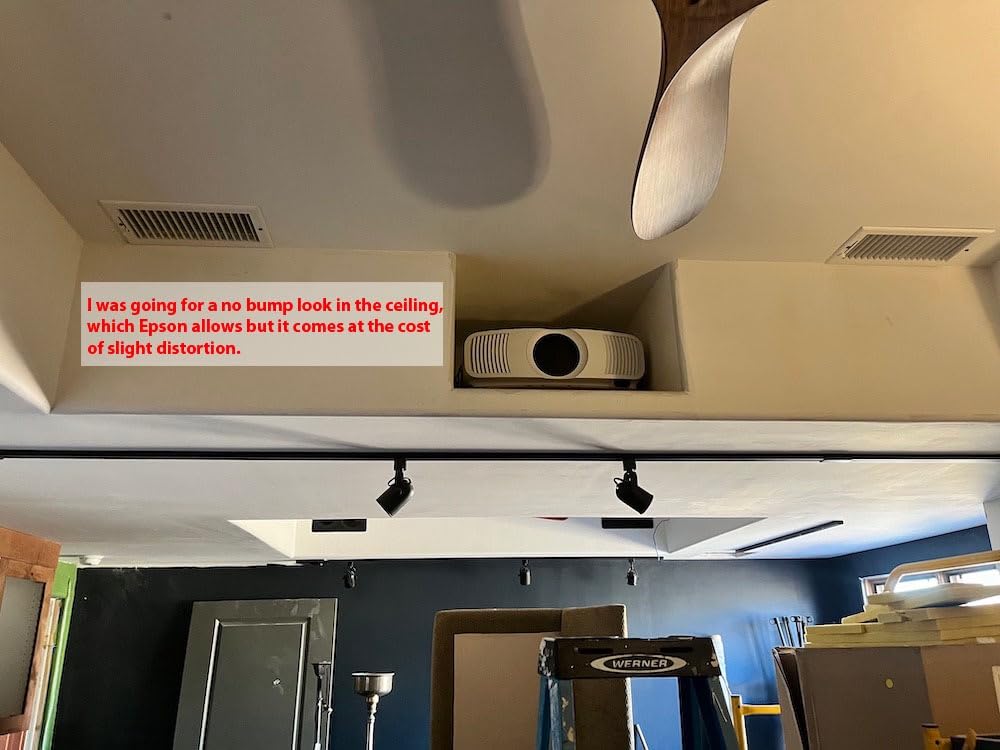
Skip it at 28 pounds if you are not committed to a permanent mount. This is the heaviest unit in the roundup and a professional ceiling install is advisable. Skip it if 3D matters, and skip it if you want a huge image in a room you watch in daylight.
One more note on ownership. There are one-star reports of units failing soon after delivery, and reviewers cite inconsistent availability alongside a two-year warranty. Check the current owner feedback at the time of purchase, and buy through a seller with a straightforward return policy, because that is the practical response to a small but real reliability complaint.
9. Epson Home Cinema 4010: The Widest Color Gamut on Three-Chip 3LCD
Epson Home Cinema 4010 4K PRO-UHD 3-Chip 3LCD Home Theater Video Projector
3-chip 3LCD with DCI-P3
2400 lumens
96 percent vertical lens shift
10 lens memory presets
Pros
- Full DCI-P3 color space
- about 50 percent wider than single-chip Rec.709 units
- 3-axis motorized lens with 47 percent horizontal and 96 percent vertical shift
- 10 lens memory presets handle scope screens without anamorphic glass
- Quiet in most picture modes
Cons
- Very large at 24.3 pounds
- a two-person ceiling install
- 4K HDR only at 30Hz not 60Hz
- No audio output
- Loud fan noise in the brightest Dynamic mode
The Epson Home Cinema 4010 was one of the first home theater projectors to cover the full DCI-P3 color space, and that is still the reason to consider it. DCI-P3 is roughly 50 percent wider than the Rec.709 color space that most projectors in this roundup target, and on a 110-inch screen the difference between a 96 percent Rec.709 projector and a DCI-P3 projector is not a subtle one.
It is also a three-chip 3LCD, so it shares the no-rainbow advantage of the other Epsons here. Owners upgrading from 1080p DLP or LCOS report a clear jump in brightness, color and perceived sharpness, which is the common experience of moving from 1080p to 4K enhancement on a large image.
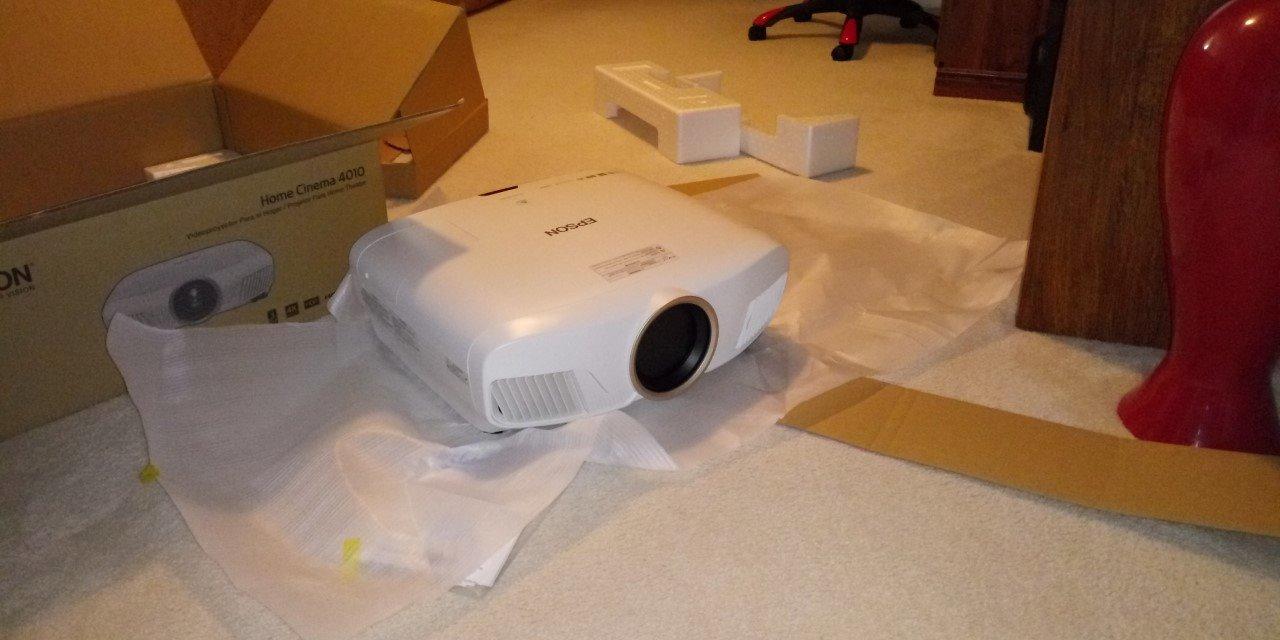
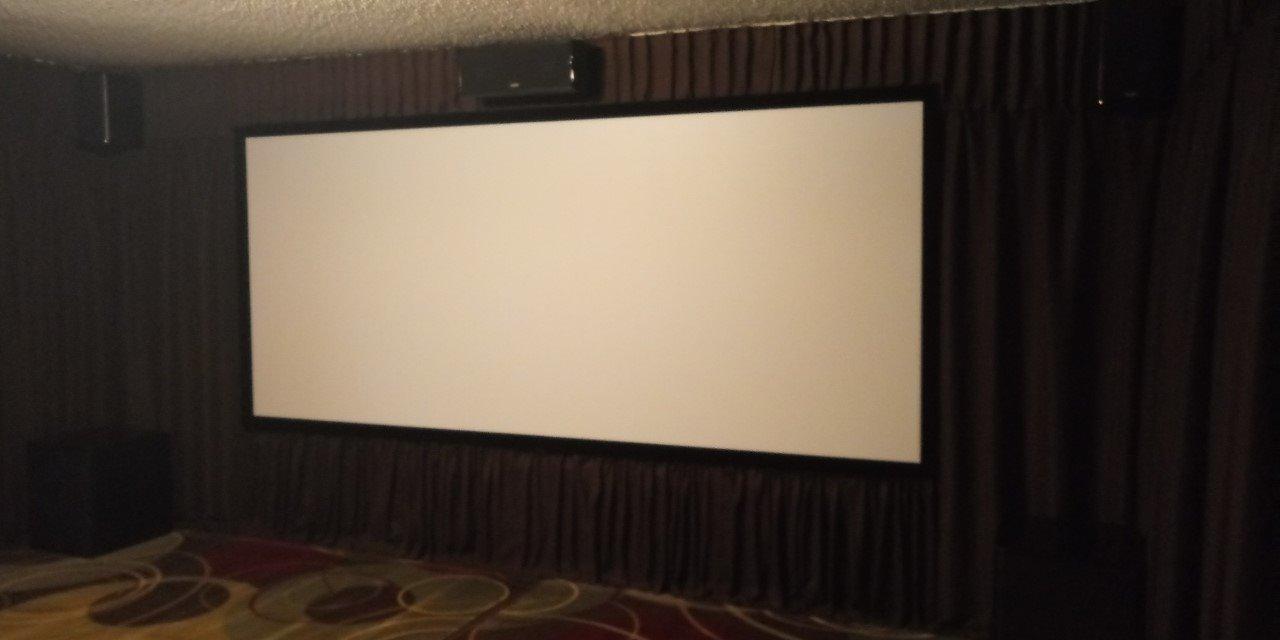
The lens is the standout feature and the reason we would not skip this unit on price alone. A 3-axis motorized precision lens provides 47 percent horizontal and 96 percent vertical shift, built on a 15-element Epson Precision Lens glass structure. Ten lens memory presets mean you can store framings for different aspect ratios and recall them from the ceiling-mounted position.
Those shift figures are what let this projector handle ultra-wide scope screens without anamorphic lens hardware, which is a genuinely expensive accessory. Brightness is rated at 2,400 lumens for color and white, HDR is processed at full 10-bit, and the 20,000-hour light source life is one of the longer ratings among the lamp-era units here.
Why lens shift percentages decide installs
Vertical lens shift of 96 percent means the lens can move the image almost a full image height without tilting the chassis. That is what allows a ceiling mount with a short drop to land a 120-inch image on a screen whose center is well below the lens. Horizontal shift of 47 percent does the same job left and right, which matters in a room where the screen is not centered on the projector position.
Because the movement is optical, no pixels are resized and no latency is added. Compare that to a projector that only offers keystone correction, which stretches and resamples the image, softening 4K detail and adding delay. On a permanent install this is the difference between a 20-minute setup and a two-hour one.
The 30Hz limitation is the one to check before buying
This projector accepts 4K HDR only at 30Hz, not 60Hz. For film and for 4K Blu-ray, where the source is 24fps, this is a non-issue. If you plan to game at 4K/60 or watch high-frame-rate content, it is a real limitation that you should weigh against the 5050UB in this same roundup.
There is also no audio output at all, so a receiver or soundbar is mandatory rather than optional. The 250-watt lamp means an eventual replacement, and fan noise in the brightest Dynamic mode is noticeably loud, which is worth knowing if the room is small and enclosed.
Who should skip it
Skip it at 24.3 pounds and 20.5 by 17.7 by 7.6 inches unless you are doing a permanent install. Two people or a professional are needed for the ceiling mount, and this is not a projector you will move between rooms. There is no audio out, so budget for a receiver.
Black level smoothing is also described as less refined than on higher-end models, which is the trade-off buyers accept to get DCI-P3 color and those lens shift figures. If your room is small, bright and shared, look at the Dangbei or the ViewSonic PX701-4K instead, both of which suit a smaller image far better.
10. ViewSonic LS901-4K: The Highest Rated Brightness for Large Lit Rooms
ViewSonic LS901-4K 4K UHD Laser Projector 5500 Lumens, HDR Home Theater
Laser 4K UHD
5500 ANSI lumens
Native 21:9 aspect
1.7x optical zoom
Pros
- Highest rated ANSI lumen output in this roundup at 5500
- 1.7x optical zoom with 100-inch image from 8.7 feet
- Native 21:9 aspect ratio for true widescreen
- 240Hz refresh with 4.2ms input lag
- Three-year parts and labor warranty with seven-year spare parts
Cons
- Small 30-review base for a model this new
- Highest power draw in the group at 520 watts
- No smart OS or streaming platform
- Single-chip DLP susceptible to rainbow artifacts
The ViewSonic LS901-4K has the highest rated brightness in this roundup by a wide margin, at 5,500 ANSI lumens. If your room is large, if you want a 120 to 150 inch image, and if you do not have full blackout, no other unit in this roundup has the rated output for that combination.
It is also the most flexible physically. A 1.7x optical zoom is the longest in this roundup, and a 100-inch image arrives from 8.7 feet of throw distance, which is shorter than the BenQ TK710 at 12.5 feet for 96 inches. Horizontal and vertical keystone plus curved-screen projection round out the placement options, and ceiling mount compatibility is supported.
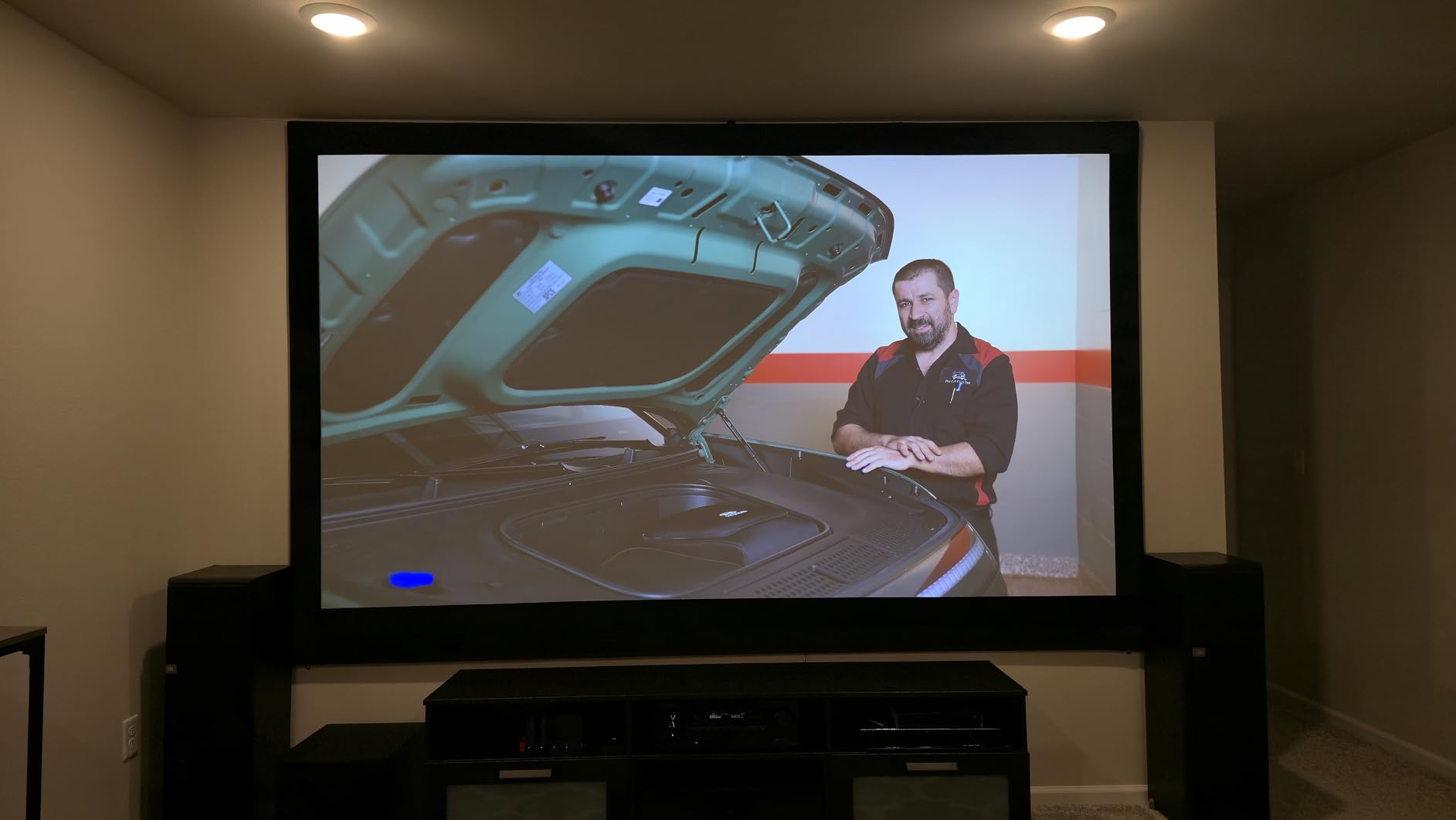
Two features distinguish it from a standard bright projector. The native 21:9 aspect ratio produces a true widescreen cinema framing without letterboxing a 16:9 source, and a golf simulation mode boosts environmental color for simulators. At 240Hz with 4.2ms input lag, it handles high-intensity gaming and fast sports as well as it handles movies.
The laser light source is rated 20,000 hours, and the warranty is three years on parts and labor with spare parts available for seven years, which is a genuinely useful long-ownership commitment. Image sizes run 30 to 300 inches, and the 10.7-pound chassis is easy to handle on a shelf or a modest ceiling mount.
Brightness is the whole argument, and the whole limit
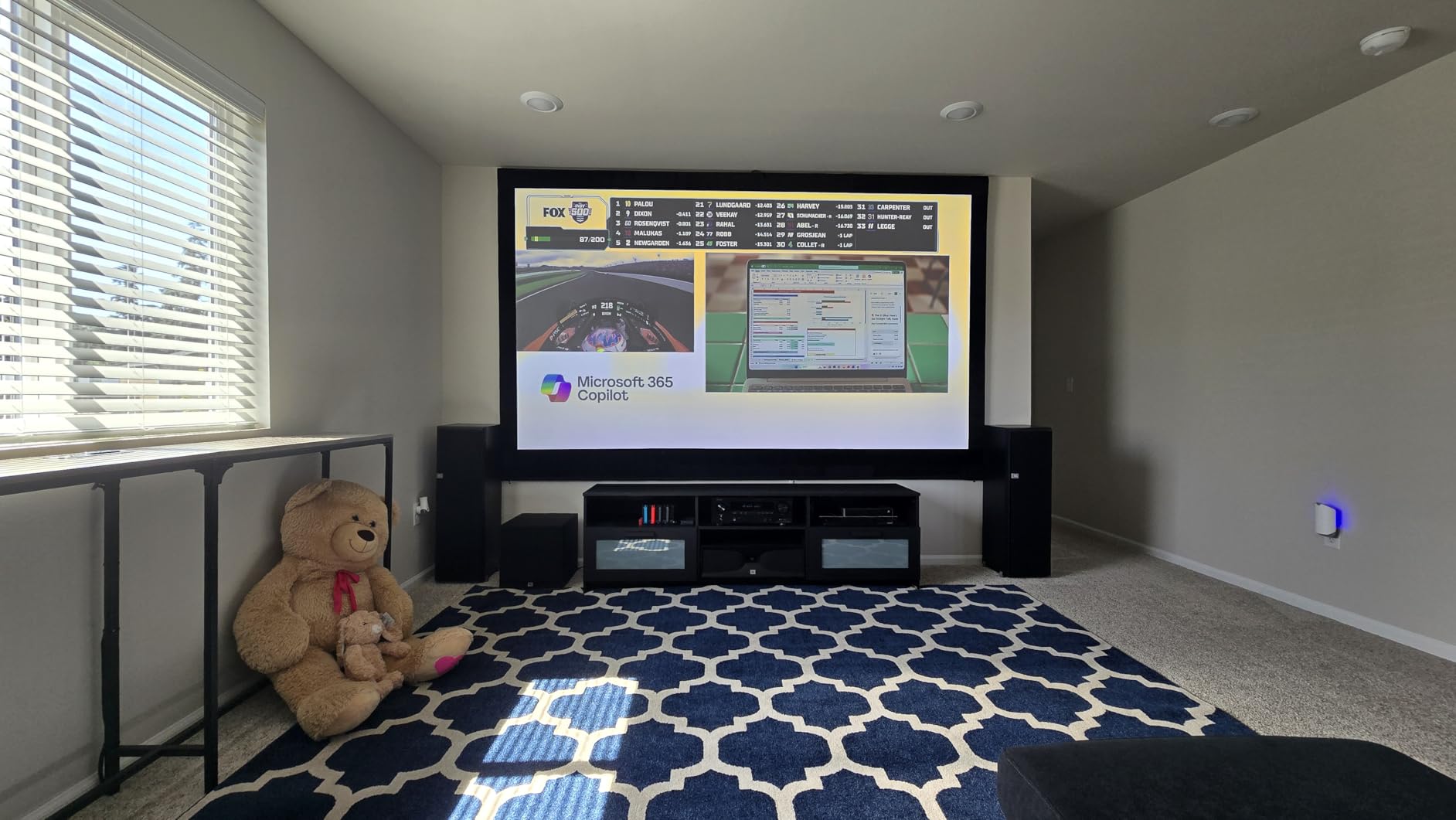
More lumens buy you two things: the ability to use a larger screen, and the ability to tolerate light in the room. At 5,500 rated ANSI lumens you can push toward 150 inches and still have output to spare, and you can watch with a lamp on. No other unit in this guide can do both.
The other side is that brightness is not contrast. A very bright projector in a dark room does not produce deeper blacks, and rated brightness across variants of this model is reported inconsistently at 5,500 versus 3,500 lumens, so check the specific figure for the unit you are buying. In a blackout-curtained theater at 100 inches, this projector is not the one we would choose.
Power draw, heat and the small review base
The 520-watt power draw is the highest here, with a 310-watt lamp-equivalent rating implying real heat output. In a closed room, plan ventilation clearance around the chassis and do not tuck it into a sealed cabinet. Operating cost over years also runs higher than the 110-watt Dangbei by a wide margin.
There is no smart OS and no streaming platform, so an external source is required, which is normal for this class. With only 30 reviews, there is far less independent long-term data on this model than on the Epson and BenQ units here, and that is the main reason it sits at the end of the list despite the impressive numbers.
Who should skip it
Skip it in a small room. A projector this bright is wasted below about 100 inches, and the power draw makes no sense in a den. It is also single-chip DLP, so the rainbow effect question applies as it does to every other DLP unit on this page.
Buyers who are risk-averse about a newer model with a small review base should wait for more long-term feedback, or choose a unit with several hundred reviews. The seven-year spare parts commitment is a genuine plus, but it is not a substitute for a track record.
How to Choose a 4K Projector for Your Room
The buying guide below is organized around the decisions that actually change your outcome, in the order you should make them. Most people start at price and work backwards, which is why so many projectors end up wrong for the space they are in. Start with the room instead.
Start with room fit, not resolution
Measure three things before you look at any model. The distance from your future projector position to your screen wall, the height available for a ceiling mount, and the width of the screen you want. Throw ratio converts the first number into the second and third, and no amount of image quality compensates for a projector that physically will not fit.
Three throw categories cover almost every home. A standard long-throw projector needs roughly 10 to 13 feet for a 100-inch image and is the right choice when you can ceiling mount at the back of the room. A short-throw unit reaches 100 inches from about 7 to 8 feet. An ultra short throw projector, like the Hisense PL2 in this roundup, projects from a foot or two away and is the only realistic option when you cannot mount anything to the ceiling.
Lens shift is the second part of room fit. Vertical and horizontal shift move the image optically so you can mount off-center, which means you do not have to fish-string the chassis into position or use digital keystone. Keystone correction resamples the image, which softens 4K detail and adds input lag, so treat a projector with shift and no keystone as the better tool.
Brightness: match lumens to screen size and room darkness
Brightness is the most abused specification in this category because ANSI and ISO lumens are different measurement standards and manufacturers quote whichever flatters the product. Compare ANSI to ANSI and ISO to ISO, and treat every figure as a rated number rather than a promise.
The practical rule is that a 1.0 gain 100-inch screen in a fully dark room looks well exposed around 1,000 to 1,500 lumens. A 120-inch screen needs roughly 25 percent more output for the same brightness, so plan for 1,500 to 2,000 lumens. A media room with a lamp on, or a screen above 130 inches, pushes you toward 3,000 ANSI lumens and above, which is the range the ViewSonic LS901-4K exists to serve.
Screen gain changes this. A 1.3 to 1.5 gain ALR screen reflects more light back to the seating position, which lets a dimmer projector read brighter and rejects more ambient light. That is the standard pairing for the Hisense PL2 and worth budgeting for, since screen choice is where forum buyers are most often surprised by the total system cost.
DLP or 3LCD: the only decision that is personal
Every other comparison in this category has an objectively better answer. DLP versus 3LCD does not, because it comes down to whether you can see rainbow artifacts.
Single-chip DLP cycles red, green and blue through one micromirror array, which is fast, compact and produces excellent sharpness and contrast. The side effect is potential color fringing on dark, high-contrast scenes. Three-chip 3LCD uses separate panels per color, so there is no fringing at all, plus full RGB brightness, at the cost of a larger chassis, more power and slightly lower contrast. If you know you are sensitive to the rainbow effect, the 3LCD route is the correct one regardless of the spec sheet.
On light source, laser versus LED versus lamp is simpler. Laser gives you 20,000 to 30,000 hours and no maintenance, and it is the only option that handles high brightness in a sealed theater. Lamp is cheaper to buy and perfectly fine if you accept a replacement eventually. RGB triple laser gives the widest gamut and the best color, with visible laser speckle that some viewers dislike. A single-color laser is the middle ground and the most common choice here.
HDR formats and gaming specifications
For HDR, HDR10 is the baseline on everything in this roundup and HLG is for broadcast. HDR10+ adds scene-by-scene metadata, which only helps on content that carries it, and it is worth having. Dolby Vision is the format most dedicated theater projectors lack, so if you stream rather than play discs, check for it specifically. The Valerion and the Hisense PL2 both carry Dolby Vision in this group, which is one reason they stand out for streaming.
For gaming, input lag under 30ms is fine for console play and under 20ms is comfortable for competitive shooters. If your setup is a desk or a small media nook rather than a theater, our 4K gaming monitor roundup covers the response-time end of that conversation, where a monitor usually wins outright. HDMI 2.1 with 48 gigabit bandwidth is what unlocks 4K at 120Hz, and ALLM or VRR handles variable refresh rates automatically. Note the distinction in the specs above: the BenQ TK710 quotes 4ms at 1080p/240Hz and 16ms at 4K/60Hz, so read both numbers rather than the headline.
Installation and the cost nobody mentions until it is too late
Budget for the system, not the projector. A 100 to 120 inch screen, a ceiling mount, an HDMI cable run, surge protection, an AV receiver or soundbar, and acoustic treatment for the room will together cost several times the projector figure. Buyers who plan only for the projector end up compromising on the screen, which is the single accessory that affects image quality most after the projector itself.
On install specifically, plan ventilation clearance, use the service menus to set the lens before you fine-tune the image, and mount the chassis level. If you are installing cabling, run two conduits rather than one, because you will want a spare. And decide on screen color early. A white screen in a dark room reflects more light back into the lens and lowers perceived contrast, which is why serious dedicated rooms use a light gray or gray screen.
Frequently Asked Questions
What is the best 4K projector for home cinema?
The Valerion VisionMaster Pro2 is the best 4K projector for home cinema in this roundup. Its rated 15,000:1 contrast with Enhanced Black Level produces the deepest blacks here, the RGB triple-laser engine is rated free of rainbow effects, and the 0.9 to 1.5x throw ratio fits rooms most competitors cannot. It is a heavy, permanent-install unit with a one-year warranty.
Which type of projector is best for a home theater?
For a dedicated dark room, a long-throw laser or single-color laser DLP projector with measured contrast is the best type, because contrast determines whether a large image looks cinematic or washed out. Three-chip 3LCD wins if you see rainbow artifacts. Short throw suits rooms under 10 feet deep, and ultra short throw is the only option when you cannot ceiling mount at all.
How bright should a 4K projector be for a home theater?
Plan on roughly 1,000 to 1,500 lumens for a 100-inch 1.0 gain screen in a fully dark room, 1,500 to 2,000 lumens for a 120-inch screen, and 3,000 ANSI lumens or more for a media room with lights partially on or a screen above 130 inches. Compare ANSI to ANSI and ISO to ISO, since the two standards are not directly comparable.
Do I need a native 4K chip or is pixel shifting good enough?
Pixel shifting is good enough for most buyers. Epson 4K PRO-UHD and DLP XPR both shift a 1080p-class array to produce 8.3 million addressable pixels, and on a 110-inch screen at normal seating distance most viewers cannot tell the difference. Native 4K panels become worth the cost above roughly 130 inches, in a wide room, or if you sit in the front row.
Which projector avoids rainbow artifacts and laser speckle?
Three-chip 3LCD projectors avoid rainbow artifacts entirely because red, green and blue use separate panels with no sequential color cycling, which makes the Epson Home Cinema 5050UB and LS11000 the safest choices for sensitive viewers. Laser speckle is different and comes from RGB triple laser light sources, so the Valerion VisionMaster Pro2 is the one model here to test carefully if speckle bothers you.
What input lag is good for gaming on a projector?
Under 30ms is comfortable for console gaming, and under 20ms suits competitive shooters. The BenQ TK710 quotes 4ms at 1080p/240Hz and 16ms at 4K/60Hz, the ViewSonic models run 4.2ms at 240Hz, and the Valerion reaches 4ms on ultrawide modes. Look for HDMI 2.1 for 4K at 120Hz and for ALLM or VRR support.
How much does a full home theater projector setup cost in total?
The projector is typically less than half the system cost. Add a 100 to 120 inch screen, a ceiling mount, an HDMI cable run, surge protection, and an AV receiver or soundbar, and the total runs well above the projector figure. A gray or light-rejecting screen makes the largest difference to final image quality, which is why it is the accessory worth spending on first.
Final Verdict: Which 4K Projector Belongs in Your Theater
If you have a dark dedicated room and want the best image in this group, choose the Valerion VisionMaster Pro2 and plan for a permanent ceiling mount. If rainbow artifacts or sensitivity to them are the deciding factor, the Epson Home Cinema 5050UB gives you three-chip 3LCD color purity and a motorized lens at the cost of size and an eventual lamp. If the budget is the first constraint, the ViewSonic PX701-4K is the one I would put in a first theater build.
For a room that cannot be fully darkened, the BenQ TK710 or the ViewSonic LS901-4K buy you the lumens to stop fighting the light. For a living room with no mounting options, the Hisense PL2 is the answer, provided you budget for a real screen. For a small room under 80 inches, the Dangbei DBOX02 Pro fits the space, but add an external streaming box because of the CEC limitation.
Whichever one you choose, measure your throw distance before you order, budget for the screen and the mount as part of the purchase, and buy through a seller with a straightforward return policy. Projectors are the rare category where a week in your own room changes your mind more reliably than any specification. That is the full list of the best 4K projectors for home theaters for 2026, and we update it as new models land.
Leave a Reply