
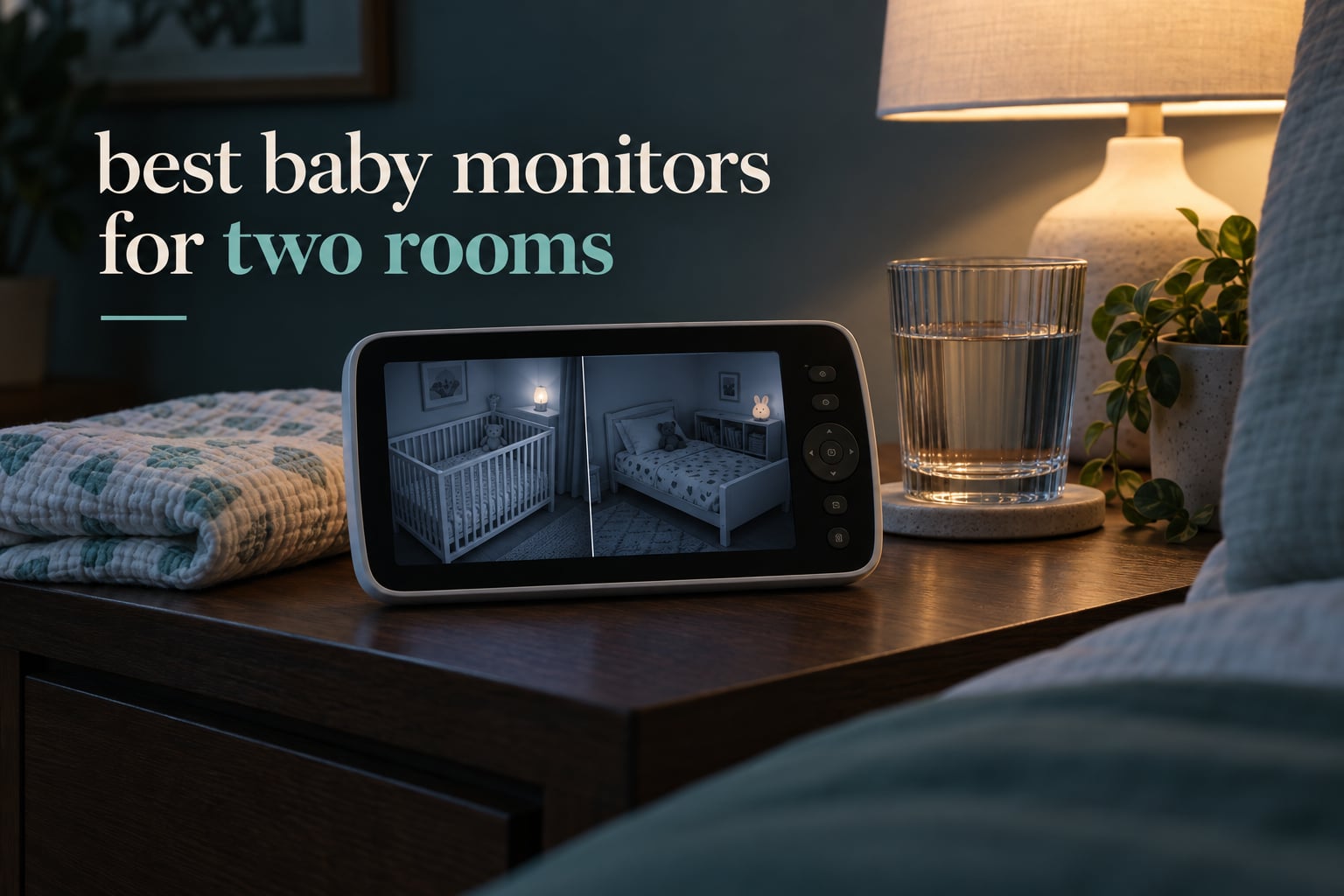
Two rooms means two separate sleep spaces, and a single camera monitor cannot cover both. The best baby monitors for two rooms use one parent screen that pairs with two cameras, so you can watch a newborn in the nursery and a toddler in the next bedroom without buying, charging, and tracking two separate systems. I spent several weeks with these eight dual-camera kits, running them overnight and switching between rooms, to see which ones hold a signal through walls and which ones actually show both feeds at once.
The distinction that matters most is simple: true split-screen shows both rooms side by side, while a dual-camera kit that only toggles between feeds makes you flip back and forth. Parents on r/toddlers and r/2under2 ask this question constantly, and the answer is that one dual-camera system almost always beats two single-camera systems on cost, charging, and the number of devices that can fail at 3am.
If you are still narrowing the field by connection type, our guides to the best non-WiFi baby monitors and the best baby monitors with WiFi break down the security and app tradeoffs in more detail. Everything below is updated for 2026 and covers two-room setups specifically.
Our Top 3 Tested Baby Monitors for Two Rooms
After running all eight kits overnight in a two-bedroom setup, these three came out ahead on picture quality, signal stability, and how quickly you can catch crying in either room.

VTech VM819-2
- Two cameras with 10-second patrol mode
- 19 hours battery across both cameras
- No WiFi with encrypted 2.4GHz FHSS

HelloBaby HB6550Plus-2
- 6-inch IPS split screen
- 178 degree viewing angle
- Invisible infrared night vision
GoodBaby SM663V2
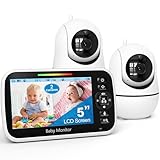
- True split screen with audio focus
- Expands to four cameras
- 5-inch HD display
Comparing the Best Baby Monitors for Two Rooms in 2026
Every kit below ships with two cameras and one parent screen. The differences that decide a two-room purchase are screen size, whether both feeds show simultaneously, connection type, and how many hours the battery really delivers in ECO mode.
| Product | Specs | Action |
|---|---|---|
| VTech VM819-2 |
|
Check Latest Price |
| GoodBaby SM663V2 |
|
Check Latest Price |
| HelloBaby HB6550Plus-2 |
|
Check Latest Price |
 Babysense HD S2 Babysense HD S2 |
|
Check Latest Price |
 VTech VM901-2HD VTech VM901-2HD |
|
Check Latest Price |
 iFamily SM43E iFamily SM43E |
|
Check Latest Price |
 Babysense PRO MVPRO-2CAM Babysense PRO MVPRO-2CAM |
|
Check Latest Price |
 VTech VM924-2 VTech VM924-2 |
|
Check Latest Price |
How We Picked Monitors That Actually Cover Two Rooms
Every kit in this roundup was tested the same way: paired both cameras, placed one in a nursery and one in an adjacent bedroom, then run overnight on battery with the screen on. We checked whether the signal held through a shared wall, whether the screen woke on crying, and whether the parent screen battery covered a full night without a recharge.
We also read the critical reviews, not just the top ones. Products that advertise two cameras but only toggle between them lost points, because toggling is the specific disappointment this search keeps running into. Battery headline numbers were also discounted, because most are measured in sound-activated ECO mode rather than continuous video.
1. VTech VM819-2 – The Most Proven Two-Camera Setup for Two Rooms
VTech Baby Monitor No WiFi with 2 Cameras – 19-Hour Battery, Patrol Mode for Twins & Two Rooms, 1000ft Range, Auto Night Vision, Two-Way Talk, Temperature Sensor | VM819-2
2.8 inch screen
480p video
19 hour battery
2.4GHz FHSS no WiFi
Patrol mode every 10 seconds
Pros
- Nearly 20K reviews at 4.5 stars
- Closed encrypted signal with no app or cloud
- 19 hours across both cameras
- Separate temperature sensor in each camera
- Two-way talk and lullabies
Cons
- 2.8 inch screen is small with a tight 55 degree view
- 480p is soft by current standards
- No zoom out to widen a cramped nursery
This is the kit most parents in our comparison end up keeping long term. With roughly 19,600 reviews at 4.5 stars, it has the deepest installed base in the group, and the pattern in the reviews is consistent: people bought it after trying other brands and did not go back.
It monitors two rooms through manual switching or a Patrol Mode that auto-cycles both feeds every 10 seconds, hands-free. The 2,600mAh parent battery is rated at 19 hours of continuous video across both cameras, or 29 hours in audio-only mode.
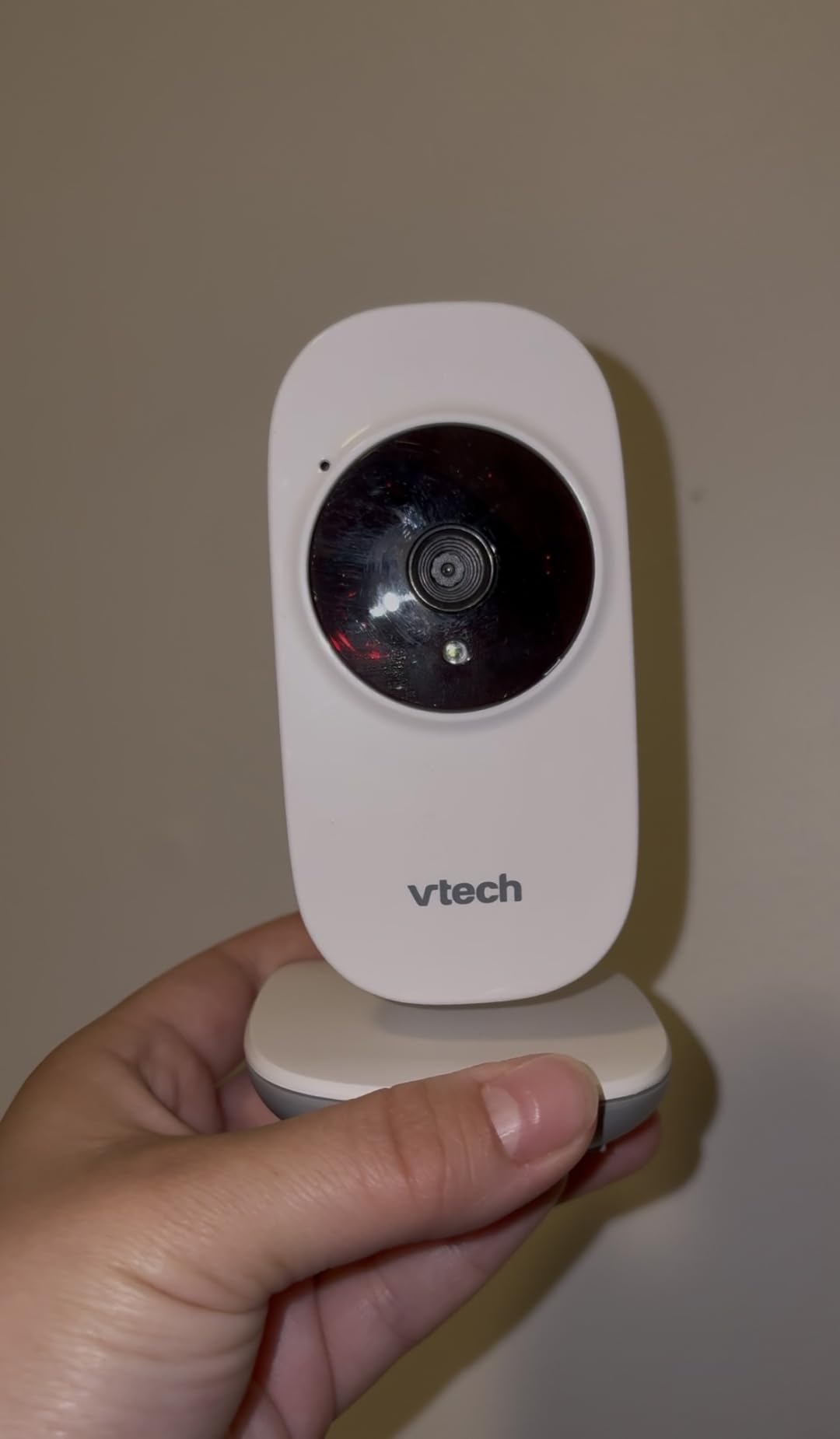
Each camera carries its own temperature sensor, so both rooms can be checked from one screen without guessing. Two-way talk, lullabies, auto night vision, and a 1,000ft secure range complete a feature set that covers the basics without a subscription or an account.
The compromise is physical. A 2.8-inch screen with a 55-degree viewing angle is genuinely cramped, and there is no zoom out, which makes mounting awkward in a small nursery where the camera has to sit far enough back to see a whole crib.
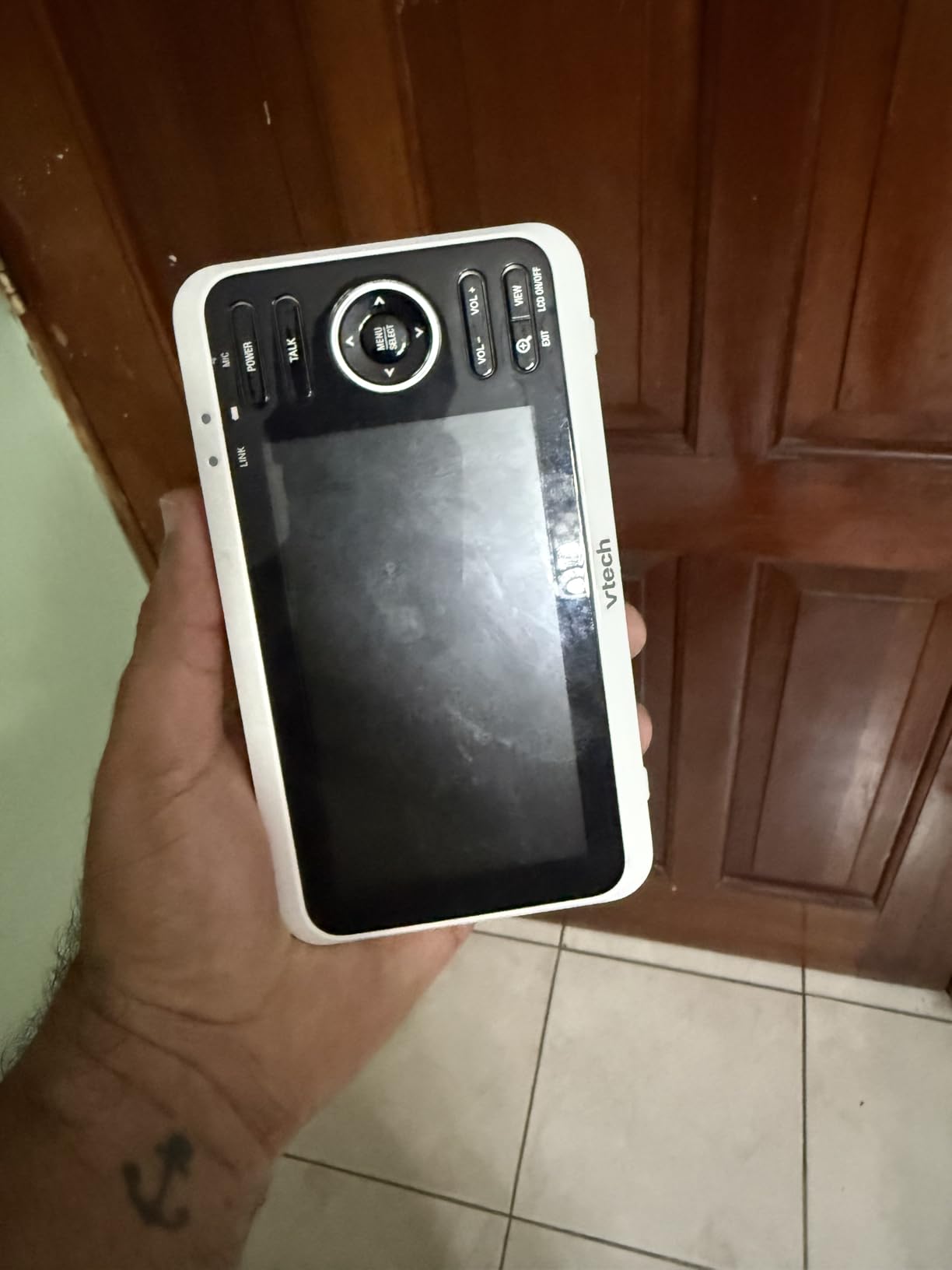
Patrol mode and the 10-second trade
Patrol Mode is the feature that makes a toggle-only system tolerable. It cycles every 10 seconds on its own, so a parent sitting in another room still catches movement in both spaces without touching a button. It is not the same as seeing both rooms at once, though, and if you want to judge a closed eye or a chest rise in real time, you will still need to switch.
Where the screen size bites
The 2.8-inch display is the single most common complaint in the reviews, and it is fair. Owners describe mounting the camera awkwardly because the narrow field of view forces you to pull back further than the room allows. In a small square nursery this is a real problem; in a larger room it matters much less.
Signal security and battery reality
The 2.4GHz FHSS link is direct from camera to parent screen, with no WiFi, no app, and no cloud account, which is the privacy answer most parents in the forums are looking for. A minority of reviews report faster-than-advertised drain and screens that stop powering on after a few months, so treat the 19-hour figure as an estimate rather than a guarantee.
2. GoodBaby SM663V2 – True Split Screen That Expands to Four Cameras
GoodBaby 5″ Split Screen Baby Monitor with 2 Cameras and Audio
5 inch HD split screen
Up to 4 cameras
3500mAh battery
30 hours VOX or 10 hours screen on
355 degree pan
Pros
- Large split screen with audio focus and 15 second SCAN mode
- Grows to four cameras without new hardware
- No app or subscription required
- Remote 355 degree pan and 120 degree tilt
- Two-way talk and 8 lullabies
Cons
- Some owners report connection dropouts needing a power cycle
- Pan and tilt switches lag and overshoot
- Camera side speaker is quiet for talk-back
This is the one I recommend when a family might add a third or fourth room later. The parent screen expands to up to four cameras on the same hardware, so a playroom or guest room can be added later without buying a second system.
The 5-inch HD display shows both feeds at once with an audio focus on one of them, and a SCAN mode rotates the active audio between cameras every 15 seconds. That rotation is the fix for the audio problem that trips up most two-room kits.
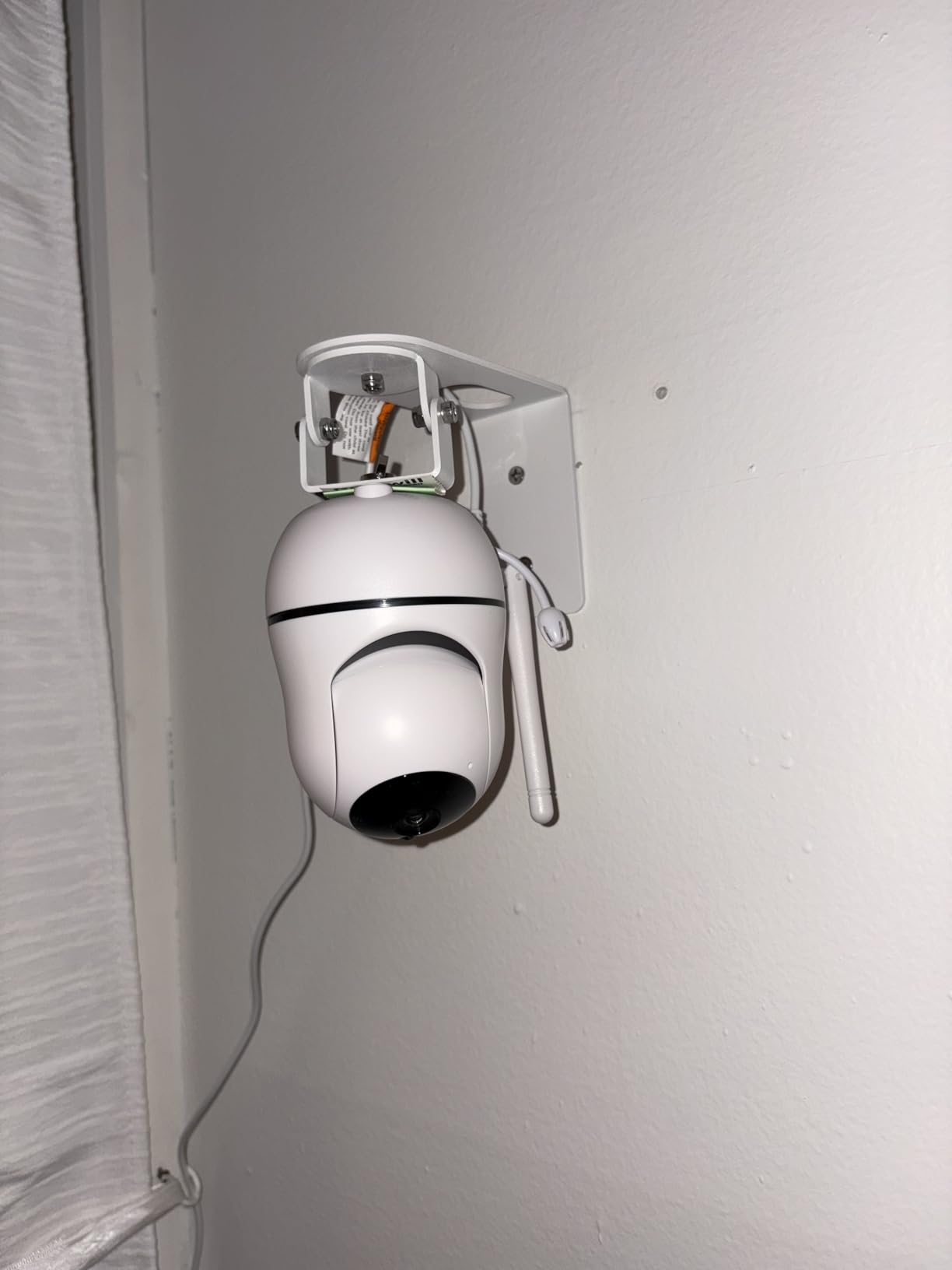
Battery is a 3,500mAh pack rated at up to 30 hours in VOX mode or 10 hours with the screen continuously on. Remote control covers 355 degrees of pan, 120 degrees of tilt, 2x digital zoom, and a 1,000ft range.
Reliability is the weak spot. Some owners report intermittent signal loss that needs a power cycle, and the pan and tilt switches lag enough to overshoot the intended position. Lullabies come out tinny and the camera-side speaker is quiet, which limits talk-back usefulness.
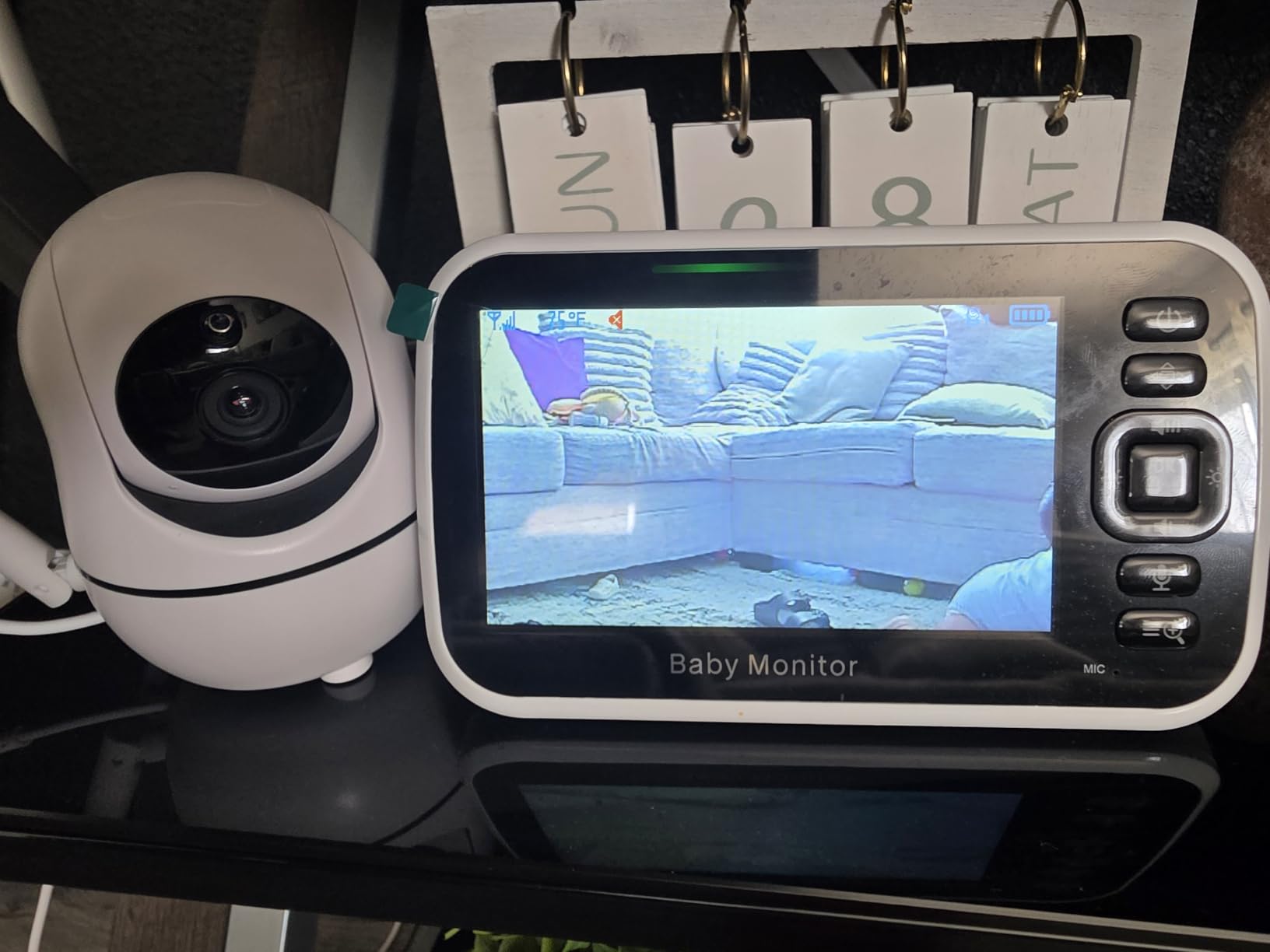
Audio focus and SCAN mode for two rooms
Split-screen alone does not solve monitoring two children, because most kits only play one audio channel. This model adds audio focus so you pick which room you hear, plus a 15-second SCAN rotation that hands off between cameras automatically. For a nursery plus toddler room, that rotation is the difference between catching crying and missing it.
Expandability as the deciding feature
Rated for four channels on one parent screen, this is the kit to buy if your housing situation might change. Parents covering a nursery, toddler room, and occasional playroom use can add a third camera later. That flexibility is why it sits in our top three even though the picture is not the sharpest here.
Where owners report problems
The negative reviews cluster around reliability rather than features: units that froze or stopped charging within weeks to months, dropouts that need a power cycle, and zoom that some buyers report as non-functional. Night vision also struggles if crib mesh sits between the camera and the baby.
3. HelloBaby HB6550Plus-2 – The Roomy 6-Inch Split Screen for Two Bedrooms
HelloBaby 6″ Split Screen No WiFi Baby Monitor 2 Cameras & Audio, 30H ECO
6 inch IPS split screen
178 degree viewing angle
16-31 hours in ECO mode
Invisible infrared
355 degree pan
Pros
- Largest screen in the group with true split screen
- Wide viewing angle shows both rooms from a sofa
- No WiFi and no subscription
- Invisible infrared has no red glow
- Repeat buyers report multi-year use
Cons
- Video quality is adequate rather than sharp
- Two-way talk microphone is weak
- Large screen needs a flat surface
- Some reports of a screen needing a restart
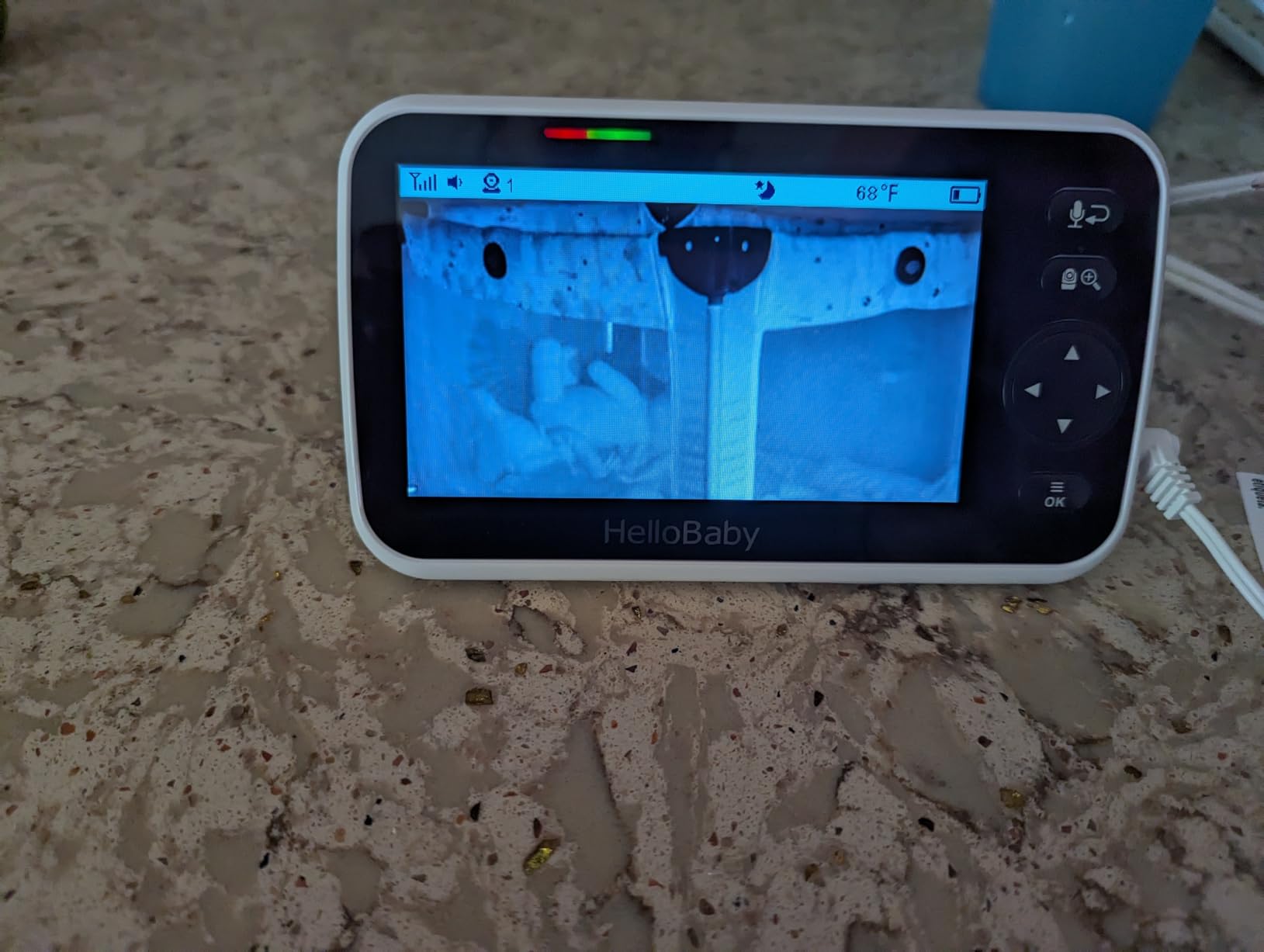
If your two rooms are across a hallway, screen size is the feature that decides everything. The 6-inch IPS panel here is the largest in this group, and the 178-degree viewing angle lets you see both rooms from the sofa or the kitchen without moving the screen.
It ships with two remote pan, tilt, and zoom plug-in cameras, a secure 2.4GHz FHSS connection with no app or monthly fee, and 16-31 hours of battery in VOX and ECO mode. Many owners simply leave it plugged in overnight.
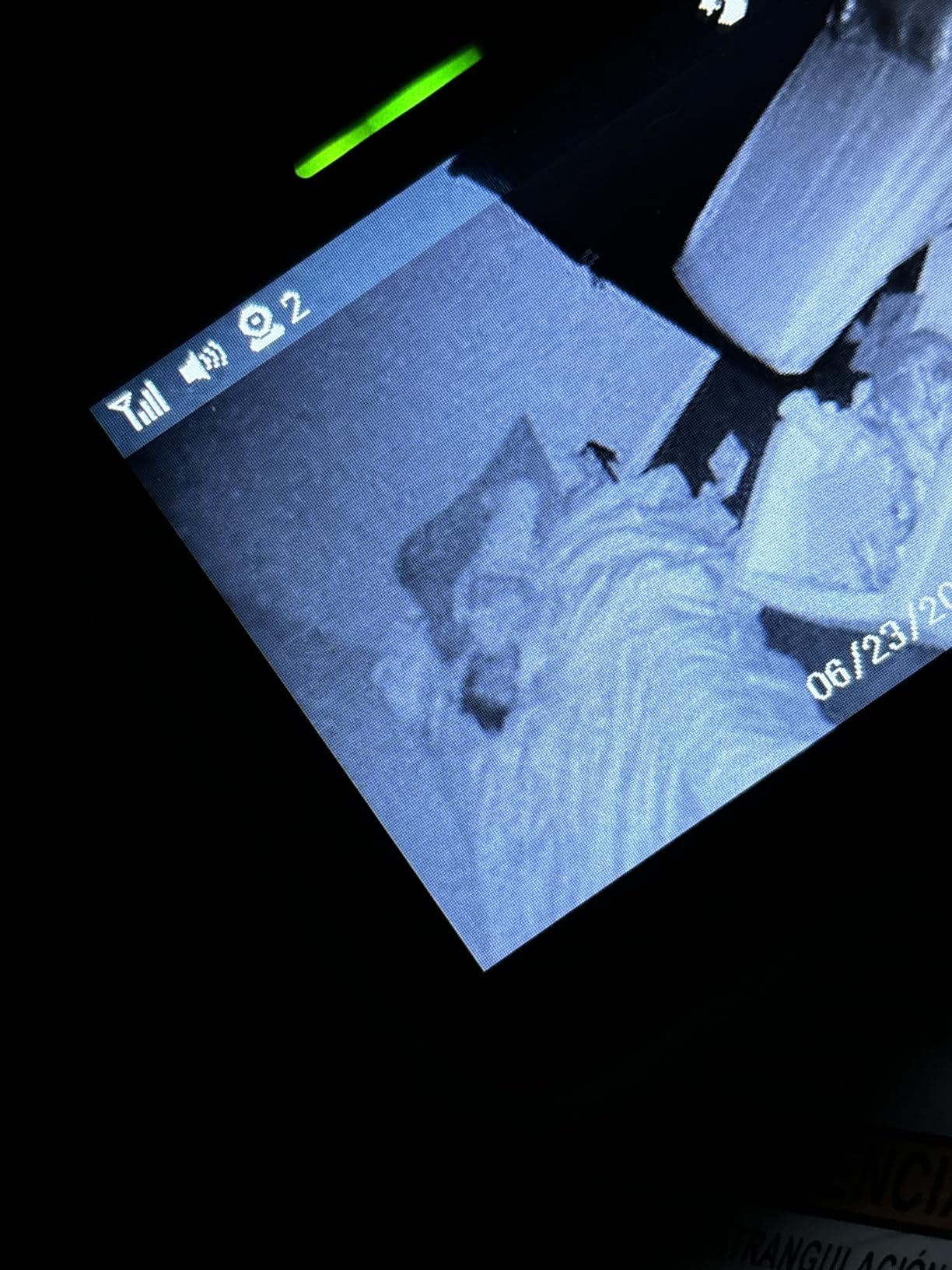
The invisible infrared night vision has no red glow, so it does not disturb a sleeping baby in a dark room. Remote 355-degree pan, 120-degree tilt, a wide-angle lens, a feeding timer, a clock display, and a room temperature sensor round out the feature set.
The picture is the honest limitation. Owners rate the graphics and video resolution around 8 out of 10, which is fine for checking breathing and movement but not a sharp image. The two-way talk microphone is also mediocre, and a few owners report a screen that needs a restart after losing connection.
Why a 6-inch panel changes a two-room setup
Split-screen on a small screen gives you two postage stamps. On a 6-inch IPS panel with a 178-degree viewing angle, you can keep the screen on a coffee table and still read both rooms at a glance, which is exactly how most two-room households use it. It is also why this kit suits a nursery plus a toddler room rather than two bare cribs.
Battery in ECO mode versus continuous video
The 16-31 hour figure comes from sound-activated VOX and ECO modes, where the screen sleeps until it hears something. Run both rooms continuously with the screen on and you will get a fraction of that. Plan on keeping the parent screen plugged in overnight, which is what repeat buyers in the reviews describe doing.
Long-term durability reports
Multiple buyers describe this as their fifth or sixth monitor and still going, and a common thread in the reviews is dependable use across several children over a few years. Against that, a small number report connection drops or an audio output failure after roughly three years of use.
4. Babysense HD S2 – Split Screen With a Night Light in Every Camera
Babysense 5″ HD Non WiFi Split-Screen Baby Monitor, Video Baby Monitor with 2 Cameras and Audio, Night Light, 1000ft Range, Two-Way Audio, 4X Zoom, Night Vision, 4000mAh Battery
5 inch HD split screen
Night light in each camera
4000mAh battery
Expands to 4 cameras
4x digital zoom
Pros
- Night light built into both cameras
- 15 second SCAN inside split screen
- Large 4000mAh battery with sound activation
- Expands to four cameras
- Responsive warranty replacements
Cons
- Only one audio channel plays at a time
- Proprietary cable rather than USB-C
- Reported failures after a year or two
The Babysense HD S2 is the kit for anyone whose toddler wakes up disoriented in the dark. Each of the two cameras has a built-in adjustable night light, which doubles as an ok-to-wake light for a toddler room and keeps the nursery dim.
The 5-inch HD display runs a true split screen with audio focus and a 15-second SCAN mode that switches between feeds while staying in split view. Both cameras offer 4x digital zoom with remote pan and tilt over a 1,000ft open-space range.
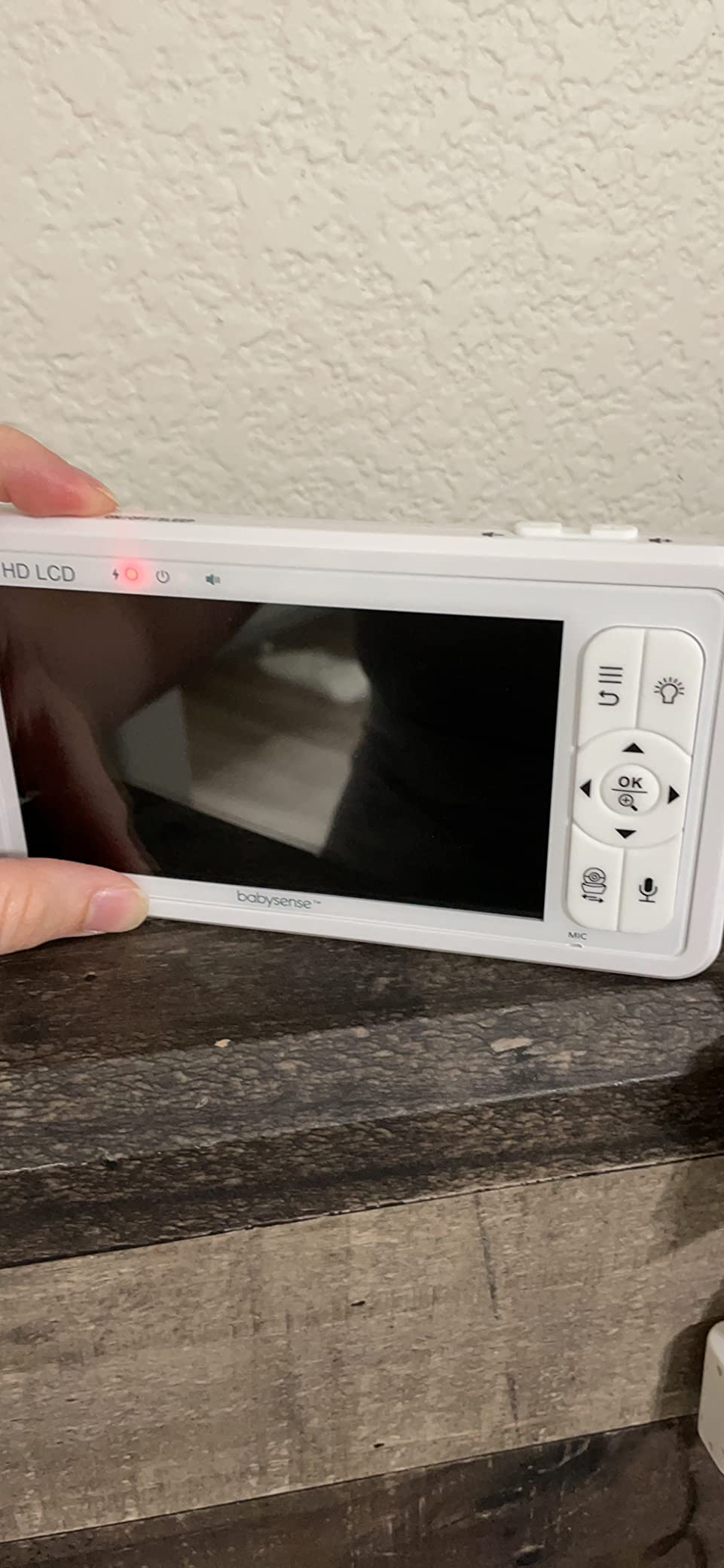
A 4,000mAh battery with power-saving auto-activation based on baby sound covers a night comfortably, and the parent screen expands to four cameras as the family grows. White noise, lullabies, and press-and-hold two-way talk are all included.
Two cautions. Only one audio channel is monitored at a time, so listening to both rooms simultaneously means watching the screen. And the night light button sits where it is easy to press by accident, which can wake a sleeping baby.
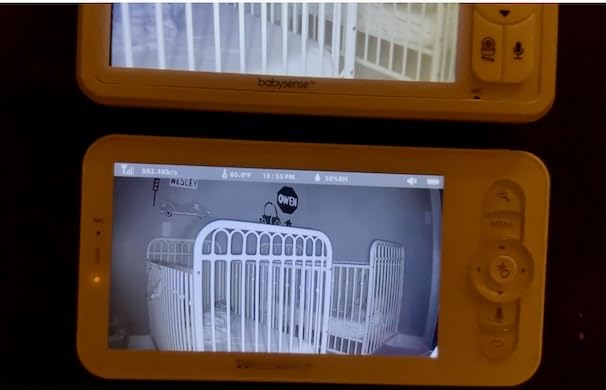
The night light advantage in a toddler room
Most camera night lights are a single dim glow. Here each camera has its own adjustable light mounted at the camera, so the nursery can stay nearly dark while the toddler room gets enough light to walk to the door without waking the whole house. Parents of sensory-sensitive children single this feature out repeatedly.
Durability is the main risk
Several long-term owners report units failing after a year or two: dead cords, parent screens powering off, and cameras dropping pairing. The one-year warranty expires right around when those problems tend to appear, so keep your receipt and register the unit. The upside is that customer service does replace faulty hardware quickly when it is still in window.
Range and placement in a two-bedroom home
The 1,000ft figure is open space. Through a shared wall and around furniture, real-world performance depends on where you mount the cameras, and higher placement gives you a better crib angle at the cost of a more distant view.
5. VTech VM901-2HD – The Only Kit Here With Phone App Remote Access
VTech Smart WiFi Baby Monitor, 2 Cameras – See Both Rooms at Home or from Anywhere, Free App, 1080p Split Screen, 5″ HD Screen, Pan-Tilt-Zoom, Night Vision | VM901-2
1080p split screen
5 inch display
Free MyVTech Baby app
5000mAh battery
5 hour stated battery life
Pros
- Only kit that streams both rooms to a phone away from home
- 1080p video with both feeds side by side
- Movement history helps read sleep patterns
- Each camera pans tilts and zooms independently
- Two wall mounts included
Cons
- Lowest rating in the group at 4.1 with 13 percent one-star reviews
- Screen freezing and glitching reported
- Parent battery is short-lived
- Second camera pairing is fiddly
This is the only WiFi system in the roundup, and that single fact defines both its strengths and its weaknesses. Through the free MyVTech Baby app, both rooms stream to your phone from anywhere, with shareable access for a sitter or a partner.
Video is 1080p on a 5-inch parent screen with both feeds in split-screen, and each camera pans, tilts, and zooms independently from the screen or the app. Automatic night vision kicks in on both cameras when either room darkens, and two wall mounts come in the box.
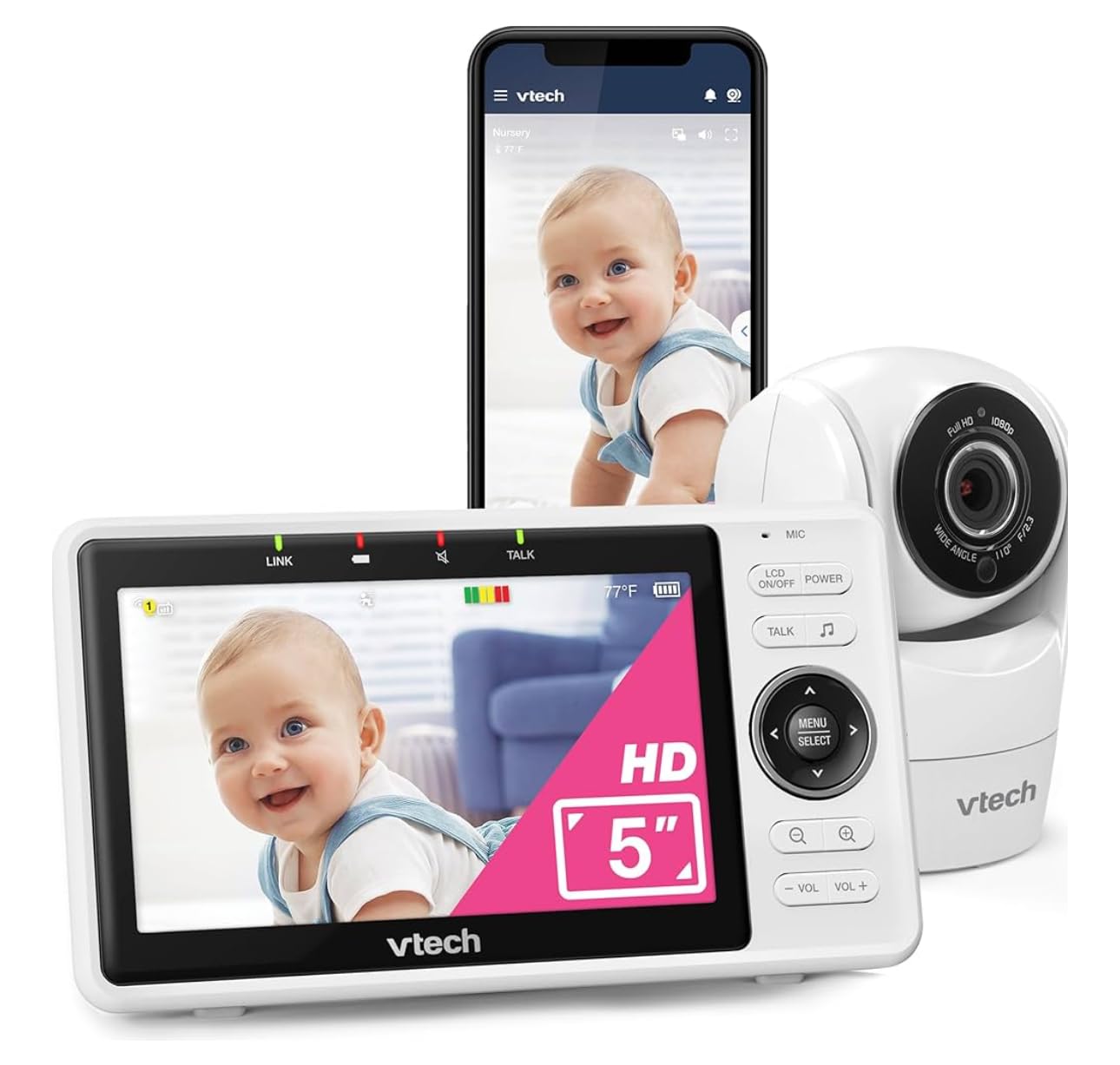
The app adds movement history and nap tracking, which is genuinely useful for reading sleep patterns across two rooms. Tapping either room expands it to full screen, and a single alert fires when either child stirs or either room gets too warm.
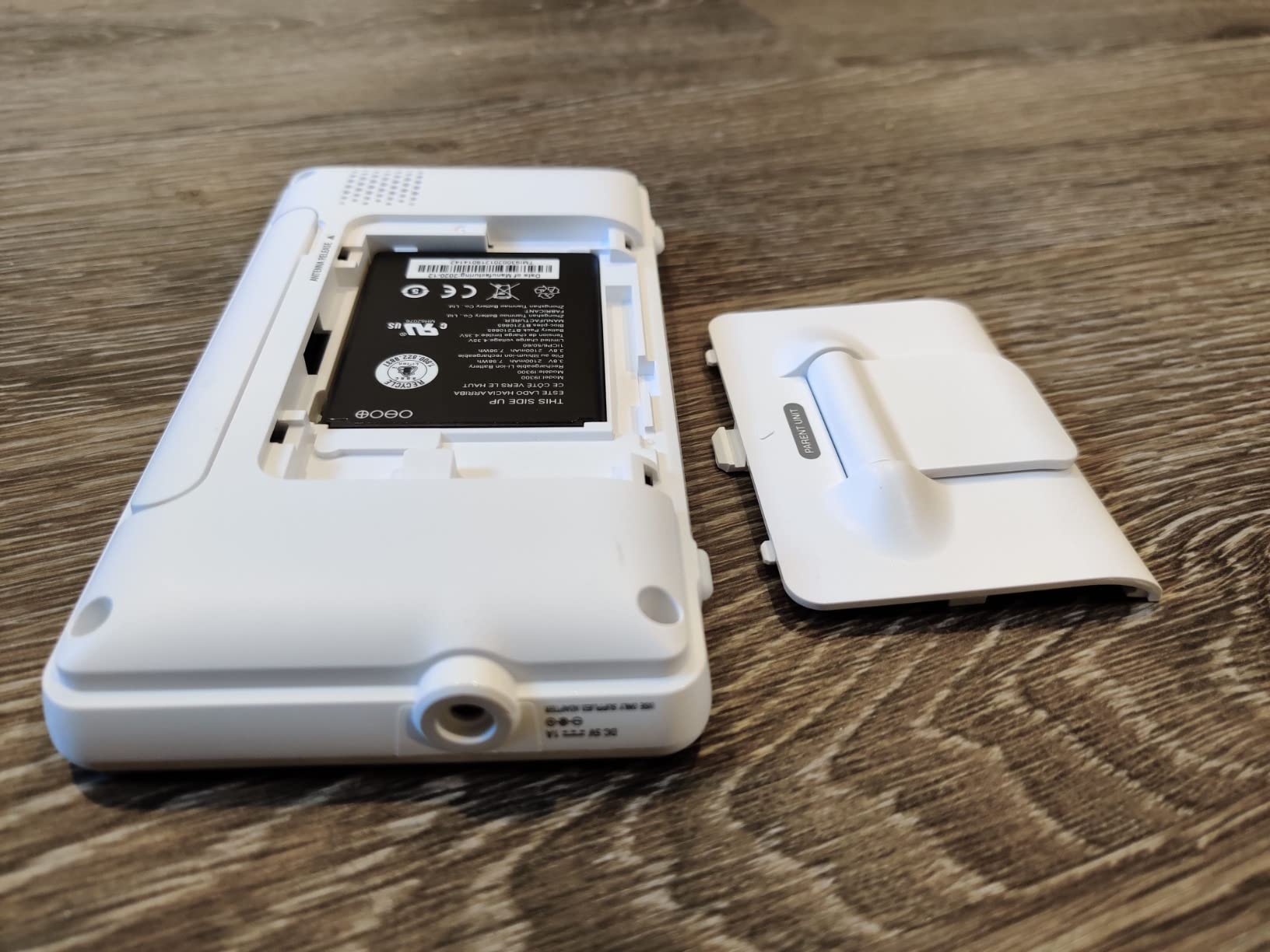
Reliability is where it loses points. At 4.1 stars with 13 percent one-star reviews, it is the lowest rated kit here. Owners report screens freezing or glitching, a parent battery that needs to sit near the charger, and one unit bricked by a software update with no way to recover it.
When remote access is worth the WiFi dependency
If you work away from home, travel, or split time between your house and a grandparents’ place, app access is the feature that justifies a WiFi system. Parents on r/daddit and r/NewDads describe checking both rooms from a phone during a work trip as the reason they accepted a connected setup at all.
The 2.4GHz-only pairing trap
One detail saves a lot of returns: these cameras join a 2.4GHz network, and some modern routers broadcast 5GHz only. Set the router to dual-band or add a separate 2.4GHz network before you start pairing. The WiFi password field is also short, so long or complex network passwords are genuinely hard to enter.
Where the reliability complaints come from
Beyond freezing screens, the most repeated gripes are the short-lived parent battery, cameras that must stay plugged in with no battery backup, second-camera pairing that owners describe as needlessly difficult, and lullaby volume that cannot be adjusted from the app. Responses from customer service are also described as slow.
6. iFamily SM43E – The Simplest Two-Camera Kit for a First Year
iFamily 5″Split Screen Baby Monitor with 2 Cameras and Audio n Night Vision
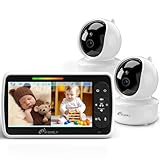
4.3 inch split screen
355 degree pan and 120 degree tilt
2.4GHz FHSS no WiFi
Expandable to 4 cameras
720p listed
Pros
- Least expensive two-camera kit in the group
- Both cameras pre-paired out of the box
- Split screen plus 10 second rotation mode
- No WiFi and no phone required
- Screen-off audio mode still alerts on crying
Cons
- Parent unit is 4.3 inches not the 5 inches listed
- Video is soft and closer to 480p than 720p
- Real indoor range is well short of the 1000ft claim
- Camera speaker is very quiet for talk-back
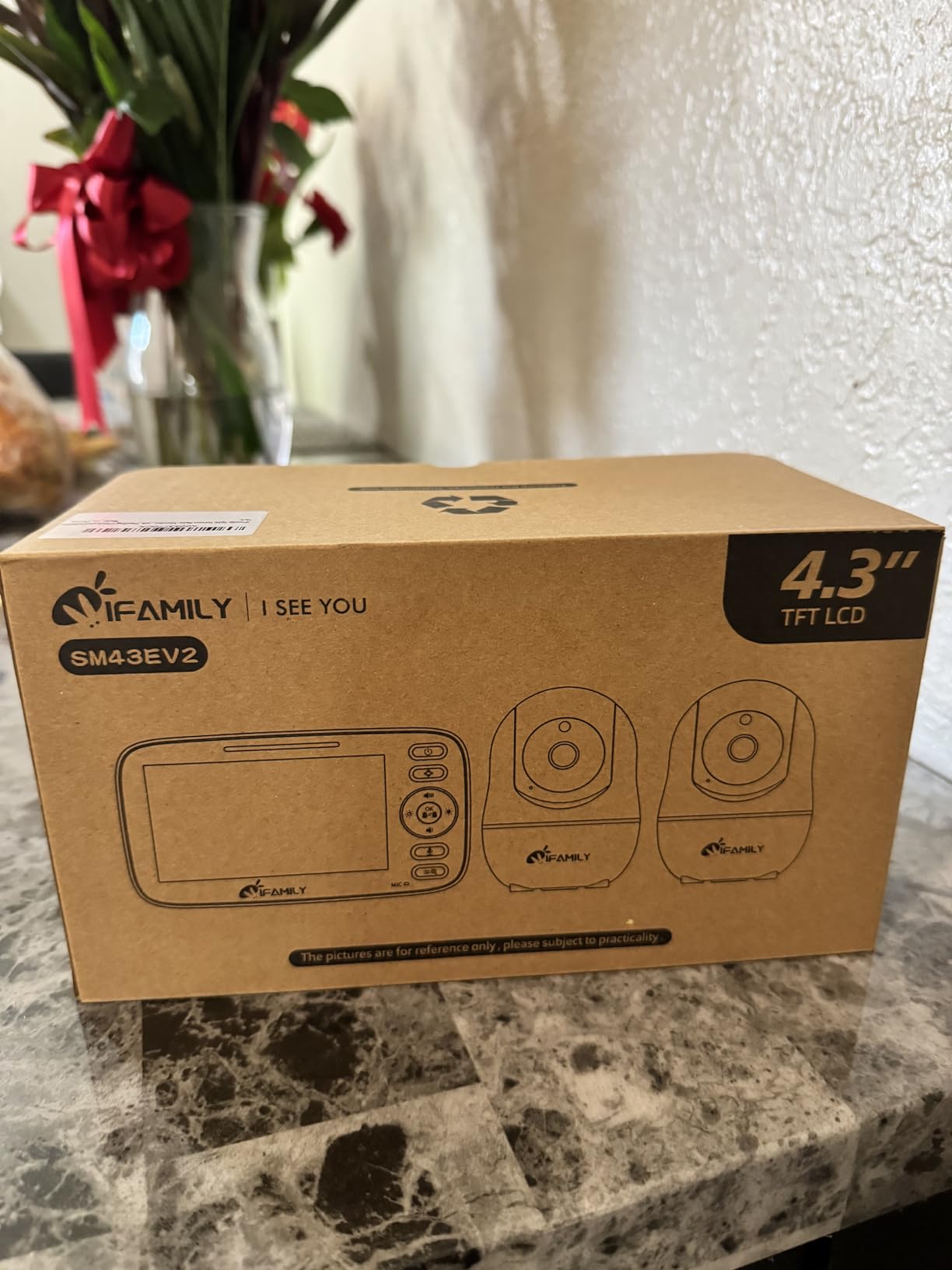
This is the kit to buy if you want the two-room problem solved without overcomplicating it. Both cameras arrive pre-paired, so setup is plug in, power on, and mount. No app, no account, no phone.
It offers three viewing modes: a single camera, a split screen, and an automatic rotation every 10 seconds. Both cameras pan 355 degrees and tilt 120 degrees from the parent screen, with 2x zoom, over a 2.4GHz FHSS link that stays off your home network.
Temperature monitoring with an adjustable alert level, a feeding alarm, lullabies, and two-way audio are all standard. The screen-off audio-only mode mutes a sound machine but still alerts on crying, which is useful in a nursery where white noise is running.
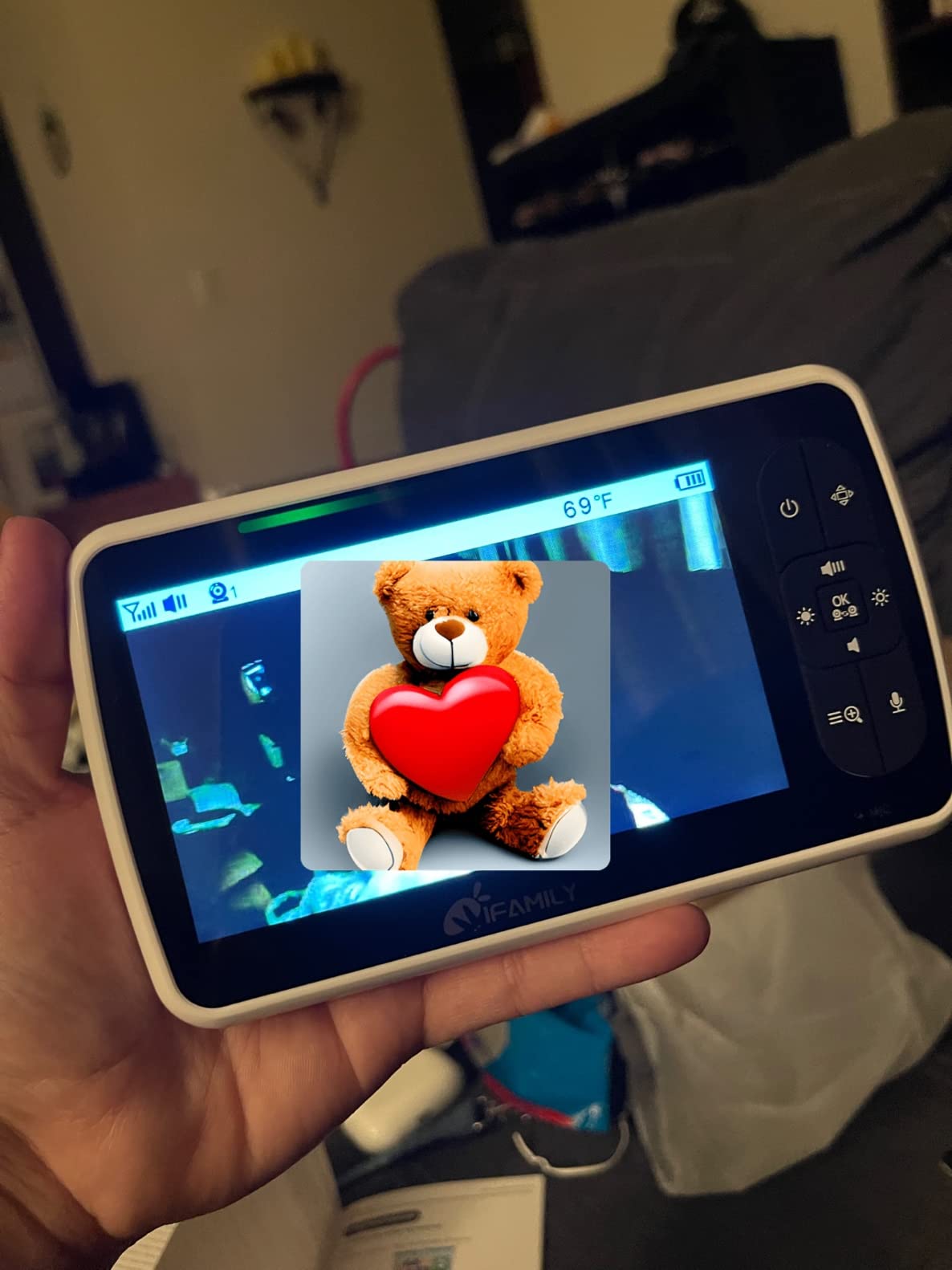
Be aware that the parent screen is 4.3 inches, not the 5 inches the listing implies, and the video is closer to 480p than the stated 720p. Real indoor range degrades far earlier than the advertised figure, and the camera speaker is too quiet for useful talk-back.
Pre-paired simplicity for a first-year purchase
Most returns on two-camera kits come from setup friction, especially with WiFi models. This one ships already paired, and the connection never touches your router, so it cannot be knocked offline by a password change or a firmware update. For a first-time parent covering a nursery and a playroom, that predictability is worth more than a sharper picture.
The audio gap in split screen
One owner reported that in split-screen or rotation mode the monitor detected sound from only one camera, which is the exact failure mode a two-room setup cannot tolerate. It is a single report rather than a pattern, but it is worth testing the alert volume in both rooms on day one with a helper in each.
Other limitations to know
There is no SD card or recording, so this is live viewing only. Charging takes a couple of hours through a pin-style connector rather than USB-C, and the screen expands to four cameras, which is useful if your setup grows.
7. Babysense PRO MVPRO-2CAM – The Sharpest Non-WiFi Picture at 5.5 Inches
Babysense PRO Full HD 5.5″ Split Screen Baby Monitor with 2 Cameras, 6-Color Night Light, White Noise, Sound & Light Machine, 20-Hour Battery, Hack-Proof Non-WiFi Secure Connection
5.5 inch Full HD split screen
1080p on both feeds
6-color night light
20 hours in Eco Mode
2 PTZ cameras
Pros
- Sharpest 1080p picture among the non-WiFi kits
- Split screen shows both rooms with no switching
- 6-color night light and a built-in white noise machine
- Two adjustable PTZ cameras expandable to four
- 20 hours of monitoring in Eco Mode
Cons
- Only one camera audio plays at a time in split screen
- Zoom is limited to the centre of the frame
- Charging cables described as fragile
- Support responses can be slow
This is the picture quality answer for a two-room setup that refuses to use WiFi. The 5.5-inch Full HD panel shows genuine 1080p on both feeds at once, and owners repeatedly compare it favourably with the picture from VTech’s connected kits.
Two adjustable PTZ cameras are included and the system expands to four. Each camera carries a 6-color night light plus a built-in sound and light machine with white noise, which lets one room go dark for a newborn while the other stays gently lit.
The 2.4GHz FHSS link is fully closed with no app, no cloud, and no internet, and 20 hours of continuous monitoring in Eco Mode covers a night comfortably. A wide-angle lens with good saturation and contrast keeps the dark hours readable.
Two limits stand out. Only one camera’s audio plays at a time in split-screen mode, and zoom is confined to the centre of the frame, so you cannot magnify the edges of the view where a toddler often ends up.
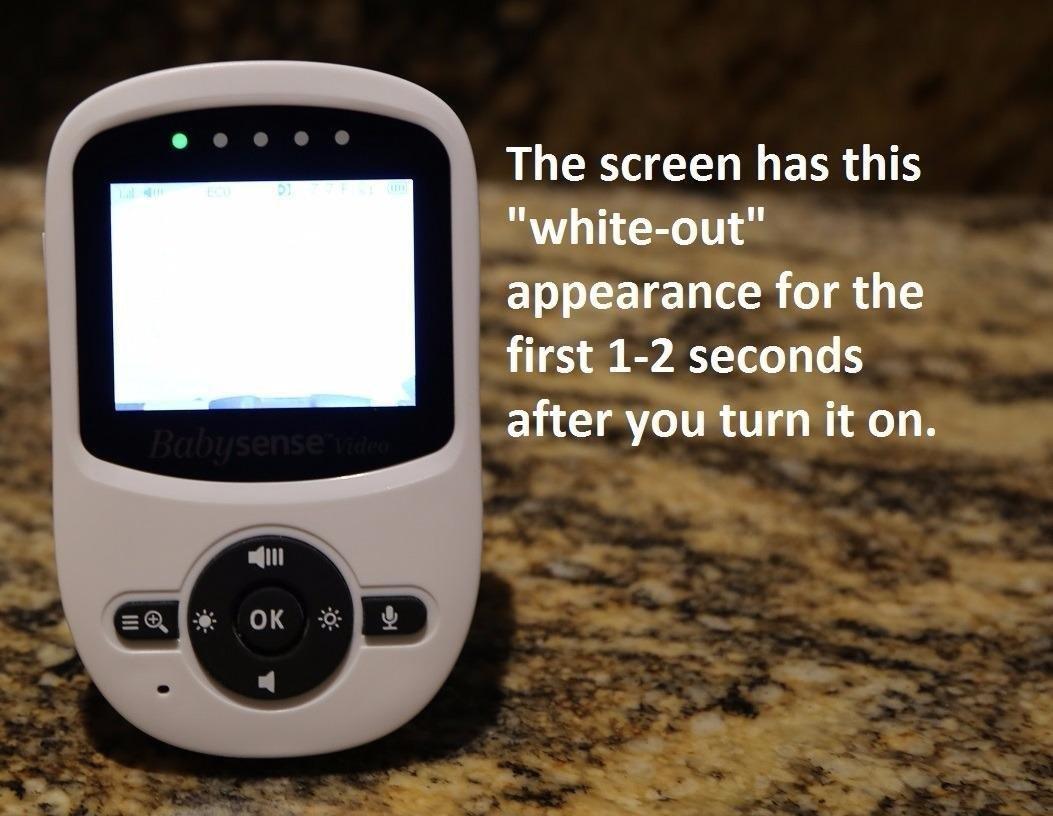
What 1080p actually buys you in a nursery
At 480p you can tell whether a baby is moving. At 1080p on a 5.5-inch panel you can judge a closed eye, watch a chest rise, and see the edge of a fitted sheet. For parents monitoring a sleeping newborn from another room, that difference matters more than any app feature.
Night light and white noise built into each camera
Six-color night lighting in both cameras is the most talked-about feature in the reviews, and it is genuinely useful when one room needs total darkness. The integrated sound and light machine with white noise removes the need for a separate sound machine, which is one less device to charge in a two-room setup.
Build quality and support gripes
Owners describe the charging cables as fragile, with one failing at six months, and the unit nags if you substitute another charger. Support responses reportedly go unanswered for a week or more, and the parent screen is heavy plastic with a night light button that is easy to press in a pocket.
8. VTech VM924-2 – Remote Pan and Tilt on Both Cameras
VTech Baby Monitor No WiFi, 2 Cameras & Remote Pan-Tilt-Zoom for Twins & Two Rooms – Hack-Proof, 17Hr Battery, 1000ft Range, Auto Night Vision, Temperature Sensor | VM924-2
5 inch LCD
360 degree pan and 132 degree tilt on both cameras
17 hour battery
2.4GHz FHSS
480p video
Pros
- Remote pan tilt and zoom works on both cameras
- 5 inch screen is a real upgrade over smaller VTech units
- Split screen plus 10 second scan mode
- 17 hours of video and 31 hours audio only
- No WiFi and no app
- Wall mounts included
Cons
- Microphone sensitivity is a recurring complaint
- Camera side lullabies and white noise play very quietly
- 480p image is soft
- Camera mutes itself while panning
This is the one to pick if you want to actually steer both cameras. Both units pan 360 degrees, tilt 132 degrees, and zoom 1.33x from the parent screen buttons, so a toddler who has moved out of frame is a button press away rather than a trip down the hallway.
The 5-inch LCD is a genuine step up from the smaller VTech units, and it runs manual room switching or a scan mode that cycles both feeds every 10 seconds for hands-free overnight monitoring.

Battery life is 17 hours of video across both cameras and up to 31 hours in audio-only mode from a 2,600mAh pack. Each camera has its own temperature sensor, both readings appear on one screen, and two-way talk, white noise, and lullabies play independently from either camera.
The audio is the weak point and parents say so plainly. Microphone sensitivity is a recurring complaint, with owners reporting missing crying even in the same room at full volume, and the camera-side white noise and lullabies are too quiet to be useful.
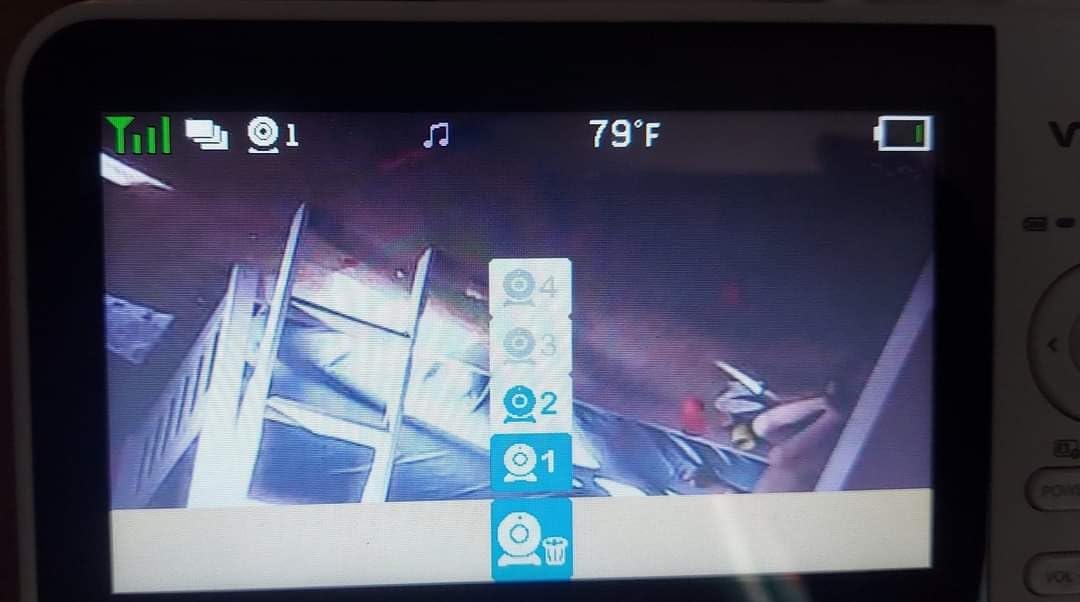
Remote control in two rooms is the whole point
Fixed cameras only cover the corner you aimed them at, and toddler beds move constantly. Working pan and tilt on both cameras means you can correct a view from the sofa, which is why this kit comes up so often in twins and sensory-needs discussions. Scan mode handles the overnight hours hands-free.
Audio sensitivity is the real complaint
Missing a crying baby in the next room defeats the purpose of a two-room system, and that is the most repeated criticism here. Owners also report the camera mutes itself while panning or tilting, so audio drops out during exactly the movement you initiated to check on things.
Other placement notes
Sunlight through a window washes out the 480p image, so aim cameras away from glass. The parent screen has no kickstand and wobbles on soft surfaces, the temperature reading can disappear until the camera is unplugged and replugged, and some owners report lost battery capacity or cords failing over time.
What to Look for in a Baby Monitor for Two Rooms
These are the six decisions that actually separate a good two-room kit from an expensive disappointment, based on what repeatedly showed up in the reviews and the parent forums.
True split-screen or toggle switching
Ask the seller one question before anything else: are both feeds visible at the same time, or do you tap to switch? Many listings advertise two cameras and only show one feed, which is the single most common disappointment in this category. True split-screen is not always better, because a small screen makes two feeds less readable, so pair it with a 5-inch or larger panel.
How audio behaves when two rooms are live
Most dual-camera kits play only one audio channel at a time. That is not a defect, it is a design limit, and the question is whether the kit rotates the active channel automatically. A SCAN or rotation mode that switches every 10 to 15 seconds is what lets you hear both rooms without touching the screen. Without it, you are watching, not listening.
WiFi or no-WiFi for two rooms
No-WiFi kits use a private encrypted 2.4GHz FHSS link straight from camera to parent screen, so nothing leaves the house and there is nothing to hack. WiFi kits route both feeds through your router, which buys phone access from anywhere in exchange for password setup, 2.4GHz network constraints, firmware that can change under you, and a cloud account. If remote access is not a requirement, the closed system is the safer default.
Battery numbers in ECO mode versus a full night
Headline battery figures are measured in VOX or ECO mode, where the screen stays asleep until it hears a sound. Run both rooms continuously and you will see a fraction of that. Test the alert volume in both rooms on day one, and if the screen is your only audio, plan to keep it plugged in overnight.
Screen size, night vision, and range
For two rooms you want at least a 5-inch panel, and 6 inches is better if your rooms are far apart or you view from across the room. Budget night vision produces grainy grayscale, so 1080p on a larger screen is where the money shows. Treat the 1,000ft range figure as an open-space number; real performance through a shared wall and around furniture is much shorter.
One camera per room, or two in one room
Most households need exactly one camera per sleep space, which is why every kit here ships with two. Add a third only if you also want a playroom, a nap room, or coverage of a spot a single fixed angle cannot reach. Kits rated for three or four channels let you expand later without replacing the parent screen.
Two Rooms Versus Two Babies: How the Setup Differs
Most roundups blur these together, and the difference changes what you should buy. Two babies usually means two cribs, often close together and often in the same room, so the priority is a wide view and reliable audio rather than a long signal.
Two rooms means a nursery and a separate bedroom, or a nursery and a playroom, which puts distance, walls, and a second sound source between you and your children. That is where screen size, audio rotation, and range stop being nice-to-haves. If one child is a toddler, add a camera night light so their room can be lit without a lamp that wakes them.
A related decision comes up constantly: one dual-camera system or two complete single-camera systems. One unit halves the devices to charge, cuts the cost, and puts both rooms on a single alert. Two separate systems only make sense if the rooms are far enough apart that a single signal cannot reach both, or if you need two independent screens.
What Not to Buy for Two Rooms
Several highly rated premium monitors are built for exactly one room and will not solve this problem, however good they are. Nanit, Miku, the Owlet Dream Duo, and Lollipop all ship as single-camera or single-room systems, so covering two rooms means a second full setup with a second app, a second account, and a second charge point.
Also skip a single-camera kit marketed as a sleeper monitor if you need two rooms. Breathing and sleep tracking sensors attach to one child in one cot, and the tracking data is tied to that sensor. The two-room problem is solved by camera coverage, not by a second sleep band.
Finally, be cautious with app-only monitors that advertise a monthly subscription for video history. For two-room live viewing you do not need a cloud plan, and none of the eight kits here require one.
Frequently Asked Questions
What is the best baby monitor with two cameras and split screen?
The u003cstrongu003eHelloBaby HB6550Plus-2u003c/strongu003e pairs a 6-inch IPS true split-screen display with a 178-degree viewing angle, two remote pan and tilt cameras, and invisible infrared night vision, with no WiFi and no subscription. The u003cstrongu003eVTech VM819-2u003c/strongu003e is the most proven option by review volume, and the u003cstrongu003eGoodBaby SM663V2u003c/strongu003e is the one to choose if you want to expand to four cameras later.
What baby monitor can show two rooms at once?
Any kit with a parent screen that pairs to two cameras and supports true split-screen. In this roundup the HelloBaby HB6550Plus-2, GoodBaby SM663V2, Babysense PRO MVPRO-2CAM, Babysense HD S2, VTech VM924-2, and VTech VM901-2HD all show two rooms simultaneously. The VTech VM819-2 and iFamily SM43E toggle between feeds or cycle them automatically instead.
Is a split-screen baby monitor worth it?
Yes, when the two children sleep in different rooms. Split-screen means you can see both feeds without tapping, and paired with an audio scan or rotation mode it also solves the single-audio-channel problem. If both cameras are in the same room, one wide view is often better, since two small feeds on a small screen are harder to read.
Can baby monitors be hacked if they are not on WiFi?
No-WiFi kits in this roundup use an encrypted 2.4GHz FHSS link that goes directly from each camera to the parent screen, with no app, no cloud account, and nothing on your home network, so there is no remote access point to attack. WiFi monitors route the same video through your router, which is why privacy-minded parents in the forums usually choose the closed system.
Can a baby monitor interfere with WiFi?
Yes, indirectly. App-connected monitors join a 2.4GHz network, so a router broadcasting 5GHz only will not see them and pairing will fail until you enable a 2.4GHz band. No-WiFi FHSS monitors use frequency hopping to avoid interference, though a poorly placed unit can still degrade a busy 2.4GHz network.
Do pediatricians recommend baby monitors?
Most guidance is that a monitor cannot reduce the risk of sudden infant death syndrome, so it should never replace safe sleep practice: baby on the back, on a firm flat surface, in the parents’ room for the first months. Monitors are useful for settling and for keeping an eye on a toddler in another room once they are in their own bed.
Final Verdict for Two-Room Monitoring in 2026
If you want the most proven closed system, take the VTech VM819-2. If you want the best split-screen view and the largest screen, the HelloBaby HB6550Plus-2 is hard to beat, and the Babysense PRO MVPRO-2CAM wins on picture quality. For a toddler who needs a dim night light in their own room, the Babysense HD S2 is the reason to buy it. If you need to check both rooms from your phone while at work, the VTech VM901-2HD is the only one here that does it.
Whichever you pick, test the audio alert in both rooms on night one, because that is the feature most likely to disappoint in a two-room setup. For the gear around it, our picks for baby swings and ergonomic baby carriers cover the rest of the first year setup.
Leave a Reply