
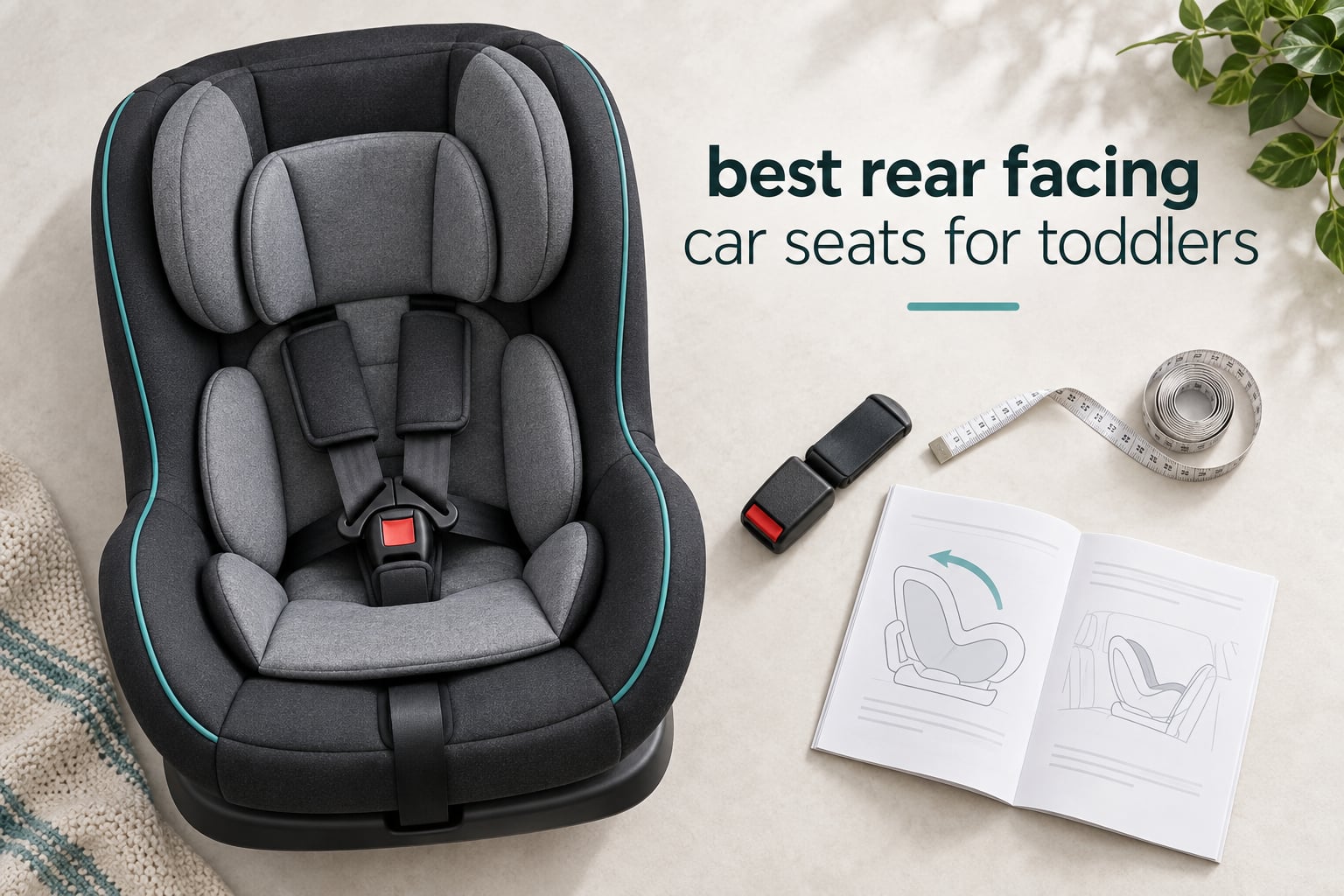
The best rear facing car seats for toddlers in 2026 are not the same seats you would have picked two years ago, because the single biggest predictor of a toddler’s safety in a crash is how long that child stays facing the back of the car. The American Academy of Pediatrics recommends rear-facing until your child hits the maximum height or weight limit of the specific seat, not until a birthday, and most parents hit the height ceiling long before the weight ceiling. I compared eight convertible and all-in-one seats that all meet FMVSS 213, weighing rear-facing limits, real seat width, install method, and daily ease of use.
Three products in this guide reach a 50 lb rear-facing limit, which is the number that actually matters for a tall toddler. The rest stop at 40 lb, and for a big three-year-old that difference decides whether you keep the seat another year or go shopping again. Several parents in r/toddlers and r/Buyingforbaby threads have described exactly this frustration: a child who is nowhere near the weight limit but has already run out of shell.
If your toddler is still on an infant carrier, start with our infant car seat guide first, because most families graduate out of a carrier around 12 months and go straight into one of the rear-facing seats below.
Our Top 3 Rear-Facing Picks for Toddlers in 2026

Graco Extend2Fit 2-in-1
- 50 lb rear-facing limit
- Adjustable legroom panel
- No-rethread harness

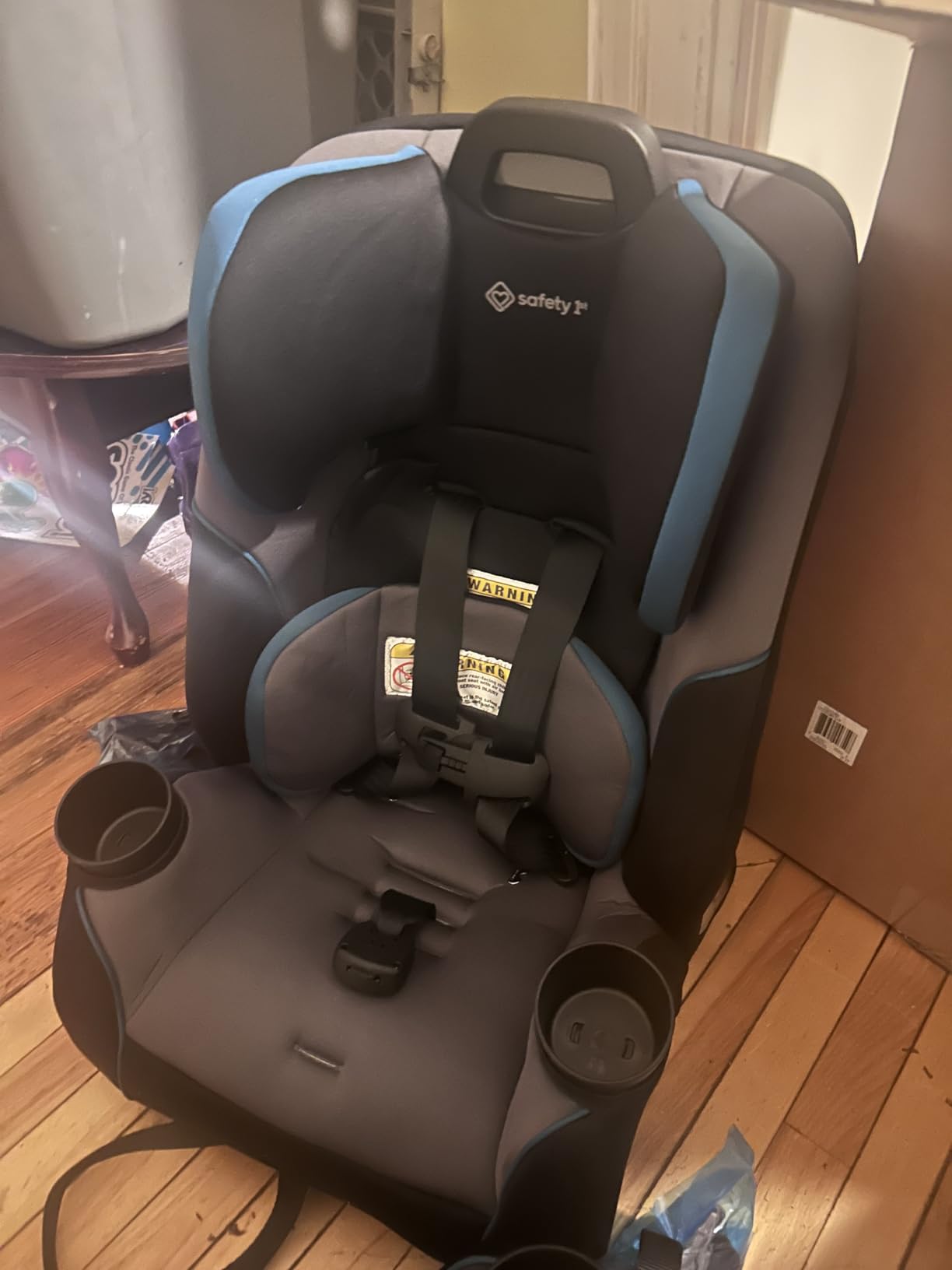
Safety 1st Grow and Go
- Three modes in one seat
- QuickFit no-rethread harness
- Machine-washable pad
Comparing the Best Rear-Facing Car Seats Side by Side in 2026
| Product | Specs | Action |
|---|---|---|
| Graco Extend2Fit 2-in-1 Convertible Car Seat |
|
Check Latest Price |
| Safety 1st Grow and Go All-in-One |
|
Check Latest Price |
 Diono Radian 3R 3-in-1 Diono Radian 3R 3-in-1 |
|
Check Latest Price |
 Maxi-Cosi Pria All-in-One Maxi-Cosi Pria All-in-One |
|
Check Latest Price |
 Britax One4Life All in One Britax One4Life All in One |
|
Check Latest Price |
 Baby Trend Cover Me 4-in-1 Baby Trend Cover Me 4-in-1 |
|
Check Latest Price |
 Evenflo Revolve360 Extend Evenflo Revolve360 Extend |
|
Check Latest Price |
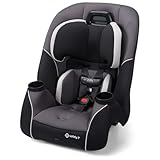 Safety 1st Crosstown All-in-One Safety 1st Crosstown All-in-One |
|
Check Latest Price |
1. Graco Extend2Fit 2-in-1 – Extra Legroom for Tall Toddlers Who Need to Stay Rear-Facing
Graco Extend2Fit 2-in-1 Convertible Car Seat, Gotham
Rear-facing 4-50 lb
Forward-facing 26.5-65 lb
4-position legroom panel
No-rethread harness
Pros
- Extend2Fit panel adds up to 5 inch of legroom
- Rear-facing to 50 lb
- No-rethread harness adjusts in one motion
- Machine-washable seat pad
- Light enough to move between cars
Cons
- Bulky
- will not fit three across in most vehicles
- Hard to disassemble for deep cleaning
- Many crevices trap crumbs
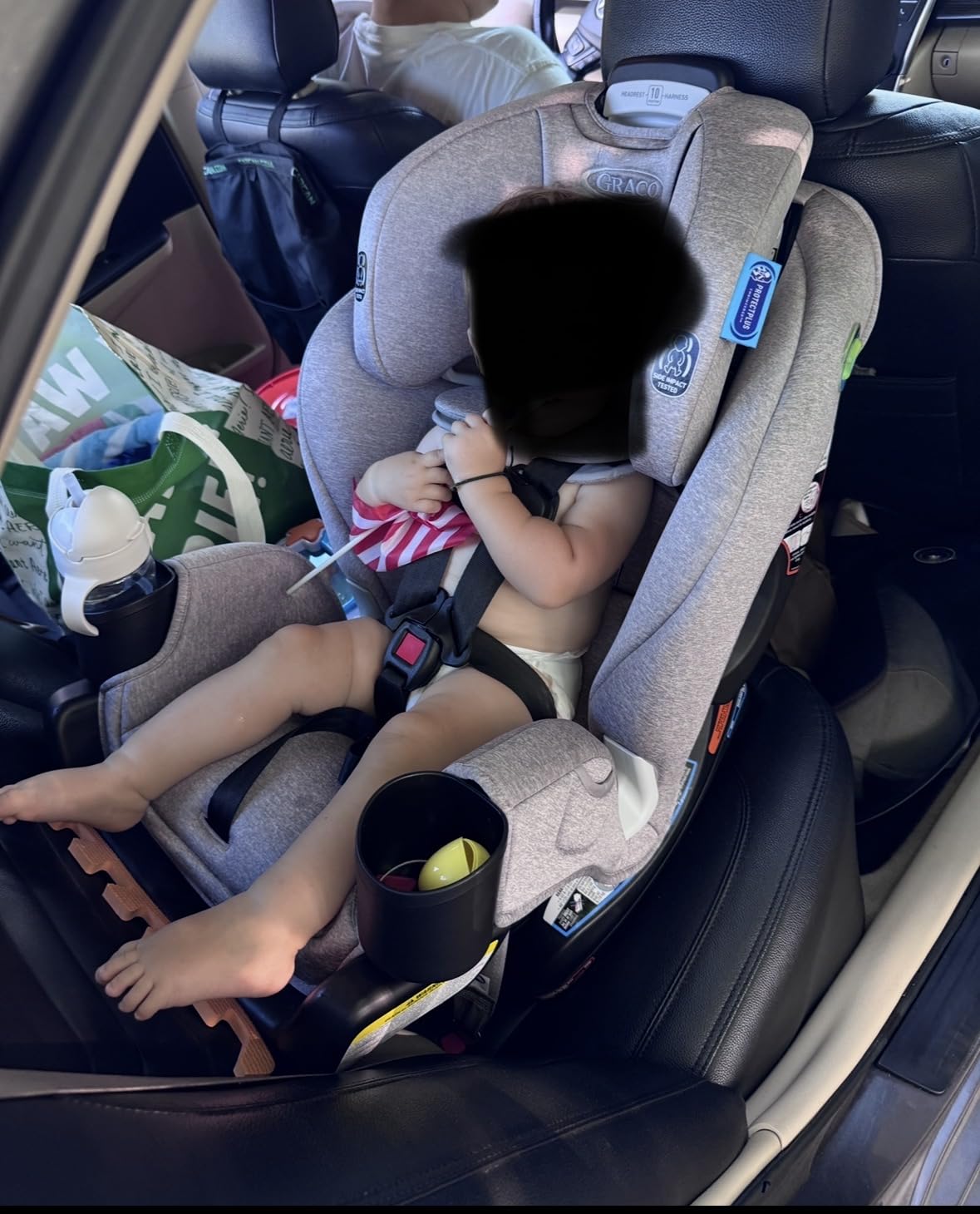
This is the seat I keep coming back to, and it earns the top spot here on the simplest evidence there is: a 4.8 rating across more than 57,000 reviews, paired with a 50 lb rear-facing ceiling and a legroom panel that most of the field does not have. The panel moves through four positions and adds up to 5 inches of extra space, which is exactly what a long-legged toddler needs when the shell starts to close in.
In practice, that panel is the difference between a comfortable child and a fussy one. Toddlers who have run out of foot room rear-facing tend to arch, slide the harness down, and fight the straps, and fixing that fight by loosening the harness is the wrong move.
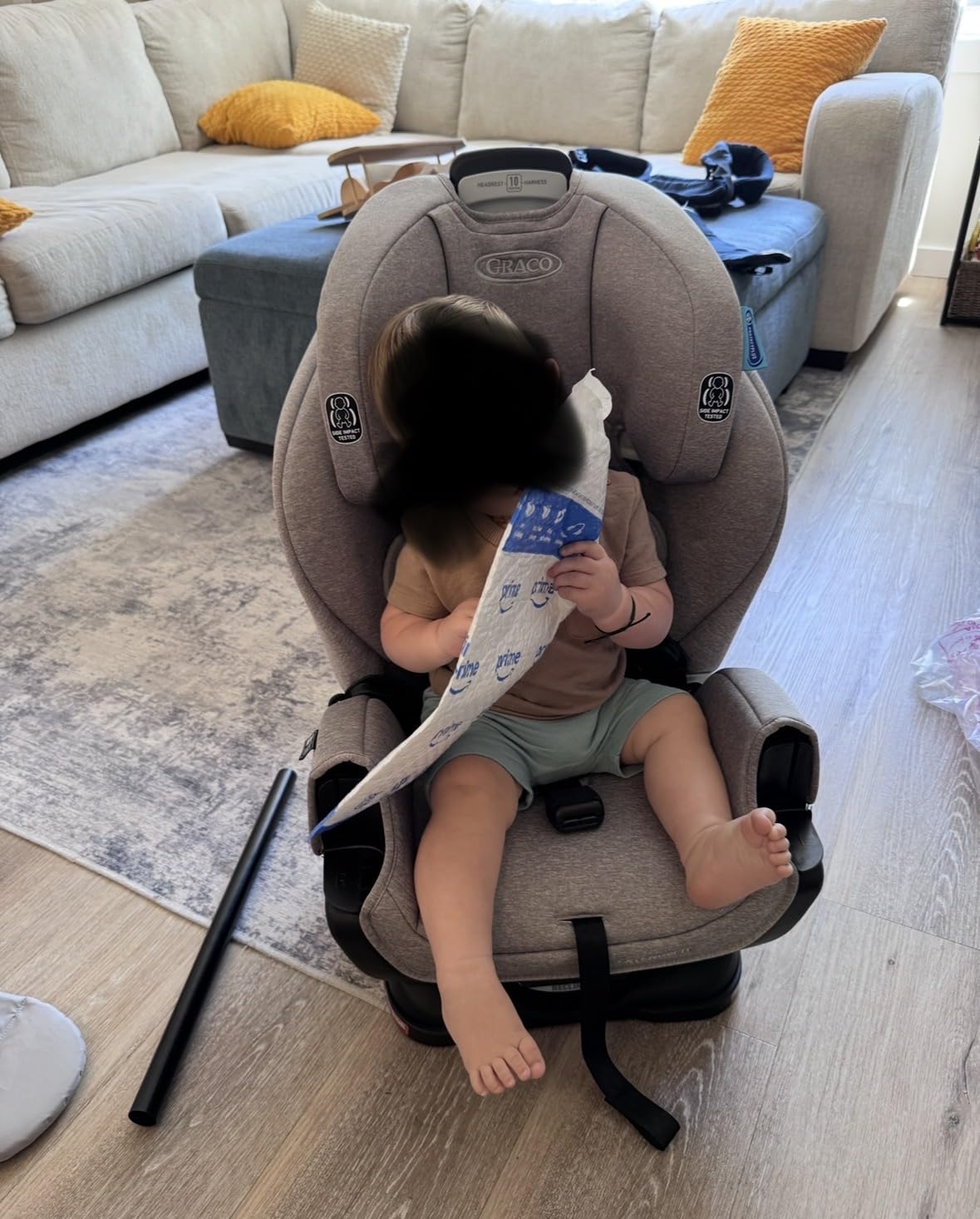
The Simply Safe Adjust harness moves the headrest and the harness together in one motion, so there is no rethreading the shoulder straps every time your child grows a size. That matters daily rather than occasionally. It is a two-mode seat rather than a three-mode one, meaning you will buy a booster later, but the 65 lb forward-facing harness limit is generous enough to carry most children to that point.
One thing to know before you buy: this is a wide, heavy-feeling shell and it will not sit three across a back row. Parents who need three seats behind the front row should look at the Diono Radian 3R or the Baby Trend Cover Me instead.
What the Extend2Fit panel actually changes
The panel sits under the child’s feet and lengthens the seat’s footprint as your toddler grows. It matters most in the last stage of rear-facing use, when the harness fits fine but the knees are pressed up against the front edge of the shell.
Because the adjustment runs through four discrete positions, you can dial in the exact amount of room your child needs rather than committing to a full-extension setting that eats cabin depth unnecessarily. That last point is worth pausing on, because extension also pushes the seat further into the footwell area, which can be where a steep rear-facing angle goes wrong.
Rear-facing capacity and harness fit
Rear-facing runs from 4 to 50 lb here, which puts it alongside the Diono Radian 3R and the Britax One4Life as the extended-range seats in this group. The Safety 1st, Maxi-Cosi, Evenflo, and Crosstown seats all stop at 40 lb, and the Britax adds a 49 inch standing height limit on top of its 50 lb weight limit.
Weight and height are not the same test. A tall, lean toddler can outgrow a 40 lb-rated seat while still weighing 32 lb, which is why the Graco panel and the Britax height limit both exist. Look for both numbers in the manual before you assume a seat has room.
Forward-facing range and when to turn the seat
Forward-facing with the harness, the Extend2Fit runs 26.5 to 65 lb. That is a full five-year stretch of forward-facing harness use, and it is why this seat, plus a later booster, covers the toddler years and most of the school-age years without a second purchase in between.
Turn the seat around only when your child tops out in every rear-facing mode on your shortlist, not when they reach an age. If you buy a 50 lb seat and a 40 lb seat, the price difference usually pays for itself the first time the taller one keeps a child rear-facing for an extra year.
Cleaning and daily maintenance
The seat pad is machine-washable, which is the single most useful fabric feature for a toddler seat. The cup holders are included, and while they are not easily removable for a deep clean, most spills can be wiped out of them directly.
Be realistic about the rest of the seat. Reviewers report that it is difficult to fully disassemble for deep cleaning, and the shell has many crevices that collect crumbs. If your toddler eats every meal in the car, a zip-off removable cover would be the more convenient choice.
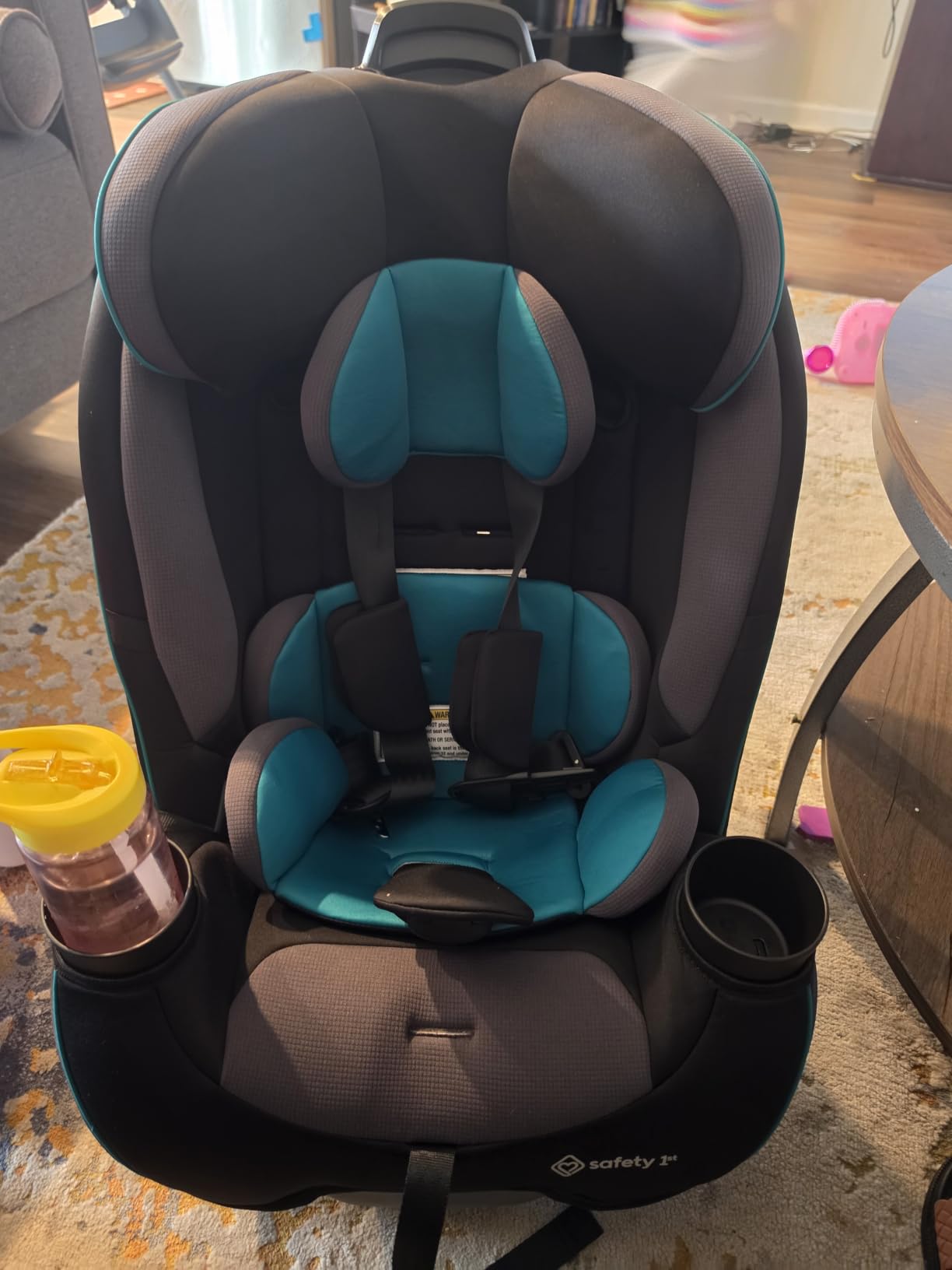
2. Safety 1st Grow and Go – Three Working Modes With a Fully Washable Pad
Safety 1st Grow and Go All-in-One Convertible Car Seat, Black Phantom
Rear-facing 5-40 lb
Forward-facing 30-65 lb
Booster 40-100 lb
3-position recline
Pros
- Three usable modes in one frame
- QuickFit no-rethread harness
- Washer and dryer safe pad
- Dishwasher-safe cup holders
- Removable infant pillows
Cons
- Rear-facing limit stops at 40 lb
- Thin padding on long trips
- Harness feels stiff at first
The Grow and Go is the value pick here, and the reason is structural rather than promotional. It is a genuine three-in-one: rear-facing harness, forward-facing harness, and belt-positioning booster, all in one frame, which means one purchase covers the toddler stage and the booster stage without a second seat between them.
Cleaning is where it quietly beats several pricier options. The seat pad is washer-and-dryer safe with snaps for removal, and the two cup holders are dishwasher safe, so a toddler eating macaroni in the back seat is a five-minute problem rather than a hand-wash job.
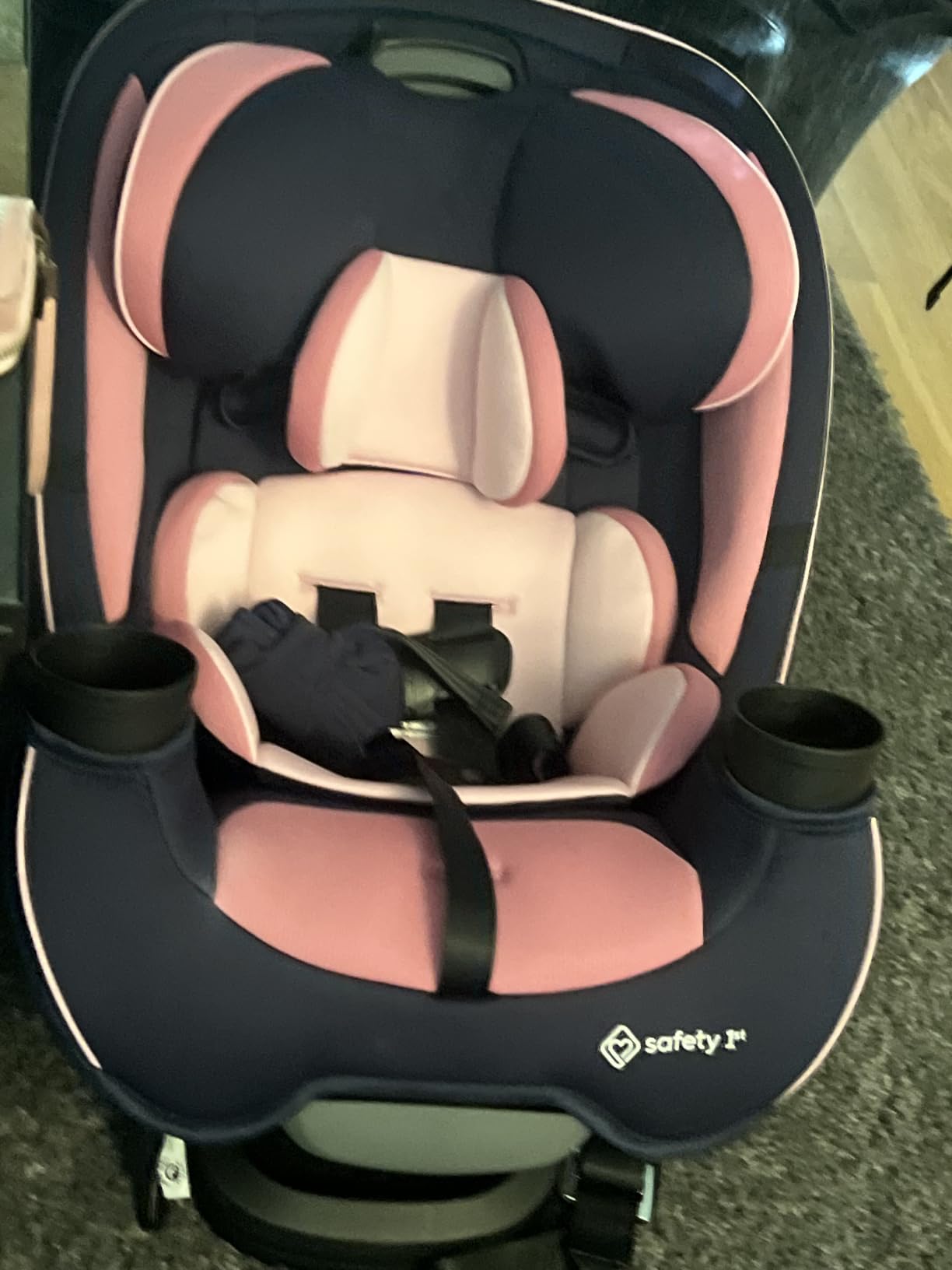
The QuickFit harness adjusts without rethreading, and removable Grow-With-Me baby pillows let the same seat fit an infant snugly. The three-position recline and easy belt paths make it one of the simpler installs in this group, and it installs with either the seat belt or lower anchors so you can move it between cars without relearning anything.
The clear trade-off is the 40 lb rear-facing ceiling. For a small toddler that is plenty, and for a tall four-year-old it is the reason you would move up the list.
Three modes versus two: does it actually matter?
Yes, but only if you expect to use the booster. The mode count matters because each additional mode is a stage you do not have to buy into separately, and parents who move the seat between two caregivers’ vehicles can also use the infant pillows to reset the fit for a smaller child.
Two-mode convertible seats like the Graco Extend2Fit are cheaper and slightly narrower, but they leave you buying a booster later. The arithmetic favours the three-mode design if you are buying once and want the seat to stay in the family for a decade.
Harness and recline behaviour
The QuickFit system makes the daily in-and-out sequence one adjustment rather than a full rethread. Reviewers note the mechanism can feel stiff during the first few uses, which is a break-in issue rather than a defect.
Three recline positions is on the lean side. Seats with four or more positions give you more room to fix a vehicle cushion that slopes toward the rear, which is a common problem in sedans where the rear bench drops.
Height limit and the two-pound cushion
Rear-facing here is 5 to 40 lb with a 19 to 40 inch standing height range, and the height range is what most parents actually hit first. Check the top of your toddler’s head against the top of the shell, not the weight on the scale.
The removable infant pillows are the feature that lets a newborn fit properly in a seat this size. Once your child is past them, pull them out so the harness sits at or below the shoulders, which is where it belongs rear-facing.
Fit in a small car or a crowded back seat
Reviewers describe the profile as slim enough for most vehicles, and parents using it as a second or third seat in the back row report it working. It is still not a narrow-frame seat, so measure before you commit to three across.
Because it installs with either method and is light enough to move between vehicles, it works well for a grandparent, a babysitter, or a two-car household where the same toddler alternates between cars.
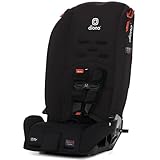
3. Diono Radian 3R – The Narrowest Shell Here for Three Across and Family Air Travel
Diono Radian 3R, 3-in-1 Convertible Car Seat, Rear Facing & Forward Facing, 10 Years 1 Car Seat, Slim Fit 3 Across, Jet Black
Rear-facing 5-50 lb
Slim 17 inch width
Folds for travel
FAA approved
Pros
- Genuine three-across fit
- Steel core shell
- 50 lb rear-facing limit
- Folds flat and is FAA approved
- Machine-washable cover
Cons
- Heavy steel frame is hard to move
- Installation has a steep learning curve
- Very steep rear-facing angle
- Angle adjuster sold separately
When three-across is non-negotiable, the Diono Radian 3R is the only seat in this guide built for the problem. It is 17 inches at its widest against 18.25 inches for the Baby Trend Cover Me and noticeably more for a standard convertible shell, and that inch and a quarter is the difference between fitting and not fitting.
It is also the only seat here with four modes in one frame. Rear-facing, forward-facing with a harness, high-back booster, and backless booster cover a 5 to 120 lb range, and parents describe it as a ten-year single-seat solution.
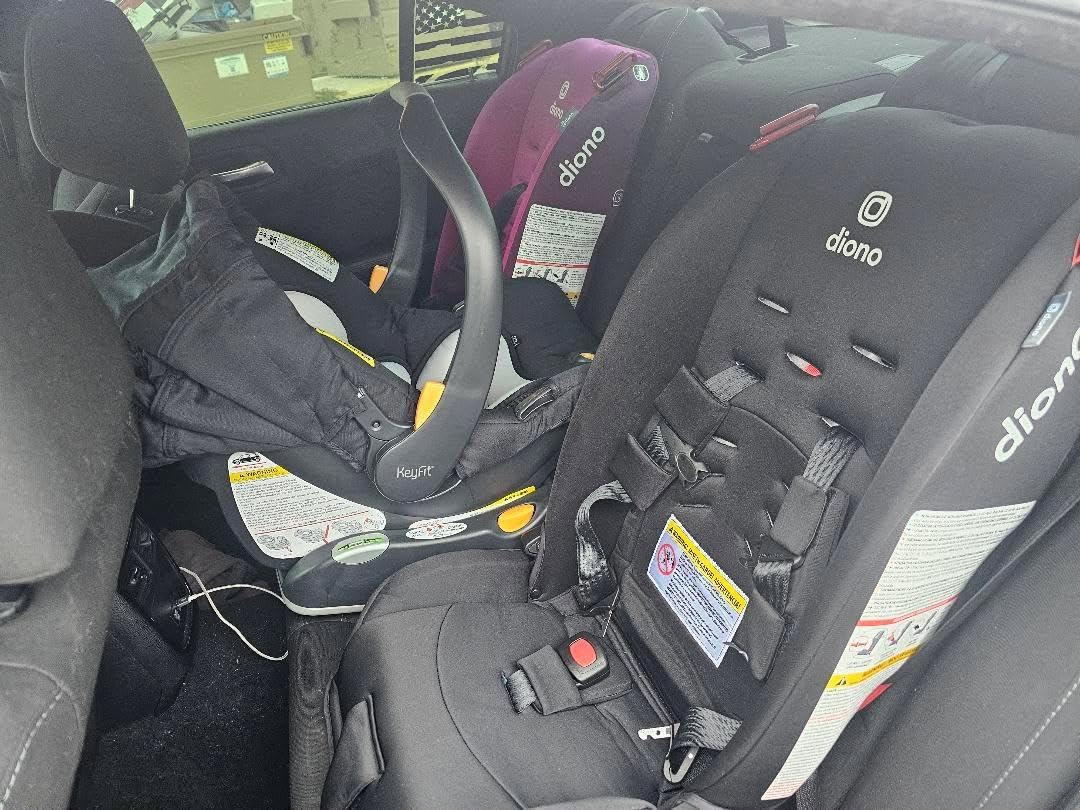
The reinforced automotive-grade high-strength steel core is the reason the seat is heavy, and the weight is the reason it folds for travel without losing its structure. Long-time parents on parenting forums consistently still describe the Radian as a rear-facing workhorse, and that durability reputation is not marketing.
Installation is the honest downside. The Radian runs by rules and modes, and the rear-facing angle is very steep, which can require sliding the front seat forward. A separate angle adjuster is sold for a better rear-facing fit, and you should plan to want it.
Why 17 inches changes the back row
Three-across maths is simple and unforgiving. Three seats at 17 inches is 51 inches, which many sedans and crossovers can accommodate, while three seats at 19 inches is 57 inches, which most cannot. That is why seat width is the number to check before anything else in a three-child setup.
Measure the usable width of your back row at the seat bight, not at the widest point of the cabin, because the bolsters curve in above the anchor line. Also check that the centre position has a workable belt path or a top tether anchor, because that is the position that most often fails a three-across plan.
Steel frame, folding design, and what weight costs you
The frame is high-strength steel with ComfortPlus memory foam included, and it is the reason the seat holds its structure when folded for a trunk or a carry bag. It also means the seat is heavy, and reviewers repeatedly flag moving it between vehicles as the hardest part of ownership.
If you plan a single permanent install position and never move the seat, weight is not a real cost. If you are shuttling between two cars weekly, it is, and a lighter seat like the Crosstown fits that use case better.
Airline use and the rental car problem
It is the only seat here that pairs FAA approval for airline use with a frame that folds flat, which makes it the one to buy if you fly regularly. Folding means it goes into a checked bag or a travel bag without becoming the heaviest thing you own.
Airline buckles are narrow, so expect your child to sit slightly forward of the buckle on long flights. Rear-facing toddlers also cannot lie down, which is the hidden cost of flying rear-facing: plan a short nap before boarding rather than expecting sleep on a redeye.
Rear-facing angle and the centre position
Two install facts matter before you buy. The rear-facing recline is very steep and often wants the front seat moved forward, which eats legroom you may already be short on. And the seat cannot be installed rear-facing in a centre position with a fixed headrest, so a three-across plan has to use the two outboard positions plus a centre method you have verified.
Budget an hour with the manual and a Child Passenger Safety Technician before the first install. NHTSA misuse data shows that most seats are installed with at least one critical error, and the Radian’s rule-based design is not the seat to learn on your own under time pressure.
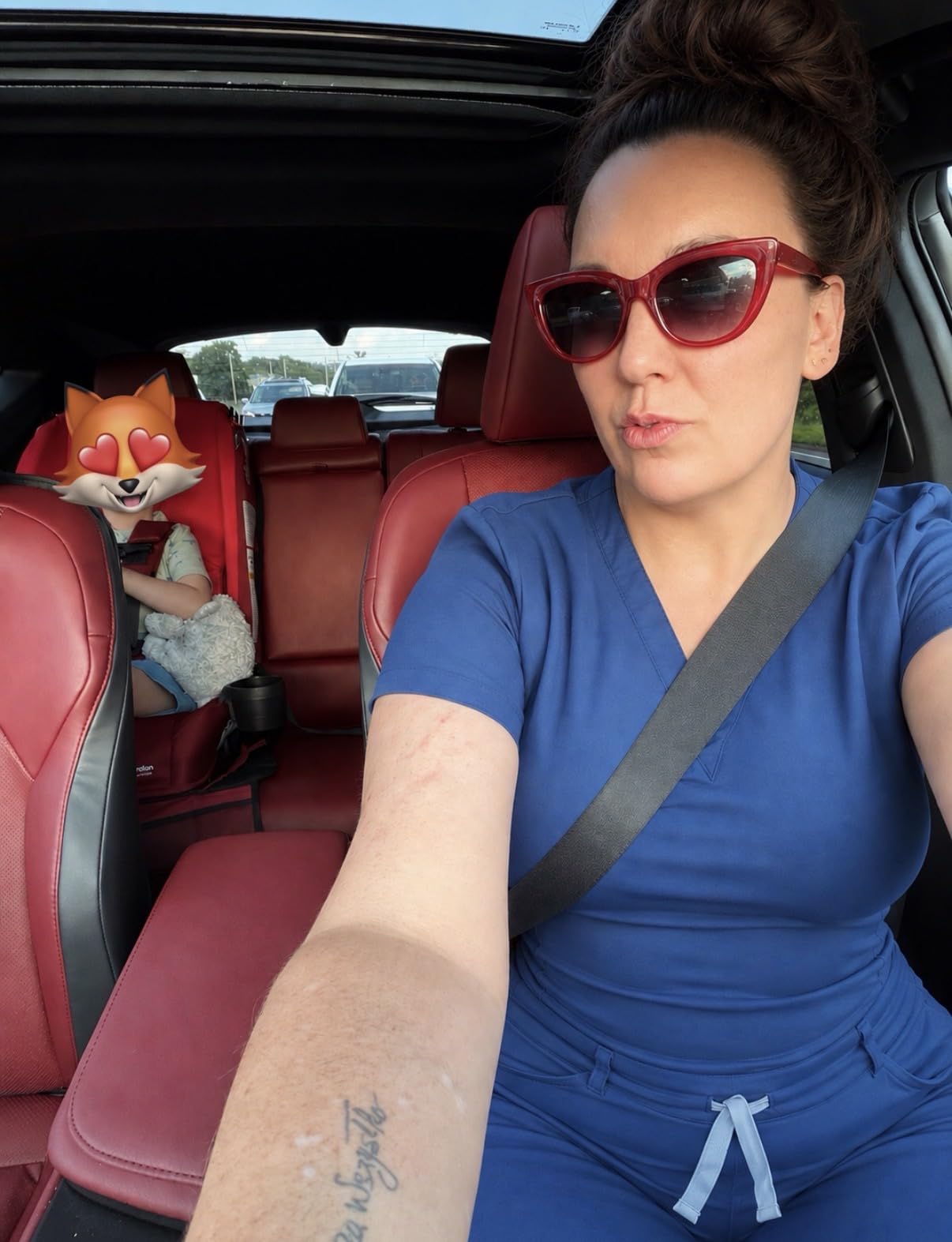
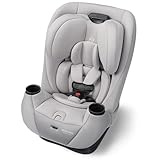
4. Maxi-Cosi Pria – Recycled Fabrics and a One-Hand Harness Adjustment
Maxi-Cosi Pria All-in-One Convertible Car Seat, Infant to Toddler Car Seat, Easy-Install Harness, Machine-Washable Cover, 5-100 lbs, SeaDrift
Rear-facing 5-40 lb
Forward-facing 30-65 lb
Booster 40-100 lb
PureCosi fabrics
Pros
- No added fire retardant treatment
- 100 percent recycled fabric
- QuikFit one-hand harness adjust
- Machine washable and dryer safe
- One-click LATCH connectors
Cons
- Rear-facing limit stops at 40 lb
- Bulky in small vehicles
- Recline adjustment not smooth
- Higher cost than similar spec seats
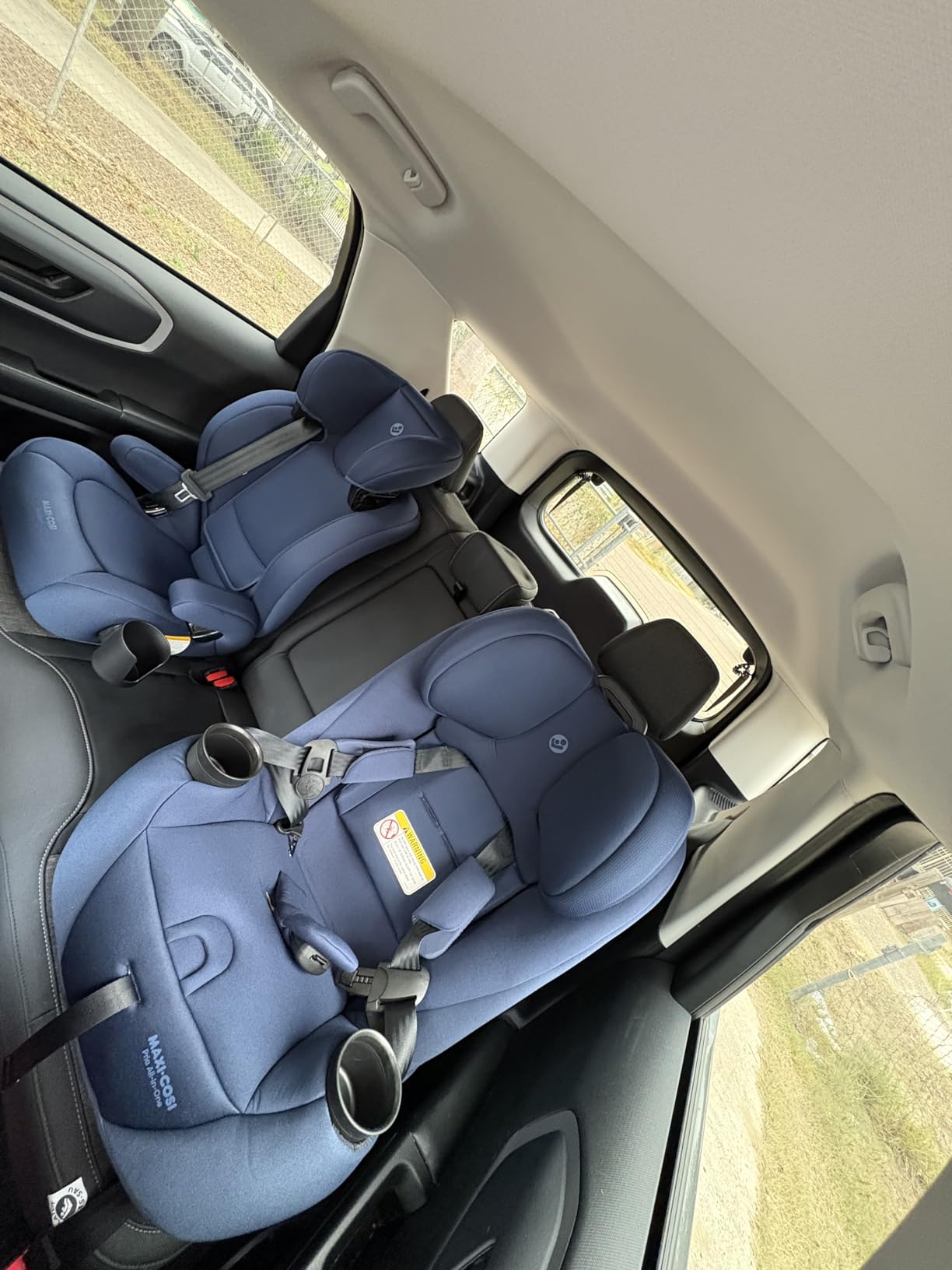
The Pria is the pick if material questions matter to you more than the top rear-facing weight number. Its PureCosi fabrics are made without added fire retardant treatment, and the EcoCare upholstery is woven from 100 percent recycled plastic bottles, which is a genuinely different manufacturing choice from the polyester everywhere else in this list.
The QuikFit system adjusts the headrest and harness together with one hand and no rethreading, and the 1-click LATCH connectors make the install genuinely quick for a seat in this category. It also meets the federal side-impact standard, not just frontal requirements.
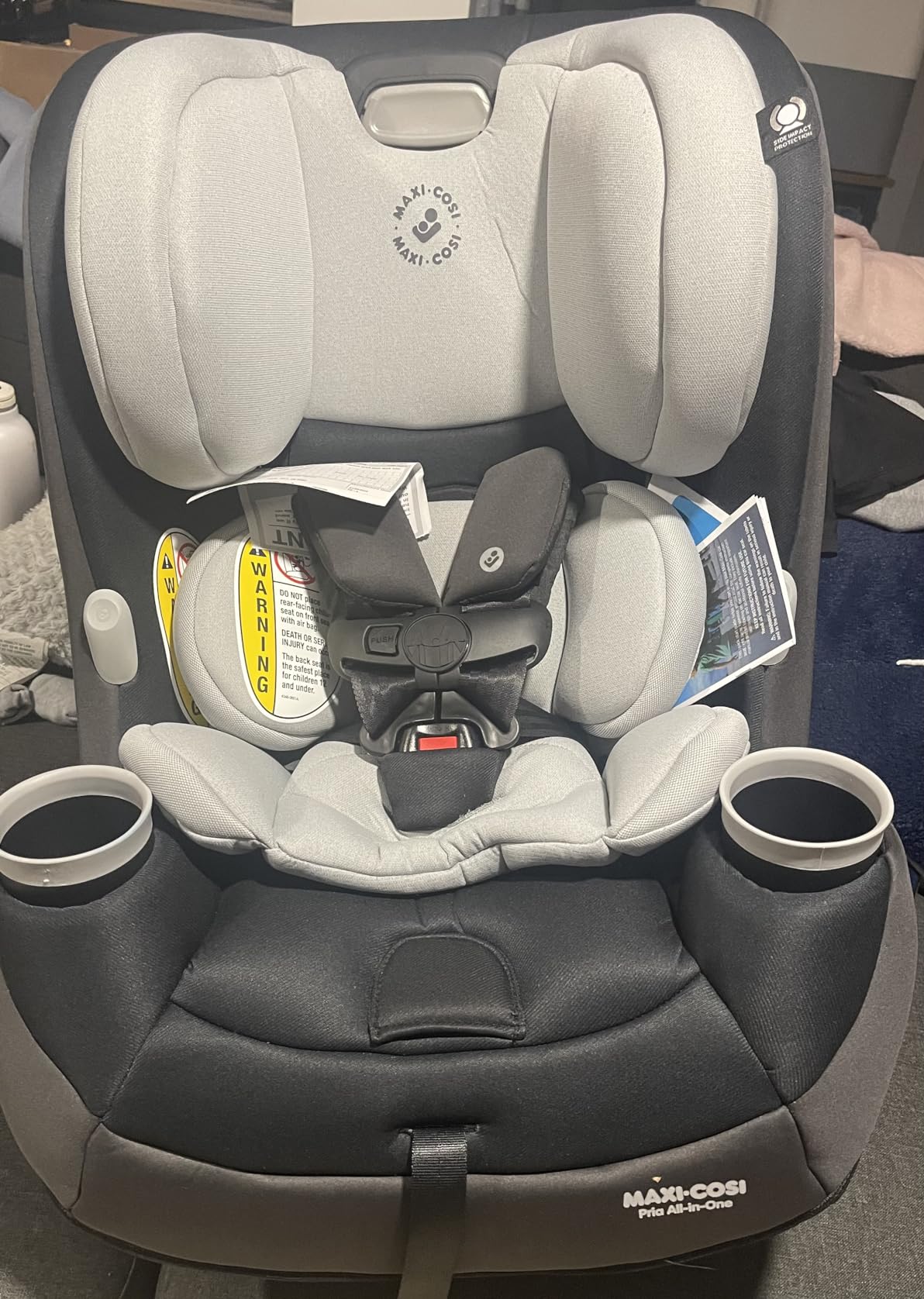
Three recline positions, plush removable infant pillows, two dishwasher-safe removable cup holders, and a machine-washable dryer-safe cover round out a well-considered package. European styling is a minor thing, but it makes the seat one parents are happy to have visible in the car.
Two numbers work against it. The rear-facing limit is 40 lb, and parents often note it costs more than comparable 40 lb seats. If your toddler is small, the materials justify it; if you are near the height limit already, a 50 lb seat is the smarter spend.
What flame-retardant-free actually changes
Most car seat fabrics rely on added flame retardants, because federal flammability requirements push manufacturers toward them. The Pria uses fabrics that are naturally flame resistant without that added treatment, which means fewer chemical treatments between your toddler and the seat cover.
This is a preference, not a safety upgrade. All eight seats here meet FMVSS 213, and the safety case rests on crash performance and correct installation rather than on what the fabric is made of. Choose on materials if you want to, but do not treat it as protection.
QuikFit versus a no-rethread harness
QuikFit integrates the headrest and the harness so one motion moves both, which means a growing child is adjusted in a single pull rather than two separate systems that can drift out of alignment. For a harness that must sit at or below the shoulders rear-facing, keeping those two in sync is a genuine safety benefit, not just convenience.
Note the rear-facing height range of 19 to 40 inches, which is identical to the Safety 1st Grow and Go. Both of those seats use the same underlying fit envelope, so decide between them on fabrics, weight, and price rather than on child fit.
ReclineFit and the small-car question
Three reclining positions with a ReclineFit adjustment is adequate, though reviewers report the mechanism could be smoother than the price suggests. A stiff recline is frustrating when you are trying to correct a rear-facing angle in a vehicle with a sloped rear cushion.
The Pria is described as bulky in smaller vehicles, and the 40 lb rear-facing ceiling means you will likely buy a second seat within a couple of years for a fast-growing toddler. Measure your rear footwell before ordering.
Cleaning an eco-fabric cover
Despite being an eco fabric, the cover is machine-washable and dryer safe, and the infant pillows remove for their own wash cycle. Cup holders are removable and dishwasher safe.
That is a full win for a messy-toddler household, and it is one of the reasons this seat rates well despite its lower rear-facing ceiling. If you filter purely on care and cleaning, this is the pick in the roundup.
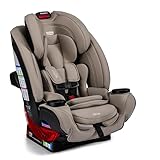
5. Britax One4Life – The Easiest Install and the Tallest Rear-Facing Height Limit
Britax One4Life All in One Car Seat, Up to 10 Years of Use — Teak
Rear-facing 5-50 lb to 49 inches
ClickTight install
15-position harness
9-position recline
Pros
- ClickTight three-step installation
- Extended rear-facing to 50 lb and 49 inches
- Nine-position recline with angle indicator
- SafeWash naturally flame-retardant fabrics
- Three infant inserts included
Cons
- Most expensive seat in the roundup
- Heavy and bulky for small cars
- ClickTight hardware adds width
- Hard to move between vehicles
The One4Life solves the problem that the rest of this category mostly punishes you for: getting a correct install without a fight. ClickTight installation is three steps, pinch to open, thread and buckle, click closed, and the physical click is a direct answer to the number one complaint in parent forums, which is not knowing whether the seat is tight enough.
It is also the only seat here that states a rear-facing standing height above 40 inches, carrying a toddler to 49 inches and 50 lb. A tall four-year-old is exactly the child who outgrows a 40 lb-rated shell while still weighing 38 lb, and this is the seat that keeps them rear-facing.
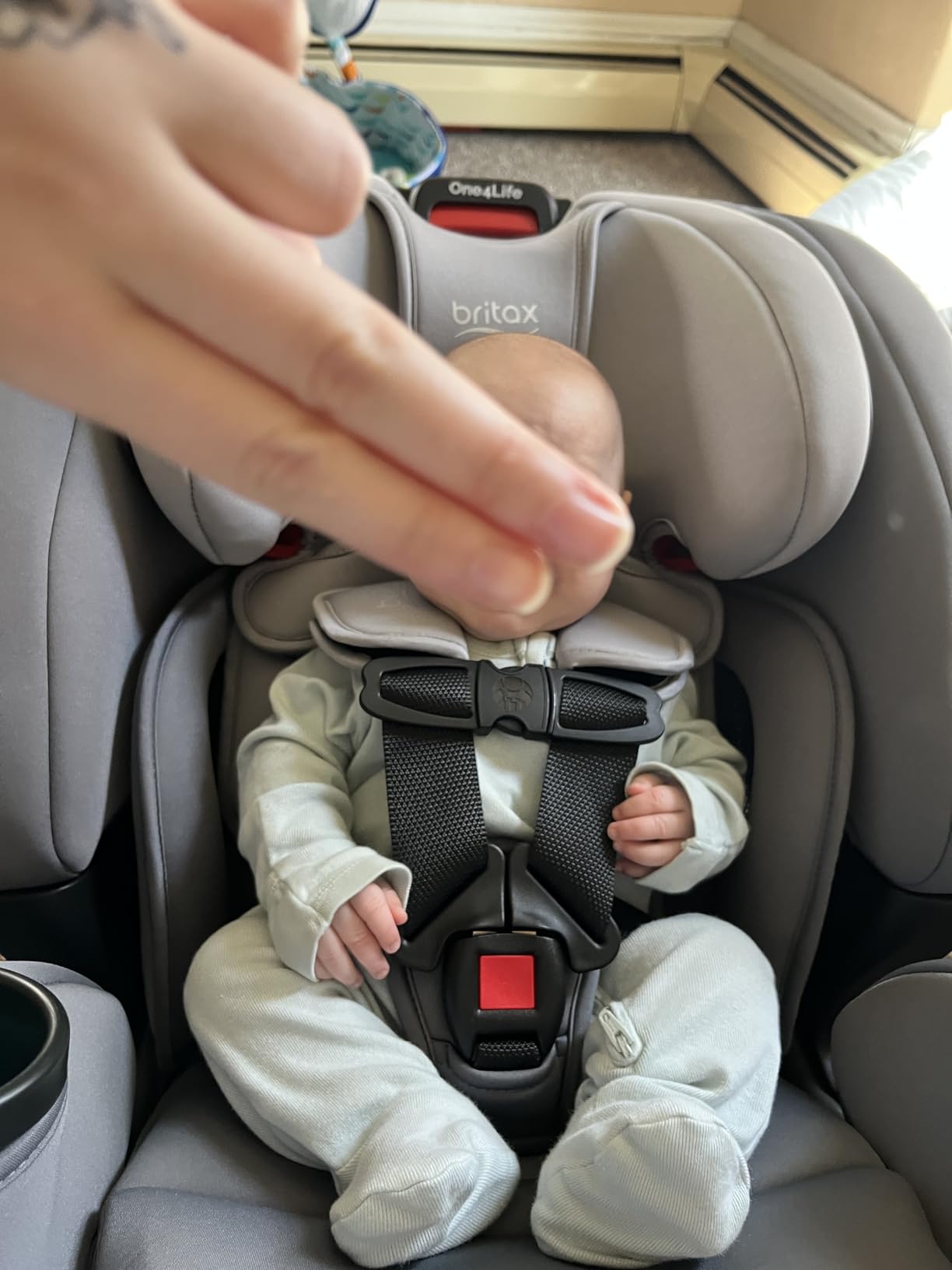
Underneath is a steel frame with SafeCell technology, two layers of energy management, and a patented V-shaped tether designed to limit forward movement in a crash. It is side-impact tested to FMVSS 213a and frontal-impact tested to FMVSS 213, and it is verified by Baby Safety Alliance.
Three infant inserts cover babies down to 20 lb, the harness is a 15-position no-rethread design with one-hand adjustment, and the nine-position Quick-Push recline with an easy-read indicator gives you the most recline settings of any of the eight seats here.
Why a three-step install changes real-world safety
NHTSA research has found that a large majority of car seats are used with at least one critical installation error, and the most common cause is not ignorance of the manual, it is a connection that is not fully latched. ClickTight is built specifically to remove the guesswork from the lower anchor connection.
There is a second, quieter benefit. An install that takes ninety seconds instead of twenty minutes gets rechecked every time, and most critical errors come from seats that are installed once and never touched again, which is exactly the pattern a permanently installed seat in a two-car family falls into.
Height limit versus weight limit
This seat is the clearest illustration of why you should read both numbers. A child can weigh 44 lb and still fit rear-facing to the 50 lb weight limit, but a 45 inch child in a seat with a 40 inch height limit has to turn around, and the weight number becomes irrelevant.
Here the height limit is 49 inches, which is far above a typical four-year-old. That headroom, plus the three-in-one path from rear-facing to forward-facing harness to high-back booster, is why the seat can plausibly last the full ten years the brand claims.
Materials, cleaning, and the SafeWash fabrics
The SafeWash fabrics are naturally flame-retardant with no added FR chemicals, and they are machine washable and dryable. That solves the one complaint that premium seats often carry, which is a hand-wash-only cover in a family with a toddler who eats in the car.
The two cup holders are dishwasher safe, and the harness adjustment is one-handed. Daily usability is genuinely well considered here, which is why reviewers score it at 4.7 despite the cost.
Where the money goes, and where it does not
This is the most expensive seat in the roundup, and I would only justify it with two things: a tall toddler heading toward the 40 lb ceiling, or a family that will keep the same seat for a decade through the booster stage. If neither applies, the Graco Extend2Fit covers the same weight range at a lower cost.
It is also heavy and bulky, with the ClickTight hardware adding width, so it is not a small-car or three-across seat. Treat it as a fixed install in one vehicle rather than a portable seat.
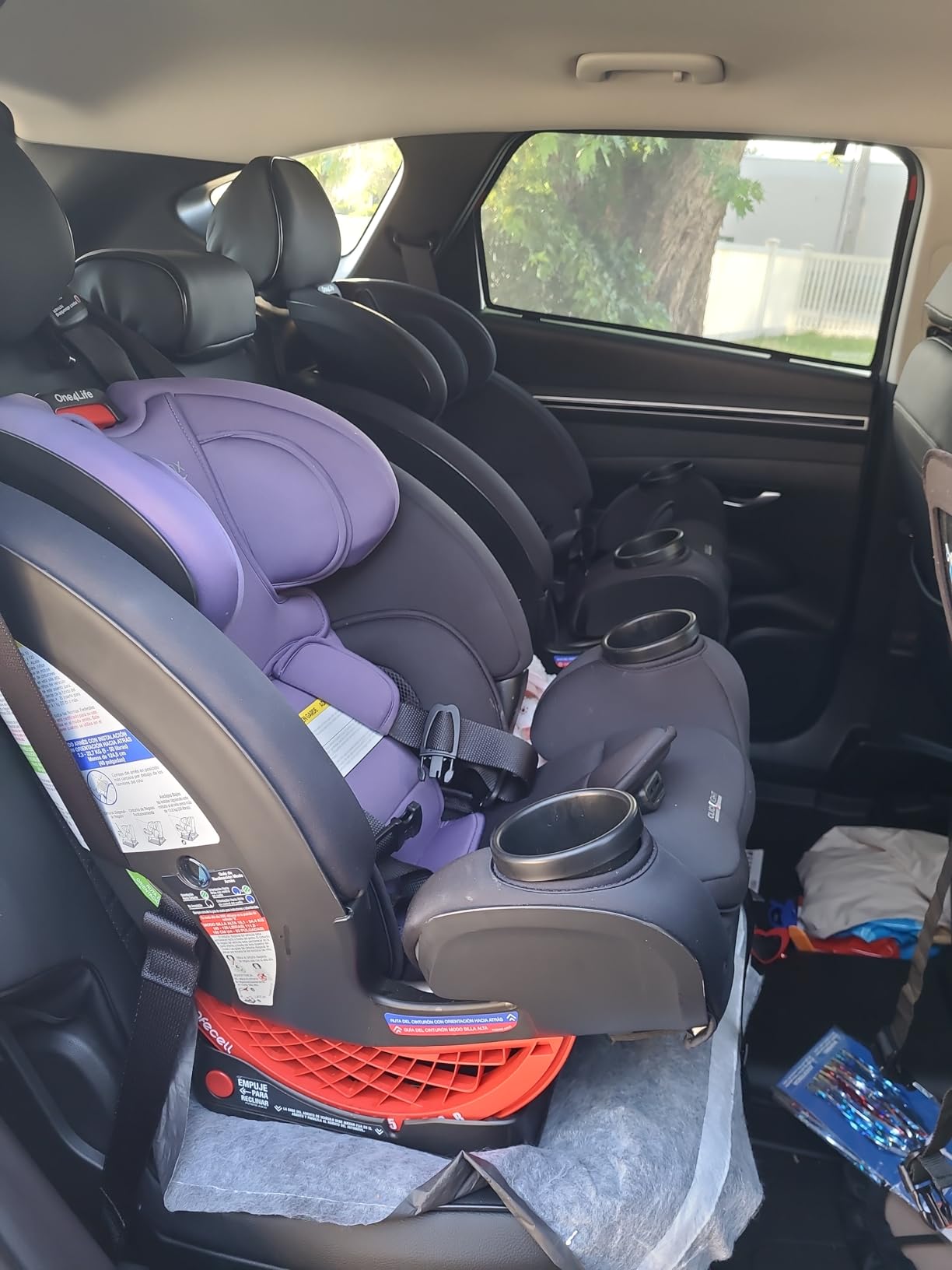
6. Baby Trend Cover Me 4-in-1 – A Canopy and a Three-Across Width Under One Frame
Baby Trend Cover Me™ 4-in-1 Convertible Car Seat
Rear-facing infant 4-18 lb
Rear-facing toddler 18-40 lb
Forward-facing 30-65 lb
Booster 40-100 lb
Pros
- Integrated UPF 50 canopy with side visors
- 18.25 inch width fits three across
- Four modes including infant rear-facing
- Zero recline radius base preserves legroom
- Machine-washable fabric
Cons
- Rear-facing toddler limit stops at 40 lb
- Canopy mechanism may wear over time
- Padding compresses with use
- Recline adjustment can be stiff
The Cover Me is the only seat in this roundup with a canopy, and that is not a gimmick. An integrated adjustable canopy with UPF 50+ sun protection and flip-out side visors is genuinely useful for a rear-facing toddler, who is the hardest person in the car to shade because the window is behind them and the glass is often tinted.
It is one of the seats here that can be used from birth, with a dedicated 4 to 18 lb rear-facing infant mode that a standard convertible seat does not have. The toddler rear-facing mode then runs 18 to 40 lb.
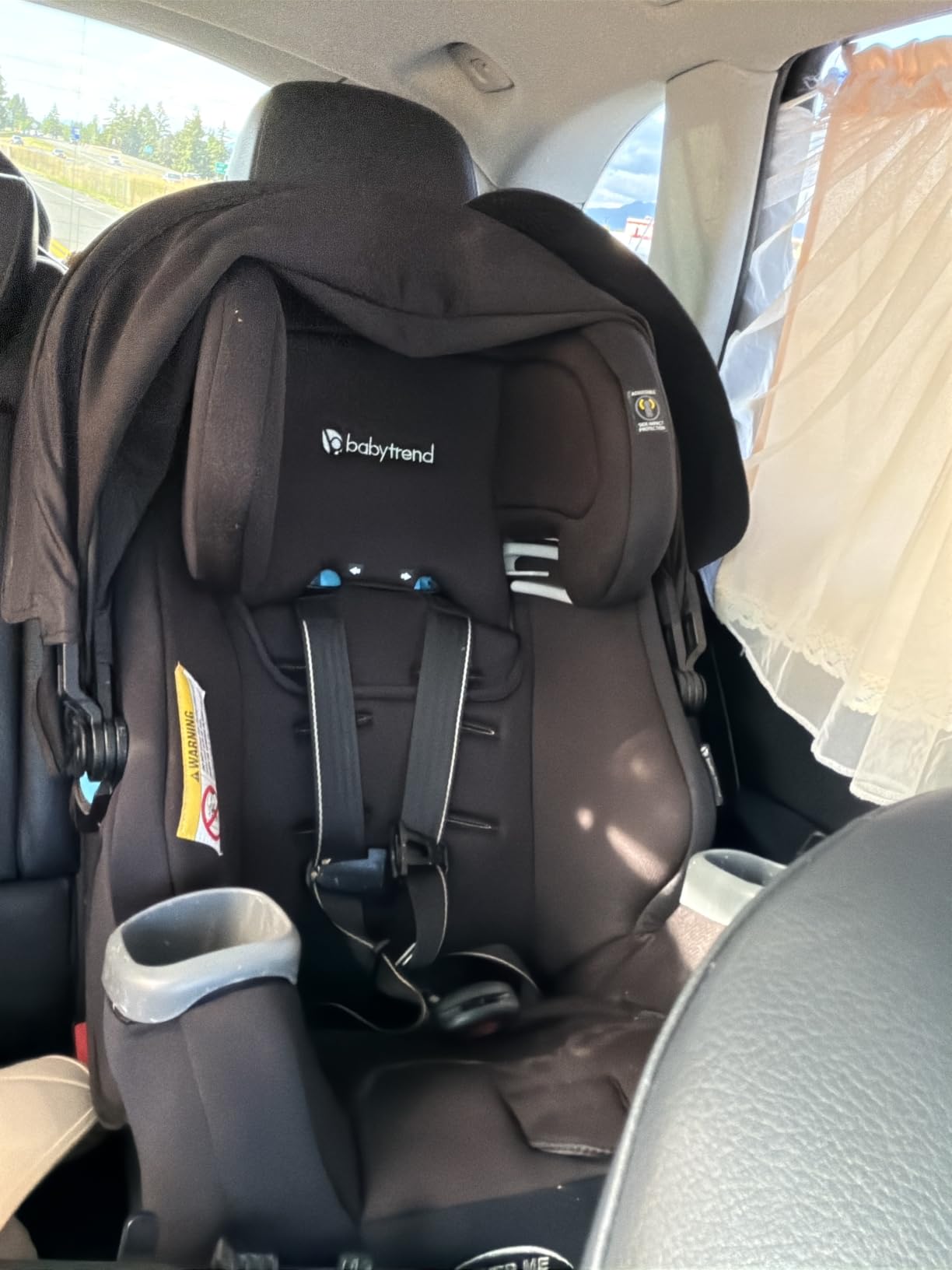
At 18.25 inches at its widest, it is narrow enough to fit three across in most vehicles, which combined with the infant mode makes it a strong second or third seat. The base has a zero recline radius with three positions, and parents specifically like that it leaves extra legroom for whoever is in front of it.
Deep side wings handle side-impact protection, the integrated headrest uses a no-rethread harness, and the Comfort Cabin padding suits long rides. It meets and exceeds ASTM standards and U.S. safety requirements.
Who the canopy is genuinely for
Rear-facing toddlers sit in the worst-lit, most sun-exposed position in most cars. The canopy blocks direct sun on the face and head, which matters more than it sounds in a hot climate, and the flip-out side visors cut the glare that a rear-facing child otherwise stares into for the whole drive.
Your toddler can also adjust the canopy while the car is moving, which parents with an inquisitive child consider a genuine feature rather than a novelty. The trade-off is durability: reviewers note the canopy mechanism can be fragile over time, and it is a part you cannot replace.
Four modes, and why the infant stage matters
The 4-in-1 path runs rear-facing infant, rear-facing toddler, forward-facing with a 5-point harness at 30 to 65 lb, and belt-positioning booster at 40 to 100 lb. Most parents only use the toddler mode for years, but a dedicated infant mode is a real advantage if you are starting from birth. Our infant car seat guide covers that earlier stage in more detail if you are deciding between an infant carrier and a seat like this one.
Note the split rear-facing ratings carefully. The toddler rear-facing mode tops out at 40 lb, which is the main limitation against the 50 lb seats in this roundup. If your child is already two and closing in on that number, start higher on this list.
Three-across fit and the legroom advantage
Three seats at 18.25 inches is 54.75 inches of shell, which fits many back rows but is roughly an inch and a half tighter than the Diono Radian 3R. If you are fitting three seats, measure the usable width at the seat bight before ordering, and check your centre position has a working belt path.
The zero-recline-radius base is the sleeper feature. Because it can achieve a compliant rear-facing angle without a long base extension, it leaves more front-passenger legroom, and front-seat legroom is the complaint that comes up most often in rear-facing parent forums.
Comfort, cleaning, and long-term wear
The Comfort Cabin provides extra padding for long trips, the fabric is machine washable, and the no-rethread harness with an integrated headrest means daily adjustments are quick even as your child grows.
Two durability notes from reviews. The padding may compress over time, which is normal for a foam seat and worth checking at each headrest height increase. And the LATCH connectors could be more robust, so if you plan on frequent reinstalls, belt-path installation with the accessible belt paths is the alternative.
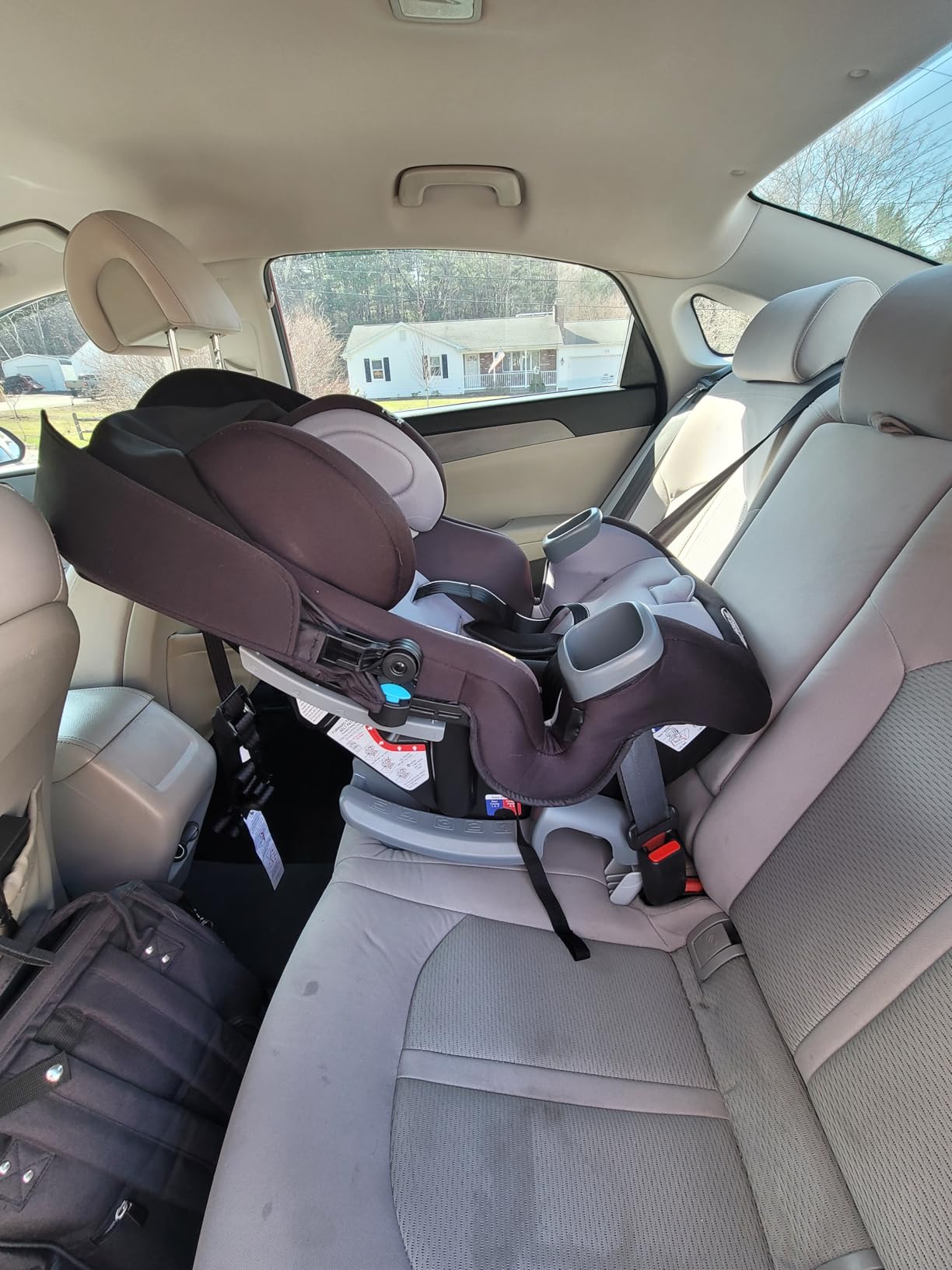
7. Evenflo Revolve360 Extend – One-Hand Rotation Solves the Back and Loading Problem
Evenflo Revolve360 Extend All-in-One Rotating Car Seat
360 degree one-hand rotation
Extended rear-facing to 40 lb
All-in-one through booster
Quick Clean cover option
Pros
- One-hand rotation for loading and unloading
- Extended rear-facing to 40 lb
- All-in-one growth through booster
- Side impact protection on current variants
- Quick Clean machine-washable cover option
Cons
- Premium price for the rotation feature
- Rotation bulk blocks three-across
- Heavy and hard to move
- Rotation needs clearance on both sides
The Revolve360 Extend exists for one reason, and that reason is loading a rear-facing toddler. A 360 degree rotation that operates with one hand means you swivel the seat toward the door instead of leaning into the back seat and arching your own back. Parents recovering from a C-section or dealing with a back injury consistently call that the biggest daily quality-of-life change a car seat can make.
It rear-faces to 40 lb in an all-in-one frame that continues growing into a forward-facing harness and then a booster, so the rotation is not a short-term convenience you outgrow in a year.
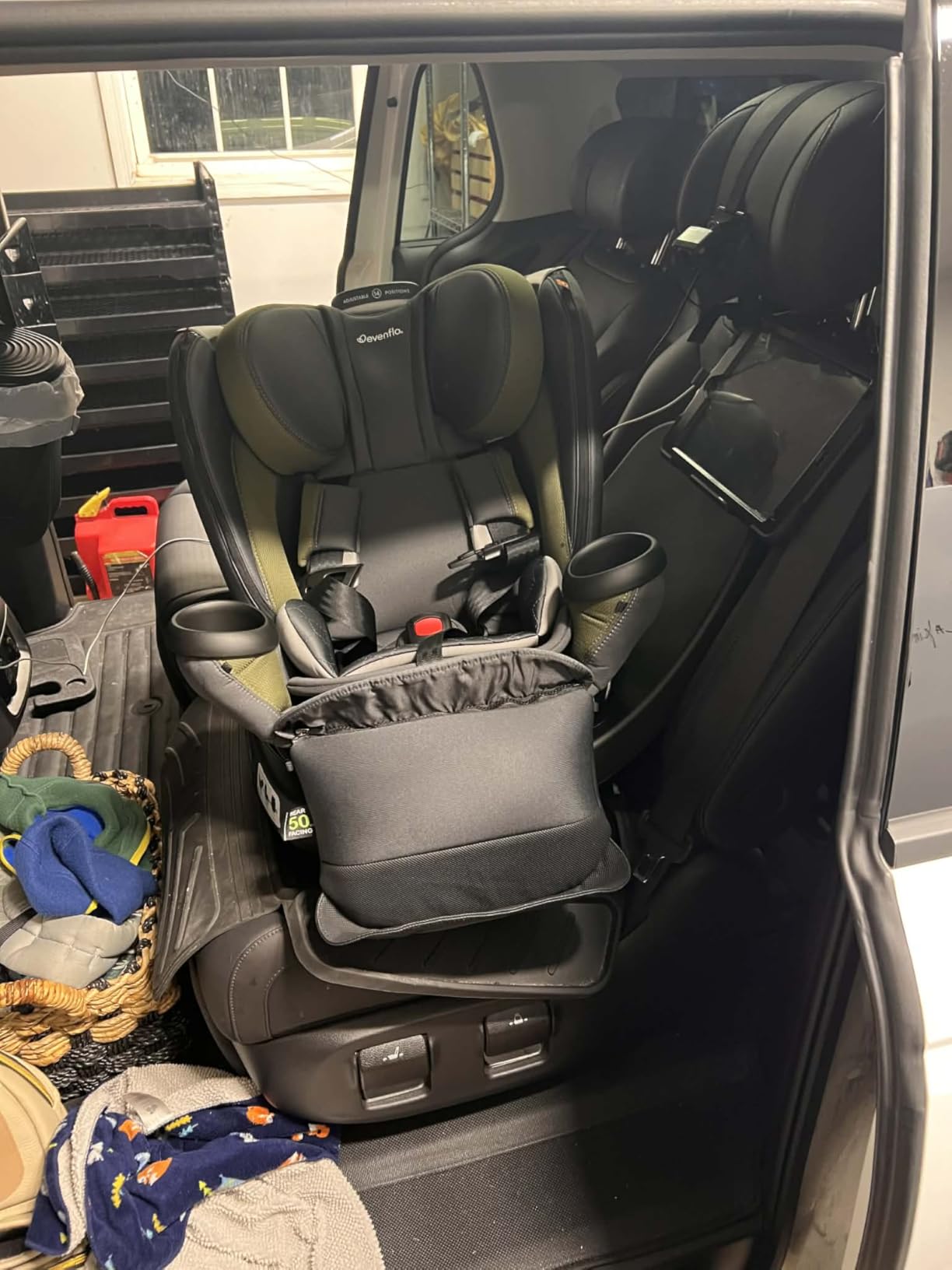
Current variants add side-impact protection on the L.I.F.E. GUARD and Extend models, and a Quick Clean cover version is available if you want a machine-washable fabric on a premium seat.
What rotation cannot fix is space. The mechanism adds real bulk, it needs clearance on both sides to swing, and it is not a three-across proposition. It is also heavy, so the seat stays in one installed position rather than travelling between cars.
When one-hand rotation is worth paying for
The case is strongest for a caregiver with limited back mobility, a tall or heavy toddler you lift in and out daily, or a child who needs frequent medical attention while travelling. In those situations, rotating toward the door removes a lift you perform dozens of times a week.
The case is weak for a family that just wants an easy install. A tight lower anchor path and a clear level indicator give you most of the practical benefit at none of the bulk, which is why the Graco and Britax rank above this seat for most buyers despite lower review counts.
What 40 lb rear-facing means for a growing toddler
This is a 40 lb rear-facing seat, so a tall toddler will move on early. The extended rear-facing capacity to 40 lb is useful, but it is not the extended range that the Graco Extend2Fit and Britax One4Life deliver at 50 lb.
Rotation also interacts badly with a steep rear-facing angle. If your rear bench slopes, the seat may not achieve a compliant angle in every position, and rotation can only happen properly when the base is installed as directed. Verify that the rear-facing position works in your specific vehicle before you commit.
The long-term durability question
This is a newer model, which means fewer years of long-term durability reports behind it than the Graco, the Safety 1st Grow and Go, or the Diono Radian. Reviews are strong on build quality, but two years of daily use is a different test than six months.
Rotating mechanisms are also wear items. A swivel that feels smooth at month three may develop play at year four, so check it periodically and keep the base installed in one position rather than moving it around to protect the joint.
Cleaning and vehicle fit
Choose the Quick Clean cover variant if the seat will live in a messy-toddler household. Hand-washing a premium seat cover is the detail that quietly pushes families off premium models, and the quick-wash option avoids it.
Measure your back row before ordering. Rotation needs space on both sides of the seat, and the widest total footprint is on the diagonal, which is why a 360 degree seat is a poor fit for a compact sedan with a shallow back seat.
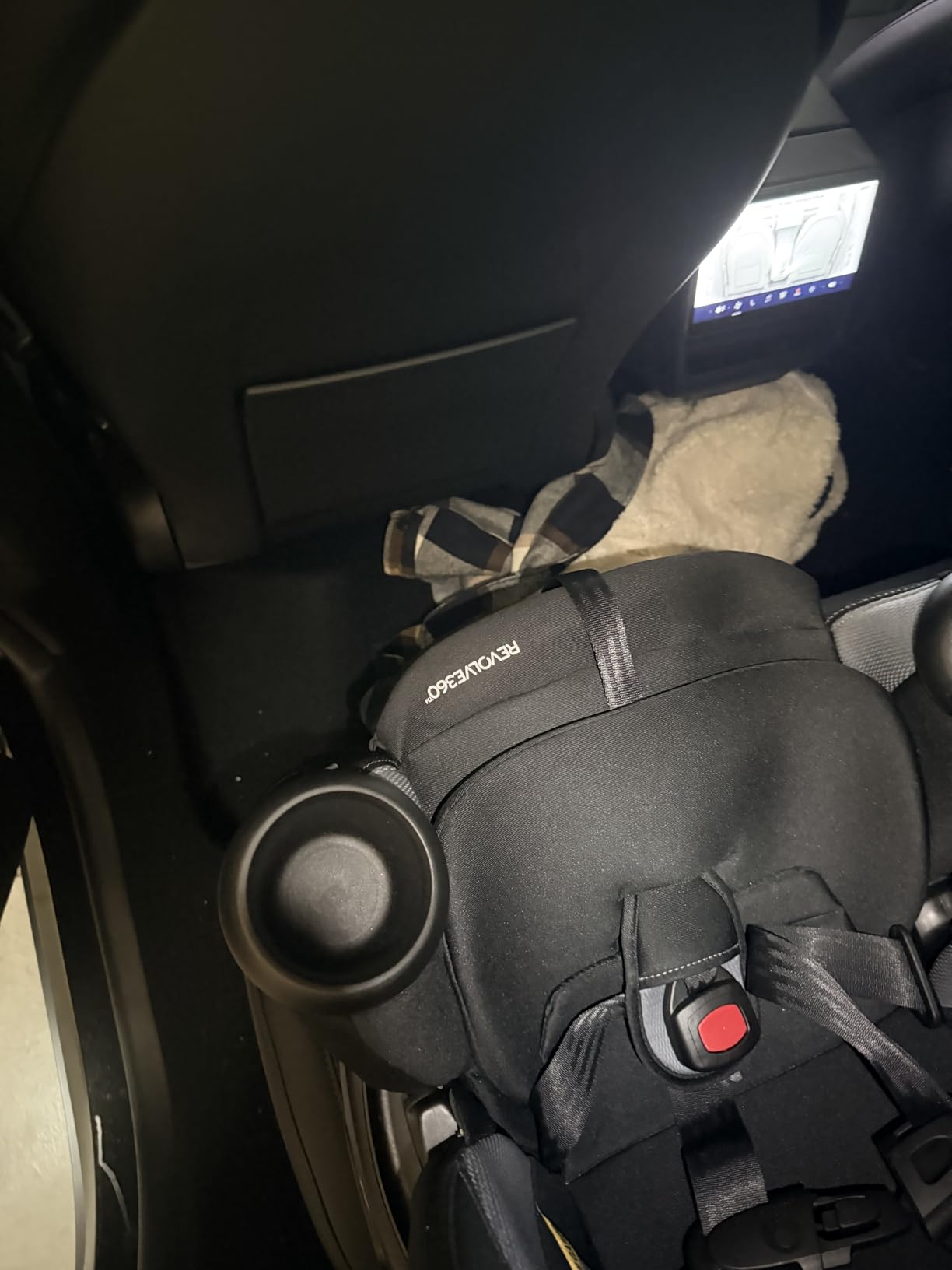
8. Safety 1st Crosstown – A Lightweight Slim Seat for Travel and Second Cars
Safety 1st Crosstown All-in-One Convertible Car Seat, Rear Facing, Forward Facing Car Seat, Booster, City Storm
Rear-facing 5-40 lb
Slim three-across design
Lightweight build
1-hand harness adjust
Pros
- Slim enough for three across in compact cars
- Lightweight and easy to carry
- Machine-washable pad
- Narrow back clears adjacent buckles
- Good fit for air travel
Cons
- Rear-facing stability concerns when base is unbraced
- Manual advises a towel for rear-facing support
- Rattles noticeably when empty
- Minimal LATCH clips
- Unbalanced harness adjustment
The Crosstown is a light, narrow seat, and that combination is what makes it the one to consider if you fly, use a rental car, or need a second and third seat across a back row. Its slim design also means the narrow back does not cover the adjacent seat belt buckles, which is a small detail that makes a crowded back row livable.
It is a three-in-one covering rear-facing 5 to 40 lb, forward-facing 30 to 65 lb, and booster 40 to 100 lb, with a one-hand adjustable harness, an 8-position headrest, easy-to-access belt paths, and dishwasher-safe cup holders.
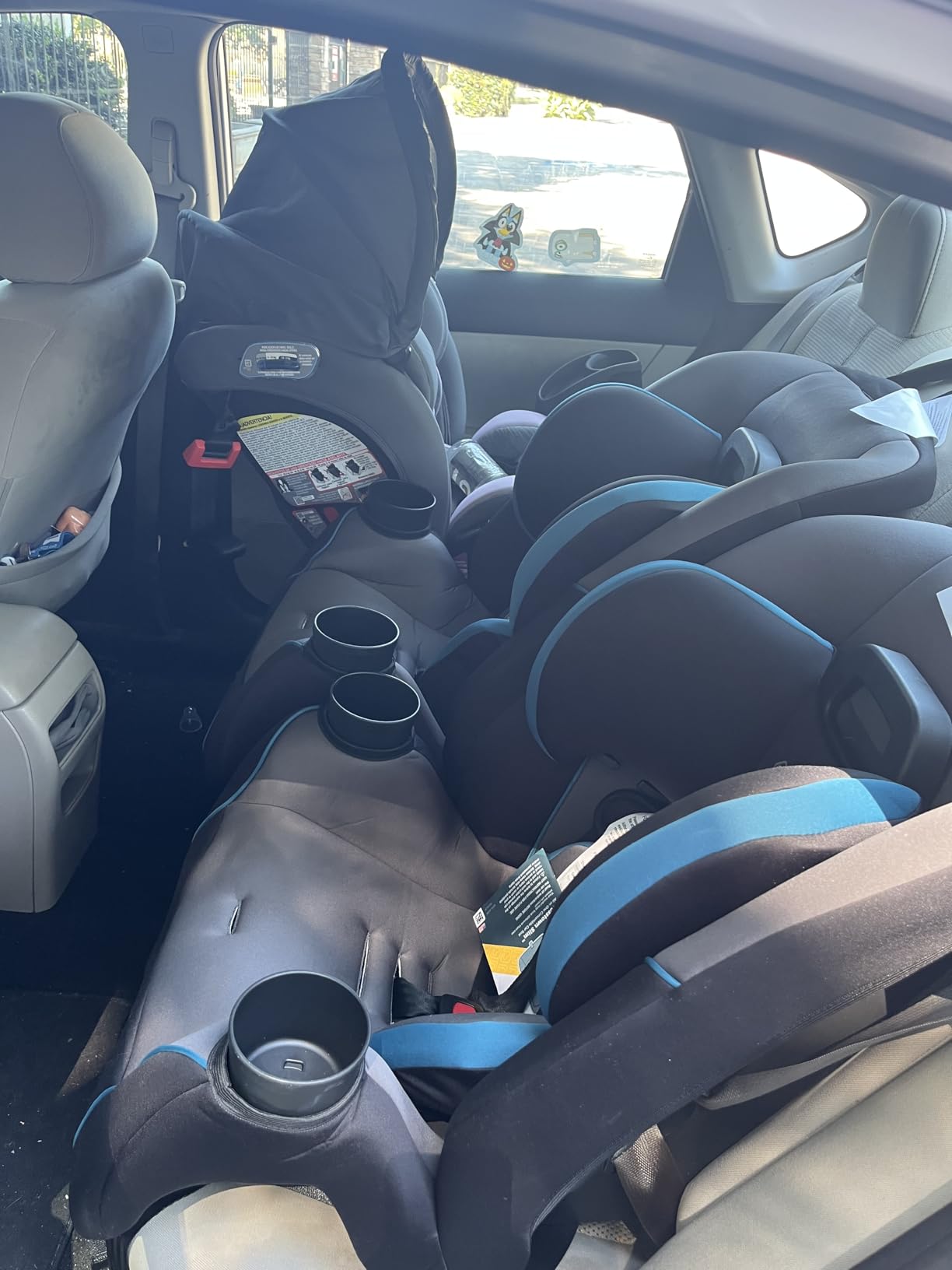
Being honest about why it rates lowest here at 4.2: multiple reviews report rear-facing stability issues, and the manual itself directs parents toward using a towel for rear-facing support. It also rattles noticeably when unoccupied because of a plastic sliding mechanism, and the harness adjustment can pull one side loose when you pull the other.
None of that is disqualifying for a travel or secondary seat, but I would not make it the seat your toddler rides in every day for three years.
The stability reports, and what they mean in practice
Reports describe a base that is not stable rear-facing without support, and a manual that suggests a rolled towel to brace it. On a flat bench with a firm install, that is a manageable workaround. On a sloped cushion in a sedan, it is not.
If you need this seat for daily rear-facing use, ask a Child Passenger Safety Technician to check the install before you commit. NHTSA misuse data is clear that most seats are installed with at least one critical error, and a stability concern is exactly the kind of thing that only shows up in a physical inspection.
Why it works for travel and second cars
Lightweight and slim are the two traits that matter most for travel. A heavy seat is miserable to carry through an airport, and a narrow one fits rental cars and compact sedans where nothing else in this roundup will. Parents report it as a good fit for cars like a Nissan Sentra.
Airline buckles are narrow, so expect your child to sit slightly forward of the buckle on long flights. Reviewers note the light build is easy to manage in a row, and the slim shell fits rental car back seats where a full-size convertible will not go.
Three-across in a compact back row
This is the strongest argument for the Crosstown. Where a standard convertible shell will not fit three across, a slim design with a narrow back can, and the buckle clearance keeps the middle passenger able to reach their own belt.
Check the centre position carefully. The LATCH hardware here is described as minimal clips, and many parents prefer a seat belt install, so verify that your centre position has an accessible belt path and a top tether anchor before building a three-across plan around this seat.
Harness, recline, and daily annoyance points
The one-hand harness with an 8-position headrest and no rethreading is a good design on paper, but the unbalanced adjustment is the most commonly reported problem. Pulling one side can loosen the other, which is an annoyance worth testing in store if you can.
The rattling is cosmetic rather than structural, but expect it in an empty seat, and expect it to stop once a child is strapped in. The machine-washable, dryer-safe seat pad is a genuine plus at this level, as are the dishwasher-safe cup holders.
How to Choose a Rear-Facing Car Seat That Fits Your Child and Your Car
A car seat has three independent fit problems, and a seat can be excellent at one and fail at another. The child has to fit the shell and stay inside both the weight and height limits. The seat has to fit your vehicle and be installed correctly. And the whole thing has to be usable at two in the morning by a tired parent. Work through them in that order.
Check the height limit before the weight limit
Most parents hit the shell before the scale. Run this sequence when you suspect your toddler has outgrown the seat:
First, measure standing height and compare it to the maximum standing height in the manual, not to the weight limit. Second, look at the top of the head against the top of the shell, because once the top of the head is within about one inch of the shell the seat is done, regardless of weight. Third, weigh the child and compare to the rear-facing weight maximum. Fourth, check the manufacturer date and the seat expiration so you know the timeline before you start shopping.
If your toddler is 37 lb and 36 inches tall, the weight is comfortably inside a 50 lb seat and the height is the number to check. That combination is the most common near-outgrown profile and it is exactly the case where the Graco Extend2Fit and Britax One4Life earn their place.
Measure front-seat clearance before you buy
Rear-facing is deep. Depending on the seat and the recline angle, a rear-facing installation can consume 20 to 27 inches of cabin depth, which pushes the front passenger seat forward and takes away legroom or knee room.
The practical test: install the seat rear-facing, then slide the front seat back to where the passenger wants it, then check whether they can sit comfortably with knees bent. Do this with the actual seat before you commit, not with a tape measure on an empty showroom car, because recline angle and base extension both change the footprint.
Our infant car seat guide covers the earlier stage, and the same clearance logic applies once you move up to a rear-facing convertible.
Three across is a width problem, not a weight problem
Decide whether you need three across before you pick a brand, because the answer narrows the field to roughly 17 and 18 inch shells. The Diono Radian 3R is 17 inches at its widest, the Baby Trend Cover Me is 18.25 inches, and standard convertibles sit above that. Multiply your three widths, then compare to the usable width of your back row at the seat bight.
Rotating seats are out. The Revolve360 needs clearance on both sides of the seat to swing, and the footprint on the diagonal rules out three-across entirely.
LATCH or seat belt, and why ease of install matters
Lower anchors are easier to use correctly, and the combination weight limit for lower anchors is typically 65 lb for the child plus the seat, which is worth checking against your own vehicle. Seat belt installs are the fallback when a vehicle has no working anchors or when a seat is too wide for the anchor spacing.
Do not mix methods. A seat installed with the belt and tethered is fine; a seat installed with the belt and then anchored with lower anchors is not. If a belt install keeps going slack, check that you are using the belt lock-off, that you are locking the retractor with the recline method your manual describes, and that the belt is routed through the correct rear-facing path.
For a sloped rear cushion, roll a towel under the base of the seat, not the vehicle seat, and recheck the angle indicator. And after any install, move the seat at the belt path. If it moves more than one inch at the widest point, it is not tight enough.
Harness, recline, and cleaning for daily life
A no-rethread harness, where the headrest and harness move together, is worth paying for because it keeps the shoulder straps at or below the shoulders rear-facing without a daily rethread. A 5-point harness is standard across this entire roundup, so it is not a differentiator.
On cleaning, machine-washable and dryer-safe pads save the most time. Premium seats with hand-wash-only covers are a real problem in a household with a toddler, so pick the quick-wash variant if you are buying a rotating seat.
On recline, more positions is better because vehicle cushions vary. Four to nine positions covers most sedans and crossovers; three positions is workable but leaves you fewer options when a vehicle cushion fights the angle.
Rotation, travel, recalls, and expiration dates
Rotation is a daily convenience feature, not a safety feature. Judge it on whether you have back problems, a recovering C-section, a child who needs frequent lifting, and enough side clearance in your vehicle.
For air travel, look for FAA approval on the specific seat, and expect a rear-facing toddler to be uncomfortable sleeping upright. Weight matters more than approval in practice, because a seat you cannot lift down the aircraft stairs is not useful to you.
Before buying any seat, check the model number in the NHTSA recall database, and read the manufacture date on the label. Car seats expire, commonly around six to ten years depending on the model, and we do not recommend buying a used seat because the crash history and expiry date are unknowable. A free Child Passenger Safety Technician inspection is the single highest-value de-risking step available, and most fire stations and hospital programmes offer them at no cost.
Frequently Asked Questions
How long should a toddler be in a rear facing car seat?
The American Academy of Pediatrics recommends keeping children rear-facing until they reach the maximum height or weight limit of their specific seat, which is usually around age three to four. Most children outgrow the shell by height before they reach the weight limit, so check the standing height in the manual as often as the weight. There is no single correct age.
Should my 2 or 3 year old still be rear facing?
Yes, if your child still fits within the rear-facing limits of the seat. A two-year-old who is under 40 lb and has more than an inch of headroom should absolutely stay rear-facing. A three-year-old who is tall for their age often needs one of the 50 lb seats in this roundup, such as the Graco Extend2Fit or the Britax One4Life, rather than turning around early.
What is the best rear-facing car seat for toddlers?
The Graco Extend2Fit 2-in-1 is our top pick, rated 4.8 across more than 57,000 reviews, rear-facing to 50 lb, with a 4-position panel that adds up to 5 inches of legroom so a tall toddler stays rear-facing longer. For three across, the Diono Radian 3R fits at 17 inches wide. For one-hand loading, the Evenflo Revolve360 Extend is the rotation option.
How tall is too tall for rear-facing?
Your toddler is too tall for rear-facing when the top of the head is within about one inch of the top of the seat shell, or when they reach the maximum standing height printed in the manual. Most seats without a stated height limit sit around 40 inches. The Britax One4Life is the exception here, carrying a child to 49 inches rear-facing.
Is Chicco or Graco better?
For rear-facing specifically, Graco is the stronger choice in this roundup because the Extend2Fit carries a child to 50 lb with an adjustable legroom panel, while the Chicco models in this price bracket typically stop at 40 lb. Graco also offers a narrower frame for three-across. Chicco still has an edge for a specific need: the rotation on the Fit360, which is not represented here.
The Verdict on Rear-Facing Car Seats in 2026
If your toddler is average-sized and you want one seat that keeps them rear-facing as long as safely possible, the Graco Extend2Fit 2-in-1 is the best rear facing car seat for toddlers, with a 50 lb limit, an adjustable legroom panel, and the strongest review history in this group. If you are fitting three seats across a back row, the Diono Radian 3R is the only one here that reliably does it at 17 inches wide.
If your priority is the cleanest transition from toddler to school age, the Britax One4Life takes a child to 50 lb and 49 inches and installs in three steps. If loading pain is your daily problem, the Evenflo Revolve360 Extend rotates with one hand. If you want three usable modes and a pad you can throw in the washer and dryer, the Safety 1st Grow and Go covers rear-facing, forward-facing, and booster with a washer-and-dryer-safe pad. For the sunniest back seat, the Baby Trend Cover Me canopy shades a rear-facing child like nothing else here.
The Maxi-Cosi Pria is the pick if you want flame-retardant-free recycled fabrics and a one-handed harness. The Safety 1st Crosstown is the travel and second-car option, kept light and narrow, with rear-facing stability reports worth checking with a Child Passenger Safety Technician before daily use.
Whatever you choose, install it once properly, get a free CPST inspection, and check the NHTSA recall database by model number. Then stay rear-facing until your child is out of the shell, not out of the age range.
Leave a Reply