
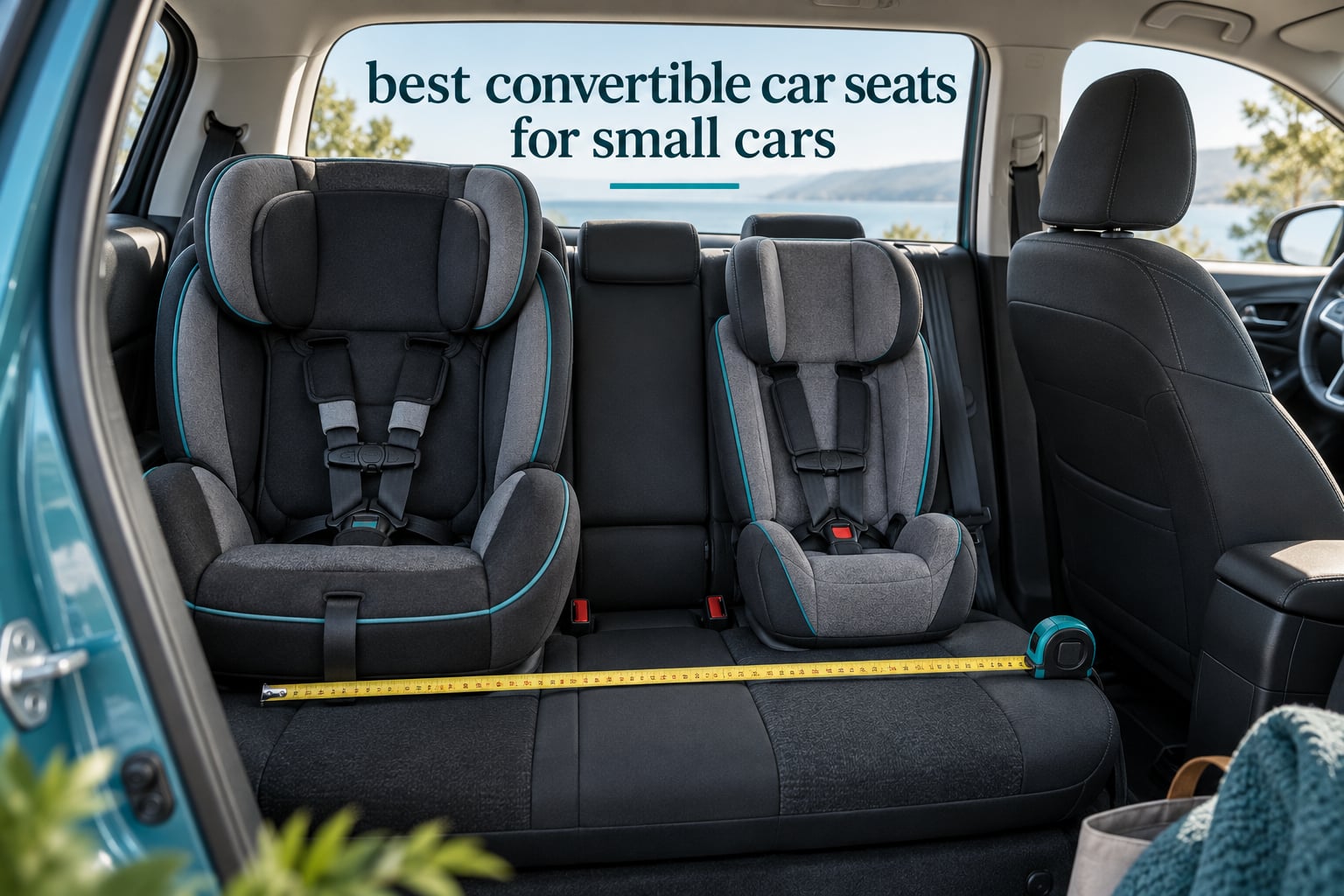
The best convertible car seat for small cars is the Graco SlimFit3 LX, because its published 16.7 inch width is the narrowest figure in this whole group and it is built to fit three across.
That single measurement decides most of what follows. In a compact sedan, a hatchback or a Mini, the back seat is the smallest room you will ever put a full-size restraint in, and the width of the seat shell decides whether you keep your front passenger, your third child, or both.
I spend a lot of time reading owner reviews on these seats, and the same three complaints repeat in nearly every small-car thread: the front seat gets pushed forward, the door is too narrow to buckle a strapped toddler, and a second seat will not go across. What follows is my shortlist of ten convertible car seats, organized around the geometry of your back bench rather than around brand. I do not crash test anything, and neither does the manufacturer of this page. Every width, weight limit and rating quoted here comes from the published specification or from the owner review record.
Two things before you start reading. Most parents outgrow the rear-facing mode by height long before they reach the weight cap, so buy for the height limit and not just the number on the box. And if your child is under two, start with our infant car seat guide first, because a convertible is a bigger shell than a newborn needs.
Our Top 3 Convertible Car Seats for Small Cars

Graco SlimFit3 LX 3-in-1
- 16.7 inches wide
- Built to fit three across
- No-rethread 10-position harness

Comparing Ten Convertible Car Seats Side by Side
| Product | Specs | Action |
|---|---|---|
| Graco SlimFit3 LX 3-in-1 |
|
Check Latest Price |
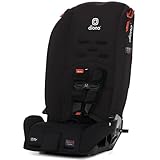
| Diono Radian 3R 3-in-1 |
|
Check Latest Price |
| Baby Trend Cover Me 4-in-1 |
|
Check Latest Price |
 Graco 4Ever DLX Slim 4-in-1 Graco 4Ever DLX Slim 4-in-1 |
|
Check Latest Price |
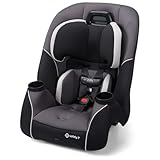 Safety 1st Crosstown All-in-One Safety 1st Crosstown All-in-One |
|
Check Latest Price |
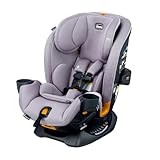 Chicco OneFit LX ClearTex Chicco OneFit LX ClearTex |
|
Check Latest Price |
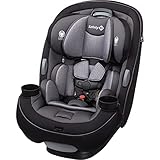 Safety 1st Grow and Go Safety 1st Grow and Go |
|
Check Latest Price |
 Evenflo EveryKid 3-in-1 Evenflo EveryKid 3-in-1 |
|
Check Latest Price |
 Safety 1st Ellaris 3-in-1 Safety 1st Ellaris 3-in-1 |
|
Check Latest Price |
 Baby Trend Trooper Slim 3-in-1 Baby Trend Trooper Slim 3-in-1 |
|
Check Latest Price |
1. Graco SlimFit3 LX – The Narrowest Published Width at 16.7 Inches
Graco SlimFit3 LX 3-in-1 Convertible Car Seat, Kunningham
Width 16.7 in
Rear-facing 5-40 lb
Fwd-facing 26.5-65 lb
Booster 40-100 lb
Pros
- 16.7 inch width fits three across
- Easy to install adjust and clean
- 10-position no-rethread harness
- Owners report good real-crash performance
Cons
- Plainer padding than premium seats
- Rear-facing recline hard to set alone
- Belt install has more play than LATCH
This is the seat I keep coming back to for compact back benches, and the reason is arithmetic rather than marketing. At 16.7 inches wide, it is the only seat here that publishes a width figure tight enough to make a three-across calculation work on paper, and 4.8 stars across more than two thousand owner reviews is not a thin base for that claim.
The mode coverage is ordinary and good: rear-facing harness from 5 to 40 pounds, forward-facing harness from 26.5 to 65 pounds, then a high-back booster to 100 pounds. The adjustable cup holders are positioned to help when you are squeezing it between two other seats, which is exactly the situation the width number is meant to solve.
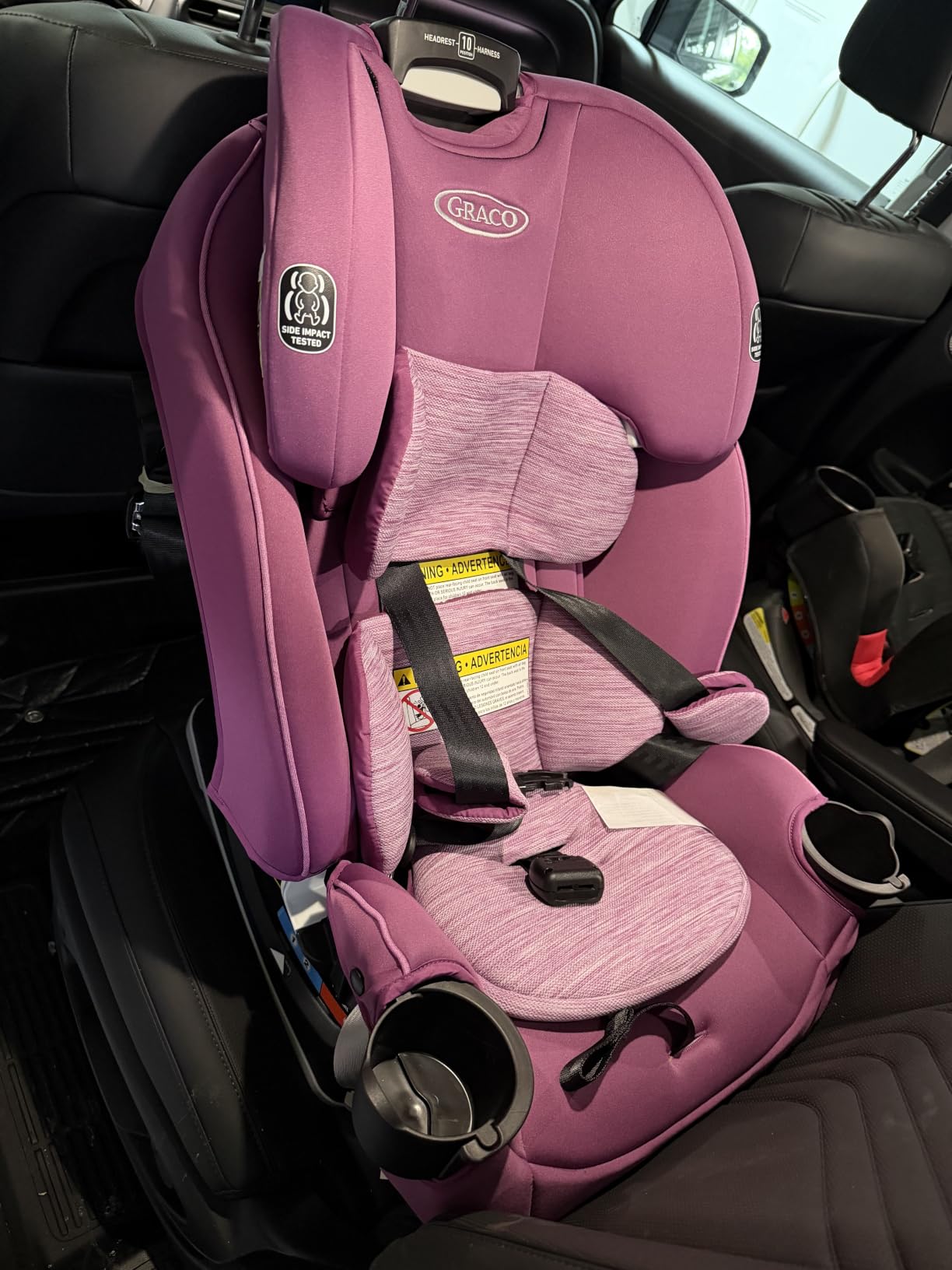
Where 16.7 inches actually gets you
Owners consistently describe this as the seat that works in sculpted benches rather than flat ones, the kind you find in coupes and older sedans where the back seat tapers toward the doors. Two of these plus a booster across a typical compact bench is a real configuration rather than a hope.
Harness and recline behaviour
The 10-position no-rethread harness is the part parents notice daily, since it changes shoulder height without pulling straps back through the shell. The recurring gripe is the rear-facing recline, which several owners say they could not dial in for a newborn without a second pair of hands.
What the reviews flag as imperfect
Padding is plainer than seats in the premium tier, and the ventilation openings on the back panel send air across a child’s legs in cold weather. Seat belt installs also have more slack than the LATCH install, so check the lock-off tension every time you move it.
2. Diono Radian 3R – Rear-Facing to 50 lb and Genuine Three-Across
Diono Radian 3R, 3-in-1 Convertible Car Seat, Rear Facing & Forward Facing, 10 Years 1 Car Seat, Slim Fit 3 Across, Jet Black
Rear-facing to 50 lb
5-120 lb total range
Steel core shell
FAA approved
Pros
- Genuinely fits three across
- Reinforced high-strength steel shell
- Machine-washable cover
- One seat for about 10 years
- Folds flat for travel
Cons
- Heavy and awkward to move between cars
- Multi-mode install is easy to misconfigure
- Very deep rear-facing recline
If your toddler is already big, the Diono Radian 3R is the seat that changes the conversation. It is engineered to keep a child rear-facing to 50 pounds, which is a full ten pounds past what most convertibles in this group allow, and that extra runway is the single most useful thing you can buy for a growing preschooler.
The steel core is why it feels heavier than anything else here, and it is also why owners describe it as the seat that survives a decade of hand-me-downs between siblings. It folds flat for storage and carries FAA approval for airline use, so the travel story is better than the weight suggests.
Extended rear-facing and the front passenger
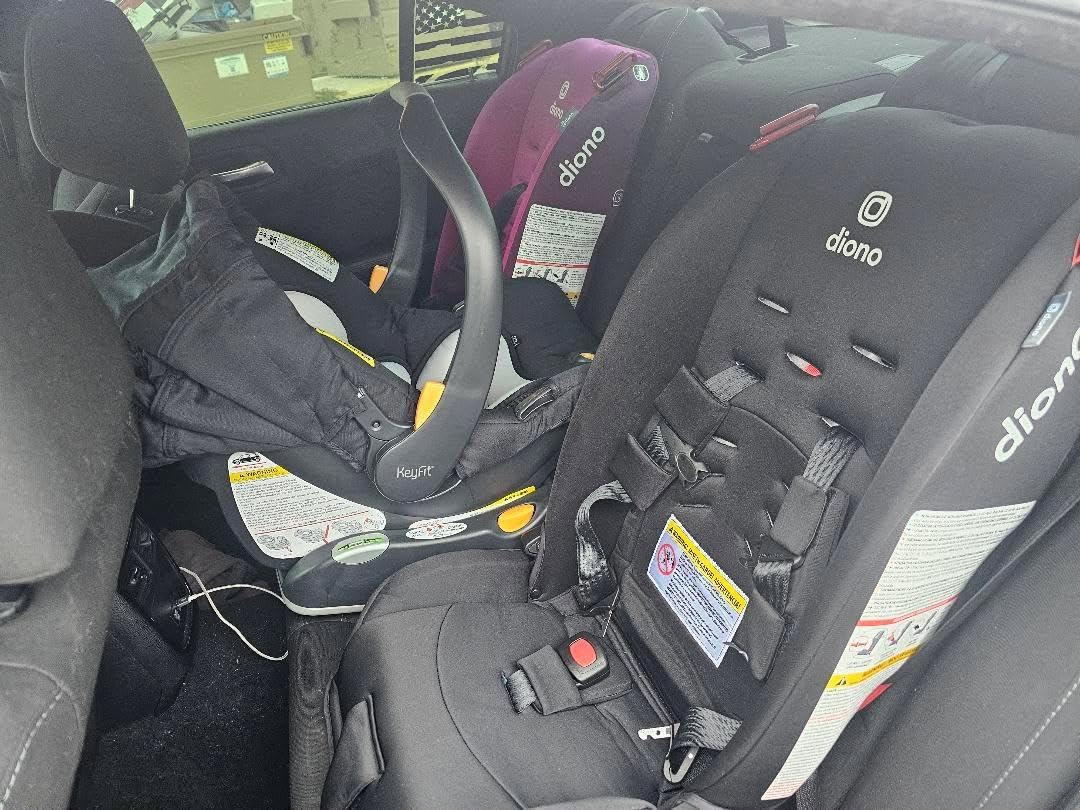
Because the rear-facing shell reclines deeply, this seat asks more of your front legroom than the slimmer models. Owners who fit it behind a front passenger usually report having to slide that seat noticeably forward, which is the trade you accept in exchange for keeping a heavy toddler rear-facing longer.
Three-across capability in practice
Across parent-of-multiples threads, this is the seat most often recommended by name for running two rear-facing seats plus a booster in the middle. Owners still describe the result as tight rather than generous, so measure your own bench before you commit to three.
The install learning curve
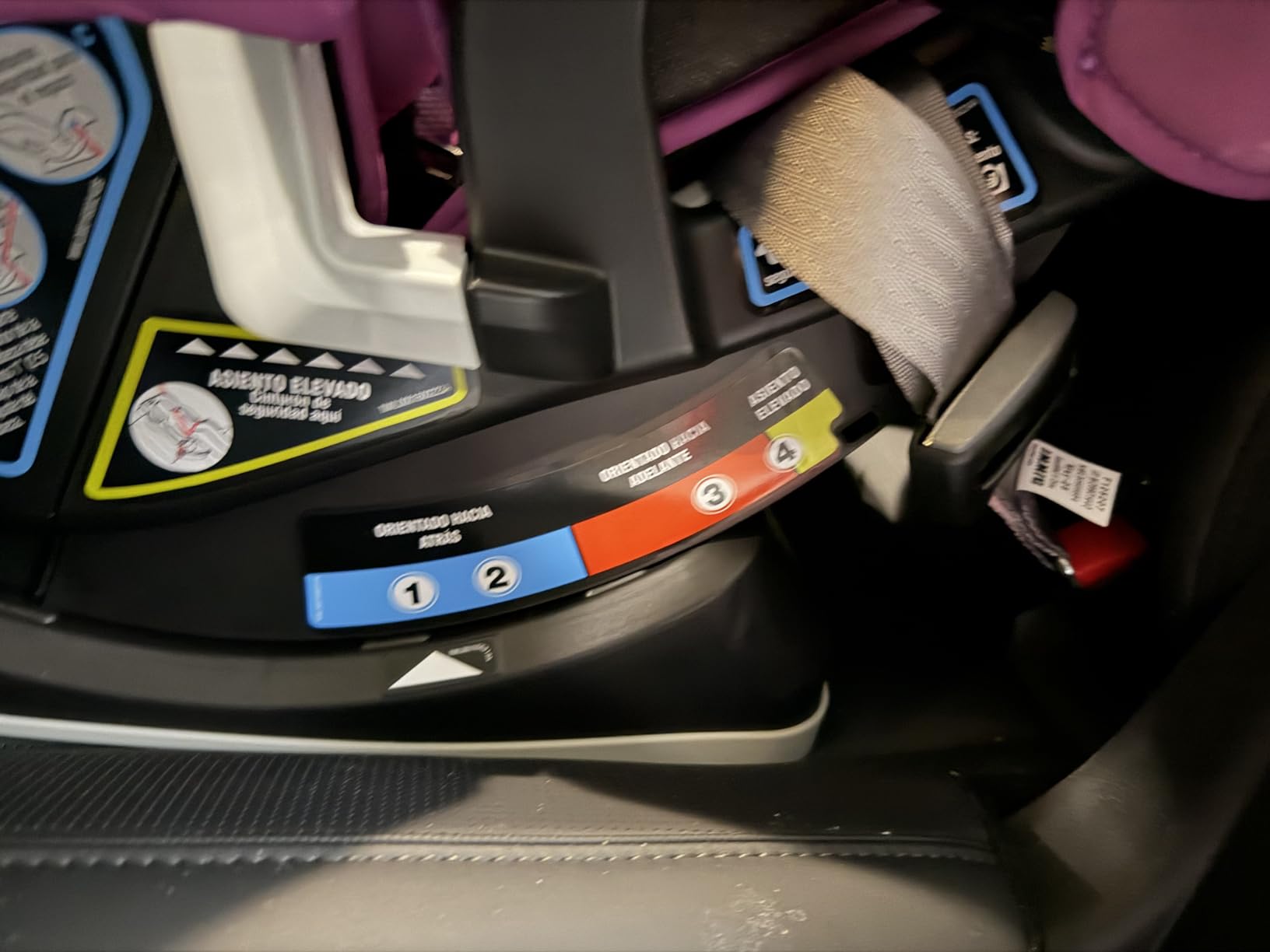
With four modes and multiple routing paths, the install is more demanding than anything else on this list, and several reviewers say a certified technician check is worth the appointment. It is not a seat you will fumble once and forget. Read the routing labels every time it moves.

3. Baby Trend Cover Me – Canopy Coverage and a Flat-Recline Base
Baby Trend Cover Me™ 4-in-1 Convertible Car Seat
18.25 in at widest
Rear-facing 4-40 lb
Fwd-facing 30-65 lb
Booster 40-100 lb
Pros
- UPF 50+ canopy with side visors
- Zero-recline-radius base saves front legroom
- 18.25 inch width fits three across
- No-rethread integrated headrest
- Extra padding for long rides
Cons
- 18.25 in width is wider than a sub-17 in seat
- Canopy adds bulk above the shell
- Deep side wings eat three-across room
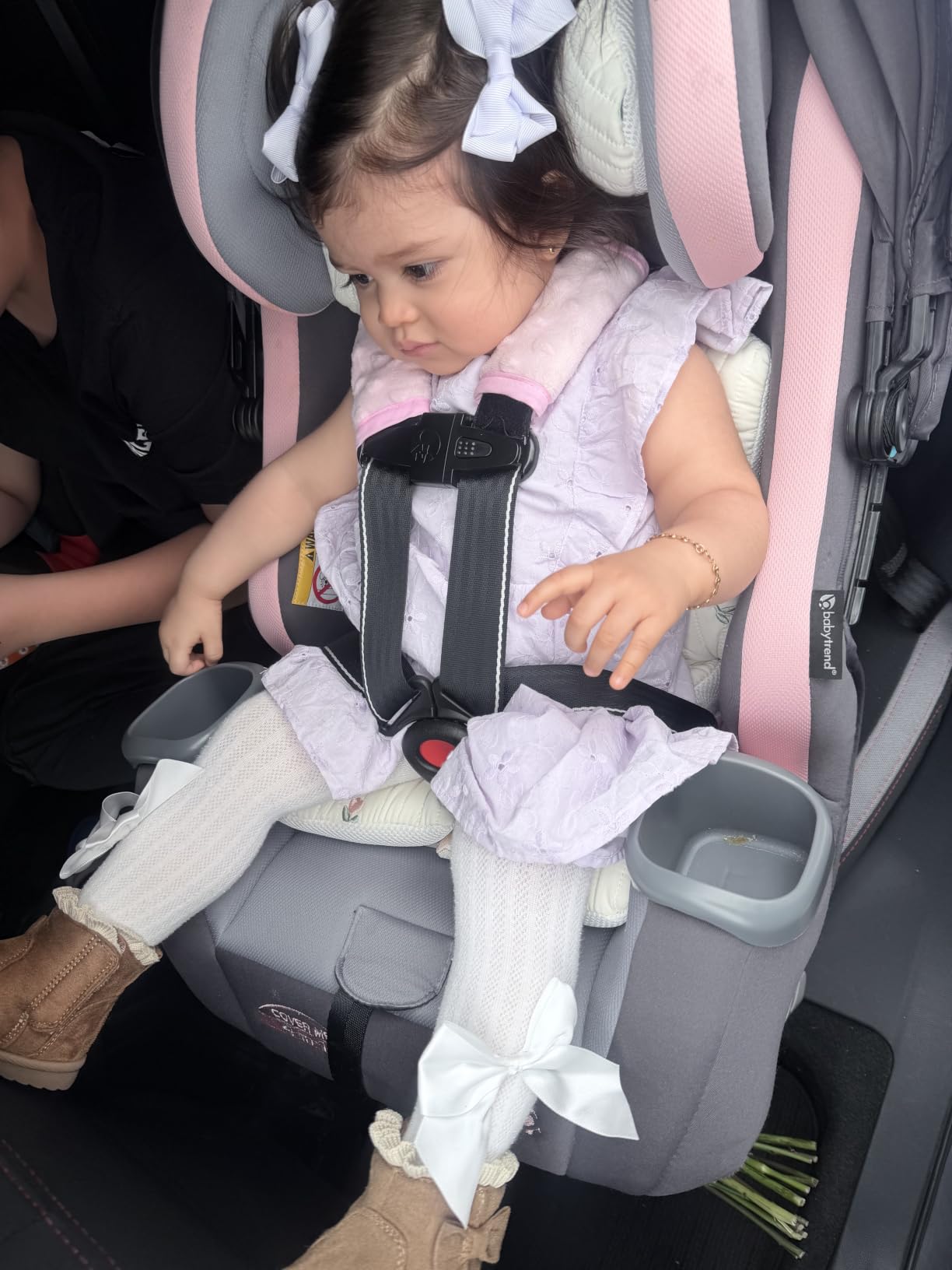
This is the seat I recommend when the back seat gets direct sun and the front passenger has a long commute. The integrated height- and angle-adjustable canopy carries UPF 50+ protection with flip-out side visors, and no other convertible here has anything comparable built in.
The second headline is the base. A zero-recline-radius footprint with three positions plus a recline flip foot means the seat sits low in the back seat, which is the geometry that keeps the front seat from sliding forward. For a small car that matters more than almost any feature on the spec sheet.
Width versus real usable space
At 18.25 inches at its widest, this is a wider shell than the SlimFit3 LX and it is built with super deep side wings for side-impact protection. That combination still fits three across in most vehicles, but on a genuinely small bench you will feel the difference between this and a sub-17 inch seat.
Four modes from newborn to booster
The mode spread is wide: rear-facing infant from 4 to 18 pounds, rear-facing toddler from 18 to 40, forward-facing harness from 30 to 65, then a belt-positioning booster from 40 to 100 pounds. The no-rethread integrated headrest handles the growth without anyone learning the strap-rethread trick.
Day-to-day usability
The Comfort Cabin padding is genuinely thick, so a sleeping toddler stays put instead of flopping sideways. The trade is bulk: the canopy adds height and hardware, and the deep wings make it the widest seat on this list once measured.
4. Graco 4Ever DLX Slim – Four Modes and the Quickest Install
Graco 4Ever DLX Slim 4-in-1 Convertible Car Seat, Thompson
4 modes out to 120 lb
10% slimmer cup holders
SnugLock install
No-rethread harness
Pros
- SnugLock installs in under a minute
- Four modes out to 120 pounds
- No-rethread Simply Safe harness
- Removable easy-clean cup holders
- Plush padding for naps
Cons
- No swivel function
- Strap adjuster can be awkward to reach
- Harness can feel tight at its loosest
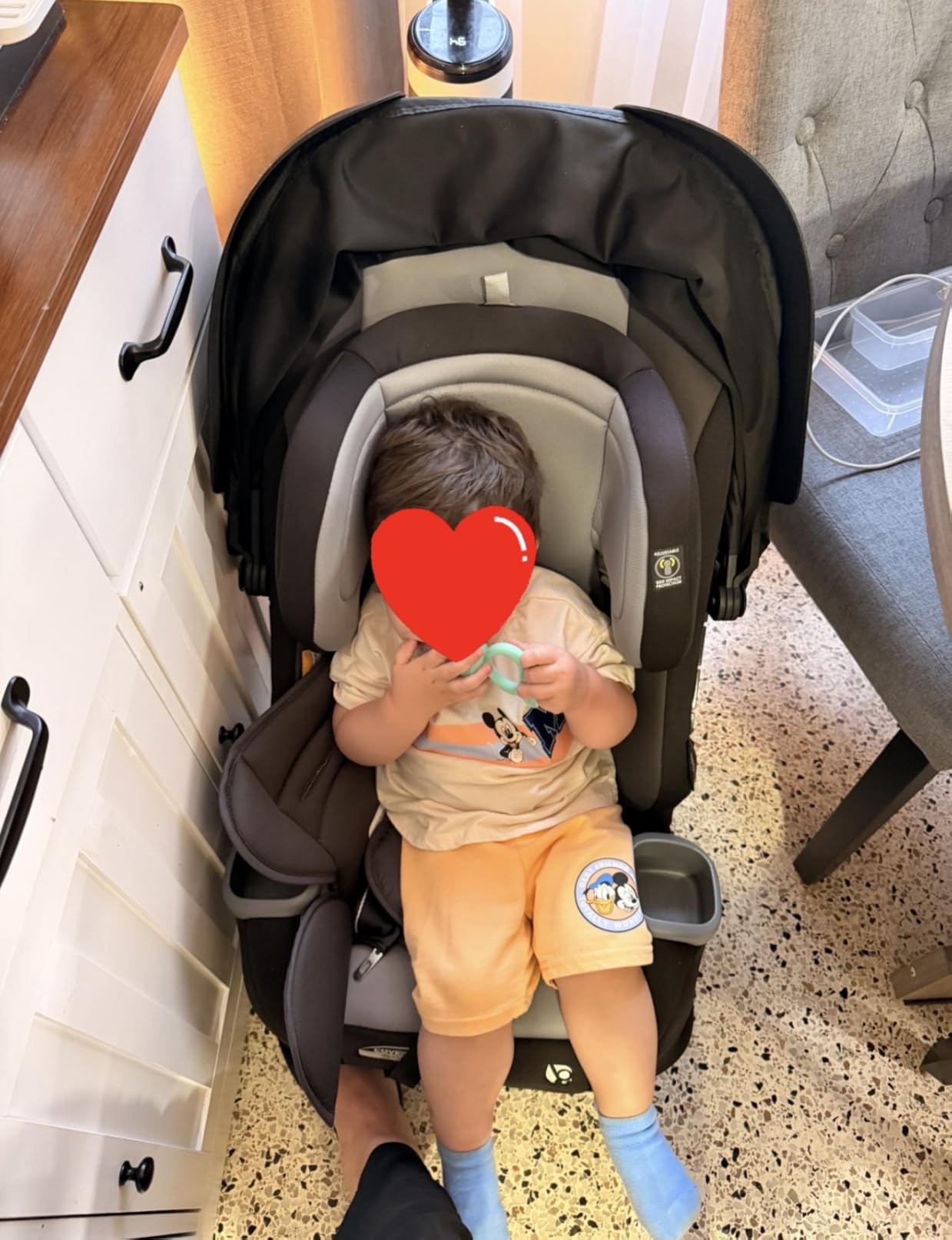
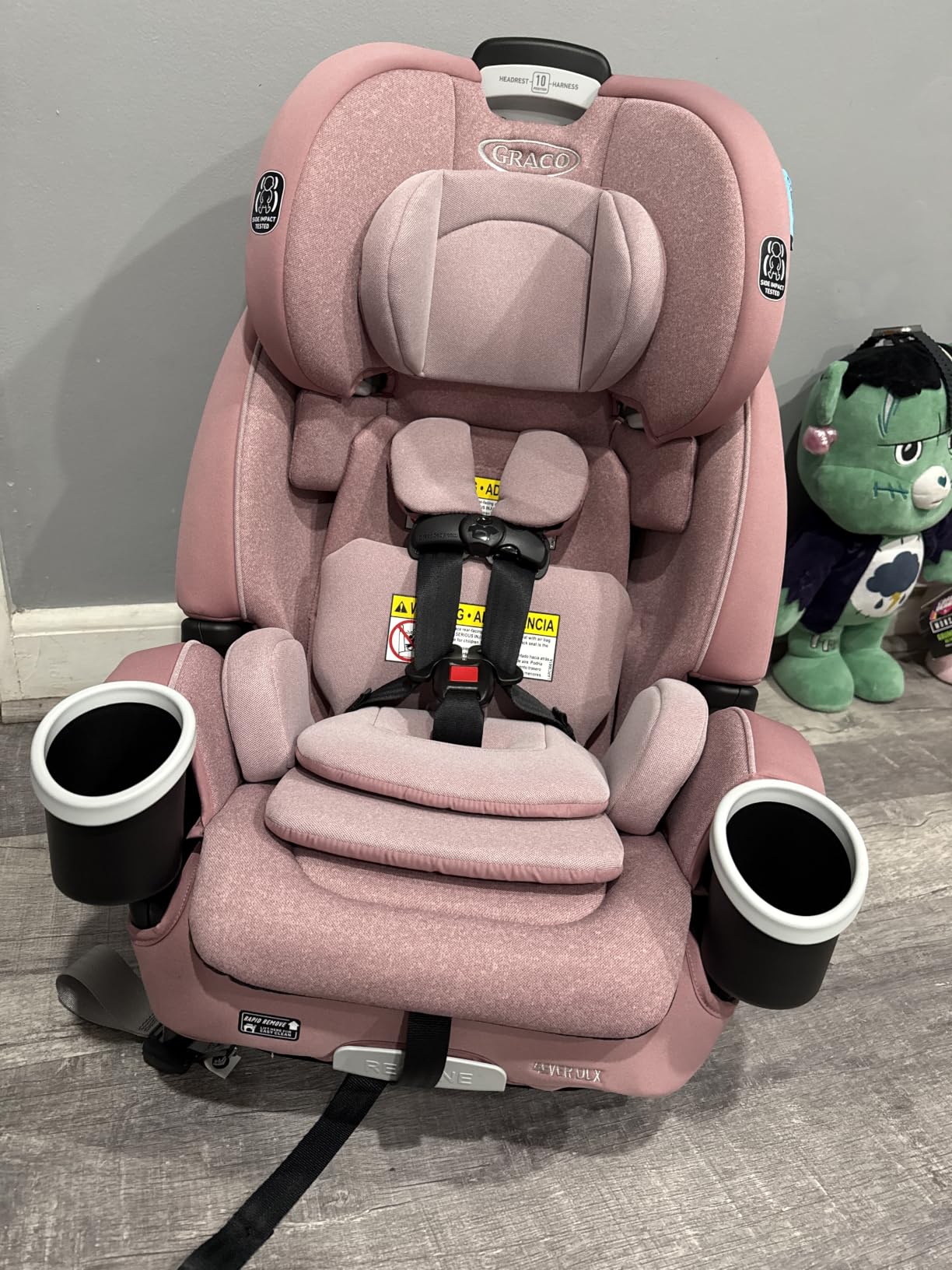
Installation speed is the reason this seat keeps showing up in small-car recommendations. SnugLock takes the seat from unpacked to installed in under a minute using either the vehicle belt or the lower anchors, and in a cramped back seat where you are kneeling sideways, a one-minute install changes how often you actually reinstall it correctly.
The mode range is the widest here: rear-facing harness to 40 pounds, forward-facing harness from 26.5 to 65, high-back booster to 100, and a backless booster to 120. Graco states the shell is 10 percent slimmer at the cup holders than the earlier version of the same seat.
ProtectPlus crash engineering
Graco describes this seat as engineered against frontal, side, rear and rollover testing, which is a broader claim than the single federal side-impact standard most competitors cite. That is a manufacturer statement about their own testing programme, not a certification score you can compare across brands.
Four modes and their trade-offs
More modes mean more adjustments to learn, and the two things owners mention most are the lack of a swivel and the harness adjuster sitting in an awkward spot when you are buckling a squirming child. A few reviewers also find the harness runs tight even at its loosest setting.
Cleaning and longevity
The cup holders pop off for cleaning and catch crumbs, the covers come off without a fight, and the padding is plush enough that the seat doubles as a nap surface. For families who keep a seat in a vehicle for years, that maintenance profile matters as much as the width.
5. Safety 1st Crosstown – Built for Narrow Back Seats and Airport Cabs
Safety 1st Crosstown All-in-One Convertible Car Seat, Rear Facing, Forward Facing Car Seat, Booster, City Storm
Slim narrow back
3 modes to 100 lb
8-position headrest
Washable pad
Pros
- Genuinely slim narrow back
- Does not block neighbouring buckles
- Light enough for an airplane seatbelt install
- 1-hand harness and headrest adjustment
- Washable pad
Cons
- Rear-facing base can tip forward
- Loud plastic rattle when empty
- Clip-style connectors rather than full LATCH
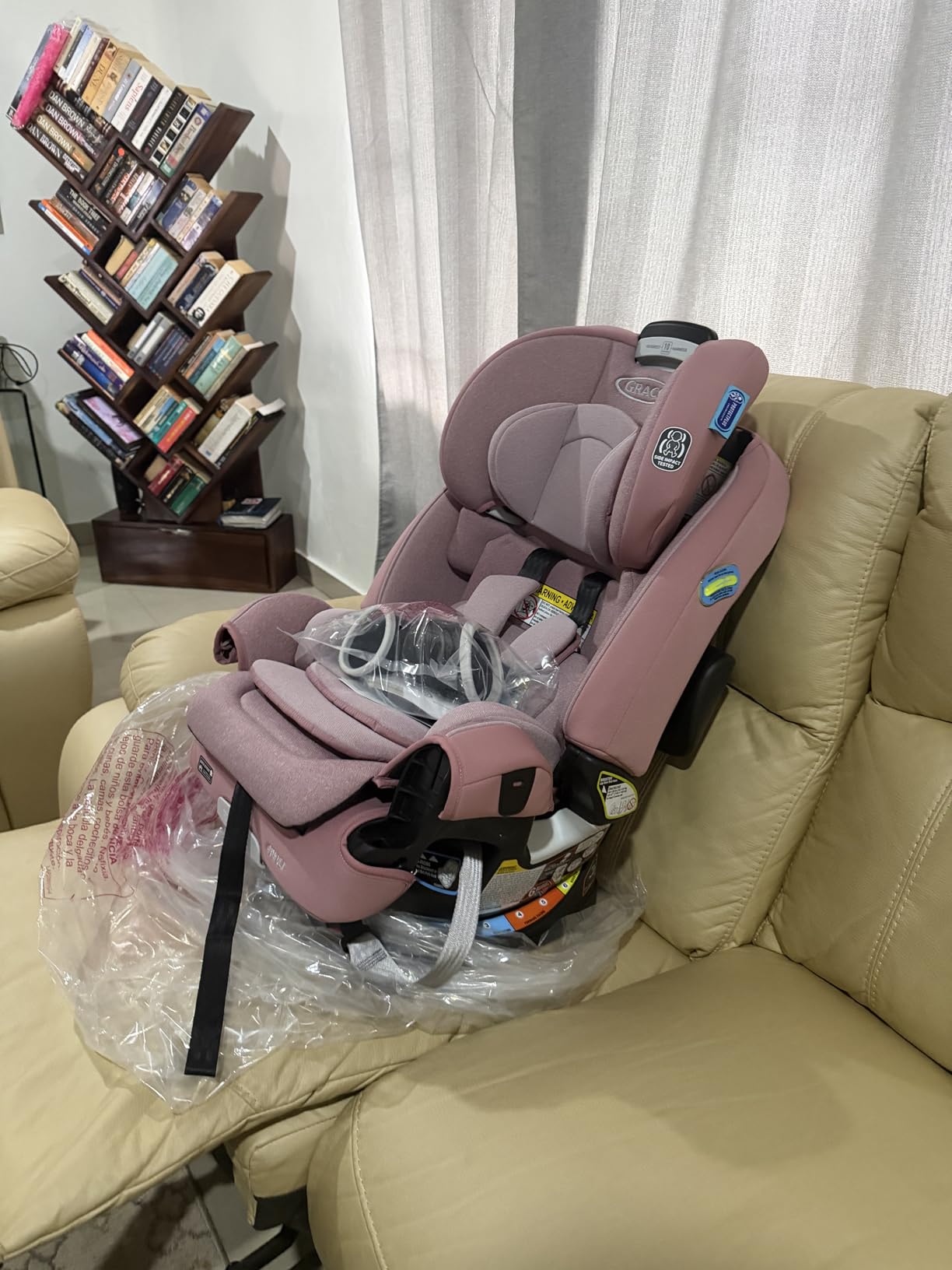
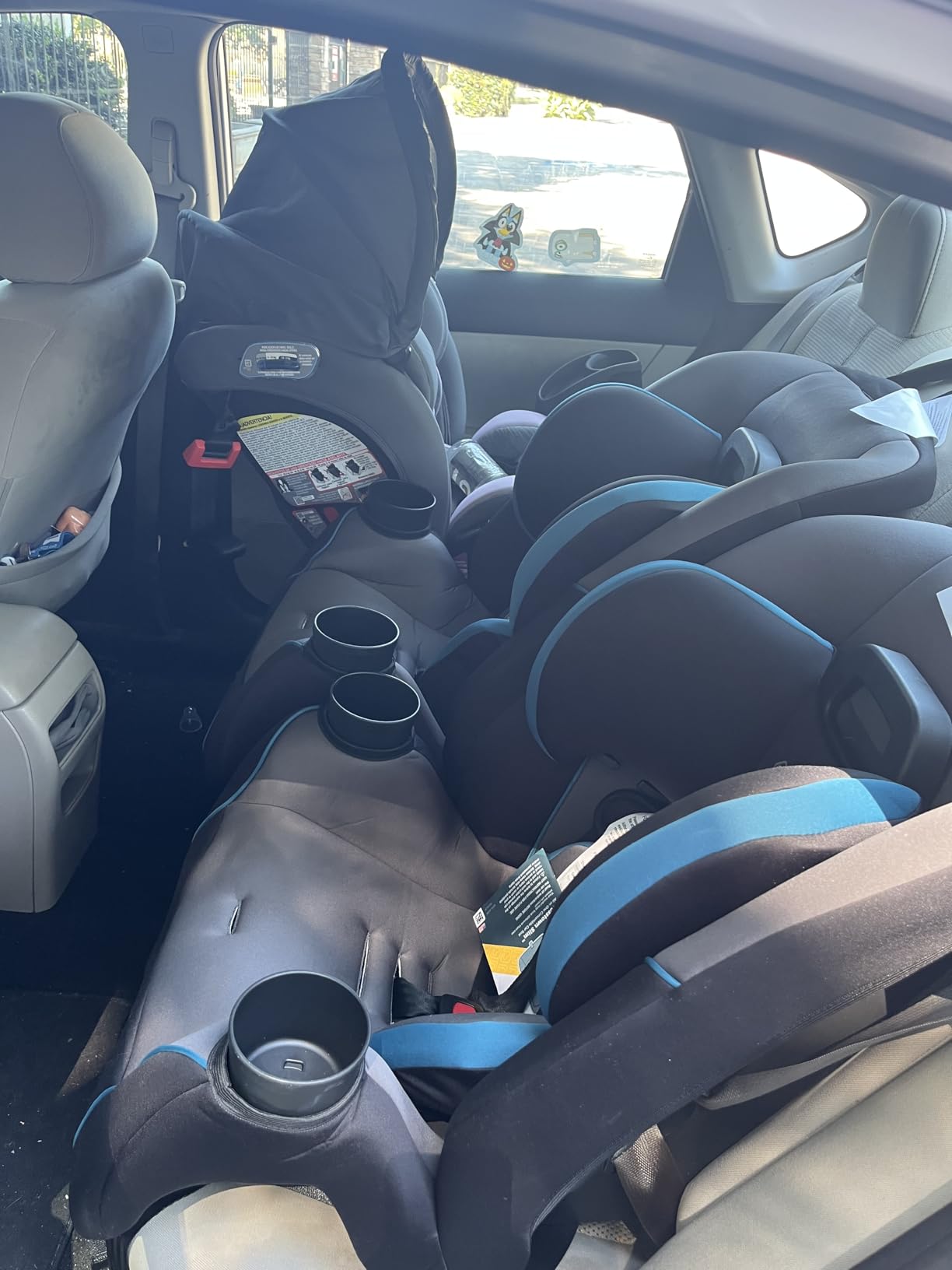
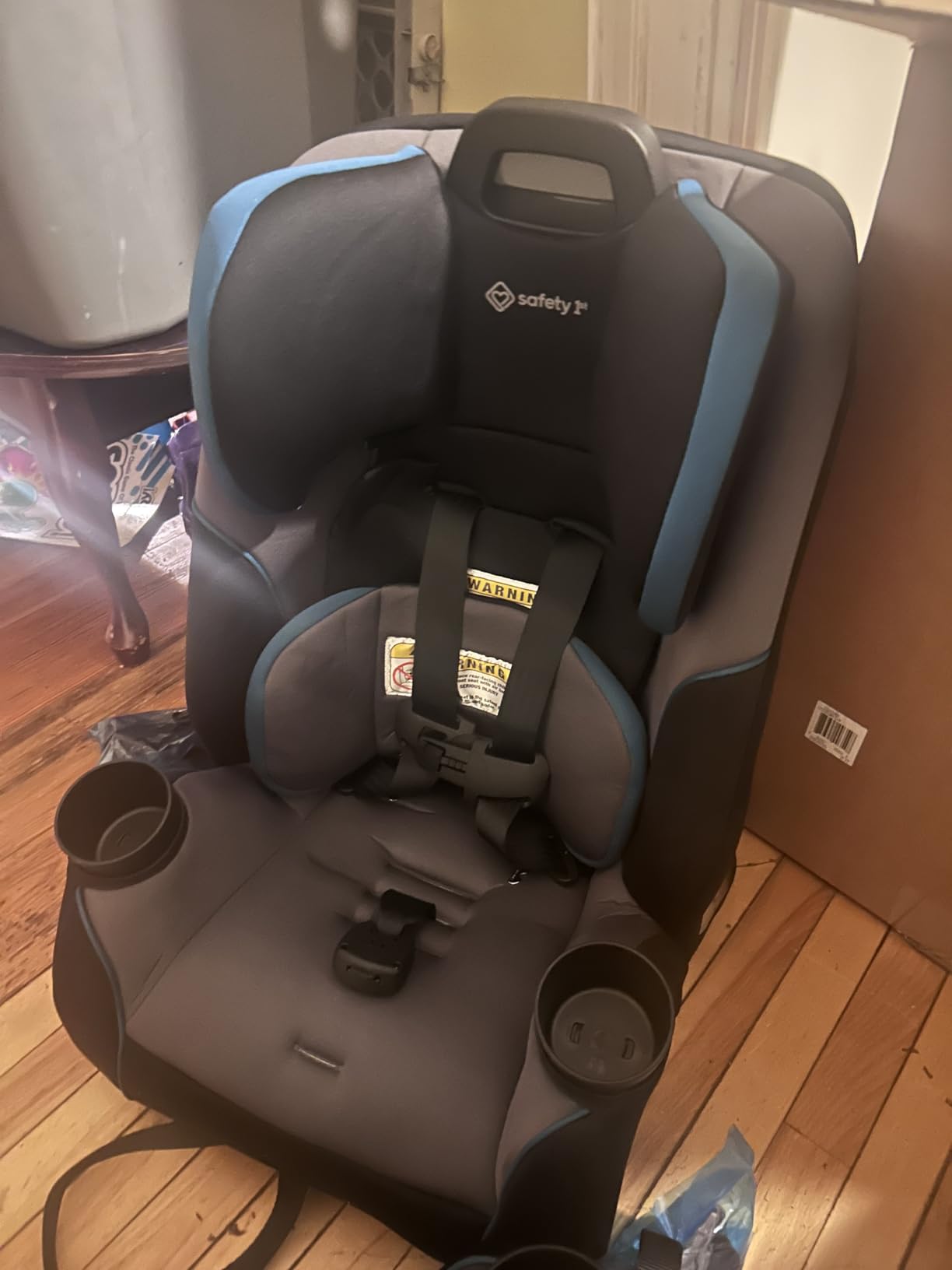
The Crosstown solves one problem very directly. Its narrow back is designed so that two of these plus an infant seat still close the doors on a compact sedan, and owners specifically call out that the tapered shell does not sit on top of the adjacent seat belt buckles, which is a surprisingly common failure in tight installs.
It is also light and installs with an airplane seatbelt, so it is the pick here if your small car is mostly a taxi between airport runs. The 8-position headrest and harness adjust together with one hand, so growth happens without a strap rethread.
Three modes and their limits
Rear-facing from 5 to 40 pounds, forward-facing harness from 30 to 65, then a belt-positioning booster to 100 pounds. The rear-facing cap is the ordinary one, so a child approaching 40 pounds rear-facing will outgrow it sooner than the Diono would have.
Base stability, honestly
The recurring complaint is that the rear-facing base can feel unstable and tip forward, and the manual itself suggests adding support underneath. Treat that as a known step rather than a defect, and check it again every time the seat changes position.
Build noise and connector type
The plastic height-adjustment mechanism rattles audibly when the seat is empty, which some families find irritating in a quiet cabin. The lower hardware is minimal clips rather than a full LATCH set, so anchor points on your vehicle matter more than usual here.
6. Chicco OneFit LX ClearTex – The Most Explicit Side-Impact Engineering
Chicco OneFit LX ClearTex All-in-One Convertible Car Seat
FMVSS 213a side impact
Rear-facing 5-40 lb
Newborn insert included
ClearTex materials
Pros
- Engineered to FMVSS 213a with ASIP
- Space-saving slim footprint
- Flame retardant-free ClearTex
- Widest headrest height range
- Fold-in cup holders
Cons
- Smallest review base in the group
- No published width figure to compare
- Booster mode stops at 100 pounds
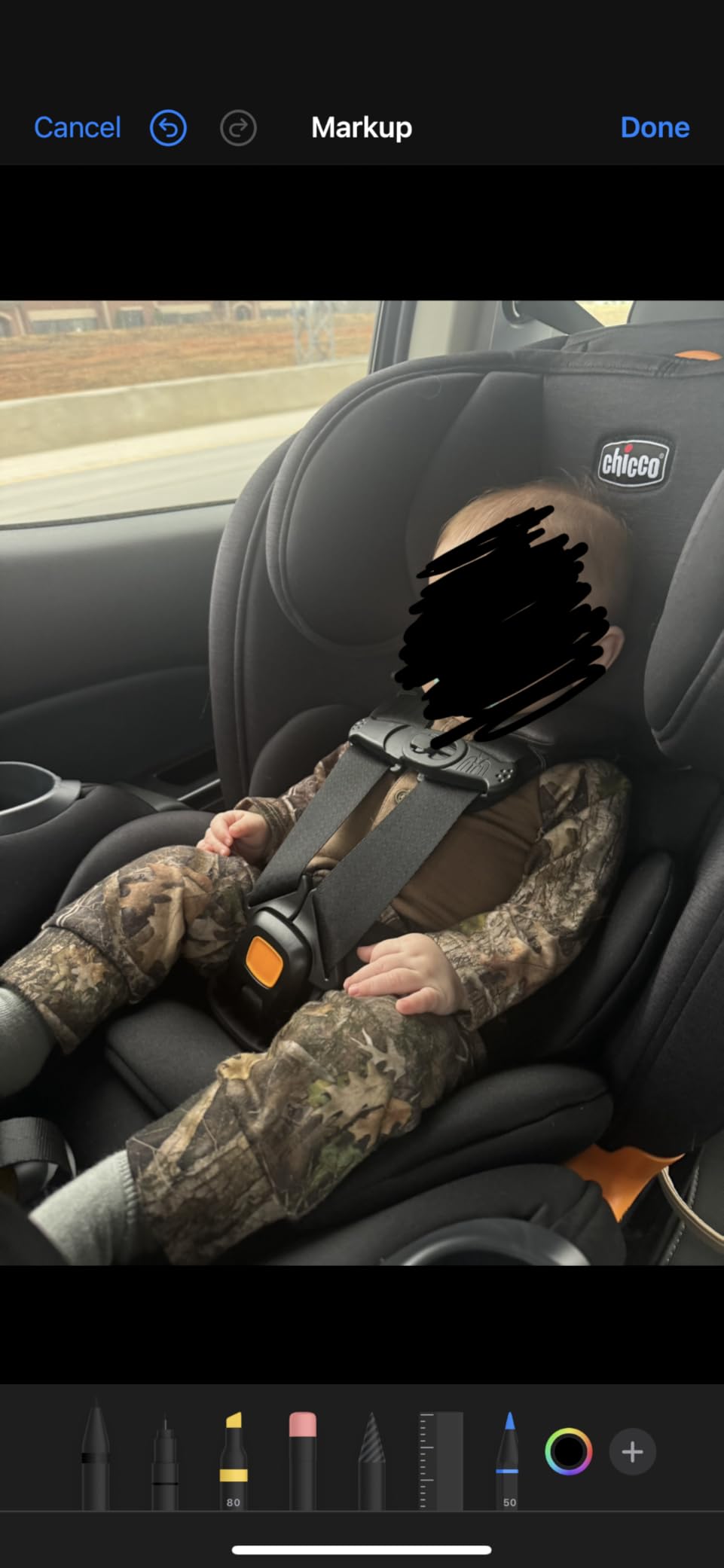
When two seats both pass the federal side-impact standard, the tie-breaker is what else the manufacturer tested. Chicco states the OneFit LX is engineered to meet FMVSS 213a with Advanced Side Impact Protection, and the ClearTex materials carry GREENGUARD Gold certification with no flame retardants added.
The space-saving design includes two dishwasher-safe cup holders that fold completely into the shell, which is a clever way to recover width when you are installing three across. A removable newborn positioner covers the 5 to 11 pound stage, so the seat is usable from day one at home.
Headrest range and rear-facing legroom
Chicco advertises the widest range of headrest height adjustment of the all-in-one seats here, plus extra rear-facing legroom. Both matter in a small car, where a tall shell eats cabin height and a short shell forces the child to sit with bent knees.
What the small review base means
The 4.8 average comes from a much smaller pool than the Graco and Diono seats, so treat the score as encouraging rather than settled. The design claims are specific and checkable on the manufacturer’s own page, which is more useful than a rating built on a few hundred reports.
Consider the specs honestly
Booster mode runs to 100 pounds, not 120, and no width in inches is published for this model. If narrowness is your deciding factor, verify the fit in person rather than assuming from the slim design language on the box.

7. Safety 1st Grow and Go – Newborn to 100 lb in One Seat
Safety 1st Grow and Go All-in-One Slim Convertible Car Seat, Rear Facing, 5-40 lbs, Forward Facing (30–65 lbs), High Back Booster Seat 40-100 pounds, Harvest Moon
Rear-facing 5-40 lb
Fwd-facing 30-65 lb
Booster 40-100 lb
3-position recline
Pros
- Covers newborn to 100 pound child
- QuickFit harness and headrest adjustment
- Washer-and-dryer-safe seat pad
- Harness holders ease loading
- Dishwasher-safe removable cup holders
Cons
- Rear-facing cap of 40 lb
- Shell is not among the narrowest
- Booster mode is high-back only
With more than thirty-five thousand owner reviews at a 4.7 average, the Grow and Go has the deepest owner record of any seat here, and the appeal is straightforward: one seat from a 5 pound newborn to a 100 pound booster child. That span is what makes it the value choice rather than a compromise choice.
Two removable grow-with-me baby pillows handle the infant stage, and the QuickFit harness adjusts harness height and headrest in a single movement. The seat pad snaps off for the washer and dryer, and the two cup holders go in the dishwasher, which is a bigger deal in real life than it sounds.
Height limits are where parents get caught out
The published bands are rear-facing from 5 to 40 pounds and 19 to 40 inches tall, forward-facing harness from 30 to 65 pounds and up to 49 inches, and high-back booster from 40 to 100 pounds up to 52 inches. Most children outgrow rear-facing by hitting that 40 inch ceiling well before the 40 pound weight cap.
Loading a child through a narrow door
The harness holders that park the straps to the side are the feature owners mention most, because they turn a shoulder fight into a buckle job. In a compact car with a short door opening, that saves you a daily argument.
Where it does not win
This is a slim-ish all-in-one, not a sub-17 inch seat, so plan on a middle position rather than a door position if you need two across. Booster mode is high-back only, with no backless stage, and the deep rear-facing shell still asks the front seat to move.
8. Evenflo EveryKid 3-in-1 – The Roomy, Well-Cushioned Pick
Evenflo EveryKid 3-in-1 Convertible Car Seat (Livingston Gray)
Rear-facing 4-40 lb
Fwd-facing 22-65 lb
Booster 40-120 lb
12-position headrest
Pros
- Spacious through the booster stage
- Generous head support
- 12-position one-hand headrest
- Tested at roughly 2x federal crash energy
- Machine-washable fabrics
Cons
- Rear-facing recline sits too far back
- Some owners cannot get a non-shifting fit
- Smallest review count in this group
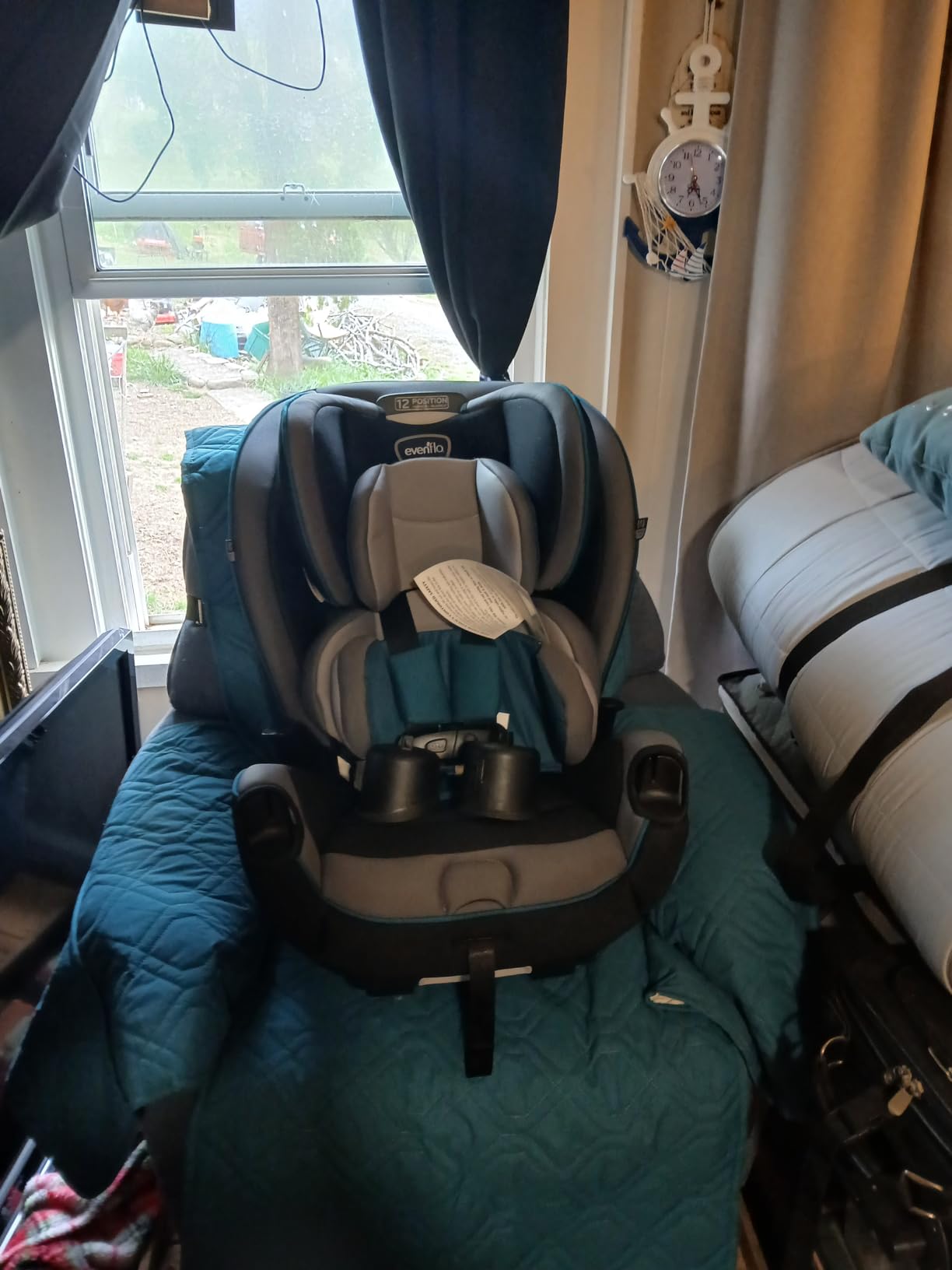
If your child is tall for their age, interior space is the constraint and this is the seat to look at. The EveryKid runs rear-facing from 4 to 40 pounds, forward-facing from 22 to 65, and high-back booster mode from 40 all the way to 120 pounds, which is the highest booster ceiling among the slim-friendly seats here.
Cushioning is the other story. Owners describe generous padding and better head support than most competing seats, and a one-hand 12-position headrest with a no-rethread harness covers a long growth window without anyone touching the strap path.
Testing claims and how to read them
Evenflo states the shell was structurally integrity tested at roughly twice federal crash test energy, plus side-impact, rollover and temperature testing. That is a company claim about its own programme, and it is a reasonable thing to weigh but not a rating you can compare against a different brand.
Recline positions in a small cabin
There are three rear-facing recline positions and one forward-facing position, chosen to reduce head slump. Owners frequently note the rear-facing recline sits further back than they expected, which is comfortable for a baby and awkward for a toddler who wants to see out the window.
Fit confidence
A minority of reviewers say they could not achieve a secure, non-shifting fit, so this is a seat to install and recheck rather than trust on first attempt. In a small car with limited anchor geometry, book a certified inspection if the belt path feels ambiguous.
9. Safety 1st Ellaris – A No-Rethread Headrest on a Budget
Safety 1st Ellaris 3-in-1 Convertible Car Seat, Slim Fit Design, Rear & Forward-Facing, 5-Position Headrest, Travel-Friendly with Machine-Washable Seat Pad, Smokey Haze
3 modes to 65 lb
5-position headrest
Hook-style LATCH
Airplane ready
Pros
- Meets the federal side impact standard
- No-rethread headrest adjustment
- Hook-style LATCH is easy to reach
- Machine-washable seat pad
- Airplane ready and light
Cons
- Installed a little over 19 inches wide
- Deep side wings block three-across
- Headrest has more play than rivals
The Ellaris is a sensible entry into a three-mode convertible, and owners treat it as a straight value buy. It meets the federal side-impact standard, uses a 5-position headrest that adjusts without rethreading straps, and installs with hook-style lower connectors that are unusually easy to reach through a seat gap.
The mode spread is narrower than the pricier seats: rear-facing infant from 5 to 30 pounds, rear-facing toddler from 30 to 40, and forward-facing harness to 65 pounds. There is no booster stage, so this one hands off to a separate booster later.

Honest width warning
This matters most in a small car. Owners measure the installed seat a little over 19 inches wide, and the deep side wings are the reason: they are exactly the structure you want for side impact and exactly what stops a three-across install. Slim marketing language does not survive a tape measure here.
Recline, headrest play and cleaning
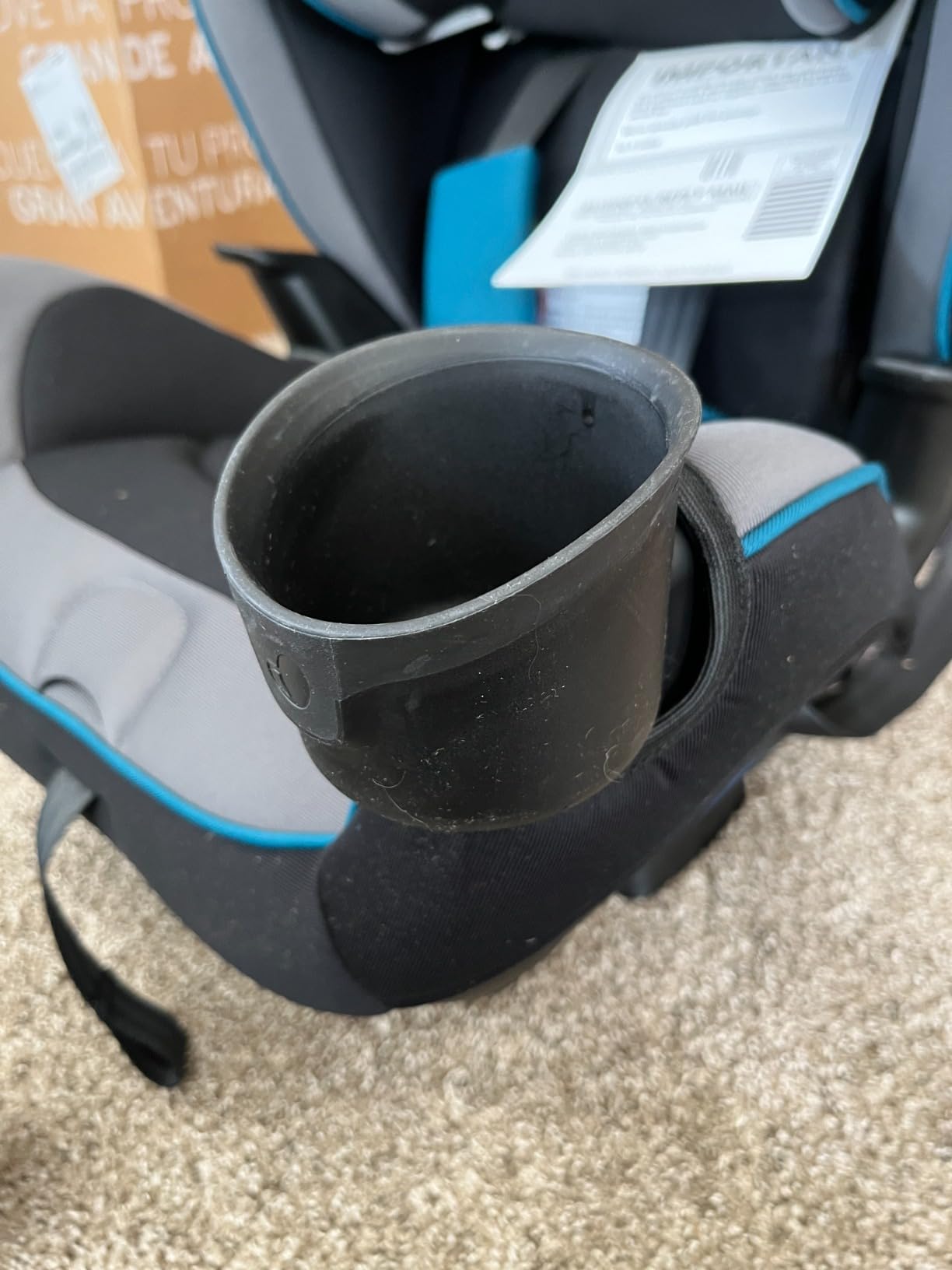
The headrest adjusts without rethreading but has noticeably more play at the top than the Graco equivalents, and the harness tighten button sits in a hard-to-reach spot. The machine-washable, dryer-safe seat pad and two dishwasher-safe cup holders are genuine wins for daily use.
Who should skip it
If your back bench is a 48 to 52 inch compact bench and you are planning two seats, choose a sub-17 inch model instead. For a single child in a small hatchback, the Ellaris does the job well for far less than the premium tier.
10. Baby Trend Trooper Slim – The Lightest Build for Crowded Rows
Baby Trend Trooper™ Slim 3-in-1 Convertible Car Seat, Dash Black – Slim Fit, 3-in-1 Growth Modes, Lightweight Design, Adjustable Comfort Padding
Slim profile shell
Rear-facing to toddler stage
Fwd-facing and booster
Lightweight build
Pros
- Light build moves easily between vehicles
- Slim profile for compact vehicles
- Very adjustable recline angle
- Adjustable headrest and harness
- Head support holds a sleeping toddler
Cons
- Harness straps twist and tighten unevenly
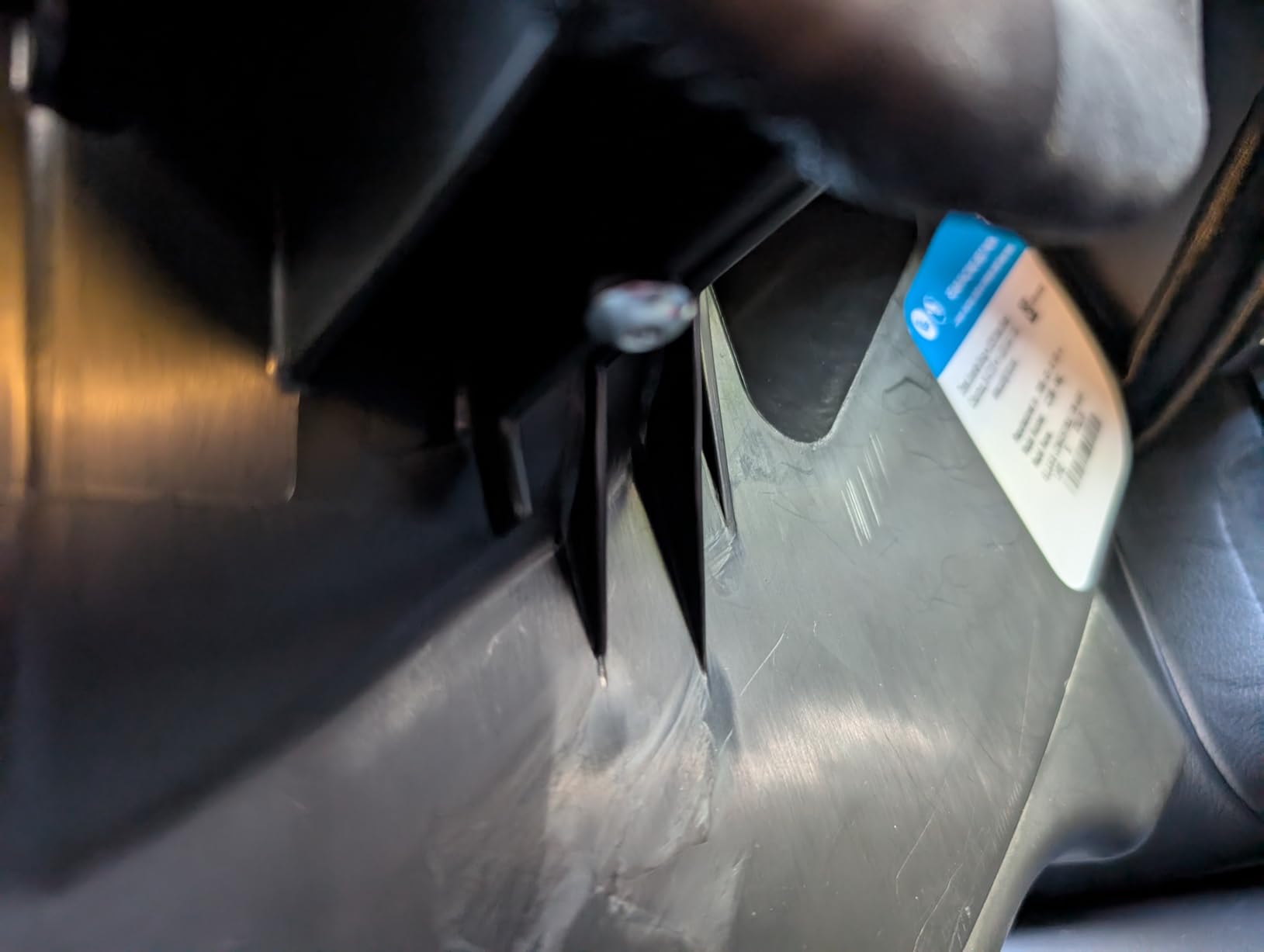
- Lower connectors hard to reach
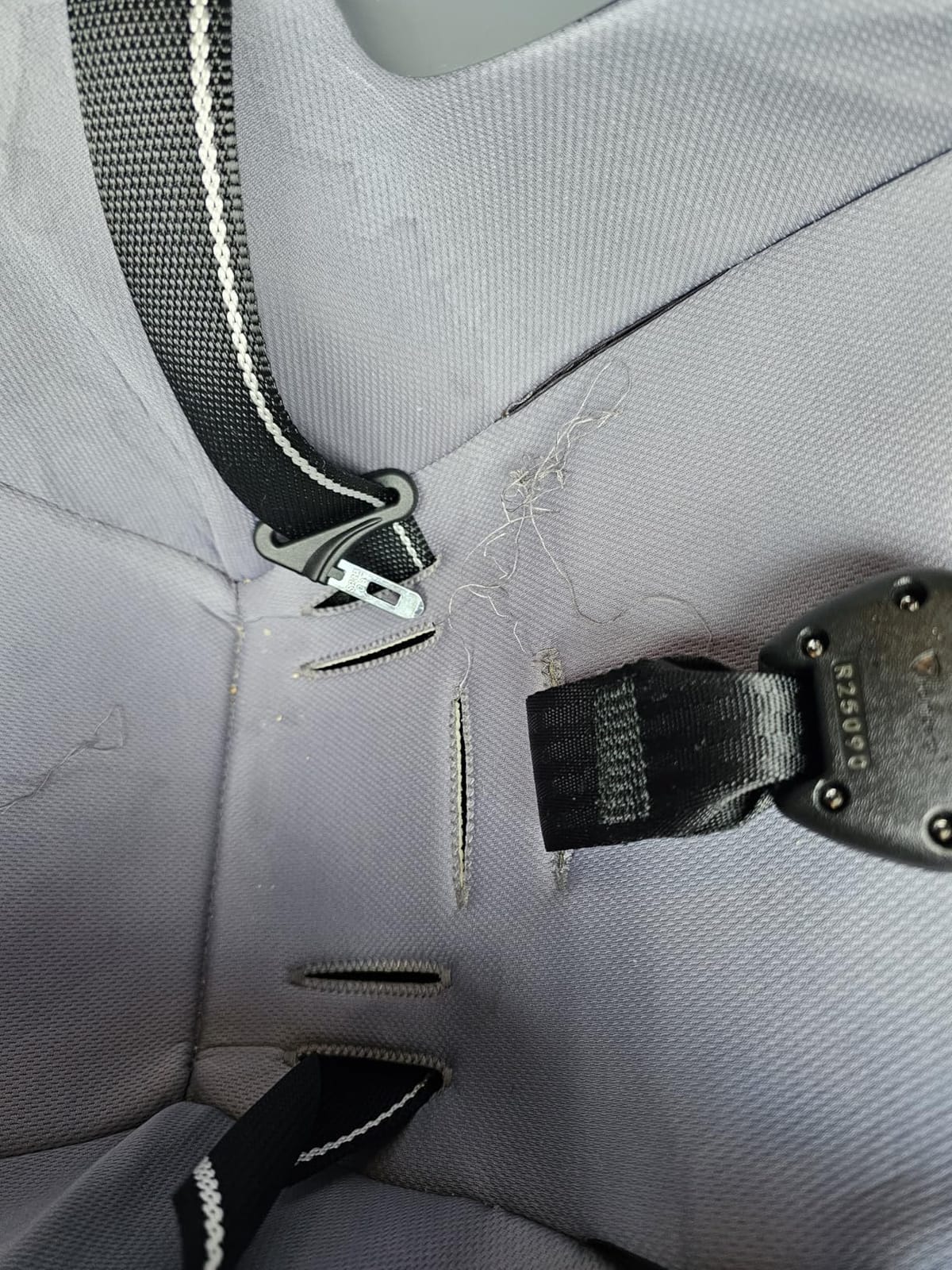
- Upholstery reported to snag early
- Minimal padding on long rides
The Trooper Slim exists for one reason: weight. It is the build you can lift into a second car, hand to a grandparent, or carry up a hotel staircase without arranging your whole afternoon around it, and the slim-profile footprint is aimed squarely at compact vehicles and multi-seat rows.
Buyer feedback is genuinely split. Many people like the footprint, the light weight and a very adjustable recline, while a smaller group raises recurring complaints about strap twisting and build quality. The 12 percent one-star share in this record is the highest of the ten, so expect more variability than the 4.0 average suggests.
Recline range is the strong point
Owners single out how adjustable the recline is, which helps in a small car where the back seat angle is steep and a newborn needs more recline than the stock position gives. The head support also holds a sleeping toddler’s head in place instead of letting it flop forward.
Harness behaviour is the weak point
Straps twist frequently and do not tighten evenly across the chest, which is a fussy problem when you are doing it one-handed through a narrow rear door. The lower connectors are also difficult to reach because of the seat’s own shape.
Build quality expectations
Several reviewers report thin upholstery that began snagging after about a week of regular use, and the padding is minimal compared with seats in the mid tier. If you want a seat for years of daily use, the higher review counts on the Graco and Diono models are worth the step up.
How to Measure Your Back Seat Before You Buy
Nearly every regret we read about started with a guess. Three measurements, done with a tape measure in about five minutes, tell you more than any marketing adjective on the box.
Measure the width that actually matters
Run the tape from the buckle at one side of the bench to the interior trim at the far door, at the height of the seat bight. That buckle-to-door number is what you divide by seat widths, and it is smaller than the door-to-door figure most people quote. Subtract the buckle housing, because it eats into the space where the middle child’s hip goes.
Run the front-seat legroom test
Install the seat rear-facing, then have an adult sit in the front passenger seat exactly as they would on a normal drive. If their knee hits the child seat shell, the recline is too upright or the front-to-back depth is too great. Slides, risers and a shallower seat are all legitimate fixes, and they are cheaper than returning a seat.
Test-fit before you commit
Most retailers will let you bring the car and try the seat in the parking lot before the box is opened. Set the recline, thread the harness, load your actual child, and close the door over the seat. Ten minutes in a car park beats a month of returns.
What Actually Matters in a Small Car
Width gets all the attention, but it is only one of four things that decide whether a convertible car seat works in a compact back seat.
Width is only half the fit problem
Manufacturers sometimes quote seating width and width at the widest point, and those are different measurements taken at different heights. The widest point is usually the side wings, which sit at shoulder height; the seating width is the flat area a child actually occupies. For a single child, seating width is what matters. For three across, you need the widest point, because that is what collides with the neighbouring seat.
Extended rear-facing and front legroom
Rear-facing shells take up far more front-to-back room than forward-facing ones, and that is the number that pushes your passenger forward. The American Academy of Pediatrics recommends keeping children rear-facing until they reach the seat’s height limit or the vehicle’s limit, whichever comes first. In a small car that often means choosing a seat with a larger rear-facing cap, like the Diono Radian 3R at 50 pounds, or a low-profile base like the Cover Me.
FMVSS 213 and 213a, and what price really buys
FMVSS 213 is the federal motor vehicle safety standard every car seat sold new in the US must meet. FMVSS 213a is the separate side-impact standard. Both are minimums, and every seat on this list clears them, which means a higher price is not automatically a safer seat. What you are paying extra for is usually install hardware, foam and frame energy absorption, side-impact structures, no-rethread harnesses and serviceability, and a well-made seat at the correct install beats a premium seat installed badly every time.
The LATCH weight-limit math
If your child’s seat weighs more than 65 pounds, lower anchors are not an option and you must install with the seat belt. For a seat in the 20 to 30 pound range, subtract the seat weight from 65 to find your real child limit, which can land well under the 65 pound figure printed on most manuals. A seat at 27 pounds gives you a 38 pound child limit on the lower anchors.
Expiration, recalls and the two places to check
Car seats expire, usually six to ten years from manufacture, and the date is moulded into the shell. Never buy a used seat, and check the manufacture date on any floor model. For recalls, search nhtsa.gov/recalls and cpsc.gov/Recalls using the model name before you buy, then again before a long trip.
Three across: the combinations that work
On a typical 48 to 52 inch compact bench, the realistic combinations are two sub-17 inch convertibles with a narrow belt-positioning booster in the middle, or one convertible plus two boosters. Anything with an 18 inch or wider shell in all three positions is a squeeze. Two sub-17 inch shells plus a booster is reported to leave about half an inch of slack across the whole bench, so measure and hope for the best rather than assume.
Frequently Asked Questions
Which convertible car seat is the slimmest?
The slimmest convertible car seat in our group is the Graco SlimFit3 LX at a published 16.7 inches wide. It is built to fit three across a sedan back seat, and its 16.7 inch figure is the narrowest width any seat in this roundup states.
What car seats are 17 inches wide?
In this roundup the Graco SlimFit3 LX measures 16.7 inches and the Baby Trend Cover Me measures 18.25 inches at its widest point. Note that seating width and width at the widest point are different measurements, and three-across planning needs the widest point.
Which convertible car seats fit three across?
Two sub-17 inch convertibles plus a narrow belt-positioning booster is the realistic three-across setup on a 48 to 52 inch compact bench. Parents of multiples report roughly half an inch of slack with two narrow convertibles and a booster in the middle, so measure before ordering.
Is a more expensive convertible car seat safer?
Not automatically. Every seat sold new must meet FMVSS 213 and the side-impact standard FMVSS 213a, so a higher price buys you better foam, side-impact structures, no-rethread harnesses and easier hardware rather than a different safety standard. A correctly installed mid-tier seat beats a premium seat installed badly.
Do convertible car seats expire, and how do I check for recalls?
Yes. Car seats expire six to ten years from manufacture and the date is moulded into the shell, so never buy a used seat and check the date on any floor model. For recalls, search the model name on nhtsa.gov/recalls and cpsc.gov/Recalls before you buy and again before a long trip.
The Verdict: Measure First, Then Buy
If you want the shortest path, take the Graco SlimFit3 LX. It wins on the only measurement that decides a small-car fit, it carries the deepest owner record among the slim seats, and it lands in three positions across a compact bench without a fight.
If your child is already big enough to push past 40 pounds, take the Diono Radian 3R and accept the weight in exchange for rear-facing to 50 pounds. If your front passenger drives daily and your bench gets direct sun, the Baby Trend Cover Me gives that person their legroom back and keeps the child shaded. If you need two seats across plus a booster, work down the width list and measure before you order.
One last thing. Nobody installs a car seat perfectly on the first try, so book a free certified inspection at an NHTSA inspection station once the seat is in the car. If you are still working out the rest of the first-year setup, our convertible crib guide covers the sleep side of the same stage. Drive safe, buckle tight, and buy the seat that fits your back bench rather than the seat with the longest feature list.
Leave a Reply