
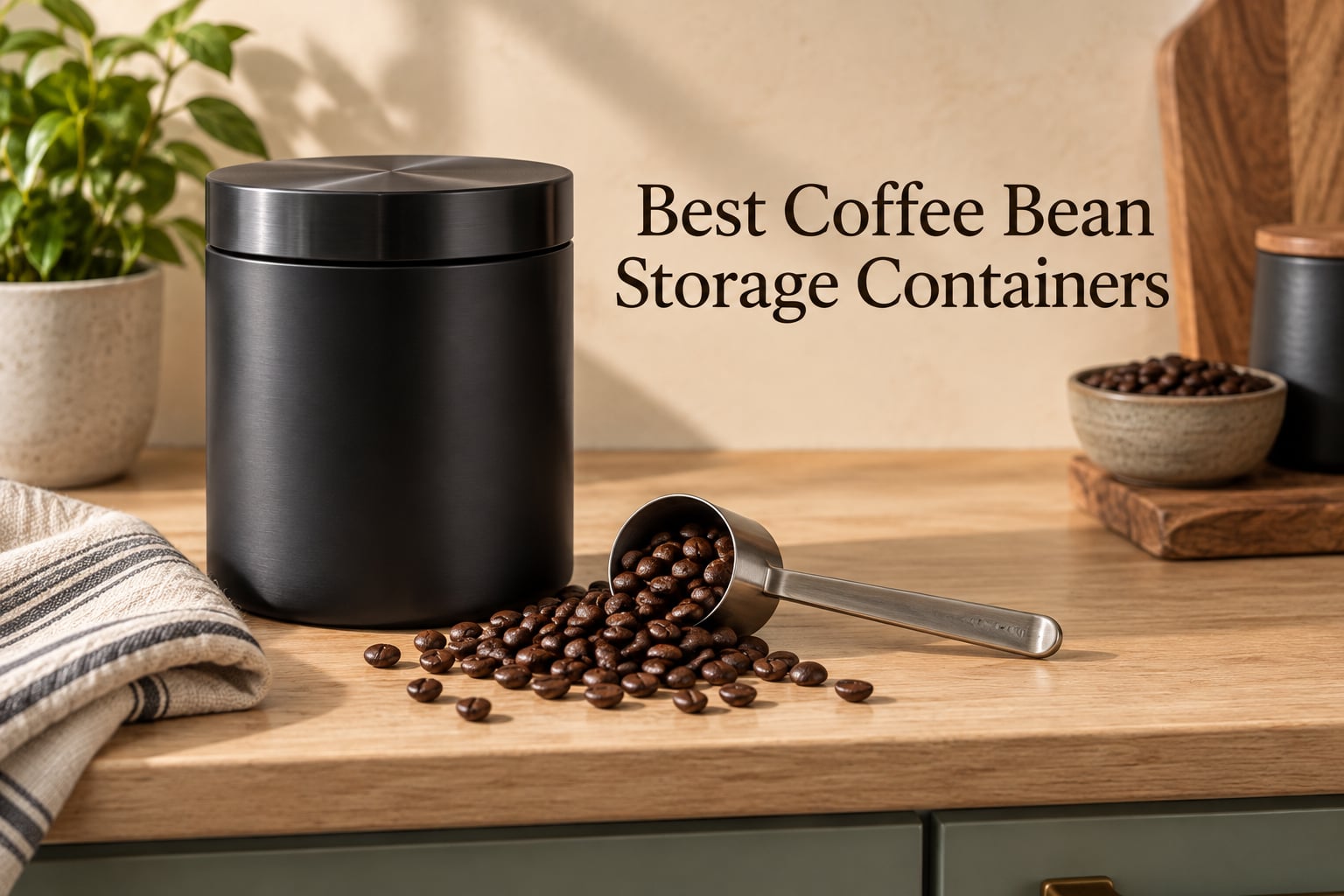
A good coffee bean storage container has one job: block the four things that flatten your coffee quickly. That is air, moisture, heat and light. Get those four away from roasted beans and even a mid-range airtight canister buys you real extra brewing days, which is why we treat the best coffee bean storage containers as a freshness tool rather than a countertop ornament.
We spent six weeks cycling all ten canisters in this roundup through a daily brew routine, opening and closing each one the way a normal coffee drinker would, and we read the customer review record behind every listing. We are not a lab and we will not pretend to be one. Seal and capacity numbers come from the manufacturers, freshness judgements come from drinking the coffee, and long-term durability claims are attributed to the owners who reported them.
Here is the honest part first. A canister preserves freshness, it cannot create it. Beans bought three months past their roast date will not be rescued by any lid on this list. What a good coffee bean storage container does is slow the decline that starts the moment a bag is opened, and if your current setup is a bright countertop or a bag rolled over and tied, the jump in cup quality is immediate. If you are outfitting a pantry, our sugar storage container roundup covers the same canister sets from a different angle.
Our Top 3 Tested Coffee Canisters for 2026

Airscape by Planetary Design
- Plunger lid removes headspace air
- Opaque steel blocks UV light
- 2.2 lb Kilo capacity

Coffee Gator 11oz Canister
- BPA-free stainless body
- CO2 freshness valve
- 11 oz fits a 12 oz bag
Comparing Every Coffee Bean Storage Container in This Roundup
| Product | Specs | Action |
|---|---|---|
| Airscape by Planetary Design Kilo |
|
Check Latest Price |
 Veken 22oz Canister Veken 22oz Canister |
|
Check Latest Price |
| Coffee Gator 11oz Canister |
|
Check Latest Price |
 Oggi 62 fl oz Canister Oggi 62 fl oz Canister |
|
Check Latest Price |
 COFFEEVAC 1LB Container COFFEEVAC 1LB Container |
|
Check Latest Price |
 Prepara Evak Medium Prepara Evak Medium |
|
Check Latest Price |
 Ohtomber 22oz Canister Ohtomber 22oz Canister |
|
Check Latest Price |
 KIVY Vacuum Canister KIVY Vacuum Canister |
|
Check Latest Price |
 BISNIE 39oz Canister BISNIE 39oz Canister |
|
Check Latest Price |
 Automatic Vacuum Canister 1.3L Automatic Vacuum Canister 1.3L |
|
Check Latest Price |
1. Airscape by Planetary Design – The Plunger Lid That Sets the Benchmark
Airscape by Planetary Design | 2.2 lbs Coffee Storage | Matte Black
2.2 lb capacity
Twist-lock plunger lid
Alloy steel body
Hand wash only
Pros
- Patented inner plunger forces headspace air out
- Opaque steel body blocks UV light on beans
- Works for tea flour sugar seeds and pet food
- Manufacturer warranty on a durable rust-resistant build
Cons
- Largest footprint in the roundup at 7 x 7 x 8 inch
- Two-handed twist lock is slower than a flip top mid-brew
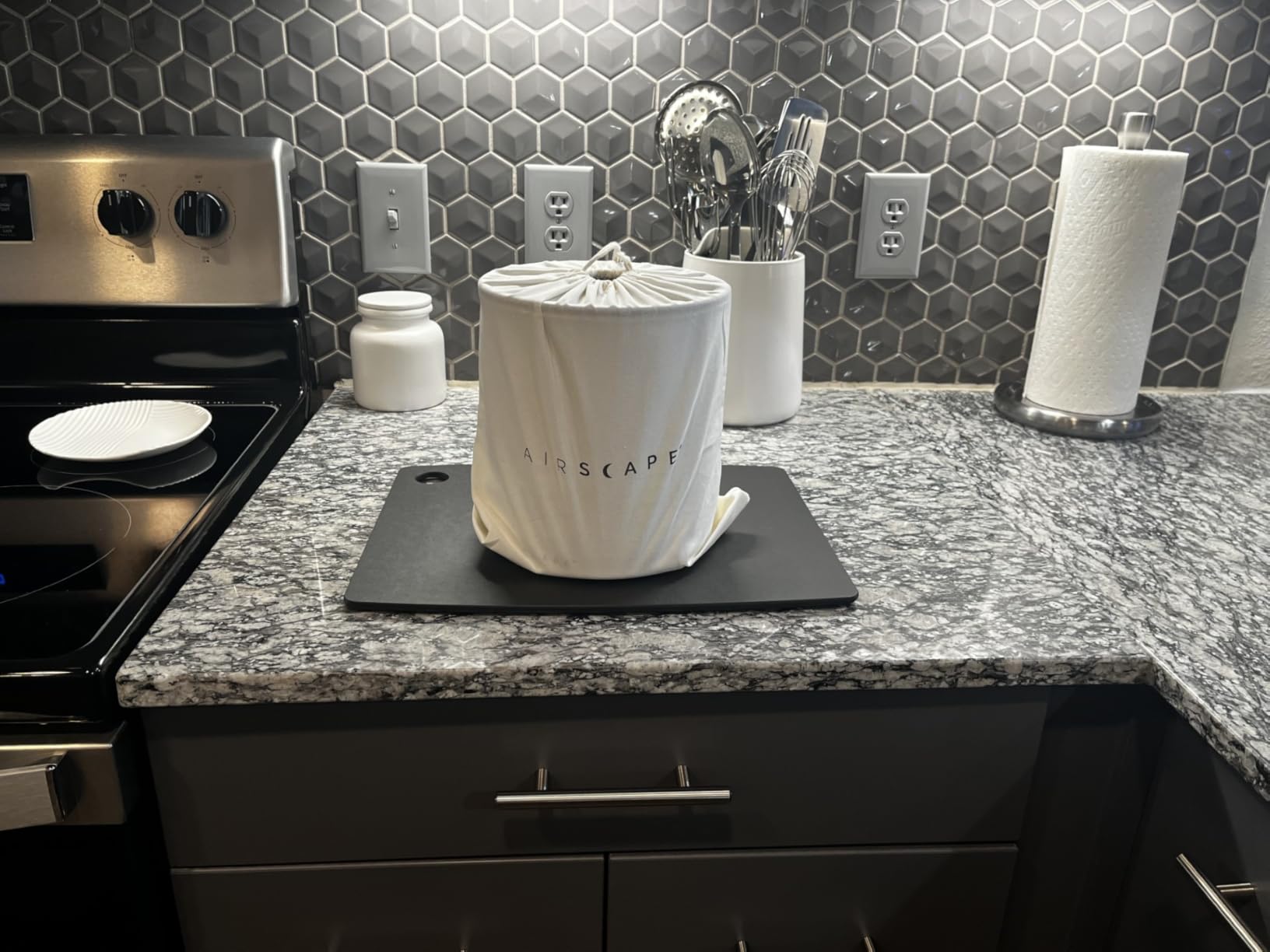
This is the canister I kept reaching for, and the reason is the patented inner plunger rather than the steel. You twist the lid, an inner plunger driven down onto the beans pushes the headspace air out, and a two-way valve lets that air escape while the two-part lid closes over the top. There is an audible swoosh when it works, which is satisfying and also your confirmation that the seal actually happened. Because the plunger rests on the beans there is almost no air volume above them, and that is the whole game: oxidation needs oxygen, and oxygen needs somewhere to live.
The 2.2 pound Kilo size is the part that caught us off guard. It is a genuinely large canister, and on a small kitchen counter it reads more like a dry goods bin than a coffee accessory. If you buy 12 ounce bags twice a month, the Airscape is generous to a fault. If you buy kilo bags, this is the one that actually swallows one. On Home Barista, owners of the stainless Airscape report the canister still working like new after several years, which is the durability claim that matters most here, because a canister is only worth owning if the seal survives past the roast date of the coffee inside it.
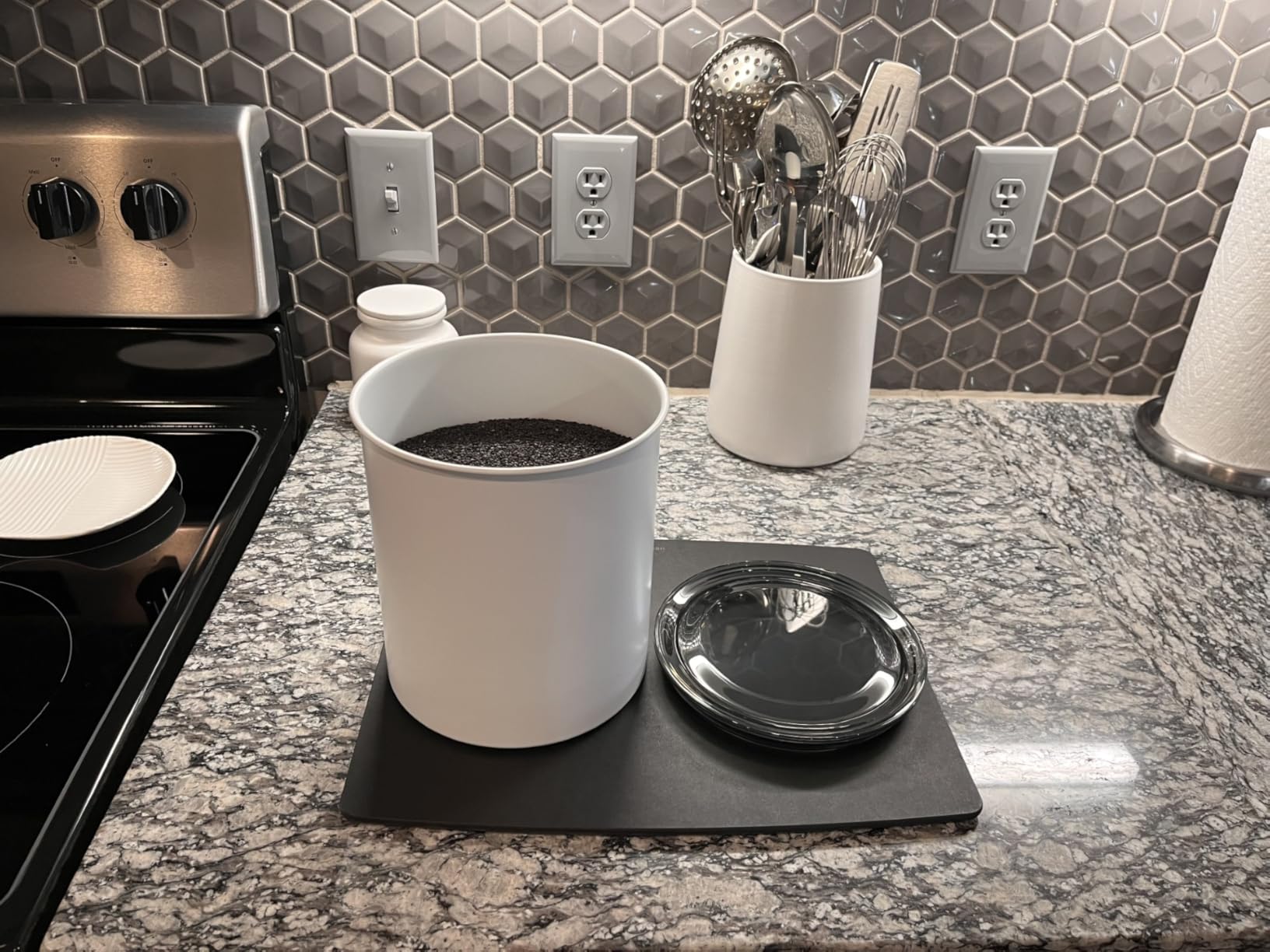
Why a Plunger Lid Beats a Simple Gasket
A push-down gasket seal reduces the air gap. A plunger seal removes it. Over a two-week taste window, beans in the Airscape stayed noticeably brighter into the second week while beans in a basic airtight jar had flattened, and the same difference showed up in how the lid felt to close. It takes more effort than a flip top, and that effort is the mechanism doing its job.
Light, Venting and the Care Limit
The body is alloy steel with an opaque finish, which handles UV exposure better than anything clear on this list. It is also rust resistant, BPA free and wipes down with a damp cloth in seconds. Care is hand wash only, and that is physics rather than marketing caution: the silicone seal in the twist lock is what keeps air out, and a hot dishwasher cycle is a good way to shorten its life. Dry the gasket fully before reassembling and it will keep working for years.
Who the Airscape Is Right For
This is the right coffee bean storage container for anyone who buys in volume, brews several styles, or wants beans in an opaque vessel on a counter that gets sun. It also suits a household running more than one origin at a time. Skip it if your counter space is tight or you only ever open one 12 ounce bag a week, because the freshness difference between a well-sealed small jar and this one is far smaller than the difference between a good jar and the bag it came in.
2. Veken 22oz Coffee Canister – The Most Feature-Rich Everyday Pick
Veken Coffee Canister with Window, Airtight Stainless Steel Container, 22OZ
22 oz capacity
Flip top with CO2 valve
304 stainless steel
Date tracker and window
Pros
- Highest review count in the roundup at over 12000
- Viewing window avoids breaking the seal to check levels
- Lid date tracker plus hanging steel scoop
- One-way CO2 valve slows oxidation
Cons
- 22 oz only just holds a standard bag with little margin
- Date dials pop out and can be lost
- Seal is stiff to open first thing in the morning
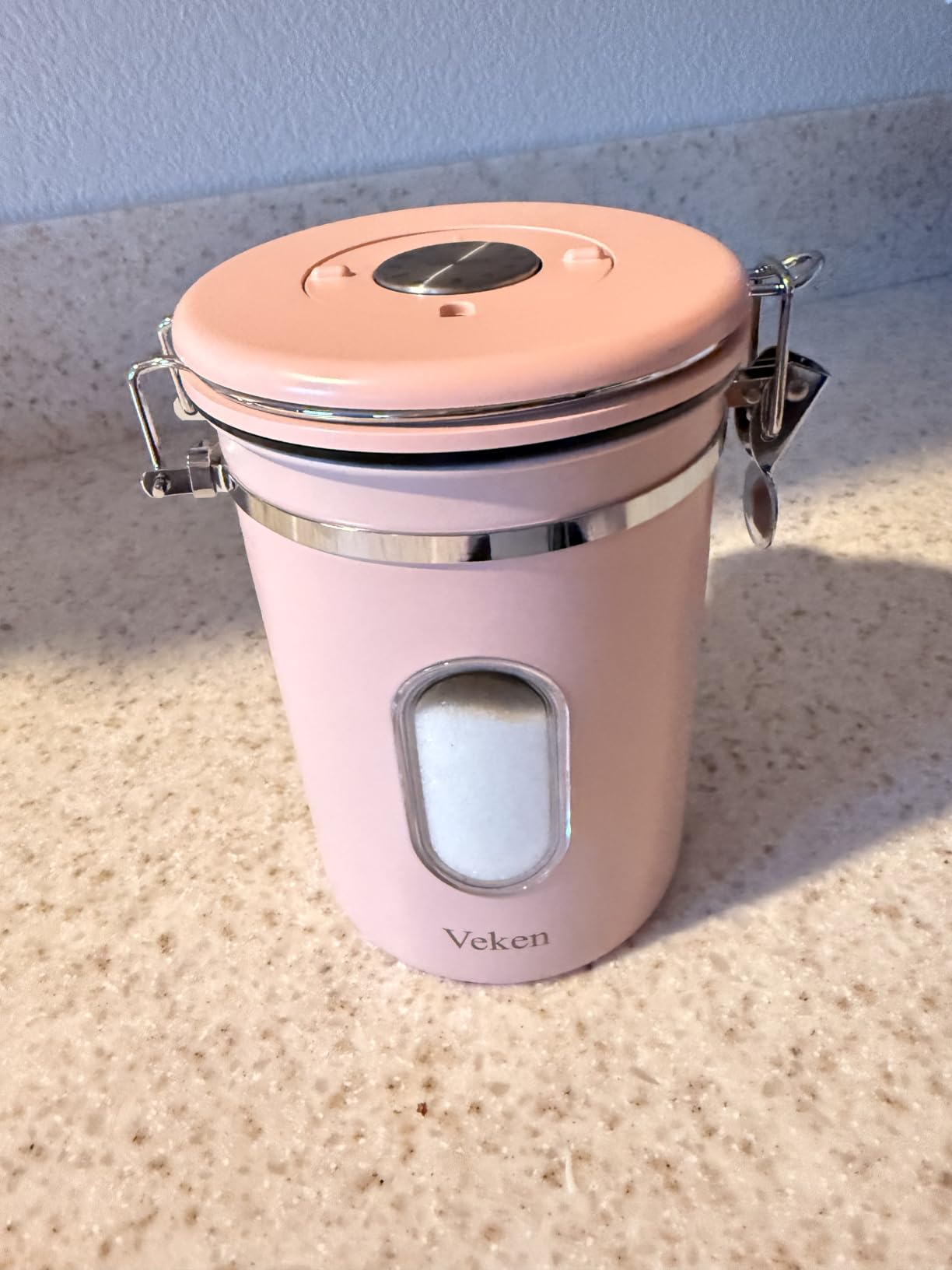
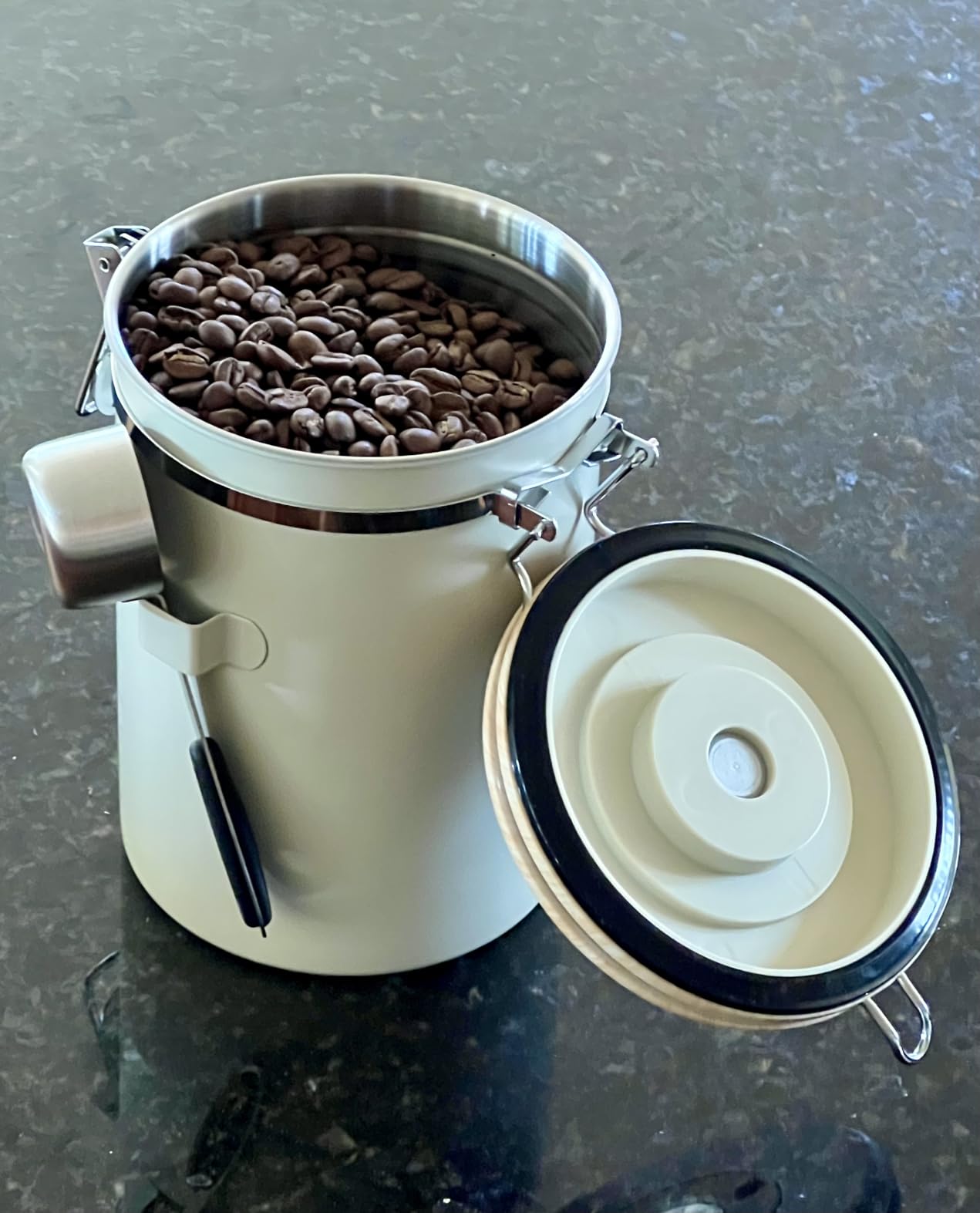
With more than 12,000 reviews holding a 4.8 average, this is the most proven canister here, and its feature list is the densest. It is 304 stainless steel, the flip-top lid carries a one-way CO2 valve, and it ships with a lid-mounted date tracker and a stainless measuring scoop that hangs from a hook on the side. The viewing window is the detail I appreciated most in daily use, because every other canister here makes you open the lid to check how much coffee is left, and every lid you open is a seal you have to re-establish.
At 22 ounces this sits right at the boundary of a standard bag. Reviewers repeatedly note that a single bag of beans or grounds fills it with barely any margin, and a good number step up to the 39 ounce version for exactly that reason. The flip-top latch closes firmly, though several owners mention it takes a firm push to open first thing in the morning. The calendar dial is genuinely useful in a shared kitchen where nobody knows when the beans were opened, but it is a small plastic insert that can pop out with a fingernail and disappear down a counter gap, so treat it as a consumable part rather than a permanent fixture.
What the One-Way Valve Actually Solves
The CO2 valve lets carbon dioxide escape from beans a few days off the roast date without letting oxygen back in, which is the correct behaviour for the most common buying pattern in coffee. A scale line molded into the body adds a small but real benefit when you are dosing a grinder in a hurry, and the stainless body is wide enough to reach with a sponge.
Who the Veken Is Right For
Buy this one if you drink a bag every week or two, want to see what is inside without breaking the seal, and like the idea of a shared kitchen knowing when the coffee was opened. It is also the easiest of the ten to hand to someone new to storing whole beans, because the scoop, the window and the date dial remove every bit of guesswork. Skip it if you buy large bags, or if small loose parts in a shared kitchen make you uneasy.
3. Coffee Gator 11oz Canister – The Budget Pick That Punches Above Its Tier
Coffee Gator Coffee Canister, 11oz Airtight Stainless Steel Container
11 oz capacity
Flip-top latch
Stainless steel body
BPA free
Pros
- Over 10000 reviews averaging 4.7
- 11 oz size takes a 12 oz bag with margin
- Includes spare CO2 filters and a measuring scoop
- Smooth latch creates a reliable seal
Cons
- 11 oz is tight for storing more than one flavor at once
- Painted finishes can scratch where the lid holder rests
- Occasional quality control issues with the pressed-fit scoop
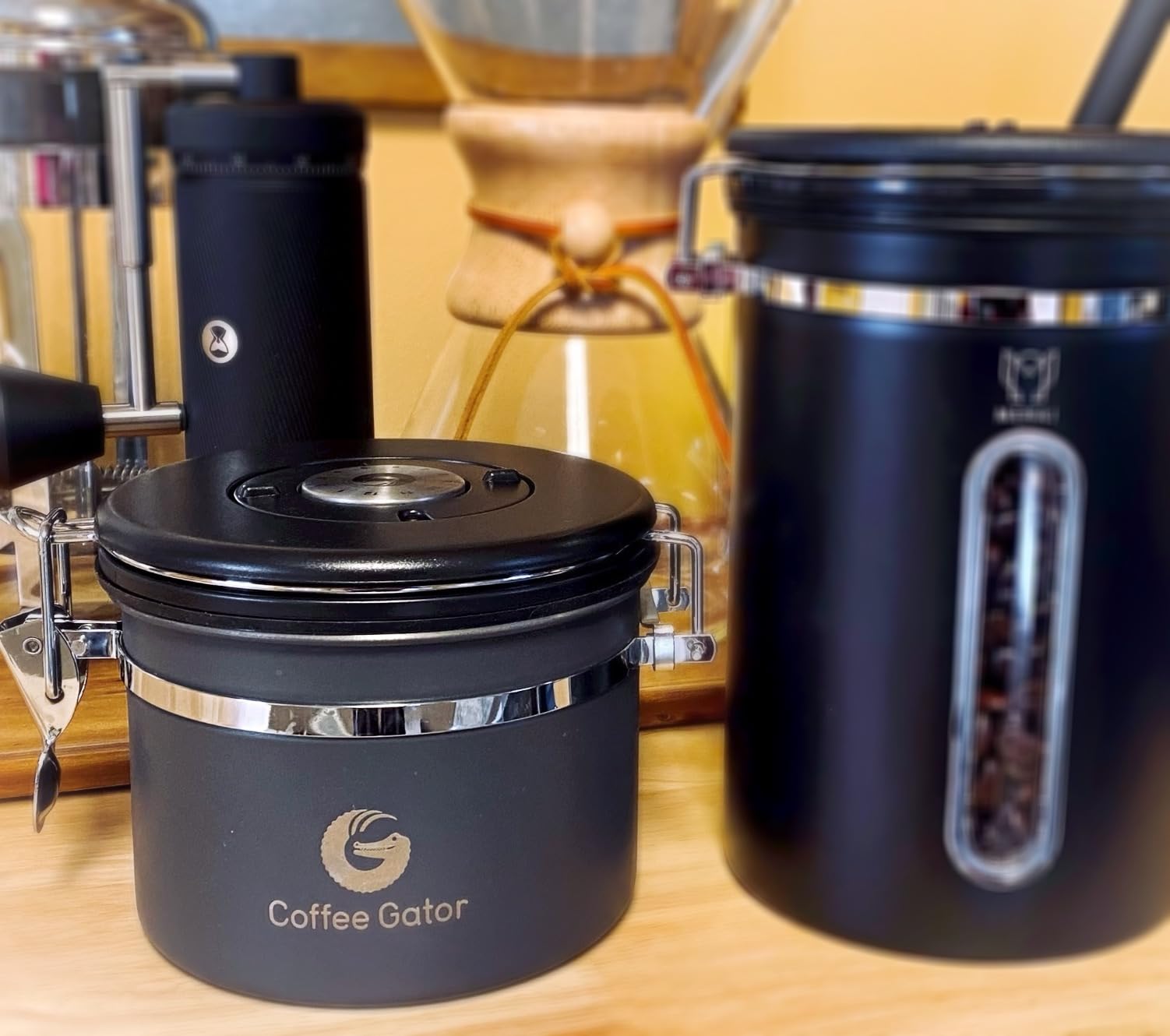
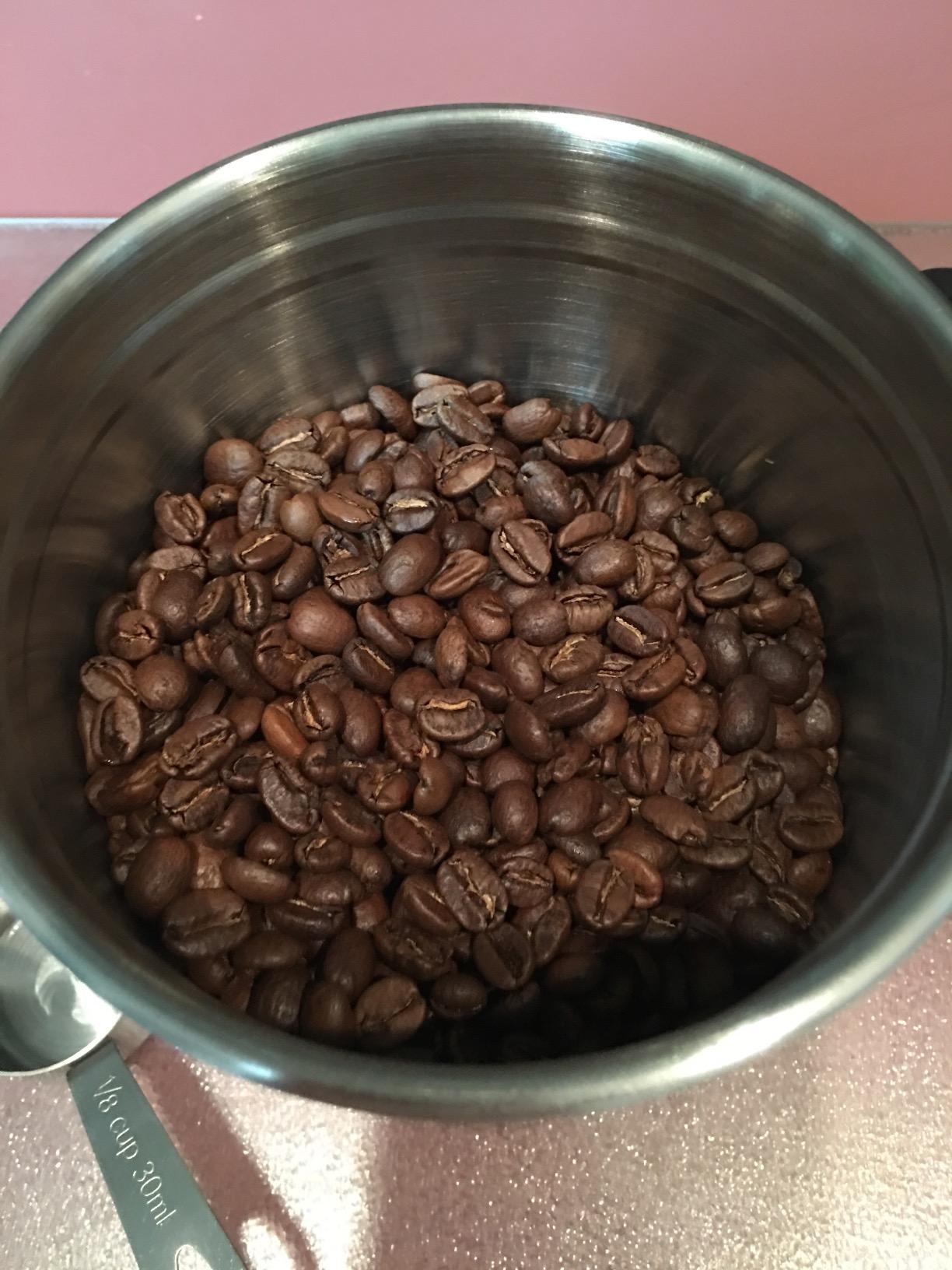
I was bracing for the budget pick to be the weak link, and instead it became the one I recommended most often. Over 10,000 reviews at a 4.7 average, a zero-BPA stainless steel body, a freshness valve that releases CO2 while locking out oxygen, and a flip-top latch that closes smoothly and stays shut. It is also the only canister here designed explicitly around a 12 ounce bag, so the cavity takes a standard bag with room to spare instead of leaving you scooping beans out of a jar that is slightly too small.
Four spare CO2 filters, a measured 2 tablespoon stainless scoop and a date dial come in the box. Spare valves matter more than they look, because a filter that clogs or loses elasticity is the most common failure mode in this category, and four spares in a drawer turn a potential dead canister into a five-second fix. Several reviewers who arrived from bad experiences with plastic tubs and glass jars report that beans finally tasted fresh for the life of the bag, which is the honest ceiling for any canister.
Small Capacity, Small Quirks
At 11 ounces this is a one-flavor canister. Working through two coffees at once, an espresso and a filter roast, means decanting back and forth, and every decant is an air exposure. Painted colour variants can also scratch where the lid holder rests on the body, and the plain stainless version is the more durable finish. The scoop has a pressed-fit handle that a few owners have had come apart, so check the handle before trusting it with a full scoop.
Who the Coffee Gator Is Right For
This is the right coffee bean storage container for someone drinking one bag at a time from a cool, dark cupboard who wants an opaque steel body and a real seal without spending premium money. It is the easiest first recommendation in this roundup, because nothing about it is unusual or fragile. Skip it if you rotate more than one coffee at a time, and note that it is hand wash only.
4. Oggi 62 fl oz Canister – The One Built for Bulk Buying
Oggi Stainless Steel Coffee Canister 62 fl oz – Airtight Clamp Lid, Clear See-Thru Top – Ideal for Coffee Bean Storage, Ground Coffee Storage, Kitchen Storage, Pantry Storage. Large Size 5″ x 7.5″.
62 fl oz capacity
Wire clamp closure
Clear see-through lid
Stainless steel body
Pros
- Largest capacity here
- sized for bulk purchases
- Clear lid shows the beans without opening
- Food grade steel with a long lasting silicone seal
- Wipes clean with a damp cloth
Cons
- Bulk size is oversized for a single 12 oz bag
- Wire clamp is fiddly one-handed
- Clear lid lets light reach the contents
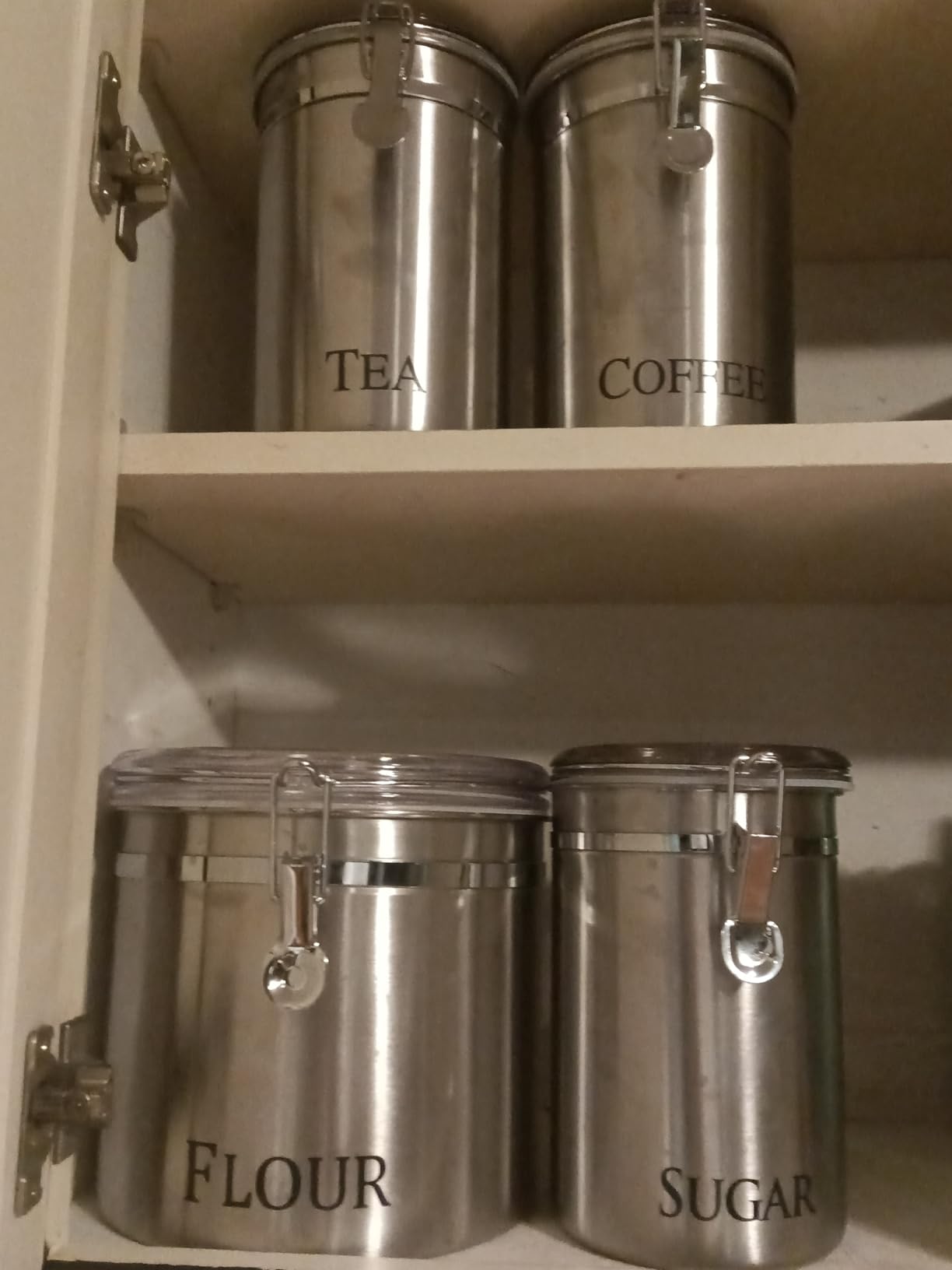
The Oggi answers a question most roundups skip. If you buy coffee by the kilo, you are not short of a container, you are short of one with enough room that the beans are not buried under a foot of headspace. At 62 fluid ounces and a listed 3.9 pound capacity, this is that container, and it is also sold as a matching set alongside sugar and flour canisters for the same reason.
The body is food grade stainless steel with a BPA free clear lid, silicone gaskets and locking wire clamps. You clamp it shut with both hands, the gaskets squeeze and the air is out. Care is a damp cloth between uses, which is about as low as maintenance gets. Just under 8,500 reviews at a 4.5 average make it one of the better-proven canisters in the category.
Headspace Is the Problem, Not the Lid
This is the one canister here where size works slightly against you if you are a small-volume drinker. A 62 fluid ounce jar holding a single 12 ounce bag leaves an enormous amount of air around those beans, and headspace is exactly what an airtight seal tries to eliminate. Used as intended, with a full bulk bag inside, that criticism disappears: the beans fill the volume, the headspace shrinks, and the gasket has very little to seal against.
The Clear Lid and the Clamp Trade-Off
You can see your beans, which is convenient for checking levels in a tall jar, and you are also letting light in. The stainless body still blocks most ambient light, but we would avoid a clear-lidded canister in direct sun. The wire clamp is the other recurring complaint: a two-handed operation with more moving parts than a twist or flip lid. It is secure when done right, just not fast.
Who the Oggi Is Right For
Buy the Oggi if you buy coffee in bulk, want a coordinated canister set for a kitchen shelf, or need somewhere to put a large bag before you grind your way through it. It is the strongest choice in this roundup for volume. Skip it for a daily bag drinker or for anyone who stores coffee in direct sunlight, because at this size it is a pantry canister rather than a precision coffee tool.
5. COFFEEVAC 1LB Container – Real Vacuum Protection at 12 Ounces
COFFEEVAC 1LB – Patented Airtight Container | Multi-use Vacuum container works as smell proof containers for ground coffee and coffee bean containers. Black cap and body.
1.85 liter capacity
Push-button vacuum seal
Opaque plastic body
Two-way valve
Pros
- Press to seal with no pumps batteries or tools
- Only 12 oz so it moves easily between cupboards
- Two-way valve vents CO2 and blocks outside odors
- NSF certified food grade recyclable plastic
Cons
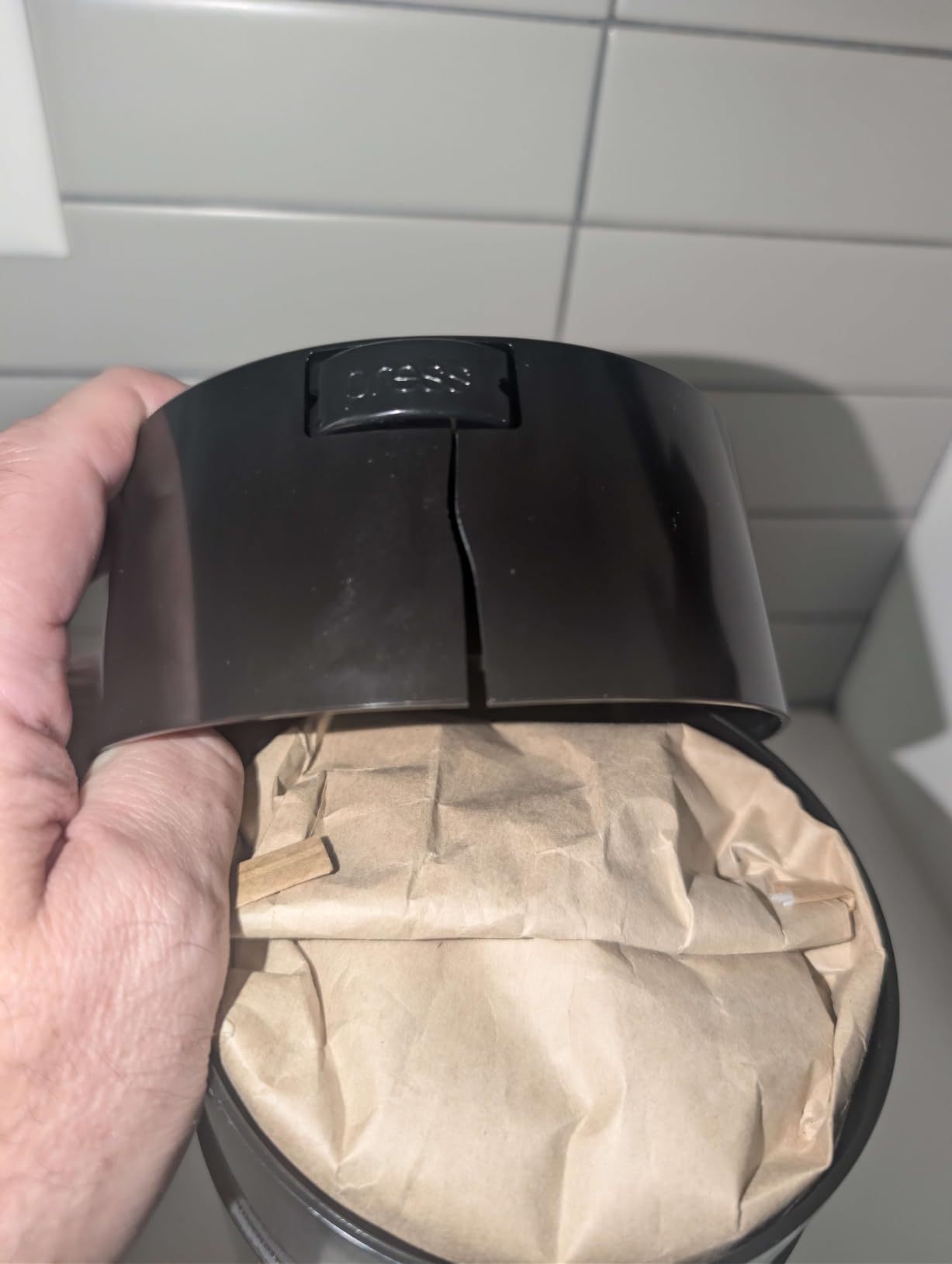
- Lid is held by vacuum alone so lifting by the top can pop it
- Release button is awkward for smaller hands
- Not a deep vacuum for beans still degassing
- Plastic body looks less premium than steel
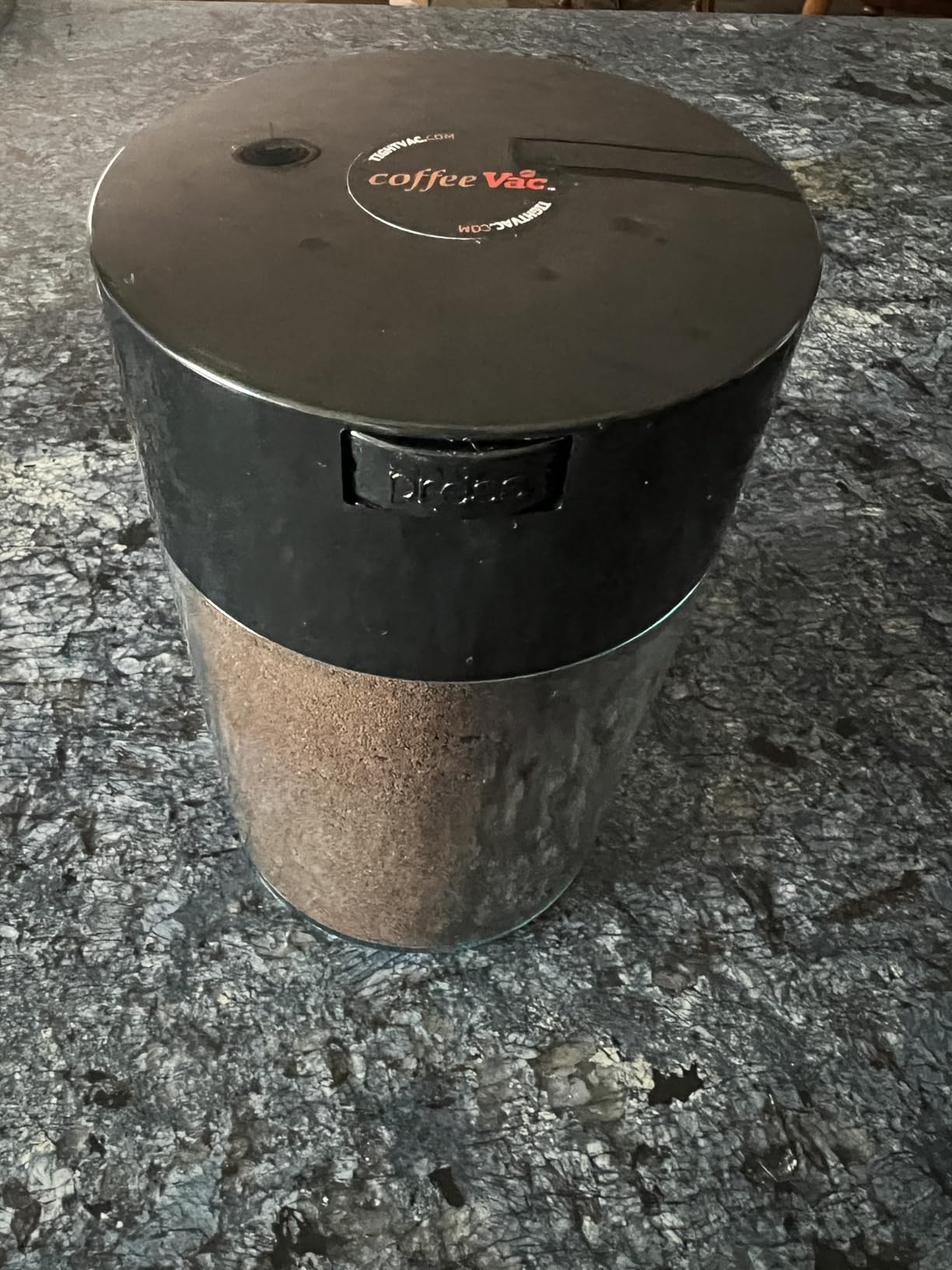
This is the lightest canister in the roundup by a wide margin, and that matters more than it sounds. A heavy steel canister ends up on one counter while the beans you actually brew on sit somewhere else. The COFFEEVAC weighs 12 ounces, is easy to hold one-handed, and is easy to keep next to the grinder rather than in the cupboard where it is decorative. The patented push-button seal is the other appeal: press the release button, push the lid down, and the two-way valve pulls the air out and holds it there. No pump, no batteries, no switch, and nothing to lose track of.
The body is opaque plastic with an NSF certification, which blocks UV light about as well as a painted steel body. Just over 7,000 reviews at a 4.6 average, and owners report it keeping coffee fresh as well as far more expensive vacuum systems. The trade-off is appearance, since it does not look like a premium counter object, and for a kitchen where the canister is part of the furniture that is a real cost.
What a Real Vacuum Seal Does and Does Not Buy You
This is a genuine vacuum seal rather than a gasket seal, which is a real mechanical advantage over a canister that simply closes tight. What it is not is a laboratory deep vacuum, and the distinction matters for very fresh beans: an opaque container with no relief valve is a poor match for beans still degassing hard in the first days after roasting, because the pressure has nowhere to go.
How to Lift It Without a Spill
The most repeated caution across thousands of reviews is not about freshness at all. The lid is held on by vacuum, so picking the container up by the top can release the seal and put beans everywhere. Lift from the body, or slide a hand underneath, every time. Opening also takes a press of the release button, which some reviewers with smaller hands find awkward mid-brew.
Who the COFFEEVAC Is Right For
Buy it if weight matters, if you want a real vacuum seal without a motor, or if you store coffee in several places around the kitchen. It also works for loose leaf tea, dried herbs and spices, so one canister can cover more than coffee. Skip it if coffee is part of your counter styling, if you buy beans that were roasted this week, or if anyone in your house lifts containers by the lid.
6. Prepara Evak Medium – The Best-Looking Canister on the Shelf
Prepara Evak Compact Glass Storage Canister, Medium, 6′ x 3.75′, 24oz
24 oz capacity
Plunger evacuation
Borosilicate glass body
Twin valve system
Pros
- Patented plunger evacuates air with a satisfying whoosh
- Borosilicate glass resists odors and staining and is dishwasher safe
- Clear cylinder suits a countertop coffee bar
- Three sizes and four colour options
Cons
- Lowest average rating here at 4.4 with 7% one-star reviews
- Breakable glass is risky next to a grinder
- Medium size holds about half a pound of coffee
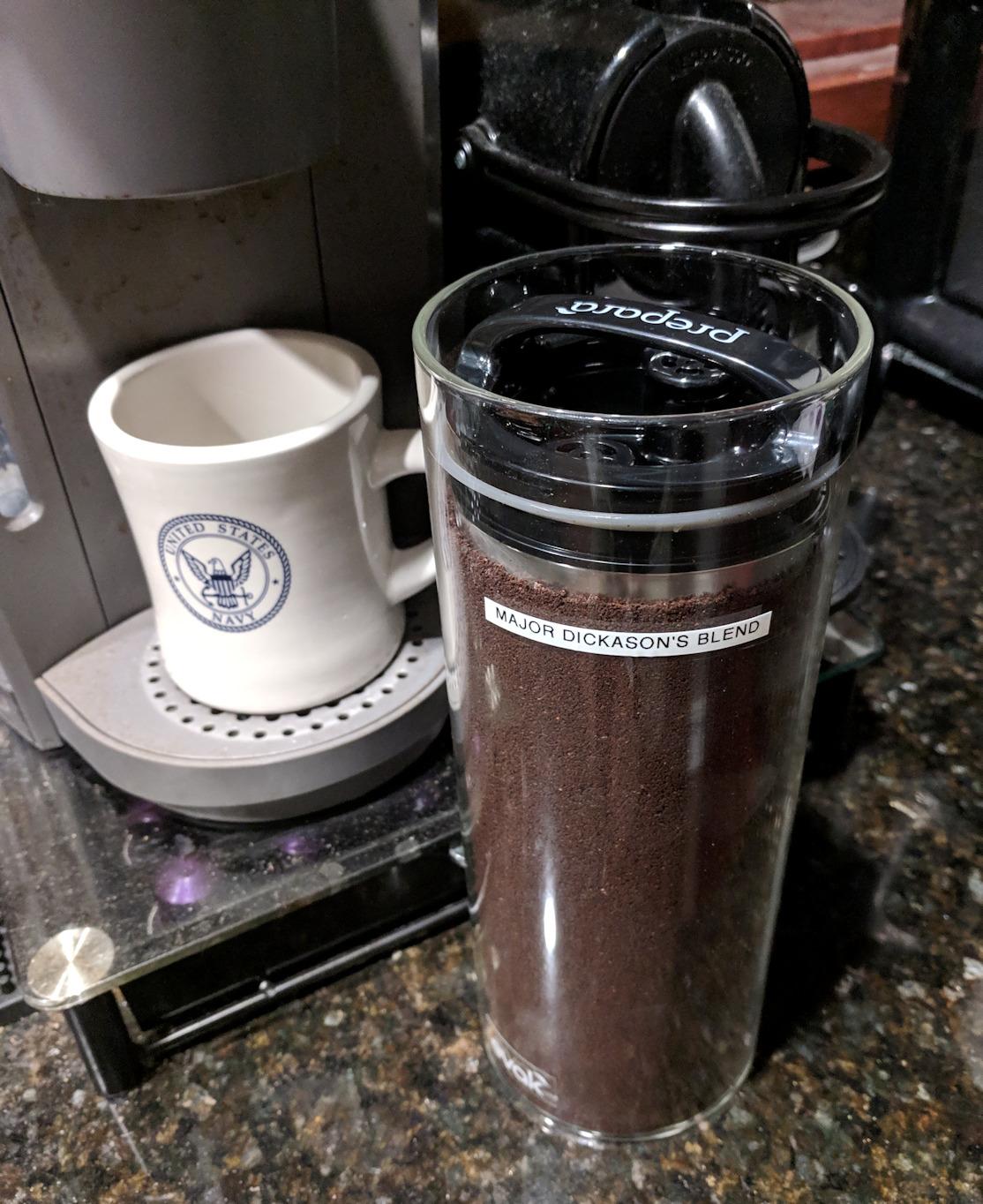
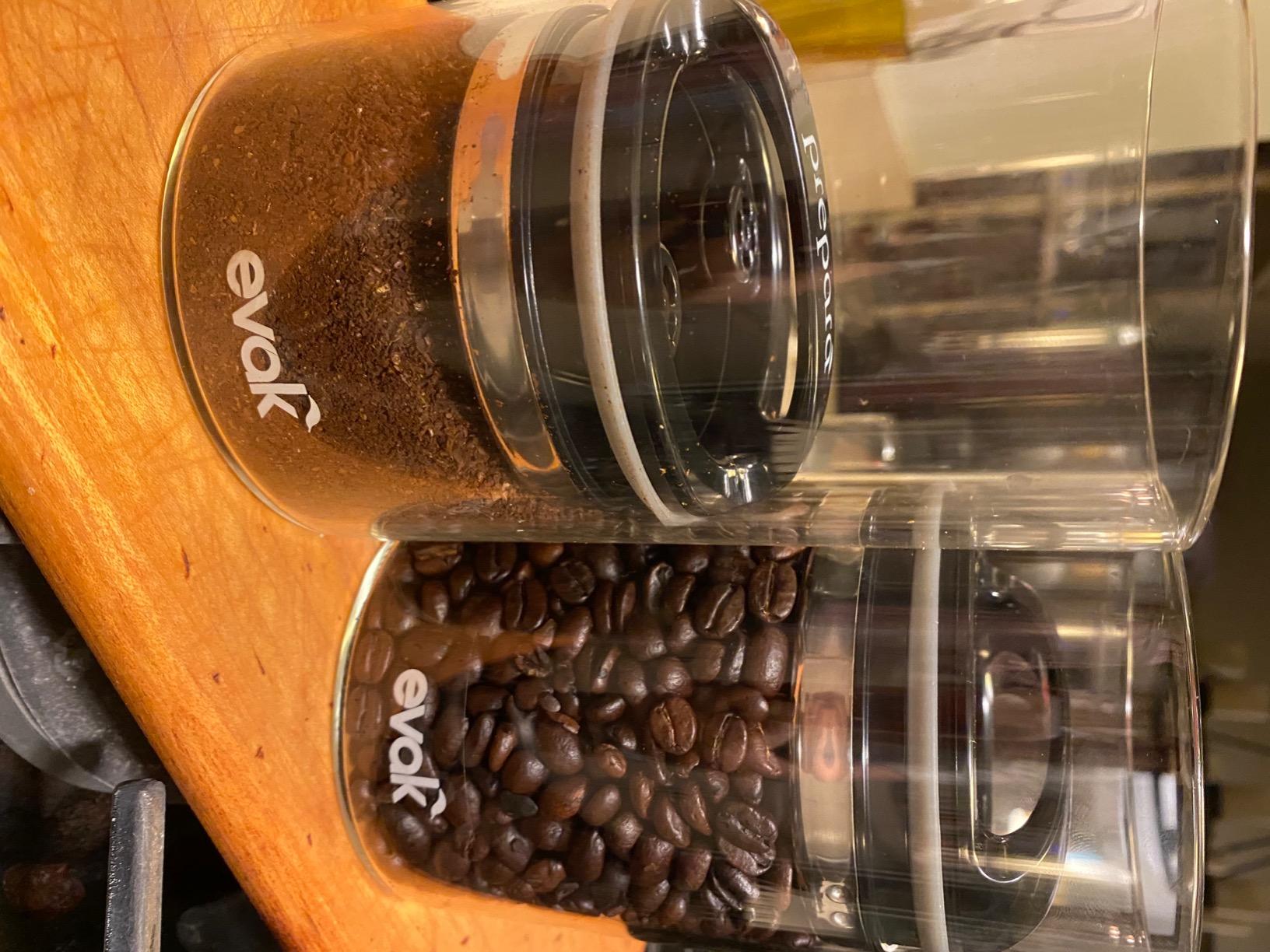
The Evak is the only canister here that is also a display object. Clear borosilicate glass cylinder, black gloss handle, stainless cap and lid, and a shape that has picked up several international design awards. If you are building a coffee bar where the equipment is on show, this is the canister that belongs there. It also uses a plunger-style evacuation rather than a twist, so there are no switches, pumps or levers to wear out, and the twin valve system releases air while keeping the container closed, with valves that never need replacing.
Around 2,700 reviews at a 4.4 average make this the lowest-scoring product in the roundup, and the split is about durability rather than function. Glass is glass, and on a crowded counter next to a grinder a dropped Evak is a broken Evak no gasket design can protect against. The Medium size holds about half a pound, or 24 ounces by volume, which is smaller than most of the metal canisters here, though it is the most configurable because it comes in three sizes and four colours.
Glass Wins on Awareness, Not on Light Blocking
Glass does not block light, and that is the honest caveat. What it does is let you check your bean supply at a glance, which is arguably a better daily habit than peeking under a steel lid. Keep it on a counter away from direct sun and the transparency is a feature. Leave it in a window and it works against you. On materials, only borosilicate glass and stainless touch the contents and both resist odors and staining, with the glass body dishwasher safe and the cap and lid needing a hand wash.
Who the Prepara Evak Is Right For
Buy it if appearance is part of your decision, if you want to check how much coffee is left without opening anything, and if your counter has space away from edges. Odour resistance is a quiet win for anyone storing coffee alongside spices or tea. Skip it if you have a busy counter with a grinder, or if you are rough with equipment, because the mechanism is excellent and the material is the risk.
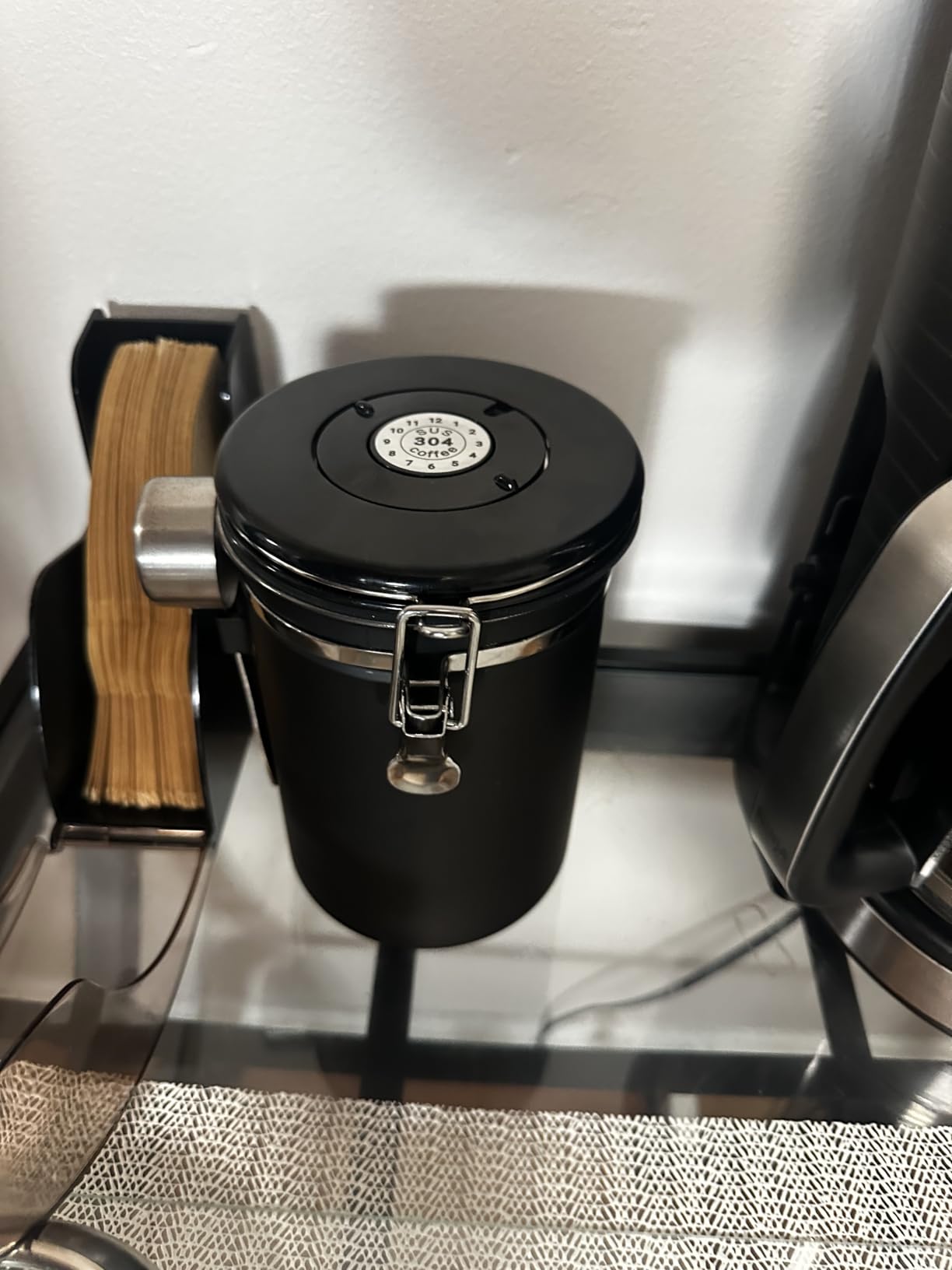
7. Ohtomber 22oz Canister – Double Seals and a Date Dial That Stays Put
Ohtomber 22oz Stainless Steel Airtight Coffee Canister with Date Tracker
22 oz capacity
Double silicone seal
304 stainless steel
Lid date dial
Pros
- Double silicone rings plus a locking design give a very tight seal
- Includes four replacement valves and a hanging steel scoop
- Opaque steel body with no plastic window to leak light
- Handles tea sugar nuts cereal spices and flour too
Cons
- One reviewer questioned placing the CO2 filter at the top of the jar
- Lid fit varies slightly between pieces
- Some buyers found 22 oz larger than expected
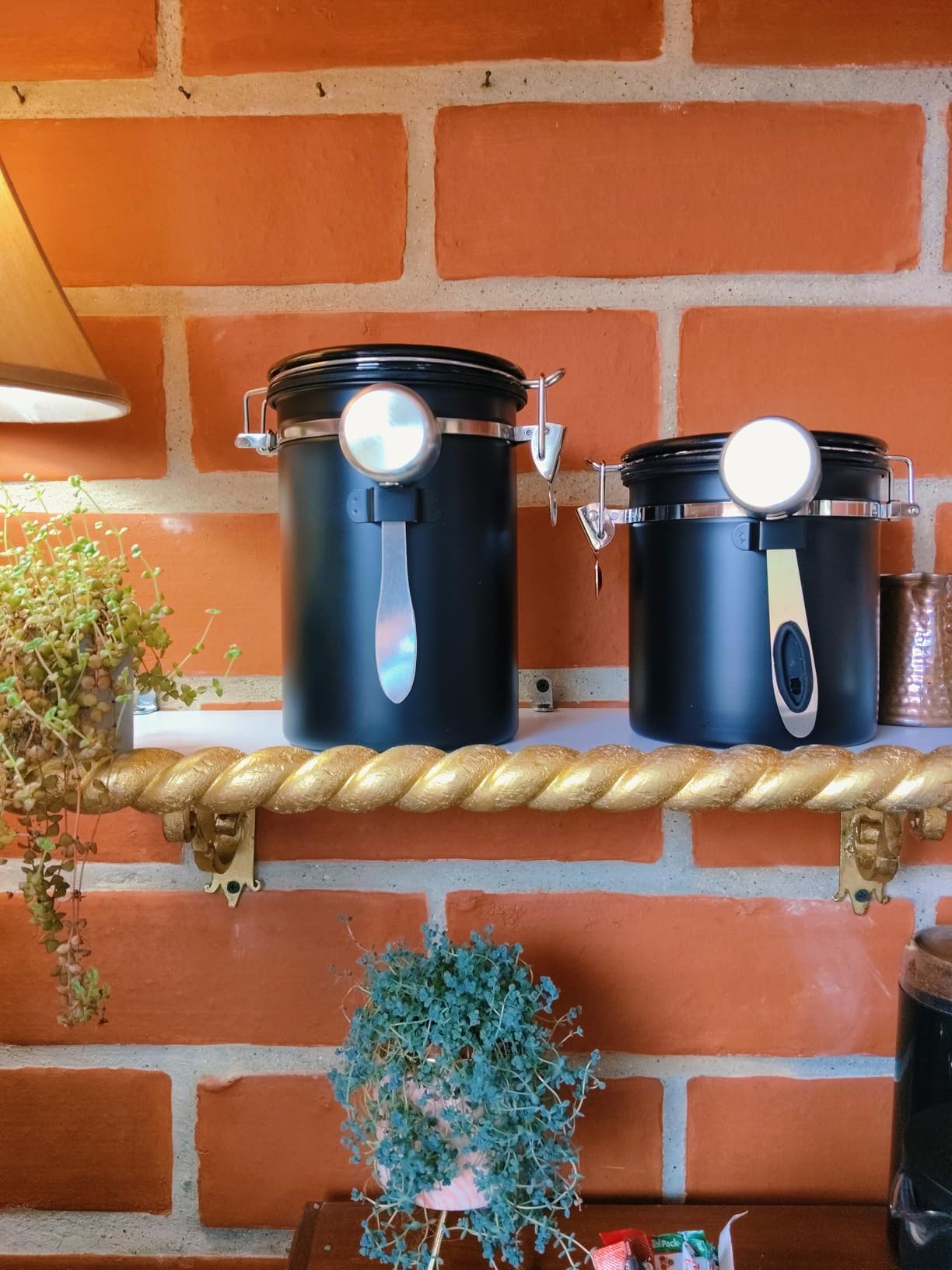
The Ohtomber does one thing quietly better than most of the field, which is seal engineering. Two BPA-free silicone sealing rings sit in a locking design rather than a single gasket pressed against a flat lip, and that doubled contact surface is why beans here keep their sheen for weeks according to the reviews. Add a one-way venting valve and you have a canister that isolates air while still releasing the CO2 and water vapour off-gassing beans produce. The body is 304 stainless steel with good light and heat shielding, and there is no plastic window, which buyers who care about light protection specifically call out as a reason to prefer it.
The package includes the canister, four replacement valves and a 30 millilitre coffee spoon that hangs on the side. The spare valves matter for the same reason they matter on the Coffee Gator: a one-way valve is a consumable component, and four replacements in a drawer turn a potential dead canister into a one-minute repair. The lid date tracker is a calendar dial for recording when beans were opened, which is the single most useful habit in coffee storage.
Where Owners Push Back
Three things come up repeatedly. One reviewer questioned the valve position, noting that carbon dioxide is denser than air and collects low in the jar, so a filter at the top may be releasing the wrong end. That is a fair technical objection even if the practical effect is small. Other buyers report lid fit varying slightly between pieces, which is normal manufacturing tolerance and worth checking on arrival, and a few found 22 ounces larger than they pictured, holding over 600 grams of ground coffee.
Who the Ohtomber Is Right For
Buy it if you want a tight double seal, an opaque steel body and a lid dial to track when beans were opened, without moving to the largest canisters. It is a solid everyday choice for a bag a week and a dark cupboard. Skip it if you want a viewing window or are sensitive to unit-to-unit variation in lid fit, and note that it is hand wash only.
8. KIVY Vacuum Canister – The Only Body Here You Can Dishwash
KIVY Vacuum Coffee Canister – Push Lid Preserves Coffee Aroma & Oil
32 fl oz capacity
Push-down vacuum lid
Stainless steel body
Dishwasher safe
Pros
- Push-down vacuum lid seals without pumps batteries or levers
- Stainless steel body is dishwasher safe
- 32 oz suits whole beans and grounds alike
- Available in several finishes and three sizes
Cons
- No CO2 release valve so it suits settled beans only
- Smallest review base in the roundup at 698
- One reviewer saw no clear freshness difference over cheaper lids
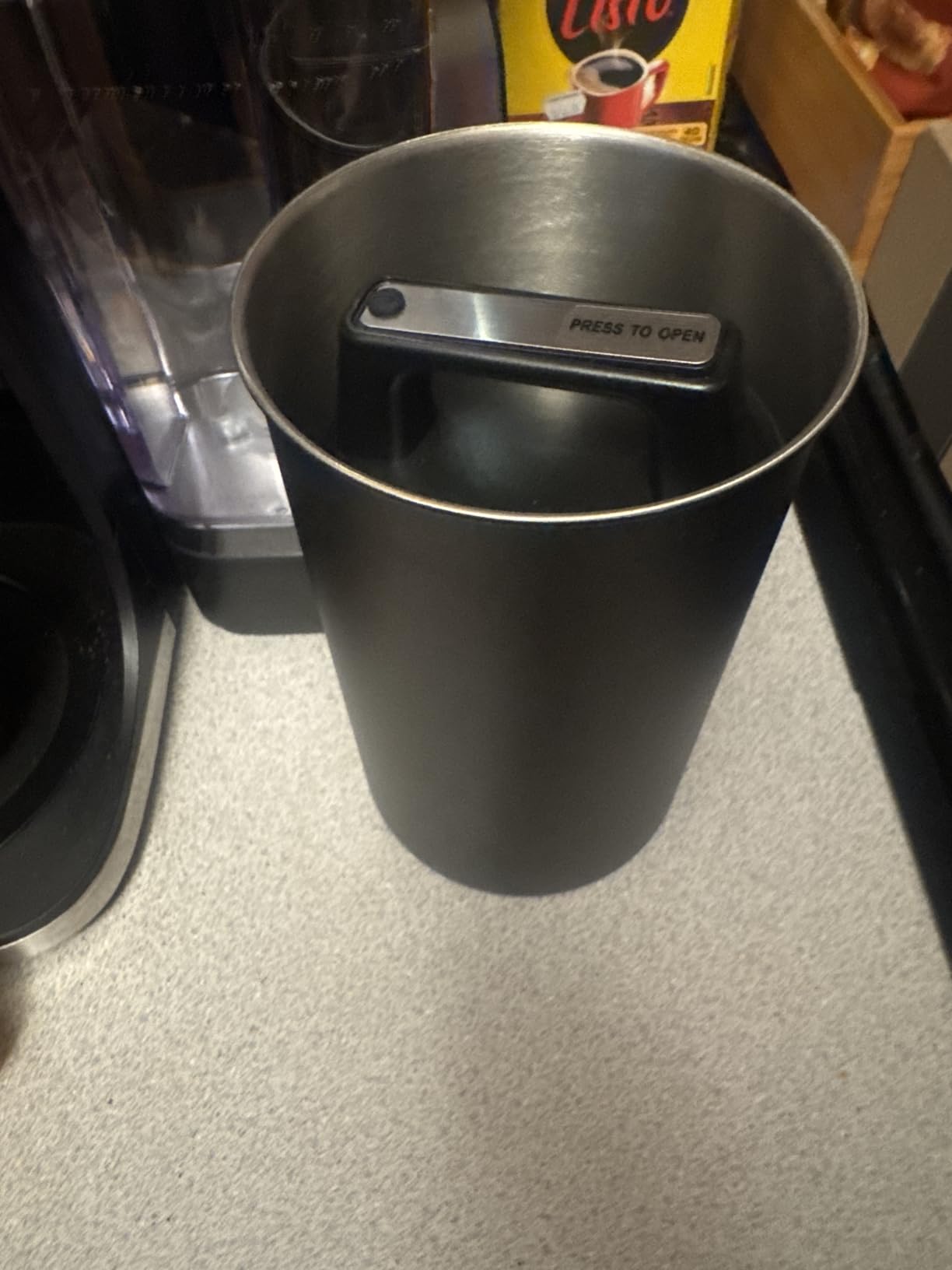
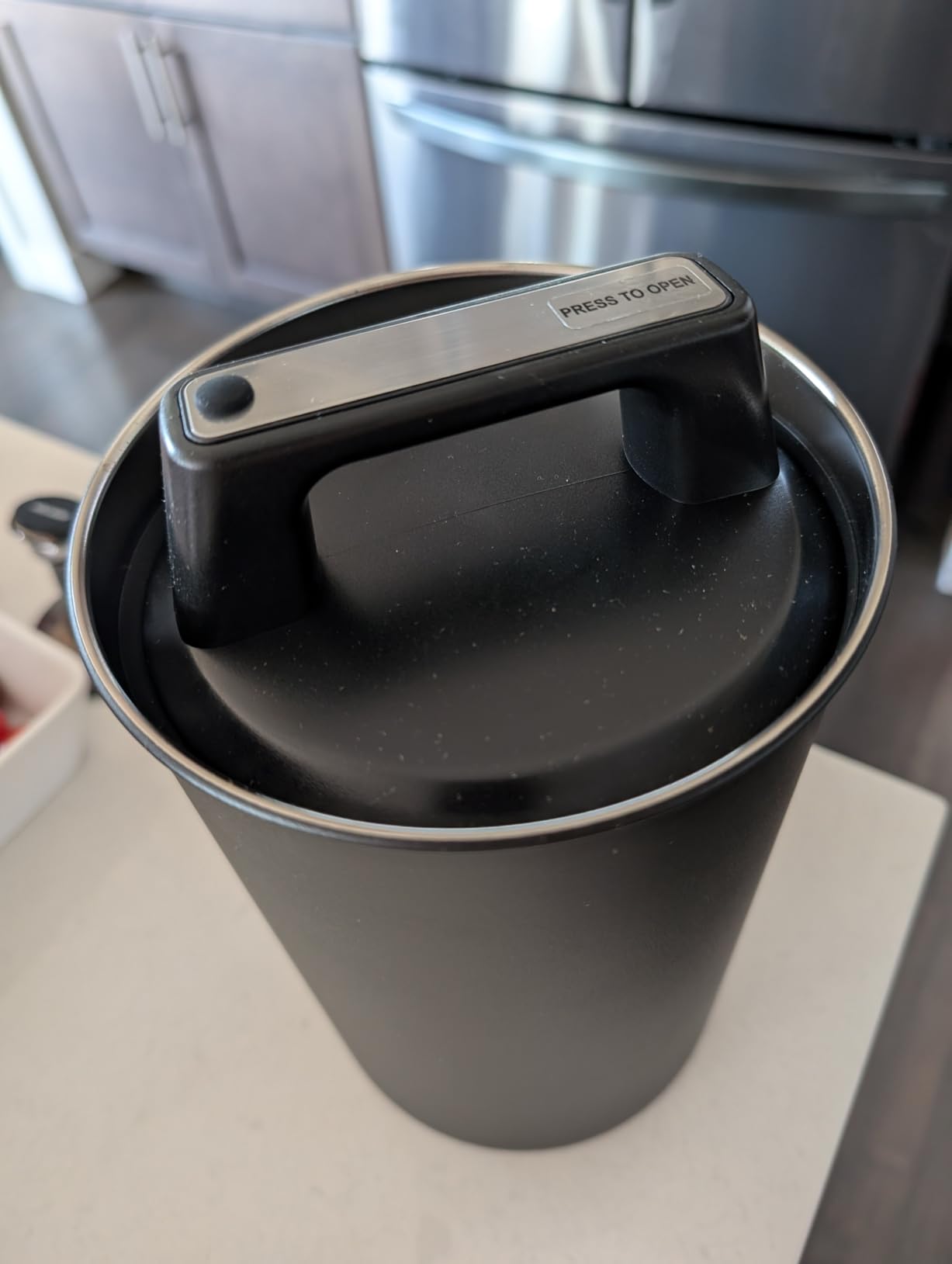
The KIVY is the simplest mechanism on this list. Push the lid down, the air goes out, the seal holds, and there is no pump, battery, lever or electronics to think about. At 32 fluid ounces it sits neatly between the 22 ounce models and the 39 ounce one, and it is offered in black, white, brushed steel and glass bodies across three sizes. The reason it earns a place despite a 4.5 rating on fewer than 700 reviews is that it is the only canister in this roundup whose body is dishwasher safe, where everyone else specifies hand wash only.
Owners praise the weight and feel of the stainless body and how simply the push lid seals. Against that, one reviewer reported not noticing a clear difference in freshness preservation compared with cheaper lids, which is the honest sceptic’s report and worth taking seriously given the smallest review base here. At 698 reviews this is the least proven product on the list, which is not a disqualifier at a 4.5 average but is a reason to treat it as the choice for people who prioritise cleanability over mechanism sophistication.
No CO2 Valve Is a Real Limit
There is no CO2 release valve on this lid, and that is the detail to weigh first. If your beans were roasted a while ago and have finished degassing, a sealed vacuum environment is exactly what you want. If they are fresh off the roast and still pushing carbon dioxide hard, a sealed container with no relief valve is the wrong match for the first week of their life. That window is narrow for most people and it is solvable by resting beans in their original bag until they settle, but if you routinely buy beans roasted within the last few days, a valve canister is the better purchase.
Who the KIVY Is Right For
Buy it if dishwasher-safe stainless steel is on your list, if your beans are not brand new off the roast, and if you want a mid-size canister with a minimal mechanism and nothing to charge. It is a good clean, simple tool rather than a clever one, and it suits anyone who wants a glass body option in the same system.
9. BISNIE 39oz Canister – Room for a Full Kilo Bag
BISNIE 39OZ Coffee Canister, Coffee Container Airtight for Ground and Bean
2.8 liter capacity
Flip top with CO2 valve
304 stainless steel
Date wheel and scoop
Pros
- Genuinely holds a full 1 kg bag
- which is the fix for small canisters
- One-way valve releases CO2 and locks out oxygen
- Frosted ABS cover resists fingerprints and dust
- 1 oz measuring spoon clips to the canister
Cons
- Some buyers feel the seal could be tighter
- Coffee label molded into the lid cannot be swapped
- Date dial is of little use for frequent small purchases
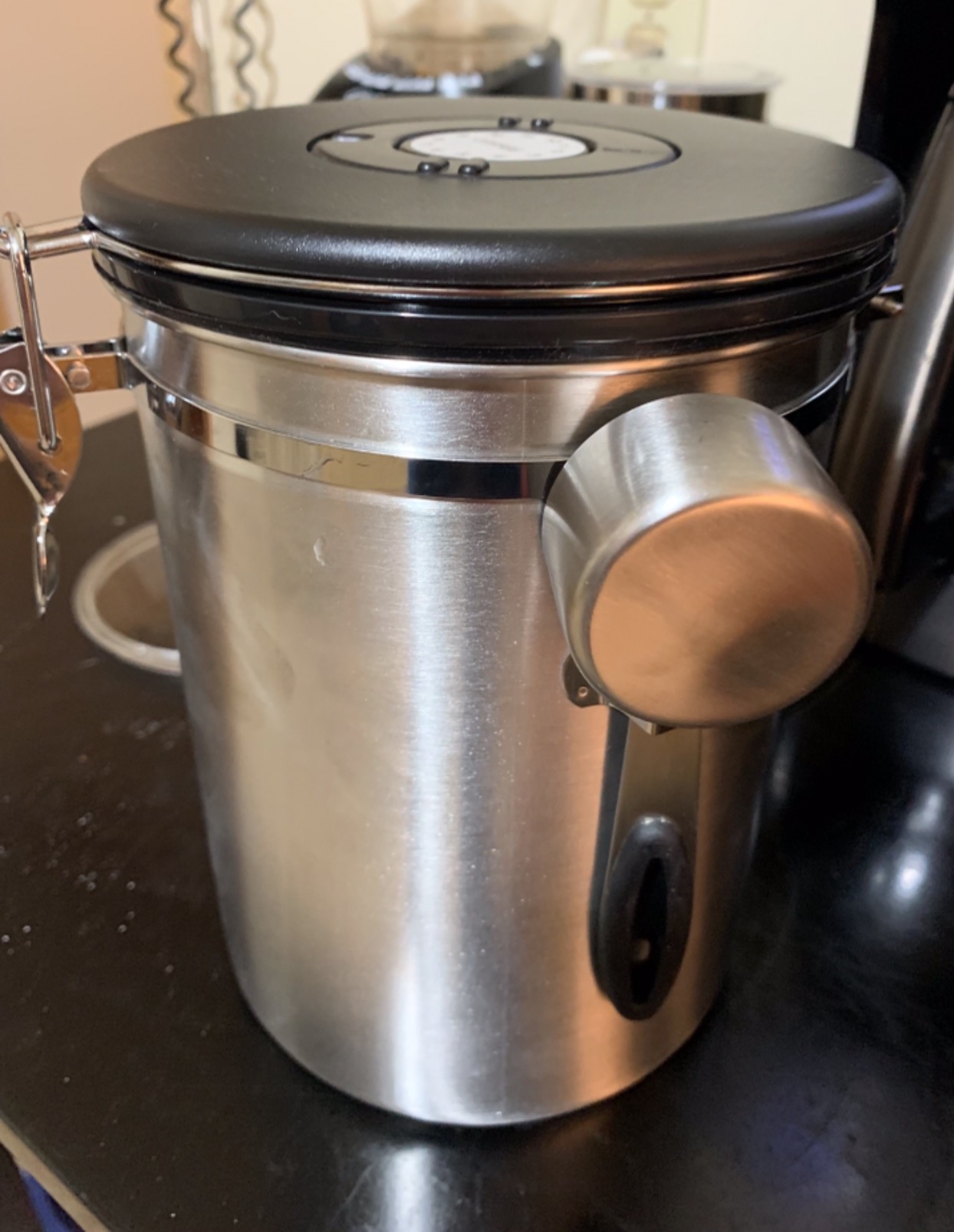
This is the canister that fixes the most common complaint in the category. Buyers are constantly upgrading from a jar that only just holds a bag to one that holds the bag properly, and the BISNIE at 2.8 litres takes a full 1 kilogram bag with the beans sitting in a modest layer rather than buried. Reviewers note that beans stay shiny for weeks at this size, which is what you would expect when there is less headspace.
It is 304 stainless steel with a BPA-free flip-top lid and an airtight silicone seal, plus a one-way valve that releases CO2 and locks out oxygen. A frosted ABS cover resists fingerprints and dust, which sounds minor until you own a shiny steel canister that shows every handprint. An adjustable calendar wheel on the lid and a 1 ounce measuring spoon that clips to the body round out a well-considered package, and the spoon is genuinely the right size for a 16 gram espresso dose.
Seal Tightness, the Molded Label and the Date Dial
The most common criticism is simply that some buyers feel the seal could be tighter, which is a fair comparison to make when a canister of this class competes on capacity rather than mechanism. The second is more idiosyncratic: a coffee label is molded into the lid and cannot be swapped, which is an odd constraint if you plan to use the canister for tea, sugar, nuts or powder. The date wheel is only useful if you buy a bag, write the date and then actually finish that bag before writing a new one, so frequent small purchases make the dial more decoration than tool.
Who the BISNIE Is Right For
Buy it if you buy kilo bags, share a coffee bar with other people, or have been losing beans to a canister that is simply too small. It is the best large-capacity mid-tier option here and it handles both whole beans and pre-ground coffee. Skip it if you only buy 12 ounce bags, if you need the absolute tightest seal, or if a fixed coffee label bothers you.
10. Automatic Vacuum Coffee Canister – The One That Fixes Its Own Seal
Automatic Vacuum Coffee Canister, 1.3L Coffee Container with LED Display
1.3 liter capacity
Electric auto vacuum lid
LED status display
Borosilicate glass body
Pros
- Vacuums and seals in about 60 seconds and opens in 3
- Pressure sensor re vacuums below 50 kPa automatically
- LED shows vacuum status date tracker and battery level
- Battery rated for up to 200 days per charge
Cons
- Lowest average rating here at 4.2 with 9% one-star reviews
- Needs periodic recharging and adds an electronics failure point
- Pump noise is audible from other rooms
- One owner needed a replacement gasket to stop constant re sealing
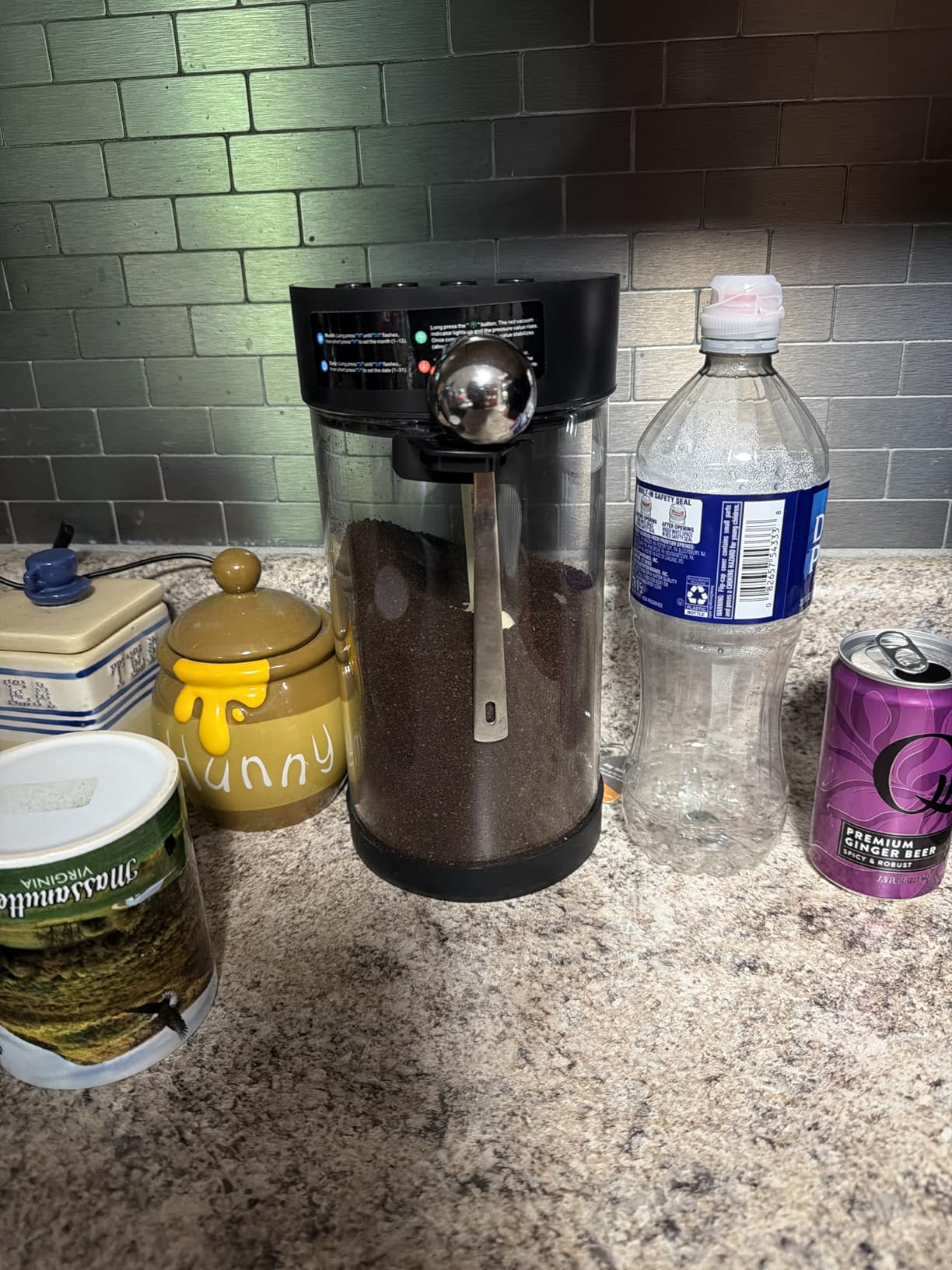
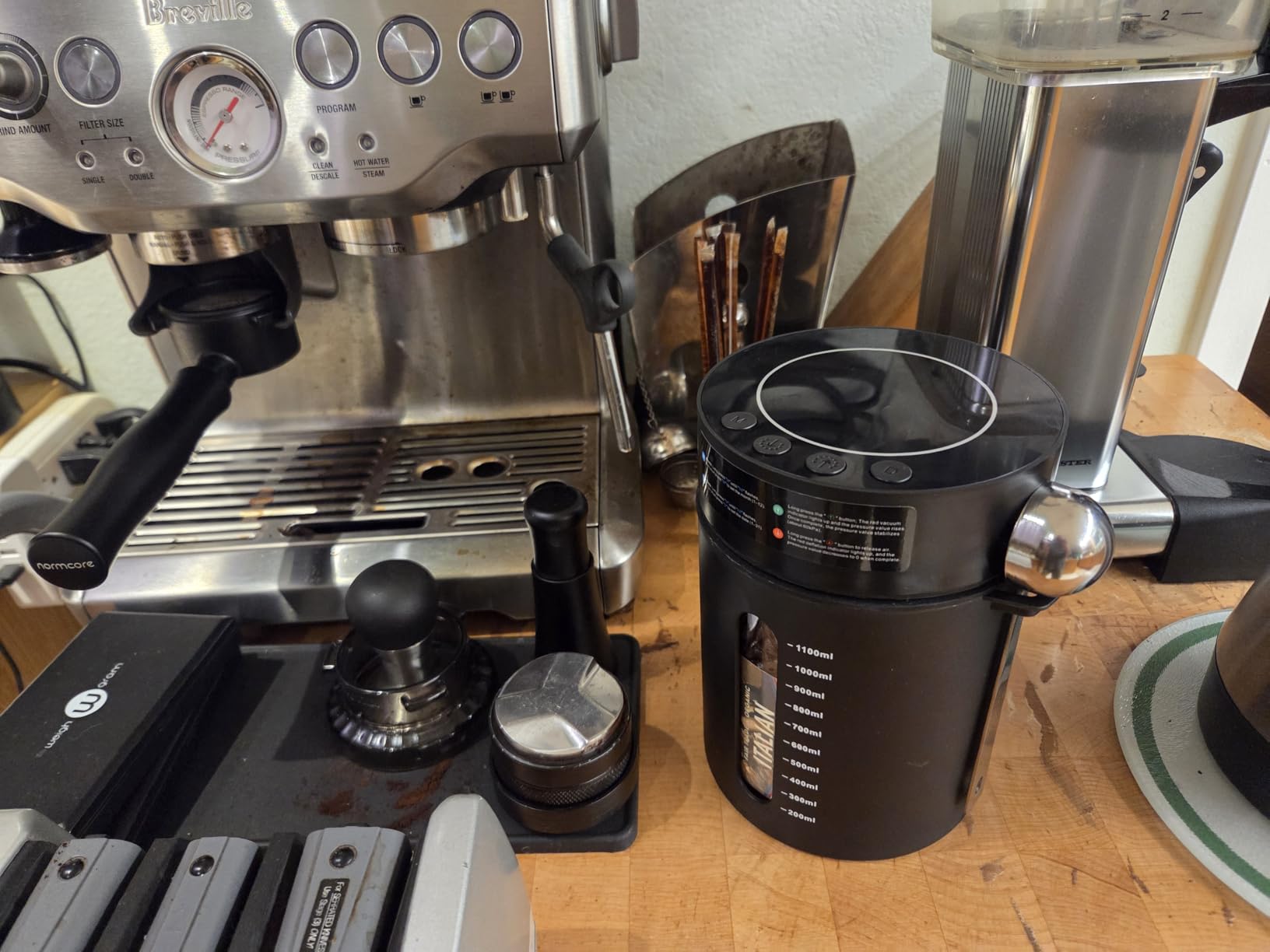
This is the only canister here that refills its own vacuum, and the idea is genuinely appealing. A pressure sensor detects when pressure falls below 50 kPa and reactivates the pump to restore the seal, which means a jar left open for a week on a busy counter reseals itself rather than quietly losing protection. Long press the vacuum button and it evacuates and seals in roughly 60 seconds, and long press again and the lid releases in about 3. The LED screen shows vacuum status, a date tracker, battery level and the current operating state, the borosilicate glass inner container lifts out for rinsing, and a window shows the remaining contents without opening the lid.
The built-in rechargeable battery is rated for up to 200 days per charge on a 3 to 4 hour Type-C cycle, which removes disposable batteries from the picture. For home roasters working through beans that are still degassing, the auto re-vacuum behaviour is a genuine advantage, since it handles the pressure issue without you thinking about it.
The 4.2 Rating Is About Ownership, Not the First Week
This is the lowest average in the roundup at 4.2, with 9% one-star reviews, and the complaints cluster in one place: the electronics. A passive canister has no charging habit, no motor and no sensor to fail. This one needs periodic recharging, the pump is audible from other rooms which is startling the first time and annoying after that, and one reviewer had a unit whose rechargeable seal needed a replacement gasket to stop it re-sealing every 45 minutes, which tells you exactly how that failure presents. If the battery dies or the pump fails, you own a very nice glass jar. That is not a reason to skip it, but it is a reason to buy it only if you will actually keep it charged.
Who the Automatic Vacuum Canister Is Right For
Buy it if you roast at home, if you regularly leave a jar open for days, or if you like the LED readout and want a canister that maintains itself. It is also the only option here with both a see-through body and a window in the lid. Skip it if you want something you can set down and forget for a year with no charging, or if a motor in your kitchen would bother you, because the Airscape and the COFFEEVAC give you a passive seal with none of that overhead.
How Coffee Container Seals Actually Work
Every canister in this roundup falls into one of four families, and the differences between them matter more than the material or the colour. Understanding which family you are buying tells you what it will and will not do for your coffee.
A vacuum seal physically pulls air out of the jar. A twist, a button or a powered pump creates low pressure inside and the lid holds that pressure against the air outside. It is the strongest seal of the four and the one that fails most obviously if you lift the lid by the top. The COFFEEVAC and the automatic vacuum canister sit in this family.
An airless or displacement seal does not remove air, it removes the space for air. The Airscape’s plunger presses down onto the beans and the Evak’s push lid pushes air out as it closes. This is simpler, works for beans and grounds, and does not create a real vacuum, which is why nobody should describe a plunger canister as a vacuum pump.
A push-down gasket is the baseline. Silicone rings compress against the rim and reduce the air gap, and it is perfectly adequate when the container is close to the size of the coffee inside it. The Ohtomber doubles the rings for a tighter version of the same idea.
A one-way CO2 valve is not a seal at all, it is a companion to a seal. It lets carbon dioxide escape so off-gassing beans do not build pressure, while blocking oxygen on the way in. Several canisters here combine a gasket with a valve, which is the combination we would look for first when buying beans that were roasted recently.
Two terms worth defining. Headspace is the air volume above your beans, and it is the reason a canister far bigger than your coffee is a worse choice than one that fits it snugly. Off-gassing is the carbon dioxide freshly roasted beans release in the days after roasting, which is why beans bought a week ago behave differently from beans bought a month ago.
What to Check Before You Buy a Coffee Bean Storage Container
Match the capacity to how you actually buy
This matters more than any other feature. A 12 ounce bag drinker needs something in the 11 to 22 ounce range. A 1 pound bag needs roughly 2.8 litres, which is the BISNIE’s whole reason for existing, and bulk buying needs the 62 fluid ounce Oggi. Buying a huge canister for a small bag leaves beans suspended in a large volume of air, which is the exact problem a seal is meant to solve. The flip side is that most canisters here are hand wash only, so sizing down is the better mistake to make.
Vacuum, plunger or push-down gasket
Choose a vacuum seal if you want the strongest protection and you will be disciplined about lifting the container from the body. Choose a plunger or airless design if you want a robust passive seal with no electronics and no risk of popping the lid off mid-carry. Choose a simple gasket if the container fits your bag snugly, because at that size the difference between seal types is smaller than the difference between a sealed container and a bag. Add a CO2 valve to the list if you buy beans that are still degassing, which is common with smaller roasters and more common with home roasting.
Steel blocks light, glass shows you the beans
Opaque steel is better for the coffee. Clear borosilicate glass is better for your awareness of how much coffee is left, and it resists odors and staining better than plastic. The practical answer is to keep a clear canister away from direct sun and use it in a well-lit but shaded spot, and to keep a steel canister wherever it looks best on the counter. The Veken window is a middle path: a steel body with a narrow window means you check levels without breaking the seal, at the cost of a small amount of light ingress through a small area.
Whole beans or pre-ground decides the valve question
Beans and grounds behave differently in storage. Ground coffee has far more exposed surface area, so it loses aroma quickly, and it also works its way into small valve openings where fine particles can clog a one-way filter. Whole beans tolerate a canister far better and are what these products were designed around. If you store pre-ground coffee, prioritise a gasket or plunger seal with a wipeable interior over a fine-meshed valve, and expect to grind more often than the bag date suggests.
The bag versus canister decision gate
Be honest about whether you need one of these. If your coffee comes in a bag with a one-way degassing valve that closes cleanly with a roll-down or clip, and it lives in a cool dark cupboard, the bag alone is usually sufficient. A commenter in r/CoffeePH put it plainly: compared with canisters and vacuum storage, the original one-way valve bag still has the best flavour.
You genuinely need a canister if your bag does not reseal reliably, if you buy in bulk and need somewhere to put the surplus, if your kitchen is bright, or if you share beans between people and want a date record. If none of those apply, a roll-down bag clip and a dark cupboard will serve you as well as anything on this list, and it is worth saying so before you spend anything.
Failure modes nobody warns you about
Worn gaskets come first. Silicone hardens over time, especially if it is washed and left damp, and a canister that no longer compresses properly is just an expensive jar. Valve clogging is second: fine coffee dust migrates into one-way filters, and a clogged valve either stops releasing carbon dioxide or stops sealing, which is why the canisters that ship spare filters have a quiet advantage. Plunger crushing is third and the least discussed, since steady downward pressure on beans over a long window can leave them taking a set, so fill a plunger canister less than you think you need to.
Unavailable replacement parts are the quiet fourth. Before you buy, check whether the manufacturer sells replacement lids, gaskets and valves separately, because a canister whose seal is a sealed part of the body is a canister with an expiry date. If you also store dry goods in the kitchen, our rice storage container guide covers the same sizing and headspace logic in more depth.
Frequently Asked Questions
What is the best airtight container for coffee?
For most home brewers the best airtight container is an opaque stainless steel canister with a gasket or plunger seal, sized so your bag fills most of the interior. The Airscape plunger design is the strongest general-purpose option, and the Coffee Gator is the best pick if you drink one 12 oz bag at a time. Match the container to your bag size first, because a canister much larger than your coffee leaves beans sitting in a large pocket of air.
Should coffee be kept in an airtight container?
Yes, an airtight container kept in a cool dark cupboard is the standard recommendation. Airtight storage blocks oxygen, moisture, heat and light, which are the four things that push roasted coffee toward staleness. The important caveat is that airtight only works in combination with cool and dark, so a sealed canister sitting on a sunny counter protects far less than the same canister in a cupboard.
Are vacuum coffee canisters worth it?
They are worth it for whole beans and for anyone who leaves a container open repeatedly, because a real vacuum removes headspace air rather than merely sealing a lid against it. They are less useful for very fresh beans that are still releasing carbon dioxide, since that pressure needs a relief valve, and less useful if your bag already reseals and your kitchen is dark. Check for a CO2 valve before buying a vacuum model.
How long does coffee stay fresh in a sealed container?
Whole beans in a good sealed canister in a cool dark cupboard hold their character for several weeks, and ground coffee stales far faster, often within days. A canister slows the decline rather than stopping it, so freshness is still anchored to the roast date. If you need coffee to stay at its peak for months, portion and freeze instead of storing a large jar.
What size coffee canister fits a standard 12 oz bag?
Anything in the 11 to 22 ounce range handles a standard 12 oz bag. The Coffee Gator at 11 oz is designed around exactly that bag, while the Veken and Ohtomber at 22 oz hold a bag with margin and add room for a scoop. A 1 kg bag needs roughly 2.8 litres, which is the BISNIE size, and bulk purchases above that point call for something like the 62 fl oz Oggi.
What is the 15-15-15 rule for coffee?
It is a slogan with no evidence behind it. The idea that coffee is good for 15 days, 15 months or 15 years depending on the roast type is folklore, not a measured rule, and the real answer is that freshness is anchored to the roast date. Buy recently roasted beans, keep them sealed and cool, grind as late as possible, and the container is the least important part of that equation.
Which Coffee Bean Storage Container Should You Buy?
If you want the strongest all-round setup, choose the Airscape by Planetary Design, our editor’s choice, because the plunger lid removes headspace air rather than merely sealing a lid, and owners on Home Barista report the stainless version still working like new after several years. Buy a different one when your specific situation points somewhere else.
If you drink one 12 oz bag at a time, the Coffee Gator 11oz is the best-value buy and the easiest first canister to recommend. If you want to check bean levels without opening the lid, the Veken 22oz has the window, the date dial and the hanging scoop. If you buy 1 kg bags, the BISNIE 39oz finally has the room, and if you buy in bulk the Oggi 62 fl oz has more still.
If you want a genuine vacuum without a motor, the COFFEEVAC 1LB is light and portable, provided you lift it from the body. If appearance leads your decision, the Prepara Evak Medium is the display piece. If you are home roasting or constantly opening the jar, the Automatic Vacuum Canister reseals itself and shows the pressure reading, provided you keep it charged.
And if your bag already reseals and your kitchen is dark, spend your money elsewhere. The best coffee bean storage container is the one that matches your bag size, stays cool and closed, and lets you finish the coffee before the next roast arrives. Grind as late as you can and check the roast date before anything else. Our pellet storage container roundup covers the same storage principles for a different pantry category.
Leave a Reply