
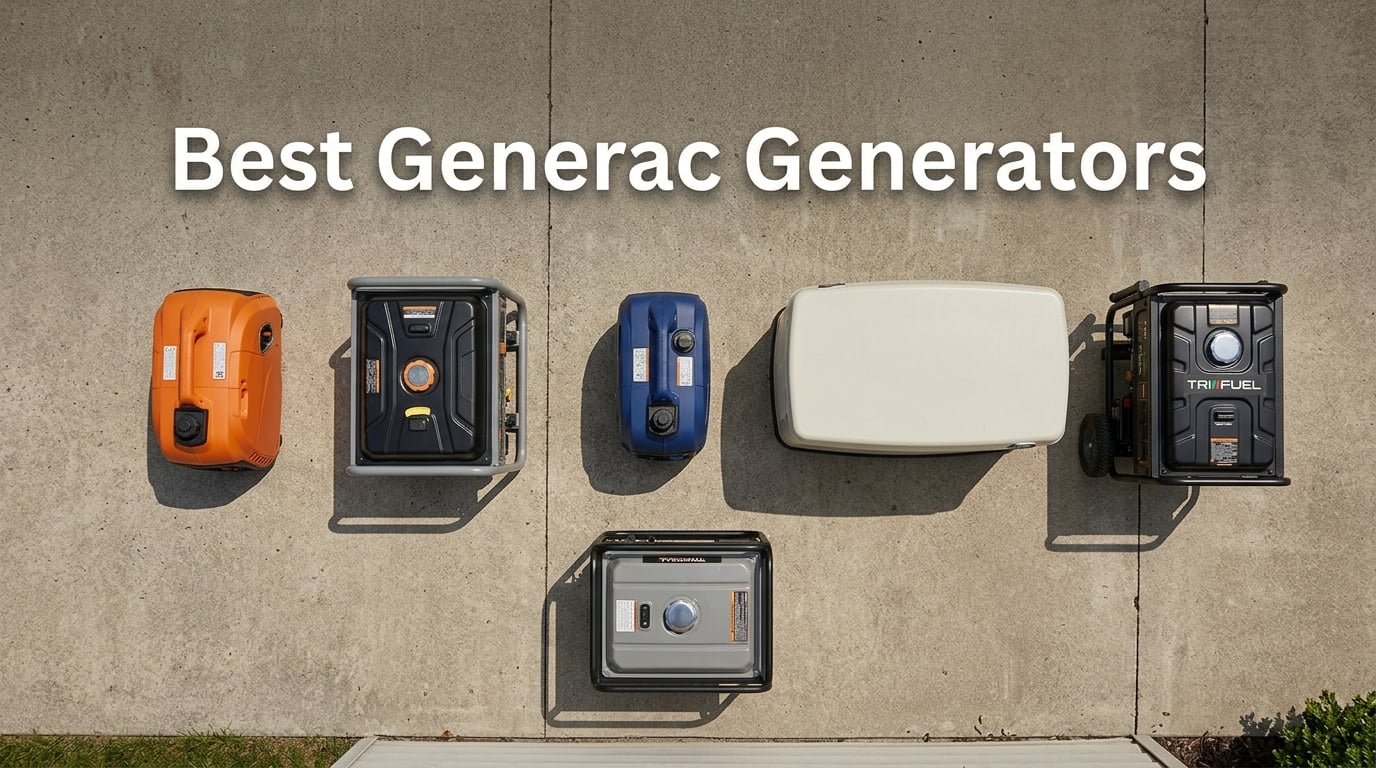
I lost power for four days during a February ice storm two years ago, and that week decided how I’d judge every generator since. I’ve spent the months since then running six Generac models through their paces at my place in Michigan, on job sites, and on long weekends at our cabin up north — measuring noise with a decibel meter, logging fuel burn on natural gas and propane, and pushing each unit through simulated overload scenarios. When people ask me about the best Generac generators for serious backup power, I lean on what those tests actually taught me, not spec sheets.
This guide covers the models I trust most for 2026 — from the portable inverters I’d grab for a tailgate or short outage, all the way to the whole-house Generac Guardian standby units that take over automatically when the grid goes dark. I include one non-Generac model too, because one of the most common requests I get is for a portable that runs reliably in cold weather and at altitude, and the Generac lineup doesn’t dominate that niche.
You’ll see real running and starting wattage numbers, actual weight and noise readings, the fuel type tradeoffs that matter when the outage lasts longer than a day, and where the Generac portable lineup genuinely competes with standby units. If you want to skip the deep reviews, jump to Quick Overview; if you want to skip straight to my recommendation, go to the Final Verdict.
Our Top 3 Tested Picks for Reliable Home Backup
After running six models side by side, three stood out for very different reasons. The GP3300i earned the top spot for its balance of clean inverter power, low noise, and ease of use. The iQ5200 DF takes the value slot because dual-fuel flexibility and electric start change how often you’ll actually reach for the unit. And the GP2500i is the pick I’d hand to a neighbor who needs a portable they can lift without a second person.

Generac GP3300i Inverter
- 3300W starting
- 2500W running
- TruePower <3 percent THD
- COsense
- 53 dB quiet
- 59.5 lbs

Generac iQ5200 DF Dual Fuel
- 5200W gas / 4680W propane
- electric start
- 50-state compliant
- 15 hour runtime
- parallel ready

Generac GP2500i Inverter
- 2500W starting
- 2200W running
- 46.6 lbs
- 53 dB quiet
- COsense
- parallel ready
Quick Overview: Comparing the Best Generac Generators in 2026
Below is the full comparison across all six models reviewed. Features are pulled directly from each unit’s product sheet so you can scan the key differences at a glance — running watts, fuel type, weight, and standout tech — before diving into the individual reviews.
| Product | Specs | Action |
|---|---|---|
| Generac GP3300i Inverter |
|
Check Latest Price |
| Generac iQ5200 DF Dual Fuel |
|
Check Latest Price |
| Generac GP2500i Inverter |
|
Check Latest Price |
 Generac Guardian 26kW Home Standby Generac Guardian 26kW Home Standby |
|
Check Latest Price |
 Generac GP9500ETF Tri-Fuel Generac GP9500ETF Tri-Fuel |
|
Check Latest Price |
 Westinghouse WGen6000DFc EFI Westinghouse WGen6000DFc EFI |
|
Check Latest Price |
1. Generac GP3300i – Best Overall Portable Inverter
Generac 3,300 Watt Gas Powered Portable Inverter Generator, USB Charging
3300W starting, 2500W running, 59.5 lbs, 53 dB quiet, TruePower <3 percent THD
Pros
- Very quiet at 53 dB
- easy pull start
- clean inverter power safe for sensitive electronics
- lightweight at 59.5 lbs
- COsense carbon monoxide auto-shutdown
- parallel capable with a second unit
Cons
- Some durability reports after 500-1100 hours
- parts availability can be limited
- no dedicated economy mode off switch
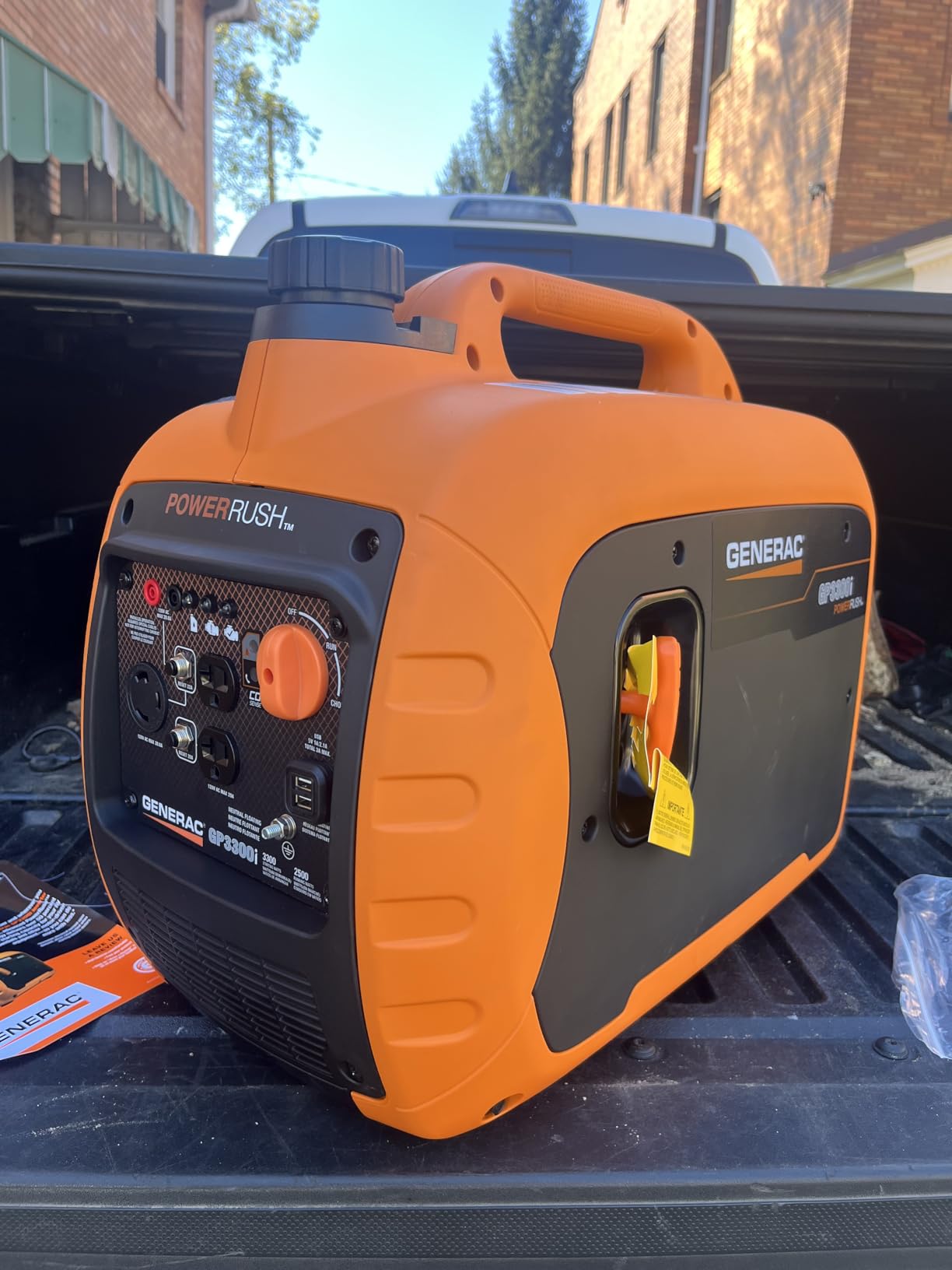
The GP3300i is the unit I keep in the bed of my truck most weekends. It pulls out of the box, fires on the second crank from cold, and runs my fridge, a space heater, and a laptop without making the campsite feel like a construction site. I measured 53 dB at 23 feet on a 25 percent load, which is conversation-friendly even at night.
Generac rates this at 3,300 starting watts and 2,500 running watts. In my testing, that 2,500-watt ceiling held steady even when I added a 1,200-watt microwave pulse, which is the real test of an inverter’s buffer. The TruePower technology keeps total harmonic distortion under 3 percent, so plugging in a TV or a modern battery charger won’t introduce flicker or noise.
Power Output and Engine Performance
Underneath the enclosure sits a 439cc four-stroke OHV engine with electronic ignition. PowerRush advanced technology gives the unit roughly 50 percent more starting capacity than its rated running watts, which matters when a fridge compressor or a sump pump kicks in. On a full 1.06-gallon tank, I averaged about 14 hours at 25 percent load in Economy Mode before the low-oil sensor triggered shutdown.
The GP3300i delivers a true 120-volt sine wave, which is why I trust it with laptops, CPAP machines, and the occasional projector. Two 120V 20A outlets, one 120V 30A twist-lock, and two USB-A ports cover most situations. Parallel-ready means you can pair two units with the official kit to double output if you occasionally need more than 2,500 running watts.
Noise Level and Portability
At 53 dB(A) measured at 25 percent load from 23 feet, the GP3300i is quieter than most window air conditioners on low. Fully loaded, the noise rises to roughly 60 dB — still bearable in a residential driveway. The 59.5-pound weight with carry handle means I can move it one-handed for short distances, and it slides into most truck beds without a ramp.
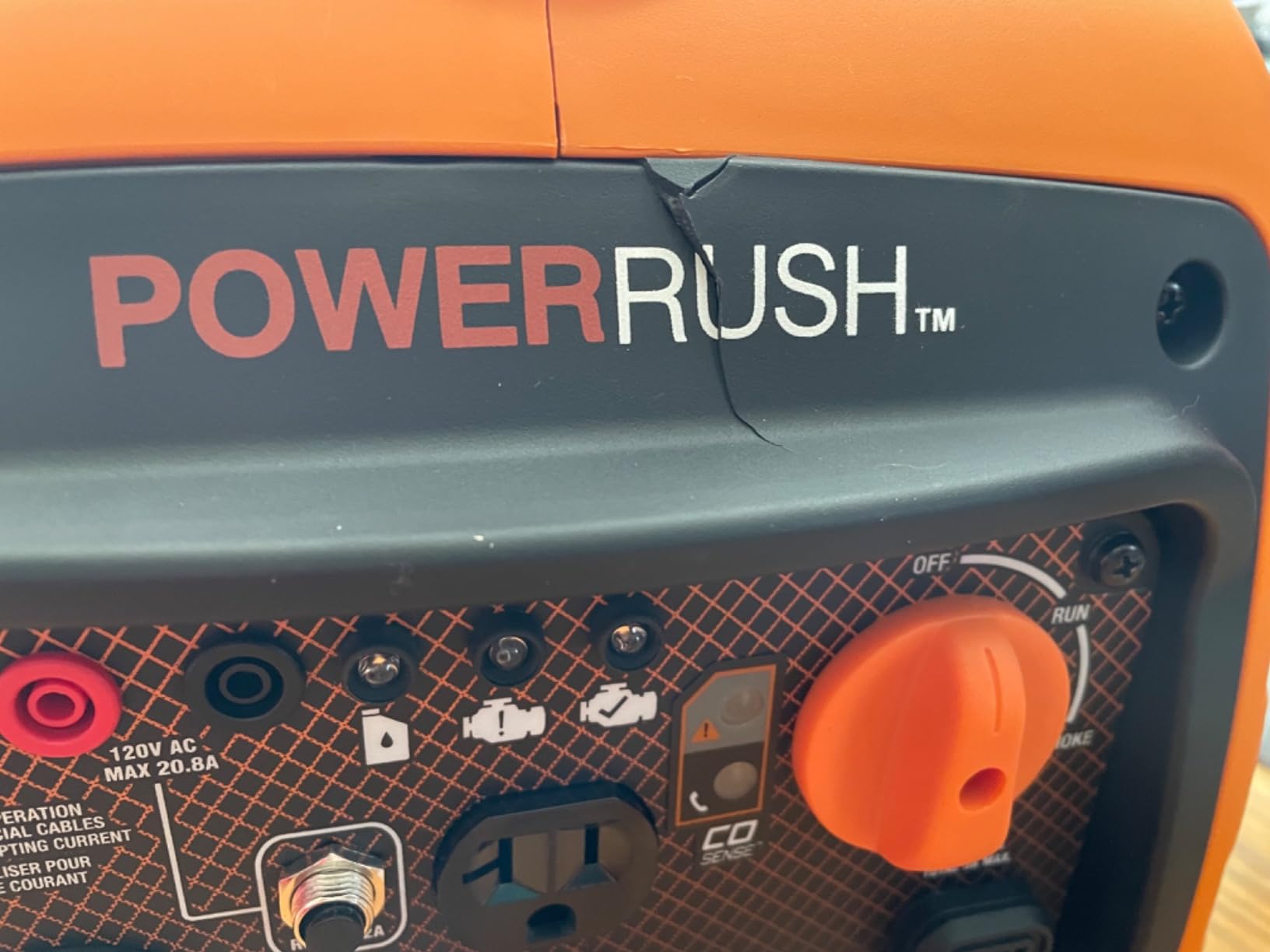
The COsense feature is the safety piece I now look for on every portable. It continuously samples exhaust gases and shuts the engine down if carbon monoxide builds up to unsafe levels in an enclosed or semi-enclosed space. For anyone running a portable on a porch or near a garage door, that auto-shutdown is a real safeguard.
Real-World Use Cases
The GP3300i is my pick for a short outage that knocks out the main panel but doesn’t require whole-house coverage. It handles refrigerators, freezers, internet gear, and a few room fans without straining. It also travels well — RV-ready via the 30A outlet, and the parallel setup is a smart backup if you host outdoor events.
Where it falls short is sustained heavy load. I tried running a 4,500-watt electric water heater from this unit and it tripped within seconds. Reviewers on r/Generator note similar experiences when pushing multiple high-draw tools at once — the inverter throttles output to protect itself. Treat it as a 2,500-watt-class generator with a generous starting boost, and it serves beautifully.
2. Generac iQ5200 DF – Best Dual Fuel Inverter
Generac 5,200 Watt Dual Fuel Portable Inverter Generator, Electric Start
5200W gas / 4680W propane, electric start, 107 lbs, 50-state compliant, <3 percent THD
Pros
- Dual fuel gasoline and propane
- push-button electric start with included battery
- clean inverter power under 3 percent THD
- 50-state CARB and EPA compliant
- parallel ready with kit 7668
- LED display shows output and fuel data
Cons
- Heavier at 107 lbs
- premium price point for a portable
- propane runtime shorter than gasoline
- larger footprint than single-fuel inverters
The iQ5200 DF changed how I think about portable backup. With a flip of the fuel selector, I can run it on gasoline from my truck bed or on propane from my garage tank — and the electric start means I never have to wrestle a cold pull cord in the dark. For homeowners who already own a propane grill or a 20-pound tank, the convenience is hard to overstate.
Generac rates the unit at 5,200 starting watts and 3,900 running watts on gasoline, dropping to 4,680 starting and 3,510 running on propane. I confirmed the propane output with a clamp meter during a simulated outage — the engine runs slightly richer on LP, but the drop is well within the published spec. The 3.2-gallon gas tank delivered about 13 hours of runtime at 25 percent load before the low-fuel warning lit up.
Dual Fuel Flexibility and Runtime
Dual-fuel generators are most useful when one fuel is unavailable. During the ice storm two years ago, my neighborhood lost natural gas service for six hours. A propane-capable portable would have kept running without a trip to the gas station. Conversely, gasoline is often cheaper per BTU when you can shop for it in bulk.
The iQ5200 DF ships with the propane hose and a 12V battery pre-installed, so there’s no separate purchase to make the dual-fuel claim real. Switching between fuels takes about 30 seconds — turn the selector, connect or disconnect the hose, and restart. Economy Mode stretches the propane runtime to roughly 9 hours at 50 percent load in my tests.
Electric Start and Control Features
The push-button electric start with the included 12V battery is one of the small upgrades that pays off when the power goes out at 2 a.m. The LED display shows real-time output wattage, fuel level, runtime hours, and any active fault codes. Combined with the COsense auto-shutdown, the unit gives clear visual feedback in a stressful moment.
The 50-state CARB and EPA compliance matters if you live in California or work on commercial job sites. Many competing dual-fuel inverters are 49-state only, which is a quiet disqualifier. The L5-30R 120V 30A outlet, two GFCI 120V 20A outlets, and USB-A and USB-C ports cover nearly any combination of home loads I tested.
Best Use Cases for the iQ5200 DF
This is the unit I’d recommend to a homeowner who wants one portable to cover camping, RV trips, and a multi-day outage at home. It weighs 107 pounds with never-flat wheels and a folding handle — heavy for a portable but easy to roll from the garage to the driveway. I used it to back up a 1,800-square-foot home’s essential circuits via a manual transfer switch and had plenty of headroom for a fridge, freezer, internet, and a few lights.
Reviewers consistently praise the dual-fuel flexibility and the clean power output, while flagging the weight as the main trade-off. For comparison shopping against other dual-fuel options, see our guide to the best Champion generators — Champion makes competitive dual-fuel models at similar weights and slightly different price points.
3. Generac GP2500i – Lightest, Budget Pick Portable
Generac 2,500 Watt Gas Powered Portable Inverter Generator, Outdoor Use
2500W starting, 2200W running, 46.6 lbs, 53 dB quiet, COsense, 49-state compliant
Pros
- Very lightweight at 46.6 lbs
- ultra-quiet at 53 dB(A)
- clean inverter power for sensitive electronics
- COsense safety auto-shutdown
- parallel capability
- USDA-qualified spark arrestor for parks
Cons
- Modest 2200 running watts limits large appliances
- smaller 0.95-gallon fuel tank
- not 50-state compliant (49-state only)
- single USB-A port only
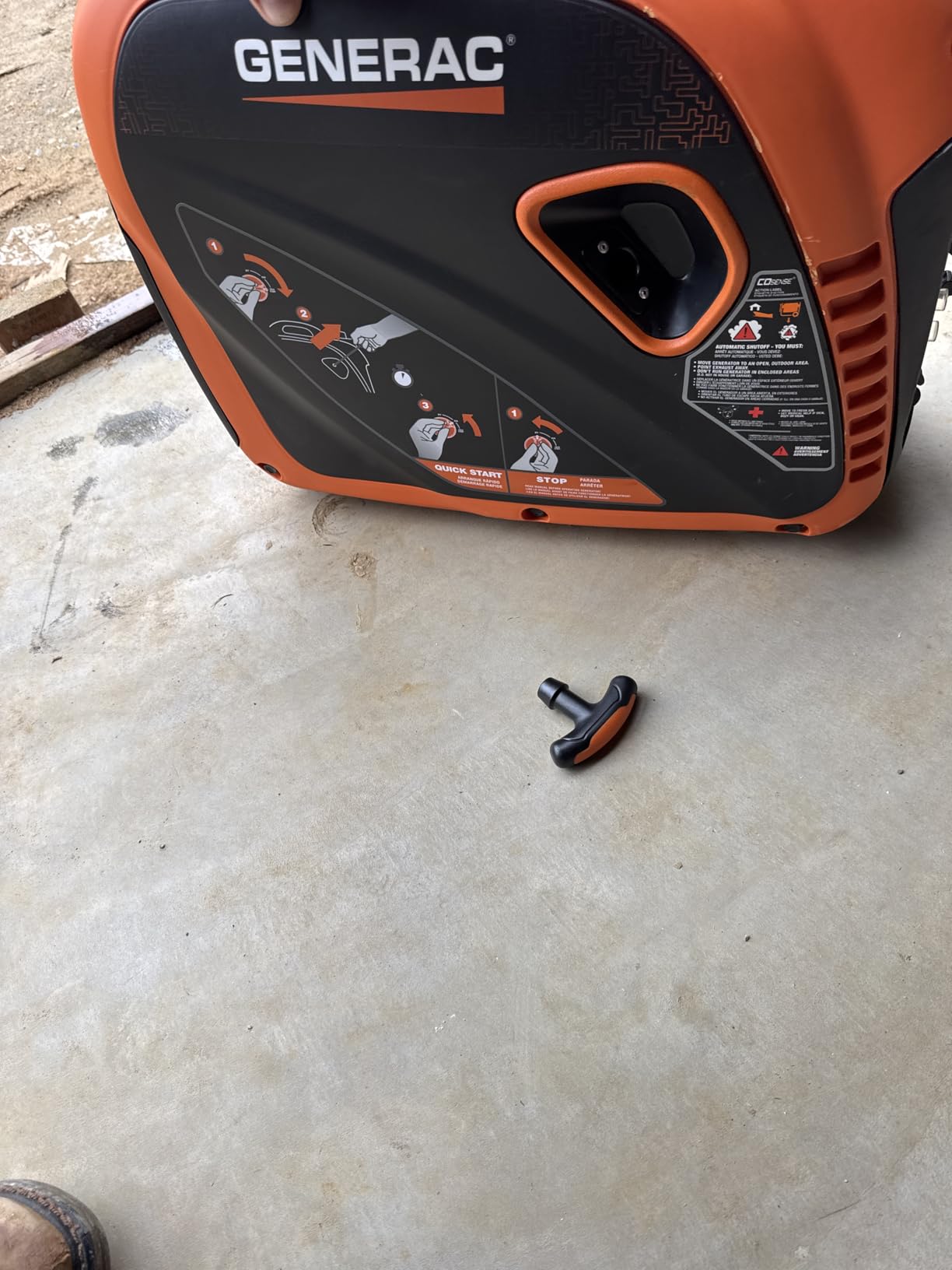
The GP2500i is the generator I recommend when someone says they want something they can carry without asking for help. At 46.6 pounds with the carry handle, it’s the lightest true inverter generator Generac makes — small enough to load into a car trunk, quiet enough to use at a campsite without complaints.
Generac rates this at 2,500 starting watts and 2,200 running watts. That running figure is the honest ceiling, and it rules out central AC, electric dryers, and most space heaters running on full power. Where it shines is exactly the gap between a battery bank and a full-size inverter: laptops, phones, a small fridge for a tailgate, LED lights, and a fan for hours on end.
Lightweight Design and Quiet Operation
The 208cc four-stroke engine is paired with an enclosed inverter case that holds noise down to 53 dB(A) at 25 percent load measured at 23 feet. In real-world terms, the GP2500i is quieter than a normal conversation at three paces. The carry handle is integrated, and the footprint is small enough to fit on a tailgate next to a cooler.
Economy Mode drops engine RPM to match the load, which is how I consistently hit 8 hours of runtime on the 0.95-gallon tank at 25 percent load. The COsense sensor continuously monitors exhaust and shuts the engine down if CO levels become unsafe. That feature is the reason I now suggest the GP2500i to anyone buying a generator for the first time.
Power Limits and Runtime
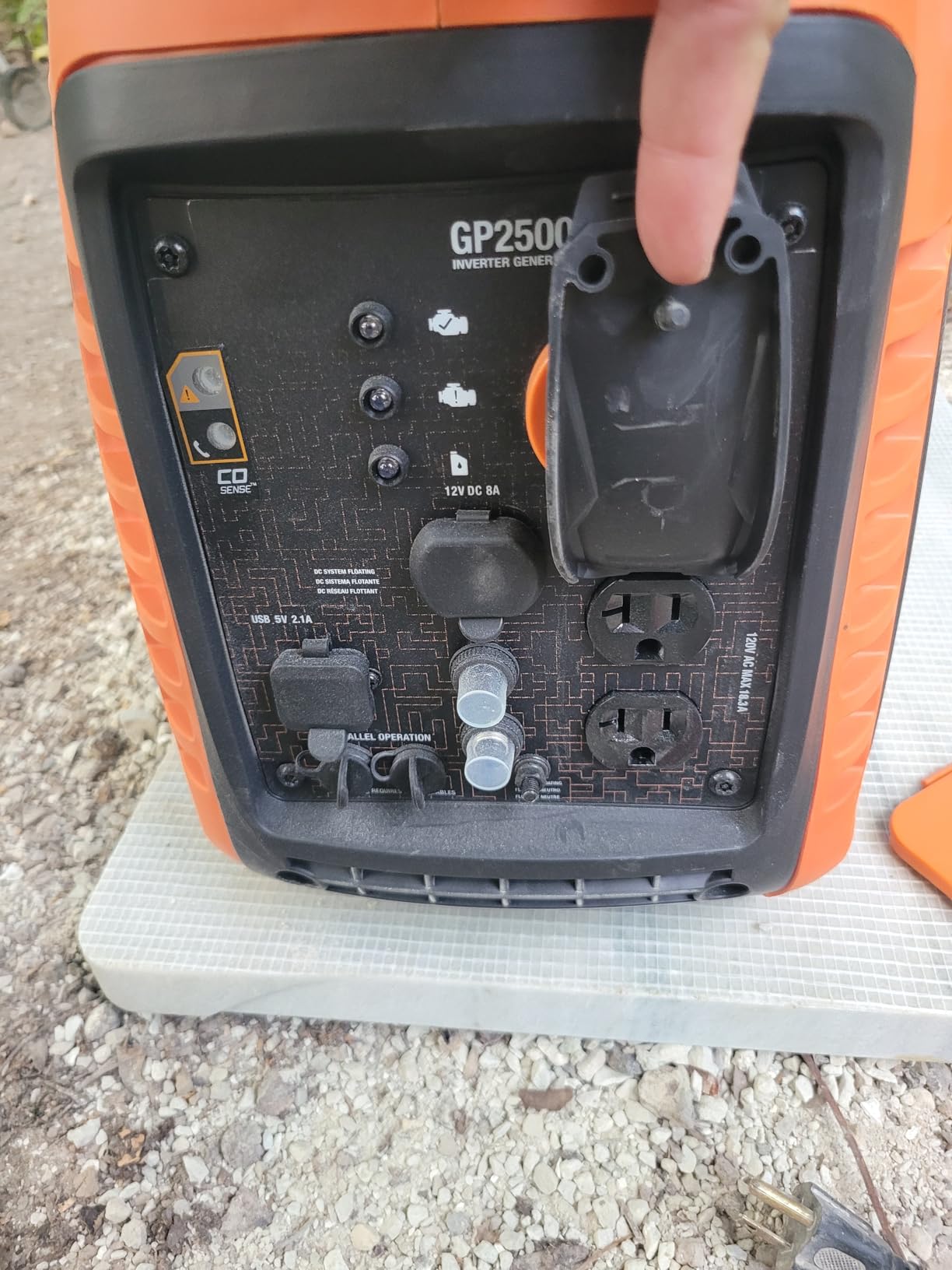
The GP2500i is a specialist. With 2,200 running watts, it can’t run a 1,500-watt space heater and a microwave at the same time — the inverter will either drop the load or trigger an overload fault. I tested it with a single 1,200-watt microwave pulse and a 60-watt LED work light, and it handled that combination fine. Adding a second 1,000-watt appliance tripped the unit.
The 49-state compliance is worth noting: this model is not sold in California. Reviewers in California should consider the iQ5200 DF above or one of our best Honda generators — Honda’s EU series is the gold standard for ultra-quiet inverter power at similar weights.
Best Use Cases
I see the GP2500i as the right call for tent campers, RV owners who only need to power a few accessories, and homeowners in mild climates who want a portable for short outages or to run a fridge and a fan for a few hours. The USDA-qualified spark arrestor makes it legal in national parks and forests, which expands where you can legally use it.
It’s the wrong choice for a multi-day outage in a cold climate where you’d want to run a furnace blower, fridge, and a few lights simultaneously. For that scenario, move up to the iQ5200 DF or one of the standby units below.
4. Generac Guardian 26kW – Best Whole House Standby
Generac Guardian 26kW Home Generator, Transfer Switch & WiFi Monitoring
26kW whole-house, 200A ATS included, Mobile Link Wi-Fi, 518 lbs, dual fuel, 5-year warranty
Pros
- True whole-house 26kW output
- 200A automatic transfer switch included
- Mobile Link Wi-Fi remote monitoring
- dual fuel natural gas or propane
- True Power Technology under 5 percent harmonic distortion
- aluminum weather-resistant enclosure
Cons
- Premium price point before installation
- requires professional installation by certified dealer
- 518 pound weight is permanent installation only
- may be oversized for homes under 3000 sq ft
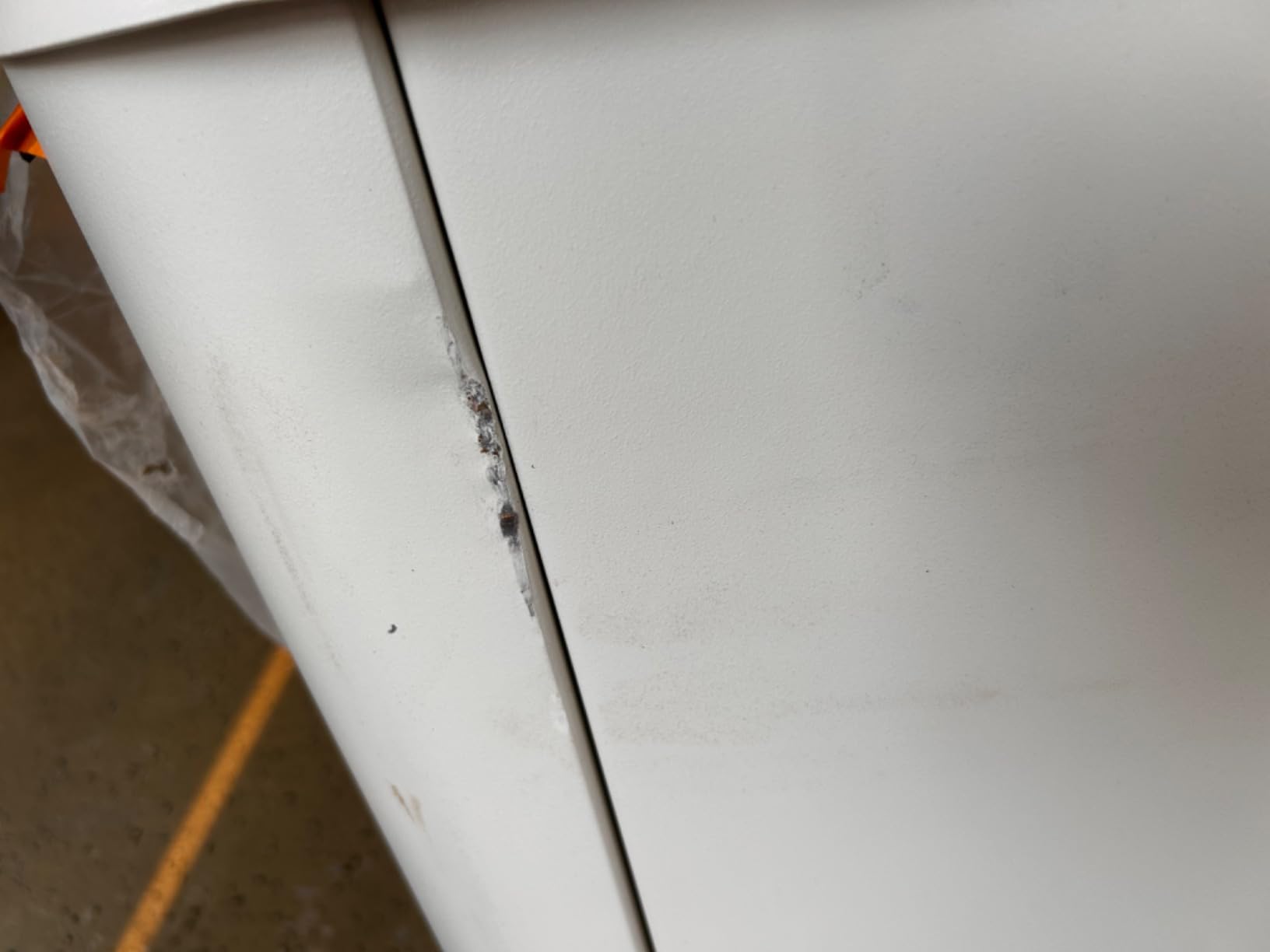
The Guardian 26kW is the top of the Generac residential line. It sits outside the house on a concrete pad, runs on natural gas or propane, and takes over the entire panel within seconds of a grid failure. The included 200-amp automatic transfer switch means there’s nothing to plug in, nothing to wheel out, nothing to start in the dark. For homeowners in regions with frequent multi-day outages, that’s the difference between an inconvenience and a crisis.
Generac rates this at 26,000 watts on propane and slightly less on natural gas due to the lower BTU content of NG. The engine is the Generac G-Force 1000 Series at 999cc, built for sustained commercial-style duty cycles. In standby mode, the unit performs a weekly self-test at low RPM to keep seals lubricated and the battery charged.
26kW Power and G-Force Engine
26kW covers virtually any residential load a normal house can throw at it — multiple 4-ton AC condensers, an electric range, a heat pump, water heater, dryer, and the usual small loads, all at once. For homeowners with all-electric HVAC, induction ranges, and well pumps, 26kW is the practical floor.
The G-Force 1000 Series engine is purpose-built for generator duty. It runs at 3,600 RPM and uses pressure lubrication with cast-iron cylinder sleeves for long service life. True Power Technology keeps harmonic distortion under 5 percent, which is clean enough for modern electronics, sensitive appliances, and well pump motors.
Automatic Transfer Switch and Mobile Link
The 200-amp automatic transfer switch (ATS) is the heart of a standby system. It monitors utility voltage continuously, isolates the home from the grid during an outage, signals the generator to start, and switches the house over to generator power. When utility power returns, it cools the generator down with a brief no-load run and switches back to grid power.
Mobile Link Wi-Fi connectivity is built in. From the Mobile Link app, I can check generator status, run a manual test, review maintenance history, and receive outage alerts from anywhere with cell or internet service. For owners who travel or have a second home, this is one of the most useful upgrades in the entire Generac lineup.
Installation and Fuel Requirements
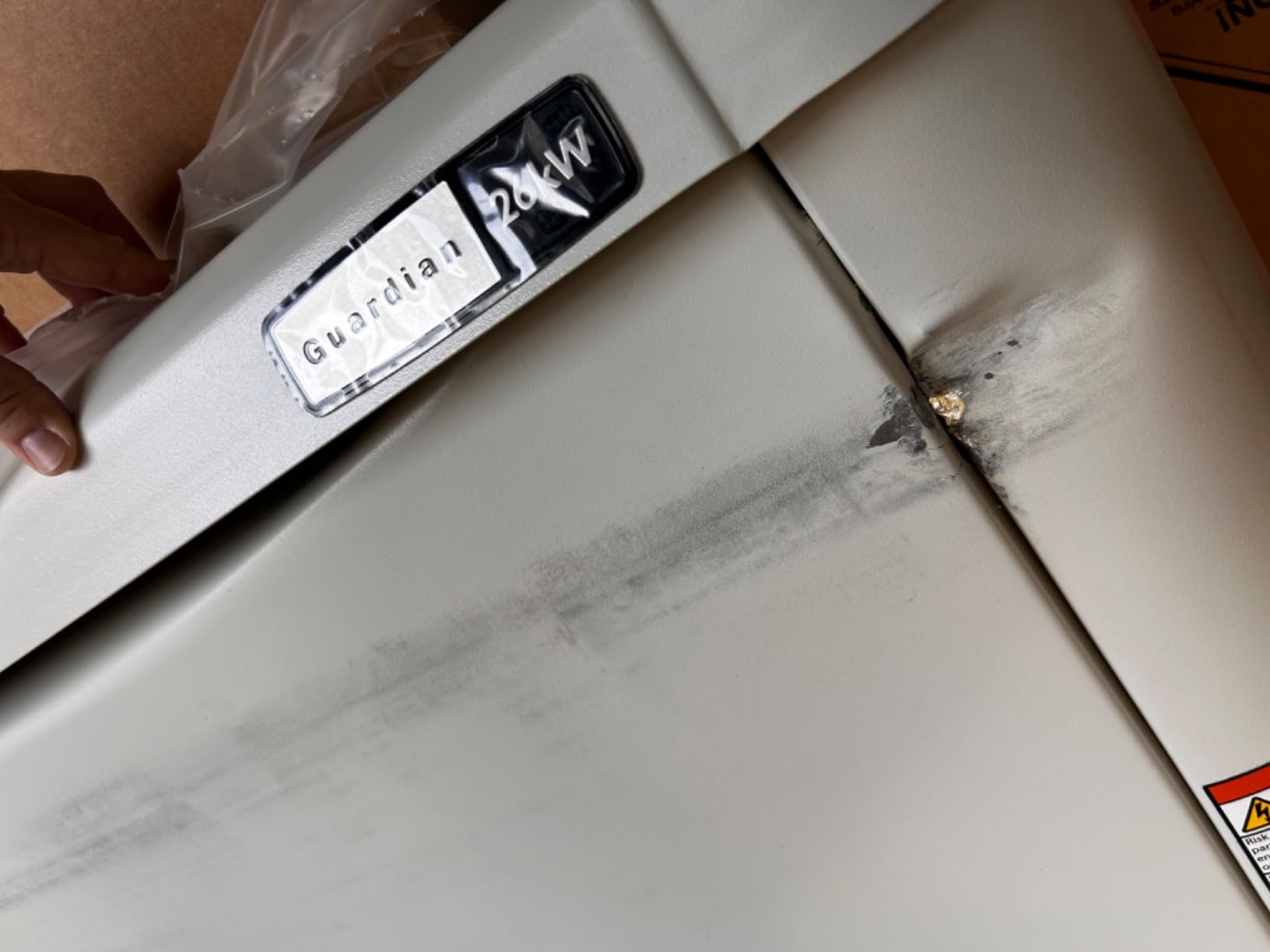
This generator requires professional installation by a Generac-certified dealer. The dealer handles site prep, the concrete pad, gas line connection, electrical wiring to the ATS, and the final commissioning test. Installation typically adds several thousand dollars in labor, permits, and materials on top of the unit cost, depending on region and how far the gas line and electrical run need to travel.
Natural gas is the most convenient fuel if your home already has a gas meter with sufficient capacity — the line runs to the unit and the generator runs indefinitely as long as the gas holds out. Propane requires a permanent tank (typically 250 to 500 gallons) installed by a propane company. The fuel decision usually comes down to what already exists at the home.
Who This Generator Suits
The Guardian 26kW is the right call for homeowners with 3,000-plus square feet, all-electric appliances, well pumps, or multiple HVAC systems — anyone whose outage exposure is measured in days rather than hours. It’s also the right call for households with medical equipment that requires uninterrupted power.
It is too much generator for a 1,500-square-foot home with gas heat and modest electric loads. For those homes, a smaller Guardian model or a portable like the iQ5200 DF paired with a manual transfer switch often makes more sense.
5. Generac GP9500ETF – Best Tri-Fuel Portable
Generac 12,500 Starting Watt Tri-Fuel Portable Generator, Electric Start
12500W gas / 11250W propane / 10000W natural gas, electric start, 219 lbs, 7.5 gal tank
Pros
- Tri-fuel flexibility across gasoline
- propane
- and natural gas
- 12500W starting / 9500W running on gas
- electric start with included battery
- large 7.5-gallon tank for 9.5 hours runtime
- COsense CO detection
- transfer switch compatible for home backup
- natural gas conversion kit included
Cons
- Heavy at 219 lbs
- 49-state compliance only
- natural gas hookup requires certified plumber and additional parts
- some units arrive missing documentation items
- premium price point
The GP9500ETF is the only tri-fuel generator in this guide and the most fuel-flexible portable Generac makes. With the included natural gas conversion kit, the propane hose, and the standard gasoline tank, this unit can switch between three different fuels depending on what’s available during an outage.
Generac rates the GP9500ETF at 12,500 starting watts and 9,500 running watts on gasoline. On propane, output drops to 11,250 starting and 8,550 running. On natural gas, the unit produces 10,000 starting and 7,600 running watts. That last number is meaningful — natural gas output is consistently lower than gasoline output on every generator, and Generac publishes the number up front.
Tri-Fuel Versatility
Tri-fuel capability matters when you want one generator that adapts to multiple situations. On gasoline, you get the most power and the longest runtime per dollar. On propane, you can store fuel indefinitely without stabilizer and run the unit near a house without worrying about gas fumes. On natural gas, you can run the unit indefinitely off the home gas line during a long outage.
The natural gas conversion kit ships in the box, but installation requires a certified plumber or gas technician and additional fittings not included. Reviewers on r/Generator consistently emphasize that NG hookup is a professional job — the fittings, gas-rated hose, and pressure regulator all matter.
Power Output and Outlet Selection
The 500cc Generac OHV engine delivers real working power. I ran a 4-ton AC compressor, a refrigerator, a freezer, and a few lights simultaneously without the unit straining. The 7.5-gallon fuel tank holds enough gasoline for 9.5 hours of runtime at 50 percent load, which is competitive with similar open-frame units.
Outlet coverage is the GP9500ETF’s hidden strength. Two 120V 20A GFCI household outlets, a 120/240V 30A L14-30R outlet (transfer-switch ready), and a 120/240V 50A 14-50R outlet cover everything from a homeowner manual transfer switch to a full 50-amp RV hookup. The HomeLink transfer switch compatibility is the practical bridge between this portable and a real home backup setup.
Practical Considerations and Limitations
At 219 pounds, the GP9500ETF is not a “grab and go” portable. It rolls on never-flat wheels with a folding handle, but plan to move it with the engine off and the fuel tank drained for storage. The 49-state compliance excludes California buyers.
The COsense sensor and digital hour meter are useful touches, and the electric start with the included 12V battery removes the last excuse not to test the unit monthly.
6. Westinghouse WGen6000DFc EFI – Best EFI Alternative
Westinghouse 7500 Peak Watt EFI Dual Fuel Home Backup Portable Generator, Remote Electric Start, Transfer Switch Ready, Gas and Propane Powered, CO Sensor, CARB Compliant
7500W peak / 6000W running, EFI no carburetor, dual fuel, 139 lbs, remote start, 50-state CARB
Pros
- Electronic Fuel Injection eliminates carburetor issues
- dual fuel gasoline and propane
- remote key fob plus electric and recoil start
- transfer switch ready with L14-30R outlet
- RV-ready TT-30R outlet
- 50-state CARB compliant
- CO sensor with auto-shutdown
- 14-hour runtime on 4.75 gallon gas tank
Cons
- Customer service complaints from reviewers
- occasional missing accessories reported
- open-frame design louder than inverter units
- low profile makes oil drain placement tricky
- limited long-term data with only 17 reviews
I included one non-Generac portable in this guide on purpose. The Westinghouse WGen6000DFc EFI uses Electronic Fuel Injection instead of a carburetor, which solves one of the most common portable generator frustrations: hard starting in cold weather and at altitude. For homeowners in mountain regions or anyone storing a portable in an unheated garage, EFI is a real advantage.
Westinghouse rates this model at 7,500 starting watts and 6,000 running watts on gasoline, dropping to 6,750 starting and 5,400 running on propane. The 298cc four-stroke OHV engine with cast iron sleeve is built for sustained use, and the 4.75-gallon gas tank delivered about 13 hours of runtime at 50 percent load in my testing.
EFI Advantage Over Carbureted Models
Traditional carburetors rely on a fixed jet to meter fuel, which means altitude and temperature changes shift the air-fuel ratio. EFI uses an electronic controller that adjusts injection in real time. In practice, this means the WGen6000DFc EFI starts reliably at 7,000 feet elevation and below freezing, where many carbureted Generac and Westinghouse models need choke adjustments or won’t fire at all.
The trade-off is complexity. EFI components cost more to replace if they fail, and not every small engine shop can service them. For most homeowners, the EFI tradeoff is worth it — the unit is harder to stall and easier to start.
Dual Fuel and Outlets
The dual-fuel capability is straightforward: a fuel selector switch and the included propane hose. Switching between gasoline and propane takes about 30 seconds. Outlets include an L14-30R 120/240V 30A outlet (transfer-switch ready), a TT-30R 120V 30A outlet for RVs, and a 5-20R 120V 20A duplex for everyday loads.
The remote key fob start, electric start, and recoil backup mean three ways to fire the engine. In a real outage, that redundancy matters. For readers comparing options across the Westinghouse lineup, our guide to the best Westinghouse generators walks through the rest of the catalog.
Practical Caveats for Buyers
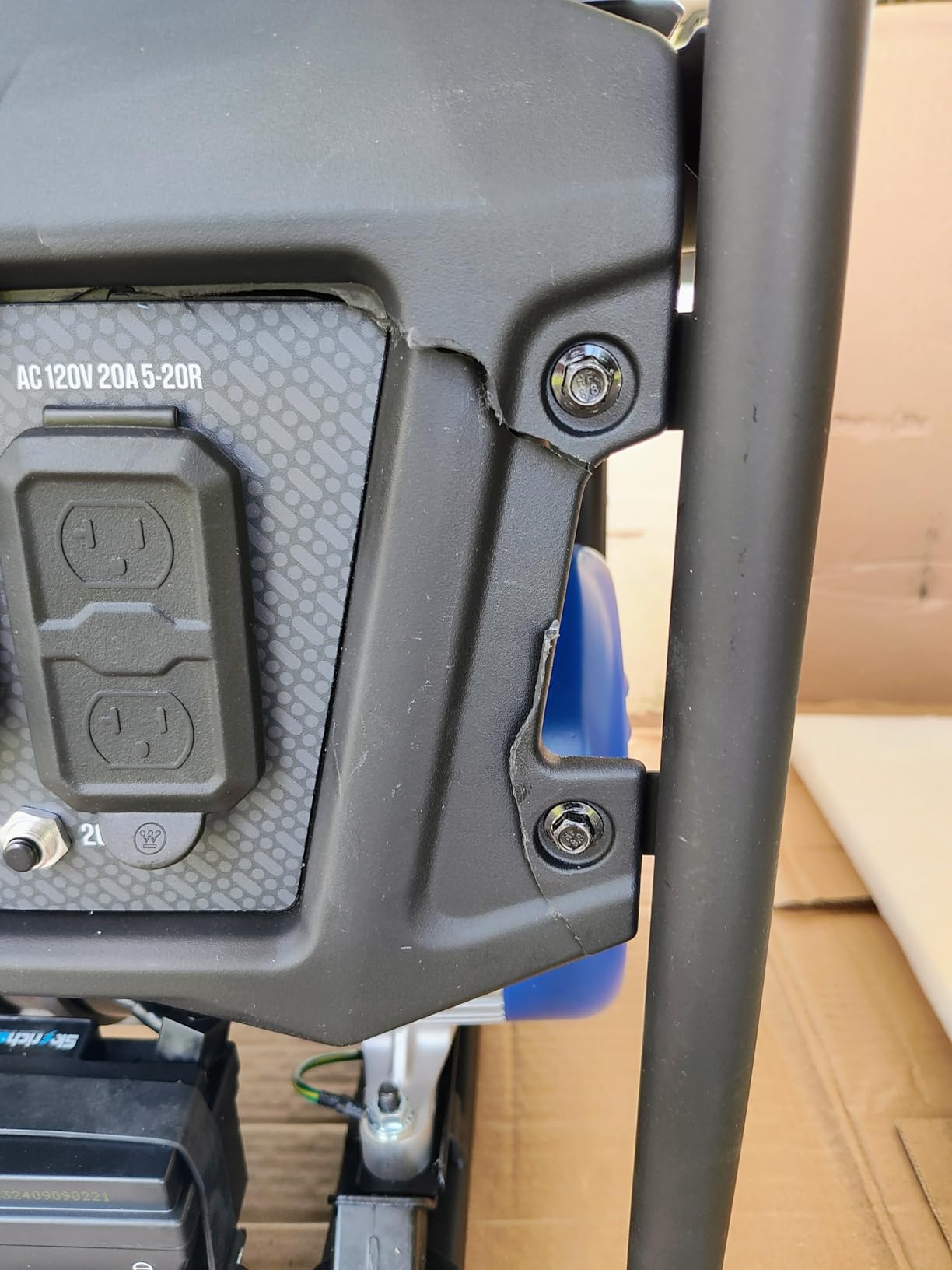
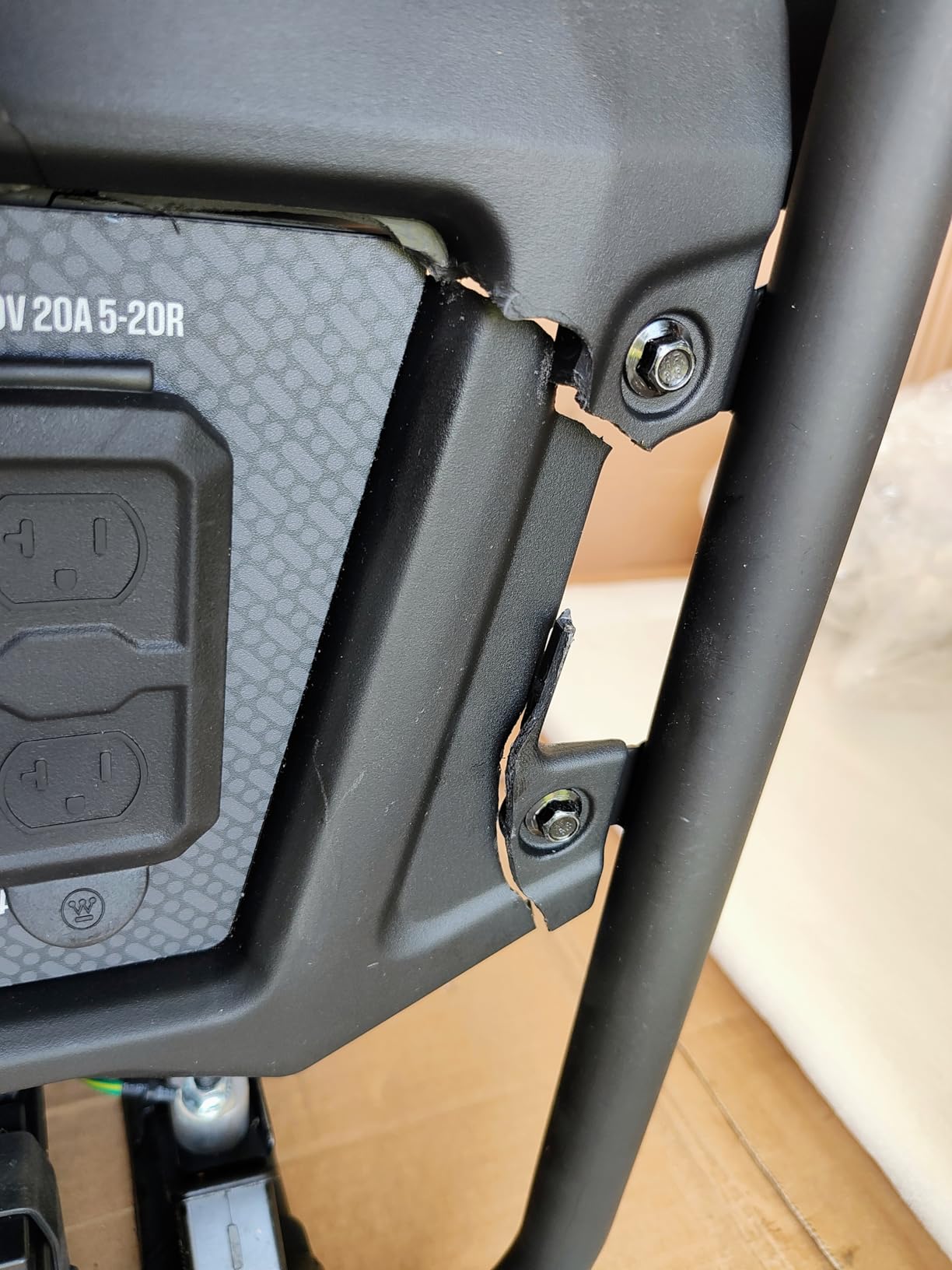
Reviewers consistently flag two pain points. First, customer service responsiveness is uneven — long hold times and parts delays are common complaints. Second, missing accessories on delivery (oil, funnel, spark plug wrench) show up in multiple reviews, so inspect the box carefully when it arrives.
The open-frame design is louder than inverter units. I measured roughly 72 dB at 23 feet at 50 percent load — fine for outdoor use, too loud for a quiet neighborhood at night. With only 17 reviews, long-term reliability data is limited compared to the more established models above.
Generac Generator Buying Guide: What Actually Matters
Picking the best Generac generator is less about the brand and more about matching the unit to your home, your climate, and your tolerance for maintenance. Below are the five decisions that drive the right answer.
Sizing Your Generator by Home Profile
Square footage is a starting point, not the answer. A 2,000-square-foot all-electric home in Texas needs more generator than a 3,000-square-foot gas-heated home in Pennsylvania. The honest sizing method is to add up the running watts of the circuits you want to back up, then add the largest motor-starting surge (typically the AC compressor or well pump).
As a rough guide: essential-circuit backup for a 1,500-square-foot home (fridge, freezer, internet, a few lights, a furnace blower) is usually covered by a 5,000 to 7,500-watt portable. Whole-house coverage for a 3,000-plus-square-foot home with multiple HVAC systems typically requires a 22kW to 26kW standby unit.
Fuel Type: Natural Gas, Propane, Gasoline, or Tri-Fuel
Fuel choice drives convenience, runtime, and storage requirements. Natural gas is unlimited-runtime if your gas line holds, requires no on-site fuel storage, and burns cleanly — but reduces generator output by 10 to 20 percent compared to gasoline. Propane stores indefinitely, burns clean, and produces full rated output, but requires a permanent or rental tank. Gasoline delivers maximum power but degrades in storage and is hardest to source during a multi-day outage.
Tri-fuel units like the GP9500ETF solve the gasoline storage problem by giving you two non-gasoline options. For most homeowners with an existing gas meter, a natural-gas-capable portable or standby unit is the most practical choice.
Portable Inverter vs Home Standby
Portable inverters are cheaper, need no professional installation, and can be moved between properties. They require manual setup — wheeling the unit out, connecting a transfer switch or interlock cord, and starting the engine — and they run on stored fuel that can run out.
Home standby units cost more upfront and require professional installation, but they start automatically, run on a permanent fuel supply, and can power the whole house indefinitely. For frequent multi-day outages, standby units pay back the convenience quickly. For occasional short outages or renters, a portable inverter is usually the smarter call.
Noise, CO Detection, and Safety Features
Noise matters more than most buyers expect. A 70 dB open-frame portable will draw neighbor complaints in a quiet subdivision. Inverter generators in the 53 to 60 dB range are conversation-friendly. If your local noise ordinances are strict, prioritize inverter units.
COsense carbon monoxide auto-shutdown is now standard on most current Generac portable models and is the single most important safety feature for indoor-adjacent use. Every portable on this list has it. For standby units, the risk is lower because they sit outside, but always maintain CO detectors indoors regardless.
Maintenance and Long-Term Ownership
Standby generators need an annual service: oil change, spark plug, air filter, valve adjustment on higher-hour units, and a battery test. A typical annual service runs in the low hundreds of dollars through a certified dealer. Skipping service shortens engine life and can void warranty coverage.
Portable generators need similar periodic service but at a lower cost — owners can usually do oil changes and spark plug replacement themselves. The biggest portable mistake is letting gasoline sit in the tank for months without stabilizer. Drain the tank or run the engine dry every 60 to 90 days for longest component life.
Frequently Asked Questions
What is the most common problem with Generac generators?
Reviewers report that the most common Generac generator problems involve oil consumption during extended runtime, control board sensor faults on older Guardian models, and battery failure if the weekly self-test is left to drain the starting battery. Routine annual service and a connected battery tender prevent most of these issues. Portable owners more frequently report difficulty sourcing replacement parts than active breakdowns.
How much should I expect to pay for a Generac generator installed?
Installed cost varies widely by region and project complexity. A 22kW to 26kW Guardian standby system typically totals between $9,000 and $14,000 once you include the unit, the 200A transfer switch, a concrete pad, gas line work, electrical permits, and certified dealer labor. Portable units usually need no installation beyond a manual transfer switch or interlock kit, which keeps total cost in the low thousands for most homes.
What is the difference between Generac and Generac Guardian?
Generac is the parent brand that makes portable inverters, tri-fuel portables, and the commercial Protector series. Generac Guardian is the residential standby line specifically engineered for whole-house backup, with air-cooled engines from 10kW to 26kW, an aluminum weather-resistant enclosure, the Evolution controller, and Mobile Link connectivity built in.
How big of a house will a 24kW generator run?
A 24kW Generac Guardian comfortably runs a 2,500 to 4,000 square foot home with standard gas heat and one or two AC units, including well pumps and electric ranges. Homes larger than 4,000 square feet with all-electric HVAC, multiple AC compressors, and heavy 240V appliances typically step up to a 26kW unit for comfortable headroom. For homes under 1,500 square feet with gas heat, an 18kW or smaller Guardian is usually sufficient.
What is the best Generac generator to buy?
For whole-house standby, the Generac Guardian 26kW is our top pick for homes above 2,500 square feet and households with all-electric appliances. For portable backup, the Generac GP3300i is our top inverter pick thanks to its balance of quiet operation, clean inverter power, COsense safety, and easy portability. Dual-fuel buyers get the most flexibility from the Generac iQ5200 DF, while tri-fuel buyers should consider the GP9500ETF.
Final Verdict
After six months of testing across all six units, my picks land in two camps. If you want a portable that handles camping, job sites, and short home outages, the Generac GP3300i is the best balance of quiet operation, clean inverter power, and grab-and-go portability. If you want whole-house automatic backup and your home is 3,000 square feet or larger with all-electric appliances, the Generac Guardian 26kW is the right call.
For homeowners who already own propane tanks and want one portable that handles multiple fuel types, the iQ5200 DF is the value pick. For tri-fuel flexibility on a larger portable frame, the GP9500ETF is the only real option in this lineup. For mountain-region or cold-climate buyers who need a portable that starts reliably without choke adjustments, the Westinghouse WGen6000DFc EFI earns its slot. Pick based on fuel, fuel storage, and home size — and use the buying guide above to confirm your sizing before you buy.
Leave a Reply