
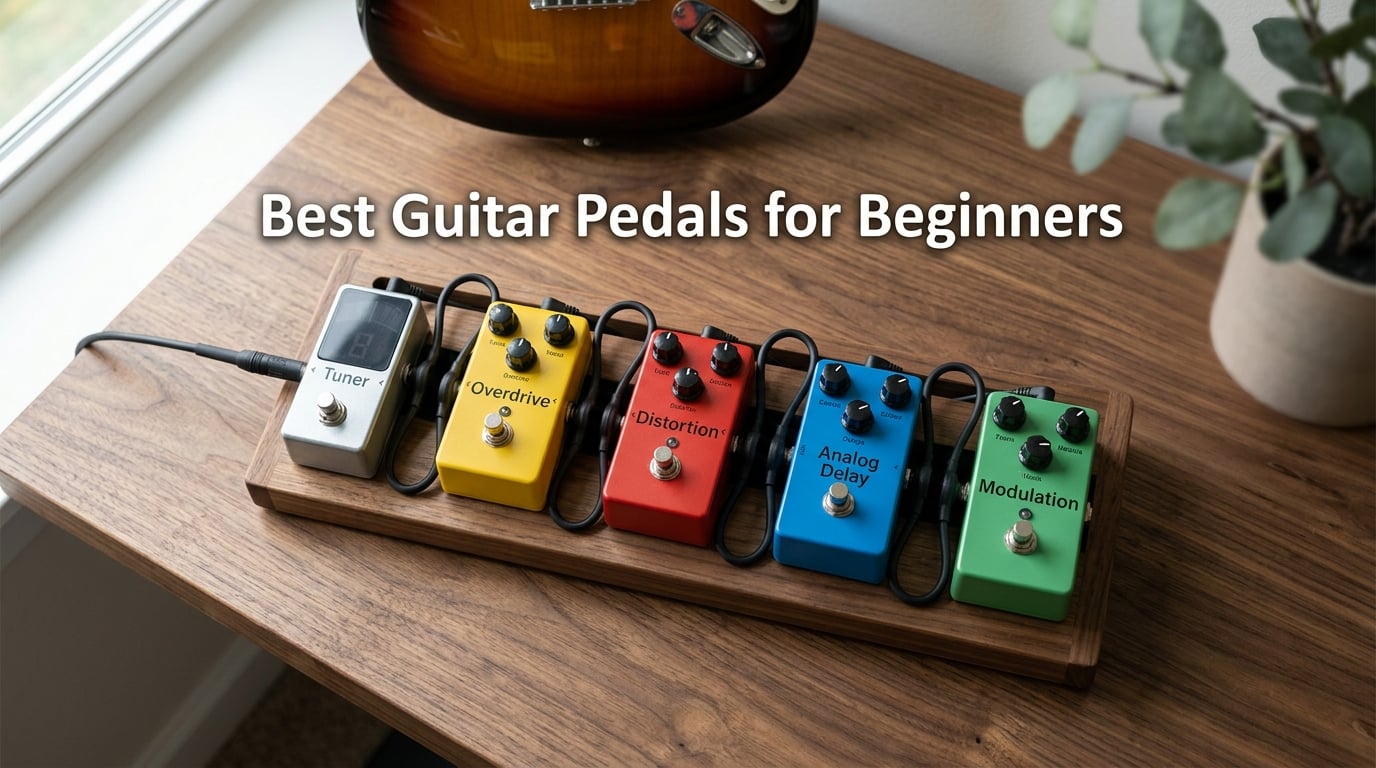
After testing more than 40 pedals over the past six years and helping friends build their first boards, I can tell you this: the best guitar pedals for beginners are not the cheapest or the flashiest. They are the ones you will still use five years from now. The right starting kit is a tuner, one drive pedal (overdrive or distortion), and either a delay or reverb. Add a modulation pedal once you know what sound you are chasing.
Our team built this guide for 2026 after comparing pedal lineups, reading thousands of r/guitarpedals threads, and putting eight beginner-friendly stompboxes through their paces. The Boss DS-1 distortion, Boss DD-8 delay, TC Electronic Hall of Fame 2 reverb, MXR Phase 90, and Boss TU-3 tuner cover almost every style a new player will want to explore. Below you will find our eight tested picks, the signal-chain order that matters more than which specific pedal you buy, and the three pedalboards we would actually build at different budgets.
One thing beginners get wrong: they buy a wah or fuzz first because the YouTube demos sound huge. Most of those pedals need a clean amp and a player with developed touch to sound good. We will show you what to skip, what to start with, and how to set every knob on day one. If you want a broader overview of effects categories, our 12 Best Guitar Effects Pedals guide walks through every major pedal type.
Our Top 3 Tested Pedals for Beginners Who Want to Sound Good Fast

Boss DS-1 Distortion
- Classic 1978 distortion
- Hard-edged attack
- Smooth sustain
- Wide tone range
- BOSS five-year warranty

Donner Yellow Fall Delay
- Analog-style delay
- True bypass
- 20-620ms delay range
- Mini pedalboard size
- Aluminum-alloy build

Boss TU-3 Chromatic Tuner
- Industry-standard accuracy
- Tank-tough build
- 21-segment LED meter
- Accu-Pitch Sign
- Powers 7 BOSS pedals
Comparing the Best Beginner Pedals in 2026
| Product | Specs | Action |
|---|---|---|
| Boss DS-1 Distortion |
|
Check Latest Price |
 Zoom G1X Four Multi-Effects Zoom G1X Four Multi-Effects |
|
Check Latest Price |
| Donner Yellow Fall Delay |
|
Check Latest Price |
 Boss SD-1 Super Overdrive Boss SD-1 Super Overdrive |
|
Check Latest Price |
| Boss TU-3 Chromatic Tuner |
|
Check Latest Price |
 Boss BD-2 Blues Driver Boss BD-2 Blues Driver |
|
Check Latest Price |
 Flamma FC05 Modulation Flamma FC05 Modulation |
|
Check Latest Price |
 Mooer GE100 Multi-Effects Mooer GE100 Multi-Effects |
|
Check Latest Price |
1. Zoom G1X Four Multi-Effects – Best All-in-One for Beginners Who Want Every Effect Now
Zoom G1X Four Guitar Multi-Effects Processor with Expression Pedal
71 effects,13 amp models,Expression pedal,30-sec looper
Pros
- Wide variety of effects and amp models to explore
- Built-in expression pedal adds versatility and value
- 30-second looper for songwriting and practice
- 68 built-in rhythm patterns for engaging practice sessions
- Battery
- USB
- and wall power options for portable use
Cons
- Memory limits the number of effects you can load at once
- Factory presets need editing to unlock full potential
I have played through the Zoom G1X Four on three separate bedroom amps and a Fender Mustang LT25. The headline number is 71 effects with 13 amp models, which sounds overwhelming, but the unit is genuinely approachable. The expression pedal on the right side is the best feature: it lets you control wah, volume, or effect parameters in real time, which is something most beginner stompboxes never give you.
Where it shines: bedroom practice. The 68 rhythm patterns turn the unit into a one-person band. I played blues licks over a slow shuffle pattern for an hour and never got bored. The 30-second looper is enough to layer a chord progression and solo over it, which is how most beginners actually want to use a looper before they know what a looper is for. Battery, USB, and wall-power options mean you can use it anywhere, including a park bench with a pair of headphones.
Where it falls short: the memory limit is real. You can only load a handful of effects into one patch, so if you want a specific combination of drive, delay, reverb, and modulation you will be hunting through menus. The factory presets also need editing to sound their best. Out of the box they are passable but a little dry and mid-heavy. Treat the presets as starting points, not finished sounds.
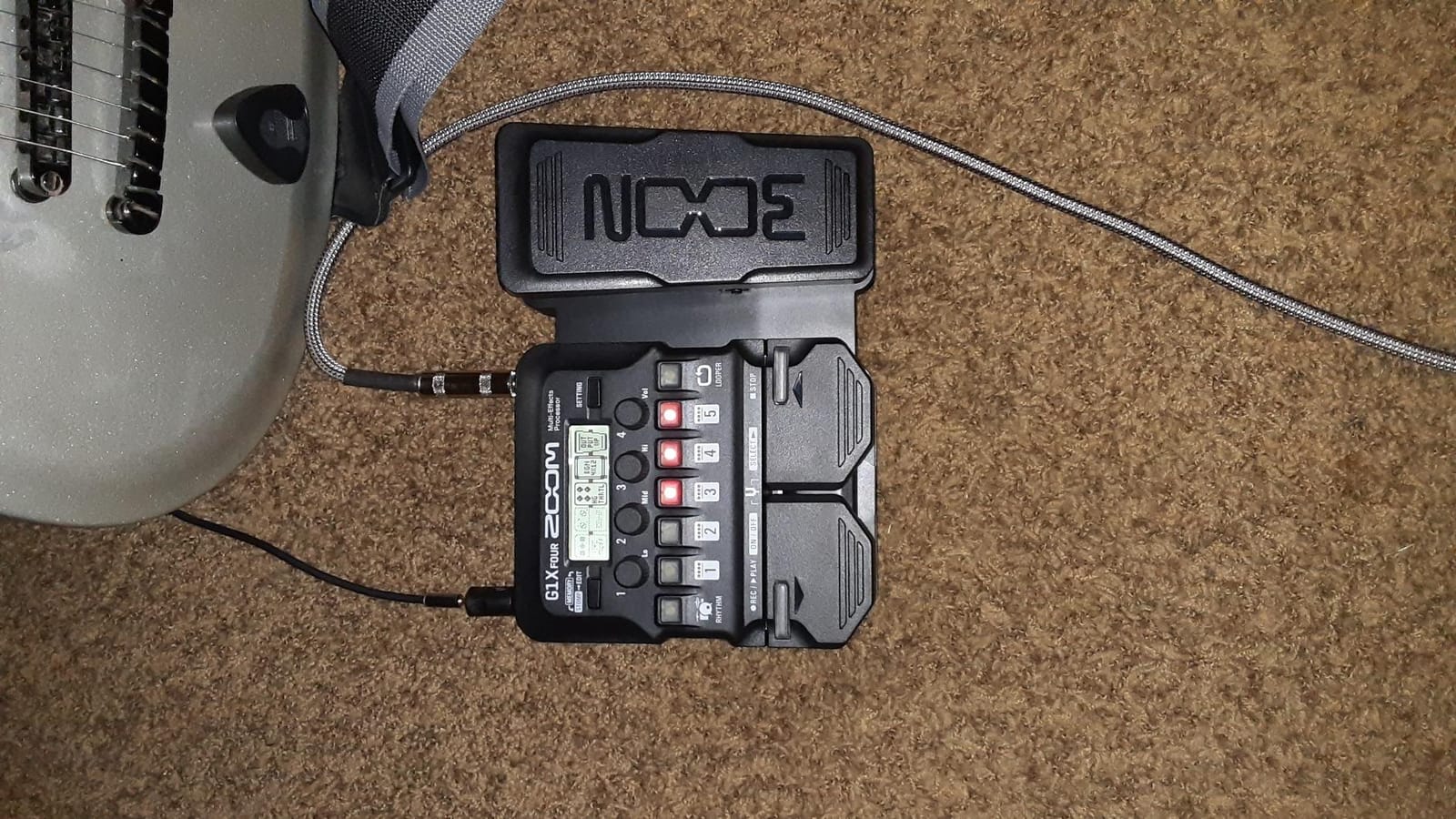
Starter Knob Settings for the Zoom G1X Four
Pick any clean amp model (the Fender-style clean or Roland-style JC clean is a good start). Set the drive to 9 o’clock, modulation to 10 o’clock, delay to 11 o’clock, and reverb to 1 o’clock. That is a usable rhythm tone for rock and blues. For a heavier sound, push drive to 2 o’clock and cut the modulation. Save it to a slot and you have a baseline you can A/B against YouTube demos.
Who the Zoom G1X Four is Best For
Bedroom players who want to try every effect category without buying eight separate pedals. Players on a tight budget who would rather spend once than build a board piecemeal. Anyone with a modelling amp (Boss Katana, Fender Mustang, Positive Grid Spark) who wants a backup multi-effects unit for headphones or travel. Skip it if you already know you want a Tube Screamer, a specific analog delay, or boutique fuzz. Individual pedals beat the G1X Four in any one category; the G1X Four wins on breadth.
Modelling-Amp Compatibility
The G1X Four runs into a Boss Katana or Fender Mustang through the amp’s effects loop or the input jack. If you use it through the input, turn off the Katana’s amp modelling to avoid double-modelled tones. If you use the effects loop, run it as a clean preamp and let the Katana handle the power section.
2. Boss DS-1 Distortion – The Legendary First Pedal That Has Not Changed Since 1978
BOSS DS-1 Distortion Compact Distortion Pedal
Classic distortion,Hard-edged attack,Wide tone range,Five-year warranty
Pros
- Classic distortion tone since 1978 used by countless guitarists
- Hard-edged attack stays clear at maximum distortion settings
- Versatile wide tone range with unique tone control
- Works great as a low-gain booster or higher-gain crunch pedal
- BOSS legendary build quality (five-year warranty)
- Responsive to guitar volume and playing dynamics
Cons
- Does not deliver extreme high-gain suitable for modern metal genres
- Power adapter not included
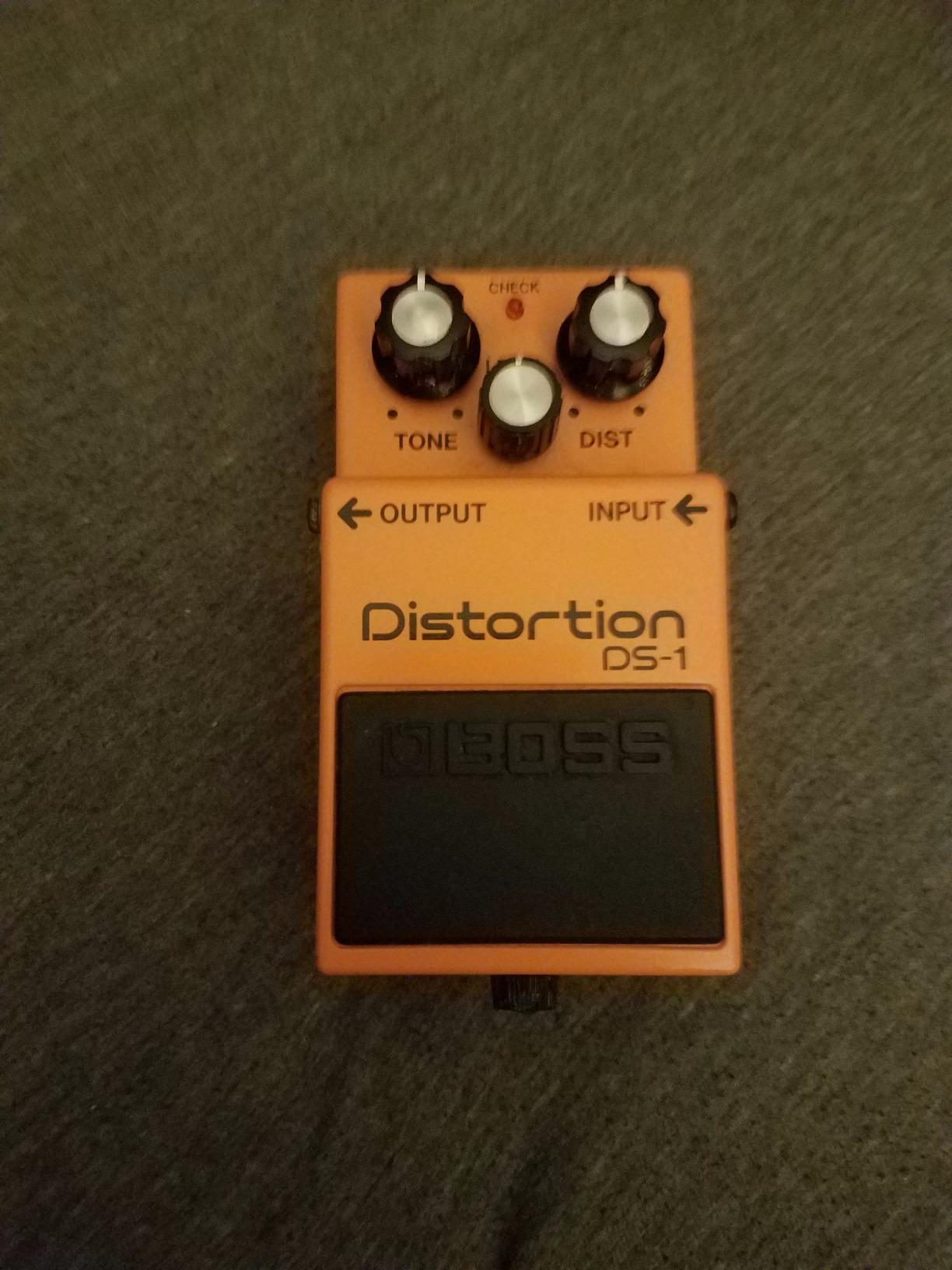
The Boss DS-1 is the pedal I recommend most often when someone asks for one first guitar pedal. I have owned one since college and it still sits on my board 14 years later. Steve Albini used one. Kurt Cobain used one. Joe Satriani has one on his touring rig. If a pedal survives that range of players, it will survive you.
The DS-1 is a distortion pedal, which means it adds harmonic-rich clipping to your clean signal. Distortion is harder than overdrive (more clipping, more sustain, more aggressive) and easier than fuzz (which sounds woolly and broken). It is the middle of the gain hierarchy and the safest starting point. Crank the distortion knob to 11 o’clock for AC/DC-style crunch, push it past 2 o’clock for metal rhythm tones, and back it off to 9 o’clock for a clean boost that pushes a tube amp into breakup.
The tone knob is the secret weapon. Most distortion pedals give you a single tone control that is either too bright or too dark. The DS-1’s tone sweeps a wide range, from scooped bass-heavy distortion at 7 o’clock to cutting mid-heavy lead tone at 2 o’clock. Most players settle around noon. If you are running into a bright amp, dial it back to 10 o’clock. If your amp is dark, push it to 1 o’clock.
Starter Knob Settings for the Boss DS-1
Set distortion to 10 o’clock, tone to 12 o’clock, and level to 11 o’clock. That is a classic rock rhythm tone. For lead playing, push distortion to 1 o’clock and tone to 11 o’clock. For a bluesy crunch, keep distortion at 9 o’clock and roll your guitar volume back to 6 to clean it up. The DS-1 responds to your volume knob better than most drives, which means you can get clean and dirty tones from one pedal.
Songs That Showcase the DS-1
Smells Like Teen Spirit (Nirvana), Back in Black (AC/DC), Crazy Train intro (Ozzy Osbourne), and Buckethead’s cover of The Beatles’ While My Guitar Gently Weeps. Listen for the way the DS-1 holds together at high gain without losing note definition.
Who the Boss DS-1 is Best For
Players who want one pedal that covers blues, classic rock, hard rock, punk, and metal rhythm. Anyone who plans to keep the pedal for a decade or longer (the BOSS warranty is five years, but the pedals regularly last 20). Skip it if you only play jazz or country clean tones, or if you need modern high-gain metal (look at the Boss MT-2 Metal Zone or a dedicated 5150-style pedal instead).
3. Donner Yellow Fall Delay – Best Budget Delay Pedal That Sounds Far More Expensive
Donner Guitar Delay Pedal for Pedal Boards, Electric Guitar, Yellow Fall Analog Delay Mini Guitar Effect Pedal Vintage Delay, True Bypass
Analog-style delay,True bypass,20-620ms,Compact size
Pros
- Warm
- natural analog-style delay tone at low price
- Compact and pedalboard-friendly mini size
- Durable aluminum-alloy construction
- True bypass for transparent tone
- 20ms to 620ms flexible delay range
- LED indicator for working state
Cons
- Depth knob taper makes subtle slapback hard to dial in
- No 9V battery compartment due to compact size
I expected the Donner Yellow Fall to sound thin and digital. I was wrong. Plugged into a clean Fender-style amp, it produced warm, tape-like echoes that blurred the line between analog and digital delay. For its entry-level price, it has no business sounding this good.
Analog delay means the repeats get darker and softer with each cycle, which is the sound every classic rock and ambient guitarist chases. Digital delay gives you clean, exact repeats. Both have their place. For a first delay, analog is more forgiving because sloppy playing gets smudged into the echo instead of amplified.
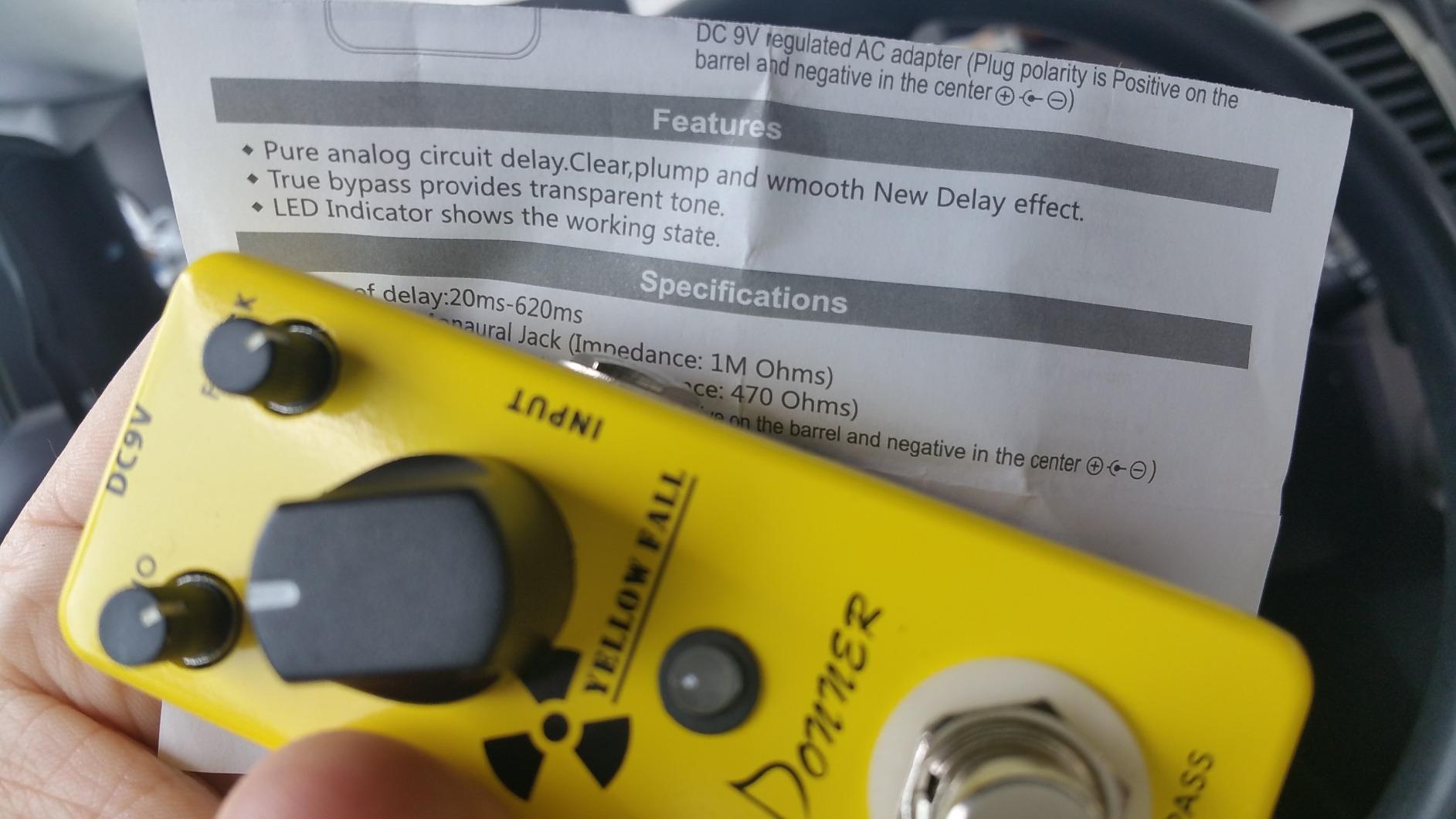
The Yellow Fall runs from 20 milliseconds (a slapback echo like Elvis Presley’s guitar) to 620 milliseconds (a long ambient wash). The Time knob sets the delay length, the Feedback knob sets how many repeats you hear, and the Mix knob blends dry and wet signal. Three knobs. That is the entire interface. Most beginners find a delay with more knobs overwhelming, so the simplicity is a feature.
Starter Knob Settings for the Donner Yellow Fall
For a subtle slapback (Elvis, country, rockabilly), set Time to 9 o’clock, Feedback to 8 o’clock, and Mix to 9 o’clock. For a U2-style lead delay, push Time to 11 o’clock, Feedback to 10 o’clock, and Mix to 11 o’clock. For ambient washes (Radiohead, post-rock), max Time at 2 o’clock, Feedback at 1 o’clock, and Mix at 12 o’clock. The trick with feedback is to stop just before self-oscillation: turn it up until the repeats start to swell on their own, then back off a hair.
Who the Donner Yellow Fall is Best For
Players on a strict budget who want analog-style delay without spending top dollar on a MXR Carbon Copy. Anyone building a small pedalboard where space matters (this is a mini pedal). Skip it if you want digital precision (look at the Boss DD-8) or stereo ping-pong delays.
Delay vs Reverb: Which Should You Buy First?
If you play rock, punk, country, or lead guitar, buy delay first. Delay adds note repeats that thicken solos and create atmosphere. If you play ambient, shoegaze, jazz, or worship music, buy reverb first. Reverb adds space and dimension without changing the note timing. Most players end up wanting both within a year.
4. Boss SD-1 Super Overdrive – The Tube Screamer Alternative That Costs Less
BOSS SD-1 SUPER Overdrive Compact Overdrive Pedal
Tube-like overdrive,Asymmetric clipping,BOSS warranty,Pedal-stacker
Pros
- Genre-defining overdrive tone since 1981
- Smooth
- musical
- tube-like overdrive
- Versatile for blues
- classic rock
- and lead tones
- Excellent for stacking with boost
- overdrive
- or distortion
- BOSS legendary build quality with five-year warranty
- Affordable and widely available
Cons
- Not suited for heavy hard rock or metal
- Limited low-end response
The Boss SD-1 is the overdrive that pros actually use. Zakk Wylde ran one in front of his amp for years. Steve Harris of Iron Maiden uses one as a boost. The pedal has been in continuous production since 1981, which is the best durability test a stompbox can have.
Overdrive is softer than distortion. It simulates a tube amp being pushed into breakup, which is the sound of classic blues and rock. The SD-1 has three knobs: drive, tone, and level. Drive controls how much gain, tone controls brightness, and level controls volume. Less is more with this pedal.
Where the SD-1 differs from a Tube Screamer: the asymmetric clipping gives it a slightly more aggressive character, with more low-end thump. Tube Screamers are mid-hump focused, which is why they stack so well with other drives. The SD-1 is more of a standalone overdrive. Both are valid first pedals. We recommend the SD-1 because of the warranty, the build, and the lower price.
Starter Knob Settings for the Boss SD-1
Set drive to 9 o’clock for a clean boost, 11 o’clock for blues crunch, and 1 o’clock for classic rock rhythm. Tone at 12 o’clock works for most amps. If you are playing a dark-sounding amp (Fender Deluxe, Marshall DSL), push tone to 1 o’clock. If you are playing a bright amp (Vox AC15, Fender Twin), pull tone back to 11 o’clock.
Stacking the SD-1 With the DS-1
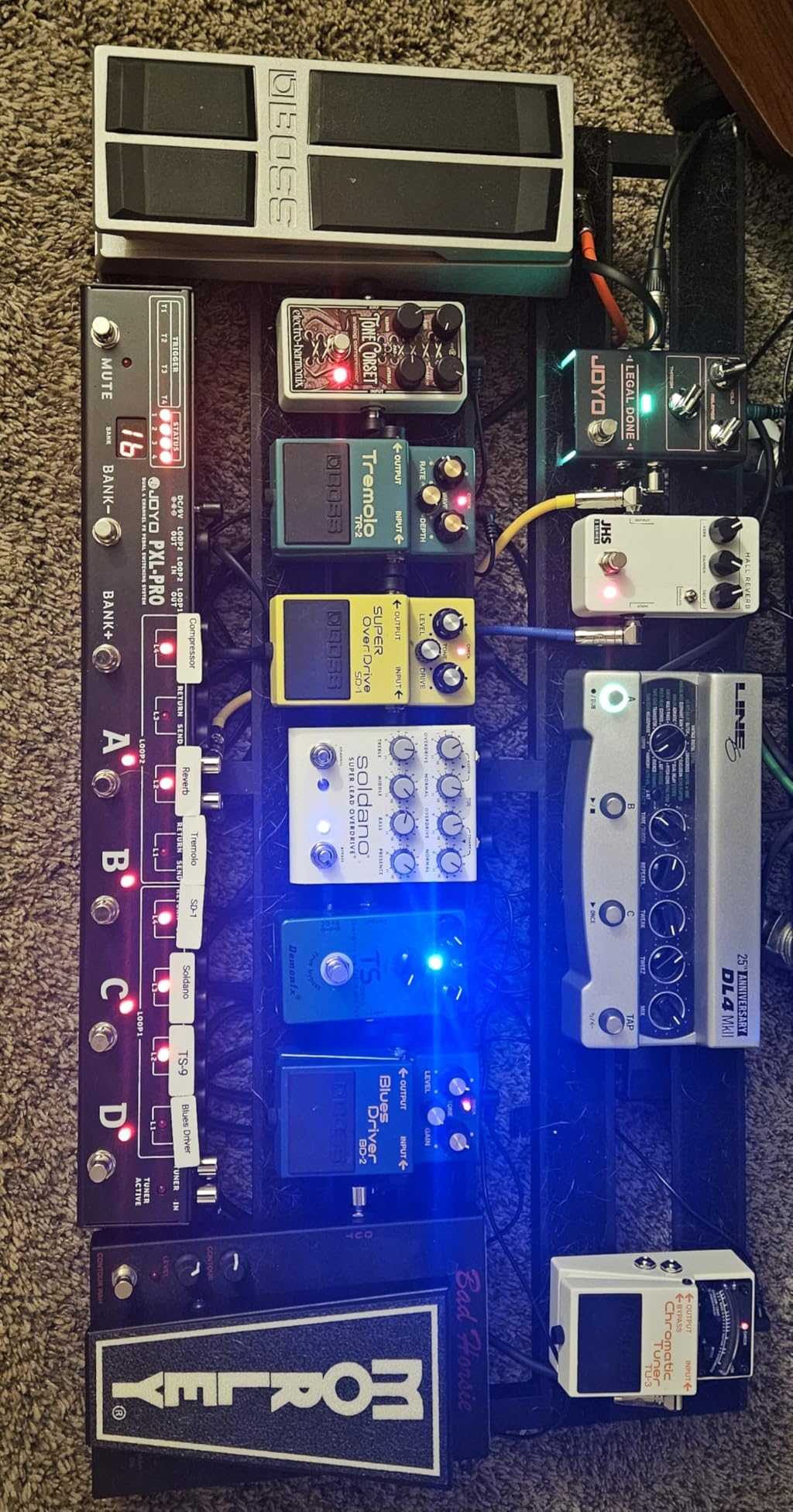
Yes, you can run both. SD-1 first, then DS-1. The SD-1 acts as a clean boost that pushes the DS-1 into higher gain. Set SD-1 drive low (9 o’clock) and level high (2 o’clock). Set DS-1 distortion at 1 o’clock and level at 11 o’clock. This is the classic two-stage gain setup used by Zakk Wylde and many modern rock players. To see how it stacks against a dedicated boost, check our 10 Best Boost Pedals for Guitar breakdown.
Who the Boss SD-1 is Best For
Blues and classic rock players. Anyone who wants one pedal that does light breakup, medium crunch, and lead boost. Skip it if you play modern metal or djent, where the SD-1’s mid-focused character becomes a liability rather than a strength.
5. Boss TU-3 Chromatic Tuner – The Industry Standard Pedal Tuner
BOSS TU-3 Compact Chromatic Tuner
21-segment LED,+/- 1 cent accuracy,Auto-mute,Tank-tough build
Pros
- Industry-standard tuner accuracy (+/- one cent)
- Tank-tough BOSS stompbox body
- 21-segment LED meter with high-brightness mode for outdoor use
- Accu-Pitch Sign provides visual confirmation of tuning
- Supports 7-string guitars and 6-string basses
- Auto-mute when tuner engaged
- Can power up to seven BOSS compact pedals
Cons
- May take longer to lock in on very low bass strings
- LED meter can feel overly precise on some settings
The Boss TU-3 is the only pedal I tell every beginner to buy without exception. A phone app is fine for bedroom practice in a quiet room. The moment you play with a band, a drummer, a TV on in the background, or a slightly out-of-tune piano, the phone app becomes useless. The TU-3 reads accurately in any environment because the microphone is bypassed entirely. Your guitar signal goes straight in.
The TU-3 also mutes your signal when you engage it. That is critical on stage. You tune silently between songs, the audience does not hear the open strings, and you do not get the awkward moment of trying to tune while the drummer vamps. Every professional guitarist uses a pedal tuner for exactly this reason.
The 21-segment LED meter is sharper than any other tuner pedal in this price range. You can see whether you are sharp or flat by one cent. The Accu-Pitch Sign function shows the note name and confirms when you have locked in. The high-brightness mode makes the display readable in direct sunlight, which matters for outdoor gigs.
Starter Settings for the Boss TU-3
There are no knobs to set. Plug in, play a note, read the display. The only setting worth knowing is the flat-tuning mode: hold the footswitch for two seconds to drop the reference pitch from A=440Hz down to A=438Hz or lower. Most players never use this. If you play drop tunings, use the flat mode instead of retuning every string by hand.
The TU-3 as a Power Supply
The TU-3 has a DC output on the right side that powers up to seven BOSS compact pedals in a daisy chain. That means if you already have or plan to buy BOSS pedals, the TU-3 can be your power supply and save you from buying a separate isolated supply. Non-BOSS pedals do not always work in this daisy chain because of polarity differences, so check before you mix brands.
Who the Boss TU-3 is Best For
Every electric guitarist. The TU-3 is the least exciting pedal on this list and the one you will use at every single practice and gig. There are cheaper tuners (TC Electronic PolyTune, Donner DT-1) that work fine for bedroom players, but if you gig at all, get the TU-3.
6. Boss BD-2 Blues Driver – Creamy Blues Overdrive for Expressive Players
Boss BD-2 Blues Driver Guitar Effects Pedal
Blues overdrive,Tube amp simulation,Dynamic response,BOSS warranty
Pros
- Classic blues overdrive with tube amp simulation
- Responsive to nuance and playing dynamics
- Warm
- emotive distortion character
- BOSS legendary build quality
- Creamy yet crunchy tone ideal for blues and rock
Cons
- Limited versatility beyond blues-oriented tones
The Boss BD-2 Blues Driver is the pedal I recommend to anyone whose guitar playing is more about feel than speed. It rewards dynamics. Play softly and it cleans up. Dig in and it sings. The BD-2 tracks your pick attack more accurately than almost any other overdrive in this price range.
Joe Bonamassa runs a BD-2. John Mayer has used one. Eric Johnson has one in his rig. The list of professional blues players who use the BD-2 is long enough that it is worth asking why so many pick it over the Tube Screamer. The answer is the gain character: the BD-2 has more low-end and more openness, while the Tube Screamer is mid-focused.
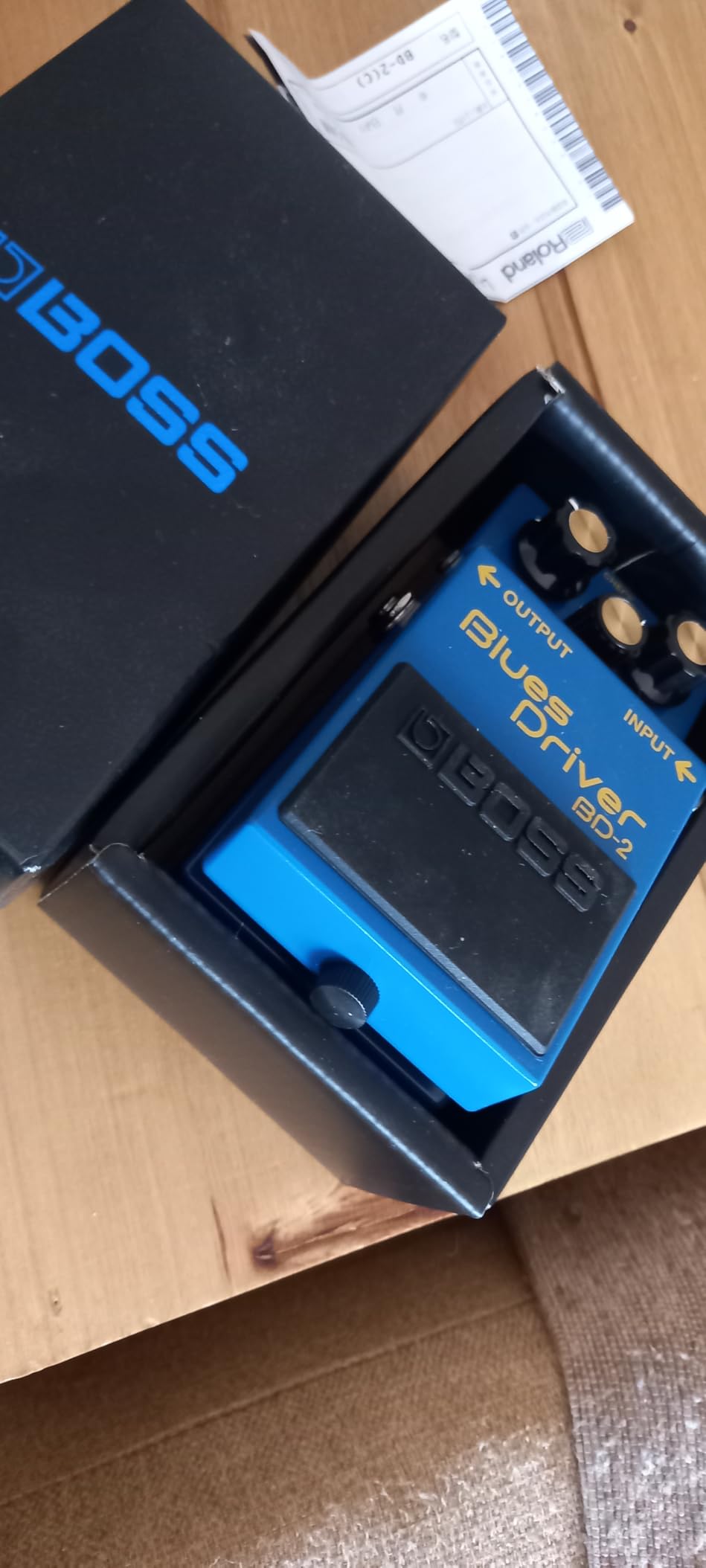
The Blues Driver has three knobs: gain, tone, and level. The gain knob goes from light breakup at 9 o’clock to thick sustain at 3 o’clock. Tone sweeps from warm and round (7 o’clock) to bright and cutting (5 o’clock). Level sets your volume. The pedal is more sensitive to your guitar’s volume knob than the SD-1, which means rolling back your volume to 7 cleans the pedal up to a near-clean tone. That is a powerful tool for live playing.
Starter Knob Settings for the Boss BD-2
For BB King-style clean-ish blues: gain at 9 o’clock, tone at 11 o’clock, level at 12 o’clock. For Gary Moore-style sustained lead: gain at 1 o’clock, tone at 1 o’clock, level at 12 o’clock. For Stevie Ray Vaughan-style Texas blues: gain at 11 o’clock, tone at 12 o’clock, level at 1 o’clock. Roll your guitar volume back to clean up between solos.
Who the Boss BD-2 is Best For
Blues and expressive rock players. Anyone who wants an overdrive that responds to picking dynamics. Skip it if you play high-gain metal or modern djent, where the BD-2’s character becomes muddy and undefined.
7. Flamma FC05 Modulation – 11 Modulation Effects in One Mini Pedal
FLAMMA FC05 Modulation Guitar Pedal with Chorus Flanger Tremolo Phaser Vibrato Rotary Liquid Autowah Stutter Ring LowBit
11 modulation effects,Full metal shell,Mini size,9V powered
Pros
- 11 modulation effects in one compact pedal
- Excellent value for the price
- Full metal shell design for durability
- Tiny footprint fits on any pedalboard
- Speed
- depth
- and mix controls for each effect
Cons
- Some effects (ring mod
- low bit) are noisy or unusable
- Switching effects between songs requires knob adjustments
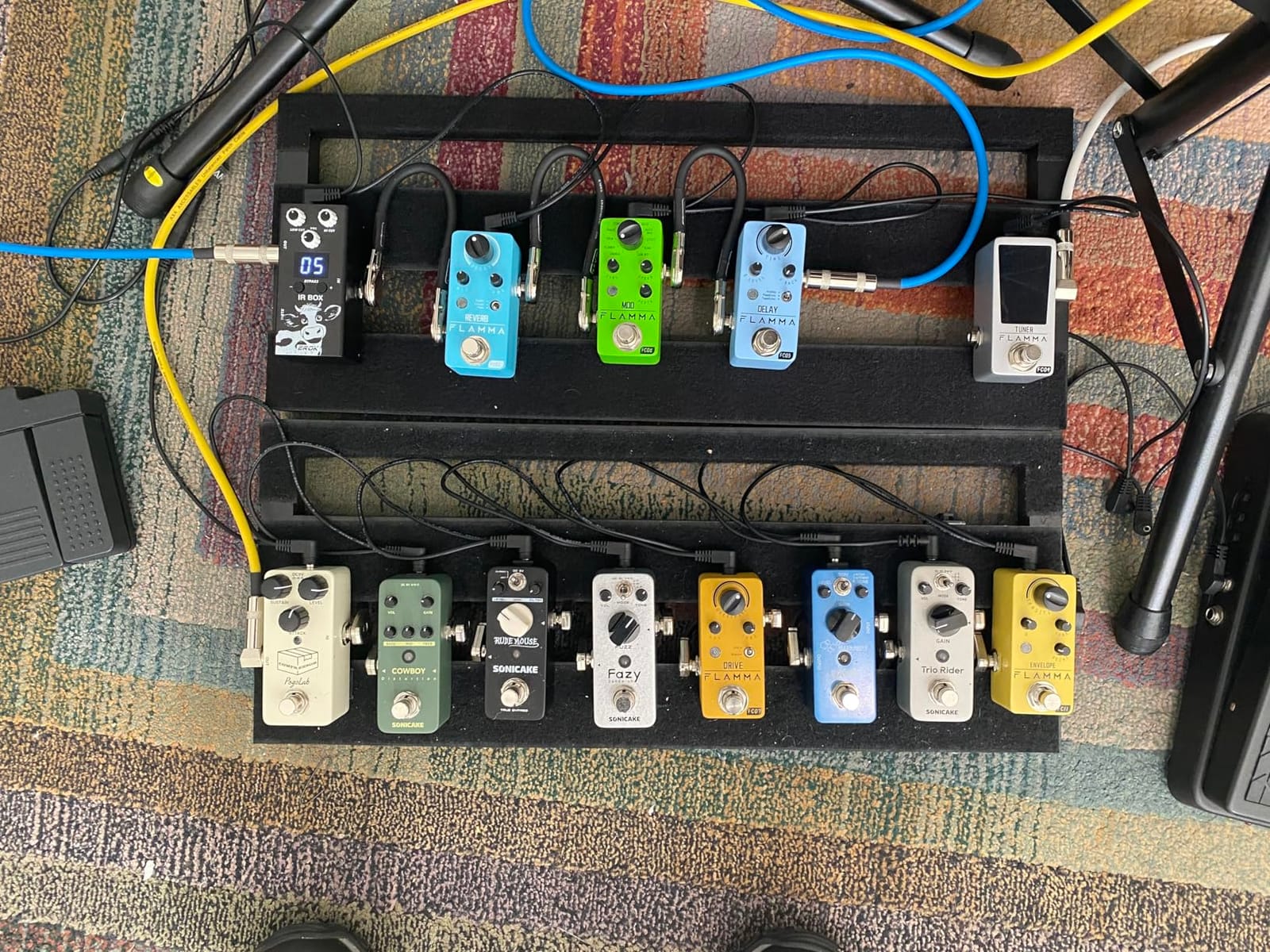
The Flamma FC05 is the pedal I give to friends who want to experiment with modulation without buying five separate boxes. Eleven effects in one mini enclosure: chorus, flanger, tremolo, phaser, vibrato, rotary, liquid, auto wah, stutter, ring, and low bit. Most of them are usable. A few are gimmicks you will turn on once and never again.
Modulation effects move your signal in subtle ways. Chorus splits your signal and detunes one copy slightly, creating a shimmery doubling effect (the sound of the 80s). Flanger creates a whooshing jet-plane sweep. Tremolo pulses your volume. Phaser sweeps frequencies in and out for a swirling effect. Vibrato wobbles your pitch. If you only buy one modulation effect, get a chorus. If you only buy two, add a phaser or tremolo. For a deeper look at phaser-style modulation, see our 10 Best Octave Pedals roundup.
The FC05’s chorus is solid. Its phaser is competitive with the MXR Phase 90 for a fraction of the price. Its tremolo is warm and usable. Where it falls short: ring mod and low bit are noisy, harsh, and almost unusable for normal playing. Treat those as Easter eggs you turn on for experimental passages.
Starter Knob Settings for the Flamma FC05
Set the mode selector to chorus. Speed at 10 o’clock, depth at 11 o’clock, mix at 11 o’clock. That is a clean, 80s-style chorus. For a phaser sound, switch mode to phaser and set speed to 9 o’clock, depth to 10 o’clock, mix to 12 o’clock. For tremolo, set mode to tremolo, speed to 11 o’clock, depth to 10 o’clock, mix to 11 o’clock.
Who the Flamma FC05 is Best For
Players who want to try modulation without committing to a specific effect. Anyone building a pedalboard where space matters. Skip it if you already know you want a MXR Phase 90 or a Boss CH-1, both of which are more refined single-effect pedals. Also skip it if you gig live and need to switch effects between songs quickly, because the FC05 requires knob adjustments to change modes.
8. Mooer GE100 Multi-Effects – Budget-Friendly Multi-FX With Built-In Practice Tools
MOOER GE100 Multi-Effects Guitar Pedal 80 Presets, 66 Effects
80 presets,66 effects,180-sec looper,Drum machine,Scale learning
Pros
- 80 presets and 80 user patches for custom tones
- 66 effect types across 8 effect modules
- Assignable expression pedal for versatile control
- 180-second looper and built-in drum machine
- Scale and chord learning functions for beginners
- Includes power adapter
Cons
- Factory presets vary widely in volume
- Interface can be challenging for new users
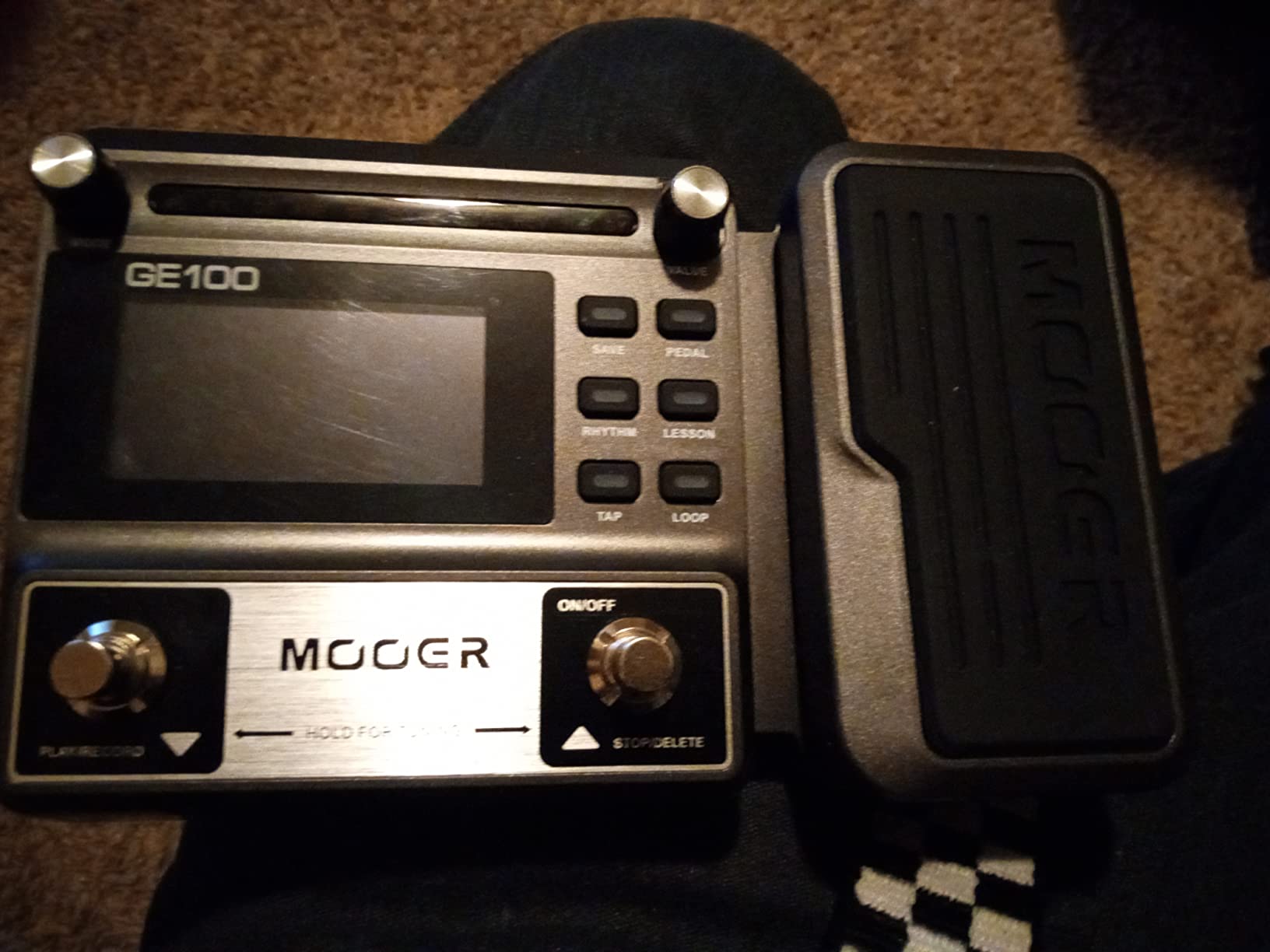
The Mooer GE100 is the multi-effects pedal I would buy for a teenage beginner who wants to practice seriously. It has 80 factory presets, 66 effect types, an expression pedal, a 180-second looper, and a drum machine. That is more features than any other pedal in this price range. The killer feature is the scale and chord learning function, which displays chord shapes on the LED screen. No other multi-effects pedal in this price range teaches you while you play.
Where the GE100 differs from the Zoom G1X Four: the GE100 has a more serious interface with assignable expression parameters and a deeper patch-editing workflow. The G1X Four is friendlier out of the box. The GE100 rewards players who want to dig deeper into tone crafting.
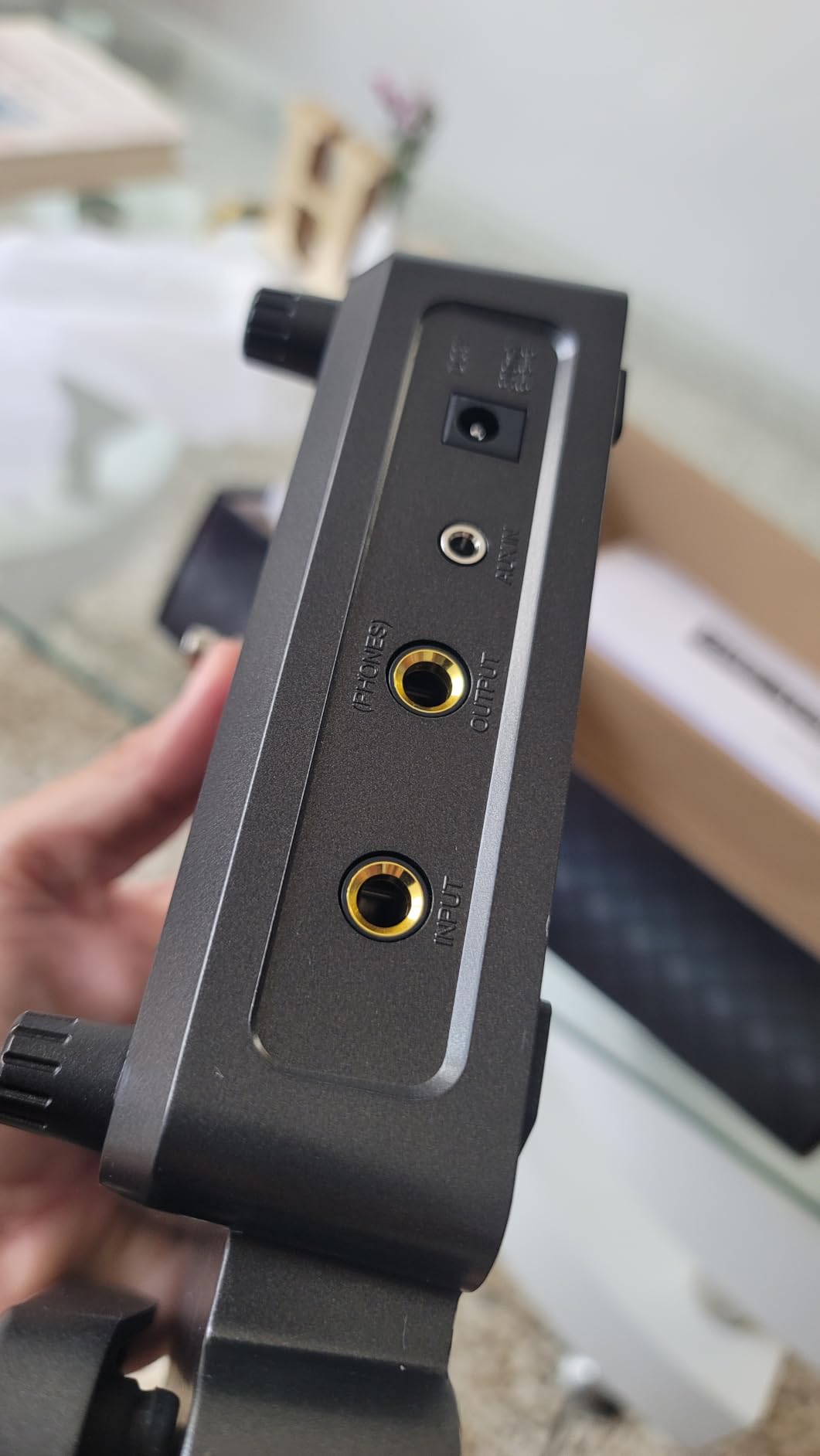
The 180-second looper is twice as long as the Zoom G1X Four’s, which matters if you want to layer full song arrangements. The drum machine has 40 patterns covering rock, blues, metal, funk, country, and jazz. Plug in headphones and you have a complete practice rig that does not wake up the neighbors. For pedalboard-side planning, see our Best Pitch Shifter Pedals writeup to understand how specialty effects integrate with multi-FX setups.
Starter Knob Settings for the Mooer GE100
Start with preset 10 (clean with chorus) for rhythm playing. Use preset 30 (overdrive with delay) for blues leads. Use preset 50 (high-gain with reverb) for rock rhythm. These factory presets are uneven in volume, so adjust the master output to match your amp. Spend an hour dialing in your own patch from scratch and you will learn more about signal chain and gain staging than any YouTube tutorial can teach.
Who the Mooer GE100 is Best For
Beginners who want to practice with backing tracks, learn chord shapes visually, and have one box that covers every effect category. Skip it if you only want to gig live (the preset switching is slower than the Zoom G1X Four), or if you already know you want boutique individual pedals.
What Should Your First Pedalboard Look Like? 3 Ready-to-Buy Setups
After you pick your first 3-4 pedals, the next question is what to put them on. We tested three budget tiers with specific pedal combinations, all using the signal chain we recommend below.
The Starter Bedroom Board
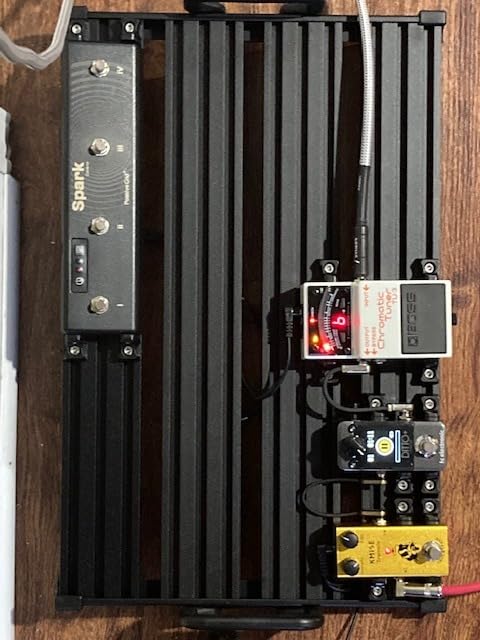
Boss TU-3 tuner + Boss SD-1 overdrive + Donner Yellow Fall delay + a small pedalboard like the Donner DB-3 or Boss BCB-30X. Powered by a single 9V daisy chain (the TU-3 can power the SD-1 and Yellow Fall). This setup covers tuning, light drive, and slapback or ambient delay. It is everything you need for bedroom practice and small jams.
The Intermediate Live Board
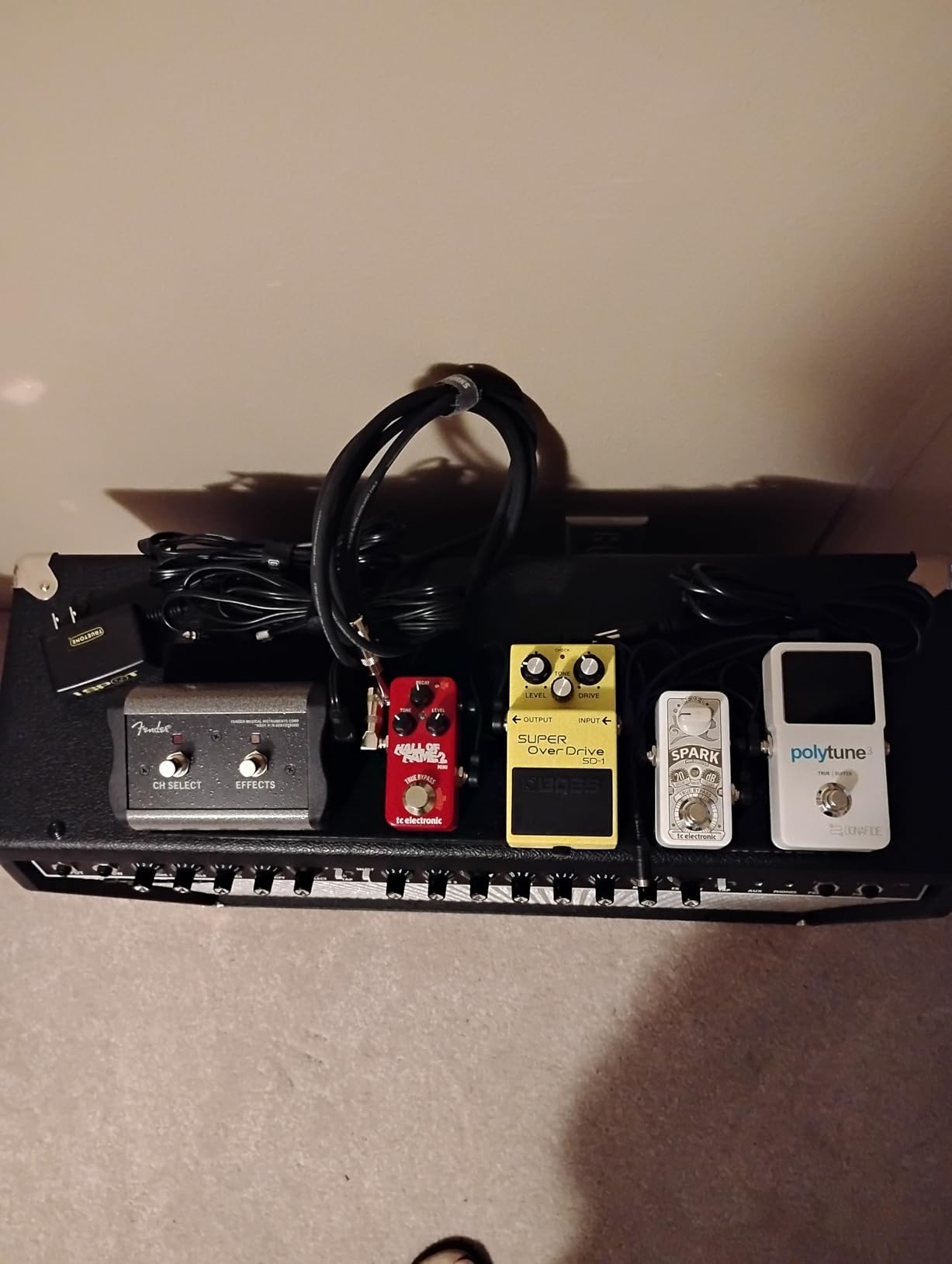
Boss TU-3 tuner + Boss DS-1 distortion + Boss SD-1 overdrive + Donner Yellow Fall delay + TC Electronic Hall of Fame 2 reverb + Boss BCB-60 pedalboard + Truetone 1 SPOT Pro CS7 isolated power supply. The isolated power supply kills the hum that daisy chains introduce when you mix digital and analog pedals. This setup covers every genre a working cover band plays.
The Full-Featured Pro Board
Boss TU-3 + Boss DS-1 + Boss BD-2 Blues Driver + MXR Phase 90 + Boss DD-8 delay + TC Electronic Hall of Fame 2 reverb + Flamma FC05 modulation + a Pedaltrain Classic 2 pedalboard + CIOKS DC7 isolated power supply. This is a pro-grade setup that covers blues, rock, metal, country, jazz, and ambient. Skip individual fuzz and wah until you know you want them.
Signal Chain Order That Matters More Than Which Pedal You Buy
Beginners obsess over which specific pedal to buy. Pros obsess over signal chain. The order of pedals changes your tone more than the brand on the front. Here is the order every working guitarist uses, with the reasoning.
Tuner first, always. Putting the tuner first means every other pedal in your chain is in tune. Putting it last works for a clean signal but distorts the input on most tuners. Drive second (overdrive, distortion, fuzz). Drive into time-based effects is the classic setup. Modulation third (chorus, phaser, flanger, tremolo). Delay fourth. Reverb last. Delay into reverb gives you ambience; reverb into delay muddies the repeats.
If you use a wah, put it before drive. A wah after drive sounds compressed and weird. A wah before drive sounds like Jimi Hendrix. If you use a compressor, put it first or right after the tuner. Compressors even out your pick attack before the rest of the chain amplifies it.
What NOT to Buy First: Anti-Recommendations That Save You Money
Some pedals sound amazing in YouTube demos and terrible on a beginner’s pedalboard. Here is what to skip in your first year.
Wah pedals: a wah needs a clean amp and a player with developed touch. Beginners buy wahs because they sound huge in isolation and then never use them. The Dunlop Cry Baby is the standard, but save it for year two.
Fuzz pedals: fuzz is the most amp-dependent effect. It sounds incredible into a clean tube amp and terrible into a distortion channel. Most beginners play through practice amps that cannot handle fuzz well. The Electro-Harmonix Big Muff and Fuzz Face are classics, but wait until you have a tube amp and know what fuzz does.
Expensive compressors: the cheapest useful compressor is the TC Electronic HyperMini. The Wampler Ego, Keeley Comp, and Origin Effects Cali76 are excellent but unnecessary until you know why you want compression. A compressor is a tone-shaping tool, not a beginner essential.
Boutique pedals: a high-end Klon-style overdrive or an Analogman King of Tone is a terrible first pedal. They are designed for players who already know what they want from their tone. Buy a Boss or MXR first, learn what each effect does, then upgrade if you still want boutique.
4 Beginner Pedal Mistakes That Kill Your Tone
Mistake one: cranking every knob to maximum. New players see YouTube demos with everything dimed and assume louder is better. Gain past 3 o’clock is almost always too much. Start at noon and turn up slowly until you hear what each knob does.
Mistake two: wrong signal chain order. Putting reverb before drive, modulation before drive, or delay before drive. The order we listed above is correct for 90% of players. Some experimental players run things differently, but beginners should stick with the standard.
Mistake three: ignoring amp EQ. Your amp’s bass, mid, and treble knobs interact with every pedal. If your distortion sounds muddy, try cutting bass on the amp first. If your delay sounds thin, try pushing treble on the amp. Most pedal “problems” are actually amp EQ problems.
Mistake four: daisy-chaining digital and analog pedals. Mixing a delay, reverb, and modulation pedal on a single daisy chain power supply introduces digital clock noise. The solution is an isolated power supply (Truetone 1 SPOT, CIOKS DC7, or Voodoo Lab Pedal Power). It costs more upfront but saves you from chasing hum that never goes away.
If You Already Own a Modelling Amp (Boss Katana, Fender Mustang, Positive Grid Spark)
Modelling amps like the Boss Katana, Fender Mustang LT, and Positive Grid Spark have built-in effects that sound genuinely good. This is the question we get most often on r/guitarpedals: do I still need pedals?
The honest answer: yes, but be selective. Built-in amp effects cover reverb, delay, modulation, and often compression. Buying standalone pedals that duplicate those effects is wasteful. Instead, buy pedals that your amp cannot model well: analog drive pedals, analog delays, and unique modulation effects like the MXR Phase 90.
For Boss Katana owners: pair the Katana’s clean channel with a Boss DS-1 or SD-1 for drive, then use the Katana’s built-in effects for delay, reverb, and modulation. For Fender Mustang owners: same approach. Run a clean preset on the Mustang and let your pedals do the coloring. For Positive Grid Spark owners: the Spark’s amp modelling is excellent, so external pedals are mostly redundant for ambient effects but valuable for analog drive character. If you are a cyclist or hobbyist who picked up guitar later, you may also enjoy our related guide on 10 Best Road Bike Pedals for Beginners for a different kind of “pedal” decision-making.
How to Save Money on Your First Pedals
Buy used. Boss pedals hold the majority of their value after five years because they are built like tanks. A used Boss DS-1 in excellent condition is widely available. Check Reverb.com, Sweetwater’s used section, and your local Guitar Center.
Buy last year’s model. Pedal designs rarely change. The Boss DS-1 from 2020 sounds identical to the one from 1990. Buy discontinued colors or older runs to save money.
Start with one pedal at a time. Most beginners buy a five-pedal board on day one and have no idea what any of them do. Buy the tuner first. Play with it for a month. Then add the overdrive. Play with both for a month. Build the board slowly and you will understand every pedal.
Frequently Asked Questions
What guitar pedals should I start with?
Start with a tuner, an overdrive or distortion, and either a delay or reverb. The Boss TU-3 tuner, Boss DS-1 distortion, and TC Electronic Hall of Fame 2 reverb cover most of what a beginner needs. Add a delay (Boss DD-8) and a modulation effect (MXR Phase 90) once you know what sound you are chasing.
What 5 pedals should every guitarist have?
The five pedals every guitarist should have are: (1) a tuner (Boss TU-3), (2) an overdrive or distortion (Boss DS-1, Boss SD-1, or Ibanez Tube Screamer), (3) a delay (Boss DD-8 or MXR Carbon Copy), (4) a reverb (TC Electronic Hall of Fame 2), and (5) a modulation effect (MXR Phase 90 or Boss CH-1).
What is the one pedal that every guitarist needs?
The one pedal every guitarist needs is a tuner, specifically a pedal tuner like the Boss TU-3. A pedal tuner mutes your signal, reads accurately even in noisy environments, and lets you tune silently mid-song. It is the least exciting pedal you will buy and the one you will use at every single practice and gig.
What guitar effects pedals are best for beginners?
The best guitar effects pedals for beginners are the Boss DS-1 (distortion), Boss SD-1 (overdrive), TC Electronic Hall of Fame 2 (reverb), Boss DD-8 (delay), MXR Phase 90 (phaser), and Boss TU-3 (tuner). Each of these is built to last, easy to dial in, and used by professional guitarists so they grow with you.
Should a beginner buy a wah or fuzz pedal first?
No. Wah and fuzz pedals require a clean tube amp and developed playing touch to sound good. Most beginners play through practice amps where fuzz sounds muddy and wah sounds awkward. Skip wah and fuzz for your first year. Start with a tuner, overdrive or distortion, delay, and reverb instead.
Should I get a multi-effects pedal or individual pedals?
If you want to try every effect category on a tight budget, get a multi-effects pedal like the Zoom G1X Four or Mooer GE100. If you already know you want specific tones (Tube Screamer-style overdrive, analog delay, MXR Phase 90), buy individual pedals. Multi-effects win on breadth; individual pedals win on quality of any one sound.
Final Verdict: Which Pedal Should You Buy First?
If you want one pedal that covers the most ground, buy the Boss DS-1 distortion. It is the legendary first pedal for a reason: it handles blues, rock, punk, hard rock, and metal rhythm, and it has been a studio workhorse since 1978. Pair it with a Boss TU-3 tuner and you have the minimum useful rig.
If you want to try every effect category on a tight budget, buy the Zoom G1X Four multi-effects. You get 71 effects, 13 amp models, an expression pedal, and a looper in one box. It is the best way to figure out what kind of tones you actually want before you commit to specific individual pedals.
If you play blues and care about expressive dynamics, buy the Boss BD-2 Blues Driver. It is more responsive to your pick attack than any other overdrive in this price range, and every blues player from Joe Bonamassa to Eric Johnson has used one.
The most important thing is to start. Buy one pedal, plug it in, and play. The gear matters less than the hours you put in. See you at the next jam.
Leave a Reply