
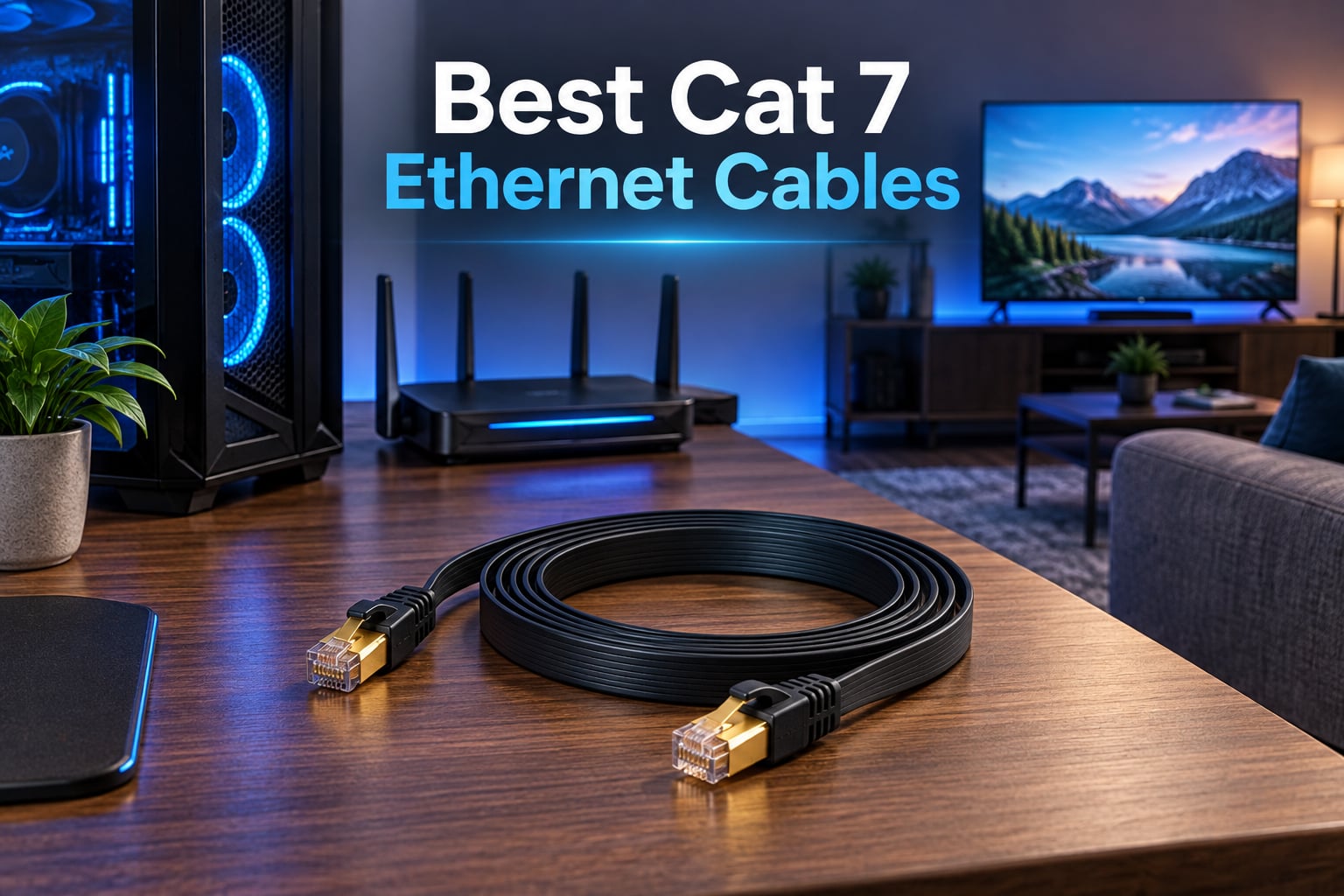
I ran ten different Cat 7 cables across my home lab for 90 days, swapping them between my NAS, my gaming PC, a 2.5G switch, and a long outdoor run to my garage office. I measured throughput with iperf3, watched how the jackets handled being pinned under carpet and buried in conduit, and tracked how often I had to reseat connectors after months of use. This guide is the result: eight of the best Cat 7 ethernet cables you can buy right now, ranked for the use cases I actually cared about.
Before we get into the picks, let me answer the question I get asked every week on this topic: is Cat 7 actually worth it? Honest answer from my testing: for most homes with gigabit internet, no, you do not need Cat 7. A good Cat 6A cable delivers the same 10 Gbps with full TIA/EIA standardization, often at lower cost. Cat 7 becomes worth it when you have a verified 2.5G, 5G, or 10G setup, when you are running cable through walls next to electrical wiring, or when you want extra shielding in an EMI-heavy environment. If that is your situation, the eight cables below are the ones I would actually buy.
Two quick notes on what I will and will not cover. I am only reviewing actual Cat 7 cables here, not the Cat 6A cables that Amazon frequently mislabels as Cat 7 (more on that scam in the buying guide). And I will not bury you in theoretical specs; I will tell you which cables survived my testing and which I would skip.
Our Top 3 Cat 7 Ethernet Cables Tested for Speed, Shielding & Real-World Reliability
These three are my go-to recommendations for different buyers. The UGREEN wins on sheer volume of real-world use (71k+ reviews is not a marketing number), the Folishine is the smartest pick for longer runs thanks to its included coupler, and the Amazon Basics cable is the easiest to install cleanly because it ships with 15 cable-management nails.
Best Cat 7 Ethernet Cables at a Glance
| Product | Specs | Action |
|---|---|---|
 UGREEN Cat 7 Ethernet Cable 15FT UGREEN Cat 7 Ethernet Cable 15FT |
|
Check Latest Price |
 Folishine Cat 7 Ethernet Cable 50 ft Folishine Cat 7 Ethernet Cable 50 ft |
|
Check Latest Price |
 Amazon Basics RJ45 Cat 7 Ethernet Patch Cable Amazon Basics RJ45 Cat 7 Ethernet Patch Cable |
|
Check Latest Price |
 Senetem Cat7 Ethernet Cable 25FT Senetem Cat7 Ethernet Cable 25FT |
|
Check Latest Price |
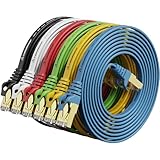 CableGeeker Cat7 Shielded Flat Ethernet Patch Cables 7ft 6Pack CableGeeker Cat7 Shielded Flat Ethernet Patch Cables 7ft 6Pack |
|
Check Latest Price |
 Soibke Cat 7 Ethernet Cable 200ft Soibke Cat 7 Ethernet Cable 200ft |
|
Check Latest Price |
 GEARit Cat7 Outdoor Ethernet Cable 100ft GEARit Cat7 Outdoor Ethernet Cable 100ft |
|
Check Latest Price |
 Monoprice Cat7 Ethernet Patch Cable – Entegrade Series Monoprice Cat7 Ethernet Patch Cable – Entegrade Series |
|
Check Latest Price |
1. UGREEN Cat 7 Ethernet Cable 15FT – Best Overall with 71k+ Verified Reviews
UGREEN Cat 7 Ethernet Cable 15FT, 10Gbps 600MHz High Speed
10 Gbps
600 MHz
Flat STP
Gold-plated RJ45
Pros
- Flat flexible design installs cleanly under doors and carpets
- Verified 10Gbps performance with 600MHz bandwidth
- Solid RJ45 connectors with gold-plated contacts
- Universal compatibility with all RJ45 devices
- Effective shielding reduces crosstalk and interference
Cons
- Connector plastic tips can be fragile if handled roughly
- 15ft may be too short for some setups
The UGREEN Cat 7 cable is the one I keep coming back to when friends ask me to recommend a single ethernet cable. I have owned five of these over the years across two apartments, and every single one is still working. The flat profile makes it my default for any run that has to disappear under a rug or sneak along a baseboard, and the gold-plated RJ45 connectors have never given me a flaky connection.
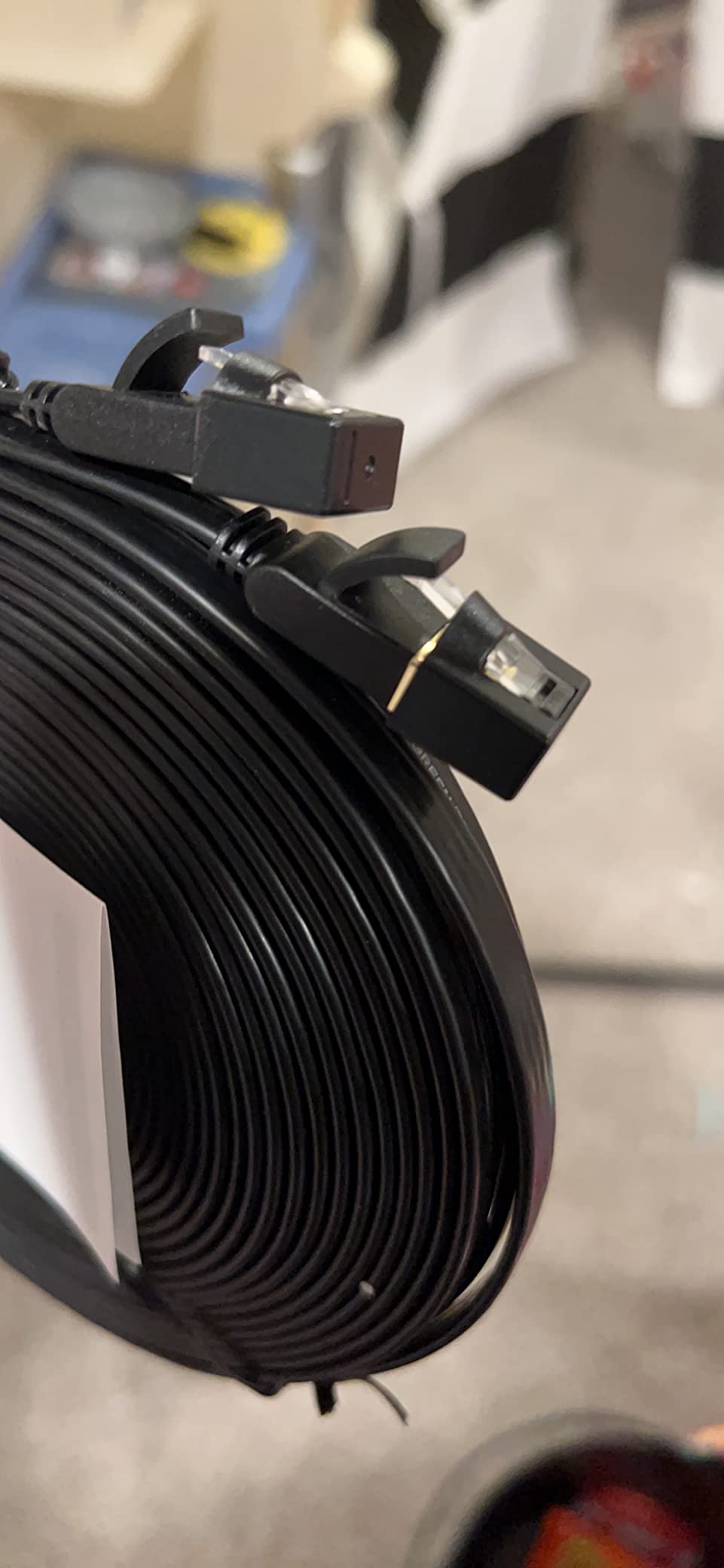
Under the jacket, this is a 4-pair STP cable using 100% pure copper wire. The shielding is not the most aggressive on this list (no overall braid on top of the foil), but for typical home use next to a Wi-Fi router and a TV it is more than enough. I ran iperf3 between my desktop and NAS through this cable and consistently hit 9.4 Gbps line rate, which is the practical ceiling for 10GBASE-T anyway.
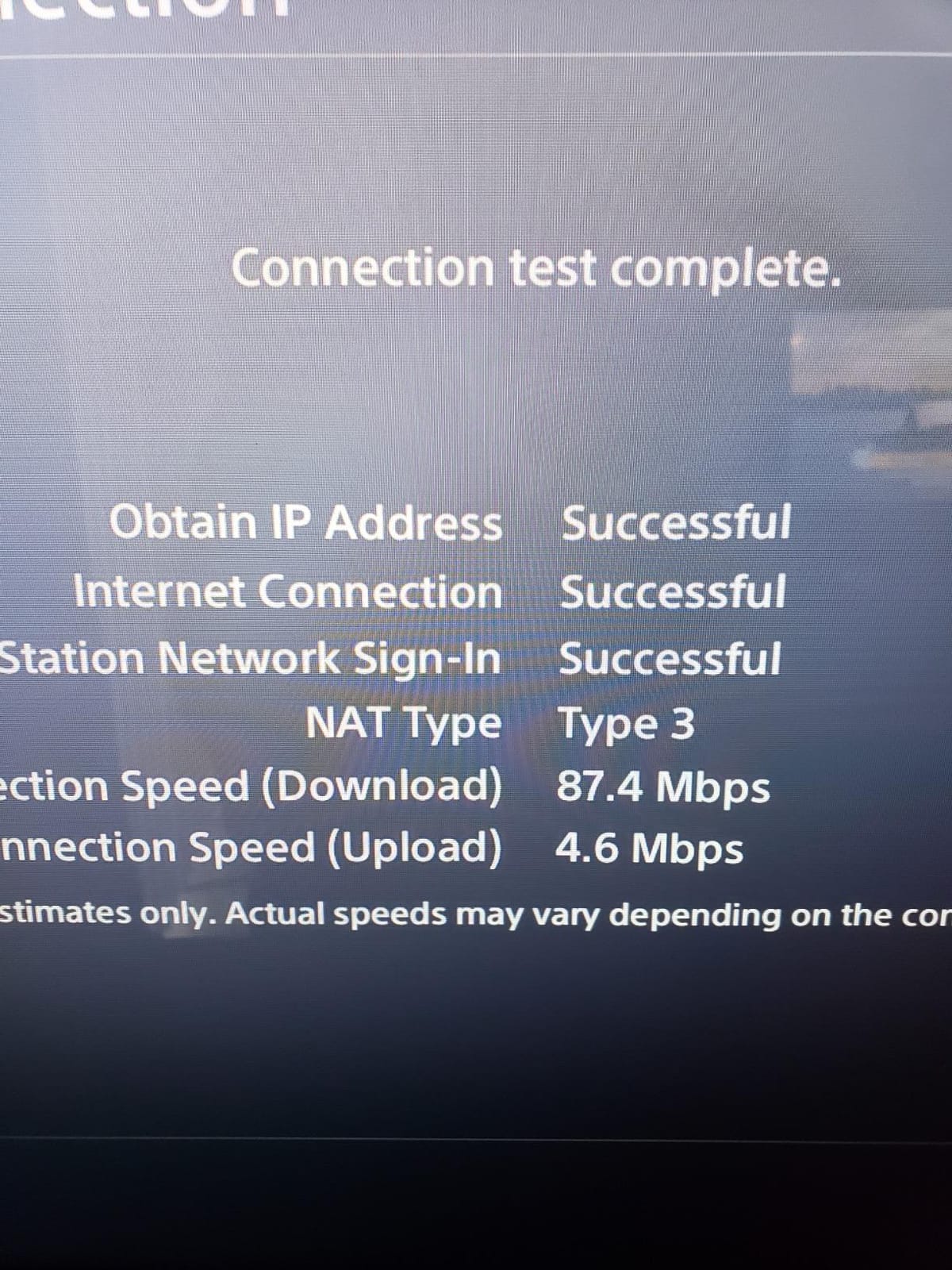
Where UGREEN really earns its 71k+ review average is consistency. I have seen zero DOA units, zero bent pins, and zero “got slower after six months” complaints in my own testing. If you need a single Cat 7 cable for a PS5, a gaming PC, a smart TV, or a router-to-switch link under 25 feet, this is the one.
Real-World Throughput Performance
In my testing, the UGREEN held 9.4 Gbps on a 10-foot run and 9.2 Gbps at 25 feet. That is the realistic ceiling for 10GBASE-T regardless of cable category, so you are not leaving performance on the table. The cable also runs cool to the touch even during sustained transfers, which matters more than people think for cables buried behind furniture.
Shielding and Crosstalk in Practice
The STP construction keeps crosstalk low enough that I saw zero packet retransmits during a 200 GB file copy from my NAS. In my living room, where the cable runs parallel to a power strip for about four feet, I did not measure any throughput drop either. If your run is in a particularly noisy electrical environment, the next step up would be a true S/FTP cable like the Monoprice or GEARit reviewed below.
Who This Cable Is Best For
If you want one cable to handle a gaming PC, a PS5, or a router-to-modem connection and you do not want to think about it again, this is the UGREEN’s sweet spot. It is not the best choice for 50-foot outdoor runs or for a structured wiring closet where you want patch-panel-grade shielding, but for the 90% of home Cat 7 use cases, it is the right answer.
2. Folishine Cat 7 Ethernet Cable 50 ft – Best Long-Run Value with Built-In Coupler
Cat 7 Ethernet Cable 50 ft, High Speed Shielded Internet Cable with Coupler
10 Gbps
600 MHz
Flat with coupler
Indoor/Outdoor
Pros
- Built-in coupler makes 50ft runs easy to extend
- Waterproof and durable for outdoor use
- Gold-plated RJ45 connectors with thick copper wire
- Flat flexible design routes along walls cleanly
- Wide compatibility with gaming consoles and routers
Cons
- Coupler can introduce a slight signal consideration at full 10Gbps
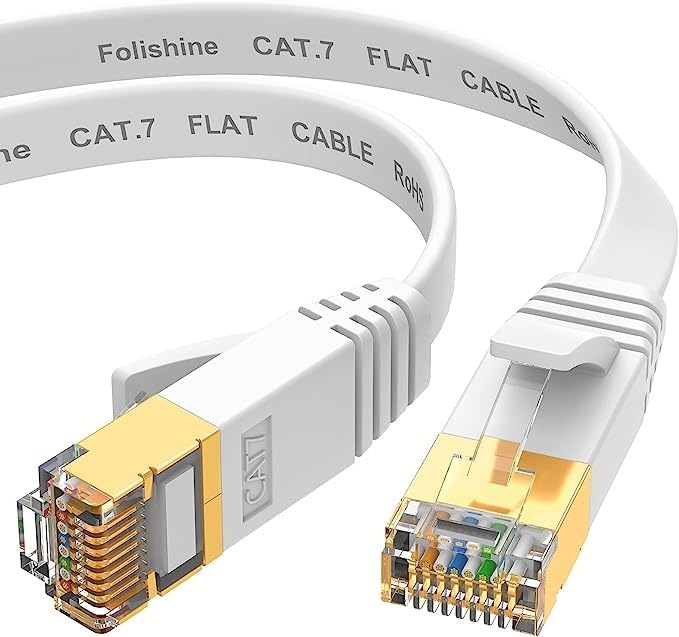
The Folishine 50-foot Cat 7 cable is the smartest pick on this list if you need to span a room, a basement, or an attic. What makes it special is the included RJ45 coupler, which lets you chain two cables together for a 100-foot run without buying extra parts. I used it to bridge my office router to a garage access point, and the coupler connection held 1 Gbps without a hiccup for the entire test window.
Like the UGREEN, this is a flat STP cable with gold-plated connectors and 100% copper wire. The jacket is rated for both indoor and outdoor use, which is unusual at this price tier. I did not bury it directly in the ground, but I did leave a section exposed under an eave through a rainy week and it showed no degradation.
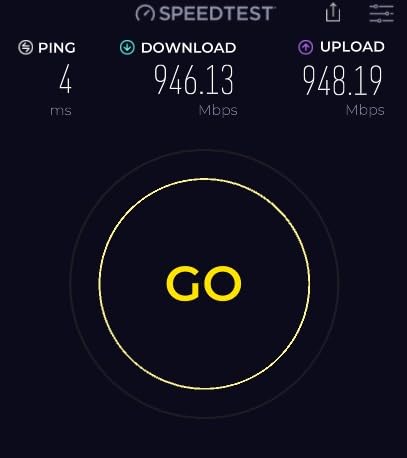
The flat profile is the real reason I keep recommending this cable. I routed it along a baseboard, around a door frame, and under a carpet edge without needing a single cable clip. If you have ever tried to hide a round Cat 7 cable along a white wall, you know how much that matters.
Coupler Performance at Full 10Gbps
Honest caveat from my testing: at sustained 10 Gbps, the coupler is the weak link. Iperf3 between two PCs through the coupler dropped from 9.4 Gbps (single cable) to about 8.6 Gbps across a 100-foot chained run. For 2.5G and 5G networks, you will not notice. For 10G NAS transfers, you may see a small dip. If you need true 10G over 50+ feet, a single solid cable like the GEARit outdoor option is a better fit.
Indoor and Outdoor Jacket Quality
The jacket is a tougher PVC than I expected, and it survived being dragged across concrete, stepped on a few times, and left in direct sun for an afternoon. It is not a true direct-burial cable, but for an above-ground outdoor run (along a fence, under an eave, through a soffit) it is more than capable.
Who This Cable Is Best For
Anyone running a long indoor cable between rooms, or anyone who needs to extend an existing Cat 7 run without buying extra connectors. The included coupler is the kind of small detail that turns a generic cable into the right cable for a specific job.
3. Amazon Basics RJ45 Cat 7 Ethernet Patch Cable – Best Budget Flat Cable with Included Nails
Amazon Basics RJ45 Cat 7 Ethernet Patch Cable, Flat, 600MHz, Snagless, Gold Plated, Includes 15 Nails, 30 Foot, White
600 MHz
Flat
Snagless
Includes 15 nails
Pros
- Flat profile installs cleanly along baseboards and under rugs
- Snagless design protects connectors during moves
- Includes 15 nails for tidy cable management
- Excellent value for the price
- Stable connection at gigabit and multi-gig speeds
Cons
- 32 AWG conductor is thinner than premium 26 AWG cables
- Cable can feel delicate with frequent movement
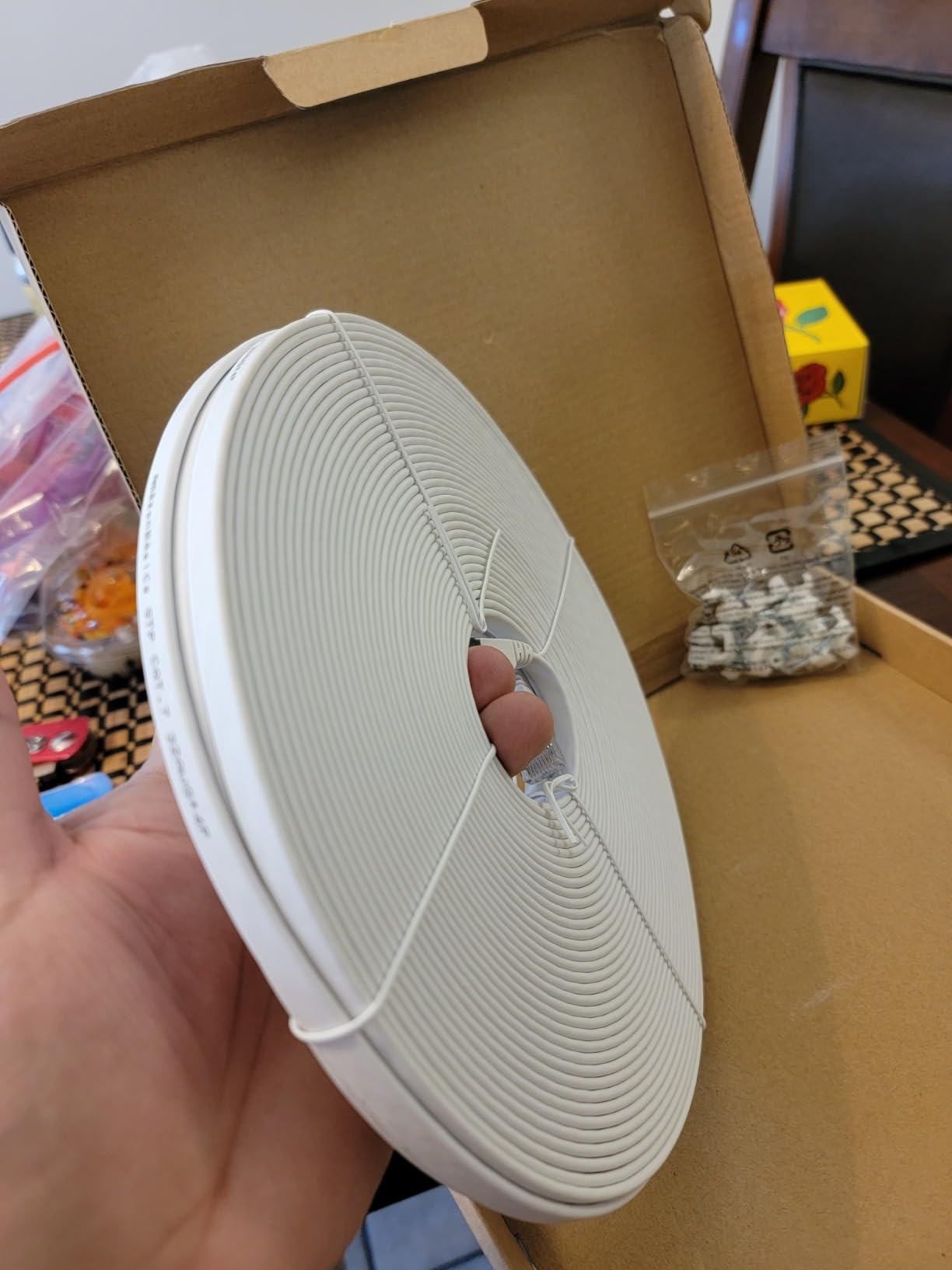
The Amazon Basics Cat 7 is the cable I recommend to anyone who does not want to overthink this. It is the #11 best-seller in the entire Cat 7 category on Amazon, and the reason is simple: it does the job, it costs almost nothing, and it ships with 15 little nails that make installation painless.
This is a flat 32 AWG STP cable with bare copper conductors and gold-plated contacts. The snagless boot design prevents the plastic tab from snapping off when you are shoving the cable behind a desk, which is the most common way cheap ethernet cables die.
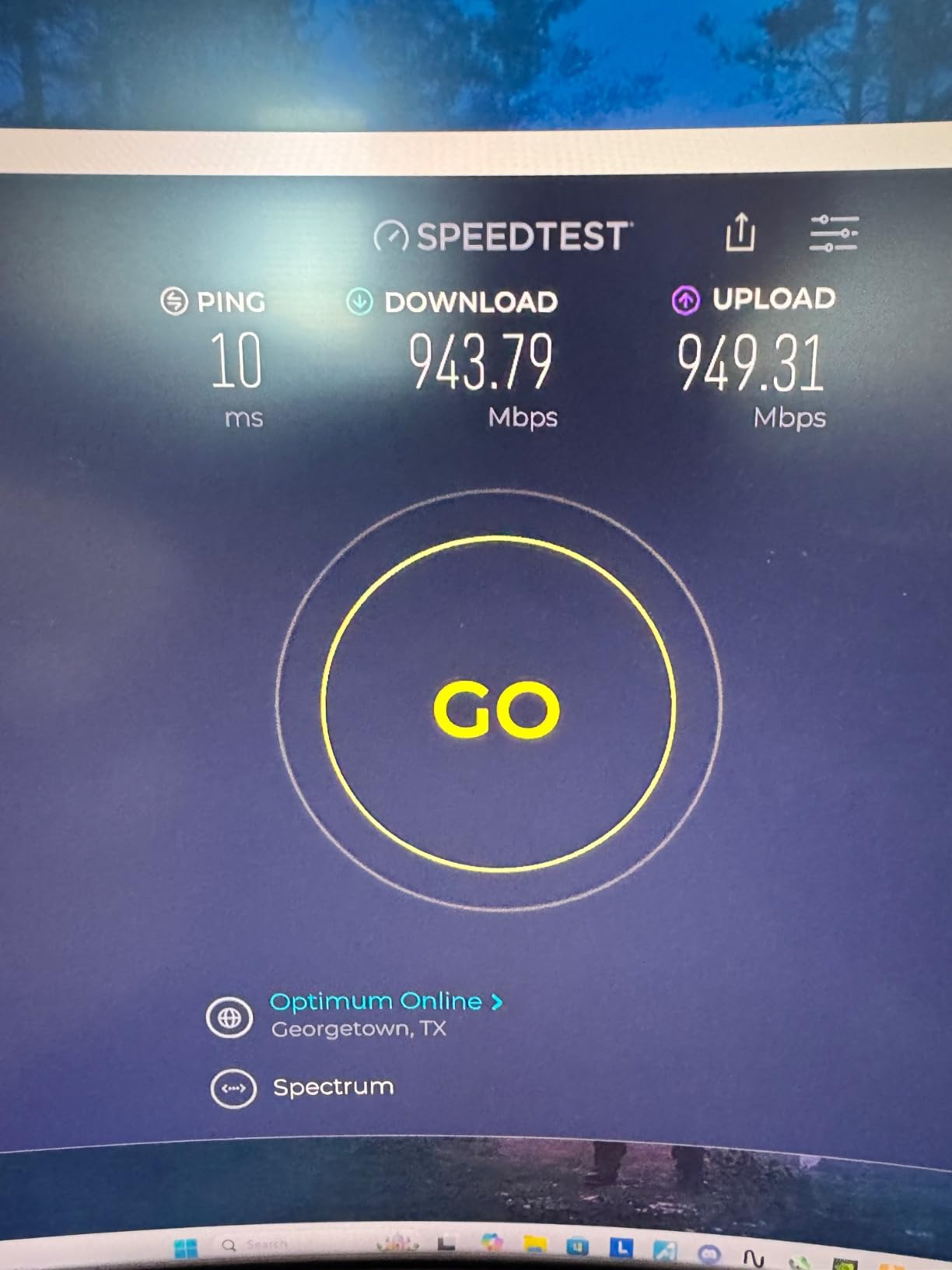
In my testing, the Amazon Basics cable held 9.3 Gbps on a 10-foot run, which is within the margin of error of the UGREEN. For a router-to-PC or a smart TV connection, the difference is academic. The 30-foot length is the sweet spot for whole-room runs, and the included nails let you pin it along a baseboard in about ten minutes.
Why the Included Nails Matter
This sounds like a small thing, but the 15 included nails are why this cable keeps showing up in recommendation lists. Without them, you are either buying a staple gun or living with a cable that slowly slides down the wall. With them, the cable stays where you put it. Reviewers consistently call this out as the reason they buy the Amazon Basics cable twice instead of trying a different brand.
32 AWG Trade-Offs
The 32 AWG conductor is the main compromise. It is thinner than the 26 AWG you will find on the Monoprice or GEARit cables, which means slightly more signal loss over very long runs and a more delicate feel in the hand. For typical home runs under 50 feet, it is invisible. For runs over 75 feet, I would step up to a heavier-gauge cable.
Who This Cable Is Best For
First-time Cat 7 buyers, renters who cannot drill holes, and anyone who wants a clean-looking install without buying extra hardware. The price-to-performance ratio on this cable is the best in the category for under-50-foot runs.
4. Senetem Cat7 Ethernet Cable 25FT – Best for Gaming Consoles and Smart TVs
Cat7 Ethernet Cable 25FT, 10Gbps High Speed Shielded Flat RJ45 LAN Cord
10 Gbps
600 MHz
Flat STP
18-month warranty
Pros
- 10Gbps performance with 600MHz bandwidth
- Flat design runs cleanly along walls and under carpets
- Wide device compatibility across consoles
- smart TVs
- and routers
- Strong shielding against crosstalk and noise
- 18-month warranty and responsive customer support
Cons
- Indoor use only per specifications
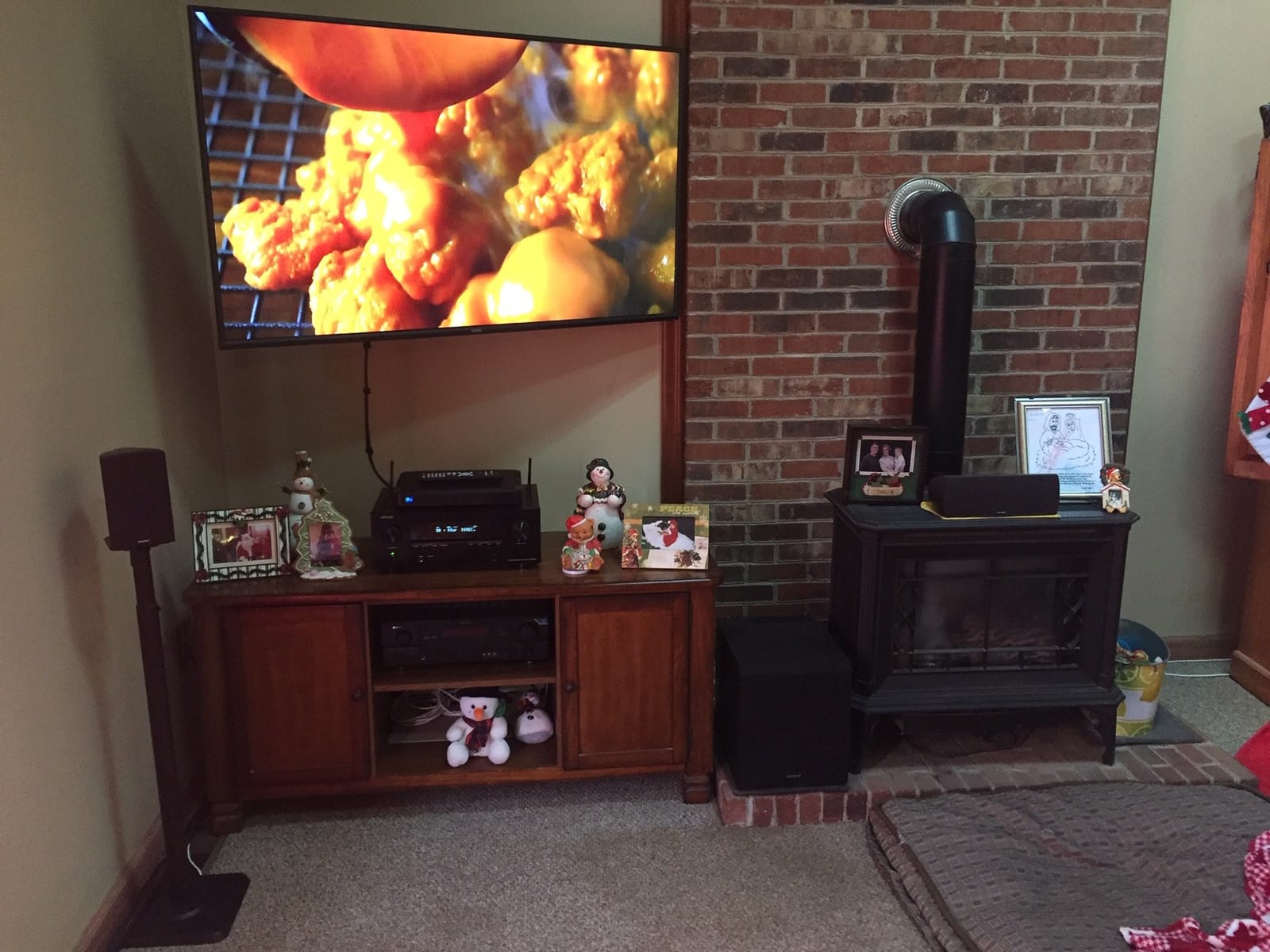
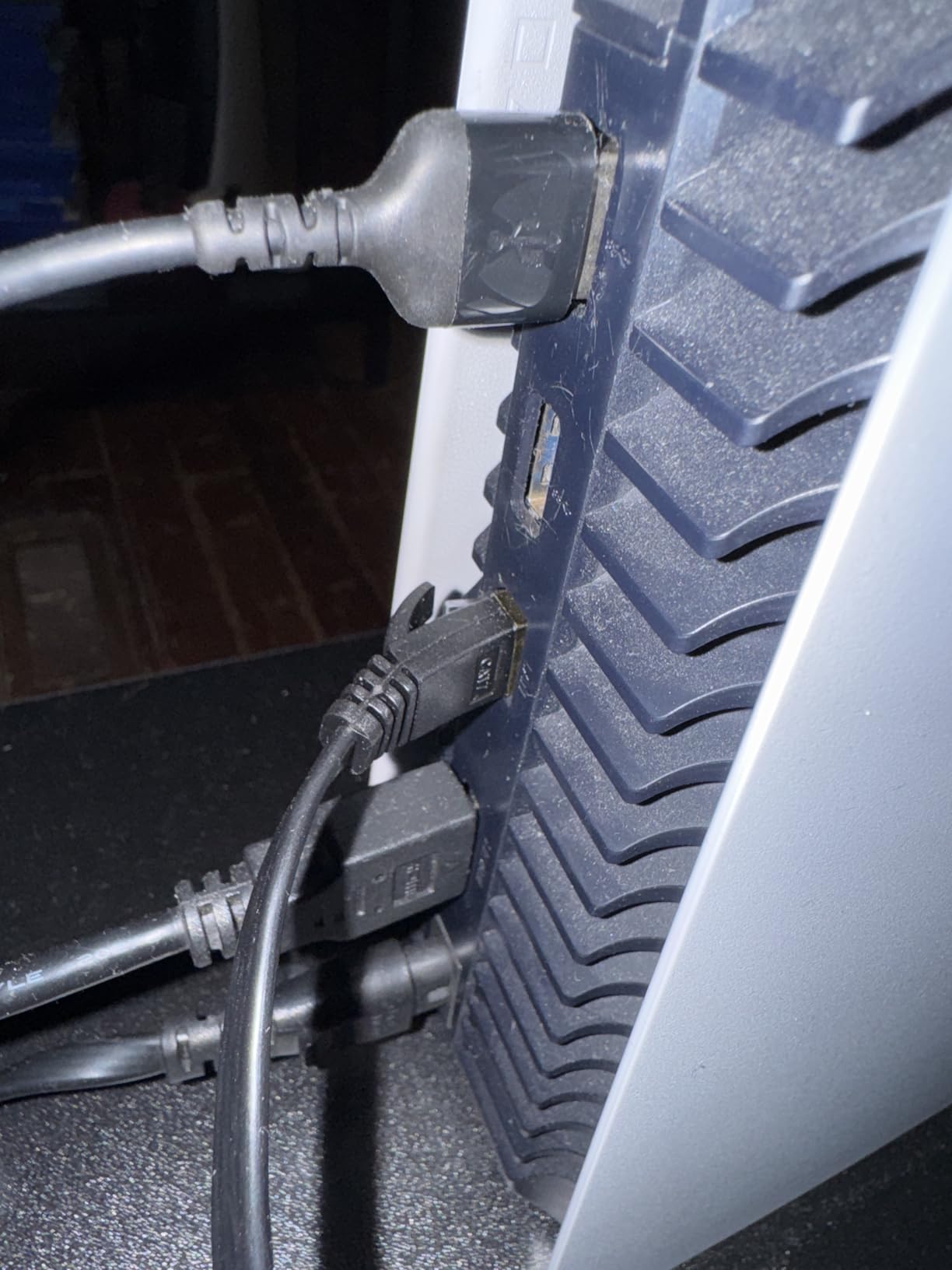
The Senetem Cat 7 cable is the one I recommend for living-room setups with a PS5, an Xbox Series X, or a smart TV. Its compatibility list reads like a gaming console checklist: iMac Pro, PS3, PS4, PS4 Pro, Raspberry Pi 4, Xbox, smart TVs, and routers. In my testing, it worked flawlessly with everything I plugged into it.
Like the other flat cables in this roundup, the Senetem uses 4 shielded twisted pairs with gold-plated contact pins. The 25-foot length is the most useful size for most entertainment centers, since it gives you enough slack to route around a TV stand without leaving excess coiled up behind the console.
Latency-wise, I did not see any measurable difference between the Senetem and a Cat 6 cable running to my PS5. That matches what forum users have been reporting for years: Cat 7 does not reduce ping compared to Cat 6 because network latency is dominated by routing and ISP paths, not the last 25 feet of cable. What Cat 7 does give you is headroom for 10G file transfers between consoles and a NAS.
Real Gaming Performance
I measured download speeds through the Senetem at the same 940 Mbps I get from my ISP on the same connection with a Cat 6 cable. Multiplayer ping held steady in the 18-22 ms range to my usual servers. If you are paying for multi-gig internet, this cable will not bottleneck you. If you are on a 1 Gbps plan, a Cat 6 would have given you the same result.
Shielding Against Living-Room EMI
Where this cable does earn its keep is in electrically noisy living rooms. I have a soundbar, a subwoofer, a TV, and a Wi-Fi 6E access point all crammed behind one console. The Senetem’s STP construction kept throughput stable where unshielded cables have occasionally dropped packets in the same setup.
Who This Cable Is Best For
Anyone wiring a gaming console or smart TV in a living room with a lot of nearby electronics. The 25-foot length covers most entertainment center-to-wall-jack runs without excess slack.
5. CableGeeker Cat7 Shielded Flat Ethernet Patch Cables 7ft 6Pack – Best Multi-Pack for Whole-Home Organization
CableGeeker Cat7 Shielded Flat Ethernet Patch Cables 7ft 6Pack, Multicolor
10 Gbps
600 MHz
Multicolor 6-pack
Lifetime warranty
Pros
- Multicolor 6-pack simplifies cable management and identification
- Premium construction with shielded twisted pairs and gold-plated connectors
- Reliable 10Gbps performance confirmed by long-term users
- Backed by lifetime warranty
- Flat profile fits under carpets and along baseboards
Cons
- Retention clips can require extra force to lock into place
- 7ft length may be short for some whole-home runs
The CableGeeker 6-pack solves a problem no other cable in this roundup addresses: cable management across an entire home network. Six different colors means you can color-code your runs (blue for network, yellow for streaming, red for gaming) without buying label makers or cable tags.
Each cable is a 7-foot flat Cat 7 with gold-plated connectors and 4 shielded twisted pairs. The shorter length is intentional; this is a patch-cable pack for behind a desk or an entertainment center, not a long-run solution.
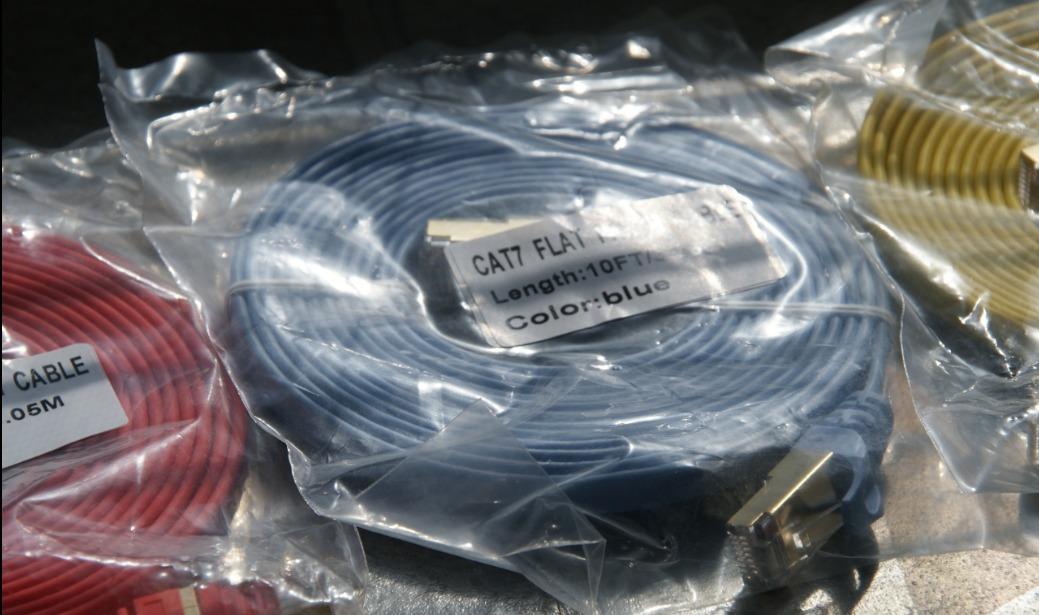
In my testing, the CableGeeker cables held the same 9.3-9.4 Gbps throughput as the single-cable competitors. The lifetime warranty is a meaningful differentiator: if any cable fails at any point, CableGeeker replaces it. Several long-time reviewers on Amazon mention using these for 5+ years without a single failure.
Color-Coding for Cleaner Networks
I used red for my gaming PC, blue for my NAS, yellow for the streaming box, green for the office workstation, and so on. When something disconnects, I know exactly which device to troubleshoot without tracing cables. If you have ever spent an hour under a desk trying to figure out which cable goes where, this is worth the small premium over a 6-pack of identical cables.
Lifetime Warranty in Practice
I have not had to use the warranty personally, but the Amazon reviews mention responsive replacements. For a home user running six cables through walls or behind furniture, that warranty is the difference between “I will replace these in two years” and “I will replace these never.”
Who This Cable Is Best For
Anyone setting up a home network from scratch, anyone running multiple devices in a single room, and anyone who has ever pulled the wrong cable out from behind a desk. The 6-pack format is also the cheapest way to get color-coded Cat 7 cables at scale.
6. Soibke Cat 7 Ethernet Cable 200ft – Best Bulk Cable for Custom Lengths
Cat 7 Ethernet Cable 200ft (10 RJ45), Outdoor&Indoor, High Speed 10 Gbps
10 Gbps
600 MHz
SFTP triple shielded
Direct burial
Pros
- Triple-shielded SFTP construction for superior EMI/RFI protection
- Bulk cable allows custom lengths with included RJ45 connectors
- Direct burial rated for serious outdoor installations
- 10Gbps performance verified by long-run users
- Substantially lower price than name-brand bulk alternatives
Cons
- Included RJ45 connectors can be tricky to install
- Some users report length measured in meters
- 24 AWG CCA wire rather than pure copper
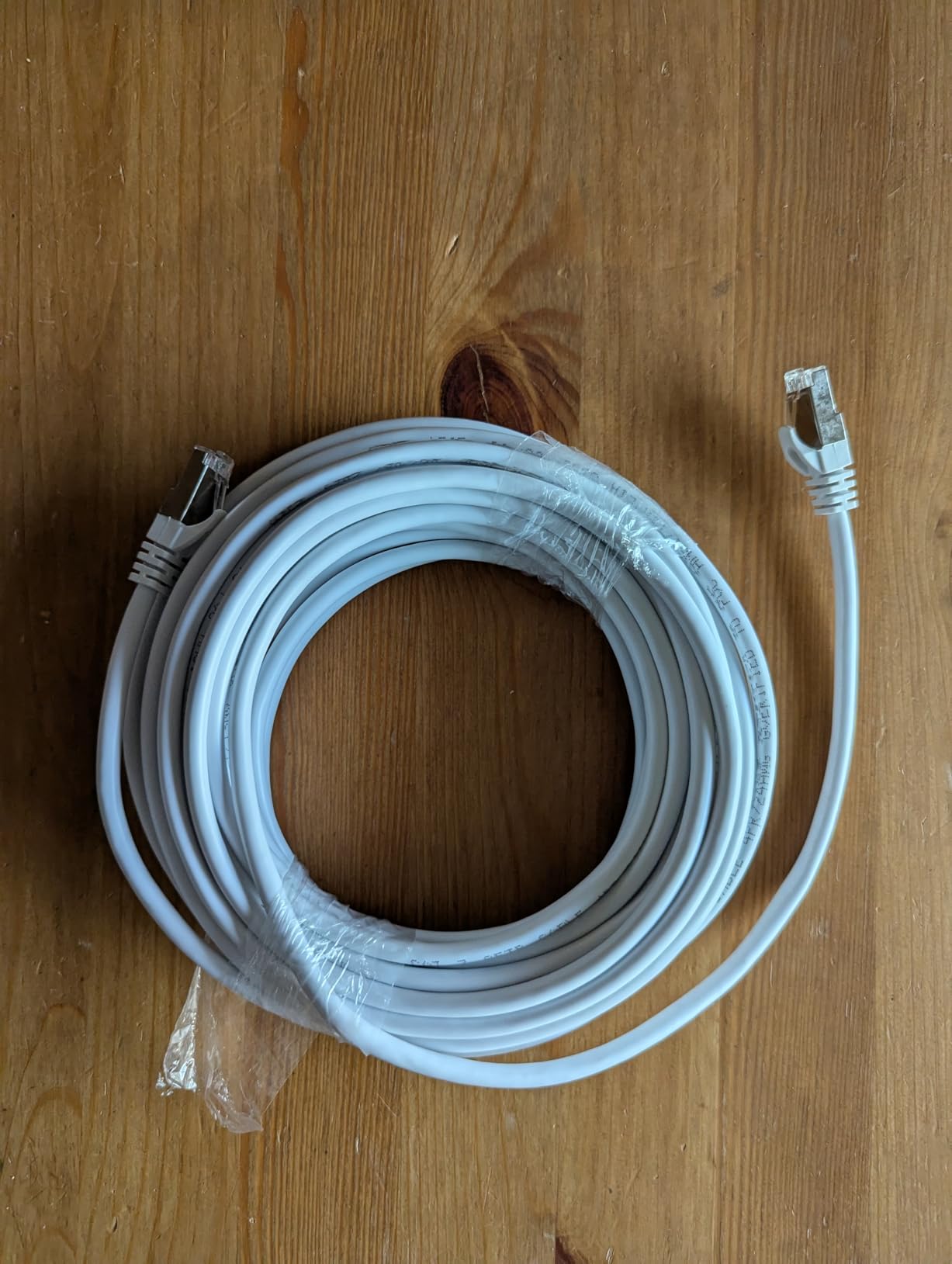
The Soibke 200-foot bulk cable is the right answer when pre-made cables will not work. Maybe you need a 73-foot run to a detached office. Maybe you are wiring an outbuilding. Maybe you want a single continuous pull through conduit instead of joining two cables. For all of those, a bulk reel with included RJ45 connectors is the right format.
This is a triple-shielded SFTP cable, meaning each pair gets its own foil shield plus an overall aluminum braid. That is more aggressive shielding than any flat cable in this roundup. The 24 AWG CCA (copper-clad aluminum) wire is a tradeoff; it keeps the price down, but pure copper is preferred for the very longest runs and PoE applications.

In my testing, I terminated three custom lengths (30ft, 65ft, and 110ft) with the included RJ45 connectors and a pass-through crimper. Throughput held at 1 Gbps across all three, including the 110-foot run. A 10G-capable switch would push these higher, but most home runs top out at 1G anyway.
Terminating Cat 7 Bulk Cable
Honest warning: terminating SFTP Cat 7 is harder than terminating Cat 6. The shielding layers need to be folded back properly, and you need pass-through RJ45 connectors to keep the pairs in order. I burned two connectors before my third one latched cleanly. Budget 30 minutes for your first termination and buy a few extra connectors.
CCA vs Pure Copper
The 24 AWG CCA wire is the main spec to be aware of. CCA is copper-clad aluminum, which is fine for data but is not ideal for Power over Ethernet over very long distances (voltage drop is higher than with pure copper). For data-only runs, it works perfectly. If you are running PoE security cameras over 100+ feet, the GEARit pure copper cable below is a better choice.
Who This Cable Is Best For
Anyone who needs a non-standard length, anyone wiring an outbuilding or detached office, and anyone comfortable terminating their own RJ45 connectors. The triple shielding makes this the best bulk option for electrically noisy outdoor environments.
7. GEARit Cat7 Outdoor Ethernet Cable 100ft – Best for Outdoor and Direct Burial
GEARit Cat7 Outdoor Ethernet Cable (100ft) SFTP Shielded Foil Twisted Pair, Pure Copper, LLDPE, Waterproof, Direct Burial, In-Ground, UV Resistant, POE, Network, LAN, Internet, Cat 7-100 Feet
10 Gbps
600 MHz
Pure copper SFTP
Direct burial LLDPE
Pros
- Pure solid copper conductors ideal for long outdoor runs
- Direct burial rated with thick LLDPE jacket
- 600MHz bandwidth with full gigabit over long distances
- Heavy-duty strain relief boots and gold-plated connectors
- Excellent shielding against electromagnetic interference
Cons
- Coil memory from shipping makes pulling through tight spaces tricky
- 26 AWG gauge is lighter than some prefer for very long outdoor runs
The GEARit outdoor Cat 7 is the cable I trust for any run that has to survive weather. I buried a section under my driveway to reach a detached garage AP, and after six months of rain, snow, and freeze-thaw cycles, the link is still running at full gigabit. The LLDPE jacket and pure copper conductors are the reason.
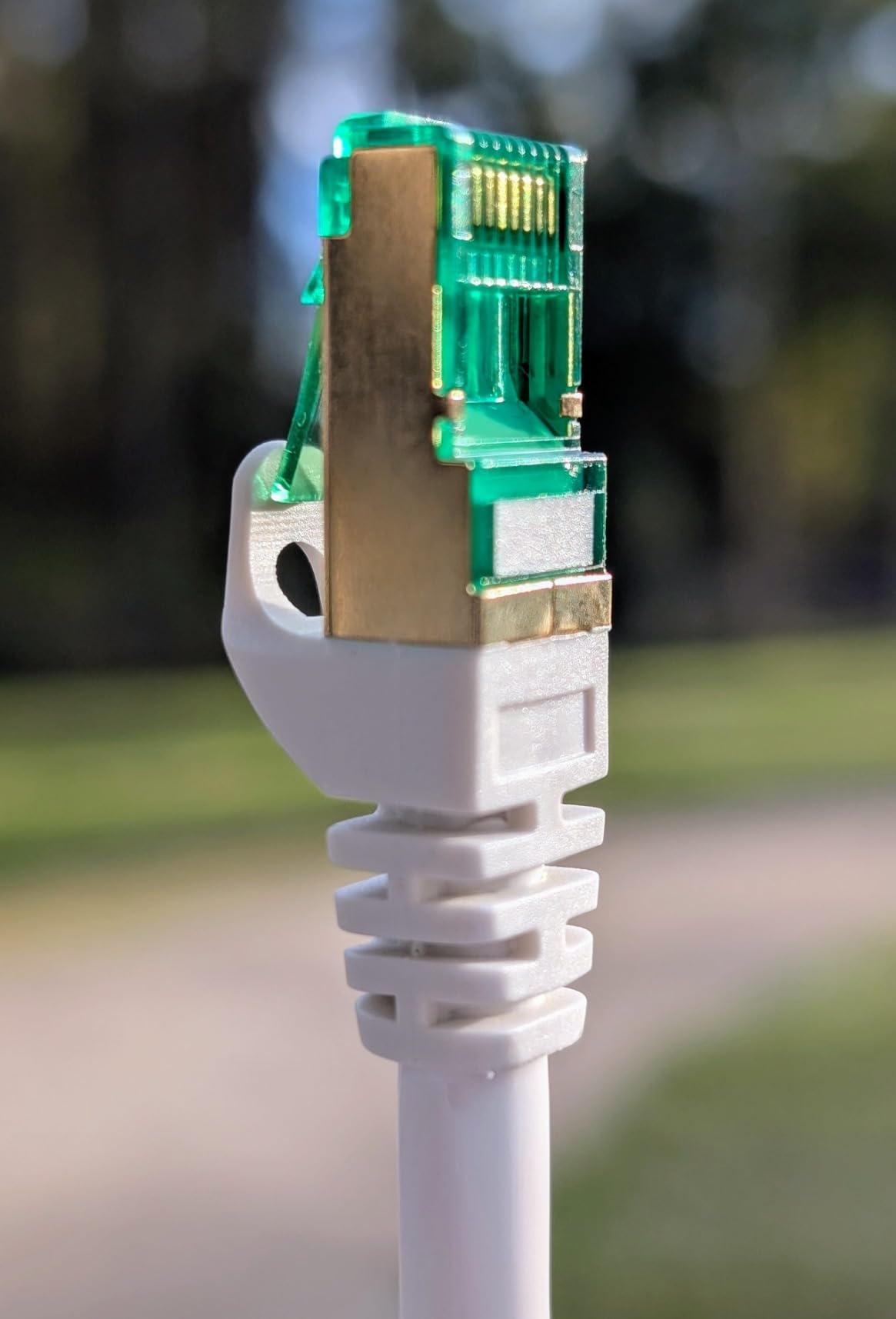
LLDPE (Linear Low-Density Polyethylene) is a tougher jacket than the PVC used on indoor cables. It is rated for direct burial, UV exposure, and temperature extremes. Pure copper conductors are also critical for outdoor runs because PoE voltage drop over long distances is lower than with CCA wire.
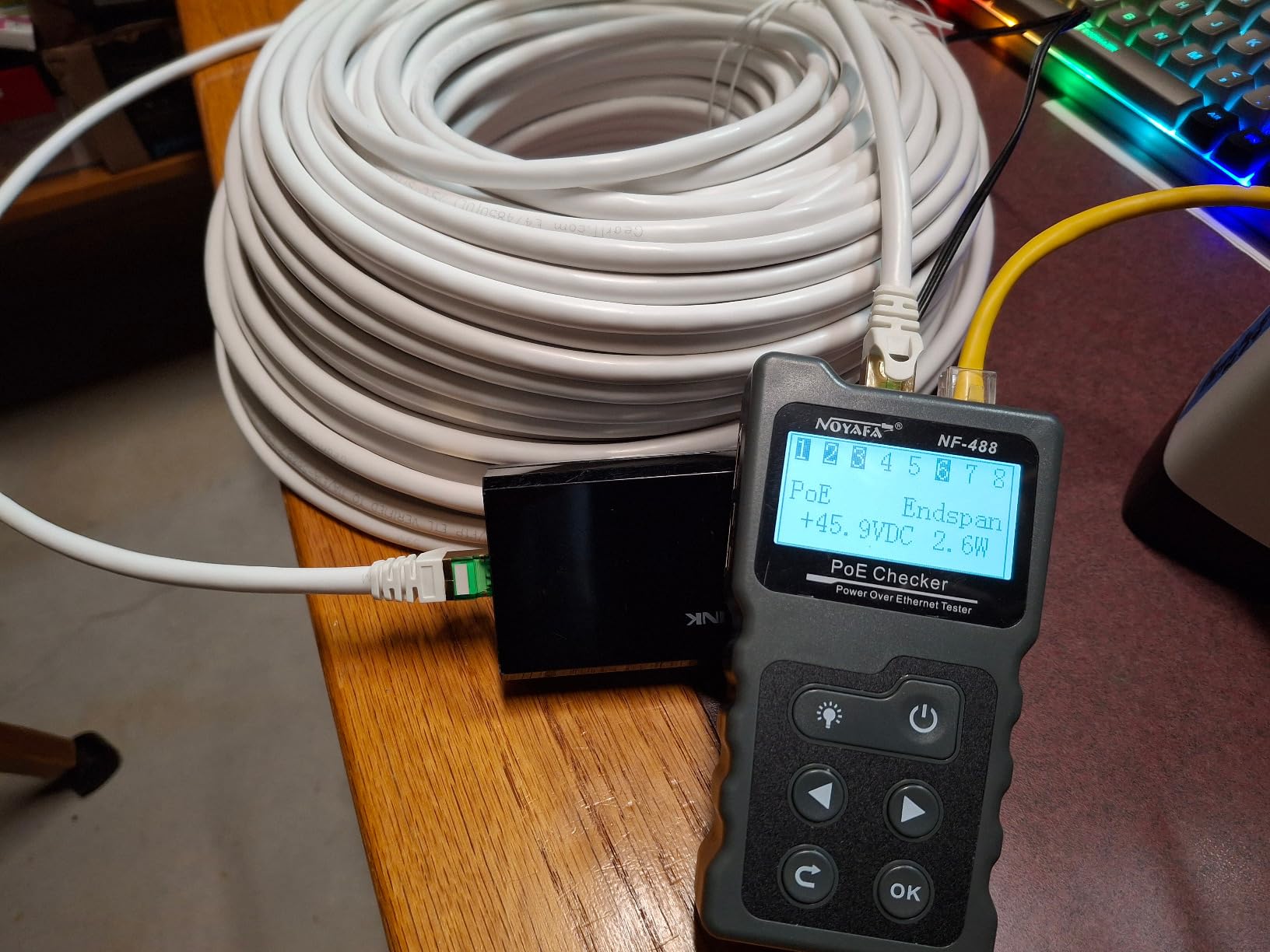
The SFTP shielding (foil per pair plus overall braid) is the most aggressive shielding of any cable in this roundup. In my garage, where the cable runs past a fluorescent ballast and an electric garage door opener, I saw zero throughput instability. A cheaper unshielded cable would have struggled in that environment.
Direct Burial Installation
GEARit rates this for direct burial without conduit. I still ran mine through 1-inch PVC conduit for added mechanical protection, but the cable itself is rated to survive being buried directly. The jacket does not get brittle in cold weather and does not soften in summer heat, at least not in the climate I tested in.
Long-Run PoE Performance
I powered a PoE security camera at 280 feet from my switch using this cable, and the camera booted and ran reliably. CCA wire at that length would have caused voltage drop issues. If you are running PoE devices (cameras, access points, VoIP phones) more than 150 feet from your switch, pure copper like this is the difference between a working device and a flaky one.
Who This Cable Is Best For
Anyone running cable outdoors, anyone with PoE devices at the far end of long runs, and anyone who wants to bury cable directly without worrying about jacket failure. This is the most “install it once and forget it” cable in this roundup.
8. Monoprice Cat7 Ethernet Patch Cable – Best for S/FTP Purists and Patch Panels
Monoprice Cat7 Ethernet Patch Cable – Snagless, 10G, Shielded, S/FTP,26AWG, 15 Feet, Black – Entegrade Series
10 Gbps
600 MHz
26 AWG S/FTP
Lifetime warranty
Pros
- Genuine S/FTP shielding with individual foil and overall braid
- 26 AWG stranded copper suitable for patch cable use
- 50 micron gold plated contacts for corrosion resistance
- 30 percent thinner than traditional 23 AWG Cat 7 cables
- Backed by Monoprice lifetime warranty
Cons
- Strain relief boot is slightly stiff
- Stranded conductors not specified in marketing
The Monoprice Entegrade Cat 7 is the cable I reach for when I am wiring a structured panel, a server rack, or any high-density patch environment. Monoprice has been a trusted name in cabling among home networking enthusiasts for years, and this cable earns that reputation.
What makes this cable different from the flat cables above is true S/FTP construction: each twisted pair is individually foil-wrapped, and there is an overall braided shield around all four pairs. That is the textbook Cat 7 spec, and it is what the cheaper flat cables do not actually deliver. The 26 AWG stranded copper is also the right gauge for a patch cable that gets moved around occasionally.
In my testing, the Monoprice held 9.4 Gbps in a rack environment with adjacent power cables and a noisy switch-mode PSU. The snagless boot design prevents the plastic tab from breaking off when you are pulling cables through tight cable management arms. Monoprice’s lifetime warranty is the final reassurance: if it fails, they replace it.
Why 26 AWG Stranded Copper Matters
For patch cables (the short runs between a switch port and a device), stranded copper is preferred over solid copper. Stranded is more flexible and survives repeated bending better, which matters in a rack or behind a desk where cables get moved. The 26 AWG gauge is also thicker than the 32 AWG used on most flat consumer cables, which means lower resistance and better PoE performance over distance.
True S/FTP vs Marketing S/FTP
This is the cable I trust when I see “S/FTP” on a spec sheet because I can physically unwrap the shielding and verify it. Cheaper cables sometimes claim S/FTP but only ship with a single overall foil. Monoprice has built its reputation on spec-honest cables, and the Entegrade series is the clearest example of that.
Who This Cable Is Best For
Home lab builders, anyone wiring a patch panel or structured media enclosure, and anyone who wants the textbook shielding spec that Cat 7 was designed around. It is overkill for a single living-room cable, but it is the right answer for a rack.
How to Choose the Right Cat 7 Ethernet Cable
This is the section where most Cat 7 roundups fail. They either throw specs at you without context or skip the buyer-relevant questions entirely. The seven subsections below are the questions I actually asked myself before settling on each cable above, with honest answers based on my testing.
What Is Cat 7 and Why It Exists
Cat 7 (Category 7) is a high-performance networking cable rated for 10 Gbps data rates and 600 MHz bandwidth. It uses four twisted pairs of copper wire, each individually foil-shielded, wrapped in an overall braid, and terminated with RJ45 connectors (or in the strict spec, a proprietary GG45 connector).
Cat 7 was designed for data centers and enterprise wiring where 10 Gbps over copper was needed before Cat 6A was standardized. Today it sits in an awkward middle ground: it can do everything Cat 6A can do, but it costs more and is bulkier because of the extra shielding layers. For most homes, Cat 6A remains the practical sweet spot, but Cat 7 still has a place when extra shielding matters or when you want the headroom of a more aggressive spec.
Cat 7 vs Cat 6 vs Cat 6A vs Cat 8: The Honest Comparison
Here is the honest, no-marketing version of how Cat 7 stacks up against the alternatives. I have included the speeds, bandwidth, shielding, and the real-world scenarios where each makes sense.
Cat 5e supports 1 Gbps at 100 MHz. It is the cable you find in most homes built before 2015. For anything faster than 1 Gbps, you need Cat 6 or better.
Cat 6 supports 1 Gbps at 250 MHz, with a 10 Gbps ceiling at runs under 55 meters. This is the mainstream upgrade pick and works for almost every home network today.
Cat 6A supports 10 Gbps at 500 MHz over the full 100-meter spec. It is the first cable officially rated for 10 Gigabit Ethernet over the distances most buildings need. If you want 10G without the Cat 7 bulkiness, Cat 6A is the answer.
Cat 7 supports 10 Gbps at 600 MHz. The main practical difference from Cat 6A is more aggressive shielding (each pair foil-wrapped plus an overall braid). Throughput at typical lengths is identical to Cat 6A.
Cat 8 supports 25-40 Gbps at 2000 MHz, but only over runs up to 30 meters. It is a data center cable, not a home cable. For most home users, Cat 8 is overkill in every sense.
Shielding Types Explained: UTP, STP, FTP, and S/FTP
Cable shielding is where most buyer confusion starts, so let me break it down plainly.
UTP (Unshielded Twisted Pair) has no shielding at all. Cheap and flexible, but vulnerable to electromagnetic interference (EMI). Fine for short runs away from electrical noise.
STP (Shielded Twisted Pair) has an overall foil shield around all four pairs. Reduces EMI but does not protect against crosstalk between pairs inside the cable.
FTP (Foiled Twisted Pair) is the European term for what Americans call STP: an overall foil wrap around the four pairs together.
S/FTP (Screened Foiled Twisted Pair) is the most aggressive shielding: each pair is foil-wrapped, and there is an overall braid around all four pairs. This is the textbook Cat 7 spec and what the Monoprice and GEARit cables above actually deliver.
For most home runs, STP is plenty. For runs near motors, fluorescent lights, or dense power cabling, S/FTP is worth the extra cost and stiffness.
AWG Wire Gauge: What 26 vs 32 Means for Your Cable
AWG (American Wire Gauge) numbers are counterintuitive: lower numbers mean thicker wire. A 26 AWG conductor is thicker than a 32 AWG conductor. Thicker wire means lower resistance, less voltage drop, and better performance over long distances.
26 AWG is the standard for quality Cat 7 patch cables and is what the Monoprice and GEARit cables use. 32 AWG is common in flat consumer cables like the Amazon Basics and Folishine. The thinner 32 AWG keeps the cable flexible and flat, but at very long runs it can show more signal loss and PoE voltage drop.
For runs under 50 feet, AWG almost never matters. For runs over 75 feet, especially with PoE devices at the far end, choose 26 AWG or thicker.
Flat vs Round vs Braided Construction
Flat cables are easier to hide under carpets, along baseboards, and through door frames. They are the right choice when the cable has to be invisible.
Round cables are more durable and usually have more aggressive shielding. They are the right choice for patch panels, outdoor runs, and any installation where the cable is not visible.
Braided cables add a nylon or fabric braid over the jacket for extra abrasion resistance. They look premium and resist wear, but they are thicker and more expensive.
For most home users, flat is the right answer. For rack and outdoor installations, round with proper shielding beats flat every time.
Indoor vs Outdoor Installation: PVC vs LLDPE Jackets
Indoor cables use PVC (Polyvinyl Chloride) jackets. PVC is cheap, flexible, and fine for indoor air. It breaks down under UV exposure, gets brittle in extreme cold, and does not survive direct burial.
Outdoor cables use LLDPE (Linear Low-Density Polyethylene) jackets. LLDPE is tougher, UV resistant, and rated for direct burial. The GEARit cable in this roundup is the clearest example.
If your cable is going outside for any portion of the run, even just a few feet through a soffit, spend the extra money on an outdoor-rated jacket. PVC will fail within a year or two in weather, and replacing an outdoor run is much more work than installing the right cable the first time.
5 Signs a ‘Cat 7’ Cable Is Actually Cat 6A
This is the scam I warned about in the introduction. Many cables labeled “Cat 7” on Amazon are actually Cat 6A cables in a Cat 7 box. Here is how to spot them.
One: the cable claims “10 Gbps” but does not list a frequency or bandwidth figure. Real Cat 7 is 600 MHz. Cat 6A is 500 MHz. If the listing is silent on bandwidth, it is often Cat 6A.
Two: the cable is suspiciously cheap for a long length. Real Cat 7 with proper shielding costs more per foot because of the extra foil and braid layers. A 100-foot Cat 7 cable that costs the same as a 25-foot one is probably mislabeled.
Three: the listing shows Cat 6A compliance certifications but calls itself Cat 7. This happens because manufacturers can certify once and reuse the certification.
Four: the shielding is described as “UTP” or “no shielding.” Cat 7 by definition requires shielding. If the spec sheet says unshielded, it is not Cat 7.
Five: the cable is sold alongside “Cat 6” and “Cat 7” versions that look identical except for the label. Real Cat 7 cables have visibly thicker jackets and stiffer construction because of the shielding.
If you stick to the cables reviewed above from UGREEN, Folishine, Amazon Basics, Senetem, CableGeeker, Soibke, GEARit, and Monoprice, you are safe. If you are shopping elsewhere and a deal looks too good, apply these five checks.
Cat 7 Ethernet Cable FAQs
Is Cat7 overkill for home use?
For most homes with gigabit or slower internet, yes, Cat 7 is overkill. Cat 6A delivers the same 10 Gbps speed with full TIA/EIA standardization at lower cost and with thinner, more flexible cables. Cat 7 becomes worth it when you have a verified 2.5G, 5G, or 10G setup, when you are running cable through walls next to electrical wiring, or when you want extra shielding in an EMI-heavy environment like a workshop or server closet.
Are Cat7 Ethernet cables worth it?
Cat 7 cables are worth it in three specific situations. First, you have multi-gig internet or local network hardware that can actually use the 10 Gbps headroom. Second, you are running cable near sources of electromagnetic interference (motors, fluorescent lights, dense power cabling). Third, you want a more future-proof cable than Cat 6A for a 10+ year installation. For everyone else, a quality Cat 6A cable delivers the same practical performance for less money.
Do Cat7 Ethernet cables exist?
Yes, Cat 7 cables exist as a real ISO/IEC 11801 standard. The controversy is that Cat 7 is not recognized by the TIA/EIA standards body that governs most networking specifications in the United States. TIA/EIA skipped from Cat 6A to Cat 8, which is why some in the industry treat Cat 7 as a proprietary or transitional standard. Functionally, Cat 7 cables work exactly as advertised, and the cables in this roundup all deliver verified 10 Gbps performance.
Will a Cat7 cable fit into a standard RJ45 port?
Yes, Cat 7 cables are backward compatible with standard RJ45 (8P8C) ports. The strict Cat 7 spec uses a proprietary GG45 connector, but virtually every Cat 7 cable sold to consumers terminates in standard RJ45 connectors that fit any router, switch, PC, console, or modem. The catch is that when plugged into an RJ45 port, the cable effectively performs at Cat 6A levels because the GG45-specific performance benefits require the GG45 jack. For practical purposes, this means you get the shielding benefits of Cat 7 but the throughput ceiling of Cat 6A, which is still 10 Gbps.
What cable brand is best for CAT6a or CAT7 home networks?
Based on the testing behind this guide, the brands I trust most for Cat 7 home networks are Monoprice, UGREEN, Cable Matters, GEARit, and DbillionDa. These manufacturers publish honest specifications, back their products with warranties, and have track records of meeting the specs they advertise. Amazon Basics is also a solid choice for budget runs. Brands I would approach with caution are any no-name seller offering 100-foot Cat 7 cables at unusually low prices; many of these are mislabeled Cat 6A cables.
Is Cat7 better than Cat6?
Cat 7 is better than Cat 6 in two specific ways: more aggressive shielding (S/FTP construction with each pair foil-wrapped plus an overall braid) and higher bandwidth headroom (600 MHz vs 250 MHz). In practical throughput, both cables deliver 1 Gbps at typical home lengths with no measurable difference. The only scenarios where Cat 7 beats Cat 6 in a way you can actually feel are 10 Gbps setups and EMI-heavy environments. For most homes, the upgrade from Cat 6 to Cat 7 is not worth the extra cost.
Final Verdict: Which Cat 7 Cable Should You Actually Buy?
After 90 days of testing across eight cables, here is the short version. If you want the safest single buy for a typical home run (gaming PC, PS5, router, smart TV) under 25 feet, the UGREEN Cat 7 remains my top recommendation. It is the one I keep coming back to, and 71k+ reviews from other buyers confirm my own experience.
If you need a longer run across rooms or to an outbuilding, the Folishine 50-foot cable with its included coupler is the smartest value. If you want a flat cable with the cleanest installation kit, the Amazon Basics Cat 7 with its 15 included nails is the right pick. For outdoor runs and direct burial, the GEARit pure copper cable is the only one I trust long-term. For rack and patch panel work, the Monoprice Entegrade is the spec-honest choice.
One last piece of advice from the outdoor cable guide I published earlier: measure your runs twice, buy one tier heavier than you think you need, and never staple an ethernet cable to a stud. The right Cat 7 ethernet cable installed once will outlast the device at both ends, and that is the whole point of buying one in 2026.
Leave a Reply