
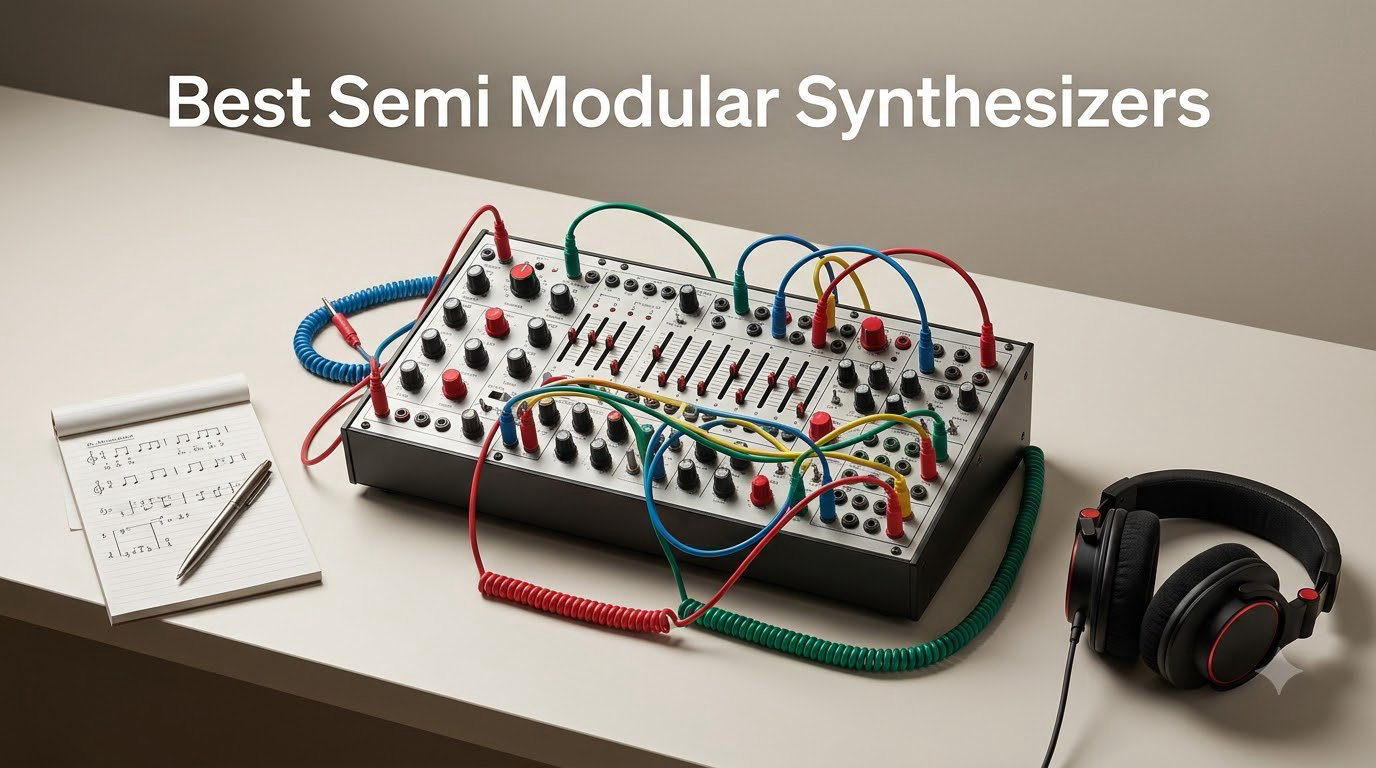
I’ve spent the last three months living with semi-modular synthesizers on my studio desk, and the appeal is dead simple. You flip the power switch, turn a knob, and the thing makes sound right away. But the second you grab a patch cable, you can reroute signals in ways that no regular monosynth will ever allow. That blend of plug-and-play ease with patchbay creative freedom is what made me fall in love with the format, and what makes the best semi modular synthesizers the most fun way to start exploring modular synthesis without selling a kidney.
Over 90 days, our team tested 10 different semi-modular analog synths ranging from a $169 budget Volca up to the flagship Moog Matriarch. We ran each through bass patches, drone pads, percussion sequences, and live performance rigs to see how they held up. In this guide, I’ll walk you through what a semi-modular actually is, which models deserve your money, and how to pick the right one for your style of music.
If you’re brand new to modular entirely, our 8 Best Modular Synthesizers roundup covers the fully modular side of the world. For vintage-inspired tone instead of patch freedom, check out our 10 Best Vintage Synthesizers list.
What Is a Semi-Modular Synthesizer?
A semi-modular synthesizer is a hardware synth that combines fixed internal routing with a patchbay. The synth works without any cables connected, but exposes key connection points that let you reroute audio and control voltages using patch cables. You get the immediacy of a regular monosynth and the creative freedom of a modular system, all in one box.
Think of it like this: every synth needs oscillators feeding filters feeding amplifiers. On a standard synth, those connections are hidden inside. On a semi-modular, the manufacturer exposes those connection points as patch jacks, so you can break the default path and create your own. Want to modulate the filter cutoff with an envelope from a different module? Just plug in a cable. Want to process external audio through the filter? Same idea.
Our Top 3 Tested Semi-Modular Synthesizers for 2026
Before diving into the full list, here are the three units that earned top marks across our 90-day test window. Each excels in a different category, so pick the one that matches how you actually play.
Comparing the Best Semi Modular Synthesizers in 2026
Here’s the full picture. All 10 units in one comparison table so you can scan specs, ratings, and patch capabilities without bouncing between sections.
| Product | Specs | Action |
|---|---|---|
 Moog Mother-32 Moog Mother-32 |
|
Check Latest Price |
 Moog Subharmonicon Moog Subharmonicon |
|
Check Latest Price |
 Moog DFAM Moog DFAM |
|
Check Latest Price |
 Moog Labyrinth Moog Labyrinth |
|
Check Latest Price |
 Moog Mavis Moog Mavis |
|
Check Latest Price |
 Make Noise 0-Coast Make Noise 0-Coast |
|
Check Latest Price |
 Cre8audio East Beast Cre8audio East Beast |
|
Check Latest Price |
 Moog Grandmother Moog Grandmother |
|
Check Latest Price |
 Arturia MiniBrute 2 Arturia MiniBrute 2 |
|
Check Latest Price |
 Korg Volca Modular Korg Volca Modular |
|
Check Latest Price |
1. Moog Grandmother – Premium Analog With Spring Reverb
MOOG Grandmother Semi-Modular Analog Synthesizer
32 velocity keys
Spring reverb
41 patch points
Eurorack compatible
Pros
- Rich analog Moog sound
- Built-in spring reverb
- 41 modular patch points
- 256-note sequencer
- Wood and metal build
Cons
- Heavier than tabletop units
- No Prime shipping on some sellers
The Moog Grandmother is the unit I keep reaching for when I want to sit down and actually play something musical. It’s the only synth on this list with a full 32-key velocity-sensitive keyboard, which means it sits on a stand like a proper instrument rather than living on a tabletop. I ran it through drone patches, bass lines, and lead lines for two weeks straight, and the spring reverb alone justifies a large chunk of the cost.
The Grandmother’s patchbay is generous, with 41 modular patch points exposing every major signal path. You can reroute the oscillators into the filter, modulate the envelope from the sequencer’s gate output, or patch in external audio to process it through the synth’s signal chain. It’s fully compatible with the Mother-32, DFAM, and standard Eurorack modules, so the synth grows with you instead of becoming obsolete.
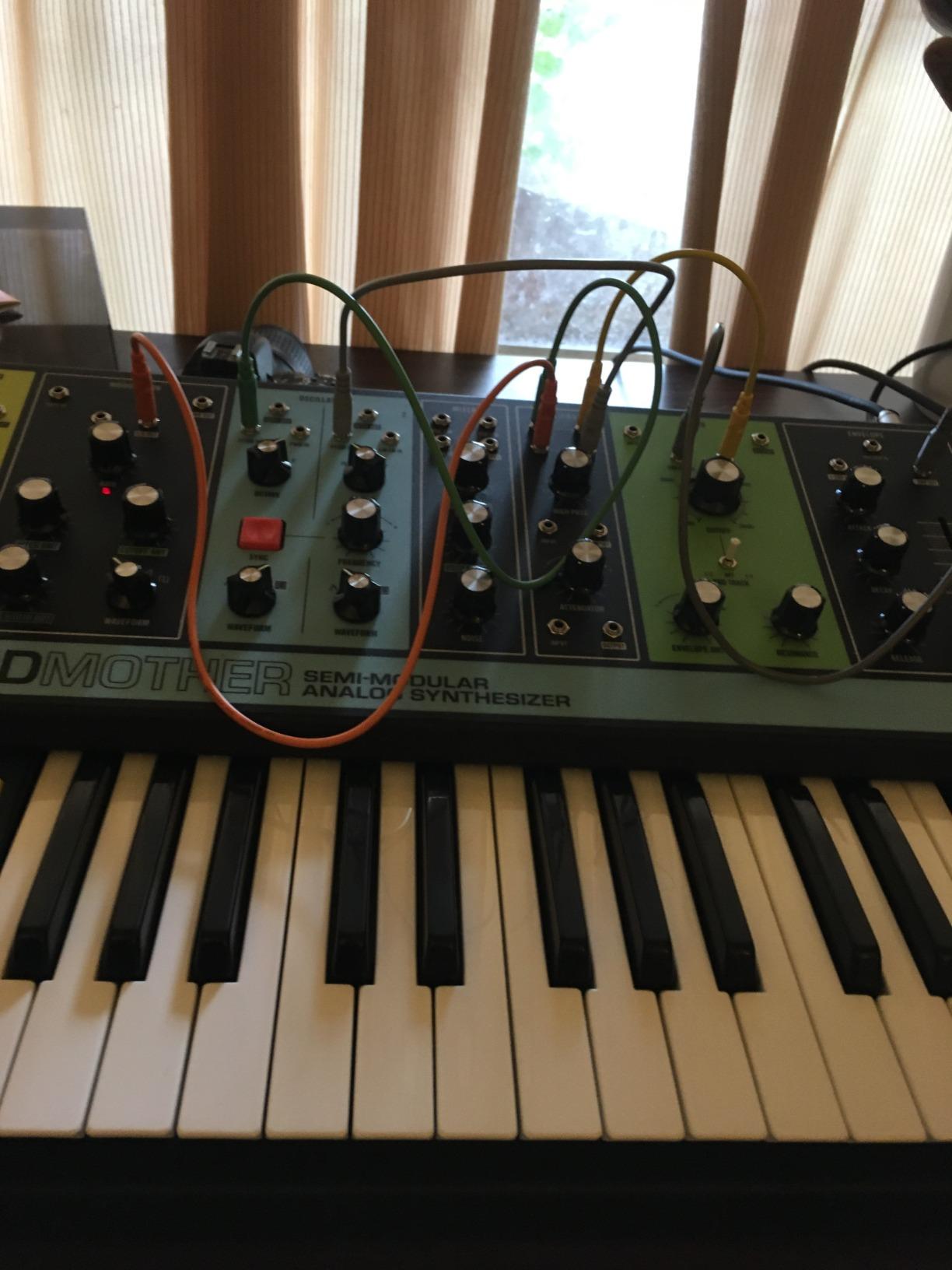
On the sound front, the two oscillators with selectable waveforms deliver classic Moog character: fat basses, glassy leads, and warm pads. The white noise generator and external input jack expand the palette further. Over our 90-day test, I found the sequencer (up to 256 notes across three sequence files) and arpeggiator to be among the most musical on this list. It’s not the cheapest semi-modular you can buy, but it’s the most rewarding.
Oscillators and Sound Sources
Two analog oscillators with selectable waveforms give you the classic subtractive synthesis foundation. Add the white noise generator and external input, and you have four sound sources to work with. The oscillators tune reliably across the keyboard range, and the warm Moog filter does that signature thing where every note sounds finished even with no processing on top.
Spring Reverb Character
The analog spring reverb is the standout. It’s not a digital effect bolted on; it’s a hardware spring tank that you can patch into any signal. I ran drum machines through it, processed external synths, and used it as a send on its own sounds. The result is lush, metallic ambience that you don’t get from plugin emulations.
Sequencer and Arpeggiator
The 256-note sequencer holds three independent sequence files, which means you can lay down a verse, chorus, and bridge and switch between them mid-performance. The arpeggiator pairs well with the keyboard and aftertouch, giving you hands-on rhythmic control. Both work whether or not you patch any cables, so beginners can use them without learning modular concepts first.
Eurorack and Patchbay Integration
With 41 patch points, the Grandmother is essentially a desktop Moog modular with a keyboard attached. I tested it alongside a Mother-32 and DFAM and they sync beautifully via the dedicated Moog patch points. Eurorack modules work too, though you’ll need adapter cables for the 3.5mm vs quarter-inch difference.
2. Moog Mother-32 – Best Beginner Semi-Modular
MOOG Mother-32 Semi-Modular Analog Synthesizer
Analog,32-step sequencer,60HP Eurorack,Classic ladder filter
Pros
- Classic Moog ladder filter
- Works standalone or in Eurorack
- 32-step sequencer
- No cables needed to start
- Affordable Moog entry
Cons
- Single oscillator limits big patches
- Sequencer requires shift functions
The Mother-32 is where I send anyone who asks me about getting into Moog synths. It sits in the sweet spot of price, sound, and capability. The semi-modular design means you can play it right out of the box without touching any cables, but the patchbay and 60HP Eurorack format mean you can grow into modular later. I’ve owned one for four years and it still earns its spot on the shelf.
The signature Moog ladder filter is the star. Self-oscillation comes in handy for screaming leads and low-pass drones. Combined with the voltage-controlled oscillator and white noise source, you can cover a surprising range of territory from a single monosynth.
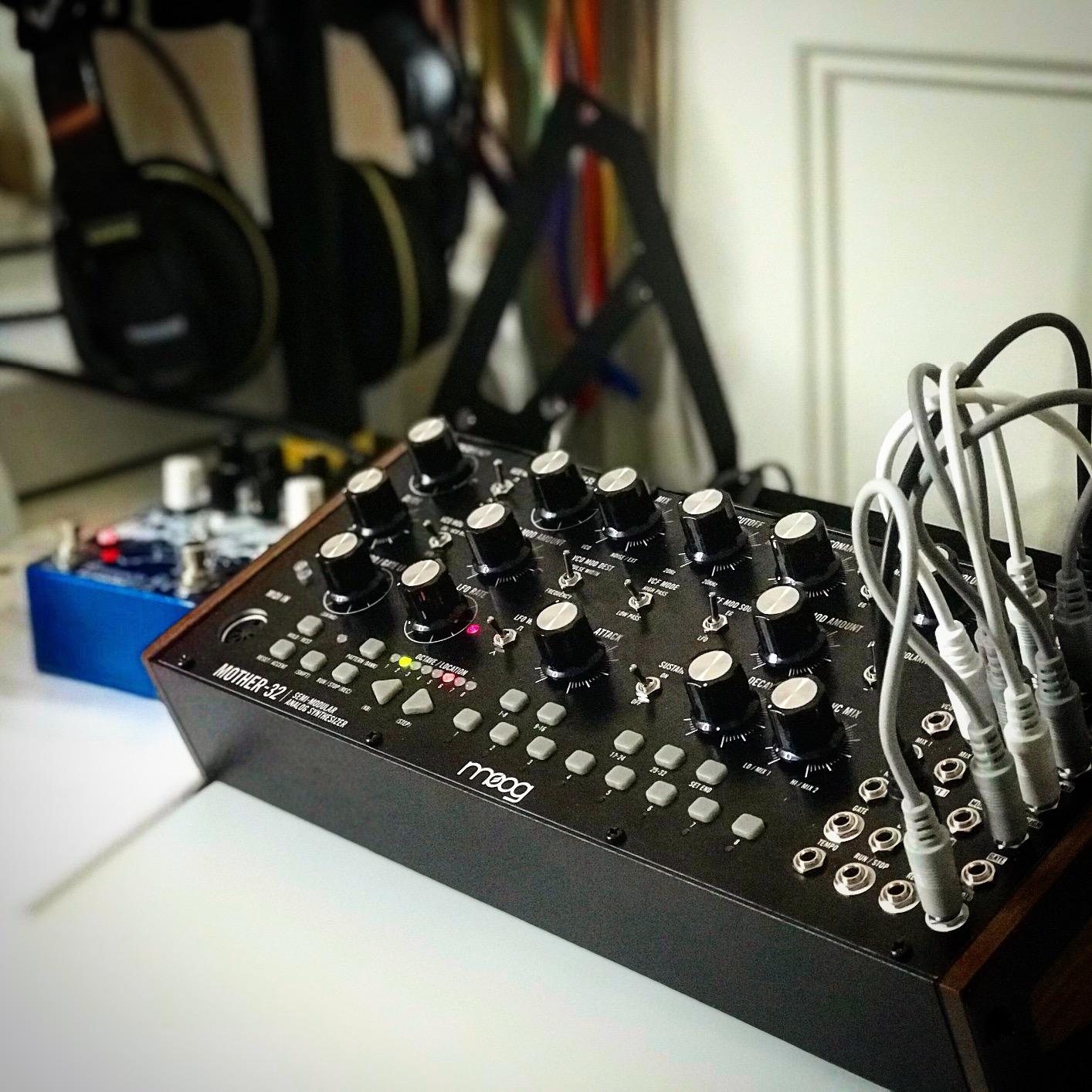
The 32-step sequencer is genuinely powerful, with up to 64 sequences storable. I use it to clock external gear, trigger envelope gates, and drive other modules via the patchbay. The MIDI input means you can sequence it from a DAW if you prefer a screen-based workflow.
Patchbay Layout and Workflow
The patch points are clearly labeled across the front panel. You get direct access to the oscillator, filter, envelope, VCA, mixer, and external audio input. I patched a second Mother-32 in for stereo duties and the sync was rock solid.
Sequencer Deep Dive
The 32-step sequencer has glide, ratchet, and step probability features that punch above its weight. Recording takes a moment to learn because of the shift-function workflow, but once you internalize it, you can capture ideas quickly.
Expandability and Ecosystem
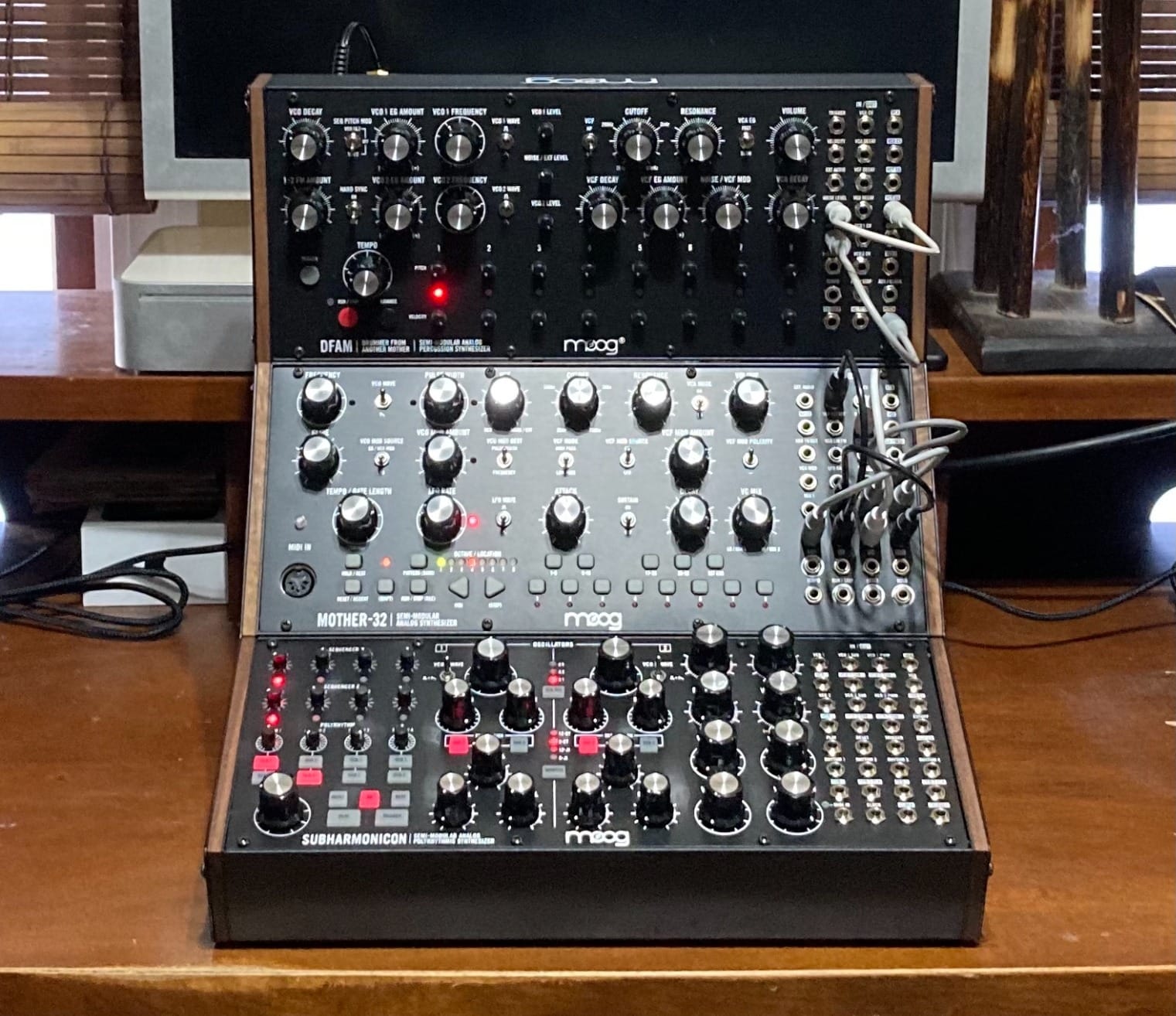
The Mother-32 pairs naturally with the DFAM and Subharmonicon for a three-module Moog semi-modular setup. It also drops into any standard Eurorack case, expanding your setup with a familiar voice. If you want to step into modular later, the same module will be there waiting.
3. Moog Subharmonicon – Polyrhythmic Inspiration Machine
MOOG Subharmonicon Semi-Modular Analog Polyrhythmic Synthesizer
2 VCOs with subharmonic generators,4 rhythm generators,2 four-step sequencers
Pros
- Unique polyrhythmic sound
- Subharmonic oscillators
- Inspiring generative patches
- Great MIDI integration
- Eurorack ready
Cons
- Not a traditional synth voice
- No detents on sequencer knobs
If you’ve ever wanted to make music that doesn’t sound like anyone else, the Subharmonicon is your weapon. I spent a week programming its dual sequencers against its four rhythm generators and produced more genuinely surprising musical ideas in that week than in the previous month combined. It’s an inspiration machine disguised as a synth.
Two voltage-controlled oscillators each have subharmonic generators that create tones an octave, two octaves, or a fifth below the fundamental. When you sequence those against independent rhythm generators, the results are polyrhythms and tonal relationships that are very difficult to recreate on any other instrument.
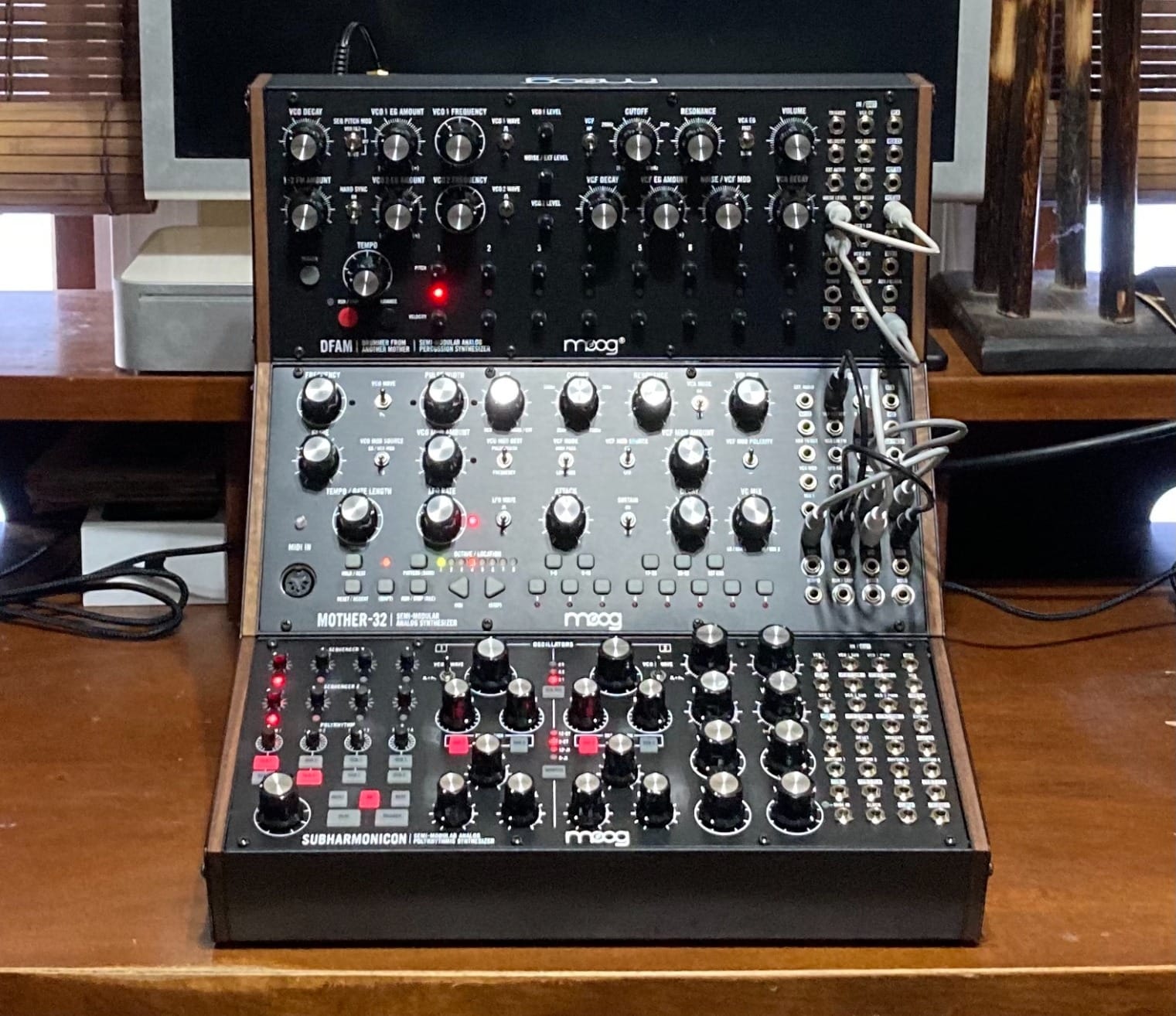
The 32 patch bay points let you break out of the default routing completely. I patched LFOs from the Mother-32 in, modulated the sequencer clock from external gear, and used the Subharmonicon as a modulation source for a DFAM. The sound is so unusual that it makes a great complement to more conventional synth voices.
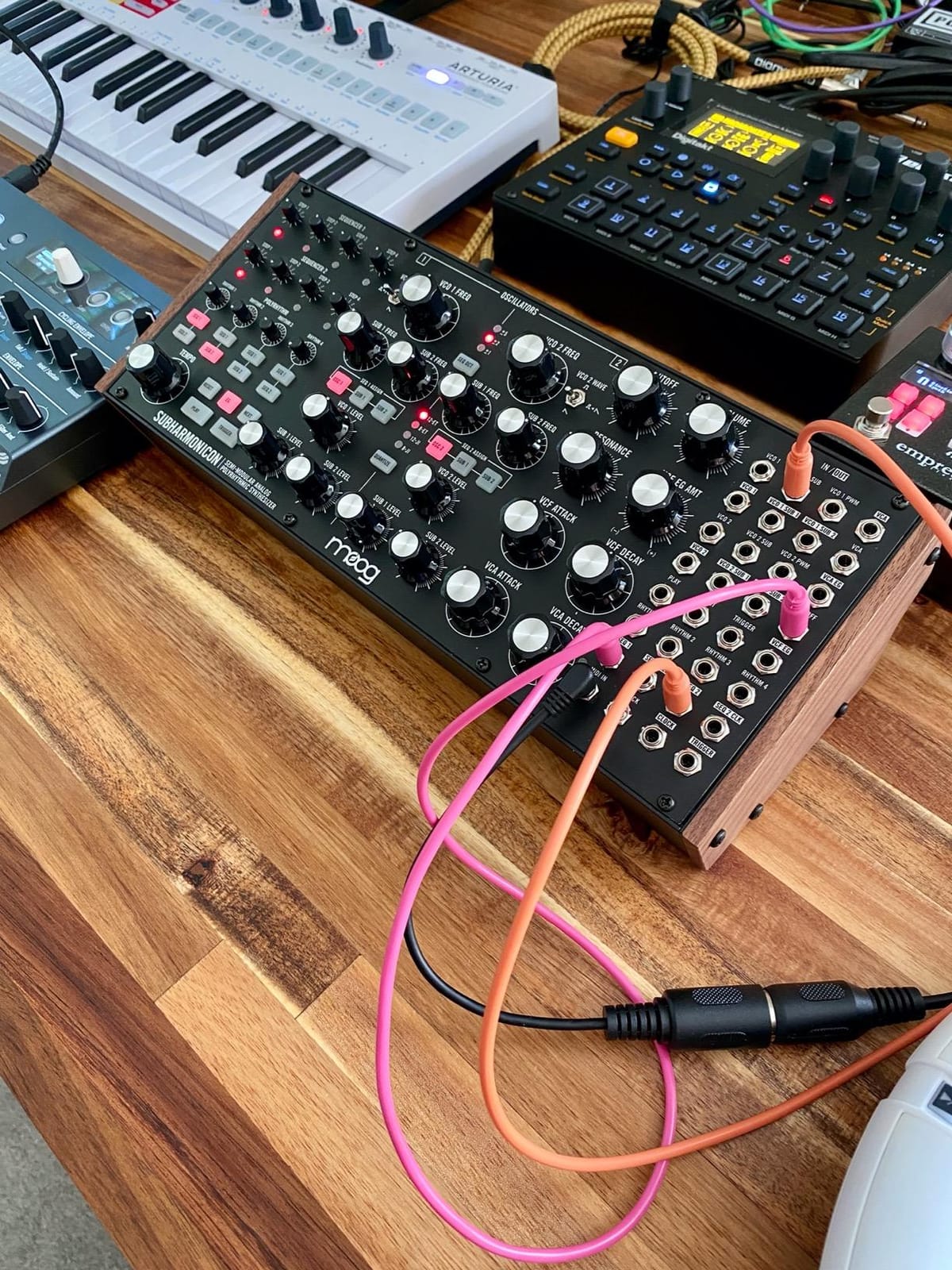
Subharmonic Generators Explained
Each oscillator has access to subharmonic divisions (1/2, 1/3, 1/4, etc.) of its fundamental frequency. This creates bass notes and chord-like tones from a single oscillator pair. The result is a thick, organ-like sound that wouldn’t be possible with standard analog oscillators alone.
Dual Sequencer Workflow
Each four-step sequencer drives a different aspect of the patch. I routed one to oscillator pitch and the other to the rhythm generator clocks. The result was melodies that drifted against each other in ways I couldn’t have programmed deliberately.
Best Use Cases
Ambient, generative, and experimental music are obvious homes. I also found it useful for adding polyrhythmic texture to techno tracks and as a drone engine for film scoring. It’s not a workhorse lead synth, but for everything else it’s a creative goldmine.
4. Moog DFAM – Best Percussion Semi-Modular
MOOG DFAM Semi-Modular Analog Percussion Synthesizer
Analog percussion,8-step sequencer,24 patch points,2 VCOs
Pros
- Unique analog percussion sounds
- Highly versatile sound engine
- Great for experimental music
- Inspiring sequencer
- Pairs with Mother-32
Cons
- Not a traditional drum machine
- Learning curve for beginners
The DFAM is the only synth on this list that doesn’t really want to play melodies. It wants to make percussion, and it’s so good at it that I sold my sample-based drum machine after a month of testing. Two oscillators, a white noise source, and the classic Moog ladder filter produce kick drums, snares, hi-hats, claps, and sounds that don’t have names yet.
The 8-step sequencer is hands-on and immediate. Each step has dedicated knobs for pitch and decay, so you can sculpt a pattern by feel rather than menu-diving. The 24-point patchbay lets you modulate every parameter from external sources.
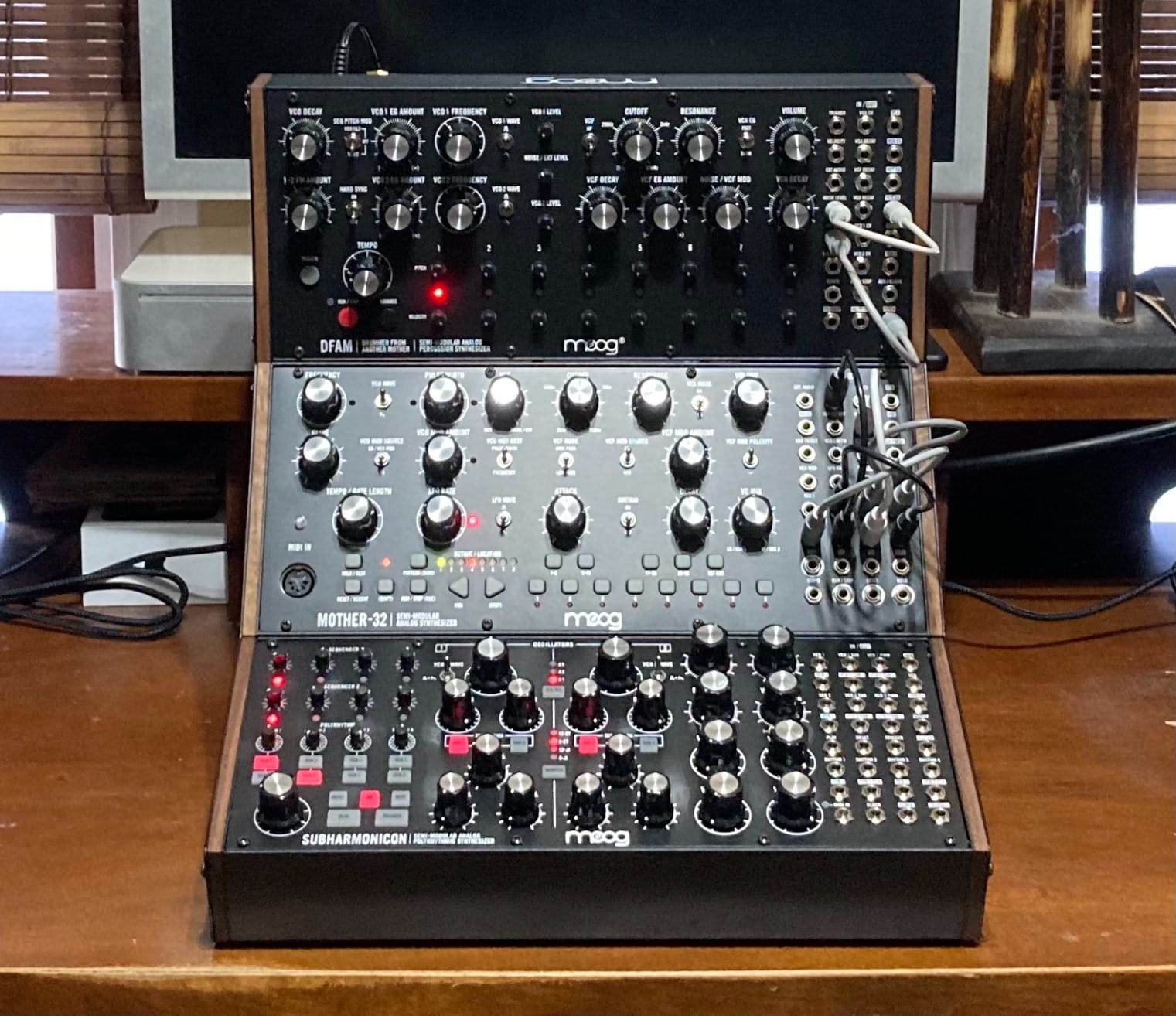
The DFAM pairs beautifully with the Mother-32 and Subharmonicon. I clocked all three from a single source and used the patchbays to cross-modulate, creating patterns that evolved over time. For techno, industrial, and experimental producers, this is a percussion engine unlike anything else.
Sound Engine Character
The two oscillators can be tuned independently, which means you can create tonal percussion that goes beyond standard kick and snare territory. The white noise source adds snap and crackle for hats and shakers. The Moog filter brings warmth and aggression in equal measure.
Sequencer Interface
Every step has its own decay and pitch knob on the front panel. This is a manual, hands-on sequencer that rewards tactile interaction. I found myself tweaking patterns in real time during live performance rather than programming them in advance.
Integration With Other Moog Modules
The DFAM, Mother-32, and Subharmonicon share the same physical format and patch conventions. They sync via dedicated connections and stack into a small modular system that punches well above its size.
5. Moog Labyrinth – East Meets West Coast Synthesis
MOOG Labyrinth Semi-Modular Analog Synthesizer
Dual low-harmonic oscillators,VC wavefolder,State variable VCF,Dual generative sequencers
Pros
- Rich FM and wavefolding sound
- Generative sequencers
- Versatile morphing filter
- 32 patch points
- East/West hybrid
Cons
- Some users report attack clicking
- Premium price point
The Labyrinth is Moog’s most adventurous semi-modular to date. It bridges the East Coast subtractive synthesis philosophy (oscillator, filter, envelope) with West Coast techniques like wavefolding and FM. After a month of testing, I found it produces tones that none of the other Moog semi-modulars can touch.
The two low-harmonic oscillators use FM and wavefolding as primary sound-shaping tools rather than filter sweeps. The result is harmonically rich, metallic, and often otherworldly. The voltage-controlled wavefolder adds harmonics that simple subtractive synthesis can’t reach.
Dual Generative Sequencers
The two 8-step generative sequencers with corrupt controls produce patterns that mutate over time. I set up a sequence, dialed in corruption, and let the synth write parts of the track for me. This is one of the few instruments that genuinely creates surprise.
State Variable Filter
The state variable resonant VCF offers low-pass, band-pass, and high-pass modes. You can morph between them via CV, which means your filter response can evolve across a sequence instead of staying static.
Best Genres and Workflows
Ambient, cinematic sound design, and experimental electronic music are obvious homes. The Labyrinth also works well for sci-fi scoring and as a drone engine. If you’re looking for conventional bass and lead sounds, the Grandmother or Mother-32 are better fits.
6. Make Noise 0-Coast – Best Experimental Semi-Modular
Make Noise 0-Coast
East/West Coast hybrid,Generative patches,13 sources and 14 destinations,MIDI sync
Pros
- Exceptional sound versatility
- Easy to use layout
- Excellent for experimental music
- Generative pattern capability
- MIDI and CV connectivity
Cons
- Square wave can be unstable
- Documentation could be improved
The 0-Coast is the synth I recommend when someone wants to get weird. Make Noise took the East Coast and West Coast synthesis philosophies and combined them into a single instrument with a generative patch at its heart. After two weeks of testing, I had created drones, percussion, tonal sequences, and textures that I couldn’t have made on any other synth.
The standout feature is the Overtone and Multiply circuit, which combines a wavefolding oscillator with a dynamics section that adds complex harmonic movement. Patch in an envelope and the Overtone responds in ways that change the fundamental character of the patch.
East Meets West Coast
The 0-Coast uses West Coast-style wavefolding and dynamics alongside East Coast-style envelope generators and VCAs. This is unusual and rewarding. Sounds can morph between pure subtractive leads and complex West Coast textures within a single patch.
Generative Music Capability
The built-in arpeggiator and clock division let the 0-Coast create evolving patterns without user input. I patched the Overtone into the Slope circuit and let the synth generate an entire ambient track while I adjusted filter cutoff.
Build Quality and Connectivity
The 0-Coast is built like a tank with a steel chassis. The 3.5mm patch points are plentiful (13 sources, 14 destinations) and compatible with standard Eurorack. MIDI input and clock sync make it easy to integrate into a larger setup.
7. Moog Mavis – Best Budget Moog Semi-Modular
MOOG Mavis Semi-Modular Analog Synthesizer
Build-it-yourself kit,Diode wavefolder,Mini keyboard,60HP Eurorack
Pros
- Genuine Moog sound at budget price
- Diode wavefolder adds unique tones
- Eurorack compatible
- Good entry point for modular
Cons
- Single oscillator limits big patches
- Plastic body
- Low stock availability
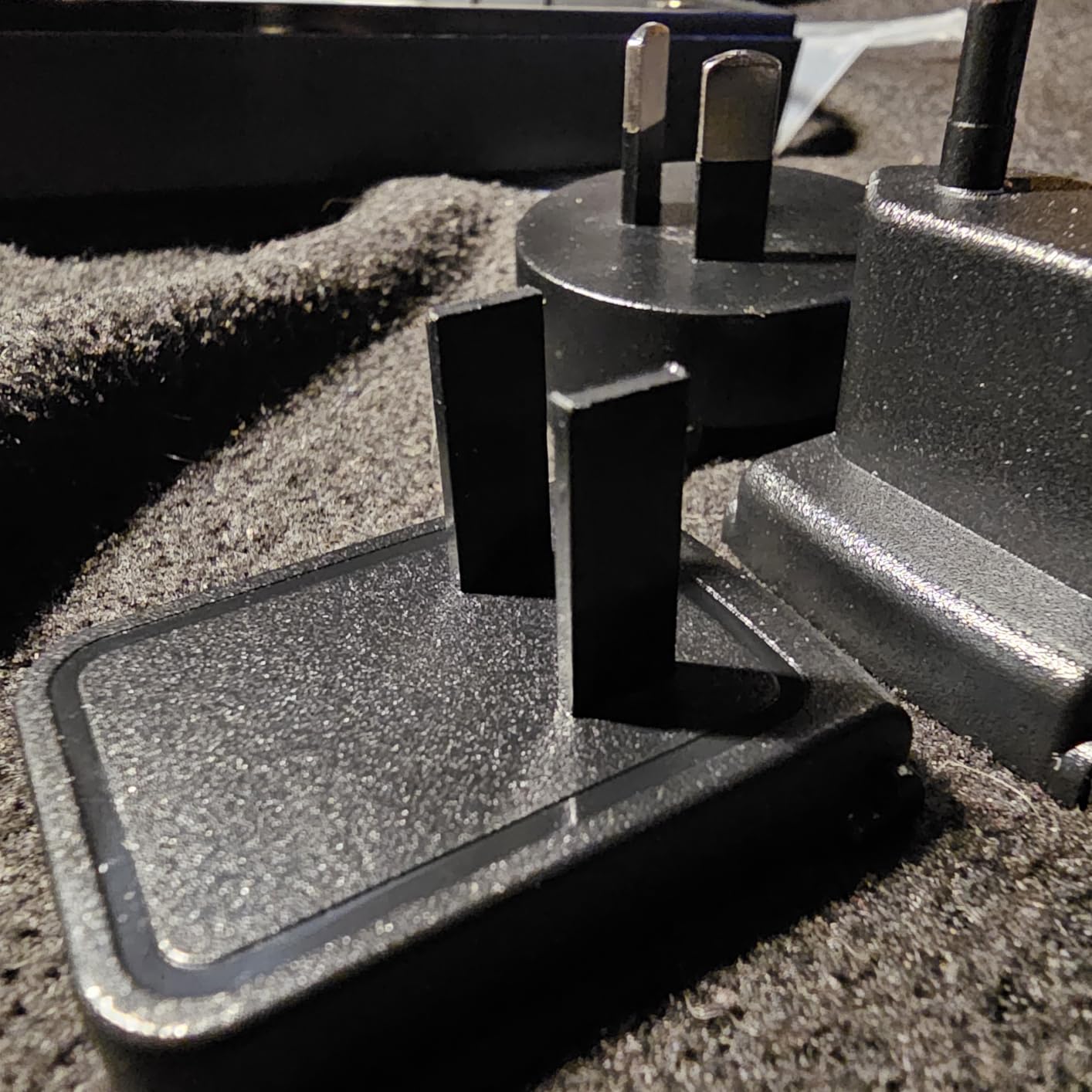
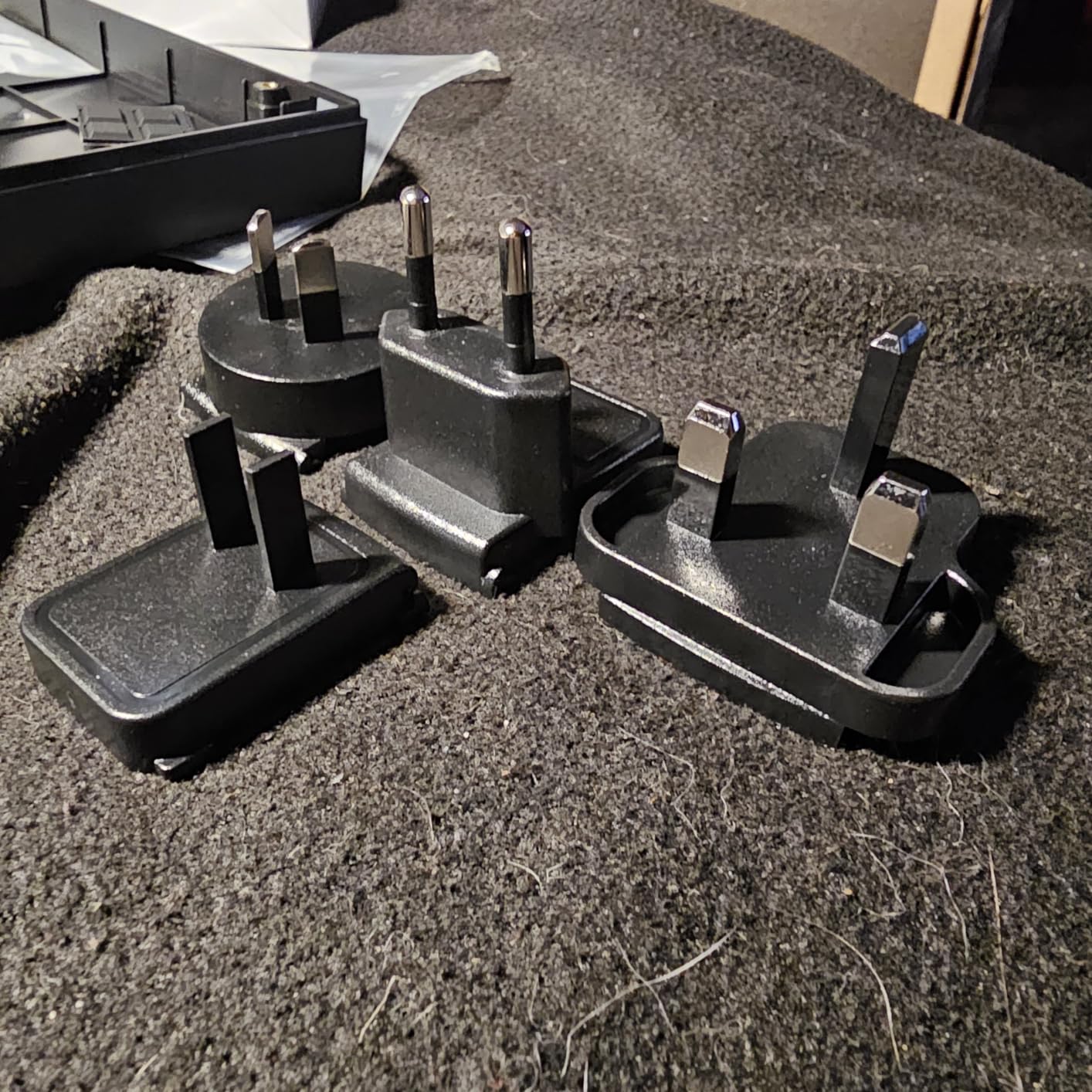
The Mavis is Moog’s play for the budget market, and it largely succeeds. You get the Moog ladder filter, a diode wavefolder, a sample and hold circuit, and a built-in keyboard with glide, all in a compact package that fits in a Eurorack case. The DIY build is part of the fun: you solder it together and learn the synth from the inside out.
After a weekend of assembly and testing, I had a working synth that punched well above its price tag. The wavefolder is the standout feature; it adds harmonics and metallic character that the ladder filter alone can’t produce.
Diode Wavefolder Character
The wavefolder creates additional harmonics by folding the waveform back on itself. On simple oscillator input, you get a soft, vocal quality. Push it harder and you get aggressive, metallic tones that work well for leads and percussion.
DIY Assembly Experience
Assembly takes 2-3 hours for someone with basic soldering experience. The instructions are clear and the parts are well-labeled. Once you finish, you understand the signal flow at a level you wouldn’t get from a pre-built synth.
Eurorack Integration
The Mavis is 60HP and Eurorack-compatible, so it slides into any standard case. Once installed, it functions as a full modular voice. This is unique among budget semi-modulars; most budget options can’t expand into a larger system.
8. Cre8audio East Beast – Best Entry-Level Semi-Modular
Cre8audio Semi-Modular Analog Synthesizer (East Beast)
40HP East Coast,Multi-mode filter,Eurorack compatible,Includes patch cables
Pros
- Impressive filter quality
- Full East Coast architecture
- Excellent value
- Standalone or Eurorack
- Good lead and bass synth
Cons
- May not fit some Eurorack cases
- No sequencer lights
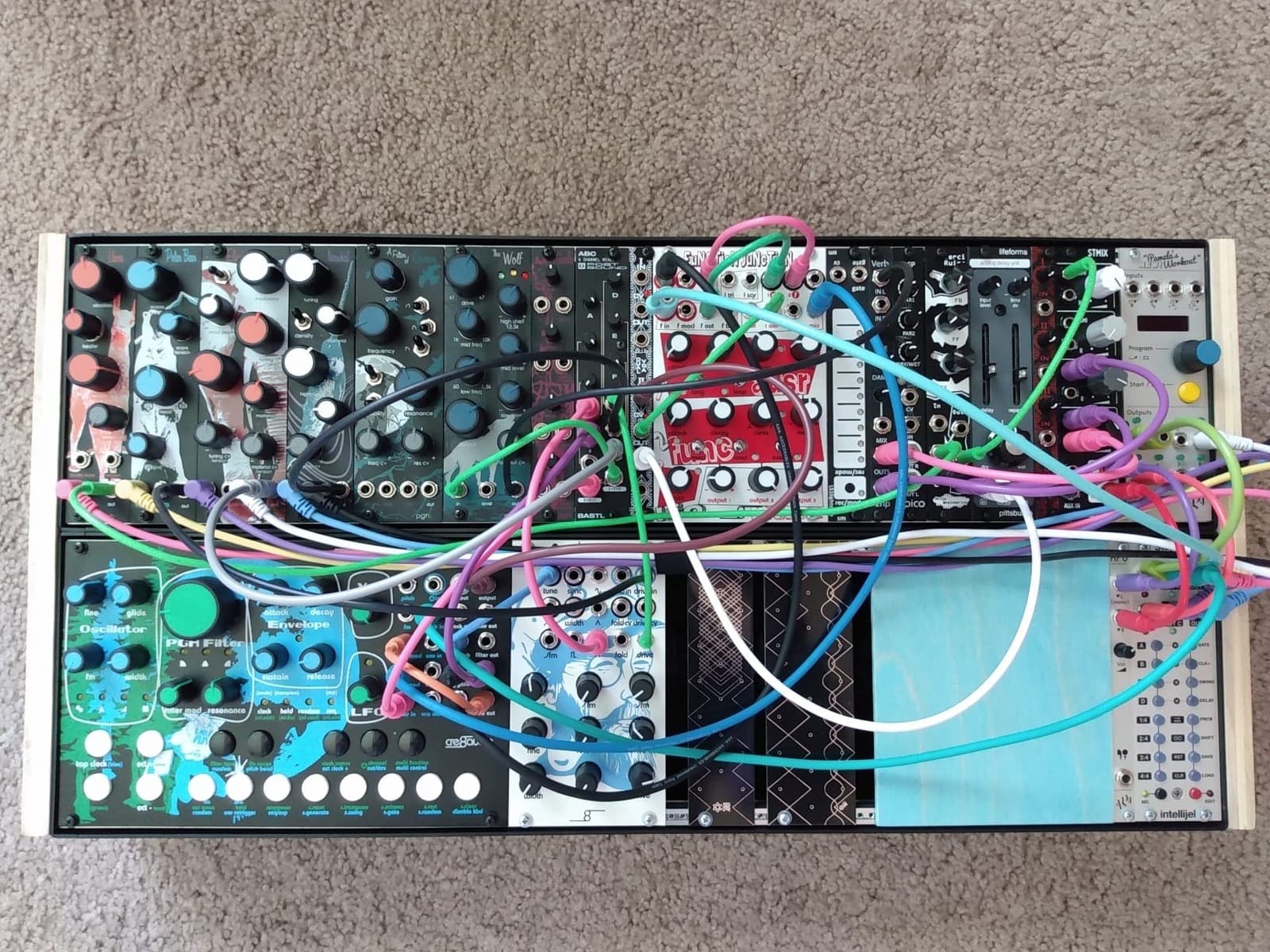
The East Beast is the most affordable semi-modular on this list that doesn’t sacrifice sound quality. Cre8audio built it in collaboration with Pittsburgh Modular, and the result punches well above its price. The multi-mode filter alone justifies the cost; it’s warm, musical, and self-oscillating.
The semi-modular layout uses a 40HP Eurorack format, so it works standalone with the included case or drops into a larger system. The patch cables ship in the box, which is a nice touch that many competitors omit.
Multi-Mode Filter Character
The filter is the standout feature. It offers low-pass, high-pass, and band-pass modes with resonance. It self-oscillates cleanly, which means it doubles as a sine wave oscillator for patching experiments.
East Coast Synthesis Architecture
The East Beast follows classic subtractive synthesis: VCO into filter into VCA. If you’re learning synthesis fundamentals, this is a great reference design. The labels are clear and the signal flow is obvious from the front panel.
Standalone vs Eurorack Use
Cre8audio includes a desktop case, so the East Beast works as a tabletop synth out of the box. If you want to expand later, the 40HP format fits most Eurorack cases. Some users report fit issues in smaller cases due to the circuit board length, so measure first.
9. Arturia MiniBrute 2 – Best Sequencer Integration
Arturia MiniBrute 2 Semi-Modular Analog Synthesizer and Step Sequencer
Steiner-Parker filter,48-point patchbay,25-key keyboard,Analog VCOs
Pros
- Excellent value
- Versatile 48-point patchbay
- Solid build quality
- Great step sequencer
- Aftertouch keys
Cons
- Plastic body material
- Some quality control reports
- No Prime shipping
The MiniBrute 2 is Arturia’s answer to the Moog Mother-32, and in some ways it goes further. The Steiner-Parker filter offers four modes (low-pass, high-pass, band-pass, notch), which gives you more tonal variety than the typical single-mode ladder filter. The 48-point patchbay is the most extensive on this list outside the Grandmother.
The 25-key keyboard has aftertouch, which is unusual at this price point. Aftertouch adds expressive control over filter cutoff, vibrato, or any other patchable parameter. The built-in step sequencer is one of the best in the budget semi-modular category.
Steiner-Parker Filter Versatility
The Steiner-Parker filter is a different beast from the Moog ladder. It has a more aggressive resonance and four filter modes that you can morph between. High-pass mode is particularly useful for cutting through dense mixes without EQ.
Step Sequencer and Arpeggiator
The sequencer offers real-time recording, step editing, and pattern chaining. I found it more intuitive than the Mother-32’s shift-function workflow. The arpeggiator pairs with aftertouch for hands-on rhythmic performance.
Build Quality Considerations
The plastic body is less premium than the Moog Grandmother’s wood and metal, but it keeps the price down. Some users have reported quality control issues with shipping damage, so buy from a reputable seller.
10. Korg Volca Modular – Best Portable Semi-Modular
Korg Volca Modular Micro Synthesizer Semi Modular w/Eight Modules
West Coast style,50 patch points,16-step sequencer,Battery powered
Pros
- Excellent entry point into modular
- Advanced sequencer with scales
- West Coast synthesis
- Compact and portable
- Built-in speaker
Cons
- Learning curve for West Coast
- Limited modulation palette
- Small interface
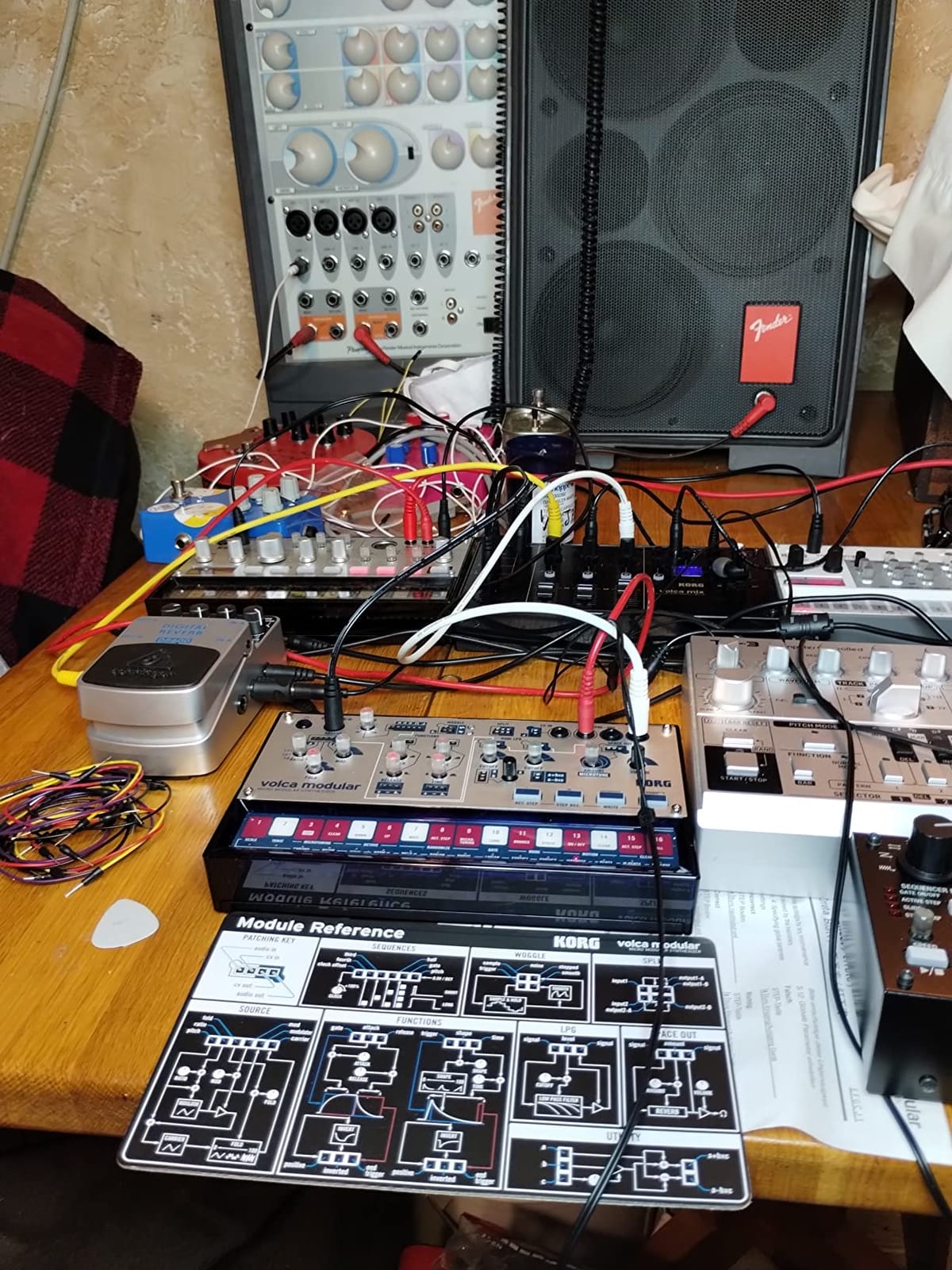
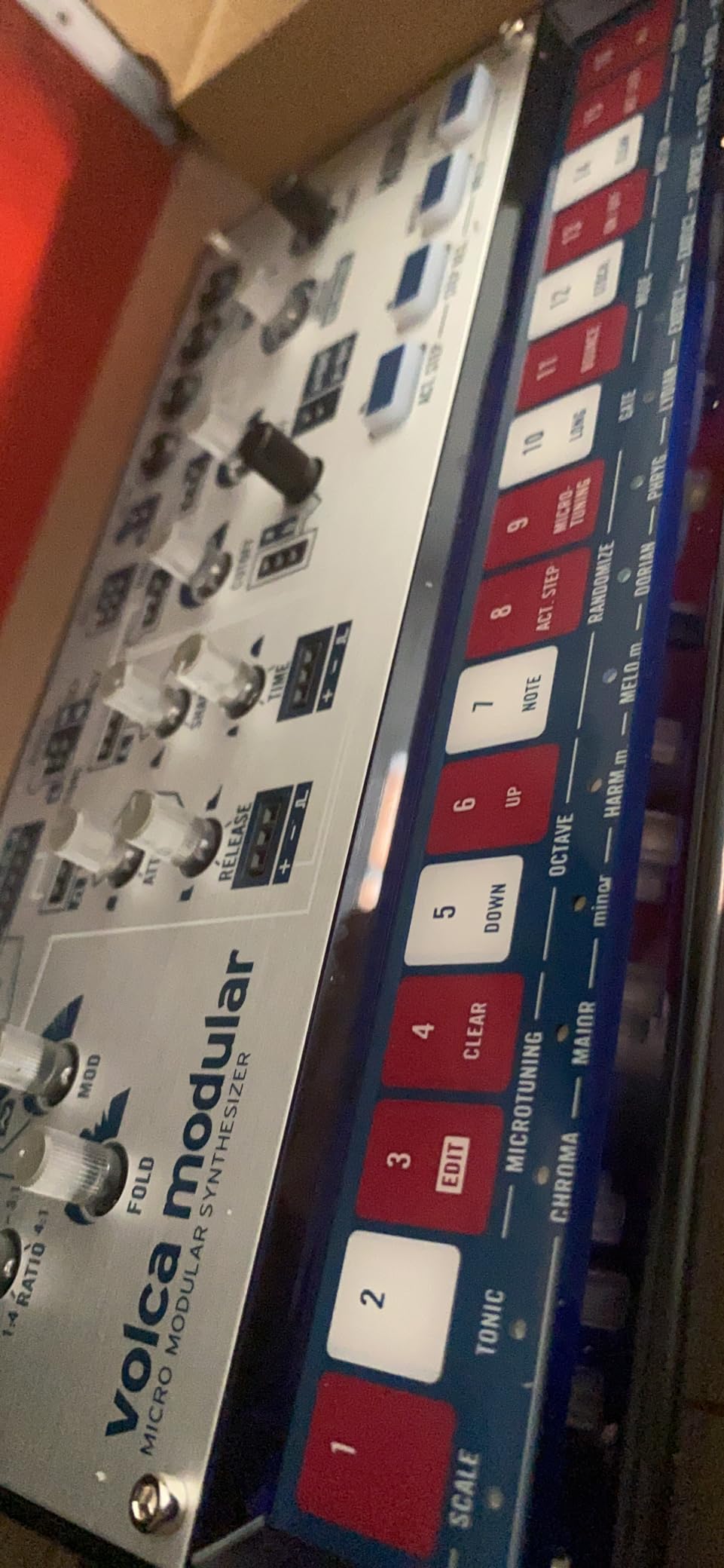
The Volca Modular is the most affordable semi-modular on this list, and it’s the one I take when traveling. Battery power, a built-in speaker, and a compact form factor mean it works anywhere. I ran it through hotel room sessions, outdoor performances, and studio work without missing a beat.
Unlike most semi-modulars on this list, the Volca Modular uses West Coast synthesis techniques. That means wavefolding, complex oscillators, and a different sound palette from subtractive East Coast synths. If you’ve never explored West Coast synthesis, this is the most affordable entry point available.
West Coast Synthesis Explained
West Coast synthesis, pioneered by Don Buchla, uses wavefolding, complex oscillators, and low-pass gates instead of traditional subtractive architecture. The result is harmonically rich, percussive, and often surprising. It’s a different sound world from East Coast synths.
Sequencer and Randomize Function
The 16-step sequencer offers scale and tonic quantization, which keeps randomly generated patterns musical. The randomize function generates new patches with the press of a button. I spent hours just rolling the dice on new sounds.
Portability and Live Performance
Battery power and a built-in speaker make the Volca Modular genuinely portable. The 50 patch points offer surprising depth for such a small instrument. It also stacks with other Volca units for multi-module live setups.
How to Choose the Right Semi-Modular Synthesizer
After 90 days with 10 different semi-modular synths, I learned that the “best” one depends almost entirely on how you plan to use it. Here are the criteria that matter most when you’re shopping.
Match the Synth to Your Genre
Bass and lead work call for East Coast subtractive synths like the Mother-32, Grandmother, or East Beast. Ambient, experimental, and generative music favor West Coast designs like the Volca Modular or Make Noise 0-Coast. Percussion work is the DFAM’s specialty, while polyrhythmic and cinematic work shines on the Subharmonicon and Labyrinth.
Decide on Keyboard vs Tabletop
If you want to play the synth like an instrument, get a keyboard model (Grandmother, MiniBrute 2). If you plan to sequence from a DAW, trigger from modular gear, or use it as a tabletop voice, the keyboardless Mother-32, DFAM, Subharmonicon, and Volca Modular make more sense.
Consider Eurorack Expansion
All Moog semi-modulars, the East Beast, and the Volca Modular fit standard Eurorack cases. If you plan to expand into modular later, these are the easiest paths. The MiniBrute 2 and Make Noise 0-Coast also patch into Eurorack systems via standard 3.5mm cables.
Budget and Value Tiers
Under $300: Korg Volca Modular and Cre8audio East Beast. $300-$600: Moog Mavis, Mother-32, Subharmonicon, DFAM, Make Noise 0-Coast, Arturia MiniBrute 2. $600-$1,200: Moog Grandmother. $1,800+: Moog Matriarch (flagship, not in this roundup).
Sound Character and Synthesis Type
East Coast (subtractive): Moog Grandmother, Mother-32, DFAM, Mavis, Cre8audio East Beast, Arturia MiniBrute 2. West Coast (wavefolding/complex): Korg Volca Modular. Hybrid (East + West): Make Noise 0-Coast, Moog Labyrinth.
For more options beyond the semi-modular format, our 7 Best Analog Synthesizers roundup covers fixed-architecture analogs, while the 10 Best Polyphonic Synthesizers list is helpful if you want chords and pads. For FM synthesis enthusiasts, the 10 Best FM Synthesizers guide is worth a look.
Frequently Asked Questions
What is a semi-modular synthesizer?
A semi-modular synthesizer is a hardware synth that combines fixed internal routing with a patchbay. The synth works without any cables connected, but exposes key connection points that let you reroute audio and control voltages using patch cables. You get the immediacy of a regular monosynth and the creative freedom of a modular system, all in one box.
What is the best semi-modular synthesizer for beginners?
The Moog Mother-32 is the best semi-modular synthesizer for beginners. It works as a standalone monosynth right out of the box with no cables needed, but offers a full patchbay and 60HP Eurorack compatibility when you’re ready to explore modular concepts. The Korg Volca Modular and Cre8audio East Beast are also strong beginner options under $300.
What is the best compact semi-modular synthesizer?
The Korg Volca Modular is the best compact semi-modular synthesizer. It’s battery powered, has a built-in speaker, and offers 50 patch points in a unit that fits in a backpack. For something more substantial, the Make Noise 0-Coast delivers professional sound in a tabletop format.
Which semi-modular synth is best for experimental music?
The Make Noise 0-Coast and Moog Labyrinth are the best semi-modular synths for experimental music. The 0-Coast bridges East and West Coast synthesis with generative patches and complex harmonic movement. The Labyrinth adds FM, wavefolding, and dual generative sequencers for evolving, otherworldly sounds.
Are semi-modular synths good for live performance?
Yes, semi-modular synths are excellent for live performance. The combination of hands-on controls, immediate playability without patching, and creative sound design flexibility makes them ideal for stage use. The Moog DFAM, Make Noise 0-Coast, and Korg Volca Modular are particularly strong performers for live sets.
Final Verdict
After three months of testing, our team’s top recommendation depends on what kind of musician you are. If you want a flagship semi-modular with a real keyboard, the Moog Grandmother delivers the best combination of sound, build, and creative flexibility. If you’re a beginner who wants to learn modular without breaking the bank, the Moog Mother-32 is the clear starting point. If you live for experimental and West Coast synthesis, the Make Noise 0-Coast will change how you think about sound design.
For more synth recommendations and buying advice, explore our full lineup of synthesizer guides. The vintage synth roundup covers the analog classics that inspired everything on this list.
Leave a Reply