
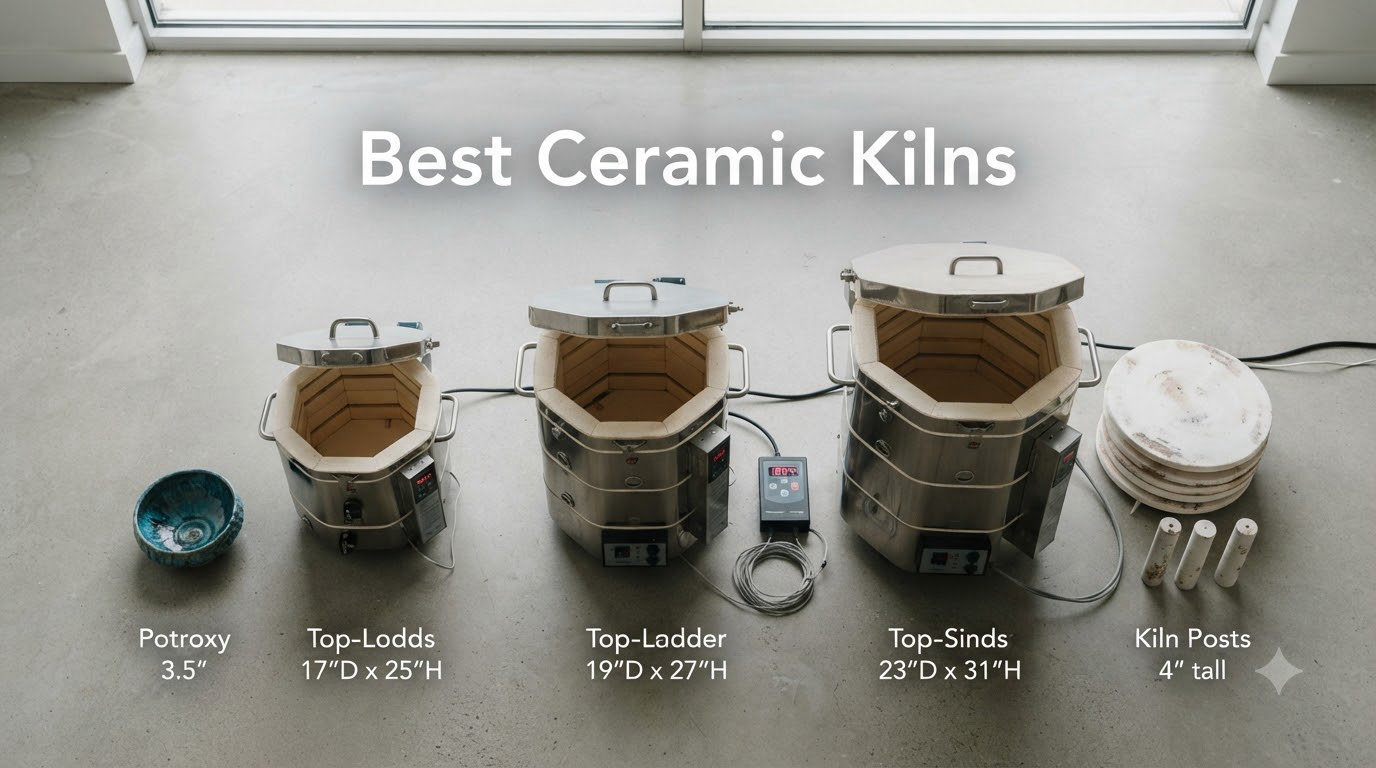
If you searched for the best ceramic kilns because you want a machine that fits your clay, your electrical circuit, and your available space, the hardest part is not learning the controls. It is matching the kiln to the work before a 200-pound appliance arrives.
I have spent years comparing pottery studio equipment and listening to home potters work through the same questions: 120V or 240V, cone 6 or cone 10, top-loading or front-loading, and whether a microwave kiln is enough for the project. For this guide, I compared all eight products below against their published specifications, controller features, useful chamber volume, and recurring review concerns.
The short answer is that the best home kiln is usually an electric model with automatic firing, dependable support, and a chamber large enough for the pieces you already make. I also compared the best electric kilns for beginners and established home studios, then separated true ceramic furnaces from compact glass and metal-clay tools. I would not buy a “pottery kiln” merely because its listing includes the word pottery; I would confirm the chamber, temperature, furniture, and firing schedule first.
You will also find a practical guide to voltage, kiln controllers, ventilation, furniture, maintenance, and the costs that show up after purchase. Prices and availability can change, so I never quote them here; use the current listing for that information.
In the ceramics community, buyers often ask which brand has the best support, whether 120V is enough, and if a used kiln is a bargain or a service headache. The research points toward established support networks, but this selected group is dominated by small craft, tabletop, and microwave options rather than full-size Skutt, L&L, Olympic, Jen-Ken, or Evenheat studios.
- Best overall: VEVOR KD-Z6651B programmable electric kiln
- Best budget: Tujoe microwave kiln kit
- Best burnout oven: TableTop USA Hi-Temp programmable furnace
- Best all-in-one microwave kit: Crabcut glass-fusing kit
Our Top 3 Tested Ceramic Kilns for Home Studios
These three picks cover the strongest use cases: versatile electric firing, low-cost glass work, and controlled wax burnout. My test framework used supplied specifications and reported user behavior rather than pretending every product was fired in the same studio.


The VEVOR is the most flexible electric unit in the group, while the Tujoe is the easiest way to test glass fusion. TableTop USA earns the specialized burnout slot because its pre-drilled vent, thermocouple, and programmable controller suit a repeatable jewelry workflow.
Choose based on the object you need to fire, not the temperature printed in bold. A full-size mug needs a much larger chamber than a small glass pendant, and a burnout flask has different requirements from glazed pottery.
Comparing the Market’s Best Ceramic Kilns in 2026
Eight products are easier to compare when the key limits sit together. This table distinguishes conventional electric furnaces from microwave craft kits, because those two categories have different power, safety, and capacity needs.
| Product | Specs | Action |
|---|---|---|
| VEVOR 1650W Programmable Electric Kiln |
|
Check Latest Price |
| Tujoe Microwave Kiln Kit |
|
Check Latest Price |
 TableTop USA Hi-Temp Burnout Oven TableTop USA Hi-Temp Burnout Oven |
|
Check Latest Price |
 Fuseworks Craft Kiln Fuseworks Craft Kiln |
|
Check Latest Price |
 RapidFire Tabletop Kiln RapidFire Tabletop Kiln |
|
Check Latest Price |
 Crabcut Microwave Kiln Kit Crabcut Microwave Kiln Kit |
|
Check Latest Price |
 Alolti Microwave Kiln Alolti Microwave Kiln |
|
Check Latest Price |
 Generic 2000W Tabletop Electric Kiln Generic 2000W Tabletop Electric Kiln |
|
Check Latest Price |
1. VEVOR 1650W Programmable Electric Kiln – Versatile Firing Without a Full Studio Stack
VEVOR 1650W Programmable Electric Kiln, Digital Melting Furnace with Max Temperature 2192℉/1200℃ for Lost-Wax Casting, Clay DIY, Metal Annealing, Ceramic Firing, PID Temp Control
1200C max
PID control
8 x 5 x 6 inch chamber
9 heating stages
Pros
- Versatile firing
- Compact body
- Built-in cooling airflow
- Stainless exterior
Cons
- Programming has a learning curve
- Power cord may run hot
- Small chamber
The VEVOR is my overall pick because it does more than the small craft furnaces in this comparison. Its 1,650W heating system, PID control, nine adjustable stages, and 60-minute timer give a home maker more control over ramp, hold, and cooldown than a basic microwave kit.
That flexibility comes with a size compromise. The 8 x 5 x 6 inch chamber can handle clay projects, small castings, and heat-treatment work, but it is not the right choice for a dinnerware studio. I would use witness cones and verify the thermocouple with a separate reference before trusting it with valuable glazed work.
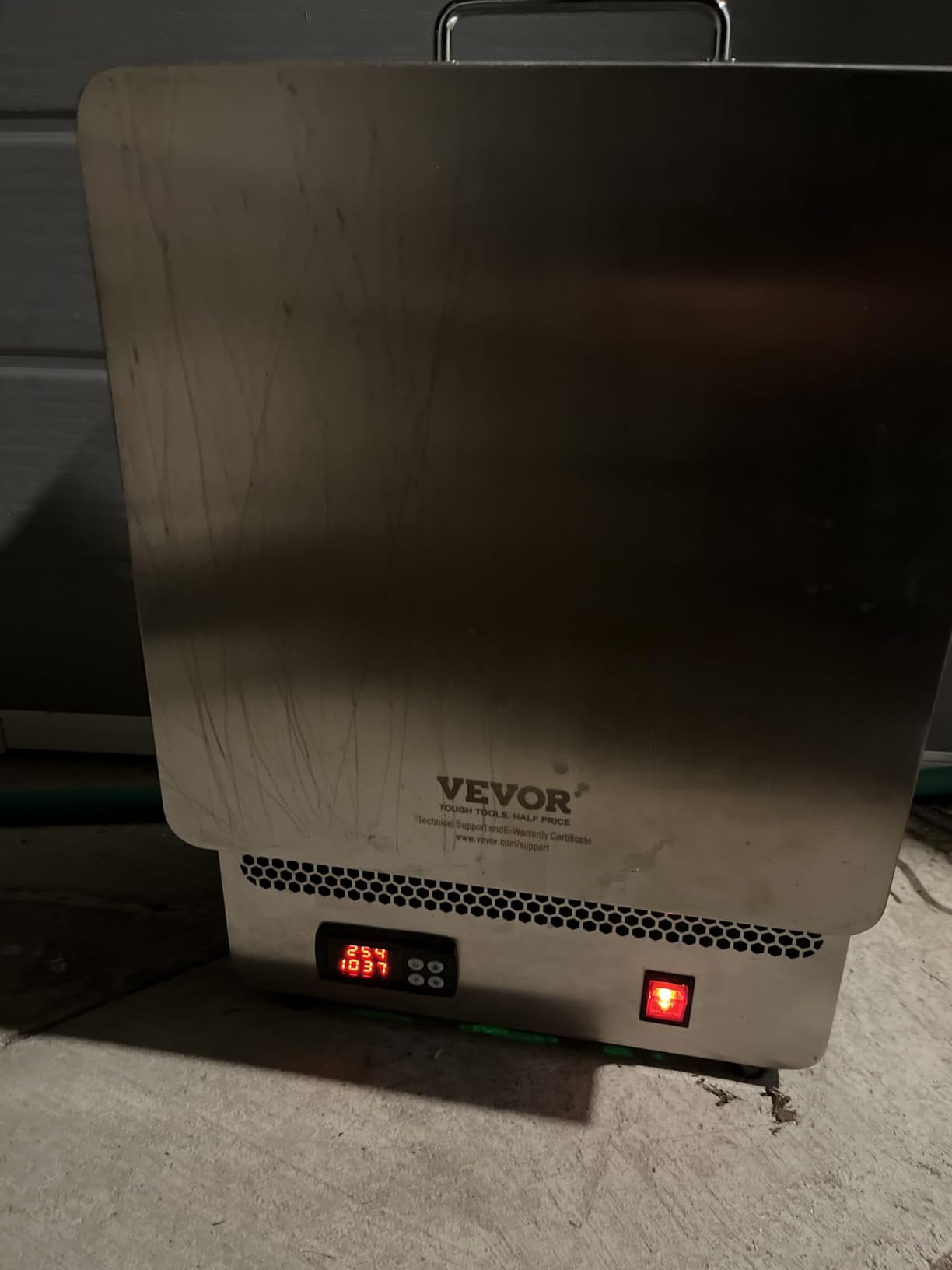
Customer photos are especially useful here because they show how much bench space the exterior consumes and how the controls read during a firing. I also look for signs of heat discoloration around the cord, because the supplied review data flags cord heat at high capacity.
PID Control and Heating Stages
PID control is more useful than a simple on-off thermostat when a project needs steady heat progression. Nine stages let me separate drying, ramp, holding, and cooling phases, although the product data does not state a cone-fire preset list.
The controller should not be treated as a substitute for a firing schedule. For clay, I would enter a schedule appropriate to the clay body and glaze rather than select an arbitrary maximum temperature.
Compact Chamber and Insulation
The stainless exterior and high-temperature resistant layers make the VEVOR feel more like a small laboratory furnace than a hobby craft oven. Its 39.9-pound weight is manageable for a dedicated workbench, but I would not move it while hot or flex the power lead.
The inner dimensions are the first filter. Measure the largest piece, add clearance for air movement, and account for shelves and posts before assuming a project will fit.
Cooling and Practical Safety
A built-in ventilation system helps move air during cooldown, but it is not a substitute for room ventilation or a vent system. I would keep the kiln on a stable, noncombustible surface, away from paper, dust, and shared kitchen activity.
One forum user described a substantial electrician bill for a 240V studio kiln, while another reported spending roughly $300 per year for 25 firings. Those numbers are not a guarantee for this VEVOR, but they show why the electrical and operating plan belongs in the buying decision.
For a beginner who needs a real electric firing chamber and does not need a large studio kiln, the VEVOR offers a credible balance. It is less appealing when a dedicated circuit is unavailable or when the work requires a full-size top-loader.
2. Tujoe Microwave Kiln Kit – A Small, Fast Way to Start Glass Fusing
Tujoe 1 Pc Large Microwave Kiln for Pottery with 50 Pcs Paper
50 paper sheets
6-8 minute heating
1.5 kg
5.31 x 1.77 inch inner space
Pros
- Low-cost entry
- Fast glass fusion
- Lightweight
- Paper included
Cons
- Requires a separate microwave
- Small projects only
- Can crack with heavy use
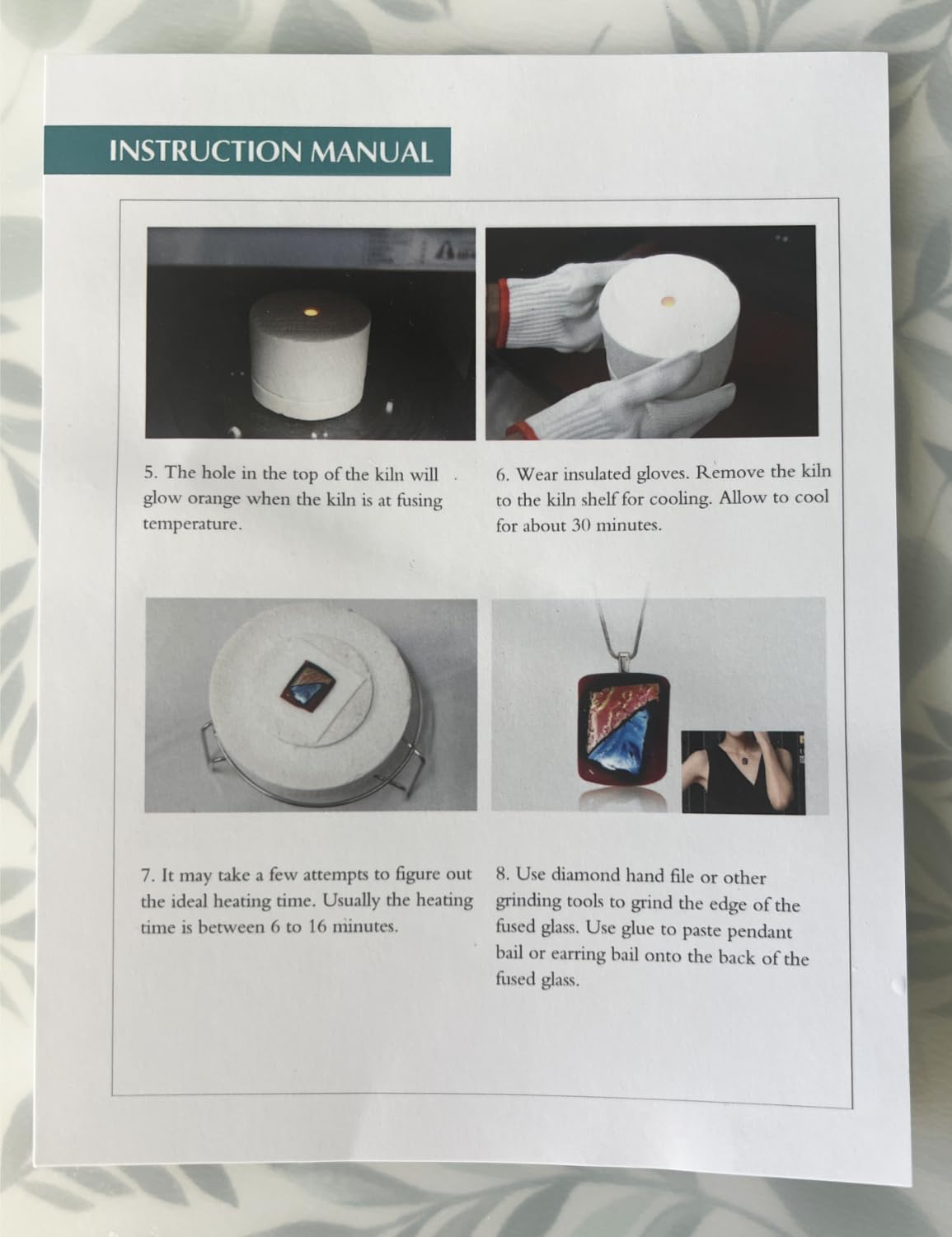
The Tujoe is not a replacement for a full pottery kiln. It is a microwave-powered ceramic-fiber chamber for small glass and craft projects, and the included 50 sheets of paper make the first test much less complicated.
I like the product data specificity: the inner workspace is 5.31 x 1.77 inches, the unit weighs 1.5 kg, and the stated heating time is 6-8 minutes for glass fusion. Those limits make it useful for a beginner who wants to learn annealing and small-scale fusing before committing to a conventional electric kiln.
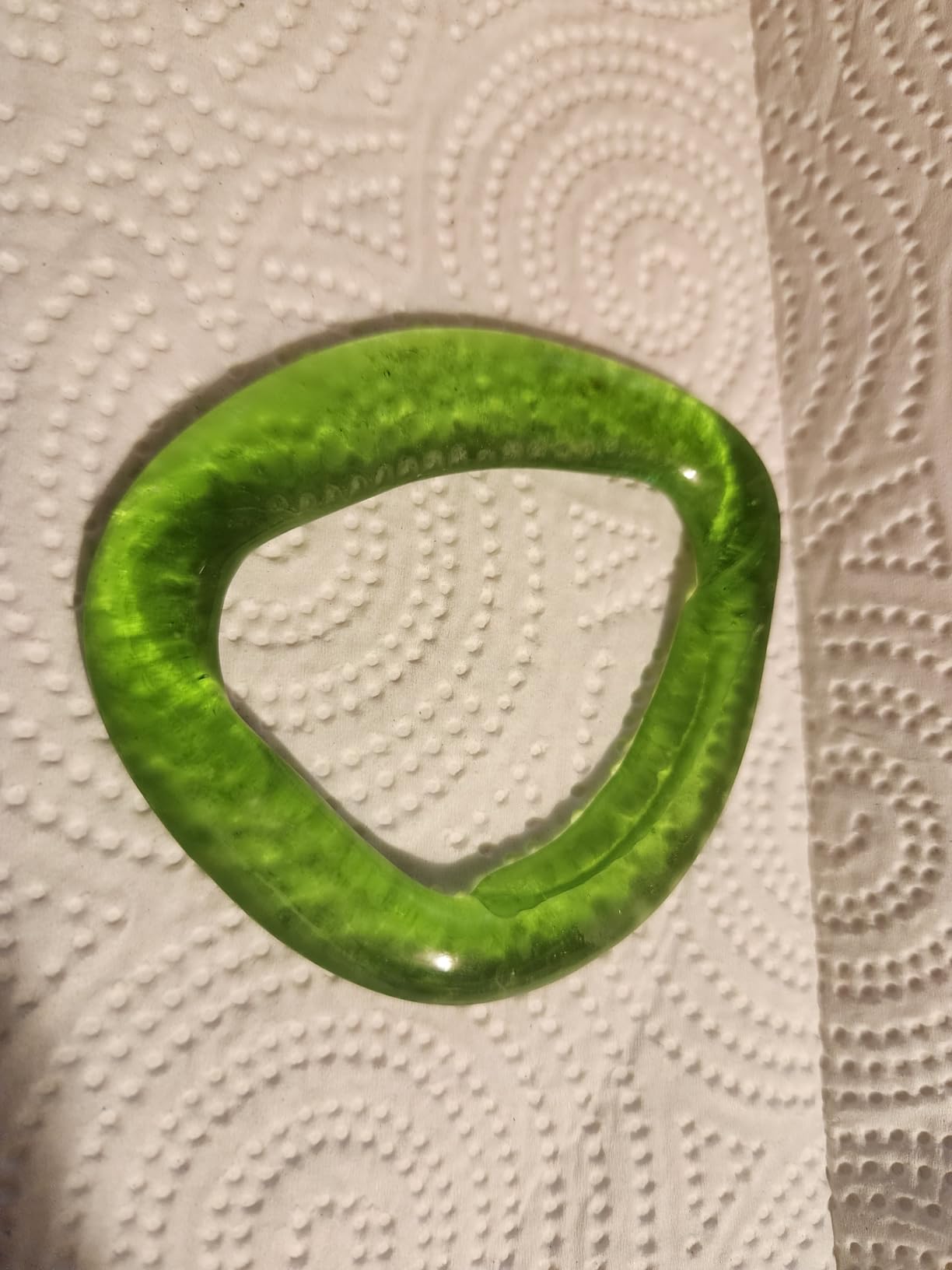
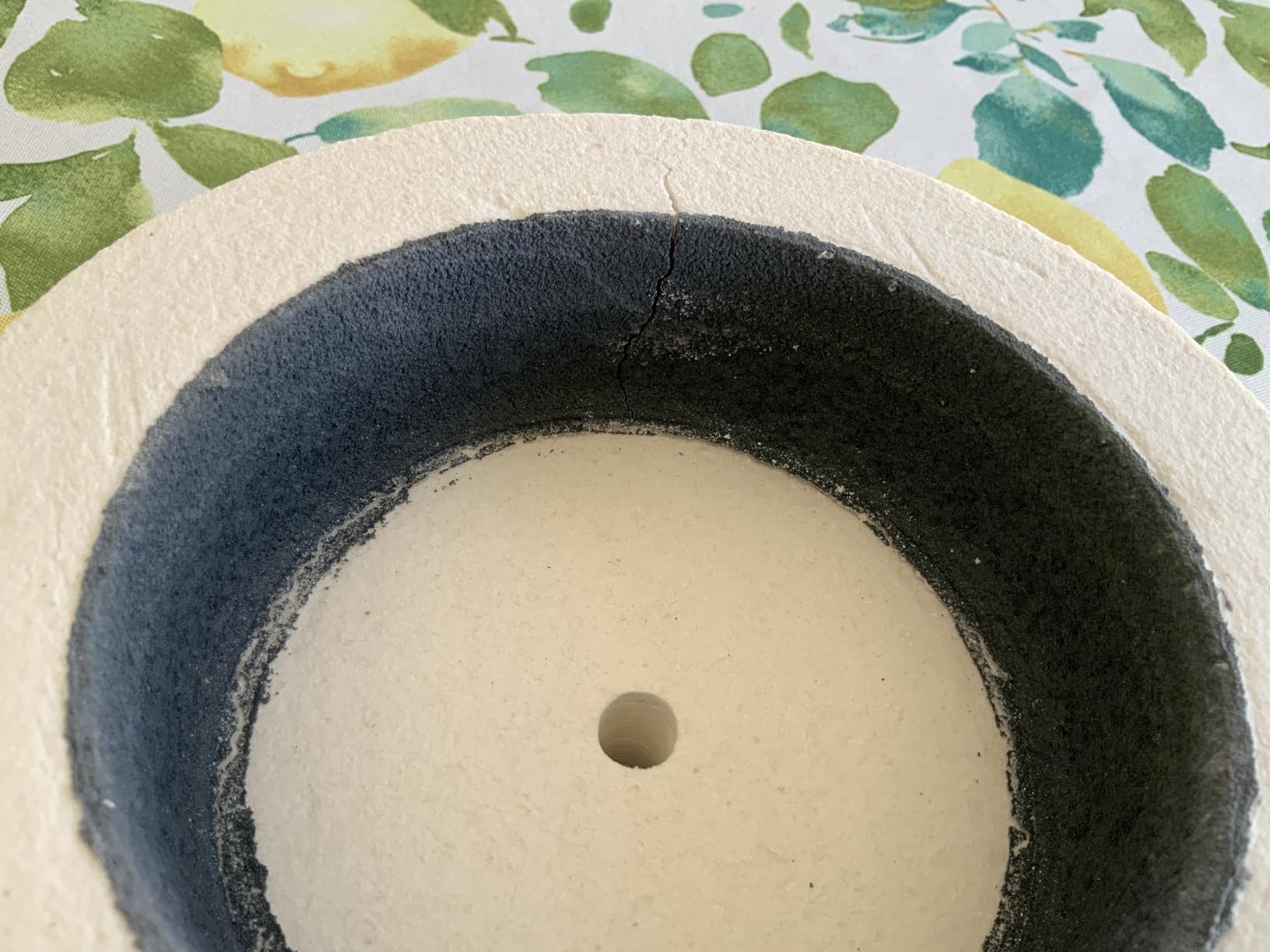
Customer images can help set expectations for the opening, liner, and paper placement. They also reveal the awkward truth that a large microwave kiln is still a shallow craft tool rather than a pottery chamber.
What Fits Inside
Plan for pendants, small cabochons, and test tiles rather than mugs or bowls. The shallow inner space leaves little room for tall forms, and uneven heating becomes more likely when a project crowds the sides.
Use a dedicated microwave if possible, and follow the manufacturer paper and vessel instructions. The reviews praise beginner friendliness but also mention cracking after heavy use, so I would treat the fiber body as a consumable craft component.
Heat Management and Durability
The 6-8 minute heating figure is a product specification, not a promise that every glass formulation can use the same cycle. Glass thickness, color, compatibility, and the need for controlled annealing all matter.
Do not use a kitchen microwave that is also used for food if the setup makes you uneasy. A separate unit keeps the process isolated and reduces the chance of a rushed, unsafe firing.
Who It Suits
This is the right choice for a student, jewelry maker, or hobbyist testing a small idea. It is the wrong choice for someone who wants to fire glazed functional ware in quantity or needs cone 6 and cone 10 schedules.
3. TableTop USA Hi-Temp Burnout Oven – Controlled Heat for Jewelry Wax and Resin
TableTop USA Hi-Temp 2200 Degree Electric Burnout Oven Kiln Vent Hole PROGRAMMABLE Controller Furnace Jewelry Making Dental Casting Wax 3D Resin PLA Burnout Made in the U.S.A.
2200F max
Programmable controller
180 cu in
Pre-drilled vent hole
Pros
- Made in USA
- Good support
- Front-door access
- Strong for burnout
Cons
- Very small interior
- 90-day warranty
- Programming takes time
TableTop USA is the specialist in this group. Its 1,500W rating supports a 2,200F maximum, so I would use that figure and a thermocouple-based program for wax, resin, or dental burnout work.
The 180-cubic-inch chamber and front-opening door make loading small flasks more comfortable than peering into a top-loading craft unit. The pre-drilled vent hole is a useful feature for burnout fumes, provided the room and exhaust arrangement meet local safety guidance.
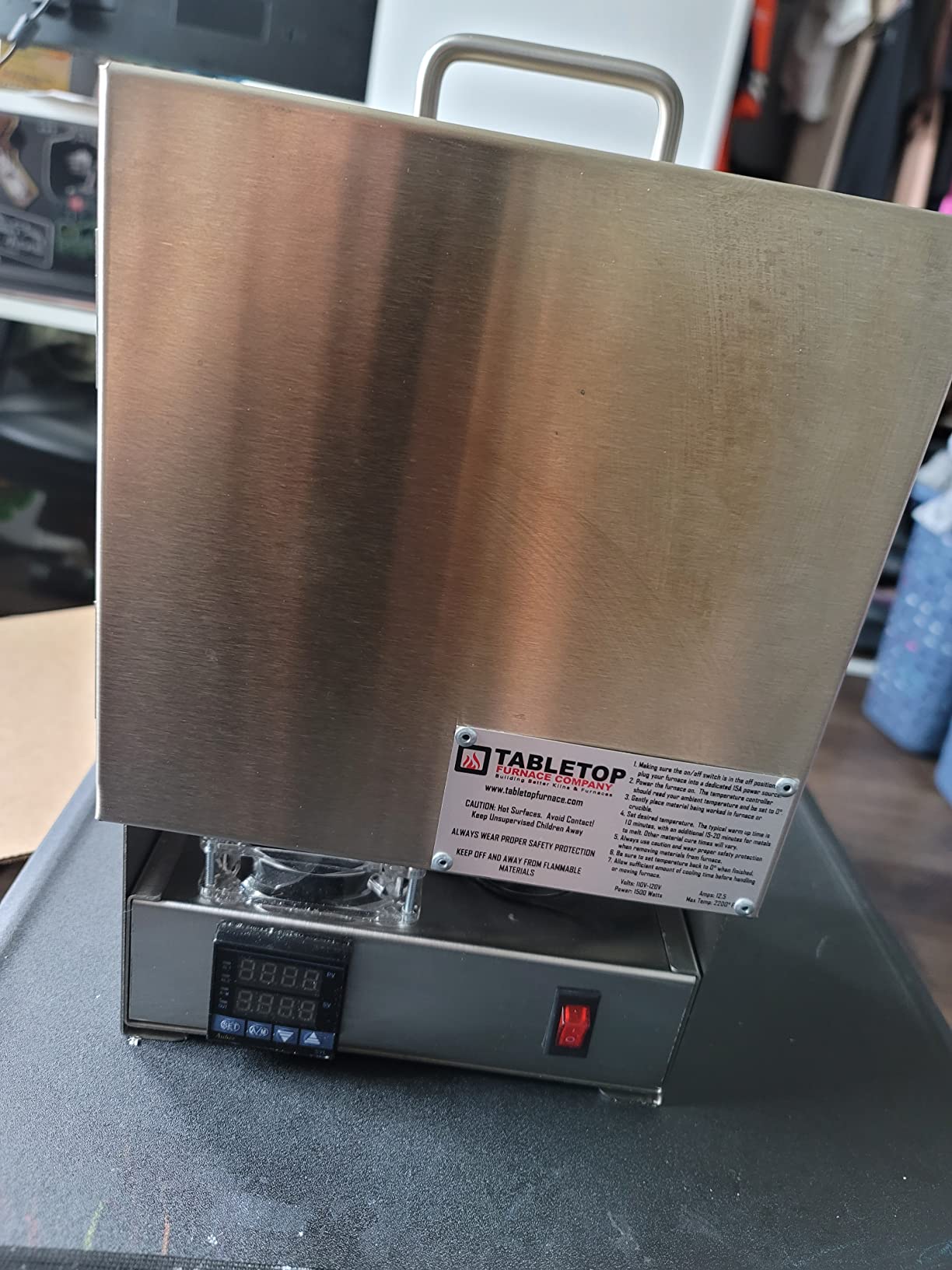
Customer images are worth checking for the actual door clearance and placement of the vent connection. The listing compact 5 x 6 x 6 inch interior means countertop does not mean roomy.
Programmable Burnout Schedules
The programmable controller supports a more controlled process than a knob-only furnace. I would build a slow, staged schedule and log actual temperature rather than assuming a preset exists for every material.
Wax burnout is not ordinary pottery firing. Residue, fumes, and the need to protect the thermocouple and chamber make a clean, ventilated workspace non-negotiable.
Capacity and Workflow
The small interior is excellent for one or a few small flasks, jewelry molds, and PMC tasks. It is frustrating for a batch of larger castings, and a larger production studio will outgrow it quickly.
The front door simplifies retrieval, but I would still allow clearance around the entire unit. A hot furnace should not sit against a wall or on a shelf that traps heat.
Support and Limitations
Review feedback highlights responsive support and a short learning curve after setup. The 90-day warranty is the tradeoff, so I would ask the seller about parts, element replacement, and controller service before purchase.
Choose this kiln for burnout, not for full-size ceramic ware. Its strength is controlled small-object processing, and the 2,200F ceiling makes it inappropriate for some high-fire clay needs.
4. Fuseworks Craft Kiln – Best for Small Glass Jewelry, With a Slow-Heating Rule
Fuseworks Craft Kiln
Compact glass kiln
13.82 pounds
Slow heating recommended
Small jewelry projects
Pros
- Beginner value
- Compact
- Glass jewelry focus
- Simple craft use
Cons
- Glass over 2.5 inches may shatter
- No annealing process
- Short lifespan reports
The Fuseworks is a focused glass-fusing craft kiln, not a general-purpose pottery furnace. Its strongest feature is the small footprint, which suits a craft room where a full kiln would be impossible.
The review data says to heat slowly, with a suggested 2-minute heating and 1-minute wait cycle. I would follow the glass manufacturer schedule and avoid assuming that a small kiln can anneal a thick or large piece.
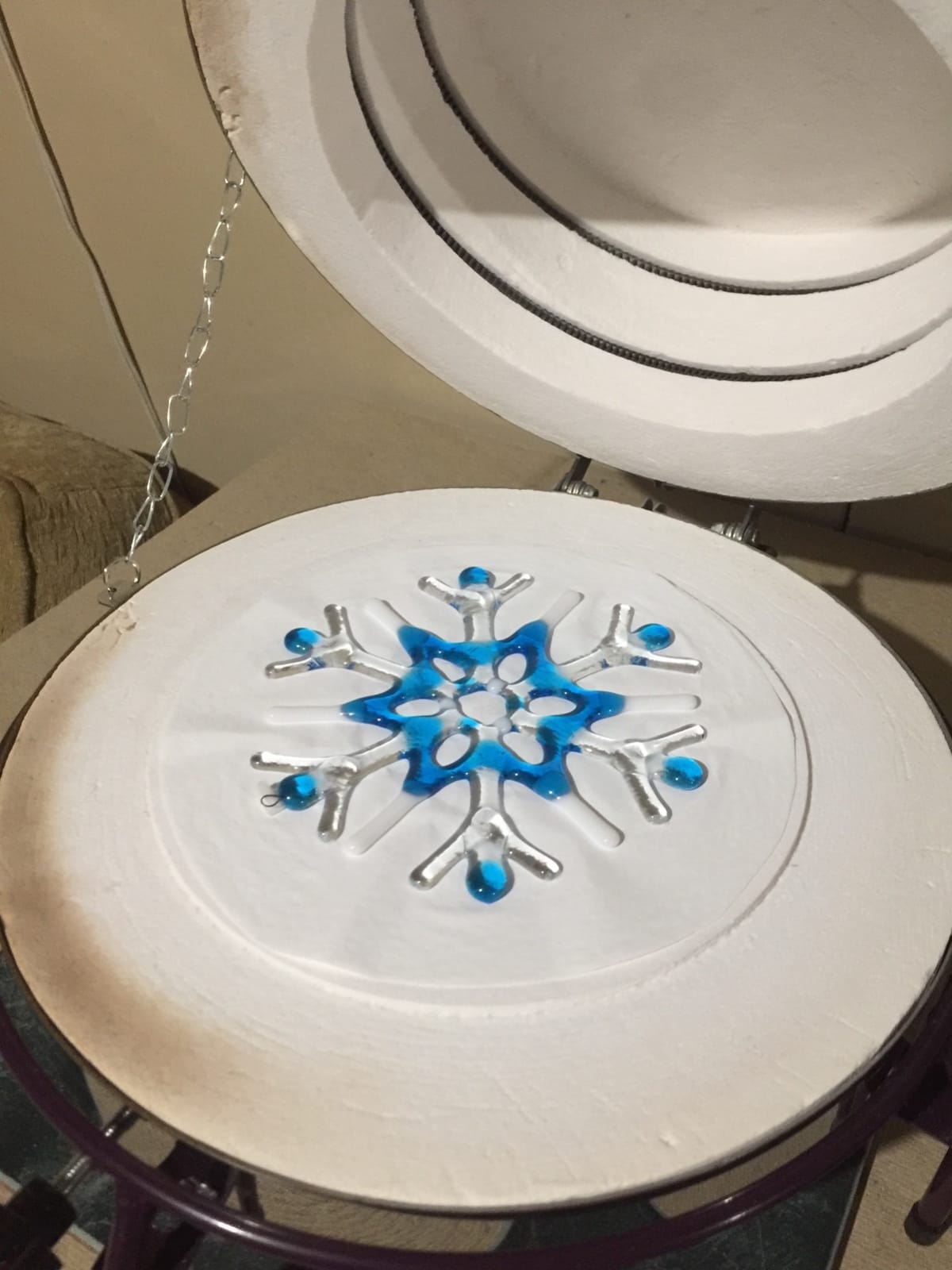
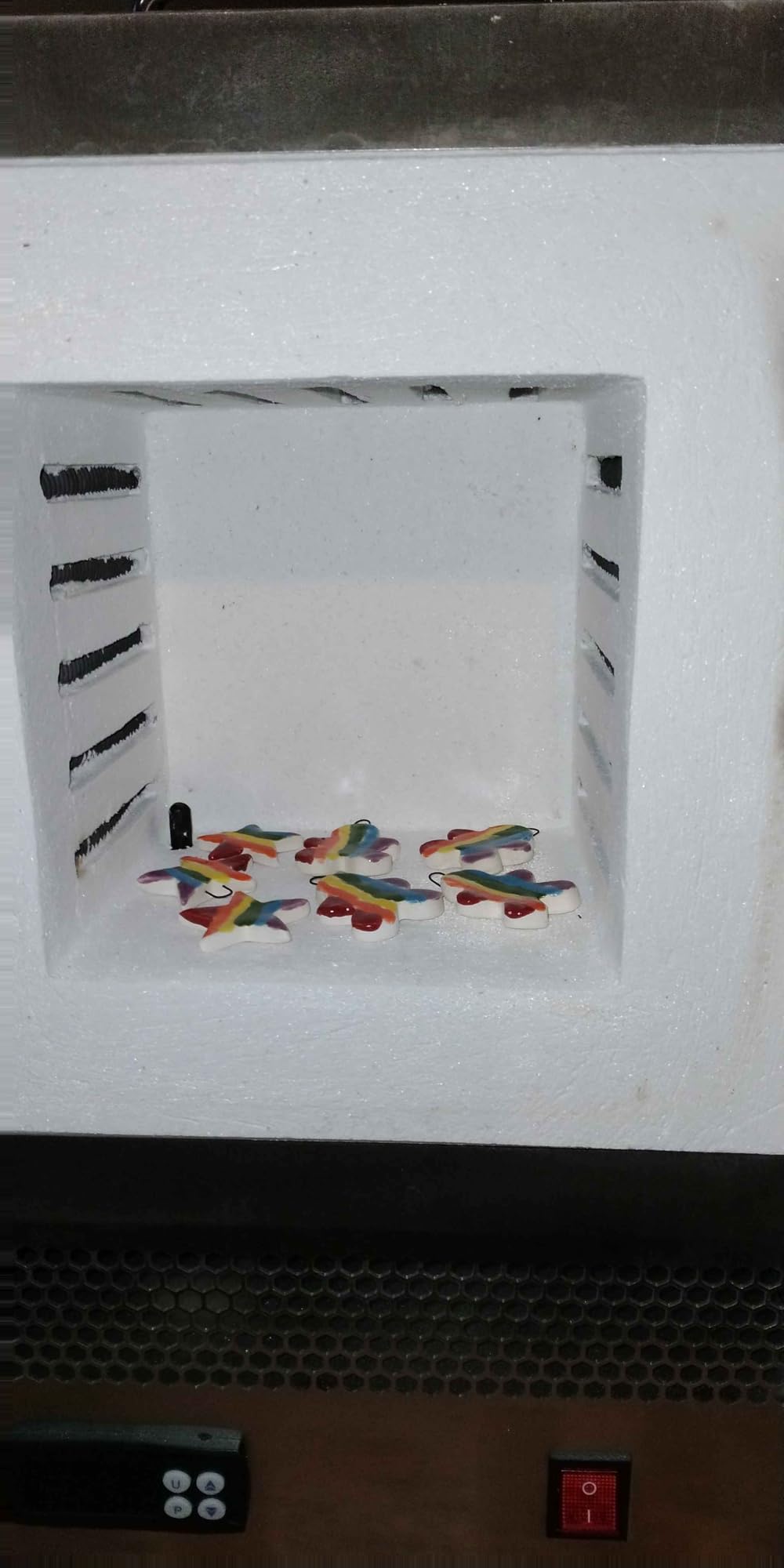
Customer photos help show the actual loading area and how quickly the chamber heats. They also reinforce the need to keep the project small; a piece that appears modest on a workbench can still be too large for the hot zone.
Why Slow Heating Matters
Thermal shock is the main practical risk. The reviews specifically flag shattered projects over 2.5 inches, so I would start with thin compatible glass and make a deliberate test piece.
Slow heating is not the same as annealing. If the finished piece needs an annealing cycle, a separate annealing oven or access to a community studio may be necessary.
Who Should Buy It
The Fuseworks suits a beginner making small beads, pendants, and test samples. I would skip it for mugs, sculptural forms, thick glass, or anyone who expects the reliability of a full ceramic kiln.
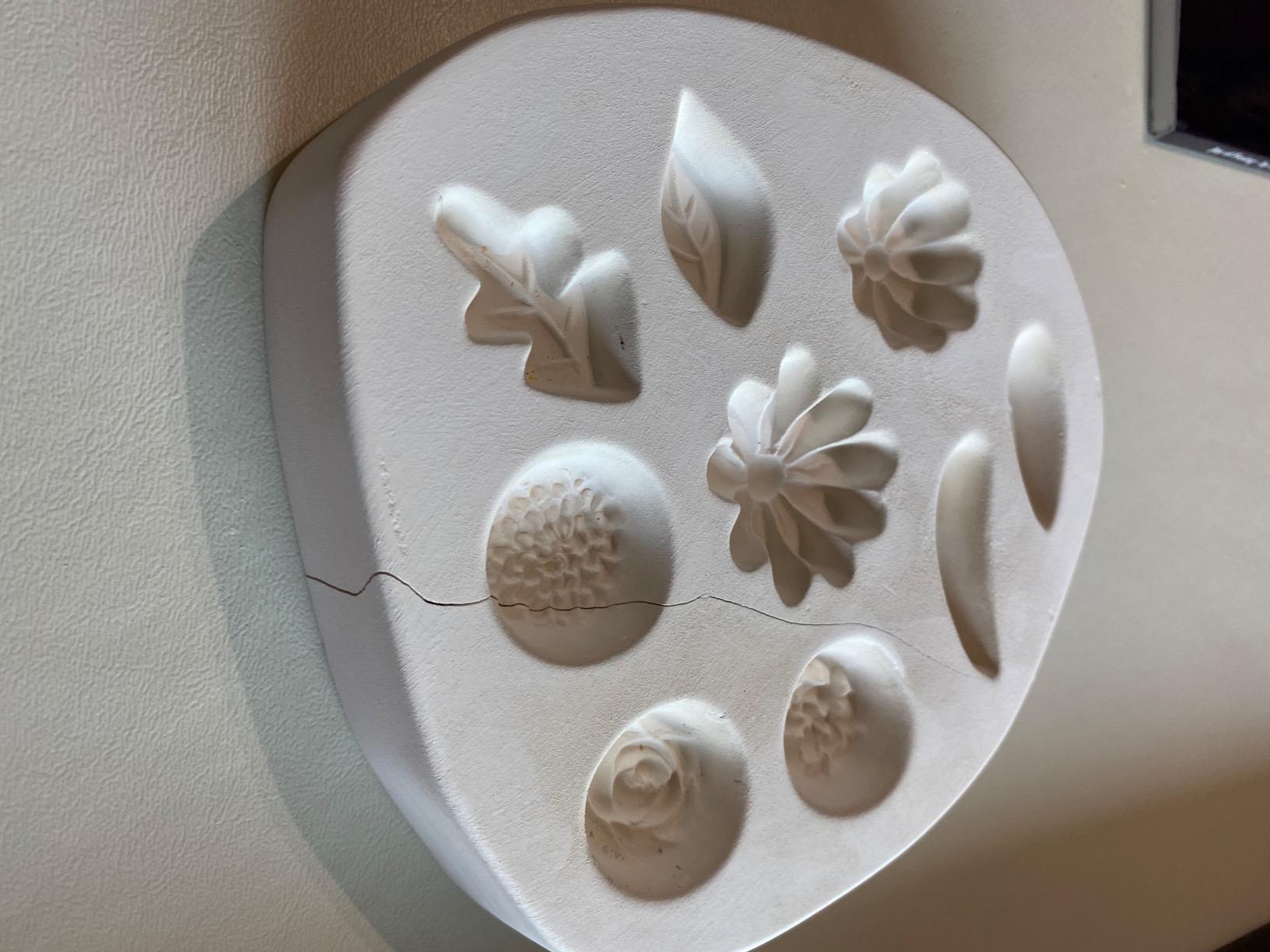
The supplied feedback also mentions units that stopped working after limited use and difficulty reaching the manufacturer. That makes local support, the return policy, and replacement parts more important than a colorful product description.
5. RapidFire Programmable Tabletop Kiln – Portable Capacity for Metal Clay and Enamel
Melting Furnace RapidFire Programmable Tabletop Kiln Melter Jewelry Gold Silver PMC Metal Clay Enamel Bead Making Ceramic Firing
2200F max
30 programmable steps
6 x 5 x 6 inch chamber
12 pounds
Pros
- Portable
- Fast heat
- 30-step control
- One-year warranty
Cons
- Programming complexity
- Electrical reliability reports
- Interior smaller than expected
RapidFire is built around a clear compromise: it offers a 2,200F maximum and 30 ramp-and-soak steps in a 12-pound package. For a jeweler or enamelist, that is a meaningful upgrade from a microwave kiln; for a potter, the chamber is still too small.
The 1,500W, 15-amp circuit requirement deserves attention. I would have the circuit checked rather than relying on a household extension lead, especially when the review data mentions electrical issues.
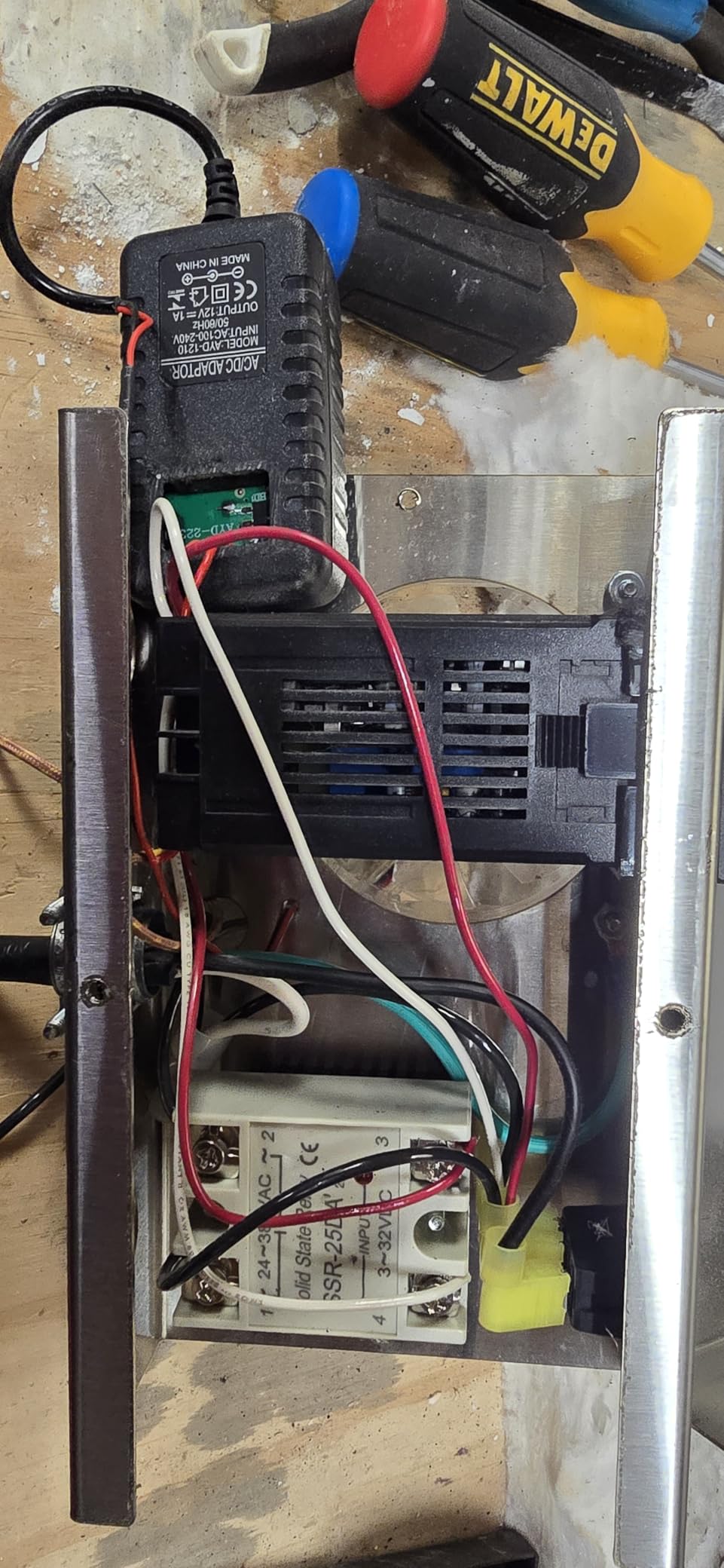
Customer images are useful for checking the 6 x 5 x 6 inch interior and the door swing. The photos may also show whether a user has added a stand or heat-resistant base, neither of which should be improvised without the maker guidance.
Control and Heat Programming
Thirty steps are useful when a material needs a precise ramp and hold. The learning curve is not a trivial complaint; before a first firing, I would write the schedule on paper and verify each segment against the material supplier instructions.
The LCD panel and PID controller are more advanced than a basic thermostat. They still cannot make an unsuitable chamber suitable, so a thick casting or large crucible may fail despite a correct temperature setting.
Portability and Circuit Demands
The 12-pound body is easy to place on a purpose-built bench. It is not necessarily easy to operate on a shared circuit, because the 15-amp draw and high wattage can trip a circuit or create unsafe voltage drop.

Best Use Cases
I would choose RapidFire for small metal clay, enamel, bead, and ceramic tasks where repeatability matters. I would not choose it for a production load, large copper quantities, or a beginner who wants one-button operation.
The one-year limited manufacturer warranty is better than the TableTop USA 90-day coverage, but it does not erase the concerns about electrical reliability. Ask what is serviceable locally and how the controller is calibrated.
6. Crabcut Large Microwave Kiln Kit – The Most Complete Beginner Kit
Crabcut Large Microwave Kiln with 50 Sheets Kiln Paper – Professional Glass Fusing Kit for Jewelry Making & Pottery Crafts – Home Use & Beginner Friendly
Ceramic fiber body
50 paper sheets
Gloves included
1.5 kg
Pros
- Kit includes gloves
- Compact storage
- Simple introduction
- Small projects
Cons
- No stand
- Fragile fiber body
- Cooldown is quick
- Limited inner space
Crabcut main advantage is packaging. It includes the kiln, 50 sheets of kiln paper, and heat-resistant gloves, so a beginner does not have to source the basic consumables separately.
The stated outer size is 7.68 x 7.68 x 4.33 inches, while the inner workspace is 5.31 x 1.77 inches. I would use that inner measurement for project planning, not the larger outer box.
Complete Kit or Hidden Cost?
The gloves are a meaningful inclusion, but the kit does not include a stand or heat-safe base. A microwave, paper, and a safe work surface are still part of the setup, and the first firing needs a controlled area with good clearance.
The one-year warranty is a positive detail, but there are only 10 reviews in the supplied product data. I would treat the 4.6 rating as encouraging, not as evidence of long-term durability.
Project Scale and Handling
The ceramic-fiber body is light and easy to store, but it requires careful handling. The review summary mentions no stand, fast cooling, and fragility, so I would never touch the kiln after a firing without the supplied gloves and a documented safe opening time.
This is a good starter kit for a dedicated craft table and small glass or jewelry projects. It is not a substitute for a conventional pottery kiln or a proper annealing oven.
7. Alolti Microwave Kiln – Compact Fusing for Experienced Crafters
Alolti Microwave Kiln for Clay Pottery with 50 Pcs Kiln Paper, 7.7”Microwave Glass Kiln for Glass Fusing DIY, Mini Small Kiln Kits Jewelry Tools for Beginners at Home
2012F capability
50 pre-cut papers
7.67 x 7.67 x 4.33 inches
3.19 pounds
Pros
- Compact
- Paper variety included
- Fast cycles
- Easy setup
Cons
- No gloves
- Minimal instructions
- Fragile coating
- Shared microwave concern
Alolti offers a similar format to Tujoe and Crabcut, but its included paper assortment and stated 2,012F capability make it appealing for a crafter who already understands microwave firing. I would not call it a pottery kiln for ordinary clay.
The compact 7.67-inch footprint is easy to store. The review data is mixed, with praise for performance and concerns about thermal shock, unclear instructions, and the need to use a separate microwave.
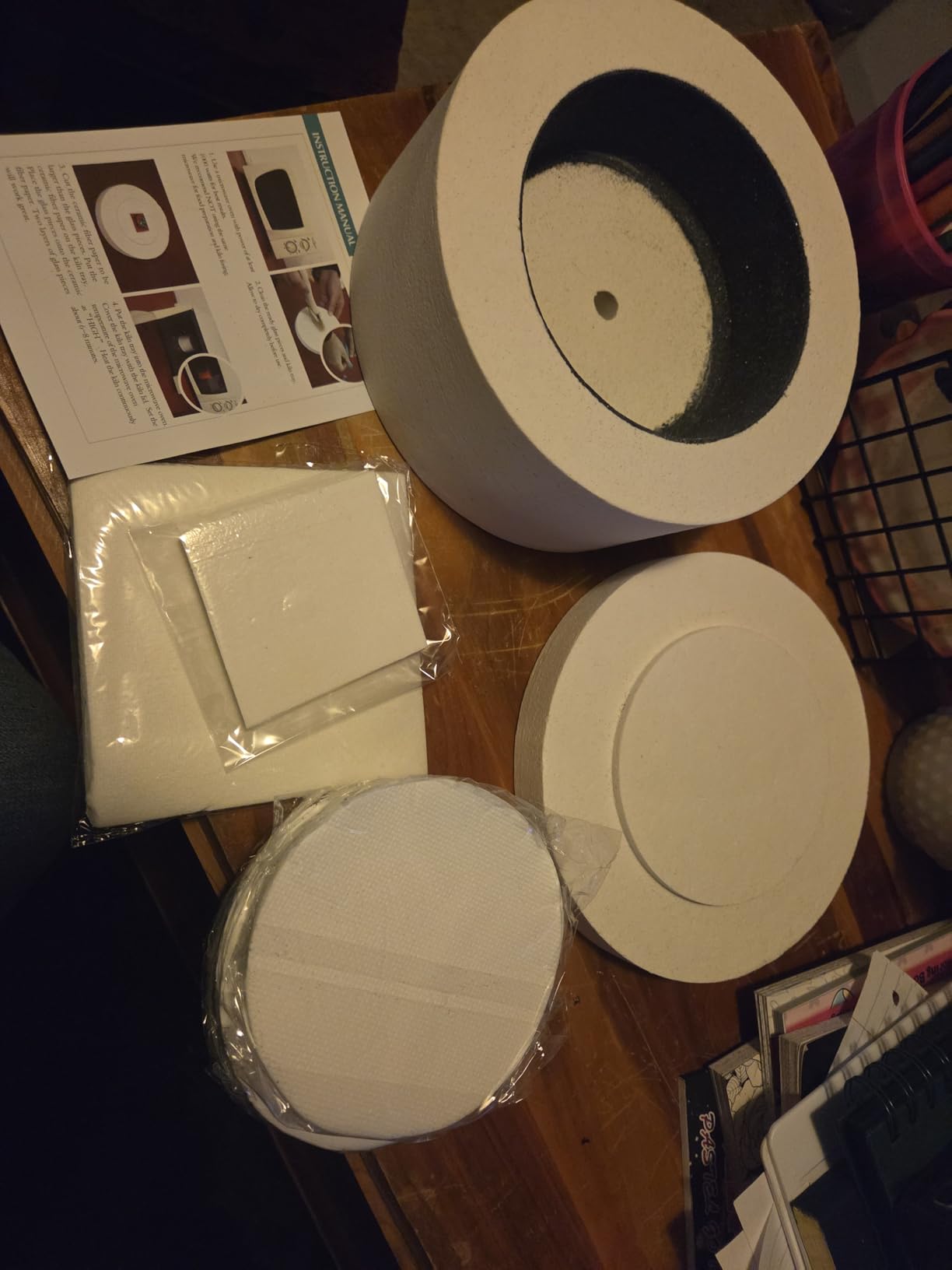
Customer images can show whether the liner has cracked or warped after repeated use. I would avoid a unit with obvious coating damage, since damaged refractory material can change heating behavior and complicate cleanup.
Included Paper and Fast Cycles
Thirty round, 10 large square, and 10 small square papers cover common small shapes. Fast cycles are useful for testing, but speed increases the risk of thermal shock if the material or schedule is not suitable.
Read the full instructions before the first cycle and use a dedicated microwave if possible. I would also keep a written log of paper, load, time, and result so that a successful recipe is repeatable.
Portability Versus Protection
At 3.19 pounds, Alolti is easy to move when cold. It is not a good fit for a shared kitchen or for a first-time buyer who needs gloves and clear safety guidance included in the box.
Best Use
I would choose it for small glass and metal-clay experiments with a dedicated microwave and a cautious schedule. I would choose a conventional furnace for glazed pottery, larger loads, or a higher firing temperature.
8. Generic 2000W Tabletop Electric Kiln – Digital Control at a Heavyweight
Electric Kiln for Pottery at Home, 2000W Tabletop Furnace with Digital Controller – Ceramic Firing, Metal Casting, Wax Burnout & DIY Projects, Maximum Temperature 2102℉/1150℃
2102F max
2000W power
Digital controller
Dual insulation
Pros
- Fast heating
- Digital display
- Dual insulation
- Versatile firing
Cons
- 44.1-pound weight
- Only 3 reviews
- Standard shipping
- Not Prime eligible
The Generic 2000W is the most substantial conventional electric furnace in this list, with a digital controller, 2,000W power, dual-layer insulation, and a 2,102F maximum. It is aimed at a dedicated home studio rather than a casual kitchen craft table.
The tradeoff is weight. At 44.1 pounds, it is less portable than the tabletop jewelry furnaces, and the supplied data notes standard shipping and a 6-7 day dispatch window. I would plan placement before ordering.
Temperature Control and Build
The real-time display and digital temperature control are useful for repeatable schedules. Dual insulation and a stable base help with heat management, but neither replaces a proper stand, ventilation plan, and fire-safe room arrangement.
Only three reviews are available in the product data. I would therefore ask the seller for the chamber dimensions, voltage, amperage, controller manual, element specifications, and service policy before purchase.
Capacity and Home Placement
The 21.26 x 15.75 x 14.57-inch exterior is still compact for an electric kiln, but the interior is not stated in the supplied data. I would not assume it will fit a standard shelf or accept a 120V outlet without confirmation.
Its stated uses include glass slumping, metal casting, pottery firing, and wax burnout. That versatility is promising, yet a buyer should choose the kiln around one proven workflow rather than every advertised application.
Who It Suits
This model suits a dedicated hobbyist who values digital feedback and has space for a heavy appliance. The small review base makes long-term reliability less certain than the specifications suggest, so a local technician and return terms matter.
What to Look For When Buying a Ceramic Kiln
The right kiln is the smallest one that safely and consistently fires the work you already make. I would make this decision in five passes: power, temperature, chamber, controls, and operating environment.
Voltage, Amperage, and Circuit Planning
120V kilns are convenient when they genuinely run on a normal household circuit; 240V kilns usually need a dedicated circuit and electrician planning. A 120V label is not automatically safer, and a 240V label is not automatically better.
Check the manufacturer required voltage, amperage, plug type, and circuit rating. Forums repeatedly identify electrician costs, voltage mistakes, and overloaded circuits as major buyer pain points; a community kiln can cost $50-$60 per firing when installing a personal kiln is not practical.
Do not use an extension cord unless the maker explicitly permits it. Have a qualified electrician inspect older wiring, and include the circuit work in the total ownership plan.
Temperature, Cone Rating, and Clay Body
A kiln maximum temperature is only useful if it matches the clay and glaze you use. A 2,100F maximum may be plenty for many cone 6 projects, but it does not prove a kiln can safely reach a higher cone or hold heat evenly.
Low-fire clay, cone 6 stoneware, and cone 10 reduction firing are different categories. Ask the clay supplier for the correct firing range, then confirm that the kiln elements, controller, and ventilation arrangement can support the complete schedule.
Controller Type and Firing Schedules
A programmable controller with PID logic is easier to repeat than a manual switch or simple knob. The VEVOR, TableTop USA, RapidFire, and Generic models expose more control than microwave kits, but each controller should still be tested against witness cones and a logged schedule.
Manual controls cost less and can work for experienced users, but they demand more attention during a firing. Automatic cone-fire controls are helpful, yet they are not magic: the correct program, slow bisque, witness cones, and a calibrated thermocouple still matter.
Chamber Size, Furniture, and Airflow
Measure the largest piece, then add space for shelves, posts, airflow, and the element-safe distance. A compact 5-8 inch chamber is suitable for jewelry and test tiles, but not for a dinnerware or sculpture practice.
Budget for kiln shelves, posts, stilts, kiln wash, cones, and a heat-safe stand. Small chambers are not automatically cheap to operate, because a restricted hot zone can make loading more sensitive and limit the useful load.
Ventilation, Fire Safety, and Room Rules
Electric kilns use elements; gas kilns use combustion. Electric models are simpler to install and easier to control for a home studio, while gas can offer reduction atmospheres and high-fire character but requires gas work, exhaust planning, and stricter building considerations.
A kiln may be legal in a house, garage, or accessory structure depending on local code, lease rules, fire separation, wiring, ventilation, and the materials being fired. I would check with the local fire authority and landlord before purchase, especially for an apartment or shared building.
Support, Maintenance, and Total Cost
A good controller cannot compensate for an unavailable repair technician. Established brands and local distributors are praised in ceramic forums, while a used kiln wiring, relays, thermocouple, and elements deserve a professional inspection.
Plan for electricity, replacement elements, relays, thermocouples, shelves, kiln wash, and periodic inspection. One community report cited roughly $300 per year for 25 firings; your number will depend on chamber size, schedule, local rates, and how efficiently the kiln is loaded.
Electric Versus Gas for Home Ceramics
Electric kilns are the practical starting point for most home potters because they do not require a gas train and offer programmable, oxidation firings. They still need a dedicated circuit, ventilation, and a fire-safe room.
Gas kilns can support reduction firing and distinctive surfaces, but they demand more installation knowledge and ongoing attention to burners, venting, and atmosphere. I would choose gas only after confirming the site, local rules, and access to experienced support.
Frequently Asked Questions
What is the average lifespan of a ceramic kiln?
A well-maintained ceramic kiln can often last many years, but lifespan depends on firing frequency, element quality, electrical care, and maintenance. Elements, relays, and thermocouples are wear items, so regular inspection and a firing log help predict service needs.
What type of kiln do I need for ceramics?
Most home potters should start with an electric kiln whose temperature range and chamber match the clay and glaze. A conventional electric kiln is best for bisque and glaze firing; microwave craft kilns suit small glass and metal-clay projects, while gas kilns suit users who specifically need reduction firing.
Is it legal to have a kiln in your house?
It can be legal, but local building, fire, electrical, lease, and ventilation rules decide. Check with the local authority and landlord, use the required circuit and ventilation, and do not assume a residential room is approved merely because the appliance is electric.
What are the best ceramic brands?
Skutt, Lu0026amp;L, Olympic, Jen-Ken, and Evenheat are commonly mentioned for established kiln lines and support. For this group, smaller brands such as VEVOR, Tujoe, Crabcut, and Alolti are better matched to compact craft and home-studio use than to full production pottery.
Final Thoughts on Picking the Best Ceramic Kiln
My pick for most buyers is the VEVOR 1650W because it offers a conventional electric chamber, PID control, staged heating, and a compact footprint. Choose the Tujoe if you only need a low-cost way to test small glass projects, or TableTop USA if wax burnout and jewelry are your priority.
Before you order, measure the largest work, confirm the clay firing range, inspect the electrical circuit, and ask who services the controller and elements. The best ceramic kiln is the one that fits your room, your power, your work, and your local safety rules in 2026.
Leave a Reply