
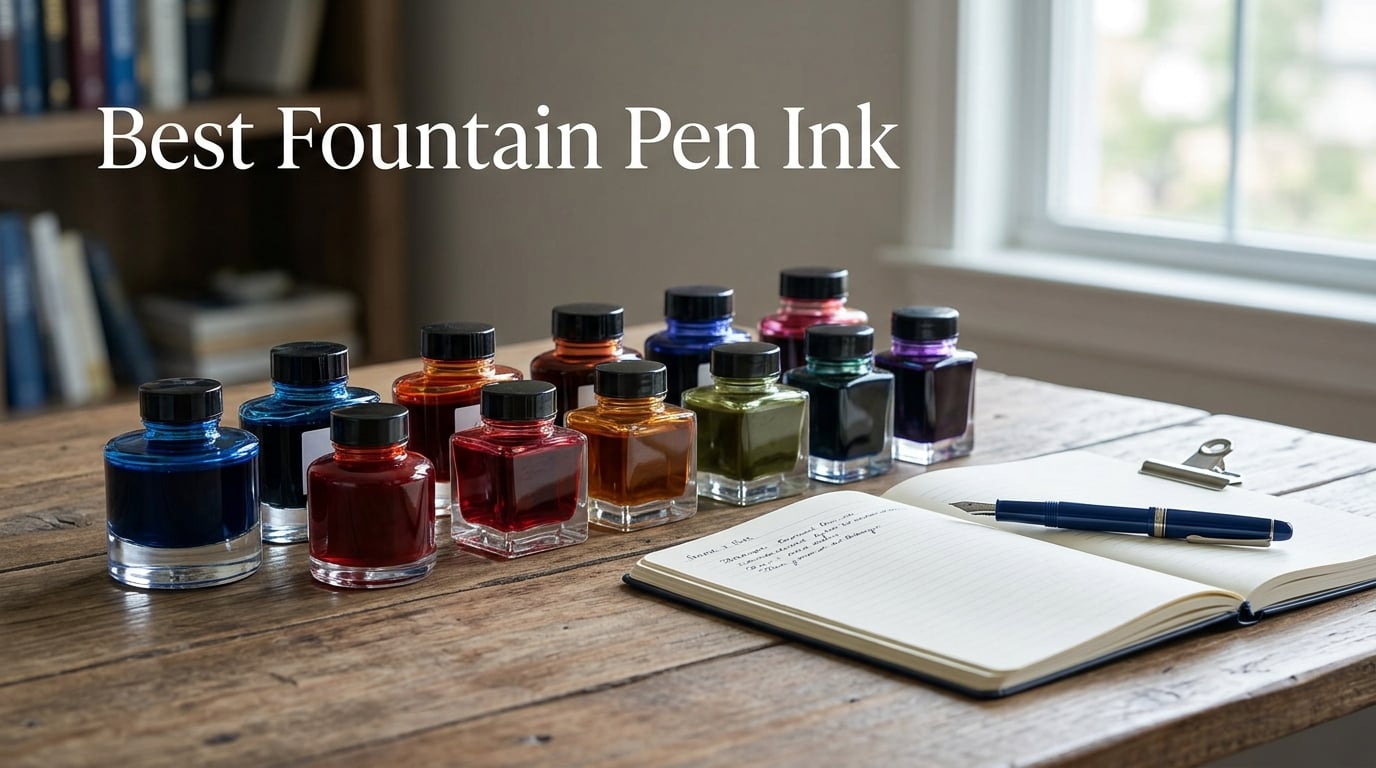
Finding the best fountain pen ink changes everything about how writing feels. After filling countless converters, testing across nib sizes, and writing on everything from cheap notebooks to premium paper, our team narrowed the field to twelve bottles worth your attention.
The ink inside your pen controls flow, drying time, color depth, and even how the nib feels against paper. A wet ink makes a dry fine nib feel silky, while that same ink might bleed straight through thin office paper. Getting the match right takes some trial and error, but it pays off every time you pick up the pen.
We built this guide from months of hands-on testing plus community consensus from fountain pen forums where enthusiasts debate these exact bottles daily. Pilot Iroshizuku earns consistent praise for its lubricated flow. Diamine wins on value and color range. Waterman gets called the most reliable all-rounder. Platinum Carbon Black dominates waterproof ink discussions.
No single bottle wins every category. The right choice depends on your pen, your paper, and what you want the finished page to look like. Our twelve picks span everyday workhorse blacks, eye-catching specialty colors, archival pigment inks, and convenient cartridges. Each review breaks down flow characteristics, real-world performance, and honest trade-offs so you can match the right formula to your writing habits.
Our Top 3 Tested Fountain Pen Inks for 2026
Three bottles stood out above the rest during testing. The Pilot Iroshizuku Kon-Peki delivers the smoothest writing experience we have found in any ink. Diamine Ancient Copper offers a unique copper shade at a remarkably accessible price. Pelikan Brilliant Black provides a proven German formula that works in virtually any pen without fuss.
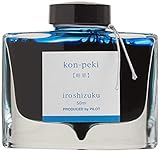
PILOT Iroshizuku Kon-Peki
- Deep turquoise blue
- 50ml bottle
- Exceptional flow
- Premium Japanese

The Kon-Peki earns our editor’s choice for its stunning turquoise color and unmatched lubrication. Diamine Ancient Copper takes best value with a shade you cannot find anywhere else at this quality level. Pelikan rounds out the top three as a no-nonsense everyday black that has earned over 25,000 reviews for good reason.
All 12 Fountain Pen Inks Compared Side by Side
Here is the complete lineup at a glance. Use this table to compare key features before reading through the individual reviews below.
| Product | Specs | Action |
|---|---|---|
| PILOT Iroshizuku Kon-Peki |
|
Check Latest Price |
 Diamine Ancient Copper Diamine Ancient Copper |
|
Check Latest Price |
| Pelikan Brilliant Black 4001 |
|
Check Latest Price |
 PILOT Iroshizuku Take-Sumi PILOT Iroshizuku Take-Sumi |
|
Check Latest Price |
 Waterman Serenity Blue Waterman Serenity Blue |
|
Check Latest Price |
 Platinum Carbon Ink Black Platinum Carbon Ink Black |
|
Check Latest Price |
 Diamine Writer’s Blood Diamine Writer’s Blood |
|
Check Latest Price |
 Parker Quink Black Parker Quink Black |
|
Check Latest Price |
 Asvine Hongdian Black Asvine Hongdian Black |
|
Check Latest Price |
 Sailor Four Seasons Osmanthus Sailor Four Seasons Osmanthus |
|
Check Latest Price |
 Wordsworth and Black Lavender Purple Wordsworth and Black Lavender Purple |
|
Check Latest Price |
 Scriveiner Black Cartridges Scriveiner Black Cartridges |
|
Check Latest Price |
1. PILOT Iroshizuku Kon-Peki – The Turquoise Standard Every Ink Gets Compared To
PILOT Iroshizuku Bottled Fountain Pen Ink, Kon-Peki, Deep Blue (Turquoise Blue) 50ml Bottle (69212)
50ml bottle
Dye-based ink
Deep turquoise blue
Made in Japan
Pros
- Exceptional flow and lubrication
- Beautiful turquoise shade
- Works in any pen
- Premium Japanese quality
Cons
- Premium pricing
- No warranty
The first time I filled a pen with Kon-Peki, the difference was immediate. Every other ink I had used suddenly felt dry by comparison. The nib glided across the page with a lubrication level that made writing feel effortless, even in pens that previously felt scratchy.
Kon-Peki translates roughly to deep blue, and the color sits somewhere between a rich azure and turquoise. On white paper it pops with a clarity that makes you want to keep writing just to see more ink on the page. With over 1,200 reviews and a 4.9-star average, the community consensus matches what we experienced firsthand.
Color Character and Shading
Kon-Peki produces visible shading in medium and broad nibs, meaning you get darker pools where strokes overlap and lighter areas in between. This gives handwriting a dimensional quality that flat inks cannot match. The turquoise base has enough blue to read as professional, not novelty.
In extra fine nibs the shading becomes subtler, delivering a more consistent medium blue line. On cream or ivory paper the warmth of the page shifts the color slightly greener, which many writers find appealing for journaling.
Flow and Lubrication
This is where Kon-Peki separates itself from nearly every ink we tested. The flow sits on the wet side of the spectrum, meaning ink reaches the nib quickly and maintains consistent saturation even during fast writing. That wetness translates directly to smoothness.
If your pen feels dry or scratchy with other inks, Kon-Peki often solves the problem instantly. The trade-off is that very wet inks can show through thin paper more easily. Pair this bottle with decent quality paper and a medium or broad nib for the full effect.
Best Pen Pairings
Kon-Peki shines in Japanese pens with finer nibs because its wet flow compensates for the drier feel those nibs produce. Pilot Vanishing Point, Lamy Safari, and TWSBI Eco all perform beautifully with this ink. We especially love it in pens where other inks felt inconsistent.
Avoid pairing Kon-Peki with extremely wet pens on thin paper, as the combination can cause bleed-through. For absorbent paper like standard Moleskine or composition notebooks, consider a finer nib or a drier alternative from our list.
2. Diamine Ancient Copper – The Unique Shade That Earned a Cult Following
Diamine 30 ml Bottle Fountain Pen Ink, Ancient Copper by Diamine
30ml bottle
Gentle formula
Copper brown shade
UK-made
Pros
- Unique copper-brown shade
- Gentle safe formula
- UK quality production
- Great for dip and fountain pens
Cons
- No warranty
- Niche color preference
Ancient Copper is the kind of ink that makes people stop and ask what you are writing with. The color lands somewhere between burnt orange and rich brown, with a warmth that looks like a aged penny on the page. No other manufacturer offers anything quite like it.
Diamine produces this ink in the UK with a gentle formula that works safely in all fountain pens. With 2,390 reviews and a 4.7-star rating, the enthusiasm is well documented. Writers consistently call it their favorite ink for journaling and personal correspondence.
The Signature Copper Shade
The color reads as a muted copper-brown with surprising complexity. In broad nibs it shows golden undertones in the lighter areas and deep russet in the saturated pools. This shading effect gives every word character without being distracting.
The shade works well for professional writing if your environment tolerates non-black ink. It reads as sophisticated rather than flashy, making it a strong choice for letter writing, journaling, and creative projects.
Shading and Saturation
Ancient Copper shades beautifully in medium and broad nibs. The contrast between light and dark areas is pronounced enough to notice immediately but not so extreme that it hurts readability. Fine nibs produce a more uniform line with subtler variation.
The saturation level sits in the middle range, meaning the color is rich enough to be distinctive but not so dense that it bleeds through normal paper. We tested it on Rhodia, Leuchtturm, and standard copy paper with solid results across the board.
Everyday Writing Potential
Despite its unusual color, Ancient Copper performs like a reliable everyday ink. It dries at a moderate pace, flows consistently across nib sizes, and cleans out of pens easily. The pH-neutral formula means it will not damage feeds or sacs over time.
If you want one ink that stands out from the sea of blues and blacks while still being practical, Ancient Copper is the bottle we recommend most often. It pairs particularly well with vintage-inspired pens and warm-toned paper.
3. Pelikan Brilliant Black 4001 – The German Workhorse With 25,000 Reviews
Pelikan Brilliant Black Bottled Ink for Fountain Pens, 30ml (4001)
30ml bottle
Dye-based ink
Classic black
Made in Germany
Pros
- Extremely affordable
- Works in virtually any pen
- Protects pen and nib
- Proven 125-year formula
Cons
- Basic color only
- No warranty
Pelikan 4001 is the ink we recommend when someone asks for a reliable black that will not cause problems. The formula dates back over 125 years, and it shows in the consistency. This is the bottle you reach for when you just need ink to work.
With more than 25,000 reviews and a 4.7-star average, this is one of the most reviewed fountain pen inks on the market. The community considers it a gold standard for everyday writing, and we agree after testing it across multiple pens.
The 125-Year Formula
Pelikan developed the 4001 line specifically to protect fountain pen nibs and feeds. The ink runs on the drier side, which means less lubrication but also less risk of bleeding through paper. This dryness makes it an excellent match for pens that already write wet.
The formula is dye-based and pH-balanced to avoid corroding vintage pen components. If you have an older pen with a rubber sac or a delicate feed, Pelikan 4001 is among the safest choices available.
Flow Characteristics
Brilliant Black flows consistently but not generously. In broad nibs it produces a clean, solid black line. In fine nibs the line stays crisp without feathering on most papers. The ink dries quickly, which makes it practical for left-handed writers and fast note-takers.
The drier flow means it will not mask a scratchy nib the way a wet ink like Kon-Peki does. Pair it with a smooth pen and the results are excellent. Pair it with a toothy nib and you might want something more lubricated.
Universal Pen Compatibility
This is where Pelikan 4001 truly shines. It works in piston fillers, cartridge pens with converters, vintage pens, modern pens, and even dip pens without issue. The formula is gentle enough for sensitive feeds and consistent enough for daily use.
If you own multiple pens and want one bottle that will not let you down in any of them, this is the one. It is the definition of a dependable workhorse ink.
4. PILOT Iroshizuku Take-Sumi – Premium Bamboo Charcoal Black
PILOT Iroshizuku Bottled Fountain Pen Ink, Take-Sumi, Bamboo Charcoal (Black) 50ml Bottle (69224)
50ml bottle
Dye-based ink
Bamboo charcoal black
Made in Japan
Pros
- Rich deep black
- Smooth consistent flow
- Beautiful bottle design
- Trusted Pilot quality
Cons
- Premium pricing
- No warranty
Take-Sumi means bamboo charcoal, and the name captures the ink perfectly. This is a deep, saturated black with none of the grey undertones that plague lesser black inks. Like its turquoise sibling Kon-Peki, it carries the smooth-flowing character that makes the Iroshizuku line famous.
With 1,471 reviews and a 4.8-star average, Take-Sumi earns its reputation as one of the finest black inks available. If you want a black that looks truly black on the page, this bottle delivers.
Black Depth and Intensity
Take-Sumi produces a rich, velvety black that maintains its intensity even in fine nibs. Where many black inks look dark grey or washed out when written with an extra fine nib, Take-Sumi stays true to color. The saturation is impressive without crossing into bleed-through territory on decent paper.
The ink does not shade noticeably, which is typical of well-saturated blacks. Instead, it delivers a consistent dark line that works well for professional documents, signatures, and any writing where you want maximum contrast.
Writing Smoothness
The Iroshizuku formula runs wet, and Take-Sumi is no exception. The lubrication level makes fine Japanese nibs feel smooth and broad nibs feel luxurious. If you have experienced scratchiness with drier black inks, Take-Sumi often eliminates that problem entirely.
The quick capillary action means the ink starts flowing the moment the nib touches paper. No hard starts, no skipping, no waiting for the feed to saturate. This reliability matters when you are taking quick notes in a meeting.
The Bottle Experience
Pilot packages Iroshizuku inks in beautifully designed glass bottles that look like decorative objects on a desk. The bottle base is wide enough to fill even large nibs without tilting. The aesthetic matches the premium positioning of the ink inside.
At 50ml, the bottle provides good value despite the higher price point. If Kon-Peki is too colorful for your needs but you want the same writing experience, Take-Sumi is the black equivalent.
5. Waterman Serenity Blue – The Reliable Blue That Works in Any Pen
Waterman Fountain Pen Ink, Serenity Blue Ink, 50ml Bottle, For Refillable Fountain Pens
50ml bottle
Serenity Blue
Universal fit
2-year warranty
Pros
- Crisp vivid blue lines
- Universal compatibility
- Premium smooth performance
- 2-year warranty
Cons
- Premium positioning
- Limited to blue color
Forum users describe Waterman inks as the most dependable bottles you can buy, and Serenity Blue proves why. This is a professional, well-behaved blue that looks appropriate in business settings while still offering more personality than a standard black.
With over 14,000 reviews and a 4.8-star average, Serenity Blue is one of the highest-rated fountain pen inks available. It carries a 2-year manufacturer warranty, which is rare in this category.
Color Saturation and Hue
Serenity Blue produces a medium blue that sits between royal and navy. It is saturated enough to read clearly on the page without being so dark that it looks black at a glance. The color is what most people picture when they think of a quality fountain pen blue.
The ink does not shade dramatically, which makes it ideal for professional writing where consistency matters more than visual flair. Lines stay uniform across different writing speeds and nib angles.
Universal Compatibility
Waterman formulates Serenity Blue to work flawlessly in all Waterman pens, and in practice it performs equally well in pens from other manufacturers. The flow is moderate, neither too wet nor too dry, which makes it forgiving across a wide range of nib sizes and pen types.
If you have had trouble with inks that feather, bleed, or clog, Serenity Blue is the safe choice. It behaves on most papers, cleans out easily, and rarely causes maintenance issues.
Premium Writing Feel
The ink provides a smooth writing experience with enough lubrication to feel comfortable without being so wet that it causes problems on absorbent paper. It dries at a moderate pace, making it suitable for most writing speeds.
The faceted glass bottle looks premium on any desk, and the wide base makes filling straightforward. For writers who want a dependable blue that never disappoints, this is the bottle we recommend without hesitation.
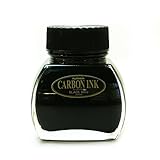
6. Platinum Carbon Ink Black – The Waterproof Standard for Archival Writing
Platinum Carbon Ink Bottle 60ml – Black
60ml bottle
Pigment-based
Waterproof black
Archival grade
Pros
- Waterproof and permanent
- Rich intense black
- Archival quality
- Excellent on most papers
Cons
- Requires regular pen cleaning
- No warranty
When fountain pen users need an ink that survives water, Platinum Carbon Black is the bottle they recommend. This pigmented carbon ink dries waterproof, meaning a spilled glass of water will not destroy your notes. With 3,902 reviews and a 4.8-star average, the community regards it as the benchmark for archival fountain pen ink.
Waterproof Performance
Once Carbon Black dries on paper, water does not wash it away. We tested this by running water over dried samples and the text remained completely legible. This makes it the ideal choice for addressing envelopes, writing in journals that might get caught in rain, signing legal documents, and creating artwork you want to last.
The ink achieves this through carbon pigment particles rather than dyes. Those particles bond to the paper fibers as the water carrier evaporates, creating a permanent mark.
Pigment Considerations
Because Carbon Black uses pigment particles rather than dissolved dyes, it behaves differently from standard fountain pen inks. The pigment can settle if the pen sits unused for extended periods, so regular use or periodic shaking of the pen keeps the flow consistent.
The black itself is deep and intense, darker than most dye-based blacks. It produces a clean, crisp line that looks almost like a fineliner pen on good paper. The opacity is excellent even on colored paper.
Maintenance and Cleaning
Pigment inks require more pen maintenance than dye-based options. We recommend flushing your pen with water every four to six weeks when using Carbon Black, and avoiding leaving it in a pen you will not use for months. The pigment can dry and clog feeds if neglected.
For pens you use regularly, the maintenance is minimal. Clean the pen when you refill, and you will not encounter problems. The archival performance is worth the small extra effort for most users.
7. Diamine Writer’s Blood – The Dark Crimson Ink With Personality
Diamine Fountain Pen Ink 30ml -Writer’s Blood
30ml bottle
pH neutral
Dark crimson
Water-based
Pros
- Unique dark crimson color
- Fast drying
- pH neutral and non-toxic
- Works in all fountain pens
Cons
- Limited stock availability
- No warranty
Writer’s Blood is one of the most talked-about specialty inks in the fountain pen community. The name is dramatic, and the color lives up to it. This is a deep, dark crimson that looks like burgundy wine on the page, with enough red to be distinctive without being garish.
Diamine produces this ink with a pH-neutral, water-based formula safe for all fountain pens. The 4.7-star rating across 422 reviews reflects a smaller but enthusiastic user base that loves the unique character of this shade.
The Dark Crimson Character
The color sits between dark red and deep burgundy. In broad nibs it shows wine-like depth with subtle shading. In fine nibs it produces a consistent dark line that could pass for an unusual brown-black at a distance, revealing its red character up close.
This is an ink for writers who want personality without sacrificing professionalism. It works beautifully for journaling, personal letters, and creative writing. The dramatic name adds to the experience.
Drying Time and Flow
Writer’s Blood dries faster than many specialty inks, which makes it practical for everyday use. The flow is consistent and moderate, neither too wet nor too dry. It performs well across different nib sizes without major behavior changes.
The fast drying time is particularly valuable for left-handed writers who drag their hand across wet ink. We tested it on multiple paper types and found minimal smudging after a few seconds.
Creative and Journaling Uses
This ink shines in creative contexts. Use it for sketching outlines, writing poetry, or adding visual interest to bullet journals. The crimson tone pairs beautifully with cream and ivory paper, creating a look that feels vintage and intentional.
If you want an ink that makes writing feel special, Writer’s Blood delivers. It is not the bottle for signing contracts, but for everything else it adds a layer of character that standard blues and blacks cannot match.
8. Parker Quink Black – The Classic Formula With Smooth Lubricated Flow
Parker Fountain Pen Ink Bottle, Black QUINK Ink, 57 ml Fountain Pen Refill
57ml bottle
Dye-based
Lubricated flow
Quick-drying
Pros
- Smooth lubricated flow
- Quick-drying formula
- Elegant glass bottle
- Rich vivid black
Cons
- Converter sold separately
- Basic black only
Parker Quink is one of the oldest and most recognized names in fountain pen ink. The formula includes added lubricity for a smooth writing experience, and the 57ml bottle provides generous capacity. With over 11,000 reviews and a 4.7-star average, this is a proven choice that has served generations of writers.
The Quink Legacy
Parker developed Quink in the 1930s, and the formula has been refined continuously since. The ink is designed specifically for Parker fountain pens but works well in most modern pens. The brand reputation carries weight, and the ink lives up to it.
The current formulation balances flow, drying time, and color saturation for an all-around dependable writing experience. It is the kind of ink you buy once and keep on your desk indefinitely.
Lubricated Flow Experience
Parker adds lubricants to the Quink formula that make the nib feel smoother on paper. This is immediately noticeable in pens that felt scratchy with other inks. The flow is consistent and generous without being so wet that it causes bleed-through on normal paper.
The quick-drying character makes Quink practical for fast writing and left-handed users. We tested it on standard copy paper and saw minimal feathering, which is impressive for a lubricated ink.
Everyday Practicality
Quink Black is designed for daily use. The color is a solid, consistent black that works for documents, notes, and signatures. The elegant glass bottle with its wide base and screw-top lid looks professional and makes filling pens easy.
Note that Parker sells converters separately, so if your pen uses cartridges and you want to bottle-fill, you will need to pick up a converter. Once you have that, Quink delivers a smooth, reliable writing experience day after day.
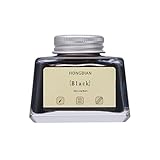
9. Asvine Hongdian Black – Non-Carbon Smooth Flow at an Accessible Price
Asvine Hongdian Fountain Pen Bottled Ink Black, 60ml Fountain Pen Bottled Ink, Non Carbon
60ml bottle
Non-carbon
Quick-drying
pH neutral
Pros
- Non-carbon prevents clogging
- Smooth quick-drying flow
- pH neutral formula
- Luxury glass bottle
Cons
- Basic black only
- Limited warranty info
Asvine Hongdian bottled ink has earned a strong following for delivering smooth performance at a very accessible price point. The non-carbon formula means it will not clog your pen, and the 60ml bottle provides plenty of writing. With 3,247 reviews and a 4.7-star average, this is a well-tested option.
Non-Carbon Advantages
Unlike carbon-based pigment inks, the Hongdian formula uses dye-based coloration that dissolves completely. This means no pigment particles to settle, clog feeds, or require special cleaning routines. You can leave this ink in a pen for weeks without worrying about startup problems.
The non-carbon approach also means the ink cleans out easily with water. No soaking, no special cleaners, no stubborn residue. For writers who switch inks frequently, this is a meaningful advantage.
Flow and Drying Speed
The Hongdian ink flows smoothly and dries quickly. We found the flow to be moderate, sitting between the wet character of Pilot Iroshizuku and the dry precision of Pelikan 4001. This middle-ground behavior makes it forgiving across different nib sizes and pen types.
The quick-drying nature helps prevent smudging, especially for left-handed writers. On standard copy paper we saw minimal feathering and no bleed-through with fine and medium nibs.
Bottle and Presentation
The luxury glass bottle features a wide base and tight-sealing screw-top lid. The design looks more expensive than the price suggests, and the wide opening accommodates large nibs without tilting. At 60ml, it provides excellent value per milliliter.
The pH-neutral, non-toxic formula is safe for all fountain pens. If you want a dependable everyday black that will not cause maintenance headaches, the Asvine Hongdian is a smart choice.
10. Sailor Four Seasons Osmanthus – A Collectible Autumn Orange From Japan
Sailor Fountain Pen, Bottled Ink, Four Seasons, Sixteen Nights’ Dreams, Osmanthus 13-1008-215
20ml bottle
Water-based dye
Autumn orange
Four Seasons series
Pros
- Unique autumn orange
- Beautiful Japanese aesthetic
- Water-based dye ink
- Compact collectible bottle
Cons
- Small 20ml bottle
- Low stock availability
Sailor’s Four Seasons collection pairs inks with Japanese natural beauty, and Osmanthus captures the warmth of autumn in a bottle. The orange-amber shade is unlike anything from Western brands. With 639 reviews and a 4.8-star average, collectors prize this ink for its distinctive character and beautiful presentation.
The Autumn Orange Shade
Osmanthus produces a warm orange-amber that evokes fall leaves and golden hour light. The color is saturated enough to read clearly on white paper while maintaining a soft quality that feels organic rather than synthetic. In broad nibs it shades from light amber to deep orange.
This is not an ink for formal business writing, but for journaling, art, and personal correspondence it adds warmth and personality that standard colors cannot match. The shade pairs beautifully with cream and tan paper.
Four Seasons Collection
Sailor designs the Four Seasons line around Japanese aesthetic themes, with each ink named after a natural element. Osmanthus refers to the fragrant autumn flower, and the bottle and label reflect this inspiration. The compact 20ml size makes these bottles collectible.
The water-based dye formula flows smoothly and behaves well on most papers. It cleans out of pens easily and will not cause maintenance issues. The smaller bottle size means you may go through it faster with heavy use, but the color is worth it.
Collectibility Factor
Sailor Four Seasons inks are produced in limited runs, and availability fluctuates. The Osmanthus shade frequently sells out, which adds to its appeal among collectors. If you see it in stock, it is worth grabbing.
The bottle itself is a small work of art, with a design that looks beautiful displayed on a shelf. For ink enthusiasts who appreciate the intersection of writing and aesthetics, this bottle satisfies on both fronts.
11. Wordsworth and Black Lavender Purple – Luxury Ink With Quick-Drying Formula
Wordsworth and Black Fountain Pen Ink Bottle (50 ml) Premium Luxury Edition, [Lavender Purple] Fountain Pens Bottled Ink; Classic Designed Bottle Smooth Flow 50 ml…
50ml bottle
Natural dyes
Lavender purple
Quick drying
Pros
- Rich lavender purple
- Quick-drying formula
- Natural dyes and pH neutral
- Full satisfaction guarantee
Cons
- Lower 4.5 rating
- Limited stock availability
Wordsworth and Black positions this ink as a luxury offering, and the lavender purple shade delivers a distinctive writing experience. The 50ml faceted glass bottle looks elegant on any desk, and the formula uses natural dyes with a neutral pH. With 1,292 reviews and a 4.5-star average, it is a solid choice for writers seeking a unique color.
The Lavender Purple Hue
The color reads as a soft medium purple with lavender undertones. It is lighter and more playful than a deep violet, making it suitable for creative writing, journaling, and personal correspondence. On cream paper the warmth shifts the color slightly pinker, which many writers find charming.
The saturation level is moderate. Broad nibs produce a richer purple, while fine nibs deliver a lighter lilac line. The color shades subtly, giving handwriting a gentle dimensional quality.
Drying and Smudge Resistance
One of the strengths of this ink is its quick-drying formula. Wordsworth and Black formulates the ink to dry within seconds, which prevents smudging even for fast writers and left-handed users. We tested it alongside slower-drying inks and the difference was noticeable.
The ink flows smoothly without clogging, and the natural dye base cleans out of pens easily. The pH-neutral formula is safe for all fountain pen types, including vintage pens with sensitive components.
Presentation and Packaging
The faceted glass bottle with its wide base and screw-top closure matches the presentation of inks costing significantly more. The 50ml capacity provides good value, and the design makes filling pens straightforward even with large nibs.
The satisfaction guarantee means you can try the ink risk-free. If the lavender purple does not suit your needs, the brand offers replacement or refund options. This confidence in the product is reassuring for first-time buyers.
12. Scriveiner Black Ink Cartridges – Convenient Quality for Cartridge Pens
20 Black International Standard Ink Cartridges by Scriveiner
20-pack cartridges
International standard
Permanent black
Made in England
Pros
- Convenient cartridge format
- Fits international standard pens
- Permanent quality ink
- Made in England
Cons
- Only available in black
- Cartridge-only format
Not every fountain pen user wants to deal with bottled ink and converters. Scriveiner offers a solution with these international standard black cartridges that deliver permanent, smooth-flowing ink in a convenient format. With 2,090 reviews and a 4.7-star average, these cartridges have earned a strong reputation for quality.
Cartridge Convenience
Cartridges eliminate the mess of bottled ink. You simply insert a cartridge into your pen, give it a moment to saturate the feed, and start writing. When the cartridge empties, you swap in a new one. This simplicity makes cartridges ideal for travel, office use, and writers who value convenience.
The 20-pack provides plenty of writing capacity. Each cartridge typically fills a pen for several pages of writing, depending on nib size and writing style. The packaging keeps cartridges secure and prevents leaks.
Ink Quality and Flow
Scriveiner formulates the ink to flow beautifully onto the page. The black is rich and permanent, producing clean lines that resist fading. The flow is consistent across different pen types, and the ink dries at a reasonable pace.
For cartridge ink, the quality surprises many users who assume bottled ink is always superior. The writing experience compares favorably to mid-range bottled inks, with smooth flow and good color saturation.
Compatibility Notes
These cartridges follow the international standard size, which fits most fountain pen brands except Pilot, Platinum, Sailor, and Lamy, which use proprietary formats. If your pen accepts standard international cartridges, these will work perfectly.
Scriveiner designs these cartridges for their own pens, but the international standard sizing means they work equally well in pens from Cross, Waterman, Parker-compatible models, and many others. Always check your pen’s cartridge format before purchasing.
How to Choose the Best Fountain Pen Ink for Your Needs
Choosing fountain pen ink involves more than picking a color you like. The formula type, flow characteristics, paper interaction, and intended use all determine whether an ink will perform well in your specific setup. Here is what matters most when selecting your next bottle.
Dye-Based vs Pigment vs Iron Gall Ink
Dye-based inks dissolve color completely in liquid, producing smooth flow and easy cleaning. They make up the majority of fountain pen inks, including Pilot Iroshizuku, Diamine, Waterman, and Parker Quink. These inks are safe for all pens and require no special maintenance.
Pigment-based inks suspend tiny particles in liquid, creating permanent, waterproof marks once dry. Platinum Carbon Black is the standout example. These inks offer archival quality but require regular pen cleaning to prevent clogging.
Iron gall inks use a chemical reaction to bond with paper, creating permanent marks that age gracefully. They offer excellent permanence but can be more corrosive to pen components over time. Most modern iron gall inks are formulated to be safe for daily fountain pen use.
Wet vs Dry Flow: Matching Ink to Your Nib
Flow describes how much ink reaches the paper per stroke. Wet inks like Pilot Iroshizuku deliver generous flow that makes nibs feel smoother and produces richer color. They work especially well in fine nibs and pens that write dry.
Dry inks like Pelikan 4001 deliver less ink per stroke, which means faster drying and less bleed-through on thin paper. They pair well with broad nibs and pens that already write wet. Matching ink flow to nib characteristics is the single biggest factor in writing satisfaction.
If your pen feels scratchy, try a wetter ink. If your pen bleeds through paper, try a drier ink. This simple adjustment solves more writing complaints than any other change.
Shading, Sheen, and Shimmer Explained
Shading occurs when ink pools differently across a stroke, creating light and dark areas. Diamine Ancient Copper and Pilot Iroshizuku Kon-Peki both shade beautifully. Writers who want visual interest in their handwriting should look for shading-capable inks.
Sheen is a metallic-like reflection that appears when ink pools heavily in certain areas. It shows up as a red or gold shine on dark inks when viewed at an angle. Sheen requires specific paper and generous ink deposition to appear.
Shimmer inks contain fine glitter particles that create a sparkling effect. None of our twelve picks are shimmer inks, but the category is worth knowing about if you want maximum visual impact for creative projects.
Paper Compatibility: Why It Makes or Breaks Your Ink
Paper quality affects ink behavior more than any other variable outside the ink itself. Cheap paper absorbs ink quickly, causing feathering where ink spreads along fibers and bleed-through where ink shows on the back of the page. Premium papers like Rhodia, Tomoe River, and Leuchtturm control ink absorption for cleaner results.
Wet inks and broad nibs amplify paper problems. If you write on standard copy paper, choose a drier ink like Pelikan 4001 or Parker Quink. If you use premium paper, you can enjoy wet inks and broad nibs without issues.
Testing an ink on your actual paper before committing to it in a favorite pen saves frustration. Write a few lines, let them dry, and check the back of the page for bleed-through.
Water Resistance and Archival Permanence
Standard dye-based inks wash away with water. If your notes might get wet or you need writing that lasts decades, choose a pigment ink like Platinum Carbon Black or an iron gall formula. These inks bond permanently to paper.
For addressing envelopes, signing documents, or writing in journals that travel with you, water resistance provides peace of mind. The trade-off is increased maintenance, so weigh permanence against convenience based on your needs.
Cartridge vs Bottled Ink: Which Format Suits You
Cartridges offer convenience and portability. You swap them in seconds with no mess, making them ideal for office use and travel. The downside is limited color selection and higher per-milliliter cost compared to bottled ink.
Bottled ink requires a converter or piston-filling pen but offers vastly more color options and better value. Most serious fountain pen users eventually move to bottled ink for the expanded choices. If your pen accepts both formats, try cartridges first for convenience, then explore bottled ink when you want more colors.
What is the best quality ink for fountain pens?
The best quality fountain pen ink depends on your needs, but Pilot Iroshizuku consistently earns the highest praise for its smooth flow, beautiful colors, and premium formulation. For everyday reliability, Pelikan 4001 and Waterman Serenity Blue are community favorites. For archival permanence, Platinum Carbon Black is the standard choice.
What is bulletproof fountain pen ink?
Bulletproof fountain pen ink is a term coined by Noodler’s to describe inks that bond permanently to paper cellulose, making them resistant to water, bleach, and other chemicals. These inks are valued for document security and archival writing. Platinum Carbon Black achieves similar permanence through carbon pigments rather than the chemical bonding used in bulletproof formulas.
Is it better to use wet or dry ink in fountain pens?
Neither wet nor dry ink is universally better. Wet inks like Pilot Iroshizuku provide smoother flow and richer color, working well in fine nibs and dry-writing pens. Dry inks like Pelikan 4001 dry faster and reduce bleed-through, making them ideal for broad nibs and absorbent paper. Match the ink flow to your nib size and paper type for the best results.
Does it matter what ink I use for my fountain pen?
Yes, the ink you use significantly affects writing performance, pen longevity, and the appearance of your writing. Using ink formulated specifically for fountain pens prevents clogging and damage. Factors like flow, drying time, and water resistance vary between inks and determine how your pen performs. Always use fountain pen ink, never calligraphy ink or India ink, which can permanently damage your pen.
What is the best fountain pen ink for beginners?
Pilot Iroshizuku, Waterman Serenity Blue, and Diamine inks are the most recommended choices for beginners. These brands offer forgiving formulas that flow well in most pens, clean out easily, and come in a wide range of colors. Pelikan 4001 is another excellent beginner option because it is affordable, well-behaved, and works in virtually any pen.
Final Thoughts on the Best Fountain Pen Ink for 2026
If you want the smoothest writing experience available, go with Pilot Iroshizuku Kon-Peki or Take-Sumi. The lubrication and flow quality set a standard that other inks aspire to match. For a color that stands out, Diamine Ancient Copper delivers a shade no other manufacturer replicates.
If reliability across multiple pens is your priority, Waterman Serenity Blue and Pelikan Brilliant Black are the bottles we trust without hesitation. For archival writing that must survive water and time, Platinum Carbon Black is the definitive choice. And if convenience matters more than exploration, Scriveiner cartridges keep things simple.
The best fountain pen ink is the one that matches your pen, your paper, and your writing habits. Start with one bottle from this list, test it thoroughly, and let your experience guide your next choice. Every bottle here has earned its place through proven performance and thousands of satisfied writers.
Leave a Reply