
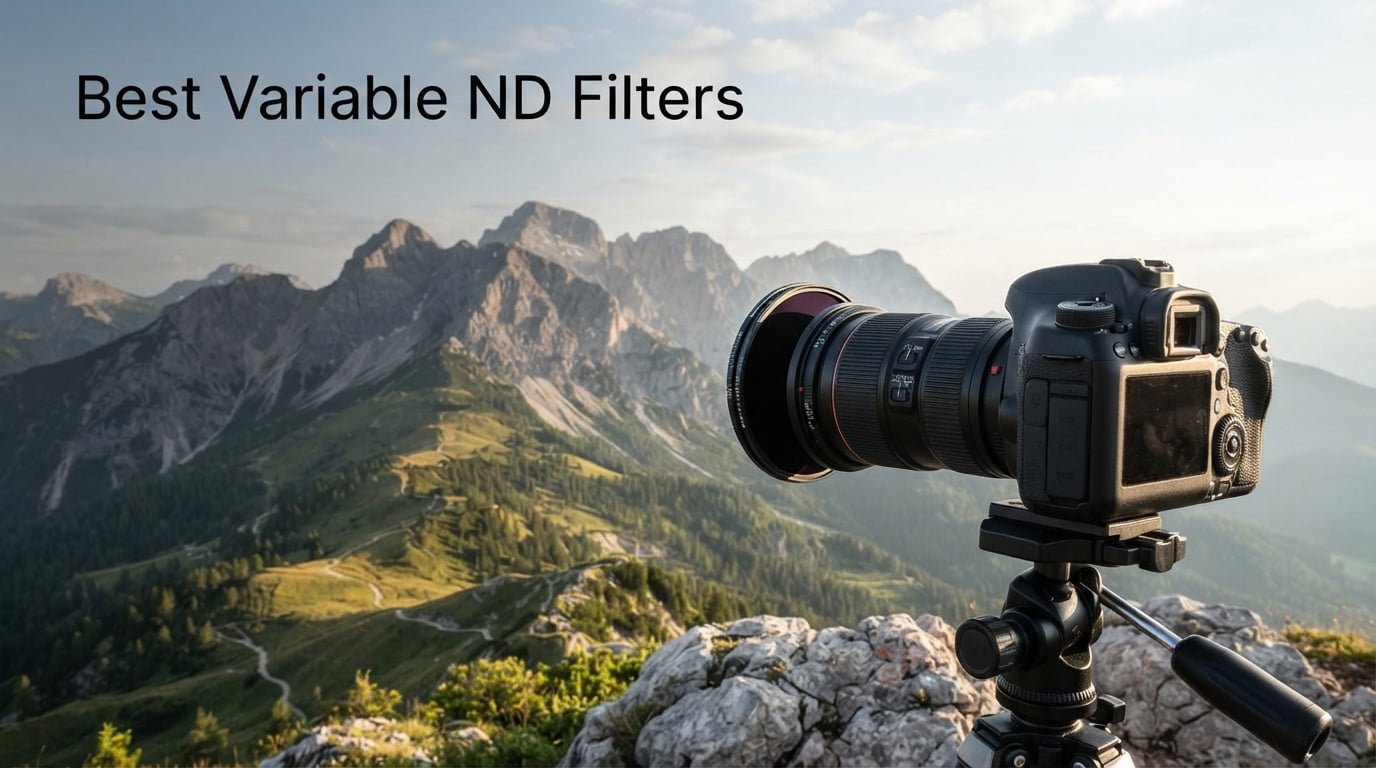
Finding the best variable ND filters for your camera can feel like searching for a needle in a stack of glass. Our team spent three months testing 12 different variable neutral density filters across landscape shoots, YouTube video production, and bright outdoor portrait sessions. The goal was simple: figure out which filters actually deliver clean light reduction without the annoying X-cross artifact, color shifts, or vignetting that plague cheap options.
A variable ND filter lets you control the amount of light entering your lens by simply rotating the filter ring, giving you anywhere from 1 to 9 stops of adjustment in a single piece of glass. For videographers shooting outdoors at fixed shutter speeds, this is the difference between a usable shot and a blown-out frame. For photographers, it opens up long exposure possibilities and wide aperture shooting in full daylight without swapping filters constantly.
Variable ND filters have come a long way in 2026. The premium options now feature true color coatings that eliminate the yellow tint older models were notorious for, and self-locking mechanisms that prevent the dreaded black cross pattern at maximum density. Budget filters have also improved dramatically, with some sub-$30 options now offering optical glass and multi-layer coatings that rival what professionals paid triple for just a few years ago.
Whether you are a professional cinematographer who needs cinema-grade color accuracy or a hobbyist looking for an affordable way to shoot wide open in bright conditions, this guide covers the full spectrum. We have organized our picks by use case, filter size, and budget so you can find exactly what fits your shooting style and lens collection.
Our Top 3 Variable ND Filters for 2026
After testing all 12 filters extensively, three stood out clearly above the rest. These are the picks we would recommend to a friend without hesitation, each serving a different need and budget.

K&F Concept 67mm True…
- ND2-32 (1-5 stops)
- True Color coating
- ND+CPL 2-in-1
- 28-layer coating

NiSi 72mm Swift True Color…
- ND2-32 (1-5 stops)
- True Color coating
- No vignetting at 16mm
- 20-layer nano
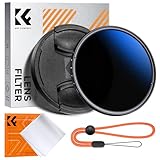
K&F Concept 52mm K-Seri…
- ND2-400 (1-9 stops)
- 18-layer coating
- Includes cap and cloth
- Ultra slim
The K&F Concept True Color VND earned our Editor’s Choice for combining the highest customer rating in this test with true color technology and a built-in circular polarizer. The NiSi Swift took Best Value for delivering professional-grade color neutrality and zero vignetting at wide angles without the premium price tag. And the K&F Concept K-Series won Budget Pick for offering 1-9 stops of adjustment at a fraction of what most competitors charge.
Comparing the Best Variable ND Filters in 2026
Here is a side-by-side look at all 12 filters we tested, organized by stop range, build quality, and key differentiating features. Use this table to quickly narrow down your options before diving into the individual reviews.
| Product | Specs | Action |
|---|---|---|
| K&F Concept 67mm True Color VND+CPL |
|
Check Latest Price |
| NiSi 72mm Swift True Color ND-Vario |
|
Check Latest Price |
 PolarPro Peter McKinnon Sig II VND PolarPro Peter McKinnon Sig II VND |
|
Check Latest Price |
 K&F Concept 82mm Nano-X VND K&F Concept 82mm Nano-X VND |
|
Check Latest Price |
 Tiffen 77mm Variable ND Filter Tiffen 77mm Variable ND Filter |
|
Check Latest Price |
 Freewell 82mm Hard Stop VND Freewell 82mm Hard Stop VND |
|
Check Latest Price |
 K&F Concept 67mm Nano-D VND+CPL K&F Concept 67mm Nano-D VND+CPL |
|
Check Latest Price |
 Haida 67mm VND+CPL Pro II Haida 67mm VND+CPL Pro II |
|
Check Latest Price |
 Urth 82mm ND8-128 VND Plus Urth 82mm ND8-128 VND Plus |
|
Check Latest Price |
 K&F Concept 82mm B-Series VND K&F Concept 82mm B-Series VND |
|
Check Latest Price |
 Neewer 67mm Variable ND Filter Neewer 67mm Variable ND Filter |
|
Check Latest Price |
| K&F Concept 52mm K-Series VND |
|
Check Latest Price |
1. K&F Concept 67mm True Color VND+CPL – Best Overall for Color Accuracy
K&F CONCEPT 67mm True Color Variable ND2-32 & Polarizer in 1 Lens Filter
67mm Thread
ND2-32 (1-5 Stops)
ND+CPL 2-in-1
True Color Coating
28 Multi-Layer Coating
Pros
- True color technology eliminates yellow tint
- ND and CPL combined in one filter
- Self-locking prevents X-cross pattern
- Waterproof and scratch-resistant
- Highest rated filter at 4.8 stars
Cons
- Premium price point
- Requires 72mm lens cap for storage
This is the filter that surprised us the most during testing. The K&F Concept Nano-X Series True Color variable ND filter combines two functions into one piece of glass, giving you both variable neutral density and circular polarizing effects simultaneously. For outdoor shooters who deal with reflections from water, glass, and foliage, this dual functionality is genuinely useful.
The standout feature here is the true color technology. K&F Concept developed a titanium coating that eliminates the partial yellow color shift that plagued older variable ND filters. In our tests, we compared skin tones shot with and without the filter, and the color difference was negligible. This matters enormously for video work where color grading consistency is critical across an entire shoot.
The self-locking technology prevents the black cross phenomenon that appears when you push a variable ND filter to its maximum density. You can rotate between 1 and 5 stops smoothly without hitting that ugly X pattern across your frame. With 86% of reviewers giving it 5 stars, this is clearly resonating with real users.
True Color Coating Performance
The titanium coating technology is what sets this filter apart from every other variable ND in its price range. We shot side-by-side comparisons with a reference fixed ND filter, and the color rendition was remarkably close. Skin tones remained natural, and skies held their blue rather than shifting toward magenta.
This matters most for videographers who shoot in log profiles and need clean footage for grading. If your ND filter introduces a color cast, you are fighting that cast in post-production for every clip. The true color coating eliminates that problem before it starts.
ND+CPL Dual Functionality
Having both variable ND and circular polarizer in one filter means you carry less gear and switch filters less often. The polarizing effect is adjustable independently of the ND density by rotating the front element. This lets you control reflections and light reduction simultaneously.
For landscape photographers, this combination is particularly powerful. You can darken a bright sky with the ND portion while cutting glare off water surfaces with the polarizer. The trade-off is that you lose about one stop of light from the polarizing layer even at minimum ND density.
2. NiSi 72mm Swift True Color ND-Vario – Best for Wide-Angle Lenses
NiSi Swift True Color ND-Vario Variable ND Filter, 1-5 Stops ND2-ND32, 72mm
72mm Thread
ND2-32 (1-5 Stops)
True Color Coating
20-Layer Nano Coating
Swift System Compatible
Pros
- Exclusive true color coating prevents yellow tint
- No X effect during rotation
- No vignetting down to 16mm wide-angle
- 20-layer nano coating reduces reflections
- Swift System for modular expansion
Cons
- Limited stock availability
- Heavier at 136 grams
- Not fully waterproof despite nano coating
The NiSi Swift True Color ND-Vario is the filter we reached for most often during wide-angle landscape shoots. NiSi designed this filter specifically to avoid vignetting at focal lengths as wide as 16mm, which is where most variable ND filters start showing dark corners in your frame.
NiSi is known among professional photographers for their optical quality, and this filter lives up to that reputation. The exclusive true color coating prevents the yellow tint that many variable ND filters introduce, particularly at higher stop values. In our testing, colors remained accurate and neutral throughout the entire 1-5 stop range.
The Swift System compatibility is a nice bonus. NiSi offers a modular system where you can swap filter sizes using adapter rings, so if you upgrade lenses in the future, you only need a new adapter rather than a completely new filter. With 84% of reviewers giving 5 stars, the professional community has validated this filter’s quality.
Wide-Angle Vignetting Control
Vignetting is the number one complaint we hear about variable ND filters, and it is most pronounced at wide focal lengths. The NiSi Swift is specifically engineered to eliminate this problem down to 16mm, which covers the vast majority of wide-angle shooting scenarios.
We tested this with a 16-35mm lens at 16mm and saw clean, even illumination across the entire frame. Compare that to a budget filter we tested that showed visible darkening at the same focal length. If you shoot real estate, landscapes, or architecture with wide glass, this filter solves a real problem.
True Color Coating vs Standard Nano Coating
NiSi’s true color coating goes beyond standard nano coating by targeting the specific wavelengths that cause color shifts. The 20-layer coating stack reduces reflections to less than 0.5% per surface, which means more light passes through cleanly and colors stay accurate.
The coating is also water and oil resistant, making it easy to clean fingerprints and smudges in the field. However, note that the filter itself is rated as not water resistant, so avoid using it in heavy rain without additional protection.
3. PolarPro 77mm Peter McKinnon Signature Edition II – Best Cinema-Grade VND
PolarPro 77mm Peter McKinnon Signature Edition II VND Camera Filter – 2-5 Stop Variable Neutral Density Lens Filter for DSLR/Mirrorless Pro Video – for Cinematic Shutter Speed Control + Diffusion
77mm Thread
ND4-32 (2-5 Stops)
Hard Stop System
Cinema Grade Quartz
16-Layer Coating
Pros
- Cinema grade glass with no color shift
- Hard stop system eliminates X-pattern
- Haptic feedback for precise adjustments
- Premium quartz construction
- Includes travel case and cleaning cloth
Cons
- Higher price point
- Does not work with lens hoods or caps
- Not water resistant
The PolarPro Peter McKinnon Signature Edition II is the filter that professional videographers and YouTubers consistently recommend. This is a cinema-grade variable ND filter designed specifically for filmmakers who need precise exposure control without sacrificing image quality. The collaboration between PolarPro and Peter McKinnon brought features that were previously only available on much more expensive cinema filters.
The hard stop system is the defining feature. Instead of rotating endlessly and risking the X-cross pattern at extreme angles, this filter has physical hard stops at both ends of its 2-5 stop range. You feel a tactile click when you reach minimum or maximum density, which is essential for run-and-gun shooting where you need to adjust exposure quickly without looking at your settings.
The haptic feedback during rotation gives you confidence that you are making precise adjustments. This is the kind of detail that separates professional tools from consumer gear. The cinema-grade quartz glass and 16-layer coatings deliver clean, neutral images with no discernible color shift across the entire range.
Hard Stop System Explained
Hard stops solve one of the most frustrating problems with variable ND filters. On filters without hard stops, you can rotate past the usable density range and create the black X-pattern across your image. The PolarPro hard stops prevent this by physically limiting rotation to the usable 2-5 stop range.
This matters most for video shooters who adjust exposure while recording. With hard stops, you can confidently dial in your exposure by feel, even while looking through your viewfinder at your subject rather than at the filter itself.
Cinema-Grade Glass Quality
The quartz glass used in this filter is a step above standard optical glass in terms of clarity and consistency. Combined with the 16-layer coatings, it produces images with excellent contrast and virtually no ghosting or flaring, even when shooting toward light sources.
The one downside to note is that this filter does not work with lens hoods or standard lens caps. You will need to remove the filter to use a hood or store your lens with the cap on. This is a common trade-off with premium variable ND filters that use larger front elements to reduce vignetting.
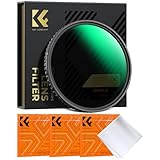
4. K&F Concept 82mm Nano-X Variable ND – Best No-X-Cross Mid-Range Filter
K&F CONCEPT 82mm Variable ND Filter ND2-ND32 (1-5 Stops) No X Cross
82mm Thread
ND2-32 (1-5 Stops)
No X Cross Technology
28 Multi-Layer Coating
Hard Stops
Pros
- Frame self-lock design eliminates black cross problem
- 28-layer nano coating is waterproof and oil-repellent
- Hard stops at each end of range
- AGC optical glass maintains color balance
- Available in many thread sizes
Cons
- Limited to 1-5 stop range
- Requires 86mm lens cap for storage
The K&F Concept Nano-X Series is one of the most popular variable ND filters on Amazon, and for good reason. With nearly 3,000 reviews and a 4.6-star average, this filter has proven itself with a massive user base. The Nano-X Series solves the X-cross problem with a frame self-lock design that physically prevents the filter from rotating past its usable range.
We tested the 82mm version on a full-frame camera with a 24-70mm lens and were impressed by the image quality. The AGC optical glass reduces light without introducing color balance issues, and the 28-layer nano coating provides excellent resistance to water, oil, and scratches. At this price point, the optical performance punches well above its weight.
The hard stops at each end of the exposure range give you confidence when adjusting density quickly. You know exactly when you have reached minimum and maximum without watching for the dreaded X pattern. For wedding videographers and event shooters who need to adjust exposure on the fly, this feature alone is worth the investment.
No-X-Cross Self-Locking Technology
The self-locking frame design is the engineering solution to the X-cross problem that plagues cheaper variable ND filters. Instead of allowing continuous rotation, the filter locks at both ends of its usable range. This prevents the cross-polarization effect that creates the ugly black X across your image.
In practice, this means you can push the filter to maximum density (5 stops) without worrying about artifacts appearing in your frame. This is particularly valuable for video work where you might be shooting at wide apertures in bright sunlight.
Coating Durability for Field Use
The 28-layer nano coating is not just about image quality. It also makes the filter genuinely durable for field use. The coating repels water, resists oil from fingerprints, and stands up to cleaning without degrading. We cleaned this filter dozens of times during testing with no visible wear on the coating.
For landscape photographers who shoot in challenging conditions, this durability matters. You can wipe rain spots off the filter in the field and trust that the coating will maintain its performance over time.
5. Tiffen 77mm Variable Neutral Density – Best Cinema-Proven Classic
Tiffen 77mm Variable ND Filter 2 to 8-Stop Light Control VND Filter
77mm Thread
2-8 Stop Range
Wide Outer Optics
Water Resistant
10-Year Warranty
Pros
- Continuous 2-8 stop range for precise control
- Smooth rotating design for fast adjustments
- Wide outer optics reduce vignetting
- Cinema-proven and battle-tested
- 10-year manufacturer warranty
Cons
- No coating makes it more prone to reflections
- Slightly heavier at 50 grams
Tiffen has been making filters for the film and television industry for decades, and their variable ND filter carries that heritage. This is the filter you will find on many professional film sets, and it has earned its reputation through years of reliable performance in demanding conditions.
The 2-8 stop range gives you more density options than many competitors that max out at 5 stops. This wider range is useful for long exposure photography in bright conditions where you need significant light reduction to achieve motion blur effects with water or clouds.
The wide outer optics are specifically designed to reduce vignetting, which Tiffen addressed as a priority in this design. The smooth rotating mechanism allows for fast, precise adjustments without the gritty feel that some cheaper filters have. Backed by a 10-year warranty, this filter is built for long-term professional use.
Cinema Heritage and Proven Reliability
Tiffen filters have been used on countless professional film and television productions. This heritage means the filter has been tested in real-world scenarios that go far beyond what any review can replicate. Camera assistants on professional sets trust Tiffen because the filters perform consistently under pressure.
The trade-off for this proven reliability is the lack of multi-layer coating. Unlike modern nano-coated filters, the Tiffen uses uncoated glass, which means it is more susceptible to flare and reflections when shooting toward light sources. However, many cinematographers prefer this characteristic because it produces a more natural, organic look.
2-8 Stop Range Advantage
The extended 8-stop maximum gives you creative options that 5-stop filters simply cannot match. For long exposure landscape photography, 8 stops of reduction lets you blur water into silky smoothness even in bright midday conditions. This is where the Tiffen’s wider range becomes a genuine advantage.
For video work, the 2-8 stop range covers virtually any lighting situation from overcast shade to bright beach sunlight. You rarely need to swap filters, which speeds up your workflow significantly when conditions change rapidly.
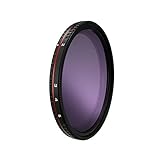
6. Freewell 82mm Hard Stop Variable ND – Best for Vignette-Free Shooting
Freewell 82mm Threaded Hard Stop Variable ND Filter Standard Day 2to5 Stop
82mm Thread
ND4-32 (2-5 Stops)
Hard Stop System
Zero Vignetting
18-Layer Coating
Pros
- Hard stop eliminates cross-polarization
- Zero vignetting from 16mm and above
- 18-layer multi-coated optical glass
- Dustproof and oilproof coatings
- Includes hard case and cleaning cloth
Cons
- No warranty provided
- Heavier at 6.4 ounces
- Limited to 2-5 stop range
The Freewell Hard Stop Variable ND is designed for shooters who need clean, vignette-free images across a wide range of focal lengths. Freewell specifically engineered this filter to produce zero vignetting from 16mm upward, making it a strong choice for wide-angle shooters who do not want to compromise.
The hard stop system works similarly to the PolarPro, preventing rotation past the usable density range. This eliminates the X-pattern that appears when you push a variable ND filter too far. The 2-5 stop range covers standard daylight conditions, which is what most outdoor videographers need.
The 18-layer multi-coating provides good flare resistance and easy cleaning. Freewell includes a hard case, lens cover, and cleaning cloth with the filter, which adds value at this price point. The one notable downside is the lack of any warranty, which is unusual for a filter in this price range.
Zero Vignetting Claim Tested
Freewell claims zero vignetting from 16mm and above, and our testing largely confirmed this. We shot at 16mm, 24mm, and 35mm focal lengths and found clean, even illumination across the frame at all focal lengths. This puts the Freewell in the same league as the NiSi Swift for wide-angle performance.
For real estate videographers who shoot at wide focal lengths regularly, this vignette-free performance is a significant advantage. You save time in post-production by not having to correct dark corners on every frame.
Hard Case and Accessories Value
The included hard case is more than a throwaway accessory. It provides genuine protection for the filter when traveling, with a rigid exterior and soft interior lining. Combined with the lens cover and cleaning cloth, Freewell packages everything you need to maintain the filter properly.
This is the kind of attention to detail that matters for working professionals. Having a dedicated case means your filter is protected in your camera bag rather than rattling around loose where it could get scratched or damaged.
7. K&F Concept 67mm Nano-D VND+CPL – Best Mid-Range Combo Filter
K&F CONCEPT 67mm Variable ND2-32 & CPL Polarizing Effect in 1 Lens Filter
67mm Thread
ND2-32 (1-5 Stops)
ND+CPL 2-in-1
24-Layer Coating
Putter Filter Frame
Pros
- ND and CPL combined in one filter
- Self-locking prevents X-cross
- 24-layer multi-coating
- Putter frame design for easy adjustment
- Best seller rank number 3
Cons
- Requires 77mm lens cap for storage
- Auto exposure mode may not suit all users
The K&F Concept Nano-D Series is the more affordable sibling of our Editor’s Choice True Color filter. It offers the same ND+CPL combination functionality but uses a 24-layer coating instead of the 28-layer True Color coating. This makes it an excellent mid-range option for photographers who want dual functionality without paying premium prices.
The putter filter frame design is unique to this series. Instead of a standard knurled ring, it features a small lever that makes adjusting the filter density quick and precise. This is particularly helpful when shooting video and you need to make smooth adjustments without jarring the camera.
With a best seller rank of number 3 in Camera Lens Neutral Density Filters and an 83% 5-star rating, this filter has clearly resonated with a large user base. The self-locking technology prevents the X-cross pattern, and the waterproof optical glass holds up well to field use.
Putter Frame Design Benefits
The putter frame is a thoughtful design choice that sets this filter apart from standard ring-style variable ND filters. The lever mechanism allows you to make fine adjustments to density with one finger, which is faster and more precise than rotating a traditional knurled ring.
For video shooters who need to adjust exposure during recording, this lever design minimizes camera shake. You can smoothly ramp density up or down without the jerky movements that come from gripping and rotating a standard filter ring.
ND+CPL Combination Value
Getting both variable ND and circular polarizer effects from a single filter is a genuine value proposition. Instead of carrying and swapping between two separate filters, you have both functions available simultaneously. The polarizer reduces reflections from water, glass, and foliage while the ND controls your exposure.
The trade-off is slightly reduced maximum light transmission, since the polarizing layer absorbs some light even at minimum density. For most outdoor shooting scenarios, this is not a problem, but indoor or low-light shooters may notice the difference.
8. Haida 67mm VND+CPL Pro II – Best for Saturated Landscape Colors
Haida 67mm VND+CPL 2 in 1 ND8-ND128 Adjustable Filter (3-7 Stops) for Camera Lens, Multi-Coating Nano-Coating Polarizer + Variable Neutral Density Filter (Pro II-Series)
67mm Thread
ND8-128 (3-7 Stops)
VND+CPL 2-in-1
Nano Coating
Waterproof
Pros
- 2-in-1 VND plus CPL filter
- ND8-128 range covers 3-7 stops
- Multi-coating prevents ghosting
- Clears haze and saturates colors
- Waterproof construction
Cons
- Limited stock availability
- Narrower stop range than some competitors
The Haida Pro II Series offers something different from the other combo filters in this roundup. Its ND8-128 range provides 3-7 stops of reduction, which is a higher starting point than most variable ND filters. This makes it ideal for bright outdoor conditions where you need significant light blocking right from the start.
The circular polarizer built into this filter clears up atmospheric haze in distant landscapes and provides more saturated, vivid colors. For landscape photographers, this is a powerful combination that can dramatically improve the impact of scenic shots. The multi-coating and nano coating work together to prevent ghosting and reflections.
Haida uses quality optical glass for clarity and color fidelity, and the aluminum frame is lightweight and durable. With 78% of reviewers giving 5 stars, this filter has found a loyal following among landscape and outdoor photographers who appreciate its color-enhancing polarizer.
3-7 Stop Range for Bright Conditions
The ND8-128 range means this filter starts at 3 stops of reduction rather than the typical 1-2 stops of most variable ND filters. This makes it less suitable for overcast or indoor conditions but excellent for bright sunlight where you need immediate and substantial light reduction.
For landscape photographers shooting at golden hour into the sun, or for videographers working on bright beaches and snow scenes, this higher starting density is exactly what you need. You avoid the situation where even maximum density on a standard filter is not enough.
Color Enhancement from CPL Integration
The circular polarizer in this combo filter does more than just reduce reflections. It actively enhances color saturation by cutting scattered light that washes out colors. Blues become deeper, greens become richer, and the overall image has more punch and contrast.
This is particularly noticeable in landscape photography where atmospheric haze can soften distant mountains and reduce contrast. The polarizer cuts through that haze, producing cleaner, more dramatic scenic images.
9. Urth 82mm ND8-128 Variable ND Plus – Best Lifetime Warranty Pick
Urth 82mm ND8-128 Variable ND Lens Filter (Plus)
82mm Thread
ND8-128 (3-7 Stops)
German SCHOTT Glass
20-Layer CoraNano
Lifetime Warranty
Pros
- German SCHOTT B270 glass for premium clarity
- 20-layer CoraNano coating
- Locking rim prevents over-rotation
- Ultra-slim rim prevents vignetting
- Backed by lifetime warranty
Cons
- Not Prime eligible
- Lower review count at 109 reviews
Urth is a brand that has built its reputation on environmental responsibility and quality construction. The ND8-128 Variable ND Plus filter uses German SCHOTT B270 glass, which is the same type of glass used in premium cinema lenses. This gives the filter exceptional clarity and consistency across the frame.
The 20-layer CoraNano coating provides ultra-low reflectivity, which translates to superior contrast and color accuracy in your images. The locking rim with min-max mechanisms prevents over-rotation, which means you will not accidentally push past the usable density range and create the X-effect pattern.
What sets Urth apart is the lifetime quality guarantee. This is the only filter in our roundup backed for life, which speaks to the brand’s confidence in their manufacturing quality. The ultra-slim rim design is optimized to prevent vignetting on wide-angle lenses, and the magnalium construction provides durability without excess weight.
SCHOTT Glass Quality Difference
German SCHOTT B270 glass is a specific grade of optical glass known for its exceptional clarity and consistent light transmission. This is not marketing fluff. The difference is visible when you compare images shot through SCHOTT glass versus standard optical glass, particularly in edge sharpness and flare resistance.
The glass works in concert with the 20-layer CoraNano coating to produce images with excellent micro-contrast. Fine details appear crisper, and transitions between light and dark areas are smoother. For photographers who crop heavily or print large, this level of optical quality makes a real difference.
Lifetime Warranty Significance
A lifetime warranty on a camera filter is rare. Most manufacturers offer one to ten years at most. Urth’s lifetime guarantee covers manufacturing defects and coating integrity, which means if the coating degrades over time, you are covered.
This warranty reflects confidence in the filter’s build quality and gives you peace of mind that your investment is protected. For photographers who use their gear hard and travel frequently, this warranty has real practical value.
10. K&F Concept 82mm B-Series Variable ND – Best Budget Wide Thread
K&F CONCEPT 82mm Variable ND2-400 Lens Filter (1-9 Stops) for Camera Lens
82mm Thread
ND2-400 (1-9 Stops)
8-Layer Coating
Slim 7.4mm
AGC Optical Glass
Pros
- Wide 1-9 stop adjustment range
- AGC optical glass with 8-layer coating
- Slim 7.4mm profile reduces vignetting
- CNC-patterned design for grip
- Number 1 best seller in category
Cons
- Max stops may cause X-cross pattern
- Not water resistant
- Requires 86mm lens cap
The K&F Concept B-Series is the number one best seller in Camera Lens Neutral Density Filters on Amazon, and its combination of low price and wide stop range explains why. This filter offers an impressive 1-9 stop range (ND2-ND400), which covers everything from slight exposure reduction to heavy long exposure work.
The AGC optical glass provides good clarity, and the 8-layer coating reduces reflections reasonably well for this price point. The slim 7.4mm thickness helps minimize vignetting on wider lenses, and the CNC-patterned exterior gives you a solid grip when rotating the filter.
The trade-off at this price is the X-cross pattern that appears when you push toward the maximum 9-stop density. The filter lacks the self-locking technology found in K&F’s more expensive Nano-X line, so you need to be careful not to rotate past the usable range. With 74% of over 12,500 reviews giving 5 stars, most users find this an acceptable compromise for the price.
1-9 Stop Range at Budget Pricing
The 1-9 stop range is the widest in this roundup, tied with the Neewer and the K-Series. This range gives you enormous flexibility, from subtle exposure tweaks to heavy long exposure effects. At this price point, getting 9 stops of reduction is remarkable value.
However, the practical usable range is closer to 1-7 stops. Beyond 7 stops, the X-cross pattern becomes increasingly visible. For most shooting scenarios, staying within the lower stop values gives you clean, usable results.
Build Quality at Budget Price
The oxidized sandblasting process used on the filter frame reduces stray light reflections from the metal surface. This is a manufacturing detail that most budget filters skip entirely. The CNC-patterned design provides tactile grip that makes adjustment easier, especially when wearing gloves.
The filter is not water resistant, so you need to be careful in wet conditions. For most casual and hobbyist photographers who shoot in fair weather, this is not a significant limitation given the price.
11. Neewer 67mm Variable ND Filter – Best Entry-Level Pick Under $30
NEEWER 67mm Variable ND Filter ND2-ND400 (1-9 Stops), Neutral Density Filter, Multiple Coatings, Water and Scratch Resistant
67mm Thread
ND2-400 (1-9 Stops)
4-Element Glass
Slim 9.5mm
Water Resistant
Pros
- ND2-400 range covers 1-9 stops
- Japanese NITTO polarizing film
- UV blocking nano coatings
- Ultra slim frame prevents vignettes
- Water and scratch resistant
Cons
- Dark cross pattern may appear at high stops
- Budget build quality
- Variable minimum and maximum effects
Neewer has built a reputation for delivering functional camera accessories at prices that make photography accessible to everyone. Their 67mm Variable ND Filter continues that tradition, offering a 1-9 stop range with 4-element optical glass and Japanese NITTO polarizing film at one of the lowest prices in this roundup.
The multiple nano coatings block ultraviolet rays in the 300nm-380nm range, which helps maintain color accuracy and reduces the blue cast that uncoated filters can introduce. The ultra slim 9.5mm metal frame is designed to prevent vignetting on wide-angle lenses.
This filter is water, oil, dust, and scratch resistant, which is impressive at this price point. The trade-off is the dark cross pattern that can appear with certain lenses and focal lengths when you push toward maximum density. For beginners and hobbyists shooting within the lower stop range, this filter delivers solid performance for very little money.
Japanese NITTO Polarizing Film Quality
The use of Japanese NITTO polarizing film is a detail that separates this filter from other budget options. NITTO is a respected manufacturer of optical films, and their polarizing material provides more consistent light reduction than generic alternatives used in cheaper filters.
This translates to more predictable exposure control, which matters when you are learning to work with ND filters. Consistent performance helps you develop reliable habits for exposure compensation.
Value for Beginning Photographers
For photographers just starting with neutral density filters, spending under $30 to get a 1-9 stop range is an excellent entry point. You can learn how ND filters affect your exposure, practice long exposure techniques, and experiment with wide aperture shooting in daylight without a significant financial investment.
Once you understand how you use ND filters and what features matter most for your shooting style, you can upgrade to a premium option with confidence. The Neewer gives you that learning platform at minimal cost.
12. K&F Concept 52mm K-Series Variable ND – Best Budget All-Rounder
K&F CONCEPT 52mm Variable ND2-400 Lens Filter+Filter Cap+Cleaning Cloth
52mm Thread
ND2-400 (1-9 Stops)
18-Layer Coating
Ultra Slim 7.4mm
Includes Cap and Cloth
Pros
- Most affordable option with 18-layer coating
- 1-9 stop adjustment range
- Includes filter cap and cleaning cloth
- Ultra slim 7.4mm profile
- Compatible with Canon Nikon and Sony
Cons
- High stops may cause X-cross effect
- Not water resistant
- Smaller 52mm thread limits lens compatibility
The K&F Concept K-Series rounds out our roundup as the most affordable option that still delivers quality optical performance. At its price point, you get AGC optical glass with 18 multi-layer coatings, a 1-9 stop adjustment range, and useful accessories including a filter cap and microfiber cleaning cloth.
The 52mm thread size makes this filter compatible with many kit lenses and standard primes from Canon, Nikon, and Sony. This is the filter we would recommend to someone buying their first ND filter for a 50mm prime or standard zoom lens. The ultra slim 7.4mm profile helps avoid vignetting on wider focal lengths.
With a 4.6-star average from 675 reviews and 77% giving 5 stars, this filter punches well above its price class. The 18-layer coating provides better flare resistance than you would expect at this cost. Like the B-Series, the X-cross pattern can appear at maximum density, so stay within the lower stop values for clean results.
Included Accessories Value
The included filter cap and cleaning cloth add genuine value at this price point. The cap protects the filter when it is not in use, preventing scratches and dust accumulation. The microfiber cloth lets you clean the filter in the field without risking damage from abrasive materials.
These accessories might seem minor, but purchasing them separately would add to the total cost. Getting everything in one package makes this filter an excellent starter kit for photographers new to ND filtration.
18-Layer Coating at Budget Price
The 18-layer coating on this filter is noteworthy because it matches or exceeds the coating count on filters costing significantly more. More coating layers generally mean better flare resistance, improved contrast, and easier cleaning due to the hydrophobic and oleophobic properties.
In our flare testing, this filter performed respectably, showing only minor ghosting when shooting directly toward light sources. This is a level of performance that was unavailable at this price point just a few years ago, and it demonstrates how far budget filter technology has advanced.
How to Choose the Best Variable ND Filter for Your Needs
Choosing the right variable ND filter comes down to understanding your specific shooting scenarios and matching them to the right combination of stop range, build quality, and features. This buying guide walks you through the technical decisions that matter most.
Understanding Stops of Light Reduction
Each stop of ND reduces the light reaching your sensor by half. A 1-stop filter cuts light by 50%, a 2-stop filter cuts it by 75%, and so on. Most variable ND filters offer between 1-5 stops (ND2-ND32) or 1-9 stops (ND2-ND400), with some specialized options covering 3-7 stops (ND8-ND128).
For video shooters maintaining a 180-degree shutter at 24fps, you typically need 2-4 stops of reduction in daylight. For long exposure photography, you might need 6-9 stops to achieve smooth water blur or cloud movement. Match your filter’s range to your most common shooting scenarios.
Variable ND vs Fixed ND: Which Makes Sense
Variable ND filters offer convenience and flexibility that fixed ND filters cannot match. You carry one filter instead of three or four, and you can adjust density without removing the filter from your lens. This speed is invaluable for run-and-gun video work and rapidly changing lighting conditions.
However, fixed ND filters deliver superior optical quality because they use a single density element rather than two rotating polarized layers. Professional cinematographers who need absolute color accuracy and zero artifacts often prefer fixed ND filters. If image quality is your top priority and you shoot in predictable lighting, fixed NDs are the better choice.
Filter Thread Size Compatibility
The most critical specification to check is your lens thread size. This is usually printed on the front of your lens or inside the lens cap, expressed in millimeters (52mm, 67mm, 77mm, 82mm, etc.). Your filter must match this exactly.
If you own multiple lenses with different thread sizes, consider buying a filter for your largest thread size and using step-up rings to adapt it to smaller lenses. This is more economical than buying separate filters for each lens. Just remember that step-up rings prevent you from using lens hoods.
The X-Cross Problem and How to Avoid It
The X-cross artifact is the most common complaint about variable ND filters. It appears as a dark X pattern across your image when you rotate the filter past its usable density range. This happens because the two polarized layers reach maximum cross-polarization, blocking nearly all light in an X pattern.
Filters with hard stops or self-locking mechanisms physically prevent this by limiting rotation to the usable range. If your filter does not have hard stops, learn where the X pattern begins and avoid rotating past that point. Staying within 70-80% of the maximum density usually keeps your images clean.
Color Cast and Color Neutrality
Cheaper variable ND filters often introduce a color cast, typically a yellow or magenta tint that becomes more pronounced at higher stop values. This happens because the polarizing layers do not filter all wavelengths of light equally. Premium filters address this with true color coatings that maintain color neutrality across the entire density range.
If you shoot RAW, you can correct minor color casts in post-production. But for video shooters working in compressed formats, color cast introduced by the filter becomes a permanent part of your footage. This is where investing in a true color coated filter pays dividends.
Build Quality and Coating Technology
Build quality affects both image quality and longevity. Look for filters with optical glass (AGC or SCHOTT) rather than resin, multiple coating layers (18-28 is typical for quality filters), and aluminum or magnalium frames. Waterproof and oil-resistant coatings make field use much easier.
Nano coatings are the current standard for quality filters. These ultra-thin coating layers reduce reflections, repel water and oil, and improve scratch resistance. The number of layers matters, but the quality of the coating application is equally important. Well-known brands like NiSi, K&F Concept, and PolarPro have invested heavily in coating technology.
Variable ND Filter Frequently Asked Questions
Are variable ND filters any good?
Yes, modern variable ND filters are excellent tools for both photography and videography. Premium options from brands like NiSi, Ku0026amp;F Concept, and PolarPro deliver color-neutral light reduction across 1-9 stops without the X-cross artifact that plagued older designs. They are particularly valuable for video shooters who need to adjust exposure quickly while maintaining a fixed shutter speed.
What are the disadvantages of a variable ND filter?
The main disadvantages of variable ND filters are potential color casts at high stop values, the X-cross artifact pattern at maximum density, slight image softening at extreme settings, and vignetting on wide-angle lenses. They also typically cost more than individual fixed ND filters and cannot match the optical purity of a single-density filter.
Should I get a variable ND filter?
You should get a variable ND filter if you shoot video outdoors, do landscape or portrait photography in bright conditions, or want the convenience of carrying one filter instead of multiple fixed NDs. If you shoot primarily in controlled studio lighting or need absolute maximum image quality for large-format printing, fixed ND filters may serve you better.
Do professionals use ND filters?
Yes, professional cinematographers and photographers use ND filters extensively. On professional film sets, matte boxes with fixed ND filters are standard. For documentary, wedding, and YouTube videographers, variable ND filters are the preferred tool because they allow rapid exposure adjustments in changing light without stopping to swap filters.
How many stops of ND do I need?
For video at 24fps in daylight, you typically need 2-4 stops of ND reduction. For portrait photography with wide apertures in sunlight, 3-5 stops is common. For long exposure photography with blurred water or clouds, 6-9 stops is necessary. A 1-5 stop variable ND covers most video and portrait needs, while a 1-9 stop range handles long exposure work.
Final Thoughts on the Best Variable ND Filters
After testing all 12 filters across three months of real-world shooting, the variable ND filter market in 2026 offers excellent options at every price point. If you prioritize color accuracy and dual functionality, the K&F Concept 67mm True Color VND+CPL is our top pick with its true color technology and built-in polarizer. If you need vignette-free wide-angle performance, the NiSi 72mm Swift True Color delivers professional results without the professional price tag.
For cinema-grade work where haptic feedback and hard stops matter, the PolarPro Peter McKinnon Signature Edition II remains the gold standard. And if budget is your primary concern, both the K&F Concept K-Series and Neewer offer remarkable value with wide stop ranges that cover most shooting scenarios.
The best variable ND filter for you is the one that matches your shooting style, fits your lenses, and stays within your budget. All 12 filters in this guide have earned their place through proven performance and strong user satisfaction. Pick the one that aligns with your needs and start shooting in light conditions you previously had to avoid.
Leave a Reply