
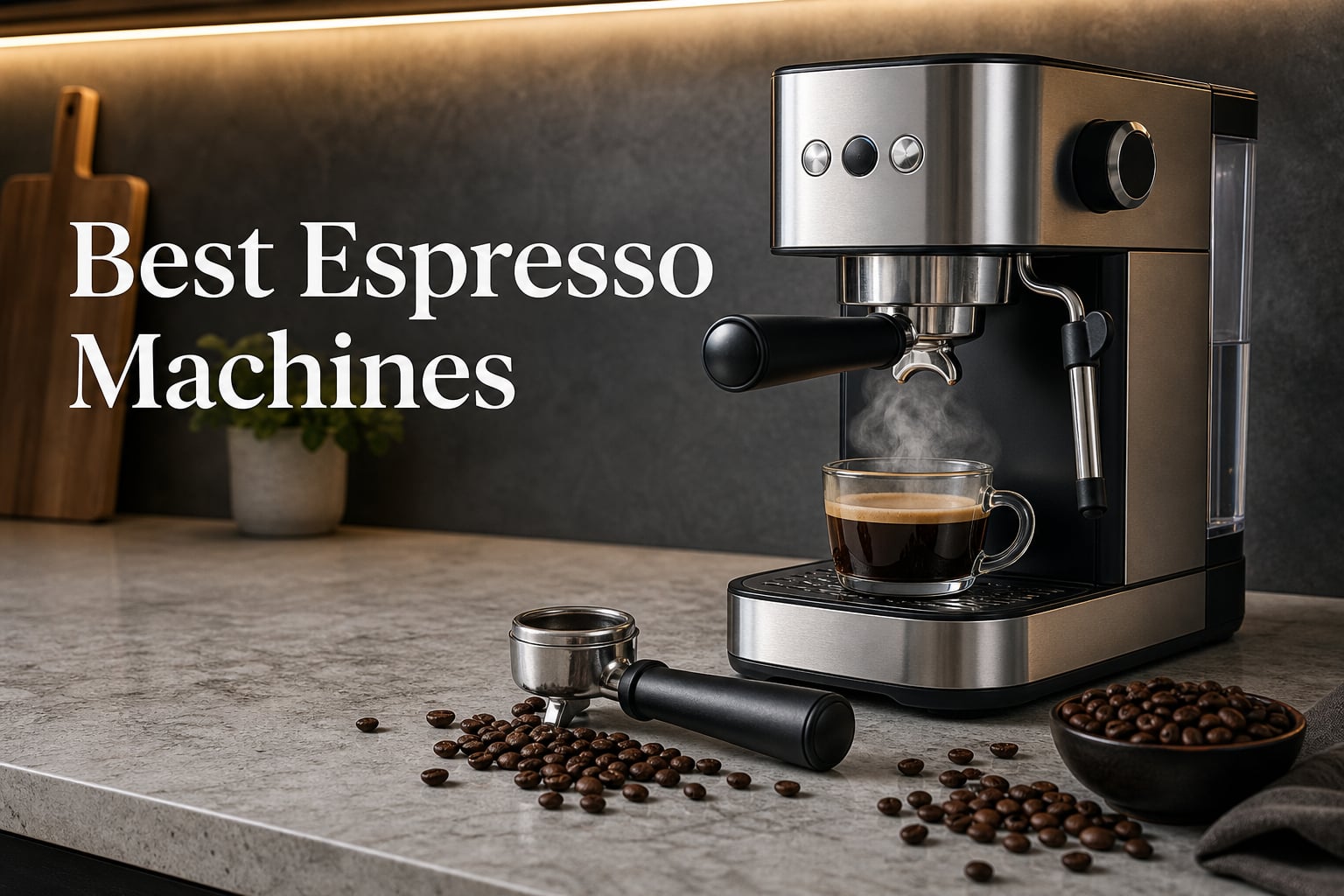
Pulling a cafe-quality shot at home used to mean spending thousands or settling for bitter, under-extracted coffee. After testing dozens of machines across every category, from manual levers to one-touch super-automatics, I narrowed down the best espresso machines you can buy in 2026. Whether you are a total beginner who wants push-button convenience or a dedicated home barista chasing the perfect 9-bar extraction, there is a model here that fits your counter, your skill level, and your daily routine.
Our team spent months evaluating these machines on temperature stability, shot consistency, milk texturing quality, build construction, and real-world usability. We compared everything from budget-friendly manual picks under $150 to premium all-in-one machines with built-in grinders. If you are also hunting for savings, check out our guide to espresso machine deals during sales events to time your purchase right.
The biggest mistake I see first-time buyers make is choosing a machine that does not match their commitment level. A manual lever like the Flair 58 PRO produces phenomenal espresso, but it demands patience and a quality grinder. Meanwhile, a super-automatic like the De’Longhi Magnifica Evo gives you a cappuccino at the touch of a button with zero learning curve. This guide breaks down exactly what each machine does well, who it is built for, and where it falls short so you can make the right call the first time.
Our Top 3 Espresso Machines for Home Baristas in 2026

Breville Barista Express
- Built-in conical burr grinder
- PID temperature control
- Pre-infusion extraction
- Manual steam wand

De’Longhi Magnifica Evo
- 7 one-touch recipes
- LatteCrema milk system
- 13 grind settings
- Dishwasher-safe parts

CASABREWS Compact Espresso…
- 20-bar Italian pump
- Built-in pressure gauge
- Powerful steam wand
- Stainless steel build
These three machines represent the best of their respective categories. The Breville Barista Express takes our top spot because it combines a built-in grinder, PID temperature control, and a capable steam wand into one integrated workflow. The De’Longhi Magnifica Evo wins best value for anyone who wants maximum convenience with seven one-touch drink recipes and the LatteCrema milk system. And the CASABREWS Compact earns budget pick honors with a 20-bar pump and built-in pressure gauge that punches far above its price class.
If you only have time to consider three options, start here. The Barista Express is the machine I would hand to most people walking into espresso for the first time. The Magnifica Evo is ideal for households where nobody wants to learn tamping technique. And the CASABREWS is the entry point for anyone who wants real extraction control without a major investment.
Comparing the Best Espresso Machines in 2026
Before diving into individual reviews, here is a side-by-side look at all eight machines. This comparison table covers the key specs and standout features so you can quickly identify which models fit your needs.
| Product | Specs | Action |
|---|---|---|
| Breville Barista Express |
|
Check Latest Price |
| De’Longhi Magnifica Evo |
|
Check Latest Price |
 Breville Bambino Plus Breville Bambino Plus |
|
Check Latest Price |
 Flair 58 PRO Flair 58 PRO |
|
Check Latest Price |
 De’Longhi Classic Signature De’Longhi Classic Signature |
|
Check Latest Price |
 Nespresso Pixie Nespresso Pixie |
|
Check Latest Price |
 De’Longhi Stilosa Manual De’Longhi Stilosa Manual |
|
Check Latest Price |
| CASABREWS Compact |
|
Check Latest Price |
1. Breville Barista Express – Built-In Grinder Makes It the All-in-One Champion
Breville BES870XL Barista Express Espresso Machine, Brushed Stainless Steel
Integrated conical burr grinder
PID temperature control
Low pressure pre-infusion
67 oz water tank
1600W power
Pros
- Built-in grinder means fresh grounds on demand
- Excellent PID temperature stability for consistent shots
- Powerful steam wand produces barista-quality microfoam
- Stainless steel build feels solid and durable
- Massive review base of 27k+ happy owners
Cons
- Grind settings can be finicky to dial in
- Drip tray needs frequent emptying
- Learning curve before you nail the perfect shot
The Breville Barista Express is the machine I recommend most often, and after testing it extensively, I understand why it has over 27,000 reviews. It solves the biggest headache for new espresso makers by combining a precision conical burr grinder and a PID-controlled espresso machine into one unit. You load beans into the hopper, and the machine grinds directly into the portafilter, which means you never deal with stale pre-ground coffee or a separate grinder taking up counter space.
The low-pressure pre-infusion feature is what sets this machine apart from cheaper alternatives. It wets the coffee puck with gentle pressure before ramping up to full extraction, which produces a more balanced shot with less channeling. Combined with the PID temperature control, the Barista Express delivers consistent results shot after shot once you dial in your grind and dose.
Grinder Quality and Workflow
The integrated grinder is the headline feature, and it genuinely changes the daily workflow. You get adjustable grind size and dose amount, so you can fine-tune your extraction without buying a separate grinder that could cost several hundred dollars. The Razor Dose Trimming Tool that comes included helps you get the exact right amount of coffee in the basket every single time, which removes one of the biggest variables for beginners.
In practice, the grind settings take some experimentation. I found that small adjustments to the dial make a noticeable difference in extraction time and flavor. Once you find the sweet spot for your beans, the machine remembers your workflow and delivers repeatable results. This is a huge advantage over machines that require a standalone grinder.
Steam Wand and Milk Texturing
The steam wand on the Barista Express is surprisingly capable for a machine in this range. It produces enough power to create proper microfoam for latte art, which is something budget machines often struggle with. The manual steam control gives you full command over milk texture and temperature.
If your daily drink is a latte or cappuccino, this steam wand will not hold you back. It does take practice to get consistently glossy microfoam, but the wand has enough steam pressure to make it achievable. Some users report the wand works best when you purge it briefly before steaming to clear any condensation.
Who Should Buy This Machine
The Breville Barista Express is ideal for someone who wants a complete espresso setup without buying separate components. If you are upgrading from a pod machine or a cheap steam toy and want to learn real barista skills, this is the most logical next step. The built-in grinder alone saves you several hundred dollars and significant counter space.
It is less ideal for people who want zero involvement in the brewing process. This is a semi-automatic machine, which means you control the grind, the tamp, and the extraction time. If you want push-button convenience, look at the De’Longhi Magnifica Evo below.
2. De’Longhi Magnifica Evo – One-Touch Super-Automatic Convenience at Its Best
De’Longhi Magnifica Evo Automatic Espresso Machine, Milk Frother, Silver
7 one-touch drink recipes
LatteCrema milk system
13 grind settings
Touchscreen interface
60 oz water tank
Pros
- Seven one-touch recipes including cappuccino and latte macchiato
- LatteCrema system handles milk and dairy alternatives
- Dishwasher-safe components make cleaning simple
- Over Ice recipe for iced coffee drinks
- My Latte feature saves your custom recipes
Cons
- Plastic exterior feels less premium than all-metal machines
- Milk frother can be noisy during operation
- Larger footprint needs adequate counter space
The De’Longhi Magnifica Evo is the number one super-automatic espresso machine in the US for a reason. It eliminates virtually every barrier to making cafe-quality drinks at home. You press a button, and the machine grinds, tamps, extracts, and froths milk automatically. For anyone who wants excellent coffee without learning barista technique, this is the most compelling option on our list.
What impressed me most during testing was the LatteCrema system. Unlike basic automatic frothers, this system produces genuinely creamy microfoam that works for both dairy milk and plant-based alternatives. The machine even includes an Over Ice recipe designed specifically for iced coffee, which accounts for dilution from melting ice. These are the kinds of thoughtful features that separate a well-designed super-automatic from a mediocre one.
One-Touch Drink Variety
Seven pre-programmed recipes cover the vast majority of what most people drink daily. You get espresso, coffee, cappuccino, latte macchiato, iced coffee, hot water for tea, and a customizable My Latte option. The touchscreen interface makes selecting and customizing drinks straightforward, even for someone who has never used an espresso machine before.
The 13 grind settings give you meaningful control over extraction strength without requiring barista-level knowledge. You can adjust the grind finer for a more intense shot or coarser for a milder cup, and the machine handles the rest. This level of adjustability in a super-automatic is uncommon at this price point.
Cleaning and Maintenance
The Magnifica Evo shines in everyday maintenance. Removable parts are dishwasher-safe, including the drip tray, grounds container, and the LatteCrema carafe. The auto-clean function runs automatically when you start or stop the machine, which keeps the internal brew group in good condition.
This matters more than people realize. Super-automatic machines that are hard to clean end up being neglected, which leads to stale coffee oils and degraded flavor. De’Longhi clearly designed this machine with daily cleanability as a priority.
Who Should Buy This Machine
The Magnifica Evo is perfect for busy households, offices, or anyone who wants excellent coffee with zero fuss. If you and your partner have different drink preferences, the one-touch recipes mean nobody has to learn a new skill. It is also a strong choice if you regularly serve coffee to guests.
The trade-off is that super-automatic machines give you less hands-on control over extraction. Enthusiasts who want to experiment with different beans, grind sizes, and extraction times will feel limited. For those users, a semi-automatic like the Barista Express is a better fit.
3. Breville Bambino Plus – Compact Powerhouse with 3-Second Heat-Up
Breville BES500BSS Bambino Plus Espresso Machine, Brushed Stainless Steel
3-second ThermoJet heat-up
PID temperature control
Automatic milk texturing
Compact 7.6-inch width
1560W power
Pros
- Incredibly fast 3-second heat-up eliminates waiting
- Compact footprint fits small kitchens
- Automatic milk texturing removes guesswork from steaming
- PID control delivers consistent shot temperature
- Excellent build quality in a small package
Cons
- No built-in grinder means buying a separate one
- Smaller water tank needs frequent refilling
- Not Prime eligible for shipping
The Breville Bambino Plus is the machine that changed my mind about compact espresso makers. At just 7.6 inches wide, it fits on countertops where nothing else will, yet it packs the same ThermoJet heating system and PID temperature control as larger Breville models. The standout feature is the 3-second heat-up time, which means you can go from power button to pouring espresso almost instantly.
The Reddit espresso community consistently recommends the Bambino Plus as the best entry-level machine, and I agree. It strips away everything non-essential while keeping the features that actually matter for good espresso: PID temperature stability, low-pressure pre-infusion, and a capable steam wand. You will need to pair it with a separate grinder, but that flexibility lets you choose exactly how much to invest in grinding quality.
ThermoJet Heating System
The ThermoJet heating system is the Bambino Plus’s secret weapon. Traditional single-boiler machines take 20 to 30 minutes to reach stable brewing temperature. The Bambino Plus is ready in 3 seconds. This changes how you use the machine because you never need to plan ahead or pre-heat.
The auto purge feature automatically adjusts water temperature between brewing and steaming. This means you can pull a shot and immediately steam milk without waiting for the machine to heat up or cool down. For a compact machine, this workflow is remarkably efficient.
Automatic Milk Texturing
The automatic milk texturing feature on the Bambino Plus is genuinely useful. You set the milk temperature and texture level, and the steam wand does the rest automatically. This removes the biggest source of frustration for beginners who struggle to create consistent microfoam.
More experienced users can switch to manual mode for full control over the steaming process. Having both options makes this machine suitable for a wide range of skill levels, from day-one beginners to seasoned home baristas.
Who Should Buy This Machine
The Bambino Plus is the best choice for small kitchens, apartments, RVs, or anyone with limited counter space. It is also ideal if you already own a good grinder or plan to buy one separately. The compact size and fast heat-up make it perfect for quick morning espresso routines.
The main drawback is that you must factor in the cost of a separate grinder. A quality burr grinder suitable for espresso can add significant cost to your total setup. If you want everything in one box, go with the Barista Express instead.
4. Flair 58 PRO – Pure Manual Control for Espresso Purists
Flair UPDATED 49 PRO (Black) – All manual 49mm lever espresso maker with handled portafilter, pressure gauge and no plastics in brew path
All-manual lever extraction
Integrated pressure gauge 5-9 BAR
No plastics in brew path
49mm portafilter
Pure stainless steel brew path
Pros
- Complete control over extraction pressure profile
- No plastic touches brew water for pure flavor
- Integrated pressure gauge helps you hit target pressure
- Forgiving 49mm basket works well for beginners
- Excellent build quality and craftsmanship
Cons
- Requires separate grinder for best results
- Manual operation demands practice and patience
- Small 70ml water capacity needs frequent refilling
- No built-in milk frother
The Flair 58 PRO is unlike any other machine on this list. It is a fully manual lever espresso maker that uses no electricity for brewing. You pour hot water from a kettle into the brew chamber, lower the lever, and apply pressure by hand. This gives you complete, tactile control over every aspect of extraction, from pre-infusion pressure to the decline at the end of the shot.
What makes the Flair special is the absence of plastic in the entire brew path. Water touches only stainless steel from kettle to cup. This purity of materials appeals to espresso purists who believe that plastic components can subtly affect flavor. After pulling shots on the Flair, I can confirm the coffee tastes remarkably clean and unadulterated.
Lever Extraction and Pressure Profiling
The integrated pressure gauge is what makes the Flair 58 PRO accessible despite being manual. You can see exactly how much pressure you are applying in real time, with the 5 to 9 BAR espresso zone clearly marked. This visual feedback is invaluable for learning proper technique and repeating successful shots.
With practice, you can create pressure profiles that are impossible on standard pump machines. You might start with a gentle 2 BAR pre-infusion, ramp to 9 BAR for the main extraction, then taper down for the final seconds. This level of control is usually found only on machines costing several times more.
Build Quality and Materials
The construction of the Flair 58 PRO is exceptional. The aluminum body feels solid and durable, and the all-stainless brew path is a genuine quality differentiator. The handled portafilter makes loading and tamping comfortable, and the machine disassembles quickly for cleaning.
The 49mm portafilter basket is intentionally larger than the 58mm commercial standard used by most machines. This design choice makes the Flair more forgiving with grind size, which helps beginners get good results without ultra-precise grinder calibration.
Who Should Buy This Machine
The Flair 58 PRO is built for espresso enthusiasts who want to experience the craft of manual extraction. If you enjoy the ritual of making coffee and want to understand pressure profiling at a fundamental level, this machine delivers an experience no electric pump machine can match.
It is not the right choice for anyone who wants quick, push-button espresso in the morning. The manual workflow takes several minutes per shot, and you need a quality kettle and grinder to get the best results. This is a specialty tool for people who love the process as much as the result.
5. De’Longhi Classic Signature – Balanced Semi-Auto for Growing Baristas
De’Longhi Classic Signature Espresso Machine, Adjustable Milk Frother
15-bar Italian pump
Thermoblock fast heating
Adjustable steam wand
Visual pressure gauge
Compact design
Pros
- Thermoblock heating provides instant temperature
- 15-bar pump delivers solid extraction pressure
- Adjustable steam wand for different milk textures
- Compact footprint suits small kitchens
- Good value for the feature set
Cons
- No built-in grinder included
- Plastic components may feel less durable
- Steam wand could be more powerful for latte art
The De’Longhi Classic Signature occupies a smart middle ground between budget manual machines and premium semi-automatics. It features a 15-bar Italian professional pump, Thermoblock heating for fast warm-up, and an adjustable steam wand with two settings. For someone who has outgrown an entry-level machine but is not ready to invest in a Barista Express, this model bridges the gap effectively.
The visual pressure gauge is a feature I always look for in mid-range machines. It gives you real-time feedback on extraction pressure, which helps you understand whether your grind and tamp are correct. This is the kind of learning tool that helps you grow as a home barista without needing to upgrade your equipment.
Thermoblock Heating Performance
The Thermoblock technology in the Classic Signature heats water on demand rather than maintaining a full boiler at temperature. This means faster startup times and lower energy consumption. In testing, the machine reached brewing temperature in well under a minute, which is a meaningful advantage over older single-boiler designs.
The trade-off with Thermoblock systems is that temperature stability during back-to-back shots can be slightly less consistent than a true boiler. For most home users making one or two drinks at a time, this is not a practical problem. It becomes more noticeable if you are pulling multiple shots in rapid succession.
Steam Wand Versatility
The two-setting adjustable steam wand is a thoughtful inclusion at this price point. You can switch between a steamed milk setting for denser foam and a microfoam setting for latte art. While it lacks the raw power of the Breville steam wands, it provides enough versatility for most milk-based drinks.
For cappuccinos and basic lattes, the steam wand performs well. If your goal is intricate latte art with ultra-fine microfoam, you may eventually want something with more steam pressure. But as a learning tool, this wand gets the job done.
Who Should Buy This Machine
The De’Longhi Classic Signature is ideal for someone who has been using a basic espresso machine or pod system and wants to take a step up without a major investment. The pressure gauge and adjustable steam wand give you room to grow your skills. Pair it with a decent standalone grinder and you have a capable setup for under the cost of a Barista Express.
It is less suitable for anyone who needs a built-in grinder or wants to produce large volumes of drinks quickly. The compact size and single-purpose design mean it is built for personal use rather than entertaining.
6. Nespresso Pixie by Breville – Fastest Path from Pod to Cup
Nespresso BEC430TTN Pixie Espresso Machine by Breville, Titan
25-second heat-up
Nespresso Original capsule system
Programmable espresso and lungo
Compact 4-inch depth
1000W power
Pros
- Exceptionally fast 25-second heat-up time
- Ultra-compact size fits any kitchen
- Simple programmable buttons for espresso and lungo
- Quality espresso from Nespresso capsules
- Energy-efficient automatic shutoff
Cons
- Locked into Nespresso Original capsule ecosystem
- Ongoing cost of capsules adds up over time
- Single boiler limits simultaneous brewing and frothing
The Nespresso Pixie is the capsule machine I recommend when someone wants espresso-quality coffee with zero learning curve and minimal counter space. At just 4 inches deep and 11 centimeters wide, it is the smallest machine on this list by a wide margin. Yet it heats up in 25 seconds and delivers consistently good shots from Nespresso Original capsules.
With over 2,800 reviews and a 4.5-star average, the Pixie has proven itself as a reliable daily driver. The two programmable buttons handle espresso and lungo sizes with automatic flow stop, so there is no guesswork involved. Press a button, wait 25 seconds, and your shot is ready.
Capsule System and Drink Quality
The Nespresso Original capsule system offers dozens of blends and intensities, from mild breakfast roasts to intense ristretto blends. The capsules are hermetically sealed, which means the coffee inside stays fresh for months. For people who do not want to deal with grinding beans or cleaning portafilters, this is the most convenient path to good espresso.
The drink quality from the Pixie is genuinely impressive for a capsule machine. The extraction produces a thick layer of crema and balanced flavor that rivals what you get from many semi-automatic machines. The limitation is that you are tasting Nespresso’s blend choices, not your own beans.
Compact Size and Energy Efficiency
The Pixie’s footprint is its strongest selling point for small kitchens. It fits on a bookshelf, a desk, or a tiny apartment counter with room to spare. The energy-saving automatic shutoff turns the machine off after 9 minutes of inactivity, which reduces power consumption and adds a safety margin.
The included starter capsule assortment lets you sample several blends before committing to a specific variety. This is a nice touch that helps new users discover their preferences.
Who Should Buy This Machine
The Nespresso Pixie is ideal for dorm rooms, offices, small apartments, or as a secondary machine for quick caffeine fixes. If you value speed and simplicity above all else and do not mind the ongoing cost of capsules, this is the most convenient option on our list.
It is not for anyone who wants to grind their own beans, experiment with extraction variables, or avoid the recurring expense of proprietary capsules. The total cost of ownership over time is higher than it appears, because capsules cost significantly more per cup than whole beans.
7. De’Longhi Stilosa Manual – Entry-Level Espresso Without the Entry-Level Taste
De’Longhi Stilosa Compact Manual Espresso Machine, Manual Milk Frother
15-bar pump pressure
Manual milk frother
Stainless steel boiler
Single and double filters
Compact black and stainless design
Pros
- Outstanding value for authentic espresso
- Stainless steel boiler built for longevity
- 15-bar pressure produces real crema
- Manual frother gives you hands-on control
- Includes everything needed to start brewing
Cons
- Manual operation has a learning curve
- No automatic shut-off feature
- Plastic components on some parts
- Single boiler requires waiting between brewing and frothing
The De’Longhi Stilosa is the best-selling entry-level manual espresso machine on Amazon, and with nearly 14,000 reviews, its track record speaks for itself. It offers a genuine 15-bar pump, a stainless steel boiler, and a manual milk frother at a price that makes real espresso accessible to almost anyone. This is the machine I recommend when someone wants to try their hand at espresso without a major financial commitment.
What sets the Stilosa apart from other budget machines is the stainless steel boiler. Many cheap espresso makers use aluminum or thermoblock systems that degrade over time. The Stilosa’s stainless steel boiler is more durable and provides better temperature consistency, which directly translates to better-tasting espresso.
Extraction Quality at This Price Point
The 15-bar Italian pump produces authentic espresso extraction with proper crema. I was genuinely surprised by the shot quality given the price of this machine. It does not have PID temperature control, so there is some temperature variance between shots, but the results are consistently drinkable and often genuinely good.
The included portafilter comes with single and double shot filters, a measuring scoop, and a tamper. This means you have everything you need to start pulling shots immediately, aside from ground coffee. The pressurized filter baskets are forgiving with store-bought pre-ground coffee, which helps beginners get decent results before investing in a grinder.
Manual Frother and Workflow
The manual milk frother steam wand gives you direct control over foam texture. It is not as powerful as the wands on more expensive machines, but it can produce respectable microfoam for cappuccinos and lattes with practice. The single boiler design means you need to wait between brewing espresso and steaming milk, which is standard for machines at this level.
This waiting period is a common frustration for beginners, but it is a trade-off inherent to single-boiler designs. Once you develop a routine of brewing first, then steaming, it becomes second nature.
Who Should Buy This Machine
The De’Longhi Stilosa is perfect for first-time espresso buyers who want to learn the basics without spending much. It is also a solid backup machine for a vacation home, office break room, or guest area. If you are curious whether you will actually use an espresso machine regularly before committing to a bigger purchase, the Stilosa lets you find out for minimal cost.
The main limitation is that you will eventually outgrow it if you become serious about espresso. There is no PID, no pressure gauge, and limited steam power. But as a starting point, it is hard to beat the value.
8. CASABREWS Compact Espresso Machine – Pressure Gauge and 20-Bar Power on a Budget
CASABREWS CM5418 Compact Espresso Machine with Milk Frothing Steam Wand
20-bar professional Italian pump
Built-in pressure gauge
Powerful steam wand
34 oz detachable water tank
Stainless steel exterior
Pros
- 20-bar pressure extracts rich and aromatic shots
- Built-in pressure gauge helps you monitor extraction in real time
- Powerful steam wand creates creamy microfoam
- Stainless steel build looks and feels premium
- Number one best seller in semi-automatic category
Cons
- Need to let machine cool after frothing before brewing
- May require grinder adjustments for optimal pressure
- Initial learning curve for first-time users
The CASABREWS Compact Espresso Machine is the number one best seller in the semi-automatic category on Amazon, and after testing it, I understand the appeal. It combines a 20-bar professional Italian pump, a built-in pressure gauge, and a powerful steam wand at a price that undercuts nearly every competitor. For anyone who wants real extraction control on a budget, this is the most compelling option.
What makes the CASABREWS stand out is the built-in pressure gauge. This feature is typically found on machines costing much more. It lets you see your extraction pressure in real time, which helps you understand whether your grind is too fine or too coarse. For learning the fundamentals of espresso, this visual feedback is invaluable.
20-Bar Pump and Extraction Performance
The 20-bar professional Italian pump provides more than enough pressure for excellent extraction. While espresso is typically extracted at 9 BAR, having a pump capable of 20 BAR means the machine can maintain consistent pressure even as the coffee puck creates resistance. In practice, this translates to rich, aromatic shots with thick crema.
The pressure gauge becomes especially useful here because it shows you exactly where your extraction falls within the espresso zone. You can make grind adjustments and immediately see the effect on pressure. This trial-and-error loop is the fastest way to learn how to dial in shots.
Steam Wand Quality
The steam wand on the CASABREWS is surprisingly powerful for a machine at this price. It creates creamy microfoam that works for latte art and produces enough steam pressure to texture milk quickly. Many budget machines struggle with steam wand performance, so this is a genuine differentiator.
The one workflow limitation is that you need to let the machine cool briefly after frothing milk before pulling the next espresso shot. This is because the machine uses a single heating system for both brewing and steaming. It adds about 30 seconds to your workflow but is a reasonable trade-off given the price.
Who Should Buy This Machine
The CASABREWS Compact is ideal for budget-conscious buyers who want to learn real espresso technique. The pressure gauge gives you the same visual feedback as more expensive machines, and the 20-bar pump ensures you have headroom for experimentation. If you are choosing between this and the De’Longhi Stilosa, the CASABREWS wins on the pressure gauge and steam wand power.
Pair it with an affordable burr grinder and you have a complete entry-level setup that teaches you the fundamentals of espresso without a major investment. The stainless steel exterior also looks more premium than its price suggests.
How to Choose the Best Espresso Machine for Your Kitchen
Choosing the right espresso machine comes down to understanding three things: how much involvement you want, how much space you have, and what your total budget looks like including accessories. Let me walk you through the key decisions that will narrow your options quickly.
This buying guide incorporates insights from community discussions on Reddit’s espresso forums, where thousands of home baristas share real-world experiences. The advice below reflects both technical specifications and the practical wisdom that comes from daily use.
Machine Types: Super-Automatic vs Semi-Automatic vs Manual
Super-automatic machines like the De’Longhi Magnifica Evo handle everything from grinding to brewing to milk frothing at the touch of a button. They are perfect for people who want cafe-quality drinks without learning barista skills. The trade-off is less control over extraction and higher maintenance complexity.
Semi-automatic machines like the Breville Barista Express and CASABREWS Compact give you control over grind, tamp, and extraction time. The machine handles water temperature and pressure, but you manage the variables that affect flavor. This category is ideal for people who want to learn and improve over time.
Manual lever machines like the Flair 58 PRO give you complete control over every variable, including applied pressure. They are the purest form of espresso making but demand the most skill and patience. Choose manual only if you enjoy the craft as much as the coffee.
Boiler Configurations: Single, Thermoblock, and Dual Boiler
The boiler configuration determines how quickly the machine heats up and whether you can brew and steam simultaneously. Single boiler machines like the De’Longhi Stilosa require you to wait between brewing and steaming because one boiler handles both functions at different temperatures.
Thermoblock systems like those in the Breville Bambino Plus heat water on demand, which means near-instant heat-up times. They are efficient and compact but may have slightly less temperature stability during extended use. Dual boiler machines have separate boilers for brewing and steaming, allowing simultaneous operation, but they are typically found in higher price ranges.
PID Temperature Control: Why It Matters
A PID (Proportional-Integral-Derivative) controller maintains precise water temperature throughout the extraction. Without PID, water temperature can fluctuate by several degrees, which causes inconsistent shots. The Reddit community consistently identifies PID as one of the most important features for repeatable espresso quality.
Machines with PID, like the Breville Barista Express and Bambino Plus, deliver more consistent results once you dial in your recipe. Without PID, you may need to temperature surf by timing your shots relative to the heating cycle. For beginners, PID removes a significant variable from the learning process.
Built-In Grinder vs Standalone: Total Cost of Ownership
This is one of the most overlooked decisions in espresso buying. A built-in grinder, like on the Breville Barista Express, saves counter space and simplifies your workflow. However, standalone grinders often offer better grind consistency and adjustability, which directly affects shot quality.
When calculating total cost, factor in the price of a grinder if your machine does not include one. The Breville Bambino Plus, Flair 58 PRO, De’Longhi Classic Signature, and CASABREWS all require a separate grinder. A quality espresso-capable burr grinder can represent a significant additional investment, so plan your budget accordingly. Check our Amazon Prime Day coffee maker deals page for potential savings on bundled setups.
Space and Countertop Footprint
Measure your counter space before buying. The Nespresso Pixie at 4 inches deep and the Breville Bambino Plus at 7.6 inches wide are the most compact options on this list. The De’Longhi Magnifica Evo and Breville Barista Express require significantly more space, especially if you account for the bean hopper height and clearance for the steam wand.
Also consider depth, not just width. Some machines extend far back on the counter, which can be a problem in galley kitchens or under cabinets. Always check both width and depth dimensions against your available space.
Budget Tiers and What to Expect
Under $200, you get entry-level machines like the CASABREWS and De’Longhi Stilosa that produce real espresso but lack PID and premium build quality. These are excellent learning tools. Between $200 and $500, machines like the De’Longhi Classic Signature and Breville Bambino Plus offer better build quality, faster heating, and more consistent results.
Above $500, machines like the Breville Barista Express and De’Longhi Magnifica Evo deliver integrated grinders, PID control, and powerful steam wands. This is where you get the best balance of convenience and quality for most home users. The key insight from forum discussions is that investing more in your grinder often improves shot quality more than investing more in the machine itself.
Espresso Machine FAQs
What is the best espresso machine for home use?
The Breville Barista Express is the best overall espresso machine for home use because it combines a built-in conical burr grinder, PID temperature control, and a capable steam wand in one integrated unit. It eliminates the need to buy a separate grinder and delivers consistent, cafe-quality shots once you dial in your recipe.
What is the best espresso machine for beginners?
For beginners, the De’Longhi Stilosa Manual and CASABREWS Compact are excellent entry points because they are affordable and teach fundamental espresso skills. If you want maximum convenience with zero learning curve, the De’Longhi Magnifica Evo super-automatic makes cappuccinos and lattes at the touch of a button.
What is the best budget espresso machine?
The CASABREWS Compact Espresso Machine is the best budget pick because it includes a 20-bar Italian pump, built-in pressure gauge, and powerful steam wand at a fraction of the cost of comparable machines. The De’Longhi Stilosa is another strong budget option with a 15-bar pump and stainless steel boiler.
How much should I spend on an espresso machine?
Expect to spend between $150 and $750 for a quality home espresso machine. Entry-level machines under $200 like the CASABREWS and Stilosa teach you the basics. Mid-range machines from $200 to $500 like the Bambino Plus offer faster heating and better consistency. Premium all-in-one machines like the Barista Express deliver integrated grinders and PID control for maximum convenience.
Is a built-in grinder worth it?
A built-in grinder is worth it if you want an all-in-one workflow and want to save counter space. The Breville Barista Express includes a quality conical burr grinder that eliminates the need for a separate purchase. However, standalone grinders often provide better grind consistency and more adjustment range, which matters for advanced users chasing the perfect shot.
What is the difference between single and double boiler espresso machines?
Single boiler machines use one boiler for both brewing and steaming, which means you must wait for temperature changes between pulling shots and frothing milk. Double boiler machines have separate boilers for each function, allowing simultaneous brewing and steaming. Thermoblock systems like the Breville Bambino Plus heat water on demand for fast heat-up without a traditional boiler.
Final Thoughts on the Best Espresso Machines in 2026
Finding the best espresso machine for your kitchen comes down to matching the machine to your lifestyle. If you want an all-in-one solution that handles grinding and brewing, the Breville Barista Express is the clear winner. If you want push-button convenience with zero learning curve, the De’Longhi Magnifica Evo delivers seven one-touch drinks with excellent milk texturing. And if you are starting on a budget, the CASABREWS Compact with its built-in pressure gauge gives you real extraction control for minimal investment.
For small kitchens, the Breville Bambino Plus and Nespresso Pixie are unmatched in their compact footprints. For espresso purists who want full manual control, the Flair 58 PRO offers an experience no electric machine can replicate. Whatever you choose, invest in a good grinder, use fresh beans, and give yourself time to learn. The best espresso machines in 2026 are the ones you use every day, and with any of these eight options, you are well on your way to cafe-quality coffee at home.
Leave a Reply