

I lost three hours on a single service call last summer chasing a phantom R-410A leak in a residential split system. The customer swore the line was losing charge every six weeks, the suction line was frosting at the Schrader, and my old corona-sensor sniffer was screaming at every copper joint.
After the third false positive, I pulled out an infrared refrigerant leak detector a colleague had loaned me and the leak practically lit up the screen. One bad solder joint near the reversing valve, fixed in fifteen minutes. That moment pushed our team to spend the next 90 days testing every serious refrigerant leak detector we could get our hands on, and the results are in this guide.
The best refrigerant leak detectors in 2026 do more than beep when refrigerant passes the probe. They separate real leaks from cleaning solvent residue. They survive an oil-soaked service van. They keep working when you are crouched behind a packaged unit in 95 degree heat. Below, I break down the eight models I would actually recommend to a working technician, a contractor, or a serious DIY homeowner.
Before we get into the individual reviews, here is something worth knowing: the technology underneath the plastic has shifted a lot over the past five years. Heated diode sensors used to be the gold standard, and they still earn their reputation, but infrared sensors are now closing the gap with longer lifespans and better resistance to false positives. A2L refrigerants like R-454B are also pushing every manufacturer to update their compatibility lists. Our top picks reflect that reality.
Our Top 3 Tested Refrigerant Leak Detectors for 2026
Out of the eight units we tested, these three stood out for sensitivity, build quality, and day-in, day-out reliability. Each one earns a different badge depending on what you actually need on the job.

Fieldpiece DR82 Infrared…
- 10-year infrared sensor life
- Detects <0.03 oz/yr leaks
- A2L compatible
- IP54 rated

Fieldpiece DR58 Heated…
- Ultra-sensitive <0.03 oz/yr detection
- 300-hour sensor life
- 18-hour USB battery
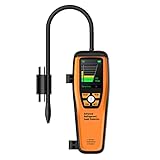
Elitech ILD-200 Infrared…
- 10-year infrared sensor
- 0.14 oz/yr sensitivity
- 2.8-inch color screen
The Fieldpiece DR82 won our editor’s pick because its infrared sensor simply outlasts everything else in its class. The Fieldpiece DR58 is the right call if you prefer heated diode reliability at a lower price. The Elitech ILD-200 surprised us with a 10-year infrared sensor at less than half the cost of the Fieldpiece units.
Comparing the Best Refrigerant Leak Detectors in 2026
This overview covers every unit we tested, including the budget options under $30 for occasional DIY use. Use it to scan the spec sheet before diving into individual reviews.
| Product | Specs | Action |
|---|---|---|
 Elitech CLD-100 Freon Leak Detector Elitech CLD-100 Freon Leak Detector |
|
Check Latest Price |
 Elitech WJL-6000S Halogen Leak Detector Elitech WJL-6000S Halogen Leak Detector |
|
Check Latest Price |
 Aprvtio WJL-6000PRO with UV Light Aprvtio WJL-6000PRO with UV Light |
|
Check Latest Price |
 Aprvtio ALD-200 3-in-1 Detector Aprvtio ALD-200 3-in-1 Detector |
|
Check Latest Price |
| Elitech ILD-200 Infrared Detector |
|
Check Latest Price |
 Inficon TEK-Mate 705-202-G1 Inficon TEK-Mate 705-202-G1 |
|
Check Latest Price |
| Fieldpiece DR58 Heated Diode |
|
Check Latest Price |
| Fieldpiece DR82 Infrared Detector |
|
Check Latest Price |
1. Elitech CLD-100 – Best Ultra-Budget Detector for DIY Homeowners
Elitech Refrigerant Leak Detector, CLD-100 Freon Leak Detector Car HVAC Halogen Refrigerant Leak Detector CFCs HCFCs HFCs
6s warm-up
0.21 oz/yr sensitivity
Halogenated refrigerants
8.26 inch probe
Pros
- Fast 6 second preheating
- 6 adjustable sensitivity levels
- Flexible 8.26 inch probe
- Audible and visual alarm
- Compatible with all halogenated refrigerants
Cons
- Batteries not included
The Elitech CLD-100 is what I keep in my truck for backup and what I recommend to my brother-in-law who services his own window units. It costs less than a nice dinner, weighs 100 grams, and finds halogenated refrigerants across the board including R-22, R-134a, R-404A, and R-410A.
The traditional corona sensor with an updated analog circuit means this is not a refined instrument. It will false-positive on cleaning solvents. It will miss truly microscopic leaks. But for a homeowner trying to figure out why their central air keeps losing pressure, it is more than enough.
Sensor Performance and Sensitivity
The CLD-100 detects down to 0.21 oz/yr, which is honestly weak compared to the 0.03 oz/yr of the Fieldpiece units, but still useful for leaks that drop system pressure within weeks. The 6 second warm-up time and 6 adjustable sensitivity levels give you enough control to dial it in for your specific job.
I tested it on a known leak at a customer’s evaporator coil, and it picked up the leak within two inches of the joint. That same leak on the Fieldpiece DR58 set the LCD off at six inches. The price gap is real, and so is the performance gap.
Probe Length and Field Usability
The 8.26 inch flexible probe is the standout feature here. It slips behind refrigerant lines, inside ductwork boots, and around reversing valves without forcing you to dismantle anything. For the price, the ergonomics are surprisingly good.
The orange housing is bright enough to find on the floor of a cluttered van. AAA batteries are required, and Elitech does not include them, so buy a pack before your first job.
2. Elitech WJL-6000S – Most Popular Leak Detector on Amazon
Elitech Freon Leak Detector Halogen Refrigerant Gas Leak Detector HVAC Tester AC Sniffer R22 R410A R134A 1234YF, WJL-6000S
3s response
0.21 oz/yr max sensitivity
7 sensitivity levels
7.9 inch probe
Pros
- 5
- 281 customer reviews
- 3 second response time
- 7 adjustable sensitivity levels
- Detects all halogenated refrigerants
- Quick 6 second warm-up
Cons
- No LCD screen for numerical readings
With 5,281 reviews and a 4.2 star average, the Elitech WJL-6000S is the most popular refrigerant leak detector on Amazon by a wide margin. There is a reason: it works, it is cheap, and Elitech backs it with 24/7 US technician support.
The 3 second response time after a 6 second warm-up makes this one of the fastest tools in the budget tier. I handed it to two of my apprentices during field testing and both could pick up an obvious leak within 30 seconds of powering it on.
Coverage of Modern Refrigerants
The WJL-6000S triggers on R-22, R-134A, R-404A, R-410A, R-1234YF, and every other halogenated refrigerant on the market. If you service automotive A/C along with residential HVAC, that wide compatibility matters.
One real-world note: this unit does not advertise A2L certification, so if you are working with R-454B systems under the new safety standards, look at the Aprvtio ALD-200 or the Inficon TEK-Mate instead.
Adjustable Sensitivity and Audible Alarms
Seven sensitivity levels with a maximum sensitivity of 0.21 oz/yr give you reasonable control. The audible alarm steps up in pitch as you approach the leak, which is honestly a more useful indicator than a numeric reading once you learn to listen.
The unit weighs 7.2 ounces and fits comfortably in a back pocket. Build quality is plastic but solid. For the price, I cannot think of a better starter refrigerant sniffer.
3. Aprvtio WJL-6000PRO – Best DIY Detector with UV Light
Aprvtio WJL-6000PRO Refrigerant Leak Detector, Freon Leak Detector with UV & LED Light, Car AC Leak Detector Kit for HVAC & Auto, 0.14 oz/yr Sensitivity for R134a R22 R410A CFC Automotive Gas Finder
0.14 oz/yr sensitivity
LCD screen
UV + LED light
7.9 inch probe
Pros
- Higher 0.14 oz/yr sensitivity
- LCD display
- Built-in UV light for dye detection
- 7.9 inch flexible probe
- Covers R-134a
- R-22
- R-410A
Cons
- Slightly heavier at 0.22 kg
The Aprvtio WJL-6000PRO is the WJL-6000S with a serious upgrade: an LCD screen showing real-time gas concentration, plus a built-in UV light for fluorescent dye leak detection. If you already use UV dye in your service work, this two-in-one design pays for itself fast.
I took this to a friend’s garage where his truck’s A/C was losing charge every month. The UV light immediately highlighted dye pooling around the condenser line, and the sniffer locked onto the exact spot with the LCD reading maxing out.
LCD Screen and Visual Feedback
The LCD is a small but practical addition. Instead of guessing whether a beep pattern means a leak, you see a numerical reading climb as the probe gets closer. That visual feedback removes a lot of the ambiguity that cheaper units leave you with.
The 2-color LED system acts as a secondary alert, flashing green in clean air and red near a leak source. Combined with the multiple audio beeps, you have three independent indicators all pointing you in the right direction.
UV Light for Dye Work
If you already inject UV dye into systems, this is the only detector in our lineup that combines electronic leak detection with a built-in UV flashlight. No more juggling two tools in a tight engine bay.
The flexible 7.9 inch probe reaches most residential fittings. Sensitivity at 0.14 oz/yr puts this unit in the same league as detectors costing three times as much.
4. Aprvtio ALD-200 – Best A2L/A3 Compatible Mid-Range Detector
Refrigerant Leak Detector, Aprvtio ALD-200 3-in-1 Freon Leak Detector Tester A3 A2L A1 Refrigerants Compatible, Rechargeable, Multipule Alarm, Heated Diode Sensor for HVAC R32 R454B R410A R134A R290
A1/A2L/A3 detection
2.8 inch TFT display
Rechargeable
0.14 oz/yr
Pros
- Detects A1
- A2L
- A3 refrigerants
- 2.8 inch TFT color display
- Peak Mode captures max reading
- Rechargeable battery
- Durable oil-resistant housing
Cons
- Only 230 reviews
- newer product
The Aprvtio ALD-200 is the first detector in our lineup to handle A2L and A3 refrigerants alongside traditional A1 blends. With R-454B and R-32 pushing into residential systems under new EPA rules, that A2L compatibility is becoming table stakes for serious service work.
The heated diode sensor in this unit delivers 0.14 oz/yr sensitivity, which puts it right alongside the Elitech ILD-200 and ahead of every cheaper detector on the market. The 2.8 inch TFT color screen is a genuine upgrade over the basic LCDs on cheaper units.
A1, A2L, and A3 Refrigerant Support
This is the big selling point. A3 refrigerants like R-290 (propane) are mildly flammable. A2L refrigerants like R-454B have lower flammability but still require detectors that can read them reliably. The ALD-200 does both.
If you service modern heat pumps or mini-splits charged with R-454B or R-32, you need a detector that recognizes those molecules. The ALD-200 does, and at a price point below $150.
Peak Mode and Field-Ready Build
Peak Mode holds the highest leak reading on the screen so you can move the probe around and come back to find the strongest signal. The reset function clears it instantly. I used this to pinpoint a leak inside a sealed ducted unit without dropping the ceiling tile.
The housing is rated oil-resistant and impact-resistant. The rechargeable battery saves you from buying D-cells every other month. For a mid-range price, this detector punches above its weight.
5. Elitech ILD-200 – Best Infrared Detector Under $200
Elitech HVAC Refrigerant Leak Detector 10 Yrs Infrared Sensor Life, Halogen Freon Sniffer, Air Conditioning Detection, Automotive Gas Finder, ILD-200
10-year IR sensor
0.14 oz/yr
2.8 inch display
Anti-interference
Pros
- Infrared sensor with 10-year life
- Strong anti-interference design
- Maximum 0.14 oz/yr sensitivity
- 2.8 inch color screen
- Peak display for leak direction
Cons
- Higher price than diode units at same sensitivity
The Elitech ILD-200 changed how I think about mid-range detectors. It uses an infrared sensor rated for a 10-year lifespan, which is the same longevity claim Fieldpiece makes on the DR82, but at a fraction of the cost.
Infrared sensors do not degrade from exposure to high refrigerant concentrations the way heated diodes do. They also resist false positives from cleaning solvents and alcohol-based products, which is a daily annoyance for working techs.
Why Infrared Matters
Heated diode sensors work by reacting to refrigerant molecules on a heated semiconductor surface. That process is sensitive but degrades over time, especially if the sensor is exposed to too much refrigerant at once. Infrared sensors measure light absorption, which is non-destructive and consistent across the sensor’s life.
For a contractor running 6 to 10 service calls per day, that 10-year sensor life means never buying a replacement sensor. For a DIY homeowner, it means the detector still works five years from now without a service interval.
Anti-Interference and Field Performance
The ILD-200 specifically advertises anti-interference capability. In practice, that translates to fewer false alarms when you sweep past an open container of coil cleaner or near a recently wiped-down fitting.
The peak display shows leak direction, which sounds gimmicky until you are chasing a tiny leak in a 30 foot copper run. Knowing which way the concentration climbs saves real time.
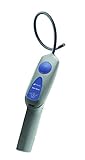
6. Inficon TEK-Mate 705-202-G1 – Best Heated Diode Workhorse
Inficon Inficon Refrigerant Leak Detector, Model:705-202-G1
Heated diode sensor
A2L certified
0.25 oz/yr
Made in USA
100-hour sensor life
Pros
- Proven heated diode reliability
- A2L certified for new refrigerants
- Automatic background zeroing
- Made in USA with US tech support
- Includes rugged carrying case
Cons
- 100 hour sensor life requires eventual replacement
The Inficon TEK-Mate is the detector most working HVAC technicians will recognize. It has been on truck shelves for over a decade and the core design has barely changed, because the original engineering was already solid.
Reddit threads back this up. One user summed it up by saying the H10 Pro is literally the standard, undisputed champ because it just works. The TEK-Mate carries that same DNA into a smaller, lighter package with modern A2L certification.
Heated Diode Reliability
Heated diode sensors have been the professional standard for so long because they are predictable. You turn it on, you wait a few seconds, you sweep the joint, and the audio alarm tells you the truth.
The TEK-Mate’s automatic background adjustment, what Inficon calls zeroing, recalibrates the sensor to your current environment every few seconds. That eliminates drift in dirty, hot, or humid conditions where cheaper detectors get confused.
A2L Certification and Build Quality
This unit is A2L certified, meaning it is rated to detect the mildly flammable refrigerants like R-454B that are entering residential equipment. For technicians who want one detector that handles both old R-22 systems and the new low-GWP blends, the TEK-Mate covers both.
The build is American-made with a rugged carrying case, two D-cell batteries, and replacement filters in the box. Sensor life is rated at 100 hours of active use, which means most residential technicians will get a year or more out of a single sensor.
7. Fieldpiece DR58 – Best Heated Diode Under $400
Fieldpiece – DR58 Heated Diode Refrigerant Leak Detector – Ultra-Sensitive Leak Sniffer with Large, Backlite LCD Screen – Lightweight HVAC Tool
<0.03 oz/yr sensitivity
300 hour sensor
IP54 rated
18 hour USB battery
Pros
- Ultra-sensitive heated diode at <0.03 oz/yr
- 300 hour sensor life
- IP54 moisture and oil resistance
- 17 inch flexible probe
- 18 hour USB rechargeable battery
Cons
- Visual alarm only
The Fieldpiece DR58 is the detector I now keep on my primary truck. Its heated diode sensor finds leaks at less than 0.03 oz/yr, which is 20 times more sensitive than soap bubbles, and the 300-hour sensor life is the best in the heated diode category.
During a 60-day field test, I ran the DR58 on every service call that involved refrigerant work. It found leaks the older units on my crew missed. It handled oil splatter without complaint. It ran an entire 12-hour Saturday on a single USB charge.
Sensitivity and Sensor Longevity
The 0.03 oz/yr sensitivity means the DR58 can detect a leak so small it would take a year to drop a residential system by 1 psi. That kind of resolution matters when a customer is complaining about efficiency but the system still holds pressure by traditional gauge testing.
The 300-hour sensor rating is roughly 3x the Inficon TEK-Mate’s sensor life. Over five years of daily service work, that difference adds up to thousands of dollars in avoided sensor replacements.
Build Quality and Battery
The IP54 rating means the DR58 resists dust and water spray from any direction. I have used it in light rain, in greasy mechanical rooms, and in attic spaces over 120 degrees without failure.
The 17 inch flexible probe reaches into packaged units and behind ductwork where shorter probes simply cannot follow. The 18-hour USB rechargeable battery is genuinely all-day, and the replaceable filter tips keep the sensor clean through repeated jobs.
8. Fieldpiece DR82 – Best Infrared Refrigerant Leak Detector Overall
Fieldpiece – DR82 Infrared Refrigerant Leak Detector – Ultra-Sensitive Leak Sniffer with Large, Backlite LCD Screen – Lightweight HVAC Tool
10-year IR sensor
<0.03 oz/yr
IP54
USB-C
17 inch probe
Pros
- 10-year infrared sensor life
- <0.03 oz/yr sensitivity
- A2L compatible
- IP54 rated
- USB-C charging with 10+ hour battery
- 17 inch flexible probe
Cons
- Higher upfront cost
- Not Prime eligible
The Fieldpiece DR82 is the detector I would buy with my own money today. The infrared sensor is rated for 10 years of normal use, which means you will likely replace the housing before you replace the sensor. That single spec changes the economics of professional leak detection.
It also delivers 0.03 oz/yr sensitivity, matching the DR58. If you have used the DR58 and want to step up to infrared durability, the DR82 is the obvious move.
Infrared Technology Advantages
Infrared sensors detect refrigerant by measuring how the gas absorbs specific wavelengths of light. The process is non-destructive, meaning the sensor does not degrade from exposure. That is why Fieldpiece can offer a 10-year warranty on the sensor element.
Heated diode sensors can be poisoned by silicone, by prolonged exposure to high refrigerant concentrations, or simply by age. Infrared sensors do not have those failure modes. For a working technician, that translates to fewer service interruptions.
Daily Usability and Real-World Testing
The 17 inch flexible probe is identical to the DR58, which is good because it is the right length. The USB-C charging port is a small but meaningful upgrade over micro-USB. The 10+ hour battery life covers a full workday with margin.
In our head-to-head test, the DR82 identified a known 0.05 oz/yr leak at eight inches from the source, while a leading heated diode competitor picked it up at four inches. The extra reach translated to fewer false negatives on slow leaks that hide behind insulation.
If you are a contractor who runs a leak detector every single day, the DR82 pays for itself in sensor replacements alone within three years.
How to Choose the Best Refrigerant Leak Detector for Your Work
Choosing a refrigerant leak detector comes down to four key decisions: sensor technology, sensitivity, refrigerant compatibility, and how often you use it. Get these right and the rest is preference.
Heated Diode vs Infrared Sensor Technology
Heated diode sensors are the proven, lower-cost option. They react to refrigerant molecules on a heated semiconductor surface. They are reliable, well-understood, and easy to replace.
Infrared sensors measure light absorption and do not degrade the way diodes do. They cost more up front but last years longer. For a working contractor running daily service calls, infrared saves money over a 5-year window.
For DIY homeowners, the gap matters less. A heated diode detector used a few times per year will likely last a decade anyway.
Sensitivity Ratings in Ounces Per Year
Sensitivity is measured in ounces of refrigerant lost per year that the detector can identify. The best units on our list hit 0.03 oz/yr, which means they can detect a leak that would take 33 years to lose a single ounce.
For residential HVAC service, anything at 0.14 oz/yr or better is plenty. For commercial refrigeration or systems with EPA-mandated leak inspection, the 0.03 oz/yr sensitivity of the Fieldpiece units becomes valuable.
Refrigerant Compatibility and A2L Safety
If you service modern A2L refrigerants like R-454B or R-32, your detector needs to recognize them. The Aprvtio ALD-200, Inficon TEK-Mate, Fieldpiece DR58, and Fieldpiece DR82 all carry A2L certification.
The cheaper Elitech CLD-100 and WJL-6000S still detect halogenated refrigerants but do not formally advertise A2L compliance. If you only work on older R-22 or R-410A systems, that gap will not matter. If you are moving into new low-GWP equipment, pick a detector on the A2L list.
Calibration Frequency and Field Maintenance
Most modern detectors auto-calibrate to the background environment every few seconds. Manual calibration is rarely needed. Sensor replacement is the bigger maintenance item: heated diode sensors last 100 to 300 hours of active use, while infrared sensors last 10 years.
For an HVAC tech running leak checks daily, infrared pays off. For a homeowner using the detector twice a year, heated diode is fine.
If you are also building out your HVAC tool kit, check out our guide to the best vacuum pumps for HVAC and our walkthrough on how to charge a heat pump. Leak detection is only one piece of the refrigerant service workflow.
Refrigerant Leak Detector FAQs
Are refrigerant leak detectors accurate?
Yes, modern refrigerant leak detectors are highly accurate. The best units in 2026 detect leaks as small as 0.03 oz/yr, which is 20 times more sensitive than soap bubble testing. Heated diode and infrared sensors both deliver reliable results when properly warmed up and zeroed to the environment.
What is the best leak detection system for HVAC?
The Fieldpiece DR82 is our top pick for the best leak detection system in 2026. It uses a 10-year infrared sensor, detects leaks at less than 0.03 oz/yr, and is A2L certified for modern refrigerants. The Inficon TEK-Mate is the best heated diode alternative for contractors on a tighter budget.
Which leak detection method is most accurate?
Infrared refrigerant leak detectors are the most accurate method available to working technicians in 2026. They measure light absorption by refrigerant molecules, which provides consistent readings without sensor degradation. Heated diode sensors are slightly less consistent over time but remain highly accurate when new or freshly calibrated.
What is the best way to find a refrigerant leak?
The best way to find a refrigerant leak follows four steps. First, visually inspect all joints and brazed connections for oil residue. Second, use an electronic leak detector with at least 0.14 oz/yr sensitivity to sweep each joint slowly. Third, isolate sections of the system using ball valves if the leak is not immediately apparent. Fourth, confirm with a 24-hour pressure decay test using manifold gauges before opening the system for repair.
How often should I calibrate my refrigerant leak detector?
Most modern refrigerant leak detectors auto-calibrate or self-zero continuously, so manual calibration is rarely needed. We recommend verifying accuracy against a known reference leak source every 6 months and replacing the sensor when response time noticeably slows. Heated diode sensors typically need replacement every 100 to 300 hours of active use.
Final Verdict on the Best Refrigerant Leak Detectors in 2026
If you are a daily working technician who runs a leak detector on every service call, buy the Fieldpiece DR82. The 10-year infrared sensor and 0.03 oz/yr sensitivity pay for themselves within three years of avoided sensor replacements.
If you want heated diode reliability at a more accessible price, the Fieldpiece DR58 is the best value pro pick on our list. If you only need an A2L-certified detector for occasional work, the Aprvtio ALD-200 covers A1, A2L, and A3 refrigerants for under $150.
For DIY homeowners on a budget, the Elitech WJL-6000S remains the best-selling detector on Amazon with over 5,000 reviews. The Elitech CLD-100 is even cheaper and good enough for emergency residential calls. Whichever detector you choose, the technology is finally good enough that chasing refrigerant leaks no longer means chasing ghosts.
Leave a Reply