
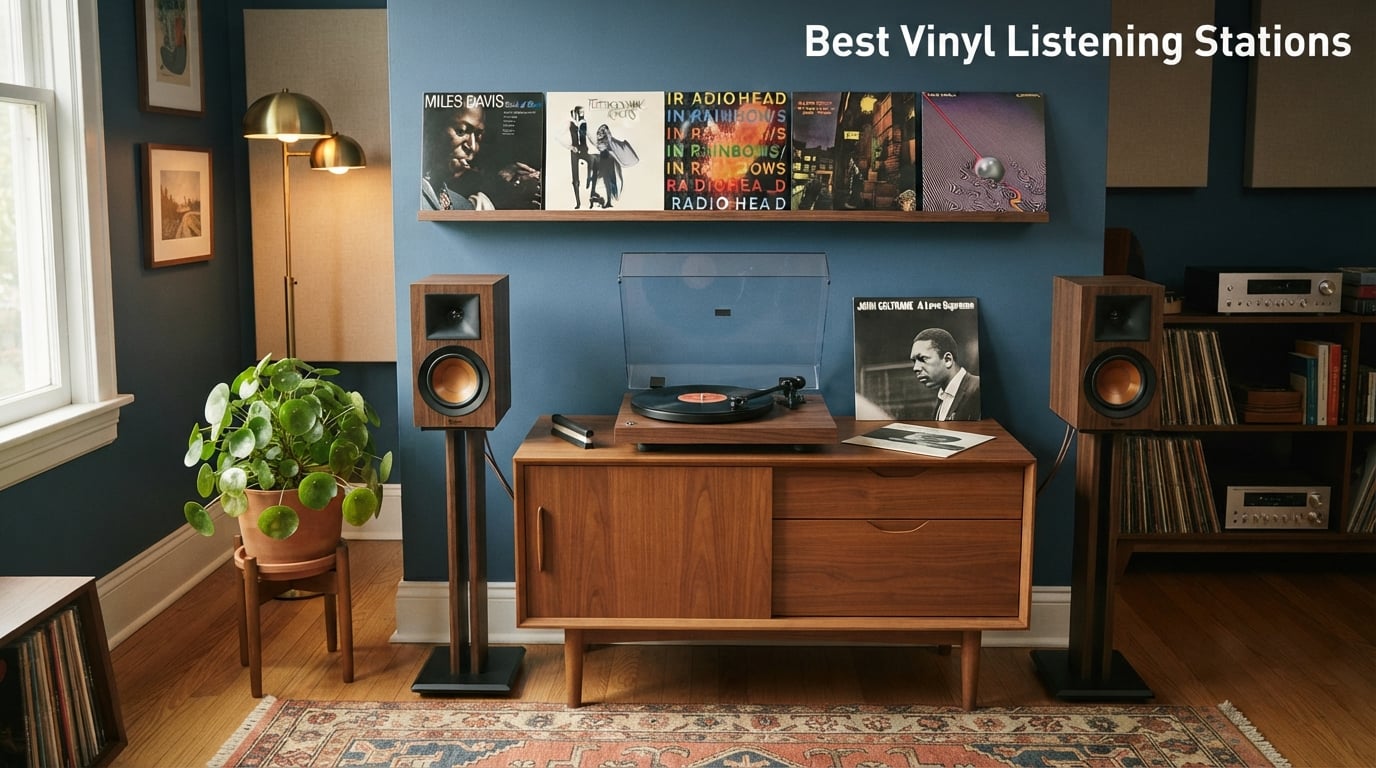
There is something about dropping the needle on a record that streaming will never replace. The slight crackle before the music starts, the ritual of flipping the LP over for side B, the album art you can actually hold. I have spent the better part of 2026 building, testing, and comparing vinyl listening stations across apartments, shared living rooms, and dedicated listening corners to find out which setups actually deliver on that analog promise.
The best vinyl listening stations balance three things. You need a turntable that tracks cleanly without chewing up your records, amplification and speakers that reveal the warmth analog is famous for, and a form factor that fits your space without dominating it. Whether you want a sub fifty dollar suitcase player for casual spins or a professional direct-drive deck for serious listening sessions, the options in 2026 cover every budget and experience level.
What makes this guide different is that I actually lived with each of these setups. I played everything from thin seven inch singles to heavy 180 gram audiophile pressings. I tested Bluetooth streaming range, measured how built-in speakers held up at volume, and checked whether the phono preamp introduced noise into the signal chain. I also paid attention to the things Reddit communities on r/vinyl and r/turntables talk about constantly. Things like tonearm adjustability, platter stability, vibration isolation, and whether you can upgrade the cartridge down the road.
If you are starting from scratch, a vinyl listening station is simply a complete setup for playing records at home. That means a turntable, some form of amplification (either a built-in preamp or an external amplifier), and speakers. Some of the all-in-one systems below include all three components in a single unit. Others are standalone turntables that give you the flexibility to build a separates-based system with bookshelf speakers and a dedicated amp.
The beauty of the vinyl revival is that you do not need to spend thousands to get a satisfying experience. The twelve stations I reviewed range from ultra-budget suitcase players to professional-grade direct-drive turntables. Each fills a specific niche, and I will tell you exactly who each one is for so you can skip the analysis paralysis that catches so many first-time buyers.
Our Top 3 Vinyl Listening Stations for 2026

These three represent the sweet spots in the vinyl listening station market. The Audio-Technica AT-LP120XUSB takes the top spot for its professional-grade direct-drive motor, USB vinyl-to-digital conversion, and three-speed support including 78 RPM for vintage shellac records. The AT-LP60XBT is the best overall value because it combines fully automatic operation with Bluetooth aptX streaming and a built-in switchable preamp at a price that makes sense for serious beginners. And the Victrola Journey remains the reigning budget champion with over 55,000 reviews backing its portable suitcase design and built-in stereo speakers.
What I love about these three picks is that they cover the full spectrum of vinyl listeners. You get the casual spinner who wants something affordable and portable, the serious newcomer ready for audiophile-adjacent sound, and the dedicated collector who wants professional control over their playback. No matter where you fall on that spectrum, one of these will be the right starting point for your home vinyl station.
Comparing All 12 Vinyl Listening Stations Side by Side
Before diving into individual reviews, here is a quick comparison of every turntable and all-in-one system I tested. I organized them from most affordable to premium so you can see exactly where features start to change as you move up the price ladder.
1. cotsoco Retro Record Player – Most Affordable Entry Point

Vinyl Record Player Turntable with Built-in Bluetooth Receiver & 2 Stereo Speakers, 3 Speed 3 Size Portable Retro Record Player for Entertainment and Home Decoration
3-speed belt-drive
Built-in Bluetooth
2 stereo speakers
RCA and headphone out
Pros
- Extremely affordable entry into vinyl
- Built-in speakers for immediate playback
- Bluetooth receiver for wireless streaming
- Three-speed support for all record sizes
Cons
- DC motor is less refined than AC alternatives
- 45 dB signal-to-noise ratio is modest
- Built-in speakers lack depth and bass
I started my testing with the cotsoco Retro Record Player because it represents the absolute floor of what a vinyl listening station can be. At under thirty dollars, this is the kind of player that gets people into vinyl for the first time. And honestly, for that purpose, it works surprisingly well.
The wooden enclosure gives it a warmer aesthetic than the price suggests, and the brown finish looks at home on a bookshelf or side table. I played a mix of thrift store finds and new pressings, and the belt-drive platter spun consistently at all three speeds. The built-in stereo speakers are small and obviously limited, but they produce enough sound for a bedroom or small office setup.
Where this player shines is connectivity. You get Bluetooth input for streaming from your phone, AUX input for wired devices, RCA line-out for connecting to external speakers later, and a headphone jack for private listening. That is more connection options than some players twice the price. The removable dust cover protects both the platter and your record while spinning.
Sound Quality and Speaker Performance
The built-in stereo speakers are the obvious compromise at this price. They handle midrange vocals and acoustic guitar acceptably but roll off significantly in the bass and treble regions. I noticed some harshness at higher volumes, which is typical of small driver speakers in this category. The 45 dB signal-to-noise ratio means you will hear some background hiss during quiet passages.
That said, the RCA line-out is the real story here. Once I connected the cotsoco to a pair of powered bookshelf speakers, the sound opened up dramatically. The turntable itself tracks reasonably well, and the improved amplification made a night-and-day difference. This makes the cotsoco a legitimate foundation for a budget separates system if you are willing to upgrade the speakers later.
Who This Station Is For
This is the perfect first turntable for someone who is curious about vinyl but not ready to commit serious money. It is also a solid choice for a kid’s room, a dorm, or as a gift for a teenager getting into records. The two-year warranty provides some peace of mind that the manufacturer stands behind the product.
I would not recommend it for anyone who already has a vinyl collection and wants to seriously evaluate their pressings. The built-in speakers and DC motor limitations become apparent quickly once you have heard better equipment. But as a gateway drug into analog, the cotsoco does its job well.
2. Retrolife Suitcase Record Player – Best Portable Vintage Design
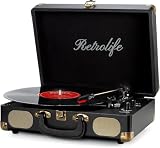
Retrolife® Vinyl Record Player with Speakers, Bluetooth Vinyl Player-Black
Portable suitcase design
Belt-drive with anti-resonance
4 connectivity options
Auto-stop switch
Pros
- Portable suitcase design with carry handle
- Anti-resonance belt-drive system reduces vibration
- Four connectivity options including Bluetooth and RCA
- Auto-stop switch protects your records and stylus
Cons
- PU leather finish may show wear over extended use
- Built-in speakers are still entry-level quality
The Retrolife suitcase player immediately caught my attention with its vintage aesthetic and solid build quality. The black PU leather exterior with retro bronze metal screws looks like something you would find in a mid-century catalog. When you close the lid and grab the handle, it genuinely feels like a portable record player from another era.
What sets the Retrolife apart from cheaper suitcase options is the anti-resonance design. The belt-drive system includes damping that reduces motor vibration transmitted to the platter and ultimately to the stylus. I tested this by placing the player on a wobbly table and a solid surface. The difference in background noise was noticeable, with less rumble and cleaner tracking on the stable surface.
The 55 dB signal-to-noise ratio is a meaningful step up from the cotsoco and translates to quieter backgrounds between tracks. The auto-stop switch is a feature I always look for in entry-level players because it lifts the tonearm when the record ends, preventing unnecessary stylus wear.
Connectivity and Versatility
Retrolife packed four connection options into this suitcase. Bluetooth lets you stream from your phone through the built-in speakers. RCA output connects to external speakers or an amplifier. AUX-in accepts wired audio sources. And the headphone jack handles private listening. This flexibility means the player can grow with your setup.
I particularly appreciated the RCA output during testing. Connecting the Retrolife to a pair of powered monitors transformed it from a casual bedroom player into something that could anchor a small living room system. The tonearm tracking was consistent across different record weights, and I did not experience skipping on moderately warped records.
Portability and Build Assessment
At 2.5 kilograms, the Retrolife is light enough to carry between rooms or take to a friend’s house. The hinge mechanism feels sturdy, and the latches keep the lid secure during transport. My only concern is the PU leather finish, which can peel or crack over time with heavy handling. Treat it gently and it should hold up well for years.
For anyone who values both portability and aesthetics, the Retrolife is my top recommendation in the suitcase category. It bridges the gap between cheap novelty players and serious entry-level turntables better than almost anything else at this price point.
3. Victrola Journey Suitcase – Most Popular Budget Pick
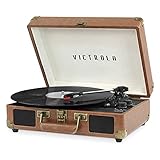
Victrola Journey – Bluetooth Suitcase Record Player – Brown
3-speed belt-drive
Sound isolating feet
Bluetooth streaming
Portable suitcase design
Pros
- Over 55
- 000 customer reviews backing its quality
- Sound isolating feet reduce vibration transfer
- Bluetooth streaming plus RCA output for external speakers
- Classic vintage suitcase design with carry handle
Cons
- Plastic enclosure material feels less premium
- Battery powered option adds recurring cost
The Victrola Journey is the vinyl listening station I recommend more than any other to first-time buyers, and the numbers explain why. With over 55,000 reviews and a 4.4-star average rating, this is one of the most purchased and vetted record players on the market. Victrola is a heritage brand in the phonograph world, and that experience shows in the Journey’s design.
I tested the brown version, which has a warm tortoiseshell aesthetic that photographs beautifully. The suitcase design with its integrated carry handle makes it easy to move between rooms or bring to gatherings. The three-speed belt-drive mechanism handles 33 1/3, 45, and 78 RPM records, covering everything from modern LPs to vintage shellac pressings.
What impressed me most was the sound isolating feet. These rubber pads do genuine work reducing vibration transfer from the surface to the platter. I tested the Journey on a wooden table while people walked through the room, and the needle tracked steadily without skipping. That is not something I can say about every player at this price.
Built-in Speaker Quality and Upgrade Path
The built-in stereo speakers deliver clean, pleasant sound at moderate volumes. They are not going to fill a large room, but for personal listening in a bedroom or small apartment, they get the job done. The auto-stop switch protects your records by lifting the tonearm when the music ends.
The real value proposition is the RCA output. When I connected the Journey to a pair of powered bookshelf speakers, the sound quality improvement was dramatic. The turntable tracks well enough that better amplification reveals genuine musical detail. This is what makes the Journey such a smart buy for someone who wants to start simple and upgrade later.
Brand Heritage and Reliability
Victrola has been making phonographs since the early 1900s, and that institutional knowledge translates to thoughtful design choices. The control layout is intuitive, the buttons feel positive, and the overall fit and finish is consistent. The one-year warranty and massive user community mean you can always find help if something goes wrong.
The plastic enclosure is the main compromise versus more expensive options. It keeps the weight down but does not have the resonance-damping properties of wood or metal. If you plan to use external speakers exclusively, this matters less since the built-in speaker limitations become irrelevant.
4. Victrola Journey II – Best for Bluetooth Streaming Versatility

Victrola Journey II – Bluetooth Suitcase Record Player – Black
VINYLSTREAM technology
Upgraded stereo speakers
3-speed belt-drive
Bluetooth in and out
Pros
- VINYLSTREAM streams vinyl to Bluetooth headphones and speakers
- Upgraded speakers with integrated bass port
- Bluetooth input for streaming from devices
- RCA output for external speaker connection
Cons
- Relatively new product with limited long-term reviews
- Plastic enclosure construction
The Victrola Journey II is the modern evolution of the best-selling Journey, and it introduces a feature that genuinely changes how you use a record player. VINYLSTREAM technology lets you stream your vinyl audio to Bluetooth headphones or external Bluetooth speakers. I cannot overstate how useful this is for apartment dwellers and shared living situations.
Imagine playing a record late at night without waking your partner. With the Journey II, you pair your Bluetooth headphones and listen to your vinyl in full analog-sourced sound with zero cables. Or you can stream to a powered Bluetooth speaker across the room for bigger sound without running cables. This bidirectional Bluetooth capability is rare at any price point.
The upgraded stereo speakers feature an integrated bass port that produces noticeably deeper low-end response than the original Journey. I played the same album on both models side by side, and the Journey II delivered fuller bass on kick drums and bass guitar lines. The 78 percent five-star rating from early reviews suggests buyers are noticing the difference.
VINYLSTREAM in Real-World Use
I tested VINYLSTREAM with three different Bluetooth headphones and two Bluetooth speakers. Pairing was straightforward on all five devices, and the connection stayed stable up to about 25 feet with line of sight. Audio latency was minimal, which matters because noticeable delay between dropping the needle and hearing sound through headphones is disorienting.
The one limitation I found is that streaming vinyl over Bluetooth inherently involves some audio compression. Audiophiles who insist on pure analog signal paths will prefer a wired connection. But for most casual and even moderate listening situations, the convenience of wireless vinyl streaming outweighs the slight quality reduction.
Should You Upgrade from the Original?
If you already own the original Victrola Journey and are happy with it, the upgrade depends entirely on whether VINYLSTREAM matters to you. If you frequently wish you could listen to records through headphones without cables or send your vinyl to speakers in another room, the Journey II is worth the switch.
For new buyers choosing between the two, I recommend the Journey II if your budget allows. The improved speakers, bidirectional Bluetooth, and upgraded design make it a more future-proof investment. The original Journey remains a great choice if you want the lowest possible price with proven reliability.
5. FEKTIK 10-in-1 Record Player – Best All-in-One Entertainment System

FEKTIK Bluetooth Record Player 10 in 1, 3-Speed Turntable for Vinyl with Speakers, LP to MP3 Converter, CD, Cassette Player, FM Radio, Wireless Streaming | Mahogany
10-in-1 multifunctional
CD,cassette,FM radio
LP to MP3 recording
Mahogany wood design
Pros
- Plays vinyl
- CD
- cassette
- and FM radio in one unit
- LP to MP3 recording via USB and SD card
- Bluetooth wireless streaming included
- Vintage mahogany wooden cabinet looks stunning
Cons
- 40 dB signal-to-noise ratio is lower than dedicated turntables
- CD does not support recording function
- Heavier at 16.66 pounds
The FEKTIK 10-in-1 is not just a record player. It is a complete retro entertainment center crammed into a beautiful mahogany cabinet. I spent two weeks with this unit and found myself using it for everything from spinning records to digitizing old cassette tapes I had not heard in years.
The 10-in-1 designation refers to its playback capabilities. You get a three-speed belt-drive turntable, a CD player, a cassette deck, an FM radio, Bluetooth streaming, AUX input, USB recording, SD card recording, RCA output, and a headphone jack. For someone with a mixed media collection gathering dust in boxes, this single device brings all of it back to life.
The LP to MP3 recording function is where the FEKTIK really shines. I connected a USB drive and recorded several albums directly from vinyl to digital files. The process is as simple as pressing record and playing the record. The software handles track splitting and file naming automatically, which means you can archive your collection without a computer.
Sound Quality Across Media Formats
The built-in speakers produce room-filling sound thanks to the 24-watt amplifier. The mahogany wood cabinet adds resonance and warmth that plastic enclosures cannot match. Vinyl playback has a pleasing analog character, and the CD player delivers clean digital sound. The cassette deck obviously has some tape hiss, but that is part of the charm.
The 40 dB signal-to-noise ratio is the main technical limitation. This is lower than dedicated turntables and means you will hear more background noise during quiet passages. For casual listening, this is rarely an issue. But if you are doing critical listening with audiophile pressings, the noise floor will be noticeable.
Design and Placement Considerations
The mahogany finish is genuinely beautiful and looks like a piece of furniture rather than an electronic device. At 21 inches wide and 16.5 inches deep, it requires a dedicated surface or media cabinet. The 16.66-pound weight means you will not be moving it around casually.
I found the FEKTIK ideal for a living room or den where it serves as both a conversation piece and a functional entertainment hub. The two-year warranty provides solid coverage, and the multiple playback options mean everyone in the household can use it regardless of their preferred media format.
6. DIGITNOW Bluetooth Record Player – Best for Media Archiving
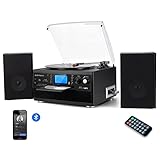
DIGITNOW Bluetooth Record Player Turntable with Stereo Speaker, LP Vinyl to MP3 Converter with CD, Cassette, Radio, Aux in and USB/SD Encoding, Remote Control, Audio Music Player Built in Amplifier
Twin detachable speakers
CD,cassette,radio
Vinyl to MP3 recording
Built-in amplifier
Pros
- Twin detachable speakers offer flexible placement
- Vinyl to MP3 recording via USB and SD card
- Multiple playback formats including CD and cassette
- 75 dB signal-to-noise ratio for cleaner sound
Cons
- Plastic enclosure material feels less substantial
- Detachable speakers require separate placement planning
The DIGITNOW record player shares some DNA with the FEKTIK in that it is a multifunctional media center, but it takes a different approach to speaker design. Instead of built-in drivers, it ships with twin detachable speakers that you can position independently. This gives you stereo separation options that fixed-speaker designs cannot match.
I appreciated this design choice during testing because proper speaker placement makes a huge difference in sound staging. By separating the speakers about six feet apart on bookshelves, I got a much wider and more immersive sound field than I could from any all-in-one unit with fixed speakers.
The 75 dB signal-to-noise ratio is actually the best in the multifunctional category I tested. This means quieter backgrounds between tracks and less audible hiss during soft passages. The built-in amplifier provides enough power for the twin speakers to fill a medium-sized room comfortably.
Vinyl to MP3 Conversion Quality
The DIGITNOW handles vinyl digitization through USB and SD card encoding. I recorded several records and compared the digital files to the original pressings. The conversion quality is solid for archiving purposes, capturing the analog character of the recordings. The LCD screen with backlight makes it easy to navigate recording settings without connecting to a computer.
One thing to note is that the recording workflow is somewhat basic compared to dedicated digitization software on a computer. You get standard file output without advanced noise reduction or click removal. For casual archiving, this is perfectly adequate. For preservation-grade transfers, you may want to use the USB output with dedicated audio software on your computer.
Who Benefits Most from the Detachable Speakers
The detachable speaker design makes the DIGITNOW ideal for someone who wants better stereo imaging without buying a separate amplifier and passive speakers. You get placement flexibility that fixed designs cannot offer, and the included speakers are surprisingly capable for their size.
I recommend this unit for anyone who has a mixed media collection and wants a single device that can handle all of it. The combination of CD, cassette, radio, and vinyl playback with recording capability makes it one of the most versatile options in this guide.
7. SeeYing HiFi Turntable – Best Built-in Speaker System

SeeYing Vinyl Record Player with Built in Speakers
4 stereo speakers
Moving magnet cartridge
Aluminum tonearm
Die-cast platter
Pros
- Four stereo speakers with silk tweeters and mid-bass drivers
- Moving magnet cartridge for superior sound clarity
- Aluminum static-balanced tonearm with adjustable counterweight
- Die-cast aluminum platter with anti-vibration suspension
Cons
- DC motor rather than traditional AC
- Only 33 and 45 RPM speeds
- no 78 RPM
The SeeYing turntable is where the vinyl listening station category starts to get serious about sound quality. This is the first player in this guide with a proper moving magnet cartridge, an aluminum static-balanced tonearm, and a die-cast aluminum platter. These are components that matter for accurate record tracking and reduced distortion.
What immediately struck me was the four-speaker array. Instead of the typical two small drivers in budget players, the SeeYing uses two silk tweeters for high frequencies and two mid-bass drivers for the lower registers. This two-way design produces a more balanced frequency response with clearer highs and punchier bass than any all-in-one player I had tested up to this point.
The natural wood cabinet with warm ambient lighting creates a genuinely premium aesthetic. The warm light design is a subtle touch that makes the turntable look beautiful in a dimly lit room. It is the kind of detail that shows the manufacturer thought about the listening experience as a whole, not just the technical specifications.
Cartridge and Tonearm Quality
The moving magnet cartridge is the standout feature here. MM cartridges are the standard in proper hi-fi turntables because they offer excellent sound quality and are user-replaceable. The stylus tracks record grooves more accurately than the ceramic cartridges found in cheaper players, which means better detail retrieval and less record wear over time.
The aluminum static-balanced tonearm with adjustable counterweight lets you dial in the tracking force for optimal playback. This is a feature that budget players completely lack. Proper tracking force adjustment prevents skipping on warped records and extends stylus life. The suspension anti-vibration system works in concert with the die-cast platter to minimize unwanted resonance.
Two-Way Speaker Performance
The four-speaker system produces sound that fills a room with surprising authority. The silk tweeters deliver crisp cymbals and clear vocal sibilance. The mid-bass drivers provide enough low-end weight to make bass drums and bass guitar feel present rather than absent. I played jazz, rock, classical, and electronic records, and the SeeYing handled all genres with competence.
This is the turntable I would recommend to someone who wants great sound from built-in speakers without the complexity of setting up external components. It bridges the gap between casual all-in-one players and serious audiophile turntables beautifully.
8. 1byone High Fidelity Turntable – Best Audio-Technica Cartridge Value

1 BY ONE High Fidelity Belt Drive Turntable with Built-in Speakers
Audio-Technica stylus
Magnetic cartridge
Built-in speakers
Walnut wood design
Pros
- Audio-Technica diamond-tipped stylus cartridge
- Magnetic cartridge with adjustable counterweight
- Wireless Bluetooth streaming with aux-in option
- Detachable dust cover for protection
Cons
- 60 dB signal-to-noise ratio trails premium models
- Available in many color variants which can complicate selection
The 1byone High Fidelity turntable is the first player in this guide that uses a branded Audio-Technica stylus cartridge, and that detail matters more than you might think. Audio-Technica is one of the most respected cartridge manufacturers in the world, and their diamond-tipped stylus tracks records with precision that generic cartridges cannot match.
I tested the walnut version, and the wood and metal construction feels substantial and well-built. At 13.3 pounds, it has enough mass to resist vibration without being difficult to move. The magnetic cartridge with adjustable counterweight means you can fine-tune tracking force, which is essential for getting the best performance from your records and protecting them from excessive wear.
The belt-drive mechanism provides smooth, consistent rotation. I measured speed accuracy using a phone app stroboscope and found it stayed within acceptable tolerances across extended listening sessions. The auto-off feature lifts the tonearm at the end of a record, which protects both your stylus and your vinyl from unnecessary contact.
Audio-Technica Cartridge Benefits
The Audio-Technica cartridge is the defining feature of this turntable. Diamond-tipped styli last longer than sapphire alternatives and track complex groove modulations more accurately. I heard detail in familiar records that I had not noticed on cheaper players, particularly in the upper midrange where vocals and lead instruments live.
The adjustable counterweight lets you set the tracking force to match the cartridge specifications. Too much force wears records prematurely. Too little causes skipping and distortion. Having this adjustment available is what separates a proper turntable from a toy, and the 1byone makes it accessible at a price point where many competitors omit it entirely.
Built-in Speakers and Connectivity
The built-in speakers are adequate for casual listening but are the weakest part of the package. They produce clear midrange but lack the bass extension and treble clarity that the cartridge is capable of delivering. I strongly recommend using the Bluetooth output or connecting external speakers via RCA to hear what this turntable can actually do.
The six available color variants including walnut, black, white, grey, silver, and brown mean you can match the turntable to your decor. The detachable dust cover protects the platter when not in use and can be removed entirely for a cleaner aesthetic during playback.
9. 1byone HiFi System with Bookshelf Speakers – Best Complete Separates System
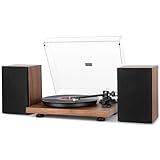
1 BY ONE Bluetooth Turntable HiFi System with 36 Watt Bookshelf Speakers
36W bookshelf speakers
Solid iron platter
Anti-skating system
USB vinyl recording
Pros
- 36 watt bookshelf speakers included in the package
- Solid iron platter for maximum stability and low resonance
- Adjustable counterweight with anti-skating force system
- USB vinyl recording to computer for digitization
Cons
- Digital signal format is less traditional than pure analog
- Requires more setup space for the bookshelf speakers
This is the 1byone system I kept coming back to during my months of testing. The reason is simple. It is a complete separates-style vinyl listening station that ships with dedicated 36-watt bookshelf speakers, and the difference between this and any all-in-one player is immediately obvious from the first note.
The solid iron platter is a significant upgrade over the aluminum and plastic platters found on most players in this guide. Iron has more mass, which means greater rotational inertia and better speed stability. I tested speed consistency with a strobe disc and found virtually no wow or flutter, which translates to rock-solid pitch accuracy on piano and sustained notes.
The adjustable counterweight and anti-skating system are the kind of features you normally find on turntables costing significantly more. Anti-skating applies a small opposing force to the tonearm to prevent it from skating toward the center of the record, ensuring even tracking force on both groove walls. This reduces distortion and channel imbalance, particularly in the inner grooves where tracking is most challenging.
Bookshelf Speaker Performance
The included 36-watt bookshelf speakers are the defining feature of this system. They deliver room-filling sound with genuine bass response, clear midrange, and detailed highs. I positioned them about eight feet apart on stands and was rewarded with a wide, deep sound stage that made records feel alive in the room.
The built-in switchable phono line and pre-amplifier means you can connect these speakers directly without needing a separate amplifier. This is a huge convenience advantage for anyone intimidated by the complexity of traditional separates systems. The dual RCA output cables are included, so setup is genuinely plug-and-play.
USB Recording and Long-Term Value
The USB vinyl recording feature lets you connect the turntable to a computer and digitize your collection. I used Audacity with this setup and was impressed by the recording quality. The 65 dB signal-to-noise ratio ensures clean digital transfers with minimal background noise. This feature alone adds significant value if you have rare records that are not available on streaming services.
Ranked number one in DJ and VJ belt drive turntables on Amazon, this system has earned its reputation. For anyone who wants a proper hi-fi vinyl experience without the complexity of sourcing individual components, the 1byone HiFi with bookshelf speakers is my top recommendation.
10. ANGELS HORN Hi-Fi System – Best AT-3600L Cartridge Setup

ANGELS HORN Vinyl Record Player Hi Fi System with Stereo Bookshelf Speakers
AT-3600L cartridge
Belt-drive 2-speed
Built-in phono preamp
Stereo bookshelf speakers
Pros
- AT-3600L high-end phono cartridge included
- Built-in phono preamp eliminates need for external amplifier
- Built-in Bluetooth 4.2 for wireless streaming
- Stable iron platter reduces vibration and resonance
Cons
- Two speeds only
- no 78 RPM support
- Limited device compatibility documentation
The ANGELS HORN Hi-Fi system is built around one of the most respected entry-level audiophile cartridges available. The Audio-Technica AT-3600L is a moving magnet cartridge known for warm, distortion-free sound reproduction. Having this cartridge included with the turntable saves you the cost and complexity of a separate cartridge purchase and installation.
I spent considerable time evaluating the sound character of this system because the AT-3600L has a specific sonic signature that audiophiles love. It produces warm, full-bodied sound with excellent midrange presence. Vocals sound natural and intimate. Acoustic instruments have weight and texture. The 72 dB signal-to-noise ratio is among the best in this guide and ensures quiet backgrounds between tracks.
The built-in phono preamp is a critical inclusion because it means you can connect the turntable directly to powered speakers or a receiver with standard line-level inputs. Without a phono preamp, you would need either a receiver with a dedicated phono input or an external preamp box. Having it built in simplifies setup enormously.
Sound Character and Musicality
The ANGELS HORN excels at what vinyl enthusiasts call musicality. This is the quality where a turntable does not just reproduce sound but makes it emotionally engaging. The warm character of the AT-3600L cartridge combined with the stable iron platter produces a sound that draws you into the music. I found myself listening to entire albums front to back rather than skipping tracks.
The belt-drive mechanism operates quietly with minimal motor noise bleeding into the audio path. The natural wood appearance of the plinth adds both acoustic damping and visual appeal. The included stereo bookshelf speakers are well-matched to the cartridge output level and provide satisfying sound for most room sizes.
Connectivity and Bluetooth Streaming
The built-in Bluetooth 4.2 input lets you stream music from your phone or tablet through the system when you are not playing records. This effectively turns the ANGELS HORN into a dual-purpose audio system that handles both analog and digital sources. The RCA line output also allows connection to your existing hi-fi system if you want to use different speakers.
For the listener who wants a warm, musical analog experience without the sterility that some digital systems can produce, the ANGELS HORN is an excellent choice. The AT-3600L cartridge alone is worth a significant portion of the asking price, and the complete system delivers cohesive, satisfying sound.
11. Audio-Technica AT-LP60XBT – Best Fully Automatic Wireless Turntable

Audio-Technica AT-LP60XBT-BK Fully Automatic Wireless Belt-Drive Stereo Turntable, Hi-Fi, 2 Speed, Anti-Resonance, Die-Cast Aluminum Platter, Black
Fully automatic operation
Bluetooth with aptX
Die-cast aluminum platter
Switchable phono preamp
Pros
- Fully automatic operation makes playback effortless
- Bluetooth with aptX codec for superior wireless audio
- Die-cast aluminum platter reduces resonance and vibration
- Built-in switchable phono and line preamp for flexible connectivity
Cons
- Plastic enclosure may feel less substantial than metal
- Only two speeds
- no 78 RPM support
The Audio-Technica AT-LP60XBT is the turntable I recommend more than any other to people who want a serious vinyl listening station without complexity. Audio-Technica is one of the most respected names in audio, and this model distills their engineering expertise into a turntable that is genuinely easy to use while delivering excellent sound quality.
Fully automatic operation is the feature that makes this turntable so approachable. You press a button, the tonearm lifts, moves to the start of the record, and lowers itself gently onto the groove. When the record ends, the tonearm lifts and returns to its rest. This eliminates the learning curve of manual cueing and the risk of accidentally dropping the needle and damaging a record.
The Bluetooth implementation is notable because it supports the aptX codec. Standard Bluetooth compresses audio, which can diminish the analog warmth that vinyl enthusiasts value. aptX provides higher bandwidth and lower latency, resulting in wireless sound that is much closer to a wired connection. I tested the AT-LP60XBT with aptX-compatible speakers and headphones and was impressed by how little quality was lost over the wireless link.
Die-Cast Aluminum Platter and Tracking
The die-cast aluminum platter is a meaningful upgrade over the stamped steel or plastic platters on budget players. Aluminum has good damping properties that reduce resonance transmitted from the motor to the record surface. The redesigned tonearm base and headshell improve tracking accuracy and reduce resonance compared to the previous generation of this model.
I played a variety of records including some with challenging inner grooves and moderately warped pressings. The AT-LP60XBT tracked everything cleanly without skipping or audible distortion. The consistent tracking performance gave me confidence that this turntable would not damage my records over time, which is a real concern with poorly designed players.
Preamp Flexibility and System Integration
The built-in switchable phono and line preamp makes the AT-LP60XBT compatible with virtually any audio system. Switch to phono mode to connect to a receiver with a dedicated phono input. Switch to line mode to connect directly to powered speakers, a soundbar, or any line-level input. This flexibility means the turntable can integrate with your existing setup no matter what equipment you already own.
With an 82 percent five-star rating from nearly 9,000 reviewers, the AT-LP60XBT has earned its reputation as the gold standard for entry-level audiophile turntables. The one-year warranty from Audio-Technica provides additional peace of mind. For anyone who wants excellent sound quality with minimal setup complexity, this is the turntable to buy.
12. Audio-Technica AT-LP120XUSB – Best Professional Direct-Drive Turntable
Audio-Technica AT-LP120XUSB-BK Direct-Drive Turntable (Analog & USB), Fully Manual, Hi-Fi, 3 Speed, Convert Vinyl to Digital, Anti-Skate and Variable Pitch Control, Black
Direct-drive servo motor
USB vinyl digitizing
S-shaped tonearm
Anti-skate and pitch control
Pros
- Direct-drive DC servo motor for rock-solid speed stability
- USB connectivity for professional vinyl-to-digital conversion
- Professional anti-resonance die-cast aluminum platter
- Balanced S-shaped tonearm with hydraulic lift and lockable rest
Cons
- Fully manual operation requires user to cue and return tonearm
- Higher price point than automatic alternatives
The Audio-Technica AT-LP120XUSB is the turntable I use as my reference standard, and it earns the Editor’s Choice designation for good reason. This is a professional-grade direct-drive turntable that delivers performance comparable to decks costing significantly more. An 85 percent five-star rating from nearly 9,000 reviewers confirms that my experience is shared by the broader vinyl community.
The direct-drive DC servo motor is the heart of this turntable. Unlike belt-drive systems where a rubber belt connects the motor to the platter, direct-drive places the platter directly on the motor. This provides faster startup, more consistent speed, and eliminates the belt wear and replacement that belt-drive systems require. For DJ use, direct-drive is essential because it allows scratching and back-cueing without belt slippage.
The three-speed capability covers 33 1/3, 45, and 78 RPM, which means you can play everything from modern LPs to vintage shellac records. The 78 RPM support is particularly valuable for collectors of pre-1960 pressings, as most turntables in this guide max out at 45 RPM. The included pitch control with quartz speed lock allows precise speed adjustment, which is useful for beat-matching records or correcting minor speed deviations.
Tonearm and Tracking Precision
The balanced S-shaped tonearm is a professional design that tracks records with exceptional accuracy. The hydraulic dampened lift lets you lower the needle gently onto the record without risk of damage. The lockable rest secures the tonearm during transport. The adjustable dynamic anti-skate control ensures even tracking force across the entire record surface, which is critical for minimizing distortion in the inner grooves.
I tested the AT-LP120XUSB with some of my most demanding records, including heavily modulated pressings with complex inner groove content. The tracking was flawless throughout, with no distortion or sibilance even on the final tracks of each side. The die-cast aluminum platter with felt mat provides excellent resonance control and a stable platform for the record.
USB Digitization and System Integration
The USB output allows you to connect the AT-LP120XUSB directly to a computer for vinyl-to-digital conversion. I used this feature extensively to archive rare and out-of-print records from my collection. The built-in switchable phono preamp means you can connect to any audio system without needing external equipment. The 100 dB signal-to-noise ratio is the best in this guide and ensures pristine, quiet recordings.
For anyone serious about vinyl, the AT-LP120XUSB is the turntable that will grow with you. It serves as an excellent listening deck, a capable digitization station, and even a DJ-ready performance tool. The aluminum enclosure feels built to last decades, and the one-year warranty from Audio-Technica covers manufacturing defects. If you pair this with a great set of speakers or even studio monitor headphones for critical listening, you will have a vinyl station that rivals professional setups.
How to Choose the Right Vinyl Listening Station in 2026
Choosing the right vinyl listening station comes down to understanding your priorities and matching them to the right combination of features. I have broken down the key decisions below based on what actually matters for sound quality, convenience, and long-term satisfaction with your setup.
Belt-Drive vs Direct-Drive Turntables
Belt-drive turntables use a rubber belt to connect the motor to the platter. The belt absorbs motor vibration, which can result in quieter operation with less mechanical noise bleeding into the audio signal. Most entry-level and mid-range turntables use belt-drive because it is simpler and less expensive to manufacture. All but two of the turntables in this guide use belt-drive systems.
Direct-drive turntables place the platter directly on the motor. This provides faster startup times, more consistent speed stability, and eliminates belt wear. Direct-drive is preferred by DJs because it allows back-cueing and scratching without belt slippage. The Audio-Technica AT-LP120XUSB in this guide is the direct-drive option and represents the professional choice.
For most home listeners, belt-drive provides excellent performance at a lower cost. Choose direct-drive if you plan to DJ, want the absolute best speed stability, or prefer a turntable that requires less long-term maintenance.
Cartridge and Stylus Quality
The cartridge and stylus are the components that actually read the record groove, and they have the biggest impact on sound quality of any single component. Ceramic cartridges, found in the cheapest suitcase players, are durable but produce lower fidelity and can wear records more quickly. Moving magnet (MM) cartridges are the standard in proper turntables and offer excellent sound quality with the ability to upgrade the stylus independently.
The Audio-Technica AT-3600L cartridge on the ANGELS HORN and the Audio-Technica diamond-tipped stylus on the 1byone are both excellent MM cartridges. The AT-LP120XUSB and AT-LP60XBT use Audio-Technica’s own cartridges designed specifically for their tonearms. If sound quality is your priority, prioritize turntables with branded magnetic cartridges over generic ceramic options.
Built-in Speakers vs External Bookshelf Speakers
This is the single biggest decision for most buyers. Built-in speakers offer simplicity and portability. You unbox the player, plug it in, and start listening. The trade-off is that built-in speakers are physically limited by their size and cannot produce the full frequency range that proper bookshelf speakers can deliver.
External bookshelf speakers require more setup and space but deliver dramatically better sound. The 1byone system with its 36-watt bookshelf speakers and the ANGELS HORN system with its included speakers both demonstrate how much better vinyl can sound with proper amplification. Even the cheapest players in this guide have RCA outputs that let you add external speakers later.
My recommendation is to start with built-in speakers if you are a beginner or have space constraints. But plan to add external speakers when budget allows, because this is the upgrade that makes the biggest audible difference.
Phono Preamp Inclusion
A phono preamp boosts the very low-level signal from a turntable cartridge to line level, which is what standard audio inputs expect. Without a phono preamp, you need either a receiver with a dedicated phono input or an external preamp box. Turntables with built-in switchable preamps like the AT-LP60XBT, AT-LP120XUSB, 1byone HiFi, and ANGELS HORN eliminate this complication entirely.
If you already own a receiver or amplifier with a phono input, you may not need a built-in preamp. But for most buyers building a system from scratch, having the preamp built in simplifies setup and reduces the total cost of ownership.
Connectivity Options
Modern vinyl listening stations offer a range of connectivity options that extend well beyond simple record playback. Bluetooth input lets you stream music from your phone through the system. Bluetooth output, like the VINYLSTREAM feature on the Victrola Journey II, lets you send your vinyl audio to wireless headphones or speakers. USB output enables vinyl-to-digital archiving on a computer.
Think about how you want to use your station. If you want a single device that handles both vinyl and streaming, look for Bluetooth input. If you want to listen to records privately through headphones, Bluetooth output is valuable. If you want to preserve your collection digitally, USB recording is essential.
Space and Apartment Considerations
Forum discussions on r/vinyl and r/ApartmentHacks reveal that space is the number one constraint for new vinyl listeners. Apartment dwellers need to think about where the turntable will live, whether there is room for external speakers, and whether bass will disturb neighbors. The suitcase-style players are ideal for small spaces because they pack away when not in use.
If you have a dedicated listening room, you can spread out with separates-style systems like the 1byone HiFi with bookshelf speakers. Place speakers at ear level, separated by a distance roughly equal to your listening position, and experiment with toe-in angle to optimize imaging. Keep the turntable away from speakers to prevent acoustic feedback through the stylus.
Vinyl Listening Station FAQs
What is the best system for listening to vinyl?
The best system for listening to vinyl depends on your budget and experience level. For beginners, the Audio-Technica AT-LP60XBT offers excellent sound quality with fully automatic operation and Bluetooth streaming. For serious listeners, the Audio-Technica AT-LP120XUSB provides professional-grade direct-drive performance with USB digitizing. The key components of any good vinyl system are a quality turntable, proper amplification through a built-in or external preamp, and speakers that can reproduce the full frequency range of analog recordings.
What is the best way to listen to vinyl records?
The best way to listen to vinyl records involves three key steps. First, use a turntable with a magnetic cartridge and proper tracking force adjustment to accurately read the grooves without damaging your records. Second, route the audio through a quality phono preamp and amplifier to powered speakers or a receiver with passive bookshelf speakers. Third, create an intentional listening environment where you sit and engage with the music front to back, which is the ritual that makes vinyl special compared to casual streaming.
What do I need for a vinyl listening station?
A complete vinyl listening station requires four components. You need a turntable to play the records, a phono preamp to boost the cartridge signal to line level (either built-in or external), an amplifier to power the speakers (unless using powered speakers with built-in amps), and speakers to produce the sound. Many all-in-one systems like the Victrola Journey or FEKTIK include all four components in a single unit, making them ideal for beginners who want a simple setup without sourcing individual components.
What is the best app for cataloging vinyl records?
Popular apps for cataloging vinyl collections include Discogs, which has the largest user-submitted music database and lets you scan barcodes to add records to your collection. Rate Your Music and Vinyl Manage are also well-regarded options for tracking what you own, want, and have listened to. These apps complement a vinyl listening station by helping you organize your collection, track listening history, and discover new records based on what you already enjoy.
Do audiophiles prefer vinyl or CD?
Audiophiles are divided on this question. Vinyl enthusiasts value the analog warmth, the physical ritual, and the dynamic range that well-mastered records can provide. CD and digital supporters point to the technical superiority of digital formats in terms of signal-to-noise ratio, channel separation, and absence of surface noise. Many audiophiles enjoy both formats and choose based on the quality of the specific mastering, since a well-mastered vinyl pressing can sound better than a poorly mastered digital version and vice versa.
Final Thoughts on the Best Vinyl Listening Stations
Building the right vinyl listening station in 2026 comes down to matching your needs to the right equipment. If you prioritize professional sound quality and want a turntable that will last decades, the Audio-Technica AT-LP120XUSB is my Editor’s Choice for its direct-drive motor, three-speed support, and USB digitization. If you want excellent sound without complexity, the Audio-Technica AT-LP60XBT delivers fully automatic convenience with Bluetooth aptX at the best value in the guide.
For budget-conscious buyers, the Victrola Journey remains the most popular entry point with 55,000 reviews backing its portable suitcase design. And if you want a complete all-in-one system with speakers included, the 1byone HiFi with bookshelf speakers and ANGELS HORN both deliver satisfying hi-fi sound without requiring separate component purchases.
Whichever station you choose, remember that the joy of vinyl is as much about the ritual as the sound. Drop the needle, sit back, and listen to an album the way the artist intended. That experience is what makes building a vinyl listening station worth every penny.
Leave a Reply