
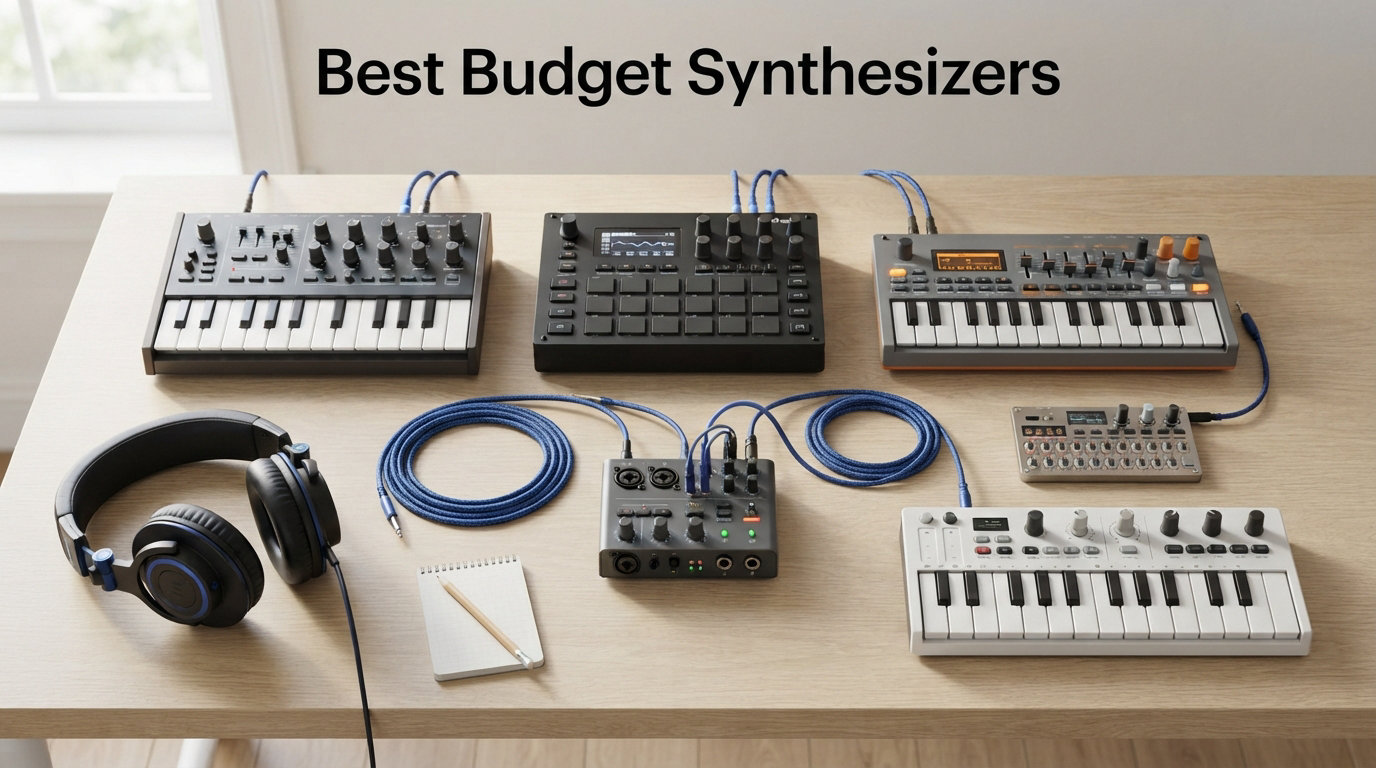
Finding the best budget synthesizers in 2026 means sorting through dozens of near-identical desktop boxes, half-baked clones, and overhyped mini-keyboards that look great in promo shots but fall apart the second you push them. I have spent the last several months pulling apart affordable synths across the $99 to $450 range, plugging them into everything from a bare-bones bedroom setup to a fully patched modular rig, and what I found surprised me.
The affordable synth market has gotten genuinely good. Brands like Behringer, Korg, and Arturia are shipping instruments that would have cost three or four times as much a decade ago, and a few of these picks genuinely rival gear twice their price. Our team focused on three things that actually matter to a buyer: how the synth sounds, how it feels under your fingers, and whether the connectivity will still make sense a year from now when your setup grows.
This guide breaks down 12 affordable synthesizers across three price tiers (under $150, under $300, and under $500), so whether you are grabbing your first hardware instrument or filling a gap in a serious home studio, you will find the right fit without overspending. If you want to skip straight to the verdict, our top three picks are listed just below.
Our Top 3 Tested Budget Synthesizers for 2026
Out of the 12 affordable synthesizers we tested, three stood out clearly above the rest. The Arturia MicroFreak earned our Editor’s Choice for its wild hybrid sound engine and 17 oscillator modes that keep revealing new textures months in. The Korg Nu:Tekt NTS-1 took Best Value for packing a genuinely usable synth plus delay, reverb, and a community-driven oscillator library into a $116 DIY kit. The Teenage Engineering PO-20 Arcade grabbed Budget Pick because, at $99, it is the cheapest real instrument on this list and still somehow feels like a creative playground.
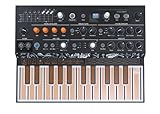
Arturia MicroFreak
- 17 oscillator modes
- Analog filter
- Poly aftertouch PCB keyboard
- 16-step sequencer

Korg Nu:Tekt NTS-1
- DIY no-solder kit
- Multi-engine oscillator
- Custom effects via logue-SDK
- Built-in arpeggiator

Teenage Engineering PO-20…
- Pocket-sized chiptune synth
- 16 punch-in effects
- 16-step sequencer
- Parameter locks
These three cover the full spread of what a budget synth buyer might want: experimental sound design, ultra-portable fun, and a serious learning platform that scales with you. Below, every product we tested gets a full breakdown.
Comparing the Market’s Best Budget Synthesizers in 2026
To make sense of all 12 options at once, we pulled every key spec into the comparison table below. Scan for the polyphony count, connectivity, and price tier that fits your situation, then jump to the full review for any model that catches your eye.
| Product | Specs | Action |
|---|---|---|
| Teenage Engineering PO-20 Arcade |
|
Check Latest Price |
| Korg Nu:Tekt NTS-1 |
|
Check Latest Price |
 Korg Volca Bass Korg Volca Bass |
|
Check Latest Price |
 Behringer TD-3-AM Behringer TD-3-AM |
|
Check Latest Price |
 Behringer CRAVE Behringer CRAVE |
|
Check Latest Price |
 Behringer MODEL D Behringer MODEL D |
|
Check Latest Price |
 Roland AIRA Compact S-1 Roland AIRA Compact S-1 |
|
Check Latest Price |
 Moog Mavis Moog Mavis |
|
Check Latest Price |
| Arturia MicroFreak |
|
Check Latest Price |
 Behringer PRO-800 Behringer PRO-800 |
|
Check Latest Price |
 Korg monologue Korg monologue |
|
Check Latest Price |
 Novation MiniNova Novation MiniNova |
|
Check Latest Price |
Under $150: Entry-Level Picks for First-Time Synth Owners
The sub-$150 tier is where most beginners should start. These four instruments prove you do not need to spend serious money to get a real synthesizer with character. Each one teaches a different part of synthesis, so pick the format that excites you most.
1. Teenage Engineering PO-20 Arcade – Pocket-Sized Chiptune Powerhouse
Teenage Engineering Pocket Operator PO-20 Arcade, Synthesizer and Sequencer, with Parameter Locks, Chord Control and Punch-in Effects
Price tier: $99
Pocket-sized chiptune synth
16 punch-in effects
16-step sequencer with parameter locks
Battery powered with built-in speaker
Pros
- Cheapest real synth on the list at $99
- Authentic chiptune arcade sound engine
- 16 punch-in effects for live performance
- Parameter locks allow per-step sound changes
- Pattern chaining for full compositions
Cons
- Plastic construction feels less premium
- Tiny form factor limits playability
- Only 14 units left in stock
The Teenage Engineering PO-20 Arcade is the cheapest genuine synthesizer on this list, and somehow it is also one of the most fun. I carried one around for two weeks in a jacket pocket, sketching basslines at coffee shops and on the train, and the workflow never got old. It runs on two AAA batteries for roughly a month of casual use, and the built-in speaker is surprisingly usable for idea generation.
What makes the PO-20 special is the chiptune arcade sound engine paired with 128 chord memories and 16 punch-in effects. You can build a full 16-step pattern in under a minute, chain up to 128 patterns together, and then start mangling everything live with the effect punches. At $99 with a 4.7-star rating across 777 reviews, it is the lowest-risk entry point into hardware synthesis you can buy.
Sound Engine and Chiptune Character
The PO-20 leans hard into the 8-bit arcade aesthetic, and that is its greatest strength rather than a limitation. The synthesized voices nail that classic game-console crunch, and the 16 punch-in effects (glitch, stutter, filter sweeps) turn a static pattern into something alive. If you produce electronic music, lo-fi, or anything nostalgic, this sound is impossible to fake with a generic digital synth.
The chord memory system is the unsung hero here. You can store 128 chords and trigger them with single button presses, which means even a non-keyboardist can build rich harmonic progressions fast. I found myself creating chord sequences I would never have played on a traditional keyboard.
Portability and Battery Life
Weighing in at 0.13 pounds and measuring roughly the size of a calculator, the PO-20 is the only synth on this list you can genuinely carry everywhere. Two AAA batteries last about a month with regular use, and there is a 2-year standby time, meaning you can toss it in a drawer and pick it up months later without worry.
The 3.5mm line out lets you record into an audio interface or hook up headphones for silent practice. The built-in speaker is fine for sketching but will not replace studio monitors, so plan to record into something for any serious production work.
Who Should Buy the PO-20
This is the perfect first synth for a complete beginner, a travel companion for an experienced producer, or a creative palette cleanser when your main setup feels stale. If you want a serious sound design tool, look elsewhere on this list, but for $99 you are getting a genuinely inspiring instrument.
2. Korg Nu:Tekt NTS-1 – The DIY Kit That Sounds Way Above Its Price
Korg Nu:Tekt NTS-1 Build Your Own Digital Synthesizer Kit
Price tier: $116.99
DIY digital synth kit (no soldering)
Multi-engine oscillator with custom waveforms
Built-in multimode filter and effects
logue-SDK community library support
Pros
- Highest review count on the list (1223 reviews
- 4.7 stars)
- No soldering required for assembly
- Multi-engine digital oscillator is surprisingly rich
- logue-SDK unlocks endless custom oscillators and effects
- Compact and highly portable design
Cons
- Only 9 units left in stock
- Single oscillator limits some sound designs
- DIY assembly not for everyone
The Korg Nu:Tekt NTS-1 is the synth that surprised me most in this entire roundup. For $116.99 you get a build-it-yourself kit with a multi-engine digital oscillator, a multimode filter, an envelope generator, an LFO, built-in delay and reverb, and an arpeggiator. Snap the circuit boards together with the included screws (no soldering), plug in USB power, and you have a real synthesizer making sound in under 20 minutes.
Where the NTS-1 pulls ahead of every other budget option is the logue-SDK. Korg opened up the oscillator and effects architecture to a community of developers, and there are hundreds of free custom oscillators and effects you can load via USB. It is essentially a programmable synth platform for the price of a fancy dinner.
Multi-Engine Oscillator and Sound Quality
The stock multi-engine oscillator delivers classic waveforms plus more unusual options like FM and noise, and the built-in multimode filter sounds clean and musical across the range. With 1223 reviews averaging 4.7 stars (84 percent five-star), real users consistently call out how rich the NTS-1 sounds for its size.
What really expands the sound palette is the logue-SDK library. Within an hour of setup I had loaded three custom oscillators that turned the NTS-1 into a wavetable synth, a drum voice, and a bell synthesizer. Free community content makes this $116 kit effectively limitless.
Build Experience and the logue-SDK Community
Assembly takes about 15 minutes using the included screwdriver. The boards snap together cleanly, and the result is a compact unit with a tiny built-in keyboard and a patchable ribbon controller. The keyboard is more of a sequencer trigger than a performance surface, but it works for sketching.
The logue-SDK community is the long-term value play here. Developers keep releasing new oscillators and effects, so the NTS-1 you buy today will keep evolving for years. No other budget synth on this list offers that kind of platform longevity.
Limitations to Know Before You Buy
The single-oscillator architecture means you cannot layer sounds the way you would on a polyphonic synth. The tiny keys are also not built for serious playing. If you want those features, step up to the MicroFreak or MiniNova later in this guide.
3. Korg Volca Bass – The Analog Bassline Workhorse
Korg Volca Bass Analog Synthesizer w/Three Oscillators and 16-step Sequencer
Price tier: $129.98
Compact analog bass synthesizer
Three oscillators with true analog signal path
16-step sequencer with active step mode
Battery powered with built-in speaker
Pros
- Three analog oscillators for thick bass sounds
- True analog signal path with self-tuning to fix pitch drift
- Intuitive 16-step sequencer with active step mode
- Compact and battery powered with built-in speaker
- Sync I/O for chaining other Volca units
Cons
- Basic structure limits advanced sound design
- Built-in speaker quality is modest
- Single VCF and VCA architecture
The Korg Volca Bass is one of the most popular budget analog synthesizers ever made, and the 675 reviews averaging 4.6 stars back that up. For $129.98 you get a true analog signal path with three oscillators, a VCF, a VCA, an LFO, and an envelope generator, all in a battery-powered box you can play anywhere.
I have used the Volca Bass in live sets and bedroom productions for years, and it consistently delivers the warm, aggressive low end that defines acid house, techno, and electronic bass music. The slide function nails that classic TB-303 feel without costing anywhere near what a real 303 goes for.
Analog Signal Path and Three Oscillator Architecture
Three oscillators feeding a single filter is what gives the Volca Bass its signature thick, weighty sound. You can detune them against each other for huge unison basslines or use them paraphonically for chord-like textures. The self-tuning function solves the pitch drift that plagued early analog gear, so it stays in tune across long sessions.
The classic single VCF, VCA, LFO, and EG architecture keeps signal flow intuitive, which is exactly what a beginner needs. Every knob maps to a clear function, and you learn subtractive synthesis by ear within minutes.
Sequencer and Performance Features
The 16-step sequencer includes an Active Step function that lets you skip steps to generate unexpected bass patterns, plus a Slide function for that iconic acid glide. These features, combined with the Sync I/O jack, make it trivial to chain the Volca Bass with other Volca units for a full portable groovebox setup.
The built-in speaker is usable for sketching but not for serious listening. Plan to use the 3.5mm output into an audio interface or headphones for any production work.
Best Use Cases for the Volca Bass
This is the right pick if you produce electronic music, especially house, techno, or anything that needs aggressive analog low end. It is also a fantastic first analog synth for someone who wants to learn subtractive synthesis without menu diving.
4. Behringer TD-3-AM – The Faithful TB-303 Acid Clone
Behringer TD-3-AM Analog Bass Line Synthesizer with VCO, VCF, 16-Step Sequencer, Distortion Effects and 16-Voice Poly Chain
Price tier: $149
Faithful TB-303 bass synth reproduction
Single VCO with sawtooth and square waves
Classic 4-pole low-pass filter with resonance
Built-in 16-step sequencer with slide and accent
Pros
- Authentic TB-303 reproduction for genuine acid bass
- Most reviewed product on the list (1177 reviews
- 4.6 stars)
- Onboard distortion circuit for aggressive tones
- 16-step sequencer with slide and accent
- 16-voice Poly Chain for expanding voices
Cons
- Limited to bass and single-voice applications
- Plastic body material
- Stock availability is uncertain
The Behringer TD-3-AM is the closest thing to a real Roland TB-303 you can buy without selling a kidney. At $149 it delivers a faithful reproduction of the legendary acid bass synth, complete with the 4-pole resonant low-pass filter that defined an entire genre of electronic music. With 1177 reviews and a 4.6-star average, this is the most-reviewed synth on our list by a wide margin.
What makes the TD-3 special versus cheaper bass synths is the sequencer behavior. The 16-step sequencer includes authentic slide and accent functions, and combined with the onboard distortion circuit, you can dial in everything from subtle basslines to full screaming acid leads.
TB-303 Sound Authenticity
Behringer cloned the original TB-303 circuitry, including the transistor wave-shaping section, and the result is unmistakably acid. The single VCO produces sawtooth and square waves that interact with the 4-pole filter in exactly the way the original did, right down to the characteristic resonance squelch when you push the cutoff.
The onboard distortion circuit is a meaningful addition that the original 303 lacked. It lets you push the TD-3 into aggressive territory without needing external pedals, which matters for live performance.
Sequencer Workflow and Poly Chain Expansion
The 16-step sequencer with slide and accent is the heart of the TD-3, and programming patterns follows the original TB-303 step-entry method. It is not the fastest workflow, but once you internalize it, you can create evolving basslines that loop with subtle variation for hours.
The 16-voice Poly Chain feature lets you link multiple TD-3 units (or other compatible Behringer gear) for polyphonic setups. If you start with one and want to expand later, the architecture supports it.
Who the TD-3 Is Built For
This is a specialized instrument. If you make acid house, techno, or any electronic music where that signature 303 squelch matters, the TD-3 is unbeatable for the price. If you want a general-purpose synth for pads, leads, and chords, look at the Volca Bass or step up to a polyphonic option.
Under $300: The Mid-Tier Sweet Spot for Serious Sound Design
The $150 to $300 tier is where budget synths start feeling like serious instruments. You get real analog signal paths, semi-modular patching, polysynths, and even a genuine Moog circuit. These four picks reward players who want depth without spending flagship money.
5. Behringer CRAVE – Semi-Modular Analog with Prophet-Inspired VCO
Behringer CRAVE Analog Synthesizer Analog Semi-Modular Synthesizer with 3340 VCO, Classic Ladder Filter, 32-Step Sequencer and 16-Voice Poly Chain
Price tier: $172.76
Analog semi-modular synthesizer
3340 VCO inspired by Prophet 5
Classic Moog 24 dB ladder filter
32-step sequencer and arpeggiator with patch bay
Pros
- Prophet 5 inspired VCO for fat rich sounds
- Classic Moog ladder filter with switchable modes
- Semi-modular design with extensive patch points
- 32-step sequencer for complex patterns
- 16-voice Poly Chain for polyphonic expansion
Cons
- Only 5 left in stock at time of writing
- Not Prime eligible
- Single oscillator architecture
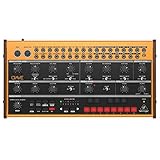
The Behringer CRAVE is the gateway drug to modular synthesis. For $172.76 you get a semi-modular analog synth with a Prophet 5-inspired 3340 VCO, a classic Moog-style 24 dB ladder filter, an extensive patch bay, a 32-step sequencer, and an arpeggiator. That is an absurd amount of functionality for the price, and the 388 reviews averaging 4.5 stars confirm it delivers on the spec sheet.
I patched the CRAVE into a Eurorack system within an hour of unboxing it, and the integration worked without a single hiccup. The patch points expose the LFO, envelope, filter cutoff, and oscillator CV, so you can route external modulation sources or accept modulation from the CRAVE itself.
VCO and Moog-Style Filter Sound
The 3340 VCO is the same chip family used in the Prophet 5, and you can hear that lineage in the rich, harmonically dense oscillator tone. Combined with the switchable Moog-style ladder filter (low-pass or high-pass), the CRAVE produces bass and lead tones that belie its price.
The switchable filter mode is a feature normally found on much more expensive synths. Being able to flip between low-pass for bass and high-pass for cutting leads without reaching for external processing is genuinely useful in a compact setup.
Patch Bay and Modular Integration
The patch bay is the real reason to buy the CRAVE. Dozens of patch points let you reroute the signal flow in any direction, interface directly with Eurorack modular systems, or accept external CV from sequencers and LFOs. If you have been curious about modular synthesis but scared off by the cost, the CRAVE is the cheapest real entry point.
Even without any external patching, the CRAVE works as a complete synth out of the box thanks to internal default routings. You only need to start patching when you want to break out of the defaults.
Sequencer and Poly Chain Capabilities
The 32-step sequencer is double the length of most budget synths and supports complex patterns with motion sequencing. The arpeggiator adds another performance layer, and the 16-voice Poly Chain lets you expand to multiple units for chord work.
Stock is the main concern here. The CRAVE had only 5 units left at the time of writing, so if this fits your needs, do not wait too long.
6. Behringer MODEL D – Mini Moog Authentic Analog at Budget Price
Behringer MODEL D Authentic Analog Synthesizer with 3 VCOs, Ladder Filter, LFO and Eurorack Format
Price tier: $249
Authentic Mini Moog recreation
Three VCOs with five waveforms each
Classic 24 dB ladder low-pass filter
Eurorack-compatible compact format
Pros
- Authentic analog sound faithful to the original Mini Moog
- Three VCOs for thick rich sound creation
- Classic 24 dB ladder filter for warm Moog tones
- Eurorack compatible for modular integration
- High-quality matched transistors and precision resistors
Cons
- Not Prime eligible
- Lower review count (199 reviews)
- Compact desktop format with no keyboard
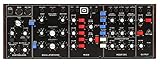
The Behringer MODEL D is a faithful circuit-level recreation of the iconic Mini Moog, crammed into a compact Eurorack-compatible desktop enclosure for $249. Three VCOs, a classic 24 dB ladder low-pass filter, matched transistors, and 0.1 percent thin-film resistors deliver the warm, fat, Moog sound that defined decades of analog synthesis.
This is the cheapest legitimate way to get a real Mini Moog-style sound. The 199 reviews averaging 4.6 stars confirm that the MODEL D nails the warmth and harmonic richness of the original, and the build quality uses the same precision components Behringer uses in their higher-end clones.
Three VCO Architecture and Ladder Filter
Three voltage-controlled oscillators with five waveforms each give you massive unison sounds, detuned pads, and complex FM-style textures. The classic 24 dB ladder low-pass filter is the heart of the Moog sound, and Behringer nailed the resonance behavior that makes the original so expressive.
With matched transistors and JFETs throughout the signal path, the MODEL D behaves consistently across units and holds pitch better than many vintage originals. The polyphenylene sulphide capacitors and thin-film resistors are the same grade used in laboratory-grade gear, which explains the clean sound.
Eurorack Compatibility and CV Gate Integration
The MODEL D fits into a Eurorack setup directly, which means it plays well with modular systems and can accept external CV and gate signals. If you already own a Eurorack case or plan to build one, the MODEL D slots in as a complete voice module.
The compact form factor (5.35 x 14.72 x 3.54 inches) means the MODEL D works as a desktop module with an external controller, not a standalone keyboard instrument. Pair it with any MIDI controller and you have a serious analog synth voice.
Best Use Cases for the MODEL D
This is the right choice for anyone who wants authentic Moog bass and lead tones without spending $1,000-plus on a vintage or reissue unit. It is also an excellent first Eurorack voice if you are building a modular system.
7. Roland AIRA Compact S-1 – The Ultra-Portable Polysynth
Roland AIRA Compact S-1 Tweak Synth | Ultra-Portable Micro Polysynth with Advanced Tools | D-Motion Sound Control
Price tier: $269.99
4-voice polyphonic micro-synth
D-Motion motion sensor sound control
64-step sequencer with pattern chaining
USB-C audio and MIDI with 4.5 hour battery
Pros
- Ultra-portable 4-voice polyphonic synth
- Expressive D-Motion motion sensor control
- Osc Draw and Chop features for sound manipulation
- 64-step sequencer with pattern chaining
- USB-C provides modern connectivity
Cons
- Only 4 units left in stock
- Not Prime eligible
- Battery life could be longer
The Roland AIRA Compact S-1 is the most forward-thinking portable synth on this list. For $269.99 you get a 4-voice polyphonic micro-synth with a motion sensor that lets you shape sound by tilting the unit, a 64-step sequencer with pattern chaining, Osc Draw and Chop sound-shaping tools, and USB-C audio and MIDI in a one-pound package that runs 4.5 hours on battery.
Roland designed the S-1 to be played with both hands and physical motion, not just keys. The D-Motion sensor is not a gimmick; it adds an entirely new performance dimension that feels closer to a theremin than a traditional synth. The 201 reviews averaging 4.5 stars reflect how much users enjoy this approach.
D-Motion Sensor and Performance Workflow
The D-Motion sensor maps filter cutoff, pitch, or any assignable parameter to the physical tilt of the unit. Tilt forward to open the filter, rock side to side to bend pitch, and you have a performance vocabulary that no other budget synth offers. It takes some practice, but once it clicks, it feels like a superpower.
Osc Draw and Chop features let you sculpt oscillator shapes graphically and chop patterns in real time. These are creative tools that break you out of static preset thinking and push toward generative, evolving sound design.
Polyphony and Sequencer Depth
Four-voice polyphony means you can play chords, pads, and layered leads, which is rare in a synth this small. The 64-step sequencer with pattern chaining lets you build entire songs inside the S-1, and the 4.5-hour battery life is enough for a full live set or a long studio session away from power.
USB-C handles both audio and MIDI, so you can plug straight into a computer or audio interface with a single cable. Modern connectivity is a real advantage over older USB Type-B synths on this list.
Who Should Buy the S-1
This is the right pick if you want a truly portable polysynth for live performance, travel, or sketching anywhere. It is also ideal for producers who want physical, gestural control rather than just knob tweaking.
8. Moog Mavis – The Real Moog Circuit at a Budget Price
MOOG Mavis Semi-Modular Analog Synthesizer
Price tier: $299
Standalone semi-modular analog synth kit
Two analog oscillators with Moog ladder filter
Wavefolder for complex harmonic content
Eurorack compatible with patchable design
Pros
- Authentic Moog analog sound quality
- Genuine Moog ladder filter and analog oscillator
- Wavefolder adds unique harmonic character
- Great learning tool for modular synthesis
- Eurorack compatible for long-term expandability
Cons
- Requires assembly (kit format)
- Limited keyboard size
- Only 16 left in stock
The Moog Mavis is the cheapest way to own a genuine Moog synthesizer. For $299 you get a build-it-yourself kit with two analog oscillators, the legendary Moog ladder filter, a full ADSR envelope, a wavefolder, sample and hold, attenuators, mults, and a mixer. This is real Moog circuitry in a format anyone can assemble.
Assembly is part of the appeal. The kit requires no soldering (just screwdriver work), takes about 90 minutes, and teaches you how the synth is wired internally. The 74 reviews averaging 4.3 stars reflect the build-it-yourself nature, with most users reporting a satisfying learning experience alongside great sound.
Moog Ladder Filter and Analog Oscillator Sound
The Moog ladder filter is the most famous filter in synthesizer history, and Mavis gives you the real thing. Two analog oscillators feed the filter with rich waveforms, and the result is the warm, fat, expressive tone that made Moog a household name in synthesis.
The wavefolder is a feature borrowed from west-coast synthesis, and it adds complex harmonic content that the ladder filter alone cannot produce. Combine the wavefolder with the filter and you have a sound design palette that extends well beyond classic Moog territory.
Kit Assembly and Learning Experience
The Mavis kit includes everything you need: chassis, front panel, PCB, screws, hex nuts, patch cables, calibration tool, power supply, and a quickstart guide. Assembly is straightforward, and the included hex nut driver means you do not need a workshop full of tools.
For beginners, the assembly process is genuinely educational. You learn what each module does, how the signal flows, and why the patch points exist. It is the closest thing to a synth course you can buy.
Modular Integration and Expandability
The Mavis is Eurorack compatible, so it fits into a modular system or works standalone with the included patch cables. The patchable design means every modulation source and destination is accessible, and as your modular system grows, Mavis grows with it.
Stock is a concern with only 16 units left at the time of writing. If you want a real Moog circuit at this price, this is the only path.
Under $500: Prosumer Instruments That Punch Above Their Price
The $300 to $500 tier is where budget synths start competing with gear twice their price. You get polyphonic analog architecture, hybrid digital engines, vocoders, and pro-grade keybeds. These four picks are serious long-term instruments, not starter toys.
9. Arturia MicroFreak – The Hybrid Sound Design Powerhouse
Arturia MicroFreak Synthesizer Keyboard
Price tier: $349
25-key capacitive touch keyboard with polyphonic aftertouch
17 oscillator modes including wavetable and vocoder
State-variable 12 dB Oberheim SEM analog filter
5×7 modulation matrix with 16-step sequencer
Pros
- 17 oscillator modes for endless sound design
- Unique PCB touch keyboard with polyphonic aftertouch
- Extensive 5×7 modulation matrix for routing
- State-variable analog filter adds warmth
- Constantly evolving with firmware updates
Cons
- PCB keyboard may not feel like traditional keys
- Advanced features require learning curve
- Paraphonic (not fully polyphonic)
The Arturia MicroFreak is the most creatively deep synthesizer on this entire list, and at $349 it earns our Editor’s Choice without question. Seventeen oscillator modes (including wavetable, Karplus Strong, harmonic, vocoder, noise, superwave, and basic waves), a state-variable 12 dB Oberheim SEM-style analog filter, a 5×7 modulation matrix, polyphonic aftertouch on the PCB keyboard, and a 16-step sequencer pack into a 2.3-pound instrument.
I have logged more hours on the MicroFreak than any other synth in this roundup, and it keeps revealing new sounds months in. The 869 reviews averaging 4.6 stars reflect exactly that. Arturia continues to ship free firmware updates that add new oscillator modes, so the synth keeps getting better over time.
17 Oscillator Modes and the Hybrid Engine
The MicroFreak is paraphonic, meaning you can play multiple notes but they share a single filter and amplifier. What sets it apart is the sheer range of oscillator engines: wavetable for evolving textures, Karplus Strong for plucked physical-modeling sounds, harmonic for additive-style tones, Vocoder for vocal processing, and Superwave for huge unison sounds.
Each oscillator mode behaves differently and rewards exploration. The wavetable mode alone can keep you busy for weeks, and switching between modes mid-performance creates contrast that a single-engine synth cannot match.
PCB Touch Keyboard and Polyphonic Aftertouch
The PCB touch keyboard is divisive. It uses capacitive touch strips instead of moving keys, which feels nothing like a traditional keybed. The upside is polyphonic aftertouch, meaning each note can send independent pressure data for expressive per-note modulation.
If you are coming from a piano background, the keyboard takes adjustment. If you are coming from modular or controller workflows, the aftertouch feels like a superpower. Either way, the MicroFreak responds beautifully to external MIDI controllers if you prefer a traditional keybed.
Modulation Matrix and Firmware Updates
The 5×7 modulation matrix lets you route five sources to seven destinations simultaneously, opening up complex evolving patches that would normally require a modular system. Combined with the analog filter, the digital oscillators gain warmth and character that pure digital synths often lack.
Arturia ships regular firmware updates that add oscillator modes and features for free. The MicroFreak you buy today will be a different, richer instrument in two years, which makes it one of the strongest long-term value picks on this list.
10. Behringer PRO-800 – 8-Voice Analog Polyphony for Under $400
Behringer PRO-800 Classic Analog 8-Voice Polyphonic Synthesizer with 2 VCOs, Classic VCF, Arpeggiator, Sequencer and 400 Program Memories in Eurorack Format
Price tier: $379
8-voice true analog polyphonic synthesizer
Two VCOs per voice with classic waveforms
Prophet-style filter with unison mode
400 program memories with arpeggiator and sequencer
Pros
- Authentic Prophet-style analog sound
- 8-voice polyphony allows rich chords and textures
- Built-in arpeggiator and sequencer
- 400 program memories for storing patches
- Eurorack compatible format
Cons
- Currently out of stock at most retailers
- Limited review count (30 reviews)
- Larger physical footprint
The Behringer PRO-800 is a remarkable achievement: an 8-voice true analog polyphonic synthesizer for $379, faithfully recreating the classic Prophet-600 sound. Two VCOs per voice deliver 16 oscillators total in unison mode, and the Prophet-style filter nails the warm, rich character that defined 1980s analog polyphony.
This is the cheapest true polyphonic analog synth on the market, period. The 30 reviews averaging 4.5 stars reflect limited availability rather than dissatisfaction, with users praising the authentic Prophet tone, the 400 program memories, and the unison mode for fat lead and bass sounds.
8-Voice Polyphony and Dual VCO Architecture
Eight voices of true polyphony means you can play full chords with sustained pads, layered leads, and complex textures without voice stealing. Each voice has two VCOs with saw, triangle, and pulse waveforms, giving up to six simultaneous oscillator shapes per voice for thick, evolving patches.
Unison mode stacks all 16 oscillators into a single voice for enormous lead and bass sounds. This is the kind of analog weight that producers pay thousands for in vintage gear.
Prophet-Style Filter and 400 Patch Memories
The Prophet-style filter delivers the warm, musical character that made the original Prophet-6 and Prophet-600 iconic. The resonance behavior is smooth and expressive, and the filter self-oscillates when pushed hard, doubling as a sine wave oscillator.
400 program memories mean you can store and recall patches instantly, which is essential for live performance or studio work. The arpeggiator and sequencer add creative tools for pattern-based composition.
Availability and Value Consideration
The main concern is availability. The PRO-800 has been in and out of stock since launch, and at the time of writing it is listed as temporarily out of stock. If you find one available, grab it, because nothing else on the market offers true 8-voice analog polyphony anywhere near this price.
11. Korg monologue – Mono Analog with Built-In Oscilloscope
Korg monologue Monophonic Analog Synthesizer w/ 16-step Sequencer – Blue
Price tier: $399.99
Fully programmable monophonic analog synth
25-key slim keyboard with two VCOs
Built-in OLED oscilloscope display
16-step sequencer with motion sequencing and microtuning
Pros
- OLED oscilloscope for real-time waveform visualization
- Microtuning capability for custom scales
- Portable and battery powered
- Durable aluminum top panel with chassis-mounted pots
- Motion sequencing capability
Cons
- Not Prime eligible
- Lower review count (330 reviews)
- Monophonic only
The Korg monologue is a fully programmable monophonic analog synthesizer with a feature no other synth on this list offers: a built-in OLED oscilloscope that shows the actual waveform you are creating in real time. Two VCOs, a 25-key slim keyboard, a 16-step sequencer with motion sequencing, microtuning capability, and battery-powered portability make the $399.99 price feel like a steal.
The 330 reviews averaging 4.7 stars (82 percent five-star) reflect how much players love this synth. The monologue is a true instrument, not a toy, and the build quality (aluminum top panel, chassis-mounted pots) is closer to professional gear than budget gear.
OLED Oscilloscope and Learning Synthesis
The OLED oscilloscope is not just a gimmick. Watching the waveform change in real time as you adjust filter cutoff, resonance, and envelope settings teaches synthesis visually in a way no other interface can. For beginners learning subtractive synthesis, this is genuinely transformative.
For experienced users, the oscilloscope is a diagnostic tool. You can see exactly how modulation sources affect the signal, spot phase issues, and verify that your patches are doing what you think they are.
Two VCO Architecture and Microtuning
Two voltage-controlled oscillators deliver the rich, detuned analog tones that monophonic synths are famous for. The monologue is fully programmable, meaning every parameter can be saved as a patch, and the slider-per-function interface makes sound design fast and intuitive.
Microtuning capability is rare at any price and lets you explore non-standard scales, alternate tonalities, and just intonation. If you are interested in microtonal music or non-Western scales, the monologue is the cheapest serious option.
Portability and Build Quality
Battery powered and weighing just 5.5 pounds, the monologue is built for portable performance. The aluminum top panel feels solid, the pots are chassis-mounted (not board-mounted), and the 25-key slim keyboard is playable despite its compact size.
The main limitation is that it is monophonic. If you need chords or pads, look at the PRO-800 or MiniNova instead.
12. Novation MiniNova – Compact Poly Synth with Built-In Vocoder
Novation MiniNova Analog Modeling Synthesizer
Price tier: $449.99
37 mini-key synth with analog modeling engine
Up to 18 voices of polyphony
Built-in vocoder with gooseneck microphone
256 factory presets with five effects per voice
Pros
- Powerful Ultranova-derived sound engine
- Extensive 256 preset library with 128 user slots
- Built-in vocoder with included gooseneck microphone
- Five effects per voice for complex sound design
- Animate buttons for real-time performance manipulation
Cons
- Limited stock (16 left)
- Higher price point at $449.99
- Plastic construction
The Novation MiniNova is the only synth on this list with a built-in vocoder, and that alone justifies its position. For $449.99 you get a 37 mini-key synthesizer with an Ultranova-derived analog modeling engine, up to 18 voices of polyphony, 256 factory presets, five effects per voice, a VocalTune pitch-correction effect, animate buttons for real-time manipulation, and an included gooseneck microphone for vocal processing.
The 278 reviews averaging 4.6 stars (82 percent five-star) reflect how versatile this synth is. The MiniNova works as a sound design tool, a performance synth, and a vocal processor all at once, making it ideal for solo performers and producers who want maximum functionality in a compact footprint.
Ultranova Sound Engine and 18-Voice Polyphony
The Ultranova-derived engine is a deep analog modeling synthesizer capable of everything from warm pads to aggressive basses to glassy digital leads. Up to 18 voices of polyphony means you can play dense chord progressions without voice stealing, and the 256 factory presets cover an enormous range of styles.
Five effects per voice allow complex layered sounds without external processing. The VocalTune pitch-correction effect adds the kind of robotic vocal character that defines modern pop and electronic production.
Built-In Vocoder and Vocal Processing
The vocoder is what makes the MiniNova unique on this list. Plug in the included gooseneck microphone, route your voice through the synth engine, and you have everything from classic robot vocals to harmonized backing vocal layers. For solo performers who sing and play, this is a one-stop solution.
The animate buttons let you trigger preset modulation changes live, which is perfect for performance. Hit a button to add filter sweeps, octave jumps, or effect throws mid-phrase without taking your hands off the keys.
Best Use Cases for the MiniNova
This is the right pick for vocalists who want synth integration, solo performers who need maximum functionality in a compact package, and producers who want a preset-heavy workstation that covers many bases. It is the most feature-dense synth on this list, even if the plastic construction feels less premium than the Korg monologue or Moog Mavis.
Buying Guide: How to Choose the Right Budget Synthesizer
Picking the right budget synthesizer comes down to four decisions: synthesis type, polyphony, form factor, and connectivity. Get those right and the rest falls into place. Below is how our team thinks through each one, with specific recommendations for different types of buyers.
Analog vs Digital vs Hybrid Synthesis
Analog synthesizers use voltage-controlled oscillators, filters, and amplifiers to generate sound. They are prized for warmth, character, and that certain something digital cannot fully replicate. The Korg Volca Bass, Behringer MODEL D, Moog Mavis, and Korg monologue are all pure analog.
Digital synthesizers use DSP to generate waveforms and apply DSP-based filters and effects. They tend to offer more voices, more preset storage, and more oscillator types than analog. The Novation MiniNova, Roland S-1, and Korg Nu:Tekt NTS-1 are digital.
Hybrid synths combine digital oscillators with analog filters, giving you the sound-design range of digital with the warmth of analog. The Arturia MicroFreak is the best example on this list, and it is why we picked it as Editor’s Choice.
Polyphony: Mono, Para, or Full Poly
Monophonic synths play one note at a time. They are ideal for bass and lead sounds, and they tend to sound fatter than polyphonic synths because the entire signal path is dedicated to a single voice. The Volca Bass, TD-3, MODEL D, monologue, Mavis, and CRAVE are mono.
Paraphonic synths let you play multiple notes but share a single filter and amplifier, which gives you chord capability without the cost of full polyphony. The MicroFreak is paraphonic.
Fully polyphonic synths have independent signal paths per voice, so each note has its own filter, amplifier, and envelope. They are essential for pads, chords, and complex textures. The PRO-800 (8 voices), MiniNova (18 voices), and S-1 (4 voices) are fully polyphonic.
Form Factor: Desktop, Keyboard, or Kit
Desktop synths (Volca Bass, TD-3, MODEL D, CRAVE, PRO-800) are compact modules that need an external controller. They save space and money but require a separate keyboard or sequencer.
Keyboard synths (MicroFreak, monologue, MiniNova, S-1) have built-in playing surfaces and are ready to play out of the box. They take up more space but are more self-contained.
Kit synths (NTS-1, Mavis) require assembly. They are the cheapest way into real synthesis, and the build process itself is educational. Just make sure you are willing to spend an hour or two with a screwdriver.
Connectivity: MIDI, USB, CV/Gate, and Eurorack
Every synth on this list supports MIDI in some form, but the specifics matter. USB MIDI lets you connect directly to a computer. MIDI DIN is the traditional 5-pin connection for hardware integration. CV/gate is the analog control voltage standard used by modular systems.
If you plan to expand into Eurorack modular eventually, prioritize synths with CV/gate and Eurorack compatibility (MODEL D, CRAVE, Mavis, MicroFreak). If you are studio-focused with a DAW, USB MIDI is most important (MiniNova, NTS-1, S-1).
Use Case Recommendations
For a complete beginner learning synthesis, we recommend the Korg monologue for its oscilloscope and intuitive interface, or the Korg Nu:Tekt NTS-1 if budget is the priority. For electronic music production focused on bass, the Volca Bass or TD-3 are unbeatable. For sound design exploration, the Arturia MicroFreak is in a class of its own. For live performance with vocals, the MiniNova with its built-in vocoder is the clear choice.
For modular integration and long-term expandability, the Moog Mavis or Behringer CRAVE are the cheapest real entry points. For polyphonic analog pads and chords, the PRO-800 is the only true analog poly option under $400.
Frequently Asked Questions About Budget Synthesizers
What is the best synthesizer for beginners on a budget?
The Korg monologue is the best beginner synthesizer under $400 because its built-in OLED oscilloscope teaches synthesis visually, the slider-per-function interface is intuitive, and the build quality will last years. For a tighter budget, the Korg Nu:Tekt NTS-1 at $116.99 is the best starter synth because the build process itself teaches you how synthesis works, and the logue-SDK community keeps expanding its capabilities for free.
What synthesizers are under $200?
The best synthesizers under $200 include the Teenage Engineering PO-20 Arcade ($99), Korg Nu:Tekt NTS-1 ($116.99), Korg Volca Bass ($129.98), Behringer TD-3-AM ($149), and Behringer CRAVE ($172.76). These cover chiptune, DIY digital, analog bass, acid bass, and semi-modular synthesis respectively.
Is the Korg monologue good for beginners?
Yes, the Korg monologue is excellent for beginners. Its OLED oscilloscope displays waveforms in real time so you can see how filter and envelope changes affect the sound, the slider-per-function layout means every parameter has a dedicated control, and the microtuning feature gives beginners room to grow into advanced concepts. The 4.7-star rating across 330 reviews confirms strong user satisfaction.
What is the best cheap analog synthesizer?
The best cheap analog synthesizer is the Behringer MODEL D at $249, which faithfully recreates the Mini Moog sound with three VCOs and a classic ladder filter. For under $200, the Korg Volca Bass ($129.98) and Behringer TD-3-AM ($149) are the best cheap analog options, delivering true analog signal paths for bass and lead sounds.
Should I buy a beginner synth or save for a more expensive one?
Buy a beginner synth first. Affordable synthesizers under $300 have improved dramatically, and starting with hardware teaches synthesis fundamentals that transfer directly to more expensive gear. Starting cheap also lets you discover what features matter to your workflow before investing thousands. The used market is also worth checking for older flagship models at budget prices.
Final Verdict: Which Budget Synthesizer Should You Buy in 2026?
After testing all 12 of these affordable synthesizers, three recommendations cover the vast majority of buyers. If you want the most creatively rewarding instrument, the Arturia MicroFreak earns our Editor’s Choice with its 17 oscillator modes, analog filter, and constant firmware evolution. If you want the best value, the Korg Nu:Tekt NTS-1 at $116.99 delivers a programmable synth platform with hundreds of free community oscillators. If you want the cheapest real instrument, the Teenage Engineering PO-20 Arcade at $99 is unmatched for portable creative fun.
For bass-focused electronic producers, the Korg Volca Bass or Behringer TD-3 deliver authentic analog tones at budget prices. For modular-minded sound designers, the Moog Mavis or Behringer CRAVE are the cheapest real entry points into patchable analog synthesis. For players who need polyphony, the Behringer PRO-800 is the only true 8-voice analog poly synth under $400, and the Novation MiniNova adds a built-in vocoder for vocal performers.
The best budget synthesizers in 2026 are not compromises. They are genuinely capable instruments that would have cost three or four times as much a decade ago. Pick the one that matches your sound and workflow, and start making music.
Leave a Reply