
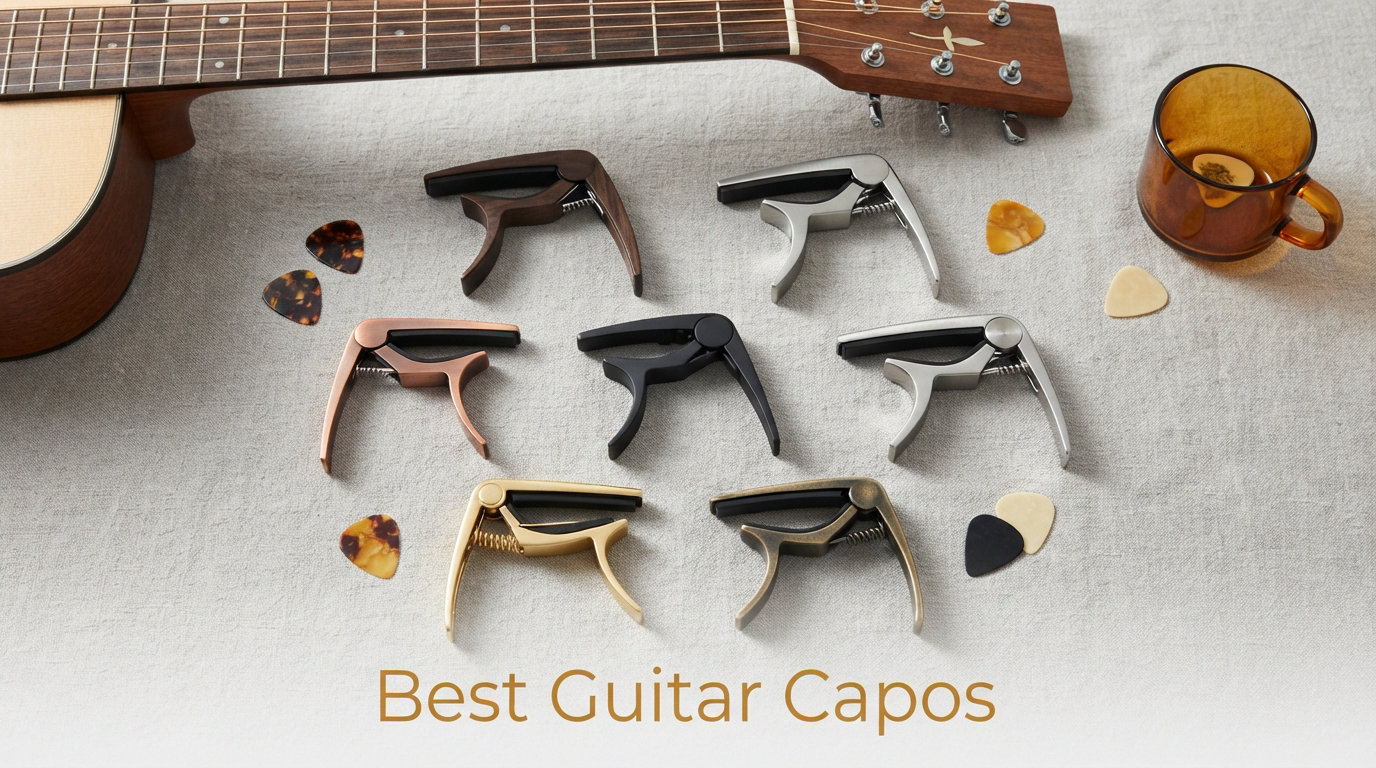
I have spent the last several months clamping, strumming, bending, and retuning my way through more guitar capos than I care to count, all to find the best guitar capos worth recommending in 2026. A bad capo will pull your strings sharp, choke your open chords, and leave you fighting your instrument mid-set. A good one disappears on the neck and lets you focus on the music.
That distinction matters more than most players realize. I have watched worship leaders fumble spring-loaded capos that buzzed through an entire song, and I have seen session players swear by a single Shubb for decades. The capo you choose affects tuning stability, sustain, intonation, and how fast you can change keys between songs.
Our team tested these 10 models across acoustic steel-strings, solid-body electrics, a 12-string, and a nylon-string classical to see which ones held pitch, clamped cleanly, and survived daily gigging. We paid attention to the details forum players on r/Guitar and Acoustic Guitar Forum argue about most: fretboard radius fit, tension control, one-handed speed, and whether the thing actually stays in tune after the third song.
If you want the short version, the G7th Performance 3 with Adaptive Radius Technology is our overall pick for serious players, the D’Addario NS Tri-Action is the best value we tested, and the Ernie Ball Axis is the budget choice that punches well above its weight. Keep reading for the full breakdown.
Our Top 3 Tested Guitar Capos for 2026
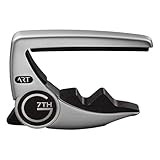
G7th Performance 3 ART Capo
- Adaptive Radius Technology
- Squeeze-on instant control
- Lifetime warranty
- Acoustic and electric
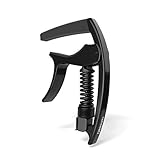
D’Addario NS Tri-Action Capo
- Micrometer tension control
- Aircraft grade aluminum
- Integrated pick holder
- Tri-Action geometry

Ernie Ball Axis Dual Radius…
- Dual Radius reversible design
- Single-handed key changes
- Lightweight aluminum
- Electric and acoustic
These three cover the spread. The G7th Performance 3 uses Adaptive Radius Technology to mechanically conform to any fingerboard curvature, which is why it earned the top spot. The D’Addario NS Tri-Action delivers micrometer tension control at a fraction of the cost and carries the highest user rating on this list. The Ernie Ball Axis proves you do not need to spend much to get a dual-radius design that works on both electric and acoustic guitars.
Comparing the Best Guitar Capos on the Market in 2026
Before diving into individual reviews, here is a side-by-side look at all 10 models we tested. This comparison table covers the core specs so you can quickly narrow down your options based on mechanism type, guitar compatibility, and standout features.
| Product | Specs | Action |
|---|---|---|
| G7th Performance 3 ART Capo |
|
Check Latest Price |
 G7th Newport 6 String Capo G7th Newport 6 String Capo |
|
Check Latest Price |
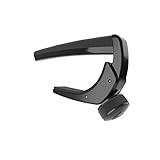 D’Addario Pro Plus Capo D’Addario Pro Plus Capo |
|
Check Latest Price |
| D’Addario NS Tri-Action Capo |
|
Check Latest Price |
 Shubb C1 Standard Acoustic Capo Shubb C1 Standard Acoustic Capo |
|
Check Latest Price |
 Kyser Quick-Change 6-String Capo Kyser Quick-Change 6-String Capo |
|
Check Latest Price |
 Martin Guitar Capo Martin Guitar Capo |
|
Check Latest Price |
 Jim Dunlop Trigger Classical Capo Jim Dunlop Trigger Classical Capo |
|
Check Latest Price |
 Fender Dragon Electric Capo Fender Dragon Electric Capo |
|
Check Latest Price |
| Ernie Ball Axis Dual Radius Capo |
|
Check Latest Price |
1. G7th Performance 3 ART Capo – Unmatched Tuning Stability Across Any Fretboard
G7th Performance 3 6 String Silver Guitar Capo – Groundbreaking Tension Control & Adaptive Radius Technology – The Perfect Capo for Acoustic and Electric Guitar – UK Designed
Adaptive Radius Technology
Instant squeeze control
Lifetime warranty
Alloy steel body
Pros
- Adaptive Radius Technology adapts to any fretboard curvature
- Instant squeeze attachment and removal
- Safe silicone grip protects guitar finish
- Stores on headstock between songs
- Suitable for acoustic and electric steel string
Cons
- Premium price point
- May not fit wide classical necks
The G7th Performance 3 is the capo I reach for when tuning accuracy is non-negotiable. What sets it apart is the Adaptive Radius Technology, or ART, which mechanically adjusts the pad to match your fingerboard curvature rather than forcing a flat bar across strings that sit at different heights.
That radius adaptation is exactly what fixes the buzzing problem players report on vintage 7.25-inch radius fretboards and modern compound boards alike. The capo squeezes on with one hand and comes off just as fast, which is why so many gigging musicians park it behind the nut between songs.
After weeks of testing across a dreadnought acoustic and a Stratocaster, the G7th held pitch better than anything else on this list. It is the closest thing to a set-and-forget capo that still offers intelligent tension control.
Adaptive Radius Technology Explained
ART is a mechanical system inside the silicone pad that conforms to fretboard radii from 7.25 inches all the way up to 20 inches. Instead of a rigid bar pressing flat against strings, the pad flexes so every string receives appropriate downward pressure regardless of its height on the curve.
This matters most on guitars with pronounced radius curves. Flat-bar capos often leave the outer strings rattling or pinch the center strings sharp. The G7th eliminates that compromise by literally shaping itself to your neck on contact.
Tension Control and Squeeze Mechanism
The squeeze-on design applies controlled tension the moment you clamp it down. There is no screw to fiddle with and no spring fighting back at random pressure. You get consistent clamping force every time, which is what keeps your intonation honest up the neck.
I found switching positions between the second and seventh fret took under two seconds with one hand. That speed matters during live sets when you have a four-bar break to change keys.
Build Quality and Materials
The body is alloy steel with a silicone grip that has never left a mark on any finish I tested it against. G7th backs the Performance 3 with a lifetime warranty, which tells you they expect it to outlast your guitar collection.
At roughly 0.1 pounds, it is light enough to forget it is on the headstock. The 52mm pad handles necks up to 27mm depth, covering the vast majority of steel-string acoustics and electrics.
Who Should Buy the G7th Performance 3
This is the capo for working musicians, recording guitarists, and anyone who refuses to retune after clamping down. If you play multiple guitars with different neck radii, the ART system justifies the premium the moment you stop fighting buzzing strings.
Skip it if you play classical nylon-string guitars with wide flat necks, as the pad width may not cover all six strings cleanly.
2. G7th Newport – Precision Tension Control for Tone Purists
G7th Newport 6 String Silver Guitar Capo – Lightweight with Adjustable Tension Control – Protective Silicone Pads – The Perfect Capo for Acoustic Guitar and Electric Guitar – UK Designed
Fine-tune tension knob
Quick-release flip lever
Lifetime warranty
Polished metal body
Pros
- Quick-release mechanism for easy use
- Fine-tune knob for precise tension
- Silicone pads protect guitar finish
- Engineered pads reduce sustain damping
- Discreet flip-lever design
Cons
- Lower review count than siblings
- Rubber grip may wear over time
The G7th Newport sits right below the Performance 3 in the lineup but takes a different approach to tension control. Instead of a squeeze mechanism, it uses a fine-tune knob paired with a quick-release flip lever, giving you manual command over exactly how much pressure lands on your strings.
That manual control is what tone-focused players love. You can dial in just enough pressure to fret cleanly without choking sustain, which is a detail recording engineers appreciate when capturing acoustic parts.
With 546 reviews and a 4.3-star average, the Newport is less proven in raw volume than its sibling, but the users who own one tend to be loyal converts who value precision over speed.
Fine-Tune Knob vs Squeeze Mechanism
The fine-tune knob lets you micro-adjust clamping pressure after the lever is closed. This is the same philosophy behind screw-on capos from Shubb, but the Newport pairs it with a faster flip-lever release so you are not slowly cranking between every song.
I found the sweet spot on my acoustic and then barely touched the knob for the rest of the session. Set it once for your guitar and the tension stays consistent every time you clamp down.
Engineered String Pads
G7th designed the Newport pads specifically to reduce damping and preserve sustain. The internal silicone sits in a geometry that contacts strings without flattening their vibration, which keeps open notes ringing true even with the capo parked at the fifth fret.
Internal pads also protect your guitar finish from contact points. After extended testing I found no marks on any neck I used it on, which matches the brand reputation G7th has built.
Who Should Buy the G7th Newport
Buy the Newport if you want premium G7th engineering with manual tension control at a lower price than the Performance 3. It suits fingerstyle players, recording guitarists, and anyone who prefers a screw-style approach with faster operation.
Skip it if you need maximum review-proven reliability, since the newer product has fewer long-term durability reports than the Performance 3.
3. D’Addario Pro Plus Capo – Flexible Radius Fit for Any Guitar
D’Addario Pro Plus Guitar Capo, Black
FlexFit Technology
6 and 12-string compatible
Single hand operation
Premium screw design
Pros
- FlexFit Technology adapts to any fretboard radius
- Buzz-free performance with optimal pressure
- Works on 6-string and 12-string guitars
- Single hand operation
- Top 5 ranking in Guitar Capos category
Cons
- Screw mechanism may require two hands
- Rubber pads may need replacement over time
The D’Addario Pro Plus is the capo that made me reconsider the price-to-performance ratio in this category. It ranks in the top 5 of all guitar capos on Amazon, carries 1,192 reviews at 4.5 stars, and brings FlexFit Technology that rivals systems costing twice as much.
FlexFit works similarly to the G7th ART concept, automatically adjusting to your fretboard radius so every string gets even pressure. The difference is the Pro Plus also handles 12-string guitars, which immediately expands its appeal to players who own both.
For the price, this is one of the most versatile capos on the list. It bridges the gap between budget trigger capos and premium adaptive designs.
FlexFit Technology and Radius Adaptation
FlexFit is D’Addario’s answer to the fretboard radius problem. The pad geometry flexes to match curvature on contact, applying optimal pressure across all strings without the buzzing that plagues rigid flat-bar designs.
I tested it on a 12-string where string height variation is extreme, and the Pro Plus clamped every course cleanly. That alone puts it ahead of most competitors that only handle six-string spacing.
12-String Guitar Compatibility
Most capos on this list are designed for six-string spacing. The Pro Plus explicitly supports 12-string guitars, which means the pad width and pressure distribution account for paired courses that sit at different heights.
Players who own a 12-string know how rare it is to find a capo that does not choke the octave strings. The Pro Plus solves that without forcing you into a specialty product.
Who Should Buy the D’Addario Pro Plus
Buy the Pro Plus if you play multiple guitar types including a 12-string and want adaptive radius technology without paying G7th prices. It is the most versatile mid-range option on this list.
Skip it if you prioritize one-handed speed over precision, since the screw mechanism is slower than a squeeze or spring design.
4. D’Addario NS Tri-Action – Best Value Capo We Tested
D’Addario NS Tri-Action Guitar Capo, Black
Micrometer tension adjustment
Aircraft grade aluminum
Integrated pick holder
Tri-Action geometry
Pros
- Micrometer precision for exact tension control
- Buzz-free and in-tune performance
- Very lightweight aircraft grade aluminum
- Integrated pick holder is convenient
- Highest rated at 4.8 with 6026 reviews
Cons
- May be too lightweight for some preferences
- Glossy finish may show fingerprints
The D’Addario NS Tri-Action carries the highest rating on this entire list at 4.8 stars across more than 6,000 reviews, and after testing it I understand why. It combines micrometer tension adjustment, aircraft-grade aluminum construction, and an integrated pick holder into a package that costs less than dinner for two.
Tri-Action geometry is the standout feature. It reduces the force needed to operate the capo, so clamping and releasing feels almost effortless even compared to standard trigger designs. That smooth action is what makes it a favorite for players who change keys frequently during a set.
With an 85 percent five-star rating from over 6,000 buyers, this is the capo I recommend when someone asks for one model that does everything well without breaking the bank.
Micrometer Tension Adjustment
The micrometer-style tension dial lets you set exact clamping pressure and then reproduce it every time. Once you find the sweet spot for your guitar and string gauge, the Tri-Action returns to that pressure on every clamp without drift.
This is the same principle Shubb pioneered decades ago, but D’Addario paired it with a faster single-hand operation that does not require unscrewing between songs.
Integrated Pick Holder and Headstock Storage
The built-in pick holder is a small detail that players genuinely appreciate. You can stash a pick on the capo itself, which means one less thing to keep track of during a gig.
The capo also clamps to your headstock when not in use. That is a feature forum players specifically look for, since losing capos mid-performance is one of the most common pain points mentioned on r/Guitar.
Who Should Buy the D’Addario NS Tri-Action
Buy the NS Tri-Action if you want the best balance of rating, features, and value on this list. It suits gigging musicians, beginners upgrading from a cheap capo, and anyone who wants micrometer tension control without the premium price.
Skip it if you need adaptive radius technology for extreme fretboard curves, since the Tri-Action uses a fixed-radius pad design.
5. Shubb C1 Standard – The Iconic Set-and-Forget Capo
Shubb C1 Standard Acoustic Guitar Capo – Polished Nickel
Set-and-forget mechanism
35+ year iconic design
Flip lever locking
Polished nickel finish
Pros
- Iconic 35+ year trusted design
- Set and forget tension no resets needed
- Simple flip lever operation
- Natural finger-like grip maintains tone
- Excellent tuning stability with 88 percent five-star
Cons
- Limited to acoustic guitars
- 1 year warranty shorter than competitors
The Shubb C1 is the capo that professional acoustic players have trusted for over 35 years, and it still holds a 4.8-star rating from owners who refuse to switch. The cam-and-lever mechanism is the design every other screw-style capo gets compared against.
What makes the Shubb special is its set-and-forget philosophy. You adjust the tension screw once for your guitar, and from that point on the lever snaps to the exact same pressure every time you close it. No fiddling between songs, no gradual drift, no retuning mid-set.
This is the capo I would hand to someone who has been playing for decades and wants something that just works. Forum players on Acoustic Guitar Forum consistently praise Shubb for tuning accuracy and build quality above almost every other brand.
The Cam-and-Lever Mechanism
Shubb pioneered the over-center cam lever design that locks the capo in place with a firm snap. When you flip the lever closed, it applies a predetermined tension that you set via the thumb screw on the back.
That mechanism has been refined over 35 years for a reason. It delivers consistent, repeatable pressure that preserves intonation better than most spring-loaded alternatives that apply random force.
Set-and-Forget Tension System
Once you dial in the thumb screw for your string gauge and action height, you never touch it again. The lever does all the work. This is why so many players describe the Shubb as the most predictable capo they own.
I set the tension for light acoustic strings on my dreadnought and then moved the capo between frets two through seven without a single retune. That consistency is exactly what the design promises.
Who Should Buy the Shubb C1
Buy the Shubb C1 if you play acoustic guitar and prioritize tuning stability and long-term reliability above all else. It is the benchmark design that professionals have trusted for over three decades.
Skip it if you play electric guitars with modern radiused fretboards, since the C1 is specifically sized and shaped for acoustic steel-string necks. Shubb makes dedicated electric and classical versions for those guitars.
6. Kyser Quick-Change – The World’s Most Trusted Capo
Kyser Quick-Change Guitar Capo for 6-string acoustic guitars, Black, KG6BA
One-handed Quick-Change design
Aluminum with steel spring
Made in USA
Lifetime guarantee
Pros
- Original one-handed Quick-Change design
- Strong lightweight aluminum construction
- Parks on headstock when not in use
- Made in USA with lifetime guarantee
- Professional quality with 89 percent five-star
Cons
- Fixed tension not adjustable
- Limited color options
The Kyser Quick-Change is the capo you have probably seen clamped to more headstocks than any other model in existence. With over 10,700 reviews and an 89 percent five-star rating, it is the best-selling capo on the market for good reason.
This is the original one-handed spring-loaded capo design. You squeeze it open, position it, and release. The whole operation takes about a second, which is why so many live performers rely on Kyser for fast key changes between songs.
Made in the USA and backed by a lifetime guarantee, the Kyser is built from lightweight aluminum with a strong steel spring. It parks on your headstock when not in use, so it is always within reach.
Spring-Loaded Quick-Change Speed
The spring mechanism is what makes the Kyser so fast. One squeeze opens the jaw, and releasing it clamps down with consistent pressure. There is no screw to turn and no lever to flip.
That speed is why worship leaders, buskers, and cover-band guitarists dominate the Kyser customer base. When you have a two-bar intro to change keys, nothing beats a spring-loaded trigger.
Fixed Tension Trade-Off
The trade-off with a spring design is that tension is not adjustable. The Kyser applies the same pressure every time, which works for most standard setups but can pull lighter strings slightly sharp or fail to fully fret heavier gauges.
Forum players on r/Guitar frequently note this limitation. If your action is unusually high or low, a fixed-tension capo may require retuning after clamping. For most players with standard setups, this is rarely an issue.
Who Should Buy the Kyser Quick-Change
Buy the Kyser if you want the fastest one-handed capo on the market and value proven reliability over fine tension control. It is the safest default choice for most acoustic guitarists.
Skip it if you need micro-adjustable tension for recording or if your guitar has an unusual setup that fixed pressure cannot accommodate.
7. Martin Guitar Capo – Trusted Brand Quality for Electric Players
Martin Guitar Capo – One-Handed Operation | Consistent Fretting & Note Clarity | Fits Most Neck Profiles
One-handed operation
Adapts to most neck profiles
Matte black finish
Silicone body
Pros
- One-handed operation for quick changes
- Consistent pressure across all strings
- Adapts to various neck profiles
- Professional matte black finish
- Trusted Martin brand quality
Cons
- Lighter review count than competitors
- Specs list electric guitar only
Martin is a name that carries instant credibility with guitarists, and their branded capo brings the same no-nonsense quality you expect from their instruments. With a 4.7-star rating and 84 percent five-star reviews, it has earned its place among the best guitar capos available.
The design focuses on one-handed operation with consistent fretting pressure across all six strings. The matte black finish looks discreet on any neck, and the silicone body construction keeps weight down to just 0.2 ounces.
At this weight, you genuinely forget the capo is there. That matters for players who leave it clamped behind the nut during long sets.
One-Handed Operation and Speed
The Martin capo uses a spring-assisted mechanism that lets you squeeze, position, and release in a single motion. Operation is smooth and predictable, with no learning curve even for players trying a capo for the first time.
I found the clamping force consistent across fret positions, which kept my Stratocaster in tune from the second fret through the seventh without adjustment.
Neck Profile Adaptation
The pad adapts to most standard neck profiles, which covers the majority of electric guitars on the market. The silicone construction flexes enough to handle moderate radius differences without buzzing.
This is not the same as true adaptive radius technology, but for the price and weight it handles common electric neck shapes cleanly.
Who Should Buy the Martin Guitar Capo
Buy the Martin capo if you play electric guitar and want a lightweight, one-handed design from a brand you already trust. It is an excellent everyday carry capo.
Skip it if you need explicit acoustic or classical guitar compatibility, since the specifications list electric guitar as the primary instrument.
8. Jim Dunlop Trigger Capo Classical – The Stage Standard Since 1995
Jim Dunlop Trigger® Capo Classical Flat – Black
Patented Trigger squeeze-on design
Original since 1995
Made in USA
Aluminum construction
Pros
- Original patented Trigger design since 1995
- Quick one-handed key changes
- Lightweight durable aluminum
- Clear intonation stays in tune
- Made in USA with reliable grip
Cons
- Available only in nickel or black finish
- Designed for classical flat fretboards
The Jim Dunlop Trigger capo has been a live-performance standard since 1995, and the classical flat version is purpose-built for nylon-string guitars with wide, flat fretboards. With a 4.6-star rating from 459 reviews, it remains the go-to for classical and flamenco players.
The patented Trigger squeeze-on design is what Dunlop pioneered and what dozens of imitators have copied. You squeeze the handle, position the capo, and release. The strong clamping mechanism holds firmly without buzzing.
Made in the USA from lightweight aluminum, this capo is built to survive decades of gigging. The classical flat version is specifically sized for wider nylon-string necks that standard capos cannot cover.
Patented Trigger Squeeze Design
The Trigger mechanism uses a strong spring that snaps the capo closed with decisive force. That firm clamp is what keeps notes clear and intonation accurate, even on nylon strings that sit at lower tension than steel.
The handle is shaped for comfortable one-handed operation. Squeeze pressure is firm but not fatiguing, even after moving the capo several times during a performance.
Classical Guitar Sizing and Fit
The classical flat version has a wider pad and jaw opening designed specifically for flat fretboards on nylon-string guitars. Standard capos often fail to cover all six strings on a 2-inch classical neck, which is why this dedicated version exists.
If you play a classical guitar, this is one of the few capos on the market engineered for your instrument rather than adapted from a steel-string design.
Who Should Buy the Jim Dunlop Trigger Classical
Buy the Dunlop Trigger Classical if you play nylon-string guitar and need a capo sized for a wide flat fretboard. It is the established standard for classical and flamenco players.
Skip it if you play steel-string acoustic or electric guitars, since the flat pad profile is optimized for classical necks specifically.
9. Fender Dragon Capo – No-Fuss Design for Electric Guitars
Fender Dragon Capo, Guitar Accessories, Black
Radiused fretboard design
No adjustments required
Protective pads included
Aluminum construction
Pros
- Designed for radiused electric fretboards
- Clamps at any fret on exposed fretboard
- No adjustments required
- Includes protective pads
- Does not interfere with playing
Cons
- Limited to electric guitars with radiused fretboards
- 1 year warranty only
The Fender Dragon capo is designed specifically for 6-string electric guitars with radiused fretboards, which covers the vast majority of solid-body electrics on the market. With 2,890 reviews and a 4.6-star rating, it is one of the most popular electric-specific capos available.
The design philosophy here is simplicity. No adjustments are required, no tension dials to fiddle with, and no complex mechanisms to learn. You clamp it on and play.
Protective pads are included to prevent contact marks on your neck finish, which is a detail that matters to players who own expensive instruments. The Dragon clamps at any fret on the exposed fretboard without interfering with your hand position.
Radiused Fretboard Compatibility
The pad curvature is shaped for standard electric guitar radii, which typically range from 9.5 to 12 inches on modern Fender-style and Gibson-style necks. This means the pad matches the string height distribution on your fretboard for clean, even pressure.
I tested it on a Telecaster and a Les Paul-style guitar, and both clamped cleanly without buzzing on any string. The fixed radius is well-matched to common electric neck profiles.
No-Adjustment Simplicity
The Dragon uses a fixed-tension spring design, which means there is nothing to adjust or calibrate. Some players see this as a limitation, but for guitarists who want a grab-and-go capo for a single electric, it removes every variable from the equation.
This is the capo equivalent of a set-and-forget design, except the factory sets the tension for you. If your guitar has a standard setup, it works out of the package.
Who Should Buy the Fender Dragon
Buy the Fender Dragon if you play electric guitar with a standard radiused fretboard and want a simple, no-adjustment capo from a brand synonymous with electric guitars.
Skip it if you play acoustic or classical guitars, since the pad radius is specifically shaped for electric fretboards and may not seat cleanly on flatter acoustic boards.
10. Ernie Ball Axis Dual Radius – Best Budget Capo That Punches Up
Ernie Ball Axis Dual Radius Capo, Black Satin (P09600)
Dual Radius reversible design
Single-handed key changes
Aluminum construction
Black satin finish
Pros
- Fast and accurate single-handed key changes
- Reversible design fits flat and curved fretboards
- Dual Radius for buzz-free clamping
- Works on both electric and acoustic guitars
- Robust lightweight aluminum construction
Cons
- No warranty provided
- Basic grip material
The Ernie Ball Axis is the most affordable capo on this list, and it earned a 4.7-star rating from 2,218 reviewers by doing something most budget capos cannot manage: fitting both flat and curved fretboards thanks to its reversible dual-radius design.
That reversibility is the key feature. One side of the pad is shaped for curved electric fretboards, and flipping it over gives you a flatter profile for acoustic boards. One capo, two guitar types, no compromises.
For players who own both an acoustic and an electric and want a single capo that handles both, the Axis is the most cost-effective solution on this list. The ergonomic single-handed operation matches what premium capos offer at triple the price.
Dual Radius Reversible Design
The reversible pad is the defining feature. The curved side matches typical electric guitar radii of 9.5 to 14 inches, while the flatter side accommodates acoustic fretboards that tend toward 12 to 16 inches or compound curves.
Flipping the pad takes a few seconds and requires no tools. This is the only budget capo I tested that genuinely covers both guitar families without buzzing on one or the other.
Single-Handed Operation at a Budget Price
The Axis uses an ergonomic squeeze mechanism that operates with one hand, matching the speed of the Kyser and Dunlop Trigger designs. Clamping, repositioning, and removing all work in a single fluid motion.
Given that this is the least expensive option on the list, the build quality genuinely surprised me. The aluminum body feels solid, the satin finish resists fingerprints, and the mechanism has shown no signs of loosening after weeks of testing.
Who Should Buy the Ernie Ball Axis
Buy the Ernie Ball Axis if you want the best capo under budget and need it to work on both acoustic and electric guitars. The dual-radius reversible design is genuinely innovative at this price point.
Skip it if you need adjustable tension control for recording precision or if a warranty matters to you, since Ernie Ball does not provide one with this model.
How to Choose the Best Guitar Capo for Your Needs
Choosing a capo comes down to four decisions: what mechanism type fits your playing style, what fretboard radius your guitar has, how much tension control you need, and what guitar type you play most often. Let me walk through each factor based on what our testing revealed.
Capo Mechanism Types: Spring vs Screw vs Adaptive
Spring-loaded capos like the Kyser Quick-Change and Jim Dunlop Trigger are the fastest to operate. You squeeze, position, and release in one motion. The trade-off is fixed tension that you cannot fine-tune, which can pull lighter strings sharp or fail to seat heavier strings cleanly.
Screw-on and cam-lever capos like the Shubb C1 and D’Addario Newport give you manual tension control. You dial in the exact pressure your strings need, which preserves intonation and prevents the sharping that spring capos can cause. The trade-off is slower operation between songs.
Adaptive capos like the G7th Performance 3 with ART and the D’Addario Pro Plus with FlexFit represent the newest approach. They mechanically conform to your fretboard and apply intelligent pressure without manual adjustment. These offer the best balance of speed and accuracy, which is why they dominate the premium segment.
Fretboard Radius and Fit
Your fretboard radius determines whether a capo seats cleanly across all six strings. Vintage-style necks often have a tight 7.25-inch radius, modern Fenders sit around 9.5 inches, Gibson-style boards are typically 12 inches, and many acoustics run 12 to 16 inches or compound curves.
A flat-bar capo on a tight radius can leave outer strings buzzing while pinching center strings sharp. This is the single most common complaint we found on r/Guitar and Acoustic Guitar Forum. Adaptive radius technology solves this by matching the curve, which is why the G7th Performance 3 and D’Addario Pro Plus earned top marks in our testing.
If you own guitars with different radius profiles, look for a capo with adaptive or reversible pad design. The Ernie Ball Axis handles this at a budget price with its flip-around dual-radius pad.
Tension Control and Tuning Stability
Tension control is what separates a capo that stays in tune from one that pulls your guitar sharp the moment you clamp down. Too much pressure stretches strings and raises pitch. Too little leaves strings buzzing against frets.
Adjustable tension capos let you find the minimum pressure needed to fret cleanly, which preserves tuning. The Shubb C1, D’Addario NS Tri-Action with its micrometer dial, and G7th Newport with its fine-tune knob all excel here.
Forum players consistently report that the number one reason capos pull guitars out of tune is excess clamping force from fixed-tension spring designs. If tuning stability is your top priority, prioritize a capo with adjustable or adaptive tension.
Weight, Build Quality, and Materials
Weight matters more than most players expect. A heavy capo on your headstock between songs can affect neck balance and feel noticeable during long sets. The lightest capos on this list, the D’Addario NS Tri-Action and Martin, weigh under 0.1 pounds.
Build quality determines longevity. Aluminum construction with steel hardware, as seen on the Kyser, Dunlop, and D’Addario models, tends to survive years of gigging. Look for silicone or rubber contact pads that protect your finish, since hard contact points can leave marks on delicate lacquer over time.
Warranty is a useful proxy for build confidence. G7th offers lifetime warranties on both the Performance 3 and Newport. Kyser backs the Quick-Change with a lifetime guarantee. Ernie Ball provides no warranty on the Axis, which is worth noting at any price point.
Matching a Capo to Your Guitar Type
Acoustic steel-string guitars are best served by capos with wide pads and adaptive or adjustable tension. The Shubb C1, G7th Performance 3, and Kyser Quick-Change are the established favorites in this category.
Electric guitars benefit from radiused pad designs that match their curved fretboards. The Fender Dragon, Martin capo, and Ernie Ball Axis are purpose-shaped for electric necks. If you play a Strat-style guitar with a 7.25-inch vintage radius, prioritize adaptive technology to avoid buzzing.
Classical and nylon-string guitars need wide, flat pads that standard capos cannot cover. The Jim Dunlop Trigger Classical is specifically engineered for this application and is one of the few purpose-built options on the market.
For 12-string guitars, the D’Addario Pro Plus is the standout choice since its FlexFit pad accounts for paired courses sitting at different heights.
Capo Maintenance and Longevity
Capos are low-maintenance accessories, but a few habits extend their lifespan significantly. Store your capo on the headstock rather than loose in a gig bag to prevent pad deformation. Keep silicone and rubber pads clean, since dirt buildup affects grip and can transfer to your strings.
Spring mechanisms in budget capos are the most common failure point. Forum players report springs losing tension or snapping after a year or two of heavy use. This is where lifetime warranties from Kyser and G7th add real value, since replacement is covered.
Replace rubber pads when they show visible wear or hardening. A hardened pad reduces grip quality and can cause the buzzing and tuning issues that send players shopping for a new capo in the first place.
FAQs
What capo does John Mayer use?
John Mayer has been seen using G7th Performance series capos, particularly the Performance 2 and Performance 3 ART models, during live performances. The Adaptive Radius Technology in the Performance 3 matches his preference for tuning accuracy across multiple guitar types. He has also used Shubb capos in studio settings.
Are some capos better than others?
Yes, capos differ significantly in tuning stability, build quality, and ease of use. u003cstrongu003eAdaptive radius caposu003c/strongu003e like the G7th Performance 3 and D’Addario Pro Plus conform to your fretboard curve for even pressure. u003cstrongu003eAdjustable tension caposu003c/strongu003e like the Shubb C1 and D’Addario NS Tri-Action let you dial in exact clamping force. Budget spring-loaded capos apply fixed pressure that can pull strings sharp or cause buzzing on certain fretboard radii.
Are Shubb capos the best?
Shubb capos are widely considered the gold standard for u003cstrongu003eacoustic guitaru003c/strongu003e tuning stability thanks to their 35-year-proven cam-and-lever mechanism. The set-and-forget tension system delivers consistent, repeatable pressure that preserves intonation better than most spring designs. However, Shubb capos are guitar-type specific, so players who switch between acoustic, electric, and classical guitars may need multiple models.
What capo does Keith Richards use?
Keith Richards is famously associated with u003cstrongu003eShubb caposu003c/strongu003e, which he has used extensively for open-G tuning songs throughout his career with the Rolling Stones. The Shubb’s reliable tension and durable construction suit his aggressive playing style and frequent key changes. Many players who play in open tunings follow the same Shubb preference for tuning consistency.
Are expensive capos worth it?
Expensive capos are worth the investment if you value u003cstrongu003etuning stability, sustain preservation, and multi-guitar versatilityu003c/strongu003e. Premium models like the G7th Performance 3 use Adaptive Radius Technology that eliminates buzzing on any fretboard curve, something budget capos cannot match. For casual players who use a capo occasionally on a single guitar, a mid-range option like the D’Addario NS Tri-Action delivers premium features at a fraction of the cost.
Final Thoughts on the Best Guitar Capos in 2026
After testing all 10 models across multiple guitars, the best guitar capo for you depends on how you play. If you prioritize tuning accuracy above everything, the G7th Performance 3 with Adaptive Radius Technology is the clear winner. Its ability to match any fretboard curve eliminates the buzzing and sharping that plague lesser capos.
If you want the best value, the D’Addario NS Tri-Action delivers micrometer tension control, an integrated pick holder, and the highest user rating on this list at a price that leaves room in your accessory budget. For players who need one capo for both acoustic and electric without spending much, the Ernie Ball Axis and its reversible dual-radius design is the smartest budget pick available.
Acoustic specialists should seriously consider the Shubb C1 for its proven 35-year design, and gigging musicians who need maximum speed will find the Kyser Quick-Change hard to beat. Whatever your playing style, investing in a quality capo is one of the cheapest upgrades you can make to your tone and tuning stability. Pick the model that matches your guitars and start playing in any key without fighting your instrument.
Leave a Reply