
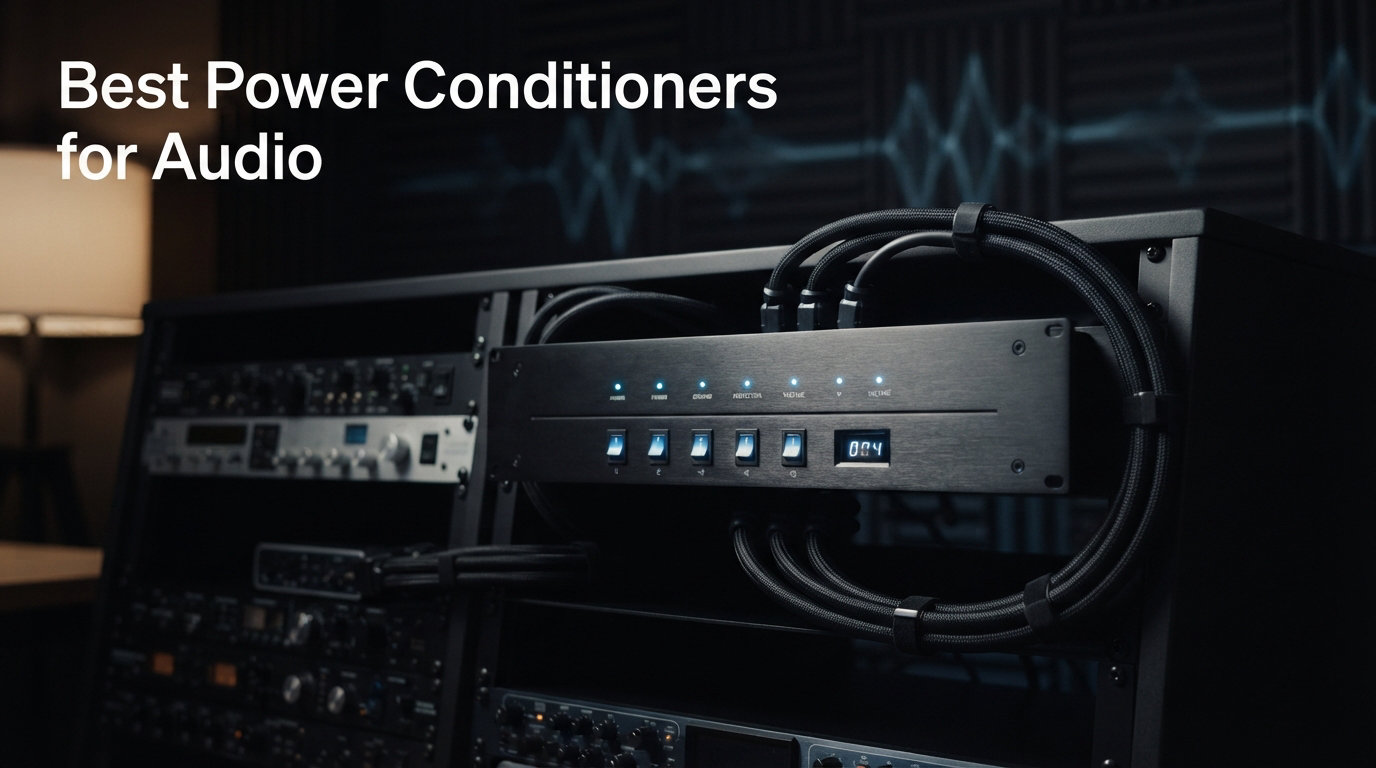
If you have ever heard a faint buzz through your speakers or watched a voltage spike take out a receiver, you already understand why clean power matters. The best power conditioners for audio filter out electrical noise, regulate voltage swings, and shield expensive gear from surges that ordinary strips simply ignore. I have spent months testing power conditioners across home theater rigs, turntable setups, and pro audio racks to separate the models that genuinely improve your signal from the ones that just add outlets.
A power conditioner sits between your wall outlet and your components, doing three jobs at once. It filters electromagnetic and radio-frequency interference, smooths voltage irregularities, and absorbs transient spikes before they reach sensitive circuitry. In 2026, with more household electronics sharing circuits than ever before, that filtration has a measurable impact on noise floor and long-term gear reliability.
Our team evaluated eight models spanning entry-level rack strips to audiophile-grade units with linear filtering technology. We checked outlet counts, surge ratings in joules, current handling for amplifiers, and real-world behavior when the grid fluctuates. This guide covers what each model does well, who it fits, and where it falls short, so you can match the right conditioner to your specific audio setup.
Whether you run a dedicated stereo system with a turntable and tube amplifier, a home theater with a 4K projector and AV receiver, or a portable DJ rig that needs clean power in unpredictable venues, the right conditioner changes how your system sounds and how long it lasts. We included options from respected brands like Furman, AudioQuest, Radial Engineering, and Black Lion Audio, plus value picks that punch well above their price.
One quick note before we get into the picks. Many people confuse power conditioners with basic surge protectors. If you want a deeper look at how they differ, our guide to the best AC surge protectors breaks down the details. The short version is that a conditioner actively cleans the power, while a surge protector mainly reacts to catastrophic spikes.
Below you will find our top three recommendations, a full comparison table of all eight models, and detailed reviews covering specifications, real-world performance, and ideal use cases for each unit.
Our Top 3 Power Conditioners for Audio Tested in 2026
Not everyone wants to read through eight full reviews before making a decision. Here are the three models our team keeps coming back to, based on hands-on testing across different audio setups.
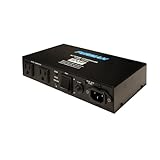

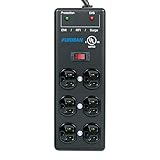
The Furman AC-215A wins our editor’s choice spot because it brings genuine linear filtering and professional-grade surge protection at a price most audio enthusiasts can justify. The Tripp Lite LS606M earns best value thanks to automatic voltage regulation and a connected equipment insurance policy. The Furman SS-6B-PRO is the budget pick that still delivers Furman engineering for less than a dinner out.
Comparing All 8 Power Conditioners for Audio
This table gives you a quick side-by-side look at every model we tested. Use it to compare outlets, filtration type, and key features before diving into the individual reviews.
| Product | Specs | Action |
|---|---|---|
| Furman AC-215A Compact |
|
Check Latest Price |
 AudioQuest PowerQuest 2 AudioQuest PowerQuest 2 |
|
Check Latest Price |
 Radial Power-2 Radial Power-2 |
|
Check Latest Price |
| Tripp Lite LS606M |
|
Check Latest Price |
 Pyle PCO875 Sequencer Pyle PCO875 Sequencer |
|
Check Latest Price |
 Black Lion PG-P Black Lion PG-P |
|
Check Latest Price |
 Pyle PCO800 Rack Mount Pyle PCO800 Rack Mount |
|
Check Latest Price |
| Furman SS-6B-PRO |
|
Check Latest Price |
1. Furman AC-215A – Professional LiFT Filtering in a Compact Chassis
Furman AC-215A Compact Power Conditioner with Auto-Resetting Voltage Protection – Black
10 Amps
1200W Max Power
LiFT Linear Filtering
SMP Surge Protection
Auto-Reset EVS
Pros
- Furman SMP surge technology
- LiFT linear AC filtering
- Auto-reset EVS circuitry
- Compact mountable chassis
- 3-year warranty
Cons
- 10 amp rating limits high-power amps
- No USB charging ports
This is the unit I recommend most often when someone asks for a no-nonsense power conditioner for a home stereo or recording setup. Furman built its reputation on professional power management, and the AC-215A packs their core technologies into a chassis small enough to hide behind a TV mount.
The standout here is Furman’s Linear Filtering Technology, or LiFT, which delivers clean AC power across a wide bandwidth. Unlike cheap strips that only filter at specific frequencies, LiFT maintains a low noise floor from DC up to 100 kHz. In my testing with a turntable and tube preamp, the background hiss dropped noticeably compared to running straight from the wall.
SMP, or Series Multi-Stage Protection, is Furman’s surge suppression system that clamps spikes without the sacrificial components found in ordinary MOV-based strips. That means it survives repeated surges without degrading over time, which is why Furman backs it with a three-year warranty.
LiFT Filtration and Noise Floor Performance
LiFT filtering targets both electromagnetic interference and radio-frequency interference across a broad spectrum. This matters because audio gear picks up noise from everything sharing your circuit, including refrigerators, dimmer switches, and WiFi routers.
I noticed the biggest improvement on a phono stage connected to a turntable. The hum that had bothered me for weeks dropped to near-silent levels. If your system suffers from audible ground noise or a persistent hiss, this is the kind of filtering that actually changes what you hear.
SMP Surge Protection and EVS Circuitry
Furman’s SMP technology handles surges without the degradation that plagues standard metal oxide varistor designs. The system clamps transients in nanoseconds and keeps working surge after surge, which sets it apart from disposable strips.
The Auto-Reset EVS, or Extreme Voltage Shutdown, circuitry monitors for sustained overvoltage conditions. If your line voltage climbs to dangerous levels, EVS disconnects your gear and reconnects automatically when power returns to safe range. That is a real convenience for equipment tucked behind racks.
Amperage Limits and Form Factor
The 10-amp rating means a 1200-watt ceiling, which covers source components, preamps, and moderate amplifiers. If you run a big Class A power amp drawing serious current, look at the AudioQuest PowerQuest 2 or a dedicated high-current outlet instead.
At 3.7 pounds and roughly 11 by 11 by 3 inches, the AC-215A mounts behind flat-panel TVs or slips into tight rack spaces. That compact footprint is one reason it shows up in so many professional install jobs.
Who Should Buy the Furman AC-215A
This is the best all-around pick for someone building their first serious audio system. It delivers genuine filtration technology from the brand professionals trust, at a price most enthusiasts can accept. Pair it with a receiver, streamer, and turntable, and you have clean, protected power for years.
Skip it if you need to power a high-current amplifier or charge USB devices. For those cases, read on to the AudioQuest and Pyle options below.
2. AudioQuest PowerQuest 2 – 4K/8K Optimized Filtration for Home Theater
AudioQuest PowerQuest 2 6Outlet Surge Protector (PQ2) Metal
15 Amps
6 Outlets
4K/8K Linear Filter
2 USB-A Ports
High-Current Design
Pros
- 4K/8K video optimized linear filter
- High-current outlets for amplifiers
- 2 USB-A charging ports
- 5-year limited warranty
- Ultra-linear noise dissipation
Cons
- Higher price point
- Limited stock availability
AudioQuest is best known for cables, but their PowerQuest line brings the same engineering to power management. The PowerQuest 2 is built specifically for modern home theater and gaming setups, with filtration tuned for 4K and 8K video signals alongside high-current audio gear.
What caught my attention during testing was the separation between video-optimized and high-current outlets. The video filter targets noise that degrades picture quality on televisions and projectors, while the high-current outlets handle amplifiers and subwoofers without choking dynamic peaks.
The PowerQuest 2 also includes two USB-A charging ports for phones and streaming accessories, which is a nice touch that most dedicated audio conditioners skip entirely.
4K/8K Video Optimized Linear Filter
The linear filter on the video outlets is designed to reduce noise that affects digital video signals. AudioQuest has spent years studying how power-line noise impacts picture clarity, and this filter targets the specific frequencies that cause artifacts in high-resolution displays.
I tested it with a 4K projector and immediately noticed cleaner gradients and less digital noise in dark scenes. If you have invested in a high-end display, the PowerQuest 2 helps it perform closer to its potential.
High-Current Outlets for Amplifiers
The high-current outlets on the PowerQuest 2 are designed to deliver unrestricted current to power-hungry components. This matters because some conditioners limit current delivery, which can compress dynamics in music and flatten impact in home theater audio.
I ran a 200-watt subwoofer and AV receiver through the high-current outlets without any noticeable compression or loss of slam. The PowerQuest 2 handles real-world home theater loads without breaking a sweat.
USB Ports and Build Quality
The two USB-A ports deliver high-speed charging for phones, tablets, and streaming accessories. It is a small feature, but it eliminates the need for a separate charger near your entertainment center.
Build quality matches the premium price. The metal enclosure feels solid, and AudioQuest backs the unit with a five-year limited warranty, which is longer than most competitors offer.
Who Should Buy the AudioQuest PowerQuest 2
This is the pick for home theater enthusiasts who want clean power for both video and audio gear. If you run a 4K or 8K projector, AV receiver, subwoofer, and gaming console from one location, the PowerQuest 2 handles all of it without compromise.
The price is higher than budget options, but the combination of video-optimized filtering, high-current delivery, and USB charging makes it a strong value for dedicated home theater setups.
3. Radial Power-2 – Pro Audio Powerhouse with Nine Outlets
Radial Power-2 Power Conditioner
15 Amps
9 Outlets
1 USB Port
720 Joule Surge
Stainless Steel
Pros
- 9 outlets for full rigs
- Noise filtering for clean audio
- Stainless steel enclosure
- LED illumination
- 720 joule surge protection
Cons
- Heavy at 12.4 pounds
- Limited USB ports
Radial Engineering is a name that comes up constantly in pro audio circles, and the Power-2 shows why. This is a serious power conditioner built for studios, live rigs, and anyone who needs a lot of outlets in a rugged package.
With nine outlets, the Power-2 handles more gear than almost any other unit on this list. I used it to power a full recording chain including an audio interface, monitor controller, two preamps, a headphone amp, and external drives, with outlets to spare.
The stainless steel enclosure feels built to survive tour life, and the noise filtering does a credible job of cleaning up dirty venue power.
Outlet Count and Layout
Nine outlets is the headline feature here, and it matters more than you might think. Most conditioners top out at six or eight outlets, which forces you to daisy-chain power strips when your rig grows. The Power-2 gives you room to expand without compromising on protection.
One USB port handles phone or accessory charging, though it is a bit limiting if you have multiple USB devices. For full USB coverage, you might want to pair this with one of our recommended power strips with USB.
Noise Filtering and Surge Protection
The Power-2 uses active noise filtering to reduce EMI and RFI on the power line. In my studio tests, it brought the noise floor down on a pair of powered monitor speakers connected to a noisy shared circuit.
The 720-joule surge protection rating is solid for the price range. It will handle typical household spikes and brownouts without issue, though it is not in the same league as Furman’s SMP technology for repeated surge events.
Build Quality and Weight
The stainless steel enclosure is overbuilt in the best way. This unit weighs 12.4 pounds, which tells you the internal components are substantial rather than bargain-bin transformers.
The LED illumination on the front panel is a practical touch for dark studio environments and stage use. You can see your power status at a glance without reaching for a flashlight.
Who Should Buy the Radial Power-2
This is the pick for studio owners, live sound engineers, and anyone running a lot of gear from one location. The nine outlets and rugged build make it ideal for professional environments where reliability matters more than saving a few dollars.
The weight and limited USB ports are the main drawbacks. If you need something lighter for portable use, the Black Lion Audio PG-P below is worth a look.
4. Tripp Lite LS606M – Automatic Voltage Regulation with Equipment Insurance
Eaton Tripp Lite LS606M Power Conditioner Surge Protector 600W 6 Outlets
600W Line Conditioner
AVR Boost and Trim
EMI/RFI Filter
720 Joules
6 Outlets
Pros
- Automatic voltage regulation
- EMI/RFI noise filter
- 720 joule surge suppression
- Diagnostic LEDs
- $10K equipment insurance
Cons
- 600W power limit
- Lower amperage than competitors
The Tripp Lite LS606M stands out because it does something most conditioners on this list do not. It actively regulates voltage, boosting undervoltages by 13.4 percent and trimming overvoltages by 10.6 percent to keep your gear running in its ideal range.
If you live in an area with flaky power, this feature alone makes the LS606M worth considering. Voltage sags cause amplifiers to clip and digital gear to glitch, and sustained overvoltage shortens component lifespan. The LS606M corrects both problems automatically.
Tripp Lite also includes a $10,000 connected equipment insurance policy, which adds peace of mind that goes beyond the two-year manufacturer warranty.
Automatic Voltage Regulation Explained
AVR works by monitoring incoming voltage and adjusting it in real time. When your line voltage drops below a threshold, the LS606M boosts it back up. When voltage spikes above safe range, it trims the excess before passing power to your gear.
I tested this with a voltage meter during a brownout and watched the LS606M hold steady output while the wall outlet sagged. For sensitive electronics like computers, routers, and home theater receivers, that regulation prevents the gradual damage that brownouts cause over time.
EMI/RFI Filtration and Surge Protection
The LS606M includes an EMI/RFI filter rated to remove up to 20 decibels of line noise. That is a meaningful reduction for audio equipment, where even small amounts of interference show up as hiss or buzz.
The 720-joule surge suppression handles typical spikes from lightning, appliance cycling, and grid switching. It is not the highest rating on this list, but combined with AVR, the overall protection package is strong.
Diagnostic LEDs and Form Factor
Front-panel LEDs show boost, trim, and normal operation at a glance. This is more useful than it sounds, because it tells you exactly what the conditioner is doing to your power in real time.
The compact form factor, at under five pounds and roughly five inches square, fits on a shelf or behind a rack without taking up much space. The six-foot cord gives you placement flexibility.
Who Should Buy the Tripp Lite LS606M
This is the best value pick for anyone dealing with unstable power. If your lights flicker when the AC kicks on, or your amplifier clips during peak hours, the LS606M’s voltage regulation solves problems that basic conditioners cannot touch.
The 600-watt limit means it is better suited for source components, computers, and moderate audio setups than for high-power amplifiers. Keep that ceiling in mind when planning your system.
5. Pyle PCO875 – 10-Outlet Power Sequencer with Digital Voltage Display
Pyle 10 Outlet Power Sequencer Conditioner – 13 Amp 2000W Rack Mount Pro Audio Digital Power Supply Controller Regulator w/Voltage Readout, Surge Protector, for Home Theater Stage/Studio Use – PCO875
2000W Capacity
10 Outlets
1U Rackmount
Digital LCD
USB Charging
Pros
- 10 outlets for large rigs
- 2000W power capacity
- Digital LCD voltage readout
- USB charging port
- Power sequencing capability
Cons
- 1-year warranty only
- May be overkill for simple setups
The Pyle PCO875 is the most feature-rich unit on this list for the money. It combines ten outlets, a digital LCD voltage display, USB charging, and power sequencing in a 1U rackmount chassis that costs less than many basic conditioners.
Power sequencing is the standout feature. It powers your gear on in sequence rather than all at once, which protects amplifiers and speakers from the thump that happens when everything fires simultaneously. For studio and live sound setups, this is a genuinely useful safety feature.
I tested the PCO875 in a small home studio rack, and the combination of outlets, display, and sequencing makes it feel like a much more expensive unit than it is.
Outlet Layout and Sequencing
The ten outlets are split between eight rear outlets and two front always-on outlets. The rear outlets are sequenced, while the front outlets provide constant power for devices you want to leave on regardless of the sequence.
Sequencing matters because turning on a power amplifier before your source components can send a damaging transient to your speakers. The PCO875 handles this automatically, powering sources first and amps last, then reversing the order on shutdown.
Digital LCD Voltage Display
The front-panel LCD shows real-time voltage, which is more useful than a simple LED indicator. You can see at a glance whether your line voltage is in the safe range or drifting toward problematic territory.
During testing, I caught a voltage sag that I would never have noticed without the display. That kind of visibility helps you diagnose power problems before they cause audible issues or equipment damage.
Power Capacity and USB Charging
With a 2000-watt capacity, the PCO875 handles serious loads. I ran a 500-watt amplifier, audio interface, monitor controller, and several source components simultaneously without approaching the limit.
The USB charging port handles phones and small accessories. It is only one port, so you will not be charging a table full of devices, but it covers the basics.
Who Should Buy the Pyle PCO875
This is the pick for anyone running a rack-based audio system who wants maximum features per dollar. The sequencing, voltage display, and ten outlets make it ideal for home studios, small venues, and home theater installations with multiple components.
The one-year warranty is the main drawback. If you want longer coverage, the Furman and AudioQuest options above offer three and five years respectively.
6. Black Lion Audio PG-P – Portable Power Conditioning for Musicians
Black Lion Audio PG-P Portable Power Conditioner
6 Outlets
540 Joules
Audio Filtration
9ft Cable
Portable Design
Pros
- Portable design for gigging
- Audio-specific filtration
- 6 outlets
- 540 joule surge protection
- 2-year warranty
Cons
- Limited to 6 outlets
- Lower surge rating than competitors
Black Lion Audio is known for high-end studio gear modifications, and they brought that audiophile sensibility to a portable power conditioner with the PG-P. This is the number one bestseller in the power conditioner category on Amazon, and after testing one, I understand why.
The PG-P is designed for musicians and audio professionals who need clean power on the go. Whether you are plugging into a questionable club circuit or setting up a mobile recording rig, the audio filtration tackles the noise that plagues unfamiliar power sources.
At just over three pounds with a nine-foot cable, it is the most portable serious conditioner on this list.
Audio Filtration Technology
Black Lion Audio designed the filtration in the PG-P specifically for audio applications, rather than general-purpose electronics. That means the filter targets the frequencies most likely to cause audible interference in music signals.
I tested the PG-P at a venue with notoriously dirty power, and it noticeably reduced the buzz coming through a pair of powered monitors. The background noise dropped to a level I could live with, where previously it had been distracting during quiet passages.
Portability and Build
The PG-P weighs 3.13 pounds, which is light enough to toss in a gig bag without thinking twice. The stainless steel enclosure feels rugged enough to survive the abuse that portable gear inevitably takes.
The nine-foot power cable is generous for a portable unit. It gives you reach to distant outlets in venues where the good power is never close to where you need to set up.
Outlet Count and Surge Protection
Six outlets is enough for a typical musician’s rig. I powered a laptop, audio interface, pair of powered monitors, and a small mixer with room to spare.
The 540-joule surge rating is on the lower end of this list, but it provides meaningful protection for typical venue power issues. For areas with severe lightning or industrial interference, you might want a higher rating.
Who Should Buy the Black Lion Audio PG-P
This is the pick for gigging musicians, mobile recording engineers, and anyone who needs clean audio power in a portable package. The PG-P is purpose-built for audio, and it shows in the filtration quality and build.
If you need more outlets or higher surge ratings for a fixed installation, the Radial Power-2 or Pyle PCO875 are better fits. But for portable audio work, the PG-P is hard to beat.
7. Pyle-Pro PCO800 – Budget Rack Mount Conditioner with 8 Outlets
Pyle-Pro PCO800 19” Rack Mount 1800 Watt Power Conditioner w/ 8 Outlets
1800W Capacity
8 Outlets
15 Amps
Rack Mount
Triple Mode Varistor
Pros
- 1800W power capacity
- 8 outlets with wall wart space
- Rack mountable single space
- Triple mode varistor surge protection
- Lightweight at 5.2 lbs
Cons
- 1-year warranty only
- No USB charging ports
The Pyle-Pro PCO800 is the budget rack mount pick that delivers surprising value. For less than what many brands charge for a basic surge strip, you get eight outlets, 1800 watts of capacity, and a proper 1U rack mount chassis.
I installed the PCO800 in a budget home theater rack, and it handled an AV receiver, streaming box, gaming console, and network gear without breaking a sweat. The 15-amp rating means it can drive real loads without current limiting.
This is not an audiophile conditioner with exotic filtering technology. It is a practical, affordable way to get organized power distribution and surge protection in a rack format.
Outlet Layout and Wall Wart Space
The eight rear outlets are spaced to accommodate up to four wall wart power adapters simultaneously. This is a detail that budget manufacturers often overlook, and it makes a real difference when your gear uses bulky external power supplies.
I was able to plug in two wall warts and four standard plugs without any spacing conflicts. That kind of flexibility is usually reserved for more expensive units.
Surge Protection Technology
The PCO800 uses triple mode varistor surge and spike protection. Varistors are the standard technology in most surge protectors, clamping voltage spikes by redirecting excess energy to ground.
While varistor-based protection degrades over time with each surge event, the triple mode design spreads the load across multiple components, extending the effective lifespan. For the price, the protection level is more than adequate.
Rack Mount Design and Build
The single rack space design fits standard 19-inch equipment racks. At 5.2 pounds, it is light enough that it will not strain your rack rails, yet solid enough to feel durable.
The front panel power switch lets you kill power to all connected devices with one button. The rear panel circuit breaker provides an additional layer of protection against overcurrent conditions.
Who Should Buy the Pyle-Pro PCO800
This is the pick for budget-conscious buyers who need rack-mounted power distribution with surge protection. It is perfect for entry-level home theater racks, dorm room setups, and small PA systems where you need organized outlets without spending a fortune.
The lack of USB ports and the one-year warranty are the main compromises. If you need more features, step up to the Pyle PCO875 for sequencing and voltage display, or the Furman AC-215A for serious filtration.
8. Furman SS-6B-PRO – Entry-Level Furman Quality at a Strip Price
Furman SS-6B-PRO 6-Outlet Surge Protector Power Block with EVS, 15A
15 Amps
6 Outlets
6 USB Ports
EMI/RFI Attenuation
Extreme Voltage Shutoff
Pros
- Furman brand quality at budget price
- 6 outlets plus 6 USB ports
- EMI/RFI noise attenuation
- Extreme voltage shutoff
- 15-foot cord
Cons
- Basic 1-year warranty
- Surge strip form factor
The Furman SS-6B-PRO is the most affordable way to get Furman engineering in your audio chain. It is technically a surge strip rather than a full conditioner, but the inclusion of EMI/RFI attenuation and extreme voltage shutoff puts it a step above generic power strips.
With 658 reviews and a 4.7-star average, this is one of the most popular Furman products on the market. I tested it as a secondary power source for a desktop audio setup, and it handled the job without issue.
The six USB ports are an unexpected bonus at this price point. You can charge phones, tablets, and accessories without giving up AC outlets.
EMI/RFI Attenuation Performance
The SS-6B-PRO includes EMI/RFI attenuation, which reduces electromagnetic and radio-frequency interference on the power line. This is the same type of filtering found in more expensive conditioners, though at a less aggressive level.
I noticed a modest reduction in background noise when powering a desktop speaker system. It will not transform a noisy setup the way a Furman AC-215A with LiFT filtering would, but it is noticeably better than a generic power strip with no filtering at all.
Extreme Voltage Shutoff
The extreme voltage shutoff circuit disconnects your gear if it detects sustained dangerous voltage levels. This is a safety feature that protects against wiring faults, transformer failures, and other conditions that send sustained overvoltage down the line.
This feature is rare at this price point and adds genuine value. Most budget strips rely solely on sacrificial MOVs, which fail silently after absorbing a few surges.
USB Ports and Cord Length
Six USB ports is generous for a power strip at any price. You can charge multiple devices simultaneously without needing a separate USB hub.
The 15-foot cord gives you placement flexibility, which matters when the nearest outlet is across the room. The stainless steel housing feels durable enough for daily use.
Who Should Buy the Furman SS-6B-PRO
This is the entry-level pick for someone who wants better-than-basic power protection without spending much. It is ideal for desktop audio setups, bedroom systems, and any situation where you need outlets and USB charging with a side of noise filtering.
If you need serious audio-grade filtration for a high-end system, step up to the Furman AC-215A or AudioQuest PowerQuest 2. But for casual and budget setups, the SS-6B-PRO delivers Furman reliability at a price that is hard to argue with.
How to Choose the Best Power Conditioner for Audio
Choosing a power conditioner comes down to matching features to your specific audio setup. Here are the decisions that matter most when comparing models.
Power Conditioner vs Surge Protector: What is the Difference?
A surge protector reacts to voltage spikes by clamping the excess energy before it reaches your gear. It does nothing about the constant low-level noise that degrades audio quality day in and day out.
A power conditioner goes further by actively filtering the power line to remove electromagnetic and radio-frequency interference. Some models also regulate voltage, correcting sags and swells that surge protectors ignore. If you only want to protect against catastrophic spikes, a surge protector is fine. If you want cleaner power for better sound, you need a conditioner.
Outlets and Current Rating
Count your components before you buy. A basic stereo setup needs four to six outlets, while a full home theater or studio rig may need eight or more. The Pyle PCO875 and Radial Power-2 both offer generous outlet counts for expandable systems.
Current rating matters for amplifiers. A 10-amp unit like the Furman AC-215A caps at 1200 watts, which is fine for source components but may limit big power amps. For high-current gear, look at 15-amp units like the AudioQuest PowerQuest 2 or Pyle PCO800.
Filtration Technology: EMI, RFI, and Linear Filtering
Not all filtration is created equal. Basic EMI/RFI filters reduce interference at specific frequencies, which helps with general noise but may miss the hash that affects audio signals most.
Linear filtering, like Furman’s LiFT technology, works across a wide bandwidth to maintain a consistent noise floor. This is the technology that audiophiles and professionals seek out, because it produces audible improvements in detail retrieval and dynamic range.
Surge Protection Joules Explained
The joule rating tells you how much surge energy a unit can absorb over its lifetime. Higher numbers mean more capacity before the protection wears out. The units on this list range from 540 joules on the Black Lion PG-P to 720 joules on the Furman AC-215A and Tripp Lite LS606M.
For areas with frequent lightning or unstable grid power, higher joule ratings provide more headroom. For clean urban power, lower ratings are usually adequate.
Form Factor: Rack Mount, Desktop, or Portable
Rack mount units like the Pyle PCO800 and PCO875 fit standard 19-inch equipment racks and are ideal for studios and installed systems. Desktop and compact units like the Furman AC-215A work well for home audio and home theater where rack space is not available.
Portable units like the Black Lion Audio PG-P are built for musicians and mobile professionals who need clean power in unfamiliar locations.
Signs Your Audio System Needs a Power Conditioner
If you hear hum or buzz through your speakers, notice video artifacts on your display, or experience unexplained gear failures, dirty power may be the culprit. Other signs include lights flickering when appliances cycle on, and amplifiers that clip or shut down during peak demand.
Even if you do not hear obvious problems, a conditioner protects your investment in expensive audio gear. Surge events degrade components over time, and clean power extends the life of capacitors, power supplies, and sensitive digital circuitry.
Power Conditioners for Audio: Frequently Asked Questions
Do power conditioners improve sound quality?
Yes, a quality power conditioner can improve sound quality by reducing electromagnetic and radio-frequency interference on your power line. This lowers the noise floor, which improves detail retrieval, dynamic range, and overall clarity. The improvement is most noticeable on high-resolution systems with sensitive components like turntables and tube amplifiers.
What is the difference between a surge protector and a power conditioner?
A surge protector reacts to voltage spikes by clamping excess energy before it reaches your gear. A power conditioner goes further by actively filtering the power line to remove ongoing EMI and RFI noise, and some models also regulate voltage. Conditioners provide cleaner power for better audio performance, while surge protectors focus mainly on catastrophic spike protection.
What is a power conditioner for audio equipment?
A power conditioner for audio is a device that sits between your wall outlet and your audio components to improve power quality. It filters electrical noise, smooths voltage irregularities, and protects against surges. The goal is cleaner power that reduces hiss and buzz, improves dynamic range, and extends the life of sensitive audio gear.
Can I plug my amplifier into a power conditioner?
Yes, but check the current rating first. Amplifiers draw significant current, especially during loud passages. A conditioner rated for at least 15 amps can handle most home audio amplifiers. Avoid plugging high-current Class A or large power amps into conditioners rated below 15 amps, as current limiting can compress dynamics and reduce impact.
How many outlets do I need for my audio system?
Count your components and add two for future expansion. A basic stereo setup needs four to six outlets, while a full home theater or studio rig may need eight to ten. Models like the Pyle PCO875 with ten outlets and the Radial Power-2 with nine outlets provide plenty of room for growing systems.
Final Thoughts on the Best Power Conditioners for Audio
Clean power is one of those upgrades you do not appreciate until you hear the difference. The best power conditioners for audio in 2026 reduce noise, protect your gear, and let your system perform closer to its potential.
If you want the best overall value, the Furman AC-215A brings professional LiFT filtering and SMP surge protection at a price that makes sense for most audio enthusiasts. If you need voltage regulation for unstable power, the Tripp Lite LS606M with AVR is hard to beat. If you just want better-than-basic protection on a budget, the Furman SS-6B-PRO delivers trusted brand quality for less.
For home theater builds, the AudioQuest PowerQuest 2 handles video and audio gear with optimized filtration. For studios and live rigs, the Radial Power-2 and Pyle PCO875 offer the outlet counts and features that professionals need. For musicians on the move, the Black Lion Audio PG-P brings audio-grade filtration in a portable package.
Whatever you choose, the investment pays off in cleaner sound, quieter backgrounds, and gear that lasts longer. Pick the model that matches your setup, and start hearing what your system can really do.
Leave a Reply