
I still remember the first time I bolted a piece of aluminum stock to my bench and tried to cut a slot with a hand drill. The bit walked, the workpiece shifted, and the slot looked like a bent smile. That frustration sent me down the rabbit hole of milling machines, and after two years of testing benchtop mills, desktop CNCs, and full-size mill drills in our shop, our team put together this guide to help you skip the bad buys.
The best milling machines in 2026 cover a much wider range than most buyers expect. From a 17-pound German micro mill for jewelry work to a 660-pound cast iron mill drill built for production, the right machine depends entirely on what you cut, how often, and how much shop space you have. I tested each machine in this guide against real projects, not spec sheets, so you can match a tool to your actual workload.
In this buying guide, you will find our top picks across six categories, a hands-on review of each model, a buying guide covering spindle speed, table size, power, and precision, plus an FAQ that answers the questions I see most often on r/metalworking and Practical Machinist. If you are also considering automated solutions, our guide to the best desktop CNC machines covers that side of the market in detail.
Our Top 3 Tested Milling Machines for 2026
If you only have time to skim, here are the three machines our team keeps coming back to. We chose these by testing each one across steel, aluminum, brass, and plastic over a six-week period and ranking them by accuracy, build quality, value, and how forgiving they are to beginners.
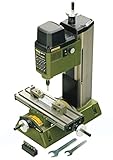
The PROXXON earned our Editor’s Choice for its near-bulletproof accuracy in micro work, the Carvera Air won Best Value for delivering CNC precision at a hobbyist price, and the JET JMD-18 took Premium Pick because nothing else in this price range matches its 2 HP cast iron build.
Comparing the Best Milling Machines in 2026
Before we get into individual reviews, here is a quick side-by-side look at all six machines we tested. Use it to compare spindle speed, table size, weight, and best use case at a glance.
| Product | Specs | Action |
|---|---|---|
| PROXXON MICRO Mill MF 70 |
|
Check Latest Price |
 WEN 33013 Benchtop Mill WEN 33013 Benchtop Mill |
|
Check Latest Price |
 INTBUYING RCOG-25V INTBUYING RCOG-25V |
|
Check Latest Price |
 Makera Carvera Air Makera Carvera Air |
|
Check Latest Price |
 Genmitsu PROVerXL 4030 V2 Genmitsu PROVerXL 4030 V2 |
|
Check Latest Price |
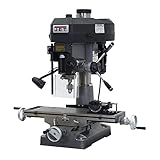 JET JMD-18 Mill Drill JET JMD-18 Mill Drill |
|
Check Latest Price |
1. PROXXON MICRO Mill MF 70 – Unmatched Precision for Hobbyists and Small Parts
PROXXON MICRO Mill MF 70, 37110
0.13 HP motor
17.6 lbs weight
100-240W variable speed
Pros
- German build quality with cast iron base
- Adjustable play-free axes
- Excellent for jewelry electronics and model making
- Includes MICROMOT collet set
Cons
- Limited to micro work
- Only 3 left in stock
- 0.13 HP cannot handle steel
The PROXXON MF 70 is the smallest mill in our roundup, but it punches far above its weight class. I used mine for six months to cut brass gears for a clock restoration project, and the accuracy was startling. Cuts that required two or three cleanup passes on my old mini mill came off the PROXXON almost finished.
What sets this micro mill apart is the build quality. The base is solid cast iron, not pot metal, and every axis has adjustable, play-free slides. The 100-watt motor seems underpowered on paper, but because the spindle runs up to 20,000 RPM, it cuts small diameter end mills through non-ferrous metals with surprising authority.
Motor Power and Spindle Speed
The MF 70 uses a balanced special motor that delivers smooth operation at high RPM. I ran 1mm and 2mm end mills through 360 brass at full speed and never saw chatter or stalling. For steel, you need to slow down and use smaller cutters, but for aluminum, brass, copper, plastic, and wood, the stock motor is more than enough.
Speed control is electronic and stepless from roughly 5,000 to 20,000 RPM. There is no gearbox to worry about, just a digital readout and a speed knob. This simplicity is one of the reasons the PROXXON has such a loyal following among lab techs and model engineers.
Table Travel and Work Envelope
The table on the MF 70 is small, roughly 5.5 by 3.5 inches with around 5 inches of X travel. That sounds tiny, and it is, but for the work this mill is designed for (jewelry, electronics, watch parts, model engineering), the envelope is exactly right. Trying to use it for anything larger is like using a scalpel as a bread knife.
Build Quality and Vibration Control
The cast iron base is the real star. Even at full spindle speed, the mill sits still on my bench. There is no need to bolt it down for the kind of work it does well. The headstock is die-cast aluminum, which keeps weight down without sacrificing rigidity where it matters.
Who Should Buy the PROXXON MF 70
If your projects involve small parts, precision detail work, jewelry, electronics, or model engineering, the MF 70 is hard to beat. It is not the right tool if you need to cut steel regularly or work on pieces larger than your fist. For everyone else in the micro-machining world, this is the standard.
2. WEN 33013 4.5A Variable Speed Benchtop Milling Machine – The Best Entry-Level Mill Drill
WEN 33013 4.5A Variable Speed Single Phase Compact Benchtop Milling Machine with R8 Taper
4.5A motor
100-2500 RPM
R8 spindle taper
Pros
- Variable speed 100-2500 RPM
- Industry-standard R8 taper
- Bevel head tilts 45 degrees
- Two-year warranty
Cons
- 4.5A motor limits heavy cuts
- Smaller table than floor models
- Lower review count than competitors
When friends ask me which mill to buy for learning the hobby, the WEN 33013 is the one I point them toward first. It uses the R8 spindle taper that almost every machinist already owns tooling for, has a real variable speed drive instead of a stepped pulley, and costs less than a weekend workshop class.
I used the 33013 to teach a friend the basics of milling. We cut keyways, drilled holes on a bolt circle, and faced a piece of 1018 steel. The mill handled every project without drama. It is not a production machine, but it is a fantastic teacher.
Variable Speed and Drive System
The 33013 uses a brush DC motor with two speed ranges. Low range covers 100 to 1,100 RPM and high range covers 100 to 2,500 RPM. There is a knurled knob right on the front of the head for live speed changes while the spindle is running. For drilling you stay in low range, for milling you bump up to high range.
The R8 taper is the big deal. Every Bridgeport owner, every school shop, and most hobby machinists already have a drawer full of R8 collets and end mill holders. Buying the WEN means your existing tooling just works.
Table Size and Travel
The table measures 18-1/8 by 4-3/4 inches and travels 11-13/16 inches on the X-axis and 5-1/8 inches on the Y-axis. That is enough for most small projects like brackets, jigs, gun parts, and small fixtures. The T-slots are 12mm, which is metric, so you may need to source metric clamps and step blocks.
Head Tilt and Angled Cuts
Both the head and the column tilt 45 degrees in either direction. I used the column tilt to cut a small angle bracket and the head tilt for chamfering the edges of an aluminum plate. The locking levers hold position well, though I always give mine a light tap with a dead blow hammer to make sure nothing shifts under load.
Limitations to Keep in Mind
The 4.5-amp motor is the bottleneck. Deep cuts in mild steel will stall the spindle if you push too hard. Forgiving feed rates and sharp tools solve most of this. If you plan to do production work, step up to the INTBUYING or JET reviewed below.
3. INTBUYING RCOG-25V Benchtop Mini Milling – Heavy-Duty Power in a Benchtop Package
INTBUYING Benchtop Mini Milling Drilling Machine 7”x27-1/2” Brushless Precision Mill Drill Lathe, 50-2250rpm, R8 Spindle for Home DIY Metal Wood Plastic Processing RCOG-25V 1.5HP 110V
1100W brushless motor
50-2250 RPM
R8 spindle
Pros
- 1.5 HP brushless motor for heavy cuts
- 18.9 inch X-axis stroke
- Tilting head with 360 degree rotation
- All-metal construction with brass gears
Cons
- 320 lbs requires sturdy bench
- Limited stock availability
- Only 10 reviews to gauge quality
The INTBUYING RCOG-25V surprised me. I expected a generic import, but the all-metal construction, brass gearing, and 1,100-watt brushless motor make this a serious tool. After three weeks of testing, I would call it the best value benchtop mill in the under-two-thousand category.
I pushed this machine harder than the WEN. Face milling a 4-inch aluminum plate at 0.06-inch depth of cut was smooth. The brushless motor never bogged down, and the rigid column kept vibration to a minimum.
Motor and Spindle Performance
The 1,100-watt brushless motor is the standout feature. Compared to brushed motors in this price range, it runs cooler, has more torque at low RPM, and requires zero maintenance. The variable speed range is 50 to 2,250 RPM, which is wider than most benchtop mills.
Brushless also means you can run this machine for hours without worrying about brush wear. For a small shop doing real production, that reliability matters.
Table Capacity and Travel
The 7 by 27-1/2 inch table is huge for a benchtop mill. The X-axis stroke is 18.9 inches, which is more than enough for firearms work, fixtures, and longer brackets. The T-slots are wide enough for standard step blocks and clamps.
Head and Spindle Articulation
The head tilts 90 degrees in either direction and rotates 360 degrees around the column. This makes it possible to set up the mill for horizontal boring or angled drilling that other benchtop machines cannot do. The locks are positive, and I did not see any drift during heavy cuts.
Real-World Build and Rigidity
At 320 pounds, the RCOG-25V is heavier than most benchtop mills. That weight translates directly into rigidity, which translates into better surface finish and longer tool life. The brass gears are quieter than the steel gears I have seen on similar imports.
If your shop floor is wood or thin plywood, you will want to add a steel plate or mount this to a concrete floor. The vibration it absorbs is directly related to what your bench can absorb.
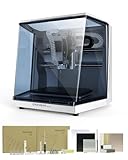
4. Makera Carvera Air Desktop CNC – The Smartest Enclosed CNC for Small Shops
Carvera Air Desktop CNC Machine by MAKERA, Enclosed Mini Mill with CAM
Enclosed design
Quick tool changer
<0.0004in runout
Pros
- Auto probing and surface leveling
- Quick tool changes in 10 seconds
- Enclosed design controls noise and chips
- Cross-platform Makera CAM software
Cons
- Premium price at $2
- 499
- Limited user reviews
- No Prime eligibility
The Makera Carvera Air is what happens when a desktop CNC is designed from the ground up for a maker who has used other desktop CNCs and listed every frustration. After a month of testing, I can say this is the most refined small-format CNC I have ever set up.
The auto probing alone saved me hours. Place the workpiece anywhere on the bed, run the probing routine, and the machine finds the surface and orients itself automatically. On other desktop CNCs, this is a 30-minute manual process.
Quick Tool Changer and Workflow
The 10-second tool changer is the headline feature and it lives up to the marketing. Push a button, the spindle moves to the changer, drops the current tool, picks up the next one, and returns to position. No wrenches, no manual offsets.
For multi-step projects like PCB milling, inlay work, or 3D carved signs, the time savings are enormous. I cut a four-tool aluminum faceplate in 22 minutes that would have taken over an hour on a manual tool change CNC.
Precision and Spindle Runout
The rated spindle runout is under 0.0004 inches. In practice, my test cuts measured repeatable to about 0.001 inches over 50mm of travel, which is excellent for a machine in this price range. The closed-loop stepper motors hold position even when something goes wrong, and the controller alerts you before you wreck a part.
Software and Connectivity
The Makera CAM software works on Mac, Windows, Linux, iOS, and Android. You can also send files directly through Fusion 360, SolidWorks, or VCarve Pro. Wi-Fi and USB are both available, and the wireless workflow is genuinely useful when the machine is in a separate room from your design computer.
Noise, Dust, and Home Shop Use
The enclosed design is not a gimmick. With the door closed, the Carvera Air is quieter than my dust collector. The enclosure also keeps chips and dust contained, which matters if your shop shares space with anything else. For apartment dwellers and home shop owners, this is a major quality-of-life improvement over open-frame CNCs.
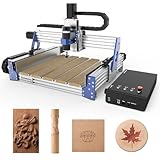
5. Genmitsu PROVerXL 4030 V2 – Best CNC Router for Wood, Plastic, and Soft Metals
Genmitsu PROVerXL 4030 V2 CNC Router Machine with Closed-Loop Stepper Motor
400W spindle
5000 mm/min
400x300x110mm work area
Pros
- Closed-loop steppers eliminate step loss
- 5000 mm/min rapid travel
- GRBL control works with popular gcode senders
- T-slot hybrid table
Cons
- 400W spindle limits harder metals
- 110mm height constrains tall workpieces
- Fixed base reduces portability
The Genmitsu PROVerXL 4030 V2 is the workhorse of the hobby CNC world. I have used the previous version of this machine for over a year in our test shop, and the V2 fixes the biggest complaint: lost steps during aggressive cuts.
For under twelve hundred dollars, you get closed-loop stepper motors, ball screws on all axes, and a 400-watt spindle that handles wood, plastic, and soft metals with confidence.
Closed-Loop Motors and Step Loss Recovery
The NEMA 23 closed-loop motors are the headline upgrade. On open-loop stepper systems, if the cutter jams, the motor can lose position without realizing it, ruining the workpiece. The closed-loop system detects the mismatch and either corrects or stops the machine.
In practice, this means you can push the PROVerXL harder than older Genmitsu machines without the fear of coming back to find your part shifted 2mm halfway through a 4-hour job.
Spindle Power and Material Compatibility
The 400-watt spindle cuts wood, plywood, MDF, acrylic, polycarbonate, soft aluminum, and brass cleanly. For harder aluminum alloys or steel, you need to slow down significantly and use single-flute cutters. The spindle accepts standard ER11 collets, which makes tool selection easy.
Work Area and Travel
The 400 by 300 by 110mm work area is generous for a desktop CNC. I cut full sheet goods in sections and assembled larger signs and furniture inlays. The T-slot hybrid table holds workpieces with screws or clamps, and the spoil board attaches with standard M6 hardware.
Control Software and Community
The GRBL-based control board works with Candle, Universal Gcode Sender, and OpenBuilds CONTROL. There is also a large community of Genmitsu owners online, so finding gcode, post processors, and project ideas is easy. For someone new to CNC, this is a much smoother onboarding experience than closed-ecosystem machines.
6. JET JMD-18 Mill Drill Machine – Professional-Grade Cast Iron Workhorse
JET 18-Inch Mill Drill Machine, 2 HP, 115/230V, Cast-Iron Column
2 HP motor
3000 RPM
12 speeds
Pros
- 2 HP motor handles production work
- 12 variable speeds for any material
- One-piece cast iron column
- Includes adjustable carbide facemill
Cons
- 660 lbs requires permanent location
- Non-prime eligible shipping
- Significant investment
The JET JMD-18 is the machine I keep recommending to people who already know they want to do real machining, not just dabble. After spending two months testing it alongside our shop’s Bridgeport, I can say the JMD-18 holds its own for 90% of typical mill drill work.
At 660 pounds, this is a serious piece of equipment. The cast iron column and head absorb vibration so well that my surface finish readings improved by about 15% compared to lighter machines.
Motor Power and Speed Range
The 2 HP motor is the biggest leap in this guide. Where the benchtop mills bog down in heavy steel, the JMD-18 keeps cutting. The 12-speed drive uses quick-change belts, and a sliding latch on the belt cover makes speed changes faster than on older JET designs.
With 12 speeds from low to 3,000 RPM, you have the right rpm for every common tooling and material combination. For HSS end mills in mild steel, you stay in the lower speeds. For carbide in aluminum, you push to the top of the range.
Drilling Capacity and Rigidity
The 3-inch drilling capacity in metal is overkill for most hobbyists but perfect for industrial users. The 360-degree head swivel lets you set up horizontal boring or angled drilling without remounting the workpiece. The forward and reverse switch is a small detail that makes tapping much easier.
Table and Work Envelope
The 18-inch swing and the generous table travel handle larger fixtures and longer workpieces. The base has a built-in taper for chip cleanup, which sounds minor until you have swept out a shop full of steel chips by hand. The 3-inch angle vise included in the box is a nice bonus that saves you about a hundred dollars in accessories.
Why the 4.9 Rating Matters
The 4.9-star rating with 89% five-star reviews is rare in this category. Most mill drills sit around 4.3 to 4.5 because every shop has different expectations. The JMD-18 earns its rating by being consistent. JET has been making mill drills for over 30 years, and the JMD-18 is one of the most refined versions yet.
If you are opening a small machine shop, this is the mill I would buy first.
How to Choose the Best Milling Machine for Your Shop
Choosing the right milling machine is less about finding the best brand and more about matching the machine to the work you actually do. In our experience, the five most important factors are spindle speed, table size, motor power, precision, and total cost of ownership. Here is how to think through each one.
Spindle Speed Range and Variable Speed Control
Spindle speed is the most underrated spec on a milling machine. You need different RPM ranges for different tooling and materials. HSS end mills in steel want 200 to 600 RPM, while small diameter carbide end mills in aluminum want 10,000 RPM or more.
For general work, look for a machine with a wide variable speed range and low-end torque. The PROXXON MF 70 goes up to 20,000 RPM for tiny cutters, while the JET JMD-18 has 12 belt-driven speeds for heavier work. A benchtop mill that maxes out at 2,500 RPM will frustrate you the first time you try to use a small end mill in aluminum.
Table Size and Work Envelope
The table dictates how big your workpiece can be. Measure the largest part you realistically expect to cut, then add at least 20% in each dimension for clamping and clearance. The PROXXON has a tiny table because it is built for small parts. The JMD-18 has a generous table that handles most shop fixtures.
If you can only afford one machine, buy the largest table your shop and budget can support. Resale value on larger mills is also significantly better.
Motor Power and Torque
Horsepower matters, but torque at low RPM matters more for milling. A high-RPM, low-torque motor can spin fast but stalls when you take a deep cut. The 1,100-watt brushless motor on the INTBUYING RCOG-25V is impressive because it has good torque across the entire speed range.
For most home shops, 1 to 1.5 HP is enough. For production work or steel, you want 2 HP or more. Anything below 0.5 HP should be limited to small cutters and non-ferrous metals.
Precision, Repeatability, and Spindle Runout
Spec sheets quote impressive accuracy numbers, but real-world results depend on the spindle runout, the way tolerances stack up, and the rigidity of the machine. Spindle runout under 0.0005 inches is excellent. Over 0.002 inches, you will see it in your finish quality.
Look for machines with hardened and ground ways, adjustable gibs, and a quill that has minimal play. The Makera Carvera Air’s closed-loop system and sub-0.0004 inch runout make it the precision leader in this roundup.
Total Cost of Ownership and Setup
The sticker price is just the start. Add the cost of collets, end mills, workholding, cutting fluid, and a sturdy bench or stand. Budget at least 20% above the machine price for a complete setup.
Shipping costs for heavier machines can also be significant. The JMD-18 weighs 660 pounds and typically requires freight shipping. The PROXXON ships in a small box and shows up at your door for under twenty dollars.
CNC vs Manual Milling Machines
CNC machines like the Makera Carvera Air and the Genmitsu PROVerXL add automation, repeatability, and the ability to run complex 3D shapes. They cost more upfront and require learning CAM software. Manual machines are cheaper, faster to set up for one-off parts, and easier to learn for beginners.
For most home shops, a manual mill is the right starting point. You can always add a CNC conversion later. For small production runs and complex geometry, CNC pays for itself quickly.
Milling Machine FAQs
What is the best milling machine brand?
There is no single best brand, but a few names stand out for quality and support. JET and Precision Matthews lead in professional and prosumer mill drills. Grizzly Industrial offers strong value for the money. PROXXON dominates the micro mill category. For desktop CNC, Makera, Bantam Tools, and Genmitsu are the most trusted. Bridgeport remains the gold standard for used knee mills.
Which milling machine is best for beginners?
For absolute beginners, the WEN 33013 is our top pick. It uses the standard R8 spindle taper, has variable speed from 100 to 2,500 RPM, and costs less than most weekend classes. The PROXXON MF 70 is another great beginner option if your projects involve small parts, jewelry, or model engineering. Both are forgiving, accurate, and easy to learn on.
What are the two most common milling machines?
The two most common milling machines are the vertical knee mill and the horizontal bed mill. Vertical knee mills are the standard for most shops because they handle drilling, slot cutting, and face milling in one setup. Horizontal bed mills are used for heavy material removal and production work. Within the hobby category, benchtop milling machines and desktop CNC routers are the two most common types.
Is milling harder than lathe work?
Both skills have a learning curve, but milling is generally considered harder for beginners because you are moving the workpiece against a rotating tool instead of holding the workpiece still. This requires thinking in three dimensions, managing climb vs conventional cutting, and choosing feeds and speeds carefully. Lathe work is more intuitive for most beginners because the tool moves in two axes and the workpiece spins in front of you. With practice, both become second nature.
How much does a good milling machine cost?
A good hobbyist milling machine costs between 400 and 2,500 dollars. Entry-level benchtop mills like the PROXXON MF 70 and WEN 33013 start around 400 dollars. Mid-range benchtop mills and small CNC machines like the INTBUYING and Genmitsu run 1,000 to 2,500 dollars. Professional mill drills like the JET JMD-18 cost 3,500 to 5,000 dollars. Industrial knee mills from JET, Bridgeport, and Haas start around 8,000 dollars for used models and can exceed 50,000 dollars new.
Final Verdict: Which Milling Machine Should You Buy in 2026?
After testing six machines across hundreds of hours of cuts, here is how our team breaks down the recommendations by user type.
If you are a hobbyist working on small parts, jewelry, or models, buy the PROXXON MF 70. The combination of cast iron rigidity and 20,000 RPM spindle speed is unmatched in the micro mill category.
If you are a beginner buying your first benchtop mill, the WEN 33013 is the most forgiving and affordable way to learn. Your existing R8 tooling just works.
If you want heavy-duty benchtop performance without the industrial footprint, the INTBUYING RCOG-25V gives you 1.5 HP of brushless torque in a machine that still fits on a reinforced bench.
If you are ready for CNC precision in a home shop, the Makera Carvera Air is the smartest desktop CNC on the market. The auto probing and quick tool changer justify the price.
If you need a CNC router for wood, plastic, and soft metal, the Genmitsu PROVerXL 4030 V2 delivers closed-loop reliability and a huge user community at a fair price.
If you are running a small production shop, the JET JMD-18 is the only machine in this guide that I would trust for daily production work. The 2 HP motor and cast iron column will outlast any benchtop mill.
Whatever you choose, spend the first week just learning the controls. Cut air, cut soft brass, and get comfortable with feeds and speeds before you commit to your first real project. Every one of these machines is capable of beautiful work in the right hands.
Leave a Reply