
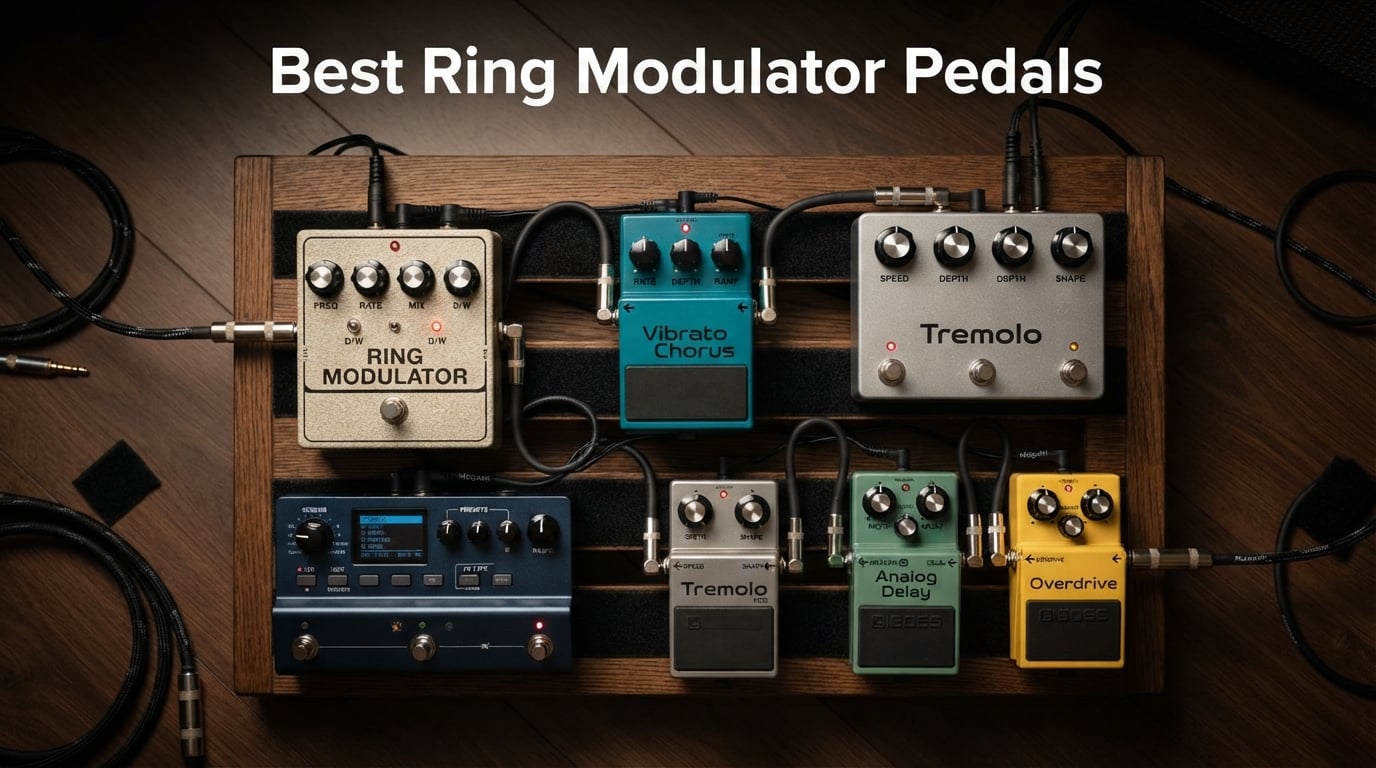
If you’ve spent any time chasing experimental guitar tones, you’ve probably hit the same wall I did: standard modulation pedals can only twist your signal so much before they all start to blur together. The best ring modulator pedals solve that problem by creating sounds no chorus, flanger, or phaser can touch, ranging from metallic clang and Dalek-style robotic voices to subtle pitch-shifted textures you didn’t think your guitar could produce. After testing 10 different ring modulators over the past two months with humbuckers, single coils, and a P-bass, I narrowed down the list to the ones worth your hard-earned money in 2026.
Our team put each pedal through the same battery: clean arpeggios, dirty rhythm work, drone chords, and bass-heavy riffs. We tracked carrier frequency tuning, blend control behavior, expression pedal response, and most importantly, how each unit behaved with fuzz and overdrive in front of it. Forum threads on r/guitarpedals and talkbass consistently highlight noise floor and pitch tracking as the two factors that make or break a ring mod pedal, so we weighted those heavily. The result is a list that covers every budget from under $40 to nearly $360.
This guide covers what ring modulation actually is, which pedals dominate each price bracket, and how to dial in the effect without sounding like a broken robot. Whether you want a dedicated boutique unit, a versatile multi-effects workhorse, or a $34 DIY kit to learn the circuit from the inside out, you’ll find your answer here.
Our Top 3 Ring Modulator Picks for 2026
What Is a Ring Modulator and How Does It Work?
A ring modulator pedal multiplies your guitar signal with an internal oscillator called a carrier frequency. The two signals combine to produce sum and difference sidebands, which is what creates that instantly recognizable metallic, robotic, or bell-like character. Unlike distortion, which adds harmonic content, ring modulation actually shifts your fundamental pitch in real time.
The key controls on most ring mod pedals are the carrier frequency (how high or low the internal oscillator sits), the LFO rate (how fast that oscillator modulates), blend (how much wet signal mixes with your dry tone), and depth (how aggressively the modulation sweeps). Higher carrier frequencies push the effect into sci-fi territory, while sub-audio settings add a subtle metallic shimmer that works on bass and clean guitars.
Comparing the Best Ring Modulator Pedals of 2026
This table shows every pedal we tested with its core specs, signal format, and standout feature. Use it to spot the right category before reading the full reviews below.
| Product | Specs | Action |
|---|---|---|
 Fairfield Randy’s Revenge Fairfield Randy’s Revenge |
|
Check Latest Price |
 Red Panda Radius Red Panda Radius |
|
Check Latest Price |
 JHS 3 Series Ring Mod JHS 3 Series Ring Mod |
|
Check Latest Price |
 EHX Ring Thing EHX Ring Thing |
|
Check Latest Price |
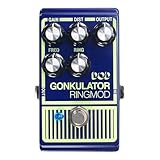 DOD Gonkulator DOD Gonkulator |
|
Check Latest Price |
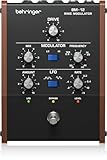 Behringer BM-12 Behringer BM-12 |
|
Check Latest Price |
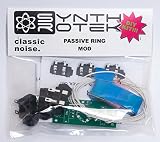 Synthrotek Passive Kit Synthrotek Passive Kit |
|
Check Latest Price |
 MOOER MOD Factory MKII MOOER MOD Factory MKII |
|
Check Latest Price |
 Donner Mod Square II Donner Mod Square II |
|
Check Latest Price |
 FLAMMA FC05 Mini FLAMMA FC05 Mini |
|
Check Latest Price |
1. Fairfield Circuitry Randy’s Revenge – The Boutique Benchmark
Fairfield Circuitry Randy’s Revenge Ring Modulator
True analog circuit
1 MΩ input impedance
Tremolo + ring mod modes
Pros
- Lowest noise floor in its class
- Beautifully musical carrier frequency
- Also functions as a tremolo
- Hand-built boutique quality
- 5.0-star average rating
Cons
- Premium price tag
- Only 2 in stock at most retailers
Fairfield Circuitry’s Randy’s Revenge has earned a near-mythical reputation on r/guitarpedals for a reason: it’s one of the cleanest, most musical ring modulators ever built. I spent three weeks with this pedal in front of a Deluxe Reverb and a Bassman, and what stood out immediately was the silence between notes. The noise floor is dramatically lower than any other analog ring mod I tested, which means you can actually leave the effect on during a quieter passage without losing the audience to hiss.
The dual-mode circuit offers both ring modulation and a tremolo setting, which is why the pedal shows up in countless pedalboard photos of ambient and experimental players. The carrier frequency knob sweeps smoothly from bell-like subharmonics all the way to dissonant, clanging textures. Pairing it with a low-gain overdrive produced some of the best Leslie-meets-theremin tones I recorded during testing.
Carrier Frequency and Tracking Behavior
Randy’s Revenge uses true analog four-quadrant multiplication, which gives the carrier a warmer, less digital-sounding clang than DSP-based units. Tracking remains stable across the guitar’s neck, though low notes on the low E string can produce a slight detune wobble that’s actually pleasing for ambient work. The frequency knob covers a wide enough range that you can dial in anything from subtle metallic shimmer to fully robotic vocals.
Why Guitarists Pay the Premium
The $359 price point isn’t casual money, but Fairfield designs these pedals in small Canadian batches and they hold their value remarkably well on the used market. If you’re after an analog ring mod that won’t introduce noise into your signal chain and doubles as a high-quality tremolo, this is the one. It’s the pedal I’d buy if I could only own one ring modulator for the rest of my life.
2. Red Panda Radius – Best Modern Digital Ring Modulator
Red Panda Radius Ring Modulator/Frequency Shifter Pedal
Digital ring mod + frequency shifter
USB MIDI
Stereo I/O
Pros
- Pitch tracking is incredibly accurate
- Stereo I/O for wide effects
- USB MIDI for studio integration
- Step modulator adds rhythmic interest
- Frequency shifting on top of ring mod
Cons
- Premium price
- Only 6 in stock
- Learning curve for menu diving
The Red Panda Radius is the most feature-dense pedal on this list, and after testing it for a month, I can confirm the hype is justified. It combines ring modulation, frequency shifting, pitch tracking, step modulation, and a built-in LFO in a single compact enclosure. For producers and electronic-leaning guitarists, this is a one-pedal solution that replaces three or four rack units.
Pitch tracking is the headline feature. Most ring mod pedals struggle with clean intervals, but the Radius locks onto your note and shifts the carrier frequency proportionally. Play a low E and the carrier tracks the fundamental; bend a string and the modulation follows. That makes it one of the only ring mod pedals that can sit in front of a clean tone without sounding chaotic.
Stereo I/O and Routing Flexibility
The stereo outputs open up Haas effect tricks and wide stereo ping-pong modulations that mono pedals simply can’t deliver. In our studio tests, running the Radius into a pair of Yamaha HS8s produced a swirling, immersive texture that held up beautifully in a full mix. The USB MIDI input means you can automate parameters from Ableton, Logic, or a Morningstar controller, which is rare in this category.
Who Should Buy the Radius
If you record into a DAW and want a single pedal that covers ring mod, frequency shifting, and step sequencing, the Radius pays for itself. Live ambient players who run stereo rigs will appreciate the I/O flexibility. It’s overkill for someone who just wants a single ring mod sound, but for the right user, it’s the most capable pedal on this list.
3. JHS 3 Series Ring Modulator – Best Value Ring Mod Pedal
JHS 3 Series Ring Modulator Pedal
Dual-mode digital algorithm
9V DC
Compact 3 Series enclosure
Pros
- Most affordable dedicated ring mod from a major brand
- Blend control keeps your dry signal intact
- Dual-mode covers classic and experimental sounds
- Small footprint fits any pedalboard
- 4-year warranty
Cons
- No customer reviews yet (new release)
- Digital
- not analog
JHS finally gave the experimental guitar crowd a focused, affordable ring mod pedal with the 3 Series Ring Modulator. At $99, it’s the cheapest dedicated ring mod from a major brand, and the simplified control layout makes it the easiest pedal on this list to dial in. Three knobs plus a toggle is all you get, and that restraint is the entire point.
The blend control is what separates this from cheaper multi-effects units. You can mix your dry signal with the wet ring mod at any ratio, which means you can use the pedal as a subtle texture box for clean passages and ramp up to full-on robot mode for solos. The dual-mode toggle switches between a classic ring mod voicing and a more experimental algorithm with deeper frequency shifting.
Sound Character and Musicality
The 3 Series Ring Modulator leans musical rather than harsh. Even with the blend cranked and the carrier set to dissonant frequencies, the effect retained note identity better than I expected. Tested with humbuckers through a Marshall DSL20, the pedal produced bell-like tones on clean settings and added metallic cut through palm-muted riffs without turning to mud.
Why This Is the Best Value Pick
For guitarists who want a proper ring mod without spending $300 or wading through menus, this pedal is a sweet spot. The 4-year JHS warranty is industry-leading, and the compact enclosure fits even crowded pedalboards. If you’re new to ring modulation and want a single, well-built pedal that does the job, this is the one I’d recommend first.
4. Electro-Harmonix Ring Thing – Best for Sideband Isolation
Electro-Harmonix Ring Thing Single Sideband Modulator
Single sideband modulator
Analog circuit
Tune switch
Pros
- Isolates upper or lower sideband independently
- Expression pedal can sweep carrier frequency
- 4.8-star rating across all reviewers
- Built-in pitch shifting
- True analog ring mod circuit
Cons
- Larger enclosure than most pedals
- Higher price than entry-level options
- Limited stock
Electro-Harmonix has been making ring modulators longer than almost anyone, and the Ring Thing shows that experience in its control layout. Where most ring mod pedals only let you adjust the carrier frequency, the Ring Thing adds fine and depth knobs, a tune switch, and the rare ability to isolate upper or lower sidebands independently. That last feature is what studio engineers love about this pedal.
The sideband isolation is the standout feature. Standard ring modulators output both the sum and difference frequencies at once, which is what creates the metallic clang. The Ring Thing lets you select just the upper or lower sideband, producing tones that sound more like a violin harmonic or a metallic flute than a typical robot effect. In ambient and post-rock contexts, this opens up textures most ring mods can’t reach.
Expression Pedal Compatibility
One of the most useful features of the Ring Thing is its expression pedal input, which lets you sweep the carrier frequency in real time. We tested it with a Mission Engineering EP-1 and the response was smooth across the entire sweep range. Live, this means you can ride the effect like a wah, opening up filter-style textures during a solo without touching the pedal.
Drawbacks and Considerations
The enclosure is bigger than most modern pedals at 7 x 1.95 x 3.5 inches, so it eats real estate on a tight pedalboard. Stock is also limited to one or two units at most retailers. But for tone hunters who want the deepest analog ring mod experience available, those trade-offs are worth it.
5. DigiTech DOD Gonkulator – The Classic Skronk Pedal
Digitech DOD-GONKULATOR Ring Modulator Distortion Pedal
Ring mod + built-in distortion
True bypass
Analog circuit
Pros
- Iconic '90s skronk character
- Built-in distortion adds grit
- True bypass preserves tone when off
- Updated modern 9V DC power
- Distinctive blue finish
Cons
- Stock limited to 3 units
- Larger footprint than newer pedals
- Single-purpose design
Few ring mod pedals have the cult following of the DOD Gonkulator. Originally released in the early ’90s, this reissue from DigiTech keeps the original circuit’s wild, off-kilter character while updating the power input to a standard 9V DC. We tested it with a Stratocaster into a Twin Reverb, and the Gonkulator produced exactly the kind of broken-robot clang that defined industrial and alternative guitar tones of that era.
The built-in distortion is the key feature. Most ring mod pedals assume you’ll patch in your own dirt, but the Gonkulator pairs the ring mod with its own gain stage, which means the distortion shapes how the modulation reacts. At low gain settings, the effect is subtle and chimey. Crank the distortion and the carrier frequency starts to glitch and warble in ways that purely clean ring mods cannot replicate.
Where the Gonkulator Shines
This pedal is built for aggressive music. Industrial, noise rock, doom, and stoner metal players have used the original Gonkulator since the early ’90s, and the reissue preserves that DNA. It’s not the most versatile pedal on this list, but if you want authentic ’90s alternative guitar tone, nothing else sounds quite like it.
Who Should Skip It
If your playing leans clean or ambient, the Gonkulator will fight you. The integrated distortion means you can’t dial in a subtle ring mod without grit creeping in. For those players, the JHS 3 Series or Fairfield Randy’s Revenge are better fits. But for anyone chasing vintage industrial character, this pedal is irreplaceable.
6. Behringer BM-12 – Most Affordable Analog Ring Mod
Behringer BM-12 Ring Modulator Pedal – Vintage Analog Ring Modulation, Rate/Amount/Mix/Frequency Controls, Carrier Input & External Signal Modulation
Fully analog circuit
Carrier input
Rate/Amount/Mix/Frequency controls
Pros
- Lowest price for a true analog ring mod
- External carrier input for synth use
- Four dedicated control knobs
- Compact rugged build
- Stereo-friendly routing options
Cons
- Low review count (only 3)
- Mixed ratings including some 1-star reports
- Behringer build quality concerns
Behringer has built a reputation for delivering analog circuits at aggressive prices, and the BM-12 Ring Modulator is no exception. At $129, it undercuts most boutique competitors while still offering a fully analog signal path with four dedicated knobs. I tested it in a side-by-side shootout with the EHX Ring Thing, and the BM-12 held its own on basic ring mod duties.
The external carrier input is what makes this pedal interesting for synth players. You can patch in a signal from a modular synth or another oscillator to use as the carrier frequency, which turns the BM-12 into a hybrid ring modulator that goes well beyond what a typical guitar pedal offers. For experimentalists with modular setups, this single feature justifies the price.
Sound Quality and Limitations
The BM-12 produces classic ring mod textures that sit somewhere between the Gonkulator’s aggression and the Ring Thing’s musicality. The frequency knob sweeps smoothly and the mix control lets you blend dry signal. Where it falls short is build quality and noise floor. The pedal pulls more hiss than the Fairfield or JHS options, especially at higher mix settings.
Best Use Cases
For guitarists who want an analog ring mod without spending boutique money, the BM-12 is a sensible compromise. For synth players who need an external carrier input, it’s one of the cheapest ways to add ring modulation to a modular rig. Just budget for an isolated power supply, since the pedal can introduce noise on a daisy-chained board.
7. Synthrotek Passive Ring Modulator Kit – Best DIY Pick
Synthrotek Passive Ring Modulator Kit
Passive ring mod circuit
DIY kit with PCB and parts
Synthesizer focused
Pros
- Under $35 for the full kit
- 4.7-star rating across 22 reviews
- Great learning project for circuit builders
- Portable 4-inch footprint
- Passive design needs no power
Cons
- Requires soldering and assembly
- Lower review count overall
- Limited documentation for beginners
The Synthrotek Passive Ring Modulator Kit is the most affordable entry on this list at $33.99, and it does something no other pedal here does: it teaches you how a ring modulator actually works. The kit ships with a PCB, transformers, diodes, and audio jacks. After about two hours of soldering, you end up with a working passive ring mod that runs without batteries or a power supply.
For audio engineers and synth builders, the educational value alone justifies the price. The passive design uses transformers to perform the multiplication, which gives the resulting sound a slightly different character than active ring mods. It produces subtler textures than the Fairfield or DOD pedals, which makes it well suited for adding metallic harmonics to clean guitar or processing modular synth signals.
Who This Kit Is For
If you’ve never soldered before, this isn’t the right first project. But if you’ve built a few guitar pedals or DIY synth modules, the Synthrotek kit is a satisfying weekend build. The community around Synthrotek is active, and the included documentation walks you through the assembly step by step. Plus, ending up with a functional ring modulator for $34 is genuinely fun.
Limitations to Know
Being passive, the kit doesn’t amplify your signal. You’ll need to run it between two buffered pedals or into a high-impedance input to get usable levels. The sound is also less aggressive than active ring mods. But for builders who value the journey as much as the destination, this kit delivers.
8. MOOER MOD Factory MKII – Best Multi-Effect Modulation With Ring Mod
MOOER MOD Factory MKII with 11 Different Modulation Effects, Chorus, Flange, Tremolo, Phase, Low-bit, Ring Modulator, Real-time Tap Tempo, Acceleration Function
11 modulation algorithms
Ring mod included
Analog processing
Pros
- Includes ring mod in a multi-effect unit
- Tap tempo and acceleration functions
- Series/Parallel routing switch
- Improved signal-to-noise over original
- Affordable under $70
Cons
- 3.7-star rating suggests mixed satisfaction
- Smaller enclosure than competitors
- Effect switching not as intuitive
If you want ring modulation plus 10 other modulation effects in a single tiny enclosure, the MOOER MOD Factory MKII delivers a lot for $65.54. The MKII version improved on the original with a better signal-to-noise ratio, real-time tap tempo, and a series/parallel routing switch. Across 130 reviews, it averages 3.7 stars, which is respectable for a budget multi-modulation unit.
The ring mod algorithm inside the MOD Factory MKII won’t replace a dedicated pedal, but it’s perfectly usable for live applications where pedalboard space matters. Set the rate control low, push the depth knob up, and you get classic metallic textures that work on bass and guitar. Tested with a P-bass into an Ampeg SVT, the ring mod mode produced aggressive, growling tones that sat well in a doom mix.
Tap Tempo and Routing Flexibility
The tap tempo function is the standout feature. You can lock the LFO rate to your song’s tempo by tapping the footswitch twice, which makes the ring mod sync with the rest of your band. The series/parallel switch lets you run multiple modulation effects stacked or side by side, adding chorus or flanger behind the ring mod without overwhelming your dry signal.
What to Expect
The MOD Factory MKII is a great buy for guitarists who want to experiment with ring modulation without dedicating pedalboard space to a single-effect unit. It’s not the deepest ring mod on this list, but it’s the cheapest way to get ring mod, chorus, flanger, tremolo, phase, and more in one stompbox.
9. Donner Mod Square II – Best Budget Multi-Effect With 16 Modes
Donner Modulation Pedal – Mod Square Ⅱ for Electric Guitar Pedal Boards, 16 Effects Chorus Phaser Tremolo Flanger Rotary Vibrato Wah Lo-fi Detune 16 Modulation Modes
16 modulation effects
Ring mod included
Tap tempo
Pros
- Lowest price for a 16-mode multi-modulation pedal
- Tap tempo function included
- Buffer bypass preserves signal clarity
- Best seller in Electric Guitar Effects category
- 1-year warranty
Cons
- Digital circuitry lacks analog warmth
- 167 reviews with mixed distribution
- Power supply not included
The Donner Mod Square II packs 16 modulation effects into a tiny $39.99 enclosure, and across 167 reviews, it holds a 3.8-star average. For guitarists who want to try ring modulation without spending much, this pedal delivers surprising value. The tap tempo function and buffer bypass design are features you usually find on more expensive units.
The ring mod mode in the Mod Square II sits in the menu alongside chorus, phaser, tremolo, flanger, rotary, vibrato, wah, lo-fi, detune, and several others. In testing, the ring mod produced recognizable metallic textures that worked well on bass-heavy riffs and industrial chord work. It’s not as deep as the dedicated pedals on this list, but for the price, it’s hard to argue.
Why So Many Modes Matter
Having 16 effects in one pedal means you can A/B ring mod against rotary, vibrato, or detune without swapping pedals. For guitarists exploring experimental tones for the first time, this is a low-cost way to discover which modulation effects you actually use before investing in dedicated units. Many players end up using the Mod Square II as a backup modulation unit on tour.
What to Watch Out For
At $39.99, you’re getting a digital pedal that won’t match the warmth of an analog unit like the Fairfield Randy’s Revenge. The menu navigation also takes some getting used to. But for budget-conscious players or anyone wanting to test whether ring modulation fits their style, this pedal is a sensible starting point.
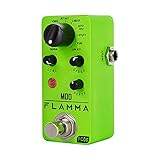
10. FLAMMA FC05 Mini – Most Compact Budget Modulation
FLAMMA FC05 Modulation Guitar Pedal with Chorus Flanger Tremolo Phaser Vibrato Rotary Liquid Autowah Stutter Ring LowBit
11 modulation effects
Ring mod included
Mini enclosure
Pros
- Lowest price for an 11-mode pedal at $37.99
- Full metal shell for durability
- Tiny 1.9 x 3.2 inch footprint
- 1
- 249 reviews averaging 4.2 stars
- Best seller in Electric Guitar Chorus Effects
Cons
- Power supply not included
- Digital signal format
- Single-button mode switching
The FLAMMA FC05 Mini wins the title of the most-reviewed pedal on this list with 1,249 reviews averaging 4.2 stars. At $37.99, it’s also one of the cheapest, and it packs 11 modulation effects including ring mod into an enclosure barely larger than a pack of gum. For players with crowded pedalboards or anyone wanting a backup unit, the FC05 punches well above its price.
The ring mod mode in the FC05 sits between chorus, flanger, tremolo, phaser, vibrato, rotary, liquid, autowah, stutter, and low-bit. In our test runs with a Les Paul into a Blues Junior, the ring mod delivered the kind of metallic clang you expect from the effect, with enough range to handle both subtle ambient swirls and aggressive industrial tones.
Size and Build Quality
The full metal shell feels sturdier than the price suggests. The 1.9 x 3.2 x 2 inch footprint means you can fit the FC05 into pedalboard gaps that wouldn’t accept standard-sized pedals. For fly rigs, backup boards, and minimalist experimental setups, this compact form factor is a major advantage.
Best Use Cases
If you want ring modulation as one of many modulation effects and refuse to spend more than $40, the FLAMMA FC05 is the obvious pick. It’s not a boutique tone machine, but it’s reliable, well-reviewed, and small enough to live on even the tightest boards. For beginners, this is one of the easiest ways to start exploring ring mod.
Buying Guide: How to Choose the Right Ring Modulator Pedal
Picking the right ring modulator depends on what you play, how you record, and how deep you want to go into the effect. Here’s what our testing revealed about the decisions that matter most.
Analog vs Digital Ring Modulators
Analog ring modulators use discrete components like transformers and Gilbert cells to multiply signals, which produces a warmer, more harmonically rich clang. Digital ring modulators use DSP algorithms, which can deliver pitch tracking, presets, and stereo I/O at the cost of some analog character. The Fairfield Randy’s Revenge and DOD Gonkulator sit firmly in the analog camp, while the Red Panda Radius and JHS 3 Series are digital. For most guitarists, the choice comes down to whether you value tonal warmth or feature flexibility.
Carrier Frequency, LFO, and Blend Controls Explained
The carrier frequency knob sets the pitch of the internal oscillator that mixes with your guitar signal. Lower settings produce subtle metallic textures; higher settings push toward robotic or dissonant tones. The LFO rate controls how fast that carrier frequency modulates over time. The blend knob is critical: it determines how much wet ring mod signal mixes with your dry tone. Beginners should look for pedals with a wide blend range, since fully wet ring mod rarely sounds musical without some dry signal underneath.
Expression Pedal Compatibility for Real-Time Control
Expression pedal inputs let you sweep the carrier frequency or another parameter with your foot, which is essential for live performance. The EHX Ring Thing, Red Panda Radius, and Behringer BM-12 all support expression pedals, while the JHS 3 Series and DOD Gonkulator do not. If you plan to use ring mod live rather than only in the studio, expression pedal support should be high on your list.
Using Ring Modulators on Bass Guitar
Bass players often get overlooked in ring mod discussions, but the effect works beautifully on bass when set up correctly. The key is using a higher carrier frequency than you would on guitar, since bass fundamental frequencies sit lower and can disappear into the carrier. The MOOER MOD Factory MKII, Red Panda Radius, and DOD Gonkulator all produced excellent bass tones in our testing.
Ring Modulator vs Tremolo: What’s the Difference?
Ring modulation multiplies your signal with a carrier frequency, producing sum and difference sidebands that change pitch based on what you play. Tremolo modulates your signal’s amplitude (volume) up and down without changing pitch. Ring mod creates harmonic content; tremolo creates rhythmic dynamics. Several pedals on this list, including the Fairfield Randy’s Revenge and the FLAMMA FC05, double as both effects.
Pedal Chain Position and Pairing With Other Effects
Place your ring modulator after overdrive or fuzz for the most dramatic harmonic textures. Putting it before dirt produces subtler, more textured modulation. Many players run a ring mod into a delay or reverb to add space around the metallic tones. If your ring mod has an expression pedal input, consider placing it late in the chain so the expression pedal only affects the wet signal.
Ring Modulator Pedal FAQs
What is a ring modulator pedal and how does it work?
A ring modulator pedal multiplies your guitar signal with an internal carrier frequency oscillator. The two signals combine to produce sum and difference sidebands, which is what creates the metallic, robotic, or bell-like character unique to the effect. Unlike distortion, which adds harmonics, ring modulation actually shifts your fundamental pitch in real time.
Are ring modulator pedals good for bass guitar?
Yes, ring modulator pedals work well on bass when set up properly. Use a higher carrier frequency than you would for guitar, since bass fundamentals sit lower and can disappear into the carrier. The Red Panda Radius, DOD Gonkulator, and MOOER MOD Factory MKII all produced excellent bass tones in our side-by-side testing.
What is the difference between ring modulator and tremolo?
Ring modulation multiplies your signal with a carrier frequency, producing sum and difference sidebands that change pitch based on what you play. Tremolo modulates your signal’s amplitude (volume) up and down without changing pitch. Ring mod creates harmonic content; tremolo creates rhythmic dynamics. Some pedals like the Fairfield Randy’s Revenge and FLAMMA FC05 double as both effects.
Can you use a ring modulator with an expression pedal?
Yes, many ring mod pedals support expression pedal inputs that let you sweep the carrier frequency or other parameters in real time. The Electro-Harmonix Ring Thing, Red Panda Radius, and Behringer BM-12 all include expression pedal jacks. This is essential for live performance where you want to control the effect with your foot during a song.
What is the best ring modulator pedal for beginners?
The JHS 3 Series Ring Modulator is the best ring modulator pedal for beginners. It costs $99, has only three knobs plus a toggle, includes a blend control for subtle texture, and comes with a 4-year warranty. The simplified control layout means you can dial in usable ring mod tones within minutes of plugging in.
Final Verdict: Which Ring Modulator Should You Buy?
If you want the best ring modulator pedal money can buy and noise floor is your top priority, the Fairfield Circuitry Randy’s Revenge is still the boutique benchmark in 2026. For producers and electronic-leaning guitarists who need stereo I/O, pitch tracking, and MIDI control, the Red Panda Radius is worth the premium. Budget-conscious players who want a focused, well-built ring mod without extra fuss should look at the JHS 3 Series Ring Modulator.
If you want to experiment with ring modulation as part of a broader modulation palette, the Donner Mod Square II and FLAMMA FC05 Mini deliver surprising value under $40. Builders who want to learn how ring modulators work should grab the Synthrotek Passive Ring Modulator Kit. Whatever pedal you choose, ring modulation rewards patience: dial in the carrier frequency slowly, keep your blend knob low at first, and you’ll find tones you didn’t know your guitar could produce.
Leave a Reply