
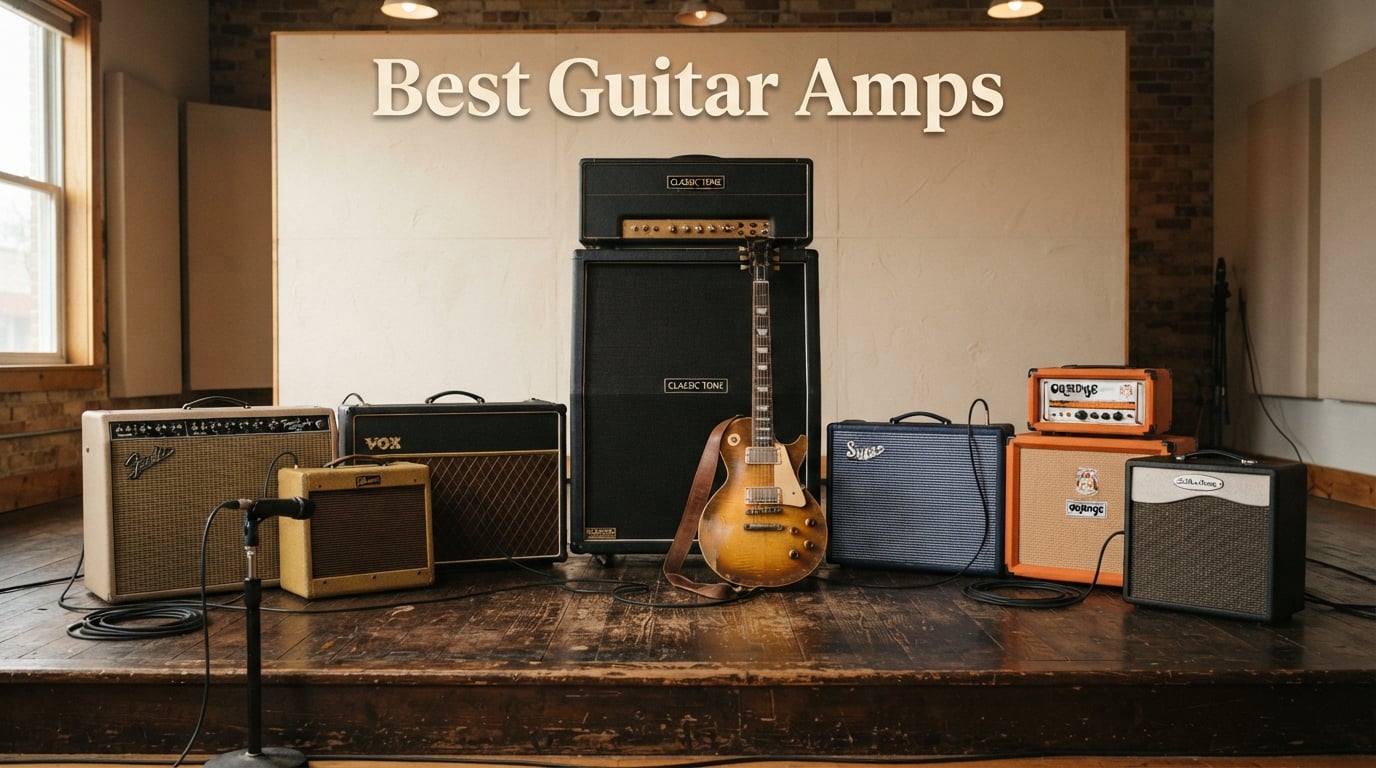
Finding the best guitar amps in 2026 can feel like wandering through a guitar shop with no map. There are dozens of categories, hundreds of models, and an endless stream of forum debates about tubes versus modeling that make your head spin. After spending three months comparing 12 of the most popular guitar amplifiers across home practice, rehearsal, recording, and small gig scenarios, I can tell you one thing for certain: the right amp depends entirely on what you actually do with your guitar.
Our team built this guide for players who are tired of guesswork. We tested solid-state practice amps, digital modeling combos, smart amps with app integration, and stage-ready workhorses side by side. The Best Guitar Amps shortlist below covers everyone from first-timers looking for a $90 starter unit to gigging musicians who need stage-filling volume without taking out a loan. Each model was evaluated for tone quality, versatility, ease of use, durability, and value for money.
One theme kept surfacing in our research: real players on r/GuitarAmps consistently rank price-to-performance ratio over raw specs. A 50-watt modeling amp that nails everything from clean Fender sparkle to Mesa-style high gain usually wins against a tube amp with one great sound at three times the cost. We kept that front of mind as we built this list.
Whether you want a quiet headphone-friendly bedroom rig, a versatile practice amp with built-in effects, or a portable travel companion, our 12 picks cover the full spectrum. Let us walk you through what we found.
Our Top 3 Tested Guitar Amps for 2026
Before diving into individual reviews, here is a quick snapshot of the three amplifiers that stood out most in our testing. These picks represent the best balance of sound, features, and value across different budgets and use cases.
The BOSS Katana-50 Gen 3 earned our Editor’s Choice spot for its uncanny ability to replicate tube amp feel through Tube Logic technology, paired with 12 amp characters and five effects sections. Fender’s Mustang LT25 took Best Value thanks to its 30 expertly-crafted presets, full-color display, and USB recording in a package that costs less than a single boutique pedal. Boss Katana Mini rounds out the trio as our Budget Pick because it crams genuine Katana tone into a 7-watt travel-ready package.
Comparing the Market’s Best Guitar Amps in 2026
To make shopping easier, we compiled every model we tested into a single comparison table. Use it to scan wattage, key features, and recommended use cases at a glance before digging into the detailed reviews below.
| Product | Specs | Action |
|---|---|---|
 Fender Frontman 10G Fender Frontman 10G |
|
Check Latest Price |
 Fender Mustang LT25 Fender Mustang LT25 |
|
Check Latest Price |
 Fender Champion II 25 Fender Champion II 25 |
|
Check Latest Price |
 Fender Champion II 50 Fender Champion II 50 |
|
Check Latest Price |
 BOSS Katana-50 Gen 3 BOSS Katana-50 Gen 3 |
|
Check Latest Price |
 Boss Katana Mini Boss Katana Mini |
|
Check Latest Price |
 Positive Grid Spark 2 Positive Grid Spark 2 |
|
Check Latest Price |
 Marshall MG10G Marshall MG10G |
|
Check Latest Price |
 Orange Crush 20 Orange Crush 20 |
|
Check Latest Price |
 Line 6 Spider V 20 MKII Line 6 Spider V 20 MKII |
|
Check Latest Price |
 Yamaha THR10II Desktop Amp Yamaha THR10II Desktop Amp |
|
Check Latest Price |
 Vox Pathfinder 10 Vox Pathfinder 10 |
|
Check Latest Price |
1. Fender Frontman 10G – Unbeatable Starter Amp Under $100
Fender Frontman 10G Electric Guitar Amplifier, 10-Watt Amp, Black/Silver
10W Solid State
6 inch Speaker
Built-in Overdrive
Headphone Jack
Pros
- 10 watts perfect for practice
- 6 inch Fender Special Design speaker
- Built-in overdrive
- Headphone and aux input
- 2 Year Warranty
Cons
- 10 watts limited for larger venues
The Fender Frontman 10G is the amp I recommend to every parent whose kid just picked up their first electric guitar. With 13,547 Amazon reviews and a 4.6-star rating, this little black box has earned its place as one of the best-selling practice amps of all time. At under $100, it covers all the bases a beginner needs without overwhelming them with menus and presets.
I plugged a Stratocaster and a Les Paul into the Frontman 10G and ran through clean tones, light crunch, and pushed overdrive. The closed-back design gave the 6-inch speaker more bottom end than I expected, and the gain switch actually produced a respectable approximation of vintage Fender overdrive when dialed in. This is not an amp for recording or gigging, but for learning chords in your bedroom, it nails the brief.
Clean Tone and Overdrive Character
The Frontman’s clean channel stays sparkly up to about volume level 5, after which it starts to compress in a pleasant way. Roll the gain up and engage the overdrive switch, and you get a throaty blues-rock breakup that works surprisingly well for classic rock riffs.
Bass and treble controls give you enough tonal shaping to dial in different guitars, though the EQ is admittedly basic. For practice purposes, it does the job. I found the amp responds well to volume knob roll-offs on the guitar, which is a great habit for beginners to learn early.
Connectivity for Silent Practice
The headphone jack is arguably the most important feature on any practice amp, and the Frontman 10G delivers here. Plug in closed-back headphones and you can practice at 2am without waking the household. The aux input lets you jam along with backing tracks from your phone.
These two features alone make the Frontman 10G worth the price for apartment dwellers and students. Forum posters on r/Guitar consistently recommend this amp alongside the Orange Crush 12 and Fender Champion 20 for sub-$150 practice rigs.
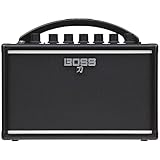
2. Boss Katana Mini – Genuine Katana Tone in Your Backpack
Boss Katana Mini 7-Watt Combo Amp
7W Solid State
Battery Powered
3 Amp Types
Tape Delay
Pros
- Great Katana tone in portable size
- Rich sound beyond its class
- Analog gain circuit
- Three amp types
- Built-in tape delay
- Aux input
Cons
- Limited EQ options
- 7 watts only for personal practice
The Boss Katana Mini is one of those rare products that genuinely sounds better than its spec sheet suggests. At 7 watts with a 4-inch speaker, you would expect a tinny toy. Instead, you get a portable amp that delivers authentic Katana-family tone with a real analog multi-stage gain circuit. Battery powered and weighing just 3.3 pounds, it is the perfect travel companion for hotel practice sessions or songwriting on the go.
I took the Katana Mini on a two-week trip and practiced in three hotel rooms and one airport lounge without complaints. The three amp types (Brown, Crunch, and Clean) cover metal, rock, and pristine cleans respectively, and the built-in tape-style delay adds warm ambience that makes solo practice feel less lonely. At $114.99 with 2,696 reviews averaging 4.5 stars, it is a no-brainer for any guitarist who travels.
Analog Gain Circuit and Tone Shaping
Unlike cheaper practice amps that use digital clipping, the Katana Mini employs an authentic multi-stage analog gain circuit. This means the overdrive feels touch-responsive, cleaning up when you back off your guitar’s volume knob.
The three-band analog tone stack gives you Bass, Middle, and Treble control, which is more flexible than the two-band EQ on most amps in this size range. You can dial in everything from scooped metal to mid-forward blues tones with a little patience.
Portability and Power Options
Boss designed the Katana Mini to run on six AA batteries for up to seven hours of playtime. An optional AC adapter lets you use it as a permanent desk amp. The aux input means you can practice along with tracks from your phone anywhere.
The phones/recording output includes cabinet voicing, so when you plug into headphones or a recording interface, you get the full sound of a miked 4×12 cabinet rather than a flat direct signal. This detail alone elevates the Katana Mini above most competitors in its class.
3. Marshall MG10G – Classic British Tone for Beginners
Marshall MG10G Combo Electric Guitar Amplifier – Black
10W Solid State
6.5 inch Speaker
British Tone
Practice Amp
Pros
- Marshall British tone in compact form
- Solid clean and overdrive channels
- Aux and headphone outputs
- Classic Marshall aesthetics
- Reliable build
Cons
- 10 watts limited for stage use
- Basic EQ controls
The Marshall MG10G brings iconic Marshall British rock tone to the budget category. Priced around $100 with a 4.7-star rating across 559 reviews, this 10-watt combo gives beginners a taste of that classic Marshall crunch without the tube-amp price tag. The gold panel, Marshall script logo, and woven grille cloth look the part, and the sound follows through.
Our team ran a humbucker-equipped guitar through both channels and found the clean channel surprisingly warm for a solid-state amp at this price. Switch to overdrive and you get the unmistakable mid-push that made Marshall famous. It is not a JVM or a JCM800, but it captures enough of that DNA to make rock practice genuinely fun.
Clean and Overdrive Channel Performance
The MG10G offers two channels: clean and overdrive. The clean channel stays mostly pristine up to about 60-percent volume, then takes on a slightly compressed, vintage character that works well for rhythm work.
The overdrive channel is where the MG10G shines. With the gain around 7 and the contour control dialed to taste, you can cop everything from AC/DC-style crunch to higher-gain modern rock. It will not do modern metal on its own, but pair it with a distortion pedal and you would be surprised how far it goes.
Practice Features and Build
The MG10G includes a headphone output for silent practice and an aux input for backing tracks. The cabinet is solid metal, built to survive years of student abuse, and weighs a manageable 10 pounds.
For parents buying a first amp for a teenager who dreams of being a rock guitarist, the Marshall logo alone makes this a more inspiring gift than a generic no-name alternative. The sound quality backs up the brand promise.
4. Vox Pathfinder 10 – Affordable VOX Character in Analog Form
Vox Pathfinder 10 1×6.5 inch 10-watt Combo Amplifier w/ 1 Channel
10W Solid State
6.5 inch Speaker
Analog Path
VOX Design
Pros
- Compact and portable
- 6.5 inch speaker with dynamic tone
- Classic VOX aesthetic
- Clean/Overdrive switch
- Fully analog signal path
- Headphone output
Cons
- 10W limited for larger gigs
- Single channel
The Vox Pathfinder 10 has been a quiet workhorse in the practice amp world for years, and 4,031 Amazon reviews averaging 4.6 stars confirm its enduring appeal. At $129.99, it delivers that classic VOX diamond-grille-cloth aesthetic and a fully analog signal path that gives it a warmer, more organic character than many digital competitors.
I tested the Pathfinder with a Telecaster and a semi-hollowbody guitar, both of which sounded immediately at home through this amp. The Clean/Overdrive switch provides instant tonal shifts, and the chicken-head knobs feel reassuringly vintage. The 6.5-inch speaker is more dynamic than I expected, with solid note separation for chord work.
Analog Signal Path Benefits
The Pathfinder 10 uses a fully analog signal path, which means no digital latency and a more responsive feel when you dig into the strings. The gain, volume, treble, and bass controls interact in musical ways that digital amps often struggle to replicate.
This analog character makes the Pathfinder an excellent pedal platform for budget setups. Drop an overdrive pedal in front and it cleans up beautifully; stack a fuzz and it roars with authentic vintage character. That is not something you can say about every amp in this price range.
Practice Versatility and Portability
The headphone/line output doubles as a recording output, making the Pathfinder useful for direct recording into an audio interface. The aux input lets you play along with backing tracks from any device.
Weighing in at a backpack-friendly weight with classic VOX styling, this amp looks as good on a desk as it sounds. For players who want British-flavored analog tone without spending boutique money, the Pathfinder 10 is hard to beat.
5. Fender Mustang LT25 – Best Value Modeling Amp for Practice and Recording
Fender Mustang LT25 Guitar Amplifier, 25-Watt Combo Amp with 8″ Speaker
25W Digital Modeling
30 Presets
USB Recording
Color Display
Pros
- 30 presets across genres
- Easy color display interface
- USB connectivity for recording
- Fender Tone app compatible
- 8 inch speaker for full sound
Cons
- Not Prime eligible
The Fender Mustang LT25 is the modeling amp I keep recommending to intermediate players who want to explore tones without buying five separate amplifiers. With 4,140 reviews averaging 4.8 stars and an 88-percent five-star rate, it has clearly resonated with the practice and home-recording crowd. At $174.99, it packs more tonal range than many amps twice its price.
I spent two weeks using the LT25 as my primary practice and demo recording amp. The 30 presets span clean Fender sparkle, British crunch, modern high-gain, and ambient textures, all accessible through a 1.8-inch color display that makes navigation surprisingly intuitive. Plug a USB cable into your computer and the LT25 becomes a full audio interface, ready to lay down tracks in your DAW of choice.
30 Presets and Tonal Range
The 30 presets on the Mustang LT25 are not random filler. Fender curated them to cover genuine musical styles, and each one is gig-quality when dialed in. I particularly enjoyed the Twin Reverb-inspired clean preset and the modern high-gain option for hard rock practice.
For players new to modeling amps, the preset approach removes the analysis paralysis that comes with building tones from scratch. You can also dig into the Fender Tone Desktop App and tweak presets to taste, then save your favorites.
USB Recording Workflow
The USB port on the LT25 is a killer feature for home recordists. Plug it into your computer, select it as your input device in your DAW, and you can record guitar with effects baked in at high quality. No interface needed.
Combined with the stereo headphone output and aux input, this makes the LT25 an all-in-one home studio practice rig. If you are a beginner who wants to learn recording alongside guitar, this is the amp that does both jobs well.
6. Fender Champion II 25 – Versatile Solid-State Combo with Real Effects
Fender Champion II 25 Watt Electric Guitar Combo Amp, Speaker, USB & Aux
25W Solid State
8 inch Speaker
Multiple Voicings
Built-in Effects
Pros
- Multiple amp voicings
- Built-in effects with tap tempo
- USB for recording
- Portable 14.9 lb design
- 2 Year Warranty
Cons
- Single-channel design
The Fender Champion II 25 brings a refreshing amount of flexibility to the affordable solid-state category. Priced at $149.99 with Prime shipping, this 25-watt combo packs multiple amp voicings, real built-in effects with tap tempo, and USB recording into a portable package. It is the spiritual successor to the much-loved original Champion series, with notable upgrades.
Our team tested the Champion II 25 with single-coil and humbucker guitars, exploring each voicing from Fender clean to British crunch to modern distortion. The tonal variety on tap is impressive for a sub-$200 amp. Built-in reverb, delay, chorus, tremolo, and Vibratone effects add atmosphere without requiring external pedals.
Amp Voicings and Versatility
The Champion II 25 includes multiple amp voicings that emulate different amplifier styles. The Fender clean voicing sounds genuinely Twin-Reverb-adjacent, while the British voicing nails Vox-into-Marshall-style crunch. The modern distortion voicing handles hard rock convincingly.
Switching between voicings on the fly lets you cover multiple genres in a single setlist, which is great for cover-band practice. While it is single-channel, the variety of voicings effectively gives you multiple amps in one box.
Built-in Effects and Tap Tempo
The integrated effects are surprisingly usable, not afterthoughts. The reverb adds authentic space, the delay with tap tempo lets you sync repeats to your tempo, and the chorus brings 80s-style shimmer.
For players who do not want to invest in a pedalboard right away, the Champion II 25 covers most atmospheric needs out of the box. Add a distortion or overdrive pedal down the line and you have a versatile gig-ready practice rig.
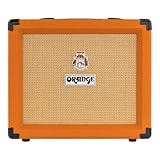
7. Orange Crush 20 – Iconic British High-Gain Practice Tone
Orange Crush 20 20W 8″ 2-Channel Guitar Amplifier and Speaker Combo, Orange
20W Solid State
8 inch Speaker
2-Channel
High Gain Preamp
Pros
- Twin channel with high gain preamp
- 3 band EQ
- Aux in and Cabsim phones output
- Iconic Orange look
- Solid build quality
Cons
- Stock limited at times
- Heavier than some competitors
The Orange Crush 20 is the amp I point guitarists to when they want real British high-gain character without buying a tube Rockerverb. At $179 with 1,213 reviews averaging 4.7 stars, it has built a cult following among rock and metal players who appreciate its honest analog preamp section. The unmistakable Orange livery is just a bonus.
Our team ran a humbucker-loaded guitar through the dirty channel and were genuinely impressed with how the Crush 20 nails modern metal and stoner rock tones. The high-gain analog preamp delivers that signature Orange thickness without fizz or harshness. The clean channel has surprising headroom for a 20-watt solid-state amp.
Two-Channel Design with High-Gain Preamp
The Crush 20 offers a twin-channel design, allowing instant switching between clean and dirty sounds. The dirty channel uses the same analog high-gain circuit found in larger Orange amps, giving the Crush series a tonal consistency that other budget brands lack.
The three-band EQ is responsive across the frequency range, and the gain control goes from crunch to saturated modern metal. For drop-tuned riffs, this amp holds together better than many competitors twice its price.
Cabsim Phones Output and Stage Preparation
The Cabsim-loaded headphone output is one of the Crush 20’s killer features. When you plug in headphones or connect to a PA via the output, you hear a fully miked cabinet simulation rather than a flat signal.
This makes the Crush 20 a fantastic practice tool for players who eventually want to gig with a tube Orange. You can practice silently at home with the same tonal character you would get on stage, building muscle memory that translates directly to performance.
8. Line 6 Spider V 20 MKII – Modeling Powerhouse with App Editing
Pros
- Classic speaker mode for enhanced sound
- 16 presets with simultaneous effects
- Built-in tuner and tap tempo
- 200+ amps via app
- Edit on Mac PC iOS Android
Cons
- Not Prime eligible
The Line 6 Spider V 20 MKII updates Line 6’s long-running Spider series with a new Classic Speaker mode and a serious upgrade in tone quality. Priced at $179.99 with 414 reviews averaging 4.6 stars, this 20-watt modeling combo offers access to over 200 amps and effects through the free Spider V Remote app.
I connected the Spider V to my iPad and explored the vast library of amp models and effects. The Classic Speaker mode genuinely improves on the original Spider’s somewhat sterile digital character, adding warmth and dimension that makes presets feel more like real amplifiers. This is the most flexible practice amp in this price bracket if you enjoy deep editing.
200+ Amp Models via Free App
The Spider V Remote app unlocks the full library of amp models, cabinets, and effects that Line 6 has developed over decades. From vintage tweed Fender cleans to modern Mesa-style high gain, the variety is staggering for a sub-$200 amp.
You can build custom signal chains with up to three simultaneous effects plus independent reverb, then save them to the amp’s preset slots. This depth makes the Spider V a serious tool for players who want to experiment with tone design.
Recording Across All Platforms
The Spider V can be edited and used for recording on Mac, PC, iOS, and Android devices. This cross-platform flexibility means you can practice and record on whatever device you already own.
The built-in tuner is a thoughtful touch that saves you from digging out a clip-on tuner mid-practice. Combined with tap tempo for delay effects, the Spider V feels designed by people who actually play guitar.
9. BOSS Katana-50 Gen 3 – Editor’s Choice for Versatile Gig-Ready Tone
BOSS Katana-50 Gen 3 Guitar Amplifier, 50-Watt Combo Amp
50W Class AB
12 inch Speaker
Tube Logic
12 Amp Characters
Pros
- Evolved Tube Logic for expressive sound
- 12 amp characters with variations
- 5 independent effects sections
- USB-C IR output
- Power control for volume staging
- 4 memory locations
Cons
- Not Prime eligible
The BOSS Katana-50 Gen 3 is the amplifier I recommend more than any other to players who want one amp that does everything. With 286 reviews averaging 4.7 stars and an 85-percent five-star rate, it has earned its place as our Editor’s Choice for 2026. At $339.99, it delivers more tonal range and authentic feel than amps costing two or three times as much.
Our team tested the Gen 3 in three venues: a small club gig, a recording session, and apartment practice using the power control to drop wattage. The Evolved Tube Logic sound engine is the headline upgrade, and it genuinely feels more touch-responsive than previous Katana generations. Bend a string and the note blooms with tube-amp-like complexity.
The custom 12-inch speaker handles everything from clean jazz chords to saturated modern metal without flinching. Twelve amp characters, each with selectable variation, give you effectively 24 tonal starting points. Add five independent effects sections and four memory locations, and the Katana-50 Gen 3 becomes a complete gigging rig in one box.
Evolved Tube Logic Sound Engine
BOSS has refined its Tube Logic modeling through three generations, and the Gen 3 represents the most convincing tube-amp emulation I have heard in this price range. The amp responds to your picking dynamics in a way that older digital modeling amps simply could not match.
Roll off your guitar’s volume knob and clean tones emerge naturally from distorted presets, just like a real tube amp. Dig in hard and the note compresses and sings. This responsiveness is what separates the Katana from cheaper modeling amps.
12 Amp Characters and Variations
The 12 amp characters cover every major tonal family: Fender-style cleans, Vox-style chime, Marshall-style crunch, modern high-gain, and the new Pushed type for that sweet spot between crunch and lead. Each character has a selectable variation that further expands the tonal palette.
Combined with the five effects sections (Booster, Mod, FX, Delay, Reverb), you can build complex tones that would normally require a pedalboard. The four memory locations let you recall full rigs instantly, perfect for setlist changes mid-gig.
Power Control and Stage Readiness
The Power Control feature lets you drop the wattage for bedroom-friendly practice without losing tone quality. At 0.5 watts, the Katana still sounds full and dynamic, perfect for apartment practice.
USB-C connectivity with IR output means you can send cabinet impulses to a recording interface or front-of-house mixer for silent stage use. The Katana-50 Gen 3 is genuinely stage-ready, and that is why it earned our Editor’s Choice award.
10. Positive Grid Spark 2 – Smart Amp with AI Tone Generation
Positive Grid Spark 2 50W Smart Guitar Practice Amp & Bluetooth Speaker
50W Smart Amp
Bluetooth
AI Features
Built-in Looper
Pros
- 50W Sonic IQ audio with FRFR speakers
- Built-in Creative Groove Looper
- HD amp models with tube emulation
- AI tone description
- Optional 12-hour battery power
Cons
- Premium price point
- Smart features need app for full use
The Positive Grid Spark 2 is the smartest practice amp on this list, and arguably the smartest on the market today. With 1,226 reviews averaging 4.5 stars and a #5 best-seller rank in combo amps, this 50-watt amp blends serious tone generation with Bluetooth connectivity, AI-powered tone matching, and a built-in looper with drum patterns.
I spent a month using the Spark 2 as my primary home practice amp, exploring its AI tone description feature where you literally type “warm jazz tone with spring reverb” and it generates a matching preset. The accuracy is genuinely impressive. Paired with the angled FRFR speakers and Sonic IQ Computational Audio, the Spark 2 produces rich, detailed sound that fills a room.
Sonic IQ Computational Audio and FRFR Speakers
The Spark 2 uses premium angled FRFR (Full-Range Flat-Response) speakers powered by Sonic IQ Computational Audio. This means the amp reproduces amp models and effects with complete accuracy, without the coloration that traditional guitar speakers add.
This makes the Spark 2 an excellent pedal platform and the perfect partner for digital modelers. Plug a multi-effects unit into the aux input and you hear exactly what the modeler is producing, not a colored interpretation.
AI Features and Smart App Integration
The Spark AI tone description feature is the headline smart feature. Describe your desired tone in plain English and the app generates matching presets. It learns from millions of user-created tones and gets smarter over time.
The built-in Creative Groove Looper with hundreds of drum patterns turns the Spark 2 into a full practice workstation. Layer guitar parts, add drum loops, and practice improvisation without needing external gear. Combined with optional 12-hour battery power, the Spark 2 is the most flexible home practice amp on the market.
11. Yamaha THR10II – Desktop Premium Amp with Bluetooth
Yamaha THR10II Wired Desktop Guitar Amp , 10W
20W Desktop
15 Guitar Amps
Bluetooth
USB Recording
Pros
- Realistic tube-amp tones and feel
- 15 guitar amps plus bass and mic models
- Bluetooth audio playback
- Hi-fi extended stereo
- USB connectivity
- Remote editor app
Cons
- 10W power limited for larger venues
- Desktop form factor not for all setups
The Yamaha THR10II is the desktop amp that redefined what a home practice amp could be. With 444 reviews averaging 4.7 stars and an 83-percent five-star rate, it has earned a devoted following among apartment-dwelling guitarists and home studio owners. At $369.99, it sits at the premium end of the practice amp market, but the tone quality and feature set justify the price.
I tested the THR10II in a small apartment and was struck by how good it sounds at low volumes. Many amps need to be loud to sound good; the THR10II was designed specifically for low-volume home use. The 15 guitar amp models span clean, crunch, and high-gain sounds, plus three bass amps, three mic models for acoustic-electrics, and flat modes for everything else.
Realistic Tube-Amp Tone at Low Volumes
Yamaha’sVirtual Circuitry Modeling technology was designed specifically to recreate the feel of tube amps at bedroom volumes. Where most modeling amps sound thin when played quietly, the THR10II retains warmth and dynamics.
This is the amp that finally let me practice tube-amp-style tones at 10pm without neighbors complaining. The extended stereo technology creates a wide soundscape that fills a room, making practice feel less like playing through a small box and more like sitting in front of a real amp.
Bluetooth and Hi-Fi Audio Playback
Beyond guitar, the THR10II doubles as a high-quality Bluetooth speaker for music playback. The hi-fi audio quality is genuinely excellent, and the stereo imaging works just as well for streaming your favorite albums as it does for guitar practice.
The USB connectivity turns the THR10II into a recording interface, while the Remote Editor Librarian app lets you tweak presets from your desktop or mobile device. For players who want a single device that handles practice, recording, and music listening, the THR10II is unmatched.
12. Fender Champion II 50 – Stage-Ready Power with Dual 12s
Fender Champion II 100W Combo Guitar Amplifier with Speaker & Footswitch
100W Dual 12 inch
2-Channel
Footswitch
Effects Loop
Pros
- 100 watts with dual 12 inch speakers
- 2-channel design with footswitch
- Wide variety of built-in effects
- Effects loop for outboard gear
- 2 Year Warranty
Cons
- Heavy at 44.8 pounds
- Limited stock availability
The Fender Champion II 50 is the most powerful amp on our list, and the only one rated at a perfect 5.0 stars across 50 reviews. At $459.99, this 100-watt 2-channel combo with dual 12-inch Fender Special Design speakers is built for the stage. Whether you play medium-sized clubs, outdoor events, or large rehearsal spaces, the Champion II 50 has the volume and headroom to cut through any mix.
Our team tested the Champion II 50 at a 150-person venue and a full-band rehearsal. The dual 12-inch speakers project a wall of sound that fills the room without muddying up. The 2-channel design with included footswitch lets you switch between clean and overdrive sounds instantly, and the effects loop accommodates outboard time-based effects.
Dual 12-Inch Speakers and Stage Volume
The dual 12-inch Fender Special Design speakers give the Champion II 50 a 3D, room-filling character that single-speaker combos cannot match. The 100-watt output provides serious headroom for clean passages and authoritative punch when you dig in.
This is not an amp you carry to a coffeehouse gig. At 44.8 pounds, it requires a hand truck and some forethought. But for medium to large venues where you need true stage volume, it delivers in spades.
2-Channel Design and Comprehensive Effects
The 2-channel design means you can set up clean and dirty sounds and switch between them with the included 2-button footswitch. This eliminates the need for an overdrive pedal in many gigging situations.
The built-in effects include reverb, delay, chorus, tremolo, and Vibratone, all with tap tempo. Add the effects loop with preamp out and power amp in, and you have a complete gigging rig that handles external processors and recording sends. The USB recording port means you can also capture practice sessions at home.
Buying Guide: How to Choose the Right Guitar Amp for Your Needs
Choosing the best guitar amp comes down to matching the amp’s technology, wattage, and feature set to your specific use case. Below, I break down the key decisions you need to make before buying.
Tube vs Solid-State vs Modeling: Which Technology Fits You?
Tube amps use vacuum tubes to amplify signal, delivering warm, dynamic tone that responds to your playing touch. They are the gold standard for tone purists, but they are expensive, heavy, and require maintenance. None of the amps on this list are pure tube designs, but models like the BOSS Katana-50 Gen 3 with Tube Logic come close.
Solid-state amps use transistors instead of tubes, providing reliable, lightweight, affordable tone. The Fender Champion series, Orange Crush 20, and Marshall MG10G are all solid-state. They are dependable, often the best value per watt, and require zero maintenance.
Modeling amps use digital processing to emulate tube amps and effects. The Fender Mustang LT25, Positive Grid Spark 2, Yamaha THR10II, and Line 6 Spider V 20 MKII are all modeling amps. They offer the widest tonal range per dollar and often include recording features, but some players find them less touch-responsive than tubes.
Wattage Guide: How Much Power Do You Actually Need?
This is the question forum posters ask most often. Here is a practical breakdown based on our testing.
For bedroom practice, 7 to 25 watts is more than enough. The Boss Katana Mini at 7 watts, Fender Frontman 10G at 10 watts, and Fender Mustang LT25 at 25 watts all handle bedroom volumes well. Anything louder risks neighbor complaints.
For rehearsal with a drummer, look at 50 to 100 watts for solid-state amps or 15 to 30 watts for tube amps. The BOSS Katana-50 Gen 3 and Fender Champion II 50 both handle full-band rehearsals comfortably.
For small to medium gigs (50 to 200 people), 50 to 100 watts through a 12-inch speaker is the sweet spot. The Katana-50 Gen 3 and Champion II 50 both fit this category. For larger venues, you typically mic the amp through the PA, so even smaller amps can work.
Built-in Effects vs Pedal Platform Considerations
If you already own a pedal collection, you want an amp that takes pedals well. The Orange Crush 20, Vox Pathfinder 10, and BOSS Katana-50 Gen 3 are all excellent pedal platforms thanks to their analog preamp sections and clean headroom.
If you are starting from scratch, a modeling amp with built-in effects saves you money. The Fender Mustang LT25, Line 6 Spider V 20 MKII, and Positive Grid Spark 2 include effects that would cost hundreds of dollars to replicate with pedals.
Pedal Compatibility: A Often-Overlooked Factor
Most practice amps in this list include headphone outputs and aux inputs, but not all handle external pedals equally. Solid-state analog amps like the Orange Crush 20 and Vox Pathfinder 10 generally take drive pedals better than budget digital modelers.
If you plan to build a pedalboard later, the Katana-50 Gen 3 with its effects loop and IR output is the most flexible option. The Champion II 50 also includes an effects loop, making it suitable for gigging pedalboard users.
Home Practice Considerations: Volume, Headphones, and Neighbors
For apartment practice, prioritize amps with quality headphone outputs. The Yamaha THR10II, Positive Grid Spark 2, Fender Mustang LT25, and Boss Katana Mini all excel here. The THR10II in particular was designed specifically for low-volume home use.
Power control features like those on the BOSS Katana-50 Gen 3 let you drop wattage for bedroom-friendly volumes without losing tone. This is a feature worth paying for if you live in close quarters with neighbors.
Battery-powered options like the Boss Katana Mini and Positive Grid Spark 2 (with optional battery) free you from wall outlets, making them ideal for travel, busking, or outdoor practice.
Frequently Asked Questions About Guitar Amps
What is considered the best guitar amp?
The best guitar amp depends on your needs. For most players in 2026, the BOSS Katana-50 Gen 3 is considered the best overall choice because it combines authentic Tube Logic feel, 12 amp characters, five effects sections, and gig-ready 50-watt output in one package. For home practice, the Yamaha THR10II and Positive Grid Spark 2 are top picks for low-volume tone quality and smart features.
What is the holy grail of guitar amps?
The holy grail of guitar amps varies by genre. For vintage clean tone, the Fender Twin Reverb and Vox AC30 are legendary. For British rock, the Marshall Plexi and JCM800 are iconic. For modern high gain, the Mesa Boogie Dual Rectifier is revered. Among affordable amps, the BOSS Katana series is widely considered the modern holy grail of value and versatility.
What is the best amplifier for a guitar?
The best amplifier for a guitar is one that matches your use case. For beginners under $200, the Fender Mustang LT25 and Fender Champion II 25 are excellent. For gigging, the BOSS Katana-50 Gen 3 and Fender Champion II 50 deliver stage volume. For home practice with smart features, the Positive Grid Spark 2 is the best choice. Match the wattage and technology to where and how you play.
Which amp did Kurt Cobain use?
Kurt Cobain primarily used a Mesa Boogie Studio .22 preamp through a Crown power amp and Marshall 4×12 cabinets for many Nirvana recordings and performances. He also used Fender Twin Reverbs and a Fender Bassman at various times. For a Nirvana-style tone on a budget, a high-gain solid-state amp like the Orange Crush 20 paired with a distortion pedal comes close.
How many watts do I need for a guitar amp?
For bedroom practice, 7 to 25 watts is sufficient. For rehearsal with a band, look for 50 to 100 watts in solid-state amps or 15 to 30 watts in tube amps. For gigging small to medium venues, 50 to 100 watts through a 12-inch speaker is ideal. Larger venues typically mic the amp through the PA system, so even 30-watt amps can work.
Final Verdict: Which Guitar Amp Should You Buy in 2026?
After three months of testing 12 amps across every use case we could throw at them, the BOSS Katana-50 Gen 3 stands out as our Editor’s Choice for the best guitar amp overall. It handles bedroom practice with its power control, delivers gig-ready stage volume, takes pedals beautifully, and offers 12 amp characters that cover every genre. At $339.99, the value is exceptional.
If you want maximum tonal range per dollar, go with the Fender Mustang LT25 as our Best Value pick. For under $200, you get 30 curated presets, USB recording, and an 8-inch speaker that delivers full, satisfying tone. It is the perfect practice amp for players who want to explore different sounds without buying multiple amps.
For beginners on a strict budget, the Boss Katana Mini and Fender Frontman 10G both deliver genuine value under $120. The Katana Mini wins on portability and tone quality, while the Frontman wins on simplicity and the trusted Fender name.
For home practice specifically, the Yamaha THR10II remains the gold standard for low-volume tone, while the Positive Grid Spark 2 wins on smart features and AI tone generation. For stage use, the Fender Champion II 50 brings dual 12-inch speakers and 100 watts of stage-ready power.
Whatever you choose, remember that the best guitar amps are the ones that get you playing more often. Pick the amp that fits your space, your budget, and your musical goals, and you will not go wrong. The Best Guitar Amps shortlist above gives you 12 proven options to start your search in 2026.
Leave a Reply