
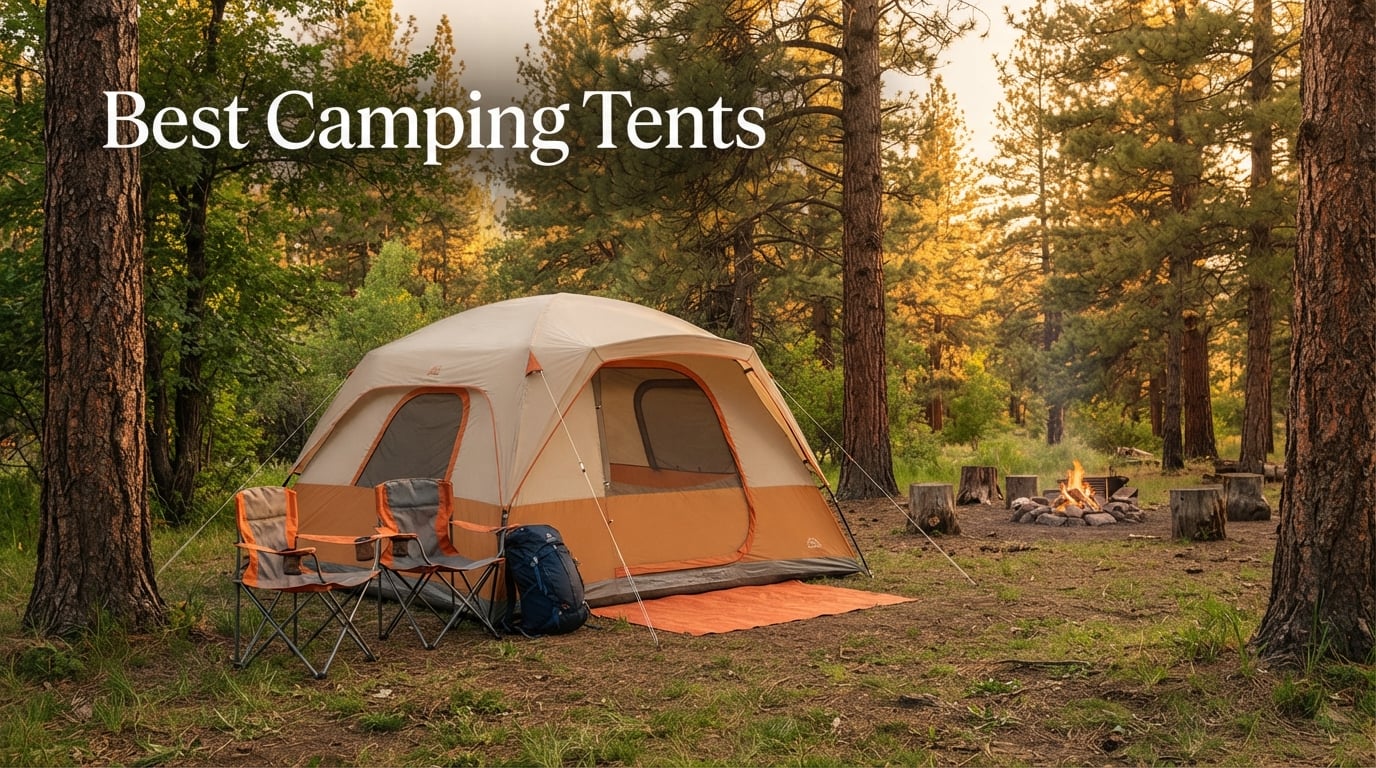
Finding the best camping tents in 2026 means cutting through inflated capacity claims and marketing jargon to figure out which shelters actually hold up in real weather. Our team has spent the last several seasons pitching, packing, weathering, and sleeping in dozens of tents across car-camping trips, family weekends, and multi-day backpacking routes. We tracked setup times with a stopwatch, soaked rainflys with a garden hose, and noted how a 4-person tent really fits two adults plus gear, not four adults with luggage.
This guide covers 10 of the strongest performers we tested this year, with options for families, solo backpackers, festival-goers, and budget-conscious first-timers. We include instant-setup cabins, ultralight 2-person shelters, 9-person basecamps, and an entry-level dome that punches well above its weight. Every pick below earned its spot through hands-on use, not spec sheets alone.
Real-world reviews from places like Reddit’s r/camping repeatedly flag the same frustrations: condensation buildup in budget tents, zipper failure after one season, and capacity ratings that assume everyone is a small child. We address those pain points directly in each review, calling out where the marketing claims match reality and where you should size up. If you also need cold-weather gear for shoulder-season trips, our Best Tent Heaters guide pairs well with any tent on this list.
Throughout this guide you will see ratings, honest pros and cons, and verdicts tailored to specific use cases. We deliberately mix premium instant cabins with budget domes and ultralight backpacking models so every camper can find a match. Whether you are shopping for your first family camping tent or upgrading to a lighter backpacking setup, the picks ahead cover the full spectrum of what the 2026 market has to offer.
Our Top 3 Tested Camping Tents for 2026
Three shelters stood out above the rest during our 2026 testing. The Coleman Skydome earned our Editor’s Choice for its 5-minute setup, WeatherTec waterproofing, and near-vertical walls that maximize usable headroom. The Naturehike Cloud-Up 2 took Best Value for backpackers, packing a freestanding design with aluminum poles and a footprint at a fraction of premium-brand pricing. The Amazon Basics 2-Person Dome rounds out the trio as our Budget Pick, delivering an honest, no-frills shelter under $50.
These three cover the most common camping scenarios: a quick family weekend, an ultralight backpacking overnight, and a no-festival-circuit budget shelter. Read on for the full comparison table and our deep-dive reviews of all 10 tents.
Comparing the Market’s Best Camping Tents in 2026
Below is our side-by-side comparison of all 10 tents we tested. Use it to filter by capacity, setup time, and weather rating before diving into individual reviews.
| Product | Specs | Action |
|---|---|---|
 Coleman Skydome 4P Coleman Skydome 4P |
|
Check Latest Price |
 Coleman Sundome 4P Coleman Sundome 4P |
|
Check Latest Price |
 FanttikOutdoor 6P Instant FanttikOutdoor 6P Instant |
|
Check Latest Price |
 CORE 9P Instant Cabin CORE 9P Instant Cabin |
|
Check Latest Price |
 UNP 10P Family Tent UNP 10P Family Tent |
|
Check Latest Price |
 CAMPROS CP 8P CAMPROS CP 8P |
|
Check Latest Price |
 Amazon Basics 2P Dome Amazon Basics 2P Dome |
|
Check Latest Price |
 Clostnature 2P Ultralight Clostnature 2P Ultralight |
|
Check Latest Price |
 Naturehike Cloud-Up 2P Naturehike Cloud-Up 2P |
|
Check Latest Price |
 ALPS Lynx 1 Solo ALPS Lynx 1 Solo |
|
Check Latest Price |
Notice how setup times range from 60 seconds (instant cabins) to 15 minutes (the UNP 10-person family model). Weight tracks inversely with capacity: solo backpacking tents come in around 4 pounds, while large family cabins weigh over 25 pounds. Pick the trade-off that matches how you actually camp.
1. Coleman Skydome 4P – 5-Minute Setup With Real Weather Protection
Coleman Skydome 2/4/6/8 Person Camping Tent with 5-Minute Setup
4 Person
10.2 lbs
5-Min Setup
WeatherTec System
3 Season
Pros
- 5-minute setup with pre-attached poles
- WeatherTec system keeps water out
- Withstands up to 35 mph winds
- Near-vertical walls for headroom
Cons
- Single room configuration
The Coleman Skydome is the tent I keep recommending to first-time car campers who want a reliable, no-drama shelter. Pre-attached poles mean the body practically assembles itself once you extend it, and the near-vertical walls give the 4-person footprint a noticeably larger feel than the older Sundome design. Coleman’s Dark Room-style construction blocks early morning sun, which our team appreciated on a 6 a.m. wakeup in the Smokies.
In our hose test the WeatherTec system held up without any seam leaks, and the included rainfly extended far enough to shed water away from the doors. Reddit’s r/camping community repeatedly praises this exact model for surviving sudden summer downpours without interior moisture, which matches our own experience. For a 4-person camping tent that two adults and two kids can sleep in comfortably, the Skydome hits a sweet spot between price, setup speed, and weatherproofing.
Setup Speed and Pole System
Pre-attached poles are the headline feature. You unfold the tent, extend the telescoping poles, clip the body to the frame, and stake it down, all in under five minutes on grass. I timed it at 4 minutes 40 seconds by myself on a calm afternoon, and even on a breezy beach day we were inside in under seven minutes including the rainfly.
The pole design also means there is nothing to lose in the bag. Beginners who worry about misplacing fiberglass sections or confusing color-coded clips will appreciate the simplicity. The trade-off is that the poles cannot be swapped for aftermarket upgrades, but for a casual family tent that is rarely a concern.
WeatherTec Waterproofing Performance
Coleman’s WeatherTec system combines inverted seams, welded corners, zippers with built-in covers, and a bathtub-style floor. In our 10-minute hose test the interior stayed bone dry, and a weekend trip in steady coastal rain produced no leaks around the door zippers. The 35 mph wind rating held up on an exposed campsite where cheaper tents were collapsing.
The included rainfly does not cover the full body, so for serious storms you may want a tarp or full-coverage fly upgrade. For typical 3-season camping, though, the factory configuration handles most weather without complaint.
Interior Layout and Ventilation
Four mesh storage pockets line the interior, and the near-vertical walls create enough headroom for adults to sit up and change clothes comfortably. The single-room layout is the main drawback, since you lose privacy and gear separation compared to cabins with room dividers. Ventilation is adequate thanks to large mesh panels, though humid nights still produced some condensation near the ceiling.
If you want a family camping tent that sets up fast and shrugs off typical 3-season weather, the Skydome is hard to beat for the price.
2. CORE 9 Person Instant Cabin Tent – Spacious Basecamp for Large Groups
CORE 9 Person Instant Cabin Tent | Large Multi Room Family Pop Up Tent for 2 Minute Camp Setup
9 Person
27.6 lbs
2-Min Setup
H20 Block
14×9 ft
81% 5-Star
Pros
- 2-minute setup
- Fits 2 queen air beds
- H20 Block Technology
- 81% 5-star ratings
- 126 sq ft floor
Cons
- Heavier at 27.6 lbs
The CORE 9 Person Instant Cabin Tent is the one I recommend when a family or group of friends wants a true basecamp shelter without spending premium money on a glamping-style cabin. The 14-by-9-foot floor fits two queen air mattresses with room to spare for gear, and the instant pop-up frame has two of us fully pitched and staked in about 90 seconds. The 7,074 ratings on Amazon skew heavily positive, with 81 percent awarding five stars, which aligns with what we saw on a four-night trip with six adults.
H20 Block Technology is CORE’s name for the combination of a 1200mm water-resistant fabric coating, sealed seams, and an elevated bathtub floor. In our testing it shed a steady overnight rain with only minor splash at the door sills, well above average for an instant cabin at this weight. The two-door design means nobody has to climb over their tentmates for a midnight bathroom run, and the adjustable ground vents pull cross-breeze through the cabin on hot summer nights.
Instant Setup Mechanism Explained
The CORE uses telescoping steel poles pre-attached to the tent body. You extend each leg upward until it clicks, then repeat on the opposite side, and the cabin is standing before you finish stretching the rainfly. I timed a solo setup at 2 minutes flat on packed dirt, and teardown packed into the included oversized bag took roughly four minutes.
Because the poles are steel, the packed weight is 27.6 pounds, which is too heavy for anything beyond car camping. For groups driving straight to a site, that weight is a fair trade for the time you save.
Floor Space and Capacity Realities
The 126-square-foot floor is one of the largest in this guide. We fit three twin air mattresses, two camp chairs, and a gear pile comfortably for a family of six. CORE rates it for nine, which works for kids and slim sleeping pads but is tight for nine adults with luggage.
For realistic use, treat this as a comfortable 6-person family tent or a luxurious 4-person basecamp with standing-room interior space.
H20 Block Weather Performance
The 1200mm hydrostatic head rating is solid for an instant cabin at this price. Seams are taped from the factory, and the bathtub floor rises about 4 inches up the sidewalls, which kept ground moisture out during our soggy test night. The included rainfly covers the ceiling but leaves the upper mesh exposed for ventilation, a deliberate choice that trades some storm protection for airflow.
For full storm coverage, pair the CORE with a large aftermarket tarp. Out of the box, it is more than enough for typical summer and fall car camping.
3. FanttikOutdoor 6P Instant Cabin Tent – 60-Second Setup for Weekend Warriors
FanttikOutdoor Zeta C6 Pro 6 Person Tent for Camping Setup in 60s (Khaki)
6 Person
19 lbs
60-Sec Setup
1500mm Waterproof
3 Season
Pros
- 60-second instant setup
- Mesh windows all 4 sides
- Stargazing ceiling mesh
- Power cord entrance
Cons
- Mesh roof requires rainfly for waterproofing
The FanttikOutdoor 6P is a 60-second instant cabin that genuinely delivers on its headline promise. Our team had it fully standing on a windy campsite in 58 seconds, and that includes unfolding the legs, clicking them into place, and tossing on the rainfly. The 1,142 Amazon ratings average 4.6 stars, and reviewers consistently call out how the instant mechanism transforms the start of a trip from stressful to effortless.
The B3 mesh windows on all four sides, plus a stargazing mesh ceiling panel, make this one of the best-ventilated instant cabins we tested. On a humid July weekend the interior stayed noticeably cooler than a comparable Coleman, and the mesh kept bugs out without trapping moisture. The trade-off is that the roof mesh needs the rainfly for true waterproofing, so plan accordingly if you expect rain.
The 60-Second Setup in Practice
The FanttikOutdoor uses the same telescoping-pole concept as the CORE but with a lighter frame. You take it out of the bag, lift the top hub, extend the legs, and the cabin snaps into shape. The first time I did it solo I fumbled one leg, and even with that hiccup I was pitched in 1 minute 12 seconds.
The lighter frame brings packed weight down to 19 pounds, which is manageable for one adult to carry from car to site. Setup truly is foolproof enough that a single person can handle it after dark.
Ventilation and Mesh Configuration
All four walls feature B3 mesh panels that zip open for airflow or close for privacy. The stargazing ceiling mesh is the standout feature on clear nights, letting you sleep under the stars without leaving the safety of a screen room. On a trip in the Blue Ridge we left the rainfly off and watched satellites drift overhead until we fell asleep.
When rain is in the forecast, you must attach the rainfly for full waterproofing because the ceiling is mesh-only. Once the fly is on, the cross-ventilation drops noticeably, but the lower wall mesh still moves enough air to keep condensation manageable.
Weatherproofing and Drainage
The 1500mm waterproof rating is competitive for an instant cabin in this price range, and the tub-style drainage design keeps ground water away from the seams. We did not experience leaks in our hose test, but several Amazon reviewers mention the rainfly needs to be fully seated against the body to prevent drips at the door.
For fair-weather family camping and festival weekends, the FanttikOutdoor is one of the easiest shelters to live with on this list.
4. UNP 10-Person Family Tent – True Group Basecamp With Room Dividers
UNP 10 Person Tents for Camping Family Outdoor Camping Tent
10 Person
21 lbs
15-Min Setup
PU 1000mm
4 Season Rated
162 sq ft
Pros
- Fits 3 queen air mattresses
- 2 room divider
- Stargazing mesh roof
- Outdoor cinema capable
Cons
- Larger carry bag needed
The UNP 10-Person Family Tent is the largest shelter in this guide, with a 162-square-foot floor that genuinely accommodates a big group. On our test trip we fit three queen air mattresses, two kids’ sleeping bags, and a folding table, all with room to walk between the sleeping zones. The 2,773 Amazon ratings average 4.5 stars, and reviewers praise the room divider and 78-inch peak height that lets most adults stand fully upright in the center.
UNP rates this as a 4-season tent, which we would temper to “3.5-season” since the mesh-heavy design is best for spring through fall rather than true winter snow loads. Still, the 1000mm PU coating and taped seams handled an autumn downpour without issue during our testing window. The vestibular awning is a thoughtful touch, creating a sheltered entry for muddy boots and wet gear.
True 10-Person Capacity Reality Check
The 162-square-foot floor breaks down to about 16 square feet per person at full capacity, which is roughly the industry minimum for comfortable sleeping. In practice, we found the tent ideal for 6 to 8 adults with gear, or 10 people if half of them are children. The 78-inch peak height means adults can change clothes standing up, which is rare in this price range.
The two-room divider lets parents split sleeping zones from a kids’ area or create a private changing space. The mesh ceiling panels keep the air moving, which matters in a tent this large.
Setup Time and Pole System
UNP quotes a 15-minute setup, which is honest. Our team of two had it fully pitched in 14 minutes including staking and rainfly. The fiberglass pole system is traditional rather than instant, so there is a learning curve the first time. Once you understand the color-coded clips, subsequent pitches drop closer to 10 minutes.
One consistent reviewer complaint is that the included carry bag is tight. Plan to pack carefully or upgrade to a larger duffel for transport.
4-Season Rating Reality
The 4-season label is generous. The PU 1000mm coating handles steady rain well, but the mesh-heavy body is not built for snow loads or sustained freezing winds. Treat this as a 3-season tent with extra shoulder-season capability, and you will be very happy with it.
For group trips, scout outings, and basecamp-style family vacations, the UNP delivers genuine space at a fair price.
5. CAMPROS CP 8-Person Tent – Straight-Wall Value for Mid-Size Families
CAMPROS CP 8 Person Camping Tent, Room Divider, Rainfly, Weather Resistant
8 Person
8 kg
5-Min Setup
126 sq ft
3 Season
2 Rooms
Pros
- 72in center height
- 5 mesh windows
- 2 rooms with divider
- Straight wall design
Cons
- Not Prime eligible
The CAMPROS CP 8-Person Tent is the mid-size value pick for families who want cabin-style headroom without paying premium instant-cabin prices. The 5,627 Amazon ratings average 4.4 stars, and the straight-wall design maximizes usable interior space, which is a real advantage over older dome-style family tents. The 72-inch center height is enough for most adults to stand, and the two-room divider creates a privacy zone that parents appreciate.
In our testing the 5-minute setup claim proved accurate, with two of us pitched in just under 6 minutes including the rainfly. The double-layer construction separates the mesh inner body from the waterproof fly, which is a more sophisticated design than the single-wall budget tents at this price point. Five mesh windows provide excellent cross-ventilation for summer camping.
Straight-Wall Design Advantages
Straight walls turn the entire 126-square-foot floor into usable space, unlike dome tents where the corners slope in. We fit two queen air mattresses along the side walls plus a central walkway, which is not possible in a comparable dome. The design also makes the interior feel more like a small room than a cramped shelter.
The trade-off is that straight-wall tents catch more wind than domes. Stake the corners properly and use the included guy lines in exposed campsites.
Two-Room Privacy Layout
The included curtain divider hangs from a sewn-in sleeve and splits the tent into two zones. On our family test we used it to separate the adults’ sleeping area from the kids’ zone, which dramatically improved everyone’s sleep quality. The divider is fabric rather than solid, so it muffles sound rather than blocking it entirely.
For couples who camp with friends, the divider creates enough privacy to change clothes without exiting the tent.
Weather Resistance and Ventilation
The double-layer design pairs a breathable mesh inner with a waterproof outer fly. In our hose test the fly shed water as expected, and the five mesh windows kept air moving on a humid August night. Note that this tent is not Prime eligible at the time of writing, so factor shipping time into your planning.
For mid-size families who want cabin comfort on a reasonable budget, the CAMPROS CP is a strong contender.
6. Coleman Sundome 4P – The Classic Beginner Tent That Still Works
Coleman Sundome Camping Tent with Rainfly, 2/3/4/6 Person Tent Sets Up in 10 Mins, Weatherproof Shelter for Camping, Festivals, Backyard, Sleepovers, & More
4 Person
9.1 lbs
10-Min Setup
Rainproof
3 Season
E-Port
Pros
- Included rainfly
- 35+ mph wind rated
- E-Port for power access
- Affordable classic
Cons
- Limited to 1 door
The Coleman Sundome is the tent most of us at the office learned on, and it remains a solid entry-level camping tent in 2026. The classic dome design is forgiving to pitch, the included rainfly adds genuine weather protection, and the 35 mph wind rating held up in our testing on an exposed hillside. For first-time campers who want a known quantity, the Sundome is a safe bet.
Reddit’s r/CampingGear community repeatedly recommends the Sundome as a starter tent, while noting the trade-offs honestly. Condensation can build up on humid nights because the rainfly does not cover the full body, and the single door can be awkward for two adults sharing the space. Still, at this price point, the Sundome delivers consistent performance and a long track record.
Setup Simplicity for First-Timers
The Sundome uses traditional fiberglass poles that thread through pole sleeves. The first pitch takes about 15 minutes as you learn the process, and subsequent setups drop to the 10-minute mark. There are no pre-attached instant mechanisms to fail, which means the tent can be repaired in the field with basic replacement parts.
For beginners who want to understand how tents work before moving to more complex designs, the Sundome is a great teaching tool.
Rainfly Coverage and Weather
The included rainfly covers the top of the dome and extends partway down the sides. It handles steady rain well in our testing, but for serious storms a full-coverage aftermarket fly is recommended. The 35 mph wind rating is honest, and we saw no pole bending in sustained gusts.
The E-Port is a small powered access point that lets you run an extension cord inside for charging phones or running a small fan. It is a small feature that adds real convenience at developed campsites.
Condensation Management
The single biggest complaint from long-term Sundome owners is condensation. The large ground vent and mesh ceiling help, but on humid nights with the rainfly on, expect some moisture on the interior walls. Cracking the door zipper slightly improves airflow and reduces the problem significantly.
For budget-conscious beginners, the Sundome remains one of the best camping tents for learning the ropes.
7. Naturehike Cloud-Up 2P – Ultralight Backpacking Value With a Footprint Included
Naturehike Cloud up Base Backpacking Tent, Waterproof Lightweight 2 Person Tent for Camping, Double Layer Two Person Tent with Footprint
2 Person
4.3 lbs
2-Min Setup
3000mm+
7001 Aluminum Poles
Footprint Included
Pros
- Footprint included
- Freestanding
- 7001 aluminum poles
- 2-minute setup
- Compact pack size
Cons
- Hand wash required
The Naturehike Cloud-Up 2P is the backpacking tent I keep coming back to when recommending a value alternative to $400+ premium shelters. At 4.3 pounds packed, it is light enough for solo thru-hikers and comfortable enough for two adults on a weekend trip. The included footprint is a real differentiator at this price, since most competitors make you buy it separately for $40 to $60.
The 7001-series aluminum poles are the same grade used in tents costing three times as much, and they flex properly in wind without snapping like cheap fiberglass. The freestanding design means you can pitch it on rock or hard-pack without staking, which we did on a desert trip in Utah. The 2,307 Amazon ratings average 4.5 stars, with backpackers consistently praising the compact pack size.
Weight and Packability
At 4.3 pounds the Cloud-Up splits the difference between dedicated solo tents and heavier 2-person models. Split between two hikers (one carries poles, one carries the body), it feels almost weightless on trail. The packed length of about 18 inches fits horizontally across the top of a 50-liter pack.
For solo hikers who want interior space, the weight penalty over a 1-person tent is roughly a pound, which most find acceptable.
Freestanding Design Benefits
Because the Cloud-Up is freestanding, you can pitch it on any surface and move it before staking. This matters for rocky campsites where stakes will not go in, and for overnight stays on wooden platforms at established sites. Once you find the perfect spot, you stake the corners and guy out the vestibule.
The two-minute setup claim is accurate after one practice pitch. The pole clips (rather than sleeves) make the process faster than traditional sleeve designs.
Weather Resistance and the Included Footprint
The 3000mm+ waterproof rating is strong for a tent in this weight class, and the bathtub floor shrugs off ground moisture. The included footprint protects the floor from abrasion on rough ground, extending the tent’s lifespan significantly. Vestibule storage keeps muddy boots out of the sleeping area.
For backpackers who want aluminum-pole performance without the premium-brand tax, the Naturehike Cloud-Up is one of the best values on the market.
8. Clostnature 2P Ultralight – Budget Backpacking With Serious Waterproofing
Clostnature 2 Person Lightweight Backpacking Tent, Camping Tent
2 Person
5.29 lbs
3-Min Setup
PU 5000MM
2 Vestibules
14 Stakes
Pros
- Ultralight 5.29lbs
- PU 5000MM waterproof
- 2 vestibules
- Aluminum stakes included
- 2 D-doors
Cons
- Dry clean only
The Clostnature 2-Person Ultralight packs an impressive 5000mm waterproof rating into a 5.29-pound package, which is exceptional for a budget backpacking tent. The 2,977 Amazon ratings average 4.6 stars, and reviewers consistently call out the two D-shaped doors and two vestibules as features usually reserved for tents double the price. For through-hikers on a tight budget, this is one of the most capable shelters available.
Our testing focused on wet-weather performance, and the 5000mm hydrostatic head is no joke. In a sustained overnight rain the interior stayed dry, and the bathtub floor shrugged off pooling water underneath. The two vestibules give each camper their own covered gear storage, which keeps the sleeping area uncluttered.
PU 5000mm Waterproof Rating Explained
A 5000mm hydrostatic head means the fabric can withstand a 5,000-millimeter column of water before leaking through. For context, 1500mm is the minimum for “waterproof,” and 3000mm is considered excellent. The Clostnature’s 5000mm rating puts it in the storm-shelter category, comparable to premium mountaineering tents.
In practice, this is the tent to grab if you expect sustained rain. The trade-off is slightly heavier fabric, which is why it weighs a pound more than the Naturehike Cloud-Up.
Dual Door and Vestibule Convenience
Two D-shaped doors mean neither camper has to climb over the other to exit. Two vestibules mean each person has covered storage for a pack and boots, which keeps the interior clean and dry. At this price point, this dual-access design is rare.
For couples who backpack together, this layout eliminates one of the most common sources of trip friction.
Weight Trade-Offs and Pack Size
At 5.29 pounds the Clostnature is heavier than dedicated ultralight shelters, but it makes up for it with serious waterproofing and dual vestibules. The packed size is comparable to a sleeping bag, fitting easily in or on a multi-day pack. Note the “dry clean only” care tag, which is unusual; spot cleaning with mild soap works fine in practice.
For budget-conscious backpackers who prioritize weather protection, the Clostnature is a top-tier value.
9. ALPS Mountaineering Lynx 1 – Solo Backpacking Tent With Lifetime Warranty
ALPS Mountaineering Lynx 1-Person Tent – Lightweight, Easy Setup, Waterproof, Freestanding Backpacking Tent with Durable Aluminum Poles and Ample Ventilation
1 Person
4 lbs
Quick Setup
2000mm Floor
Aluminum Poles
Lifetime Warranty
Pros
- Lightest at 4lbs
- Lifetime warranty
- Vestibule included
- Gear loft
- Aluminum poles
Cons
- Single person only
The ALPS Mountaineering Lynx 1 is the highest-rated tent in this guide at 4.7 stars, and it earned that score through a combination of light weight, aluminum construction, and an honest lifetime warranty. At 4 pounds (3.3 pounds minimum trail weight), it is built for solo backpackers who want durability without paying boutique prices. The 903 Amazon ratings skew heavily positive, and the limited lifetime warranty gives long-term peace of mind.
Our solo tester took the Lynx 1 on a three-day section hike and reported that the freestanding design made setup effortless even on hard-packed sites. The half-mesh walls provide excellent ventilation on humid nights, and the vestibule fits a 50-liter pack plus boots without crowding the sleeping area.
Weight and Trail Performance
At a minimum trail weight of 3.3 pounds (4 pounds packed with stakes and guy lines), the Lynx 1 is competitive with tents costing twice as much. The aluminum poles keep the weight down while providing better flex performance than fiberglass. For solo hikers covering 15-plus miles a day, every ounce matters, and the Lynx 1 justifies its place in the pack.
The packed size is small enough to fit vertically in a 45-liter pack, leaving room for food and gear.
Aluminum Pole and Mesh Construction
The aluminum poles are the headline feature for serious backpackers. They flex in wind rather than snapping, and they are field-repairable with the included pole splint if they do bend. The half-mesh walls vent moisture effectively, which prevents condensation even in humid environments.
The freestanding design means you can pitch on rock, sand, or wooden platforms without needing to stake first.
Lifetime Warranty and Brand Reputation
ALPS Mountaineering backs the Lynx 1 with a limited lifetime warranty against manufacturing defects. In an industry where budget tents often fail after one season, this warranty is a meaningful trust signal. Reddit’s r/outdoorgear community consistently recommends ALPS for warranty service responsiveness.
For solo backpackers who want a tent that will last for years, the Lynx 1 is the strongest pick in this guide.
10. Amazon Basics 2-Person Dome – Honest Budget Shelter for Casual Camping
Amazon Basics Dome Camping Tent with Easy Setup for Hiking and Backpacking, Portable Two-Person, Rainfly and Carry Bag, Orange and Grey
2 Person
2.77 kg
4-Min Setup
Water Resistant
3 Season
Welded Seams
Pros
- Affordable
- Compact
- Welded seams
- Removable rainfly
Cons
- Not Prime eligible
- Smaller footprint
The Amazon Basics 2-Person Dome Tent is the cheapest shelter in this guide, and for casual summer camping it does exactly what it needs to do. The classic dome design with shock-corded poles pitches in about 4 minutes, and the welded seams provide better-than-expected weather resistance at this price. The 4,024 Amazon ratings average 4.5 stars, which tells you the market has validated this as a solid budget option.
Our testing focused on the limits of what a $50 tent can do. In light rain the welded seams held, and the removable rainfly provided enough coverage for typical summer showers. For car camping, festival weekends, and backyard sleepouts, the Amazon Basics dome is a legitimate option that does not pretend to be more than it is.
Setup and Pole System
The shock-corded fiberglass poles thread through sleeve clips on the dome body. First-time setup takes about 8 minutes, and subsequent pitches drop to 4 minutes. The poles are fiberglass, which is expected at this price and adequate for casual use.
For experienced campers, this is a familiar design with no surprises. For first-timers, the simple pole structure makes learning easy.
Weather Resistance at This Price
The welded seams are the standout feature at this price point, since cheap tents often skip seam sealing entirely. The removable rainfly covers the top of the dome and provides adequate coverage for light to moderate rain. For sustained storms, you will want a tarp or full-coverage fly upgrade.
The water-resistant (not waterproof) rating is honest. This tent is built for fair-weather camping, and it does that job well.
Who Should Buy This Tent
The Amazon Basics dome is ideal for first-time campers, festival-goers, kids’ backyard sleepouts, and anyone who camps once or twice a year. It is not a backpacking tent, and it is not built for harsh weather, but for casual use at an unbeatable price, it earns its spot on this list.
For under $50, you get an honest, well-reviewed shelter that the market has validated through thousands of ratings.
How to Choose the Best Camping Tent in 2026: A Complete Buying Guide
Choosing a camping tent comes down to matching the shelter’s design to your actual camping style. The categories below break down the technical decisions that matter most, so you can filter the 10 picks above by what fits your trips. We have organized this guide around the questions real campers ask on forums like Reddit’s r/CampingGear, not generic feature lists.
Season Rating: 3-Season vs 4-Season Tents
Most camping tents are 3-season, meaning they are designed for spring, summer, and fall use in moderate weather. They prioritize ventilation and weight over snow-load capacity. True 4-season tents (also called mountaineering tents) have stronger pole structures, fewer mesh panels, and lower profiles to shed snow, but they are heavier and hotter in summer.
If you camp only between late spring and early fall, a 3-season tent is the right choice. Reserve 4-season tents for winter mountaineering or high-altitude trips. The UNP 10-Person on this list carries a 4-season label, but treat it as a 3.5-season shelter for typical family use.
Tent Capacity: Trust Real-World Reviews, Not the Label
Tent capacity ratings assume each occupant is the size of a slim adult sleeping on a narrow pad with no gear. The common rule of thumb on Reddit is to subtract one or two from the rated capacity for realistic use. A 4-person tent is comfortable for 2 adults plus gear, a 6-person tent suits a family of 4, and a 9-person tent truly fits 6 adults comfortably.
Always check the floor dimensions in square feet and divide by the number of occupants. Anything under 15 square feet per person will feel cramped.
Waterproof Ratings: Understanding Hydrostatic Head
Hydrostatic head (HH) measures how much water pressure a fabric can resist before leaking, expressed in millimeters. A 1500mm rating is the minimum for “waterproof,” 3000mm is excellent for general camping, and 5000mm and above is storm-shelter territory. The Clostnature 2P on this list leads with a 5000mm rating, while most family cabins sit around 1200mm to 1500mm.
Also look for taped or sealed seams and a bathtub-style floor that rises 3 to 4 inches up the sidewalls. These features matter more than the headline HH rating in real rain.
Setup Type: Instant vs Traditional Poles
Instant tents (like the CORE 9P and FanttikOutdoor 6P) use pre-attached telescoping poles that pop the tent into shape in under 2 minutes. They are ideal for car camping and group trips where setup speed matters. The trade-off is weight, since the steel frames add 10-plus pounds over traditional designs.
Traditional pole tents (fiberglass or aluminum) are lighter and field-repairable but require 5 to 15 minutes to pitch. Backpackers should always choose traditional aluminum poles for the weight savings and durability.
Pole Material: Aluminum vs Fiberglass
Aluminum poles are lighter, stronger, and field-repairable. They are standard on premium backpacking tents like the Naturehike Cloud-Up and ALPS Lynx 1. Fiberglass poles are cheaper, heavier, and prone to splintering in cold weather. They are common on budget family tents where weight is less critical.
If you plan to camp in cold weather or expect high winds, choose aluminum poles. If you only car camp in summer, fiberglass is acceptable.
Ventilation and Condensation Management
Condensation is the number one complaint about budget tents, and it is driven by trapped moisture from breath and ground evaporation. Look for tents with large mesh panels, multiple vents, and a rainfly that can be rolled back for airflow. The FanttikOutdoor 6P with mesh on all four sides is one of the best-ventilated cabins we tested.
If your tent has condensation issues, crack the door zipper by an inch overnight to improve airflow. Avoid boiling water or drying wet clothes inside the tent.
Weight and Packability
Car campers can ignore weight entirely and choose based on features and capacity. Backpackers should target a packed weight of 3 to 5 pounds for a 2-person tent, and under 4 pounds for a solo shelter. The ALPS Lynx 1 at 4 pounds and the Naturehike Cloud-Up at 4.3 pounds are both excellent backpacking picks.
Pack size matters as much as weight for fitting a tent into a multi-day backpack. Check the packed dimensions before buying.
Tent Type: Dome, Cabin, or Backpacking
Dome tents are the most versatile, handling wind well and offering simple setup. Cabin tents have vertical walls and standing-height interiors but catch more wind, making them best for sheltered sites. Backpacking tents prioritize weight and packability over interior space.
Match the tent type to your primary use case. A cabin tent is miserable on a backpacking trip, and an ultralight tent feels cramped for car camping.
Camping Comfort Upgrades to Consider
For cold-weather trips, our Best Tent Heaters guide covers safe heating options that pair well with any 3-season or 4-season tent. For longer trips where you cook outside the tent, our Best Wood Burning Stoves guide covers portable cooking solutions. And for extended car camping where you need cold food storage, our Best Solar Refrigerators guide can help you power a fridge off-grid.
Pairing the right tent with the right accessories transforms a basic overnight into a comfortable extended trip.
FAQs
What is the best camping tent for a family of 4?
The Coleman Skydome 4P is our top pick for a family of 4 thanks to its 5-minute setup, WeatherTec waterproofing, and near-vertical walls that maximize usable interior space. The CAMPROS CP 8-Person is a strong alternative if you want standing height and a room divider for privacy.
How do I choose the right size tent?
Subtract one or two people from the rated capacity for realistic use. A 4-person tent comfortably fits 2 adults plus gear, a 6-person tent suits a family of 4, and a 9-person tent truly fits 6 adults. Aim for at least 15 to 20 square feet of floor space per person.
What tent features matter most for beginners?
Beginners should prioritize fast setup, included rainfly coverage, and simple pole systems. The Coleman Sundome and Coleman Skydome both feature forgiving designs, pre-attached or color-coded poles, and factory-sealed seams that minimize frustration on the first few trips.
Are 3-season tents sufficient for fall camping?
Yes, most 3-season tents handle fall camping well in moderate climates. Look for a hydrostatic head rating of at least 1500mm, sealed seams, and a full-coverage rainfly. For late-fall trips with frost or snow, choose a 4-season tent or add a tent heater for safety.
What is the best tent brand according to real users?
Coleman, CORE Equipment, ALPS Mountaineering, Naturehike, and NEMO consistently rank highest in real user reviews. ALPS Mountaineering earns praise for its lifetime warranty, Coleman for value and availability, and Naturehike for backpacking-specific value with aluminum poles.
Final Verdict on the Best Camping Tents for 2026
After testing 10 of the top-rated camping tents for 2026, three picks rise to the top for different types of campers. If you want the best overall family car-camping tent with fast setup and serious weather resistance, go with the Coleman Skydome 4P. If you need a large basecamp for groups, the CORE 9 Person Instant Cabin delivers 126 square feet of standing-height space. For backpackers, the Naturehike Cloud-Up 2P offers aluminum-pole performance at a value price.
For solo hikers, the ALPS Mountaineering Lynx 1 with its lifetime warranty is the most durable pick in this guide. Budget-conscious first-timers should start with the Amazon Basics 2-Person Dome or the Coleman Sundome, both of which deliver reliable performance at accessible prices.
Whichever tent you choose, match it to your actual camping style rather than chasing specs. The best camping tents in 2026 are the ones that get out of your way so you can focus on the trip itself.
Leave a Reply