
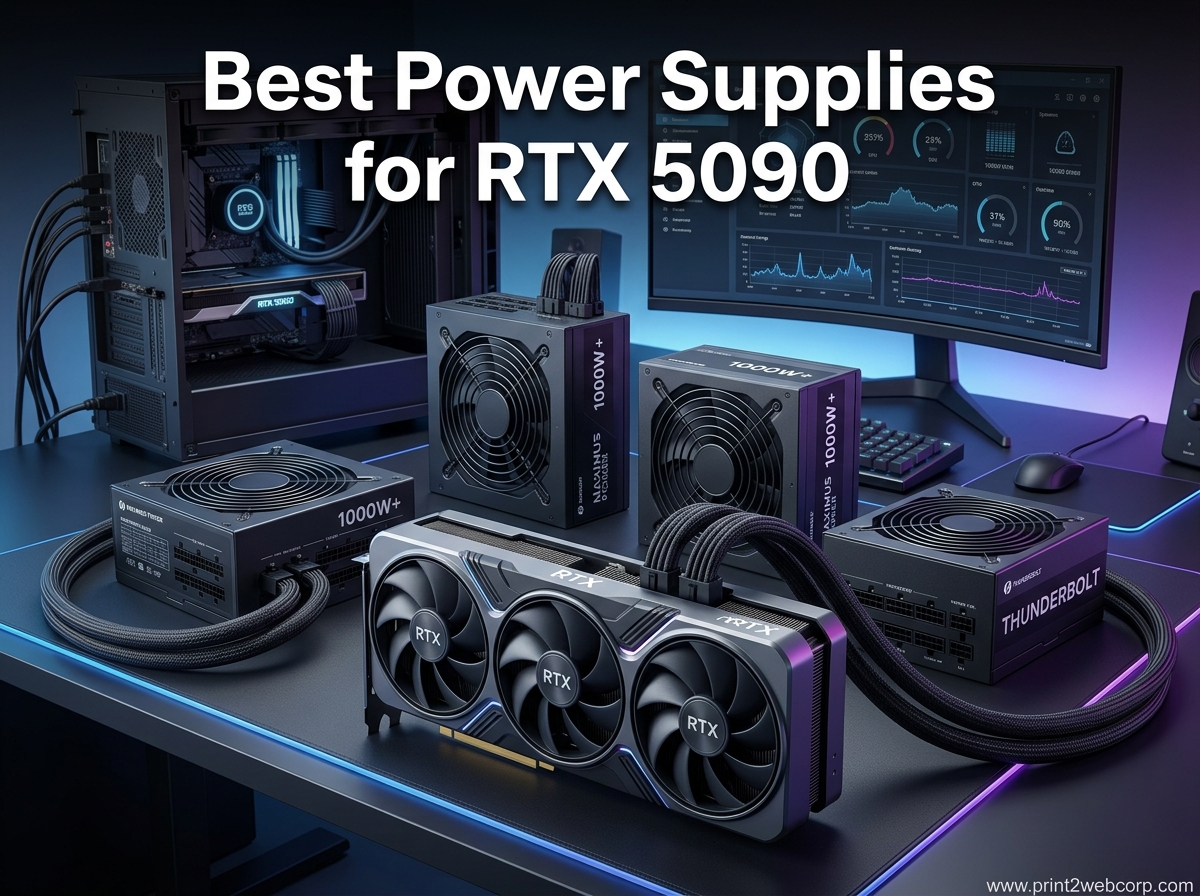
The NVIDIA RTX 5090 is the most power-hungry consumer GPU ever shipped, with a 575W TDP and transient spikes that can briefly push well beyond that number. Finding the best power supplies for RTX 5090 builds in 2026 is not a luxury — it is the difference between a stable rig and random shutdowns the moment you load a 4K shader compile or a long AI training run.
NVIDIA officially recommends a 1,000-watt PSU for a reference 5090 paired with a mainstream CPU. Real-world testing from Reddit builders tells a slightly different story: a 9950X3D plus 5090 on a 1600W Corsair AX1600i pulls around 1400W under full synthetic load, and overclocked 5090s routinely bump against the 600W limit the 12V-2×6 connector is rated for. If you are researching RTX 5090 graphics cards or planning a high-end desktop build, the PSU decision deserves the same attention as the GPU itself.
For 2026, the non-negotiable checklist is short: ATX 3.1 (or ATX 3.0 at minimum), a native 12V-2×6 / PCIe 5.1 connector rated for 600W, 80 PLUS Gold or higher, full modularity, and a warranty of at least 10 years. Every PSU on this list meets that bar. I have grouped the six picks by wattage tier — 1000W value, 1200W sweet spot, and 1600W extreme — so you can match the unit to your CPU pairing and overclocking plans.
Top 3 Best Power Supplies for RTX 5090 (September 2026)
These three cover the broadest range of RTX 5090 builders: the Corsair RM1000x for the proven mainstream pick, the Seasonic Vertex GX-1200 for the 1200W sweet spot that Reddit unanimously recommends, and the Seasonic Focus GX-1000 as the compact value option that still clears NVIDIA’s 1000W minimum. The full comparison table below breaks down all six picks.
6 Best Power Supplies for RTX 5090 (September 2026)
| Product | Specs | Action |
|---|---|---|
 Corsair RM1000x ATX 3.1 1000W Corsair RM1000x ATX 3.1 1000W |
|
Check Latest Price |
 Seasonic Focus GX-1000 ATX 3.1 Seasonic Focus GX-1000 ATX 3.1 |
|
Check Latest Price |
 Seasonic Vertex GX-1200 Seasonic Vertex GX-1200 |
|
Check Latest Price |
 Corsair HX1200i (2025) Corsair HX1200i (2025) |
|
Check Latest Price |
 ASUS ROG Strix 1200W Platinum ASUS ROG Strix 1200W Platinum |
|
Check Latest Price |
 Seasonic PRIME PX-1600 ATX 3.1 Seasonic PRIME PX-1600 ATX 3.1 |
|
Check Latest Price |
1. Corsair RM1000x ATX 3.1 – The Mainstream 1000W Standard
CORSAIR RM1000x ATX 3.1 PCIe 5.1 Ready Fully Modular 1000W Power Supply – Low-Noise, Cybenetics Gold Efficiency, Native 12V-2×6 Connector – Black
1000W
80+ Gold
ATX 3.1
Native 12V-2×6
Fully Modular
10-Year Warranty
Pros
- Flexible embossed cables
- Dead silent under load
- Stable voltage
- 10-year warranty
- Native 12V-2×6 connector
Cons
- Only 2 cable combs included
- Some Platinum-confirmed units mislabeled
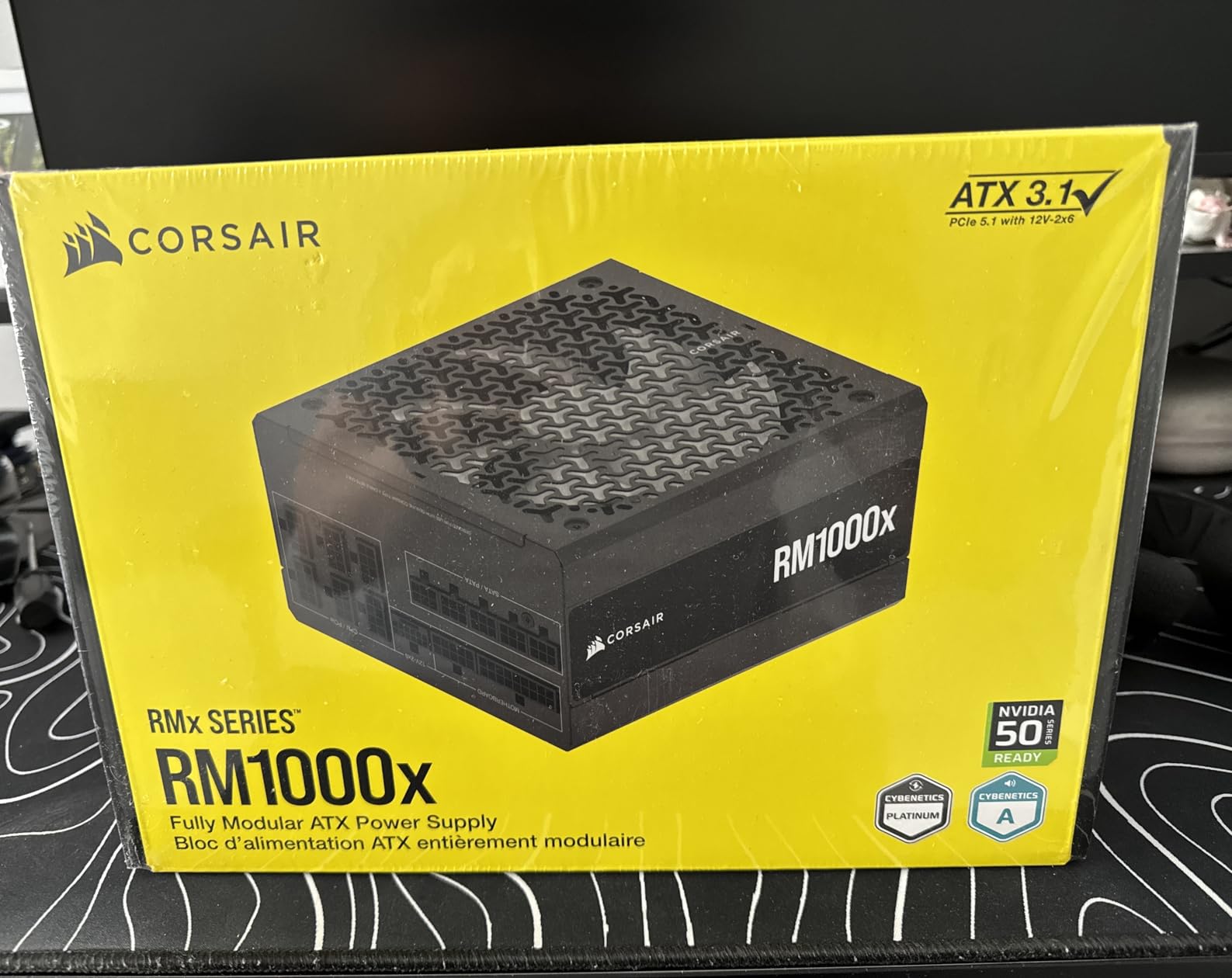
The Corsair RM1000x ATX 3.1 is the PSU I recommend more than any other for a stock RTX 5090 paired with a 9800X3D or Ryzen 7 class CPU. It sits at number two on Amazon’s bestseller list for computer power supplies with over 3,500 ratings, and an 88% five-star distribution tells you everything about long-term ownership. At 1000W Gold, it lands exactly at NVIDIA’s minimum recommendation with enough headroom to stay in the efficient 60 to 80 percent load band.
What makes the 2024/2025 RMx refresh special is the embossed cable kit. The old RMx units were notorious for stiff, thick cables that fought you during routing. The new individually sleeved embossed cables bend cleanly, route easily behind the motherboard tray, and ship with low-profile combs. Multiple verified buyers specifically called out the improvement over their previous Corsair units from 2017 and earlier.
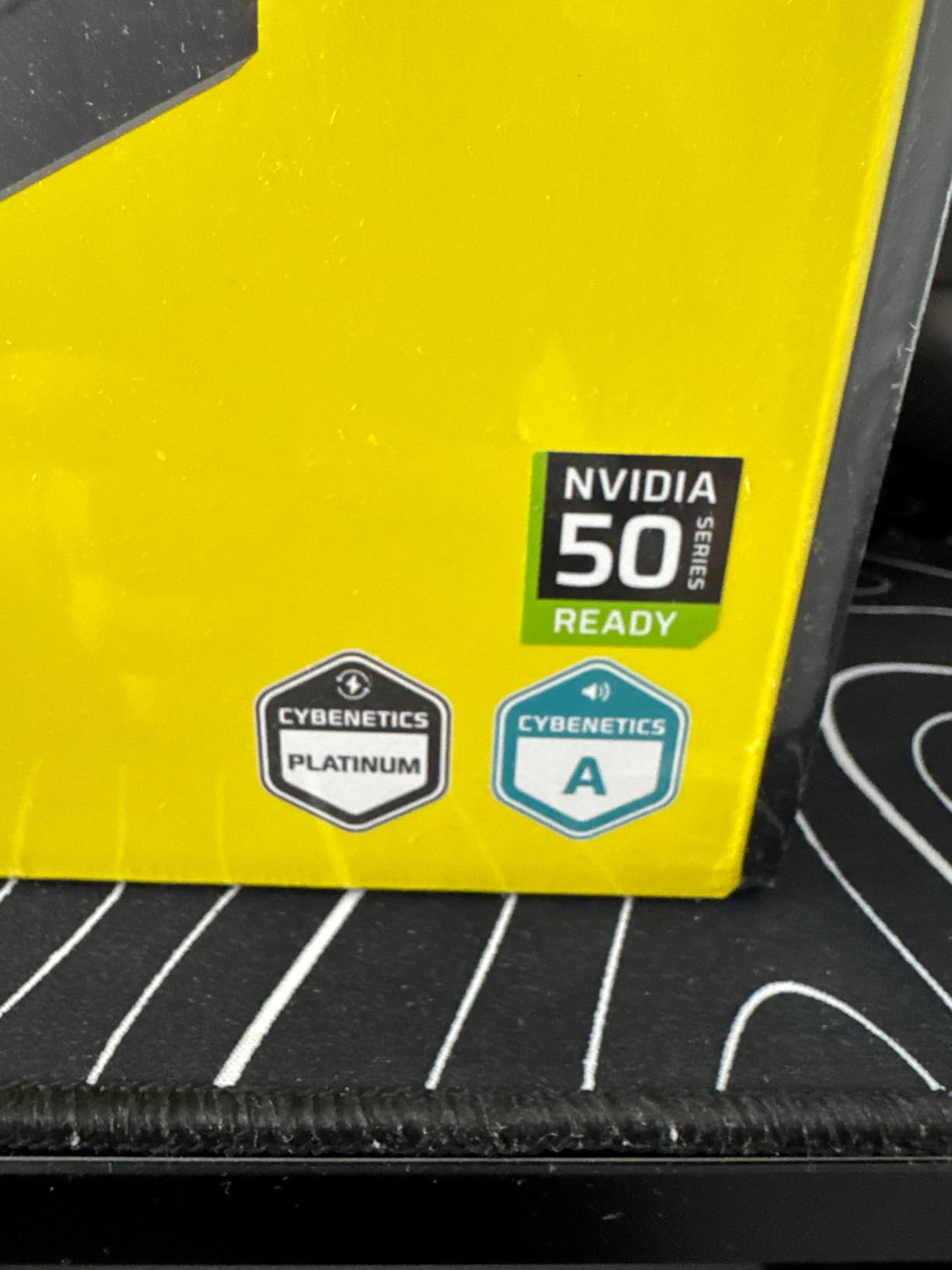
On the technical side, the RM1000x is ATX 3.1 certified with PCIe 5.1 support and a native 12V-2×6 connector rated at 600W. No adapter needed, no quad-PCIe cable mess. Cybenetics Gold efficiency peaks around 91 percent, and the transient spike handling is rated to 200 percent of rated output for 1 millisecond — well beyond what the 5090 throws at it. The zero-RPM fan mode keeps the unit silent at desktop loads, and even under gaming load, the fan barely registers against typical case fans.
One quirk worth flagging: several recent buyers received units with internal components that benchmark as Platinum efficiency, even though the box says Gold. That is a good problem to have, but it suggests Corsair is binning higher-tier components into Gold SKUs to clear stock. You may also notice only two cable combs in the box — most builders add their own.
Best for: 9800X3D + RTX 5090 at stock clocks
If you are running a Ryzen 7 9800X3D or Intel Core Ultra 7 with a reference-clocked RTX 5090 and a normal gaming workload, the RM1000x is the cleanest answer. Verified buyer Scott H. confirmed a stable 14900K plus RTX 5080 build with the native 16-pin GPU connector, and multiple owners report identical stability on 5090 rigs.
Not ideal for: heavy overclocking or dual-GPU AI workloads
If you plan to push a 5090 past 600W with a flashed power limit, pair it with a 9950X3D at full synthetic load, or add a second GPU for AI rendering, step up to a 1200W unit below. The RM1000x will handle stock 5090 duty all day, but it has no headroom for power-limit unlocked 5090s under sustained 100% load.
2. Seasonic Focus GX-1000 ATX 3.1 – The Compact Value Pick
Seasonic Focus GX-1000 1000W Power Supply ATX 3.1 & PCIe 5.1 Ready
1000W
80+ Gold
ATX 3.1
Native 12V-2×6
Hybrid Fan
10-Year Warranty
Pros
- Compact 5.9 inch depth
- Braided flexible cables
- Whisper quiet hybrid fan
- Japanese capacitors
- Native 12V-2×6
Cons
- Limited availability in white
- Some reviews mention stiff cables on older revisions
The Seasonic Focus GX-1000 ATX 3.1 is the underdog of this list and the highest-rated PSU here at 4.8 stars. It hits the same 1000W Gold bar as the Corsair RM1000x but in a more compact chassis that fits tighter builds. If you are working with a smaller mid-tower or considering one of the premium Mini-ITX cases that accept ATX PSUs, the shorter 5.9-inch depth makes cable routing dramatically easier.
Verified buyer feedback is overwhelmingly positive about the cable quality. The braided, flexible cables made cable management “a breeze” for Josiah Volz in an NZXT dual-chamber case, and Jacob and Becky noted the wire coatings felt premium compared to their previous unit. Multiple reviewers specifically mentioned how quiet the hybrid fan mode is — the fan does not spin at all under desktop loads and stays nearly inaudible under gaming load.
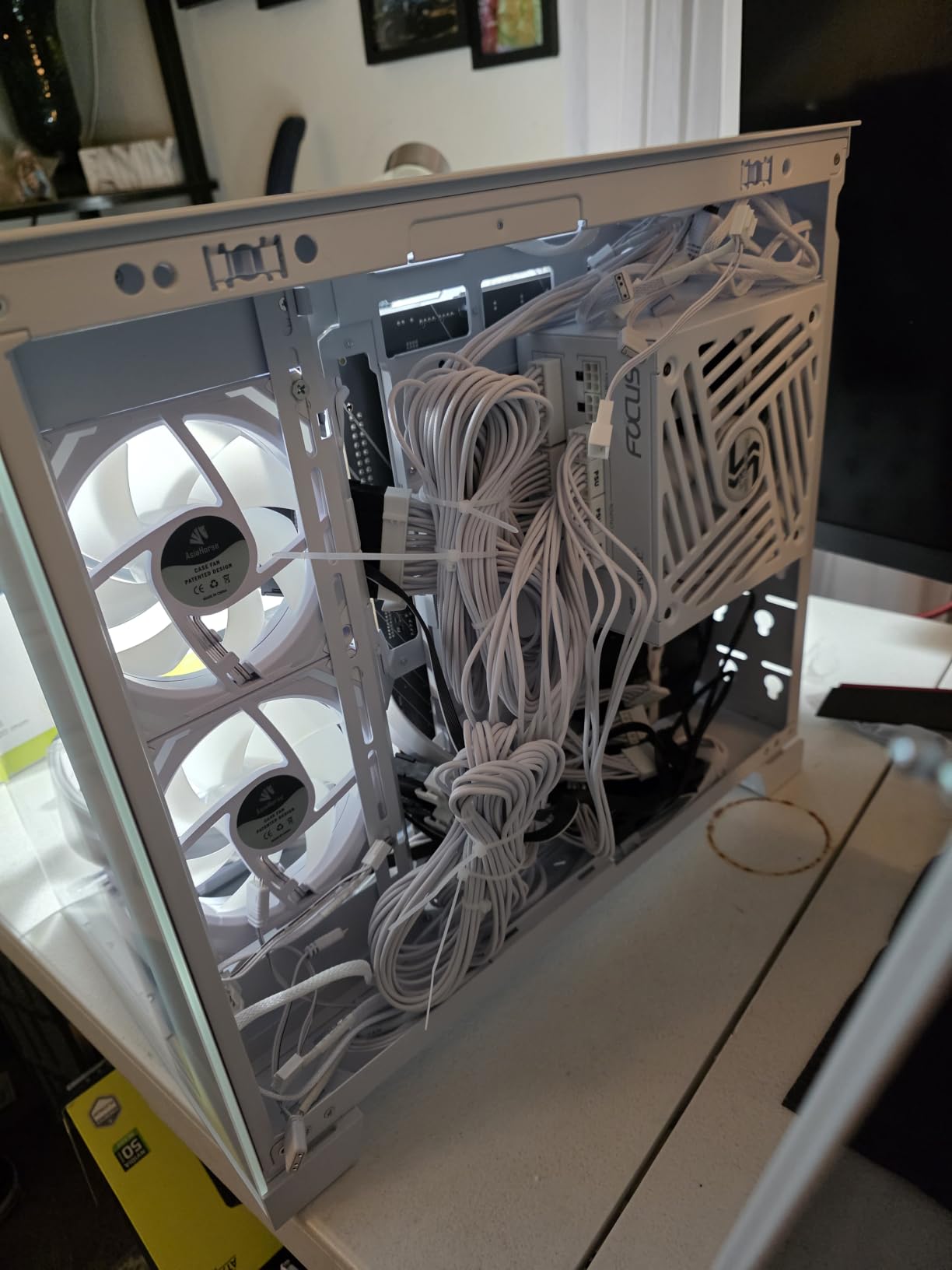
Internally, the Focus GX-1000 uses Seasonic’s OptiSink design and Japanese capacitors, both hallmarks of a unit built to outlast its 10-year warranty. The native 12V-2×6 connector eliminates any adapter-related safety concerns, and the ATX 3.1 certification means full PCIe 5.1 compliance. Cybenetics Gold efficiency lands around 90 percent at typical 50 percent load.
The 89% five-star rating is exceptional even for Seasonic. One buyer running a dedicated Plex server noted that the Focus GX-1000 immediately resolved drive instability that had been caused by their previous PSU. Another used it to finish a white-themed build where the completely white cables and finish were the deciding factor over Corsair and ASUS alternatives.
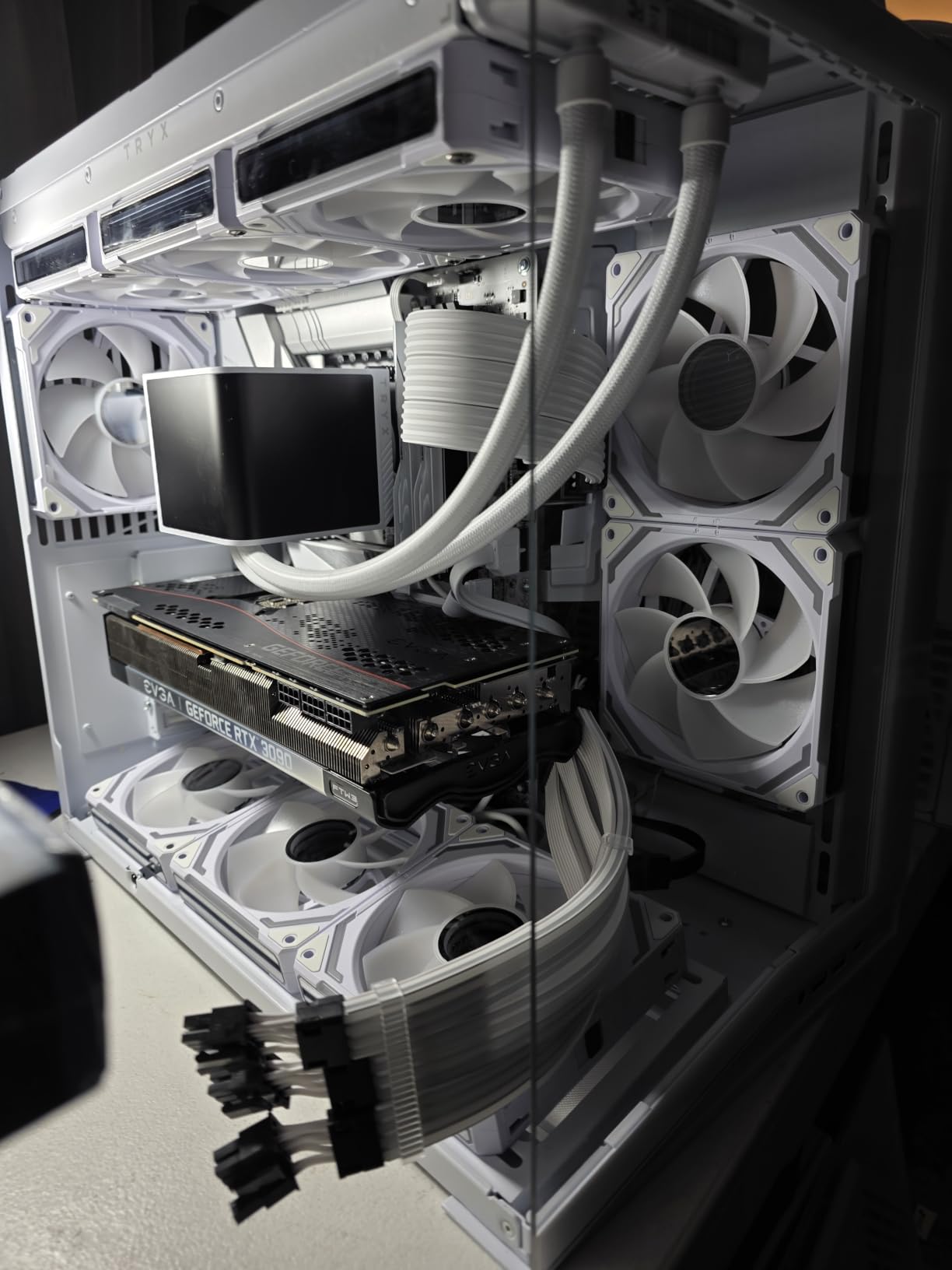
Best for: compact builds and white-themed rigs
The Focus GX-1000 is the pick when chassis depth is tight or you want a perfectly matched white PSU and white cable kit without paying a premium. It is also a great upgrade path for anyone whose old PSU is causing component instability.
Not ideal for: builders who want iCUE-style software monitoring
Unlike the Corsair HX1200i below, the Focus GX has no USB link, no software dashboard, and no per-rail power monitoring. If you want to log PSU telemetry or toggle OCP modes in software, you will need to move up to the Corsair HX i-series.
3. Seasonic Vertex GX-1200 – The 1200W Sweet Spot
Seasonic VERTEX GX-1200 1200W Power Supply ATX 3.1 & PCIe 5.1 Ready
1200W
80+ Gold
ATX 3.0/3.1
12V-2×6
Japanese Capacitors
12-Year Warranty
Pros
- 1200W sweet spot
- 12-year warranty
- Japanese capacitors
- Hybrid silent fan
- Amazon's Choice
Cons
- Older stock ships with 12VHPWR (free 12V-2×6 replacement)
- 12% one-star reviews from early units
The Seasonic Vertex GX-1200 is the Reddit consensus pick for the 1200W sweet spot. It carries Amazon’s Choice for 1200W PSUs and the longest warranty on this list at 12 years. At 1200W Gold, you have real headroom for a 9950X3D plus RTX 5090 with both chips under sustained load, plus enough margin to push a mild 5090 overclock without bumping into OCP.
There is one critical caveat. The Vertex GX-1200 originally shipped as ATX 3.0 with the older 12VHPWR connector, and that early run accounts for almost all of the 12% one-star reviews. Seasonic has since refreshed the line to ATX 3.1 with the safer 12V-2×6 connector (blue-tipped for easy seating verification) and now includes cable combs. If you receive an older-stock unit with the older connector, Seasonic will replace the cable free within 90 days — but verify before you install.
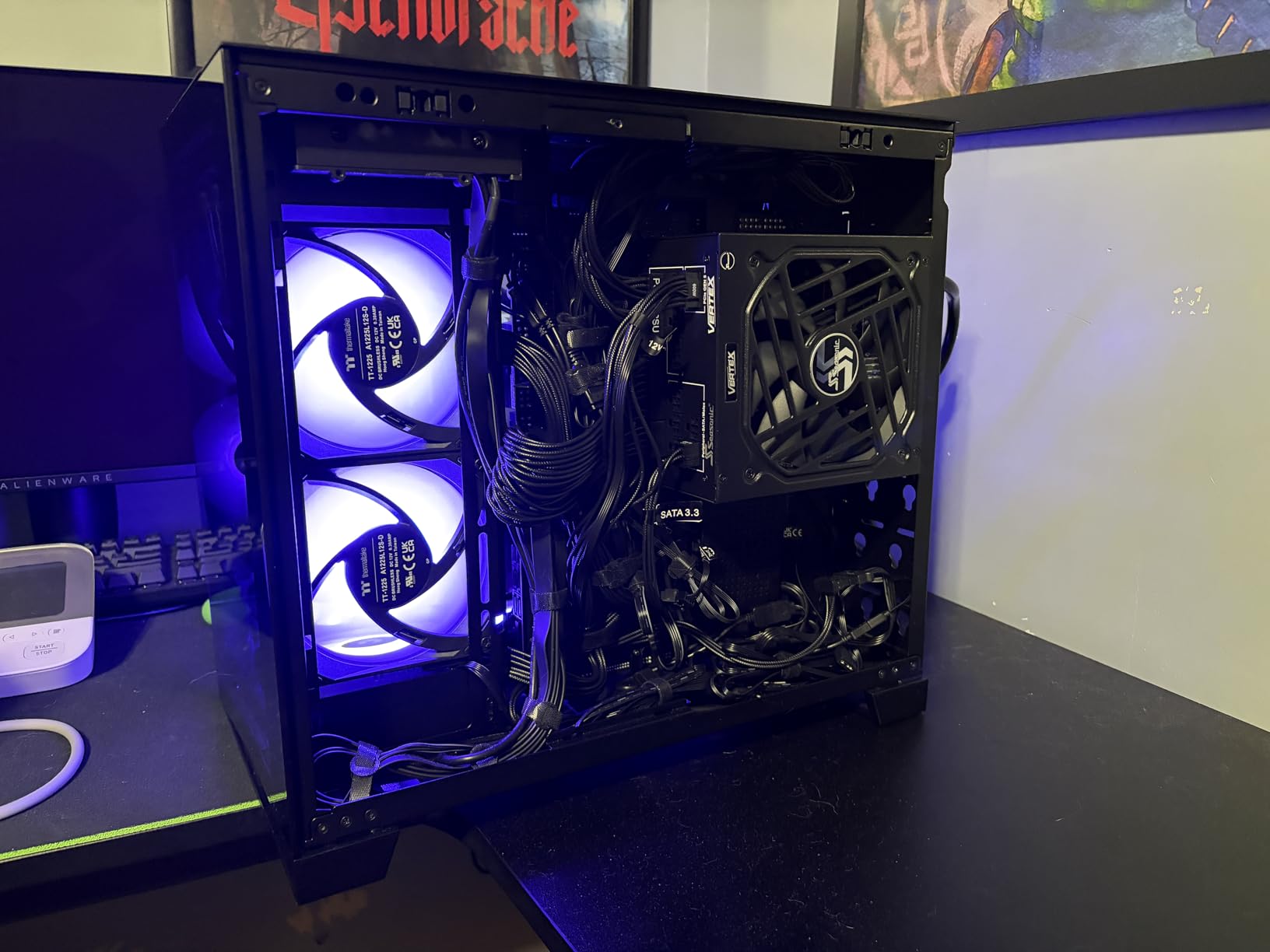
On the plus side, verified buyer alex confirmed that the refreshed Vertex GX-1200 “runs my RTX 5090 perfectly,” and Lt. Vinyard reported two months of stable gaming on a 5090 with no melting. The 135mm Fluid Dynamic Bearing fan and Seasonic Hybrid Silent Fan Control keep the unit near-silent at idle and barely audible under load. The 12-year warranty signals real manufacturer confidence in the Japanese capacitors and internal topology.
One thing to be aware of: the Vertex GX-1200 is a full-size ATX unit at 7.28 pounds, and the depth may be tight in some compact mid-towers. There is also one verified report of a unit failing after five months on a 7800X3D plus 4090 build — out of 191 reviews, that is well within the expected failure rate for a mass-market PSU, but it is worth noting that even Seasonic has a small lemon rate.
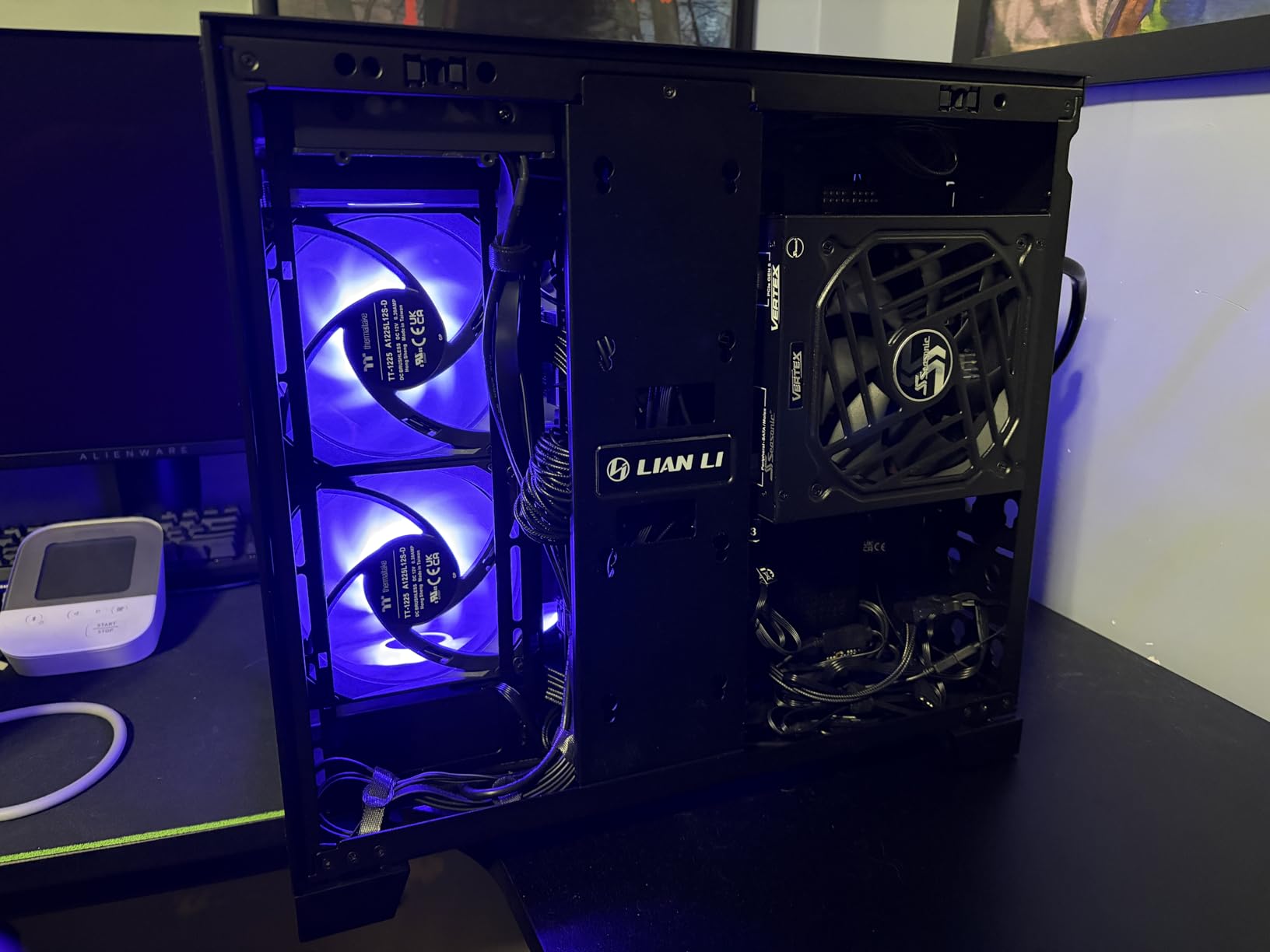
Best for: 9950X3D + RTX 5090 builds with headroom
If you want a PSU that comfortably clears 1200W headroom for a 9950X3D plus 5090 plus multiple storage drives, the Vertex GX-1200 is the best value-per-watt option on this list. The 12-year warranty means it will outlast the rest of your build.
Not ideal for: SFF builds or anyone nervous about the early 12VHPWR recall
The physical size rules out most SFF cases, and if you are skittish about the early-connector issues, the Corsair HX1200i below ships ATX 3.1 from the factory with no connector lottery.
4. Corsair HX1200i (2025) – The Platinum Low-Noise Premium Pick
CORSAIR HX1200i (2025) ATX 3.1 PCIe 5.1 Ready 1200W Power Supply – Black
1200W
80+ Platinum
ATX 3.1
12V-2×6
140mm FDB
iCUE
Zero RPM
Pros
- Cybenetics Platinum efficiency
- 140mm FDB fan
- iCUE power monitoring
- Single/multi-rail OCP toggle
- Zero RPM silent mode
Cons
- Bright activity LED
- SATA cable layout complaints
- Premium price point
The Corsair HX1200i (2025) is the PSU I would personally buy for a quiet 5090 build. It is Cybenetics Platinum certified (better than the Gold-rated RM1000x and Vertex), uses a 140mm Fluid Dynamic Bearing fan, and integrates with Corsair’s iCUE software for live power monitoring and per-rail OCP switching. The 86% five-star rating from 263 verified buyers reflects a genuinely premium unit.
The Zero RPM fan mode is the headline feature for noise-sensitive builders. At desktop and light gaming loads, the fan is completely off. Even at sustained 5090 gaming loads, verified buyer MADPWR described it as “completely silent.” Michael Quintero confirmed it powers his RTX 5090 rig “without a hitch” with the fan barely audible, and Mathieu Boudreau runs it on a 9950X3D plus Asus ROG Astral RTX 5090 OC with zero issues.
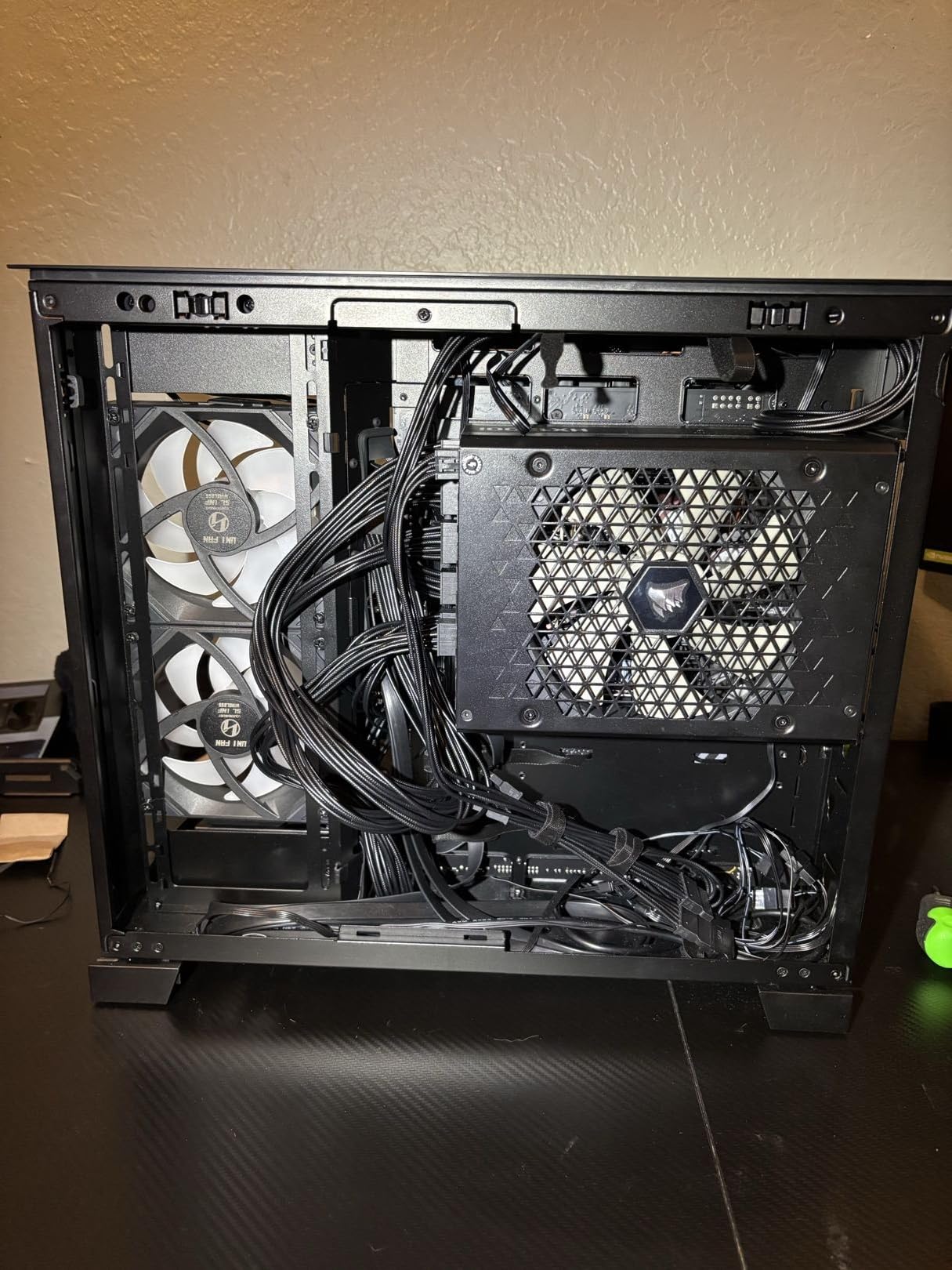
On the technical side, the HX1200i is ATX 3.1 certified with PCIe 5.1 support and a 600W-rated 12V-2×6 cable included. Cybenetics Platinum efficiency peaks around 92 percent, meaning less waste heat in your case and lower power bills over the unit’s 10-year warranty. The iCUE integration is genuinely useful for tuning builds: you can set custom fan curves, monitor real-time power draw, and toggle between single-rail and multi-rail OCP depending on your stability needs.
Minor complaints are well-documented. The dome-shaped activity LED is described as annoyingly bright and hard to cover. A few buyers had issues with SATA cable layout for drives in specific positions, and there is a single isolated report of boot instability with certain motherboard combos that appears to be a one-off. None of these are dealbreakers, but they explain why the rating is 4.6 rather than 4.8.
Best for: silent builders who want software telemetry
If you care about noise, want Platinum efficiency, and find iCUE power monitoring genuinely useful (especially for tracking 5090 power excursions in real time), the HX1200i justifies its premium price. It is the only PSU on this list with full software integration.
Not ideal for: budget builds or Corsair-averse builders
If you do not care about iCUE and just want quiet Platinum power, the ASUS ROG Strix 1200W below offers similar specs at a lower price. And if you want to stay under $200, the RM1000x or Focus GX-1000 will serve you just as well for stock 5090 duty.
5. ASUS ROG Strix 1200W Platinum – The GPU-First Voltage Stabilizer
ASUS ROG Strix 1200W Platinum (Fully Modular Power Supply, 80 Plus Platinum Certified, ATX 3.1, GaN MOSFET, GPU-First Intelligent Voltage Stabilizer, 10-Year Warranty)
1200W
80+ Platinum
ATX 3.1
GaN MOSFET
GPU-First Voltage Stabilizer
Dual Ball Bearing Fans
Pros
- GaN MOSFET 30% more efficient
- GPU-First voltage stabilizer
- 0dB silent mode
- Protective auto-shutoff
- Monitor via GPU Tweak 3
Cons
- One verified explosion/fire incident
- Slow RMA support
- Premium pricing
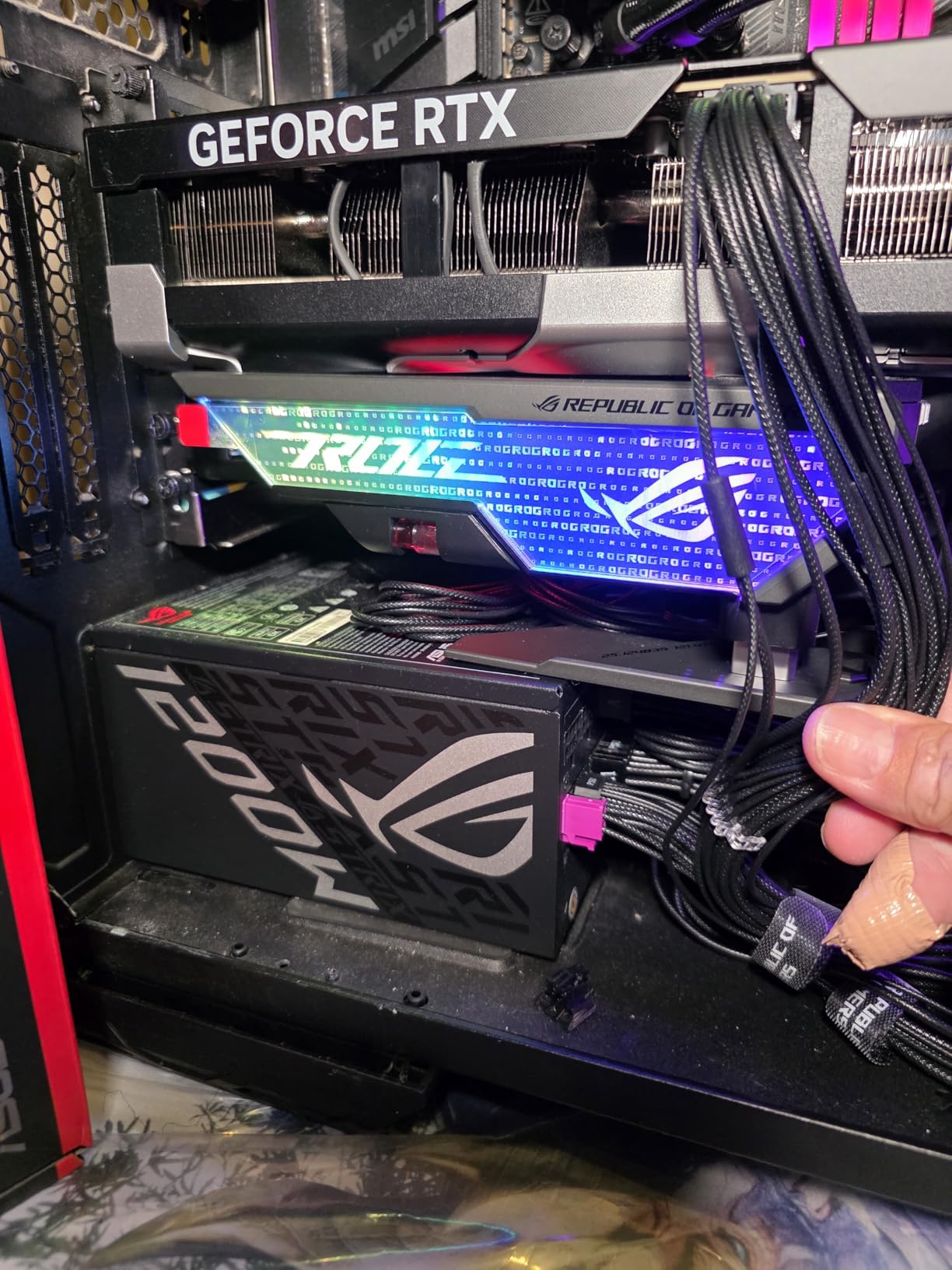
The ASUS ROG Strix 1200W Platinum is the most innovative PSU on this list. It uses GaN (gallium nitride) MOSFETs for up to 30 percent better efficiency than traditional silicon, and it features a unique GPU-First Intelligent Voltage Stabilizer that delivers up to 45 percent tighter voltage regulation to the graphics card. For RTX 5090 owners chasing maximum stable overclocks, this is the only PSU with that specific feature set.
Verified buyer feedback is strongly positive on performance. Alex described it as “the most solid component in my entire build” with GPU dips and flickers eliminated. Londerpass specifically bought it for an RTX 5090 and called the included 5090 power cable “solid and secure.” LordChumley runs a 285K plus Asus 5090 at full AI loads or 4K gaming and uses GPU Tweak 3 to monitor every individual power pin on the GPU — a feature unique to ASUS.
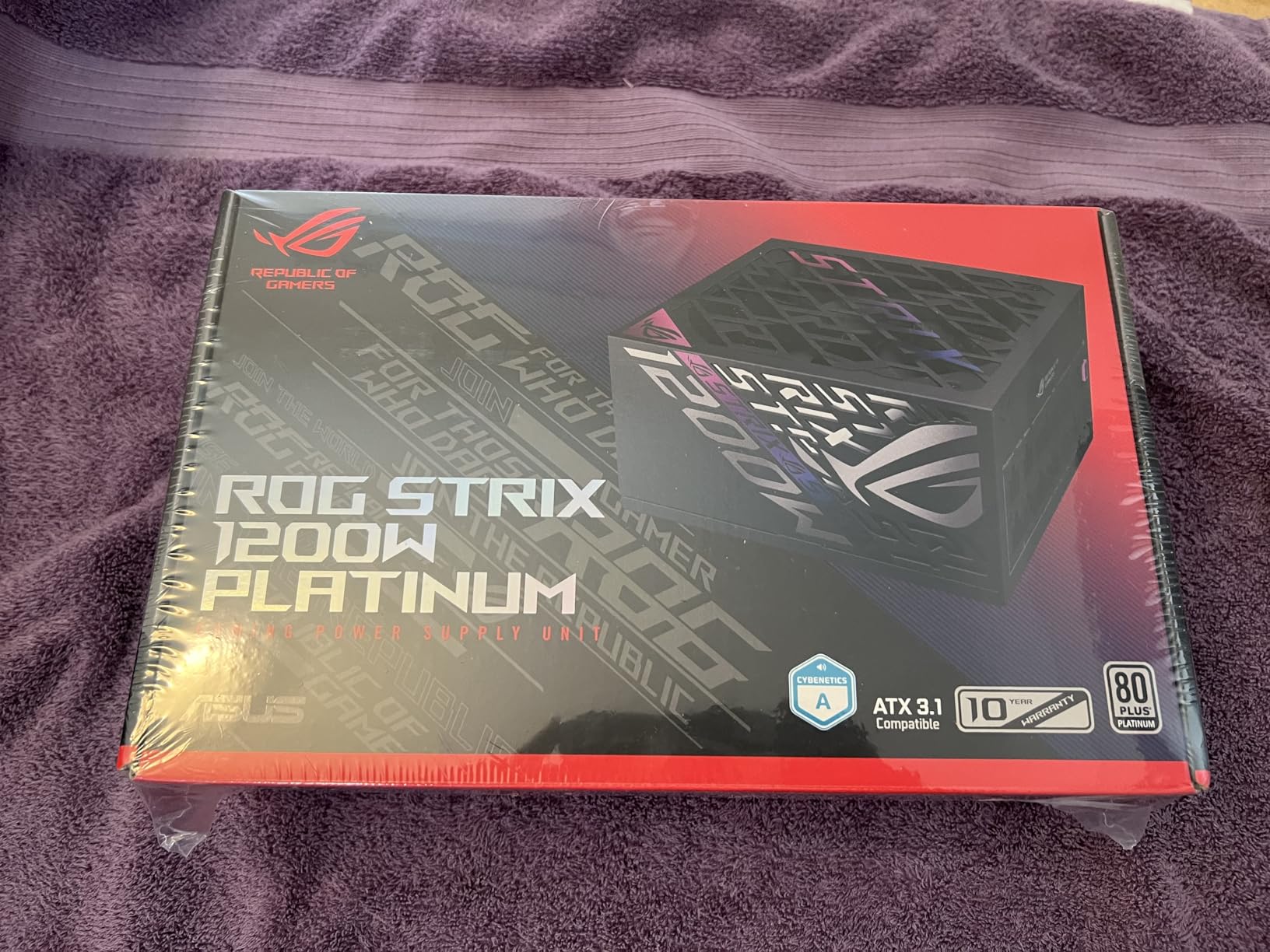
The dual ball-bearing fans are rated for twice the lifespan of sleeve bearings, and the 0dB mode keeps them off during light gaming. ROG heatsinks cover all critical components, which keeps temperatures low and lets the fans spin slower when they do engage. GaN MOSFETs run cooler than silicon equivalents, which contributes to the silent operation.
I have to flag one serious safety concern. A verified buyer, Trevor Woods, reported that his unit “exploded” on first power-on — big plume of smoke, burst of flame, fried his entire build. This is a single incident out of 147 reviews (8% one-star), but it is the kind of failure mode that demands attention. The buyer described ASUS support as slow and frustrating for the RMA. The auto-shutoff feature in a separate review did save one build from a defective power button short circuit, so the protection circuitry does work in most cases.
Best for: GPU overclockers who want per-pin voltage monitoring
If you intend to push your 5090 past stock power limits and want the tightest possible GPU voltage regulation, the ROG Strix is unmatched. The GPU Tweak 3 integration for per-pin monitoring is a unique advantage for tuners.
Not ideal for: risk-averse builders or anyone without a backup rig
The single verified explosion report and slow RMA experience mean I cannot recommend this PSU for mission-critical or always-on workstations. If you need absolute reliability for a 24/7 AI server, the Seasonic PRIME PX-1600 below is the safer choice.
6. Seasonic PRIME PX-1600 ATX 3.1 – The Extreme AI Workstation PSU
Seasonic PRIME PX-1600 1600W Power Supply ATX 3.1 & PCIe 5.1 Ready
1600W
Cybenetics Titanium
ATX 3.1
Dual 12V-2×6
AI Workstation
12-Year Warranty
Pros
- Dual native 12V-2×6 connectors
- Cybenetics Titanium efficiency
- Powers Threadripper + dual 4090
- 12-year warranty
- Includes power tester
Cons
- Near 13 lb weight
- Only 1 in stock typically
- No Prime shipping
- $499 premium price
The Seasonic PRIME PX-1600 ATX 3.1 is the no-compromise PSU for extreme builds. It is rated for 1600W (in 220V regions; 1300W sustained in 120V North American markets), carries Cybenetics Titanium efficiency (higher than the Platinum label Amazon lists), and ships with two native 12V-2×6 connectors each rated at 600W. That is 1200W of GPU power delivery alone — enough for a 5090 plus a second GPU for AI workloads.
This is the PSU I recommend for AI workstation builders pairing an RTX 5090 with a secondary GPU for machine learning, or anyone running a Threadripper plus 5090 plus a custom loop. Verified buyer Kamran powers a 9950X3D, 96GB of RAM, 5090, six mechanical drives, three SSDs, and a custom loop on the PX-1600, with plans to add a second 3090 for AI. Max G. has run a 2x 4090 plus Threadripper Pro build off the same unit for years.
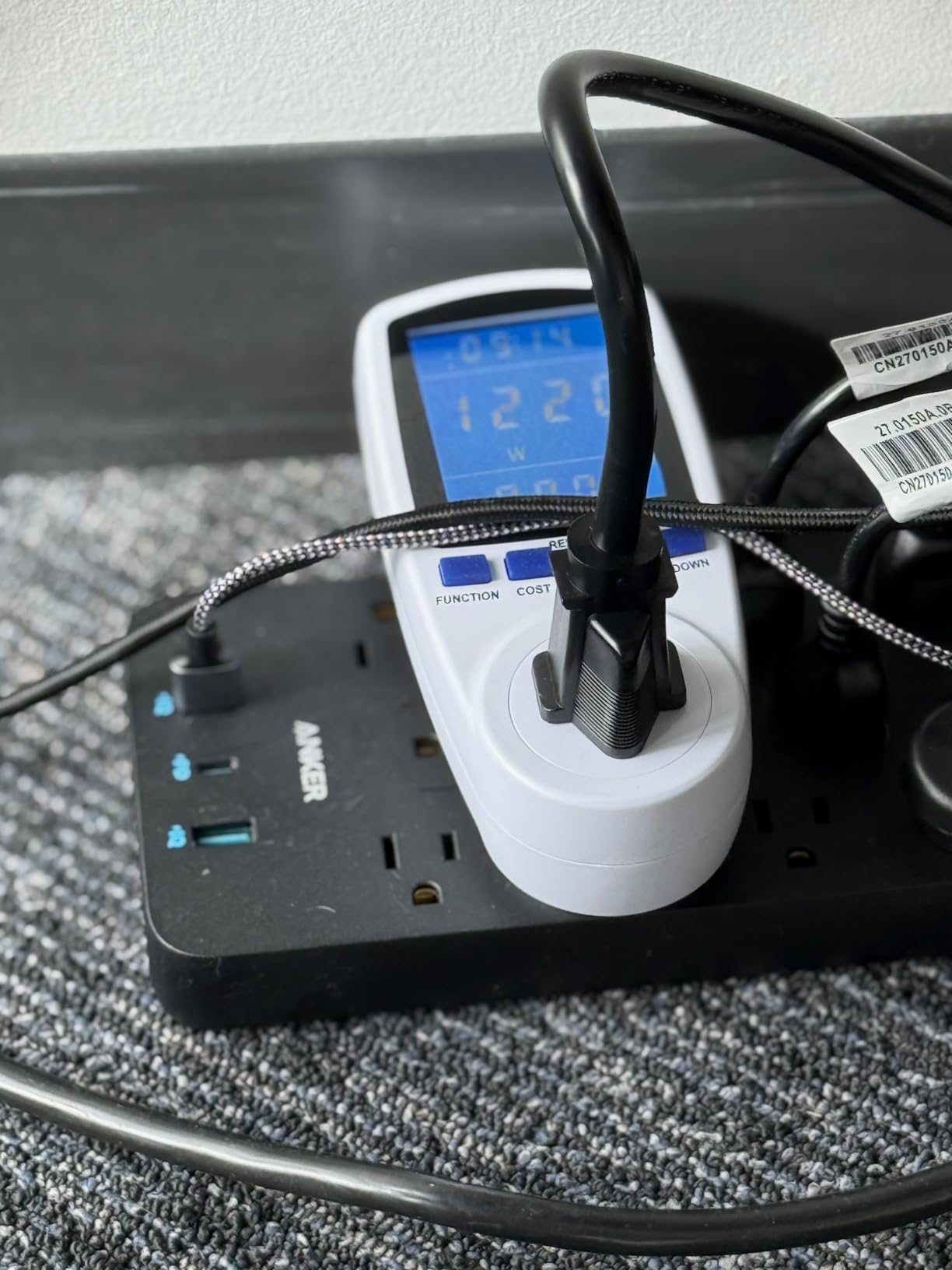
The 12-year warranty is the longest in its class and a strong trust signal. The unit ships with a power tester for pre-installation verification — a small but thoughtful inclusion that lets you confirm the unit survived shipping before mounting it. The 135mm FDB fan runs in hybrid mode and verified buyers report it stays silent even at 1000W load, with the fan only kicking in past that point. The 100% Japanese capacitors and braided individually-sleeved cables with combs included match the premium positioning.
There are real caveats. At nearly 13 pounds, this PSU requires a sturdy case and a confident mounting job. Stock is frequently down to a single unit and Prime is not available, so plan your build timeline around shipping. One verified buyer reported smelling smoke on first use — possibly shipping damage — but this is a single isolated incident out of 94 reviews. The 15% one-star rate is higher than I would like to see, but the five-star reviews describe decade-long reliability and the 12-year warranty backs it up.
Best for: AI workstations and dual-GPU builds
If you are building a Threadripper plus 5090 plus secondary GPU system, or you want a PSU that will travel with you across three or four build cycles, the PRIME PX-1600 is the best extreme-tier PSU on the market.
Not ideal for: single-GPU gaming builds on a normal outlet
If you are running a single RTX 5090 with a mainstream CPU, the PX-1600 is overkill. A 1200W unit from earlier in this list will do the same job for half the price and half the weight.
Buying Guide: How to Choose a PSU for RTX 5090
Picking the best PSU for an RTX 5090 comes down to four numbers and one connector. Get those right and you can choose confidently from any tier above. Get them wrong and you will be diagnosing random shutdowns or, worse, replacing a melted cable.
RTX 5090 power requirements explained
The RTX 5090 has a 575W TDP under sustained load. NVIDIA’s official recommendation is a 1,000W PSU, which assumes a mainstream eight-core CPU and typical gaming workload. The actual momentary draw can spike well beyond 575W during shader compilation, game loads, and AI inference — these are called power excursions and they last 100 microseconds to 10 milliseconds. ATX 3.1 PSUs are rated to handle 200 percent of nominal output for at least 1 millisecond, which covers virtually every real-world excursion. ATX 3.0 covers 100 microseconds but with less margin.
For a real-world reference point: Reddit user reports confirm that a 9950X3D plus RTX 5090 on a 1600W Corsair AX1600i pulls around 1400W under full synthetic load. The same combo on a quality 1000W PSU runs at roughly 80 percent load during gaming — within the efficient band, but with no overclocking headroom.
Wattage by CPU pairing
The PSU wattage you need depends heavily on your CPU choice. For the best CPUs for gaming paired with a 5090, here is the practical math: a Ryzen 7 9800X3D draws around 80W under gaming load and pairs cleanly with a 1000W PSU. A Ryzen 9 9950X3D pulls around 200W under sustained all-core load and benefits from a 1200W unit, especially with overclocking. A Core Ultra 9 285K or Threadripper can draw 250-350W and pushes you toward 1300W-plus territory.
For RTX 5090 gaming laptops, the mobile 5090 has a different (lower) power envelope — these recommendations apply only to the desktop card.
ATX 3.1 vs ATX 3.0 and the 12V-2×6 connector
ATX 3.1 is the current standard for high-end PSUs and it brings two real improvements over ATX 3.0: tighter 12V-2×6 connector tolerances and refined power excursion handling. The 12V-2×6 connector (sometimes still labeled 12VHPWR) is the safer replacement for the original 12VHPWR connector that caused melting incidents on early RTX 4090 cards. The newer connector has a shorter signal pin that prevents the GPU from drawing full power unless the connector is fully seated.
If you are buying new in 2026, get ATX 3.1 with a native 12V-2×6 cable. Avoid any PSU that requires a four-cable PCIe-to-12VHPWR adapter — those adapters introduce failure points and have been linked to melting. Every PSU on this list ships with a native 12V-2×6 connector.
80 PLUS Gold vs Platinum vs Titanium
Efficiency ratings measure how much wall power is converted to useful DC output versus waste heat. 80 PLUS Gold peaks around 90% efficient at 50% load. Platinum peaks around 92%. Titanium (Cybenetics, not the older 80 PLUS Titanium standard) can hit 94%. Over a year of daily gaming, the difference between Gold and Platinum on a 1000W PSU is roughly $20-30 in electricity at average US rates. Pay for Platinum if you run your PC 8-plus hours daily or live in a high-electricity-cost region. Gold is fine otherwise.
Efficiency also affects noise and lifespan. A more efficient PSU wastes less energy as heat, which means the fan spins slower or stays off longer, which means a quieter PC and components that last longer. This is why the Corsair HX1200i Platinum is meaningfully quieter than the Gold-rated RM1000x at the same load.
Modular cables, fan modes, and warranty
Full modularity is non-negotiable for a 5090 build. You only install the cables you need, which improves airflow and makes cable management dramatically easier. Hybrid or zero-RPM fan modes keep the PSU silent at desktop loads — important when you have spent $2,000-plus on a 5090 and want a quiet premium build. On warranty, treat 10 years as the floor and 12 years as a strong trust signal. A PSU with a 12-year warranty will outlast every other component in your build, including the 5090 itself.
FAQs
Is 1000W PSU enough for RTX 5090?
Is a 1200W PSU enough for a 5090?
Can I run a 5090 on a 750W PSU?
Is 1300W PSU enough for 5090 overclocking?
Conclusion: The Best PSU for Your RTX 5090 Build
The best power supplies for RTX 5090 builds in 2026 split cleanly by wattage tier. For stock 5090 plus mainstream CPU builds, the Corsair RM1000x ATX 3.1 and Seasonic Focus GX-1000 deliver proven reliability at the 1000W Gold sweet spot. For 9950X3D pairings and overclocking headroom, the Seasonic Vertex GX-1200 wins on value while the Corsair HX1200i Platinum wins on silence and software. The ASUS ROG Strix 1200W Platinum is the GPU-tuner pick, and the Seasonic PRIME PX-1600 owns the AI workstation tier.
Buy ATX 3.1 with a native 12V-2×6 connector, size your wattage to your CPU pairing, and treat a 10-year warranty as the minimum bar. Do those three things and your 5090 build will run stable for years.
Leave a Reply