
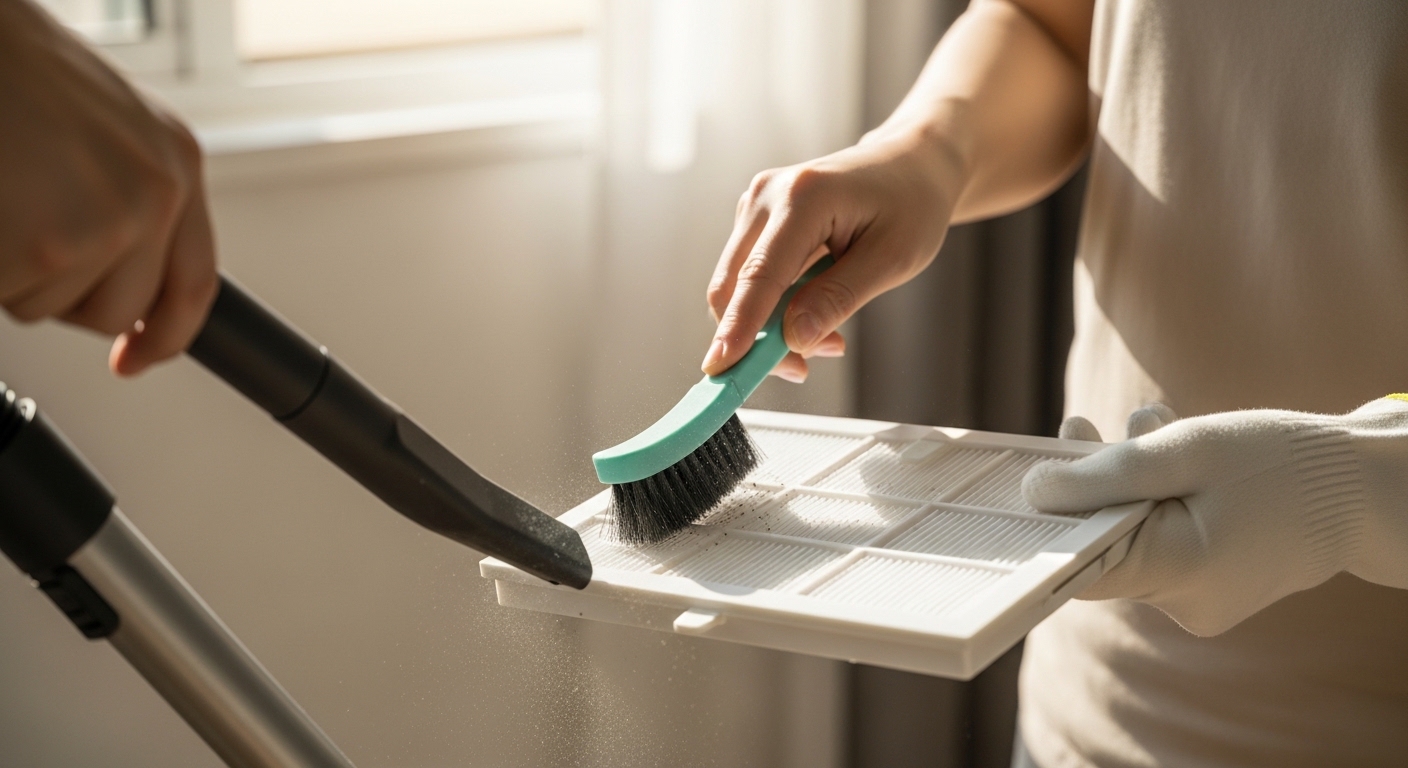
Dirty HEPA filters can reduce your air purifier’s efficiency by up to 50%. I learned this the hard way when my allergies suddenly flared up despite running my purifier 24/7. The culprit was a clogged filter I hadn’t cleaned in months.
Learning how to clean HEPA filter properly extends its life and saves money on replacements. Some filters last years with proper care, while others need monthly attention depending on your air quality and usage.
Before diving in, check if your device uses best air purifiers with HEPA filters that are designed for easy maintenance. Not all filters are created equal, and cleaning the wrong type can damage it permanently.
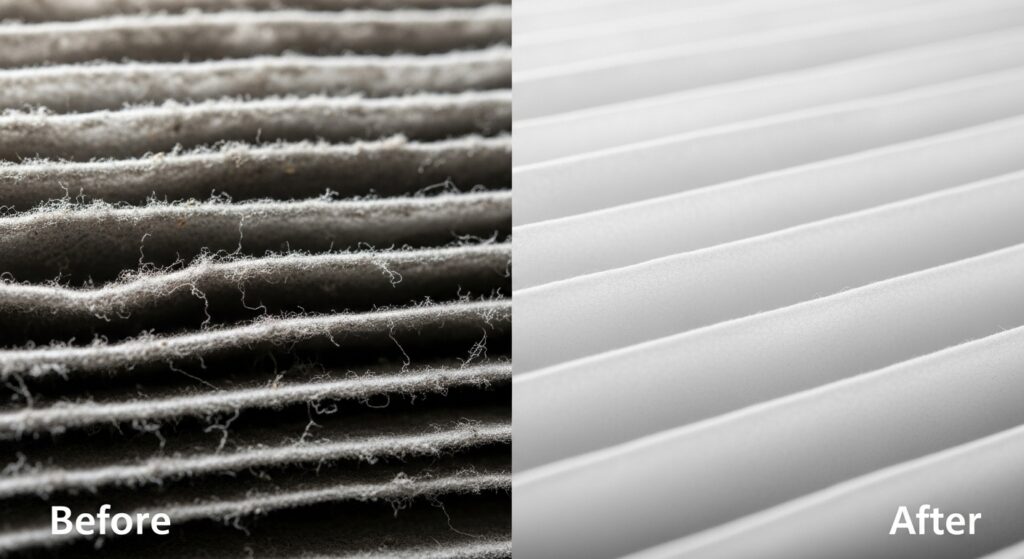
What is a HEPA Filter?
HEPA stands for High-Efficiency Particulate Air. These filters capture 99.97% of particles as small as 0.3 microns, including dust, pollen, mold spores, and pet dander.
The secret lies in the dense mesh of fine glass fibers that trap particles while allowing air to flow through. This intricate structure is why cleaning requires care and why some filters shouldn’t be washed at all.
HEPA filters appear in air purifiers, vacuum cleaners, HVAC systems, and even some vehicles. Each application affects how often the filter needs attention and what cleaning method works best.
How to Tell if Your HEPA Filter is Washable?
Not all HEPA filters can handle water. Washing a non-washable filter damages the delicate fiber structure, reducing its particle-capturing ability permanently.
Check your device manual first. Look for terms like “washable,” “permanent,” or “cleanable” in the filter specifications. If you see “true HEPA” or “disposable,” do not wash it.
Washable filters typically have a plastic or metal frame and a pleated material that feels more like synthetic fabric than paper. Non-washable versions often have cardboard frames and a paper-like appearance.
When in doubt, check the manufacturer’s website or contact customer support. I’ve saved myself from ruining filters by spending five minutes verifying before cleaning.
Safety First: Before You Start
Always unplug your device before removing any filter. This prevents electrical shock and protects the device’s internal components from damage.
Take the device outside if possible. Cleaning releases trapped particles back into the air, and doing this outdoors prevents redistribution throughout your home.
Wear a dust mask if you have allergies or asthma. The particles you’re about to dislodge are exactly what you’ve been trying to avoid breathing in.
How to Clean HEPA Filter?
The right method depends on your filter type. Choose the approach that matches your filter’s specifications to avoid damage and maintain performance.
Method 1: Vacuuming Non-Washable Filters
This is the safest method for true HEPA filters that cannot handle water. It removes surface debris without damaging the internal fiber structure.
Step 1: Use a vacuum cleaner with a brush attachment. Set it to low suction if possible to avoid pulling fibers loose.
Step 2: Vacuum both sides of the filter thoroughly. Work in the direction of the pleats to avoid bending or crushing them. Pay extra attention to the pleated areas where dust accumulates.
Step 3: Tap the filter gently against a hard surface outside. This dislodges embedded particles that vacuuming alone can’t reach. Avoid aggressive tapping that can damage the filter media.
Step 4: Finish with another pass of the vacuum to capture the particles you just dislodged. Hold the filter away from your face during this step.
Step 5: Inspect the filter under bright light. If you can still see visible clogging or the material looks gray and matted, it’s time for replacement rather than cleaning.
Method 2: Washing Washable Filters
Only use this method on filters explicitly labeled as washable. Water destroys non-washable HEPA filters by compromising the fiber bonds.
Step 1: Remove loose debris first with a vacuum or by tapping outside. This prevents dirt from turning into mud when wet.
Step 2: Fill a basin with lukewarm water. Add a small amount of mild dish soap, avoiding harsh detergents or bleach that can damage filter materials.
Step 3: Submerge the filter and gently agitate the water. Don’t scrub, wring, or twist the filter, as this damages the pleats and fiber structure.
Step 4: Let it soak for 10-15 minutes if heavily soiled. For stubborn dirt, you can gently swish the filter in the water, but avoid any abrasive action.
Step 5: Drain the dirty water and rinse the filter under cool running water. Continue rinsing until the water runs clear and all soap residue is gone.
Step 6: Do not use hot water or put the filter in the dishwasher. High heat can melt plastic frames and damage filter media.
Method 3: Compressed Air (For Dry Cleaning Only)
Compressed air works well for both washable and non-washable filters as a dry cleaning method. This approach is particularly effective for vacuum cleaner filters.
Step 1: Take the filter outside. Compressed air blows particles everywhere, and you don’t want that mess in your home.
Step 2: Hold the can of compressed air upright about 6 inches from the filter surface. Short bursts work better than continuous spraying.
Step 3: Work in one direction following the pleats. Start from the clean side and push air through toward the dirty side to dislodge particles.
Step 4: Use low pressure settings if your compressor allows adjustment. High pressure can force particles deeper into the filter or damage delicate fibers.
Step 5: Finish with a vacuum pass to capture particles loosened by the air. This prevents them from immediately resettling on the filter surface.
How to Dry and Reinstall Your HEPA Filter?
Proper drying is critical. Any moisture remaining in the filter creates a breeding ground for mold and bacteria, which then circulates through your air.
Air dry the filter in a well-ventilated area away from direct sunlight and heat sources. Direct sunlight can degrade some filter materials, and heat causes frames to warp.
Allow at least 24 hours for complete drying. Thick filters may require 48 hours or longer. I learned this lesson after reinstalling a damp filter that developed a musty smell within days.
Never use a hair dryer, oven, or microwave to speed up drying. This damages the filter media and can melt plastic components.
Before reinstalling, check that the filter is completely dry to the touch in all areas, including deep within the pleats. Any coolness indicates remaining moisture.
Reinstall the filter according to your device instructions, ensuring proper seating and airflow direction. Most filters have arrows indicating which way air should flow through them.
HEPA Filter Maintenance Tips
Clean your HEPA filter every 1-3 months depending on air quality and usage. Homes with pets, smokers, or high pollen levels need more frequent cleaning.
Always check the pre-filter first. Most devices have a washable pre-filter that catches larger particles. Cleaning this primary filter extends the life of the more expensive HEPA element.
Track your cleaning schedule. I mark my calendar every two months as a reminder, which prevents the filter from becoming heavily clogged between cleanings.
Monitor your device’s performance indicator if available. Many modern air purifiers have filter life sensors that alert you when attention is needed.
Consider having a backup filter if replacement is required. This allows you to swap in a clean filter immediately while the other dries or while you wait for a replacement to arrive.
Regular maintenance of vacuum cleaners with HEPA filtration prevents performance drops and extends the life of your equipment.
When to Replace vs Clean?
Some filters cannot be saved. Visible damage, tears, or crumbling material means it’s time for replacement regardless of cleaning attempts.
If cleaning doesn’t restore airflow, the filter may be permanently clogged. HEPA filters have a lifespan, and extensive cleaning eventually becomes ineffective.
Pay attention to odors. A musty or mildew smell that persists after thorough cleaning indicates bacterial growth deep within the filter media.
Most manufacturers recommend replacing HEPA filters every 6-12 months even with regular cleaning. The fibers gradually degrade and lose efficiency over time.
True HEPA filters labeled as disposable should never be washed or cleaned. Attempting to clean these damages the specialized media and compromises filtration.
Frequently Asked Questions
How do I clean my HEPA air filter?
First determine if your filter is washable or non-washable. For non-washable filters, vacuum both sides with a brush attachment and tap gently to remove debris. For washable filters, rinse with lukewarm water and mild soap, then air dry for 24-48 hours before reinstalling.
Can HEPA air filters be cleaned and reused?
Only washable HEPA filters can be cleaned and reused. Non-washable true HEPA filters will be permanently damaged by water. Check your manufacturer guidelines before attempting any cleaning. Even washable filters eventually need replacement after 6-12 months of use.
Can I use Dawn dish soap to clean my air filter?
Yes, mild dish soap like Dawn is safe for washable HEPA filters. Use a small amount in lukewarm water and avoid harsh detergents, bleach, or abrasive cleaners. Rinse thoroughly until all soap residue is gone to prevent residue buildup.
Do HEPA filters help with radon?
HEPA filters cannot remove radon gas from the air. Radon is a radioactive gas that passes through HEPA filters because the particles are too small to be captured. Radon requires specialized mitigation systems, not particle filtration.
Learning how to clean HEPA filter properly keeps your air purification system running at peak efficiency. Regular maintenance removes trapped particles, restores airflow, and extends the life of your filter investment.
Remember that not all filters can be cleaned. Always verify your filter type before attempting any cleaning method. When in doubt, consult your manufacturer guidelines rather than risk damaging an expensive component.
With proper care and attention, your HEPA filter will continue providing clean, healthy air for years to come. Set a maintenance schedule and stick to it for the best results.
Leave a Reply