
Getting the most out of your heat pump starts with understanding how to set your thermostat properly. Unlike traditional furnaces that blast hot air in cycles, heat pumps work differently. They transfer heat efficiently and run best at steady temperatures rather than with constant adjustments.
The right heat pump thermostat settings can mean the difference between reasonable energy bills and shockingly high ones. I’ve seen homeowners waste hundreds of dollars simply by programming their thermostats incorrectly or using settings meant for conventional HVAC systems.
In this guide, I’ll walk you through the optimal heat pump thermostat settings for every season, explain why heat pumps need different treatment than furnaces, and help you avoid costly mistakes that trigger expensive backup heat.
Best Heat Pump Thermostat Settings in 2026
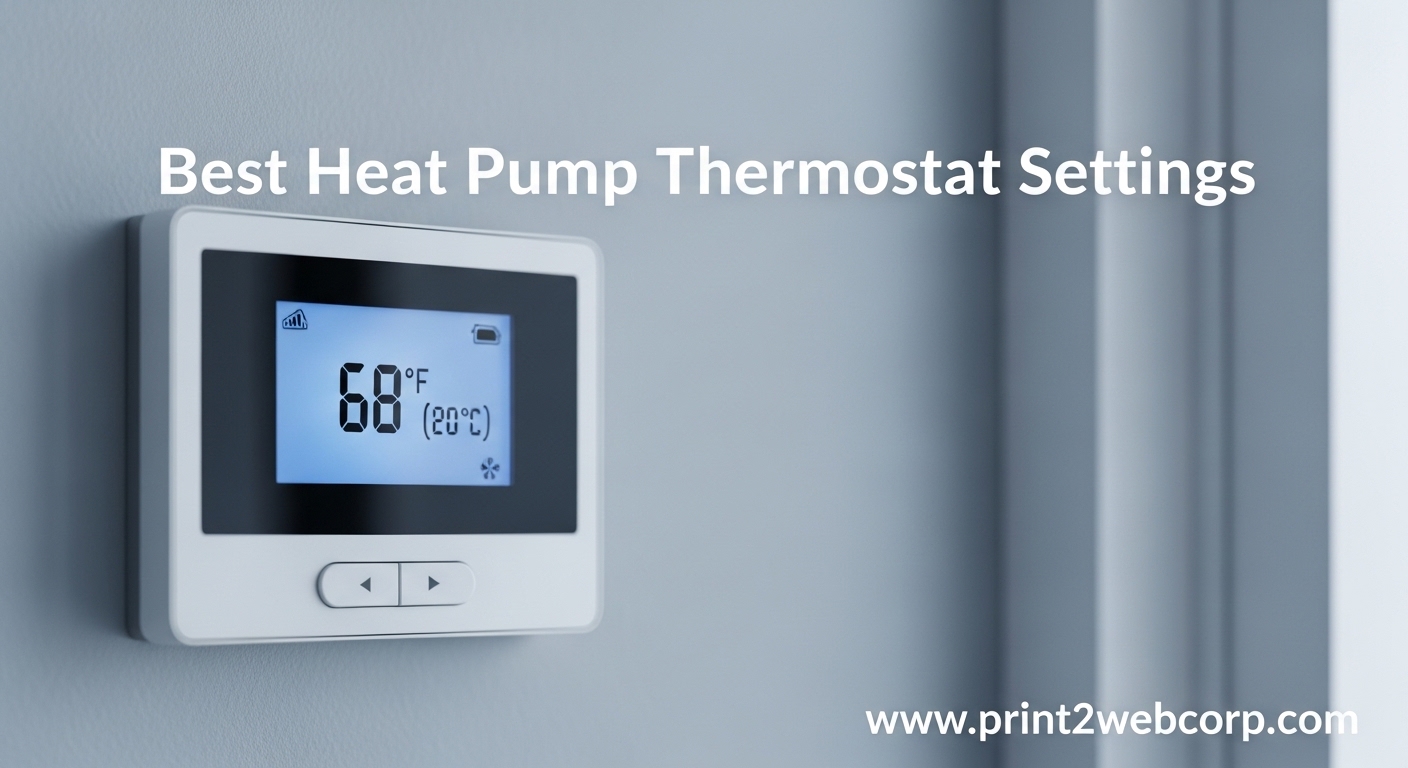
The best heat pump thermostat setting is 68°F during the heating season. This temperature balances comfort with efficiency, allowing your heat pump to operate in its sweet spot. Unlike furnaces that work harder with larger temperature differences, heat pumps actually run more efficiently when maintaining steady temperatures.
For cooling season, set your thermostat to 75-78°F. Heat pumps are excellent at removing humidity, so you may feel comfortable at higher summer temperatures than with traditional air conditioning.
The key principle with heat pump thermostat settings is consistency. Large temperature swings cause your system to struggle and can trigger expensive auxiliary heat. Small adjustments of 1-2°F are fine. Anything more than that works against you.
How Heat Pumps Differ from Furnaces
Heat pump thermostat settings differ from traditional furnace settings because of how the technology works. Your heat pump doesn’t create heat, it moves it from outside to inside. This process becomes less efficient as the outdoor temperature drops, which is why your thermostat settings matter so much.
The most important thing to understand is that your heat pump is designed to run for long periods at lower output. It’s not broken if it seems to run constantly. That’s how it’s supposed to work. Constant cycling on and off actually indicates a problem, often caused by poor thermostat settings.
Modern heat pumps with variable-speed compressors can modulate their output to match your home’s heating needs. The right thermostat settings allow this technology to work as designed, maintaining consistent temperatures without the inefficient on-off cycling of older systems.
Winter Temperature Settings
During winter heating months, set your heat pump thermostat to 68°F when you’re home and awake. This temperature has emerged as the industry standard because it represents the optimal balance between comfort and efficiency for most households.
At night or when away, you can lower the temperature by 2°F maximum. Setting it back to 66°F overnight is reasonable. Going lower than this risks triggering your backup heat when the thermostat tries to recover, which defeats any savings from the setback.
Many heat pump owners from online communities report success keeping daytime temperatures at 69°F and dropping to 62°F at night. However, this aggressive approach only works well in moderate climates. In colder regions, stick to the 2°F setback rule to avoid expensive backup heat activation.
Summer Temperature Settings
For summer cooling, the best heat pump thermostat setting is 75-78°F. Start at 78°F and only lower it if you feel uncomfortable. Each degree below 78 increases your energy consumption by 3-5%, so small adjustments make a big difference in your cooling costs.
Heat pumps excel at humidity removal, which is a major factor in summer comfort. You may find that 78°F with a heat pump feels as comfortable as 74°F with traditional air conditioning because the air feels less muggy.
At night during summer, you can raise the temperature by 2-3°F since it’s cooler outside. Setting it to 80-81°F while sleeping takes advantage of lower nighttime temperatures and reduces the workload on your system during the hottest part of the day.
Understanding the 20-Degree Rule
The 20-degree rule is a critical concept for heat pump owners. It states that your heat pump can efficiently maintain temperatures up to 20°F warmer than the outdoor air. Below this differential, your system may struggle and could trigger expensive auxiliary heat.
For example, if it’s 40°F outside, your heat pump can efficiently maintain 60°F indoors without strain. If you set your thermostat to 70°F in those conditions, the 30-degree differential pushes your system beyond its efficient operating range.
This rule explains why large setbacks are problematic with heat pumps. Dropping your thermostat from 68°F to 58°F overnight creates a massive temperature difference for your system to overcome when it’s time to recover. Your heat pump will run for hours trying to catch up, and your thermostat will likely call for backup heat to speed up the process.
Stick to setbacks of 2°F or less. This small adjustment won’t trigger backup heat and allows your heat pump to recover efficiently. The savings from avoiding auxiliary heat far outweigh any minor benefit from larger temperature setbacks.
Setback vs Steady Temperature Debate
There’s ongoing debate about whether heat pumps should use setbacks or maintain steady temperatures. Traditional HVAC wisdom says lower the temperature when away or sleeping to save energy. Heat pump technology complicates this advice.
The argument for steady temperatures is straightforward. Your heat pump runs most efficiently when maintaining consistent conditions. Large setbacks force your system to work harder to recover, potentially triggering expensive backup heat that costs 2-3 times more to run than your heat pump alone.
The argument for setbacks acknowledges that your heat pump consumes less energy when maintaining a lower temperature. Even if backup heat kicks in briefly during recovery, the savings from running at a lower temperature for hours may outweigh the short spike in energy use.
In practice, the right approach depends on your climate and heat pump model. In moderate climates where temperatures rarely drop below freezing, modest setbacks of 2-3°F can work well. In colder regions, or with older single-stage heat pumps, maintaining a steady temperature closer to 68°F often proves more efficient.
Real-world users in online forums report mixed results. Some save money with setbacks, while others see no difference or even higher bills. The safest approach is to limit setbacks to 2°F and monitor your energy use to see what works best for your situation.
Compressor Lockout Temperature Settings
Compressor lockout is a thermostat setting that tells your heat pump when to stop running and switch entirely to backup heat. This feature is important in very cold climates where your heat pump becomes inefficient below certain temperatures.
The lockout temperature should be set based on your heat pump’s specifications and your local climate. Most modern heat pumps can operate efficiently down to 15-20°F. Setting the lockout temperature too low causes your system to run inefficiently. Setting it too high means using expensive backup heat when your heat pump could still handle the load.
A good starting point is to set the compressor lockout between 15-20°F for variable-speed heat pumps, and 25-30°F for older single-stage models. Your installer can provide the specific recommendation for your equipment based on its performance data.
The economic balance point is another related concept. This is the outdoor temperature at which it becomes more expensive to run your heat pump than your backup heat. For many systems, this occurs around 15-20°F. Your thermostat can be programmed to switch fuel sources at this point automatically.
Properly configured lockout settings protect your system from running inefficiently and prevent unnecessary wear. They also ensure you’re using the most cost-effective heat source for current conditions.
Backup and Auxiliary Heat Explained
Auxiliary heat, also called backup heat or emergency heat, is typically electric resistance heating that supplements your heat pump when it can’t keep up. This second-stage heating provides a boost but costs 2-3 times more to run than your heat pump’s normal operation.
Auxiliary heat should only activate when needed, such as during very cold weather or when recovering from a large temperature setback. If you see your auxiliary heat running frequently in mild conditions, something is wrong with your system or settings.
Emergency heat is a manual setting on your thermostat that forces the auxiliary heat to run continuously. This setting is meant for emergencies only, such as when your heat pump malfunctions. Never use emergency heat as your regular heating mode unless your heat pump is broken and awaiting repair.
Your thermostat should be configured so that auxiliary heat only kicks in when the temperature difference between your set point and current room temperature exceeds 2-3°F. This prevents unnecessary activation while ensuring supplemental heat is available when truly needed.
Some smart thermostats allow you to set auxiliary heat lockout parameters. These settings tell your system when to avoid using backup heat entirely, even if it takes longer to reach your target temperature. This can save money in mild weather where your heat pump can handle the load given enough time.
Smart Thermostat Programming for Heat Pumps
Not all smart thermostats work well with heat pumps. You need a model that specifically supports heat pump technology and understands auxiliary heat staging. Using a conventional thermostat with a heat pump can lead to expensive mistakes.
Look for thermostats with heat pump-specific features like auxiliary heat control, compressor lockout settings, and dual-fuel capability if you have a hybrid system. Popular options include models from Ecobee, Nest, and Honeywell designed specifically for heat pump applications.
Programming your smart thermostat for heat pump efficiency requires different settings than traditional HVAC. Set your schedules to minimize temperature changes. Instead of dropping the temperature 8 degrees when away, limit adjustments to 2 degrees or less.
Geofencing is a useful feature that adjusts temperature based on your phone’s location. This can work well with heat pumps if configured properly. Set the geofencing adjustment to 1-2°F maximum to avoid triggering backup heat during recovery.
Learning thermostats can adapt to your schedule and optimize settings automatically. However, they may initially make mistakes with heat pump operation. Monitor your energy bills during the learning period and lock in settings once the thermostat has learned your patterns.
Some advanced smart thermostats integrate with weather forecasts and time-of-use electricity rates. They can pre-heat or pre-cool your home during cheaper rate periods and reduce usage during expensive peak hours. This optimization can save significant money if you have a time-of-use electricity plan.
Common Mistakes to Avoid
The most common mistake heat pump owners make is using large temperature setbacks. Setting your thermostat back 5-10 degrees at night seems like it should save money, but it often triggers expensive backup heat during recovery. Stick to 2-degree adjustments or maintain steady temperatures.
Another frequent error is treating your heat pump like a traditional furnace. Cranking the thermostat up by 5 degrees thinking it will heat faster doesn’t work. Heat pumps produce heat at a consistent rate regardless of the set point. Large adjustments just extend the runtime and increase the chance of auxiliary heat activation.
Using emergency heat mode incorrectly is a costly mistake. Emergency heat forces your system to use only electric resistance heating, which costs much more than heat pump operation. Only use this setting if your heat pump is broken and you’re waiting for repairs.
Ignoring compressor lockout settings in cold climates can reduce efficiency and increase costs. Without proper lockout configuration, your heat pump may run inefficiently in very cold weather when backup heat would be more economical.
Finally, using the wrong type of thermostat for your heat pump causes problems. Conventional thermostats don’t understand heat pump operation and can cause excessive auxiliary heat use. Always use a thermostat specifically designed for heat pump systems.
Frequently Asked Questions
What is the best thermostat setting for a heat pump?
The best thermostat setting for a heat pump is 68°F during heating season and 75-78°F during cooling season. Heat pumps operate most efficiently at steady temperatures, so avoid setbacks larger than 2°F to prevent triggering expensive backup heat.
What is the 20 degree rule for heat pumps?
The 20-degree rule states that your heat pump can efficiently maintain temperatures up to 20°F warmer than the outdoor air. When the temperature difference exceeds 20°F, your heat pump may struggle and activate expensive auxiliary heat.
What should the heat pump setting be in the winter?
Set your heat pump thermostat to 68°F during winter daytime hours when you’re home and awake. At night or when away, lower it by a maximum of 2°F to around 66°F. Larger setbacks can trigger backup heat and reduce efficiency.
Is 73 a good temperature for heat in the winter?
73°F is higher than the recommended 68°F winter setting for heat pumps. While you can set it higher, each degree above 68 increases energy consumption by 3-5%. Heat pumps become less efficient as the temperature difference between indoors and outdoors increases.
Should I keep my heat pump at a constant temperature?
Yes, heat pumps generally perform best when maintaining steady temperatures rather than with large setbacks. Unlike traditional furnaces, heat pumps work efficiently by running continuously at lower output. Small setbacks of 2°F or less are acceptable, but larger adjustments can trigger expensive auxiliary heat.
Conclusion
The best heat pump thermostat settings prioritize steady temperatures over large adjustments. Set your thermostat to 68°F for heating and 75-78°F for cooling. Limit setbacks to 2°F or less to avoid triggering expensive backup heat. Remember that your heat pump is designed to run for long periods at lower output. Constant running is normal and efficient.
Proper thermostat configuration allows your heat pump to operate as designed, maximizing efficiency and minimizing energy costs. Avoid common mistakes like excessive setbacks, using emergency heat incorrectly, and treating your heat pump like a traditional furnace.
Every home and climate is different, so monitor your energy use and adjust settings based on your real-world results. The guidelines in 2026 provide a solid foundation, but your specific situation may require fine-tuning for optimal performance and savings.
Leave a Reply