
Heating your home accounts for nearly 30% of your annual energy bills, making your choice of heating system one of the most important decisions you’ll make as a homeowner. Understanding the different types of heating systems available helps you choose the right option for your climate, home layout, and budget.
There are several main categories of home heating systems, each with unique advantages, limitations, and ideal applications. From traditional forced-air furnaces to modern heat pumps and efficient radiant floor systems, the options can seem overwhelming at first.
This guide breaks down every major type of heating system available in 2026, explaining how each works, their pros and cons, typical costs, and which situations they’re best suited for. Whether you’re building a new home, replacing an old system, or just curious about your options, you’ll find everything you need to make an informed decision.
Central Heating vs. Direct Heating Systems
Before diving into specific system types, it helps to understand the two main categories of heating: central heating and direct heating. Central heating systems generate heat in one location and distribute it throughout your entire home using ducts, pipes, or vents.
Direct heating systems, on the other hand, provide warmth to specific rooms or zones without a central distribution network. These include space heaters, baseboard heaters, and fireplaces that heat the immediate area where they’re installed.
Most whole-home heating solutions fall under the central heating category, including furnaces, boilers, and heat pumps. Direct heating typically serves as supplemental heating or for homes where central installation isn’t practical.
Types of Heating Systems in 2026
Home heating systems generally fall into four main categories based on how they generate and distribute heat: forced air systems, hydronic systems, electric resistance systems, and radiant heating. Within these categories, there are multiple specific types to consider.
Forced Air Furnaces
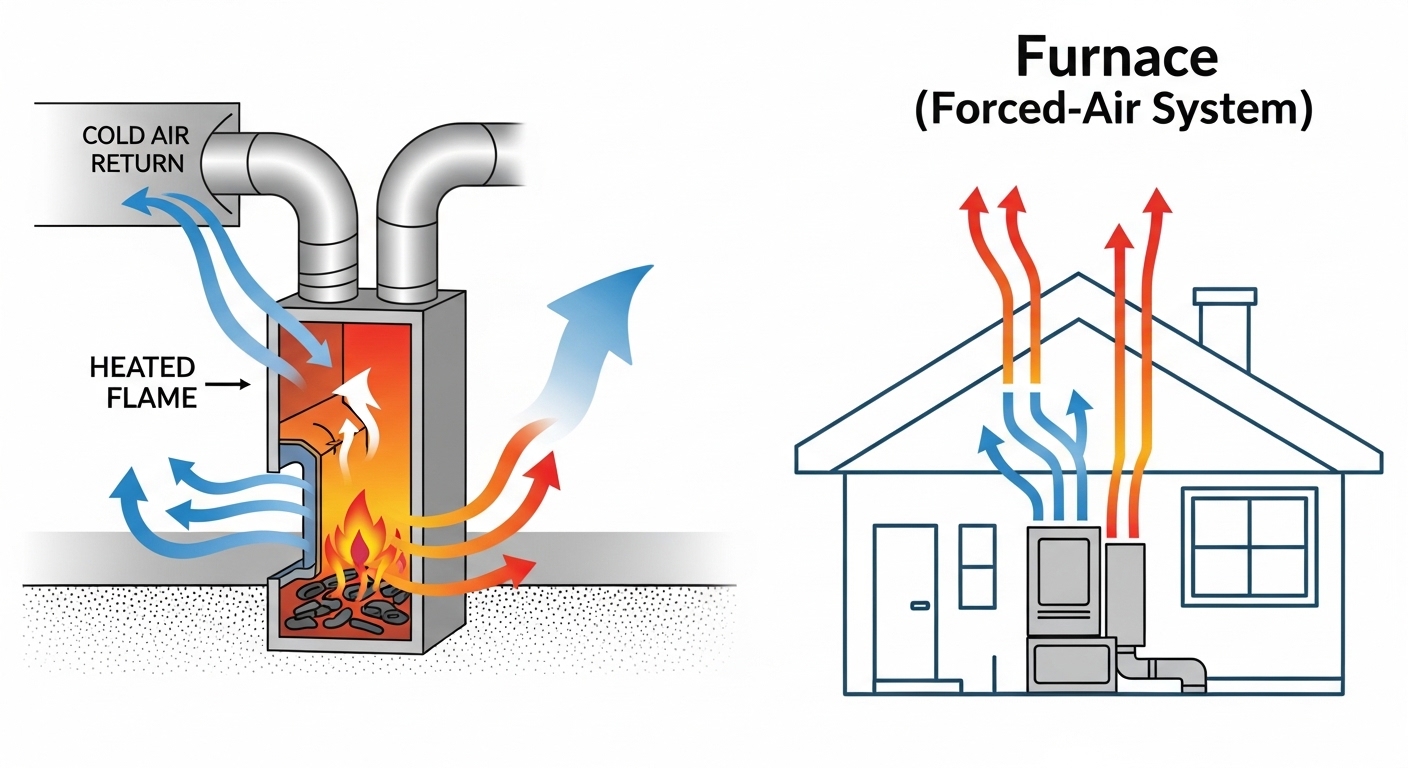
Forced air furnaces are the most common heating system in American homes, found in about 60% of households. These systems heat air using a burner fueled by natural gas, propane, oil, or electricity, then distribute the warm air through ductwork using a blower fan.
Gas furnaces are the most popular due to natural gas’s relatively low cost and widespread availability. Modern high-efficiency gas furnaces can achieve AFUE (Annual Fuel Utilization Efficiency) ratings of 98%, meaning only 2% of the energy is wasted.
The main advantages of forced air systems include fast heating, the ability to share ductwork with air conditioning, and relatively lower installation costs compared to other whole-home options. However, they can distribute allergens through ductwork and may create uneven heating between rooms.
Gas furnaces cost between $3,000 and $7,500 installed, with electric models running $2,000 to $5,000. Oil furnaces are more expensive at $6,500 to $10,000 but may be necessary in areas without natural gas service.
How Furnaces Work
When your thermostat calls for heat, the furnace’s burner ignites and heats a metal component called a heat exchanger. A blower fan pushes air across the hot heat exchanger, warming the air before it’s distributed through supply ducts to each room.
Return ducts pull cool air back to the furnace to be reheated, creating a continuous circulation cycle. The system cycles on and off to maintain your set temperature, with more efficient models using variable-speed motors for better control.
Forced Air Pros and Cons
The biggest advantages of forced air furnaces are their quick heating capability and compatibility with central air conditioning. If you already have ductwork, replacing a furnace is relatively straightforward and affordable.
On the downside, forced air systems can be noisy when the blower runs, and they stir up dust and allergens throughout your home. They also require regular filter changes and duct cleaning to maintain efficiency and air quality.
Boiler Systems (Hydronic Heating)
Boiler systems, also called hydronic heating, use water or steam to distribute heat instead of air. These systems heat water in a boiler using gas, oil, or electricity, then circulate the hot water through pipes to radiators, baseboard heaters, or radiant floor tubing throughout the home.
Steam boilers, common in older homes, boil water to create steam that rises naturally through pipes to radiators. Hot water boilers maintain water below boiling temperature and use pumps to circulate it through the system.
Hydronic heating provides exceptionally even, comfortable warmth without the drafts or air movement associated with forced air. Many homeowners prefer the consistent temperatures and quiet operation of boiler systems.
Boiler installations typically cost between $4,500 and $9,000, with high-efficiency condensing models reaching $12,000 or more. While more expensive upfront than many furnaces, boilers often have longer lifespans of 20-30 years with proper maintenance.
How Boilers Work
When your thermostat signals a need for heat, the boiler’s burner or heating element activates to warm the water. A circulator pump then pushes the hot water through supply pipes to radiators or baseboard units in each room.
As the hot water flows through these heat emitters, it releases warmth into the room. The cooled water returns through return pipes to the boiler to be reheated. Some systems use zone valves and multiple thermostats to control different areas independently.
Boiler System Pros and Cons
Hydronic heating excels in comfort, providing consistent warmth without cold spots or drafts. The lack of forced air movement means fewer airborne allergens and dust circulation. Boiler systems also tend to be quieter than forced air furnaces.
The main drawbacks are higher installation costs and the fact that they can’t share infrastructure with air conditioning. Adding cooling requires a separate ductless system or traditional AC installation. Boilers also take longer to heat a home than forced air systems.
Heat Pump Systems
Heat pumps have become increasingly popular in 2026 due to their high efficiency and ability to provide both heating and cooling. Unlike furnaces that generate heat through combustion, heat pumps move existing heat from one place to another using refrigerant and a compressor.
Air-source heat pumps extract heat from outdoor air (even in cold temperatures) and transfer it inside. In summer, they reverse direction to remove heat from your home, providing air conditioning from the same system.
Geothermal heat pumps, also called ground-source systems, use the stable temperature underground as their heat source. These are more expensive to install but offer exceptional efficiency, especially in extreme climates.
Air-source heat pumps cost $4,000 to $9,000 installed, while geothermal systems range from $15,000 to $35,000. However, heat pumps can reduce heating costs by 50% compared to electric resistance heating and work more efficiently than furnaces in moderate climates.
Air-Source Heat Pumps
Air-source heat pumps are the most common type, consisting of an outdoor unit (similar to an air conditioner) and an indoor air handler. Refrigerant circulates between the units, absorbing heat from outside air and releasing it inside during heating mode.
Modern cold-climate heat pumps can extract usable heat down to -15F or lower, making them viable options in regions that previously required fossil fuel heating. Their efficiency is measured by HSPF (Heating Season Performance Factor), with higher ratings indicating better efficiency.
The main limitation is reduced efficiency in extremely cold temperatures. Many homeowners in cold climates use hybrid systems that switch to a gas furnace when temperatures drop below a certain point.
Geothermal Heat Pumps
Geothermal systems use underground pipes buried in your yard to exchange heat with the earth, which maintains a constant temperature around 50-60F year-round. This stable heat source allows geothermal pumps to operate at 300-400% efficiency.
While installation is expensive due to drilling or trenching required for the ground loop, geothermal systems offer the lowest operating costs of any heating system. They also have very long lifespans, with indoor components lasting 20-25 years and ground loops lasting 50+ years.
Heat Pump Pros and Cons
The biggest advantage of heat pumps is their efficiency. For every unit of electricity consumed, they can move 2-4 units of heat, making them much more efficient than electric resistance heating. They also provide cooling without needing separate equipment.
Limitations include reduced performance in extreme cold for air-source models and very high upfront costs for geothermal installations. Heat pumps also produce warmer air than furnaces, which some homeowners find less comfortable during the coldest days.
Radiant Floor Heating
Radiant floor heating delivers warmth directly from your floor, creating comfortable, even heat throughout your living space. This system uses tubing or cables installed beneath finished flooring to warm the floor surface, which then radiates heat upward into the room.
There are two main types of radiant floor heating: hydronic systems that circulate hot water through tubing, and electric systems that use resistance cables or mats. Hydronic systems are better for whole-home heating, while electric is typically used for individual rooms or additions.
Radiant heating eliminates cold floors, provides even temperatures without hot or cold spots, and doesn’t stir up dust or allergens. It’s also invisible once installed, with no vents or radiators taking up wall space.
Installation costs range from $6 to $20 per square foot for hydronic systems, and $8 to $15 per square foot for electric. Whole-house hydronic installations typically cost $15,000 to $35,000, making it a premium option best suited for new construction or major renovations.
Hydronic vs. Electric Radiant
Hydronic radiant systems use a boiler to heat water that circulates through PEX tubing beneath the floor. These systems are more expensive to install but cost less to operate, making them ideal for whole-home applications or large areas.
Electric radiant systems use resistance cables or conductive mats powered by your home’s electricity. They’re simpler and cheaper to install but more expensive to run, making them better suited for bathrooms, kitchens, or room additions where extending the existing heating system would be difficult.
Radiant Floor Pros and Cons
Radiant floor heating provides unmatched comfort with consistent temperatures from floor to ceiling. There’s no visible equipment, no air movement to distribute allergens, and it works well with various flooring types including tile, hardwood, and laminate.
The main drawbacks are high installation costs and the fact that it’s difficult to add to existing homes without significant renovation. Radiant systems also heat up and cool down slowly, making them less responsive than forced air for quick temperature changes.
Electric Resistance Heating
Electric resistance heating includes baseboard heaters, wall heaters, and electric furnaces that use electricity to generate heat directly. These systems are simple, affordable to install, and don’t require ductwork or fuel lines, making them popular in apartments, additions, and homes without access to natural gas.
Electric baseboard heaters contain heating elements that warm air naturally through convection. As air is heated, it rises through the unit’s fins while drawing cool air in from below, creating continuous circulation without a fan.
The main advantage of electric resistance heating is low upfront cost, with individual units costing just $100 to $300 each and requiring minimal installation. They also provide silent operation and individual room control through separate thermostats.
However, electricity is typically 2-3 times more expensive than natural gas or oil per unit of heat, making electric resistance the most costly operating option. In cold climates, heating entirely with electric resistance can result in monthly winter bills exceeding $500.
Electric Resistance Pros and Cons
Electric heating systems are simple, reliable, and require almost no maintenance. They’re ideal for mild climates where heating needs are minimal, or for rooms that are difficult to heat with a central system.
The significant downside is operating cost. In areas with expensive electricity or harsh winters, electric resistance heating becomes prohibitively expensive. These systems also provide dry heat that can reduce indoor humidity levels.
Ductless Mini-Split Systems
Ductless mini-split systems are heat pumps that don’t require ductwork, making them ideal for older homes, room additions, or new construction without space for ducts. Each indoor unit connects to an outdoor compressor via refrigerant lines and provides heating and cooling for a specific zone.
Mini-splits offer excellent efficiency, with many models rated above 20 SEER for cooling and 10 HSPF for heating. The ability to create multiple zones allows you to heat only occupied rooms, reducing energy waste.
Installation costs range from $3,000 to $8,000 per zone, with multi-zone systems costing $10,000 to $20,000 or more. While more expensive per ton than central systems, mini-splits avoid the significant cost of installing ductwork.
Mini-Split Applications
Mini-splits excel in homes without existing ductwork, particularly historic properties where installing ducts would be impractical. They’re also perfect for room additions, converted garages, or finished attics where extending the central system would be difficult.
The zoning capability is another major advantage. Each indoor unit has its own thermostat, allowing family members to set different temperatures for different rooms and avoid heating unoccupied spaces.
Mini-Split Pros and Cons
Beyond avoiding ductwork, mini-splits offer high efficiency, quiet operation, and precise temperature control for each zone. Many models include advanced features like programmability, motion sensors, and smartphone control.
Limitations include higher upfront costs than window units or portable heaters, and the need for multiple indoor units to heat a whole home. Some homeowners also object to the appearance of wall-mounted units in each room.
Wood and Pellet Heating
Wood and pellet stoves provide heating through burning renewable biomass fuel. Wood stoves burn traditional firewood, while pellet stoves use compressed wood pellets fed automatically from a hopper. Both can serve as primary heating sources or supplemental systems to reduce reliance on fossil fuels.
Modern wood and pellet stoves are much more efficient and cleaner-burning than older models, with many certified by the EPA for low emissions. They can provide significant cost savings, especially for homeowners with access to inexpensive firewood.
Wood stoves cost $1,500 to $4,000 installed, while pellet stoves range from $2,000 to $5,000. The main ongoing cost is fuel, with cordwood typically costing $200 to $400 per cord depending on your region, and pellets costing $250 to $350 per ton.
Wood vs. Pellet Stoves
Wood stoves offer the traditional wood-burning experience with larger flames and the option to use free or inexpensive firewood. However, they require more frequent loading and attention, and emissions can be a concern in areas with wood-burning restrictions.
Pellet stoves are more automated, with hoppers that hold 40-60 pounds of pellets and provide 24-48 hours of continuous heating. They burn more cleanly and consistently than wood stoves but require electricity to operate the auger and fans.
Biomass Heating Pros and Cons
The main advantages of wood and pellet heating are fuel independence, lower operating costs compared to electric or oil heat, and the cozy ambiance of a real fire. These systems can also operate during power outages, providing crucial heat during winter storms.
Drawbacks include the need for fuel storage, regular maintenance including ash removal, and the labor involved with wood stoves. Wood-burning also produces particulate emissions that may be restricted in some areas.
Cost Comparison of Heating Systems
Understanding the total cost of different heating systems requires considering both installation and operating expenses. Here’s how the main types compare:
| System Type | Installation Cost | Monthly Operating Cost | Lifespan |
|---|---|---|---|
| Gas Furnace | $3,000 – $7,500 | $80 – $150 | 15-20 years |
| Electric Furnace | $2,000 – $5,000 | $200 – $450 | 15-20 years |
| Boiler System | $4,500 – $9,000 | $90 – $160 | 20-30 years |
| Air-Source Heat Pump | $4,000 – $9,000 | $100 – $180 | 12-18 years |
| Geothermal Heat Pump | $15,000 – $35,000 | $50 – $100 | 20-25 years |
| Ductless Mini-Split | $3,000 – $8,000/zone | $80 – $150/zone | 12-18 years |
These costs vary significantly based on your climate, home size, insulation quality, and local fuel prices. In 2026, rising energy costs have made efficiency increasingly important when choosing a new heating system.
Energy Efficiency Ratings Explained
Comparing heating systems requires understanding efficiency ratings. Different systems use different metrics, but they all measure how effectively the system converts fuel or electricity into usable heat.
AFUE (Annual Fuel Utilization Efficiency)
AFUE measures the efficiency of furnaces and boilers, expressed as a percentage. An AFUE of 90% means 90% of the fuel’s energy becomes heat, while 10% is lost through exhaust. Modern high-efficiency furnaces achieve 90-98% AFUE, while older units may be as low as 60-70%.
HSPF (Heating Season Performance Factor)
HSPF rates the heating efficiency of heat pumps, with higher numbers indicating better efficiency. The minimum federal standard is 7.7 HSPF, but ENERGY STAR certified models typically exceed 8.5 HSPF. The most efficient models reach 10-12 HSPF.
COP (Coefficient of Performance)
COP measures heat pump efficiency by comparing heat output to electricity input. A COP of 3 means the heat pump delivers three units of heat for every unit of electricity consumed. Geothermal systems typically achieve COPs of 3-4, while air-source units range from 1.5-3 depending on outdoor temperature.
How to Choose the Right Heating Systems in 2026?
Selecting the best heating system for your home requires evaluating multiple factors specific to your situation. Consider these key elements when making your decision:
Climate Considerations
Your local climate significantly impacts the best heating choice. In mild climates (winter lows above 20F), air-source heat pumps offer excellent efficiency and year-round comfort. In extremely cold regions, gas furnaces or hybrid systems may be more practical.
Homeowners in areas with frequent below-zero temperatures should prioritize systems that maintain efficiency in extreme cold. High-efficiency furnaces and geothermal heat pumps perform well regardless of outdoor conditions, while standard air-source heat pumps may struggle.
Home Size and Layout
Larger homes typically benefit from central heating systems that can distribute warmth evenly throughout multiple rooms. Forced air systems heat up quickly, making them suitable for large spaces with fluctuating heating needs.
Smaller homes or open floor plans may work well with fewer zones or even a single heating source. Multi-story homes often benefit from zoning capabilities to address heat rising to upper levels while lower floors stay cooler.
Existing Infrastructure
If your home already has ductwork, replacing or upgrading a furnace is typically the most cost-effective option. Adding ductwork to an older home can be expensive and disruptive, making ductless mini-splits or boiler systems more attractive.
Homes with existing radiators or baseboard heaters are typically set up for boiler systems. Converting to forced air requires installing ductwork, which may not be practical without significant renovation.
Fuel Availability and Cost
Natural gas is typically the most economical heating fuel where available, costing about 40-60% less than electric resistance heating per unit of heat. Propane and oil costs vary significantly by region and market conditions.
Compare local fuel costs when choosing between systems. In areas with expensive electricity but cheap natural gas, a gas furnace usually makes more sense than a heat pump. In regions with low electricity rates, heat pumps become more competitive.
Budget Considerations
Your budget should consider both upfront installation costs and long-term operating expenses. High-efficiency systems cost more initially but can pay for themselves through energy savings over 10-15 years.
Geothermal systems have the highest upfront cost but lowest operating expenses. If you plan to stay in your home long-term, investing in efficiency now can save thousands in future energy bills.
Maintenance Requirements by System Type
Regular maintenance keeps your heating system running efficiently and extends its lifespan. Different systems have different maintenance needs:
Forced Air Furnaces: Replace air filters every 1-3 months, schedule annual professional inspections, and clean ductwork every 3-5 years. Gas furnaces require checking burners and heat exchangers for safety.
Boilers: Annual professional servicing including cleaning, pressure checks, and combustion analysis. Hydronic systems may need periodic bleeding of radiators to remove air pockets.
Heat Pumps: Clean or replace filters monthly, clean outdoor units regularly, and schedule annual professional maintenance. Both indoor and outdoor coils need cleaning to maintain efficiency.
Wood and Pellet Stoves: Clean ash pans regularly, inspect and clean chimneys annually, and check gaskets and door seals. Pellet stoves require additional cleaning of augers and exhaust systems.
FAQ’s
What are the three types of heating systems?
The three main types of heating systems are forced air systems (furnaces), hydronic systems (boilers), and heat pumps. Forced air systems heat and distribute air through ducts, hydronic systems circulate hot water through radiators or baseboards, and heat pumps move existing heat from outside to inside your home.
What type of heating system is the best?
The best heating system depends on your climate, home, and budget. For most homes with access to natural gas, high-efficiency furnaces offer excellent value. In mild climates, heat pumps provide both heating and cooling efficiently. Hydronic systems offer superior comfort, while geothermal heat pumps deliver the lowest long-term operating costs despite higher upfront prices.
What are the four heating systems?
The four primary heating system categories are: 1) Forced air furnaces that use ducts to distribute heated air, 2) Boiler systems that circulate hot water through radiators or baseboards, 3) Heat pumps that transfer heat from outside air or ground, and 4) Electric resistance heating including baseboard heaters and space heaters. Each has distinct advantages depending on your situation.
Which room heater is best for asthma patients?
For asthma patients, hydronic (boiler) heating systems are typically the best choice because they don’t circulate airborne allergens through ducts. If you must use forced air, choose high-quality air filters, clean ducts regularly, and consider a whole-home air purifier. Electric baseboard heating is another good option as it doesn’t stir up dust or allergens. Avoid wood-burning stoves, which produce particulate matter that can trigger asthma symptoms.
What is the most efficient heating system?
Geothermal heat pumps are the most efficient heating systems available, achieving 300-400% efficiency by extracting heat from the stable ground temperature. High-efficiency heat pumps and condensing boilers with 95%+ AFUE ratings also offer excellent efficiency. The most efficient system for your home depends on climate, fuel costs, and installation factors – a local HVAC professional can calculate payback periods for different options.
Conclusion
Understanding the different types of heating systems helps you make an informed decision for your home. Whether you choose a traditional gas furnace, an efficient heat pump, comfortable radiant floor heating, or another option, the right choice balances your climate, budget, and comfort needs.
When selecting a new heating system in 2026, consider both installation costs and long-term operating expenses. High-efficiency systems cost more upfront but can save thousands over their lifetime through reduced energy bills.
Consult with licensed HVAC professionals who can assess your specific situation and provide accurate quotes. They can help you navigate rebates and incentives available for high-efficiency systems, making your investment even more attractive.
Leave a Reply