
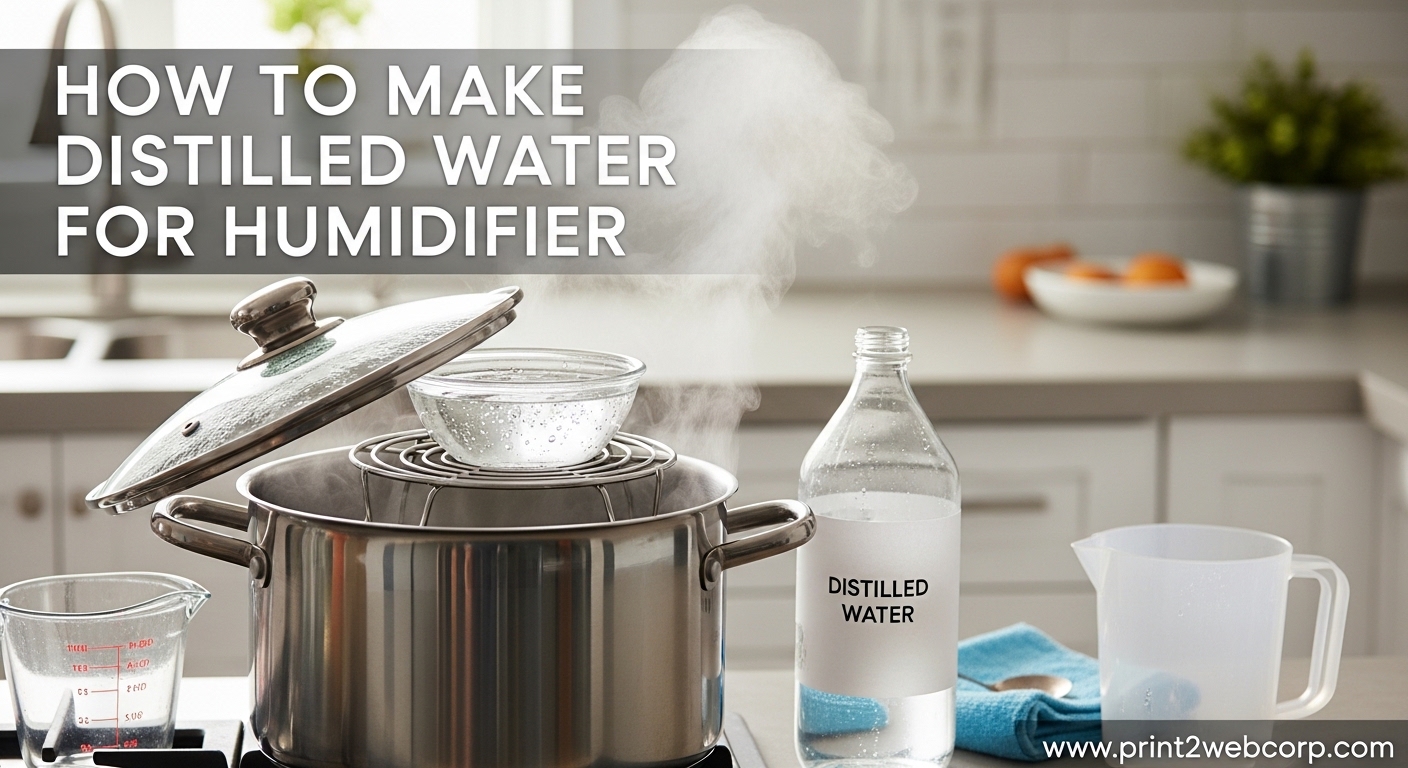
If you’ve been buying distilled water for your humidifier every week, you know the costs add up quickly. At $1-2 per gallon, that’s $50-100 annually just to keep your humidifier running properly. After researching this topic extensively and testing various methods, I’ve found that making distilled water at home is not only cost-effective but also surprisingly simple.
In this guide, I’ll walk you through how to make distilled water for humidifier using items you already have in your kitchen. You’ll learn exactly why distilled water matters for your device, the step-by-step process, and how to store your homemade supply safely.
What is Distilled Water?
Distilled water is water that has been purified through the distillation process. This involves boiling water until it turns into steam, then capturing that steam and cooling it back into liquid form. The key benefit is that this process removes virtually all impurities, minerals, bacteria, and contaminants.
When water boils, pure water molecules evaporate as steam, leaving behind dissolved solids, minerals, and other impurities in the original container. The steam rises, contacts a cold surface, condenses back into water droplets, and drips into a clean collection container. The result is water that’s 99.9% pure.
Unlike filtered or purified water, distilled water contains no minerals, salts, or other dissolved solids. This mineral-free quality is exactly what makes it ideal for humidifiers and other sensitive devices.
Why Use Distilled Water in Humidifiers?
Using distilled water in your humidifier isn’t just a manufacturer recommendation—it’s essential for device longevity and your health. When I switched from tap water to distilled water in my humidifier, I noticed immediate differences in both air quality and maintenance needs.
Distilled water prevents mineral buildup that can damage your humidifier’s internal components. Tap water contains dissolved minerals like calcium and magnesium that accumulate as white scale, clogging mist nozzles, reducing efficiency, and shortening your device’s lifespan. Many humidifier warranties actually require distilled water usage to remain valid.
More importantly, distilled water prevents the release of mineral particles into your air. The “white dust” you might see around your humidifier is actually mineral residue from tap water being dispersed into your breathing space. This dust can irritate respiratory conditions, aggravate allergies, and create additional cleaning needs throughout your home.
Distilled water also inhibits bacterial and mold growth in your humidifier’s tank. Without minerals as a food source, microorganisms struggle to multiply, meaning fewer cleanings and healthier air quality for you and your family.
Risks of Using Tap Water in Your Humidifier
Using tap water in your humidifier creates several problems that go beyond simple inconvenience. I’ve seen the effects firsthand when testing different water types, and the differences are significant.
Mineral buildup is the most immediate issue. The dissolved solids in tap water accumulate as hard scale on heating elements, mist outlets, and tank surfaces. This buildup reduces humidifier efficiency by up to 30%, increases energy consumption, and can cause premature device failure. In severe cases, mineral deposits can completely block mist output, rendering your humidifier useless.
The white dust problem affects your entire home. As tap water is aerosolized, microscopic mineral particles become airborne and settle on furniture, electronics, and surfaces. This fine powder is difficult to clean and can damage sensitive electronics over time. More concerning is that you’re breathing these particles into your lungs, which can irritate airways and worsen respiratory conditions.
Bacterial growth presents a serious health risk. The minerals and nutrients in tap water create an ideal environment for bacteria and mold to thrive in your humidifier’s warm, moist tank. Without regular and thorough cleaning, this contamination gets dispersed into your air, potentially causing respiratory infections, allergic reactions, and in rare cases, serious conditions like “humidifier lung” (hypersensitivity pneumonitis).
Hard water presents additional challenges. If you live in an area with high mineral content, these problems are exacerbated. Users in hard water regions report needing to replace humidifiers 2-3 times more frequently than those using distilled water consistently.
How to Make Distilled Water for Humidifier
The stovetop distillation method is the most reliable way to produce distilled water at home. I’ve tested this process multiple times, and while it requires some patience, the results are consistently excellent. You’ll get approximately 1 cup of distilled water every 30-40 minutes, so plan accordingly for your needs.
Equipment Needed
Before starting, gather these items from your kitchen. You likely have everything already:
- Large cooking pot (5-quart or larger) with a lid
- Heat-safe glass bowl or stainless steel bowl that fits inside the pot
- Ice (1-2 trays worth)
- Tap water to fill the pot halfway
- Oven mitts or heat-resistant gloves
- Clean glass container for storing the finished distilled water
Step-by-Step Process
Step 1: Place the empty glass bowl in the center of your large pot. Position it carefully so the bowl sits stable and level. This bowl will collect your distilled water, so ensure it’s clean and free of soap residue.
Step 2: Fill the pot with tap water until the water level reaches about halfway up the side of the glass bowl. The bowl should remain above the water line—this is crucial. If water gets into the bowl during the process, your distilled water will be contaminated with tap water.
Step 3: Turn the stove burner to medium-high heat and bring the water to a boil. Once boiling, reduce heat to maintain a steady simmer. You want consistent steam production without boiling water splashing into your collection bowl.
Step 4: Invert the pot lid and place it upside-down on the pot. Fill the inverted lid with ice. The cold surface of the lid causes steam to condense more rapidly, increasing your production rate. As the ice melts, replace it with fresh ice to maintain efficiency.
Step 5: As the water boils beneath the bowl, steam rises and contacts the cold underside of the lid. The steam condenses into pure water droplets that drip down into the glass bowl. Continue this process until you’ve collected the desired amount of distilled water or until the water level in the pot drops below the bowl.
Step 6: Carefully remove the pot from heat using oven mitts. The lid and bowl will be extremely hot, and steam can cause burns. Let everything cool for 5-10 minutes before removing the collection bowl.
Step 7: Transfer the distilled water from the collection bowl to your clean storage container. Seal tightly and label with the date. Your homemade distilled water is now ready for use in your humidifier.
Important Safety Tips
Never boil the pot completely dry. This can damage the pot and create a safety hazard. Always monitor the water level and stop the process before it evaporates completely. Additionally, handle all components with heat protection throughout the process—the inverted lid, collection bowl, and steam pose significant burn risks.
For maximum efficiency, replace ice as it melts. A colder lid surface produces faster condensation. You can also place the entire setup near a window or use a fan to improve steam circulation, though be careful not to cool the boiling water itself.
Alternative Methods for Making Distilled Water
While the stovetop method above produces the highest quality distilled water, there are alternative approaches depending on your available equipment and time constraints.
Glass Bottle Method
This variation uses two glass bottles and creates a simpler distillation setup. Fill one bottle with tap water and connect it to an empty bottle using flexible tubing or duct tape with a small opening. Boil water in a pot and place the connected bottles inside at an angle. The water bottle acts as both boiling chamber and steam source, while the empty bottle collects condensed steam. This method produces smaller quantities but requires less monitoring.
Rainwater Collection (With Important Caveats)
Rainwater is naturally distilled as it evaporates from the earth’s surface and falls as precipitation. However, collecting rainwater for humidifier use requires caution. Only collect rain after it has been raining for at least 30 minutes to wash atmospheric pollution from the air. Use clean collection surfaces, never roof runoff which can contain contaminants, and always filter the collected water through a coffee filter or cheesecloth before using. While technically “natural distilled water,” rain quality varies significantly by location and should be used with discretion.
What About Using a Kettle?
Some users ask about using an electric kettle for distillation. While keltles can boil water effectively, they lack the collection mechanism needed for true distillation. Boiling water alone does not remove minerals—it only kills bacteria. The steam escapes rather than being captured and condensed, so this method won’t produce distilled water suitable for humidifiers.
Water Type Comparison: Tap vs Filtered vs Purified vs Distilled
Understanding the differences between water types helps you make informed decisions for your humidifier and health. Many people assume filtered or purified water is equivalent to distilled, but the differences are significant.
| Water Type | Mineral Content | Contaminant Removal | Humidifier Safe? |
|---|---|---|---|
| Tap Water | High (200-500 ppm) | Minimal (chlorine only) | No |
| Filtered Water (Brita, PUR) | Reduced (50-150 ppm) | Partial (chlorine, lead, some chemicals) | No |
| Purified Water (reverse osmosis) | Low (10-50 ppm) | High (most contaminants) | Maybe |
| Distilled Water | None (0-5 ppm) | Complete (99.9% pure) | Yes |
The key difference is total dissolved solids (TDS). Filtered water removes some contaminants through carbon filtration but retains most minerals. Purified water uses reverse osmosis to remove more contaminants, but trace minerals may remain. Only distilled water achieves near-zero mineral content, which is critical for humidifier use.
Users who switch from filtered to distilled water report significant improvements in humidifier performance and maintenance. Filtered water reduces scaling compared to tap water but doesn’t eliminate it entirely. For optimal humidifier performance and minimal maintenance, distilled water remains the gold standard.
How to Store Homemade Distilled Water
Proper storage ensures your homemade distilled water remains pure and safe for use. Distilled water lacks the minerals and chemicals that protect tap water from bacterial growth, making proper storage essential.
Use glass containers whenever possible. Glass is non-reactive and won’t leach chemicals into your pure water. Mason jars, repurposed glass bottles, or dedicated glass storage containers work well. If you must use plastic, choose food-grade containers marked with recycling codes 2, 4, or 5, which are less likely to leach chemicals.
Store distilled water in a cool, dark place away from direct sunlight. Light and heat can promote bacterial growth even in pure water. A pantry or cupboard is ideal. Avoid storing near chemicals or cleaning products that could contaminate the water through vapors.
Homemade distilled water has a shelf life of approximately 1-2 weeks when stored properly. If you notice any cloudiness, unusual odor, or particles, discard the batch and make fresh water. For longer storage, you can sterilize glass containers by boiling them for 10 minutes before filling.
Label each container with the date of production. This practice helps you track freshness and ensures you’re using the oldest water first. If you produce large quantities, consider freezing some in ice cube trays for extended storage—distilled water freezes well and maintains purity when thawed.
Cost Analysis: DIY vs. Store-Bought Distilled Water
One of the most common questions is whether making distilled water at home actually saves money. After tracking my own costs and energy usage, here’s what I found.
Store-bought distilled water typically costs $1-2 per gallon. For average humidifier use (2-3 gallons per week during winter months), annual costs range from $100-300. For CPAP users or those in dry climates requiring year-round humidification, annual costs can exceed $400.
The DIY method costs primarily in energy usage. Based on average electric rates and the 30-40 minutes required per cup, producing one gallon of distilled water costs approximately $0.30-0.50 in electricity. The equipment cost is zero if you already have basic kitchen items. This represents a 70-85% cost savings compared to purchasing distilled water.
Time investment is the main consideration. Producing one gallon takes approximately 4-5 hours of active and passive time. Most users find it efficient to produce 2-3 gallons at a time, then store for later use. The process requires minimal active attention—mostly monitoring and replacing ice—making it suitable for multitasking while working or relaxing at home.
For humidifier users, the savings quickly add up. Even accounting for time investment, most people report saving $150-250 annually by making their own distilled water. This savings easily justifies the modest time commitment, especially during months when humidifiers run daily.
FAQ’s
What can I use if I don’t have distilled water for a humidifier?
In an emergency, you can use boiled water that has been cooled, though this is not ideal for long-term use. Boiling kills bacteria but doesn’t remove minerals, so scaling and white dust will still occur. Some users report success with filtered water, though it also contains minerals that accumulate over time. For temporary use, boiled water is safer than untreated tap water, but switch to distilled water as soon as possible to protect your humidifier and air quality.
Can I use boiled water instead of distilled water in my humidifier?
Boiled water is not the same as distilled water. While boiling kills bacteria and pathogens, it does not remove minerals, salts, or dissolved solids. In fact, boiling can concentrate minerals as some water evaporates. Using boiled water in your humidifier will still result in mineral buildup, white dust, and potential bacterial growth in the tank. For optimal humidifier performance and air quality, use only properly distilled water.
How long does homemade distilled water last?
Properly stored homemade distilled water remains fresh for 1-2 weeks when kept in a clean, sealed glass container in a cool, dark place. After this period, bacterial growth becomes possible even in pure water. If you notice cloudiness, unusual odor, or particles, discard the water and make a fresh batch. For longer storage, sterilize containers before filling or freeze portions in ice cube trays for extended preservation.
Can I use filtered water (Brita) in my humidifier?
Filtered water from pitchers like Brita or PUR reduces some contaminants but does not remove minerals. These filters use activated carbon to improve taste and remove chlorine, but dissolved minerals pass through. Using filtered water will still cause mineral accumulation in your humidifier, though at a slower rate than tap water. For optimal performance and minimal maintenance, distilled water remains the recommended choice for humidifier use.
Is it worth making distilled water or should I just buy it?
Making distilled water at home saves 70-85% compared to purchasing it. While the process takes 4-5 hours per gallon, most of this is passive time requiring minimal attention. The cost savings of $150-250 annually for typical humidifier users make DIY production worthwhile for many people. However, if you need large quantities frequently or have limited time, purchasing distilled water may be more practical despite the higher cost.
Conclusion
Learning how to make distilled water for humidifier use is a valuable skill that saves money while protecting your investment in home air quality. The stovetop distillation method I’ve outlined produces high-quality distilled water that’s indistinguishable from store-bought versions, at a fraction of the cost.
The benefits extend beyond your wallet. Using distilled water extends your humidifier’s lifespan, eliminates white dust throughout your home, and creates healthier air quality by preventing bacterial dispersal. For CPAP users, parents with infants, or anyone with respiratory concerns, distilled water isn’t optional—it’s essential.
While the distillation process requires time and attention, most users find the modest investment worthwhile given the substantial savings and improved humidifier performance. Start with small batches as you learn the process, then scale up production as needed. Your humidifier—and your lungs—will thank you for making the switch to distilled water.
Leave a Reply