
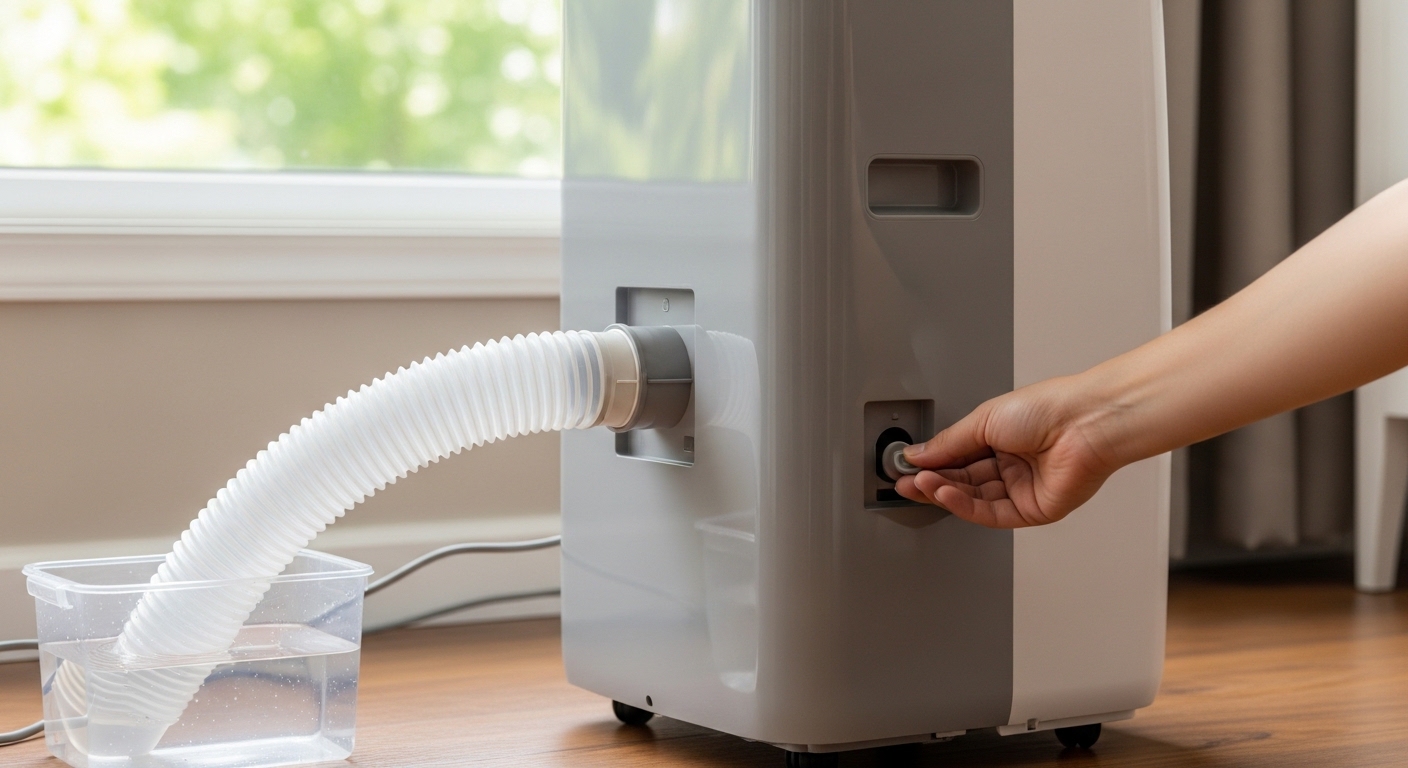
If your portable air conditioner has been shutting off unexpectedly or you’ve noticed water pooling around the unit, you’re probably wondering how to drain portable AC units properly. I’ve been maintaining portable ACs for years, and I’ll walk you through exactly what you need to do to keep your unit running smoothly all summer long.
Learning how to drain portable AC equipment is essential maintenance that takes just a few minutes but can prevent costly water damage and extend your unit’s lifespan. Whether you have a self-evaporating model or a standard unit, this guide covers every drainage method you might need.
Why Does Your Portable AC Need Draining?
Portable air conditioners work by pulling warm air from your room and passing it over cold cooling coils. As the warm air cools down, moisture from the air condenses into water droplets, just like water forms on a cold soda can on a hot day.
This water collects in an internal tank or drip pan. In some models, the water is evaporated and expelled through the exhaust hose. However, in humid conditions or during heavy use, the unit produces more water than it can evaporate, requiring manual draining.
Most portable ACs will trigger a shutoff or display a warning light when the tank is full. This is a safety feature to prevent water from overflowing and damaging your floors or the unit itself.
How Often Should You Drain Portable AC?
The frequency depends on your humidity levels and how often you run the AC. In dry climates with a self-evaporating model, you might rarely need to drain it manually. In humid areas, you could be draining it daily during peak summer months.
If you notice your AC shutting off more frequently or see water in the drip tray, it’s time to drain. Some units have a water level indicator or will display an error code when full.
How to Drain Portable AC: Step-by-Step Guide
There are two main methods for draining your portable air conditioner: manual draining and continuous drainage with a hose. I’ll cover both so you can choose what works best for your setup.
Method 1: Manual Draining (Standard Method)
This method works for almost all portable AC units and requires no additional equipment beyond a shallow pan or towel to catch the water.
Step 1: Turn off and unplug your portable air conditioner. This is a critical safety step that should never be skipped. Always let the unit sit for at least 30 minutes after running before attempting to drain it.
Step 2: Locate the drain plug. Most units have a drain plug at the bottom or back of the unit. It might be hidden behind a small panel or cap. Some models have both an upper drain port (for continuous drainage) and a lower drain plug (for manual draining).
Step 3: Position your drain pan. Place a shallow pan, bowl, or towel underneath the drain plug area. Make sure it’s large enough to hold all the water from the tank, which can be several liters.
Step 4: Remove the drain plug. Twist or pull out the drain plug, depending on your model. Water will start flowing out immediately. Some units may also have a drain cap that needs to be unscrewed.
Step 5: Let the water drain completely. This may take several minutes. If the water slows to a trickle, you can gently tilt the unit toward the drain port to help the remaining water flow out. Be careful not to tilt too much, as these units can be heavy.
Step 6: Replace the drain plug. Once all water has drained, firmly reinsert or screw the drain plug back in place. Make sure it’s sealed properly to prevent leaks.
Step 7: Plug in and test. Plug the unit back in and turn it on. Check that the drain plug area is dry and that no warning lights are displayed. If your AC has a water level indicator, verify it shows the tank is empty.
Method 2: Continuous Drainage with Hose
If you’re tired of manually draining your unit, setting up continuous drainage is a game-changer. This method requires a drain hose (sometimes included with the unit) and a suitable drainage location like a floor drain, sink, or window.
Step 1: Identify the drain port. Most portable ACs have an upper drain port specifically designed for continuous drainage. This is usually a threaded connection at the back of the unit.
Step 2: Attach the drain hose. Screw the drain hose onto the drain port. Make sure it’s hand-tight to prevent leaks. If your unit didn’t come with a hose, you can buy a universal drain hose kit or use a standard garden hose with the right adapter.
Step 3: Route the hose to a drain. The hose should always slope downward from the unit to the drain point. Gravity is what keeps the water flowing. Don’t create loops or kinks in the hose that could trap water.
Step 4: Secure the hose. Use zip ties or tape to secure the hose along its path, especially if you’re running it out a window. This prevents the hose from being accidentally disconnected.
For window drainage, you can pass the hose through the same opening as your exhaust hose or drill a small hole in a window panel. Just make sure water won’t drip onto anything electrical or important below.
Tips to Drain Your Portable AC Less Often
If you’re constantly draining your unit, there are several ways to reduce how often you need to do this maintenance task.
First, consider using the dry mode or dehumidify setting on your AC when humidity is the main issue rather than heat. This mode focuses on moisture removal and can help prevent the tank from filling as quickly.
Second, improve your room’s ventilation. Using exhaust fans in kitchens and bathrooms, running a dehumidifier separately, or keeping windows closed during humid weather can all reduce the moisture load on your portable AC.
Third, check that your AC is sized properly for your space. An undersized unit will work harder and produce more condensation. The higher the BTU rating, the more effectively it can cool and dehumidify your room without overwhelming the tank.
What Happens If You Don’t Drain Your Portable AC?
Ignoring a full tank can lead to several problems. At minimum, your AC will stop cooling when the tank fills, as most units have a float switch that triggers an automatic shutoff to prevent overflow.
Prolonged standing water in the tank can lead to mold and mildew growth. This creates unpleasant odors and can potentially circulate mold spores into your room air when the unit runs.
In worst-case scenarios, water can overflow from the unit and damage your flooring. I’ve seen cases where users returned to find water damage to carpets, hardwood floors, and even drywall from units that weren’t drained promptly.
Some units will display a P1 or similar error code when the tank is full. Always address these warnings immediately rather than continuing to run the AC, as forced operation can damage the internal components.
FAQ: How to Drain Portable AC
How do you drain the water from a portable air conditioner?
Turn off and unplug the unit first for safety. Locate the drain plug at the bottom or back of the unit, remove it, and let water flow into a shallow pan or bowl. Once fully drained, replace the plug securely before plugging back in.
What happens if you don’t drain the water of a portable air conditioner?
The unit will shut off automatically when the tank is full to prevent overflow. Continued standing water can lead to mold growth, unpleasant odors, and potential water damage to flooring. Always drain promptly when warning lights appear.
Should I continuously drain portable AC?
Continuous drainage is recommended if you use your AC frequently or live in a humid climate. It eliminates manual draining and prevents shutoffs. Set up a drain hose from the upper port to a floor drain or window, ensuring the hose slopes downward for gravity flow.
What is the best way to drain a portable air conditioner?
The best method depends on your setup. For occasional use, manual draining with the lower drain plug works well. For daily use or high humidity, continuous drainage via the upper port with a hose to a floor drain is most convenient and requires the least maintenance.
Conclusion
Knowing how to drain portable AC units is essential maintenance that keeps your cooling system running efficiently throughout the hot 2026 season. Whether you choose manual draining or set up continuous drainage, the key is staying consistent with your maintenance routine.
Remember to always unplug before draining, check your drain ports monthly during heavy use, and consider a continuous drain setup if you find yourself emptying the tank too often. Your floors and your AC unit will thank you.
Leave a Reply