
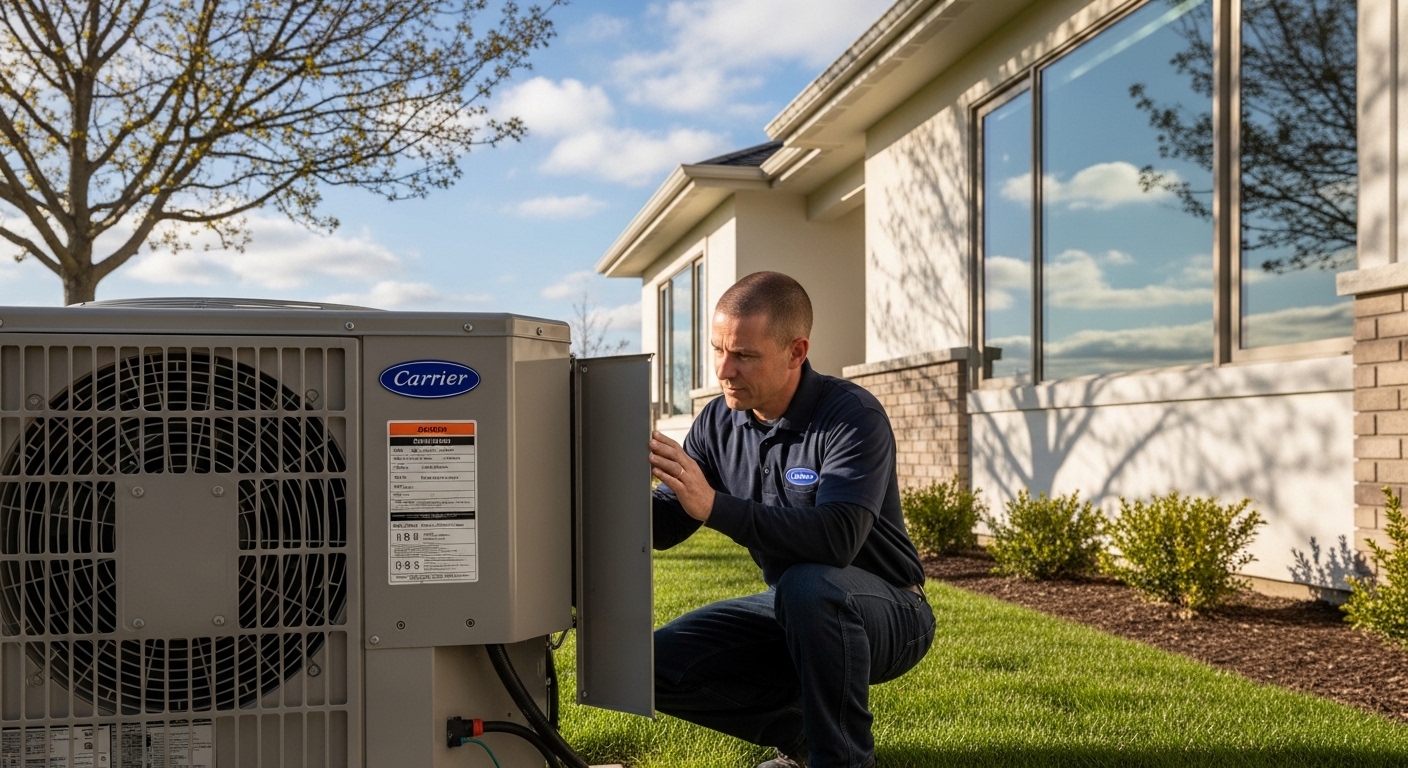
Looking at your HVAC system and wondering what you actually have? You’re not alone. Many homeowners struggle to distinguish between a standard air conditioner and a heat pump since they look nearly identical from the outside. Understanding your system type matters for maintenance, troubleshooting, and even energy bills. Let me walk you through the simple ways to tell if you have a heat pump.
How do I know if I have a heat pump? The quickest way is to check your thermostat for Aux Heat or Emergency Heat settings. These buttons only appear on heat pump thermostats. But there are several other reliable methods you can use to identify your system without calling a technician.
What Is a Heat Pump?
A heat pump is a dual-purpose HVAC system that both cools and heats your home. Unlike a standard air conditioner that only provides cooling with a separate furnace for heating, a heat pump does both jobs using the same equipment. It works like an air conditioner in reverse, moving heat rather than creating it.
Heat pumps transfer heat energy from outside to inside for heating in winter, then reverse direction to move heat outside for cooling in summer. This makes them highly efficient, though they do have limitations in extremely cold temperatures without backup heating support.
How Do I Know If I Have a Heat Pump?
Here are the five most reliable ways to identify if your home uses a heat pump system:
1. Check your thermostat – Look for Aux Heat, Auxiliary Heat, or Emergency Heat buttons or settings. Only heat pump thermostats have these options.
2. Inspect the outdoor unit label – Find the manufacturer’s data plate on the side of your outdoor condenser and look for model numbers starting with HP, or the words Heat Pump or HSPF rating.
3. Do the winter test – Turn your thermostat to heat mode when it’s around 45-50 degrees outside. If your outdoor unit is running, you have a heat pump. A standard AC outdoor unit stays silent during heating.
4. Look for the reversing valve – This brass valve with three pipe connections on the outdoor unit is the definitive visual indicator of a heat pump.
5. Check your Energy Guide label – Heat pumps will show both SEER (cooling) and HSPF (heating) ratings. AC units only show SEER.
Method 1: Check Your Thermostat
The thermostat check is the easiest and most reliable method for heat pump identification. Walk to your wall thermostat and look closely at the display or printed labels around it. Heat pump thermostats have distinctive settings that standard furnace or AC-only systems don’t include.
Look specifically for buttons or indicators labeled Aux Heat, Auxiliary Heat, Em Heat, or Emergency Heat. The Aux Heat setting activates backup electric heat strips when temperatures drop too low for the heat pump to work efficiently. Emergency Heat manually engages this backup system, bypassing the heat pump entirely.
Some thermostats display a small light or icon when auxiliary heat is running. If you see any of these indicators, you definitely have a heat pump. Standard gas or oil furnace thermostats will have settings like Fan, Auto, System Switch, or Mode but never auxiliary heat options.
Programmable or smart thermostats may require you to navigate through menus to find these settings. Check the device manual or look through system settings. The presence of heat mode with the word Heat or an icon showing both snowflake and flame symbols together is another clue.
Method 2: Inspect the Outdoor Unit
Head outside to where your condenser unit sits and look for the manufacturer’s data plate or label. This is typically located on the side of the unit, often near where the refrigerant lines connect. The label contains model numbers, serial numbers, and system specifications that reveal the unit type.
Scan the model number for prefixes like HP, HSP, or full words indicating Heat Pump. Many manufacturers encode the system type directly into the model number. For example, model numbers starting with 4HP or containing HP anywhere in the sequence typically indicate a heat pump model.
Look also for the HSPF rating on the label. HSPF stands for Heating Seasonal Performance Factor and is specific to heat pump heating efficiency. Standard air conditioners will only show SEER (Seasonal Energy Efficiency Ratio) for cooling performance. If you see both SEER and HSPF ratings, you’re looking at a heat pump.
The label might also include tonnage information and voltage requirements. Take a photo of the label and search the model number on the manufacturer’s website or call their customer service line for definitive identification.
Method 3: The Winter Test
The operational behavior of your outdoor unit during heating season provides one of the clearest clues. This method requires cool but not freezing temperatures, ideally around 45-50 degrees Fahrenheit, to get accurate results.
Go to your thermostat and switch the system to Heat mode if it isn’t already. Set the temperature a few degrees above current room temperature to trigger heating. Then walk outside and look at your outdoor condenser unit.
If the outdoor unit fan is spinning and the compressor is running while your home is heating, you have a heat pump. Standard air conditioners never run during heating cycles because they only provide cooling. The outdoor unit on a heat pump works year-round, extracting heat from outdoor air even in cold weather.
Listen for the compressor engaging and watch the fan blade. Heat pumps often run for longer periods at moderate temperatures compared to the short intense cycles of gas furnaces. This longer run time produces warm rather than hot air from your vents.
Perform this test on a mild day. Extremely cold temperatures below freezing might trigger emergency heat mode, which could temporarily stop the outdoor unit from running and give misleading results.
Method 4: Find the Reversing Valve
The reversing valve is the definitive physical component that distinguishes a heat pump from a standard air conditioner. This brass valve, typically located near the center of the outdoor unit, is what allows the system to reverse refrigerant flow for heating versus cooling.
Look for a brass valve body with three or four copper pipes connecting to it. The valve will have a small solenoid coil attached to one side, which controls the valve position electrically. This component is only found on heat pumps because AC units don’t need to reverse refrigerant flow.
Be cautious when inspecting the outdoor unit. The refrigerant lines under pressure and electrical components require care. Visual inspection from a safe distance is usually sufficient. If you can see a brass valve near the center with multiple pipe connections, that’s your reversing valve confirmation.
Some manufacturers place reversing valves in different locations, and on newer systems they might be covered by panels. The general appearance of a brass valve with multiple fittings remains the key identifier.
Heat Pump vs Air Conditioner
| Feature | Heat Pump | Air Conditioner |
|---|---|---|
| Provides Heating | Yes (primary heat source) | No (separate furnace required) |
| Thermostat Settings | Aux Heat, Emergency Heat | Heat, Cool, Off, Fan only |
| Winter Operation | Outdoor unit runs year-round | Outdoor unit silent during heating |
| Reversing Valve | Yes, required component | No, not present |
| Energy Ratings | SEER + HSPF | SEER only |
Why It Matters to Know Your System?
Identifying whether you have a heat pump is more than just curiosity. The type of system affects maintenance schedules, troubleshooting approaches, and even how you operate your thermostat for maximum efficiency.
Heat pumps require year-round maintenance since the outdoor unit operates in all seasons. The outdoor coils need cleaning before both heating and cooling seasons. Understanding your system helps you schedule appropriate service intervals rather than missing critical maintenance tasks.
Thermostat operation differs significantly. Heat pump owners should avoid manually switching to Emergency Heat except in emergencies, as this uses expensive electric resistance heating. Smart thermostat settings and programming take into account the heat pump’s defrost cycles and optimal operation temperatures.
When calling for service, technicians need to know your system type upfront to bring the right tools and parts. Heat pump repairs often involve refrigerant pressures that differ from standard AC systems, and troubleshooting steps vary based on the presence of reversing valves and auxiliary heat strips.
What to Do Next?
Once you’ve identified your system type, take steps to maintain it properly. If you confirmed a heat pump, schedule professional maintenance before both heating and cooling seasons. Keep the outdoor unit clear of debris, snow, and leaves throughout the year.
For heat pump systems, familiarize yourself with normal operating behaviors. The defrost cycle causes temporary steam or ice on the outdoor unit in winter. The system may switch to auxiliary heating automatically during extremely cold weather. These are normal operations, not signs of malfunction.
If you determined you have a standard air conditioner with a separate furnace, your maintenance focuses on seasonal tune-ups before summer for the AC and fall furnace checks. Your thermostat operation is simpler without auxiliary heat concerns.
Consider upgrading to a smart thermostat compatible with your system type. Heat pump-specific smart thermostats optimize auxiliary heat usage and can significantly reduce energy costs while improving comfort.
FAQ
What does a heat pump look like?
A heat pump outdoor unit looks nearly identical to a standard air conditioner condenser – a metal box with a fan grille and refrigerant pipes. The key differences are internal: a reversing valve (brass valve with three fittings) and a compressor designed for both heating and cooling. From the outside, they appear the same.
Is an AC unit a heat pump?
No, a standard air conditioner is not a heat pump. An AC unit only provides cooling by removing heat from inside your home and releasing it outside. A heat pump can reverse this process to bring heat inside. Heat pumps have additional components like reversing valves that AC units lack.
If I have a gas furnace do I have a heat pump?
Having a gas furnace doesn’t automatically mean you have a heat pump. You might have a traditional AC plus furnace setup. However, some homes have dual fuel systems that combine a heat pump with a gas furnace backup. Check your thermostat for Aux Heat settings or observe if the outdoor unit runs during heating to confirm.
Why is my outside unit running when the heat is on?
Your outdoor unit running during heating means you have a heat pump. Heat pumps extract heat from outdoor air even in cold weather, so the outdoor unit must operate to provide heating. Standard AC units stay silent during heating since a separate furnace handles that job.
Conclusion
How do I know if I have a heat pump? Start with the thermostat check for Aux Heat or Emergency Heat settings, then verify with the winter test or outdoor unit inspection. These simple methods work for most homeowners without any special tools or technical knowledge.
Understanding your HVAC system type empowers you to maintain it properly, operate it efficiently, and communicate effectively with service technicians. Whether you discover a heat pump or a traditional AC plus furnace setup, knowing your equipment is the first step to better comfort and lower energy bills in 2026.
Leave a Reply