
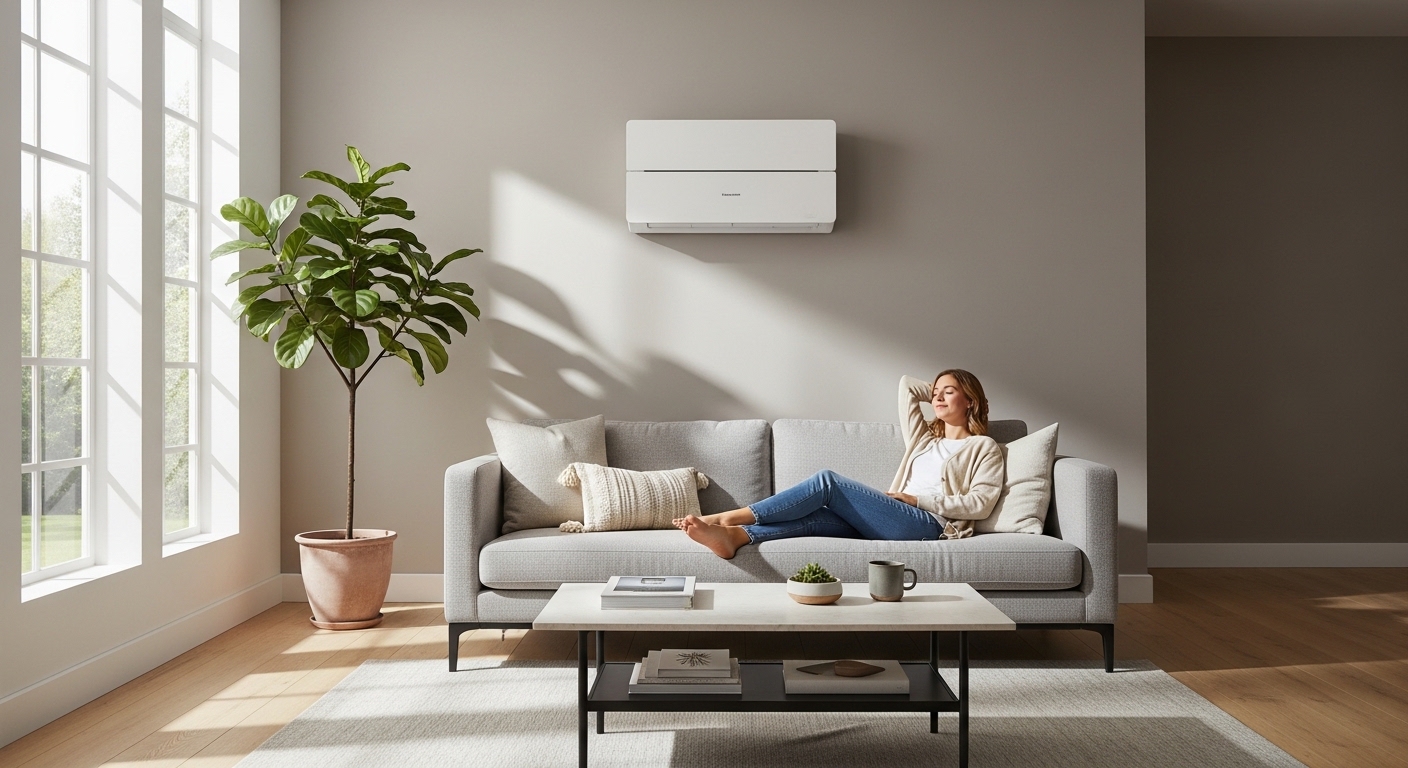
A ductless air conditioner, also known as a mini-split system, works by circulating refrigerant between an outdoor compressor unit and one or more indoor air handlers mounted inside your home. Unlike central air conditioning that forces cooled air through ductwork, ductless systems deliver conditioned air directly into each room where an indoor unit is installed.
These systems have become increasingly popular for homes without existing ductwork, room additions, garages, and for homeowners who want zone-based temperature control. In this guide, I’ll explain exactly how ductless air conditioners work, what components make up the system, and what you need to know before installing one.
What Is a Ductless Air Conditioner?
A ductless air conditioner is a split-system cooling solution that consists of an outdoor unit connected to one or more indoor units by refrigerant lines and electrical wiring. The term “ductless” refers to the fact that these systems don’t require ductwork to distribute cooled air throughout your home.
Also called mini-splits, these systems provide targeted cooling to specific rooms or zones. Each indoor unit operates independently, allowing you to set different temperatures in different areas of your home. This zoning capability is one of the key advantages over traditional central air conditioning.
Ductless systems can function as air conditioners only, or as heat pumps that provide both cooling and heating. When equipped with heat pump technology, the system simply reverses the refrigerant flow to provide warmth during colder months.
Key Components of a Ductless System
Understanding how ductless air conditioners work starts with knowing the main components. Every ductless mini-split system consists of three primary parts that work together to cool your home.
Outdoor Compressor/Condenser Unit
The outdoor unit houses the compressor, which pressurizes the refrigerant and circulates it through the system. This unit also contains the condenser coils where heat is released from the refrigerant into the outside air. A fan blows across the coils to help dissipate the heat more efficiently.
The outdoor unit is typically installed on a concrete pad or mounted to an exterior wall. It’s connected to the indoor units via a small hole drilled through the wall, where the refrigerant lines and electrical wiring pass through.
Indoor Air Handler
The indoor unit, or air handler, is mounted high on a wall or ceiling in the room you want to cool. Inside this unit are evaporator coils that contain cold refrigerant. When warm air from your room passes over these coils, the refrigerant absorbs the heat, cooling the air before it’s blown back into the room.
A quiet fan inside the air handler circulates room air across the coils and distributes the conditioned air. Most indoor units also include a washable filter that removes dust and particles from the air as it circulates.
Refrigerant Lines and Control System
Copper refrigerant lines connect the outdoor and indoor units, carrying refrigerant back and forth in a continuous loop. These lines are typically concealed inside a protective conduit that also contains the electrical wiring and condensate drain line.
Each indoor unit is controlled by its own remote control or wall-mounted thermostat. This allows independent temperature control for each zone, so you can cool only the rooms you’re using and save energy on unoccupied spaces.
How the Cooling Process Works?
Now that we’ve covered the components, let’s walk through exactly how ductless air conditioners cool your home. The process relies on the same basic principles that all air conditioning systems use: the ability of refrigerant to absorb and release heat as it changes from liquid to gas and back again.
Step 1: Warm Air Is Drawn In
When you turn on your ductless air conditioner, the indoor unit’s fan pulls warm air from the room across the cold evaporator coils. As this warm air passes over the coils, the liquid refrigerant inside absorbs the heat from the air.
Step 2: Refrigerant Absorbs Heat
As the refrigerant absorbs heat from your room’s air, it changes from a cold liquid into a warm gas. This phase change is what makes air conditioning possible. The now-warm gaseous refrigerant travels through the copper line to the outdoor unit.
Step 3: Heat Is Released Outside
The compressor in the outdoor unit pressurizes the warm refrigerant gas, which concentrates the heat. The hot, pressurized gas then flows through the condenser coils, where a fan blows outdoor air across them. This outside air absorbs the heat from the refrigerant, releasing it to the outdoors.
Step 4: Refrigerant Cools and Repeats
As the refrigerant releases its heat outside, it condenses back into a cool liquid. An expansion valve then reduces the pressure, causing the refrigerant to become very cold. This cold liquid refrigerant travels back to the indoor unit to absorb more heat from your room, and the cycle continues until your desired temperature is reached.
The Role of the Inverter Compressor
Many modern ductless systems use inverter technology, which allows the compressor to operate at variable speeds rather than simply turning on and off. This means the system can adjust its cooling output to match the exact cooling demand, resulting in more consistent temperatures, lower energy consumption, and quieter operation.
Single Zone vs Multi-Zone Systems
Ductless air conditioners come in two main configurations: single-zone and multi-zone systems. Choosing the right type depends on how many rooms or areas you need to cool.
Single Zone Systems
A single-zone system consists of one outdoor unit connected to one indoor unit. This is ideal for cooling a single room, such as a bedroom, home office, or garage. Single-zone systems are the most affordable option and are perfect for targeted cooling needs.
Multi-Zone Systems
Multi-zone systems feature one outdoor unit connected to multiple indoor units, typically up to five or more. Each indoor unit can be controlled independently, allowing you to set different temperatures in each room. These systems are ideal for cooling multiple rooms or an entire home without ductwork.
Advantages of Ductless Air Conditioners
Ductless systems offer several compelling benefits that make them an attractive option for many homeowners. Understanding these advantages can help you decide if a mini-split system is right for your situation.
Energy Efficiency
Ductless air conditioners are highly efficient because they avoid the energy losses associated with ductwork. Central air systems can lose up to 30% of their cooling power through leaks and poor insulation in ducts. Ductless systems deliver cooled air directly, eliminating these losses.
Many ductless systems have SEER (Seasonal Energy Efficiency Ratio) ratings of 20 or higher, compared to 14-16 SEER for typical central air systems. Higher SEER ratings mean lower energy bills for the same amount of cooling.
Zone Control
The ability to control temperatures independently in each room is one of the biggest advantages of ductless systems. You can cool only the rooms you’re using and leave unoccupied rooms at higher temperatures, saving energy and money.
Easier Installation
Installing a ductless system is much less invasive than adding ductwork to an existing home. The connection between indoor and outdoor units requires only a small hole, typically about three inches in diameter. Most installations can be completed in a day or two.
Quiet Operation
The noisy compressor is located outdoors, while indoor units operate at whisper-quiet levels, typically around 19-30 decibels on the lowest setting. This makes ductless systems much quieter than window air conditioners.
Disadvantages of Ductless Air Conditioners
While ductless systems have many benefits, they also have some drawbacks you should consider before making a purchase decision.
Higher Upfront Cost
Ductless systems typically cost more upfront than window units or portable air conditioners. While they can be more affordable than installing central air with new ductwork, the initial investment is still significant. However, many homeowners recoup this cost through energy savings over time.
Aesthetic Impact
Indoor air handlers are visible on your walls or ceilings, which some homeowners find less attractive than central air vents. While modern units are sleek and compact, they are still visible appliances that may not match every interior design.
Maintenance Requirements
Ductless systems require regular filter cleaning to maintain efficiency. Most manufacturers recommend cleaning or washing the filters monthly during heavy use. The outdoor unit also needs periodic maintenance to ensure optimal performance.
Understanding BTU and Sizing
Choosing the right size ductless system is crucial for optimal performance and efficiency. Ductless air conditioners are rated in BTUs (British Thermal Units), which measure cooling capacity.
What Is BTU?
One BTU is the amount of energy needed to cool one pound of water by one degree Fahrenheit. In air conditioning, BTU ratings indicate how much heat a unit can remove from a room in one hour. Higher BTU ratings mean greater cooling capacity.
Basic Sizing Guidelines
As a general rule, you need approximately 20 BTUs per square foot of living space. However, this is just a starting point. Other factors that affect sizing include ceiling height, insulation quality, number of windows, local climate, and heat-generating appliances.
A professional HVAC contractor can perform a load calculation to determine the exact BTU capacity needed for your space. Undersized units will struggle to cool your home on hot days, while oversized units will cycle on and off frequently, reducing efficiency and humidity control.
Energy Efficiency and SEER Ratings
When shopping for a ductless air conditioner, you’ll encounter SEER ratings. Understanding this rating helps you choose an efficient system that will keep your energy bills low.
What Is SEER?
SEER stands for Seasonal Energy Efficiency Ratio. It measures the cooling output of an air conditioner during a typical cooling season divided by the energy it consumes in watt-hours. Higher SEER ratings indicate greater efficiency.
As of 2026, the minimum SEER rating for new air conditioners in the United States is 14-15, depending on the region. Many ductless mini-splits achieve SEER ratings of 20-30 or higher, making them among the most efficient cooling options available.
Maintenance Requirements
Keeping your ductless system well-maintained ensures reliable performance and extends its lifespan. Most maintenance tasks are simple enough for homeowners to handle themselves.
Filter Cleaning
The most important maintenance task is cleaning or washing the air filters in your indoor units. Most manufacturers recommend doing this every two to four weeks during heavy use. Clogged filters reduce airflow, decrease efficiency, and can cause the system to freeze up.
Professional Maintenance
Annual professional maintenance is recommended to keep your system running efficiently. A technician will clean the outdoor coils, check refrigerant levels, inspect electrical connections, and ensure all components are functioning properly.
Seasonal Preparation
Before the cooling season begins, clear any debris from around the outdoor unit and ensure there’s at least two feet of clearance on all sides. In fall, remove leaves and other debris that can accumulate and restrict airflow.
Frequently Asked Questions
What are the disadvantages of ductless air conditioning?
The main disadvantages of ductless air conditioning include higher upfront costs compared to window units, visible indoor units that some find aesthetically unappealing, and the need for regular filter cleaning. Professional installation is required, and very cold climates may reduce heating efficiency for heat pump models.
Do ventless air conditioners really work?
Yes, ductless (often called ventless) mini-split air conditioners work very effectively. They don’t require vents or ductwork because they deliver cooled air directly from the indoor unit into the room. These systems are just as effective as central air conditioning for cooling individual rooms or zones.
Why is my electric bill so high with mini splits?
Your electric bill may be high if your mini-split is running constantly due to improper sizing, poor insulation, or extreme temperatures. Leaving units on in unoccupied zones, using the heating mode frequently, or having an older unit with lower efficiency can also increase energy costs.
What is the $5000 AC rule?
The $5000 rule refers to a guideline suggesting that if the cost to repair or replace an air conditioning system approaches $5000, homeowners should consider whether replacing the entire system makes more financial sense than continuing to pay for repairs on aging equipment.
Conclusion
Ductless air conditioners work by circulating refrigerant between an outdoor compressor and indoor air handlers, absorbing heat from your rooms and releasing it outside. This simple yet effective cooling method provides efficient, zone-based temperature control without the need for ductwork.
For homeowners without existing ducts, those adding rooms, or anyone seeking better energy efficiency and zone control, ductless mini-splits offer an excellent alternative to traditional central air conditioning. While the upfront cost is higher than some options, the long-term energy savings and comfort benefits make them a worthwhile investment for many situations.
If you’re considering a ductless system for your home, consult with a qualified HVAC contractor who can assess your cooling needs, recommend the right size system, and ensure proper installation for years of reliable comfort.
Leave a Reply