
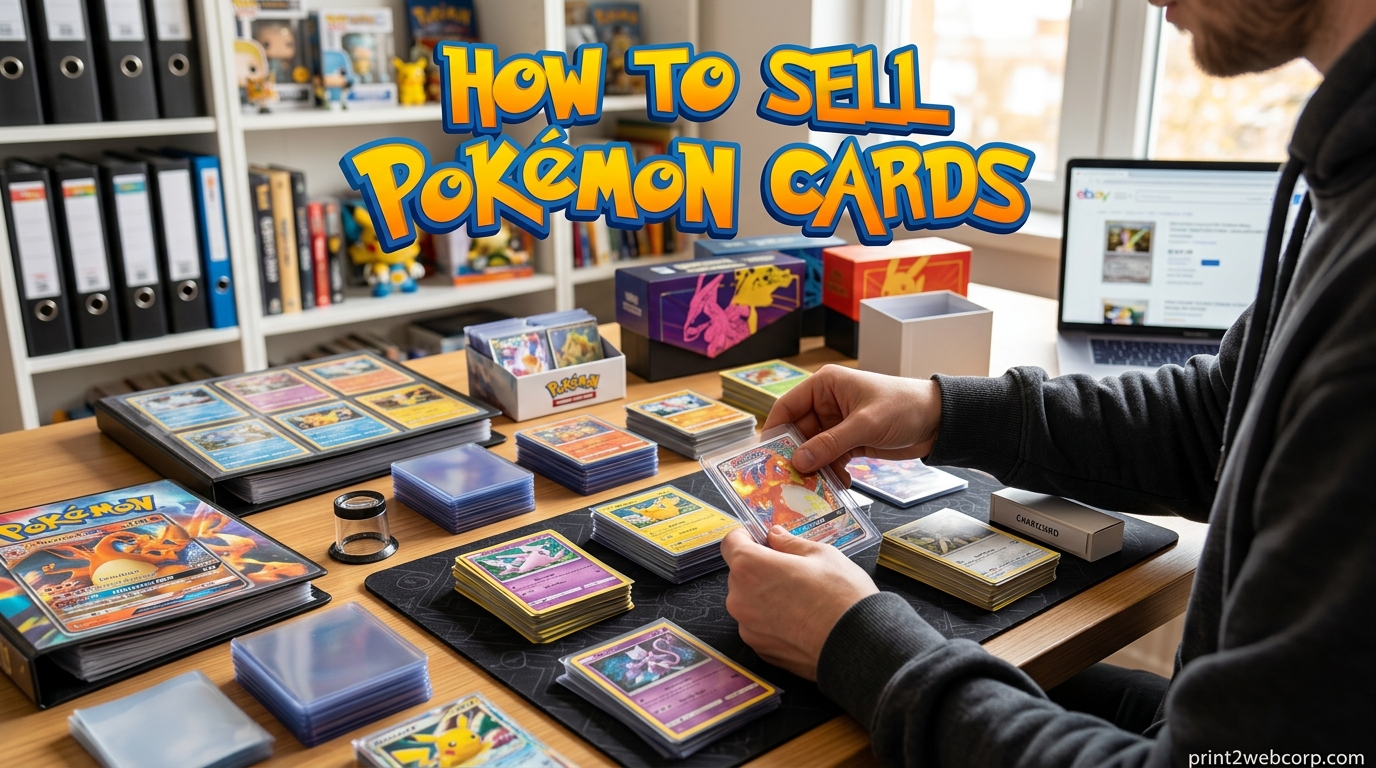
Maybe you found a shoebox of old Pokemon cards in your closet, or perhaps you have been collecting for years and are ready to cash out some chase cards. Either way, learning how to sell Pokemon cards the right way can mean the difference between pocketing serious money and leaving hundreds of dollars on the table. The trading card market has shifted dramatically since the pandemic boom, but Pokemon cards remain one of the most liquid collectibles you can sell online today.
The process comes down to a few core steps: identifying what you have, pricing each card accurately, choosing the right selling platform, and shipping safely. Before diving in, you will want to check how much your Pokemon cards are worth so you have a baseline for every decision that follows. This guide walks through each step with specific tools, fee percentages, and practical tips drawn from experienced sellers across Reddit, eBay, and local game stores.
I have spent years buying, selling, and trading Pokemon cards across every major platform. Along the way, I have learned which mistakes cost sellers the most money and which strategies consistently produce the best returns. Whether you are selling a single graded Charizard or liquidating a binder full of bulk commons, the advice below will help you maximize your payout.
What This Guide Covers
- Step-by-step process for sorting, pricing, and listing your cards
- Platform comparison with exact fees for eBay, TCGplayer, Whatnot, Reddit, and more
- Shipping guide with value-tiered packing strategies
- Authentication tips for spotting fake Pokemon cards
- Grading breakdown covering PSA, CGC, and Beckett with cost guidance
How to Sell Pokemon Cards Profitably
Selling Pokemon cards is not complicated once you understand the workflow, but skipping steps is what costs people money. The most profitable sellers treat each card like a mini transaction with its own pricing strategy and target audience. A vintage WOTC-era holo needs a completely different approach than a stack of Scarlet and Violet bulk commons.
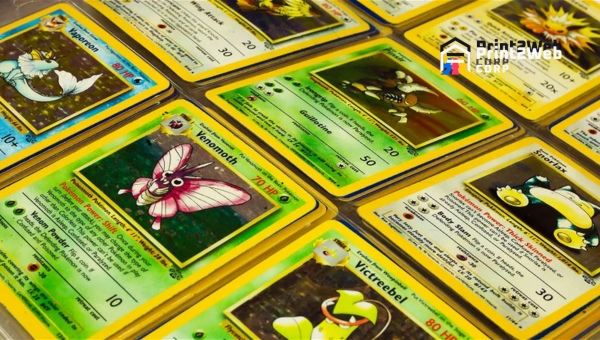
The current market in 2026 rewards sellers who do their homework. Scarce vintage cards from the 1999 to 2003 Wizards of the Coast era still command premium prices, especially iconic chase cards like Base Set Charizard, Neo Genesis Lugia, and any first edition shadowless holo. Modern cards from the Scarlet and Violet era can also hold strong value, particularly alternate art trainer Pokemon and special illustration rares that competitive players and collectors chase.
Reasons for Selling Your Pokemon Card Collection
People sell their collections for all kinds of reasons, and understanding your motivation helps you pick the right strategy. Here are the most common scenarios.
- Decluttering: You are moving, downsizing, or simply clearing space. Bulk lots and quick local sales work best here.
- Cashing out singles: You pulled a valuable chase card and want to convert it into cash while the price is high.
- Funding new purchases: Many sellers trade older cards to fund sealed product like booster boxes or Elite Trainer Boxes.
- Market timing: You noticed prices spiking on a specific card and want to sell before the bubble cools.
- Life events: Estate sales, divorce settlements, or medical bills sometimes require liquidating a collection quickly.
Your reason for selling should drive every decision that follows. Someone who needs cash this week will choose a local game store or national buyer despite getting 40 to 60 percent of market value. Someone with time to wait can list on eBay or TCGplayer and capture closer to 85 to 90 percent of true market price after fees.
Practical Measures in Buying and Selling Pokemon Cards
Before you list a single card, there are practical steps every seller should take to protect their inventory and their wallet. These measures separate hobbyists who lose money from sellers who consistently turn a profit.

Dos in Trading Pokemon Cards
Follow these practices to protect yourself and maximize returns on every sale.
- Use eBay sold listings, not active listings: Active listings show what sellers are asking. Sold listings show what buyers actually paid. Filter by “Sold Items” to get real market data.
- Cross-reference TCGplayer market price: For modern competitive cards, TCGplayer market price is the industry standard. Compare it against eBay sold data for a complete picture.
- Protect cards from day one: Store every card with potential value in a penny sleeve inside a toploader. Cards sitting loose in a binder pocket accrue edge wear that slashes their grade and value.
- Photograph condition honestly: Take clear photos of corners, edges, centering, and surface under good lighting. Disclose every flaw in your listing description.
- Use PayPal Goods and Services for private sales: When selling on Reddit or Facebook, always use PayPal G&S (about 3 percent fee) instead of Venmo, Zelle, or PayPal Friends and Family. This protects both buyer and seller.
- Track every sale for tax purposes: If you sell enough cards, you may receive a 1099-K from eBay or PayPal. Keep records of purchase prices and sale prices for every transaction.
Pitfalls to Avoid When Dealing with Pokemon Card Transactions
These are the mistakes that cost sellers real money, compiled from forum discussions and hard-earned experience.
- Overgrading your own cards: Most sellers think their cards are near mint when they are really lightly played or moderately played. Be brutally honest about corner wear, surface scratches, and centering issues.
- Ignoring eBay’s buyer-friendly dispute system: eBay tends to side with buyers in disputes. Always ship with tracking, require signature confirmation on items over $750, and document everything with photos before shipping.
- Wasting money grading low-value cards: Grading costs money per card plus shipping both ways. Never spend money grading a card worth less than the grading fee plus expected grade premium.
- Using unprotected payment methods: Venmo and Zelle offer zero buyer or seller protection. If something goes wrong on a private sale, you have no recourse.
- Selling counterfeits unknowingly: If you bought cards from a third party, verify authenticity before reselling. Selling fake cards, even accidentally, destroys your reputation permanently.
- Procrastinating on valuable cards: Cards depreciate while sitting in boxes. If a card is sitting unsold for months because you are waiting for the “perfect” buyer, you are likely losing money to market drift.
Understanding the Different Types of Pokemon Card Buyers
Not every buyer wants the same thing. Tailoring your listing to the right audience helps you sell faster and at a better price. Based on my experience selling across every major platform, here are the four main buyer profiles you will encounter.
Serious Collectors
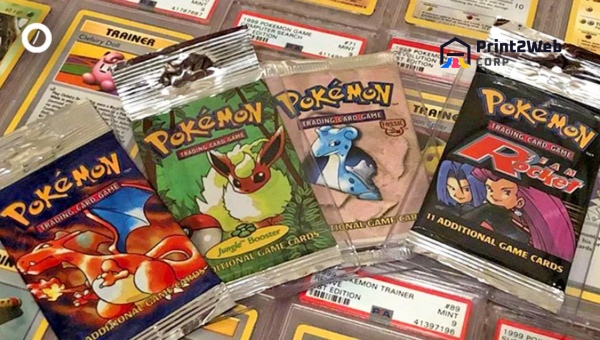
These buyers know exactly what they want. They are hunting for specific chase cards, first edition stamps, shadowless prints, or graded slabs from PSA, Beckett, or CGC. Collectors care deeply about condition, centering, and rarity, and they will pay premium prices when they find the right card in the right grade.
When selling to collectors, detailed photos are everything. Show the card’s corners, edges, surface, and centering under bright, even lighting. Mention the set name, card number, rarity symbol, and print edition. If the card is already graded, include the cert number so buyers can look up the population report.
Competitive Players
Competitive players buy cards to build tournament decks. They care about playability over rarity and typically shop for raw singles in lightly played or near mint condition. These buyers frequent TCGplayer because of the Cart Optimizer feature that helps them fill a deck list across multiple sellers in one order.
If you are selling meta-relevant cards from the current Scarlet and Violet format, TCGplayer is your best bet. Price competitively against the market price and your cards will sell quickly to players building decks.
Resellers and Store Buyers
Resellers buy collections at a discount to flip individual cards for profit. Local game stores, national buyers like Just Collect and Paymore, and online buylists like TCGplayer buylist and Troll and Toad all fall into this category. They typically pay 40 to 60 percent of market value for raw cards, and sometimes up to 70 percent for store credit.
Selling to resellers is fast and hassle-free. You will not get top dollar, but you save hours of listing, photographing, and shipping. This is the right choice when speed matters more than maximizing every dollar.
Newcomers and Casual Buyers
These are parents buying gifts, kids spending allowance money, or people just getting into the hobby. They browse eBay, Facebook Marketplace, and local game stores looking for starter collections, sealed booster packs, or inexpensive singles. They respond well to bundle deals and clear, jargon-free descriptions.
When selling to newcomers, keep listings simple. Avoid abbreviations like NM, LP, or MP without explaining them. Offer bundled lots of complementary cards at a slight discount to move inventory quickly.
Best Places to Sell Pokemon Cards: Platform Comparison
Choosing where to sell is just as important as pricing correctly. Each platform has different fees, audiences, and sale speeds. Below is a detailed breakdown of every major selling platform available in 2026, organized by fee structure, best use case, and sale speed.
Platform Fee and Feature Comparison
Here is how every major platform stacks up. Fees are approximate as of 2026 and may vary based on seller level, subscription status, or promotional periods.
- eBay — Final value fee of approximately 12.35% plus $0.30 per transaction. Best for individual high-value cards and graded slabs. Global audience of millions. Sale speed varies: Buy It Now can sell in days, auctions in 7 days. Best feature: auction format for hard-to-price cards.
- TCGplayer — Seller fee of approximately 10.25% plus $0.30 per transaction. Best for modern singles and competitive playables. Cart Optimizer drives sales even when you are not the cheapest listing. Sale speed is fast for meta cards, slower for niche collectibles.
- Whatnot — Seller fee of approximately 8% plus payment processing. Best for live auction selling of sealed product, booster box breaks, and bulk lots. Fast-paced sales with built-in audience. Sale speed is immediate during live streams.
- Facebook Marketplace and Groups — Fee of 0 to 5% depending on whether you ship or sell locally. Best for local cash sales and sealed product. No buyer protection for shipped sales is a risk. Sale speed varies by local demand.
- Reddit r/pkmntcgtrades — Fee of approximately 3% (PayPal Goods and Services). Best for experienced sellers with good reputations. Requires confirmed trade references. Sale speed is moderate and depends on post quality.
- Mercari — Seller fee of approximately 10% plus payment processing. Best for sealed product and collection lots. Simple listing process. Sale speed is moderate.
- Local Game Stores — Pay 40 to 60% of market value in cash, or 50 to 70% in store credit. Best for fast, no-hassle sales of bulk and mid-value cards. Immediate payment. Sale speed is instant.
- Card Shows and Conventions — Vendor table costs $50 to $200. Best for sellers with diverse inventory who enjoy in-person interaction. No platform fees but travel and table costs apply. Sale speed is immediate during the event.
- COMC (Check Out My Collectibles) — Consignment service with per-card processing fees. Best for hands-off selling of mid-to-high value cards. They handle photography, listing, and shipping. Sale speed is slow due to processing queue.
- Troll and Toad — Established buylist and marketplace. Best for bulk sales and quick buylist quotes. Pay less than market but offer immediate purchase. Sale speed is fast for buylist submissions.
- GameStop — Trade-in program for PSA graded cards and sealed product. Offers store credit or cash. Notable for a reported $30,000+ payout for a PSA 10 Gengar. Sale speed is instant but values are below market.
- National Buyers (Just Collect, Paymore, Dave and Adam’s) — Purchase entire collections. Best for estate sales and large liquidations. Offer free appraisals and shipping. Typically pay 40 to 60% of market value. Sale speed is fast once offer is accepted.
Experienced sellers often cross-list their best cards on multiple platforms simultaneously to maximize exposure. Just remember to pull listings promptly when a card sells elsewhere to avoid double-selling issues.
How to Ship Pokemon Cards Safely
Shipping is where many new sellers lose money. A card that arrives damaged means a refund request, a negative review, and a lost sale. Proper packing is cheap insurance for your reputation and your wallet. Here is a value-tiered packing system that works for every shipment.
Tier 1: Cards Under $20
For low-value singles, use a penny sleeve inside a toploader. Tape the top of the toploader shut with a small piece of painter’s tape so the card does not slide out during transit. Slide the toploader into a team bag to make it waterproof. Place it in a standard envelope with a piece of cardboard for rigidity and mail via standard letter mail with a stamp. Always include tracking if the platform requires it.
Tier 2: Cards $20 to $100
For mid-value cards, use a penny sleeve, toploader, and team bag as described above. Place it between two pieces of sturdy cardboard inside a rigid mailer or bubble mailer. Ship via USPS First Class Package with tracking, which costs a few dollars. Always include a tracking number and mark the shipment as shipped promptly.
Tier 3: Cards Over $100
For high-value cards, use a penny sleeve, toploader, team bag, and a cardboard sandwich inside a rigid mailer. Ship via USPS Priority Mail with insurance covering the full sale value. Require signature confirmation on items over $750. For cards over $500, consider registered mail for maximum security. Document the card’s condition with timestamped photos before sealing the package.
Shipping Supplies Checklist
- Penny sleeves: Ultra-thin plastic sleeves that protect the card surface from scratches
- Toploaders: Rigid plastic holders that prevent bending (size 35pt for standard thickness cards)
- Team bags: Small resealable bags that fit a toploader and protect against moisture
- Rigid mailers: Stiff cardboard mailers that prevent the package from being bent in transit
- Bubble mailers: Padded envelopes for extra protection on mid-value shipments
- Painter’s tape: Low-adhesion tape that seals toploaders without leaving residue on sleeves
How to Spot Fake Pokemon Cards
Selling counterfeit Pokemon cards, even unknowingly, will destroy your seller reputation. If you bought cards from a third-party source, eBay seller, or flea market, take five minutes to verify authenticity before listing. Here are the quickest authentication checks.
Check the Print Texture and Card Stock
Genuine Pokemon cards have a distinct card stock that feels slightly textured, not smooth like regular paper. Run your thumb across the front of the card. Real cards have a subtle, consistent texture. Counterfeits often feel glossy, flimsy, or unnaturally smooth. Hold the card up to a bright light and look at the edge: authentic cards have a thin black layer sandwiched between white layers, while fakes typically show solid white or blue throughout.
Examine the Holographic Pattern
Genuine holo cards use specialized foil patterns that are extremely difficult to replicate. Compare the holo pattern to a known authentic card of the same set. Fakes often have a flat, uniform shimmer or an overly rainbow effect that does not match the original. Tilt the card back and forth and watch how the light interacts with the foil. Authentic cosmos holo, reverse holo, and rainbow rare patterns each have signature light behaviors.
Verify Card Details
Check the set symbol, card number, font, and text alignment against a database like PokeBeach or the official Pokemon TCG database. Counterfeits frequently have misspelled words, incorrect fonts, wrong set symbols, or card numbers that do not exist in the official set. Pay special attention to the HP number, attack text, and weakness/resistance box. If anything looks off, trust your instinct and do more research before selling.
When in doubt, compare the suspicious card side by side with a verified authentic card from the same set. The differences become obvious when you know what to look for. If you are still unsure, bring the card to a local game store for a second opinion.
Pricing Pokemon Cards: A Step-by-Step Methodology

Pricing is the single most important skill for selling Pokemon cards profitably. Price too high and your cards sit unsold for months. Price too low and you leave money on the table. Here is the exact step-by-step process I use for every card I sell.
Step 1: Identify the Card
Find the set name, card number, rarity symbol, and print edition. Look at the bottom of the card for the card number (such as 4/102) and the set symbol. Cross-reference with the official Pokemon TCG database or a site like Bulbapedia to confirm the set, year, and variant. Note whether the card is first edition, shadowless, unlimited, or a special variant.
Step 2: Check eBay Sold Listings
Go to eBay, search for the card by name and set number, then filter by “Sold Items.” This shows what buyers have actually paid over the past 90 days. Look at the most recent 5 to 10 sales and note the range. Ignore outlier sales that are unusually high or low. For a deeper look at card valuation across sets and eras, check our complete guide on how much your Pokemon cards are worth.
Step 3: Cross-Reference TCGplayer Market Price
Search the card on TCGplayer and note the market price, which is based on recent sales across their marketplace. For modern competitive cards, TCGplayer market price is the most accurate indicator. For vintage collectibles, eBay sold listings tend to be more reliable because TCGplayer has lower volume on older cards.
Step 4: Adjust for Condition
Most sold listings are for near mint cards. If your card has visible wear, reduce the price accordingly. A lightly played card typically sells for 70 to 85 percent of near mint value. A moderately played card commands 50 to 70 percent. A heavily played card may only fetch 30 to 50 percent. Be honest about condition because buyers will challenge listings that overstate quality.
Step 5: Set Your Price and Choose a Format
Set your asking price near the most recent sold comparables. If you want a quick sale, price 5 to 10 percent below the last sold comp. If you have time to wait, price at or slightly above market and enable Best Offer on eBay. For hard-to-price cards, use eBay’s auction format with a reasonable starting bid to let the market decide.
Pricing Bulk Lots vs. Individual Singles
For bulk commons and uncommons, selling individually is rarely worth the time. Instead, sort bulk into lots of 100 to 500 cards and sell them as collections on eBay, Facebook Marketplace, or to local game stores via their buylist. A typical rate for bulk commons is $0.02 to $0.05 per card. For uncommons, expect $0.05 to $0.15 each. Rare cards and holos should always be sold individually to maximize return.
Sealed product like booster boxes, Elite Trainer Boxes, and tins can be sold on any platform. Check current retail and sold prices before listing, since sealed product values fluctuate with each new set release.
Grading 101: PSA, Beckett, and CGC Explained
Grading is the process of sending your card to a professional service that authenticates it, assigns a condition score from 1 to 10, and encases it in a tamper-evident slab. A high grade from a reputable company can dramatically increase a card’s resale value. But grading is not free, and it is not worth it for every card.
The Big Three Grading Companies
- PSA (Professional Sports Authenticator): The most widely recognized name in Pokemon card grading. PSA slabs tend to command the highest resale premiums, especially for vintage cards. Grades range from 1 to 10, with PSA 10 being gem mint.
- Beckett (BGS): Known for strict grading standards and a sub-grade system that evaluates centering, corners, edges, and surface separately. Beckett 10s (Black Label) are extremely rare and highly sought after.
- CGC (Certified Guaranty): A newer entrant to Pokemon card grading with competitive pricing and fast turnaround times. CGC slabs are gaining market acceptance and offer good value for modern cards.
Grading Costs and Turnaround Times
Grading costs vary by service level and turnaround speed. Economy or value tiers typically start around $15 to $25 per card with turnaround times of several weeks to months. Regular service runs about $30 to $50 per card. Express and walk-through services can cost $100 or more per card but offer turnaround in days. You also pay for shipping both ways and insurance on the package.
When Is Grading Worth It?
Grading makes financial sense when the expected premium from a high grade exceeds the grading cost plus shipping and insurance. As a general rule, consider grading when a card in raw near mint condition is worth at least $100 to $200, and you believe it has a realistic chance of scoring a 9 or 10.
Check the population report for your specific card on the grading company’s website. If thousands of PSA 10s already exist for that card, the premium for another PSA 10 may be small. Conversely, if very few high-grade examples exist, the premium could be substantial.
Never grade cards worth less than the grading fee. A $5 card in PSA 10 is still a $5 card, and you just spent $20 to slab it. Stick to grading cards with meaningful value, strong eye appeal, and realistic grade potential.
Market Timing and Trend Monitoring
Card prices fluctuate based on competitive play relevance, new set releases, anniversaries, and influencer coverage. A card that is a meta staple one month can drop 30 percent when it rotates out of the standard format. Conversely, a vintage card mentioned in a popular YouTube video can spike overnight.
Follow these strategies to time your sales effectively. Watch set rotation announcements from Pokemon, as cards losing playability often drop in value. Monitor new set spoilers and prerelease hype, since chase card speculation drives sealed product prices. Track community sentiment on Reddit communities like r/PokemonTCG and r/PokeInvesting for early trend signals. Use price tracking tools like PriceCharting to monitor historical price charts and identify upward or downward momentum.
Selling during peak hype periods, such as around major tournament results or set launch weeks, can capture premium prices. Selling during market lulls means accepting lower offers. The key is awareness: know what is happening in the competitive and collector communities before you list.
Frequently Asked Questions
What is the most profitable way to sell Pokemon cards?
The most profitable method is selling individual cards on eBay or TCGplayer after accurately pricing them using sold comparables. eBay captures about 88% of your sale price after the 12.35% fee, while TCGplayer nets about 90% after its 10.25% plus $0.30 fee. For maximum profit, cross-list on both platforms and pull whichever sells first.
How can I find out how much my Pokemon Cards are worth?
Check eBay sold listings (filter by Sold Items) for the most reliable indicator of current market value. Cross-reference with TCGplayer market price for modern cards, and use PriceCharting for historical price charts. For a complete valuation breakdown by set and era, see our guide on how much your Pokemon cards are worth.
Does GameStop buy PSA 10 Pokemon cards?
Yes, GameStop accepts PSA graded Pokemon cards for trade-in, offering store credit or cash. A GameStop in Texas reportedly paid over $30,000 for a PSA 10 Holo Gengar, making it one of the most valuable single trade-ins in the program. However, trade-in values are typically below open market prices.
Are Pawn Shops interested in buying Pokemon Cards?
Some pawn shops buy Pokemon cards, especially graded slabs and high-value vintage holos. However, they typically offer 40 to 60 percent of market value since they need to resell at a profit. You will almost always get more money selling directly to collectors on eBay or TCGplayer.
Does grading increase the value of my Pokemon Cards?
Grading by PSA, Beckett, or CGC can significantly increase value for cards that receive high grades, especially PSA 9s and 10s on vintage chase cards. However, grading costs money per card, so it only makes sense for cards already worth $100 or more in raw condition. Low-value cards are rarely worth the grading investment.
How much should I sell 1000 bulk Pokemon cards for?
Bulk commons and uncommons typically sell for $0.02 to $0.05 per card, so 1000 bulk cards might fetch $20 to $50 as a lot. Sort out any rares, holos, trainers, or chase cards before selling bulk, as those should be priced individually. Selling bulk to local game store buylists or as eBay lots are both common approaches.
Is it better to sell Pokemon cards individually or as a collection?
Valuable cards should always be sold individually to maximize return. Selling a collection as one lot is convenient but typically results in 40 to 70 percent of the total individual value, since buyers expect a bulk discount. The exception is selling to national buyers like Just Collect for fast, hassle-free liquidation of large collections.
What is the safest way to accept payment when selling Pokemon cards privately?
Always use PayPal Goods and Services for private sales on Reddit, Facebook, or other peer-to-peer platforms. The approximately 3 percent fee provides buyer and seller protection. Never use Venmo, Zelle, or PayPal Friends and Family for selling, as these methods offer no protection if a dispute arises.
Can I sell sealed Pokemon products like booster boxes and Elite Trainer Boxes?
Yes, sealed products sell well on eBay, TCGplayer, Facebook Marketplace, and Whatnot. Check current sold prices before listing, as sealed product values fluctuate with each new set release and prerelease hype. Booster boxes from popular Scarlet and Violet sets often command strong premiums at launch.
Conclusion
Selling Pokemon cards in 2026 is about combining the right information with the right tools. Whether you are pricing a single chase card using eBay sold listings and TCGplayer market data, choosing between eBay’s 12.35 percent fee and Reddit’s 3 percent fee, or deciding whether PSA grading is worth it for your vintage holos, the fundamentals stay the same. Identify your cards accurately, price them based on real sales data, pick the platform that matches your goals, and ship with care.
If you want maximum profit and have the patience to list individually, eBay and TCGplayer are your best bets. If you need fast cash, local game stores and national buyers will move your collection quickly at a lower payout. For sealed product and live-auction excitement, Whatnot is a growing platform worth exploring. And before you list anything, make sure you know exactly how much your Pokemon cards are worth so you never undersell your collection.
Start by sorting your cards, pulling anything with potential value, and checking sold comparables. The sooner you begin, the sooner those cards sitting in boxes become cash in your pocket. Happy selling.
Leave a Reply