
With over 9.7 million Amazon sellers competing for attention and roughly 44% of all product searches starting directly on Amazon, standing out has never been more challenging. The Amazon Choice Badge remains one of the most powerful visibility tools available to sellers on the platform in 2026. This distinctive label signals to shoppers that Amazon has identified a product as the best match for a specific search query, giving it preferential treatment in search results and voice commerce.
Sellers who earn the Amazon Choice Badge consistently report dramatic conversion rate increases, with some experiencing overnight sales surges that transform their entire business trajectory. However, Amazon does not publicly disclose the exact algorithm behind badge assignment, leaving many sellers frustrated and confused about what actually moves the needle. This guide breaks down everything known about the badge, from its 2015 origins with Alexa voice shopping to the sub-labels Amazon introduced more recently, and provides actionable strategies for earning and retaining it.
Whether you are a new seller trying to earn your first badge or an experienced merchant who has lost one unexpectedly, the strategies below cover the full lifecycle of the Amazon Choice Badge. Drawing on seller forum discussions, marketplace data, and proven optimization techniques, this resource offers a clear roadmap for leveraging one of Amazon’s most impactful endorsement signals.
What the Amazon Choice Badge is and how Amazon’s algorithm assigns it
The complete history of the badge from its 2015 Alexa launch to current sub-labels
Detailed eligibility criteria including the factors Amazon evaluates
How the Choice Badge differs from the Amazon Best Seller Badge
Strategies for earning, maintaining, and recovering the badge
Common myths debunked with data from real seller experiences
Understanding the Amazon Choice Badge
The Amazon Choice Badge is a recognition label that Amazon awards to products it identifies as the best match for a specific search keyword. It signals that a product is highly rated, well-priced, and available for immediate shipping through Prime. Amazon uses its internal algorithm to evaluate factors including customer ratings, pricing competitiveness, shipping speed, return rates, and sales velocity, then assigns the badge to one product per search query.

Unlike a general quality seal, the badge is keyword-specific. A single product can hold the Amazon Choice Badge for one search term while a different product holds it for a closely related term. For example, a coffee maker might earn the badge for “drip coffee maker” but not for “best coffee maker.” This keyword-dependent assignment is one of the most misunderstood aspects of how the badge functions on the platform.
What is the Amazon Choice Badge in Practice?
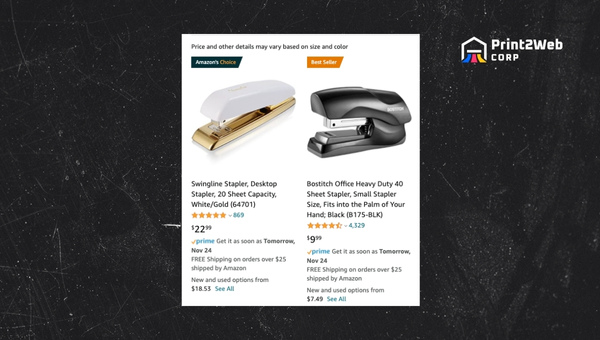
When a shopper types a search query into Amazon, the algorithm evaluates every relevant listing and selects one product to receive the badge for that particular keyword at that moment. The badge appears as a small dark ribbon with white text reading “Amazon’s Choice” directly beneath the product title. Shoppers can click the badge to see a brief explanation of what it means, which reinforces trust in Amazon’s recommendation.
The badge also plays a significant role in Alexa voice shopping. When a customer asks an Amazon Echo device to order something, Alexa defaults to the Amazon’s Choice product for that query. This voice commerce integration means the badge directly captures hands-free purchases, a growing segment as smart speaker ownership continues to climb. For a deeper look at how selling on Amazon compares to other marketplaces, see our eBay vs Amazon comparison.
The History of the Amazon Choice Badge (2015 to Present)
Amazon introduced the Choice Badge in 2015 alongside the launch of the Amazon Echo and Alexa voice assistant. The original purpose was straightforward: when a customer asked Alexa to buy something, the assistant needed a reliable way to select one product from thousands of options. The badge served as Alexa’s internal selection mechanism, identifying the single best product to fulfill a voice purchase request without requiring the user to browse or compare options.
As Alexa adoption grew, Amazon recognized that the same selection logic could benefit shoppers browsing on desktop and mobile. The company expanded the badge to appear in standard text search results across all surfaces, not just voice queries. By 2026, the badge has evolved into a multifaceted system with sub-labels that provide more granular recommendations, reflecting Amazon’s growing sophistication in matching products to shopper intent.
Amazon Choice Badge Sub-Labels Explained
Amazon now displays several sub-label variants alongside or beneath the traditional Amazon’s Choice badge. These sub-labels give shoppers additional context about why a product received the recognition and help distinguish between different types of recommendations. Understanding each variant helps sellers identify which category their products may qualify for.
Overall Pick: The most common sub-label, awarded to the product Amazon considers the single best match for a search keyword based on aggregate performance factors including ratings, pricing, and fulfillment speed.
Popular Brand Pick: Awarded to products from brands that customers frequently choose in a given category, reflecting sustained brand preference and recognition rather than just individual product performance.
New Arrival Pick: Given to recently launched products that show strong early performance signals, helping shoppers discover new options and giving new sellers a pathway to visibility without an established review history.
Each sub-label uses the same dark ribbon visual treatment but displays different text. The assignment logic for each variant remains proprietary, but sellers who understand the distinction can better position their products for the appropriate category.
Amazon Choice Badge vs Best Seller Badge: What’s the Difference?
One of the most common questions sellers ask is how the Amazon Choice Badge differs from the Amazon Best Seller Badge. Both are recognition labels that appear on product listings, but they measure fundamentally different things and are awarded through entirely separate processes. Understanding the distinction helps sellers prioritize which badge to pursue and how to position their products accordingly.
The Amazon Best Seller Badge, recognizable by its orange arrow icon, is awarded to the product with the highest sales volume in a specific category or sub-category. It is purely a sales rank indicator and refreshes hourly based on the Amazon Best Sellers Rank (BSR). The Choice Badge, by contrast, is assigned per keyword and evaluates a composite of factors beyond just sales volume.
The table below summarizes the key differences between the two badges:
Scope: Best Seller is category-wide while Choice Badge is keyword-specific, meaning a product can hold both badges simultaneously for different reasons.
Selection basis: Best Seller reflects pure sales volume within a category, whereas Choice Badge evaluates ratings, pricing, shipping speed, return rates, and relevance to a search query.
Visual design: Best Seller uses an orange arrow icon while Choice Badge uses a dark navy or black ribbon with white text.
Stability: Best Seller changes hourly with sales rank fluctuations while Choice Badge tends to remain more stable unless a product’s metrics decline significantly.
Voice commerce: Only the Choice Badge integrates with Alexa voice shopping, making it more valuable for capturing hands-free purchases.
For most sellers, the Choice Badge carries more strategic value because it directly captures high-intent searches and voice purchases. A product can be the Best Seller in a niche category without holding the Choice Badge for its primary keyword, and vice versa. Many experienced sellers prioritize Choice Badge optimization because it provides a more defensible competitive position tied to specific search terms rather than overall category sales volume.
Securing Your Own Amazon Choice Badge
Earning the Amazon Choice Badge requires meeting a combination of performance thresholds across multiple areas. Amazon evaluates each eligible product using its A9 search algorithm, which weighs factors including customer satisfaction metrics, fulfillment speed, pricing competitiveness, and relevance to specific search queries. No single factor guarantees the badge, but consistent strength across all areas significantly increases the probability of assignment.
Eligibility for Amazon’s Choice
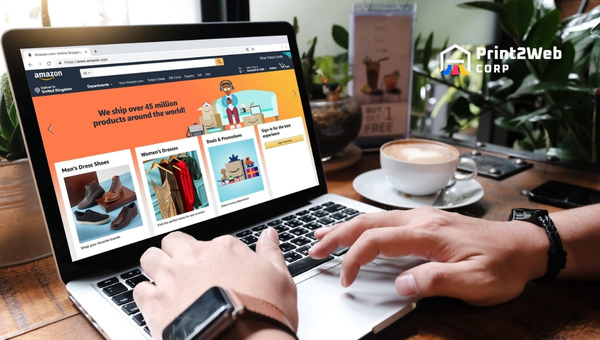
While Amazon does not publish an exact formula for badge assignment, years of seller data and forum analysis have identified the key qualifying factors. Products must maintain a rating of at least 4 stars, with higher ratings providing a measurable advantage. Prime eligibility is mandatory, meaning the product must be available for fast shipping either through Fulfillment by Amazon (FBA) or Seller Fulfilled Prime.
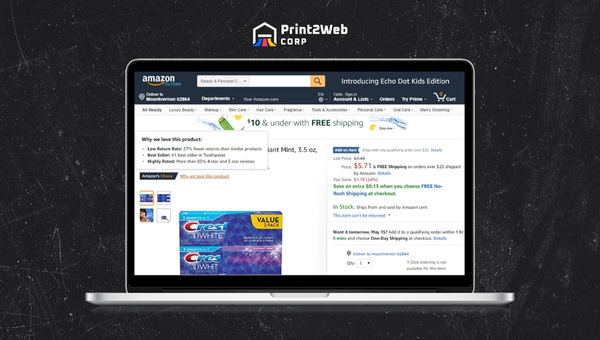
A low return rate is another critical factor that many sellers overlook. Amazon monitors how frequently customers return a product after purchase, and products with above-average return rates for their category are unlikely to receive or retain the badge. Maintaining accurate listings that set proper customer expectations is one of the most effective ways to keep return rates low.
Sales velocity, or the rate at which a product sells relative to competitors, also plays a significant role. Products that consistently convert well demonstrate to Amazon’s algorithm that shoppers find them relevant and satisfactory. Conversion rate is described by experienced sellers as the single most important metric for badge retention, since it directly signals that a product satisfies customer intent for its target keyword.
Making Your Products Prime-Eligible
Prime eligibility is non-negotiable for the Amazon Choice Badge. The two primary paths to Prime status are Fulfillment by Amazon (FBA) and Seller Fulfilled Prime. FBA is the more straightforward option: sellers send inventory to Amazon warehouses, and Amazon handles storage, packing, shipping, customer service, and returns. FBA products automatically qualify for Prime two-day shipping, which satisfies the badge’s fulfillment requirements.
Seller Fulfilled Prime allows merchants to ship directly from their own warehouses while still displaying the Prime badge, but the program has strict performance requirements including same-day ship capabilities and approved carrier networks. For most sellers, FBA provides a more reliable path to badge eligibility because Amazon controls the fulfillment experience end to end. If you prefer handling fulfillment yourself, learn about Amazon FBM (Fulfilled by Merchant) as an alternative strategy.
Inventory management deserves special attention here. Going out of stock is one of the most common reasons sellers lose the Amazon Choice Badge, and the loss can happen within hours of a stockout. Sellers on Amazon forums repeatedly cite inventory exhaustion as their top badge-related concern. Maintaining buffer stock and using inventory forecasting tools can prevent the sudden badge loss that often triggers a downward spiral of reduced visibility and declining sales.
Targeting Relevant Keywords
Because the Amazon Choice Badge is keyword-specific, strategic keyword targeting is essential. Sellers must identify which search terms shoppers use when looking for products like theirs and then optimize their listings for those exact terms. Keyword research tools such as Helium 10, Jungle Scout, and Amazon’s own Brand Analytics provide data on search volume, competition level, and relevancy.
Long-tail keywords deserve particular attention. These are longer, more specific search phrases that typically have lower competition and higher conversion intent. A product targeting “stainless steel French press 34 ounce” faces less competition than one targeting just “French press,” and the badge for a long-tail term is often easier to earn and defend. Once a product secures the badge for a long-tail keyword, sellers can gradually expand targeting to broader, higher-volume terms.
Backend search terms, which are hidden keywords entered in Amazon Seller Central, also contribute to keyword relevance. These should complement the visible keywords in titles and bullet points without duplicating them. Avoid keyword stuffing at all costs, as it harms readability and can trigger Amazon’s suppression filters, which would eliminate any chance of earning the badge.
Enhancing Product Perception for Amazon’s Choice
How shoppers perceive a product directly influences the metrics Amazon uses to evaluate badge candidacy. Products that look professional, trustworthy, and accurately described tend to earn better reviews, lower return rates, and higher conversion rates, all of which feed back into the algorithm’s decision-making process.
Earning Good Reviews and Ratings
Customer reviews and star ratings are among the strongest signals Amazon’s algorithm considers. Products with ratings below 4 stars are effectively disqualified from badge consideration, and higher ratings provide a meaningful competitive edge. Building a review base requires both delivering a quality product and actively encouraging feedback from satisfied customers.
The Amazon Request a Review button, available in Seller Central, provides a compliant way to ask customers for reviews within 30 days of purchase. Amazon’s automated review request system can also be configured to send requests at optimal times. For new products or products with fewer than 30 reviews, the Amazon Vine program offers a structured way to generate authentic early reviews from trusted reviewers, which can accelerate the path to badge eligibility.
Negative review management is equally important. When a customer leaves a critical review, responding professionally and attempting to resolve the underlying issue can sometimes lead the customer to update their feedback. More importantly, addressing recurring complaints identified in negative reviews helps prevent future dissatisfaction and protects the overall rating that the badge depends on.
Maintaining Competitive Pricing
Pricing competitiveness is a core component of the badge algorithm. Amazon evaluates whether a product’s price aligns with similar offerings in the marketplace, and products priced significantly above the competitive range are unlikely to receive or hold the badge. This does not mean sellers must offer the lowest price, but the price must fall within a reasonable band relative to comparable products.
Repricing tools can help maintain competitive pricing without constant manual monitoring. Automated repricers adjust prices in real time based on competitor activity, Buy Box eligibility, and preset profit margins. Some sellers also use Minimum Advertised Price (MAP) policies to establish a pricing floor that prevents erosion while still remaining competitive. Gradual price increases, such as moving from $14.95 to $15.95 while monitoring conversion rate impact, are a strategy that successful badge holders use to optimize margins without triggering badge loss.
Occasional promotions, coupons, and bundled offers can enhance perceived value without permanently lowering the listing price. Amazon’s algorithm accounts for promotional pricing when evaluating competitiveness, so strategic discounting can actually strengthen a product’s badge position during key shopping periods.
Optimizing Your Product Page For Success
A well-optimized product page serves double duty: it improves the metrics Amazon evaluates for badge assignment and it increases the conversion rates that reinforce badge retention. Every element of the listing, from images to backend keywords, contributes to how both shoppers and Amazon’s algorithm perceive the product.
Listing Elements That Influence the Badge
High-quality images are the first impression shoppers have of a product. Amazon allows up to nine images per listing, and using all available slots with a mix of main product shots, lifestyle images, infographics, and comparison charts significantly improves engagement. Clear, well-lit photography that shows the product from multiple angles and in real-world use contexts helps shoppers make confident purchasing decisions, which translates into higher conversion rates and lower return rates.
Product titles should lead with the most important keyword and include enough descriptive detail for shoppers to immediately assess fit. Bullet points provide space for highlighting key features and benefits in scannable format. Each bullet should address a specific customer question or concern, using natural language rather than keyword-stuffed phrases that read awkwardly.
A+ Content, available to brand-registered sellers, allows enhanced visual modules that replace the standard description with rich media including comparison charts, brand stories, and additional lifestyle imagery. Listings with A+ Content consistently achieve higher conversion rates, which directly strengthens the metrics the badge algorithm rewards. Brand stores function similarly, providing a curated destination that builds shopper confidence and brand loyalty.
Using Amazon Advertising to Boost Your Badge Chances
Amazon Advertising, including Sponsored Products and Sponsored Brands campaigns, can indirectly support badge acquisition by driving sales velocity and improving keyword relevance signals. While advertising spend does not directly purchase the badge, the increased traffic and conversions that well-managed PPC campaigns generate feed into the same metrics the algorithm evaluates.
Sponsored Products campaigns that target the exact keyword a seller wants the badge for can accelerate the product’s relevance score for that term. By consistently appearing at the top of search results for a target keyword, the product accumulates impressions, clicks, and conversions that signal to Amazon it is a strong match for that query. Over time, this reinforced relevance can contribute to badge assignment.
The key is maintaining profitability while running campaigns. Advertising costs can quickly erode margins if campaigns are not carefully managed. Sellers should monitor Advertising Cost of Sales (ACoS) and Total Advertising Cost of Sales (TACoS) to ensure that ad spend remains proportional to the organic sales growth it generates. Once a product earns the badge, advertising spend can often be reduced since the badge itself drives significant organic traffic and conversions.
How to Maintain and Not Lose Your Amazon Choice Badge
Earning the badge is only half the battle. Maintaining it presents an ongoing challenge that catches many sellers off guard. Forum discussions reveal that sellers frequently lose badges without any clear explanation from Amazon, and the loss often triggers an immediate and significant sales decline. Understanding the common causes of badge loss is the first step toward preventing it.
Inventory stockouts are the leading cause of badge loss. When a product goes out of stock, even briefly, Amazon removes the badge because the product can no longer fulfill the immediate shipping requirement that the badge represents. The badge may or may not return once inventory is replenished, depending on whether a competitor has captured it in the interim. Maintaining buffer stock and setting aggressive reorder thresholds are the most effective defenses against stockout-related badge loss.
Price increases pose another significant risk. Even a modest price change can push a product outside the competitive pricing band the algorithm expects for a given keyword. Sellers who need to raise prices should do so incrementally, monitoring conversion rates at each step. If conversion rate drops measurably after a price increase, reverting quickly can help preserve badge status.
Declining ratings also threaten badge retention. A sudden influx of negative reviews, whether from a product quality issue or competitor manipulation, can drop a product below the 4-star threshold. Monitoring review trends daily and addressing quality issues promptly helps protect the rating that the badge depends on. Some sellers report that Amazon performs periodic algorithmic recalculations that can remove multiple badges simultaneously, so maintaining consistent performance across all metrics is the safest long-term strategy.
Common Myths About the Amazon Choice Badge
Given the opacity of Amazon’s algorithm, myths and misconceptions about the badge abound in seller communities. Separating fact from fiction helps sellers focus their efforts on strategies that actually matter rather than chasing irrelevant optimizations.
Myth: You Can Pay for the Badge
The Amazon Choice Badge cannot be purchased through advertising spend, vendor relationships, or any direct payment to Amazon. It is assigned algorithmically based on product performance metrics. While advertising can indirectly support badge acquisition by driving sales velocity, there is no pay-to-play pathway.
Myth: Only Established Brands Can Earn It
Sellers on Reddit report receiving the badge after just two weeks of selling, demonstrating that new products from relatively unknown brands can qualify. The New Arrival Pick sub-label specifically exists to surface recently launched products. What matters is performance against the algorithm’s criteria, not brand tenure.
Myth: The Badge Is Permanent Once Earned
The badge is dynamic and can be lost at any time. Amazon continuously reevaluates badge assignments as market conditions, competitor performance, and product metrics shift. Sellers who treat badge retention as an ongoing discipline rather than a one-time achievement are the ones who maintain it longest.
Benefits of the Amazon Choice Badge

The benefits of holding the Amazon Choice Badge extend well beyond a visual distinction on a product listing. Sellers describe the badge as a transformational sales driver that creates compounding advantages across visibility, trust, and conversion performance.
Increased visibility: Badge-bearing products receive preferential placement in search results and category pages, capturing a disproportionate share of shopper attention and clicks.
Enhanced trustworthiness: The badge functions as Amazon’s implicit endorsement, which measurably increases shopper confidence in product quality and reliability.
Higher conversion rates: The combination of visibility and trust drives conversion rates that sellers describe as dramatically higher than pre-badge performance, with some reporting overnight sales surges.
Voice commerce capture: Alexa defaults to Amazon’s Choice products for voice purchases, giving badge holders exclusive access to the growing hands-free shopping segment.
Competitive differentiation: In crowded categories where dozens of similar products compete, the badge provides an immediate visual separator that draws the shopper’s eye.
Selling on Amazon offers unique advantages over other marketplaces, and the Choice Badge amplifies those advantages significantly. For more context on how Amazon compares to alternative platforms, see our detailed eBay vs Amazon showdown.
FAQs
Is Amazon’s Choice reliable for buyers?
Amazon’s Choice is generally reliable because the algorithm selects products with high ratings, competitive pricing, fast shipping, and low return rates. However, the badge reflects algorithmic performance metrics rather than hands-on product testing, so buyers should still read individual reviews and product descriptions before purchasing.
Can I trust Amazon’s Choice products?
Yes, Amazon’s Choice products have met specific performance thresholds including a minimum 4-star rating, Prime shipping eligibility, competitive pricing, and a low return rate. While the badge does not guarantee perfection, it indicates that other shoppers have consistently chosen and been satisfied with the product.
How do I get an Amazon Choice badge?
To earn the Amazon Choice Badge, sellers should focus on maintaining at least a 4-star rating, ensuring Prime eligibility through FBA or Seller Fulfilled Prime, pricing competitively within their category, keeping return rates low, targeting relevant keywords, maintaining consistent inventory, and building strong sales velocity through conversion rate optimization.
What qualifies for Amazon’s Choice?
Products qualify based on a combination of factors: high customer ratings (typically 4 stars or above), Prime-eligible shipping, competitive pricing relative to similar products, low return rates, strong conversion rates, in-stock availability, and accurate keyword relevance. No single factor guarantees qualification.
What is the difference between Amazon Choice and Best Seller?
Amazon Choice is keyword-specific and awarded based on composite factors including ratings, pricing, shipping, and relevance to a search query. Best Seller is category-wide and awarded based purely on highest sales volume within a category. A product can hold both badges simultaneously.
Why did I lose my Amazon Choice badge?
The most common reasons for losing the Amazon Choice Badge are inventory stockouts, price increases that push the product outside the competitive range, declining ratings from negative reviews, increased competitor performance, or an algorithmic recalculation by Amazon. Reviewing these areas can help identify the cause and guide corrective action.
Conclusion
The Amazon Choice Badge remains one of the most consequential visibility tools available to sellers on the platform in 2026. By understanding the algorithmic factors that drive badge assignment, including ratings, Prime eligibility, competitive pricing, low return rates, keyword relevance, and conversion rate performance, sellers can systematically position their products for selection. The badge is not a one-time achievement but an ongoing performance standard that requires consistent attention to inventory management, review generation, pricing discipline, and listing optimization.
Sellers who prioritize the Choice Badge over generic sales rank improvements tend to build more defensible competitive positions tied to specific high-intent keywords. Whether you are launching a new product and targeting the New Arrival Pick label, or defending an existing badge against competitive pressure, the strategies outlined above provide a proven framework for success. For sellers looking to manage their business finances more effectively alongside their Amazon operations, consider exploring financial tools designed for online sellers.
The path to earning and keeping the Amazon Choice Badge demands discipline across every aspect of your Amazon business. Start by auditing your current listings against the criteria above, address the weakest areas first, and monitor performance metrics consistently. The sellers who treat badge optimization as a core business practice rather than a one-time project are the ones who capture and retain the visibility, trust, and conversion advantages that the badge delivers.
Leave a Reply